I am working on a new season, and these are the walks for the first six months – but more to come.
The Archaeology Of London Walk Sunday 2nd April 2023 11:15 Exit 3 Bank Underground Station To book Jane Austen’s London Sat 2.30 pm 2nd April 2023 Green Park underground station, London (north exit, on the corner). To book Chaucer’s Medieval London Guided Walk Aldgate Tube Sunday 16 April 2023 11.30pm To book Chaucer’s London To Canterbury Virtual Pilgrimage Sunday 16th April 2023 7.30pm To book The Peasants Revolt Anniversary Guided Walk Aldgate Underground Sunday 11th June 2023 10.45am. To book The Peasants Revolt Anniversary Virtual Tour Sunday 11th June 2023 7.30pm To book
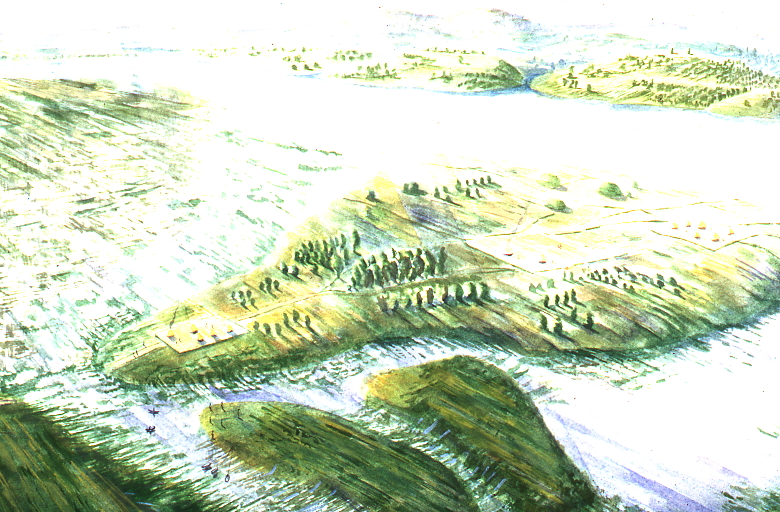
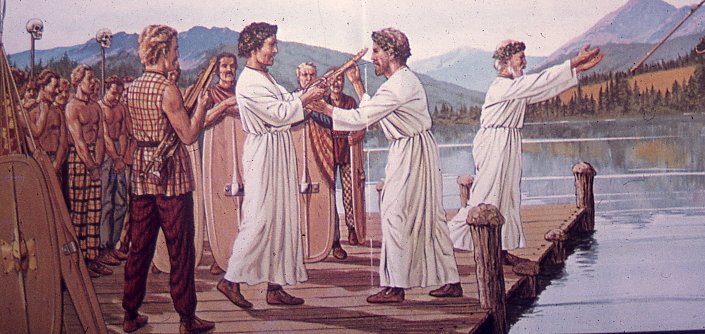
View of London from the SE as it might have looked before the Roman Invasion
I have just finished a Guided Walk called ‘London Before And After The Roman Invasion’. Its the first time I’ve done this particular walk and it was very interesting because it focussed a lot of recent changes in ideas about early London. I decided to do the walk as wanted to refresh my knowledge of prehistoric London and the early Roman period.
So, when I first came to London as a young Archaeologist, we were engaged in a series of ground breaking archaeological excavations that completely revolutionised ideas about London.
So, old ideas were:
There was a prehistoric London
The City came into being as a Legionary Fortress built when the Roman Army was waiting for the Emperor Claudius to join them for the attack on the capital at Colchester.
A formal road system was set up on Cornhill, with the North/South spine being the road north from London Bridge
Southwark was a suburb on the other side of the bridge
The town grew steadily and eventually spread over to the western hill – Ludgate Hill
A fort was built in AD 120 then, c200AD, the Walls were built covering a large area because of the expanding City
The Romans left and everything went to hell in a hand cart.
The new set of ideas were:
People began to doubt the prehistoric London town in the early 20th Century, but it was completely dismissed by the 1970s and London was founded here simply because it was the best/only place for the Bridge and a superb site for the road junctions and Port.
By the late 1970s evidence showed that London did not really get started till about 50AD, so the idea that London was a military foundation following on from a Legionary Fortress was dismissed. Instead, it was a town of civilians established by merchants taking advantage of the Bridge, the Road Junctions, and the Port.
The formal road system was later than 43AD and Londinium was soon on both hills
Southwark was rather more like South Londinium than a secondary suburb.
Londinium had spread all the way to the later site of St Pauls by AD60 and its growth was very rapid. But decline set in as early as the 2nd Century. It struggled in the 4th Century and at the end of the Roman period there were not many people in it.
The area inside the 200AD wall was not densely crowded, and the large size of the walled area was provably due to military decisions about the best defensive alignment for the wall.
Roman London was already shrunken well before the end of the Roman presence in Britain.
Continued excavations created more data and the following discoveries were made
The foundation of London was dated to 48AD after dendrochronology dating of a wooden drain next to the main East West road through Roman London.
A Fort was built soon after the Boudica’s destruction of London in AD 60, just East of London Bridge
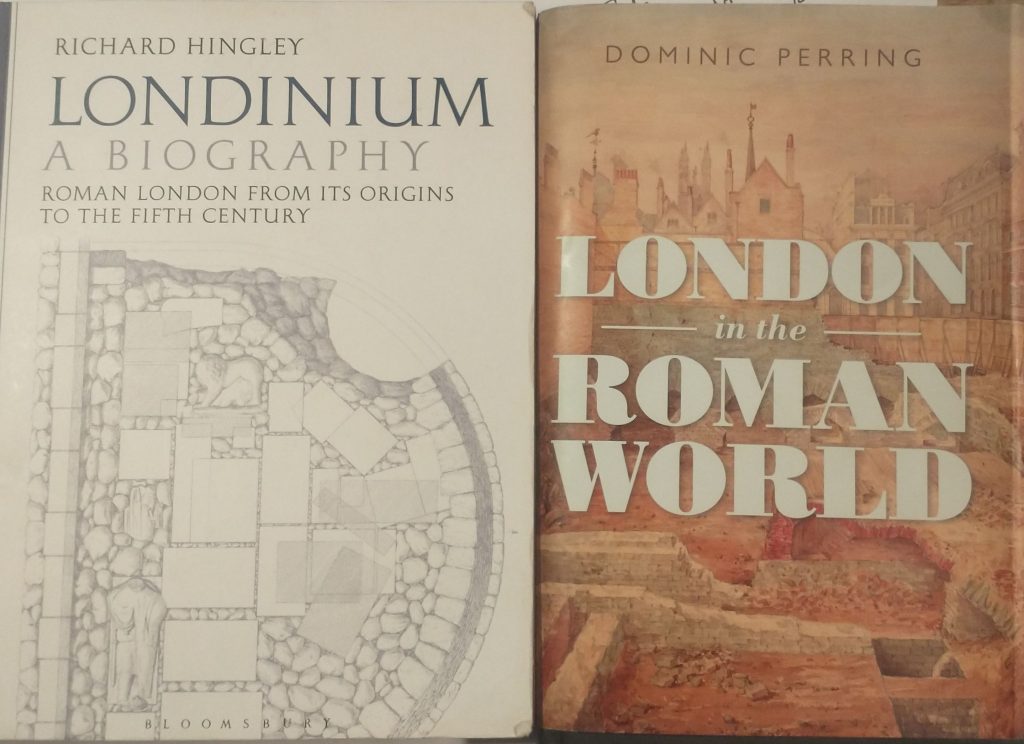
These two books were published and the new certainties about Roman London began to dissolve or resolve. Not yet sure which!
Lets have a look at those 7 points again:
‘There was a prehistoric London’ – Richard Coates in 1998 draw attention to the fact that the name Londinium is pre-Roman in origin and suggested it meant ‘Settlement by the flowing River’ Richard Hingley drew attention to the large amount of fine metal work in the river, and suggested a conclusion that , although there may not have been a prehistoric town before the Roman, the area was very important in the Iron Age, and suggest it was a ‘ritual landscape’ possibly associated with burial. Maybe, this might have been a factor in the Romans choosing the site to establish the crossing/town? Last year an excavation north of Liverpool Street found evidence of large scale feasting in the Late Neolithic leading some people to suggest London was an important ritual site before the coming of the Romans Dominic Perring dismisses ideas that it was an important area before the Roman period, and notes that most of the metal work is found further to the West. More about these discoveries in my post here:
Dominic Perring cites evidence at three sites on Cornhill which suggests that London was indeed set up as a temporary Legionary Fortress in AD43, and suggests the first Bridge was a Pontoon Bridge. And therefore indeed built when the Roman Army was waiting for the Emperor Claudius to join them for the attack on the capital at Colchester. It was immediately dismantled.
A formal road system was indeed set up on Cornhill, with the North South spine being the road north from London Bridge. This was set up in AD48, possibly still a supply base but began its transformation into a proper town c 52AD.
Southwark was much more than a suburb on the other side of the bridge and had important formal buildings, possibly including the residence of the Procurator, after the Governor the most important person in Britain.
The town grew quickly and soon spread over to the western hill – Ludgate Hill and the phases in this spread are detailed in Perring’s book.
A fort was built in AD 62 which continued to about AD 85, and was possibly replaced immediately by a precursor to the Fort in the NW corner of the City near the old Museum of London and replaced in stone in AD 120 then, in c200AD, the Walls were built covering a large area because of the military requirements.
I haven’t yet read the later London part of Perrings book, but he suggests that London develops when the Governor and the Emperor is involved in conquest, passification or development, and without government intervention London declines, so it develops in fits and starts and eventually the fits are more important than the starts and so it declines to virtually nothing.
Any way, congratulations to Dominc Perring who has created a really detailed description of the development of London. I’ve had to rethink quite a lot of my ‘old’ ideas and this is a great synthesis of the archaeology of London particularly over the last 50 years.
I’m sure I won’t agree with it all but I love the detail!
View of London from the SE as it might have looked before the Roman Invasion
Tower Hill Underground Sunday 8th January 2023 11.30pm
The walk looks into the evidence for a prehistoric London and tells the story of the coming of the Romans in AD43
The walk is led by Kevin Flude, a former archaeologist at the Museum of London.
The walk investigates the City of London before and after the the Roman Conquest. What is the evidence for settlement before the Romans set up town of Londinium? Why did the Romans establish the town on this spot? Who were the early Roman Londoners and what made their choice of site so successful?
The fledgling Town was then burnt down by Queen Boudiccan and her Icenian rebels. We look at the evidence for the Revolt and London’s recovery to became the capital of Britain.
This is a London Walks Guided Walk. Look at their web site for a list of other of their amazing walks.
REVIEWS (from London Walks website) “Kevin, I just wanted to drop you a quick email to thank you ever so much for your archaeological tours of London! I am so thrilled to have stumbled upon your tours! I look forward to them more than you can imagine! They’re the best 2 hours of my week! 🙂 Best, Sue
‘advancing a new materialist approach, we identify a goldworking toolkit, linking gold, stone and copper objects within a chaîne opératoire,
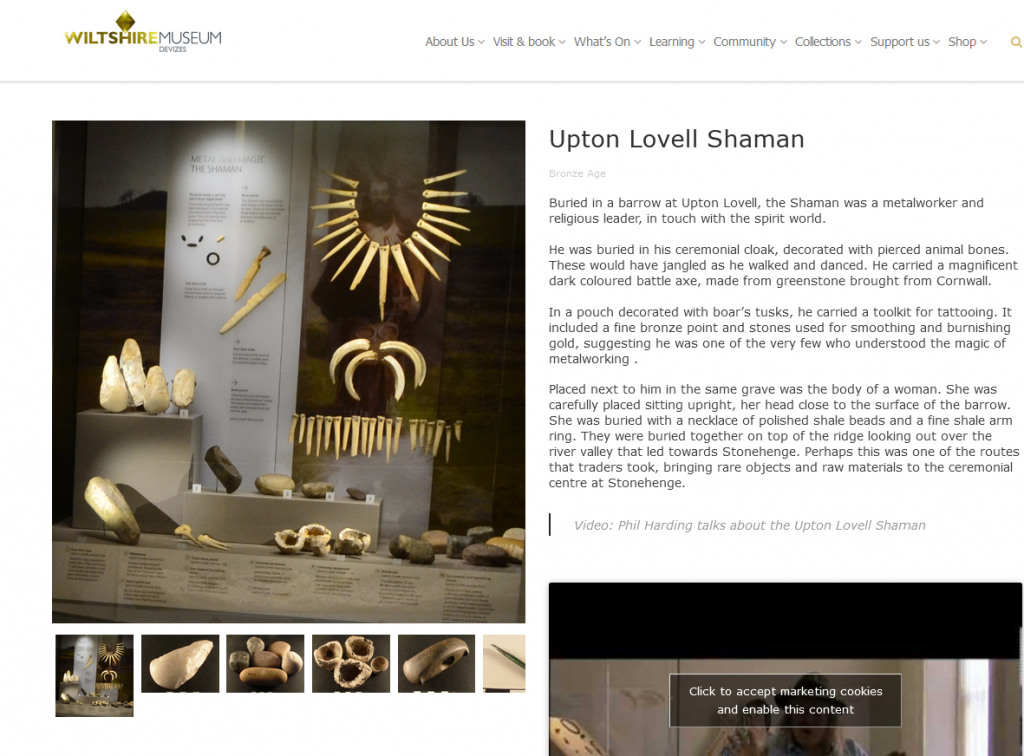
Setting aside what ‘new materialism’ and ‘chaîne opératoire’ are for the moment. Briefly, their analysis of the objects found in the Bronze Age burial of two people evidence that the person(s) identified as a ‘shaman’ on the basis of clothing/jewellery was (as well?) a gold worker. What is amazing is that they were using Neolithic axes which would have been hundreds of years old to make gold sheets. There was also evidence interpreted as tattooing instruments. As Upton Lovell is 12 miles from Stonehenge it means this is big news in the archaeological world, making most of the newspapers.
The authors dig deeper into the meaning of ‘New materialism’:
‘This approach advances on traditional technological studies in two ways. First, whereas materials are usually approached as having fixed properties, new materialists argue that these properties emerge relationally; they change through time and in combination with other materials, people and places (cf. Barad Reference Barad2007; Bennett Reference Bennett2010). Second, ‘making’ is seen not as the simple imposition of the will of a maker on an inert material but, instead, materials play an active role in the process.’
To put it more simply objects have complicated histories and contexts. You might also like to look at the original article (link below) which is written in a very strange style which gives the objects agency ‘an active role in the process’. Below is the conclusions of the article.
‘Conclusions
Drawing on microwear, residue analysis and new materialist theory, we have reassessed the Upton Lovell G2a grave assemblage. The empirical techniques attend to the materials, which are reinvigorated by situating them within this emergent theoretical landscape. These approaches reveal how the grave goods disclose an intertwining set of processes. Never static, these objects changed and shifted, requiring modification, repair and reuse. They speak to a complex interweaving of bodies—human and non-human—and their varied histories. There is far more complexity here, in relations, histories, gestures and processes, than could ever be captured under the label ‘shaman’, ‘metalworker’ or ‘goldsmith’. Grave goods are more than representations of a person’s identity. They are more even than critical relations in the construction of identity (cf. Brück Reference Brück2019). What these grave goods stress, when attention is paid to their stories, is quite different. They speak of material journeys, the colour of stone and the texture of gold capturing relations that flow across landscapes. Collectively, as an assemblage, these stone tools reveal a process of goldworking. But this goldworking involves as much the working of stone, in the shaping and upkeep of tools, as it does of metal. Here, we emphasise the repetitive and iterative nature of our chaîne opératoire, each action calling into being further moments of renewal of the polished stone surfaces so essential to the qualities other materials elicited. This goldworking chaîne opératoire is multi-material; it is as much a process in stone working as it is in the working of metal. From this perspective, the similarities in processing and working gold and stone mean that the former emerges as far more like the latter than our modern taxonomies would suggest.’
If we analyse this conclusion based on the literary idea of ‘Point of View‘ you will see that the POV of the piece above is just bonkers. There is the ‘we’ of the authors, and the ‘they’ of the objects. ‘They’ are speaking to ‘bodies – human and non-human’. ‘They’ even have the ability to ‘stress’ an issue once ‘attention is paid to their stories’ and to be ‘reinvigorated’.
But its a very interesting find and analysis and does remind us that things are much more complicated than we realise.
I have republished my post of the Chinese New Year which you can see here:
Now here is the sort of thing you find out about yourself only if you
a. google yourself b. go down to page 8
And there I find that thebookbag had my book as no 4 in its top ten history books of 2015, with Mary Beard at no 2.
And this is their review:
‘Divorced, Beheaded, Died…: The History of Britain’s Kings and Queens in Bite-Sized Chunks by Kevin Flude
4.5star.jpg
History lives. Proof of that sweeping statement can be had in this book, and in the fact that while it only reached the grand old age of six, it has had the dust brushed off it and has been reprinted – and while the present royal incumbent it ends its main narrative with has not changed, other things have. This has quietly been updated to include the reburial of Richard III in Leicester, and seems to have been re-released at a perfectly apposite time, as only the week before I write these words the Queen has surpassed all those who came before her as our longest serving ruler. Such details may be trivia to some – especially those of us of a more royalist bent – and important facts to others. The perfect balance of that coupling – trivia and detail – is what makes this book so worthwhile.’
135,000 copies to date in 7 editions and formats. I did suggest a new updated edition to add a section on King Charles III but they said ‘they had no plans.’
I have began to prepare my next set of tours both virtual and real. But here are the first two virtual tours, both with a seasonal theme.
The London Winter Solstice Virtual Tour
Wed, 21 Dec 2022 19:30
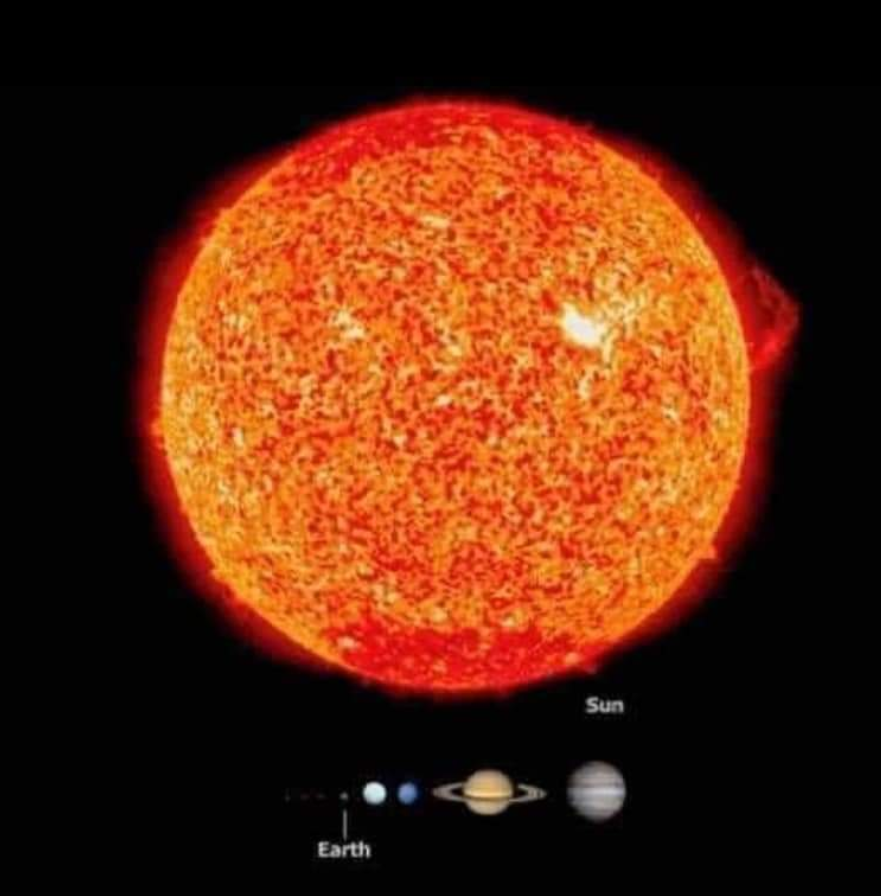
The Sun & the Solar System
We explore London’s History through its celebrations, festivals, calendars and almanacs of the Winter Solstice
Winter Solstice festivals have been a time of review, renewal and anticipation of the future from time immemorial. The Ancient Britons saw the Solstice as a symbol of a promise of renewal as the world entered bleak mid winter. The Roman season was presided over by Janus, a two headed God who looked both backwards and forwards, and Dickens based his second great Christmas Book on the renewal that the New Year encouraged.
We look at London’s past to see where and how the Solstice might be celebrated. We also explore the different Calendars – the Pagan year, the Christian year, the Roman year, the Jewish year, the Financial year, the Academic year and we reveal how these began. We look at folk traditions, Medieval Christmas Festivals, Boy Bishops, Distaff Sunday and Plough Monday, and other London winter traditions and folklore.
At the end we use ancient methods to divine what is in store for us in 2022.
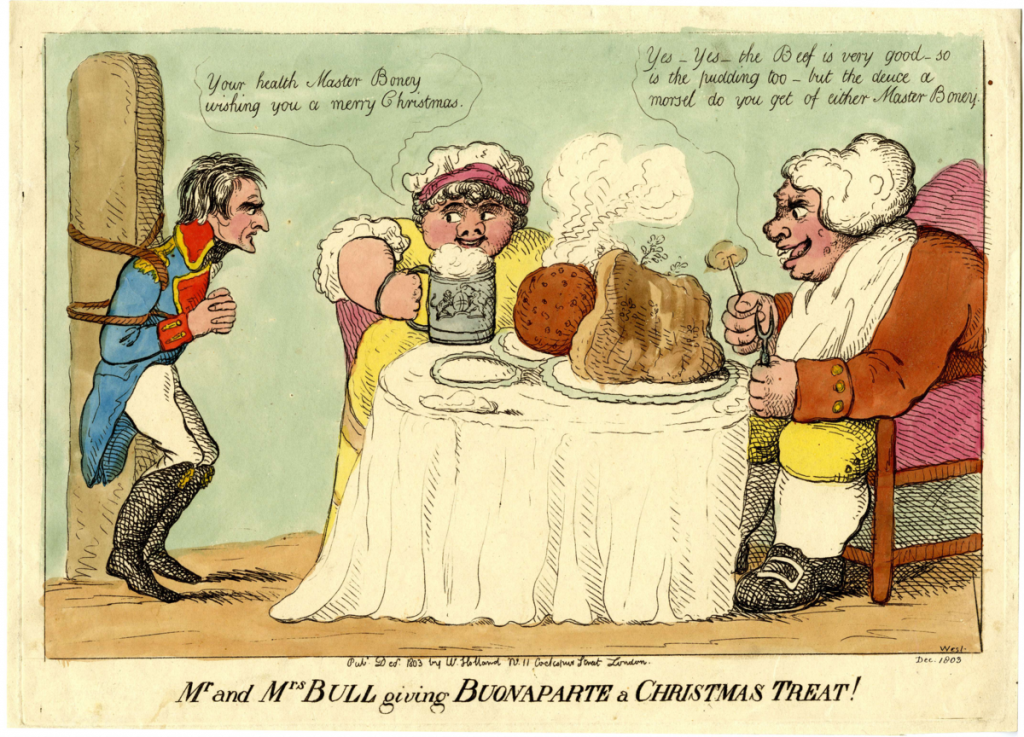
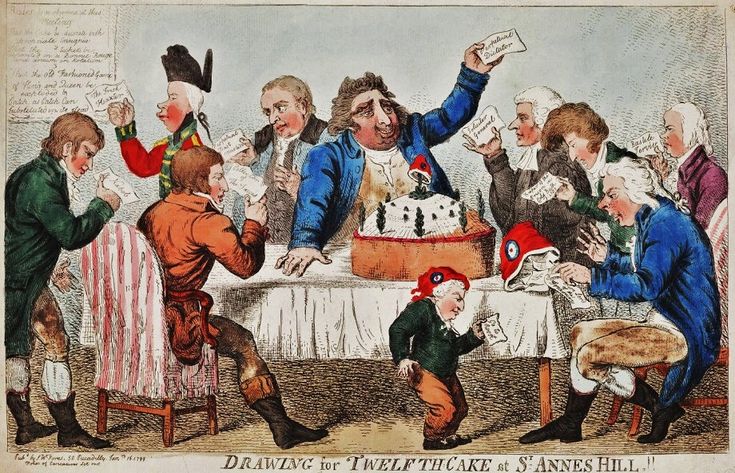
By William Holland 1803From ‘Old Christmas’ by Washington Irvingby Tjana Drndarski-via unsplash
Friday 23 December 2022 7.30pm
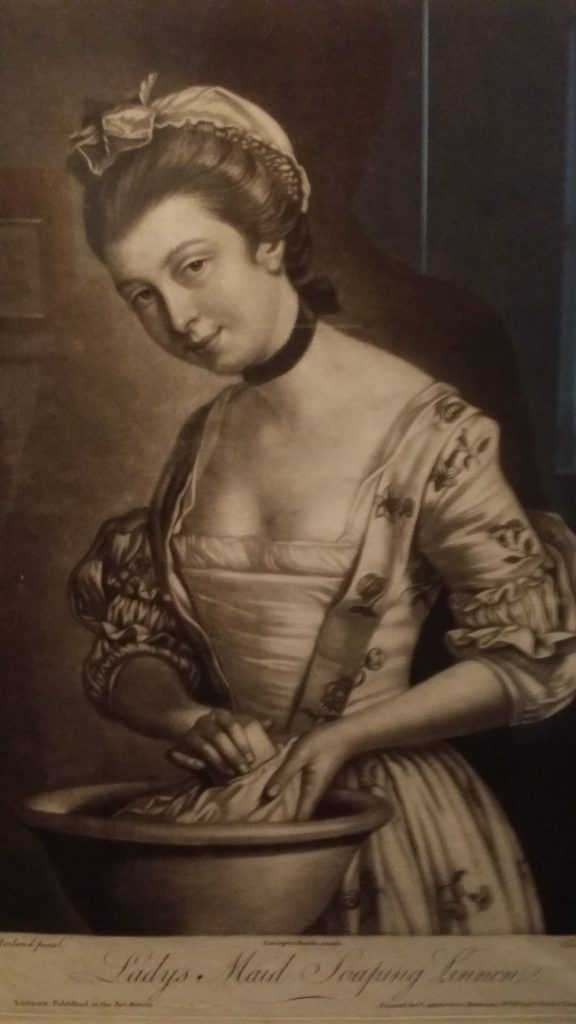
We look at how Jane Austen spent Christmas and at Georgian Christmas traditions and amusements.
“It is a truth universally acknowledged, that a Jane Austen devotee in possession of the good fortune of a couple of free hours must be in want of this virtual walk.”
This is a special walk, which looks at the traditions of Christmas during the Regency period and how Jane Austen might have celebrated it. It will give some background to Jane Austen’s life and her knowledge of London. We used her novels and her letters to find out what she might have done at Christmas, but also at how Christmas was kept in this period, and the range of ‘Curiosities, Amusements, Exhibitions, Public Establishments, and Remarkable Objects in and near London available to enjoy.
This is a London Walks Guided Walk by Kevin Flude, Museum Curator and Lecturer.
Review: ‘Thanks, again, Kevin. These talks are magnificent!’
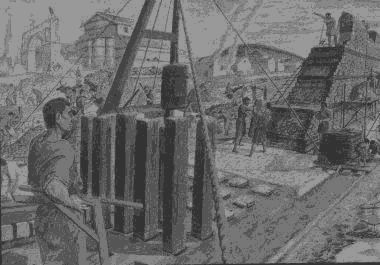
Reconstruction View of Roman Riverside Wall being built
Saturday 30 October 20/22 11.30 am Monument Underground Station
This is a walking tour features the amazing archaeological discoveries of Roman London, and looks at life in the provincial Roman capital of Londinium.
Tuesday June 21st 2022 7.30 pm Tower Hill Underground Station (meet by the Tower Hill Tram coffee stand) |
We explore London’s History through its celebrations, festivals, calendars, almanacs and its myths and legends.
As the Sun and Moon move around our skies we look at how Londoners organised and celebrated their year throughout history.
The tour is led by Kevin Flude, a former archaeologist at the Museum of London, Curator and Lecturer
One of the most popular forms of publication in London was the Almanac. It was full of seasonal advice, of prophecy, traditional wisdom, and important events past and future. Different cultures, religions and institutions had their own methods of organisation and celebrations. We explore the varied calendars that ruled people’s lives from the prehistoric period to the present.
On the way we look at customs, and folklore of the Celts, Romans, Saxons, and into the Medieval and Modern period. We look at different calendars such as the Pagan year, the Egyptian year, the Roman, Christian, Jewish, Church and Financial years. On the route we discover the people who lived in London and walk through fascinating areas with their deep histories.
This is a London Walks Guided Walk. Look at their web site for a list of other of their amazing walks
This is the Podcast for the Virtual Tour of Edinburgh
To find out or book for the Edinburgh walk and other walks this week end click here
A Virtual Tour Through The Whole Island Of Great Britain. No.5 Edinburgh
Monday 2 May 2022 7 pm
A Virtual Walk Through the Athens of the North
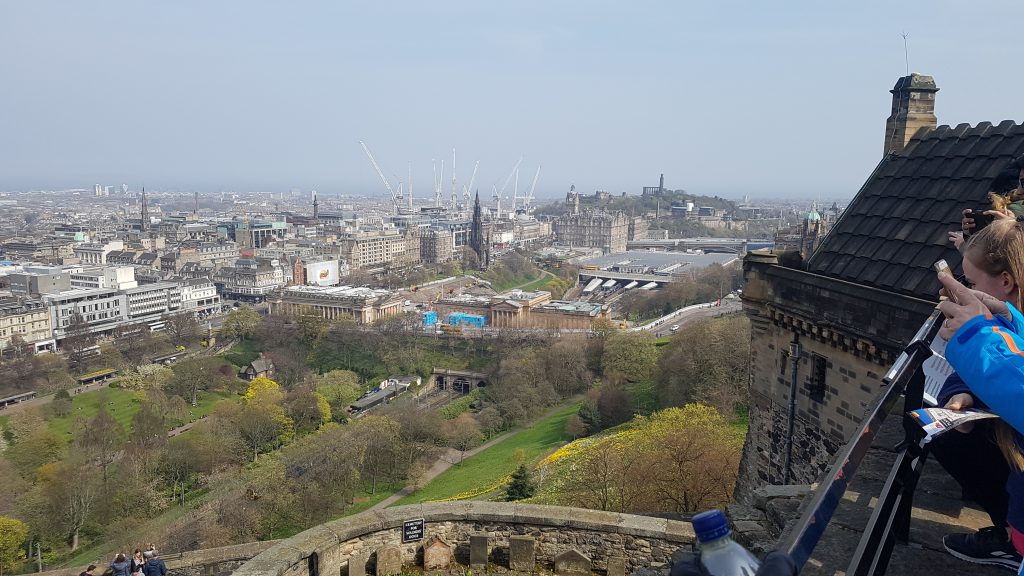
Borrowing my title from Daniel Defoe’s early chorography, my first Circuit is from Chester to Edinburgh. Now on the last stop on this first circuit we are taking a virtual tour of the most extraordinary City – Edinburgh.
Edinburgh is a very unusual City as it was built on the saddle of a hill so its main street runs down the ridge of a hill and the City falls away on either side. This lack of flat land and restricted space led to the City growing upwards. This gave the City an extraordinary density and an unique atmosphere that we will be exploring.
In the Georgian period the City was extended with the addition of a new town quarter which was rationally planned and made a marked contrast on the old Town. Together it gives the Capital of Scotland, a combination of atmospheric and claustrophobic town planning with the elegance of a City that was one of the great Cities of the Enlightenment.
We will begin the virtual walk in the shadow of Arthur’s Seat at the shiny new Scottish Parliament and walk up the Royal Mile from Holyrood to Tollboth, to the Netherbow and onto the Castle at the pinnacle of the City