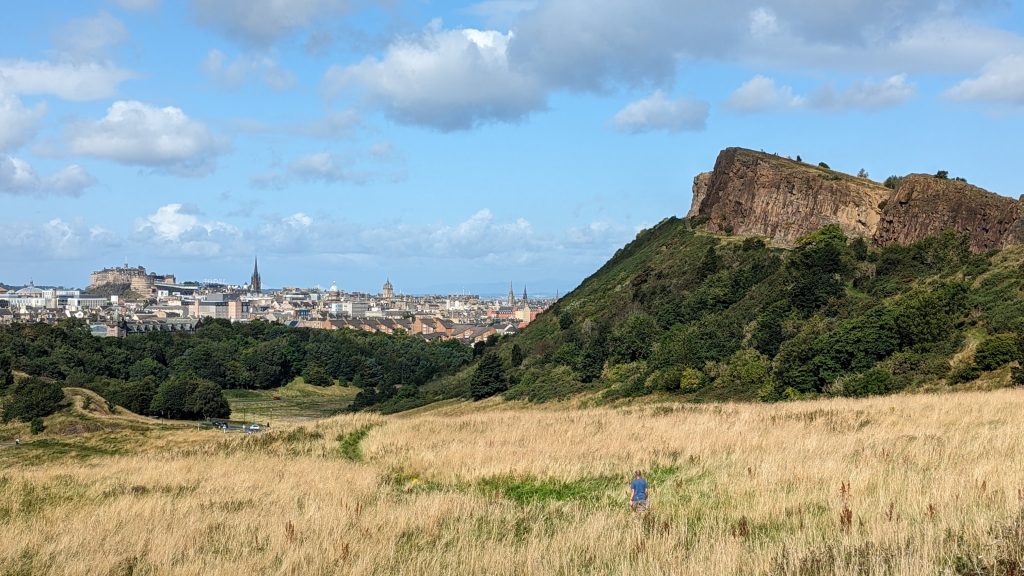
Edinburgh from Arthur’s Seat. Castle to the left, St Giles the ’rounded’ spire in the middle, and Salisbury Crags to the right
Strange Case of Dr Jekyll and Mr Hyde by Robert Louis Stevenson
This is my select booklist for Edinburgh, one of my favourite towns. Strangely, heading it up is a book based in London, and written in Bournemouth. However, Stephenson’s Strange Case of Dr Jekyll and Mr Hyde is a very Edinburgh book but published in London on January 9th 1886.
What makes it fit for an Edinburgh booklist? Firstly, Edinburgh is the best place for a science-based Gothic Horror Novella. A City made for Ghost Tours, but with a scientific legacy arguably second to none. One of the inspirations for the book was the story of Deacon Brodie. He was a cabinetmaker who rose to be Deacon (president) of the craft of cabinetmaking. Therefore, he had wealthy clients and was impeccably respectable. When he went to his clients houses, or made them locked cabinets, he would copy the locks using wax moulds. Then he and his team would rob the house. He hid a cache of keys underneath Salisbury Crags which you can see above.
To cut a long story short, he made an attempt on robbing the Excise Office in Canongate, Edinburgh, on March 5th 1788. The heist failed, one of the robbers turned King’s Evidence. So Brodie fled to one of his mistresses in London, then to the Continent. But he was relentlessly pursued and captured in Amsterdam. He was brought back to face trial, found guilty, and hanged on a new scaffold, which he may just have had a part in designing.
Stevenson had cabinets made by William Brodie and as a young man produced a play about him. He was intrigued by the idea of a wealthy man having a dual life. The idea itself, seems obvious but the expression a ‘Jekyll and Hyde’ character is still often used to describe someone with two opposing sides to their characters. The idea of duality provides many ways to look at the book. Edinburgh itself was a duality. There was the old, filthy, higgledy-piggledy Old Town on top of the Volcanic Ridge, with the spacious New Town in the Valley below, with modern wealthy houses providing healthy homes for the rich. The idea of Two Cities, of the rich and the poor; the good and the evil; rationality and sensuality; hetero and homosexual fits well with Victorian Britain, but perhaps best into Victorian Edinburgh, the City of Burke and Hare. These famous Edinburgh serial killers were working for one of Europe’s greatest medical centres, where debate about Darwinism, and the powers of the brain were hotly debated in a City with a strong Presbyterian background.
In Bournemouth, Stevenson befriended the former Reverend Walter Jekyll, younger brother of gardener Gertrude Jekyll. He was probably homosexual and the author borrowed the name for the rational part of Jekyll and Hyde. At a time when to be gay was a crime, most gay people had to live a Jekyll and Hyde existence. In fact, Sodomy was a capital offence in Scotland until the year after the publication of the ‘Strange Case of Dr. Jekyll and Mr. Hyde.
Strangely, in a book list I would encourage you to watch the 1920 silent film starring John Barrymore to enjoy its ghastly atmosphere. You can watch it for free on YouTube here.
Ian Rankin’s Rebus
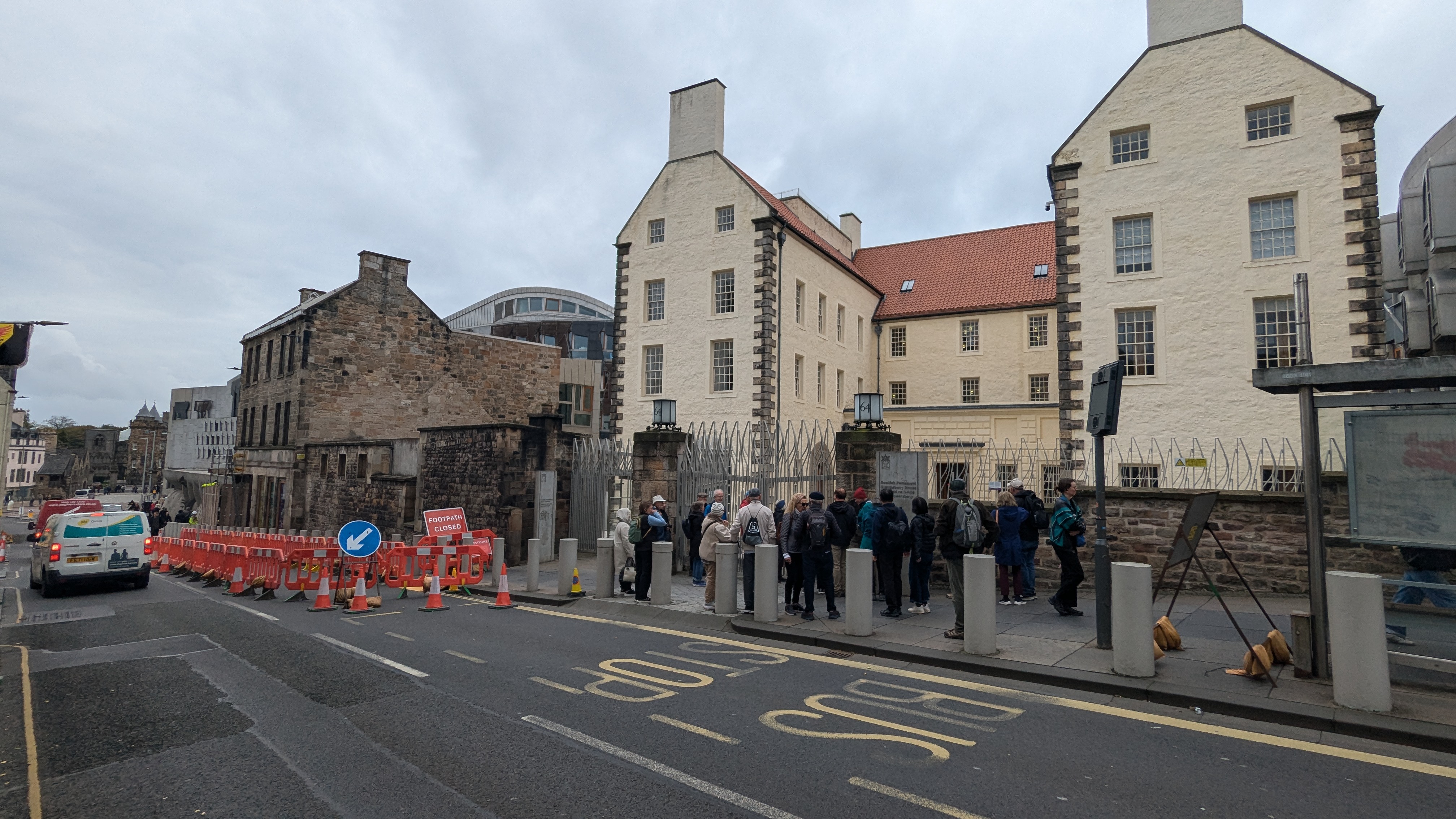
Ian Rankin is a topographical author of the highest rank. Every story brings Edinburgh, its people and its history to life. And yet set in a very readable crime fiction envelope. The Rebus I chose was ‘Set in Darkness‘ because it has the Scottish Parliament at its heart. It begins with a body found in Queensbury House, which is being preserved and incorporated into the new Scottish Parliament buildings. Please read my post on the book (link below).
Queensberry House to the right, with the Scottish Parliament in the background. Royal Mile, Cannongate in the foreground. (Photo: K. Flude)
Recently published is ‘Edinburgh a New History’ by Alistair Moffat. This is an excellent summary of Edinburgh’s History. He has written a large number of books about Scotland. I particularly liked ‘Reivers‘ which is a great book about the border raiders, both North English and Scottish who raided the borderlands between Edinburgh and York during the 13th to the 17th Centuries. They inspired the young Walter Scott, who collected Reivers ballads before inventing the Historical Novel.
As to Walter Scot, our Blue Badge Guide for Edinburgh, considers his long descriptive passages unreadable. But I’m not so convinced, having read Ivanhoe and Rob Roy as a boy. But if I were to recommend a Walter Scot, it would be Heart of Midlothian as it is set in Edinburgh and deals with crime, poverty, urban riots and other manifestations of life in Edinburgh in the 18th Century.
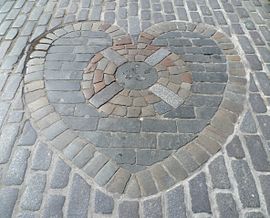
Midlothian is the country around Edinburgh, named after the legendary Celtic King Loth. The Heart of Midlothian, is Edinburgh or more precisely, a heart marked out in the cobbles. It is located outside of St Giles, on the Royal Mile, where the Tollboth (townhall and prison) and execution site for the City used to be. To this day, Edinburghers (or more correctly, Dunediners) are supposed to spit on the heart for good luck.
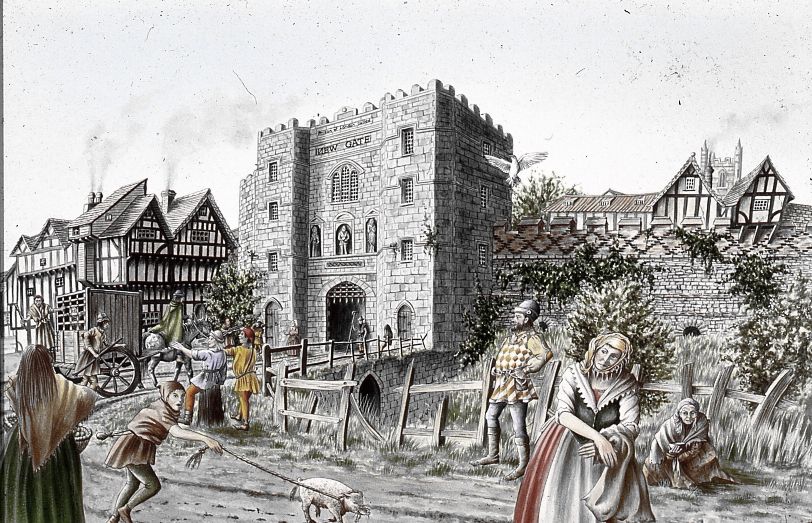
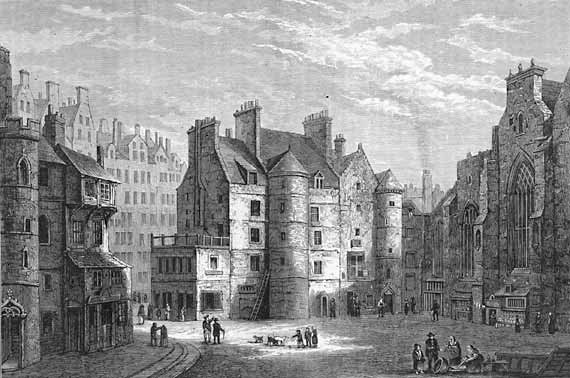
Old Print of the Tollbooth with St Giles to the right of the print.
It is hard to exaggerate the importance of Walter Scot. Byron said he had read his books 50 times, and never travelled without them. Goethe said ‘he was a genius who does not have an equal.’ Pushkin said his influence was ‘felt in every province of the literature of his age. Balzac described him as ‘one of the noblest geniuses of modern times’. Jane Austen and Dickens loved his books. The point is he invented the Historical Novel, and for the first time, as Carlyle wrote, he showed that history was made by people ‘with colour in their checks and passion in their stomachs.’ The only other person I can think of who was held in such universal regard was Tolstoy. There is also sense in which Scott invented our modern idea of Scotland, with its kilts and bagpipes.
The Scottish Enlightenment
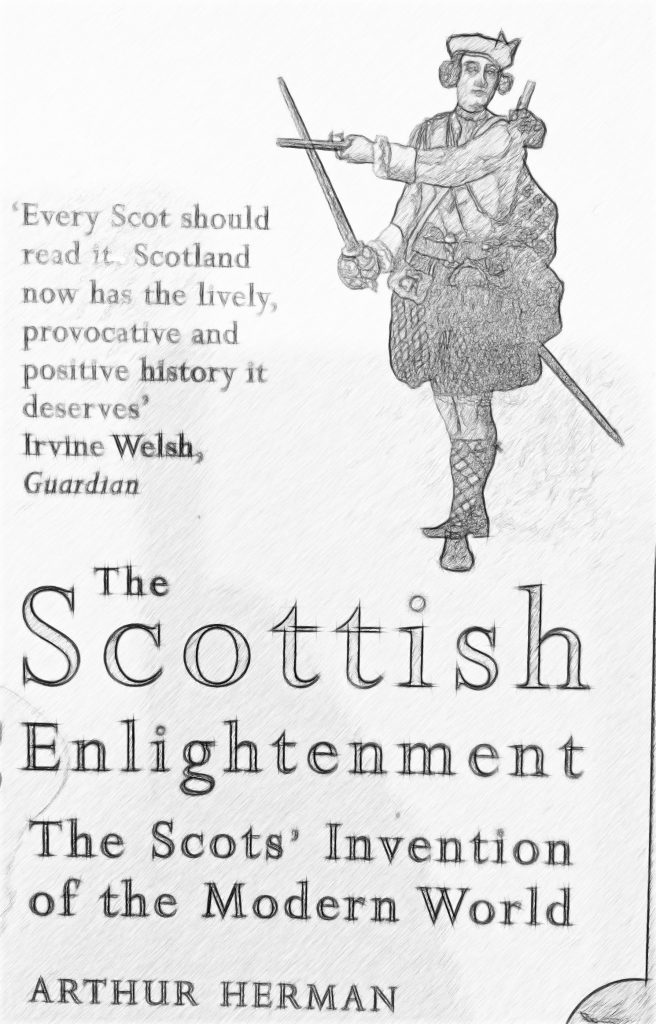
A walk through the centre of Edinburgh has so many statues of people who made the modern world it is astonishing. So you should read: ‘The Scottish Enlightenment – the Scots Invention of the modern world‘ by Arthur Herman.
Burke and Hare: The True Story Behind the Infamous Edinburgh Murderers by Owen Dudley-Edwards
The story of Burke and Hare is well known, but it shows how important Edinburgh was as a medical centre in the early 19th Century. Bodies were shipped to Edinburgh from the London docks, such was the demand for bodies for anatomy teaching. Arthur Conan Doyle got his medical training here from a man called Joseph Bell, whose logical mind was the model for Sherlock Holmes.
The Prime of Miss Jean Brodie
My last choice is Murial Spark’s The Prime of Miss Jean Brodie set in a school in Edinburgh where the teacher singles out 6 of her pupils for special education. She wants to give them a cultured outlook in life which includes her own fascistic views. Made into a wonderful film starring Maggie Smith, but also a great book. It also, in a strange way, reinforces the huge legacy of the Scottish Education system. It is said that the Reformation brought to the Scots the idea that everyone should be educated enough to read the Bible in their own language. But it seems to me the Scots had a particular understanding of the importance of Education before the Reformation. St Andrews University was founded in 1410, Glasgow in 1410, Aberdeen in 1495 and Edinburgh in 1510.
Of course, you should read some poetry by Burns, and I would begin with Tam O’Shanter the story of Tam, Maggie his horse and Nannie, the witch with the short skirt (Cutty Sark). The version above (see link) is read over a comic novel of the poem. But if you prefer the words, this is the one I read for my groups where I ruin the Scots dialect, and disgrace myself, but oh how I enjoy it! www.poetryfoundation.org tam-o-shanter
Tudor London – The City of Wolf Hall 3pm 4th July 2026 To Book Jane Austen’s London Walk 2:30pm Sun 5th July 2026 To book London. 1066 and All That Walk 11.30am Sun 12th July 26 Tobook Bloody, Flaming, Poxy London 3pm Sun 12th July 26 To book Myths, Legends, Archaeology, and the Origins of London 3pm Sat 1 Aug 2026 Tower Hill Underground To book The Decline And Fall Of Roman London Walk 11:15am 2nd Aug 26 To book Jane Austen’s London Walk 2:30pm Sun 2nd Aug 26 To book Chaucer’s Medieval London Guided Walk 11.00am Sat 5th Sept 2026 To book Jane Austen’s London Walk 2:30pm Sun 5th Sept 2026 To book Jane Austen’s London Walk 2:30pm Sat 24th Oct 2026 To book
For a complete list of my guided walks for London Walks in 2026 look here
Monday 1st January 2025 7.00 pm On this Virtual Walk we look at how London has celebrated the New Year over the past 2000 years.
The New Year has been a time of review, renewal, and anticipation of the future from time immemorial. The Ancient Britons saw the Solstice as a symbol of a promise of renewal as the Sun was reborn. As the weather turns to bleak mid winter, a festival or reflection and renewal cheers everyone up. This idea of renewal was followed by the Romans, and presided over by a two headed God called Janus who looked both backwards and forwards. Dickens Christmas Carol was based on redemption and his second great Christmas Book ‘The Chimes’ on the renewal that the New Year encouraged.
We look at London’s past to see where and how the New Year was celebrated. We also explore the different New Years we use and their associated Calendars – the Pagan year, the Christian year, the Roman year, the Jewish year, the Financial year, the Academic year and we reveal how these began. We look at folk traditions, Medieval Christmas Festivals, Boy Bishops, Distaff Sunday and Plough Monday, and other Winter Festival and New Year London traditions and folklore.
At the end, we use ancient methods to divine what is in store for us in 2023.
The virtual walk finds interesting and historic places in the City of London to link to our stories of Past New Year’s Days. We begin, virtually, at the Barbican Underground and continue to the Museum of London, the Roman Fort; Noble Street, Goldsmiths Hall, Foster Lane, St Pauls, Doctors Commons, St. Nicholas Colechurch and on towards the River Thames.
The Civil War, Restoration and the Great Fire of London Virtual Tour
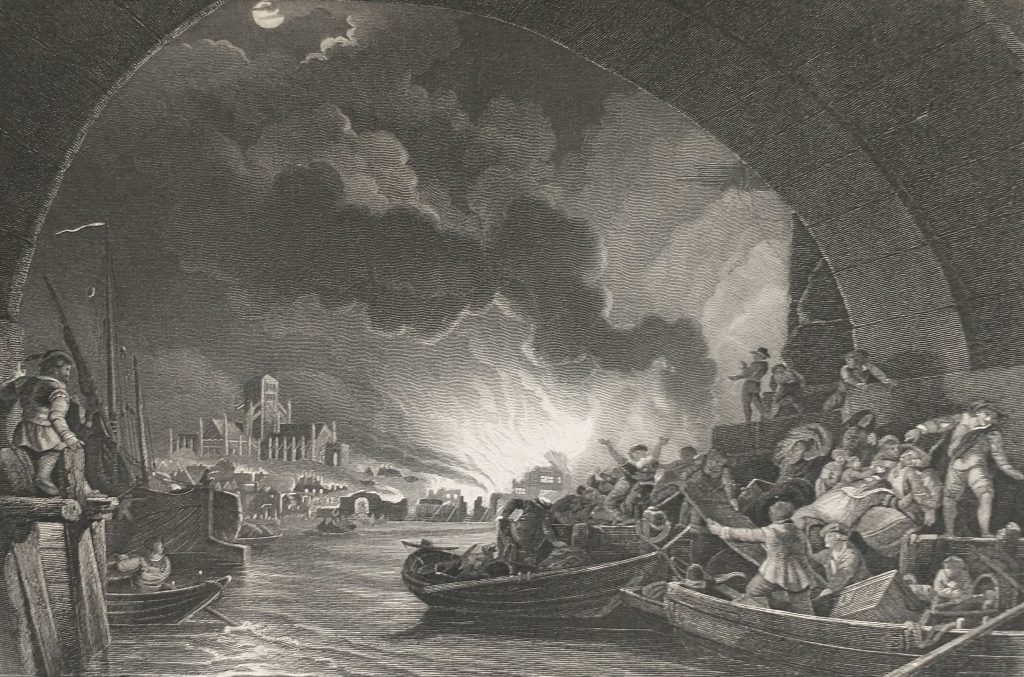
The Great Fire of London looking towards StPauls Cathedral from an old print
7:30pm Fri 30th January 2025
January 30th is the Anniversary of the execution of Charles I and to commemorate it we explore the events and the aftermath of the Civil War in London.
Along with the Norman Conquest of 1066 and winning the World Cup in 1966 the Great Fire in 1666 are the only dates the British can remember!
And we remember the Great Fire because it destroyed one of the great medieval Cities in an epic conflagration that shocked the world.
But it wasn’t just the Great Fire that made the 17th Century an epic period in English History. There was a Civil War, beheading of the King, a Republic, a peaceful Restoration of the Monarch, the last great plague outbreak in the UK, the Glorious Revolution and the Great Wind.
The Virtual Walk puts the Great Fire in the context of the time – Civil War, anti-catholicism, plague, and the commercial development of London. The walk brings to life 17th Century London. It starts with the events that lead up to the Civil War concentrating on Westminster and ends with a vivid recreation of the drama of the Fire as experienced by eye-witnesses. Route includes: Westminster, Fish Street Hill, Pudding Lane, Monument, Royal Exchange, Guildhall, Cheapside, St Pauls, Amen Corner, Newgate Street, Smithfield.
Roman London – Literary & Archaeology Walk
11.30 am Sun 9th Feb 2025 Monument Underground Station
also on 11.30am Sun 27th Apr 25 but starting from Moorgate
London Roman Riverside Wall o
This is a walking tour features the amazing archaeological discoveries of Roman London, and looks at life in the provincial Roman capital of Londinium.
This is a walking tour that features the amazing archaeological discoveries of Roman London, and looks at life in the provincial Roman capital of Londinium.
Our Guides will be Publius Ovidius Naso and Marcus Valerius Martialis who will be helped by Kevin Flude, former Museum of London Archaeologist, Museum Curator and Lecturer.
We disembark at the Roman Waterfront by the Roman Bridge, and then explore the lives of the citizens as we walk up to the site of the Roman Town Hall, and discuss Roman politics. We proceed through the streets of Roman London, with its vivid and cosmopolitan street life via the Temple of Mithras to finish with Bread and Circus at the Roman Amphitheatre.
Zinger Read: Talk about a high-quality one-two punch. This walk investigates the groundbreaking archaeological discoveries of Roman London. And then it reconstructs life in a provincial Roman capital using archaeological and literary sources. Discoveries – insights – like flashes of lightning in a cloud. We begin at the site of the Roman bridge. We might be decent young Roman citizens in togas, having this and that bit of explained to us as we make our way towards the Roman Town Hall. From there we head to the site of the excavation called ‘the Pompeii of the North.’ Followed by the Temple of Mithras. We finish with a walk along the Roman High Street in order to end at the site of the Roman Amphitheatre. So, yes, welcome to London as it was 2,000, 1,900, 1,800, 1,700 and 1,600 years ago. And, yes, the walk’s guided by a real expert, the distinguished emeritus Museum of London archaeologist Kevin Flude. That means you’ll see things other people don’t get to see, delve into London via fissures that aren’t visible, let alone accessible, to non-specialists.
REVIEWS “Kevin, I just wanted to drop you a quick email to thank you ever so much for your archaeological tours of London! I am so thrilled to have stumbled upon your tours! I look forward to them more than you can imagine! They’re the best 2 hours of my week! 🙂 Best, Sue
Jane Austen’s London Anniversary Guided Walk
2.30 pm Sunday 9th Feb 2025
Green Park underground station, Green Park exit, by the fountain To book
Also
9 February 2025
Sunday
2.30 pm
4.30 pm
8 March 2025
Saturday
2.30 pm
4.30 pm
6 April 2025
Sunday
11.30 am
1.30 pm
2025 is the 250th Anniversary of Jane Austen’s Birth in Steventon, Hampshire. We celebrate her fictional and real life visits to Mayfair, the centre of the London section of Sense & Sensibility and where Jane came to visit her brother
“It is a truth universally acknowledged, that a Jane Austen devotee in possession of the good fortune of a couple of free hours today must be in want of this walk.”
People associate Jane Austen and her characters with a rural setting. But London is central to both Jane Austen’s real life and her literary life. So, this tour will explore Jane’s connections with London and give the background to Sense and Sensibility, a good part of which is based in this very area. We begin with the place Jane’s coach would arrive from Hampshire, and then walk the streets haunted by Willougby; past shops visited by the Palmers, the Ferrars; visit the location of Jane Austen’s brother’s bank and see the publisher of Jane’s Books. The area around Old Bond Street was the home of the Regency elite and many buildings and a surprising number of the shops remain as they were in Jane Austen’s day.
Jane Austen’s ‘A Picture of London’ in 1809 Virtual Walk
With the help of a contemporary Guide Book, Jane Austen’s letters, and works we explore London in 1809.
‘The Picture of London for 1809 Being a CORRECT GUIDE to all the Curiosities, Amusements, Exhibitions, Public Establishments, and Remarkable Objects in and near London.’
This Guide Book to London might have been on Henry Austen’s shelf when his sister, Jane, came to visit him in London. But it enables us to tour the London that Jane Austen knew in some detail. We will look at the Curiosities as well as the shopping, residential, theatres areas as well as the Port, the Parks and the Palaces.
The guided walk is a thank you to Alix Gronau, who, having been to one of my lectures in 1994, wanted the book to come to me. I have had the book restored and am using it to explore London in 1809.
Jane Austen’s London Anniversary Walk
Jane Austen’s London Anniversary Walk 2.30 pm Sunday 9th February 25 To book
A Virtual Tour of Jane Austen’s Bath
7.30pm 10th February 2025
Tudor London – The City of Wolf Hall 11.30am Sat 22nd Feb 25
Myths, Legends, Archaeology and the Origins of London
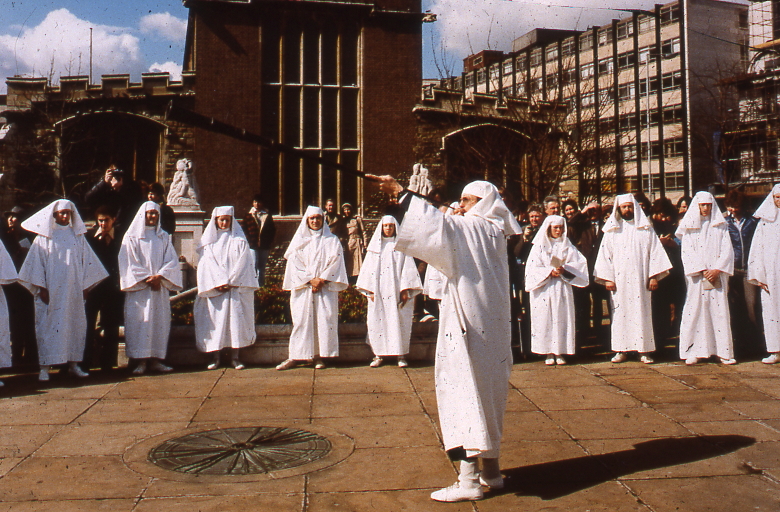
Druids at All Hallows, by the Tower
2.30pm Sat 22nd February 2025 Tower Hill Underground
The walk tells the stories of our changing ideas about the origins of London during the Prehistoric, Roman and Saxon periods.
The walk is led by Kevin Flude, a former archaeologist at the Museum of London, who has an interest both in myths, legends and London’s Archaeology.
The walk will tell the story of the legendary origins of London which record that it was founded in the Bronze Age by an exiled Trojan and was called New Troy, which became corrupted to Trinovantum. This name was recorded in the words of Julius Caesar; and, then, according to Legend, the town was renamed after King Ludd and called Lud’s Dun. Antiquarians and Archaeologists have taken centuries to demolish this idea, and became convinced London was founded by the Romans. Recently, dramatic evidence of a Bronze Age presence in London was found.
When the Roman system broke down in 410 AD, historical records were almost non-existent, until the Venerable Bede recorded the building of St Pauls Cathedral in 604 AD. The two hundred year gap, has another rich selection of legends. which the paucity of archaeological remains struggles to debunk.
The walk will explore these stories and compare the myths and legends with Archaeological discoveries.
The route starts at Tower Hill, then down to the River at Billingsgate, London Bridge, and into the centre of Roman London.
Roman London – Literary & Archaeology Walk 11.30am Sat Mar 8th 25 Jane Austen’s London Anniversary Walk 2.30pm Sat 8th Mar 25
The Decline And Fall Of Roman London Walk 11.30 Sat 22nd March 2025 London. 1066 and All That Walk Sat 2.30pm 22nd March 2025
Jane Austen’s London Anniversary Walk 11.30am Sun 6th Apr 25
Chaucer’s Medieval London Guided Walk 2:30pm Sun 6th Apr 25
and
Chaucer’s London To Canterbury Virtual Pilgrimage 7.30pm Friday 18th April 25 To book
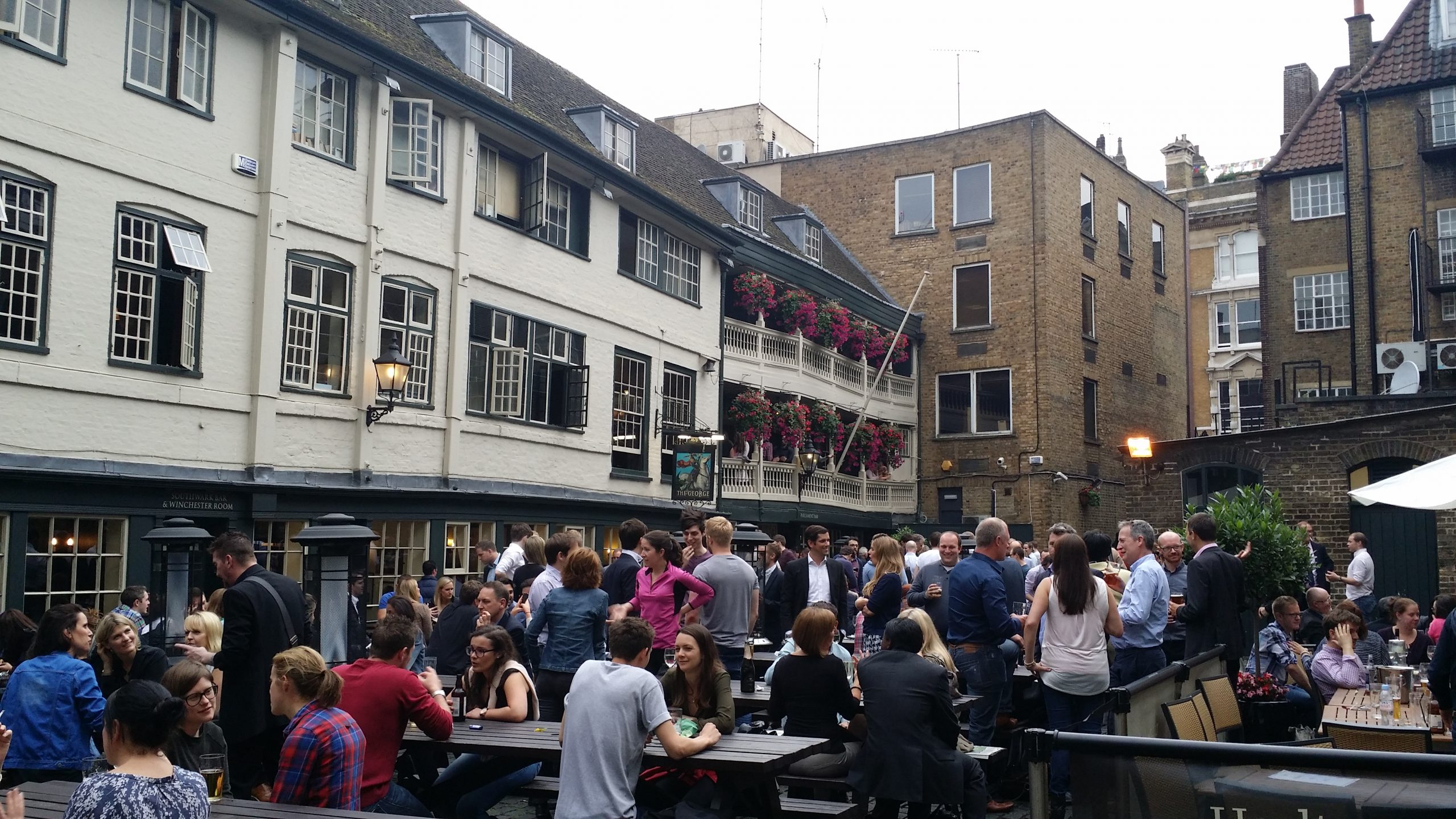
George Inn,Southwark
A Walk around Medieval London following in the footsteps of its resident medieval poet – Geoffrey Chaucer
One of the spectators at the Peasants Revolt was Geoffrey Chaucer, born in the Vintry area of London, who rose to be a diplomat, a Courtier and London’s Customs Officer. He lived with his wife in the Chamber above the Gate in the City Wall at Aldgate. His poetry shows a rugged, joyous medieval England including many scenes reflecting life in London. His stories document the ending of the feudal system, growing dissatisfaction with the corruption in the Church, and shows the robust independence with which the English led their lives.
His work helped change the fashion from poetry in French or Latin to acceptance of the English language as suitable literary language. This was helped by the growth of literacy in London as its Merchants and Guildsmen became increasingly successful. In 1422, for example, the Brewers decided to keep their records in English ‘as there are many of our craft who have the knowledge of reading and writing in the English idiom.’
Chaucer and other poets such as Langland give a vivid portrait of Medieval London which was dynamic, successful but also torn by crisis such as the Lollard challenge to Catholic hegemony, and the Peasants who revolted against oppression as the ruling classes struggled to resist the increased independence of the working people following the Black Death.
A walk which explores London in the Middle Ages, We begin at Aldgate, and follow Chaucer from his home to his place of work at the Customs House, and then to St Thomas Chapel on London Bridge, and across the River to where the Canterbury Tales start – at the Tabard Inn.
This is a London Walks event by Kevin Flude
Roman London – Literary & Archaeology Walk 11.30am Sun 27th Apr 25
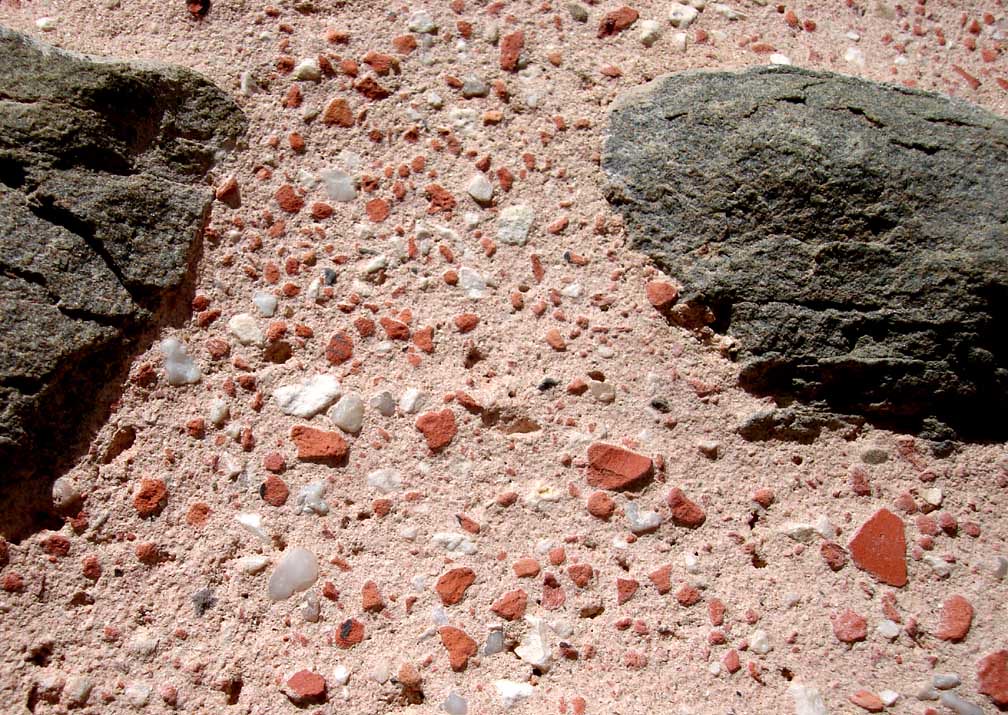
Roman layer opus signinum,
Tudor London – The City of Wolf Hall 3:00pm Sun 27th Apr 25
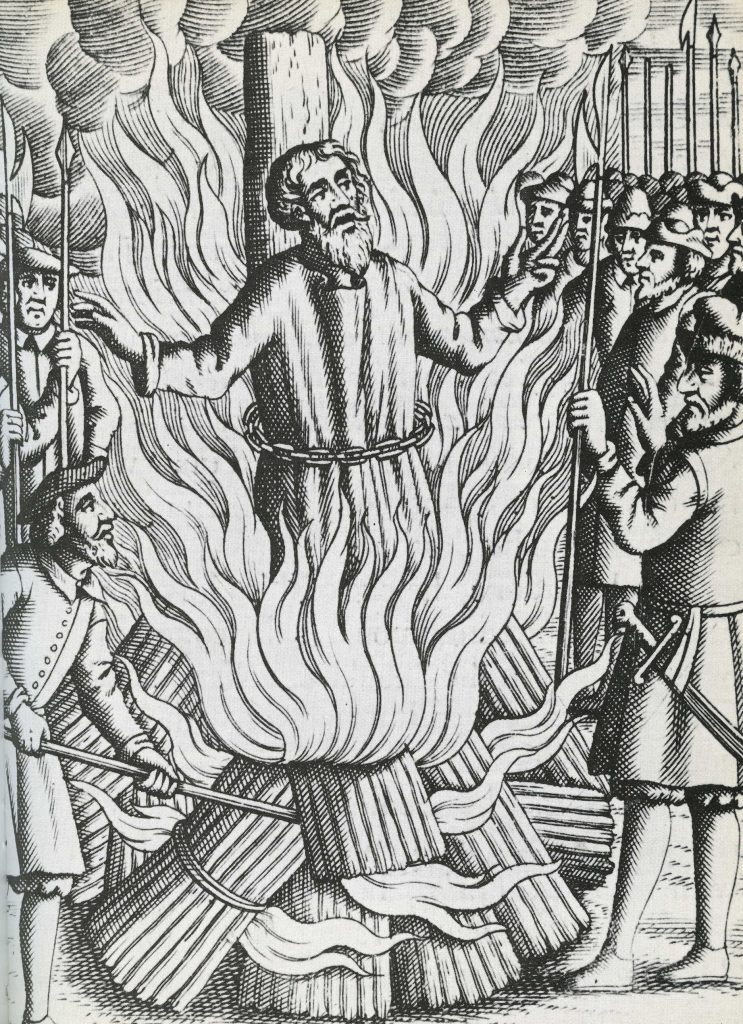
Thomas Bilney martyred in Smithfield.
The Walk creates a portrait of London in the early 16th Century, with particular emphasis on the life and times of Thomas Cromwell and Thomas More during the Anne Boleyn years.
More and Cromwell had much in common, both lawyers, commoners, who rose to be Lord Chancellor to Henry VIII, and ended their careers on the block at Tower Hill.
The walk starts with an exploration of Smithfield – site of the stake where heretics were burnt alive and of St Bartholomew’s Monastery – given to Richard Rich after his decisive role in the downfall of Thomas More. We continue to St Paul where Martin Luther’s books were burnt, and later, where Puritans preached against dancing round the Maypole.
We walk along the main markets streets of London, to Thomas More’s birthplace, and to the site of More’s and Cromwell’s townhouses before, if time allows, finishing at the site of the Scaffold where More and Cromwell met their ends, overlooking where Anne Boleyn was incarcerated in the Tower of London
To Book: https://www.walks.com/our-walks/tudor-london-the-city-of-wolf-hall/
A Boy From Haggerston before the War. 6pm 1st May 2025 Shoreditch Library.
Myths, Legends, Archaeology and the Origins of London 11.30am Sun 25th May 25 To book
The Decline And Fall Of Roman London Walk 3pm Sun May 25 To book
The Peasants Revolt Anniversary Guided Walk
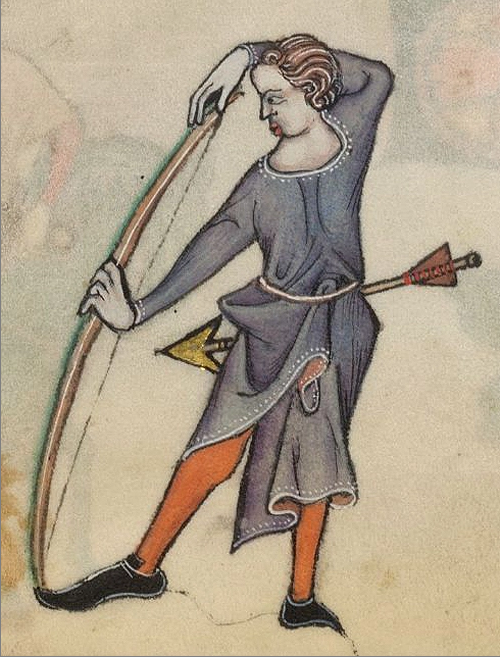
Medieval drawing of an archer
6.30pm Wed 11th June 2025 Aldgate Underground To book
An Anniversary Walk tracking the progress of the Peasants as they take control of London in June of 1381
Short read: The Summer of Blood
Long read: The Peasants’ Revolt. The greatest popular rising in English history. This is the anniversary walk. The London Walk that heads back to 1381, back to the Peasants’ Revolt. You want a metaphor, think stations of the cross. This is the stations of the Peasants’ Revolt walk. We go over the ground, literally and metaphorically. Where it took place. Why it took place. Why it took place at these places. What happened. The walk is guided by the distinguished Museum of London Archaeologist His expertise means you’ll see the invisible. And understand the inscrutable.
On the anniversary of the Peasants Revolt we reconstruct the events that shook the medieval world. In June 1381, following the introduction of the iniquitous Poll Tax, England’s government nearly fell, shaken to the core by a revolt led by working men. This dramatic tour follows the events of the Revolt as the Peasants move through London in June 1381.
We met up with the Peasants at Aldgate, force our way into the City. We march on the Tower of London as the King makes concessions by ending serfdom, at Mile End. But the leaders take the mighty Tower of London and behead the leaders of Richard’s government. Attacks follow on the lawyers in the Temple, the Prior at St. John’s of Jerusalem, Flemish Londoners, and on Lambeth and Savoy Palaces.
The climax of the Revolt comes at Smithfield where a small Royal party confront the 30,000 peasants.
Tudor London – The City of Wolf Hall 11.30am 13th July 2025 To Book Jane Austen’s London Anniversary Walk 3pm Sunday 13th July 25 To book Roman London – Literary & Archaeology Walk 11.30 am Sat 2nd Aug 2025 ToBook Chaucer’s Medieval London Guided Walk 2:30pm Sat 2nd Aug 2025 To Book Myths, Legends, Archaeology and the Origins of London 11.00am Sat 16th Aug25 to Book Roman London – Literary & Archaeology Walk 6:30pm Wed 24th Sept 2025 To book The Archaeology of London Walk 6.30pm Fri 3rd October 2025 To Book Chaucer’s Medieval London Guided Walk 11:30pm Sat 4th Oct 25 To book The Decline And Fall Of Roman London Walk 11.30pm Sat 8th Nov 25 To book Jane Austen’s London Anniversary Walk 2.00pm Sat 23rd Nov25 To book Rebirth of Saxon London 23rd Nov 25 Roman London – Literary & Archaeology Walk sat 11am 6th Dec 2025 To book Cromwell’s and More’s Tudor London Walk 2pm 7th Dec25 To book Jane Austen’s London Anniversary Walk 2.30pm Sun 14 Dec25 To book Christmas With Jane Austen Virtual London Tour 7.30pmTues 16 Dec25 To book The London Equinox and Solstice Walk 11:30pm Sun 21st Dec 25To book The London Winter Solstice Virtual Tour 7.30pm Sun 21 Dec 25 To book
Previous Years Archives
Here are previous archive of guided walks and events
The First Day of Christmas, my true love sent to me a Partridge in a Pear Tree
Nebra Sun disc. Photo from Stonehenge Exhibition British Museum (photo Kevin Flude) The Disc shows the Sun, the Moon, the Pleides, and illustrates the Summer and Winter Solstice movements of the Sun.
On the 25th December were born Jesus, Mithras, Attis, Saturn, Apollo, and the Invincible Sun.
The Sun Gods have quite a complicated interrelationship. Zeus, and Apollo are both also considered to be Sun Gods. Apollo is particularly interrelated to Helios, the Greek God who drives the Chariot that carries the Sun across the skies every day. The Romans had a God called Sol who some say was a deity but who declined to be of minor importance. Then Sol was championed by the transexual Emperor Elagabalas. Aurelian revived the cult in 274 AD. Sol Invictus was the focus of Constantine the Great. Sol has been suggested as a response of the Romans to a trend towards monotheism in the later Roman period. Sol for Constantine was a gateway God to Christianity.
It is also notable that early worship of Jesus is full of solar metaphors, Jesus being, for example, the light of the world. Churches are also virtually all orientated East West, aligned with the rising and setting suns. The Altar is always at the East End, and effigies on tombs face the rising sun.
First Christmas?
The first recorded Christmas Day is in AD336. It was in an almanac that lists Roman Holidays, officials and martyrs. The entry for December 25th says: ‘natus Christus in Betleem Judeae’. For more early Christian Dates have a look here.
Celtic Sun Gods?
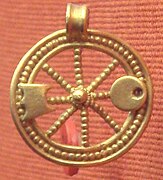
The Golden Wheel from Haute Marne in France, (Public Domain, Wikipedia)
Did the Celts have a sun-god? Belenos is a contender, but linguists are proposing his name does not come from words meaning bright but from strong. The God Lugh’s name is suggested to mean ‘shining’ but his attributes are more of a warrior than a sun god. Taranis is probably the best candidate, but he is more of a sky or thunder god than specifically a sun god. However, his symbol is a 8 spoked wheel is said to be symbolic of the Sun. It also represents the division of the year by the 4 quarterly sun festivals (Winter Solstice, Spring Equinox, Summer Solstice and Autumn Equinox) and the 4 cross-quarter festivals, (Samhain or Halloween, Imbolc or Candlemas, Beltane or May Day, Lughnasa or Harvest Festival).
December 25th is a few days after our reckoning of the Solstice. But, as we have previously seen, Christians believed the world was created on the Spring Equinox, and humans on the 4th day, so Adam was created on March 25th. Mary conceived on the same day, and therefore Jesus, after a perfect labour was born 9 Months later on December 25th. (See my post on March 25th and the Creation)
Christmas Cake
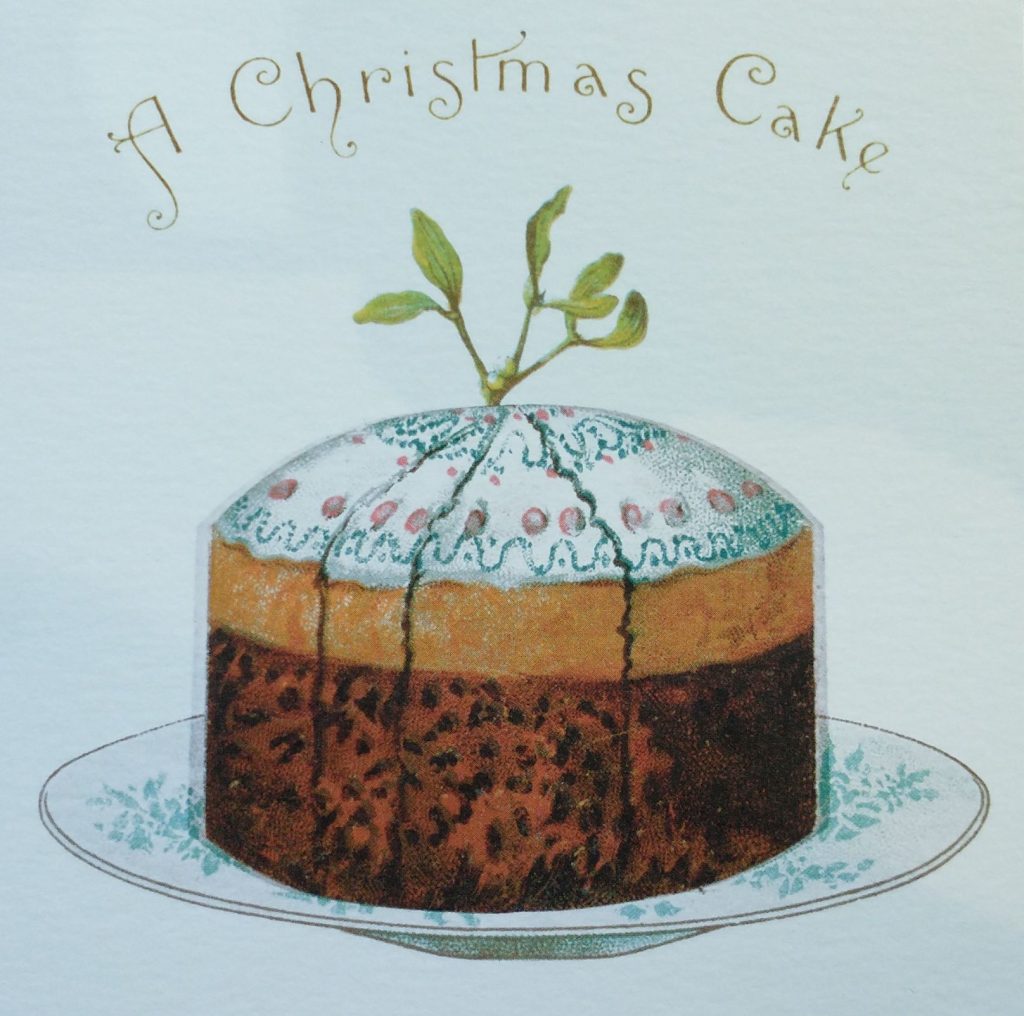
Today, you might be tucking into a Christmas Cake (originally eaten on Twelfth Night). Now, I know many Americans have a bizarre belief that fruit cake is the cake of the devil. Something you receive as a gift and give away to someone else, as most Americans hate it. More fool them for missing out on one of the delights of the Christmas period, that and cold turkey sandwiches. Christmas Cake is made on stir up Sunday, the last Sunday in November, to let the ingredients develop their flavour. They are then covered with marzipan and decorative icing.
19th Century Christmas Cake, generally now the icing continues down the side of the cake.
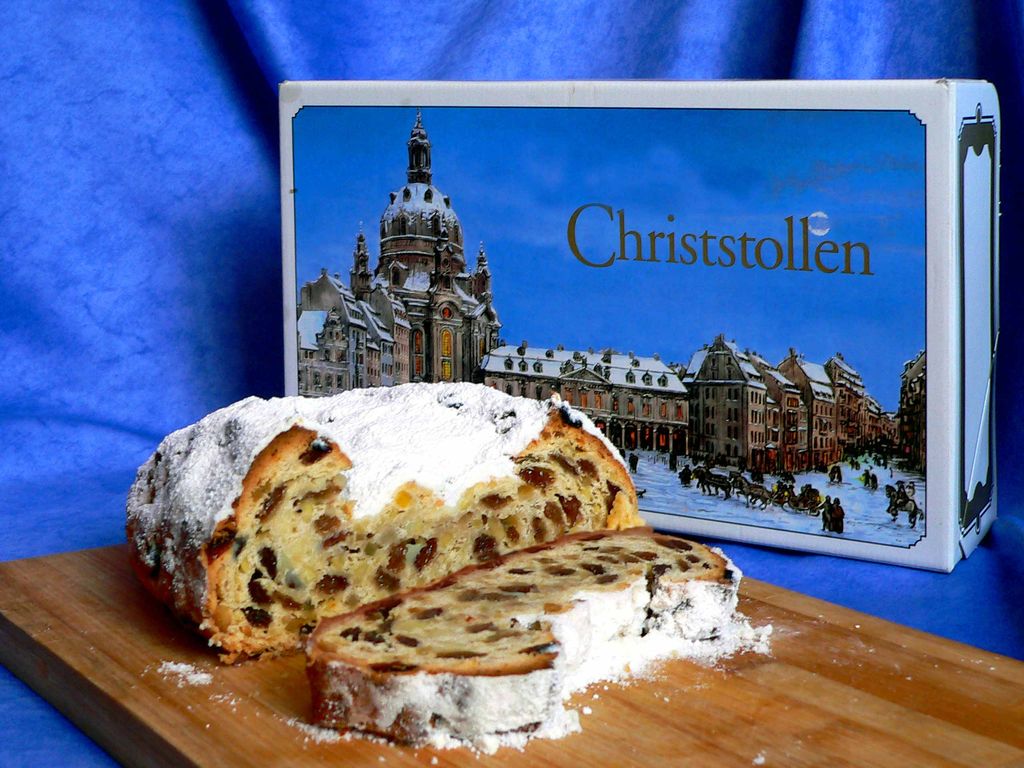
In Germany, they also eat a fruit bread called Stollen or Weihnachtsstollen. The tradition is said to have been started in the 15th Century, when the Pope gave dispensation to allow the use of butter in the fasting period of Advent. Previously, the Germans had to use oil to replace the banned butter, but they could only make oil from turnips, so eventually the Pope allowed the use of butter, with which they made bread with added dried fruits.
Stollen By Gürgi – Own work, Public Domain, https://commons.wikimedia.org/w/index.php?curid=3720379
In Italy, they eat Panettone, a fruit bread/cake. It is a sourdough, and a cross between a brioche and a cake. It often comes in a beautiful decorative tin, and is delicious. The centre of panettone production is Milan. Last year was the 200th Anniversary of Milan’s famous Marchesi 1824 which makes artisanal Panettone. It used ‘fine ingredients such as six-crown sultan as, naturally candied fruit, Bourbon vanilla from Madagascar, Italian honey and eggs from free-range hens, blended in a slow-rising dough with the exclusive use of Marchesi 1824 sourdough starter‘. Thank you, Mara from Milan, for the heads-up.
Screen shot from website – does not click through to sales!
Which is best? The only way to find out is to eat several slices of each. America, you don’t know what you are missing.
For stir up sunday see the second half of this post of mine.
The Winter Solstice this year is: Sunday, December 21, at 3.03pm GMT in the UK. according to the Royal Museums Greenwich. Today, the Sun is at its lowest midday height of the year. This morning was the most southerly rising of the Sun this year. If the southward diminishing of the Sun everyday were to continue, life will be extinguished on earth. The world would have no light and no heat. So, societies all round the world, made a point of honouring their Sun Gods and Goddesses on this day.
And so on this day, or so it was thought, our Deities renew their promises as the Sun begins its rebirth. It begins to rise further north each day, the Sun at noon is higher, and it sets further north. So the days are longer, brighter, eventually warmer. Thank God(s)!
For some, it’s just the turn in the cycle of life. For others, it’s the death of the old Sun and the birth of a brand-new Sun. The Egyptians believed that the sun was reborn every day as a dung beetle.
Symbolically, the winter solstice is an ending as well as a beginning. It is a turning point and a promise by the Deity that the world will continue. It will turn, the wheel will turn. Warmth and growth will return. Buds already growing in the earth will break out and bring new growth.
The Winter Solstice – time for a party!
Culturally, it’s a time to have a party before the weather gets really cold. It is a time to evaluate your life; look back at the lessons from the last year. A time to begin, like the Sun, a new and hopefully better cycle.
Note. So if the Sun is at its shortest and weakest, why isn’t it the coldest time of the year? That is because the earth and particularly the oceans retain the heat of the Sun, and so the coldest time is at the end of January.
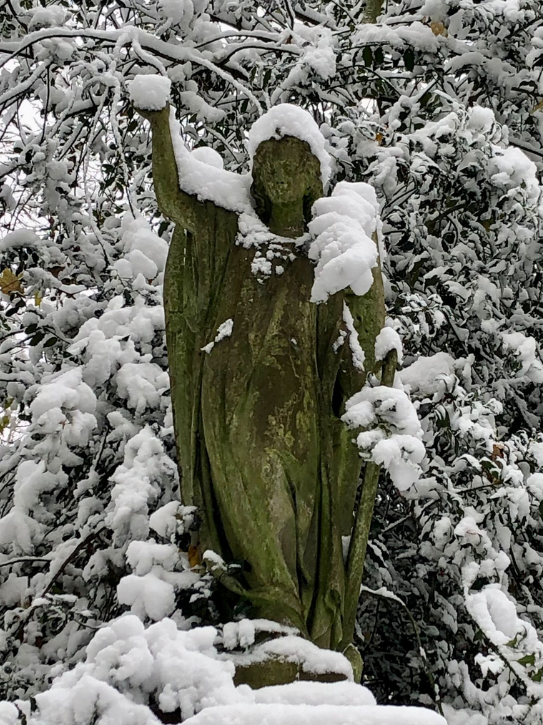
Abney Park cemetery in winter photo by Harriet Salsibury
Hesiod is a contemporary of Homer, and therefore one of the first European poets, writing about 700BC. One of the first commentators on Greek life, thought, religion, mythology, farming and time keeping. Hesiod’s Works & Days ‘ is his Farmers Almanac and therefore long overdue an appearance on my Almanac of the Past.
Hesiod’s poems also introduce the idea of the epoch. Past glorious epochs of Gold and Bronze with a further descent to his own epoch which was of the base metal age of Iron. His so-called Myth of Five Ages, starts with a Golden Age, in which Humans don’t need to work. Followed by a Silver Age where they live to one hundred years, but live a life of strife. The Bronze Age follows which is an even tougher age as the bronze armoured men are thoroughly violent. The Age of Heroes follows which is the age of the Trojan War. There follows the Iron Age which is Hesiod’s age a time of toil and misery!
.In the 19th Century, European antiquarians, imbued with a humanist belief in Progress, developed the idea of Stone, Bronze and Iron Ages, an almost direct opposite of Hesiod’s, downhill-all-the-way to the present day idea.
Hesiod also brings in early references to Prometheus and Pandora, two of the great myths of the flaws of humanity.
Hesiod and Winter
This is what he says of Winter. It is from a translation by Christopher Kelk, available to download here (I have added line breaks after full stops, just for ease of reading.)
Excerpt from Hesiod’s Works & Days
…. you should make A detour during winter when the cold Keeps men from work, for then a busy man May serve his house. Let hardship not take hold, Nor helplessness, through cruel winter’s span, Nor rub your swollen foot with scrawny hand.
An idle man will often, while in vain He hopes, lacking a living from his land, Consider crime. A needy man will gain Nothing from hope while sitting in the street And gossiping, no livelihood in sight.
Say to your slaves in the midsummer heat: “There won’t always be summer, shining bright – Build barns.” Lenaion’s evil days, which gall The oxen, guard yourself against. Beware Of hoar-frosts, too, which bring distress to all When the North Wind blows, which blasts upon the air In horse-rich Thrace and rouses the broad sea, Making the earth and woods resound with wails.
He falls on many a lofty-leafed oak-tree And on thick pines along the mountain-vales And fecund earth, the vast woods bellowing. The wild beasts, tails between their legs, all shake.
Although their shaggy hair is covering Their hides, yet still the cold will always make Their way straight through the hairiest beast.
Straight through An ox’s hide the North Wind blows and drills Through long-haired goats. His strength, though, cannot do Great harm to sheep who keep away all chills With ample fleece. He makes old men stoop low But soft-skinned maids he never will go through – They stay indoors, who as yet do not know Gold Aphrodite’s work, a comfort to Their darling mothers, and their tender skin They wash and smear with oil in winter’s space And slumber in a bedroom far within The house, when in his cold and dreadful place The Boneless gnaws his foot (the sun won’t show Him pastures but rotate around the land Of black men and for all the Greeks is slow To brighten).
That’s the time the hornèd and The unhorned beasts of the wood flee to the brush, Teeth all a-chatter, with one thought in mind – To find some thick-packed shelter, p’raps a bush Or hollow rock. Like one with head inclined Towards the ground, spine shattered, with a stick To hold him up, they wander as they try To circumvent the snow.
As I ordain, Shelter your body, too, when snow is nigh – A fleecy coat and, reaching to the floor, A tunic. Both the warp and woof must you Entwine but of the woof there must be more Than of the warp. Don this, for, if you do, Your hair stays still, not shaking everywhere.
Be stoutly shod with ox-hide boots which you Must line with felt. In winter have a care To sew two young kids’ hides to the sinew Of an ox to keep the downpour from your back, A knit cap for your head to keep your ears From getting wet.
It’s freezing at the crack Of dawn, which from the starry sky appears When Boreas drops down: then is there spread A fruitful mist upon the land which falls Upon the blessed fields and which is fed By endless rivers, raised on high by squalls.
Sometimes it rains at evening, then again, When the thickly-compressed clouds are animated By Thracian Boreas, it blows hard. Then It is the time, having anticipated All this, to finish and go home lest you Should be enwrapped by some dark cloud, heaven-sent, Your flesh all wet, your clothing drenched right through.
This is the harshest month, both violent And harsh to beast and man – so you have need To be alert. Give to your men more fare Than usual but halve your oxen’s feed. The helpful nights are long, and so take care.
Keep at this till the year’s end when the days And nights are equal and a diverse crop
Keep at this till the year’s end when the days And nights are equal and a diverse crop Springs from our mother earth and winter’s phase Is two months old and from pure Ocean’s top Arcturus rises, shining, at twilight.
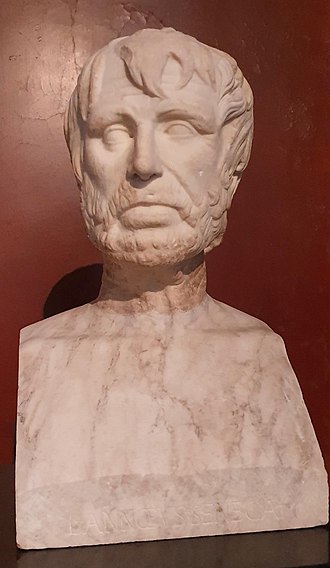
Roman Bust of Hesiod (Wikipedia photo by Yair Hakla) Neues Museum
Acturus is not seen in winter, and in the Northern Hemisphere its rising (50 days after the winter solstice) and has always been associated with the advent of spring.
Boreas was the winged God of the North wind, which bore down from the cold Mountains of Thrace (north of Macedonia). One of his daughters, Khione, was the Goddess of Snow. Lenaion was associated with January one of the festivals of Dionysus, and a theatrical season in Athens particularly for comedy.
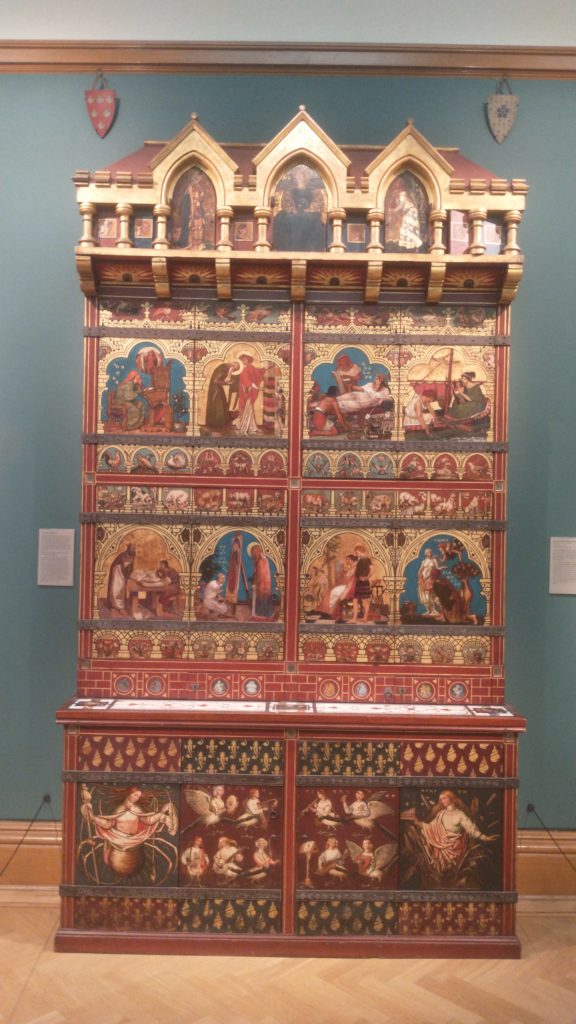
The Great Bookcase by William Burges Ashmolean Museum (Photo K. Flude)
The Ashmolean posts, every year, an online Advent Calendar with gorgeous items behind each ‘flap’. The choice seems to be, mostly, a random selection. But their collection is so wonderful, they are all interesting.
The Great Bookcase by William Burges & the Singing Pierides
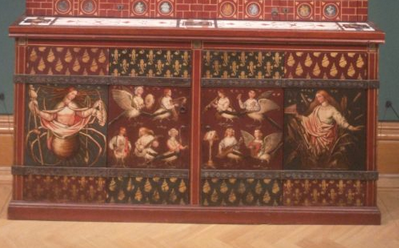
In 2022 The Ashmolean featured the Great Bookcase by William Burges. Burges is one of the great Gothic Revival architects and a designer in the Arts & Crafts Movement with an affinity for Pre-Raphaelite painters. He asked 14 of them to paint panels on his bookcase. The decorative scheme was to represent the Pagan and Christian Arts (Museum label).At the bottom of the Wardrobe are the Singing Pierides painted by Henry Stacy Marks. The Pierides were a sort of classical Greek Von Trapp singers, 9 daughters who foolishly challenged the Muses to a singing competition. Of course, the Goddesses of the Arts — the Muses won., As punishment for their vanity, they turned the Pierides into songbirds. Let this be a warning to all those who overrate their own talents!
‘Whenever the daughters of Pierus began to sing, all creation went dark and no one would give an ear to their choral performance. But when the Muses sang, heaven, the stars, the sea and rivers stood still, while Mount Helicon, beguiled by the pleasure of it all, swelled skywards tilI, by the will of Poseidon, Pegasus checked it by striking the summit with his hoof.
Since these mortals had taken upon themselves to strive with goddesses, the Muses changed them into nine birds. To this day people refer to them as the grebe, the wryneck, the ortolan, the jay, the greenfinch, the goldfinch, the duck, the woodpecker and the dracontis pigeon.’
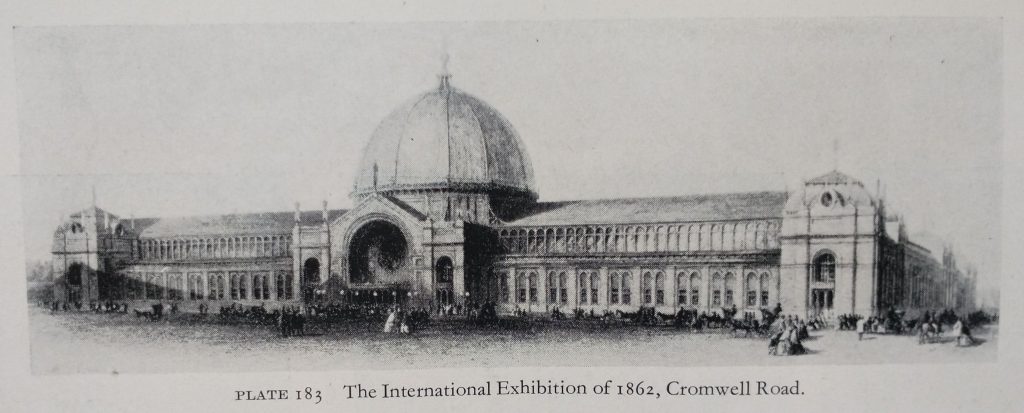
Print of the International Exhibition of 1862, South Kensington
The bookcase by William Burges was originally displayed as the centre point of the ‘Medieval Court’ of the 1862 International Exhibition, South Kensington, London. The Exhibition was almost as successful as the more famous Great Exhibition of 1851. Both got about 6m visitors. The 1862 Exhibition was just south of the site of the 1851 (on the south side of Hyde Park) and in what were then the Royal Horticultural Society’s gardens (now the Science, Natural History Museum, Imperial College etc.)
Raphael
This year, they posted a Raphael drawing of an angle. I show a screen shot below. But to have a real look click here.
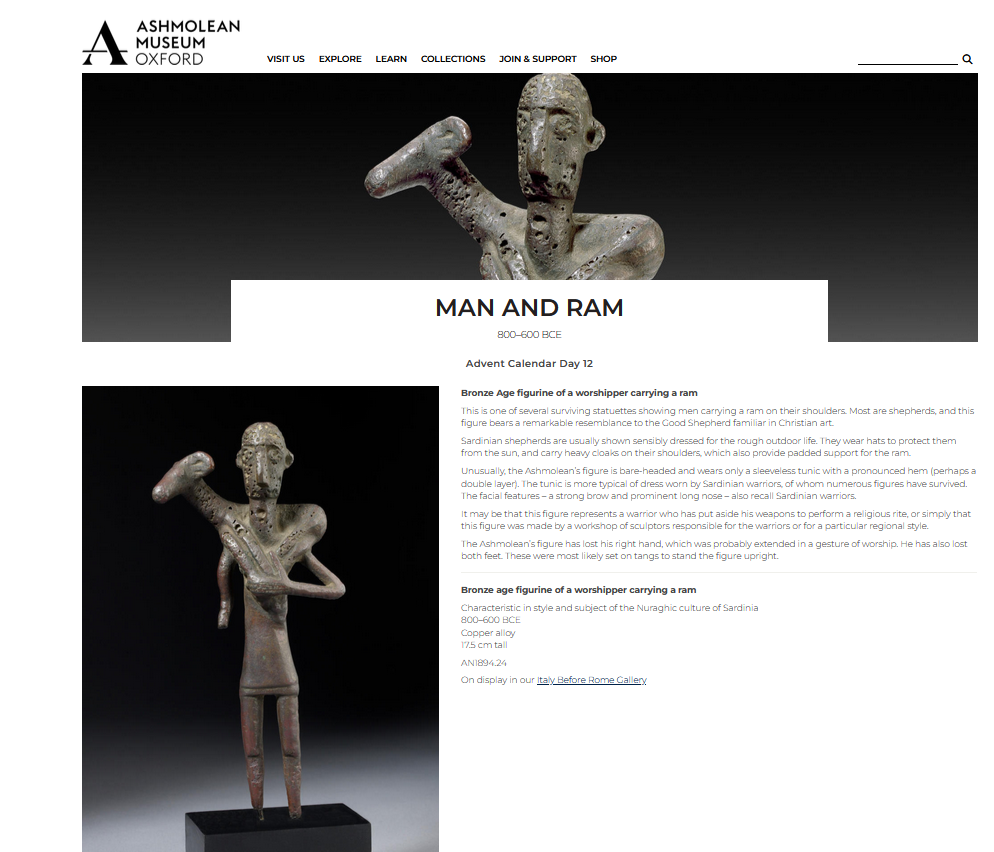
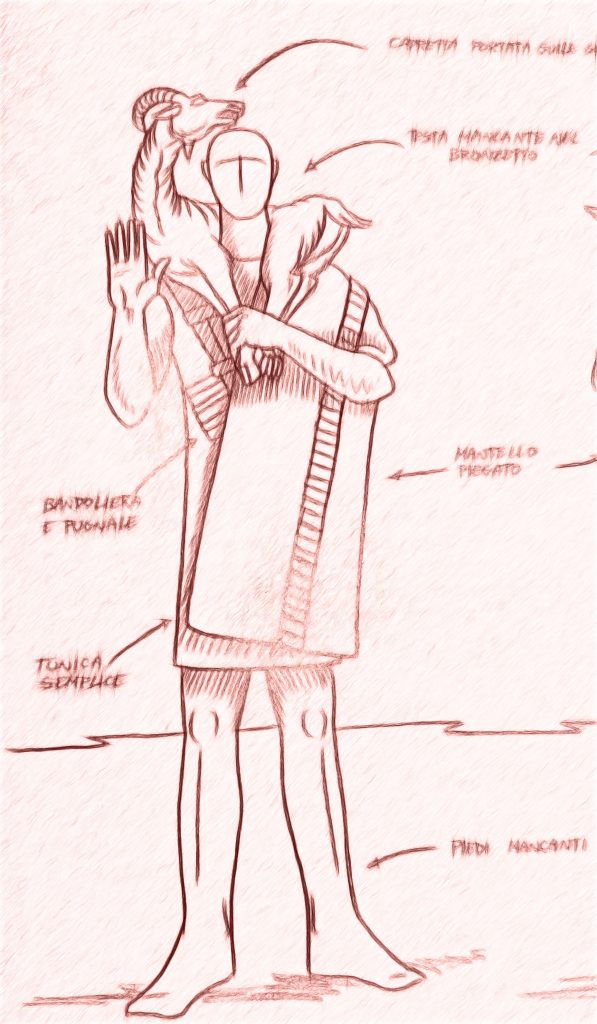
I discovered the Nuragi on a University Field trip, with my students, to the Capital of Sardinia, Cagliari. The Nuragic culture is not well known. However they have amazing Bronze sculptures which give the viewer a really vivid view of their lives and fashions in the Bronze Age. They lived in round towers called nuraghe, which are a little like the Brochs of Scotland. They were around during the time of the Mycenaean Culture in Greece. But their origins and indeed their history are argued about. They may be part of the ‘Sea People’ who brought the end to the Bronze Age cultures of the Eastern Mediterranean, or they may not.
Here, in Britain, the Bronze Age is dominated by discussions of henges, barrows, metal axes and swords. But with very little sense of what life was like to live in those days. However, go to the Cagliari Museum, look at these wonderful statues, and it becomes possible to picture the people. Particularly with a copy of ‘Il Popolo di Bronzo’ by Angela Demontis to hand. It is a catalogue of Nuragi statures with interpretative drawings. It really brings the people to life depicted in the statues. They are mostly warriors, but also there are ‘normal trades’ such as shepherds and bakers which are depicted as well.
Here is my slight adaption of one of the drawings. It is of a shepherd similar to the one photo’d above.
A sketch drawing of a Nuragi sculpture derived from ‘Il Popolo di bronzo’ by Angela Demontis
What you can see is some detail of the clothes and the knife belt around the torso. Not to mention the sheep around his neck! The drawing brings a living person from the Bronze Age before you, not just a lump of bronze. Wikipedia has a long article on the nuragic culture. You can see a wonderful collection of nuragi bronzes and their homes on this website.here.
Originally written for December 12, 2022, revised and republished December 2023, and the Nuragi added in 2024 and Raphael added in 2025
Robins brought water to relieve tormented souls in Hell and, so, got their breasts scorched; their breasts were stained with Jesus’ blood; they fanned, with their wings, the flames of a fire to keep baby Jesus warm and got scorched. All these associations with Jesus make their association with Christmas and Christmas cards perfect sense.
They are the Celtic Oak King of the New Sun. The Wren is the bird of the Old Sun. The Robin is the son of the Wren. The Robin kills his father. So the New Sun takes over from the Old Sun at the Winter Solstice. And the Robin takes over from the Wren.
The blood of the father Wren stains the Robin’s breast. In Celtic Folklore, Robins are said to shelter in Holly trees. Robins appear when loved ones are near. If a Robin comes into your house, a death will follow.
Perhaps this gives a context for Shakespeare’s mention of a robin (a ruddock he called it) which he grants the power of censure. In the play Cymberline, Innogen has been found dead, and amidst the floral tributes mentioned is the following (cors is corpse):
the ruddock would with charitable bill (Oh bill sore shaming those rich-left-heirs, that let their Father’s lie without a Monument) – bring thee all this; Yea, and furr’d Mosse besides. When Flowres are none To winter-ground thy cors
(Cymbeline, Act 4 scene 2)
Robin’s Habits
They are one of the few birds to be seen all year round, and they sing all year too. But they have different songs for autumn and spring. Robins sing from concealed spaces in trees or bushes. They are the first to sing in the morning, the last to stop at night, and can be triggered by street lights turning on. A Robin can sing all the notes on the scale and can sing for half an hour without repeating a melody.
They eat worms, seeds, fruits, insects and other invertebrates. Robins are aggressively territorial, and are our favourite birds. (RSPB)
On this Day
1554 – ‘the same day at after-noon was a bear bitten on the Bank side, and broke loose and in running away he caught a serving man by the calf of the leg, and bit a great piece away and after by the ‘hokyl-bone’ within 3 days after he died.’
Henry Machyn’s Diary quoted in ‘A London Year’ complied by Travis Elborough & Nick Rennison.
Hokyl-bone might be the holbourne stream inn what we now call holborn. Or it might be another name for the tarsus bone, the heel bone. But it doesn’t really make sense if it’s a bone. But the bear dying 3 days later by the steam makes some sort of sense.
Written December 9th 2024, revised and the Bank side incident with the Bear added 2025
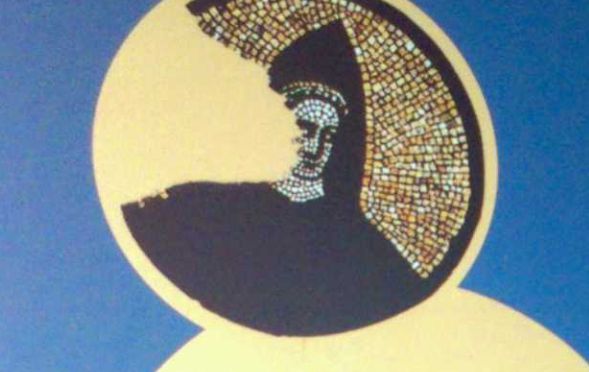
Roman Mosaic from Lullingstone Villa, Kent representing winter
This is the second day of Winter. Winter is hiems in Latin; Gaeaf in Welsh. Geimhreadh in Old Irish; Wintar in Anglo-Saxon. The Anglo-Saxons counted years by winters, so a child might be said to be 4 winters old.
Winter, meteorologically speaking, is described in the Northern Hemisphere as being December, January, and February, which is, of course, a convention rather than a fact. There is nothing about December 1st that makes it more ‘wintery’ than November 30th or December 2nd. Astronomically, winter starts with the Winter Solstice when the sun is at its lowest and so stretches from around December 21st to the Equinox around March 21st.
Logically, the solstice, when the Sun is at its weakest, should be the coldest day, and a midpoint of winter rather than the beginning of it. With 6 weeks of winter on either side of it. This is roughly what the Celtic year does, winter starts at dusk on 31st October (Halloween/Samhain) and continues to the evening of 31st January (Candlemas/Imbolc). So a Celtic Winter is November, December, and January.
As far as the Sun goes, this is logically correct. In fact, because of the presence of the oceans (and to a lesser extent) the earth, the coldest time is not the Solstice when the Sun is at its weakest. But a few weeks later in January. Heat is retained by oceans (and the landmass), and so the coldest (and the warmest) periods are offset. Therefore, January 13th is probably the coldest day, not December 21st.
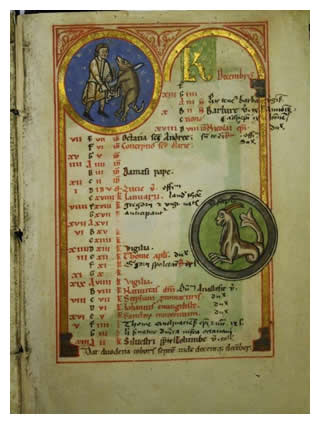
Medieval Liturgical Calendar for December. Note the image at the top which suggests this is the month for hunting bears.
My Own Winter
My personal calendar suggests that winter begins on November 5th because this is the day I generally notice how cold it has suddenly become. The house smart meter also identifies the week of November 4th being the day when the heating bill goes through the roof. However, this was not true this year, where in the London area we had a warm spell.
A final thought about Winter. Isn’t it strange that a small change in the axis of the planet should create such opposites? Cold and little growth, then hot and an explosion of flowers. Opposites just with a little tilt of the Globe towards the Sun. This, in the vastness of space, with unimaginably cold and unbelievable hot places and spaces. These make tiny the little difference between Summer and Winter seem insignificant. And yet to us, they are opposites and central facts to our existence as a species. In places, temperature ‘extremes’ make it hard to survive in. Some think this is because God made the Universe just for us. But, just think, we are completely adapted to our lives on our very own, blue planet.
A Roman View of Winter
Ovid, the great Roman poet wrote this poem on his exile from Rome to Tomis, on the Black Sea in what is now Romania. We don’t know why he was exiled, but he felt it bitterly. And winter is used to effect to show his pain.
Winter in Tomis
Harsh lands lie before him As he struggles to keep his wit Malicious thoughts infecting- Crippling the morale of his spirit Shattered visions of the fallen begin to transpire.. An awful nostalgia consumes him. A crooked smile forms..exalting the dead
So began the fall of a mastermind.
Realizing as his mind falls to pieces They are but catalysts – parts of a puzzle to a different plan As the images surfaced, his virtue descends Living amongst those barbarians Though a fierce complication Their tact was that of a wounded creature And they were overrun
“I remain in exile My bones grow weak like the sun Descending into the trees To end this daily affliction As winter shows its pallid face And the earth veiled with marbled frost Forsaken – this gradual madness consumes my mind Perdition in Tomis
Undead armies of Tomis Commanded only by the presence of my absense Brought to life by the death of myself Risen to ease this torment Sacrilege; The second chance to formulate a reason The relapse crucifixion forthwith to go into effect Casting him away; instead insuring their demise.
I remain in exile My bones grow weak like the sun Descending into the trees To end this daily affliction As winter shows its pallid face And the earth veiled with marbled frost Forsaken – this gradual madness consumes my mind Perdition in Tomis
Each day passing now I beg for some remorse Desperately grasping at what I feel to be my last bit of life But unlike the cycle of the attic I feel as though there is no recourse I’ve withered to nothing.”
“Save me from drowning, and death will be a blessing.” Hope for his designed tomb “Rescue my weary spirit from annihilation If one already lost may be un-lost”
Ovid abandoned writing his almanac poem because of his exile, so it never got beyond the Summer. To read about this see my post here or search for Ovid from the menu.
On this day
1859 – John Brown was hanged, following his raid on Harpers Ferry, violently opposing slavery.
1954 – Joseph McCarthy was formally censured by the Senate for the methods used in his anti-communist campaigns.
Published in 2024, and revised adding Ovid in 2025
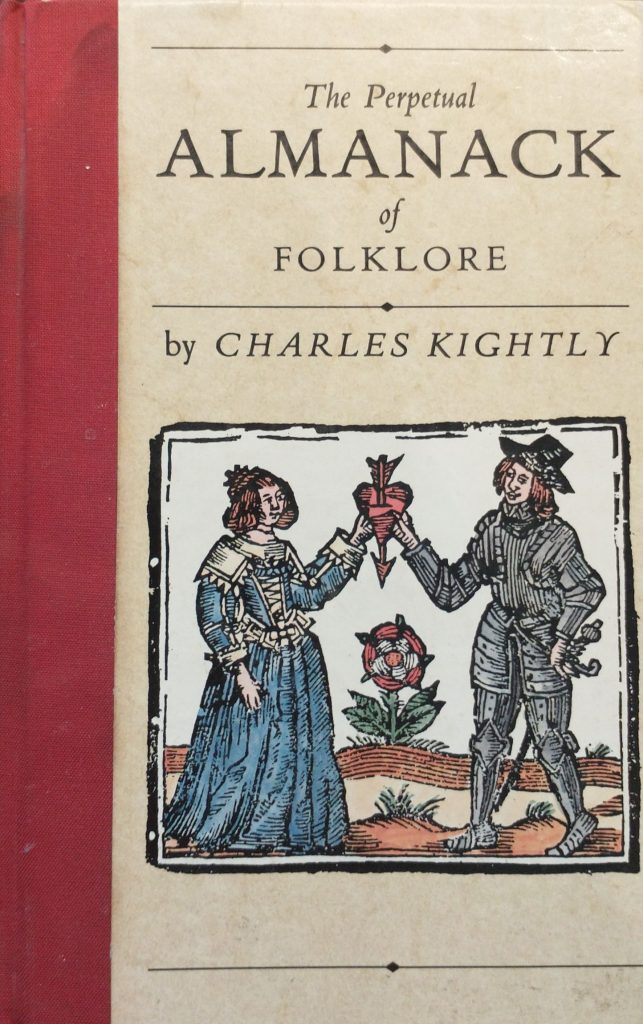
From the Perpetual Almanack of Folklore by Charles Kightly
I began my perpetual Almanac of the Past four years ago on the 31st October 2021. This was the first line:
‘This blog is to celebrate the Year. I will post, hopefully, once a day, so we can follow the seasons, as they happen naturally, and as people in Britain and Ireland have responded to the changes in the year.’
It was inspired by Charles Kightly’s book, which is a pot-pourri of folklore taken mostly from old Almanacs. I haven’t managed, yet to create a post for every day of the year, nearly managed it in the winter but falling behind in the Summer when I take Road Scholar groups around the UK. My plan is to fill in the gaps, improve posts and get rid of typos. Another aim is to add more London-specific content.
Cover of Charles Kightly’s Perpetual Almanac
I started on Halloween because Samhain (pronounced Sow-in) was the beginning of the year for the Celtic world. It may mean Summer’s End. In Wales, it is Calan Gaeaf (first day of winter) and Kala Goafiv (beginning of November in Brittany).
Why did the Celts start their year at such an unlikely time? A clue is that they began the next day at dusk. The Sun dies at dusk so it is the end of the day, and the next day begins with the death of the old day.
So the New Year begins with the Death of the Old Year. Now that might suggest the Winter Solstice as the best time to start the year as this celebrates the death of the old Sun. (see my winter solstice post here :) But, the end of October has, perhaps a better claim. The harvest is in, the fruits in the trees and the nuts are harvested, all the growth of the Summer is over and collected. Plants are mostly dead or dormant, except some evergreens. It is the end of the growing year. The seeds have fallen from the trees and shrubs and are nestling in the soil, ready to begin their cycle again. All is over and all is ready for the new year. Makes sense?
The Celtic way also explains eves; Christmas Eve, New Year’s Eve, May Eve, All Hallow’s Eve. They are not the night before the day, they are the beginning of the day. This is when you begin the celebration.
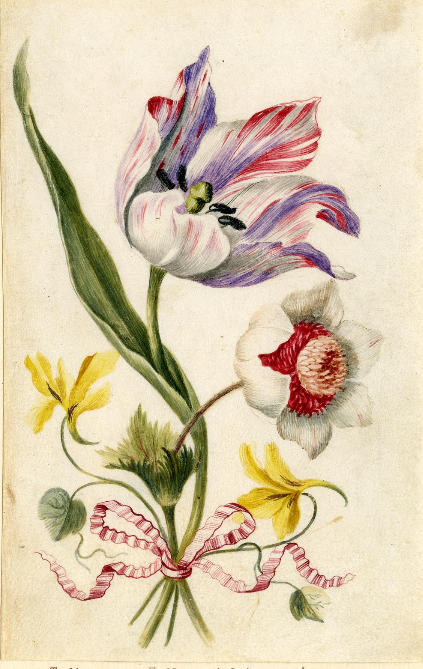
For the Romans, today is the day that Adonis is injured hunting a wild boar. Against his lover’s (Venus) advice, he descends to the underworld. Nature withers and dies until he returns from the underworld. His blood stains a flower and was transformed into the Crimson Anemone. There is a similar story in Babylon of Ishtar and Tammuz.
By Alexander Marshall, crimson and other anemones Binyon 1898-1907 / Catalogue of drawings by British artists, and artists of foreign origin working in Great Britain (5(c))
Adonis comes back on May Day when he meets Venus again, so the world flourishes and is bright and warm.
Julius Caesar says the Gauls venerated the God Dis Pater on this day – an aspect of Pluto, the God of the Underworld, ruler of the Dead. There was a Roman Festival on the Kalends of November dedicated to Pomona, the goddess of the fruit of trees. This may influence the use of Apples, which are prominent in Halloween festivities.