To Celebrate the Anniversary of the Birth of Jane Austen in Steventon on Tuesday 16 December 1775. I am running my Virtual Tour entitled:
Christmas With Jane Austen
tonight at 7:30 GM
It looks at the traditions of Christmas during the Regency period and how Jane Austen might have celebrated it. It will give some background to Jane Austen’s life and her knowledge of London. We used her novels and her letters to find out what she might have done at Christmas.
This is a London Walks Guided Walk by Kevin Flude and to book just click here:
Over the winter, I am running a series of online talks. The next one is on the Winter Solstice.
Sorry about the short notice, but the marketing is all done by London Walks, and tend not to add links to my walks and lectures here. But as today is Jane Austen’s Birthday it seemed silly not to!
These are the upcoming Virtual Tours. To book for any click here:
St Lucy, by Francesco del Cossa (c. 1430 – c. 1477) (Wikipedia User:Postdlf)
I reposted my two posts on St Lucy, and the follow-up email on eye-care, on the appropriate days. But the email to subscribers was not sent. So here it is again. The name Lucy is from the same Latin origin (Lucidus) as lucent, lux, and lucid. It means to be bright, to shine or be clear. It is similar to the Ancient Greek λευκός (leukós, “white, blank, light, bright, clear”. Luke has the same origins (bright one, bringer of light and light of the sacred flame) and is very appropriate for the most literate of the evangelists.
St Lucy of Syracuse
St Lucy is from Syracuse in Sicily. She was a victim of the Diocletian Persecution of Christians in the early 4th Century. She is an authentic early martyr. But details of her story cannot be relied upon as true. She was a virgin, denounced as a Christian by her rejected suitor. Then, miraculously saved from serving in a brothel.; destruction by fire, but did not escape having her eyes gouged out. Finally, her throat was cut with a sword.
Her connection to light (and the eye gouging) makes her the protectress against eye disease. So she is depicted holding two eyes as you can see in the picture at the top of the page. Other symbols include a palm branch which represents martyrdom and victory over evil. Other symbols are lamp, dagger, sword or two oxen.
She appears in Dante’s Divine Comedy, as the messenger to Beatrice whose job is to get Virgil to help Dante explore Heaven, Hell and Heaven.
St. Aldhelm (died in 709) puts St Lucy in the list of the main venerated saints of the early English Church, confirmed by the Venerable Bede (died in 735). Her festival was an important celebration one in England. It was views ‘as a holy day of the second rank in which no work but tillage or the like was allowed’.
Dimming of the Light
This year is a glorious sunny St Lucy’s Day. But, the afternoons soon dim. So, at this time of the year, we are in need of a festival with bright lights to cheer us up! And St Lucy’s Day is the beginning of the winter festival that culminates with the Solstice, where the old sun dies, and the new one is born. December the 13th was the Solstice until Pope Gregory reformed the Calendar in the 16th Century, as nine days were lopped off the year of transition.
Sankta Lucia in Sweden
The festival of Sankta Lucia is particularly popular in Sweden, where December 13th is thought to be the darkest night. In recent years, the Swedish community in the UK has had a service to Lucia in St Pauls. But the last couple of years has been in Westminster Cathedral. This year on the 5th December. And a Santa Lucia Carol Concert on 12 December at St Paul’s. But every year it has either been and gone or sold out by the time I get around to thinking of going!
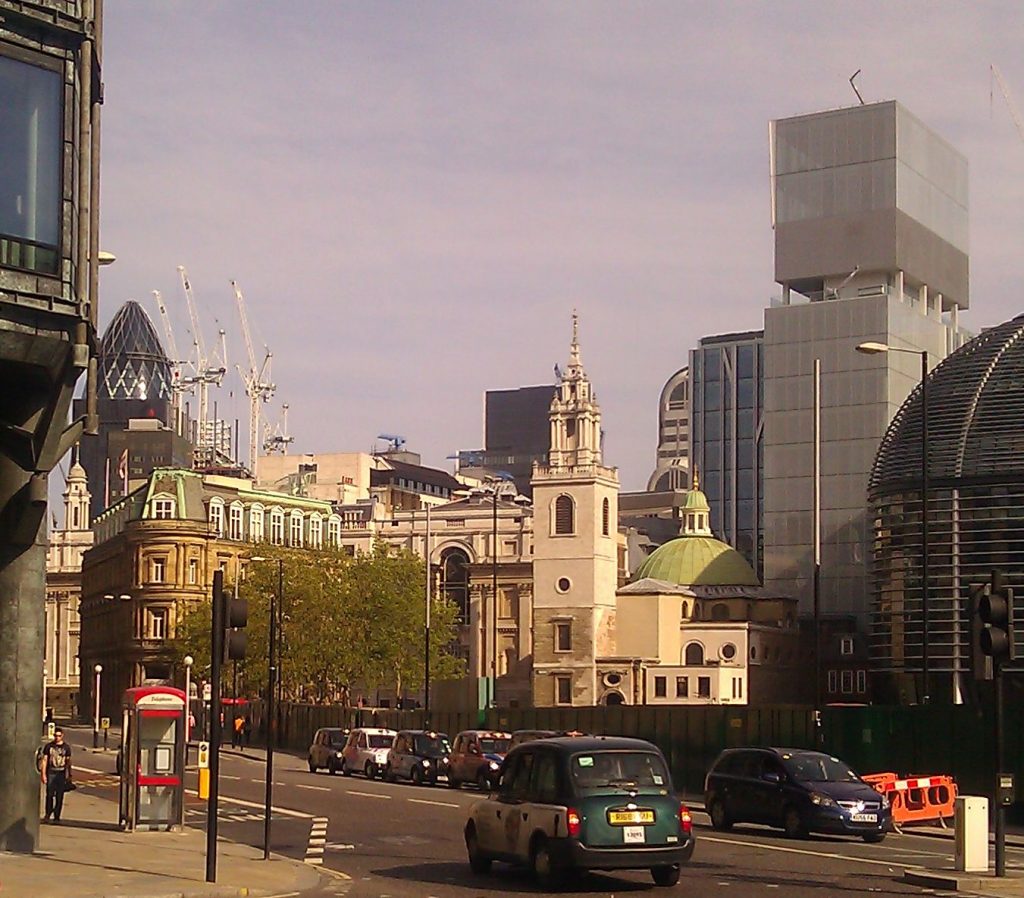
St Stephens Church by Christopher Wren (Photo K Flude) a rare view during building work.
I found out about Sankta Lucia from a Swedish choir who hired me to do a tour of the City of London some years ago. We went into Christopher Wren’s marvellous St Stephen’s Church. Under the magnificent Dome, the choir fancied the acoustics and spontaneously sang. I recorded a snatch of it, which you can hear below
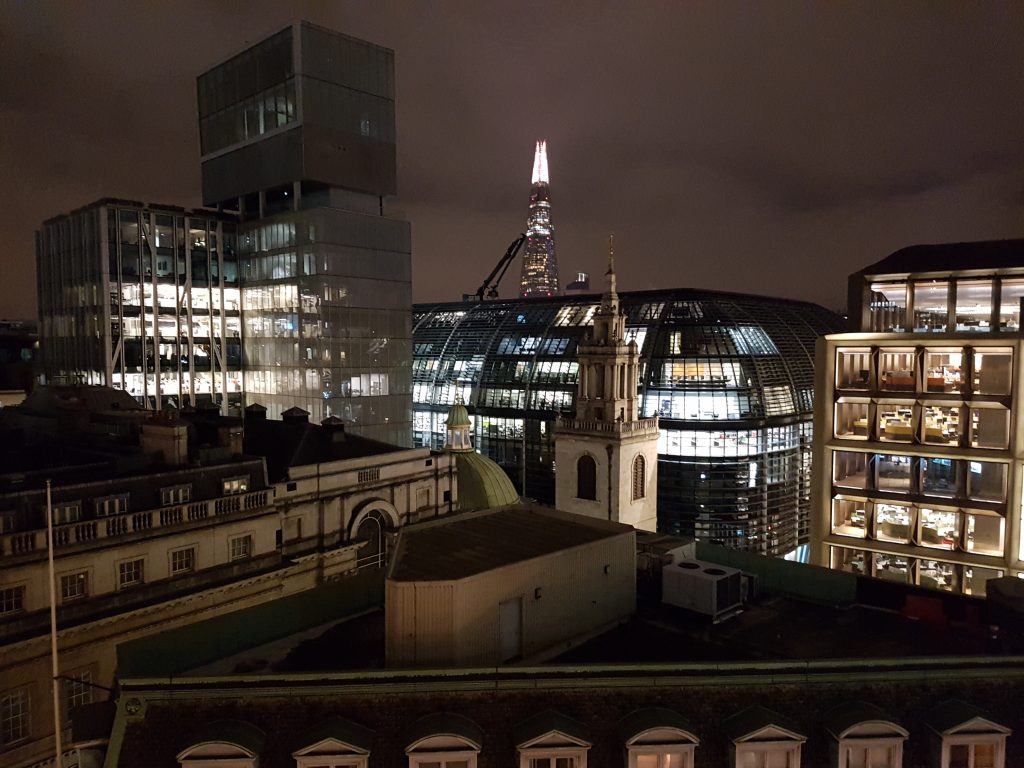
Swedish Choir singing in St Stephen’s London St Stephens Church in the middle foreground of the photo. (Photo K Flude)
You can watch the Sankta Lucia service in Westminster Cathedral below:
The Importance of Light
Recent medical research has shown the importance of light, not only to our mental health but to our sleep health. Work places need to have a decent light level with ‘blue light’ as a component of the lighting. It is also an excellent idea to help your circadian rhymes by going for a morning walk, or morning sun bathing, even on cloudy days. This will help you sleep better. And so St Lucy remains relevant as an inspiration
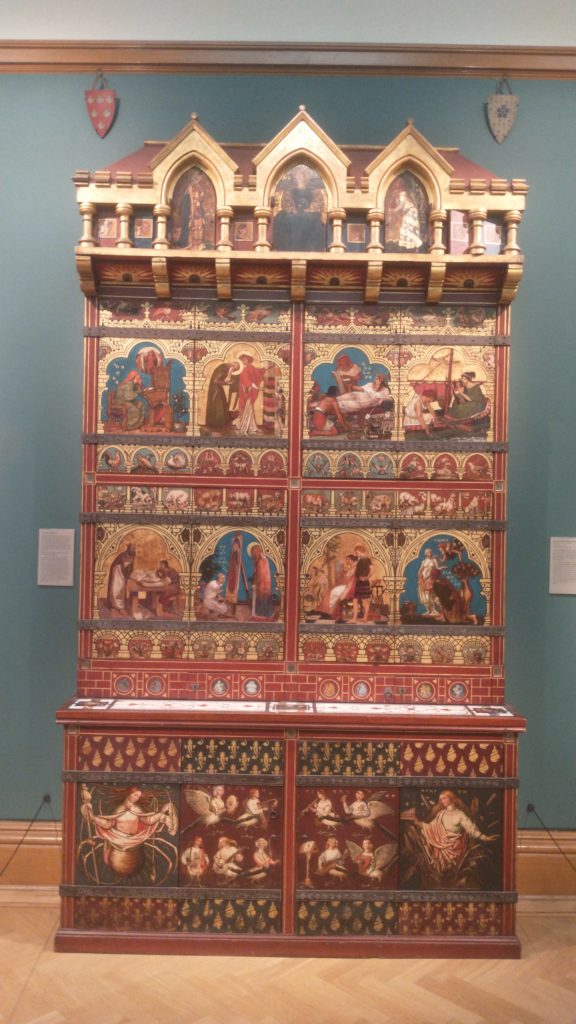
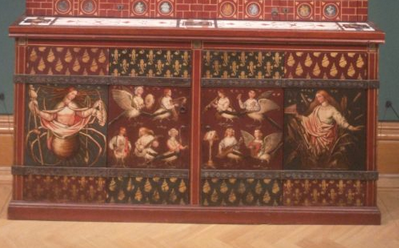
The Great Bookcase by William Burges Ashmolean Museum (Photo K. Flude)
The Ashmolean posts, every year, an online Advent Calendar with gorgeous items behind each ‘flap’. The choice seems to be, mostly, a random selection. But their collection is so wonderful, they are all interesting.
The Great Bookcase by William Burges & the Singing Pierides
In 2022 The Ashmolean featured the Great Bookcase by William Burges. Burges is one of the great Gothic Revival architects and a designer in the Arts & Crafts Movement with an affinity for Pre-Raphaelite painters. He asked 14 of them to paint panels on his bookcase. The decorative scheme was to represent the Pagan and Christian Arts (Museum label).At the bottom of the Wardrobe are the Singing Pierides painted by Henry Stacy Marks. The Pierides were a sort of classical Greek Von Trapp singers, 9 daughters who foolishly challenged the Muses to a singing competition. Of course, the Goddesses of the Arts — the Muses won., As punishment for their vanity, they turned the Pierides into songbirds. Let this be a warning to all those who overrate their own talents!
‘Whenever the daughters of Pierus began to sing, all creation went dark and no one would give an ear to their choral performance. But when the Muses sang, heaven, the stars, the sea and rivers stood still, while Mount Helicon, beguiled by the pleasure of it all, swelled skywards tilI, by the will of Poseidon, Pegasus checked it by striking the summit with his hoof.
Since these mortals had taken upon themselves to strive with goddesses, the Muses changed them into nine birds. To this day people refer to them as the grebe, the wryneck, the ortolan, the jay, the greenfinch, the goldfinch, the duck, the woodpecker and the dracontis pigeon.’
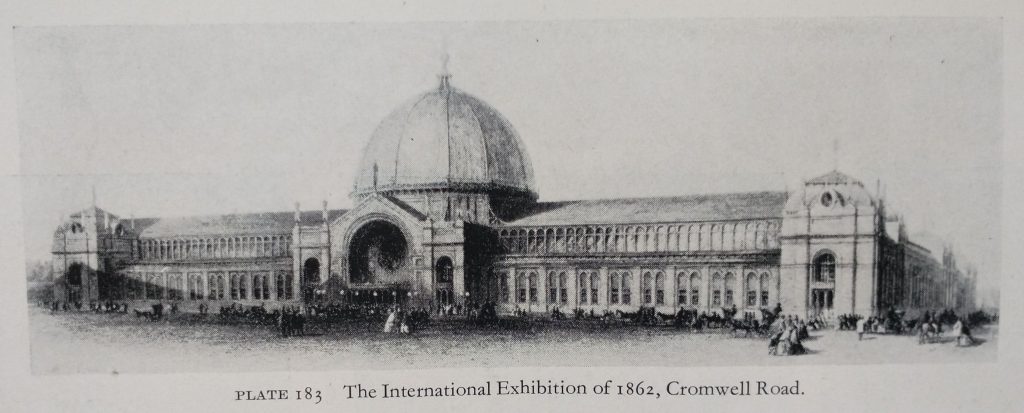
Print of the International Exhibition of 1862, South Kensington
The bookcase by William Burges was originally displayed as the centre point of the ‘Medieval Court’ of the 1862 International Exhibition, South Kensington, London. The Exhibition was almost as successful as the more famous Great Exhibition of 1851. Both got about 6m visitors. The 1862 Exhibition was just south of the site of the 1851 (on the south side of Hyde Park) and in what were then the Royal Horticultural Society’s gardens (now the Science, Natural History Museum, Imperial College etc.)
Raphael
This year, they posted a Raphael drawing of an angle. I show a screen shot below. But to have a real look click here.
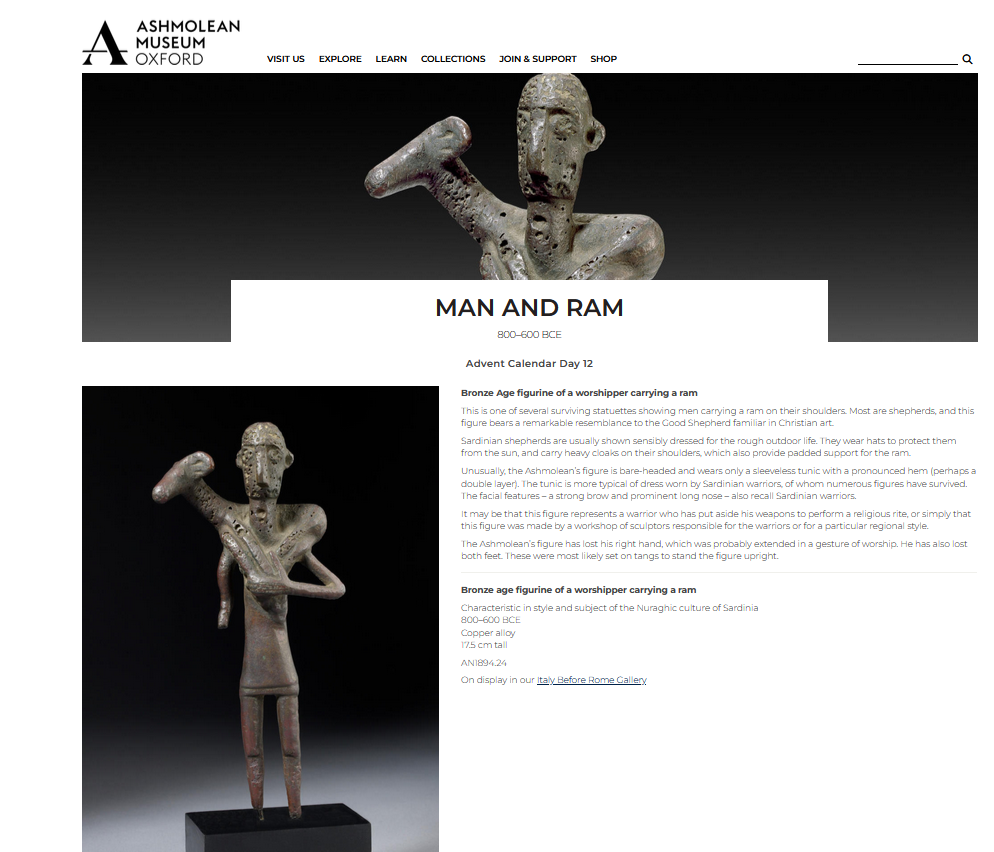
I discovered the Nuragi on a University Field trip, with my students, to the Capital of Sardinia, Cagliari. The Nuragic culture is not well known. However they have amazing Bronze sculptures which give the viewer a really vivid view of their lives and fashions in the Bronze Age. They lived in round towers called nuraghe, which are a little like the Brochs of Scotland. They were around during the time of the Mycenaean Culture in Greece. But their origins and indeed their history are argued about. They may be part of the ‘Sea People’ who brought the end to the Bronze Age cultures of the Eastern Mediterranean, or they may not.
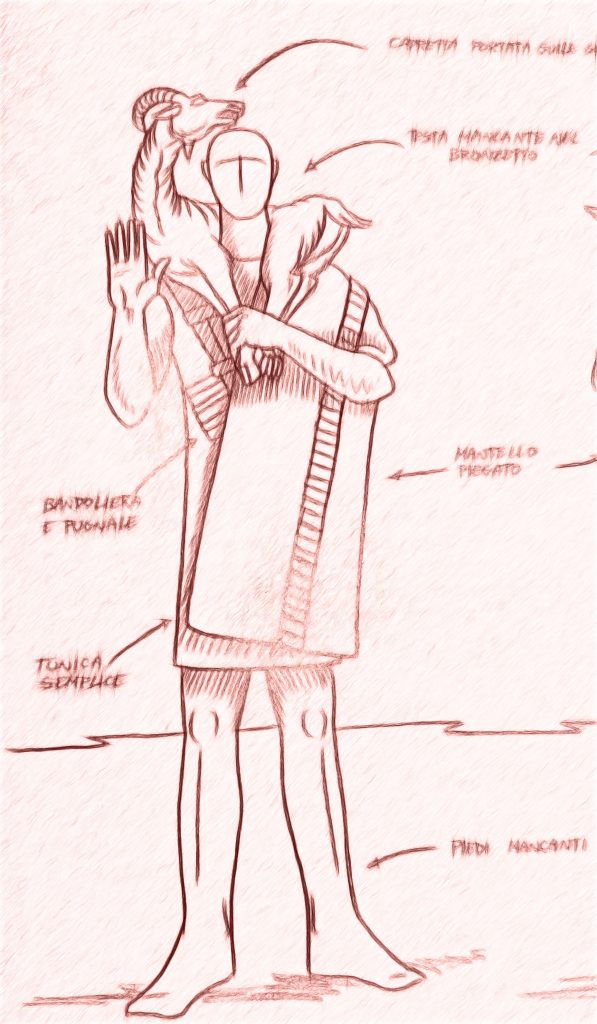
Here, in Britain, the Bronze Age is dominated by discussions of henges, barrows, metal axes and swords. But with very little sense of what life was like to live in those days. However, go to the Cagliari Museum, look at these wonderful statues, and it becomes possible to picture the people. Particularly with a copy of ‘Il Popolo di Bronzo’ by Angela Demontis to hand. It is a catalogue of Nuragi statures with interpretative drawings. It really brings the people to life depicted in the statues. They are mostly warriors, but also there are ‘normal trades’ such as shepherds and bakers which are depicted as well.
Here is my slight adaption of one of the drawings. It is of a shepherd similar to the one photo’d above.
A sketch drawing of a Nuragi sculpture derived from ‘Il Popolo di bronzo’ by Angela Demontis
What you can see is some detail of the clothes and the knife belt around the torso. Not to mention the sheep around his neck! The drawing brings a living person from the Bronze Age before you, not just a lump of bronze. Wikipedia has a long article on the nuragic culture. You can see a wonderful collection of nuragi bronzes and their homes on this website.here.
Originally written for December 12, 2022, revised and republished December 2023, and the Nuragi added in 2024 and Raphael added in 2025
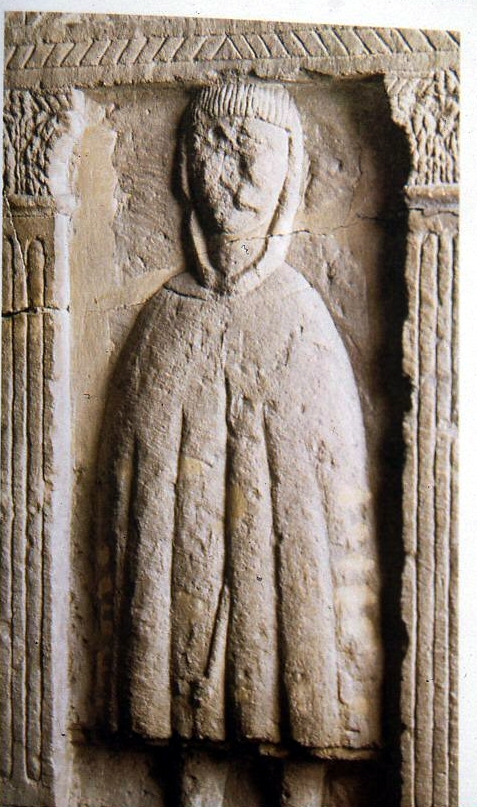
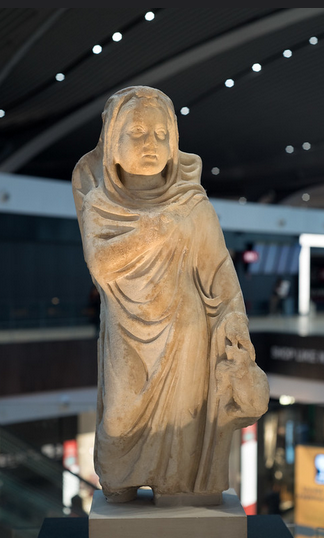
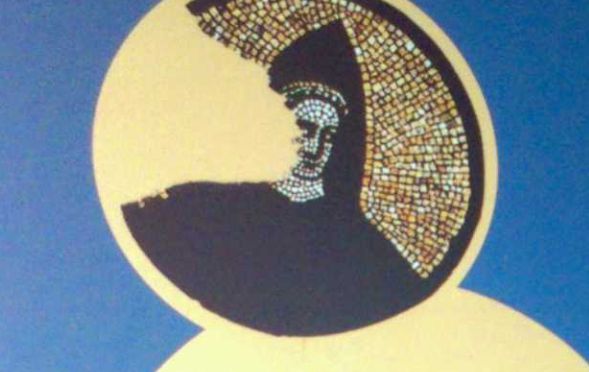
Tombstone of Philus from Corinium DobunnorumWinter from Ostia AnticaMosaic from Lullingstone Villa, Kent, representing winter.
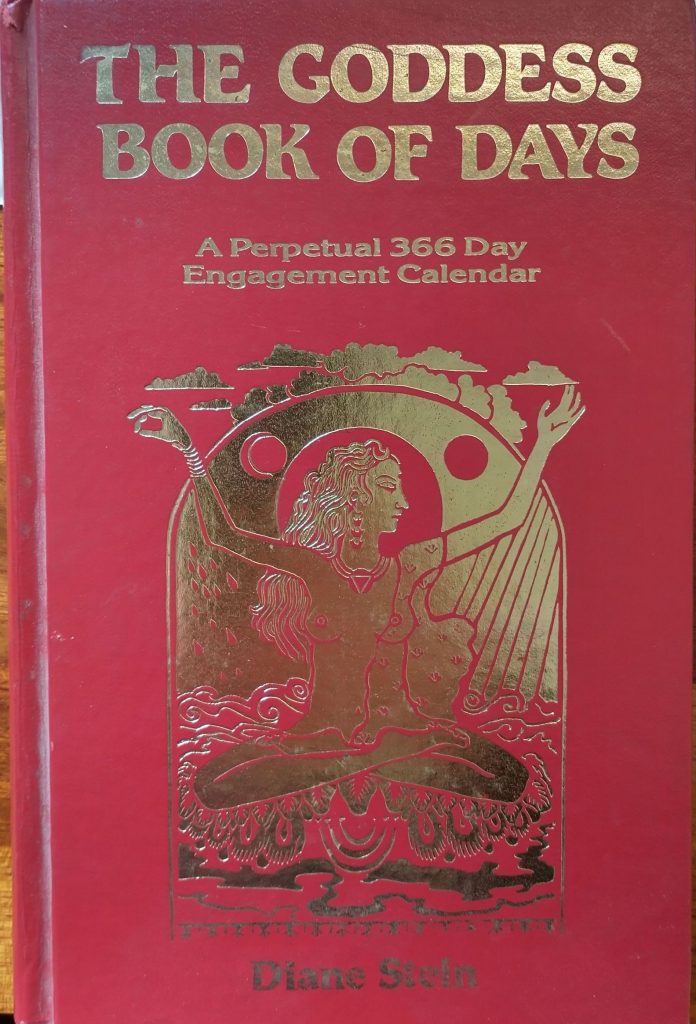
December 11th is dedicated to Bruma the Roman Goddess of Winter or so says my Goddess Book of Days,. However, I’m not having much luck tracking her down. Elsewhere, I find reference to a Greek or Roman festival of Winter called Brumalia. It starts in late November and ends on the 25th December, the Roman Solstice. Or so they say. But, only the Goddess Book of Days has it on December 11th.
Cover of the Goddess Book of days
However, there is more evidence for the Brumalia festival in the Eastern Roman Empire. So, let’s imagine a Winter Goddess beginning her reign on November 24th. Then, Saturnalia took place from 17th – 24th December and the climax of the reign of the Winter Goddess was Brumalia on the 25th December. The festival was celebrating the seeds in the ground, necessary for a good harvest. To ensure a good harvest Civic officials delivered gifts of wine, olive oil, grain, and honey to the Priests and Priestesses of the Goddess Ceres. Farmers sacrificed sheep and pigs to Saturn and Ceres. They inflated sheep bladders with air and jumped upon them as part of the celebration!
December 25th
Aurelian in 274 AD fixed December 25th by as the day to celebrate Sol Invictus. The worship of the Unconquered Sun was the Roman attempt to have a monotheistic element to their religion. December 25th was also chosen by Mithras, Saturn, and Christians. For more about December 25th see my post here.
Underlying this confusion of dates is the difficulty of aligning the solar year to the calendar year, and in the Roman period it was all over the place until Julius Caesar fixed the Calendar. (for more on that, see my post here)
Roman Hoodie
The picture of the tombstone, above, comes from Cirencester, and the inscription says:
Philus, son of Cassavus, a Sequanian, aged 45, lies buried here.
For details look at the ‘Roman Inscriptions of Britain.org’ here:
Philus’ cloak is very interesting. Similar Hoodies are found in other places in Roman Britain, for example, on a mosaic at Chedworth. They are called the Birrus Britannicus. And were famous throughout the Empire. It was a hunting cloak made of wool. I imagine it was a sort of ‘thorn proof’ woollen garment that was warm, rugged, and waterproof. Britain was exported hunting dogs and slaves. The Cotswold wool was also famous in medieval Europe. It was made from Cotswold Lion sheep which were introduced first during the Roman period into the local sheep stock. The large number of rich Roman villas in the area suggest that the wool made the local economy strong.
The British Hoodie, and Inflation.
In AD 301, the emperor Diocletian issued his Edict of Maximum Prices. In it, the Emperor rages against inflation:
Greed raves and burns and sets no limit on itself. Without regard for the human race, it rushes to increase and augment itself, not by years or months or else days, but almost by hours and very moments. Diocletian Maximum Prices Edict(click here for Pdf)
The Edict then lists maximum wages and prices. The birrus listing says that the Tailor,
‘cutting and finishing a hooded cloak (birrus) of the finest quality shall have a maximum wage of 60 denarii. ‘
The sanctions against breaking the Edict were terrifying. This suggests the difficulty of enforcement was compensated for by extreme punishment. Diocletian also insisted that labour shortages were addressed by making children follow the same profession as fathers. Interesting how familiar rampaging inflation and severe staff shortages seems to a post.
Reorganisation of the Roman World
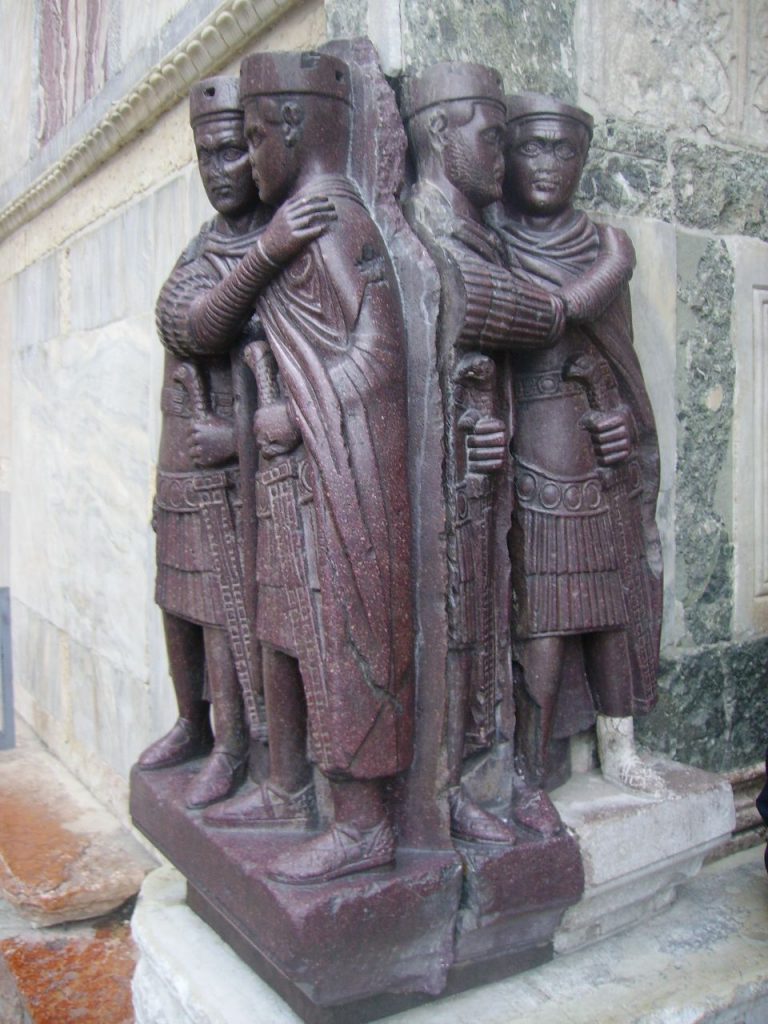
Diocletian, having a hug in with his junior Augustus and 2 Caesars, Venice
Diocletian was obviously a very logical man, looking for structural fixes to society’s problems. His analysis of the Roman Empire and its frequent Civil Wars/Coup D’Etats/Usurpers was that there was a deficiency in the career ladder for megalomaniacs. So to stop them usurping the Emperorship, he set up a rational career progression and divided up the Empire as follows:
1 Augustus for the Eastern (Greek speaking) Empire 1 Augustus for the Western (Latin speaking) Empire 2 Caesars for each Augustus Prefects reporting to the Caesars Vicari reporting to the Prefects Governors reporting to the Vicarius.
So you could begin your career in charge of a Province, then progress to the Diocese, then to the Prefecture, then to a quarter of the Empire, then to the Western Empire and finally to be the top dog in the richest Greek-speaking part of the Empire – the supreme Augustus. Brittania was divided up into 4 provinces, each controlled by a non-military Governor. They reported to the Vicarius in London, who reported to the praetorian prefecture of the Gallic region, which was based at Trier, who reported to Rome. They copied in the supreme Emperor who normally hung out in the East of the Empire. (the rich bit).
Did it work? Well, while Diocletian was alive maybe. When his Augustus of the West Constantius Chlorus died, his troops, in York, declared his son Constantine to be Augustus. Thus, bypassing the peaceful progression from Governor to Augustus. The system reverted to the usual tactic of wiping out your fellow Prefects, Caesars and Augustii. After his victory at the Battle of Milvian Bridge, Constantine was universally recognised as the supreme Augustus. He moved the Eastern Capital from Nicosia to Byzantium and renamed it Constantinople.
More on the Sequani
The Sequani were from the upper Saône Valley, near Besançon.
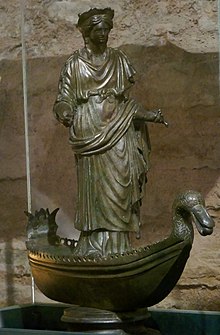
One of our readers alerted me to the Wikipedia page on the Sequani which explains that the name comes from the Goddess Sequana who is a water goddess. The centre of the territory is Besançon which is on the Doubs River. part of the Haute Saône Doubs and near to the springs that are the source of the Seine (west of Dijon). The Fontes Sequanae (“The Springs of Sequana”) gave her name to the River Seine, and a healing spring was established in the 2nd/1st BC. Enlarged by the Romans, it became a significant health centre. as Wikipedia explains in the clip below:
Image of Sequana in a duck boat by Wikipedia FULBERT • CC BY-SA 4.0
‘Many dedications were made to Sequana at her temple, including a large pot inscribed with her name and filled with bronze and silver models of parts of human bodies to be cured by her. Wooden and stone images of limbs, internal organs, heads, and complete bodies were offered to her in the hope of a cure, as well as numerous coins and items of jewellery. Respiratory illnesses and eye diseases were common. Pilgrims were frequently depicted as carrying offerings to the goddess, including money, fruit, or a favourite pet dog or bird.’
De Havilland DH.98 Mosquito B Mk IV Series 2n (Wikipedia CCO), parts of it were made in Broadway
On December 11th 1940 a bomb dropped on a barn in a beautiful village in the Cotswolds. Broadway is a tourist attraction. It was considered one of the most beautiful villages in Britain. It was the playground for many artists, writers, actors, designers and other bohemians of the late 19th Century.
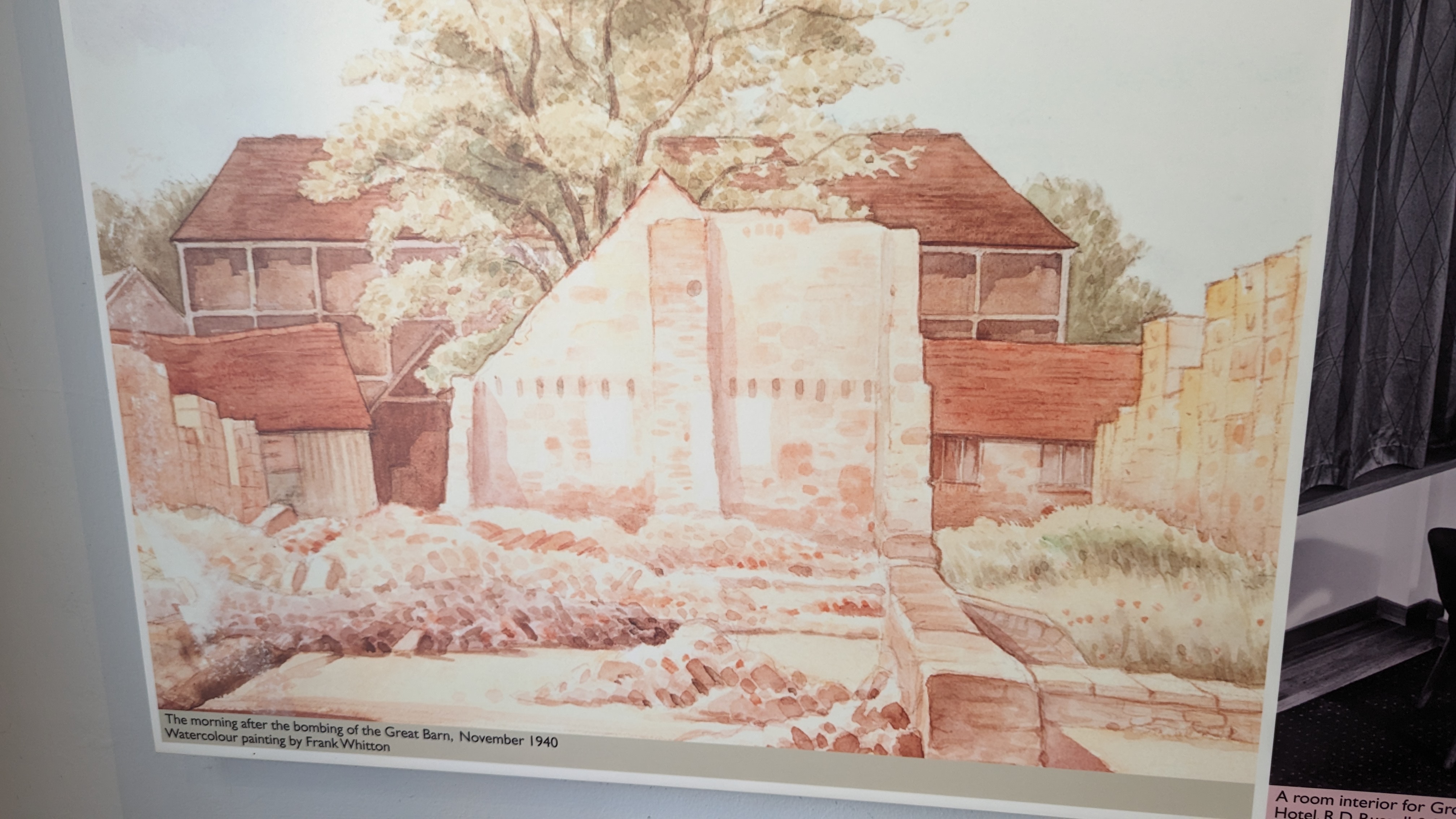
‘There were several large fires in Broadway during the war. On the night of December 11th 1940 a German bomber dropped a quantity of incendiary bombs on the village. A number of them fell on Gordon Russell’s furniture factory setting light to a large wooden, thatched barn. The building containing fine furniture and textiles, brought from London for safe keeping, was quickly destroyed. Ironically, the barn also contained a large order of furniture for Sir John Anderson – the Minister for Air Raid Precautions!‘
‘Another incendiary landed on the machine shop roof burning a hole, before being extinguished, it is believed, by a factory worker who lived nearby. The temporary plywood patch which was nailed on the underside of the hole was still in place when the factory was demolished in 2004. When a cottage adjacent to the factory was recently re-thatched, an unexploded incendiary bomb was discovered lodged in the old thatch. According to an Evesham Journal report, published at the end of the war, bombs fell in the Broadway area on seven separate occasions.‘
So, the Broadway fire brigade history pages suggests the raid was on December 11. But other sources prefer the night of November 14th. The night of the infamous Coventry Raid. But I have found another site claiming the raid that destroyed the barn was in October! But I’ve moved this blog post from November 14th to December 11th because I think the Fire Brigade should know what it is talking about!
Gordon Russell
Gordon Russell was a famous furniture designer. During the War, he turned over his carpentry workshops to the war effort. They made the wings of the famous World War Two Mosquito fighter bombers in Russell’s modernist furniture factory. This was in the Back Lane of Broadway. And next to the bombed barn is now a Co-Op supermarket.
The Mosquito was fast enough to be a fighter and could carry a decent payload of bombs. Because of their flexibility and speed, they had many roles in the war, including being the pathfinder for many of the nighttime raids on Germany.
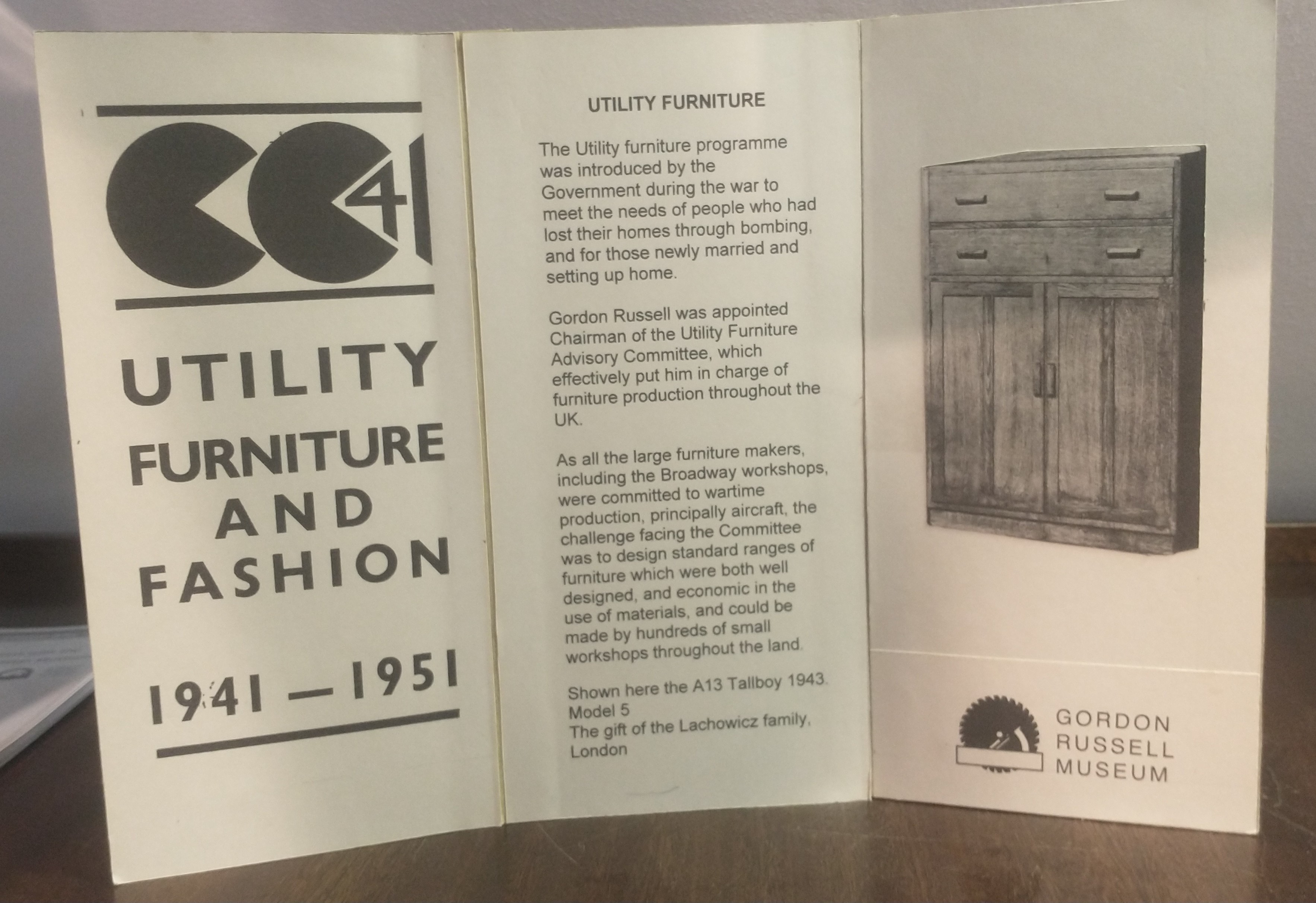
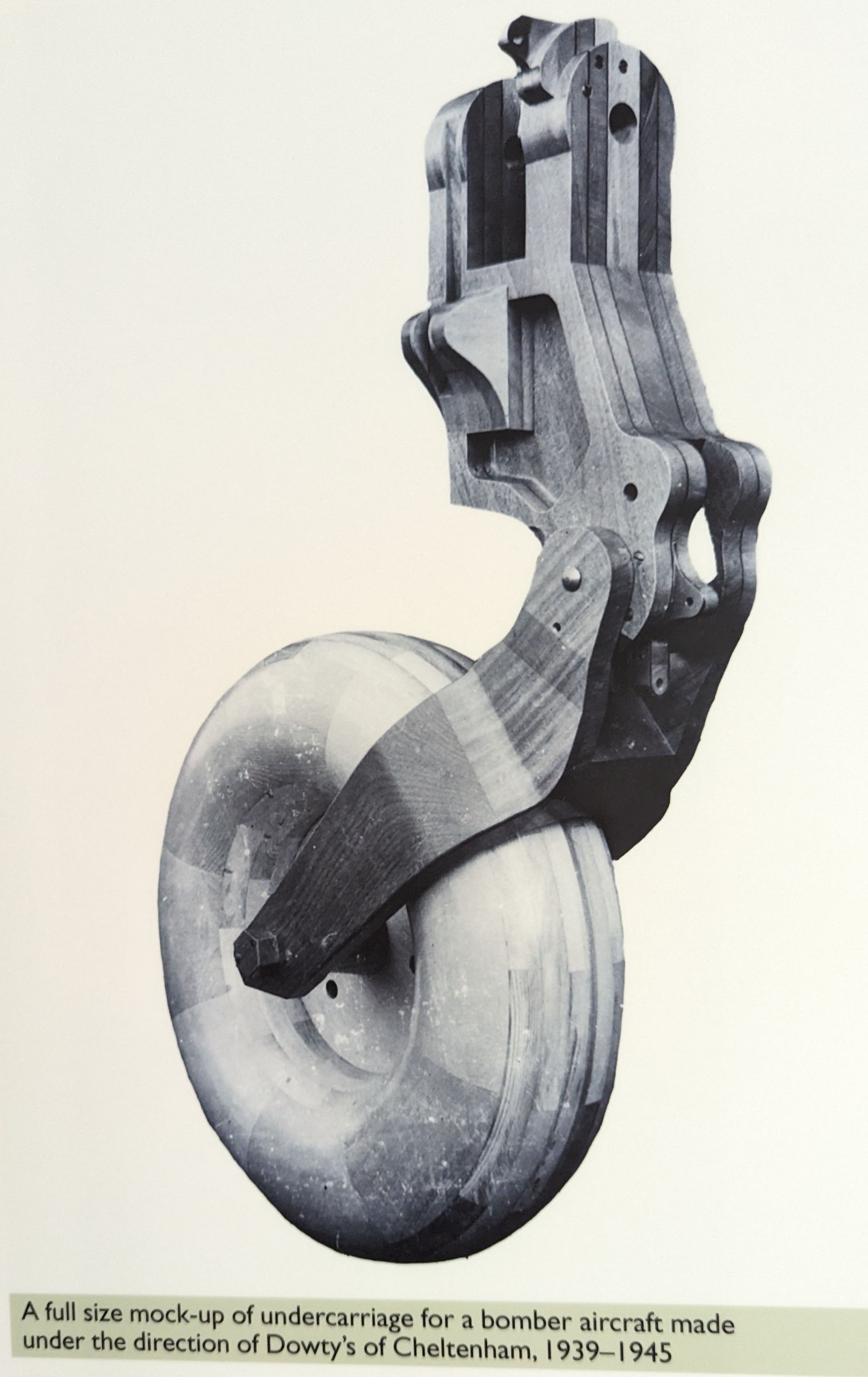
Russell’s factory also made ammunition boxes, and high-precision aircraft models for wind tunnel testing and other purposes. Gordon himself designed a utility range of furniture to minimise the amount of wood needed for new furniture during the war.
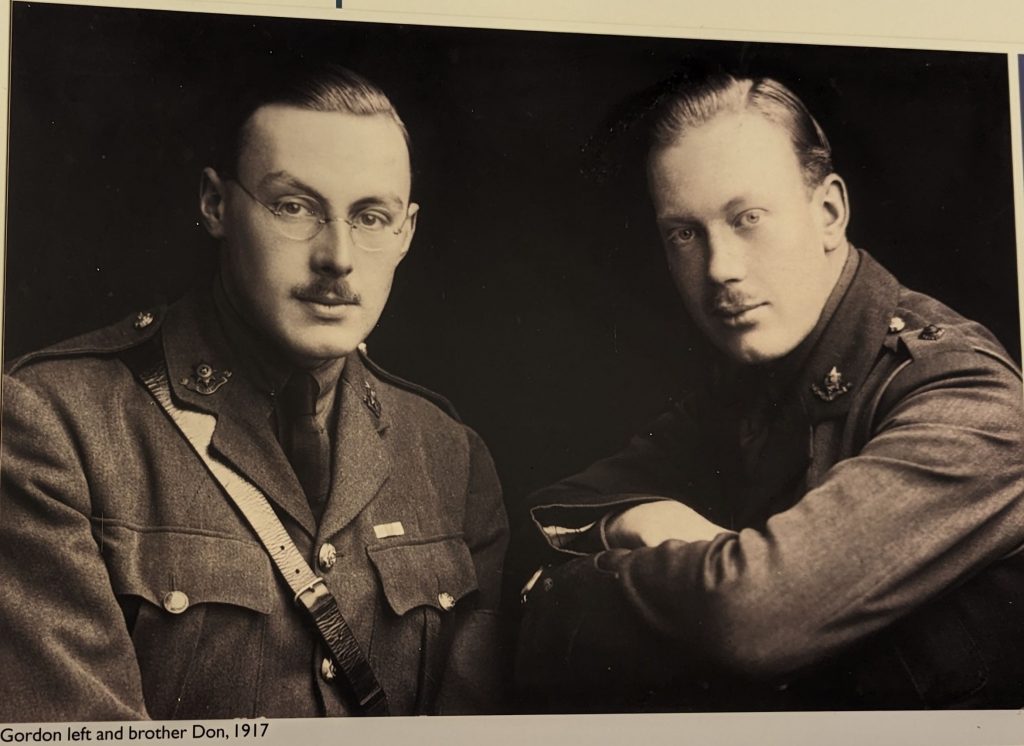
Gordon Russell’s Utility Range WW2The Barn destroyed by bombing by Frank WhittonModel Spitfire for wind tunnel testingGordon and Don Russell 1917
Images above taken by Kevin Flude of the displays at the Gordon Russell Museum, Broadway. The Museum is well worth a visit, and Broadway itself remains a delight.
My Father & the Mosquito
My father, I discovered a couple of nights ago, worked on Mosquitoes in his time in the RAF. His job was to salvage instruments from crashed aeroplanes. Mosquitoes were, along with Spitfires, and Hurricanes, amongst the ones he worked on. To buy his war time autobiography follow this link!
Robins brought water to relieve tormented souls in Hell and, so, got their breasts scorched; their breasts were stained with Jesus’ blood; they fanned, with their wings, the flames of a fire to keep baby Jesus warm and got scorched. All these associations with Jesus make their association with Christmas and Christmas cards perfect sense.
They are the Celtic Oak King of the New Sun. The Wren is the bird of the Old Sun. The Robin is the son of the Wren. The Robin kills his father. So the New Sun takes over from the Old Sun at the Winter Solstice. And the Robin takes over from the Wren.
The blood of the father Wren stains the Robin’s breast. In Celtic Folklore, Robins are said to shelter in Holly trees. Robins appear when loved ones are near. If a Robin comes into your house, a death will follow.
Perhaps this gives a context for Shakespeare’s mention of a robin (a ruddock he called it) which he grants the power of censure. In the play Cymberline, Innogen has been found dead, and amidst the floral tributes mentioned is the following (cors is corpse):
the ruddock would with charitable bill (Oh bill sore shaming those rich-left-heirs, that let their Father’s lie without a Monument) – bring thee all this; Yea, and furr’d Mosse besides. When Flowres are none To winter-ground thy cors
(Cymbeline, Act 4 scene 2)
Robin’s Habits
They are one of the few birds to be seen all year round, and they sing all year too. But they have different songs for autumn and spring. Robins sing from concealed spaces in trees or bushes. They are the first to sing in the morning, the last to stop at night, and can be triggered by street lights turning on. A Robin can sing all the notes on the scale and can sing for half an hour without repeating a melody.
They eat worms, seeds, fruits, insects and other invertebrates. Robins are aggressively territorial, and are our favourite birds. (RSPB)
On this Day
1554 – ‘the same day at after-noon was a bear bitten on the Bank side, and broke loose and in running away he caught a serving man by the calf of the leg, and bit a great piece away and after by the ‘hokyl-bone’ within 3 days after he died.’
Henry Machyn’s Diary quoted in ‘A London Year’ complied by Travis Elborough & Nick Rennison.
Hokyl-bone might be the holbourne stream inn what we now call holborn. Or it might be another name for the tarsus bone, the heel bone. But it doesn’t really make sense if it’s a bone. But the bear dying 3 days later by the steam makes some sort of sense.
Written December 9th 2024, revised and the Bank side incident with the Bear added 2025
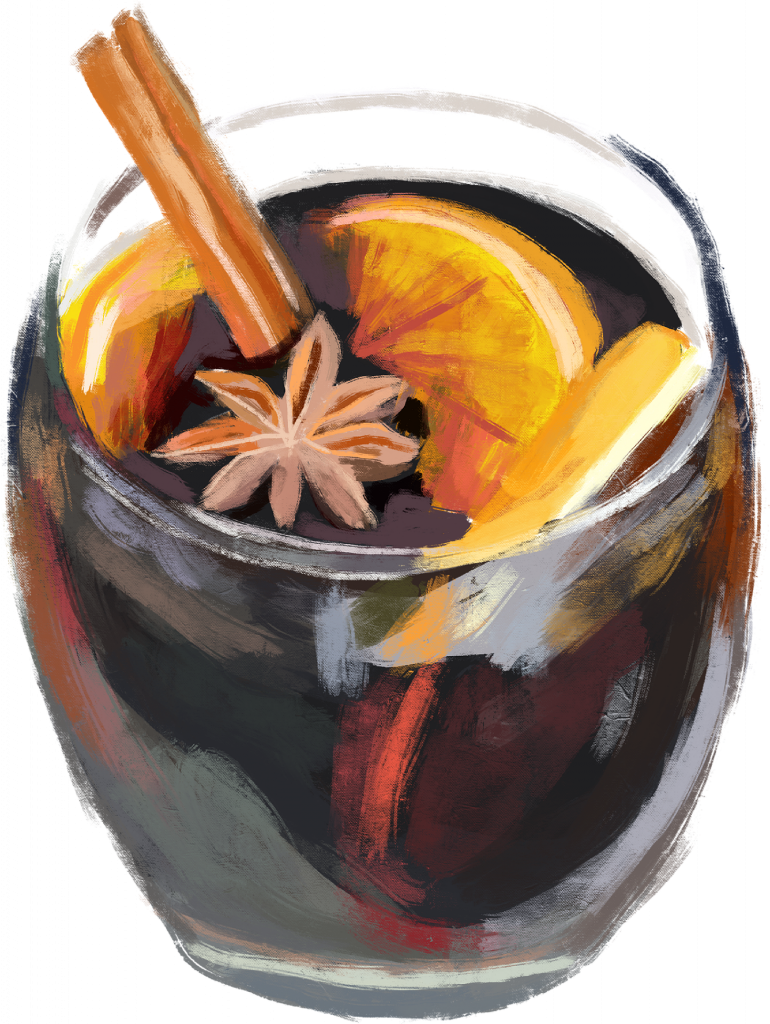
Mulled Wine? German Glühwein? Danish Gløgg? Wassail?
The time for hot drinks is upon us. The season for Wassail. Here are Northern European variations on a theme. My favourite, is Gløgg, unless the Glühwein is taken with a Bratwurst in Köln.
Danish Gløgg
The Danish version has the following ingredients 2 oranges, organic, 2 dl / 0,8 cups water, 3 cinnamon sticks, 10 whole cloves, 5 cardamom pods, 6 tbsp dark brown sugar, 1 bottle red wine, 1-2 slices fresh ginger (optional), Raisins, whole blanched almonds and orange slices for serving.
These are the instructions, which I have tested from the original version.
Mix all the ingredients in a large pot. Heat up the mixture for a few minutes (until the sugar is melted). Be careful not to bring it to a boil!
Next, you will have to let the mixture rest for minimum 2 days. Preferably, let it rest for 3–4 days in the refrigerator in the pot under a lid. Finally, after a few days of rest, you sieve the mixture and pour the extract into glass bottles.
Store the extract in the refrigerator. Use within a month. Now you have the gløgg extract to make a portion of mulled wine.
First mix 1/4 of the extract with a bottle of red wine in a large pot. Also add 1 cup of chopped, blanched almonds and 1 cup of raisins. Heat up the mixture slowly (do NOT boil!) To sum it up; simply serve the warm gløgg with almonds and raisins in tall glasses with a spoon – to dig up the almonds and raisins!
The Swedish version has a lot more of a kick. It’s an infused wine. Port Wine is the base, and adds bourbon whiskey and white rum. Cloves, cinnamon sticks and cardamom pods with orange peel. Sugar 3/4 of a cup and Raisins and Almonds. Here is the recipe for the Swedish version.
Put the orange slices, wine, sugar, cloves, cinnamon, star anise and ginger in a large pan. Warm gently for 10–15 mins, being careful not to let the mixture boil. Add the alcohol, pour into glasses and serve warm.
Remove the zest from the lemon and one of the oranges with a potato peeler in thin strips, then juice the zested orange. Push the cloves into the remaining orange.
Put the zest, orange juice and clove studded orange in a large pan along with 2 cinnamon sticks, the ginger, sugar, port, red wine and 750ml (1 1/2 pint) water.
Put over a low heat and stir until the sugar dissolves, then turn up the heat slightly and simmer gently for 20 minutes.
Remove from the heat and leave to cool for 10 minutes before ladling into glasses. Garnish with the orange and lemon slices and a cinnamon stick.
Waisal!
You can also have mulled beer or mulled cider. These would probably be most common in the Waissall Bowl. Read about Waissall! in my post of Wassail. Also recipe for mulled beer or cider.
First Published January 2023, republished January 2024, moved to December 10th 2024, Revised 2025
Monday’s child is fair of face, Tuesday’s child is full of grace. Wednesday’s child is full of woe, Thursday’s child has far to go. Friday’s child is loving and giving, Saturday’s child works hard for a living. And the child born on the Sabbath day Is bonny and blithe, good and gay.
Fortune-telling poems are a big part of folklore. It says something about the power of the rhyme that people can believe a random rhyme can shape someone’s whole life. Interesting that there are many versions of this rhyme. I chose one that had an optimistic Thursday. Two year’s ago, my second Grandson was born, on a Thursday, just like me. And I’ve still got far to go.
Tinker Tailor
The Tinker Tailor rhyme is another example of a fortune-telling rhyme. This is the extended version, I found on wikipedia.
When shall I marry? This year, next year, sometime, never.
What will my husband be? Tinker, tailor, soldier, sailor, rich-man, poor-man, beggar-man, thief.
What will I be? Lady, baby, gypsy, queen.
What shall I wear? Silk, satin, cotton, rags
How shall I get it? Given, borrowed, bought, stolen.
How shall I get to church? Coach, carriage, wheelbarrow, cart.
Where shall I live? Big house, little house, pig-sty, barn.
One person recites the power verse by verse. The subject of the fortune-telling does something like counting petals on a flower, counts bounces of a ball, or gives a number between one and four. The outcome determines the future.
Today, is St Budoc’s Feast Day. However, it’s held on the 9th if you are in Brittany. Boduc is a Celtic name which either means “saved from the waters” or more likely ‘Victory’ or ‘Victorious’.
This etymology is shared by Queen Boudicca. Budoc lived in the 5th Century, after the Fall of Roman Britain. His mother was a Princess whose evil step-mother (or mother-in-law), persuaded her son that she was unfaithful. The Prince ordered the pregnant Princess to be thrown into the sea in a wooden cask. They floated around for 5 months, until Budoc was born. (Saved by the intercession of St Bride?). So, they landed safely in Cornwall, and afterwards went to Ireland. (Or they landed in Ireland.)
Eventually, Budoc’s dad realised his wife was faithful. So he came to rescue his wife. Sadly, they soon both died. (Or the wife survived). Budoc became a monk, and then a famous Bishop in late 5th Century Brittany at Doll. St Budoc is worshipped in several place: Pembroke, Cornwall, Devon, Brittany, and Oxford. But we have very little reliable evidence about him.
Monday’s Child published in 2023. St Budoc added in 2024, Revised 2025.
According to the Perpetual Almanac by Charles Kightly, this is the time when Robins are much to be seen singing their winter song, and when it is time to protect plants, particularly Rosemary, against winter frosts.
In December, rosemary flowers with a delicate blue flower. Rosemary was one of the most important plants, metaphorically and medically. Mrs Grieve, in her ‘Modern Herbal’ says it is used in medicine for illnesses of the brain and was thought to strengthen the memory. And as rosemary helps the memory, they are symbolically/metaphorically associated with friendship, love, worship and mourning. A branch of Rosemary was given as a gift to wedding guests, so they would remember the love shown at the ceremony. It was also entwined in the Bride’s wreath.
Shakespeare uses Rosemary in his plant lore in Hamlet.
OPHELIA: There’s rosemary, that’s for remembrance. Pray you, love, remember. And there is pansies, that’s for thoughts.
LAERTES: A document in madness: thoughts and remembrance fitted.
OPHELIA: There’s fennel for you, and columbines. There’s rue for you, and here’s some for me. We may call it herb of grace o’ Sundays. O, you must wear your rue with a difference.
There’s a daisy. I would give you some violets, but they withered all when my father died. They say ‘a made a good end.
(sings) For bonny sweet Robin is all my joy.
Ham IV.v.176
Rue is the herb of grace and has the sense of ‘regret’. Pansies are also for remembrance, and their heart shaped flowers are for love and affection. Fennel represents infidelity and Columbines insincerity or flattery. Daisies are for innocence. Violets are associated with death, particularly of the young. As to how Orphelia means them all to be understood is not entirely clear, particularly Fennel and Columbine. Some think they are directed towards Claudius and/or Gertrude.
Being evergreen, Rosemary was associated with religion and everlasting life. It was called the rose of the Virgin Mary. Lying on a bed of rosemary, the Virgin’s cloak was said to have been dyed blue. Indeed, Mary is mostly depicted in a blue cloak in Renaissance paintings.
And so Rosemary is especially important for Christmas. At Christmas, it was used to bedeck the house and used at funerals to remember the dead.
The Virgin Mary Googled.
Its strong aroma means it was used as an incense and also used in magic spells
Thomas More let rosemary ‘runne all over my garden walls’ because bees love it and as sacred to remembrance, therefore to friendship.
Rosemary flowering in December
I mostly use Rosemary for the very rare occasions when I cook lamb, but it is much more versatile than that, or so the SpruceEats website tells me:
‘Rosemary is used as a seasoning in various dishes, such as soups, casseroles, salads, and stews. Use rosemary with chicken and other poultry, game, lamb, pork, steaks, and fish, especially oily fish. It also goes well with grains, mushrooms, onions, peas, potatoes, and spinach. ‘
1917- End of the Battle of Cambrai in which Tanks were first used. The tanks had initial success when over 400 hundred of them were used by the British on the first day of the battle. Because the British Army did not precede the attack with the usual artillery barrage, the attack was a complete surprise and the British penetrated deep into the German Lines. But the army had too few troops to exploit the breakthrough and by early December the Germans had mostly recaptured the territory the tanks had won. So the battle was indecisive, but successfully showed the role of the tank in future battles. Casualties amounted to about 45,000 on each side.
1941 – Pearl Harbour bombed. The Japanese attack killed more than 2,300 U.S. military personnel were killed. Another 1,100 at least were wounded, and eight battleships were damaged or destroyed.
On December 8th,Congress approved Roosevelt’s request for a declaration of war on Japan. In the Senate, the vote was 82 – 0 and 388–1 in the House.
On 11 December 1941. Germany declared war on the US, in line with the Tripartite Pact between the two countries and Italy. Later that same day, the US declared war on Germany, with no dissenters from the vote.
St Nicholas saving citizens from poisoned olive oil. Detail of painting by Margarito of Arezzo. National Gallery
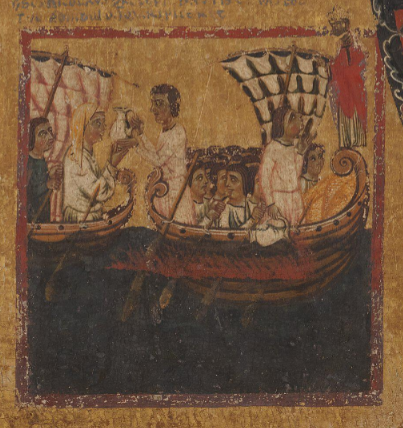
Santa Klaus was, originally a 4th Century Bishop from Asia Minor who saved three girls from prostitution. He throw golden balls through their window enabling the girls to marry with a good dowry and live a moral life. Saint Nicholas, also, saved three boys from beheading. So he became the patron saint of children. He died on the 6th of December in Myra, present day Turkey. From the moment of his internment, his tomb flowed with myrrh. There are many other miracles. Once St Nicholas appeared on a storm tossed boat and saved the sailors. Another has him saving people from poisoned olive oil. (see picture above.)
In 1087, the Normans from Apulia raided Myra, then under the control of the Seljuk Turks. The gang of 67 men stole the Saint’s remains, to bring them to Bari, in Southern Italy. Bari already had 6 churches dedicated to St Nicolas. In 1969, Pop Paul VI revoked his Feast Day as he decided there was no evidence St Nicholas was a real person.
Despite this, he is the ‘patron saint of sailors, merchants, archers, repentant thieves, children, brewers, pawnbrokers, toymakers, unmarried people, and students in various cities and countries around Europe’ (Wikipedia). He is also known as Nicholas the Wonderworker.
It’s all about the Balls
Representation of the balls can still be seen hanging in front of pawnbroker’s shops. The gifts Nicholas gave led to the exchange of gifts to honour him. Originaly, gift giving took place on December 6th, his feast day. The Dutch took the tradition of Santa Klaus to the United States. Here it mixed with other traditions, including the English Father Christmas, to create our modern spirit of Christmas, and Santa Klaus.
Boy Bishops
By Unknown author – fullhomelydivinity.org, Public Domain, https://commons.wikimedia.org/w/index.php?curid=6709993
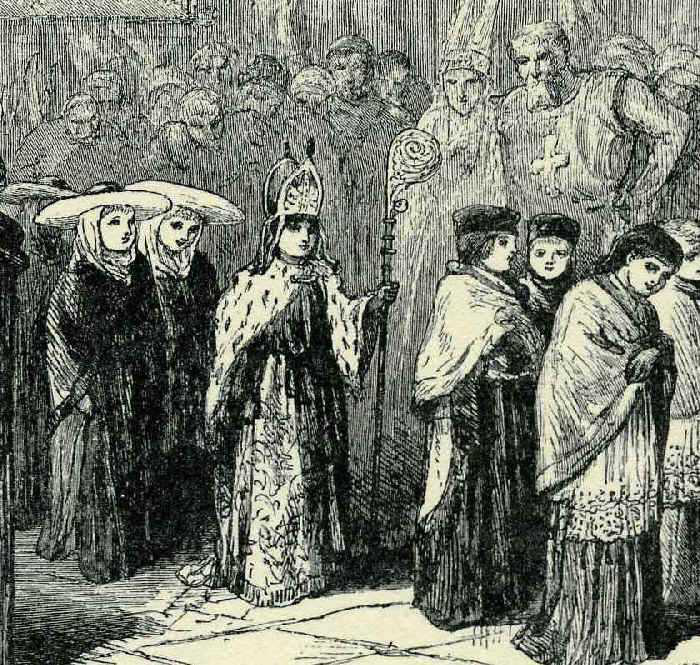
The idea of Boy Bishops may come from a tradition established by Saturnalia. This was the festival, in the Roman world, when servants exchanged duties with their masters and mistresses. Tthe Lord of Misrule presided over Medieval Christmas. While Church ceremonises were presided over by Boy Bishops. The tradition was attacked in some quarters but defended by others. They felt it engendered empathy. had an element of humanity and instigated seasonal fun. The Boy Bishops were elected on December 6th. Their reign might continue until Childermas (Holy Innocents Day December 28th).
The custom was stopped by Henry VIII. It was then revived and is still practised to this day in the Cathedrals of Hereford and Salisbury. The Boy Bishops wears full ceremonial gear and takes part in ceremonies and services for three weeks.
Boy Bishops in London
There are also medieval records that speak of the custom:
“two children’s copes, also a myter of cloth of gold set with stones.” 1549 “For 12 oz. silver, being clasps of books and the bishop’s mitre,
St. Mary-at-Hill, London Church Accounts
“The vj myter of Seynt Nycholas bysshoppe, the grounde therof of whyte sylk, garnysshed complete with ffloures, gret and small, of sylver and gylte, and stones
Westminster Abbey, St Pauls & St Nicholas Cole Abbey London inventories
Also records at St Pauls record: una mitra alba cum flosculis breudatis ad opus episcopi parvulorum baculus ad usum episcopi parvulorum;’
St Nicholas Cole Abbey in the City of London has an inventory dating to the Reformation that records vestments for children at St Nicholas. The Church is first mentioned in the 12th Century and was never an Abbey. The Cole part of the name refers to a ‘Coldharbour’ which was a traveller’s or poor persons shelter from the cold. The Church was rebuilt by Christopher Wren after the Great Fire. This is, probably, the location where Trotty Veck stands awaiting employment as a messenger or runner, in Dickens’s second greatest Christmas Book after the Christmas Carol. The story is more a New Year story than a Christmas story. (I tell the story in my post here).
For more on boy bishops look at this, and look at this 1935 film about Boy ~Bishops in Compton, Guildford.
The Lord of Misrule.
Middle Temple, like the other Inns of Court in London, also had a Winter period of ‘condoned disorder’. This continued through to Christmas and beyond to Candlemas. It was presided over by a Lord of Misrule, or in the Middle Temple’s case a Prince of Love. The Revels of 1597-8 were republished in 1660. Each December, students, barristers and Benchers create and perform the Inn’s annual Christmas Revels. With thanks to https://www.middletemple.org.uk/about-us/history/elizabethan-and-jacobean-times
On This Day
1648 Pride’s Purge. The day that the New Model Army had had enough, and Colonel Thomas Pride, excluded members of the Long Parliament from sitting in Parliament. This led to the Execution of Charles I, and the establishment of Britain’s first and only Republic. (see my post on the execution of Charles I)
1964 Martin Luther King made a flying visit to St Pauls to deliver a sermon on his way to pick up the Noble Peace Prize in Oslo. He based his sermon on the following poem. The visit is described on the St Pauls Web Site here
Be The Best Of Whatever You Are
By Douglas Malloch
If you can’t be a pine on the top of the hill, Be a scrub in the valley — but be The best little scrub by the side of the rill; Be a bush if you can’t be a tree.
If you can’t be a bush be a bit of the grass, And some highway happier make; If you can’t be a muskie then just be a bass — But the liveliest bass in the lake!
We can’t all be captains, we’ve got to be crew, There’s something for all of us here, There’s big work to do, and there’s lesser to do, And the task you must do is the near.
If you can’t be a highway then just be a trail, If you can’t be the sun be a star; It isn’t by size that you win or you fail — Be the best of whatever you are!