Oliver Cromwell and his Lucky Day September 3rd

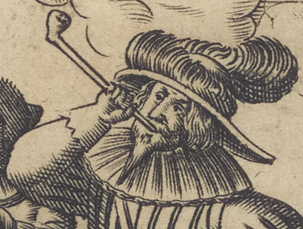
Frontispiece of ‘The Life of Oliver Cromwell’

September 3rd was Cromwell’s Lucky Day. This was because it was the date of two of his most famous victories. On September 3rd 1658 he refused to accept that he was dying because it was his lucky day.  Unluckily, he was wrong.

The Battle of Dunbar September 3rd 1650

Engraving of Charles I

After the execution of King Charles I, the Scots chose Charles II as their King. This changed the Scots from allies of the English Parliament to enemies. The Lord General of the New Model Army, Thomas Fairfax, refused to lead an attack on their erstwhile allies. So Oliver Cromwell was promoted to command. He launched a preemptive attack but the army was ill prepared, and the campaign seemed in danger of failing. They took Arthur’s seat and bombarded Edinburgh and Leith from its heights. But they could not take Edinburgh.

In need of supplies, Cromwell retreated to Dunbar, which is on the North Sea, close to the Firth of Forth. The Scots advanced on Dunbar, and Cromwell came out to meet them. After a hard battle, the English Calvary outflanked the Scots and the Battle was won. Pride, Monk, Lilburne and Lambert were all involved in the Battle. Cromwell claimed to have killed 4,000 Scots and captured 10,000. Scottish sources suggested over 1,000 Scottish casualties and 5,000 prisoners.

The Battle enabled Cromwell to seize control of Edinburgh, and Leith. So he could then cross the First of Forth and attack Fife, where he was also successful.

Cromwell interpreted the overwhelming victory as a

“A high act of the Lord’s Providence to us [and] one of the most signal mercies God hath done for England and His people”.[ (Wikipedia)

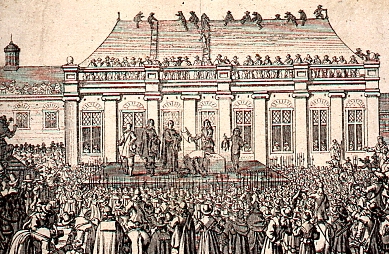
See my post on the execution of Charles 1st here:

March on England

engraving of Charles II
Engraving of Charles II

Meanwhile, the Scottish Army marched South in to England. in an attempt to raise the support of English Royalists. King Charles II was now with them, They hoped Cromwell would be held up in Fife, but he wasn’t. He secured Perth and put General Monck in charge in Scotland. Lambert was sent to harrass the Scottish Army as they marched south. Meanwhile, Cromwell forced marched his way to the Tyne. General Harrison had collected fresh troops from Newcastle and joined Cromwell. Thomas Fairfax came out of retirement and raised troops in Yorkshire. The Southern troops were collected at Banbury by General Fleetwood. 14,000 militia men from the trained bands of London joined the march to intercept the Scottish Invasion.

The Battle of Worcester September 3rd 1651

The decisive battle took place at Worcester, which the Royalist occupied. It was an unusual battle in that it took place on both sides of the River Severn. Cromwell delayed the start of the battle to build two pontoon bridges. This meant he could reinforce his troops on either side of the River. It also delayed the start of the battle to his lucky day.

The pontoon bridges proved decisive. The Parliamentary side had over 30,000 troops while the Royalists only 16,000. Cromwell could shore up besieged formation with troops from the other side of the River. The Royalists were pushed back to the High Street. Here, they rallied to allow King Charles II to escape. And that was the end of the Second English Civil War. (The first being the defeat of Charles I, the second the defeat of Charles II).

Charles II made a hair-raising escape from England, hiding in an Oak Tree. Eventually, finding a ship on the South Coast at Shoreham, in Dorset to take him into a long exile. (see my post on Charles’ escape here🙂

Of the Scottish army, perhaps 3,000 men were killed and 10,000 taken prisoners. Some prisoners were conscripted into the New Model Army and sent to fight in Ireland. Many of the rest (perhaps up to 8,000) were forced into indentured labour. They were sent to New England, Bermuda, the West Indies or the Fens. Others were taken to London and detained in prison camps. One of which was at Tothill Fields in Westminster. Conditions were often appalling, leading to death by disease and malnutrition.

American Presidents pay their respects to the ‘famous’ Battlefield.

John Adams and Thomas Jefferson visited the site of the Battle in 1786. Adams reported:

‘The people in the neighborhood appeared so ignorant and careless at Worcester that I was provoked and asked “And do Englishmen so soon forget the ground where liberty was fought for? Tell your neighbors and your children that this is holy ground, much holier than that on which your churches stand. All England should come in pilgrimage to this hill, once a year”‘

And indeed will now only see the battle as one of the many battles of the Civil War. Generally, we are not aware of its special significance.

Cromwell’s Death September 3rd 1658.

By now, the Monarch in all but name, Cromwell, the Lord Protector fell ill, probably of malaria. Then, when weakened, his kidney stone infection turned to septicemia. On August 30th, there was a mighty storm, the like Europe had not seen for hundreds of years. And there was talk of the Lord taking him away in the furious storm. As he weakened he was asked to name his successor. He appeared to affirm when the name of his son Richard was spoken to him. But, it wasn’t very clear. He rallied, perhaps hoping that if he could survive to September 3rd, he would overcome his illness.

On the day, he said to his doctors ‘I tell you I shall not die this hour; I am sure on’t …. I speak the Words of Truth upon surer grounds than Galen and Hippocrates furnish you with.’

But he died on his lucky day. He was given a splendid funeral and was buried in state among the Kings and Queens in Westminster Abbey. And then in 1660 dug up, executed posthumously at Tyburn and buried under the Gibbet.

See my post on the Puritans’ abolition of Christmas here:

See my post on John Evelyn’s diary entry on the Restoration of Charles II to the throne.

First written in September 2025

Battle of Crécy August 26th 1346

Jean Froissart - From Chapter CXXIX of Jean Froissart's Chronicles. From Wikipedia ,
Battle of Crécy Jean Froissart’s Chronicles (Wikipedia)

The Battle of Crécy was one of the most decisive victories in the Middle Ages.  Events began with King Philip VI of France declaring the English land in France forfeit.  Henry, Earl of Derby made significant gains in Gascony for King Edward III but then was besieged by the French. He demanded support from the English King. 

So King Edward gathered an army and landed in Normandy.  It was the largest invasion force until D-Day.

Edward burnt his way to Paris.  Within 2 miles of Paris Edward was confronted by superior forces and trapped on the wrong side of the Somme. His army was starved by the French scorched earth policy.

The English, only 6 miles away from the French Army forced their way across a defended tidal ford. Here they broke into an area which had not been scorched and were able to  resupply. This success also restored English moral as the French defenders could not stand against the longbow men.

Sketch of statue of Edward III from Westminster Abbey

King Edward set up a defensive position at Crecy-en-Ponthieu, on land he owned.  It offered protection from flanking attacks and an uphill struggle for the French attackers.  The English dug pits to make French attacks more difficult. The English were badly outnumbered.  Estimates vary but the French at least had double the number of troops.  The English had about 15,000 troops, the French between 30,000 and 100,000.

Aerial view of the battle site according to Google.

The first attack came from Genoese crossbowmen but the English and Welsh longbow men had the advantage of range and the Italians soon retreated.  French men-at-arms attacked in some confusion, killing Genoese as they attacked but were repulsed after terrible fighting.  Wave after wave of French attacks followed. None succeeding.  At the end of the two day battle very few English men were killed and many thousands of French, including the flower of the nobility.

English losses were 300 or less and the French lost are sometimes estimated as 30,000, but a third of that is probably more realistic.

The battle changed opinions about British fighting ability, and showed that heavily armoured wealthy knights could not stand against trained yeoman archers armed with long bows.  The archers could shoot 3 arrows a minute with a range of up to 300 yards. There may have shot half a million arrows.

But it can also be argued that the victory lulled the English into the belief that they could hold France. This led to the fruitless slaughter of the 100 years war which England ultimately lost.

On the other hand Edward III captured Calais which remained an important and strategic asset until the 16th Century.

Google image with the Crecy  in the orange bounded area bottom middle of the screen

Source of image: Jean Froissart – From Chapter CXXIX of Jean Froissart’s Chronicles, example source at http://www.maisonstclaire.org/resources/chronicles/froissart/book_1/ch_126-150/fc_b1_chap129.html

First published 2024, revised 2025

Feast of St Mary & Days off in Anglo-Saxon England August 15th

Titian’s Assumption of the Virgin Mary (Wikipedia)

August 15th is the date of the celebration of the Assumption of St Mary.  This is the day she went to heaven.  Opinion is divided as to whether she died and went straight to heaven. Or did she go directly to heaven without having to pass go?  The stories about the Virgin Mary were a big part of the controversy in the Reformation. Protestants did not find evidence in the Bible supporting many of the tales they had been told by the clergy.  Once they could read the Bible in their own language they were able to assess the evidence for themselves.

August 15th was taken as a day off in the Medieval oeriod.  My post is inspired by Octavia Randolph who has an excellent web site with a fine post on Anglo Saxon Slavery. You can read the post here: https://octavia.net/slavery-in-anglo-saxon-england.  But what particularly caught my attention was the excerpt from King Alfred the Great’s laws.  It lays down the law on the days off which should be given to freemen.

These days are to be given to all free men, but not to slaves and unfree labourers: twelve days at Christmas; and the day on which Christ overcame the devil (15 February); and the anniversary of St Gregory (12 March); and the seven days before Easter and the seven after; and one day at the feast of St Peter and St Paul (29 June); and in harvest-time the whole week before the feast of St Mary (15 August); and one day at the feast of All Saints (1 November). And the four Wednesdays in the four Ember weeks are to be given to all slaves, to sell to whomsoever they please anything of what anyone has given them in God’s name, or of what they can earn in any of their spare time.
Translated by Simon Keynes and Michael Lapidge and taken from Octavia.net

That comes to 38 days by my reckoning.  In the UK 4 weeks off is a good average holiday entitlement.  If we add 8 bank holidays in England and Wales  that gives us 36 days off a year.  So 1500 years of ‘progress’ has given us minus 2 days, and a lot less in the USA!

How depressing!  Of course, most of these days off were lost during the Industrial Revolution and only clawed back by Trade Unions.

The days off are interesting, obviously Christmas and Easter. Harvest is more of a surprise in that one would expect to be working very hard bringing in the harvest.  But, maybe the 7 days off were given after it was brought in?

The individual days make sense as they are the feasts of major saints or festivals – so St Gregory’s Day – he being the Pope who ordered the mission to convert the English to Christianity in 597AD.  (See my post on St Gregory here).

Saints Peter and Pauls Day. St Mary and All Saints Day. I’m surprised there is no Candlemas or Michelmas.(More information about celebration of St Peter and St Paul in London in my post here)

Slaves holidays

Slaves seem to only have 4 days however.  These are the Wednesday in Ember Weeks.  Ember Days and Ember Weeks were Fasting Days, either named after a latin phrase for fasting or from Ymbren which is the Anglo-Saxon for circuit or revolution.  It is thought that the days were originally tied to the ‘cycle of life’ that it part of each year.  But later on became more liturgical and based on fasting.

They may have been founded in Roman roots. There only seems to be 3  in the days of the early church, rising to 4 ember weeks by the late 5th Century. They were brought to Britain by the mission of St Augustine, under Pope Gregory.  These seem to be the dates:

December the week starting after St Lucy’s Day (Dec 13th)

March between 1st and 2nd Sunday

June between Pentecost and Trinity Sunday

September 3rd Week ending at Michaelmas.

So, the poor old slaves get 4 Wednesdays off in the year!  This is presumably because the work of the household continues throughout the year, irrespective of season or festival.  Maybe they are given a day off on the fasting days because household work can be put off as everyone is fasting?

But the laws make it clear: this is the time the poor slaves can work for themselves and make a little on the side.

Do have a look at Octavia’s web site which for more on slaves in the Anglo-Saxon period.

First published in August 2025

Stone of Destiny Attacked with a Hammer at Perth Museum July 13th 2025

Screenshot of BBC Webpage annoucing the attack on the Stone of Destiny

I just tried to book a visit to see the Stone of Destiny, at Perth Museum. But I was told it was closed until at least the end of August. The reason being that a case had been damaged. A quick search revealed this notice that an Australian had attacked the case containing the Stone with a hammer. They are now repairing the Case, and double checking the condition of the stone, which is thought to be undamaged. The Stone is well protected in a special room of the Museum. But, until now, those booking to see it are not searched. So I imagine that this will become more formal in future.

Below is my post of 2024, updated on March 30th 2025.

New Home for the Stone of Destiny

Old Photograph of the Stone of Destiny beneath the Coronation Chair.

Last year, the Stone of Destiny was set up in its new permanent place. The Stone was unveiled in a room at the centre of the redeveloped Perth Museum, in Scotland. This is near to its ‘original’ home at the Palace of Scone.

The Museums Association reported:

£27m development project ….funded by £10m UK government investment from the £700m Tay Cities Deal and by Perth & Kinross Council, the museum is a transformation of Perth’s former city hall by architects Mecanoo.’

As well as the Stone of Destiny, the Museum has Bonnie Prince Charlie’s sword and a rare Jacobite wine glass. Both on public display for the first time. This is the first time the sword has been in Scotland since it was made in Perth in 1739. https://perthmuseum.co.uk/the-stone-of-destiny/. Since I first wrote this I have visited about 5 times. Entry is free but needs to be booked. It is held in a separate structure in the open space at the heart of the Perth Museum. There is an excellent-animated introduction, and then the doors open and the Stone is revealed in a glass cabinet. It is very effective.

Webpage of the Perth Museum show a photo of the Stone of Destiny

The Stone of Destiny in the Modern Era

Before Perth, the Stone was in London for a brief visit for the Coronation of King Charles III (6 May 2023) . It was put back, temporarily under the Coronation Chair. Before that it was on display in Edinburgh Castle. Tony Blair’s Labour Government sent it back to Scotland as a symbol of the devolution of power from Westminster. This was on the occasion of the restoration of the Scottish Parliament in Edinburgh in November 1996. Until then the Stone was under the Coronation Chair, where Edward I put it after he stole it (1296) from Scone. Virtually every English and British King has been crowned upon the Stone of Scone.

However, the Stone had a brief holiday in Scotland in 1950/51.  Four Scottish students removed it from Westminster Abbey on Christmas Day 1950. After three months, it turned up at the high altar of Arbroath Abbey. It was briefly in a Prison Cell, then returned to Westminster for the Coronation of Elizabeth II.

Poor photograph of a press cutting on display at the Palace of Scone (Photo by me!)

Declaration of Arbroath

I’m guessing the-would-be liberators of the Stone, thought Arbroath was the most suitable place to return it. For it was the Declaration of Arbroath which is the supreme declaration of Scottish Independence from England.

Following the Battle of Bannockburn the Scots wrote to the Pope of their commitment to Scotland as an independent nation. They said:

“As long as a hundred of us remain alive, never will we on any conditions be subjected to the lordship of the English. It is in truth not for glory, nor riches, nor honours that we are fighting, but for freedom alone, which no honest man gives up but with life itself”

The Pope agreed and Scotland remained independent until voluntarily joining England in the United Kingdom in 1707.

For an analysis of the Stone of Scone please look at my post here.

The Stone of Destiny at Scone Palace

Before Edward 1 stole the Stone, it was at Scone Palace. Here most of the Kings of Scotland were crowned, including Macbeth (August 14, 1040).

Moot or Boot Hill where Scottish Kings were crowned. Palace of Scone Photo Kevin Flude)

Those who attended the coronation traditionally shook their feet of all the earth they had brought from their homelands.  This over the centuries, grew into Boot Hill, aka Moot Hill. So the mound represents the sacred land of Scotland. 42 Kings were crowned upon its soil on its Stone. (but not Mary Queen of Scots she and her son were crowned at the Chapel Royal of Stirling Castle).

Where was the Stone of Destiny before Scone?

Before Scone, it was, possibly, in Argyllshire where the Gaelic Kings were crowned. Their most famous King was Kenneth MacAlpin. He united the Scots, Gaelic people originally from Ireland, the Picts, and the British. And created a new Kingdom which was originally called Alba, but became Scotland.

MacAlpin was the first king to be crowned on the Stone at Scone in 841 or so. He made Scone the capital of his new Kingdom because it was a famous Monastery, associated with the Culdees, an early sect of monks. MacAlpin brought sacred relics from Iona to sanctify the new capital. And Scottish Kings were by tradition crowned at Scone and buried on the holy Island of Iona.

Legend has it that the Scots bought the Stone from Ireland when they began to settle in Western Scotland (c500AD). The Scots, it is said, got the Stone from the Holy Land. Jacob lay his head on the stone to sleep. He had a dream of Angels ascending and descending a ladder to Heaven. Jacob used the stone as a memorial, which was called Jacob’s Pillow (c1652 years BC).

Fake, Copy or Genuine?

But, questions about the Stone remain. Firstly, would the Monks of the Abbey meekly hand over the stone to a raging King Edward I?  Sacking the Abbey was one of the last events of Edward’s failed attempt to unite the two countries. Isn’t it more likely that they hide the original and gave him a fake?

Secondly, was the Stone brought to Scone from Western Scotland in the 9th Century? Or was it made in  Scone?

These questions of doubt are based on the assumption that the Stone is made of the local Scone sandstone. If it were brought to Scone from somewhere else, it would be in a different type of stone, surely? So, either it was made in Scone, possibly for MacAlpin’s Coronation or the Monks fooled the English into taking a copy. The English would then have been crowning their Monarchs on a forgery.

Ha! Silly English but then the Scots have spent £27m on the same forgery.

Before bringing the stone to Scone, Historic Environment Scotland undertook a new analysis  of the stone. This confirmed:

the Stone as being indistinguishable from sandstones of the Scone Sandstone Formation, which outcrop in the area around Scone Palace, near Perth‘.

It also found that different stone workers had worked on the stone in the past. It bore traces of a plaster cast being made. It had markings which have not yet been deciphered. There was copper staining suggesting something copper or bronze was put on the top of it at some point in its life.

So it seems the Stone of Destiny was made in Scone. The simplest explanation is that it was made for MacAlpin in the 9th Century. But it does not rule out that it is a copy given to Edward I. But if this is the case it is still an awesome relic of history as so many Kings and Queens, Scottish and English, have been crowned upon it.

For more about MacBeth and St Margaret of Scotland see my post here:


First published in 2024, republished in 2025

Smithfield & the Peasants’ Revolt June 15th 1381

Smithfield & the Peasants’ Revolt. illustration from ‘Chroniques de France et d’Angleterre’, by Jean Froissart, c.1460-80. Walworth is showing killing Wat Tyler, King Richard is shown twice, first watching the death of Tyler, and secondly taking control of the Rebels

On the 15th June, King Richard went to pray at Westminster Abbey before the climax of Smithfield & the Peasants’ Revolt.  He prayed at the shrine of St Edward the Confessor. A King who knew all about the sins Kings are forced to commit to rule an unruly Kingdom and could intercede on the King’s behalf in Heaven

The Peasants’ met at Smithfield, or maybe they had camped out there overnight.  It was a big field where the livestock market was held.  And where people were executed.  Most famously Scottish patriot, William Wallace, who was hanged, drawn and quartered here on 23 August 1305.  It was also used for jousting, and one of the streets off Smithfield is called GiltSpur Street.

The King, Smithfield and the Peasants’ Revolt

The King had agreed to meet the Peasants again.  We don’t know how that was organised.  The King turned up supported by a group of men who included members of the City of London Corporation including the Lord Mayor, Fishmonger, William Walworth.  They seem to have worn armour under their clothes.  The King’s Party lined up in front of St Bartholomew’s the Great Priory.

The rebels were on the other side of the field, presumably armed with the weapons and armour they had plundered from the Tower of  London.  It is not clear exactly what happened, and the sources are prejudiced against the rebels.

The Rebels demands were: the abolition of all Lords except the King; all bishops except the Archbishop; all monasteries except the Friaries and the  replacement of the false House  of Commons, with the True House of Commons.

Wat Tyler rode towards the King’s party. Got off his pony, spat out the wine he had been drinking, and ‘Hailed, Brother’ slapping the King on the shoulder.  This was not normal court etiquette.

One of the King’s party shouted at Tyler that he was a thief and a murderer.  Tyler drew his sword, and William Walworth struck him down, mortally wounding him. 

Commentators speculate that this might have been part of a plan.  To arrive seemingly without armour, to provoke a crisis, and disrupt the rebels.

The City’s part in the events in Smithfield is fascinating.  City Merchants were not generally fighting men, but they seem to be the active group the King could rely on.  Interestingly, there is no evidence that the Rebels attacked the Guildhall and destroyed the legal records. They attacked most important legal institutions in London, in the days before Smithfield. So why no attack  on the Guildhall?

This surely must be because the Guildhall was protected by a competent military force. And it seems these are the same people who took on and defeated Wat Tyler.

In Smithfield, the Rebels didn’t know what to do.  Is  it possible the King’s party shielded the murder of Tyler behind a screen of people?  So they didn’t know what happened and therefore didn’t know what to do?

For surely this was a  moment of true danger.  The Rebels would have had hundreds if not thousands in Smithfield, some at least well armed. Some must have been archers who would have been deadly.  This is not that long after the Battles of Crecy and Poitiers, where the flower of the French Nobility was killed by the English Archers.  Archers were normally rank and file soldiers, exactly the class of people supporting the Rebellion. Tyler was taken to St Bartholomew’s Hospital, where he died of his wounds.

In the moment of crisis, the King is said to have ridden forward on his horse and told the Rebels:

‘I will be your leader.’

And then he led them, like the Pied Piper of Hamlin, to their destruction.

He led them out of Smithfield into the field surrounding and told them they had their Charters so it was time to go home.  And mostly they did.

To be continued.

To read my post mile-end-the-peasants-revolt-june-14th-1381/

Also on this day June 15th Magna Carta was signed in 1215

First Published on 15th June 2025

Mile End & the Peasants’ Revolt, June 14th 1381

The Execution of Treasurer Robert Hales and Chancellor Archbishop Sudbury on the Day the King met the Peasants at Mile End

To recap.  On June 14th the 1381 Rebels have control of London.  They are destroying any repository of legal records they can find. People are walking the streets dispensing street justice.  Foreigners who speak Flemish are being beheaded.  Enemies of the people are being dragged out of sanctuary and beheaded.  Properties of the leaders of the government are being ransacked and burnt.

The King is in the Tower with his advisors, fearful that the Rebels will breach the defences.  I would love to be a fly on the wall of that conversation. You would think it would go something like.

‘Sire.  Your safety is paramount.  We will leave the castle and draw off the rebels so you can go to a place of greater safety.’

What happened is astonishing.  The Royal plan was to send the 14-year-old King Richard out to draw off the rebels so that the hated Chancellor of England, Archbishop Sudbury and the Treasurer of England, Robert Hales could slip away unseen! Putting the young boy king in the direct line of fire!

There are two explanations. Hales and Sudbury were arrant cowards. Or the King was very confident of his safety and despite his youth made his advisors accept his command.  This was an age where young princes took adult responsibilities early.

The King left the Tower on horse back, accompanied by two half-brothers and his mother (and others). Their reception was hostile. We have eyewitness accounts of angry rebels pulling at the King’s bridle and that of one of his attendants from the City government. The King sent his mum and brothers back to the Tower as it was too dangerous. We can only assume the King sent them back sure that the peasants did not blame him for the mess the country was in.

He went to Mile End.  His clerks set up tables and began writing charters freeing the peasants from feudal duties and turning their tenure into monetary rents.

As each village received its charter, many of the villagers went home.  Back at home they sometimes attacked the people who had been manipulating the legal system, believing the King had given them permission to punish the guilty.

Whether the king believed in the justness of their claim or was just placating them to gain time, we do not know. But some historians believe that the young King was sympathetic to some of their claims, until older counsel made him change his mind.

Not all the rebels followed the King to Mile End, nor went home when their charters were sealed.  It is thought Wat Tyler and thousands of rebels stayed at the Tower.

They saw the Archbishop of Canterbury trying to escape.  They forced their way into the Tower.  Here they jumped up and down on the Queen Mother’s bed, stole armour and weapons.  Then dragged Hales, Sudbury, a Franciscan Friar (William Appleton, John of Gaunt’s physician), and John Legge, a royal sergeant to the scaffold at Tower Hill and beheaded them.  Their heads were put on poles and paraded around town.

When the King left Mile End he couldn’t go to the Tower so he went to Baynards Castle, near Blackfriars. We also know that, the King’s cousin, Henry Bolingbroke was in the Tower.  He was the son of the hated John of Gaunt.  Years later, when he was King, he acknowledged the fact that a Londoner had been instrumental in saving his life in the Tower on the 14th of June, 1381. The man was fighting charges of stealing gold from the ransacking of Gaunt’s Savoy Palace.  He was given a pardon.

That night rebels remained in London, and the king’s cause had been considerably weakened.

The Archbishop’s Head

You may wonder what happened to his head! Well, here is the answer!

To be continued. See also my post peasants-revolt-june-13th-1381/

First published in 2025.

.

Oak apple day May 29th

Charles II from an old illustration

Oak Apple Day was set up by Parliament in 1660 as “An Act for a Perpetual Anniversary of Thanksgiving”.  They were celebrating the restoration of Charles II to the throne in May of 1660. The Day was abolished in 1859, but a few places continue to celebrate the day.

The Oak was chosen partly as a symbol of England but particularly because after Cromwell’s Parliamentary Army defeated the Royalists at the Battle of Worcester (September 3rd 1651), Charles hid in an Oak Tree near Boscobel House in Shropshire on his epic journey to the South Coast and the safety of France.

People wore oak apples (or shick-shacks) which are a type of ‘plant-gall‘. This is an abnormal growth from a point of irritation on a plant. Or they were used sprigs of Oak leaves.

The text of the Parliamentary Bill said:

That in all succeeding ages, the 29th of May be celebrated in every parish Church and Chapel in England and the Dominions thereof, by rendering thanks to God for the Kings (Charles II’s) restoration to actual possession and exercise of his legal authority over his subjects’

Church Services for the Restoration; for the preservation from the Gunpowder Plot and the death of Charles the First were kept up until the year 1859.

You might like to look at my post:

and I posted on John Evelyn’s reaction to the Restoration

The Venerable Bede Died – May 26th 735AD

A Scribe – possibly the Venerable Bede. Late 12th Century from Lives of St Cuthbert.

He died on the evening of what we would call the 25th, but in ancient times, the Day changed at dusk. So for his contemporaries, he died on 26th May. But, as he shares his day with St Augustine, some celebrate the Venerable Bede on May 27th!

Called the Father of English History, the Venerable Bede was an excellent historian, who set the tone and standard for many centuries of English Historiography.  He is mostly remembered for the ‘Ecclesiastical History of the English People’ which provides the most trusted account of the events of the Post Roman, Migration, and Anglo-Saxon periods.

So well regarded is he that he is the only Englishman mentioned in Dante’s Paradiso.  This is the third part of the Divine Comedy.  The other parts are about the bad people in Hell and Purgatory.  Bede is with the Angels in Heaven.

He is Venerable not only in the general sense of being wise, old and respected, but also in the technical sense:

(in the Roman Catholic Church) a title given to a deceased person who has attained a certain degree of sanctity but has not been fully beatified or canonized.‘ (Oxford Languages)

In 1899, the Catholic Church honoured him with the title of Doctor of the Church – someone holy who had contributed to the theology of the Church.

He is considered by some to be the best historian in olden times, only equalled by Herodotus (said Thomas Carlyle). Thucydides surely says I! (Note: Herodotus is known as the ‘Father of History’ for his storytelling and breadth of the scope of his attention. While Thucydides didn’t tell tales, he concentrated on empirical evidence and so is known as the Father of Scientific History)

Bede is so good because he checked his sources and had access to a wide range of books. He even had a line to the Vatican so he could check his facts with Vatican records. This in the 8th Century! The Venerable Bede is the polar opposite of Geoffrey of Monmouth, (writing in the 12th Century). If Bede mentions a person or an event then they are accepted as part of the story of the English. By contrast, if Geoffrey of Monmouth mentions a person or event, without further corroboration, then historians tend to consider it a story, myth or simply made up by Geoffrey.

But, the truth is not so straightforward. Bede is not without his biases and his sources were not themselves always reliable, nor above accepting myth, legends and miracles as fact.  Geoffrey also has access to some, probably, oral traditions so that some (but which?) of his many tales of the Kings of Britain may hold considerable historical information.

Bede’s Influence on English History

Bede followed Gildas (A British Monk writing in the 6th Century) in wondering why God allowed the native Christian Britons to be defeated by the foreign Pagan English.  Gildas assumed God was punishing the Britons because of the evil deeds of their so-called Christian Kings.  Bede extends this to argue that God is punishing the Britons for not trying to convert the English to Christianity AND by being generally not a great bunch of Christians. God knows that the English, when converted, will be much better Christians than the Britons.

This starts a histographical trend for the English to think of themselves as the chosen people. By contrast, the Britons (Welsh, Scots and Irish) are feckless Barbarians (they thought).  Bede concentrates on the English and countless generations of Historians have either left out the Britons, or demeaned them in their histories of England and indeed of Britain.

For example, most histories of Kings, deal only with England and start either with William the Conqueror or Alfred the Great and omit any British, Welsh, Scots or Irish Kings. Except for my book on the Kings and Queens of Britain, which starts with the largely legendary Kings of Britain, and includes some Welsh and Scottish Kings.  To buy it, you will find details of it here.

So Bede is a great historian without whom we would have an even less clear idea about what happened in the centuries following the Roman Period.  But also, contributed to an Anglo centric view of history. He was writing in Northumberland at the Monastery of Jarrow, and is more sympathetic to Northumbria than to Wessex, Mercia, and the British Kingdoms.

Bede’s Books

He wrote over 60 books. One was about the theological science of computus. In particular, the dating of Easter. The British Church had one method, the Catholic Church another. This contributed to a series of confrontations between the 2 Churches. And was only finally resolved at the Synod of Whitby in the favour of the Catholic Church.

Bede was instrumental in making Dionysius Exiguus idea of dating from the birth of Christ as the standard AD /BC system. He also thought the Catholic calculation that Jesus was born 5000 years ago was wrong and used the Bible to calculate the more ‘correct’ date was 3952 BC.  Archbishop Ussher in the 17th Century took Bede’s calculation and improved it and suggested the proper date was 4004 BC.

For more about Dionysius Exiguus and the division of time, see my post here.

First Written on May 26th 2025

Titus Oates flogged from Aldgate to Newgate  May 20th 1685

Titue Oates & Popish Plot. Set of playing cards themed on the Plot c1679 after a design by Francis Barlow

Titus Oates was a con-man. He accused leading Catholics of participating in a plot to kill King Charles II and restore a Catholic monarchy.  Among his targets were the Queen, and the King’s Brother’s wife.

Titus Oates had a complicated past. He was a Baptist who turned to the Church of England on the Restoration of King Charles II. He went to Cambridge where he was accused of being a ‘Great Dunce’ and never took his degree. His next about turn saw him in St Omer to train as a Jesuit. He accused a man, whose job he wanted, of sodomy. Then, he became a Naval Chaplain. But he was, himself, accused of buggery and dismissed from the Navy. He was received into the Catholic Church while, at the same time, he wrote a series of anti-Catholic Pamphlets. He made accusations against over 500 people. This became known as the Popish Plot.

As a result, twenty-two people were executed, some ‘Hanged, Drawn and Quartered’ because of Oates’ baseless accusations.  The Diarist, Samuel Pepys, was caught up in the anti-Catholic frenzy. Pepys was Secretary of the Navy during the Plot and was close to the Catholic, James, Duke of York. He was accused of selling secrets to the French. Awaiting trial for treason, he was imprisoned in the Tower of London. Eventually, he was able to clear himself and resume public life.

Old Print of Samuel Pepys

It was only with the accession of James II that the climate of opinion changed. Then Titus Oates was found guilty of perjury.  Perjury was not punishable with death, so Oates’ punishment was a long-drawn-out affair instead. He was sentenced to be imprisoned for life. And ‘whipped through the streets of London for five days a year for the remainder of his life.’

Oates was put in the pillory at Westminster Hall, where passers-by pelted him with eggs. He was again pilloried the next day in the City.  On the third day, stripped, tied to a cart, and whipped from Aldgate to Newgate. The following day he was whipped from Newgate to Tyburn. (Source Wikipedia)

However, when the Catholic King, James II was, deposed and replaced by the joint Protestant monarchs William and Mary in 1689, Titus Oates was released and given a pension.  He died in 1705.

For Pepys at the Execution of Charles I see my post here.

First Published in 2024, republished in 2025

Beheading of Anne Boleyn May 19th 1536

Old Print showing the beheading of Anne Boleyn

The beheading of Anne Boleyn began at 8am with her speech.

Good Christian people, I am come hither to die, for according to the law, and by the law I am judged to die, and therefore I will speak nothing against it.

I am come hither to accuse no man, nor to speak anything of that, whereof I am accused and condemned to die, but I pray God save the King and send him long to reign over you, for a gentler nor a more merciful prince was there never: and to me he was ever a good, a gentle and sovereign lord.

And if any person will meddle of my cause, I require them to judge the best. And thus I take my leave of the world and of you all, and I heartily desire you all to pray for me. O Lord have mercy on me, to God I commend my soul.’

She was blindfolded. She knelt down, putting her neck on the block and repeated:

To Jesus Christ I commend my soul; Lord Jesu receive my soul.’

Recorded by Edward Hall (spelling modernized)

https://www.hevercastle.co.uk/news/19th-may-anniversary-of-anne-boleyns-execution

Here is a slightly annoyingly American youtube feature recreating what Anne Boleyn might have looked like.

To hear about Queen Elizabeth I’s nicknames for her chief advisers, read my post here.

Published in 2024, and revised in 2025.