
Hawthorn January 23rd

 Photo by Timo C. Dinger on Unsplash
photo of hawthorn flowers
Photo by Timo C. Dinger on Unsplash Hawthorn hedge flowers

Hawthorn Hedges

Many plants can be used for hedges, but hawthorn is the most common. It can be planted as bare-root from Autumn to Spring, so January is as good a time as any. It can also be grown from the seeds from its red berries. But this takes 18 months to achieve. Interspersed along the hedge line are often other trees—either trees for timber, or fruit trees perhaps crab-apples or pear-stocks. Trees were also useful as markers. Before modern surveys, property would be delineated by ancient trees. Hedges could be removed. Trees were more difficult to eradicate.

Hawthorn hedges are an oasis for insects, mammals and migrating birds (who eat the berries). It is a lovely plant for May. In fact, it is also called May, or the May Flower or May Tree and also whitethorn. The berries are called ‘haws’ hence hawthorn. For more on this, look at https://whisperingearth.co.uk.

Hawthorns & Folklore
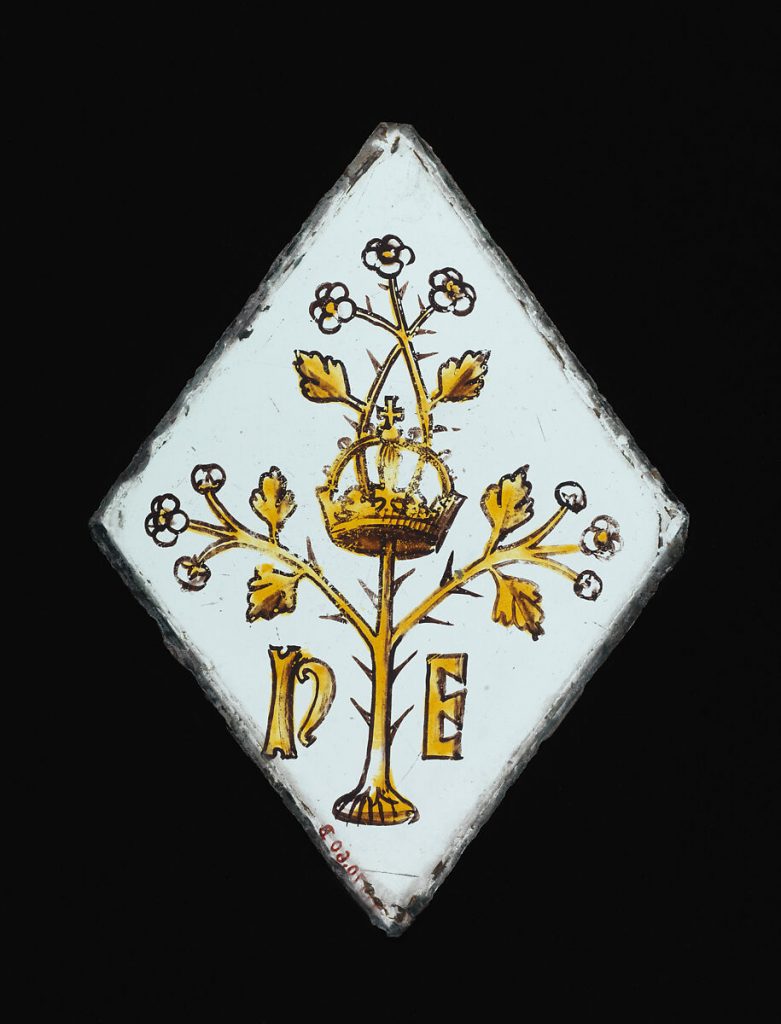
a triangle of stained glass on a black background.
A 'Quarry' of Stained Glass showing the Crown, a hawthorn Bush and initials representing Henry VII and his, Queen, Elizabeth of York.  Possibly from Surrey. Early 16th Century and from the Metropolitan Museum of Art (Public Domain).
A ‘Quarry’ of Stained Glass showing the Crown, a hawthorn Bush and initials representing Henry VII and his, Queen, Elizabeth of York. Possibly from Surrey. Early 16th Century and from the Metropolitan Museum of Art (Public Domain).

Hawthorn produces white flowers in Spring. So, it is one of the great pagan fertility plants, its flowers forming the garlands on May Eve. One of the chemicals in the plant is the same as one given out in decay of flesh. It is, therefore, associated with death in folklore, and not to be brought into the house.

It was also said to be the thorn in the Crown of Thorns, so sacred. A crown from the helmet of the dead King Richard III was found on a hawthorn bush at the Battle of Bosworth Field. The victorious Henry VII adopted it for a symbol. . For more on the plant, https://www.woodlandtrust.org.uk

The virtues of Hawthorn

John Worlidge, wrote in 1697

‘And first, the White-thorn is esteemed the best for fencing; it is raised either of Seeds or Plants; by Plants is the speediest way, but by Seeds where the place will admit of delay, is less charge, and as successful, though it require longer time, they being till the Spring come twelvemonth ere they spring out of the Earth; but when they have past two or three years, they flourish to admiration.’

Systema Agriculturae 1697

Hawthorn is an excellent wood for burning, better than oak. It has the hottest fire so that its charcoal could melt pig-iron without the need of a blast. It is also good for making small objects such as boxes, combs, and tool-handles. The wood takes a fine polish, so also used for veneers and cabinets. For advice on the best wood to burn read my post here.

Hawthorn has many medicinal benefits according to herbalists. Mrs Grieve’s Herbal suggests it was used as a cardiac tonic, to cure sore throats and as a diuretic. (But don’t try any of these ancient remedies without medical advice!)

What to plant in late January

This is the time, according to Moon Gardeners, to plant and sow plants that develop below ground. So rhubarb and garlic, fruit trees, bushes, bare-root plants and hedging plants.

On This Day

1571 – The Royal Exchange opens in London. London first Business centre since the Roman Forum, creating the first Bourse in the UK

1785 – ‘Boys play on the Plestor at marbles & peg-top. Thrushes sing in the Coppices. Thrushes & blackbirds are much reduced.’ From the Garden Calendar in Gilbert White’s Year. the Plestor is the village green; peg-top is a spinning top game. For more on Gilbert White,the inspirer of Darwin, see my post.

1940 – The coldest day since the Great Freeze of February 12th 1895. The Thames froze over for the first time since 1880. Lovely photo here of skaters on the Serpentine.

1973 – Ceasefire in Vietnam agreed in negotiations in Paris

First Published in January 2023, revised 24, 25, 26

News from the Almanac of the Past January 22nd 2026

May Day Bedfordshire

This has become the day in which I update readers on the purpose and future plans for the Almanac of the Past.

What is the Almanac of the Past?

The nature of an almanac is to be a pot-pourri. They are about seasons, time, folklore, history, important events, and anniversaries. I also like to cover history, famous people and discoveries. Gods, Goddesses, Saints, sinners, and archaeology. What I want it to be is something that makes us more mindful about the passing of the year. How seasons and time change the way people see their world. My focus is mostly on the UK, but also on Rome and Greece. With occasional excursions to other ages, places and universes. I am also trying to find more content that is London-based.

What is the plan for the Almanac of the Past?

I plan to have one entry for each day. The problem with this, is that as I fill in the empty days, I will be republishing the already filled days. So subscribers will be seeing content they have seen before. Currently, I am trying to improve and extend existing content so it is worth reading again. And I am groping towards a final format for each day.

This is what I think it is. Each page will have the following sections:

Seasonal content: folklore about the day in question. Including historic texts about gardening, farming, cooking, witchcraft superstitions etc.

Saint or God/Goddess of the day

Calendar content: about epochs, ages, years, months, days, hours, and everything calendrical

Major article about something that happened on this day in history

On This Day section where other things that have happened on this day have happened.

I guess rather than a post it will be more like a newsletter of the day?

The almanac of the Past Publication

If I get the formula right, I will attempt to get a publication from it. Otherwise, it will remain online. So:

How’s it doin’?

The first graph, above, shows a steady growth from 2,000 views in 2020 to 26,000 views for 2025. Although encouraging, it has not gone ‘Kardashian viral’ as yet. 75% increase last year. This was partly achieved by taking more care of SEO – search engine optimisation. I’ve been doing a lot more of this. But if you are interested in this read last year’s ‘News from the Almanac of the Past’.

Screenshot from Jetpack showing the geographic reach of the Almanac of the Past from 2020 – 2025

The second graphic shows where the readers come from: mostly from the UK and the US, followed by France and Germany. It shows vast stretches of the world not registering as converts to the Almanac of the Past, including Greenland (or do I mean Iceland?).

Next up ‘Favourite pages, and referrers

Screenshot from Jetpack showing the most viewed pages (left and Referrers (Right)

The Skimmity Ride is way out ahead, the most popular post. The page is about a procession ‘designed to humiliate a member of the community.’ Why is it top? I think because hardly anyone else posts about it, so if you want to know what Thomas Hardy was writing about in the Mayor of Casterbridge my site is the go-to place.

Next is the ‘Beginning of the Universe‘ Post. This pleases me because it is something I discovered myself while writing the blog. It explains the beginning of the universe, the beginning of the year, the beginning of spring, and the Birthdays of Adam, Lilith, & Eve; the conception of Jesus, and why the year began in the medieval period on March 25th. So again, you won’t find this information easily in any one other place. The Almanac of the Past explains it all.

Queen Elisabeth I’s Nicknames are third. She is always popular and the nicknames she gave to her advisers are fun, and either flattering or rude.

Then we have the post on Antarctic explorer Lawrence Oates. It is an interesting post, of course, but why it rates highly I have no idea. Maybe people know this expression ‘I am just going outside and may be some time’ and want to track it down?

The last one I shall mention is the Miracle of the Testicles. This is one of my favourite posts! (I just typed: ‘because it’s nuts’ without realising the pun, so please forgive me!) But, really, it shows the often risible ways the early Saints became famous. And yet beneath that there is a real need in the community for spiritual help which the origin stories touch. Its high ranking must be down to the word ‘testicles?’ No?

The other side of the graphic shows referrers, which are mostly the obvious ones like search engines and facebook. But there is also a fansite for Damien Lewis, the actor who was in Band of Brothers and Henry VIII in Wolf Hall. One of his pages mentioned my page.

Screenshot from Jetpack showing the posting ativity for the past year. Grey means no posts, Dark green 2 or more, light green one post a day.

Posting Activity shows you how far I am from achieving one Almanac post a day. Not far in the winter, more to do in the summer.

So how can you help?

If you have a website or a blog or a social media page, post a reference to one of my pages, and encourage people to have a look. If you receive the email as a subscriber, occasionally visit the site, and like it? Send a WhatApp group a link to my page. Help me go properly viral, then, I can get a publishing deal, publish my Almanac and then my novels …… do it before you forget!

Any problems for the Almanac of the Past?

Please continue to forgive my wretched proofreading.

First Published in 2026

On Resolutions. Aquarius & T-Shirts January 21st St Agnes Day

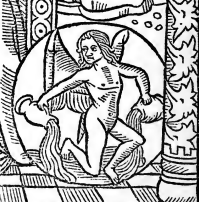
black and ehite engraving Aquarius (detail from Kalendar of the Shepherds)
Aquarius (detail from Kalendar of the Shepherds)

The Sun enters the house of Aquarius

The man born under Aquarius shall be lonely and ireful; he shall have silver at 32 years; he shall win wherever he goeth, or he shall be sore sick. He shall have fear on the water, and afterwards have good fortune, and shall go into divers strange countries. He shall live to be 75 years after nature.’

‘The woman shall be delicious, and have many noises for her children; she shall be in great peril at 24 years and thereafter in felicity. She shall have damage by beasts with four feet and shall live 77 years after nature.

The Kalendar of Shepherds, 1604 (quoted in the Perpetual Almanac by Charles Kightly)

Resolutions & Predictions

the Author sporting a Betsy Trotwood aphorism ‘Never be mean, never be false, never be cruel’

The Kalendar of Shepherds predictions for those born in Aquarius, (see above) are so specific they cannot help but be wrong for most people. Surely, the art of the prophecy, is to be vague, be general and to know human nature.

By the 21st of January, we should have an idea of whether we are going to keep to your resolutions or not. And perhaps we should now be tuning them or adapting them to fit our lives as actually lived, rather than on our pious hopes. (for more on prophecy, see my post here).

Wisdom in a Taxi Ride

In 2023, on January 21st after my Uncle Brian’s Funeral. I had a chat with a taxi driver on the way to the railway station . He told me that funerals make him wonder how his behaviour might influence those the people who will, one day, make that special effort to turn up at his funeral. As a young Asian guy, he was thinking ahead quite some way.

I replied that ‘Funerals make me reflect on how much time I have spoiled by not being fully engaged in the moment’. All those conversations where my mind wandered. Those radio programmes I only half heard as I tried to read a book at the same time. All those train journeys, walks in the woods or along the canal while listening to headphones. My visits to relatives where I rushed back to get home as quickly as possible. Being present in the moment was, maybe, the key to improving the quality of life and interactions with others.

Dickens’ solution to the woes of the world

We continued chatting through the short journey. As we arrived in the forecourt of the station he suggested we exchange a final word of wisdom. As we had been talking about history, I turned to Charles Dickens. I told him Betsy Trotwood’s words to David Copperfield:

“Never,” said my aunt, “be mean in anything; never be false; never be cruel. Avoid those three vices, Trot, and I can always be hopeful of you.”

Charles Dickens, David Copperfield

I said that Betsy’s words stem from Charles Dickens’ belief that the key to progress in the world was to ignore the dogma of religion but to live by just one tenet.

Treat people as you want to be treated by others.’

In return, he told me of an Islamic teacher who responded to his enquiry. ‘How to ensure salvation given all the many (possibly conflicting) moral teachings and texts there were’. The answer was, if he lived wisely and considered his impact on others, he could be sure of salvation.

By this time, I had missed my train. But the two of us had had a moment of connection. There are plenty of trains from Guildford to Waterloo.

Dickens Philosophy

Dickens was a brilliant propagandist against the evils that are endemic in society. And yet, he was no socialist. He wrote ‘Hard Times’ which is a virulently anti-trade union story. But his recipe for improvement in society was based on implementing the broad understanding of religion, as expressed in these two quotations:

Thou shalt love thy neighbour as thyself” (Matthew 22:37–39).

“Do to others as you would have them do to you” (Luke 6:31).

T-shirts & the Rolling Stones

Philosophy for life as told to St Patrick by a Druid

I have a lot of t-shirts with quotations from history on them. I suspect I am one of the very few people who store his t-shirts in chronological order. The selfie shows chronologically, the first, and the last is:

“You can’t always get what you want
But if you try sometime you’ll find
You get what you need”

by Mick Jagger and Keith Richards of The Rolling Stones.

As the Rolling Stones have a big part to play in the musical history of Lindon, here are the lyrics in full and a youtube video.

You can’t always get what you want

I saw her today at the reception
A glass of wine in her hand
I knew she would meet her connection
At her feet was her footloose man


No, you can’t always get what you want
You can’t always get what you want
But if you try sometime you’ll find
You get what you need

repeat above

And I went down to the demonstration
To get my fair share of abuse
Singing, “We’re gonna vent our frustration
If we don’t we’re gonna blow a fifty-amp fuse”
Sing it to me, honey


You can’t always get what you want
But if you try sometimes, well, you just might find
You get what you need
Ah baby, yeah
Ah


I went down to the Chelsea drugstore
To get your prescription filled
I was standing in line with Mr. Jimmy
And, man, did he look pretty ill
We decided that we would have a soda
My favorite flavor, cherry red
I sung my song to Mr. Jimmy
Yeah, and he said one word to me, and that was “dead”
I said to him


You can’t always get what you want, well no
You can’t always get what you want. I tell you, baby
You can’t always get what you want, no
But if you try sometimes you just might find, uh, mm
You get what you need, oh yeah, woo!
Ah, woo!
You get what you need, yeah, oh baby
Ah yeah


I saw her today at the reception
In her glass was a bleeding man
She was practiced at the art of deception
Well, I could tell by her blood-stained hands, sing it


You can’t always get what you want, yeah
You can’t always get what you want, ooh yeah, child
You can’t always get what you want
But if you try sometimes you just might find
You just might find
You get what you need, ah yeah
Ah baby, woo!


Ah, you can’t always get what you want, no, no, baby
You can’t always get what you want, you can’t now, now
You can’t always get what you want
But if you try sometimes you just might find
You just might find that you
You get what you need, oh yeah

Ah yeah, do that

source: https://www.lyricsondemand.com/rolling_stones/you_cant_always_get_what_you_want

YouTube Video

And here is an early video of the band, with Brian Jones, playing the song. Sadly, it doesn’t have the sublime choir singing the chorus. Youtube will probably play an ad. I don’t make any money from that by the way!

First written on 21st January 2023, revised January 2024, and republished 2026

On this day

1793 Louis XVI of France was guillotined at the Place de la Révolution in Paris. The National Convention convicted him of high treason 4 days earlier

Rabbiting January 19th

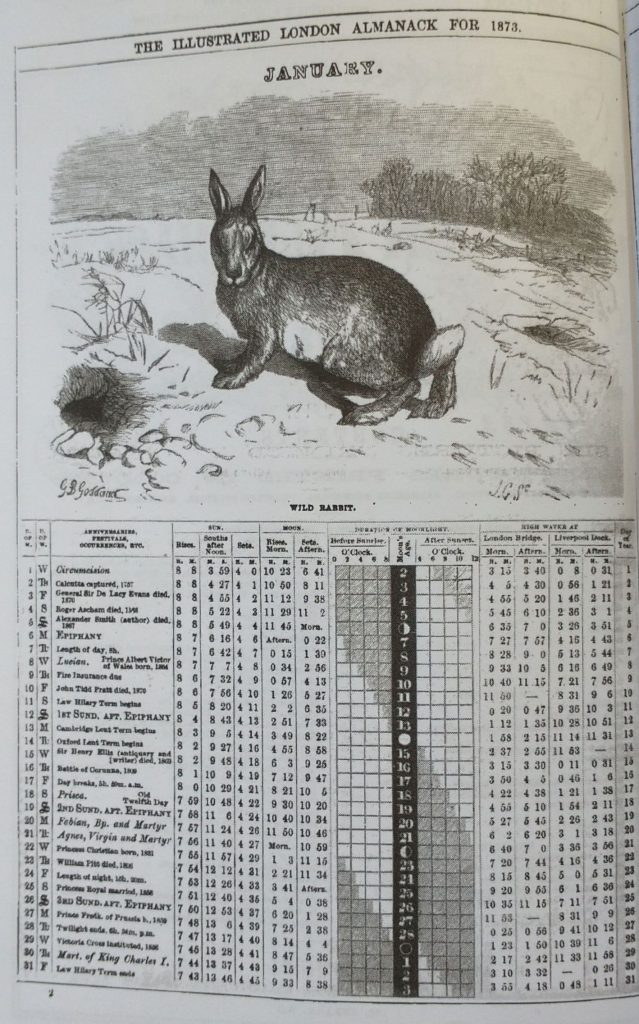
London Illustrated Almanac of 1873
January from London Illustrated Almanac of 1873

January & Rabbits

In January, the ‘coney is so ferreted that she cannot keep in her borough’ says Nicholas Breton. He wrote in the January entry of the Kalendar of Shepherds. (See my post here). In modern speech he means, ‘the rabbit is so hunted with the aid of ferrets that she cannot keep to her burrow’. The London Illustrated Almanac of 1873 chose the Rabbit as its wild animal of the month.

Good Luck Rabbits!

If you need good luck say ‘Rabbit, Rabbit’. No less a person than FD Roosevelt used to say this. No one knows why. Rabbits’ feet are lucky too. I remember some of my friends had them in our Surrey village in the early 60s. Some of Dad’s neighbours kept ferrets, and I remember dead Rabbits hanging from walls. The merits of the feet are given by the history.com website:

“A 1908 British account reports rabbits’ feet imported from America being advertised as ‘the left hind foot of a rabbit killed in a country churchyard at midnight, during the dark of the moon, on Friday the 13th of the month, by a cross-eyed, left-handed, red-headed bow-legged Negro riding a white horse,’

https://www.history.com/news/

As to why, no one really knows. But Pliny the Elder in 71AD reported that cutting off the foot of a live hare could cure gout. There are European traditions of rabbit and other animal’s feet amulets curing all sorts of ailments. There are associations with witches, who could shape-shift into a rabbit. So a rabbit’s foot would be witchy and therefore powerful. In March, I reported on the Hare, and their, similar, associations with witches:

To find out about Rabbit welfare have a look at Rabbiting On Magazine.

Rabbit, Rabbit

For lovers (?) of music, Chas and Dave’s hit song ‘Rabbit’ has a chorus of ‘Rabbit, Rabbit’. According to the Cockney singers (they do love a Knee’s Up) it comes from the Cockney Rhyming Slang expression: Rabbit and Pork. This means ‘Talk’ because it rhymes with ‘Pork’. But, according to the rules of Cockney, you can shorten the phrase to Rabbit. To hear about the origins of the song, and royal connections, click here. To watch the official video. (It is misogynistic and of its day. Also, you may have to listen to an advert, but I don’t make any money from the ad!)

Now, I must stop rabbiting on. Time to get things done.

On This Day

1915 – German Zeppelins bomb the towns of Great Yarmouth and King’s Lynn. 20 people killed in the first major aerial bombardment of a civilian target. See my post on the September 8th Zeppelin attack on London.

Today the V&A ‘celebrated’ Blue Monday with an article on China’s Blue and White Ceramics.

First, published, as January and Rabbiting in 2023, revised in January 2024, 2025, January moved to its page and page revised and retitled 2026

To Concordia on the Day of Peace January 17th

“To Concordia,¹ the Sixth Legion, Victorious, Loyal and Faithful and the Twentieth Legion [dedicates this].” found at  Roman Corbridge (Coriosopitum)
“To Concordia,the Sixth Legion, Victorious, Loyal and Faithful and the Twentieth Legion [dedicates this].” Found at Roman Corbridge (Coriosopitum)

Concordia on the Day of Peace

Today, doesn’t seem a great day for peace. But, Concordia was the Roman goddess of conciliation and harmony. The 17th January is also the Day of Peace for the Goddesses Felicitas, and Pax. So, let’s hope the Roman Goddesses can dispense some peaceful balm and wisdom on our leaders.

There are altars to Concordia in Britain at Corbridge and Carlisle on the Roman Frontier. The Gods of Roman Britain points out that the altars are found where there were:

detachments of troops from more than one Roman legion posted in the same place’.

Does this suggest that the soldiers needed to be reminded that they should not fight each other?

The altar stone pictured above is dedicated to the VI Legion and the Twentieth. The Twentieth, called Valeria Victrix, was stationed in Deva – Chester. But there are stones such as the one above which shows a detachment (or vexillation) was sent to Hadrian’s Wall. For more on the stone and Corbridge see this site. The VIth Victrix legion served on Hadrian’s Wall and their HQ was at Eboracum (York).

Ovid & Concordia

The Roman Poet, Ovid seemingly locates the Day of Peace on the 16th January. But for the 16th he writes: ‘Radiant One, the next day places you in your snow-white shrine’. The Goddess Book of Days puts her on the 17th. So, perhaps, I’m right placing her on the 17th, afterall?

The translator of Ovid’s almanac poem, the Fasti, A. S. Kline, explains that the Goddess Concordia:

symbolised the harmonious union of citizens. A temple was erected to her in 367BC (on the Capitol, near the temple of Juno Moneta) It was erected by Marcus Furius Camillus at the time when the plebeians won political equality. The Temple of Concord was restored by the Emperor Tiberius from his German spoils in AD10.

This is how Ovid puts it:

The Fasti, by Ovid

Book I: January 16
Radiant one, the next day places you in your snow-white
shrine,
Near where lofty Moneta lifts her noble stairway:
Concord, you will gaze on the Latin crowd’s prosperity,
Now sacred hands have established you.
Camillus, conqueror of the Etruscan people,
Vowed your ancient temple and kept his vow.
His reason was that the commoners had armed themselves,
Seceding from the nobles, and Rome feared their power.
This latest reason was a better one: revered Leader,
Germany
Offered up her dishevelled tresses, at your command:
From that, you dedicated the spoils of a defeated race,
And built a shrine to the goddess that you yourself
worship.
A goddess your mother honoured by her life, and by an
altar,
She alone worthy to share great Jupiter’s couch.

Book I: January 17
When this day is over, Phoebus, you will leave Capricorn,
And take your course through the sign of the WaterBearer.

Camillus was a semi-legendary military leader who is said to have built the Temple to Concordia in 367BC. The Temple was rebuilt several times. In 121 BC is was rebuilt at a larger size. Thereafter, the Senate would meet there during and after political conflict. Ovid’s revered Leader above is Tiberius, and his mother is Livia, the wife of Augustus. Tiberius filled the Temple full of art treasures. So, it became a museum and a tourist attraction for visitors to Rome. For more on Concordia and Pax look at my post here. For more Ovid, read my post here.

On This Day!

1752 – Today is also Twelfth Night Old style which is the date of the celebration of the last night of Christmas according to Julian Calendar which was replaced by the Gregorian in 1752. So Old Style time to Wassail the Orchard! Wassails are currently being held in various places in London. See here for the Bermondsey Wassail. See below for more details.

1773 – Captain Cook captained the first Ship (the Resolution) to cross the Antarctic Circle

1917 – The United States pays Denmark $25 million for the Virgin Island

Today is St Antony’s Day – father of Monasticism, curer of St Antony’s Fire, patron Saint of domestic animals, especially pigs. The runt of a litter is a ‘tantony pig’ and the smallest bell in a chime is a ‘tantony bell’. His symbols are pigs and bells.

Wassail Day at the Village Orchard Dulwich

London Wildlife Trust Wassail Day Website landing page

Run by the London Wild Life Trust. The web site says:

Celebrate Wassail Day with us on Saturday

London Wildlife Trust welcomes the local community to awaken the apple trees to ensure a good harvest of fruit in autumn in a traditional Wassailing event.

Activities on the day will include apple inspired crafts, bird feeders, warming bread on the fire (weather permitting), pinning toast to trees (this apparently helps with a good harvest!) and more! 

First written in Jan 2023, revised and republished in Jan 2024,2025,2026

Queen Elizabeth 1 Coronation January 15th

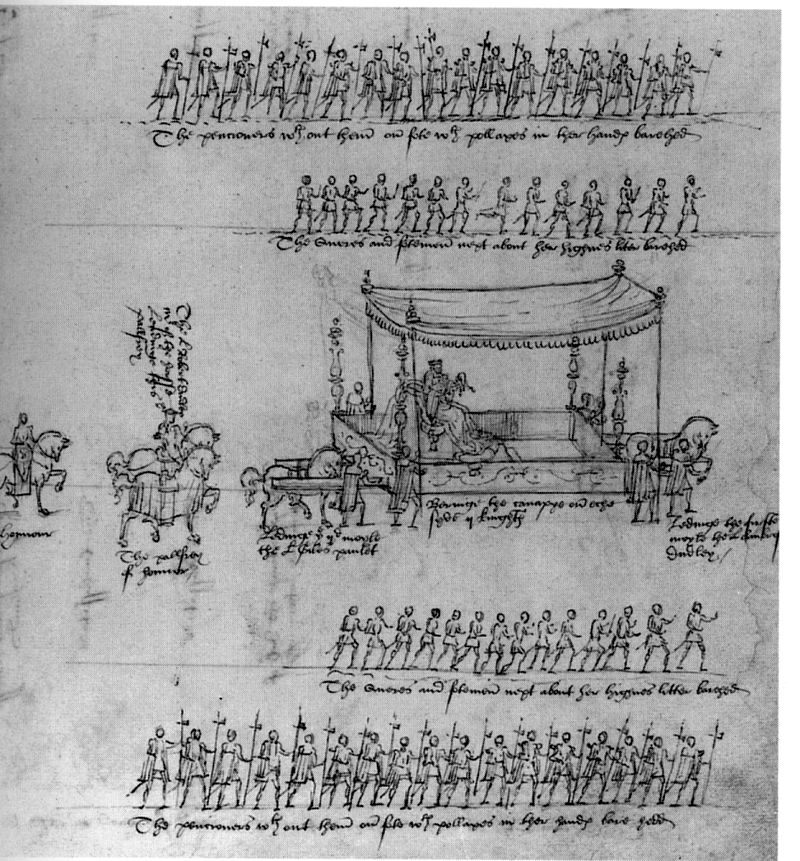
Queen Elizabeth 1 Coronation. Litter at her royal entry, accompanied by footmen and Gentlemen Pensioners. Unidentified engraver. (Wikipedia)

Queen Elizabeth 1 Accession

Queen Elizabeth 1 ascended the throne on 17 Nov 1558. Her accession was greeted with an outbreak of joy by the Protestant population. But the supporters of her dead sister Mary 1 did not want a Protestant monarch. On hearing the news of the death, Elizabeth rushed to occupy the Tower of London. She even risked shooting London Bridge, such was her haste. (see my post of the accession of Queen Elizabeth I)

She consulted lawyers about the legal position. Elizabeth, and her sister Mary, were declared bastards by two Succession Acts passed during Henry VIII’s ‘troubled’ married life. The Third Succession Act of 1543/44, following Henry’s marriage to Katherine Parr, restored Mary and Elizabeth to the Royal line. But it did not restore their legitimacy. Rather than tackle the complex legislation, Sir Nicholas Bacon, the Lord Keeper of the Great Seal, advised:

“the English laws have long since pronounced, that the Crown once worn quite taketh away all Defects whatsoever“. (Wikipedia)

Which, when you think about it, basically legitimises any successful ‘coup’! And, from a legal perspective, she was still, arguably, illegitimate.

Queen Elizabeth 1 Coronation

Her courtiers immediately began work on the Coronation, scheduled for January 15th 1559. In terms of Coronations, this was rushed. The precise date was, in fact, chosen by the Royal Astrologer. John Dee, a famous mathematician and credulous astrologer,. He found a date that the celestial bodies deemed propitious. But it needed to be sooner rather than later because Elizabeth’s position was so insecure.

Queen Elizabeth 1 Coronation Procession

The Coronation began with a procession from the Whitehall Palace in Westminster. Then back to the Tower of London for the Vigil. Followed by a Royal Procession through the City of London to Westminster Abbey for the Coronation service. After the Coronation, there was the traditional Coronation Banquet at Westminster Hall.

The Vigil Procession was on the Thames where she was escorted to the Tower by ‘ships, galleys, brigantines‘ sumptuously decorated. The Royal Entry consisted of 5 Pageants and 11 Triumphal Arches.

The first pageant showed the Queen’s descent from Henry VII and his marriage to Elizabeth of York. This marriage effectively ended the Wars of the Roses by linking the House of York and the House of Lancaster. The pageant also emphasised her ‘Englishness’ as opposed to the Spanish affiliations of Mary. The second pageant demonstrated that the Queen would rule by the four virtues of True Religion, Love of Subjects, Wisdom and Justice. At the same time she was shown trampling on Superstition, Ignorance and other vices.

The Procession at Cheapside

The third pageant, at the upper end of Cheapside near the Guildhall, provided the opportunity for the City to give Elizabeth a handsome present. This was a crimson purse with 1000 marks of gold, showing the closeness of the City and the Crown. The fourth pageant, contrasted a decaying country during the time of Mary with a thriving one under Elizabeth. It featured the figure of Truth, who was carrying a Bible written in English and entitled ‘the Word of Truth’. The Bible was lowered on a silken thread to the Queen. The Queen kissed it and laid it on her breast to the cheers of the crowd. She promised to read it diligently. The final pageant was Elizabeth portrayed as Deborah, the Old Testament prophet. Deborah rescued Israel and ruled for 40 years. So she was an ideal role model for Elizabeth. (For more details, look here.)

‘All the houses in Cheapside were dressed with banners and streamers, and the richest carpets, stuffs and cloth of gold tapestried the streets’.

British History.ac.uk Vol 1 pp315 -332

Queen Elizabeth 1 Coronation in Westminster Abbey

The Coronation was traditional – in Latin and presided by a Catholic Bishop, but there were significant innovations. Important passages were read both in Latin and in English. The Queen added to the Coronation Oath the promise that she would rule according to the:

‘true profession of the Gospel established in this Kingdom.’

This showed the path Queen Elizabeth was going to take. She would introduce innovation gradually into tradition, but emphasizing that the fundamentals had indeed changed. This was going to be a Protestant reign.

See also tomorrow’s post on the Nicknames the Queen gave to her advisors.

‘Divorced, Beheaded, Died’

Can I remind you that I wrote a best-selling book on the Kings and Queens of Britain? It has sold over 130,000 copies, has been reprinted several times and in several editions. Further details here.

On This Day

1535 King Henry VIII became Supreme Head of the Church of England

1759 The British Museum opened to the Public.

1867 Ice breaks on the boating lake at Regent’s Park, London, Forty people die.

2001 Wikipedia Day. The free wiki content encyclopedia launched. (Other days are possible but this one is the earliest recovered wikipedia page. I begin editing pages on November 28th, 2003.

Revised January 2026

Ice age Lunar Calendar in the Palaeolithic (20,000 years ago) 14th January

The Moon over 28 days, sketch from photo.

This page is about the discovery of evidence for an Ice age Lunar Calendar. The alignment of Neolithic and Bronze Age monuments shows that there was a calendar of the year in use. But in 2023, evidence of a Palaeolithic Calendar was discovered by an ‘amateur’. Furniture maker Ben Bacon studied markings in cave paintings at Lascaux, Altamira and other caves.

Sketch of 23,000 year old cave painting, below the head of the animal are  dots which arethought to be lunar months of the mating season
Sketch of 23,000 year old cave painting, below the head of the animal are 4 dots which are thought to be lunar months of the mating season

He collaborated with Professors at UCL and Durham. They interpreted markings showing the use of an Ice age Lunar Calendar to mark the mating season of particular animals. A Y shaped mark he interpreted as meaning ‘giving birth’. The number of dots or dashes drawn by or in the outline of the creature coincided with their mating season. They determined this by studying the mating season of modern animals, which corresponded with the palaeolithic markings.

For further details, read the article in Cambridge Archaeology here.

At Stonehenge, there are suggestions that the alignments to Midsummer and Midwinter Solstices stretch further back into the Mesolithic period. (For more about Stonehenge see my post).

On this Day! A Whopping, whopping mallard!

1437 – Workmen discovered a giant Mallard which inaugurated ‘Mallard Day’ at All Souls, College, Oxford. It must have been colossal, as they celebrated with an annual torch lit duck hunt on the nearby River Thames.

Sadly, it is no longer annual and has been relegated to a once-a-century event. Each year, however, all they do is sing the song:

Griffin, Bustard, Turkey, Capon,
Let other hungry mortals gape on,
And on the bones their stomach fall hard,
But let All Souls men have their Mallard.
Oh! by the blood of King Edward.
It was a whopping, whopping mallard.

Therefore, let us sing and dance a galliard,
To the remembrance of the mallard.
And as the mallard dives in pool,
Let us dabble, dive and duck in bowl.
Oh! by the blood of King Edward.
It was a whopping, whopping mallard

Chambers. Book of Days, 1864

1872 Greyfriars Bobby died. Bobby was a Skye Terrier or Dandie Dinmont Terrier. When his master died, he spent 14 years guarding his owner’s grave in the famous Greyfriars’ graveyard in Edinburgh. There are books, there are films, there are statues. But facts are in short supply. One claim is that stray dogs have been known to find their way into graveyards, people feed them. The dog makes it their home. So Bobby may not have been related to anyone buried there, and was devoted to the food he was given. But then that ruins a good story.

Photos K Flude

1896 – First public screening of a motion picture was given in London at the Royal Photographic Society. But was it, as with most inventions, much more complex than that? So read WHO? WHAT? WHEN? WHERE? A mini chronology of the start of cinema to see how it really was.

Finale

All together now What was it? ‘A Whopping, whopping mallard!.’

First published 2023, Whopping Mallard! Introduced, 2025, Greyfriars Bobby developed 2026

St Hilary & the Arians. The Coldest Day of the Year? January 13th

Hackney Marshes, Jan 2022, Chris Sansom

St Hilary’s Day is traditionally the coldest day in the year. It is normally in January, or February. This is because although the Sun is at its lowest at the Solstice, the earth and the sea retains heat. But, even so, sometimes the coldest day is in December and occasionally as early as November, or as late as March.

In 2024 the coldest day, was at Dalwhinnie, 17th January at -14.0C. In 2023, it was -16.0C, recorded at Altnaharra on the 9th of March. The coldest day in 2025 was -18.9C Altnaharra 11 January. Both places are in the Scottish Highlands.

At the bottom of the post are the coldest days in the UK since 2000.

St Hilary & the Arians

I can’t help think that this heading sounds like a very good 1980s post-punk band?

St Hilary (born 315) was the Bishop of Poitiers in France, where he died around 367 AD. He was a vigorous opponent of the Arian Heresy, which swept through the Catholic world in the late Roman period. Catholic doctrine was that God – the Father, Son and Holy Ghost was a Trinity. Arius took the view that: “If the Father begat the Son, then he who was begotten had a beginning in existence, and from this it follows there was a time when the Son was not.” Seems like solid logic, doesn’t it? But this means that for Arians, Jesus was not equal with God. Another question at the time was, ‘Was Jesus divine?’

Eventually, the ecumenical First Council of Nicaea of 325, declared Arianism to be a heresy. This was during the reign of Constantine the Great. Arianism was strong in the Eastern Empire and was accepted by Constantine’s son. It continued as a major influence, especially among the Goths and Vandals who were an increasingly important force in the Late Roman Empire.

The Church takes the position that there is one God existing in three coequal, coeternal, consubstantial divine persons (wikipedia). It’s sobering to think how many people were martyred over these arcane attempts to maintain a coherent monotheism despite this difficult idea of three entities being one God. For more heresy please look at my post on the Pelagian Heresy and St Germanus.

Hilary Term

St Hilary was a scholar and is one of those rare early Saints not to be horrifically martyred. We remember him in the UK with the dedication of a few Churches, particularly in Wales. He has also given his name to one of the terms of the academic year. At least for Oxford. There, Hilary Term is their name for the ‘spring term’ and this year Hilary began on the 12th January.

Oxford names its terms Michaelmas, Hilary and Trinity. Cambridge and London School of Economics share Michaelmas but call the next term ‘Lent term’ and then ‘Summer Term’. Most other universities split the academic year into three terms (autumn, spring and summer) across two academic semesters. 

For most of us ‘terms’ are a thing of our youth. For the rest of our lives we participate in the hard slog of ‘real life’. Real life is not split into terms. It is work, work, work, separated by a few short breaks. But not for the High Court and the Court of Appeal. No! They have stuck to the idea of the term. The legal establishment also uses ‘Hilary.’ This year the legal year is:

2026

Hilary: Monday 12 January to Wednesday 1 April
Easter: Tuesday 14 April to Friday 22 May
Trinity: Tuesday 2 June to Friday 31 July
Michaelmas: Thursday 1 October to Monday 21 December

Too much like hard work, for the lords of Justice! Although to do them credit they have four terms.

As I travel around Britain I find there are a lot of historic ‘Stately Homes’ which were bought by eminent Judges or lawyers. The legal establishment is based at the four Inns of Court: Lincoln’s Inn, Grey’s Inn, Inner Temple and Middle Temple. These were founded in London in the medieval period. They provided homes and well as offices (chambers) for the lawyers. The lawyers stayed in them during the legal terms. About 30 weeks out of the 52 available in the year. Then they would go off to their country estates to recuperate and enjoy the fruits of their privileged position.

Coldest days in the UK

(according to https://www.trevorharley.com/coldest-days-of-each-year-from-1875.html and in centigrade.)

2000 -15.0 Dalmally (Argyll) 30 December

2001 -21.7 Kinbrace (Sutherland) 3 March

2002 -16.1 Grantown 2 January

2003 -18.3 Aviemore 7 January

2004 -15.2 Kinbrace (Sutherland) 19 December

2005 -13.2 Ravensworth (North Yorks.) 29 December

2006 -16.4 Altnaharra 2 March

2007 -13.0 Aboyne 22 December

2008 -12.9 Aviemore 30 December

2009 -18.4 Aviemore 9 February, Braemar 29 December

2010 -22.3 Altnaharra 8 January

2011 -13.0 Althnaharra 8 January

2012 -18.3 Chesham (Bucks.) 11 February

2013 -13.4 Marham (near Norwich, Norfolk) 16 January

2014 -9.0 Cromdale (Morayshire) 27 December

2015 -12.5 Tulloch Bridge, Glascarnoch 19 January

2016 -14.1 Braemar 14 February

2017 -13.0 Shawbury (Shropshire) 12 December

2018 -14.2 Faversham (Kent) 28 February

2019 -15.4 Braemar 1 February

2020 -10.2 Braemar 13 February and Dalwhinnie (30 December)

2021 -23.0 Braemar 11 February

2022 -17.3 Braemar 13 December

2023 -16.0 Altnaharra 9 March

2024 -14.0 Dalwhinnie 17 January

2025 -18.9 Altnaharra 11 January (so far – it hasn’t been finalised as of St Hilary’s Day)

If you look at the long list you will see that Braemar and Althnaharra, both in the Scottish Highlands are the most common places to host the coldest day in the UK.

On This Day

1404 King Henry IV banned alchemy. In fact, he banned transmutation of base metals into gold. Had someone succeeded, they could have turned upside down the basis of the medieval economy.

1893 The Independent Labour Party formed, led by Keir Hardie

1968 Johnny Cash performs live at Folsom State Prison

2021 – Outgoing President Donald Trump is impeached for a second time on a charge of incitement of insurrection following the January 6 United States Capitol attack one week prior. (Wikipedia)

First Published Jan 13th 2024, revised 2025, 2026

January & Almanacs

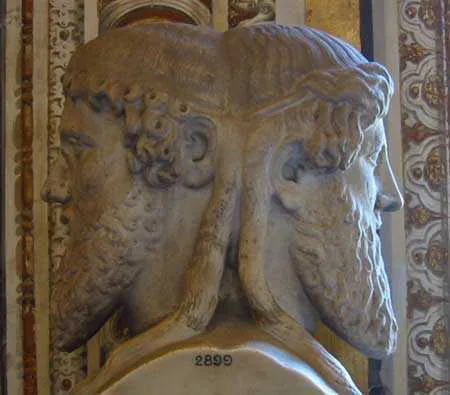
Relief sculpture of the God Janus

January is when people buy diaries, calendars and almanacs. January is named after the Roman God Janus. He faces both ways, to the old year and forward to the New Year. January is Ionawr in Welsh. An ceud Mhios Biadhna in Gaelic meaning ‘the first month of the year’.

This is a Roman Barrel from Scotland is shown on the Trimontium Web Site with the name Januarius on it.

Almanacs

Arguably, they grew from medieval manuscript Books of Hours. The 1493 Kalendar of Shepherds, published in Paris, was particularly important. Each month has a succinct description of the activity. Moreover, there was important information for farmers and others. Eventually, a British version was made.

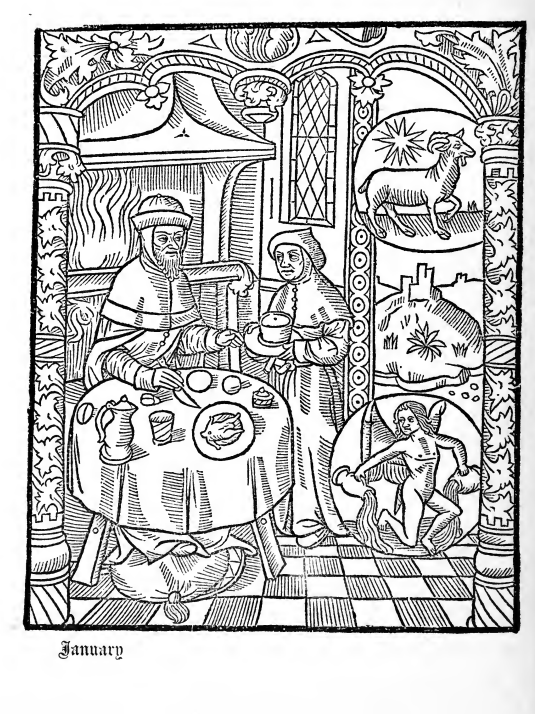
From the Kalendar of Shepherdes (illus. 1529)

Kalendar of Shepherds

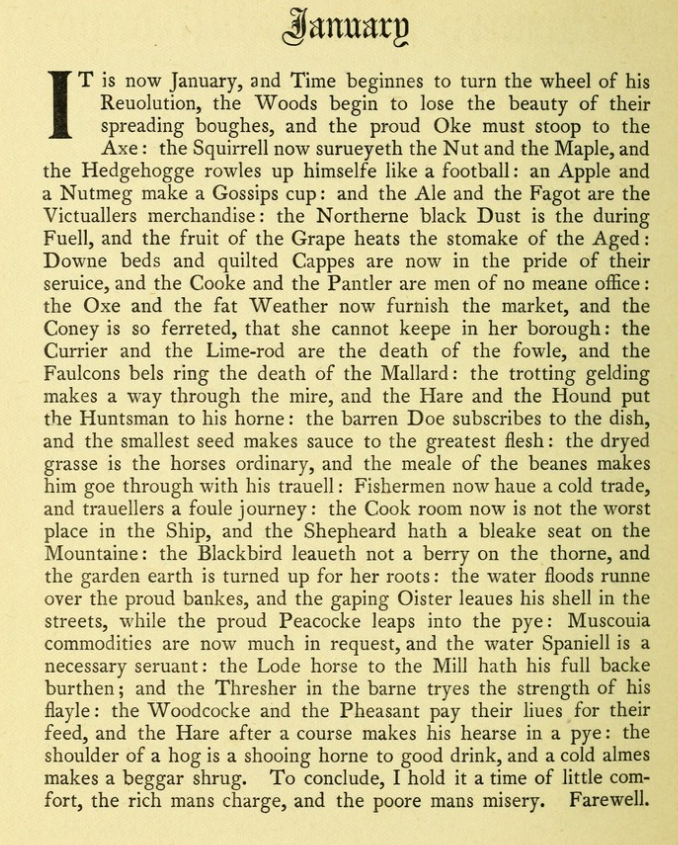
The Kalendar of Shepherds was printed in 1493 in Paris and provided ‘Devices for the 12 Months.’ I use a modern (1908) reconstruction of it using wood cuts from the original French and adding various text from English 16th and 17th Century sources. The text of the month (as shown above) is provided from a 17th Century source. It gives an interesting view of the countryside in January. To see the full Kalendar, look here:

Nicholas Breton, the writer of the text above, concludes that January:

‘is a time of little comfort, the rich man’s charge, and the poore man’s misery.’

The rich man is burdened by having to help out all the poor people who depending upon him to get through the shortages of winter. The image for January shows that January is best spent indoors by a roaring fire, eating pies.

Months of Your Life

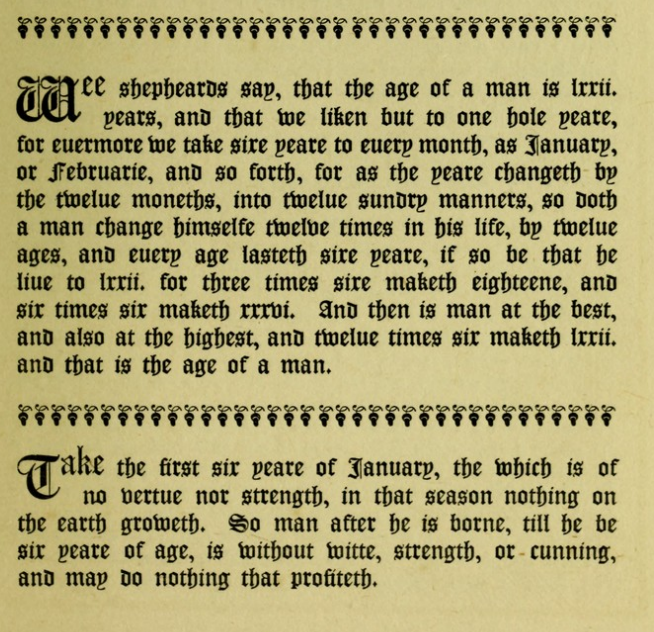
The Kalendar introduces a ‘conceit’ which is that the year mirrors our lives, and we can forecast what will happen in our lives by looking at the months.

Kalendar of Shepherds January text
Kalendar of Shepherds, January text

So our lives, which are of 72 years, can be divided into 12 ages of man, each of 6 years. So, January represents the first 6 years of a person’s life. And as you can see, that during these first 6 years, the child is ‘without witte, strength, or cunning, and may do nothing that profiteth‘. As the year changes every month, so, ‘a man change himself twelve times in his life’. At three times 6 (18 or March) a child becomes a man, and 6 times 6 (36 or June) man is at his best and highest. And at 12 times 6 (72 or December) man is at the end of his allotted span.

Shakespeare numbered the Ages of Man as seven, in the great speech of Jacques in ‘As You Like it’ I dealt with this and other Ages of the World in my post:

Growth of the market for Almanacs

By the 1600s almanacs were the most published form of book apart from the Bible. Lauren Kassell in ‘Almanacs and Prognostications’ reports estimates that by 1660 one third of every household had one.

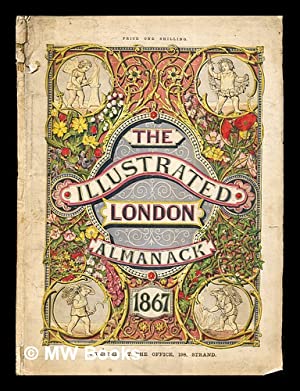
Cover page of the Illustrated london almanack for 1867

Originally, they had a Calendar for each month, and information about the phases of the month, the tides. They gave predictions of the weather, and health issues likely to occur at that time of the year. Astrology was an important element. London Almanacs contained further information about the year, its ceremonies and elections of officials. As this informational side to the almanac grew, they included lists of monarchs, interesting stories, verse foretelling the weather, recipes and cures.

The earliest almanacs were made of wood and were called ‘clog almanacs. You can read more about them on my post here:

The Modern AlmanacOld Moore’s

Old Moore's Almanace  2026 FrontCover Photo
Old Moore’s Almanace 2026 Front Cover Photo

As the New Year dawns, we might turn to an almanac to see what the year has ahead. Newspapers and the web have now taken over largely from almanacs. They print articles about the upcoming highlights of the Political, Sporting, Gardening or the Musical year. But almanacs are still produced. One of the most popular is Old Moore’s which has been in production since 1697. For more on Old Moore’s see my post here. As you can see, they promise to help with your gambling, gardening, fishing and help you through the year with predictions and horoscopes.

Originally published in 2024, republished in 2025. Content moved to new page and expanded 2026.

Weather Lore: ‘If on January 12th the sun shine, it foreshows much wind.’

Abney Park cemetary in winter
Winter at Abney Park Cemetery photo by Harriet Salisbury

Or so says the Shepherd’s Almanac for 1676. Until the 12th Night we were predicting that the weather on each of the 12 days will match the month of the same number. But having past Twelfth Night we have to find turn to other methods of weather lore.

Weather lore seems convinced of the undesirability of a warm January

‘January warm, the Lord have mercy’.

‘January commits the fault and May bears the blame.’

If Birds begin to Whistle in January, frosts to come’

‘When gnats swarm in January, the peasant become a beggar’

Most of the sayings about January quoted in Richard Inwards ‘Weather Lore’ first published in 1893, have this as their main focus. And the contrary (cold January good growing season) also generally holds:

‘When oak trees bend with snow in January, good crops may be expected.’

‘A cold January, a feverish February, a dusty March, a weeping April , and a windy May presage a good year and gay.’

The Weather according to Animals

So much for long range forecasts. Let’s see how Weather Lore helps us use animals to determine whether it will rain today.

If animals crowd together, rain will follow.’

When dogs eat grass it will be rainy

When a cat sneezes, it is a sign of rain

‘If young horses do rub their backs against the ground, if is a sign of great drops of rain to follow.’

The only weather lore repeated in my family was ‘Cows sitting down means it will rain.’ (And of course ‘red sky at night, shepherd’s delight’).

Meteorology Office on weather lore.

A survey by the Met Office in 2017 found that a surprisingly large number of people (75%) use ‘folklore’ to predict weather, and 55% think they are useful methods of predictions. Here is a quote from their post.

  • Red sky at night, shepherd’s delight – used by 70% of UK adults – CORRECT
  • It can be too cold to snow – used by 49% – PROBABLY NOT IN THE UK
  • Cows lie down when it is about to rain – used by 44% – NOT CORRECT
  • Pine cones open up when good weather is coming – used by 26% CORRECT
  • If it rains on St Swithin’s day, it will rain on each of the next 40 days – used by 22% Not Correct. In fact since records began in 1861, there has never been a record of 40 dry or 40 wet days following St Swithin’s Day

Met Office 2017 do-cows-really-lie-down-when-its-about-to-rain and BBC Newsround

For more folk forecasting read my post on St Swithin’s Day

Published January 2025, republished 2025