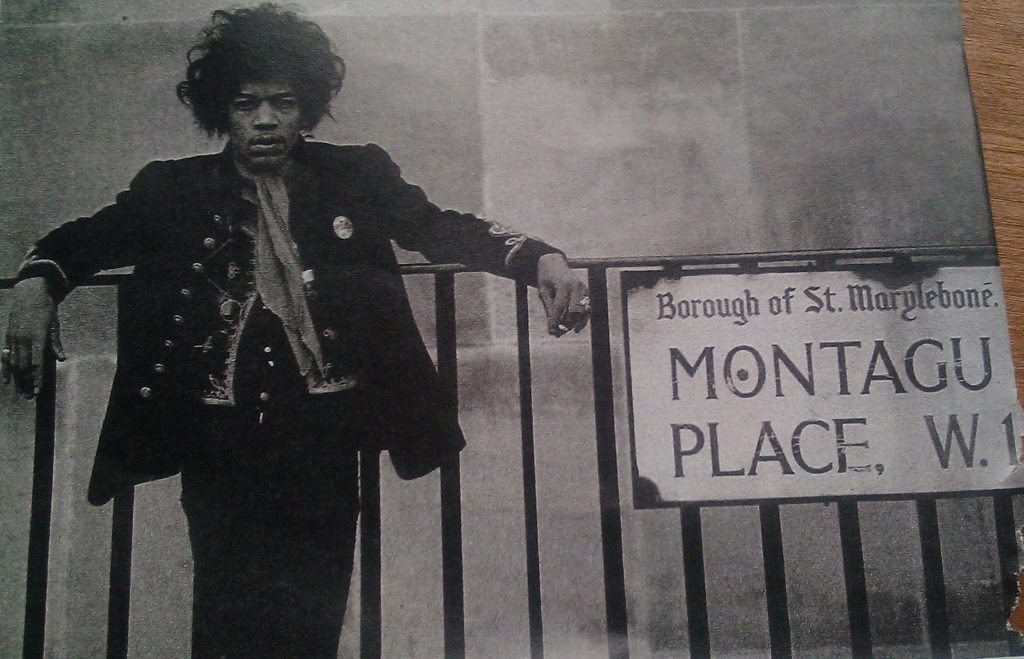
Jimi Hendrix in London November 27th

Jimi Hendrix in London at Montague Place

To my mind, THE genius of the electric guitar, and a great singer and songwriter.

Born Johnny Allen Hendrix in Seattle on 27th November 1942. He was spotted by ex-Animals Chas Chandler (bassist) when performing in small cafés In New York as Jimmy James. Chandler suggested he came to England. On the flight, they decided to change his name to Jimi. He arrived on September 24, 1966.

“It’s a different kind of atmosphere here. People are more mild-mannered. I like all the little streets and the boutiques. It’s like a kind of fairyland”

https://www.independent.co.uk Jimi Hendrix’s London.

On his first day in London, he met Kathy Etchingham,. She found them a flat on the upper floors of 23 Brook Street, which is now part of Handel&Hendrix in London. This is a a small museum to the two musical giants who lived next door to each other (if they were time travellers that is!).

For the English middle class, it’s comforting to know that Jimi bought the furnishings of the flat from their favourite, the nearby John Lewis Department store. However, he got his swinging 60s look from Carnaby Street and Portobello Road Market.

The Blues and London

London wasn’t an arbitrary choice for a young American Bluesman. The wave of British Bands that came to international prominence in 1964, was based on the almost forgotten (by the mainstream media) Black American Blues legends such as Woody Guthrie and Ledbelly. Bands like the Rolling Stones, the Beatles, and the Animals loved this music, and began their careers playing cover versions in Clubs in London. (For more on the British Blues Revival, look here🙂

Hendrix’s younger brother, Leon, spoke about the importance of London to Hendrix

“He loved England ‘cos it was like Seattle. It was like home. It was the same climate, y’know? And this is where all the music was. This is where all of his friends were – Eric Clapton, The Beatles, the Rolling Stones, Brian Jones, everybody…”

He concluded: “After people played, they all went and jammed together. Like, when Jimi played a concert that was only the warm-up… After the concert, he was out and about lookin’ for somebody to play with and somebody’s studio to jam at. They’d just be jammin’ all night ’til, like, seven or eight in the morning. It was awesome.”

Reported in Mouth Magazine 2018 and quoted in https://faroutmagazine.co.uk

Hendrix and Hey Joe

Chas Chandler was interested in managing bands, and thought Hey Joe, which he heard Hendrix play, could be a hit single. Hey Joe got to no 6, in January 1967 in the UK Top Ten, but failed to make an impression in the US.

Here is a YouTube film of Hendrix playing ‘Hey Joe’.

Finally, have a look at this bill for bands on at the Saville Theatre.
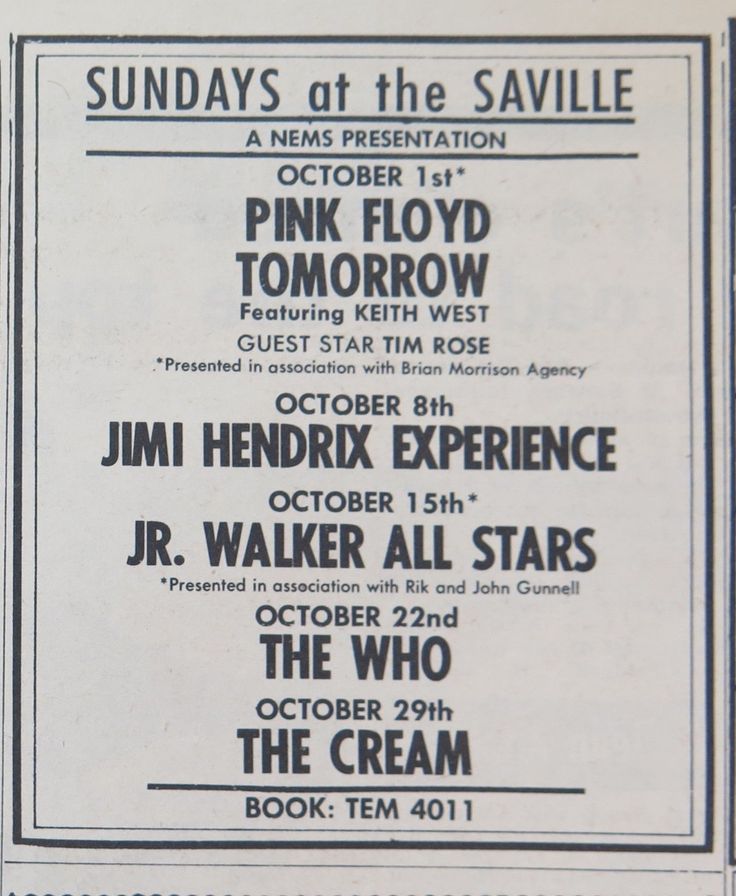
One month in 60s London!

For details of Hendix Gigs look at the Set list Web site, which shows he performed at the Saville Theatre in Jan,May and June 1967 on his First European Tour, and again in Aug and Oct on his 2nd European Tour.

The Independent website above gives a good guide to Hendrix in London. An excellent documentary on Hendrix was recently aired on BBC Sounds, Everything but the Guitar.

On this Day:

Eels are now in Season. (for Eels, Eel Pie Island, and its amazing musical heritage click here🙂

1703The Great Storm

About one this morning, the terrible storm arose, which continued till past seven, the wind southwest, the light not known in the memory of man; blew down a vast number of the tops of houses, Chimneys, etc.; the damage incredible., the lady Nicholas and a great many people killed and many wounded: most of the boats and barges forced ashore; an East India ship cast away near Blackwall, besides several merchant ships and colliers; divers of the great trees in St James’s Park, Temple Grayes Inn, etc, blown down; and we are apprehensive we shall hear of great losses at sea.

From Narcissus Luttrell, diary, 1703, quoted from ‘A London Year’ compiled by Travis Elborough and Nick Rennison.

First published on Nov 27th 2022, as part of Stir Up Sunday! And revised onto its own page on the same day, 2023, and updated 2024 and 2025
St Cecilia’s Day, Henry Wood and the BBC Proms November 17th

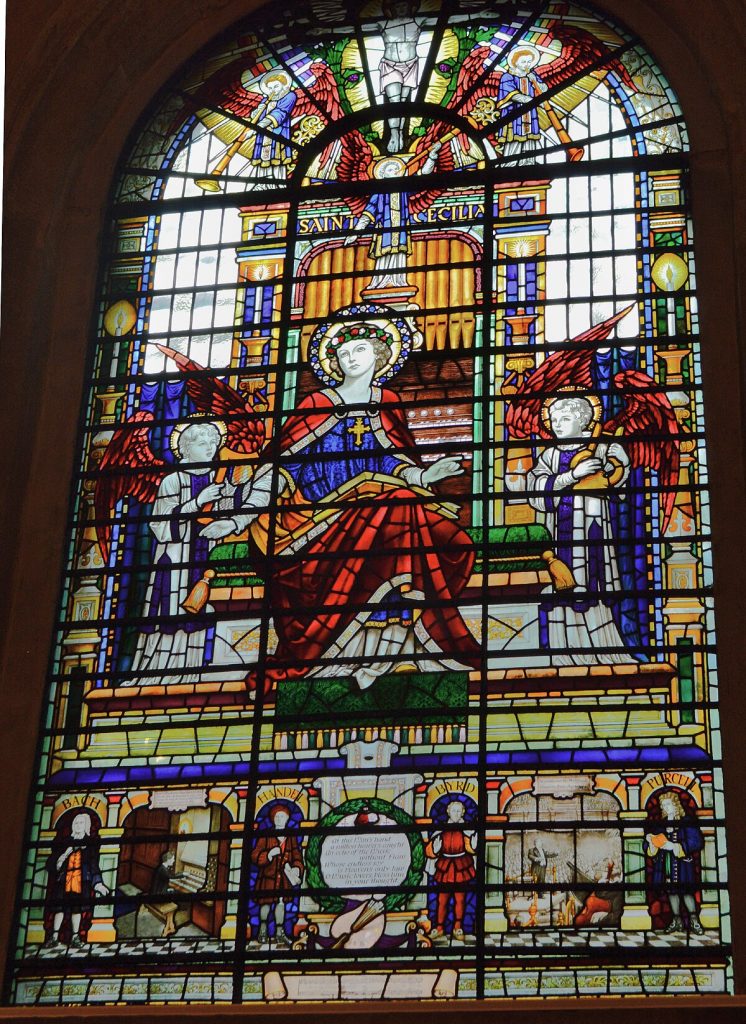
St Sepulchre-without-Newgate, Musician’s Chapel, St Cecilia window. 17 August 2022, Andy Scott

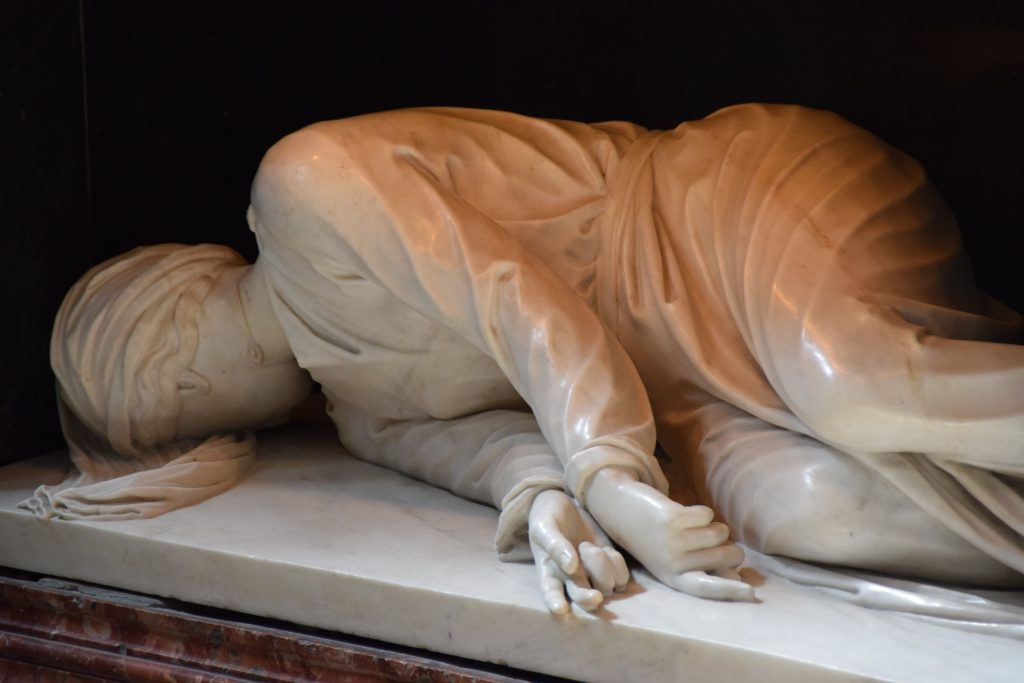
November 17th is St Cecilia’s Day She is the patron saint of musicians and was martyred in Rome in the Second or Third Century AD. The story goes that she was married to a non-believer. During her marriage ceremony she sang to God in her heart (hence her affiliation with musicians). She then told her husband that she was a professed Virgin. So, if he violated her, he would be punished by God. Cecilia told him she was being protected by an Angel of the Lord who was watching over her. Valerian, her husband, asked to see the Angel. ‘Go to the Third Milestone along the Appian Way’ he was told where he would be baptised by Pope Urban 1. Only then would he see the Angel. He followed her advice, was converted and he and his wife were, later on, martyred.

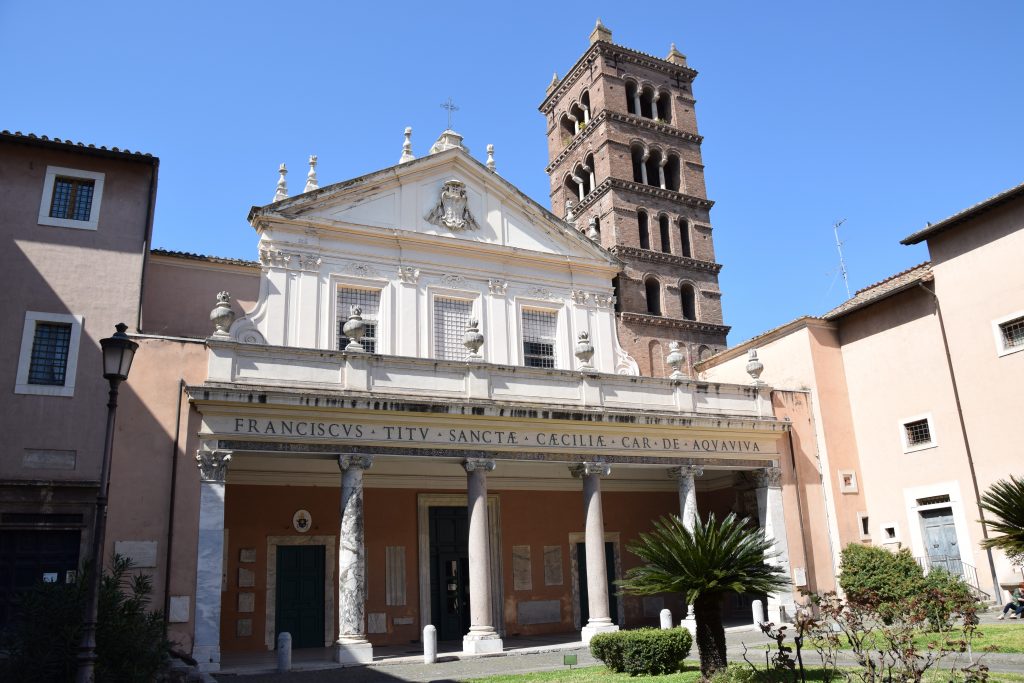
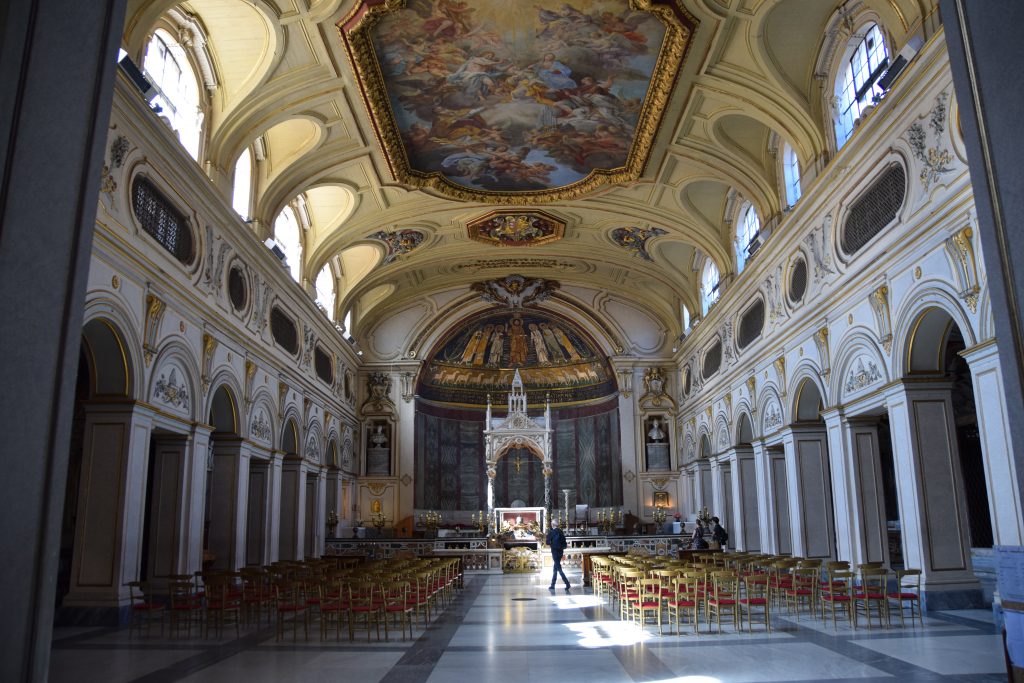
The Church in Rome, Santa Cecilia in Trastevere, is said to be built on the site of her house, and has 5th Century origins. My friend, Derek Gadd, recently visited and let me use these photographs:

St Cecilia in London

There is a window dedicated to her in the Holy Sepulchre Church-without-Newgate, In London, opposite the site of the infamous Newgate Prison.  Henry Wood, one of our most famous conductors and the founder of the Promenade Concerts, played organ here when he was 14. In 1944, his ashes were placed beneath the window dedicated to St Cecilia and, later, the Church became the National Musician’s Church.

This window is dedicated to the memory of
Sir Henry Wood, C.H.,
Founder and for fifty years Conductor of
THE PROMENADE CONCERTS
1895-1944.
He opened the door to a new world
Of sense and feeling to millions of
his fellows. He gave life to Music
and he brought Music to the People.
His ashes rest beneath.

The Concerts are now called the BBC Proms and continue an 18th and 19th Century tradition of, originally, outdoor concerts, and then indoor promenade concerts. At the end of the 19th Century, the inexpensive Promenade Concerts were put on to help broaden the interest in classical music. Henry Wood was the sole conductor.

Wikipedia reports :

Czech conductor Jiří Bělohlávek described the Proms as “the world’s largest and most democratic musical festival”.

The Eight-week Festival is held at the Royal Albert Hall. It moved here during World War 2 after the original venue, the Queen’s Hall, was destroyed in the Blitz in May 1941.

On This Day

1278 Edward 1 had over 600 Jews imprisoned in the Tower of London for coining, clipping and other counterfeiting. Of these, 269 Jews, along with 29 Christians, were executed. They were hanged at the Guildhall in the City of London. By 1290, the King had squeezed all the money he could from the Jews, and they were expelled, not to be let back into the Kingdom until the reign of Oliver Cromwell in the 17th Century. This ended a long period of savage state run antisemitism. Click here for further information.

First Published on November 17th 2023 and revised in November 2024, 2025.

Anniversary of the accession of Queen Elizabeth I and the end of burning of heretics November 17th

Black and white drawing of Queen Elizabeth I with a copy of her signature below it
Queen Elizabeth

The anniversary was celebrated in London with bonfires and bell-ringing. Lighted fire-barrels were rolled along Cheapside. It was, in a way, the precursor to Guy Fawkes Day (1605 onwards). Protestants celebrated it with such joy as it was the end of the reign of Elizabeth’s sister, Queen Mary I. ‘Bloody’ Mary, as she was named by Protestants, was the daughter of Katherine of Aragon. Her Government had 287 Protestants burnt at the stake, mostly relatively ordinary people: clergy, apprentices, artisans, and agricultural workers.  60 were women; 67 were Londoners: the majority were of the younger generation, and most from the South East of England.

The executions were overwhelmingly unpopular, ghastly exhibitions of brutality. In 1555 the weather was unusually wet, so the burnings were an even slower form of torture.  The savagery was blamed by the Protestants on the Old Religion and particular the Spaniards who came over with Mary’s Spanish husband.  Ironically, Philip, in fact, urged caution. When Mary refused to be as lenient to religious dissidents as she was to political ones, he suggested the executions should, at least, be in private. She refused, as the immortal souls of the population were put at risk by Protestant dogma. So the public nature of the deaths was a justifiable deterrent.

When, three years later, in 1558, in the early hours of the 17th November (6am) Queen Mary died, London rejoiced. An old regime, a foreign regime, a Catholic regime was swept away by a young Queen (Elizabeth was 25), with a young Court sworn to protect the new Protestant religion. (For my post on the nicknames for her courtiers look here.)

More on the accession of Elizabeth I at ‘History Today, here.

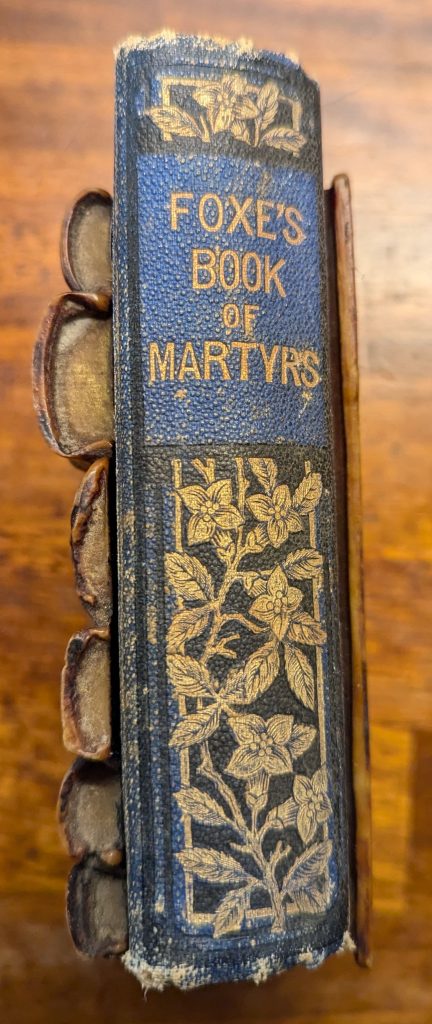
Soon, Foxe’s Book of Martyrs outsold all other books printed except the Bible, and enthusiasm for religious reform morphed into anti-Catholic intolerance.

The Author’s copy of Foxe’s Book of Martyrs

One of the martyrs in the book is Thomas Tomkins, a weaver and a Londoner from Shoreditch, a few hundred yards from where I live.

Tomkins was a humble but godly man who was kept imprisoned by Bishop Bonner, the Bishop of London, at his Palace at Fulham. Here he was beaten. The Bishop personally beat him around the face and ripped off part of his beard. The beatings continued for six months. Finally, exasperated at his failure to persuade the weaver of his error, Bonner burnt Tomkins hand with a lighted taper until ‘the veins shrunk and the sinews burst’. I assume Bonner would defend his action by saying he wanted to give the weaver Tomkins a foretaste not only of the burning he faced but of the very fires of Hell.

But nothing would avail; Tomkins, the simple man that he was, would not accept that bread was made into flesh.  (Transubstantiation). He would not say that which he did not believe. So he met his end at Smithfield by fire with his bandaged hand in the reign of Queen Mary on 16th March 1555.

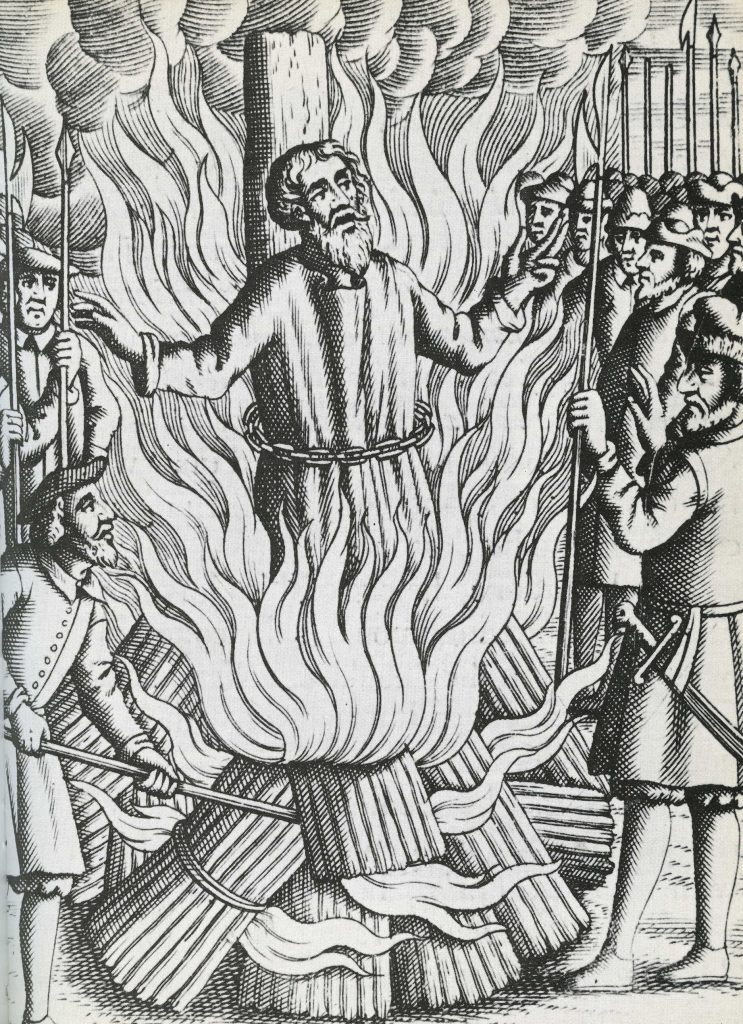
Thomas Bilney martyred in Smithfield. Black and white engraving
Thomas Bilney martyred in Smithfield.

First Published 17th November 2023, revised 2024,2025

Martinmas – Festival of Winter’s Beginning November 11th

Martinmas. Statue of St Martin at Ligugé

So, this is All Saints Day, Old style, also known as Martinmas, St Martin’s Day, one of the most important Christian festivals of the medieval world.

Father Francis Weiser in the Handbook of Christian Feasts and Customs suggests this was the Thanksgiving of Medieval Europe:

It was a holiday in Germany, France, Holland, England and in Central Europe. People first went to Mass and observed the rest of the day with games, dances, parades, and a festive dinner, the main feature of the meal being the traditional roast goose (Martin’s goose). With the goose dinner, they drank “Saint Martin’s wine,” which was the first lot of wine made from the grapes of the recent harvest. Martinmas was the festival commemorating filled barns and stocked larders.

It was celebrated with Bonfires in Germany, and with St Martin’s Beef and Mumming plays in England. Following the Reformation, its place in the Calendar has been taken by  Halloween and Bonfire Night.

St. Martin of Tours

St Martin of Tours, 20th Century Stained Glass, St James Church. Chipping Camden.Window 1925 Commemorating World War 1. St Martin’s Feast Day is Armistice Day.Photo K Flude

Martin was a soldier in the Roman Army who would not fight because of his Christian beliefs. When he met a beggar, he cut his cloak in half and shared his cloak. He rose in the hierarchy of the Gallic Church and became Bishop of Tours. According to legend, his funeral barge on the River Loire was accompanied by flowers and birds. He died in AD397. He is one of the few early saints not to be martyred. Martin is the saint of soldiers, beggars and the oppressed. Furthermore, he stands for holding beliefs steadfastly and helping those in need.

St Martin’s in the fields

Early 20th Century Image of Trafalgar Sq. St Martin’s is in the top right-hand corner.

There are two famous Churches dedicated to St Martin in Central London with possible early origins. St Martin’s in the Fields, near Trafalgar Square, has been the site of excavations where finds show a very early settlement, with early sarcophagi. It is the one place where a convincing case can be made for continuity between the Roman and the Anglo-Saxon period. It is possible, that the Church was founded soon after St Martin’s death (397AD). A kiln making Roman-style bricks was found. A settlement grew up near the Church and this expanded to become Lundenwic, the successor settlement to Londinium.

St Martin’s Within

Old Print of London c1540 showing St Pauls, with St Martin's by the wall to the left of the photo
Old Print of London c1540 showing St Pauls, with St Martin’s by the wall to the left of the photo

The other St Martins is St Martins Within, just inside the Roman Gate at Ludgate. Many early churches are found at or indeed above Gates. This one also has legendary links to burial places for King Lud, and for King Cadwallo. He. Cadwallon ap Cadfan, was the last British Kings to have any chance of recovering Britain from the Anglo-Saxons. Geoffrey of Monmouth says that Cadwallo was buried here in a statue of a Bronze Horseman. This was thereby a ‘Palladium’ – something which protects a place from invasion. (See my post about Palladiums of London). It has been suggested by John Clark, Emeritus Curator at the Museum of London, that Geoffrey of Monmouth might have used the discovery of a Roman Equestrian Statue as an inspiration for the story.

St Martin was also the saint of Travellers, and this might explain the location of the Church near the gate. Although there is nothing but legendary ‘evidence’, it would make sense for an early church to be built near Ludgate,. This is the Gate that leads to St Pauls which was founded in 604AD from Lundenwic which was booming in AD650.

Although the City seems to have mostly devoid of inhabitants from the end of the Roman period to the 9th Century, the presence of St Pauls Cathedral means that Ludgate was most likely still in use or at least restored around this period. It leads via Fleet Street and Whitehall, almost directly to the other St Martin.

St Martin and lime plaster

Michaelmas was also the time of year when lime plaster was renewed because lime needs to be kept moist when renewed. It takes three to four days to form the calcite crystals that make it waterproof. Lime plaster was used on most timber framed buildings.

(Originally, posted 11 Nov 2021, revised 2022, 2023, 2024, 2025)

William Shakespeare’s First Folio 402 Years Old Today November 8th

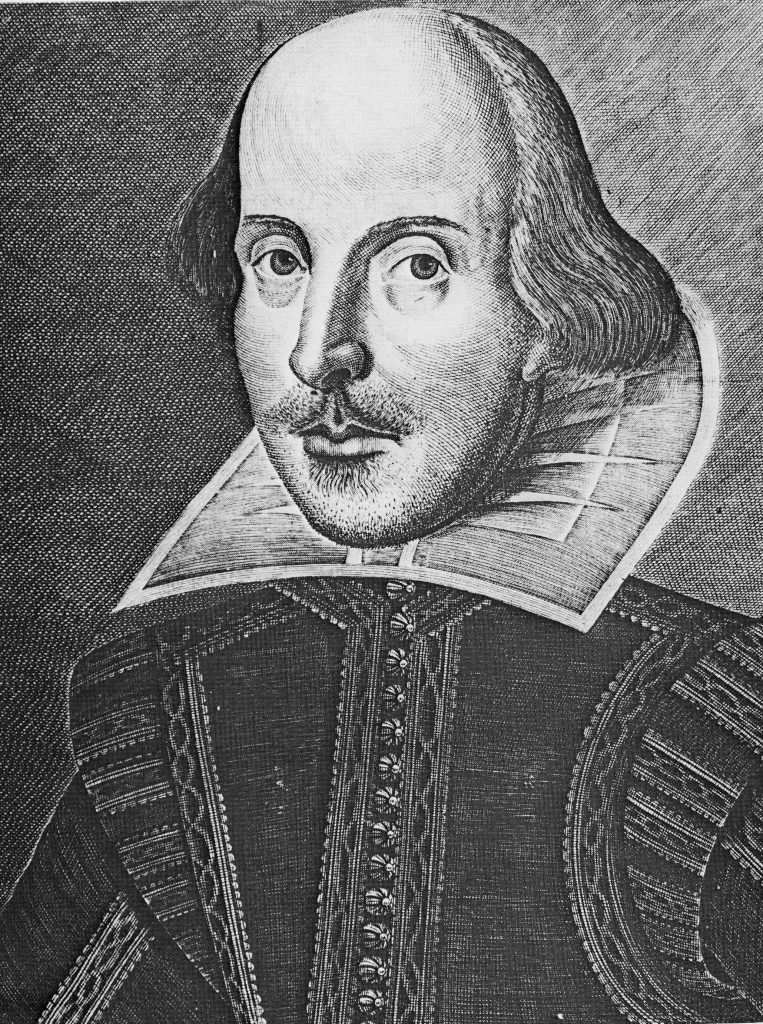
Droeshout Portrait of Shakespeare from the First Folio

On November 8th in 1623, the First Folio was registered at Stationer’s Hall near the publishing district around St Pauls Cathedral in London. It was actually called:

Mr. William Shakespeare’s Comedies, Histories, & Tragedies

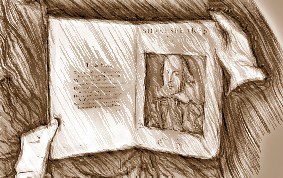
Sketch of the First Folio by William Shakespeare
Sketch of the First Folio

It was put together by his actor friends, John Heminge and Henry Condell seven years after his death. They wanted to replace all the corrupt editions of his plays and poems that had been:

“stol’n and surreptitious copies, maimed and deformed by frauds and stealths of injurious impostors”

The true texts of his plays and poems “are now offer’d to your view cured, and perfect of their limbes; and all the rest, absolute in their numbers as he conceived them.” Wikipedia

Shakespeare at the Frankfurt Book Fair

In fact, the plays were ready earlier than 1623, as they entered into the catalogues for the Frankfurt Book festival to appear between April and October 1622. How amazing is it that the Frankfurt Book festival is still the dream of any aspirant writer? Wikipedia tells me that hand-written books were traded at the general trade fair in Frankfurt from the 12th Century. But 1462 is the date that appointed as being when the Book Fair was certainly established.

The First Folio offers plenty of proof that Shakespeare was the author of the plays. He left gold rings of remembrance to Heminge and Condell in his Will. They were part of his Players Company, and had worked together on many of the plays. The Folio has forewords by people extolling the virtues of the writer. Enough proof for any reasonable person.

Heminge and Condell

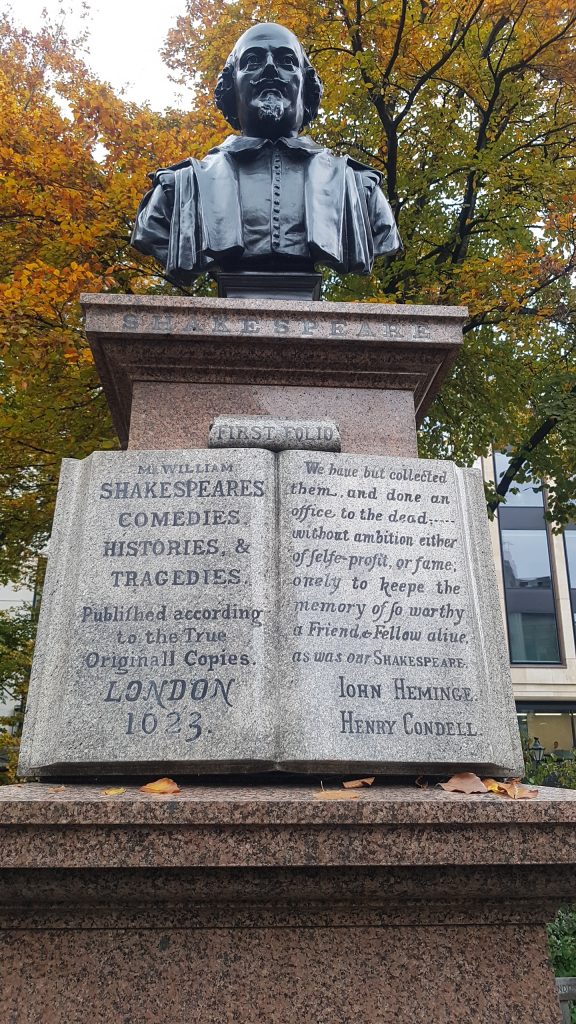
Heminge and Condell are commemorated in the Garden of St Mary Aldermary behind the Guildhall. They were Churchwardens of St Mary. A few streets away lived William Shakespeare in 1611. True friends, so don’t go telling me he didn’t write the plays!

St Mary Aldermany monument to Shakespeare, Heminge and Condell and the First Folio.

There was a wonderful BBC festival of Shakespeare on in 2023/24 to celebrate. If you look at this link, here. You will find great content. Much of it is available if you search BBC Sounds, or BBC iPlayer.

Visit my post on Shakespeare’s Birthday here.

On This Day

International Intersex Day

Intersex Day of Remembrance, also known as Intersex Solidarity Day, is an internationally observed civil awareness day. (Wikipedia).

First Published November. 2023, revised November 2024, 2025

St Etheldreda October 17th 679

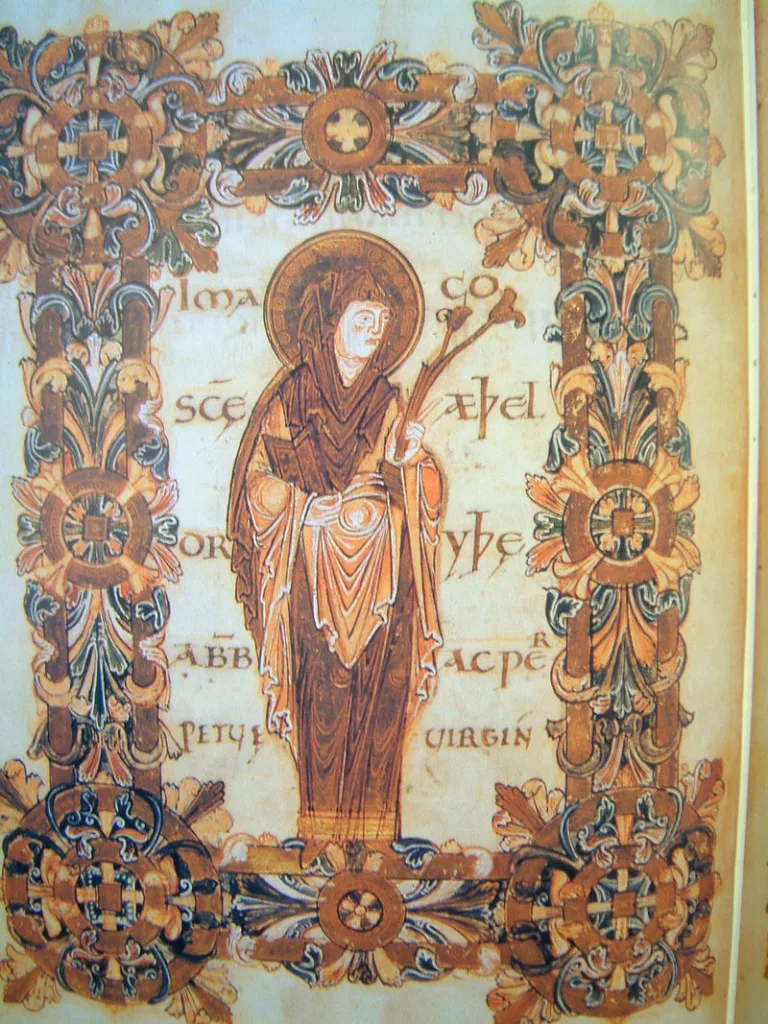
St Etheldreda or St Audrey By monk – [1], Public Domain, https://commons.wikimedia.org/w/index.php?curid=32907989

I’m republishing this post as I dated it to February 17th rather than October 17th and a few other egregious typos.

Etheldreda, also known as Audrey or Æthelthryth or Æðelþryð or Æþelðryþe is celebrated on October 17th, (the date her remains were ‘translated’ from her burial place to the Church at Ely) and on 23 June the date she died,

She lived from March 4th 636 to June 23rd 679. She is one of the well-born Saxon Virgin Saints of the 7th Century. This is when many royal Abbeys were founded by female members of the Anglo-Saxon Royal families, in the years following the conversion of the Anglo-Saxons to Christianity. She is the daughter of King Anna of East Anglia, and the sister of Saint Sexburga (widow of King Erconbert of Kent).

Etheldreda is said to be a Virgin despite being married twice. Etheldreda was widowed after three years of her first marriage. Then she married Egfrid, son of King Oswy of Northumbria. Egfrid got fed up with her virgin state. With the support of St Wilfrid, St Etheldreda was released to a Nunnery run by Wilfred’s aunt. In 672 she founded the famous double monastery at Ely, which is where the wondrous Cathedral of Ely still stands.

Here she died, and the many miracles that followed, led to Ely being one of the main destinations for Pilgrimages. St Sesxburga took over as Abbess after her death. By the number of Churches and holy days remembering Etheldreda show she was perhaps the most famous female saint of the era.

Tawrdy Audrey

Etheldreda died of a neck tumour, which she blamed on the heavy jewellery she wore around her neck before she became a nun. So she is a patron of those with neck or throat ailments. Accordingly, on February 3rd St Etheldreda’s Church in London holds the Blessing of the Throats ceremony. St Blaise is also a saint protecting the throat and you might like to read my post about him and throats here.

Pilgrims used to buy cheap, old-fashioned linen from the market at Ely, which they would wear around their neck to protect or cure them of throat illnesses. Puritans satirised the practice by coining the word Tawdry, from St Audrey, which came to represent cheap goods sold to gullible pilgrims.

Mopsa the shepherdess in Shakespeare’s Twelfth night says to her sweetheart:

“Come, you promised me a tawdry-lace and a pair of sweet gloves.

Have a look at this excellent article to read more about Tawdry and St Etheldreda.

However, I thought something was amiss and searched for Tawdry in the excellent website SHAKESPEARE’S WORDS by DAVID CRYSTAL & BEN CRYSTAL (which I use all the time). And indeed Mopsa is not in Twelfth Night but in the Winter’s Tale which I saw recently at the RSC. Mopsa’s man can’t buy it for her as he has been cheated out of his money by the fey Autolycus.

St Etheldreda’s Church in Ely Place London

Church of St Etheldreda., Ely Place London

St Etheldreda’s in London is in Ely Place, near Hatton Garden. There is a lovely old pub there called the ‘Ye Olde Mitre’ (which is a reference to a Bishop’s Mitre). The Church was founded (1250 and 1290) as the London residence of the Bishops of Ely. Inside are memorials to Catholic martyrs executed during the Reformation. (see my post on the Douai Martyrs here).

Ely place was lived in by John of Gaunt following the destruction of his Savoy Palace in the Peasants Revolt. Christopher Hatton rented parts of it in the reign of Queen Elizabeth II. During the Civil War it was used to hold Royalist Prisoners of War. Agnes Wicks fictionally lives at Ely Place. (Agnes is the woman David Copperfield should have married, rather than the ridiculous Dora).

In the 19th Century, the former Chapel was bought by the Catholic Church and restored by George Gilbert Scott.

Etheldreda is remembered in the Church of England with a Lesser Festival on 17 October according to Book of Common Prayer tradition, and alternatively 23 June in the Common Worship calendar of Saints. (Wikipedia.

First Published on October 17th 2025

Van Gogh & the London Suburbs October 8th 1876

From https://agtyler.medium.com/part-i-van-gogh-in-london-9a26ff5427dd’s website describing Van Gogh’s experiences while living in London.

It’s not so well known that Van Gogh spent some time in London. Vincent spent three years in London, working as an Art Dealer in Covent Garden. He lived in Brixton, then the Oval. He was very impressed with London; its technology and culture. London was:

a city lit by streetlights, a city powered by electricity and a city that relied on industrial power. It was impressive in all its accomplishments.’

To find out more about his experience in London look at this Tate website. https://www.tate.org.uk/art/artists/vincent-van-gogh-1182/seven-things-know-about-van-goghs-time-britain. The above quotation came from the site. For more details of Vincent’s time in London read Medium.

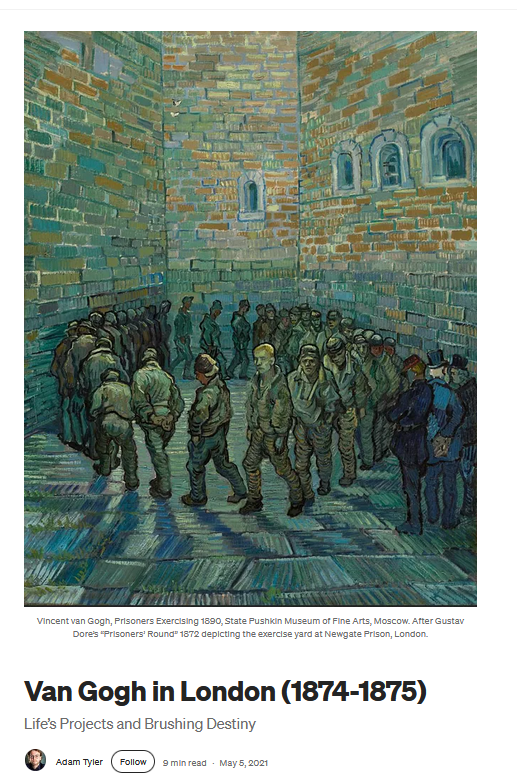
Van Gogh’s Newgate Prison Painting

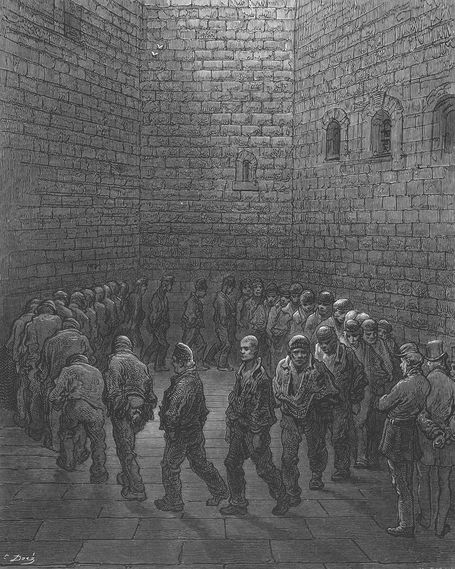
This is where I got the image of Van Gogh’s painting of Newgate Prison above. Apart from sketches, this seems to be his only London painting. But Van Gogh did this painting well after his visit to London,. He copied Gustave Doré‘s engraving which you will see below. Further research tells me that he did this painting while in Saint-Paul Asylum. He was detained inside so could not continue his practice of painting outdoors, so copied from illustrations. He used a Héliodore Pisan copy of Doré‘s engraving. Van Gogh died a few months later, and this was one of the pictures that were displayed around his Coffin.

Vincent in Brixton

There is a play from 2002 called ‘Vincent in Brixton’, by Nicholas Wright, which I saw and very much enjoyed. It is scheduled to be performed in 2026 (14 March 2026 to 18 April 2026) at the Orange Tree, Richmond.

Letters to Theo

Vincent often wrote to his brother, Theo, about his experiences in London. This is a quotation I first found in ‘A London Year’ compiled by Travis Elborough and Nick Rennison. It provides a beautiful description of the London suburbs. This is a book well worth a place on a lover of London’s History’s bedside table.

Letter to Theo, October 8th 1876

In the City I also went to see Mr Gladwell and to St Paul’s. And from the City to the other end of London, there I visited a boy who had left Mr Stokes’s school because of illness, and I found him completely recovered, outside in the street. Then on to the place where I had to collect the money for Mr Jones. The suburbs of London have a peculiar beauty; between the small houses and gardens there are open places covered with grass and usually with a church or school or poorhouse between the trees and shrubbery in the middle, and it can be so beautiful there when the sun goes down red in the light evening mist. It was like that yesterday evening, and later I did so wish that you had seen the streets of London when it began to grow dark and the street-lamps were lit and everyone was going home, it was obvious from everything that it was Saturday evening, and in all that hustle and bustle there was peace, one felt, as it were, the need for and joy at the approach of Sunday. Oh those Sundays and how much is done and striven for on those Sundays, it’s such a relief to those poor neighbourhoods and busy streets. It was dark in the City, but it was a lovely walk past all those churches along the way. Close to the Strand I found an omnibus that brought me a long way, it was already rather late. I rode past Mr Jones’s little church and saw another in the distance where light was still burning so late. I headed for it and found it to be a very beautiful little Roman Catholic church in which a couple of women were praying. Then I came to that dark park I already wrote to you about, and from there I saw in the distance the lights of Isleworth and the church with the ivy and the cemetery with the weeping willows on the banks of the Thames.  

To see this letter and his letters to Theo, follow look at this link.

Gustave Doré and Pisan’s Newgate Excercise Yard 1872, from which Van Gogh clearly derived the image for his painting at the top of the page.

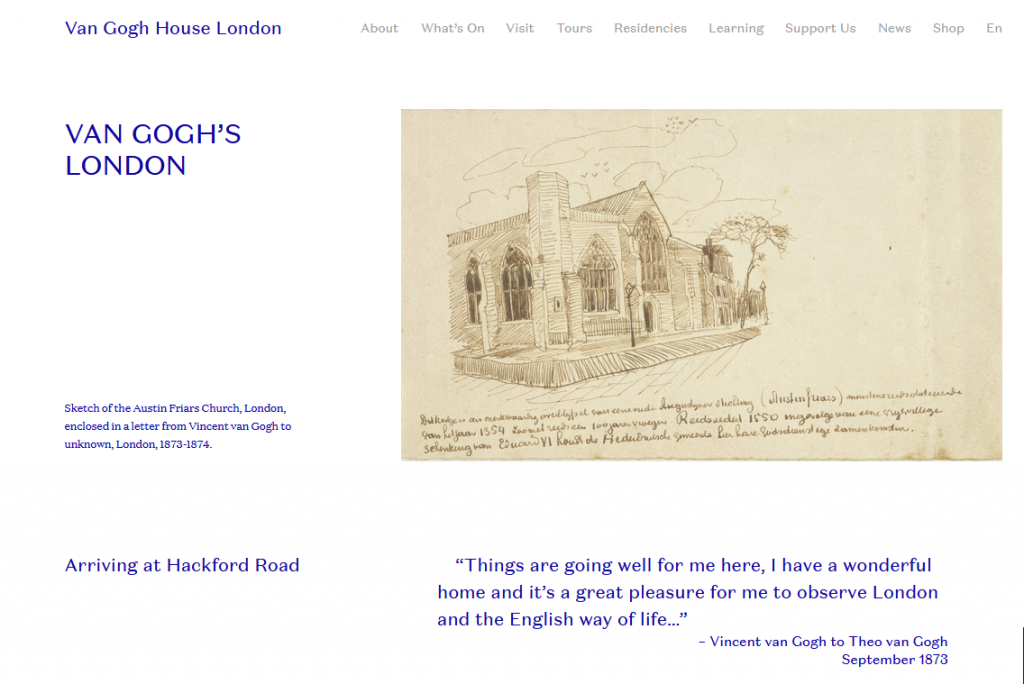
To see some of his London sketches please look at this web site.

Image of Van Gogh’s House web site.showing Austin Friars, Church, City of London

First Published October 8th, 2025

Zeppelin Sunday October 1st 1916

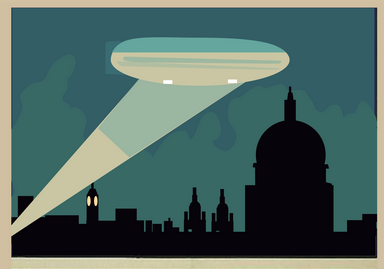
A silhouette of a Zeppelin caught in searchlights over the City of London

On October 1 1916, Kapitanleutnant Heinrich Mathy’s L31 Zeppelin burst into flames after an attack by the Royal Flying Corp. Near Potters Bar he decided to jump out. He was found by farmers still alive and lying face up but died soon after. All 19 Crew died.

Mathy was one of the most experienced Zeppelin Captains.  He began his attacks on London on the night of September 8th 1915.  Mathy piloted Zeppelin L 13 across Central London, dropping bombs as they went, from University College London to Liverpool Street Station. See my post here.

The early raids were almost immune from attack. The height the Zeppelins could reach was often beyond the height the defenses could reach. Also RFC’s weapons were mostly unable to badly damage the Zeppelins. The problem was that machine gun fire could not puncture enough holes to shot down the Zeppelins or to set the hydrogen alight. Also Bombs proved ineffective.

But this was to change in the summer of 1916. In June 1915 the RFC tried out John Pomeroy’s explosive bullets. They did not, immediately, convince the authorities they were the answer. Then Flight Lieutenant Brock (from the fireworks family) designed a .303 explosive bullet. Pomeroy continued develping his bullets and in May of 1916, the RFC ordered batches of both bullets. Then followed the development of phosphorous incendiary bullets. And the ‘Sparkler’ a new tracer bullet developed by the Sparkler Soda Siphon Company. Successes against Zeppelins increased. Zeppelin SL.11 was shot down by William Leefe Robinson on 2/3 September 1916. The Zeppelin came to earth at Cuffley. Thousands of London came to see the wreckage on ‘Zepp Sunday’. Robinson won the Victoria Cross.

Later in September other Zeppelins were forced down, and on 1st October, L31 was shot down. Mathy came in via the Suffolk coast, Chelmsford, Harlow and Enfield Lock in North London. The Anti-Aircraft shelling alerted the RFC Fighters. 4 fighters zoned in on Mathy’s Zeppelin. Lt Wulfstan Tempest, strafed the Zeppelin several times to no effect. Then approaching towards the tail of the Airship, he noticed it was glowing red from inside. Then she started to fall. She crashed in Hertfordshire in Potters Bar, not far from the previous downing at Cuffley.

Here, is a podcast originally written for a Zeppelin Walk for London Walks. It includes an eyewitness account by Hugh Turpin of the shooting down of the Zeppelin (SL.11). Please ignore the dates of walks, as this was a couple of years ago. But I am planning to repeat the virtual tour during the winter of 2025/6.

First Published in 2025


First & Last Coal-fired Power Stations September 30th 2024

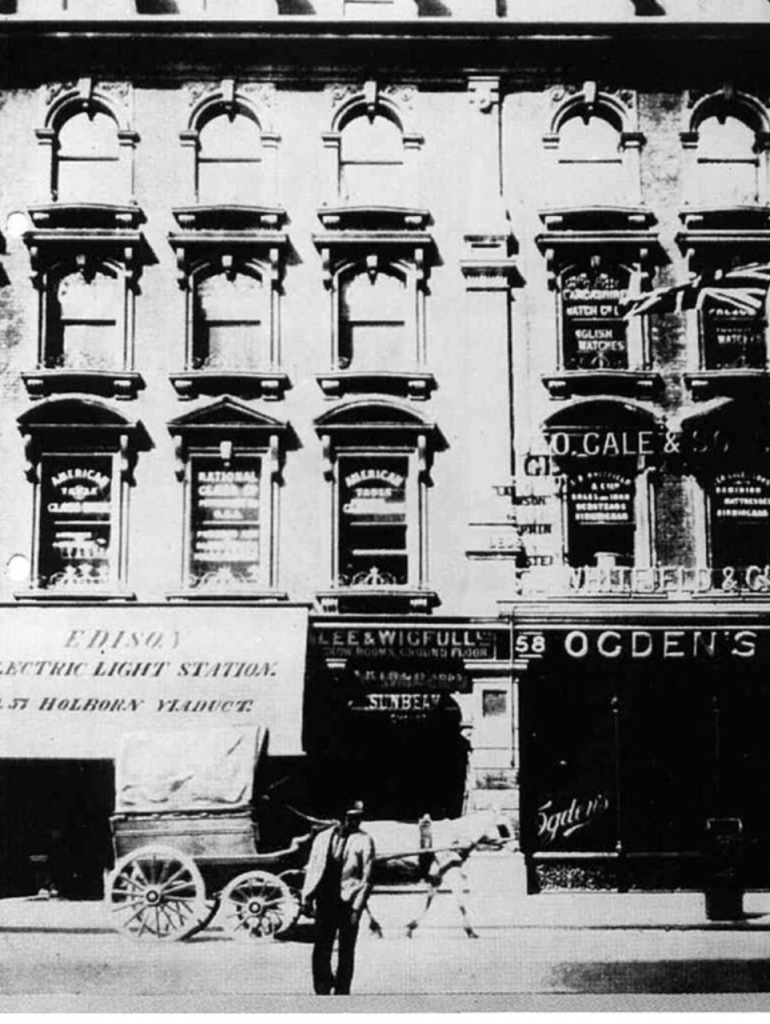
Holborn Edison Electric Light Station First & Last Coal-fired Power Stations

On this day, last year, Britain’s last coal-powered power station generated its final watt of electricity.  Ratcliffe-on-Stour’s closure means Britain is the first country to meet its target of phasing out coal.

The Nottingham power station opened in 1968, and once employed over 3000 people.

For more details follow this link https://www.theguardian.com/business/2024/sep/30/end-of-an-era-as-britains-last-coal-fired-power-plant-shuts-down

Edison Electric Light Station

The first coal-fired power station in Britain was at Holborn Viaduct in London, opened as the Edison Electric Light Station on 12th January 1882.

The power was generated by a steam engine powered by coal.  The electricity powered incandescent electric carbon-filament lights which lit up 986 lights to illuminate the road from Holborn Viaduct to St Martin’s-le-Grande.  The light bulb was invented 3 years previously. 

The number of lights was soon increased to 3,000. But the Station made a loss and was closed down 2 years later. The lights converted to gas.  Sadly, the building was destroyed in the Blitz.

Shoreditch Electric Light Station

A couple of miles to the East, in 1895, the Shoreditch Electric Light Station was established.   It used waste to produce electricity and steam for the local public baths.  The generating and combustion chambers, now houses a Circus School which my children attended.

It was officially opened by Lord Kelvin, the famous physicist in 1897. The Consulting Engineer was Edward Manville who came up with a scheme for a ‘dust destructor’. This comprised: an electricity generating station; a public bath heated by the waste heat from the generator; a library and museum.  It cost 200,000 pounds.  In 1899, in nearby Nile Street, the Shoreditch Vestry Council set up the first municipal housing scheme powered by electricity.

This level of enterprise by a local council seems like a fantasy of a distant past but also, given the sustainability of the project, unbelievably modern.

The motto on the side of the Power Station was ‘Light and Power from Dust’. The scheme was run by the local vestry council which adopted the motto ‘More Light, More Power’. This was also adopted by the new municipal Borough of Shoreditch when it was formed as part of the new London County Council.  The Power Station was renamed as the rather wonderful: Shoreditch Borough Refuse Destructor and Generating Station and adorned with the motto: PULVERE LUX ET VIS ‘Out of the dust, light and power’.

The story of the dust destructor and the generating station is told in some detail here and well worth a read.

First Written 2024 and updated in 2025

Michaelmas, St Michael and All Angels September 29th

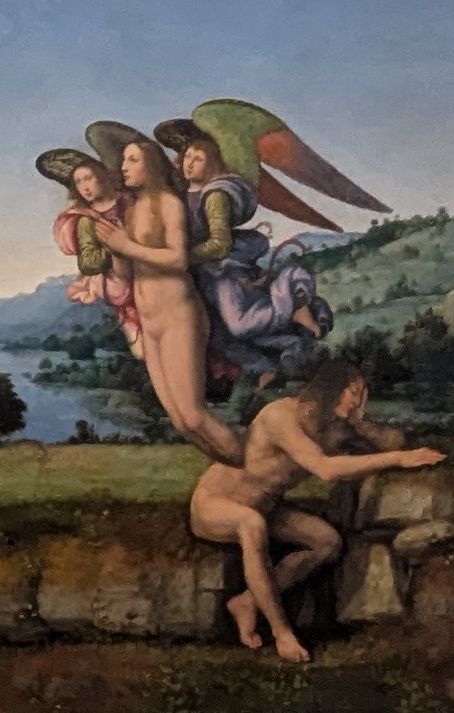
Detail from ‘The Creation and the Fall of Man’ by Mariotta Alberinelli 1513-14 showing Archangels helping in the creation of Eve from Adam’s Rib’

September 29th used to be St Michael’s Day, or Michaelmas. But in the 20th Century, the Catholic Church made it the day to celebrate the three chief Archangels and all Angels. Previously, September 29th was for St Michael, March 24th for St Gabriel, and October 24th for St Raphael.

It was an important day in the medieval civil calendar and was the date on which Oxford, Cambridge and the Legal system started their autumn terms. It is also the date the Lord Mayor of London is elected at Guildhall in the City of London.

For more about Michaelmas see my post on Old Michaelmas.

Michaelmas Daisies in my Father’s Garden

About this time, the Michaelmas Daisy (an Aster) comes out in profusion. They have been out in my Father’s garden since August, but have only been flowering for a few weeks in my own garden. Here is an old rhyme:

“The Michaelmas daisies, among dead weeds, Bloom for St Michael’s valorous deeds …

The Angelic Host

Personally, I don’t understand what Archangels are doing in a monotheistic religion. They seem to be supernatural demigods which seems odd. The Book of Revelations is one of the most important sources, but they are scattered around the Bible. Perhaps the most famous is the visitation of Gabriel to the Virgin Mary, (see my post here)They are 15 Archangels:Adabiel, Azrael, Chamuel, Gabriel, Haniel, Jeremiel, Jophiel, Melatron, Michael, Raguel, Raphael, Raziel, Sandalphon, Uriel, and Zadkiel.

Melatron has to be my favourite, given his name which sounds like something from a kids superheros cartoon! He is made from the human Enoch and Keeper of the Book of Life so perhaps the most powerful of the Archangels. He is good for relationship, career, and parenting advice!

The Book of Enoch mentions 200 Fallen Angels including Satan, but Alphonso di Spina a 15th Century Monk calculated there were 133 million fallen angels, one third of the original Angelic Host.

What are Angels for? Something to give us hope that somewhere, somehow something might be looking out for us? As Sir Antony Gormley says of the Angel of the North ;“People are always asking, why an angel? The only response I can give is that no-one has ever seen one and we need to keep imagining them.”

On This Day

1564 – Lord Dudley Created Earl of Leicester

After the service at St James on Michaelmas Day, Lord Robert Dudley was led by the earls of Sussex and Huntingdon into the queen’s presence chamber. He wore a black gown edged with lace with nineteen pairs of gold aglets on the sleeves. Before him, his brother Ambrose, Earl of Warwick bore his sword, Garter bore his patent and Lord Clinton, Lord Admiral, his cap and coronal. All made obeisance to the queen three times. Lord Robert knelt before her.

Garter gave the patent to Cecil, who read it out aloud. The Earl of Warwick presented the sword to the queen, who put it about the neck of her new Earl of Leicester, putting the point under his left arm and then, while putting his cap and coronal on his head, with a mischievous smile, tickled his neck. Solemn-faced, the new earl gave the queen his humble thanks and arose and went to the council chamber to dinner, trumpets sounding before him.’

From The Progresses and Public Processions of Queen Elizabeth by John Nichols (London, John Nichols & Son, 1823) with thanks to Jan Knights for the information.

First Written in September 2025