Roodmas, the True Cross and the Coronation May 3rd

Rodmas – Rood screen in St. Helen’s church, Ranworth, Norfolk by Maria CC BY-SA 3.0

Rood is another word for the Cross. Parish Churches used to have a Rood Screen separating the holy Choir from the more secular Nave. This screen was topped with a statue of the Crucified Jesus nailed to a Rood. So, Roodmas, is the festival of the Holy Cross. Roodmas is celebrated on May 3rd and September 14th, although the Church of England aligned has itself with the Catholic Church’s main celebration on September 14th.

See my post on September 14th here for more on the True Cross.

King Charles III and the True Cross

cutting from the Shropshire News article on the True Cross and the Coronation
Shropshire News article on the True Cross and the Coronation

The Shropshire News reported that two pieces of the True Cross were given to Charles III by the Pope! They have been put into a cross called the Welsh Cross. This was part of the Coronation Procession. The King gave the Cross (I assume with the pieces of the Holy Cross) to the Church in Wales. Let the Shropshire News tell the story:

Shropshire News article on the True Cross and the Coronation
Part 2 Shropshire News article on the True Cross and the Coronation

This is quite extraordinarily medieval, and fits in with the news that we were encouraged to take an oath of allegiance to the new King.

I, (Insert full name), do swear that I will be faithful and bear true allegiance to His Majesty King Charles, his heirs and successors, according to law. So help me God.

https://www.mirror.co.uk/news/royals/swearing-allegiance-king-charles-its-29861318

It is a clear reminder that we are subjects not citizens and news, as a nation, we still set store by superstitions.

The Duke of Buckingham and the True Cross

The Duke of Buckingham had a piece in his collection, which he kept at York House in the early 17th Century. How he got it, I don’t know. But I think he must have acquired it from the aftermath of the destruction of the Reformation. John Tradescant, who looked after the Duke’s collection until Buckingham was murdered, had a piece of the True Cross. Tradecant created Britain’s first Museum, Tradescant’s Ark. Again, I suspect (without any evidence) that he got the fragments from Buckingham. Did he acquire it after the murder? Or shiver off a timber fragment hoping no one would notice?

First Written on May 3rd 2023, revised May 3rd 2024, and 2025

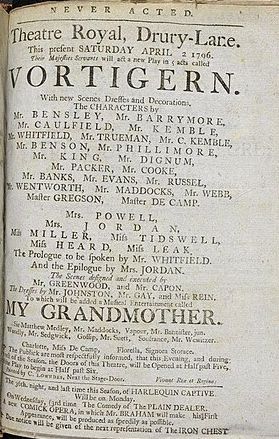
Vortigern April 2nd 1796

Bill for the 1796 play Vortigern and Rowena Public Domain Wikipedia

Content Move April 2nd 2026 to:

https://chr.org.uk/anddidthosefeet/?p=5187

Heritage with my Grandson 2 – British Library & British Museum March 9th

Grandson on a visit to the British Library and British Museum. Photo of the Beethoven Exhibition, British Library, March 2022

A visit to the Britsh Museum & British Library? I think this might be worth reposting in the absence of anything else compelling for the day!

So this was my outing with my grandson on March 9th 2022.

For our second museum outing we went to the British Library. He didn’t like the Beethoven exhibition. It was too dark and nothing to surreptitiously climb on. He definitely does not like dark exhibitions. This is a shame because it seems to be the design idea of the moment. The Nero and the Stonehenge exhibitions were also dark spaces. The desigers working on creating atmospheric views using bright colours, spot lighting and spectacular objects on a dark background. But it doesn’t work for a sensitive 20 month year old!

Nor did the largely text based Paul McCartney’s Lyrics exhibition attract a second of his attention. ‘Paul who?’ he seemed to be saying as we stumped past to the very quiet sound of ‘Hey Jude’.

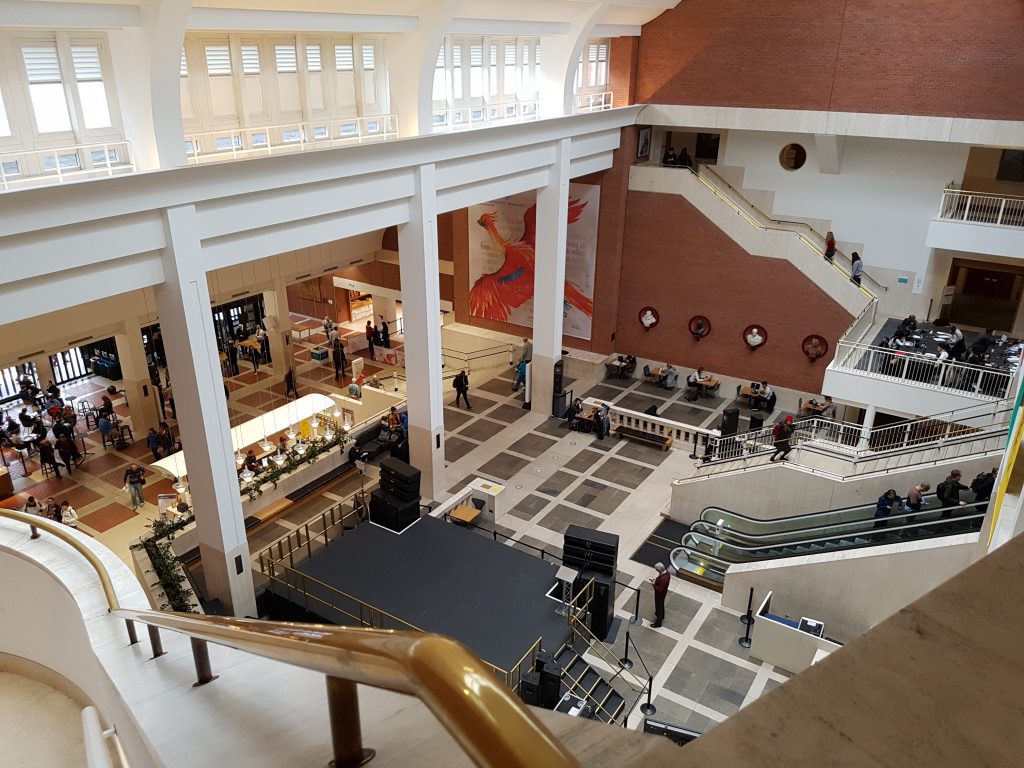
What he did like was the escalators. We went up and down, and up and down, and then onto the second set where we repeated the repeat.

British Library – note the escalator to the right

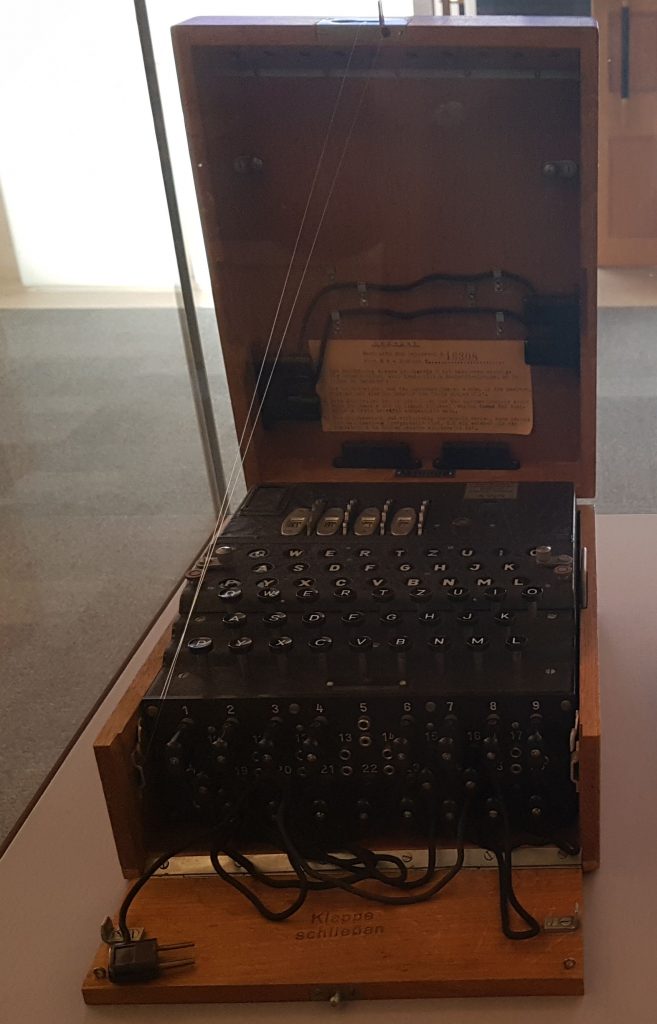
And then we went down and back up again, and no time to see the enigma machine. We ate in the upstairs Restaurant, which is a really pleasant place to spend a lunch time.

Enigma Machine, British Library

Time for him to have a sleep so we walked to the British Museum through Bloomsbury. However, there was very little sign that he wanted to nod off. But we found a couple of interesting revolutionaries of the 19th Century en-route. The first was to Robert Owen, the founder of the Cooperative Movement, famous for his model factories in New Lanarkshire.

Plaque to Robert Owen ‘father of the Cooperative Movement’, Burton Street

Then to Cartwright Gardens, named after John Cartwright, who was called ‘the Father of Reform’. He had quite an amazing life. He refused to serve in the Navy against the American Colonists in the War of Independence. Not only that, but he supported reform of Parliament, universal suffrage, annual Parliaments and secret ballots.

John Cartwright Statue Cartwright Gardens.

The milk soon did its job and my grandson was asleep. So I took him to the Member’s Room for a cup of tea.

Sleep in the Member’s Room overlooking the Great Court

When he woke we whizzed around the third Floor. But he was reluctant to leave his buggy because it was much more crowded than our last visit. Then he could run free around the almost empty galleries which he loved.

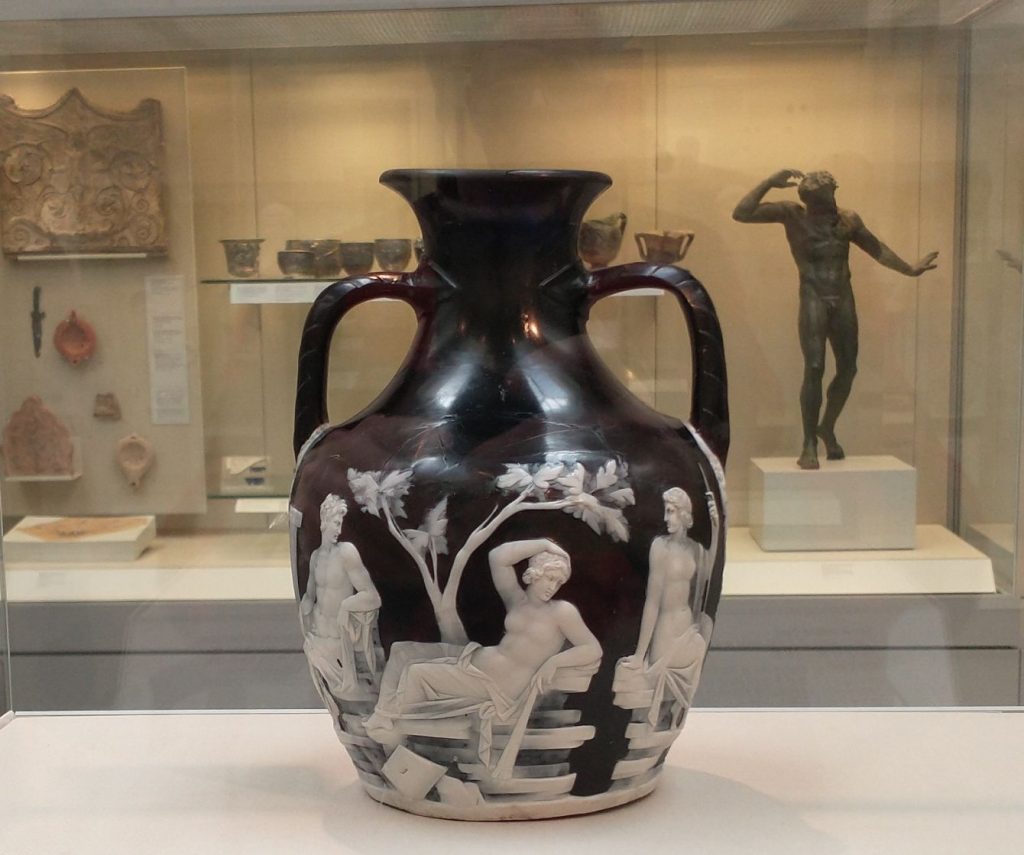
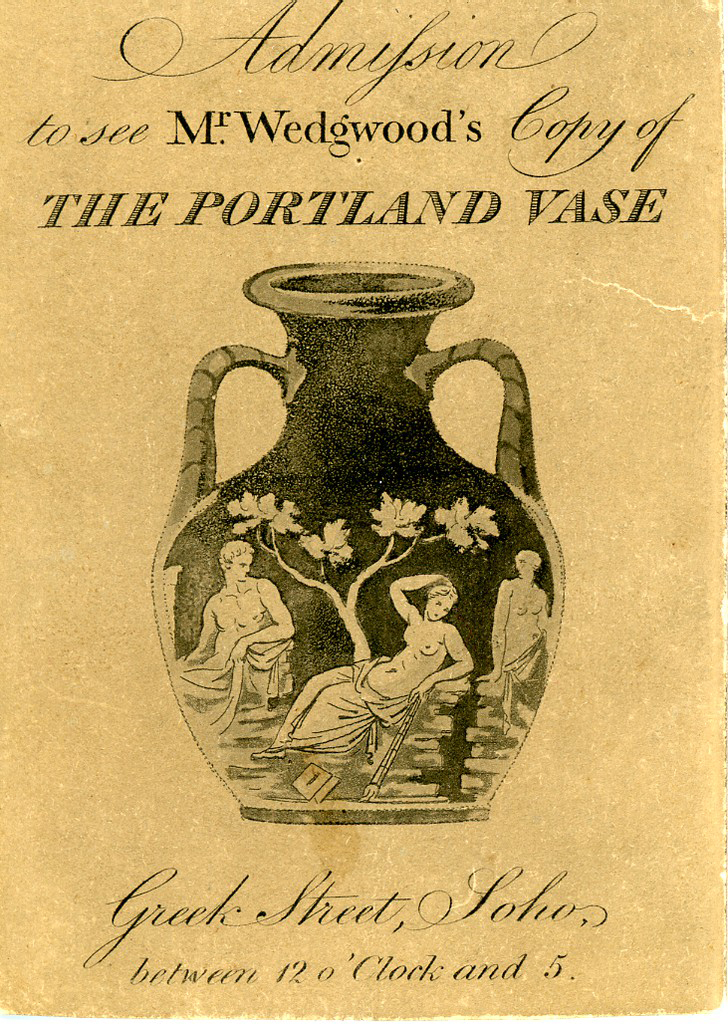
But, I was able to visit old favourites like the Portland Vase. This was smashed into hundreds of pieces, in 1848 by a drunken visitor. He threw a sculpture into the case and smashed the vase. It was restored, but 37 pieces were missing. In 1988 the vase was reunited with the missing pieces and expertly restored.

The Portland Vase – 15BC = 25AD Cameo Glass
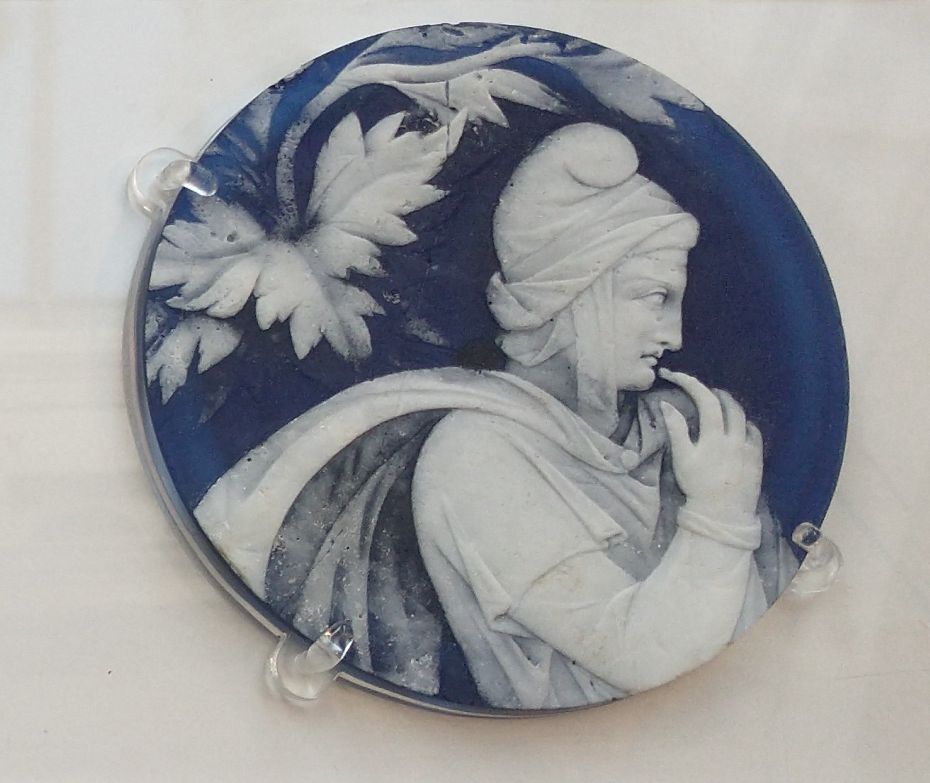
Plate Cameo Glass 15BC – 25AD

For more exploration of Museums with toddlers see my post: https://www.chr.org.uk/anddidthosefeet/museums-for-toddlers/

First Published 9th March 2022.. Revised and reposted 2025

Sementivae Dies—the Days of Sowing January 24–26

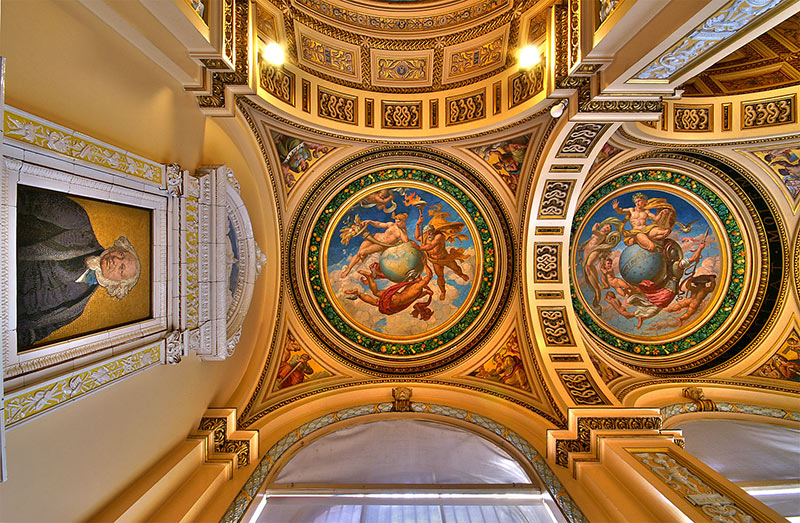
Victoria and Albert Museum” by Nick Garrod, licensed under CC BY-NC-ND 2.0. First V&A Director, Sir Henry Cole, to the left of the picture. Greek Deities in the roundells

Sementivae, was a festival dedicated to seed and to Ceres. Ceres is an Earth Goddess who gives her name to our word cereal. The festival was also called. Paganalia. The Mediterranean world had many names for the Earth Goddess. Tellus, Demeter, Cybele, Gaia, Rhea etc..

Ceres can be seen on the top left roundel resting on the Globe on the marvellous Ceramic Staircase at the V&A (photo above). And in my slightly out of focus photograph below. (To be honest, in real life, it looks a little more like my photo than the gorgeous photo above!)

Ceres represented Agriculture, Mercury Commerce, and Vulcan Industry.  Old Photo by the Author.  T
Ceres represented Agriculture, Mercury Commerce, and Vulcan Industry. Old Photo by the Author.

Sementivae Dies – a moveable feast.

To create life, we need earth and water to nurture and seeds for fertility. And so into the cold dead world of January the Romans created a festival of sowing. It had two parts, one presided over by Mother Earth (Tellus) and the other by Ceres, the Goddess of Corn. The actual day of the festival was chosen not by rote on a set day of the calendar but by the priests, in accordance with the weather. This seems very sensible, as there is no point sowing seeds in terrible weather conditions. I’m assuming the Priests took professional advice!

On the 24th-26th January Tellus prepared the soil, and in early February seeds were sown under the aegis of Ceres. Tellus Mater (also Terra Mater) was known as Gaia to the Greeks.

Gaia

Gaia was selected by James Lovelock & Lynn Margulis in the 1970s as the face of their Gaia hypothesis. To me, the importance of the idea is not the scientific principle that environments co-evolve with the organisms within them. But, rather in Gaia as a personification of our world as a complex living ecosystem. One that we have to care for. Gaia exists as a series of feedback loops. Lovelock hypotheses that she will spit us out unless we can live in balance with our alma mater.

Ovid and Sementivae

This is what the Roman Poet Ovid has to say in his poetic Almanac known as ‘Fasti’ (www.poetryintranslation.com)

Book I: January 24

I have searched the calendar three or four times,
But nowhere found the Day of Sowing:
Seeing this, the Muse said: That day is set by the priests,
Why are you looking for moveable days in the calendar?
Though the day of the feast ís uncertain, its time is known,
When the seed has been sown and the land ís productive.
You bullocks, crowned with garlands, stand at the full
trough,
Your labour will return with the warmth of spring.
Let the farmer hang the toil-worn plough on its post:
The wintry earth dreaded its every wound.

Steward, let the soil rest when the sowing is done,
And let the men who worked the soil rest too.
Let the village keep festival: farmers, purify the village,
And offer the yearly cakes on the village hearths.
Propitiate Earth and Ceres, the mothers of the crops,
With their own corn, and a pregnant sow ís entrails.
Ceres and Earth fulfil a common function:
One supplies the chance to bear, the other the soil.
Partners in toil, you who improved on ancient days
Replacing acorns with more useful foods,
Satisfy the eager farmers with full harvest,
So they reap a worthy prize from their efforts.
Grant the tender seeds perpetual fruitfulness,
Don’t let new shoots be scorched by cold snows.
When we sow, let the sky be clear with calm breezes,
Sprinkle the buried seed with heavenly rain.
Forbid the birds, that prey on cultivated land,
To ruin the cornfields in destructive crowds.
You too, spare the sown seed, you ants,
So you’ll win a greater prize from the harvest.

For more on Ovid look at my post on Ovid and Juno here. Or you can search for Ovid in the Search box.

First Published in January 2023, republished in January 2024, 2025


News from the Almanac of the Past January 22nd

News from the Almanac showing readership/viewership of the site.

I have been waiting for a day when I haven’ t got a post to publish. Why? To update readers about the Almanac of the Past. And with a bit of manoeuvring today is the day.

What is the News from the Almanac of the Past?

The plan is to have a post for each day. I am virtually there for November to March, but a way away for the warmer months.

In the winter months, I have been revising, improving, developing and adding content to previously published pages. For those of you who have been here a while, you will have been receiving posts you have seen before. Next year, you might be seeing some for the third time. I’m not sure what to do about this except improve posts and add content. But I am considering stopping automatically posting repeated posts to subscribers. Maybe from next November? Feed back would be good – please email me at kpflude at chr . org . uk (I’ve slightly scrambled the email to stop the robots).

What is the planned content for the Almanac of the Past?

The nature of an almanac is to be a pot-pourri. They are about seasons, time, folklore, history, important events, and anniversaries. I also like to cover history, famous people and discoveries. Gods, Goddesses, Saints, sinners, and archaeology. What I want it to be is something that makes us more mindful about the passing of the year. How seasons and time change the way people see their world. My focus is mostly on the UK, but also on Rome and Greece. With occasional excursions to other places. I am trying to find more content that is London-based, but not to the exclusion of everything else. I also have an ambition to add more important news of discoveries that change our view of the past. If I get the formula right, I will attempt to get a publication from it, otherwise it will remain online.

Developments for the Almanac

It takes quite a lot of time for me to keep it up. You will see, from the graph above, that the readership is yearly making progress. Particularly, last year. But then it’s a steady progress from a small base, rather than Kardashian viral.

This is, at least, partially because I would rather not spend my time marketing. I want to be writing. But, I have decided I need to spend a little more time marketing the site. When I ran the Old Operating Theatre Museum, I had the skills to get our web site to first place on google searches. But this was in the pioneering days of the World Wide Web. Now, it’s more difficult, but I am taking a ‘Search Engine Optimisation’ (SEO) course. I have also loaded some ‘plugins’ to WordPress which help with SEO. I thought you might be interested in some of the consequences.

The plugins ‘parse’ the site and give recommendations for improvements. This should, get the site further up the Google landing page. I have no doubt that it involves or will involve AI. The ‘Yoast’ plugin I am using as I type this, tells me words like ‘however’ are a ‘complex’ word and so they down grade my ‘readability’ quotient. It also tells me that that last sentence was too long. So, it wants simple sentences, and words that join sentences together. And not too many sentences in a paragraph and a proper scattering of headings.

It also assesses the SEOness of the text. So I have to tell it what the main subject of the page is. And it wants that word or phrase in:

the title:
the first paragraph
the image
the meta description tag
and scattered, but not too densely (because Google will punish the site for playing the algorithm) through the text.

Hence, you will see the phrase ‘News from the Almanac’ scattered more than I would normally like through this text. Of course, I know no one really will be searching for ‘News from the Almanac. So I should change the SEO phrase just to Almanac. But, then I’m not really interested in attracting non-readers to this page. I see this as between me and my email subscribers!

After writing that paragraph I realised that I would want people to land up here if they typed in ‘Almanac of the Past’. So you will see, I’ve editing the text scattering that phrase here and thereabouts.

In effect, I am being trained by a slightly stupid tutor who has no particular understanding of the needs of a writer of history! And you can’t answer back, you just get downgraded!

And it seems to be working as my numbers are getting better more quickly.

Any problems for the Almanac of the Past?

Obviously, my terrible proofreading is a concern! Maybe that’s one-way republishing helps. A year later, it’s easier to see the typos, the ugly writing, and issues with the content.

But there is another issue with the emails, which I have been trying to solve for about 6 months. The links in the emailed posts don’t work. But they do work if you visit the almanac on the web. This is nuts as I always use the full URL. For example: https://www.chr.org.uk/anddidthosefeet/december-29th-st-thomas-wassailing/.

So, this is very much a technical issue, one might say a bug in the system. I think it stems from the fact that my blog was stored not in https:/public_html/ but in https://public_html/anddidthosefeet. This seemed a logical choice at the time, as the blog shared space with other things. I haven’t managed to convince the tech guys at either the internet provider or WordPress that this is a bug. So, the alternative is to move the blog. But I am reluctant to do this in case it completely messes everything up.

Change the content of the newsletter, you might think. But I can find nothing that allows me to alter or add anything to the email version of the post. As I write this, I think I will temporarily add a line at the bottom of the post which says:

if the links are not working, copy and paste this URL https://www.chr.org.uk/anddidthosefeet/whateverkevinsalmanacpageiscalled

to your browser. This, will get you to the Almanac of the Past on the web where all the links will work.

And this will allow you to easily copy or link to the webpage and send the Almanac of the Past to your friends and followers. (I’m hoping you are Taylor Swift). You willalso be able to comment easily and maybe even like the post?

Another advantage of visiting the web version is that you get a better version to read. This is because I often find howling typos when I read the emailed post. I correct them, with a red embarrassed face.

If you are reading this on the web, then all the above must have been very annoying to read! Maybe I will move it down to the bottom of the post! (which I did).

Trying new things on the Blog

Do you want to make a comment?

Please leave me a comment – its great to hear what you think.

First Written and Published on 22nd January 2025

Mulled WIne and Blue Monday Posts

In order to clear January 22nd I moved the previous January 22nd post to December 10th. As its all about Mulled Wine, Glugg, and Gluwein., its better at the beginning of the Christmas Season than in late January.

To see it click here: or cut and past this url https://www.chr.org.uk/anddidthosefeet/january-22-22-time-to-mull-it-over/

I also didn't tell you Monday was Blue Monday because I had already sent you one post on the 20th. So this is the Blue Monday Post. https://www.chr.org.uk/anddidthosefeet/january-13th-18th-blue-monday-wolf-moon-start-of-lambing-and-twelfth-night-old-style/

If the links are not working on the email version of this post then:

copy and paste this URL https://www.chr.org.uk/anddidthosefeet/news-from-the-almanac-of-the-past-january-22nd/

To your browser. This, will get you to the Almanac of the Past on the web where all the links will work. (I hope).

First Written and Published on 22nd January 2025

St Distaff’s Day & the Triple Goddesses, January 7th

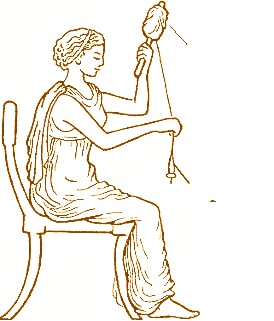
Spinning
Spinning—showing the distaff in the left hand and the spindle or rock in the right hand

I’m not sure what the Three Kings were doing on the day after Epiphany. But, the shepherds, if they were like medieval English farmworkers, would still be on holiday. They went back to work, traditionally, next Monday, which is Plough Monday. By contrast, the women, according to folk customs, went back to work St. Distaff’s Day, the day after Epiphany. In an ideal world, St Distaff’s Day is the Sunday after Epiphany (January 6th), and Plough Monday is the next day. Of course, it doesn’t always work out that way. I am not sure the woman going back to work on the 7th January, would be happy with the men lounging about until Plough Monday,. This year on the 13th January.

A distaff is ‘a stick or spindle on to which wool or flax is wound for spinning’. Because of its importance in the medieval and early modern economy, it became a synecdoche for women. St Distaff is a ‘canonisation’ of this use of the word. So, a day to celebrate working women.

We know that medieval and early modern women were a vital part of the work force, despite the demands of childcare. Many women took on apprenticeships, even more continued their husband’s work after he died. Some professions like silk became a female speciality. Plus, London was full of female servants and nurses. Many women had several jobs. The exhibition at the British Library on Medieval Women. In Their Own Words, indicated that most of the sex workers had two or more other jobs. In the house, the wife was the mistress of a formidable range of technologies. Baking, Brewing, Cooking, Laundry, Gardening, Dairy, Medicine (including distillation), horticulture, spinning, sewing and embroidery. Even, aristocratic women did embroidery of the finest quality, and it often made an important financial contribution to the household.

St Distaff’s Day and Plough Monday

Robert Herrick (1591–1674), born in Cheapside, London, a Goldsmith, priest, Royalist and Poet wrote in ‘Hesperides’.

Partly work and partly play
You must on St. Distaff’s Day:
From the plough, soon free your team;
Then come home and fother them;
If the maids a-spinning go,
Burn the flax and fire the tow.
Bring in pails of water then,
Let the maids bewash the men.
Give St. Distaff all the right;
Then bid Christmas sport good night,
And next morrow every one
To his own vocation.

Here he links the plough team with St Distaff’s Day. This implies that the ploughs would be out on the next day. So as St Distaff’s Day is not always on a Sunday, perhaps Plough Monday is not always on a Monday? He certainly suggests everyone goes back to work on the day after St Distaff’s Day.

This image has an empty alt attribute; its file name is Screenshot-2022-01-07-18.53.35.png

Saints & Goddesses of the Distaff Side

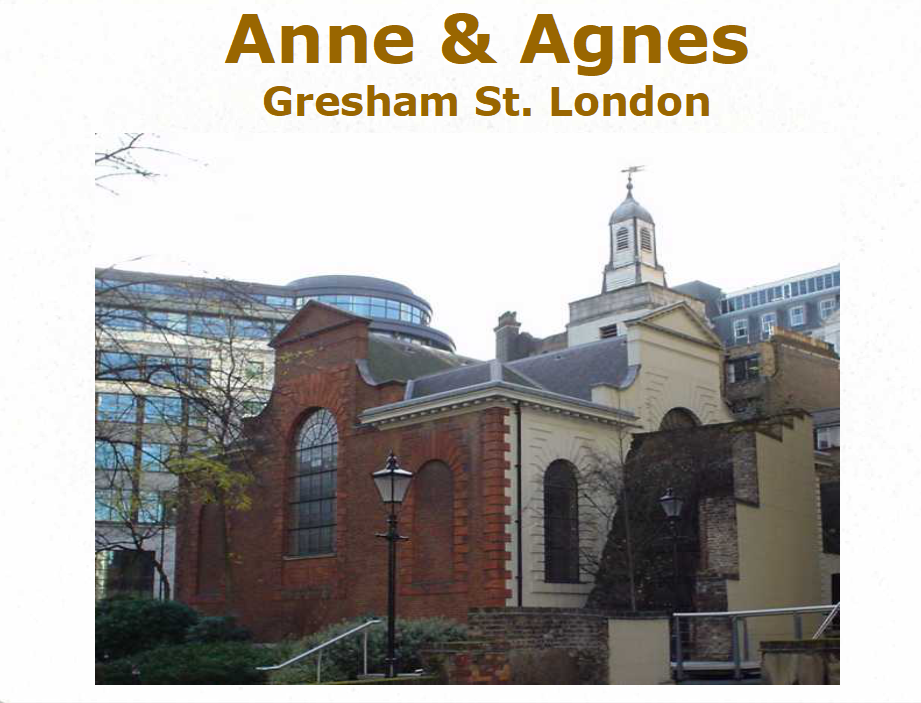
In London, the Fraternity of St Anne and St Agnes met at the Church dedicated to the saints. It is by a corner of the Roman Wall on the junction of Gresham Street and Noble Street. St Agnes is the patron saint of young girls, abused women and Girl Scouts. St Anne is the mother of the mother of the Son of God. So, she represents the three generations of women: maidens, mothers, and grandmothers.

This image has an empty alt attribute; its file name is romanmoreb0029.jpg
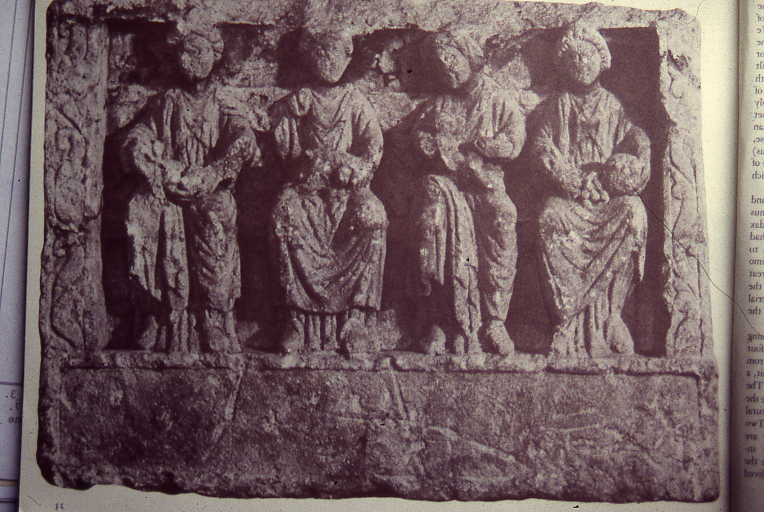
The Three Mother Goddesses (and someone else) “Limestone relief depicting four female figures sitting on a bench holding bread and fruit, a suckling baby, a dog and a basket of fruit’ the Museum of London

This trinity of women were worshipped by the Celts. Archaeologists discovered the sculpture above while investigating the Roman Wall a few hundred yards away at Blackfriars. Scholars believe it depicts the Celtic Three Mother Goddesses. The fourth person is a mystery, maybe the patron of a nearby temple. The relief sculpture was removed perhaps from a temple, or the temple was trashed at some point. Then the sculpture was used as rubble and became part of the defences of London.

The idea of triple goddesses is a common one. In Folklore and History they have been referred to as Maiden, Mother, and Crone, or even Maiden, Mother and Hag. They come in Roman, Greek, Celtic, Irish, and Germanic forms. Their names include the Norns, the Three Fates, the Weird Sisters, the Mórrígan and many more. The Three Fates, the Goddess Book of Days says, were celebrated during the Gamelia. This is the Greco/Roman January Festival to the marriage of Zeus and Juno. The Festival also gives its name to the Athenian month of January.

The use of the terms Hag and Crone for the third Goddess is rare now, but was common. It does a great disservice to the importance of the Grandmother figure. (Although the original meaning of the words were less pejorative. For example, Hag may have meant diviner, soothsayer.) The three phases of womanhood are equally as important to the continuation of the species. They provide love, support, and experience through the generations. Compare these three generations of supportive deities with Ouranos (Uranus), Cronus (Saturn) and Zeus (Jupiter). Saturn castrated and deposed his father, Uranus. Later, he tried to eat his son, Jupiter. But then, Jupiter is nobody’s idea of an ideal father. As one example, he eats his lover, Metis, to avoid her giving birth. (See my post on the birth of Athena.)

Recent work on human evolution has suggested that the role of the Grandmother is crucial to our species’ ability to live beyond the age of fertility. Because, in evolutionary terms, once an individual cannot procreate, their usefulness for the survival of the genes is finished. So what’s the point of putting resources into grandma’s survival? The theory is the Grandmother has such an impact on the survival of the next generation, that longevity. for the female, beyond fertility makes evolutionary sense.

Have a look at this site for more information.

Natural History Museum, Oxford, K Flude photo.

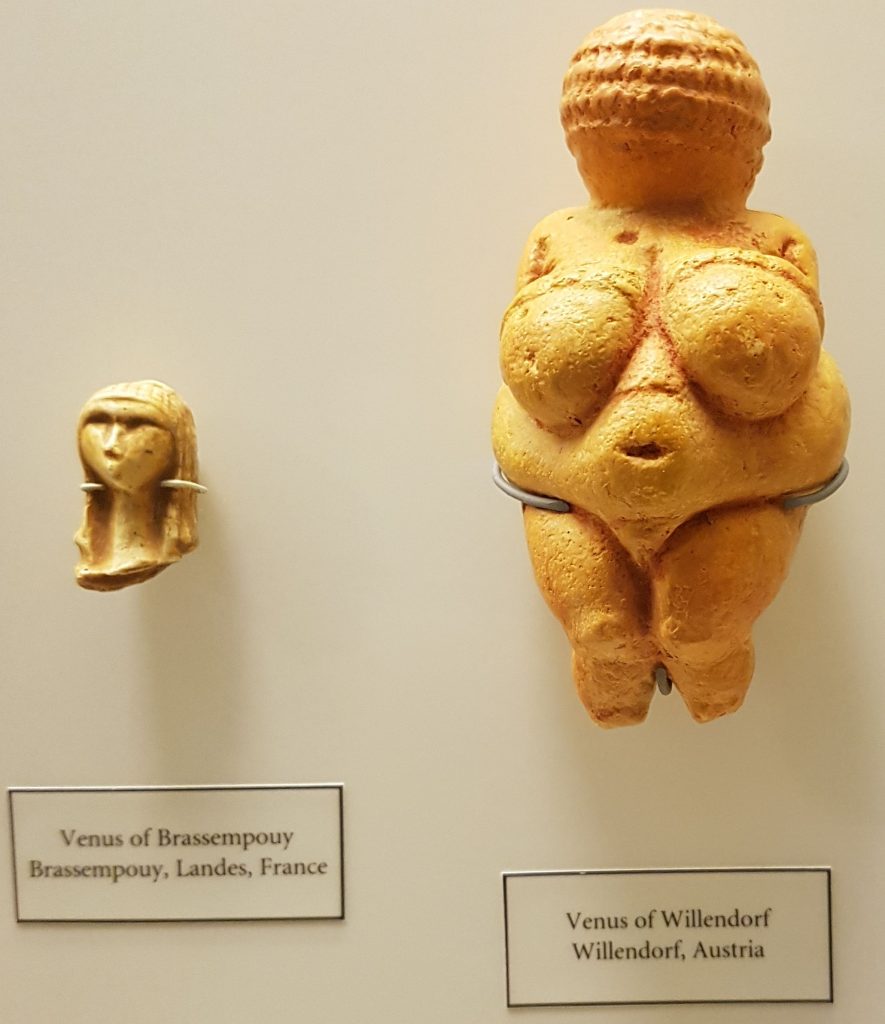
There was a theory widely held that the original Deities, dating before the spread of farming, were mother goddesses. The idea is that the hunter-gather goddesses (perhaps like the Venus of Willendorf) were overthrown by the coming of farmers. These patriarchal societies worshipped the male gods, which destroyed the ancient Matriarchy. Jane Ellen Harrison proposed an ancient matriarchal civilization. Robert Graves wrote some interesting, but no longer thought to be very scientific studies, on the idea. Neopaganism has taken these ideas forward.

More information on St Agnes in this post below:

One This Day

1845. Today is the anniversary of the breaking of the fabulous Portland Vase by a drunken visitor to the British Museum. It looks immaculate despite being smashed into myriad pieces, a wonder of the conservator’s art. To see the vase and read its story, go to the BM web site here:

wedgwood catalogue of its copy of the portland vase

In the orthodox church, дед Мороз  (Ded Moroz= father of frost), accompanied by Cнегурочка (Snieguroshka= fairy of the snow) brings gifts on New year’s eve, (which is on January 7th). He travels with a horse drawn troika.

Today’s Interesting link

Medieval Sin and the Pointy Shoe — for details, read the BBC’s interesting article.

First Published in 2022, and revised in January 2024 and 2025

The Lord of Misrule & London, December 30th

black and white illustration of John Stow memorial in St Andrew's Church
John Stow memorial in St Andrew’s Church

On the sixth day of Christmas

My true love sent to me
6 Geese a Laying;
5 Golden Rings;
4 Calling Birds; 3 French Hens; 2 Turtle Doves
and a Partridge in a Pear Tree

The Lord of Misrule, Masters of the Revels, and Boy Bishops

The Roman festival of Saturnalia, held between 17th and 23rd of December, included reversing rules so that slaves, ruled and masters served. In the medieval period, the disorder of Christmas was continued with the election of Lords of Misrule, Masters of the Revels, and Boy Bishops.

John Stow’s, Survey of London

He was London’s first great historian, wrote of the Lord of Misrule in London. In this section, Stow begins the role of the Lords of Misrule at Halloween and continues it until Candlemas, in erly February. See my post here for more details on Candlemas. This is what Stow says:

Now for sports and pastimes yearly used.

First, in the feast of Christmas, there was in the king’s house, wheresoever he was lodged, a lord of misrule, or master of merry disports, and the like had ye in the house of every nobleman of honour or good worship, were he spiritual or temporal. Amongst the which the mayor of London, and either of the sheriffs, had their several lords of misrule, ever contending, without quarrel or offence, who should make the rarest pastimes to delight the beholders.

These lords beginning their rule on Alhollon eve, continued the same till the morrow after the Feast of the Purification, commonly called Candlemas day. In all which space there were fine and subtle disguisings, masks, and mummeries, with playing at cards for counters, nails, and points, in every house, more for pastime than for gain.

Against the feast of Christmas every man’s house, as also the parish churches, were decked with holm, ivy, bays, and whatsoever the season of the year afforded to be green. The conduits and standards in the streets were likewise garnished; (…) , at the Leaden hall in Cornhill, a standard of tree being set up in midst of the pavement, fast in the ground, nailed full of holm and ivy, for disport of Christmas to the people…

John Stow, author of the ‘Survey of London‘ first published in 1598. Available at the wonderful Project Gutenberg: ‘https://www.gutenberg.org/files/42959/42959-h/42959-h.htm’

Cover page of The Survey of London by John Stow from Project Gutenberg

Holm is an evergreen oak called Quercus ilex. John Stow talks about the Tree in Leadenhall Street being destroyed in the great wind of 1444 which you can read about here. You might also like to see the following posts, which include information about John Stow and London’s customs, and churches.

First Published on December 30th 2023 and revised in 2024,2025

Myths, Legends & Halloween Virtual Tour October 31st 2024

Bran's head taken to Tower Hill
King Bran’s head buried at Tower Hill

Virtual Walk: Thurs 31st October 2024 8.00pm

On Thursday, I am doing my first London Walk Virtual Tour of the winter season.

The walk tells the story of London’s myths and legends and the Celtic origins of Halloween.

The walk will tell the story of London’s Myths and Legends, beginning with the tale of London’s legendary origins in the Bronze Age by an exiled Trojan called Brutus. Stories of Bladud, Belinus, Bran and Arthur will be interspersed with how they fit in with archaeological discoveries.

As we around the City, we also look at the origins of Halloween celebrations and how they may have been celebrated in early London


The virtual route starts at Tower Hill, then down to the River Thames at Billingsgate, to London Bridge and Southwark Cathedral, to the Roman Forum at the top of Cornhill, into the valley of the River Walbrook, passed the Temple of Mithras, along Cheapside to the Roman Amphitheatre, and finishing up in the shadow of St Pauls.

To book:

REVIEWS (from London Walks website)
“Kevin, I just wanted to drop you a quick email to thank you ever so much for your archaeological tours of London! I am so thrilled to have stumbled upon your tours! I have wanted to be an archaeologist since 1978 at the ripe old age of 8 years,… I was told for years that I could not be an archaeologist [for any number of reasons, which I now realise are completely ridiculous!], so I ended up on a different course of study. And now at the age of 50, it is my one great regret in life. So, I am thoroughly enjoying living vicariously through you, the digs you’ve been on, and the history you bring to life for us! British archaeology would have been my specific area of study had I pursued it. ?? Thank you SO MUCH for these! I look forward to them more than you can imagine, and honestly, I’ll be sad if you get them down to 1.5 hours! They’re the best 2 hours of my week! 🙂 Best, Sue

Leap Day & and the Roman Calendar February 29th

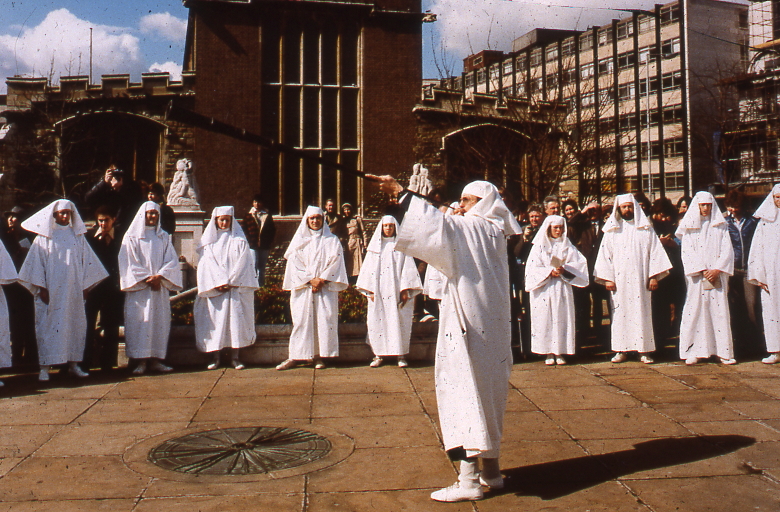
Druids at All Hallows, by the Tower

I have just come back from my very first Leap Year Walk, which I gave tonight for London Walks. It was one of a series of my walks, which are about the year through London’s History. So far, I have done, a New Year Walk, an Imbolc Walk (1 February, St Brigid’s Day), a Spring Equinox Walk, a May Day Walk, a Summer Solstice Walk, an Autumn Equinox Walk, a Halloween Walk, and a Winter Solstice Walk. All, at their core, have the subject of the year, how it is arranged, and celebrated in different cultures and different times in London.

I hoped to get this post done, today, but on arrival at home my burglar alarm was ringing, so had to get an emergency electrician out to pacify my neighbours, and tracking down the fault meant turning my house upside down. I rushed it out, with many bad proof reading errors and ommissions, And have now, on the dawn of a new month, and a new Season, updated it. Probably, knowing me, it still has a far few errors! Now, I am rushing to look after my Grandson!

So, the reason there is a leap year, is that the Sun and the Moon have different cycles, which cannot be easily aligned. And secondly, the solar year is not a fixed number, it is not 365 days, but 365 days and a bit.

Originally though, probably, most cultures lived their lives with time keeping controlled by time markers from their everyday environment, days and nights, the waning and waxing of the moon, the seasons, and the changes in the rising and setting of the Sun. Budding nature would have provided other markers as to when to sow, to harvest, to prune, to slaughter, to worship and marry.

The months were given by the cycle of the Moon, which also gave us tides and menstrual cycles. The months were given names, which were often associated with the weather. The trouble was that the Solar year did not align with the Moon, soon the months would get out of kilter with the seasons. So over time, the society would find it was winter in June, or summer in December. (which is OK if you live in Australia).

Society dealt with this in a number of ways. It could be ignored, why shouldn’t it be cold in June, why should June always be in Summer? Another way was to add in extra days, or months, every so often to make sure June remained in the Summer. This is what Egypt, the early Romans and the Celts did. They kept their months aligned to the actual movements of the Moon, and aligned their Solar Year with it by the addition of extra days or a month or two. or a combination of both.

I reported on this in my post on the Terminalia for February 23rd. As I wrote:

Terminus was an old ancient God who was the God of the boundary, the border, the edge, the liminal God. February was the last month of the original Roman year, but the rulers of Rome added an intercalary month every so often, called Mercedonius in an attempt to keep the Solar year in tune with the seasons. And when the intercalary month was added, the last five days of February were given to Mercedonius and the resulting leap year was either 377 or 378 days long.. So, in those years, the 23rd of February was the Terminus of the year. (For more on Terminalia look at my post for February 23rd on Terminalia-god-of-the-boundary)

Now, as the Roman Republic became more sophisticated, the intercalary months were added at the direction of the Pontiffs, supposedly every two and sometimes every three years. But the Pontiffs were often swayed by political advantage, and by the time of Julius Caesar the seasons had got wildly out of sync with the calendar year. The Dictator, therefore, instituted ‘the Year of Confusion’ which was over 400 days long and brought in the Julian Calendar which realigned the calendar back in line with the seasons.

Caesar spent time with Egyptian Astronomers, trying to understand their solution to the problem. They identified that the year was not 365 days long but 356.25 days, so JC ‘fixed’the issue with a leap day every four years. Based on the almost correct calculation of a solar year being 365.25 days. The new calendar was inaugurated on the Kalends of Januarius 709 AUC, or as we would call it I January 45 BC. It became, in time, something the Romans were very proud of – rationalising, measuring, time itself. Romans counted their dates from the time their City was founded by Romulus in what we call 753 BC or 753 BCE. So, 45 BCE in our reckoning is 709 ab urbe condita (AUC ‘from the founding of the City) as the Romans saw it.

I prefer not to use BCE because it seems ‘dishonest’ to me. The idea of AD BC was made up based on a guess as to when Jesus was born. Changing BC to BCE may rid the date of an explicit Christian identification but masks the fact that there is no such thing as the ‘Common Era. What the Common Era is, is the idea made up in the Late Roman period guessing when Jesus was born/ So I think call a spade a spade, even if it’s a broken meaningless spade that is not fit for purpose, either replace it with something rational, or real or call it what it is.

The interesting thing is that Caesar put the leap year in on the 24th February. Why? Because February, being the month of death, was the end of the year. March 25th was originally the beginning of the Roman year (Caesar moved it to January 1st). Why March 25th? Because it was the Spring Equinox. If you look at my post for March 25th you will find out it is the date of the creation of Humanity, the Birthday of Adam, the conception of Jesus, and until 1752, the day the year number changed in Britain.

The other strange thing about the new leap day was that it was not called February 25th. It was not given a number. Rather, February 24th was two days long. This continued in Britain until the date February 29th started appearing in calendars in the 15th Century, although the legendary Lawyer, Edward Coke (1552 – 1634), refers to the two days of February 24th, but the two day 24th was completely replaced by February 29th in the 16th Century.

One slight complication to the story of February 29th was that February 29th did exist before the Julian reforms. When February was not interrupted by the intercalary month, as described above, it was 29 days long. Julius Caesar made the months alternate 30 and 31 except for February which was 29 days long. When the Senate gave Julius the honour of having the 7th Month named after him, things were OK, but then Augustus wanted the same thing. The Senate duly gave him the next month, which became known as August, but it only had 30 days. This could not be allowed! So they made it up to 31 and stole the 29th from February and made February only 28 days long. This change also meant that there were now three 31 days months in a row, so they reduced September from 31 to 30, boosted October to 31, reduced November to 30 and boosted December to 31,

Hence, we can no longer remember Caesar rational allotment of days in the month, and we need to hum to ourselves:

Thirty days have September
April, June, and November
February has twenty-eight alone.
All the rest have thirty-one.
Excepting leap year – that’s the time
When February’s days are twenty-nine.

But Caesar had not solved the problem of the shifting year, he had just minimised it. By the Council of Nicea in the early 4th Century (and not yet called AD!) the small error had changed the date of the Spring Equinox, from March 25th to March 21st. So, when Constantine convened the Council to bang the heads together of the Church leaders to unify their religion, particularly in regard to the date of Easter, and whether Jesus was equal to God. They fudged the complex issue of the date of Christ’s death, and used March 21st as the foundation of their calculation on the moon-based festival of Easter (more of which at Easter!)

It wasn’t until the 16th Century that Pope Gregory, solved the problem of the inaccuracy of Caesar’s solution, by introducting the Gregorian Calendar, for which see my post here.

See the following posts for the Roman Year:

Romulus’s 10 month year here

Roman Months here and more on the Ides of March here

Archaeology discoveries, February 2024

Sketch of a Roman skull of a man who was crucified.
Archaeology discoveries. The Image is a sketch of the ‘Facial Reconstruction, Impossible Factual/BBC’

Interesting Archaeology discoveries.

The following discoveries were reported in Salon IFA the newsletter of the Society of Antiquaries of London in Salon: Issue 526  7 February 2024, which you can see here:

Pliny the Elder’s Villa found near Vesuvius?

The 1st Century seafront villa, with views of the Bay of Naples and of Mount Vesuvius, has been excavated at the town of Bacoli, which was the port of Misenum. Pliny commanded the fleet as ‘Praefectus classis Misenensis’. Pliny tried to rescue his friends and family, ignoring warnings saying ‘Fortune favours the brave’, ‘Audentes Fortuna luvat’. It didn’t and he died, at Stabiae, by toxic fumes. Read more about the villa here:

Face Reconstructed for a Victim of Roman Crucifixion

A male skeleton found, 4 years ago, in a Roman cemetery in Fenstaton in Cambridgeshire was found with a 2-inch nail through his heel bone. BBC 4 has made a documentary about the recent reconstruction of the man’s face by, as Salon reports it:

‘US forensic artist Joe Mullins, of George Mason University, Virginia. He usually works with law enforcement agencies, reconstructing the faces of modern-day crime victims. ‘

To follow the details, read more here, or watch the BBC documentary, ‘The Cambridgeshire Crucifixion’, which can be viewed on BBC iPlayer.

For more archaeology read my post: https://www.chr.org.uk/anddidthosefeet/london-before-london-and-dna/

Published in February 2024, revised 2025