
St Distaff’s Day & the Triple Goddesses, January 7th

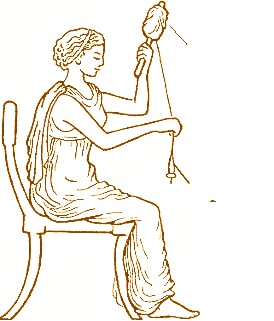
Spinning
Spinning—showing the distaff in the left hand and the spindle or rock in the right hand

I’m not sure what the Three Kings were doing on the day after Epiphany. But, the shepherds, if they were like medieval English farmworkers, would still be on holiday. They went back to work, traditionally, next Monday, which is Plough Monday. By contrast, the women, according to folk customs, went back to work St. Distaff’s Day, the day after Epiphany. In an ideal world, St Distaff’s Day is the Sunday after Epiphany (January 6th), and Plough Monday is the next day. Of course, it doesn’t always work out that way. I am not sure the woman going back to work on the 7th January, would be happy with the men lounging about until Plough Monday,. This year on the 13th January.

A distaff is ‘a stick or spindle on to which wool or flax is wound for spinning’. Because of its importance in the medieval and early modern economy, it became a synecdoche for women. St Distaff is a ‘canonisation’ of this use of the word. So, a day to celebrate working women.

We know that medieval and early modern women were a vital part of the work force, despite the demands of childcare. Many women took on apprenticeships, even more continued their husband’s work after he died. Some professions like silk became a female speciality. Plus, London was full of female servants and nurses. Many women had several jobs. The exhibition at the British Library on Medieval Women. In Their Own Words, indicated that most of the sex workers had two or more other jobs. In the house, the wife was the mistress of a formidable range of technologies. Baking, Brewing, Cooking, Laundry, Gardening, Dairy, Medicine (including distillation), horticulture, spinning, sewing and embroidery. Even, aristocratic women did embroidery of the finest quality, and it often made an important financial contribution to the household.

St Distaff’s Day and Plough Monday

Robert Herrick (1591–1674), born in Cheapside, London, a Goldsmith, priest, Royalist and Poet wrote in ‘Hesperides’.

Partly work and partly play
You must on St. Distaff’s Day:
From the plough, soon free your team;
Then come home and fother them;
If the maids a-spinning go,
Burn the flax and fire the tow.
Bring in pails of water then,
Let the maids bewash the men.
Give St. Distaff all the right;
Then bid Christmas sport good night,
And next morrow every one
To his own vocation.

Here he links the plough team with St Distaff’s Day. This implies that the ploughs would be out on the next day. So as St Distaff’s Day is not always on a Sunday, perhaps Plough Monday is not always on a Monday? He certainly suggests everyone goes back to work on the day after St Distaff’s Day.

This image has an empty alt attribute; its file name is Screenshot-2022-01-07-18.53.35.png

Saints & Goddesses of the Distaff Side

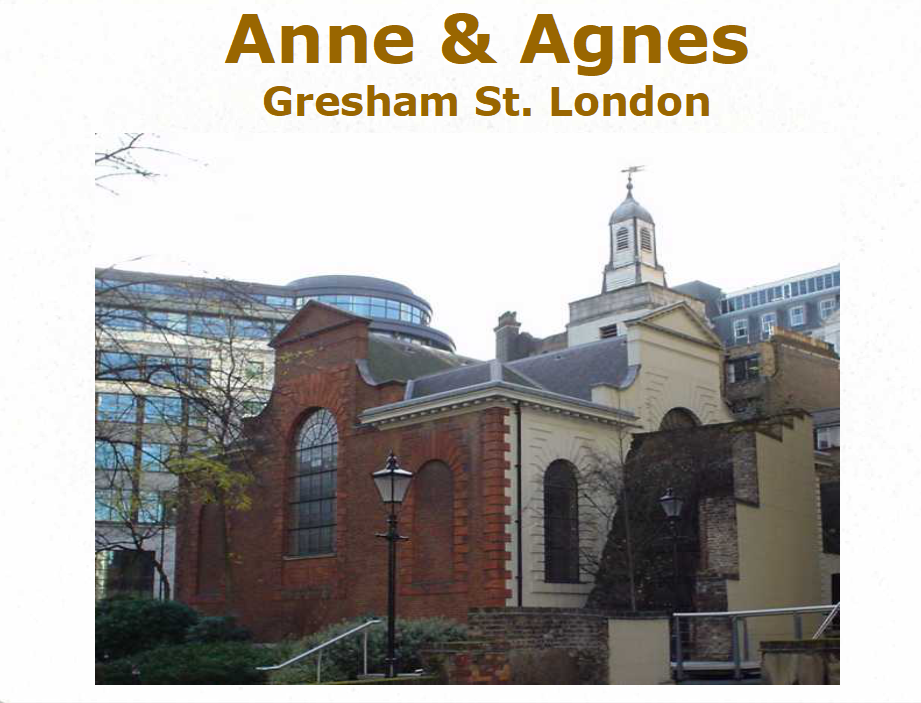
In London, the Fraternity of St Anne and St Agnes met at the Church dedicated to the saints. It is by a corner of the Roman Wall on the junction of Gresham Street and Noble Street. St Agnes is the patron saint of young girls, abused women and Girl Scouts. St Anne is the mother of the mother of the Son of God. So, she represents the three generations of women: maidens, mothers, and grandmothers.

This image has an empty alt attribute; its file name is romanmoreb0029.jpg
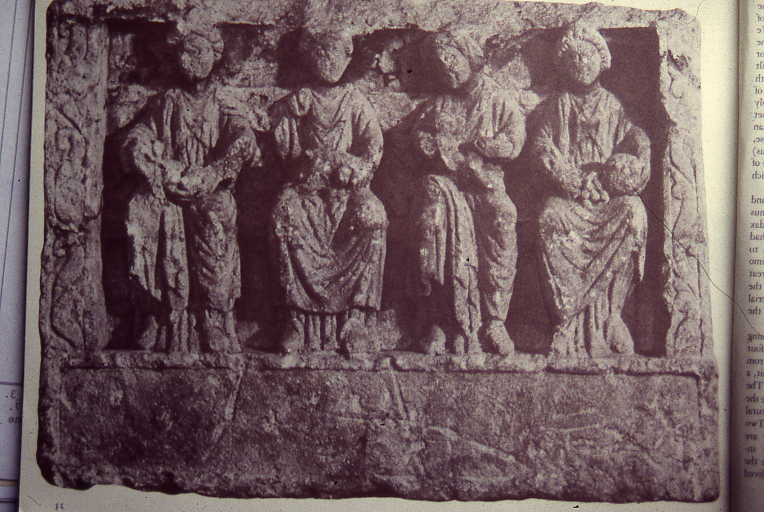
The Three Mother Goddesses (and someone else) “Limestone relief depicting four female figures sitting on a bench holding bread and fruit, a suckling baby, a dog and a basket of fruit’ the Museum of London

This trinity of women were worshipped by the Celts. Archaeologists discovered the sculpture above while investigating the Roman Wall a few hundred yards away at Blackfriars. Scholars believe it depicts the Celtic Three Mother Goddesses. The fourth person is a mystery, maybe the patron of a nearby temple. The relief sculpture was removed perhaps from a temple, or the temple was trashed at some point. Then the sculpture was used as rubble and became part of the defences of London.

The idea of triple goddesses is a common one. In Folklore and History they have been referred to as Maiden, Mother, and Crone, or even Maiden, Mother and Hag. They come in Roman, Greek, Celtic, Irish, and Germanic forms. Their names include the Norns, the Three Fates, the Weird Sisters, the Mórrígan and many more. The Three Fates, the Goddess Book of Days says, were celebrated during the Gamelia. This is the Greco/Roman January Festival to the marriage of Zeus and Juno. The Festival also gives its name to the Athenian month of January.

The use of the terms Hag and Crone for the third Goddess is rare now, but was common. It does a great disservice to the importance of the Grandmother figure. (Although the original meaning of the words were less pejorative. For example, Hag may have meant diviner, soothsayer.) The three phases of womanhood are equally as important to the continuation of the species. They provide love, support, and experience through the generations. Compare these three generations of supportive deities with Ouranos (Uranus), Cronus (Saturn) and Zeus (Jupiter). Saturn castrated and deposed his father, Uranus. Later, he tried to eat his son, Jupiter. But then, Jupiter is nobody’s idea of an ideal father. As one example, he eats his lover, Metis, to avoid her giving birth. (See my post on the birth of Athena.)

Recent work on human evolution has suggested that the role of the Grandmother is crucial to our species’ ability to live beyond the age of fertility. Because, in evolutionary terms, once an individual cannot procreate, their usefulness for the survival of the genes is finished. So what’s the point of putting resources into grandma’s survival? The theory is the Grandmother has such an impact on the survival of the next generation, that longevity. for the female, beyond fertility makes evolutionary sense.

Have a look at this site for more information.

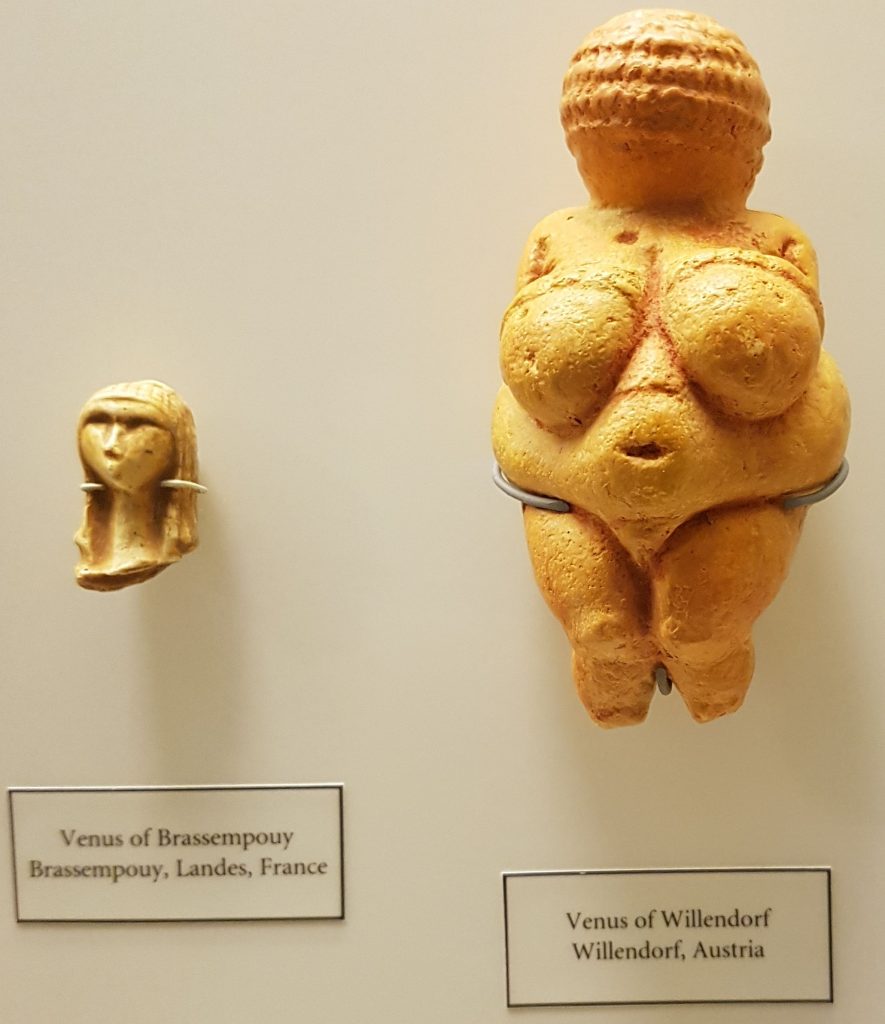
Natural History Museum, Oxford, K Flude photo.

There was a theory widely held that the original Deities, dating before the spread of farming, were mother goddesses. The idea is that the hunter-gather goddesses (perhaps like the Venus of Willendorf) were overthrown by the coming of farmers. These patriarchal societies worshipped the male gods, which destroyed the ancient Matriarchy. Jane Ellen Harrison proposed an ancient matriarchal civilization. Robert Graves wrote some interesting, but no longer thought to be very scientific studies, on the idea. Neopaganism has taken these ideas forward.

More information on St Agnes in this post below:

One This Day

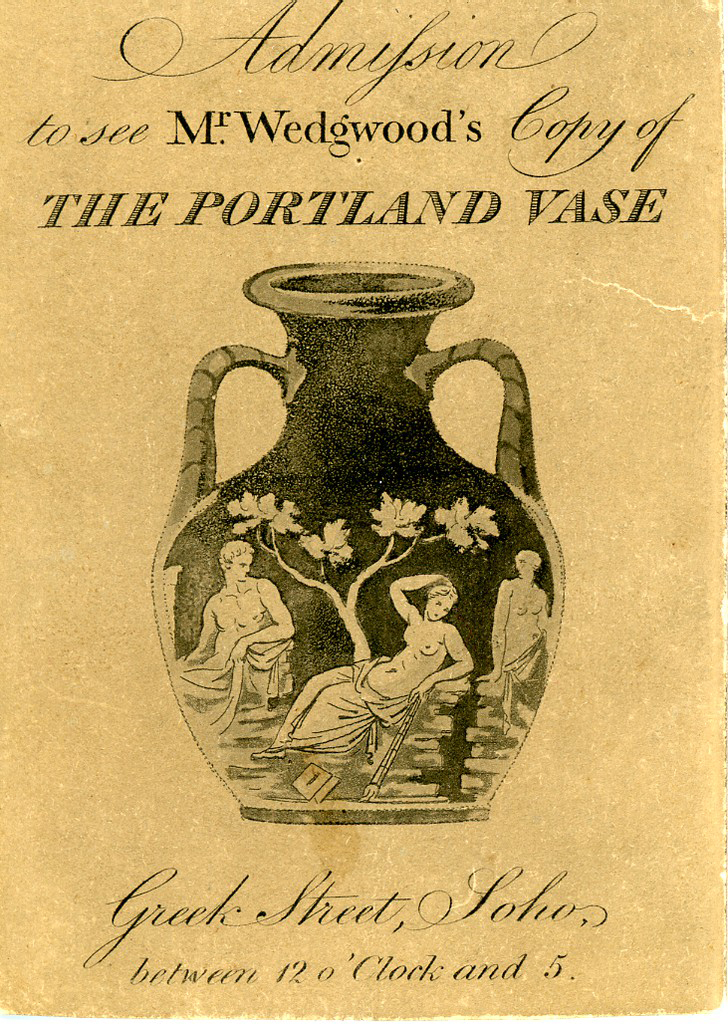
1845. Today is the anniversary of the breaking of the fabulous Portland Vase by a drunken visitor to the British Museum. It looks immaculate despite being smashed into myriad pieces, a wonder of the conservator’s art. To see the vase and read its story, go to the BM web site here:

wedgwood catalogue of its copy of the portland vase

In the orthodox church, дед Мороз  (Ded Moroz= father of frost), accompanied by Cнегурочка (Snieguroshka= fairy of the snow) brings gifts on New year’s eve, (which is on January 7th). He travels with a horse drawn troika.

Today’s Interesting link

Medieval Sin and the Pointy Shoe — for details, read the BBC’s interesting article.

First Published in 2022, and revised in January 2024 and 2025

December 21 – Reflections on the Solstice

The Solstice and the East Pediment of the Parthenon

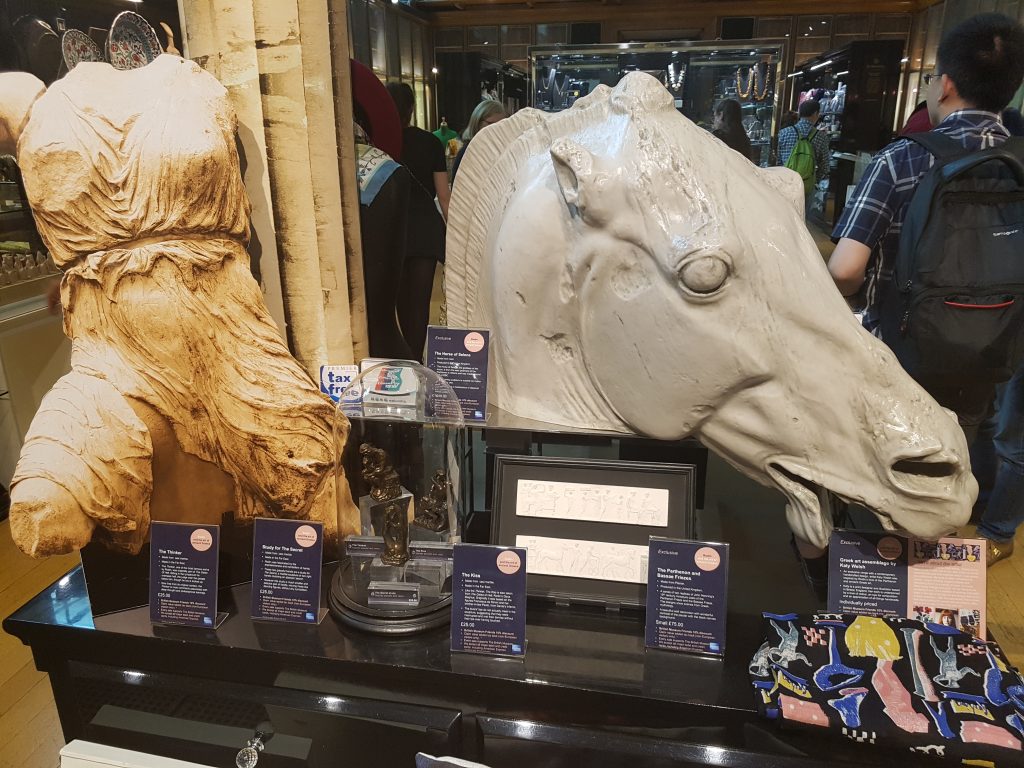
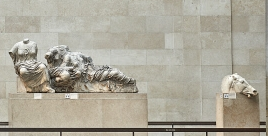
British Museum Shop, reproductions of Hestia and Selene’s Horse from the Parthenon Marbles

At the Summer Solstice, I took a group to the British Museum and, a few days later, to Stonehenge, and managed to ‘integrate’ the two into a solstice narrative. At the BM, over years of trying to explain the sculptures, I have been building in my mind an interpretation of the Pediment that gives, I hope, an original insight into the possible intentions of the sculptors. I don’t know how ‘true’ it is, but I do think it gives an insight into metaphor and symbolism in great works of art. Bear in mind that there is a lot of uncertainty about some of the attributions, and, that the male and female virtues that I am talking about are traditional ones, not necessarily how we would express it in the modern world.

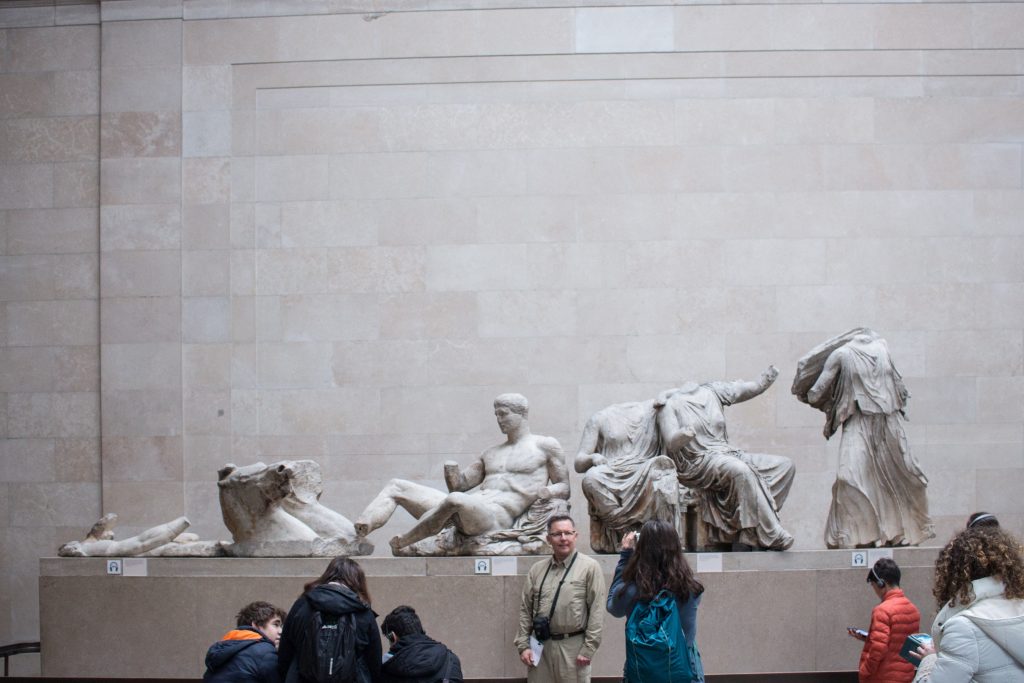
Pediment Sculptures Photo by Nicole Baster on Unsplash

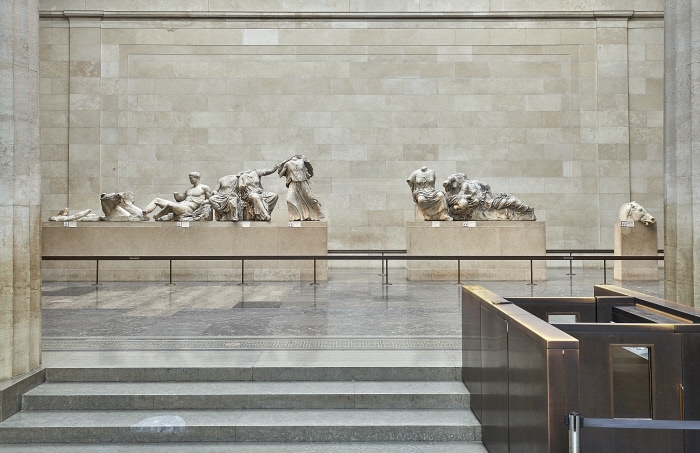
At the left of the above photography, you see the horses that take Helios chariot into the sky to bring up the sun to light the world every day. Most sun deities are male, and the Sun gives light and life to the world, without it this earth is an inert block of ice cold stone. The next statue is casually laying back and looking fit, relaxed and not looking as if he is in that position because of the impossible triangular Pediment space he inhabits. He is the epitome of male strength, usually identified with Hercules but other people have other ideas and a young Dionysus is another suggestion. Whoever he is he represents male beauty and strength. So this end of the pediment represents the Sun and male virtues. This is the East Pediment of the Parthenon which is orientated to the rising sun, a little north of east.

Next are Demeter, the goddess of fertility, the goddess of the earth. Placed here to remind us that the Sun needs the Earth to create life and sustenance. It reminds us that the universe is not male, the male only works in conjunction with the female. Demeter is cuddling her daughter Persephone, the Goddess of Hades. She reminds us that life is a cycle of death and life. Plants die, turn into soil and create the conditions for future life.

Next is Hebe, daughter of Zeus and Hera, wife of Heracles (Hercules). She is the cupbearer to the Gods and gives them the ambrosia that keeps them forever young. She is the Goddess of Immortality, a reminder that the universe is eternal.

Next to Hebe is a void where there was the central statue of the east pediment depicting the Birth of Athena (according to Pausanias who wrote a guide in the 2nd Century BC to the Temple). Athena was born from the head of her father Zeus- a virgin birth. Athena therefore is, in some ways, the greatest of the Olympians, as she has the virtues of her female sex and the virtues of her father’s masculinity (and, dear Gods, hopefully not the massive ‘Me Too’ vices of her father). She is therefore, wise, nurturing, just, intuitive, decisive, a leader; an ideal combination of male and female.

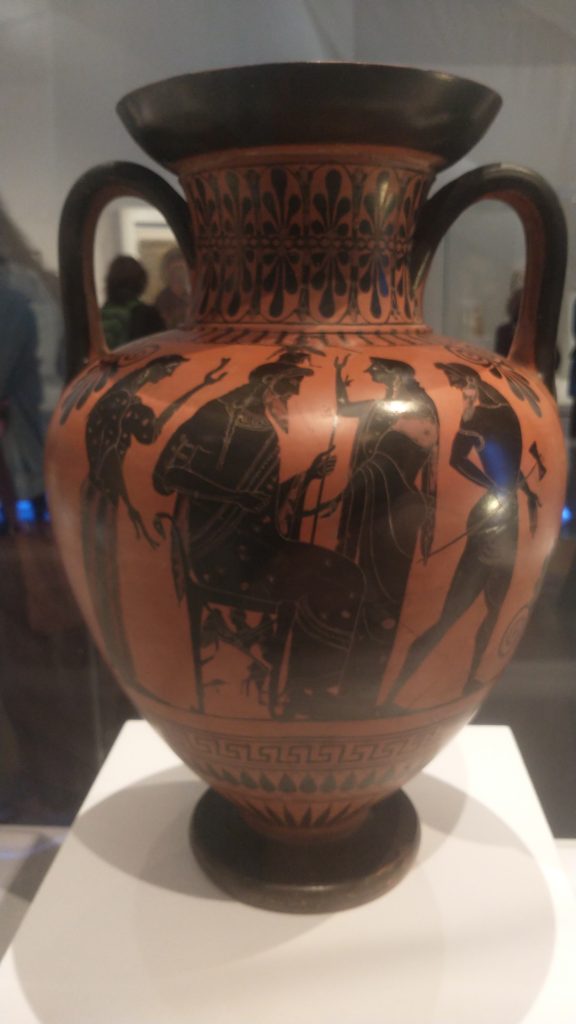
Zeus (sitting) Hephastus to right (looking back with Axe)  Athena just visible above Zeus's head
Zeus (sitting) Hephastus to right (looking back with Axe) Athena just visible above Zeus’s head

So Zeus eats Athena’s mum, Metis, who is pregnant with her. Sometime later he has a cracking headache. Hephaestus, the disabled artificer God hits Zeus over the head to clear the headache. Zeus gives birth to a fully formed Athena from the split in his head. She was known as Athena Parthenos, Athena the Virgin. Her name is originally Athene but it got changed to Athena in 500 BC.

Hestia, Dione, Aphrodite, Horse of Selene’s chariot

To Athene’s left is Hestia (Vesta for the Romans). Her name means “hearth, fireplace, altar” and she is the goddess of the domestic sphere, of the comforts of home, of a warm fire enjoyed by a loving family.

The next set are two beautifully draped women languidly leaning on each other, and these are Dione, with her daughter Aphrodite – the Goddess of Love. Dione is the daughter of Gaia and Uranus daughter of earth and sky. So, here, counterpoised to Hercules, are epitomes of women. Women of power, creation, and love.

Finally, we have the exhausted horse of Selene. Her chariot takes the moon into the sky, positioned opposite to Helios and the Sun. Selene is the Moon goddess, and the Moon is beautiful, powerful as it gives us the tides and fundamental to the life of humans as she presides over the menstrual cycle. Compared to the movements of the Sun which any fool can work out, and which are relentless (symbolising Justice) the movements of the Moon are mysterious to most of us. So Selene is beautiful, powerful, creative and the Goddess of Intuition.

So, if you put it all together, the East Pediment of the Parthenon shows that the world is a union of the male and the female, balanced between the two with Zeus and Athene in the middle, with Athene holding the main part because she, in her person, represents both the male and the female.

Of course, we know that the Athenian society was a patriarchal one with women mostly kept in the domestic sphere. But here, at least, women were given an equal billing in the organisation of the Cosmos.

Sculptures from the east pediment of the Parthenon

I must end by warning the reader that this is only my interpretation. I am not a scholar of Ancient Greece. I have come to my own conclusion based on spending a lot of time looking at the marbles, doing Solstice Virtual Tours, and mostly informed by the labels in the gallery, with of course, some reading including Mary Beard’s book entitled ‘Parthenon’ and the BM’s guidebook. In particular, I have not incorporated into my ‘story’ the sculptures that were in the gaps that do not survive or only in fragments scattered throughout the Museum world. Mary Beard was cleverer than I, not reaching conclusions on the basis that we don’t know. But what we do know is that in the centre is Zeus and Athene and at the edges are the chariots of the Sun and the Moon. And so fitting to celebrate the Solstice.

Originally written in 2022 and revised 2024

Coltsfoot & Smoking & Blossom & Cholera February 24th

Coltsfoot by Andreas Trepte Wikipedia

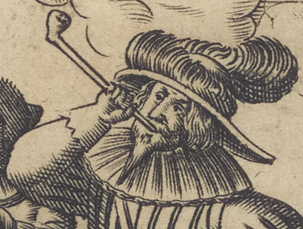
Coltsfoot is a daisy-like plant which is flowering about now. Gerard’s Herbal of 1633 suggests that the ‘fumes of the dried leaves taken through a funnel’ is good for those with coughs and shortness of breath. He suggests that it is smoked like tobacco and it ‘mightly prevaileth.’

This idea, Mrs Grieves says in her herbal (1931), is endorsed by ‘Dioscorides, Galen, Pliny, and Boyle’. And Coltsfoot is ‘nature’s best herb for the lungs’. (This is historic information re herbs and NOT current medical advice, as Coltsfoot can be very dangerous!).

engraving of a man smoking
Lobspruch deß edlen hochberühmten Krauts Petum oder Taback Nuremberg, 1658 New York Public Library Public Domain
Detail from Lobspruch deß edlen hochberühmten Krauts Petum oder Taback Nuremberg, 1658 New York Public Library Public Domain

My grandson and parents found a 19th Century pipe bowl, much like the one above, by the Thames where there were many fragments of clay pipe. For more on 17th Century smoking, have a look here.

Blossom is also coming out in London a little early. (2022 we had a false spring when Cherry Blossom came out, and I think we are now just getting used to it, so I don’t think it is being noted so much in 2024). Blackthorn (I think) is coming out in profusion in my local park. Photos below by the Author of Haggerston Park in East London. Left February 2022, Right Feb 23.

One thing I am trying to improve in my Almanac of the Past, is to include more specific London content. This can be difficult on a daily basis. But I think I have, by chance, found a solution. I was trying to glue the toe flap on a perfectly good pair of trainers so that it did not flap, and I needed a heavy weight to press the two edges together. I found a random couple of heavy books for the purpose. 24 hours later, I lifted the books to discover the failure of my project. But, as I returned the books to their place in the book case, I found the heaviest was called ‘A London Year. 365 Days of City Life in Diaries, Journals, and Letters.’ Compiled by Travis Elborough and Nick Bennison, published in 2013, and the price on it of £5.99 makes me feel I must have bought it second hand. Have I opened it before now? Indeed, I had forgotten its existence, but Cometh the Hour, Cometh the Book! What a timely rediscovery.

Cholera in London.
The news of the Cholera being in London has been received abroad. According to the feelings of the different nations towards England, France, who wish to court us has ordered a quarantine in her ports of three days; Holland, who feels aggrieved by our conduct at the conference, one of 40 days. The fog so thick in London that the illuminations for the Queen’s Birthday were not visible.

24th February 1832 Thomas Raikes, Diary 1832 (from ‘A London Year’ Compiled by Travis Elborough and Nick Bennison, 2013,

I think the Conference mentioned above was the London Conference of May 1832, which aimed to establish a Kingdom of Greece with a King, It was set up by Foreign Secretary Lord Palmerston without discussion with the Greeks and ended up giving them a Bavarian King. King Otto. Otto was forced from the throne in a revolution in 1862, and replaced by a Danish King, from whom Prince Philip, Duke of Edinburgh was descended.

Time for a Tansy!

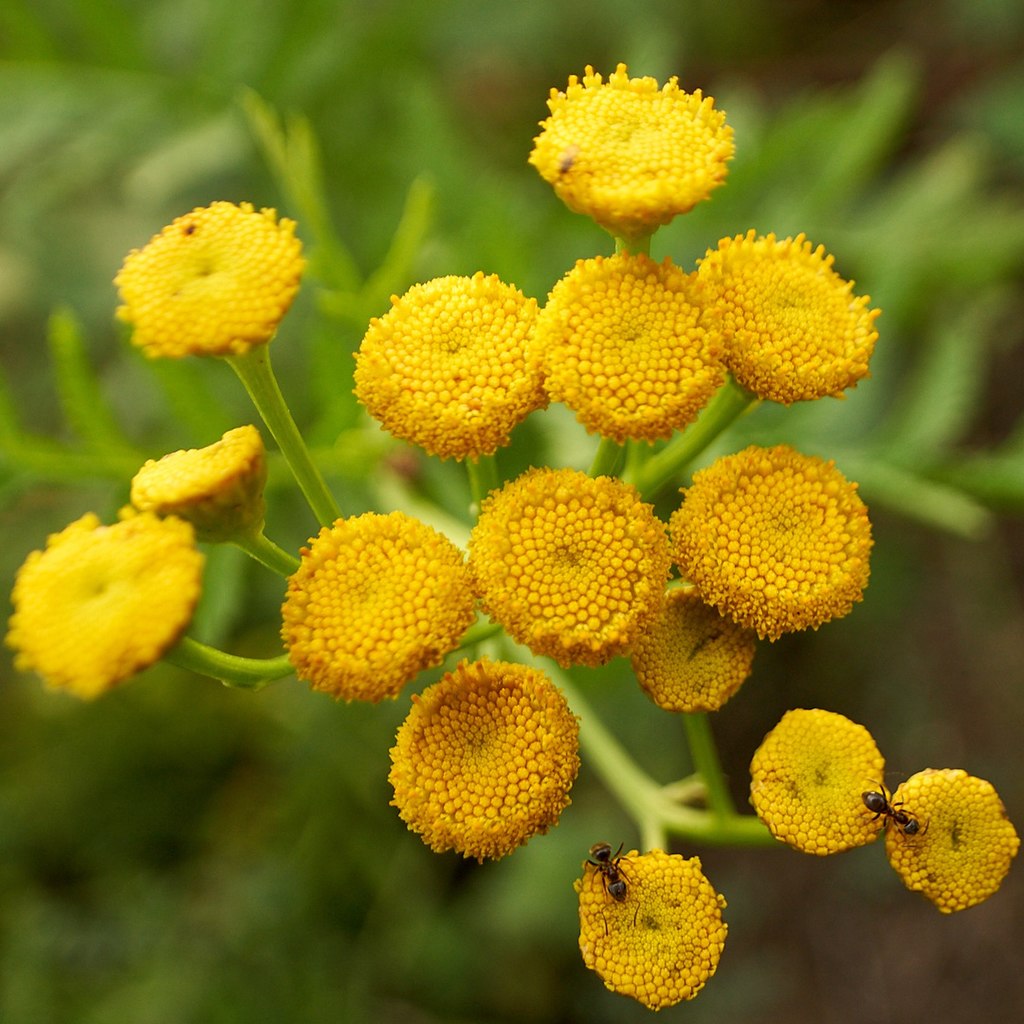
Tansy: by Georg Buzin (wikipedia)

Spring is time for a tansy, so time to bring out again the many stories behind this awesome plant.  The tansy not flowers display a classical  Fibonacci spiral, which is two counter-rotating  logarithmic spirals.

Mrs Grieve in her Modern Herbal repeats the belief that their name derives from the Greek word for immortality ‘Athanaton’.  This might be because they grow so well that in some areas they are proscribed they are so prolific. But Tansy was supposed to have been given to Ganymede by Zeus to make him immortal. And, they were used for preserving dead bodies from corruption. So, Tansy was placed in coffins and winding sheets and tansy wreaths placed with the dead.

Its toxicity means that it repels many insects, particularly, flies and ants, and so it was used as a medieval and early modern strewing herb. And yet there are other insects that love Tansy – it seems to have a dark side and a light side.

It was collected in August (along with meadowsweet or elder leaves) and strewn on the floors of houses (and the ‘thresh’ was held in by the threshold). But it was also placed between mattresses to keep away bugs. People rubbed meat with Tansy to keep flies off. It is now used as a natural protection for crops from insects to reduce the amount of artificial pesticides.

It was an important medical and culinary herb, said to be a substitute for nutmeg and cinnamon, and the leaves, shredded, as a flavouring for puddings and omelettes. At Easter ball games a Tansy Cake was the reward for the winners. It was symbolic of the bitter herbs eaten by the Israelites at Passover. Tansy was thought to be a very wholesome ingredient to eat after the sparsity of Lent and Winter, and voiding the body of the worms caused by eating too many fish. It was used for expelling worms from the stomachs of children.

Interestingly it contains thujone, which is also in Wormwood, the other main herb for expelling intestinal worms. Thujone can cause convulsions, liver and brain damage if too much is taken.

In the 14th Century it was used for treating wounds. It was thought to be useful both to induce abortions but also to help women conceive and to prevent miscarriages. Culpepper and Gerard suggests the root was a cure for gout.

Here is a recipe from the ‘The Closet of Kenelm Digby Opened‘ 1669. It was essentially a form of omelette. I would not try the recipe! In the BBC documentary “The Supersizers go … Restoration“, Sue Perkins suffered from the effects of the toxic tansy.

A TANSY (Do not try this at home!)

Take three pints of Cream, fourteen New-laid-eggs (seven whites put away)
one pint of juyce of Spinage, six or seven spoonfuls of juyce of Tansy, a
Nutmeg (or two) sliced small, half a pound of Sugar, and a little Salt.
Beat all these well together, then fryit in a pan with no more Butter then
is necessary. When it is enough, serve it up with juyce of Orange or slices
of Limon upon it.

Sir Kenelm Digby was a Catholic and a natural philosopher of some reputation. After his death an employee published his cookery book. His father was executed after the Gunpowder Plot, and he supported Charles 1st but found a way to work with Oliver Cromwell.

He made a great success of his idea of the ‘powder of sympathy’ – 29 editions of his book on the subject were sold. He found the powder in France and it was made with precise ‘astrological’ techniques. The most famous example of a suggested application for the powder was to win the competition for a method of working out longitude (in the 18th Century). Basically, a working method meant knowing the time, normally noon, in two different places. This allowed a triangle to be created between the two points and the Sun which allowed the distance between the two places to be discovered by triangulation. Clocks were not accurate enough (yet) to help so Digby’s famous powder of sympathy was suggested.

This is the method:

A wounded dog would be taken on board a ship, and a bandage from the wound would be left in London. At noon in London it would be sprinkled with the powder of sympathy. The dog on the ship would, perforce, yelp when the powder was administered on the bandage in London and so the Captain would know when it was noon in London! Digby was long dead when the application for the prize money was made and rejected.

‘Longitude’ by Dava Sobel tells the story of the discovery of a clock-based method of calculating longitude.

Digital Heritage – The Past Deciphered by AI

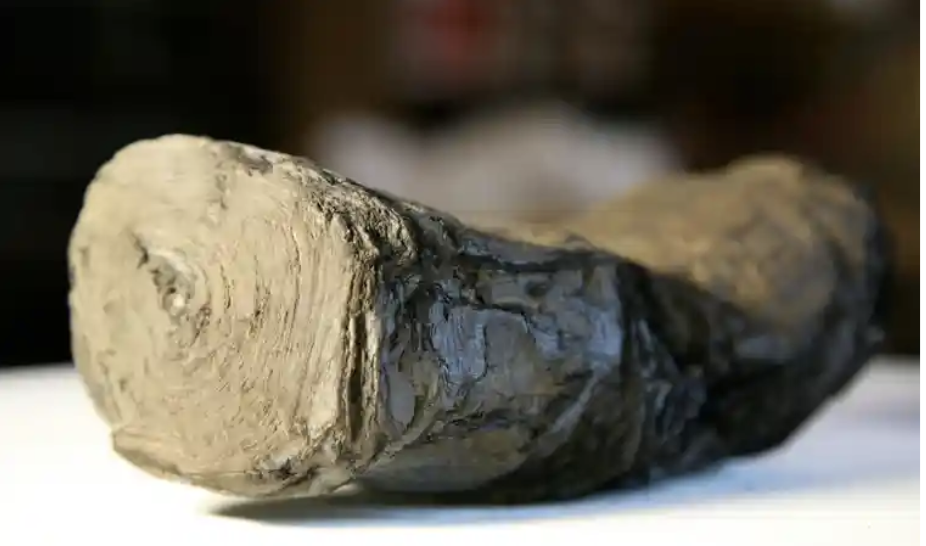
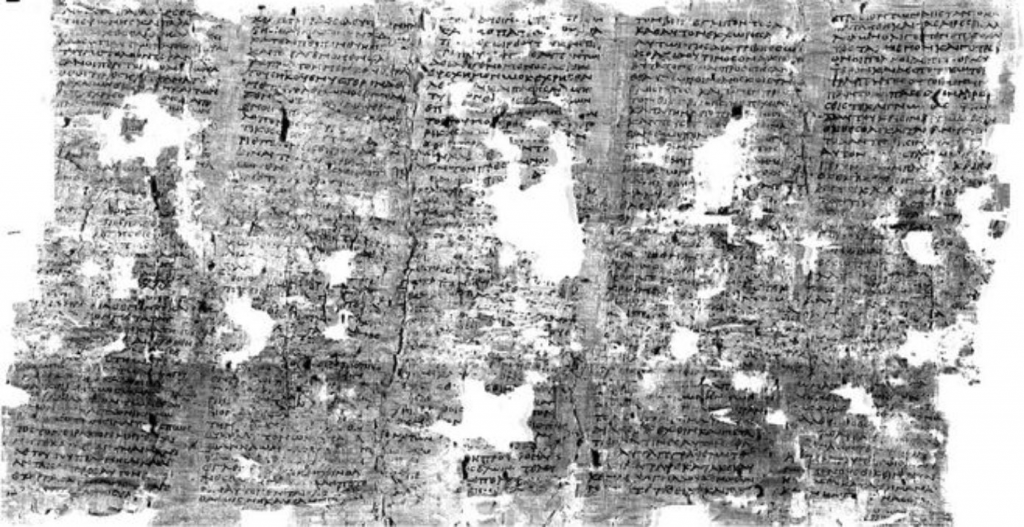
This is one of the most exciting advances I have read about for a long time! A pile of burnt scrolls survive from the Villa dei Papiri, Herculaneum. They are being examined by several teams from American Universities including the University of Michigan, and the University of Kentucky. They are just beginning to read fragments of the texts, using all the scientific techniques they can throw at it including AI. The AI has begun to learn to read fragments of the tightly rolled scroll.

Burnt Scroll
Burnt Scroll

The scroll they are working on appears to be a piece about Alexander the Great and his legacy. It is an unknown text or to put it another way, it is potentially a brand new source of information for this period of time. It has been suggested that it might possibly be a copy of the lost diary of Alexander’s secretary, Eumenos or may have been written by a friend of the general Antigonos.  Either way, potentially eye witness accounts. Or not, as perhaps, they may be asking too much from the first investigation. It may be more prosaic. Time will tell.

The implications, however, are so exciting! Just as the amazing excavations at Stonehenge (and indeed in London) have revolutionised our knowledge of these places, so AI could introduce completely new insights into the past. There are many rolls that were burnt in the collection, but now AI is beginning to read them. what insights we might get even from small fragments? One of the scholars involved is particularly excited to imagine the discoveries that could be forthcoming from the Middle East

‘While others would love to see some of the lost work of the ancients, what I’d like to see is evidence of the turmoil that was happening in the first century around the development of Christianity and the Judeo-Christian tradition as it was evolving.’

Brent Seales, University of Kentucky

Part of scroll unfolded

But those ‘lost works of the ancients’. There are so many that would rock history: Tacitus’s ‘Annals’ missing missing the last two years of Nero’s reign. Pytheas ‘On the Ocean’ with its first references to Britain in writing. 6 Plays of Aeschylus, 9 Books of Sappho and the list goes on. Have a look at Charlotte Higgins piece in Prospect Magazine for a little more detail.

Another feature of the study is that the teams have released images to the cloud and are encouraging others to ‘have a go’ at reading them. This shows the strides that Citizen Science has made, and how, scientists acknowledge that, in the days of big data, cooperation pays huge dividends.

My source of information is the marvellous The Society of Antiquaries of London Online Newsletter (Salon) which ‘is a fortnightly digest of heritage news‘ and for more information look at Issue 509.

Another source is Interestingengineering.com.

Town Exploration Amsterdam 1

The Canals of Amsterdam

I’ve relieved of the necessity to search for the Town Walls of Amsterdam without prior research by the fact that I am here to see my daughter who has recently broken her ankle, so she has an excuse for refusing to go on forced forced marches around the City.

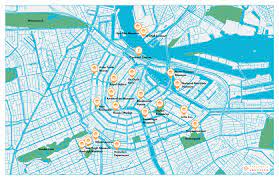
I haven’t yet had a good look at a map, but the pattern of Canals circuling the centre is amazing and it seems possible there was no need for walls, when the centre is protected by so many rings of water.

I don’t know much about Amsterdam, but it reminds me of the surprising fact that Holland was a major power in the 17th/18th Century. I discovered this on a visit to Kerala in India where I realised that Portugal had a vast empire which was largely taken over by the Dutch in the 17th Century and then taken over by the British in the 18th Century.

It was one of the major pivots in world history. These three countries were small peripheral seafaring nations of no great importance in Europe until the Age of Discovery. Portugal set up trading systems (perhaps rather systems of exploitation) first down the coast of Africa and then to India and beyond. The Dutch then took over the trading stations and took control of the spice routes. Then the British took over.

Previously the spice routes from the East came through Egypt, Greece, Rome, Carthage and later the Ottoman and the Venetian Empires. This made the Mediterranean the richest place in Europe, both north and southern coasts.

The new ocean routes led to a major shift in power from the Mediterranean to the North Sea, leading to the current situation where the Mediterranean is no longer the centre of the world. Greece, Southern Italy, North Africa now under performing economies. A Roman would find this hard to believe.

Portugal, then Holland followed by Britain rose to the status of world power which would, itself, have been inconceivable before the 16th Century.

Holland was in the perfect geographic position astride the trade routes that lead to the heart of Europe. The entry point was the major river systems around the Rhine/Danube axis including the Rhine, the Scheldt, the Waal, and the Amstel. Antwerp, Rotterdam and Amsterdam developed from regional trading towns to global Cities. They spawned a self confident set of merchants who set the foundations of modern capitalism with foundations in spices and slaves.

Central to this was the Dutch East India Company. The first organisation in Europe where an investor only risked their investment rather than the shirt off their back in the event of bankruptcy. This let the shackles off investment, took money out of gold in the bank vaults and multiplied it around the economy.

But not only did it take away the risks of the consequences of investment the Dutch East India Company, set up in Amsterdam in 1602, was given quasi state power, with the ability to fight wars and impose laws on subject populations. This template was copied by the British East India Company which conquered and ran India, setting the seal for the British Empire and Capitalism.