This has become the day in which I update readers on the purpose and future plans for the Almanac of the Past.
What is the Almanac of the Past?
The nature of an almanac is to be a pot-pourri. They are about seasons, time, folklore, history, important events, and anniversaries. I also like to cover history, famous people and discoveries. Gods, Goddesses, Saints, sinners, and archaeology. What I want it to be is something that makes us more mindful about the passing of the year. How seasons and time change the way people see their world. My focus is mostly on the UK, but also on Rome and Greece. With occasional excursions to other ages, places and universes. I am also trying to find more content that is London-based.
What is the plan for the Almanac of the Past?
I plan to have one entry for each day. The problem with this, is that as I fill in the empty days, I will be republishing the already filled days. So subscribers will be seeing content they have seen before. Currently, I am trying to improve and extend existing content so it is worth reading again. And I am groping towards a final format for each day.
This is what I think it is. Each page will have the following sections:
Seasonal content: folklore about the day in question. Including historic texts about gardening, farming, cooking, witchcraft superstitions etc.
Saint or God/Goddess of the day
Calendar content: about epochs, ages, years, months, days, hours, and everything calendrical
Major article about something that happened on this day in history
On This Day section where other things that have happened on this day have happened.
I guess rather than a post it will be more like a newsletter of the day?
The almanac of the Past Publication
If I get the formula right, I will attempt to get a publication from it. Otherwise, it will remain online. So:
How’s it doin’?
The first graph, above, shows a steady growth from 2,000 views in 2020 to 26,000 views for 2025. Although encouraging, it has not gone ‘Kardashian viral’ as yet. 75% increase last year. This was partly achieved by taking more care of SEO – search engine optimisation. I’ve been doing a lot more of this. But if you are interested in this read last year’s ‘News from the Almanac of the Past’.
Screenshot from Jetpack showing the geographic reach of the Almanac of the Past from 2020 – 2025
The second graphic shows where the readers come from: mostly from the UK and the US, followed by France and Germany. It shows vast stretches of the world not registering as converts to the Almanac of the Past, including Greenland (or do I mean Iceland?).
Next up ‘Favourite pages, and referrers
Screenshot from Jetpack showing the most viewed pages (left and Referrers (Right)
The Skimmity Ride is way out ahead, the most popular post. The page is about a procession ‘designed to humiliate a member of the community.’ Why is it top? I think because hardly anyone else posts about it, so if you want to know what Thomas Hardy was writing about in the Mayor of Casterbridge my site is the go-to place.
Next is the ‘Beginning of the Universe‘ Post. This pleases me because it is something I discovered myself while writing the blog. It explains the beginning of the universe, the beginning of the year, the beginning of spring, and the Birthdays of Adam, Lilith, & Eve; the conception of Jesus, and why the year began in the medieval period on March 25th. So again, you won’t find this information easily in any one other place. The Almanac of the Past explains it all.
Queen Elisabeth I’s Nicknamesare third. She is always popular and the nicknames she gave to her advisers are fun, and either flattering or rude.
Then we have the post on Antarctic explorer Lawrence Oates. It is an interesting post, of course, but why it rates highly I have no idea. Maybe people know this expression ‘I am just going outside and may be some time’ and want to track it down?
The last one I shall mention is the ‘Miracle of the Testicles‘. This is one of my favourite posts! (I just typed: ‘because it’s nuts’ without realising the pun, so please forgive me!) But, really, it shows the often risible ways the early Saints became famous. And yet beneath that there is a real need in the community for spiritual help which the origin stories touch. Its high ranking must be down to the word ‘testicles?’ No?
The other side of the graphic shows referrers, which are mostly the obvious ones like search engines and facebook. But there is also a fansite for Damien Lewis, the actor who was in Band of Brothers and Henry VIII in Wolf Hall. One of his pages mentioned my page.
Screenshot from Jetpack showing the posting ativity for the past year. Grey means no posts, Dark green 2 or more, light green one post a day.
Posting Activity shows you how far I am from achieving one Almanac post a day. Not far in the winter, more to do in the summer.
So how can you help?
If you have a website or a blog or a social media page, post a reference to one of my pages, and encourage people to have a look. If you receive the email as a subscriber, occasionally visit the site, and like it? Send a WhatApp group a link to my page. Help me go properly viral, then, I can get a publishing deal, publish my Almanac and then my novels …… do it before you forget!
Any problems for the Almanac of the Past?
Please continue to forgive my wretched proofreading.
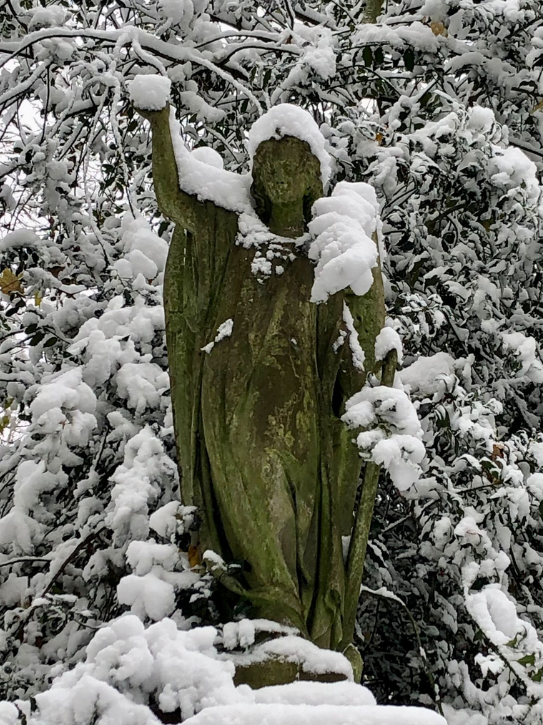
Winter at Abney Park Cemetery photo by Harriet Salisbury
Or so says the Shepherd’s Almanac for 1676. Until the 12th Night we were predicting that the weather on each of the 12 days will match the month of the same number. But having past Twelfth Night we have to find turn to other methods of weather lore.
Weather lore seems convinced of the undesirability of a warm January
‘January warm, the Lord have mercy’.
‘January commits the fault and May bears the blame.’
‘If Birds begin to Whistle in January, frosts to come’
‘When gnats swarm in January, the peasant become a beggar’
Most of the sayings about January quoted in Richard Inwards ‘Weather Lore’ first published in 1893, have this as their main focus. And the contrary (cold January good growing season) also generally holds:
‘When oak trees bend with snow in January, good crops may be expected.’
‘A cold January, a feverish February, a dusty March, a weeping April , and a windy May presage a good year and gay.’
The Weather according to Animals
So much for long range forecasts. Let’s see how Weather Lore helps us use animals to determine whether it will rain today.
‘If animals crowd together, rain will follow.’
‘When dogs eat grass it will be rainy‘
‘When a cat sneezes, it is a sign of rain‘
‘If young horses do rub their backs against the ground, if is a sign of great drops of rain to follow.’
The only weather lore repeated in my family was ‘Cows sitting down means it will rain.’ (And of course ‘red sky at night, shepherd’s delight’).
Meteorology Office on weather lore.
A survey by the Met Office in 2017 found that a surprisingly large number of people (75%) use ‘folklore’ to predict weather, and 55% think they are useful methods of predictions. Here is a quote from their post.
Red sky at night, shepherd’s delight – used by 70% of UK adults – CORRECT
It can be too cold to snow – used by 49% – PROBABLY NOT IN THE UK
Cows lie down when it is about to rain – used by 44% – NOT CORRECT
Pine cones open up when good weather is coming – used by 26% CORRECT
If it rains on St Swithin’s day, it will rain on each of the next 40 days – used by 22% Not Correct. In fact since records began in 1861, there has never been a record of 40 dry or 40 wet days following St Swithin’s Day
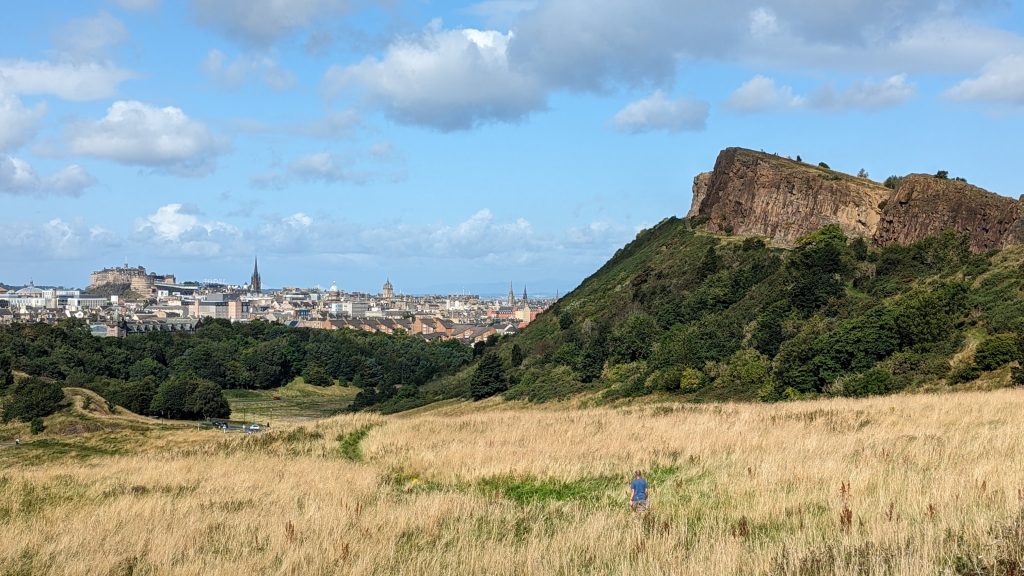
Edinburgh from Arthur’s Seat. Castle to the left, St Giles the ’rounded’ spire in the middle, and Salisbury Crags to the right
Strange Case of Dr Jekyll and Mr Hyde by Robert Louis Stevenson
This is my select booklist for Edinburgh, one of my favourite towns. Strangely, heading it up is a book based in London, and written in Bournemouth. However, Stephenson’s Strange Case of Dr Jekyll and Mr Hyde is a very Edinburgh book but published in London on January 9th 1886.
What makes it fit for an Edinburgh booklist? Firstly, Edinburgh is the best place for a science-based Gothic Horror Novella. A City made for Ghost Tours, but with a scientific legacy arguably second to none. One of the inspirations for the book was the story of Deacon Brodie. He was a cabinetmaker who rose to be Deacon (president) of the craft of cabinetmaking. Therefore, he had wealthy clients and was impeccably respectable. When he went to his clients houses, or made them locked cabinets, he would copy the locks using wax moulds. Then he and his team would rob the house. He hid a cache of keys underneath Salisbury Crags which you can see above.
To cut a long story short, he made an attempt on robbing the Excise Office in Canongate, Edinburgh, on March 5th 1788. The heist failed, one of the robbers turned King’s Evidence. So Brodie fled to one of his mistresses in London, then to the Continent. But he was relentlessly pursued and captured in Amsterdam. He was brought back to face trial, found guilty, and hanged on a new scaffold, which he may just have had a part in designing.
Stevenson had cabinets made by William Brodie and as a young man produced a play about him. He was intrigued by the idea of a wealthy man having a dual life. The idea itself, seems obvious but the expression a ‘Jekyll and Hyde’ character is still often used to describe someone with two opposing sides to their characters. The idea of duality provides many ways to look at the book. Edinburgh itself was a duality. There was the old, filthy, higgledy-piggledy Old Town on top of the Volcanic Ridge, with the spacious New Town in the Valley below, with modern wealthy houses providing healthy homes for the rich. The idea of Two Cities, of the rich and the poor; the good and the evil; rationality and sensuality; hetero and homosexual fits well with Victorian Britain, but perhaps best into Victorian Edinburgh, the City of Burke and Hare. These famous Edinburgh serial killers were working for one of Europe’s greatest medical centres, where debate about Darwinism, and the powers of the brain were hotly debated in a City with a strong Presbyterian background.
In Bournemouth, Stevenson befriended the former Reverend Walter Jekyll, younger brother of gardener Gertrude Jekyll. He was probably homosexual and the author borrowed the name for the rational part of Jekyll and Hyde. At a time when to be gay was a crime, most gay people had to live a Jekyll and Hyde existence. In fact, Sodomy was a capital offence in Scotland until the year after the publication of the ‘Strange Case of Dr. Jekyll and Mr. Hyde.
Strangely, in a book list I would encourage you to watch the 1920 silent film starring John Barrymore to enjoy its ghastly atmosphere. You can watch it for free on YouTube here.
Ian Rankin’s Rebus
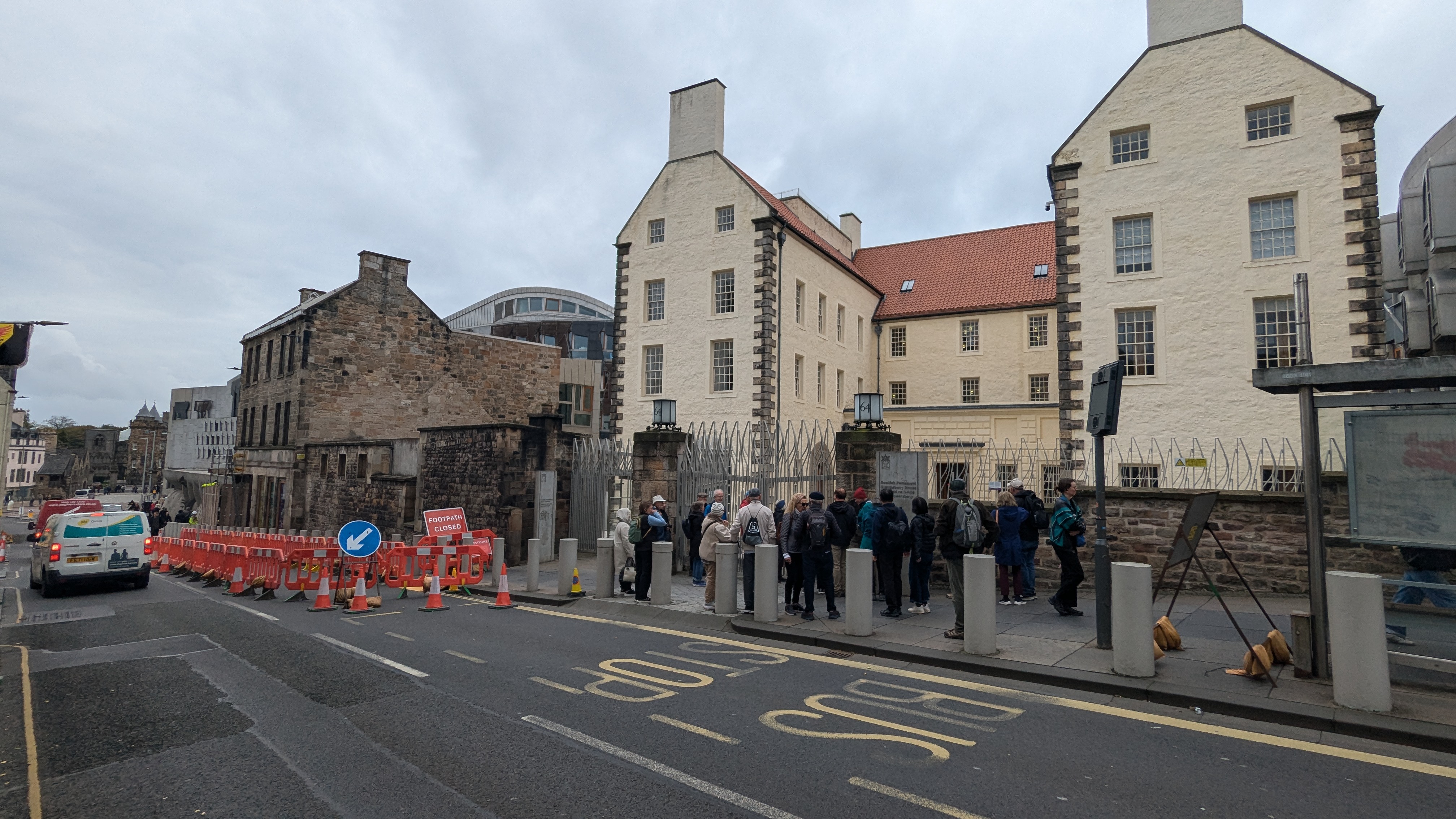
Ian Rankin is a typographical author of the highest rank. Every story brings Edinburgh, its people and its history to life. And yet set in a very readable crime fiction envelope. The Rebus I chose was ‘Set in Darkness‘ because it has the Scottish Parliament at its heart. It begins with a body found in Queensbury House, which is being preserved and incorporated into the new Scottish Parliament buildings. Please read my post on the book (link below).
Queensberry House to the right, with the Scottish Parliament in the background. Royal Mile, Cannongate in the foreground. (Photo: K. Flude)
Recently published is ‘Edinburgh a New History’ by Alistair Moffat. This is an excellent summary of Edinburgh’s History. He has written a large number of books about Scotland. I particularly liked ‘Reivers‘ which is a great book about the border raiders, both North English and Scottish who raided the borderlands between Edinburgh and York during the 13th to the 17th Centuries. They inspired the young Walter Scott, who collected Reivers ballads before inventing the Historical Novel.
As to Walter Scot, our Blue Badge Guide for Edinburgh, considers his long descriptive passages unreadable. But I’m not so convinced, having read Ivanhoe and Rob Roy as a boy. But if I were to recommend a Walter Scot, it would be Heart of Midlothian as it is set in Edinburgh and deals with crime, poverty, urban riots and other manifestations of life in Edinburgh in the 18th Century.
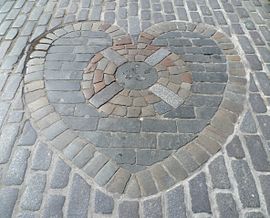
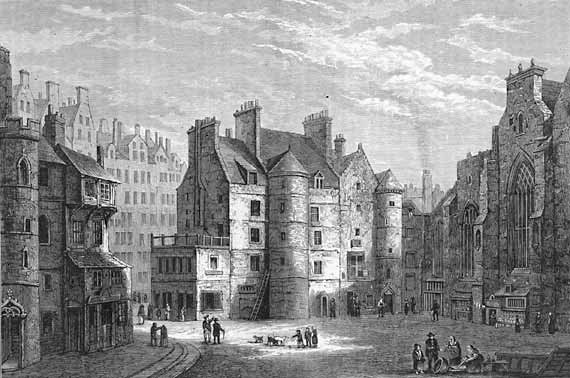
Midlothian is the country around Edinburgh, named after the legendary Celtic King Loth. The Heart of Midlothian, is Edinburgh or more precisely, a heart marked out in the cobbles. It is located outside of St Giles, on the Royal Mile, where the Tollboth (townhall and prison) and execution site for the City used to be. To this day, Edinburghers (or more correctly, Dunediners) are supposed to spit on the heart for good luck.
Old Print of the Tollbooth with St Giles to the right of the print.
It is hard to exaggerate the importance of Walter Scot. Byron said he had read his books 50 times, and never travelled without them. Goethe said ‘he was a genius who does not have an equal.’ Pushkin said his influence was ‘felt in every province of the literature of his age. Balzac described him as ‘one of the noblest geniuses of modern times’. Jane Austen and Dickens loved his books. The point is he invented the Historical Novel, and for the first time, as Carlyle wrote, he showed that history was made by people ‘with colour in their checks and passion in their stomachs.’ The only other person I can think of who was held in such universal regard was Tolstoy. There is also sense in which Scott invented our modern idea of Scotland, with its kilts and bagpipes.
The Scottish Enlightenment
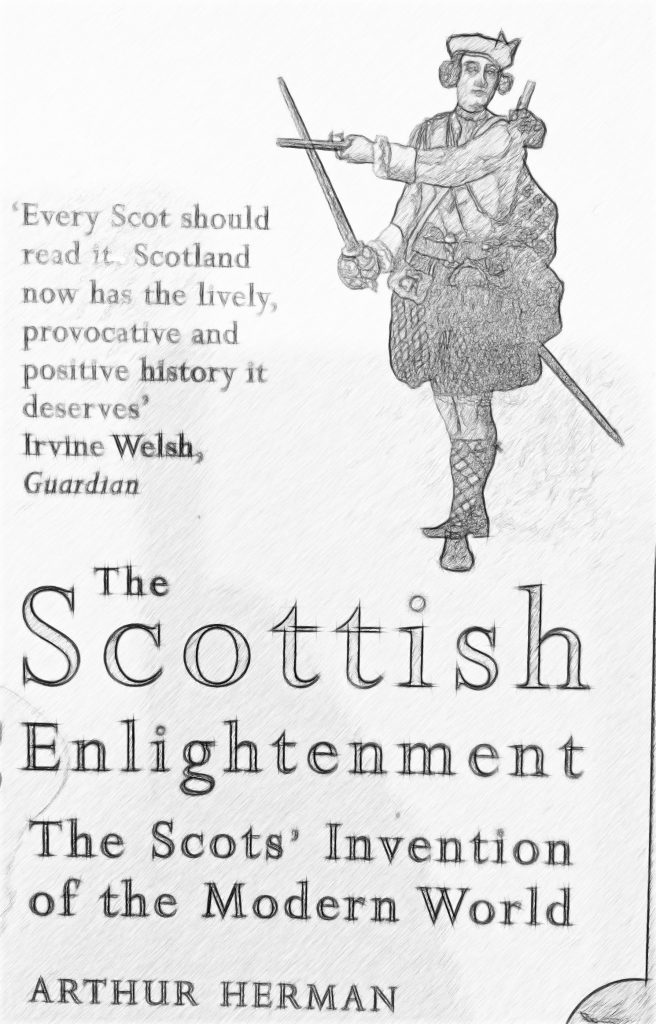
A walk through the centre of Edinburgh has so many statues of people who made the modern world it is astonishing. So you should read: ‘The Scottish Enlightenment – the Scots Invention of the modern world‘ by Arthur Herman.
Burke and Hare: The True Story Behind the Infamous Edinburgh Murderers by Owen Dudley-Edwards
The story of Burke and Hare is well known, but it shows how important Edinburgh was as a medical centre in the early 19th Century. Bodies were shipped to Edinburgh from the London docks, such was the demand for bodies for anatomy teaching. Arthur Conan Doyle got his medical training here from a man called Joseph Bell, whose logical mind was the model for Sherlock Holmes.
The Prime of Miss Jean Brodie
My last choice is Murial Spark’s The Prime of Miss Jean Brodie set in a school in Edinburgh where the teacher singles out 6 of her pupils for special education. She wants to give them a cultured outlook in life which includes her own fascistic views. Made into a wonderful film starring Maggie Smith, but also a great book. It also, in a strange way, reinforces the huge legacy of the Scottish Education system. It is said that the Reformation brought to the Scots the idea that everyone should be educated enough to read the Bible in their own language. But it seems to me the Scots had a particular understanding of the importance of Education before the Reformation. St Andrews University was founded in 1410, Glasgow in 1410, Aberdeen in 1495 and Edinburgh in 1510.
Of course, you should read some poetry by Burns, and I would begin with Tam O’Shanter the story of Tam, Maggie his horse and Nannie, the witch with the short skirt (Cutty Sark). The version above (see link) is read over a comic novel of the poem. But if you prefer the words, this is the one I read for my groups where I ruin the Scots dialect, and disgrace myself, but oh how I enjoy it! www.poetryfoundation.org tam-o-shanter
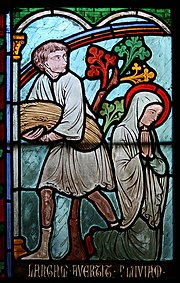
Saint Geneviève praying for the end of the rain. 19th Century by Alfred Gérente Notre-Dame de Paris.
St Genevieve of Nanterre (c. 419/422 AD – 502/512 AD) has her feast day today. Nanterre is an ancient settlement swallowed up by modern Paris. Genevieve was a most remarkable woman who met St Germanus of Auxerre on his way to Britain. She was only 7 when she met Germanus. He encouraged her piety. She became a consecrated virgin (someone who made vows of chastity to be a ‘bride of Christ’). Thereby living an aesthetic life of fasting and prayer. Hence, miracles soon became associated with her, (including changing the weather) and the ‘usual’ medical miracles. After moving to Paris, she encouraged the women of the City to stay in the City for prayer and fasting to prevent the Huns capturing the City in 451. Attila and the Huns abandoned the siege.
St Genevieve saved the City on other occasions too, helped build two large Church projects, including St Dennis. She intervened fearlessly in public affairs, and was a brave and resolute woman who challenged the male hierarchy with some success. And what makes me like her even more was that she is not a martyred teenager Saint tortured to death to gain her sainthood. But she did great works and lived to old age of 82 still ‘full of virtue’. In the medieval period, she became the Patron Saint of Paris. She is patron to: Paris, shepherds, winemakers, wax-chandlers, hatmakers; against eye complaints, fever, plagues, drought, and war.
St Germanus
St Germanus played a significant role in Genevieve’s life, protecting her from slander and attack. He is one of the most significant figures in post Roman studies in Britain. Accounts of his visits to Britain in the early 5th Century are among the very few descriptions of post-Roman life. He was sent to Britain to counter the Pelagian Heresy, which was endangering the Catholic version of Christianity.
Incidentally, Nanterre has an interesting prehistory. The name in Celtic means ‘enduring sacred site’. A large cemetery has been found, which helps support the possibility that it is the original site of Paris. Julius Caesar attended an assembly with local Gallic leaders in the area. The topography of Nanterre fits as well for the location of the assembly as the island in the Seine (Île de la Cité) which is an alternative location.
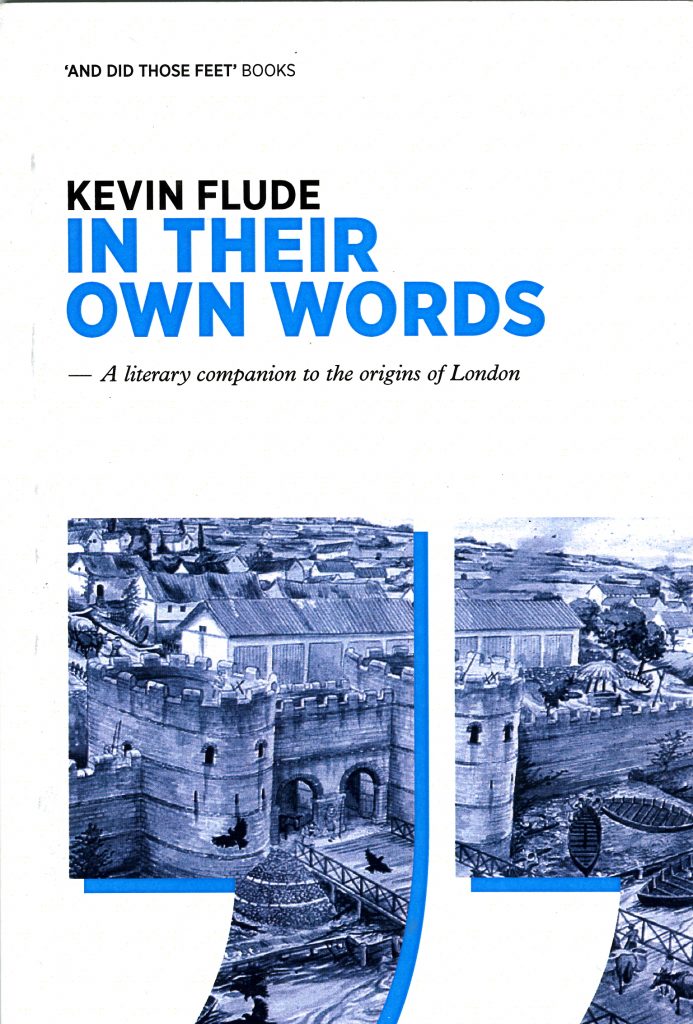
In Their Own Words
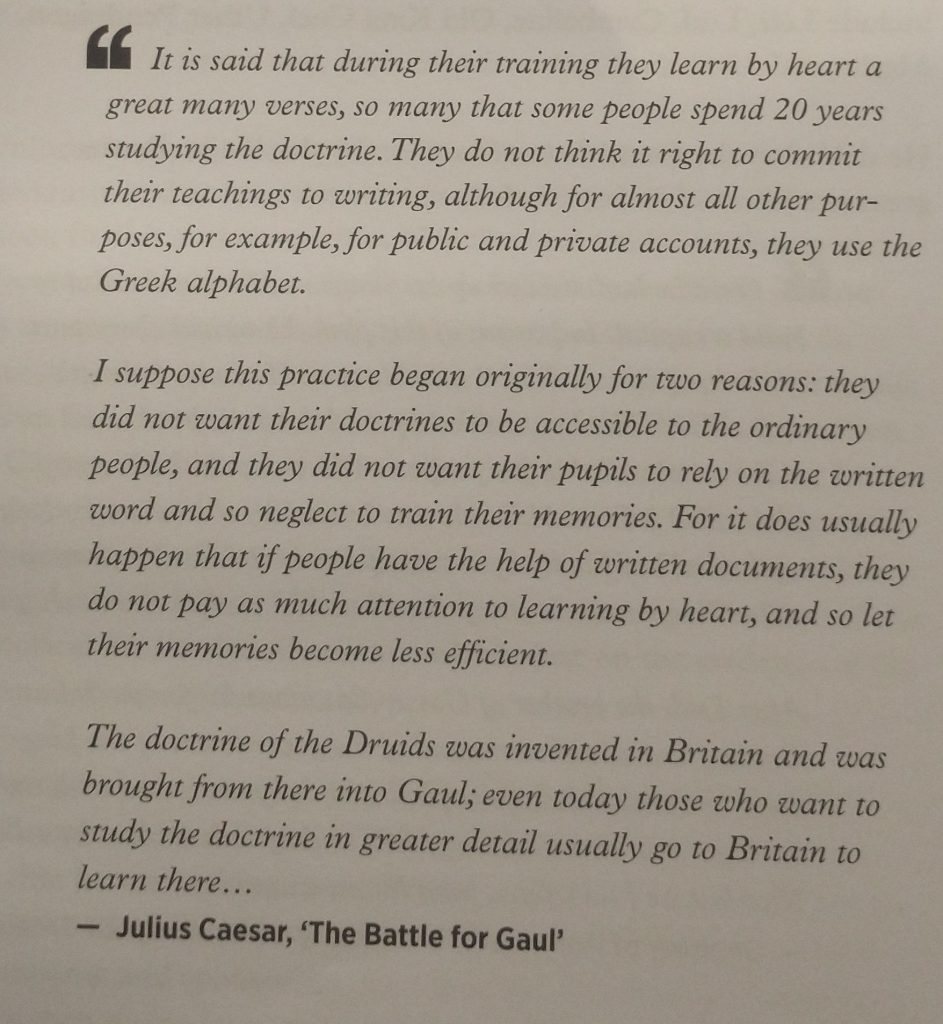
This is an excerpt from Julius’s Caesar book concerned with training druids. (It is photographed from my book ‘In Their Own Words- details below).
‘In Their Own Words – A Literary Companion To The Origins Of London‘ by Kevin Flude
It brings together contemporary quotations about the Prehistoric, Roman and Dark Ages with a commentary by the author. It’s an enjoyable read! To buy the Kindle (£2.40) or a paperback version (£5.99), click here.
If you have read it, please go here and write a review! It is sadly devoid of any!
On This Day
1521 Martin Luther excommunicated by Pope Leo X. (our present Pope is the XIV)
1661 Samuel Pepys saw the Beggar’s Bush at the Theatre in Gibbon’s Tennis Court, Vere Street, near Lincoln’s Inn Fields. He records it was ‘the first time that ever I saw women come upon the stage’. The Restoration of Charles II to the throne allowed, for the first time, women to appear on the professional stage.
1777 George Washington defeats Cornwallis at the Battle of Princeton
Today: keep bird feeders well stocked. Check houseplants for mealybugs, mites and other pests. (Gardeners’s Year The Metroplitan Museum of Art).
The Full Moon today falls in Cancer in a conjunction with Jupiter and an exact opposition to Mars and Venus. Thus, the mood of the times is divided between those supporters of individual liberties. And the Government’s right to control personal behaviours’. That, ast least is what Old Moore’s Almanack for 2026 says. And that’s probably enough Astrology for the year!
First written in January 2023, revised and republished January 2024, 2025, 2026
Chaucer’s Medieval London Guided Walk 11.00am Sat 18th April 2026 To book Chaucer’s London To Canterbury Virtual Pilgrimage 7.45pm Sat 18th April 26 To book Jane Austen’s London Walk 11.00am Sun 19th April 26 To book Tudor London – The City of Wolf Hall 6pm 1st May 2026 To Book Myths, Legends, Archaeology, and the Origins of London 11:15am Sat 2nd May 26 to Book London Bridge to Bermondsey 2:15pm Sat 2nd May 2026 To book Jane Austen’s London Walk 2.30pm Sun 31st May 2026 To Book The First Blitz – Zeppelin London New Walk! 6pm Sun 31 May 2026 To Book Roman London – Literary & Archaeology Walk 3pm Sat 6th June 2026 Tobook The Rebirth Of Saxon London Archaeology Walk 11am Sun 7th June 2026 To book Jane Austen’s London Walk 2:30pm Sun 5th July 2026 To book London. 1066 and All That Walk 11.30am Sun 12th July 26 Tobook Bloody, Flaming, Poxy London 3pm Sun 12th July 26 To book The Decline And Fall Of Roman London Walk 11:15am 2nd Aug 26 To book Jane Austen’s London Walk 2:30pm Sun 2nd Aug 26 To book Chaucer’s Medieval London Guided Walk 11.00am Sat 5th Sept 2026 To book Jane Austen’s London Walk 2:30pm Sun 5th Sept 2026 To book Jane Austen’s London Walk 2:30pm Sat 24th Oct 2026 To book
For a complete list of my guided walks for London Walks in 2026 look here
Monday 1st January 2025 7.00 pm On this Virtual Walk we look at how London has celebrated the New Year over the past 2000 years.
The New Year has been a time of review, renewal, and anticipation of the future from time immemorial. The Ancient Britons saw the Solstice as a symbol of a promise of renewal as the Sun was reborn. As the weather turns to bleak mid winter, a festival or reflection and renewal cheers everyone up. This idea of renewal was followed by the Romans, and presided over by a two headed God called Janus who looked both backwards and forwards. Dickens Christmas Carol was based on redemption and his second great Christmas Book ‘The Chimes’ on the renewal that the New Year encouraged.
We look at London’s past to see where and how the New Year was celebrated. We also explore the different New Years we use and their associated Calendars – the Pagan year, the Christian year, the Roman year, the Jewish year, the Financial year, the Academic year and we reveal how these began. We look at folk traditions, Medieval Christmas Festivals, Boy Bishops, Distaff Sunday and Plough Monday, and other Winter Festival and New Year London traditions and folklore.
At the end, we use ancient methods to divine what is in store for us in 2023.
The virtual walk finds interesting and historic places in the City of London to link to our stories of Past New Year’s Days. We begin, virtually, at the Barbican Underground and continue to the Museum of London, the Roman Fort; Noble Street, Goldsmiths Hall, Foster Lane, St Pauls, Doctors Commons, St. Nicholas Colechurch and on towards the River Thames.
The Civil War, Restoration and the Great Fire of London Virtual Tour
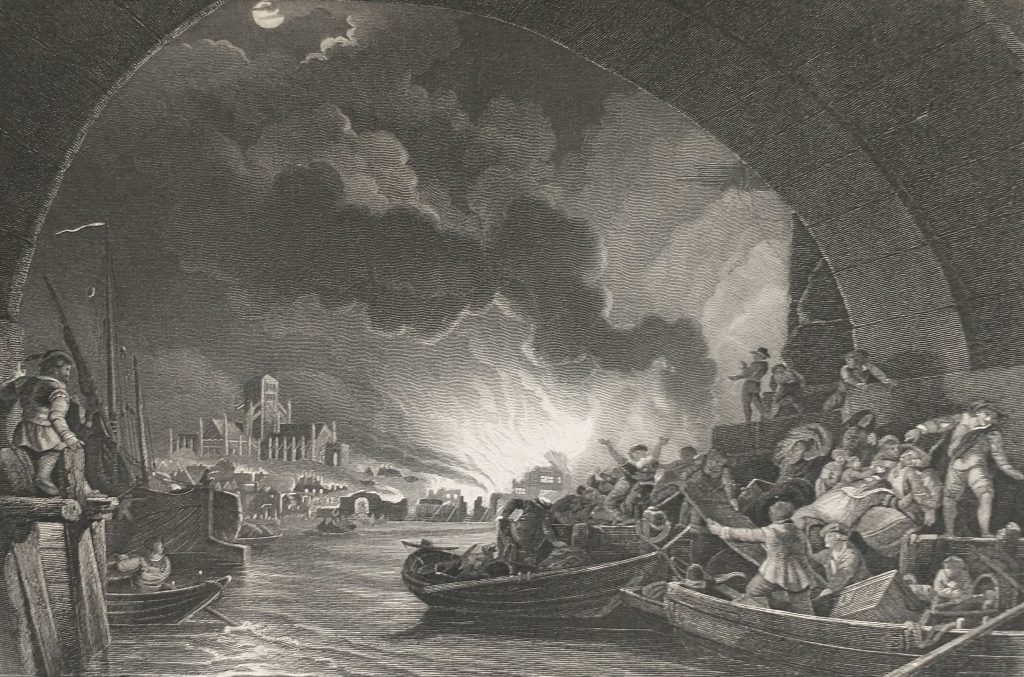
The Great Fire of London looking towards StPauls Cathedral from an old print
7:30pm Fri 30th January 2025
January 30th is the Anniversary of the execution of Charles I and to commemorate it we explore the events and the aftermath of the Civil War in London.
Along with the Norman Conquest of 1066 and winning the World Cup in 1966 the Great Fire in 1666 are the only dates the British can remember!
And we remember the Great Fire because it destroyed one of the great medieval Cities in an epic conflagration that shocked the world.
But it wasn’t just the Great Fire that made the 17th Century an epic period in English History. There was a Civil War, beheading of the King, a Republic, a peaceful Restoration of the Monarch, the last great plague outbreak in the UK, the Glorious Revolution and the Great Wind.
The Virtual Walk puts the Great Fire in the context of the time – Civil War, anti-catholicism, plague, and the commercial development of London. The walk brings to life 17th Century London. It starts with the events that lead up to the Civil War concentrating on Westminster and ends with a vivid recreation of the drama of the Fire as experienced by eye-witnesses. Route includes: Westminster, Fish Street Hill, Pudding Lane, Monument, Royal Exchange, Guildhall, Cheapside, St Pauls, Amen Corner, Newgate Street, Smithfield.
Roman London – Literary & Archaeology Walk
11.30 am Sun 9th Feb 2025 Monument Underground Station
also on 11.30am Sun 27th Apr 25 but starting from Moorgate
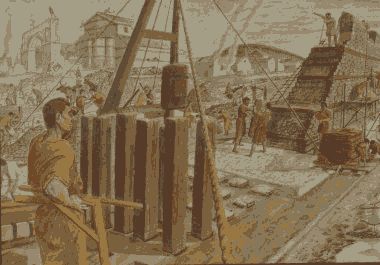
London Roman Riverside Wall o
This is a walking tour features the amazing archaeological discoveries of Roman London, and looks at life in the provincial Roman capital of Londinium.
This is a walking tour that features the amazing archaeological discoveries of Roman London, and looks at life in the provincial Roman capital of Londinium.
Our Guides will be Publius Ovidius Naso and Marcus Valerius Martialis who will be helped by Kevin Flude, former Museum of London Archaeologist, Museum Curator and Lecturer.
We disembark at the Roman Waterfront by the Roman Bridge, and then explore the lives of the citizens as we walk up to the site of the Roman Town Hall, and discuss Roman politics. We proceed through the streets of Roman London, with its vivid and cosmopolitan street life via the Temple of Mithras to finish with Bread and Circus at the Roman Amphitheatre.
Zinger Read: Talk about a high-quality one-two punch. This walk investigates the groundbreaking archaeological discoveries of Roman London. And then it reconstructs life in a provincial Roman capital using archaeological and literary sources. Discoveries – insights – like flashes of lightning in a cloud. We begin at the site of the Roman bridge. We might be decent young Roman citizens in togas, having this and that bit of explained to us as we make our way towards the Roman Town Hall. From there we head to the site of the excavation called ‘the Pompeii of the North.’ Followed by the Temple of Mithras. We finish with a walk along the Roman High Street in order to end at the site of the Roman Amphitheatre. So, yes, welcome to London as it was 2,000, 1,900, 1,800, 1,700 and 1,600 years ago. And, yes, the walk’s guided by a real expert, the distinguished emeritus Museum of London archaeologist Kevin Flude. That means you’ll see things other people don’t get to see, delve into London via fissures that aren’t visible, let alone accessible, to non-specialists.
REVIEWS “Kevin, I just wanted to drop you a quick email to thank you ever so much for your archaeological tours of London! I am so thrilled to have stumbled upon your tours! I look forward to them more than you can imagine! They’re the best 2 hours of my week! 🙂 Best, Sue
Jane Austen’s London Anniversary Guided Walk
2.30 pm Sunday 9th Feb 2025
Green Park underground station, Green Park exit, by the fountain To book
Also
9 February 2025
Sunday
2.30 pm
4.30 pm
8 March 2025
Saturday
2.30 pm
4.30 pm
6 April 2025
Sunday
11.30 am
1.30 pm
2025 is the 250th Anniversary of Jane Austen’s Birth in Steventon, Hampshire. We celebrate her fictional and real life visits to Mayfair, the centre of the London section of Sense & Sensibility and where Jane came to visit her brother
“It is a truth universally acknowledged, that a Jane Austen devotee in possession of the good fortune of a couple of free hours today must be in want of this walk.”
People associate Jane Austen and her characters with a rural setting. But London is central to both Jane Austen’s real life and her literary life. So, this tour will explore Jane’s connections with London and give the background to Sense and Sensibility, a good part of which is based in this very area. We begin with the place Jane’s coach would arrive from Hampshire, and then walk the streets haunted by Willougby; past shops visited by the Palmers, the Ferrars; visit the location of Jane Austen’s brother’s bank and see the publisher of Jane’s Books. The area around Old Bond Street was the home of the Regency elite and many buildings and a surprising number of the shops remain as they were in Jane Austen’s day.
Jane Austen’s ‘A Picture of London’ in 1809 Virtual Walk
With the help of a contemporary Guide Book, Jane Austen’s letters, and works we explore London in 1809.
‘The Picture of London for 1809 Being a CORRECT GUIDE to all the Curiosities, Amusements, Exhibitions, Public Establishments, and Remarkable Objects in and near London.’
This Guide Book to London might have been on Henry Austen’s shelf when his sister, Jane, came to visit him in London. But it enables us to tour the London that Jane Austen knew in some detail. We will look at the Curiosities as well as the shopping, residential, theatres areas as well as the Port, the Parks and the Palaces.
The guided walk is a thank you to Alix Gronau, who, having been to one of my lectures in 1994, wanted the book to come to me. I have had the book restored and am using it to explore London in 1809.
Jane Austen’s London Anniversary Walk
Jane Austen’s London Anniversary Walk 2.30 pm Sunday 9th February 25 To book
A Virtual Tour of Jane Austen’s Bath
7.30pm 10th February 2025
Tudor London – The City of Wolf Hall 11.30am Sat 22nd Feb 25
Myths, Legends, Archaeology and the Origins of London
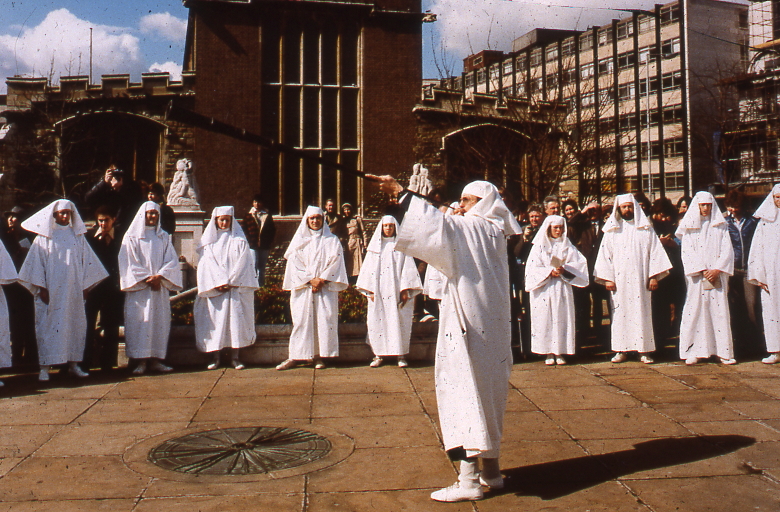
Druids at All Hallows, by the Tower
2.30pm Sat 22nd February 2025 Tower Hill Underground
The walk tells the stories of our changing ideas about the origins of London during the Prehistoric, Roman and Saxon periods.
The walk is led by Kevin Flude, a former archaeologist at the Museum of London, who has an interest both in myths, legends and London’s Archaeology.
The walk will tell the story of the legendary origins of London which record that it was founded in the Bronze Age by an exiled Trojan and was called New Troy, which became corrupted to Trinovantum. This name was recorded in the words of Julius Caesar; and, then, according to Legend, the town was renamed after King Ludd and called Lud’s Dun. Antiquarians and Archaeologists have taken centuries to demolish this idea, and became convinced London was founded by the Romans. Recently, dramatic evidence of a Bronze Age presence in London was found.
When the Roman system broke down in 410 AD, historical records were almost non-existent, until the Venerable Bede recorded the building of St Pauls Cathedral in 604 AD. The two hundred year gap, has another rich selection of legends. which the paucity of archaeological remains struggles to debunk.
The walk will explore these stories and compare the myths and legends with Archaeological discoveries.
The route starts at Tower Hill, then down to the River at Billingsgate, London Bridge, and into the centre of Roman London.
Roman London – Literary & Archaeology Walk 11.30am Sat Mar 8th 25 Jane Austen’s London Anniversary Walk 2.30pm Sat 8th Mar 25
The Decline And Fall Of Roman London Walk 11.30 Sat 22nd March 2025 London. 1066 and All That Walk Sat 2.30pm 22nd March 2025
Jane Austen’s London Anniversary Walk 11.30am Sun 6th Apr 25
Chaucer’s Medieval London Guided Walk 2:30pm Sun 6th Apr 25
and
Chaucer’s London To Canterbury Virtual Pilgrimage 7.30pm Friday 18th April 25 To book
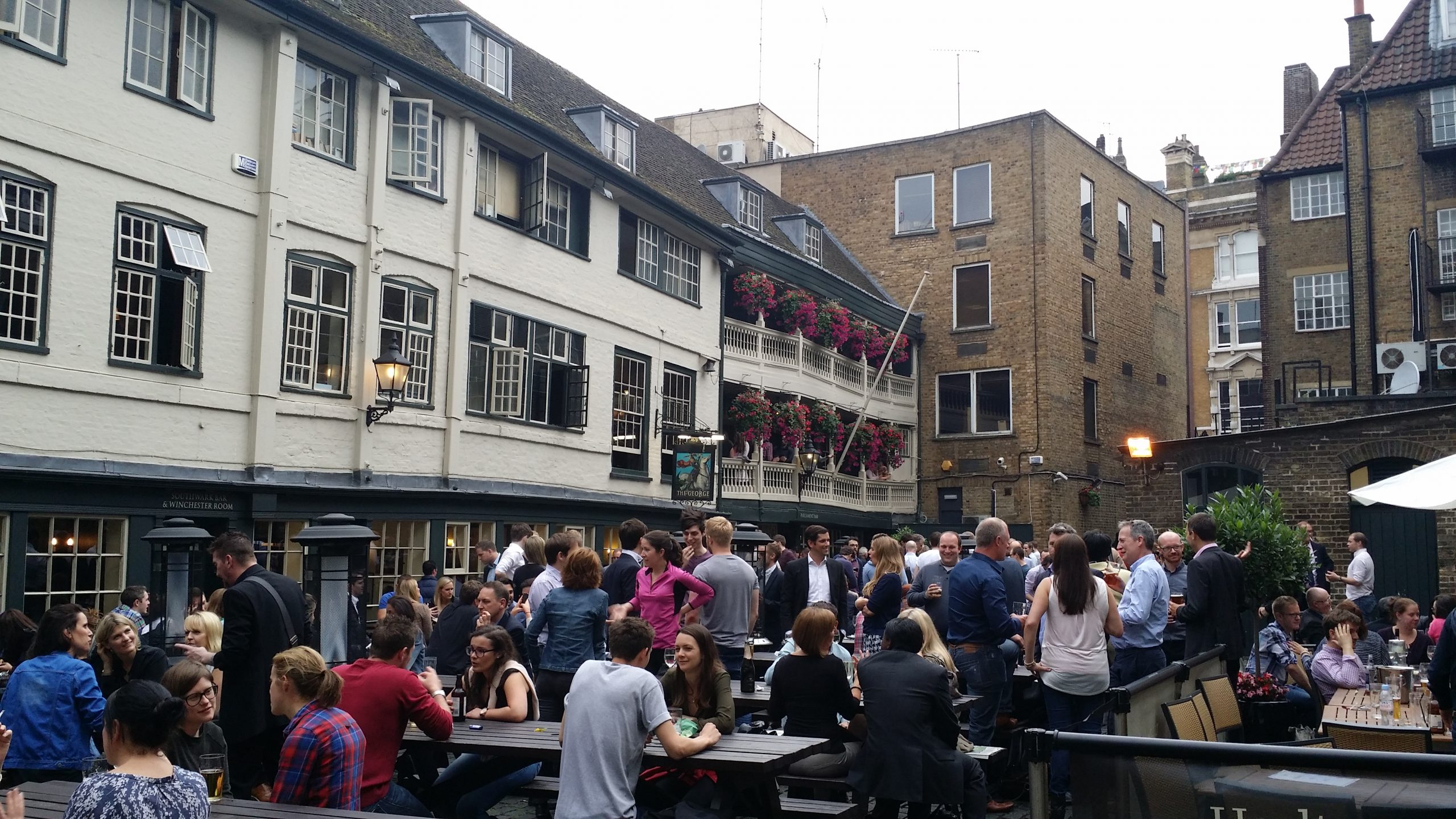
George Inn,Southwark
A Walk around Medieval London following in the footsteps of its resident medieval poet – Geoffrey Chaucer
One of the spectators at the Peasants Revolt was Geoffrey Chaucer, born in the Vintry area of London, who rose to be a diplomat, a Courtier and London’s Customs Officer. He lived with his wife in the Chamber above the Gate in the City Wall at Aldgate. His poetry shows a rugged, joyous medieval England including many scenes reflecting life in London. His stories document the ending of the feudal system, growing dissatisfaction with the corruption in the Church, and shows the robust independence with which the English led their lives.
His work helped change the fashion from poetry in French or Latin to acceptance of the English language as suitable literary language. This was helped by the growth of literacy in London as its Merchants and Guildsmen became increasingly successful. In 1422, for example, the Brewers decided to keep their records in English ‘as there are many of our craft who have the knowledge of reading and writing in the English idiom.’
Chaucer and other poets such as Langland give a vivid portrait of Medieval London which was dynamic, successful but also torn by crisis such as the Lollard challenge to Catholic hegemony, and the Peasants who revolted against oppression as the ruling classes struggled to resist the increased independence of the working people following the Black Death.
A walk which explores London in the Middle Ages, We begin at Aldgate, and follow Chaucer from his home to his place of work at the Customs House, and then to St Thomas Chapel on London Bridge, and across the River to where the Canterbury Tales start – at the Tabard Inn.
This is a London Walks event by Kevin Flude
Roman London – Literary & Archaeology Walk 11.30am Sun 27th Apr 25
Roman layer opus signinum,
Tudor London – The City of Wolf Hall 3:00pm Sun 27th Apr 25
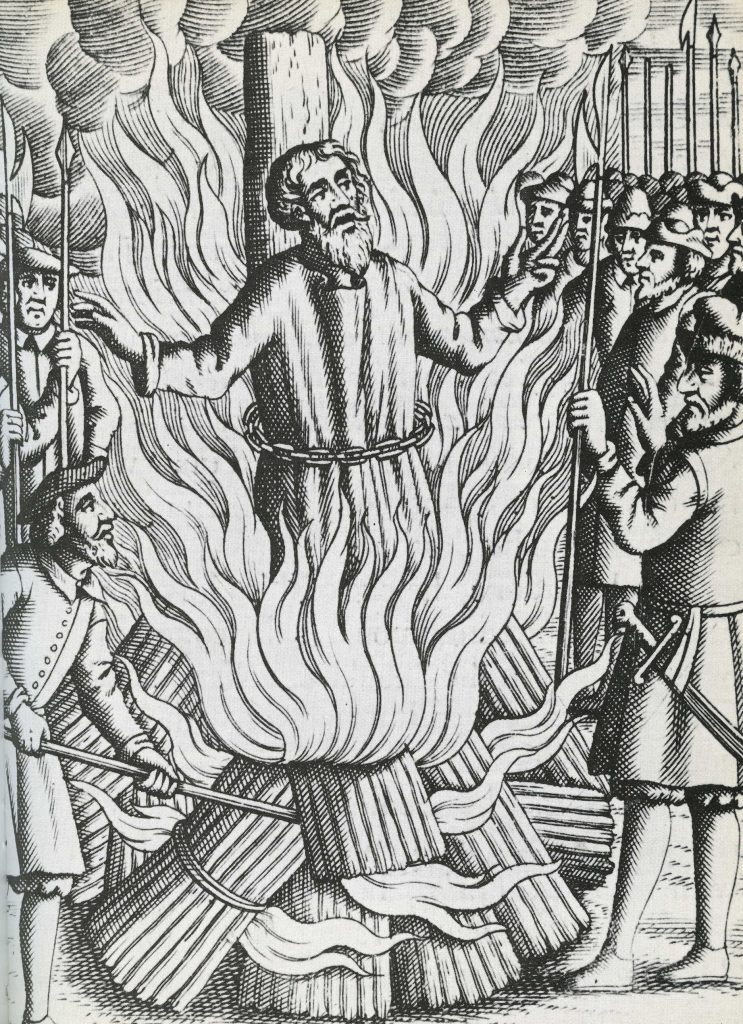
Thomas Bilney martyred in Smithfield.
The Walk creates a portrait of London in the early 16th Century, with particular emphasis on the life and times of Thomas Cromwell and Thomas More during the Anne Boleyn years.
More and Cromwell had much in common, both lawyers, commoners, who rose to be Lord Chancellor to Henry VIII, and ended their careers on the block at Tower Hill.
The walk starts with an exploration of Smithfield – site of the stake where heretics were burnt alive and of St Bartholomew’s Monastery – given to Richard Rich after his decisive role in the downfall of Thomas More. We continue to St Paul where Martin Luther’s books were burnt, and later, where Puritans preached against dancing round the Maypole.
We walk along the main markets streets of London, to Thomas More’s birthplace, and to the site of More’s and Cromwell’s townhouses before, if time allows, finishing at the site of the Scaffold where More and Cromwell met their ends, overlooking where Anne Boleyn was incarcerated in the Tower of London
To Book: https://www.walks.com/our-walks/tudor-london-the-city-of-wolf-hall/
A Boy From Haggerston before the War. 6pm 1st May 2025 Shoreditch Library.
Myths, Legends, Archaeology and the Origins of London 11.30am Sun 25th May 25 To book
The Decline And Fall Of Roman London Walk 3pm Sun May 25 To book
The Peasants Revolt Anniversary Guided Walk
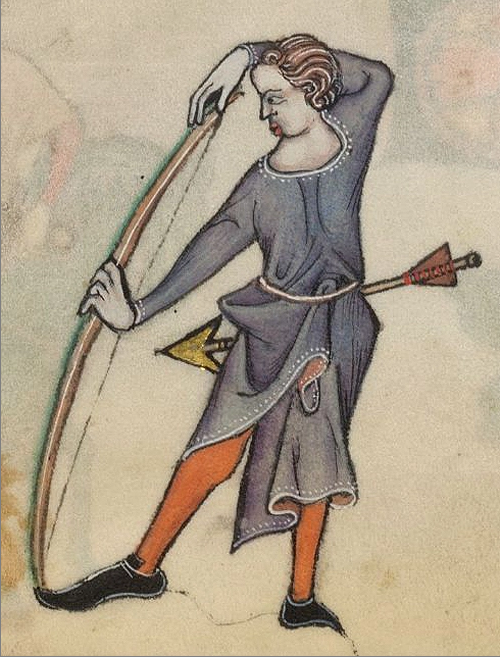
Medieval drawing of an archer
6.30pm Wed 11th June 2025 Aldgate Underground To book
An Anniversary Walk tracking the progress of the Peasants as they take control of London in June of 1381
Short read: The Summer of Blood
Long read: The Peasants’ Revolt. The greatest popular rising in English history. This is the anniversary walk. The London Walk that heads back to 1381, back to the Peasants’ Revolt. You want a metaphor, think stations of the cross. This is the stations of the Peasants’ Revolt walk. We go over the ground, literally and metaphorically. Where it took place. Why it took place. Why it took place at these places. What happened. The walk is guided by the distinguished Museum of London Archaeologist His expertise means you’ll see the invisible. And understand the inscrutable.
On the anniversary of the Peasants Revolt we reconstruct the events that shook the medieval world. In June 1381, following the introduction of the iniquitous Poll Tax, England’s government nearly fell, shaken to the core by a revolt led by working men. This dramatic tour follows the events of the Revolt as the Peasants move through London in June 1381.
We met up with the Peasants at Aldgate, force our way into the City. We march on the Tower of London as the King makes concessions by ending serfdom, at Mile End. But the leaders take the mighty Tower of London and behead the leaders of Richard’s government. Attacks follow on the lawyers in the Temple, the Prior at St. John’s of Jerusalem, Flemish Londoners, and on Lambeth and Savoy Palaces.
The climax of the Revolt comes at Smithfield where a small Royal party confront the 30,000 peasants.
Tudor London – The City of Wolf Hall 11.30am 13th July 2025 To Book Jane Austen’s London Anniversary Walk 3pm Sunday 13th July 25 To book Roman London – Literary & Archaeology Walk 11.30 am Sat 2nd Aug 2025 ToBook Chaucer’s Medieval London Guided Walk 2:30pm Sat 2nd Aug 2025 To Book Myths, Legends, Archaeology and the Origins of London 11.00am Sat 16th Aug25 to Book Roman London – Literary & Archaeology Walk 6:30pm Wed 24th Sept 2025 To book The Archaeology of London Walk 6.30pm Fri 3rd October 2025 To Book Chaucer’s Medieval London Guided Walk 11:30pm Sat 4th Oct 25 To book The Decline And Fall Of Roman London Walk 11.30pm Sat 8th Nov 25 To book Jane Austen’s London Anniversary Walk 2.00pm Sat 23rd Nov25 To book Rebirth of Saxon London 23rd Nov 25 Roman London – Literary & Archaeology Walk sat 11am 6th Dec 2025 To book Cromwell’s and More’s Tudor London Walk 2pm 7th Dec25 To book Jane Austen’s London Anniversary Walk 2.30pm Sun 14 Dec25 To book Christmas With Jane Austen Virtual London Tour 7.30pmTues 16 Dec25 To book The London Equinox and Solstice Walk 11:30pm Sun 21st Dec 25To book The London Winter Solstice Virtual Tour 7.30pm Sun 21 Dec 25 To book
Previous Years Archives
Here are previous archive of guided walks and events
St Lucy, by Francesco del Cossa (c. 1430 – c. 1477) (Wikipedia User:Postdlf)
I reposted my two posts on St Lucy, and the follow-up email on eye-care, on the appropriate days. But the email to subscribers was not sent. So here it is again. The name Lucy is from the same Latin origin (Lucidus) as lucent, lux, and lucid. It means to be bright, to shine or be clear. It is similar to the Ancient Greek λευκός (leukós, “white, blank, light, bright, clear”. Luke has the same origins (bright one, bringer of light and light of the sacred flame) and is very appropriate for the most literate of the evangelists.
St Lucy of Syracuse
St Lucy is from Syracuse in Sicily. She was a victim of the Diocletian Persecution of Christians in the early 4th Century. She is an authentic early martyr. But details of her story cannot be relied upon as true. She was a virgin, denounced as a Christian by her rejected suitor. Then, miraculously saved from serving in a brothel.; destruction by fire, but did not escape having her eyes gouged out. Finally, her throat was cut with a sword.
Her connection to light (and the eye gouging) makes her the protectress against eye disease. So she is depicted holding two eyes as you can see in the picture at the top of the page. Other symbols include a palm branch which represents martyrdom and victory over evil. Other symbols are lamp, dagger, sword or two oxen.
She appears in Dante’s Divine Comedy, as the messenger to Beatrice whose job is to get Virgil to help Dante explore Heaven, Hell and Heaven.
St. Aldhelm (died in 709) puts St Lucy in the list of the main venerated saints of the early English Church, confirmed by the Venerable Bede (died in 735). Her festival was an important celebration one in England. It was views ‘as a holy day of the second rank in which no work but tillage or the like was allowed’.
Dimming of the Light
This year is a glorious sunny St Lucy’s Day. But, the afternoons soon dim. So, at this time of the year, we are in need of a festival with bright lights to cheer us up! And St Lucy’s Day is the beginning of the winter festival that culminates with the Solstice, where the old sun dies, and the new one is born. December the 13th was the Solstice until Pope Gregory reformed the Calendar in the 16th Century, as nine days were lopped off the year of transition.
Sankta Lucia in Sweden
The festival of Sankta Lucia is particularly popular in Sweden, where December 13th is thought to be the darkest night. In recent years, the Swedish community in the UK has had a service to Lucia in St Pauls. But the last couple of years has been in Westminster Cathedral. This year on the 5th December. And a Santa Lucia Carol Concert on 12 December at St Paul’s. But every year it has either been and gone or sold out by the time I get around to thinking of going!
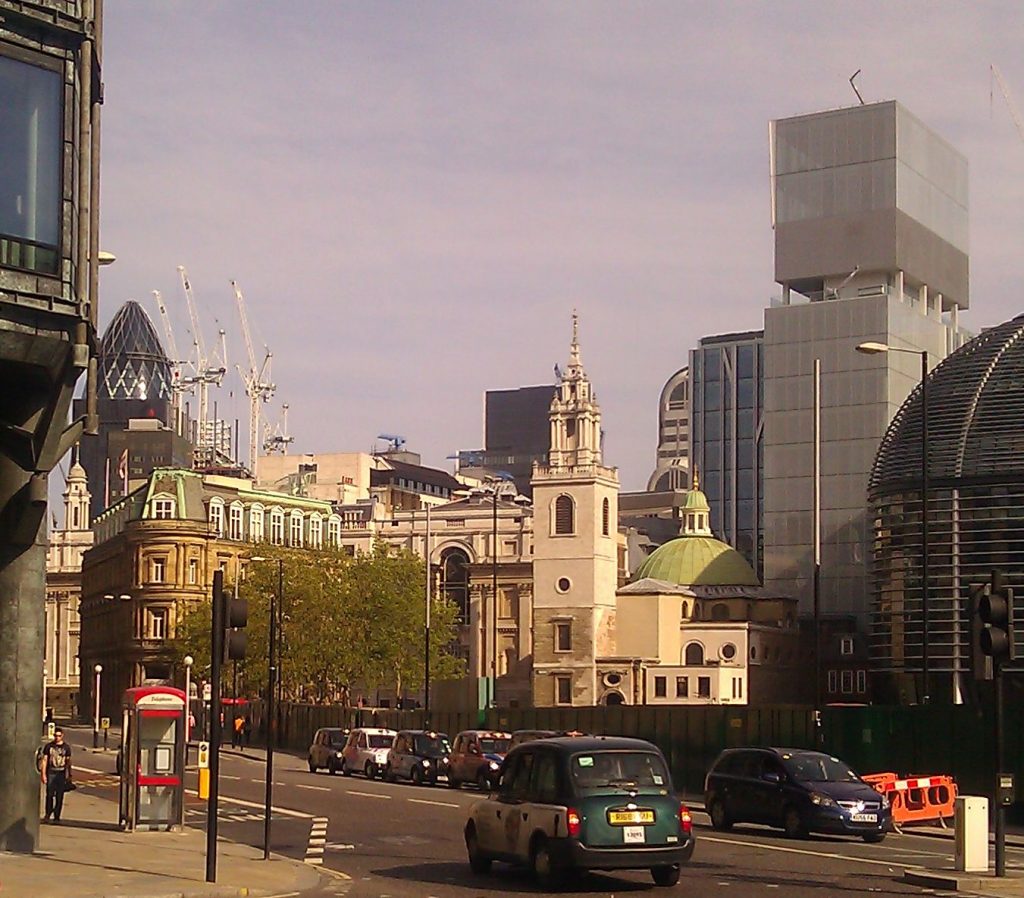
St Stephens Church by Christopher Wren (Photo K Flude) a rare view during building work.
I found out about Sankta Lucia from a Swedish choir who hired me to do a tour of the City of London some years ago. We went into Christopher Wren’s marvellous St Stephen’s Church. Under the magnificent Dome, the choir fancied the acoustics and spontaneously sang. I recorded a snatch of it, which you can hear below
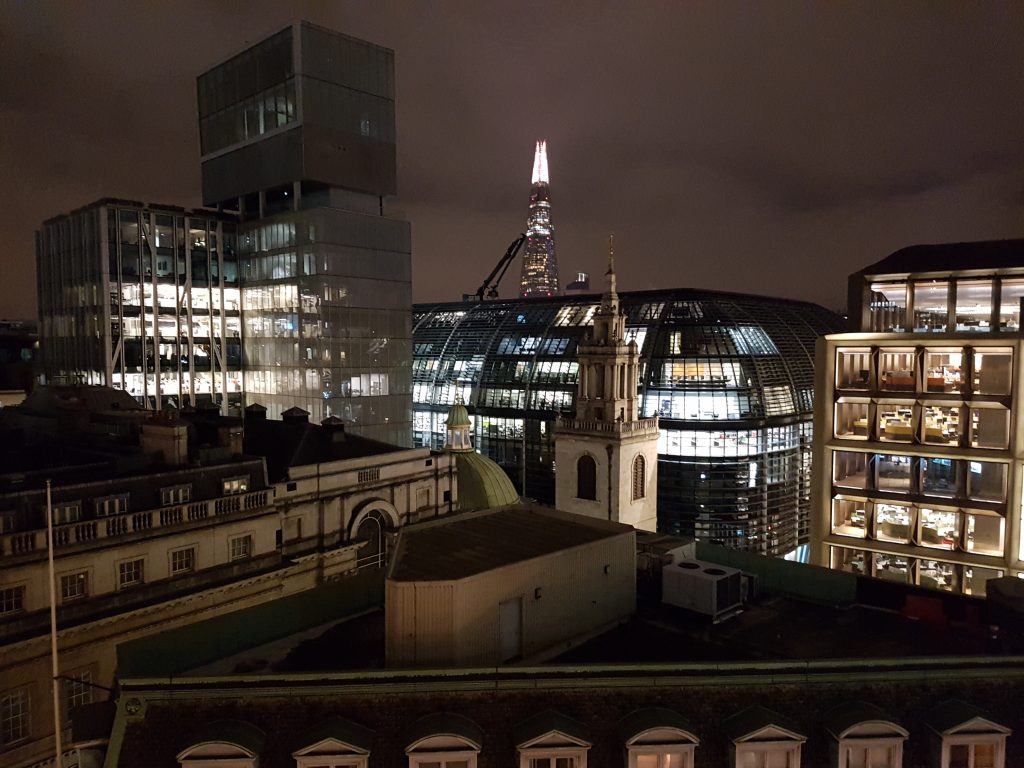
Swedish Choir singing in St Stephen’s London St Stephens Church in the middle foreground of the photo. (Photo K Flude)
You can watch the Sankta Lucia service in Westminster Cathedral below:
The Importance of Light
Recent medical research has shown the importance of light, not only to our mental health but to our sleep health. Work places need to have a decent light level with ‘blue light’ as a component of the lighting. It is also an excellent idea to help your circadian rhymes by going for a morning walk, or morning sun bathing, even on cloudy days. This will help you sleep better. And so St Lucy remains relevant as an inspiration
Robins brought water to relieve tormented souls in Hell and, so, got their breasts scorched; their breasts were stained with Jesus’ blood; they fanned, with their wings, the flames of a fire to keep baby Jesus warm and got scorched. All these associations with Jesus make their association with Christmas and Christmas cards perfect sense.
They are the Celtic Oak King of the New Sun. The Wren is the bird of the Old Sun. The Robin is the son of the Wren. The Robin kills his father. So the New Sun takes over from the Old Sun at the Winter Solstice. And the Robin takes over from the Wren.
The blood of the father Wren stains the Robin’s breast. In Celtic Folklore, Robins are said to shelter in Holly trees. Robins appear when loved ones are near. If a Robin comes into your house, a death will follow.
Perhaps this gives a context for Shakespeare’s mention of a robin (a ruddock he called it) which he grants the power of censure. In the play Cymberline, Innogen has been found dead, and amidst the floral tributes mentioned is the following (cors is corpse):
the ruddock would with charitable bill (Oh bill sore shaming those rich-left-heirs, that let their Father’s lie without a Monument) – bring thee all this; Yea, and furr’d Mosse besides. When Flowres are none To winter-ground thy cors
(Cymbeline, Act 4 scene 2)
Robin’s Habits
They are one of the few birds to be seen all year round, and they sing all year too. But they have different songs for autumn and spring. Robins sing from concealed spaces in trees or bushes. They are the first to sing in the morning, the last to stop at night, and can be triggered by street lights turning on. A Robin can sing all the notes on the scale and can sing for half an hour without repeating a melody.
They eat worms, seeds, fruits, insects and other invertebrates. Robins are aggressively territorial, and are our favourite birds. (RSPB)
On this Day
1554 – ‘the same day at after-noon was a bear bitten on the Bank side, and broke loose and in running away he caught a serving man by the calf of the leg, and bit a great piece away and after by the ‘hokyl-bone’ within 3 days after he died.’
Henry Machyn’s Diary quoted in ‘A London Year’ complied by Travis Elborough & Nick Rennison.
Hokyl-bone might be the holbourne stream inn what we now call holborn. Or it might be another name for the tarsus bone, the heel bone. But it doesn’t really make sense if it’s a bone. But the bear dying 3 days later by the steam makes some sort of sense.
Written December 9th 2024, revised and the Bank side incident with the Bear added 2025
Monday’s child is fair of face, Tuesday’s child is full of grace. Wednesday’s child is full of woe, Thursday’s child has far to go. Friday’s child is loving and giving, Saturday’s child works hard for a living. And the child born on the Sabbath day Is bonny and blithe, good and gay.
Fortune-telling poems are a big part of folklore. It says something about the power of the rhyme that people can believe a random rhyme can shape someone’s whole life. Interesting that there are many versions of this rhyme. I chose one that had an optimistic Thursday. Two year’s ago, my second Grandson was born, on a Thursday, just like me. And I’ve still got far to go.
Tinker Tailor
The Tinker Tailor rhyme is another example of a fortune-telling rhyme. This is the extended version, I found on wikipedia.
When shall I marry? This year, next year, sometime, never.
What will my husband be? Tinker, tailor, soldier, sailor, rich-man, poor-man, beggar-man, thief.
What will I be? Lady, baby, gypsy, queen.
What shall I wear? Silk, satin, cotton, rags
How shall I get it? Given, borrowed, bought, stolen.
How shall I get to church? Coach, carriage, wheelbarrow, cart.
Where shall I live? Big house, little house, pig-sty, barn.
One person recites the power verse by verse. The subject of the fortune-telling does something like counting petals on a flower, counts bounces of a ball, or gives a number between one and four. The outcome determines the future.
Today, is St Budoc’s Feast Day. However, it’s held on the 9th if you are in Brittany. Boduc is a Celtic name which either means “saved from the waters” or more likely ‘Victory’ or ‘Victorious’.
This etymology is shared by Queen Boudicca. Budoc lived in the 5th Century, after the Fall of Roman Britain. His mother was a Princess whose evil step-mother (or mother-in-law), persuaded her son that she was unfaithful. The Prince ordered the pregnant Princess to be thrown into the sea in a wooden cask. They floated around for 5 months, until Budoc was born. (Saved by the intercession of St Bride?). So, they landed safely in Cornwall, and afterwards went to Ireland. (Or they landed in Ireland.)
Eventually, Budoc’s dad realised his wife was faithful. So he came to rescue his wife. Sadly, they soon both died. (Or the wife survived). Budoc became a monk, and then a famous Bishop in late 5th Century Brittany at Doll. St Budoc is worshipped in several place: Pembroke, Cornwall, Devon, Brittany, and Oxford. But we have very little reliable evidence about him.
Monday’s Child published in 2023. St Budoc added in 2024, Revised 2025.