
Festival of Imbolc, St. Bridget’s Day February 1st

Imbolc and St Bridget’s Day

Today is Imbolc, one of the four Celtic Fire Festivals. It corresponds with St Bridget’s Day, which is a Christian festival for the Irish Saint, and is the eve of Candlemas. Bridget is the patron saint of all things to do with brides, marriage, fertility, and midwifery (amongst many other things, see below). And in Ireland, 2026 was the third St Bridget’s/ Imbolc Day Bank Holiday.
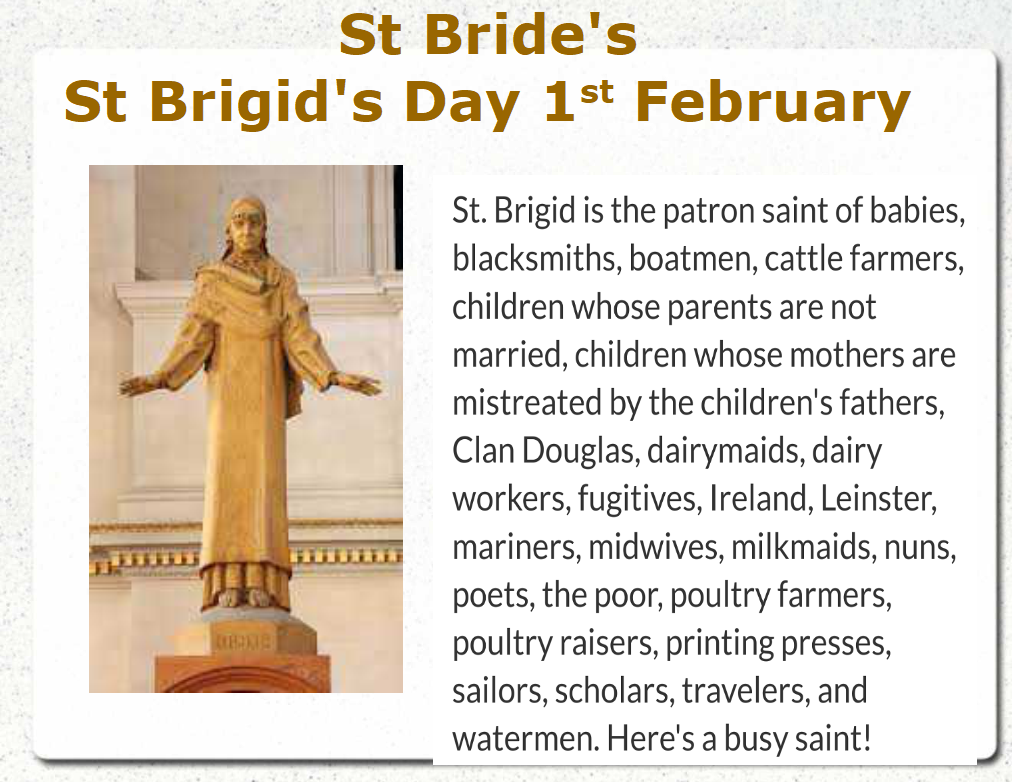
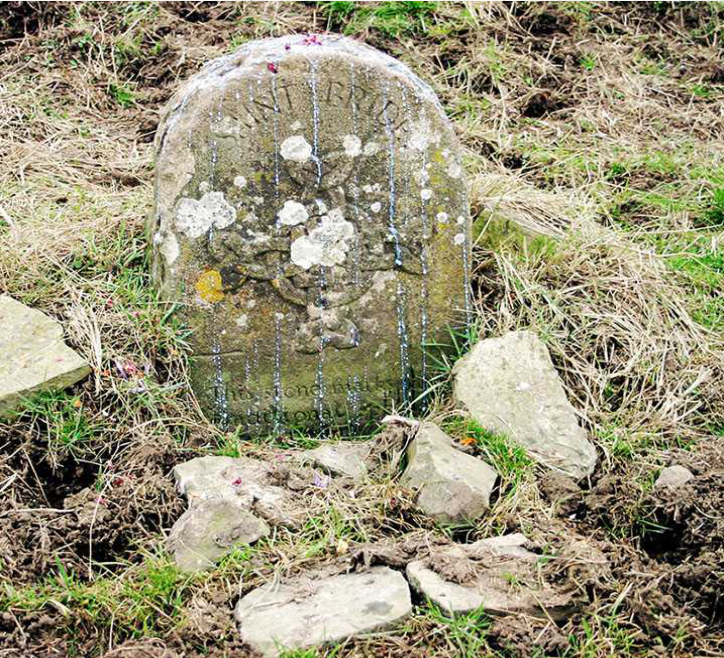
St Bride,s Statue St Bride's Church. Fleet Street
St Briget or St Bride’s Statue, St Bride’s Church. Fleet Street from K.Flude’s virtual tour on Imbolc

St Bridget, aka Briddy or Bride, converted the Irish to Christianity along with St Patrick in the 5th Century AD. Despite being a Christian, she appears to have taken on the attributes of a Celtic fertility Goddess. Her name was Brigantia, and it is difficult to disentangle the real person from the myth.

Brigantia

Archaeologists have found various Roman altars dedicated to Brigantia. The Brigantes tribe in the North are named after the Goddess (probably). They were on the front line against the invading Romans in the 1st Century AD, and led by Queen Cartimandua.  The Queen tried to keep her tribe’s independence by cooperating with the Romans. A few years later, Boudica took the opposite strategy. But both women had executive power as leaders of their tribes. This suggests a very different attitude to woman to the misogyny of the Romans.
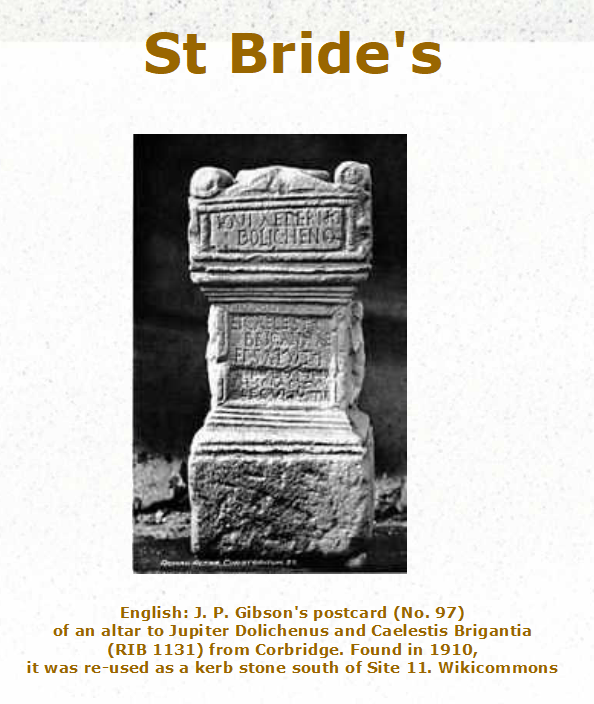
altar to Brigantia
Altar to Brigantia from K Flude’s virtual tour on Imbolc

Wells dedicated to St Bridget

St Bridget's Well Glastonbury
St Bridget’s Well, Glastonbury

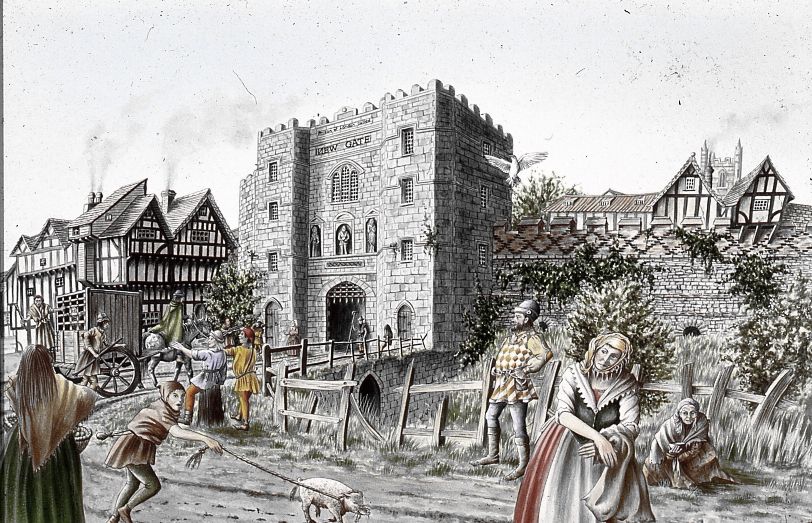
St Bride is honoured by many wells dedicated to her. Often they are associated with rituals and dances concerned with fertility and healthy babies. And perhaps, the most famous, was near Fleet Street. This was Bridewell, which became the name of Henry VIII’s Palace, and later converted into an infamous prison. St Bride’s Church, built near to the Well, has long been a candidate as an early Christian Church. Sadly, the post World War Two excavations found nothing to suggest an early Church. But, they did find an early well near the site of the later altar of the Church, and remains of a Roman building, possibly a mausoleum. Perhaps the Church may have been built on the site of an ancient, arguably holy, well. However, this is only a guess.
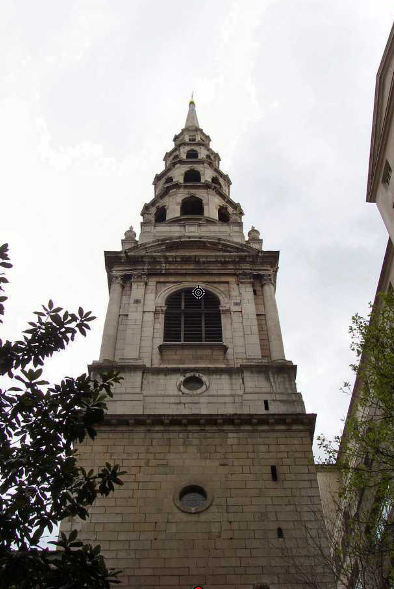
Steeple of St Brides Fleet Street
Steeple of St Brides Fleet Street, photo K Flude

The steeple of St Brides is the origin of the tiered Wedding Cake, which, in 1812, inspired a local baker to bake for his daughter’s wedding.

February signs of life

Imbolc and St Bridget’s Day are the time to celebrate the return of fertility to the earth as spring approaches. In my garden and my local park, the first snowdrops are out. Below the bare earth, there is a frenzy of bulbs and seeds budding, and beginning to poke their shoots up above the earth, ready for the Spring. In the meadows, ewes are lactating, and the first lambs are being born.

Violets, bulbs, and my first Daffodil of the year. Hackney (2022), London by K Flude

And let’s end with the Saint Brigid Hearth Keeper Prayer Courtesy of SaintBrigids.org

Brigid of the Mantle, encompass us,
Lady of the Lambs, protect us,
Keeper of the Hearth, kindle us.
Beneath your mantle, gather us,
And restore us to memory.
Mothers of our mother, Foremothers strong.
Guide our hands in yours,
Remind us how to kindle the hearth.
To keep it bright, to preserve the flame.
Your hands upon ours, Our hands within yours,
To kindle the light, Both day and night.
The Mantle of Brigid about us,
The Memory of Brigid within us,
The Protection of Brigid keeping us
From harm, from ignorance, from heartlessness.
This day and night,
From dawn till dark, From dark till dawn.

For more about go to this webpage St Bridget. To read my post on Mary Musgrove’s Candlemas Letter in Jane Austen’s Persuasion follow this link.

Imbolc and Myths and Legends Walks

I give walks about Imbolc and other Celtic festivals, and at May Eve, the Solstices, Equinoxes, Halloween and Christmas (when I have time). You might like to attend these walks or virtual tours. The following are currently in my calendar. I will be adding other walks to the calendar as the year progresses.

The Spring Equinox London Virtual Tour 7.30pm Fri 20th March26 To book

The London Equinox and Solstice Walk 2:30pm Sat 21st March26 To book

For more of my walks see the walks page of this blog here: https://www.chr.org.uk/anddidthosefeet/walks

First published in 2023, revised and republished Feb 2024, 2025, 2026
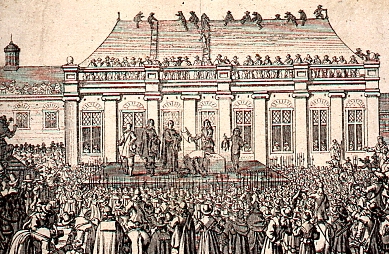
The Martyrdom of Charles I & ‘Get Back’ January 30th

Banqueting Hall and Execution of Charles I
Banqueting Hall and the Martyrdom of Charles I

January 30th is the anniversary of the execution of King Charles I. Today, he was beheaded as a murderer and traitor. Or as a Royalist would see it, it is the anniversary of the Martyrdom of Charles I.

Thousands came to see the execution, amongst them Samuel Pepys. They crowded around the scaffold outside a window of Inigo Jones’s magnificent Banqueting Hall, in Whitehall, London. Charles was brought into the Banqueting House. There he must have looked up at the magnificent Peter Paul Reubens’ ceiling. Charles had commissioned the painting to depict of the Apotheosis of his father, James I. It was the symbol of the Divine Right of the King to rule.

Scaffold to Heaven?

I doubt he saw the irony. I suspect he thought he was going to heaven to join his father, in glory as a Martyr to his religion. He walked outside, through the window, into the cold January air. Two of his bloodstained shirts still exist, probably to stop him shivering. He wanted to be seen as going fearless to his death not shivering with fear. Then, he made a short speech exonerating himself. He spoke without stammering for the first time in his public life. The Rooftops around were lined with spectators. Black cloth framed the scaffold. As the executioner axe fell, there was a dull grown from the crowd (most could not see the axe falling).

This was on January 30th, 1648. But, if you look at a history book, it will tell you it was in 1649. This was before our conversation to the Gregorian calendar. Then the year number changed not as we do on January 1st but on March 25th. This was the day the Archangel Gabriel revealed to the Virgin Mary that she was pregnant. For more on the importance of March 25th look at my Almanac entry here:

Oh the stupendous, and inscrutable Judgements of God’

On the same day, twelve years later, in 1661 Oliver Cromwell and his chief henchmen were dug up from their splendid Westminster Abbey tombs. Their bodies were abused by official command. Cromwell’s head was stuck on the top of Westminster Hall. There it remained until blown off in the Great Fire of 1703 (or 1672, or 1684). Then, it taken to Cambridge, Sidney Sussex College, which Cromwell attended. Only the Head Porter knew where. (According to someone who came on my Oliver Cromwell Walk last year.) Whether it is his head or not is disputed. The tale of the head is told in detail here.

The Royalist, John Evelyn, said in his diary:

This day (oh the stupendous, and inscrutable Judgements of God) were the Carkasses of that arch-rebel Cromwel1, Bradshaw, the Judge who condemned his Majestie and Ireton, sonn in law to the usurper, dragged out of their superb Tombs (in Westminster among the Kings) to Tybourne, and hanged on the Gallows there from 9 in the morning till 6 at night, and then buried under that fatal and ignominious Monument in a deep pit. Thousands of people (who had seen them in all their pride and pompous insults) being spectators .

Samuel Pepys records by contrast:

…do trouble me that a man of so great courage as he was should have that dishonour, though otherwise he might deserve it enough…

Pepys served the Parliamentary side before the restoration of Charles II, when he adroitly, swapped over to the Royalist side.

Every year, I do a Guided Walk and a Virtual Tour on Charles I and the Civil War on this day or the last Sunday in January. Look here for details.

On This Day

1661 – Oliver Cromwell’s corpse disinterred and ritually executed

1826 – The Menai Suspension Bridge, is opened. Designed byThomas Telford. It is considered the world’s first modern suspension bridge.

1933 – Hitler appointed Chancellor of Germany

1969Get Back to Where you Once Belonged – the anniversary of the rooftop concert in Saville Row where the Beatles played ‘Get Back’.

YouTube Clip with scenes from the Roof Top Concert

First published in 2023, revised on January 29th 2024,2025, 2026

Gilbert White & The Cold of January 1776 January 28th

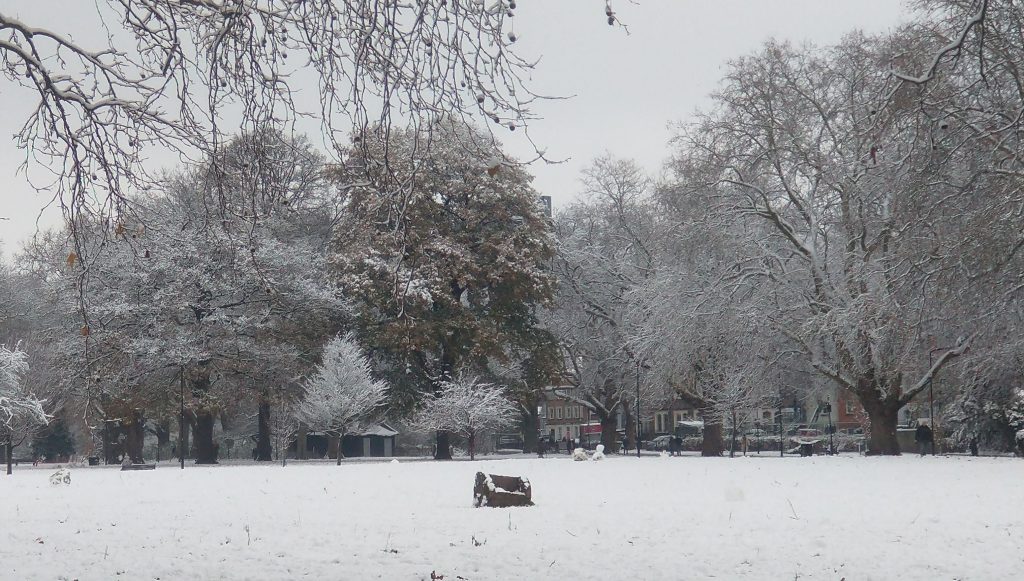
Photo of London Fields in the snow of 2022
Photo of London Fields in the snow of 2022 by Kevin Flude

January 1776:

‘On the 27th much snow fell all day, and in the evening the frost became very intense. At South Lambeth, for the four following nights, the thermometer fell to 7, 6, 6, and at Selborne to 7, 6, 10, and on the 3ist of January , just before sunrise, with rime on the trees and on the tube of the glass, the quicksilver sunk exactly to zero, being 32 degrees below the freezing point’ Gilbert White

Gilbert White and Darwin

He, of course, is talking Fahrenheit, so well below zero. If there was a Giant upon whose shoulders Charles Darwin climbed, then Gilbert White owned one pair.. He was one of many churchmen of the 18th and 19th Century who spent their extensive leisure time, on observing God’s wonderful creation in their gardens and parishes. What made White so important was that his practice was ‘observing narrowly’ and regularly. For example, his observations of the importance of earth worms were fundamental to Charles Darwin’s own studies. When Darwin came back from his travels on the Beagle, he settled in a country property in Orpington. Like White, he used his garden and the local area as his laboratory. Here he worked to prove his theory of evolution.

Gilbert White and Earth worms

Earth worms were one of Darwin’s passions. This is what Gilbert White wrote about their contribution to nature:

“Earth-worms, though in appearance a small and despicable link in the chain of Nature, yet, if lost, would make a lamentable chasm. For, to say nothing of half the birds, and some quadrupeds which are almost entirely supported by them, worms seem to be the great promoters of vegetation, by boring, perforating, and loosening the soil, and rendering it pervious to rains and the fibres of plants, and, most of all, by throwing up such infinite numbers of lumps of earth called worm-casts, which, being their excrement, is a fine manure for grain and grass.”

(Quoted from https://gilbertwhiteshouse.org.uk)

By such minute and repeated observations, Gilbert White investigated the food chain, and the migration of birds (which was at the time disputed). He laid the foundations of what we now call ecology.

Gilbert White’s Career

He became Dean of Oriel College in Oxford. But chose to spend his career in the relatively humble occupation of Curate. A Curate is the bottom-feeder in the Anglican Church food chain. A Curate hardly earned enough to maintain a position in the Gentry (£50 p.a.). Although, White was upgraded to the title of Perpetual Curate. He still would only be pulling in, I guess, something like £200 p.a. (Patrick Bronte was also a Perpetual Curate). Essentially, it is Vicar looking after a part of a too large Parish.

Financially, White didn’t need much, he inherited his father’s property at Shelborne, Hampshire. White’s grandfather was the Vicar at Shelborne. But Gilbert could not inherit the title because he went to Oriel College. The ‘living’ of the Parish of Shelborne was ‘in the gift of’ Magdalen College. And they were not going to give the role to an alumnus of a rival college.

Gilbert White & The Austen Family

The house, now open to the public, is just around the corner from Chawton. This is where Jane Austen spent her last years. He was born in 1720; was 55 when Austen was born, and he died in 1793, when she was 18. He lived 4 miles away, so the families knew of each other. We know Jane Austen’s brother wrote a poem about Gilbert White and his natural history observations, particularly on birds.

From ‘Selbourne Hanger’ by James Austen

Who talks of rational delight }
When Selbourne’s Hill appears in sight }
And does not think of Gilbert White? }
Such sure he was – by Nature grac’d
With her best gift of genuine taste;
And Providence – which cast his lot
Within this calm, secluded spot,
Plac’d him where best th’enquiring mind
Might study Nature’s works, and find
Within her ever open book
Beauties which others overlook.
Enthusiast sweet! Your vivid style
The attentive reader can beguile
Through many a page, and still excite
An Interest in what you write!
For whilst observant you describe
The habits of the feathery tribe
Their Loves and Wars – their nest and Song,
We never think the tale too long.

For more information on White and Austen, go to Gilbert White’s House’s web page here:

More Snow!

Here is more of that epic cold January 1776

‘… but by eleven in the morning, though in the shade, it sprang up to I6J,1 — a most unusual degree of cold this for the south of England. During these four nights the cold was so penetrating that it occasioned ice in warm chambers and under beds ; and in the day the wind was so keen that persons of robust constitutions could scarcely endure to face it. The Thames was at once so frozen over both above and below bridge that crowds ran about on the ice. The streets were now strangely encumbered with snow, which crumbled and trod dusty ; and, turning grey, resembled bay-salt : what had fallen on the roofs was so perfectly dry that, from first to last, it lay twenty-six days on the houses in the city ; a longer time than had been remembered by the oldest housekeepers living…..’

‘The consequences of this severity were, that in Hampshire, at the melting of the snow, the wheat looked well, and the turnips came forth little injured. The laurels and laurustines were somewhat damaged, but only in hot aspects. No evergreens were quite destroyed ; and not half the damage sustained that befell in January, 1768. Those laurels that were a little scorched on the south-sides were perfectly untouched on their north-sides. The care taken to shake the snow day by day from the branches seemed greatly to avail the author’s evergreens. A neighbour’s laurel-hedge, in a high situation, and facing to the north, was perfectly green and vigorous ; and the Portugal laurels remained unhurt.’

More Frost!

‘We had steady frost on to the 25th, when the thermometer in the morning was down to 10 with us, and at Newton only to 21. Strong frost continued till the 31st, when some tendency to thaw was observed ; and, by January the 3d, 1785, the thaw was confirmed, and some rain fell.’

Rosemary flowering in december
Rosemary flowering in my garden, photo by Kevin Flude

Gilbert White’s House is open to the public and also contains a display on Lawrence Oates, who died on Scots Antarctic expedition. For more information look at my post here.

There is another mention of Gilbert White in the Almanac of the Past here.

Foods in Season

Here are food stuffs that are in season now.

Wild Greens: Chickweed, hairy bittercress, dandelion leaves, sow thistle, winter cress

Vegetables: Forced Rhubarb, purple sprouting broccoli, carrots, brussels sprouts, turnips, beetroot, spinach, kale, chard, leeks, Jerusalem artichokes, lettuces, chicory, cauliflowers, cabbages, celeriac, swedes

Herbs: Winter savory, parsley, chervil, coriander, rosemary, bay, sage

Cheeses: Stilton, Lanark Blue

(from the Almanac by Lia Leendertz)

On This Day

1754 – Horace Walpole coined the new word ‘serendipity’ from the ‘Three Princes of Serendip’ fairy tale. The Princes ‘ere always making discoveries, by accidents and sagacity, of things they were not in quest of.’

1898 – Walter Arnold became the first motorist to be fined for speeding. He was going 8 miles an hour in a 2 mile an hour area in Kent

1986 – Explosion of US Space Shuttle Challenger. All 7 astronauts killed, including teacher Christa McAuliffe who would have been the first civilian in space.

The food section posted originally in 2023, the part on Gilbert White written on 28th January 2024, revised 2025, On This Day added 2026

Holocaust Memorial Day & Montaillou January 27th

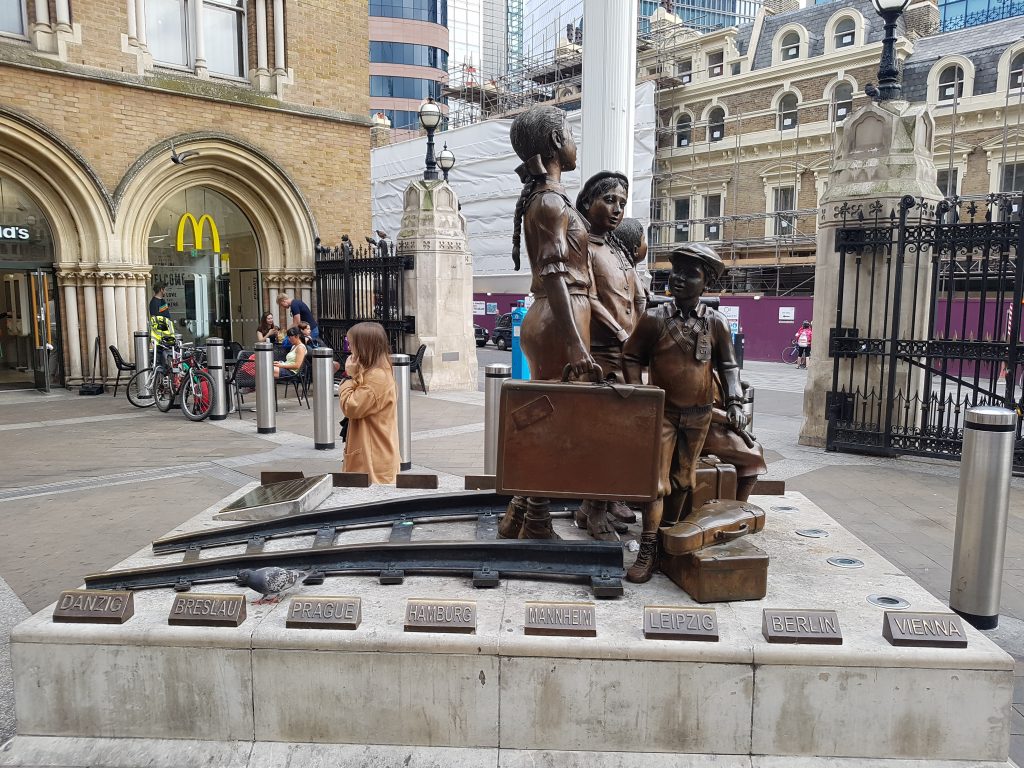
photo of The Kindertransport statue, Liverpool Street Station, London 2006 by Frank Meisler and Arie Oviada.
Holocaust Memorial Day photo fo The Kindertransport statue, Liverpool Street Station, London 2006 Statue by Frank Meisler and Arie Oviada Photo by K Flude

Statue for Holocaust Memorial Day

The statue commemorates the arrival of Jewish children by train at Liverpool St Station, In London. This was 1938/9 in the Kindertransport. They were sent by parents desperate to save their children from fascist genocide in Germany and Austria. The children were unaccompanied and, as depicted in the statue, stand proud as they arrive in a strange country. They are tagged. And the train track represents both the trains to the death camps, and the train to safety. There are some great photos and more information on the statue in: talkingbeautifulstuff.com

Holocaust Memorial Day and Montaillou

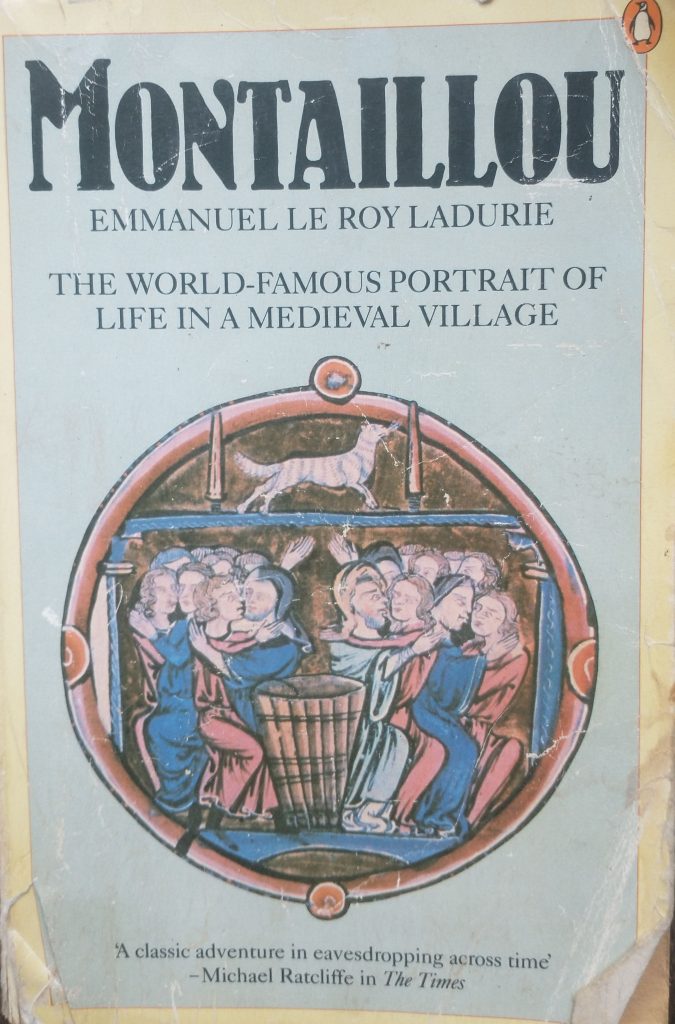
My copy of Montaillou by Emmanual Le Roy Ladurie

On the subject of prejudice, genocide and abuse of power. I was reminded of one of the formative reads of my life. The great Emmanuel Le Roy Ladurie was at dinner at my father-in-law’s house in the 1980s. I was awestruck. Because Montaillou was one of the early histories ‘from below’. The focus was not on kings, queens nor on the flux of states and empires. No, the focus was on the lives (and deaths) of ordinary people. Something that has continued as a focus of my historical interest.

Nor, before Ladurie, had I imagined that medieval lives could be so minutely brought to life. The book was a sensation, selling over a quarter of a million copies. Professor Ladurie became a media star, and, it remains one of the great historical reads. (Of course, the book and the historiography now attracts some criticism, but do read it!)

The context of the story is appalling. In 1208, the Pope decided to launch a crusade against heretics in the South of France. This is about the genocide of the Cathars. The lives of the persecuted are revealed under interrogation by the Cathodic Inquisition. Cathars had many unorthodox and ‘heretical’ ideas. They believed in a Good God and an Evil God. We, humans, are all angels trapped in this terrible world by the Evil God. Women and men were equal and could be reincarnated into each other’s bodies. Our lives are spent awaiting the time we became ‘perfect’ and released to our spiritual form for eternity.

“Kill them all, the Lord will recognise His own”

From the 21st Century, these ideas seem no more nor less irrational than mainstream religions. But these opinions ‘justified’ a Crusade and Inquisition that followed which were truly savage, with many thousand slaughtered. For example, on 22 July 1209, the Catholic forces were led by Arnaud-Amaury. He was not only the Commander of the army but also a Cistercian Abbot. Many of the citizens of Béziers were seeking refuge in St Mary Magdalene. The abbot ordered the doors to be battered down to get at the refugees inside. When asked how the soldiers could separate the Catholics from the Cathars. He replied:

Caedite eos. Novit enim Dominus qui sunt eius“—”Kill them all, the Lord will recognise His own”.

All 7,000 men, women, and children were killed. Thousands more in the town were mutilated, blinded, dragged behind horses, used for target practice and massacred. Arnaud-Amaury, remember an Abbot, wrote to Pope Innocent III:

“Today your Holiness, twenty thousand heretics were put to the sword, regardless of rank, age, or sex.”

But, despite this savagery in the name of religious purity, reading Montaillou is a pleasure. It brings those persecuted souls back to life in all their human glory.

We are all equally human

The Cathar Crusade is another reminder that it is by intolerance and ‘othering’ of normal homo sapiens which allows the conditions for evil to flourish. Massacres of the innocents becomes possible when sets of people are ‘othered’. Put in a category which, of itself, justifies their treatment. We have a very recent example with the Press Secretary at the White House. She has now referred to US citizens shot by ICE as ‘domestic terrorists’. These statements were made before due consideration of the facts. She may or may not be right, I’m not in a position to be definitive.

But we know that when the Press Secretary made them, no one could know whether she was right, or wrong. She is, in effect, saying: ‘Don’t worry about it. These are bad people who have been killed. No need to look into it too deeply. ‘ (for more on this story look here). We have to treat all human life as equal and sacred. And bring to bear our human empathy before passing judgement. Anything less allows the slaughter of the innocent.

Lessons from the Past

Holocaust Memorial Day offers a chance to remember and it is only by remembering that we can learn from the past. Sadly, more and more school are not marking the day any more. Perhaps as the survivors become fewer? However, other new sources claim that the massacres in Gaza are a cause. This is short-sighted.

Hitler’s rise to power is studied by historians who show how a functioning democracy can be taken down in a series of easy stages. Discrediting new sources, telling lies as if they were fact, subverting the legal system, making use of new media, creating a para-military force not bound by normal restraints. But the one that I think we most need to be aware of is the fact that honest, moral conservatives supported Hitler, despite their qualms about his more extreme policies. It is vital that people speak up before it is too late and too dangerous to oppose the tyranny.

On This Day

Today is also the Roman Festival of Castor and Pollux. (more on the divine twins on my post on the 15th July at the other festival of the Dioscuri).

98 – Trajan succeeds his adoptive Father Nerva

417 – Pope Innocent I declares Pelagius, a British Priest who held opposing views to Augustine of Hippo, excommunicated. For more see my post on Pelagius and Original Sin here.

1606 – The trial of Guy Fawkes and other conspirators begins, ending with their execution on January 31st. See my post on Guy Fawkes and his lantern here.

1880 – Edison received a patent for his electric incandescent lamp.

1910 – Death of Thomas Crapper,in Bromley

1945 – Auschwitz & Birkenau Liberated by Soviet Troops

1973 – Vietnam War cease fire came into effect.

First written in January 2023 and revised Jan 2024, 2025,2026

Sementivae Dies—the Days of Sowing January 24–26th

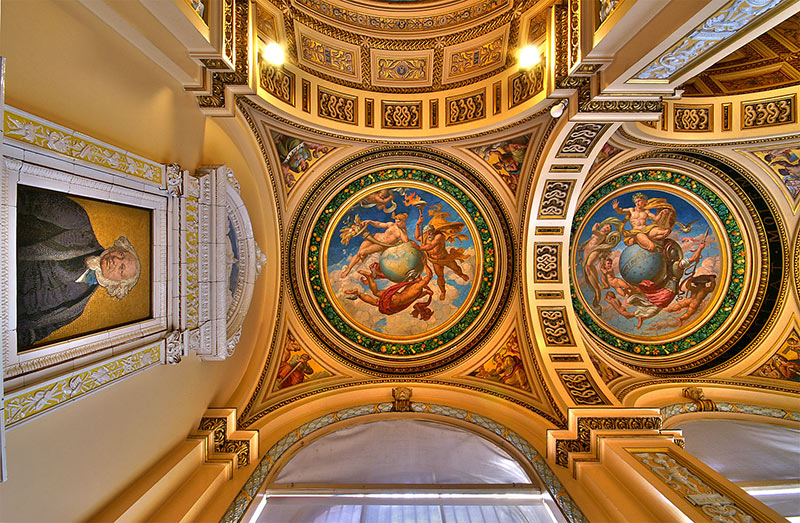
Victoria and Albert Museum” by Nick Garrod, licensed under CC BY-NC-ND 2.0. First V&A Director, Sir Henry Cole, to the left of the picture. Greek Deities in the roundells

Sementivae, was a festival dedicated to seed and to Ceres. Ceres is the Corn Goddess who gives her name to our word cereal. The festival was also called. Paganalia. The Mediterranean world had many names for the Earth Goddess. Tellus, Demeter, Cybele, Gaia, Rhea etc. who is celebrated around this time of the year with Ceres.

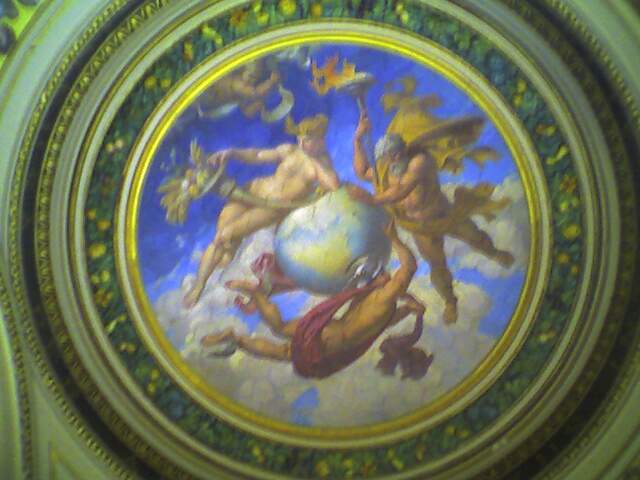
Ceres can be seen on the top left roundel resting on the Globe on the marvellous Ceramic Staircase at the V&A (photo above). And in my slightly out of focus photograph below. (To be honest, in real life, it looks a little more like my photo than the gorgeous photo above!)

Ceres represented Agriculture, Mercury Commerce, and Vulcan Industry.  Old Photo by the Author.  T
Ceres represented Agriculture, Mercury Commerce, and Vulcan Industry. Old Photo by the Author.

Sementivae Dies – a moveable feast.

To create life, we need earth and water to nurture and seeds for their fertility. And so into the cold dead world of January the Romans created a festival of sowing. It had two parts, one presided over by Mother Earth (Tellus) and the other by Ceres, the Goddess of Corn. The actual day of the festival was chosen not by rote on a set day of the calendar but by the priests, in accordance with the weather. This seems very sensible, as there is no point sowing seeds in terrible weather conditions. I’m assuming the Priests took professional advice!

On the 24th-26th January Tellus prepared the soil, and in early February seeds were sown under the aegis of Ceres. Tellus Mater (also Terra Mater) was known as Gaia to the Greeks.

Gaia

Gaia was selected by James Lovelock & Lynn Margulis in the 1970s as the face of their Gaia hypothesis. To me, the importance of the idea is not the scientific principle that environments co-evolve with the organisms within them. But, rather in Gaia as a personification of our world as a complex living ecosystem. One that we have to care for. Gaia exists as a series of feedback loops. Lovelock hypotheses is that she will spit us out unless we can live in balance with our alma mater. I cannot believe he was not knighted. However, he is one of my heros.

Photo of James Lovelock with Greenery behind him and a statue of a female who may be the earth goddess Gaia,
James Lovelock. The original uploader was Bruno Comby at English Wikipedia. – Transferred from en.wikipedia to Commons., CC BY-SA 1.0, https://commons.wikimedia.org/w/index.php?curid=3873472. I hope the Goddess in the background is Gaia

Here is a tribute to Lovelock by his friend Bryan Appleyard. In it. He claims that work done by Lovelock ‘saved the world’. Lovelock invented a device that enabled the detection (and eventual eradication) of DDT and CFCs. If you remember, CFCs were destroying the Ozone layer until international agreement phased them out. Lovelock also worked for MI5. Appleyard, writing in The Sunday Times, described Lovelock as “basically Q in the James Bond films”.

Ovid and Sementivae

Ovid allocated January 24th to Sementivae but explains it is a variable date. But let’s let the Roman Poet Ovid has to say in his poetic Almanac known as ‘Fasti’ (www.poetryintranslation.com)

Book I: January 24

I have searched the calendar three or four times,
But nowhere found the Day of Sowing:
Seeing this, the Muse said: That day is set by the priests,
Why are you looking for moveable days in the calendar?
Though the day of the feast ís uncertain, its time is known,
When the seed has been sown and the land ís productive.
You bullocks, crowned with garlands, stand at the full
trough,
Your labour will return with the warmth of spring.
Let the farmer hang the toil-worn plough on its post:
The wintry earth dreaded its every wound.

Steward, let the soil rest when the sowing is done,
And let the men who worked the soil rest too.
Let the village keep festival: farmers, purify the village,
And offer the yearly cakes on the village hearths.
Propitiate Earth and Ceres, the mothers of the crops,
With their own corn, and a pregnant sow ís entrails.
Ceres and Earth fulfil a common function:
One supplies the chance to bear, the other the soil.
Partners in toil, you who improved on ancient days
Replacing acorns with more useful foods,
Satisfy the eager farmers with full harvest,
So they reap a worthy prize from their efforts.
Grant the tender seeds perpetual fruitfulness,
Don’t let new shoots be scorched by cold snows.
When we sow, let the sky be clear with calm breezes,
Sprinkle the buried seed with heavenly rain.
Forbid the birds, that prey on cultivated land,
To ruin the cornfields in destructive crowds.
You too, spare the sown seed, you ants,
So you’ll win a greater prize from the harvest.

For more on Ovid look at my post on Ovid and Juno here. Or you can search for Ovid in the Search box for other my posts on the Roman poet.

On This Day

1788 – Foundation of the first colony of European Settlers at Port Jackson, now Sydney. It is now Australia Day, a public holiday.

1841 – Hong Kong became a British Sovereign Territory

1926 – The first Public demonstration of a TV image given by Scottish electrical engineer John Logie Baird (1888-1946)

1998 – ‘I did not have sexual relations with that woman’ or so said Bill Clinton, lying through his teeth. (although I guess it depends on your definition of lying?) For more, look at the Time article here.

First Published in January 2023, republished in January 2024, 2025, 2026


Lambing January 18th

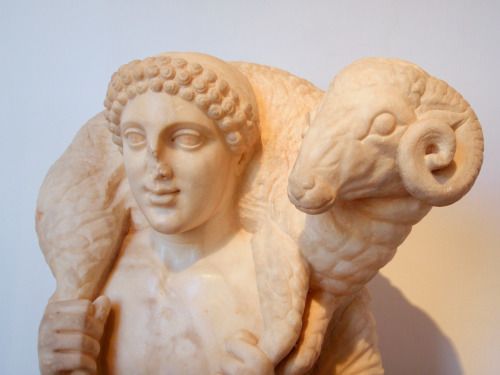
Hermes the ram-bearer near Roman 1st BCE copy of 5th Greek statue
Hermes the ram-bearer, Roman 1st BCE copy of 5th Greek statue

Lambing

You are getting another copy of this because it was published without additions I made to the On This Day section.

If a lamb be born sick and weak, the Shepherd shall fold it in his cloak, blow into the mouth of it and then, drawing the Dam’s dog, shall squirt milk into the mouth of it. If an Ewe grow unnatural, and will not take her Lamb after she has yeaned it, you shall take a little of the Clean of the Ewe (which is the bed in which the Lamb lay) and force the Ewe to eat it, or at least chew it in her mouth and she will fall to love a Lamb naturally. But if an Ewe have cast her Lamb, and you would have her take to another Ewe’s Lamb, you shall take the Lamb which is dead, and with it rub and daub the live Lamb all over, and so put it to the Ewe, and she will take to it as naturally as if it were her own.

Gervase Markham, ‘Cheap and Good Husbandry’ 1613 (quoted in the Perpetual Almanac by Charles Kightly).

All about Lambing

Lambing can begin in the second part of Janauary in the south-west of the UK. But it gets progressively later as you travel north. Itinerant shearers, now often from New Zealand, travel the country shearing sheep. They will begin in the south and then progress north.

March and April are peak lambing time in the UK. But the season runs from February to April. Some farmers even lamb before Christmas (and it is not unknown to lamb in November).

The country expression is ‘in with a bang and out with the fool’ which suggests an ideal time to tup, is November 5th, on Fireworks Night. So that the lambs will be born, 5 months later, around the 1st of April. A litter is normally one or two but occasionally more. Ewe’s get fed depending on how many lambs they will be having.

Thomas Hardy & the Reddle Man

In the ‘Return of the Native’, Thomas Hardy has a character called Diggory Venn, he is a reddle man. He travels the country in a little pony and trap selling reddle. This is a red ochre dye with which shepherds mark their flock. Part of the plot is about the reluctance of women to marry a man whose red, reddle-stained face, makes him look like a devil.

The reddle is used to mark sheep, particularly before lambing. The ram is given a collar or girdle with a marker full of reddle in it. When he mounts the ewe, she will have a red mark on her back. When she has been tupped twice, she will have two red marks on her back. She will then be taken out of the field, to encourage the ram to impregnate the others. Reddle and other dyes can be used to mark lambs chosen for slaughter, or dipping, or weighing etc

(Tup is a country verb: I tup. You tup. We are tupping etc., and means what happens when the ram ‘covers’ the ewe).

For more on Thomas Hardy see my posts:

Hardy’s Henge
The End of Hardy;s Tree

And about the Mayor of Casterbridge:
Wife selling
Failed Weather Forecasting
And the most popular of all my posts: The Skimmity Ride

On This Day!

1486 – Dynastic marriage of King Henry of Lancaster (Henry VII) to Elizabeth of York, daughter of Edward IV, ends rivalry that led to the War of the Roses

1779 – Peter Mark Roget, physician, scholar, thesaurus creator was born, brought into this world, delivered, popped out, brought forth, sprogged, engendered, begat, birthed.

1896 – First xray generating machine displayed to the public by American H L Smith, but building on the work of English physicist William Crookes and German, Wilhelm Röntgen. Portable machines, designed for hospital use on the Battlefields were developed by Spaniard Mónico Sánchez Moreno and the Polish/French scientist Marie Curie.

First Published 2023, revised 24,25,26

Queen Elizabeth I’s Nicknames January 16th

Today is the day after the anniversary of Queen Elizabeth 1’s coronation, 1559. She soon developed enduring relationships with the senior members of her Government. For example, William Cecil, Lord Burghley served the Queen for the rest of his life – from 1558 to 1598 when he died.

Queen Elizabeth I gave leading members of her Court, nicknames. I have been tracking them down. I eventually found a post in The Chronicles of History. The author is a follower of this blog. The Chronicles mentioned three of them, so I went in search for the rest, and here is what I found:

Her chief minister, William Cecil, Lord Burghley, was called her ‘spirit’ and her alleged lover, Robert Dudley, Earl of Leicester, was her ‘eyes’. Rather more cheekily, she called François, Duke of Anjou, her ‘frog’.

https://www.historyextra.com/period/elizabethan/7-things-you-probably-didnt-know-about-elizabeth-i/

List of Queen Elizabeth I’s Nicknames

Putting my various sources here is my ‘definitive list’.

Elizabeth called Robert Dudley, Earl of Leicester “Eyes”
William Cecil was “Spirit”
Robert Cecil was her “pigmy” or “elf”
Sir Christopher Hatton was “lids” or less flatteringly her “mutton”
Francis Walsingham was her “Moor”
Francis, Duke of Alencon, (her French suitor) her “frog”

http://everythingelizabethan.blogspot.com/2011/03/she-was-fond-of-nicknames.html

People on the list of Queen Elizabeth I’s Nicknames

A comment on the same page says the ‘moor’ was, in fact, Edward De Vere Earl of Oxford, suggesting the attribution to Walsingham is a mistake. De Vere had a house in Clapton, Hackney, very close to where I lived. De Vere is one of the strongest candidates (or so the conspiracy theorists say) to have written Shakespeare’s plays. Queen Elizabeth 1 has also been named a candidate for the world’s greatest playwright.

Robert Cecil was Lord Burghley’s son and largely took over his father’s role.
Christopher Hatton was a handsome aristocrat who had a lovely house and garden in Holborn. It is now a street called Hatton Garden, famous for jewellery and jewellery heists.

Francis Walsingham was the ruthless spy master that helped turn late Elizabethan England into a simulacrum of Stasi East Germany.
Duke of Alencon was one suitor she seemed to take seriously, although she gently mocked him.
Dudley was her favourite and almost her official escort/companion. (Did she have a sexual relationship with him?)

When I published this recently, I got an email from Jan-Marie Knights, an author, and she was able to persuade me that the Queen loved Dudley like a Brother, but never would marry him.

She showed me an extract from a book which has a letter saying the above – from Lord Burghley to his political agent in Germany. The book is The Private Character of Queen Elizabeth by Frederick Chamberlin (New York: Dodd Mead and Co, 1922).

Here is a photo of a page of the book with the letter.

Page of The Private Character of Queen Elizabeth by Frederick Chamberlin (New York: Dodd Mead and Co, 1922)
Extract from the book is The Private Character of Queen Elizabeth by Frederick Chamberlin (New York: Dodd Mead and Co, 1922).

Jan has published a book called The Tudor Socialite, which documents the ‘Tudor High life in bite-sized chunks.’

For a list of Gifts to Queen Elizabeth I have a look at the Folger Library page here.

For Queen Elizabeth I’s Coronation look at my post here.

On This Day

27BC Gaius Julius Caesar given the title of Augustus by the Roman Senate marking the official end of the Roman Republic. 

Another example of how a system with elections and checks and balances can be subverted.

550AD Ostrogoths conquer Rome after bribing the guard.

1275 Edward I allows his mother Eleanor of Provence to expell Jews from Winchester, Cambridge, Marlborough and Gloucester

1537 Bigod’s Rebellion.  Following successful negotiations between the Pilgrims of Grace led by Robert Aske, a new rebellion was led by Sir Francis Begod. It failed utterly buy leald to the rescinding of pardons.  This saw Robert Aske hanged at York. Bigod and many others were also hanged. The female conspirator was dealt with as follows:

‘And the same day Margaret Cheney, ‘other wife to Bulmer called’, was drawn after them from the Tower of London into Smithfield, and there burned according to her judgment, God pardon her soul, being the Friday in Whitsun week; she was a very fair creature, and a beautiful.’

Wriothesley’s Chronicle

First Published in January 2023, republished in January 2024,2025, 2026

Queen Elizabeth 1 Coronation January 15th

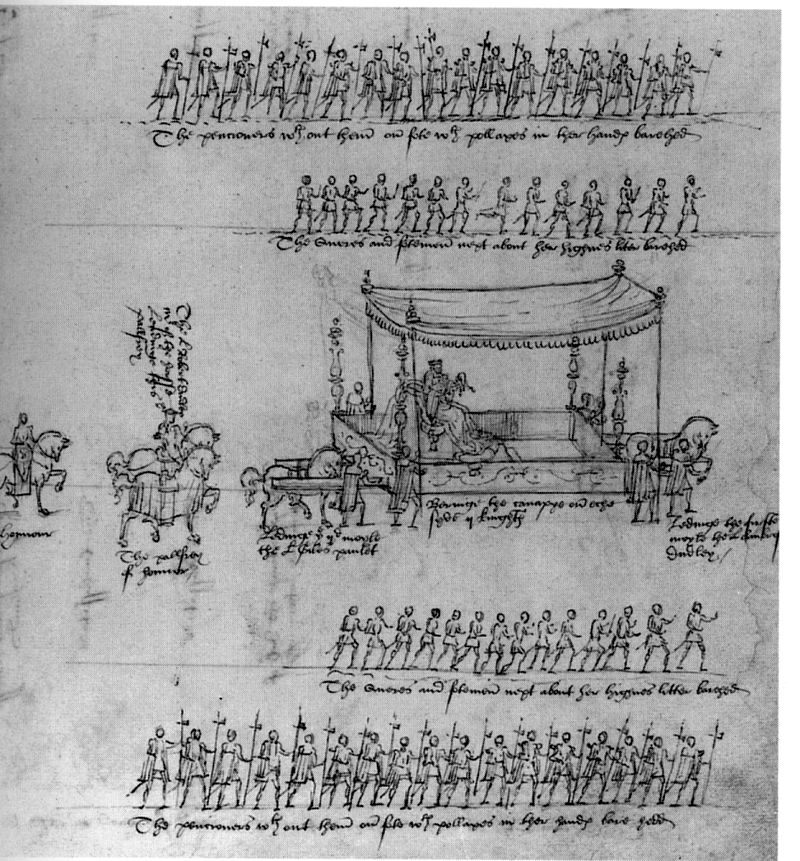
Queen Elizabeth 1 Coronation. Litter at her royal entry, accompanied by footmen and Gentlemen Pensioners. Unidentified engraver. (Wikipedia)

Queen Elizabeth 1 Accession

Queen Elizabeth 1 ascended the throne on 17 Nov 1558. Her accession was greeted with an outbreak of joy by the Protestant population. But the supporters of her dead sister Mary 1 did not want a Protestant monarch. On hearing the news of the death, Elizabeth rushed to occupy the Tower of London. She even risked shooting London Bridge, such was her haste. (see my post of the accession of Queen Elizabeth I)

She consulted lawyers about the legal position. Elizabeth, and her sister Mary, were declared bastards by two Succession Acts passed during Henry VIII’s ‘troubled’ married life. The Third Succession Act of 1543/44, following Henry’s marriage to Katherine Parr, restored Mary and Elizabeth to the Royal line. But it did not restore their legitimacy. Rather than tackle the complex legislation, Sir Nicholas Bacon, the Lord Keeper of the Great Seal, advised:

“the English laws have long since pronounced, that the Crown once worn quite taketh away all Defects whatsoever“. (Wikipedia)

Which, when you think about it, basically legitimises any successful ‘coup’! And, from a legal perspective, she was still, arguably, illegitimate.

Queen Elizabeth 1 Coronation

Her courtiers immediately began work on the Coronation, scheduled for January 15th 1559. In terms of Coronations, this was rushed. The precise date was, in fact, chosen by the Royal Astrologer. John Dee, a famous mathematician and credulous astrologer,. He found a date that the celestial bodies deemed propitious. But it needed to be sooner rather than later because Elizabeth’s position was so insecure.

Queen Elizabeth 1 Coronation Procession

The Coronation began with a procession from the Whitehall Palace in Westminster. Then back to the Tower of London for the Vigil. Followed by a Royal Procession through the City of London to Westminster Abbey for the Coronation service. After the Coronation, there was the traditional Coronation Banquet at Westminster Hall.

The Vigil Procession was on the Thames where she was escorted to the Tower by ‘ships, galleys, brigantines‘ sumptuously decorated. The Royal Entry consisted of 5 Pageants and 11 Triumphal Arches.

The first pageant showed the Queen’s descent from Henry VII and his marriage to Elizabeth of York. This marriage effectively ended the Wars of the Roses by linking the House of York and the House of Lancaster. The pageant also emphasised her ‘Englishness’ as opposed to the Spanish affiliations of Mary. The second pageant demonstrated that the Queen would rule by the four virtues of True Religion, Love of Subjects, Wisdom and Justice. At the same time she was shown trampling on Superstition, Ignorance and other vices.

The Procession at Cheapside

The third pageant, at the upper end of Cheapside near the Guildhall, provided the opportunity for the City to give Elizabeth a handsome present. This was a crimson purse with 1000 marks of gold, showing the closeness of the City and the Crown. The fourth pageant, contrasted a decaying country during the time of Mary with a thriving one under Elizabeth. It featured the figure of Truth, who was carrying a Bible written in English and entitled ‘the Word of Truth’. The Bible was lowered on a silken thread to the Queen. The Queen kissed it and laid it on her breast to the cheers of the crowd. She promised to read it diligently. The final pageant was Elizabeth portrayed as Deborah, the Old Testament prophet. Deborah rescued Israel and ruled for 40 years. So she was an ideal role model for Elizabeth. (For more details, look here.)

‘All the houses in Cheapside were dressed with banners and streamers, and the richest carpets, stuffs and cloth of gold tapestried the streets’.

British History.ac.uk Vol 1 pp315 -332

Queen Elizabeth 1 Coronation in Westminster Abbey

The Coronation was traditional – in Latin and presided by a Catholic Bishop, but there were significant innovations. Important passages were read both in Latin and in English. The Queen added to the Coronation Oath the promise that she would rule according to the:

‘true profession of the Gospel established in this Kingdom.’

This showed the path Queen Elizabeth was going to take. She would introduce innovation gradually into tradition, but emphasizing that the fundamentals had indeed changed. This was going to be a Protestant reign.

See also tomorrow’s post on the Nicknames the Queen gave to her advisors.

‘Divorced, Beheaded, Died’

Can I remind you that I wrote a best-selling book on the Kings and Queens of Britain? It has sold over 130,000 copies, has been reprinted several times and in several editions. Further details here.

On This Day

1535 King Henry VIII became Supreme Head of the Church of England

1759 The British Museum opened to the Public.

1867 Ice breaks on the boating lake at Regent’s Park, London, Forty people die.

2001 Wikipedia Day. The free wiki content encyclopedia launched. (Other days are possible but this one is the earliest recovered wikipedia page. I begin editing pages on November 28th, 2003.

Revised January 2026

St Hilary & the Arians. The Coldest Day of the Year? January 13th

Hackney Marshes, Jan 2022, Chris Sansom

St Hilary’s Day is traditionally the coldest day in the year. It is normally in January, or February. This is because although the Sun is at its lowest at the Solstice, the earth and the sea retains heat. But, even so, sometimes the coldest day is in December and occasionally as early as November, or as late as March.

In 2024 the coldest day, was at Dalwhinnie, 17th January at -14.0C. In 2023, it was -16.0C, recorded at Altnaharra on the 9th of March. The coldest day in 2025 was -18.9C Altnaharra 11 January. Both places are in the Scottish Highlands.

At the bottom of the post are the coldest days in the UK since 2000.

St Hilary & the Arians

I can’t help think that this heading sounds like a very good 1980s post-punk band?

St Hilary (born 315) was the Bishop of Poitiers in France, where he died around 367 AD. He was a vigorous opponent of the Arian Heresy, which swept through the Catholic world in the late Roman period. Catholic doctrine was that God – the Father, Son and Holy Ghost was a Trinity. Arius took the view that: “If the Father begat the Son, then he who was begotten had a beginning in existence, and from this it follows there was a time when the Son was not.” Seems like solid logic, doesn’t it? But this means that for Arians, Jesus was not equal with God. Another question at the time was, ‘Was Jesus divine?’

Eventually, the ecumenical First Council of Nicaea of 325, declared Arianism to be a heresy. This was during the reign of Constantine the Great. Arianism was strong in the Eastern Empire and was accepted by Constantine’s son. It continued as a major influence, especially among the Goths and Vandals who were an increasingly important force in the Late Roman Empire.

The Church takes the position that there is one God existing in three coequal, coeternal, consubstantial divine persons (wikipedia). It’s sobering to think how many people were martyred over these arcane attempts to maintain a coherent monotheism despite this difficult idea of three entities being one God. For more heresy please look at my post on the Pelagian Heresy and St Germanus.

Hilary Term

St Hilary was a scholar and is one of those rare early Saints not to be horrifically martyred. We remember him in the UK with the dedication of a few Churches, particularly in Wales. He has also given his name to one of the terms of the academic year. At least for Oxford. There, Hilary Term is their name for the ‘spring term’ and this year Hilary began on the 12th January.

Oxford names its terms Michaelmas, Hilary and Trinity. Cambridge and London School of Economics share Michaelmas but call the next term ‘Lent term’ and then ‘Summer Term’. Most other universities split the academic year into three terms (autumn, spring and summer) across two academic semesters. 

For most of us ‘terms’ are a thing of our youth. For the rest of our lives we participate in the hard slog of ‘real life’. Real life is not split into terms. It is work, work, work, separated by a few short breaks. But not for the High Court and the Court of Appeal. No! They have stuck to the idea of the term. The legal establishment also uses ‘Hilary.’ This year the legal year is:

2026

Hilary: Monday 12 January to Wednesday 1 April
Easter: Tuesday 14 April to Friday 22 May
Trinity: Tuesday 2 June to Friday 31 July
Michaelmas: Thursday 1 October to Monday 21 December

Too much like hard work, for the lords of Justice! Although to do them credit they have four terms.

As I travel around Britain I find there are a lot of historic ‘Stately Homes’ which were bought by eminent Judges or lawyers. The legal establishment is based at the four Inns of Court: Lincoln’s Inn, Grey’s Inn, Inner Temple and Middle Temple. These were founded in London in the medieval period. They provided homes and well as offices (chambers) for the lawyers. The lawyers stayed in them during the legal terms. About 30 weeks out of the 52 available in the year. Then they would go off to their country estates to recuperate and enjoy the fruits of their privileged position.

Coldest days in the UK

(according to https://www.trevorharley.com/coldest-days-of-each-year-from-1875.html and in centigrade.)

2000 -15.0 Dalmally (Argyll) 30 December

2001 -21.7 Kinbrace (Sutherland) 3 March

2002 -16.1 Grantown 2 January

2003 -18.3 Aviemore 7 January

2004 -15.2 Kinbrace (Sutherland) 19 December

2005 -13.2 Ravensworth (North Yorks.) 29 December

2006 -16.4 Altnaharra 2 March

2007 -13.0 Aboyne 22 December

2008 -12.9 Aviemore 30 December

2009 -18.4 Aviemore 9 February, Braemar 29 December

2010 -22.3 Altnaharra 8 January

2011 -13.0 Althnaharra 8 January

2012 -18.3 Chesham (Bucks.) 11 February

2013 -13.4 Marham (near Norwich, Norfolk) 16 January

2014 -9.0 Cromdale (Morayshire) 27 December

2015 -12.5 Tulloch Bridge, Glascarnoch 19 January

2016 -14.1 Braemar 14 February

2017 -13.0 Shawbury (Shropshire) 12 December

2018 -14.2 Faversham (Kent) 28 February

2019 -15.4 Braemar 1 February

2020 -10.2 Braemar 13 February and Dalwhinnie (30 December)

2021 -23.0 Braemar 11 February

2022 -17.3 Braemar 13 December

2023 -16.0 Altnaharra 9 March

2024 -14.0 Dalwhinnie 17 January

2025 -18.9 Altnaharra 11 January (so far – it hasn’t been finalised as of St Hilary’s Day)

If you look at the long list you will see that Braemar and Althnaharra, both in the Scottish Highlands are the most common places to host the coldest day in the UK.

On This Day

1404 King Henry IV banned alchemy. In fact, he banned transmutation of base metals into gold. Had someone succeeded, they could have turned upside down the basis of the medieval economy.

1893 The Independent Labour Party formed, led by Keir Hardie

1968 Johnny Cash performs live at Folsom State Prison

2021 – Outgoing President Donald Trump is impeached for a second time on a charge of incitement of insurrection following the January 6 United States Capitol attack one week prior. (Wikipedia)

First Published Jan 13th 2024, revised 2025, 2026

January & Almanacs

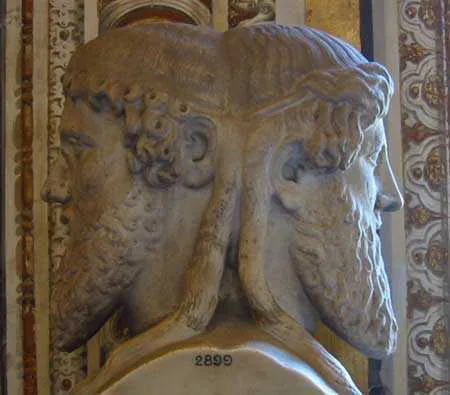
Relief sculpture of the God Janus

January is when people buy diaries, calendars and almanacs. January is named after the Roman God Janus. He faces both ways, to the old year and forward to the New Year. January is Ionawr in Welsh. An ceud Mhios Biadhna in Gaelic meaning ‘the first month of the year’.

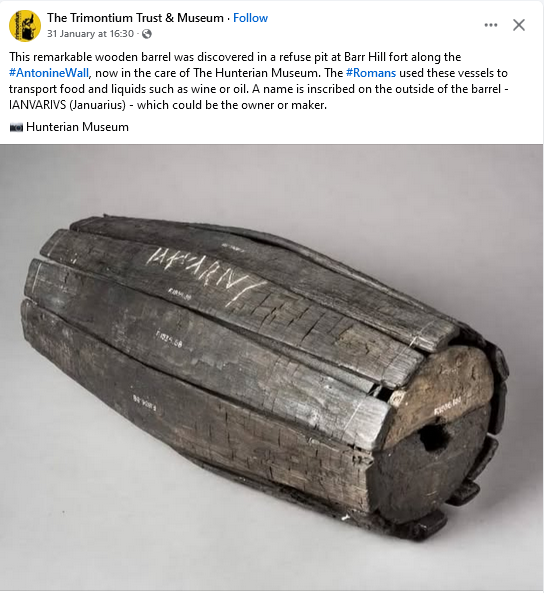
This is a Roman Barrel from Scotland is shown on the Trimontium Web Site with the name Januarius on it.

Almanacs

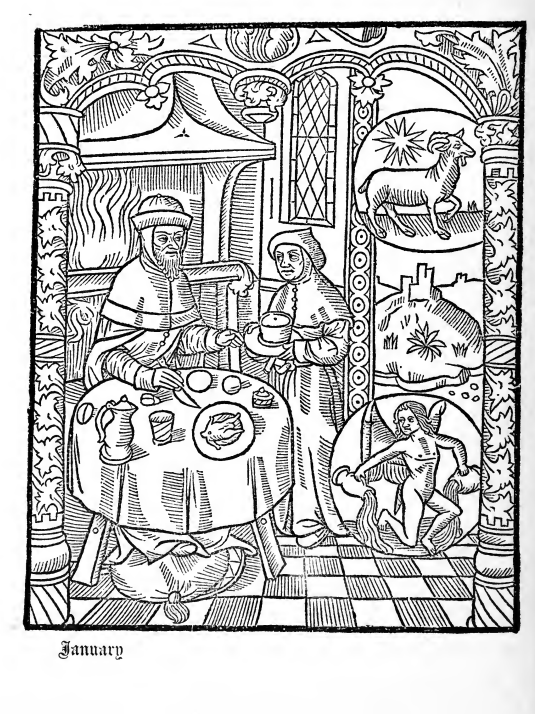
Arguably, they grew from medieval manuscript Books of Hours. The 1493 Kalendar of Shepherds, published in Paris, was particularly important. Each month has a succinct description of the activity. Moreover, there was important information for farmers and others. Eventually, a British version was made.

From the Kalendar of Shepherdes (illus. 1529)

Kalendar of Shepherds

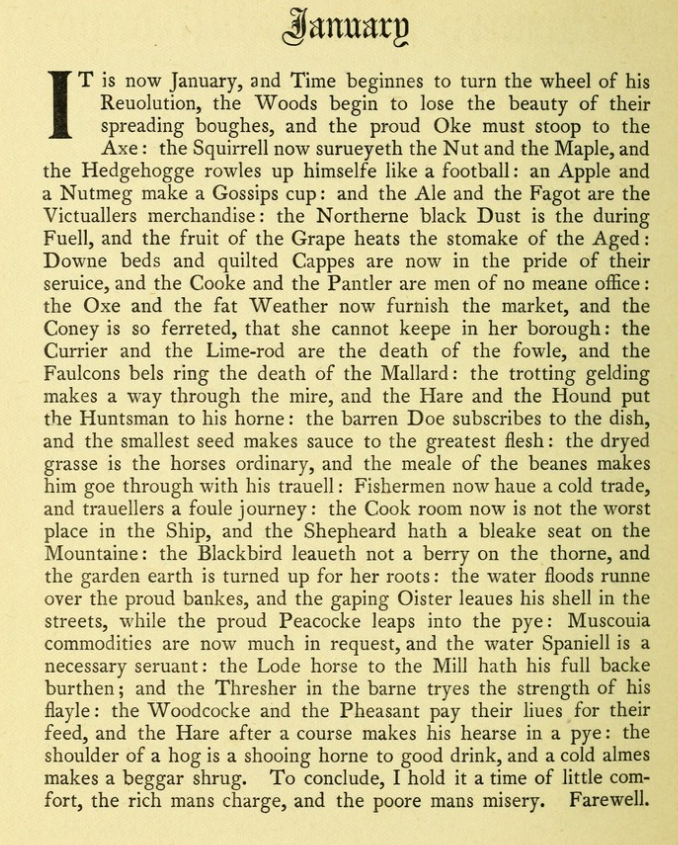
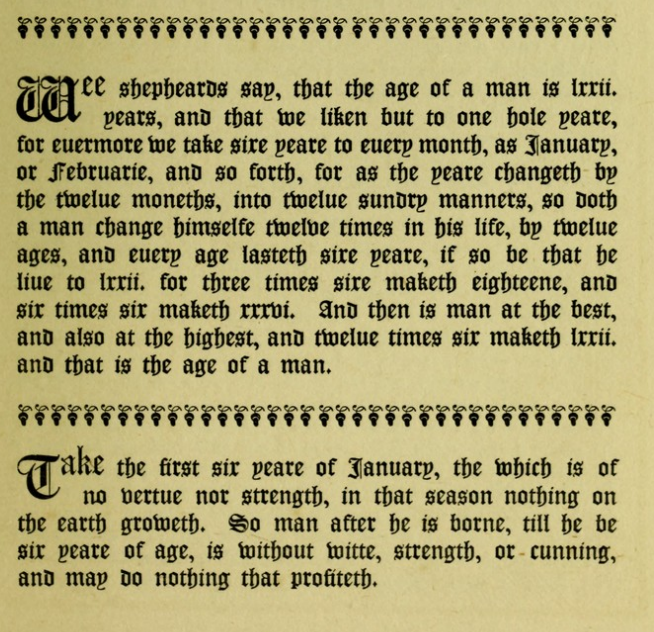
The Kalendar of Shepherds was printed in 1493 in Paris and provided ‘Devices for the 12 Months.’ I use a modern (1908) reconstruction of it using wood cuts from the original French and adding various text from English 16th and 17th Century sources. The text of the month (as shown above) is provided from a 17th Century source. It gives an interesting view of the countryside in January. To see the full Kalendar, look here:

Nicholas Breton, the writer of the text above, concludes that January:

‘is a time of little comfort, the rich man’s charge, and the poore man’s misery.’

The rich man is burdened by having to help out all the poor people who depending upon him to get through the shortages of winter. The image for January shows that January is best spent indoors by a roaring fire, eating pies.

Months of Your Life

The Kalendar introduces a ‘conceit’ which is that the year mirrors our lives, and we can forecast what will happen in our lives by looking at the months.

Kalendar of Shepherds January text
Kalendar of Shepherds, January text

So our lives, which are of 72 years, can be divided into 12 ages of man, each of 6 years. So, January represents the first 6 years of a person’s life. And as you can see, that during these first 6 years, the child is ‘without witte, strength, or cunning, and may do nothing that profiteth‘. As the year changes every month, so, ‘a man change himself twelve times in his life’. At three times 6 (18 or March) a child becomes a man, and 6 times 6 (36 or June) man is at his best and highest. And at 12 times 6 (72 or December) man is at the end of his allotted span.

Shakespeare numbered the Ages of Man as seven, in the great speech of Jacques in ‘As You Like it’ I dealt with this and other Ages of the World in my post:

Growth of the market for Almanacs

By the 1600s almanacs were the most published form of book apart from the Bible. Lauren Kassell in ‘Almanacs and Prognostications’ reports estimates that by 1660 one third of every household had one.

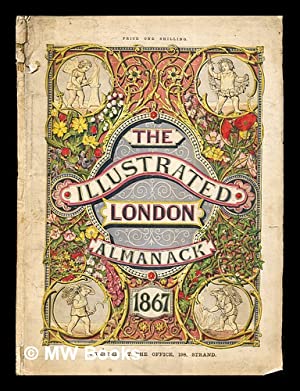
Cover page of the Illustrated london almanack for 1867

Originally, they had a Calendar for each month, and information about the phases of the month, the tides. They gave predictions of the weather, and health issues likely to occur at that time of the year. Astrology was an important element. London Almanacs contained further information about the year, its ceremonies and elections of officials. As this informational side to the almanac grew, they included lists of monarchs, interesting stories, verse foretelling the weather, recipes and cures.

The earliest almanacs were made of wood and were called ‘clog almanacs. You can read more about them on my post here:

The Modern AlmanacOld Moore’s

Old Moore's Almanace  2026 FrontCover Photo
Old Moore’s Almanace 2026 Front Cover Photo

As the New Year dawns, we might turn to an almanac to see what the year has ahead. Newspapers and the web have now taken over largely from almanacs. They print articles about the upcoming highlights of the Political, Sporting, Gardening or the Musical year. But almanacs are still produced. One of the most popular is Old Moore’s which has been in production since 1697. For more on Old Moore’s see my post here. As you can see, they promise to help with your gambling, gardening, fishing and help you through the year with predictions and horoscopes.

Originally published in 2024, republished in 2025. Content moved to new page and expanded 2026.