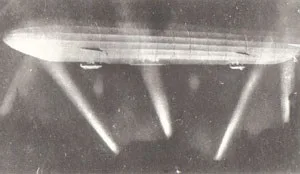
I republished this two days ago, but I think it did not get distributed to subscribers. So I’m posting it again. On May 31st, 1915 Zeppelin LZ38 came into UK airspace over Margate. It proceeded to Stoke Newington in N London at 10.55. It was a dark, moonless night. No searchlights found the ship, no guns fired. 15 aeroplanes scrambled but only one got a sighting. Engine trouble ended the pursuit.
The Zeppelin sailed up to 10,000 feet above London unopposed.
16 Alkhan Road was hit first but with no injuries. In Cowper Road Samual Leggart’s house was hit. In the panic the family got the children out, but found one was missing, found later, burnt to death while hiding under the bed.
187 Balls Pond Road was next to be hit, the Zeppelin following the A10 South towards Central London. Thomas Sharpling and family escaped, but 2 lodgers were found dead, kneeling by their bed praying.
The next bombs landed in Southgate Road, Hoxton and Shoreditch. In Hoxton Street a Russian Nightwatchman was attacked coming out of a burning building, mistaken for a German saboteur. The following days, ‘German’ shops in the area were attacked.
The attack continued to Bishopsgate Goods Yard, Spitalfields, Whitechapel, as the Zeppelin began its journey home via Whitechapel and Commercial Street. A bomb in Christian Street injured 9 pedestrians and killed one 8 year old boy. Then to Stepney, Stratford, Leytonstone where 6 bombs were dropped.
The raid took 20 minutes to traverse Central London 7 premises were destroyed. 7 dead.£18,000 of property damage. 91 incendaries, and 28 High Explosive bombs were dropped plus 2 grenades.
Source London 1914-17 The Zeppelin Menace by Ian Castle.
Last year, on an archaeological reunion to Ferrara we attended the Ferrara Pallio. Museum of London archaeologists, in the 1980’s worked with Italian archaeologists excavating medieval town houses in the centre of the historic town of Ferrara. Here is a video of the history of Ferrara and the excavations which includes a picture of a young me. (I’m standing up in grey cap-sleeved t-shirt.)
The Pallio is a traditional event taking place since 1259. The town is divided into 8 contrade and each mounts a procession to the centre. Here there is some tremendous flag waving and hurling accompanied by drums and trumpets. Then the procession to the Piazza di Ariosto, where there is a stadium for a horse track. The procession marches around the stadium. Then there are foot races, a donkey race and finally a horse race. There is intense rivalry between the groups but a lovely atmosphere.
Spectators have to be patient during the events to allow the joy of the winners to be shared with the winning contrade. The final horse race takes an absolute age to begin because the horses will not settle. Apparently, there is some gamesmanship by trying to exhaust the other teams horses. It certainly exhausted me. And once they got started at very long last they were recalled almost immediately. I decided to go to bed.
But you can see edited highlights on the official Ferrara youtube post here.
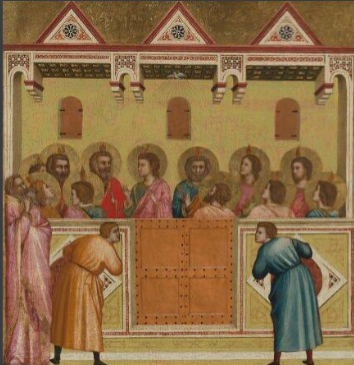
Pentecost by Giotto and Workshop, probably about 1310-18, National Gallery
Today, is Whitsun or Pentecost. (Sun, May 24th 2026). It is celebrated on the 7th Sunday after Easter, 50 days after the Crucifixion. The Day the Holy Ghost descends on the disciples. According to one of my teachers, it gave the disciples the power of expression and turned them from grieving Disciples to self-confident Apostles. They could now begin to spread the Christian message.
The week following is called Whitsuntide. It was one of three holiday weeks enjoyed by the medieval peasants. The villein had to work on the Lord’s land (desmesne) in exchange for the use of farm land. But this week he was free of that obligation.
Whit Monday was a Bank Holiday until 1972. But was then replaced by the Spring Bank Holiday. This was on the last Monday in May and so does not vary unknowably like Whitsun. ( 16 May 2027, 4 June 2028).
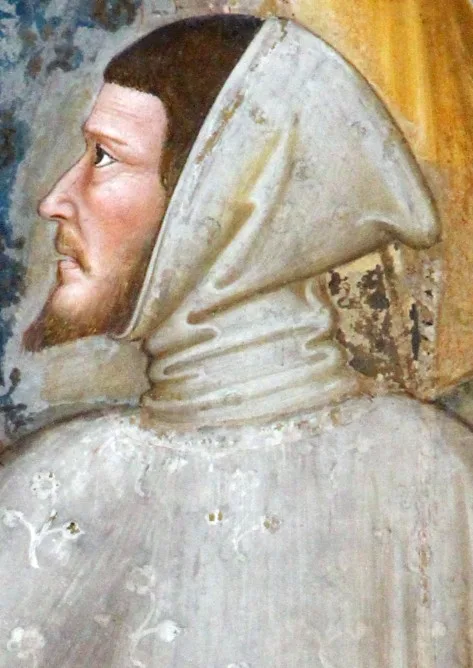
Giotto di Bondone
Giotto in Santa Maria Novella, Florence By Sailko – https://commons.wikimedia.org/wiki/ File:Andrea_di_bonaiuto,_via_veritas,_chiesa_trionfante_17.JPG, CC BY 3.0, https://commons.wikimedia.org/w/index.php?curid=189631337
Giotto’s painting shows the Apostles with their halos in the chamber. There are 12 of them, St Matthias having replaced the dead, Judas. The Holy Spirit is represented by the little dove in the centre of the Ceiling. The narrative is carried by the two men in the foreground leaning towards each other. We imagine them saying something like ‘What’s all this about! Galilean nonentities, lost their guru and yet, confident, speaking authoritatively to all and sundry? ‘
Giotto was a forerunner of the Renaissance. According to the great Giorgio Vasari (30 July 1511 – 27 June 1574) who wrote about the advances in painting achieved by Italian artists:
‘that very obligation which the craftsmen of painting owe to nature, who serves continually as model to those who are ever wresting the good from her best and most beautiful features and striving to counterfeit and to imitate her, should be owed, in my belief, to Giotto, painter of Florence, for the reason that, after the methods of good paintings and their outlines had lain buried for so many years under the ruins of the wars, he alone, although born among inept craftsmen, by the gift of God revived that art, which had come to a grievous pass, and brought it to such a form as could be called good.‘
The miracle was that this boy, a poor shepherd with no training in art, was able to show nature its true face.
‘One day [the artist] Cimabue, going on business from Florence to Vespignano, found Giotto, while his sheep were feeding, drawing a sheep from nature upon a smooth and solid rock with a pointed stone, having never learnt from anyone but nature.’
Moving towards Perspective
One of the points Vasari is making is that Byzantine Art had lost the use of perspective, something the Romans knew. Paintings had become cartoon-like spaces with no real three-dimensionality. Groups of people seemed to be standing on each other’s shoulders. If you look at the painting above you will the room the Apostles are in has the beginnings of a realistic space, the rafters slope down to a vanishing point. The Apostles are ranged convincingly around the space. Their faces are rounded and realistic. They are separated from the outside world by a dividing wall. And two dudes at the front are convincingly on the ground, rather than hovering in midair (though I might have cropped the photo too closely!)
It would be over one hundred years before photo realistic portraits and realistic perspective paintings were rediscovered, but Giotto showed the way.
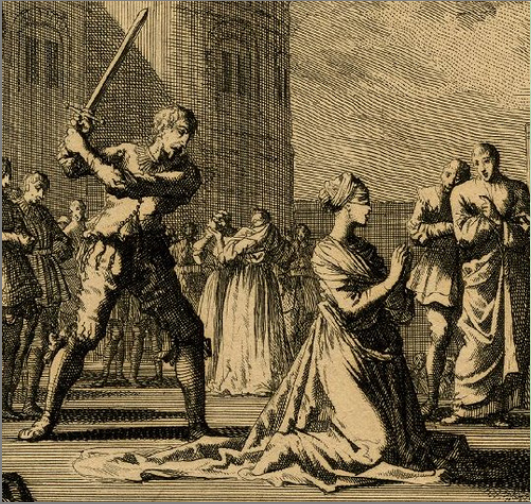
The beheading of Anne Boleyn began at 8am with her speech.
‘Good Christian people, I am come hither to die, for according to the law, and by the law I am judged to die, and therefore I will speak nothing against it.
I am come hither to accuse no man, nor to speak anything of that, whereof I am accused and condemned to die, but I pray God save the King and send him long to reign over you, for a gentler nor a more merciful prince was there never: and to me he was ever a good, a gentle and sovereign lord.
And if any person will meddle of my cause, I require them to judge the best. And thus I take my leave of the world and of you all, and I heartily desire you all to pray for me. O Lord have mercy on me, to God I commend my soul.’
She was blindfolded. She knelt down, putting her neck on the block and repeated:
‘ToJesus Christ I commend my soul; Lord Jesu receive my soul.’ The French Swordsman then chopped off her head.
Recorded by Edward Hall (spelling modernized)
Henry ViiI had allowed his wife the mercy of a French expert swordsman from English Calais. According to a letter from William Kingston to Thomas Cromwell:
‘And then she said “I heard say the executioner was very good, and I have a little neck,” and put her hand about it laughing heartily.‘
Here is a slightly annoyingly American youtube feature recreating what Anne Boleyn might have looked like. (adverts may preceed it from which I derive no advantage!).
You might like to read about Queen Elizabeth I’s nicknames for her chief advisers, here.
1798 – Napoleon Bonaparte and his expeditionary force leave France to invade Egypt. The idea was to reduce British influence in the Eastern Mediterranean and in India. But Nelson defeated the French Navy in the Battle of the Nile and Napoleon returned to France to take over control. The British took over the booty the French had seized and the Rosetta Stone came to the British Museum.
1962 – Marilyn Monroe sang “Happy Birthday” to John F. Kennedy at Madison Square Garden.
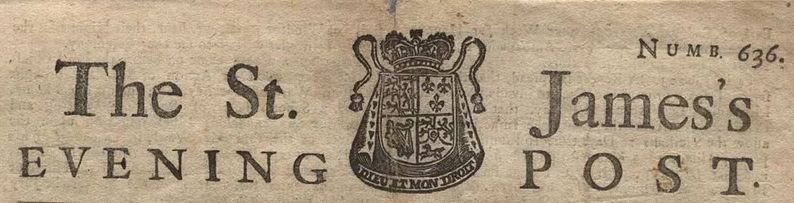
Mast head of the St James Evening Post (June 1719), the paper that carried the accusation of Sodomy
On 16th May 1719, the St James Evening Post (later called the Evening Post) reported on the Guilty Verdict returned against ex-servants Stephen Margrove and John Wood. The two men were accused of extorting money by threatening to expose George Smith as a sodomist (then punishable by death).
The Proceedings of the Old Bailey Archive gives details of the case. This took place in the Parish of St. Martins in the Fields (near what is now Trafalgar Square), on 18th, January 1718. George Smith told the Court that:
‘ the Prisoners came up to him (and John Wood took him hold by the Collar of his Coat) and demanded his Money, and said if he would not give it them they would take away his Life and swear Sodomy against him; that by means of this Violence, and being under a Terror, and in great-Fear he gave them what he had in his Pocket.’
But they wanted more and forced Smith to take them to his Master’s House in Golden-Square. Here, he gave them another Guinea, to add to the 22 shillings they had already extorted.
The Accusation of Sodomy
Margrove and Wood protested that Smith: ‘came up to Wood while he was making Water, and took hold of his Yard, using some unseemly Expressions, whereupon he (Wood) called out a Sodomite‘.
At this accusation, Smith ‘fell on his Knees, and begg’d them not to expose him‘ and gave them the money. So, the accused argued it could not be ‘robbing on the High Way‘ because their victim gave them the money.
The Defence
The Court held that the threats, and violence they used made them guilty of Violent Robbery. The men called witnesses to their good employment record, but were unable to show any evidence of ‘how they spent the last 6 Months of their Lives.’ And so the Jury found them Guilty, and the judge put on the Black Cap to pronounce the death sentence.
The Verdict
On the 8th of June 1719 10 people, 7 men and 3 women were sentenced to hang, but 5 were reprieved. Wood, aged 22, and Margrove, aged 21, were however, executed. Rictor Norton in ‘Homosexuality in 18th Century England has more details, including the confessions of the two extortionists.
For a tale about Body snatchers look to the bottom of my post here:
On This Day
1920 – In Rome, Pope Benedict XV canonizes Joan of Arc. Joan was executed in Rouen in 1431. In 1449 Rouen was liberated from the English, and Joan’s mother and brothers petitioned the Pope for a repeal of her condemnation for heresy. She was officially exonerated on 7 July 1456, She became a ‘folk-saint’ particularly for soldiers but it took until Pius X proclaimed her venerable on 8 January 1904. The Decree of Beatification formally passed on 24 January 1909. World War 1 saw her leading the French army to war, and Sainthood followed.
1929 – the firstAcademy Awards ceremony takes place. Charlie Chaplin and Warner Brothers were given honorary awards.
First Published in 2024, and republished in 2025, 2026
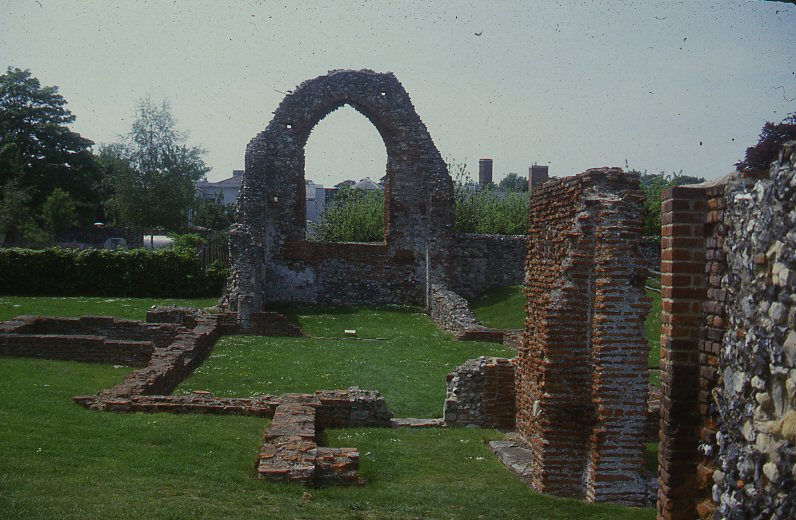
Ruins of St Pancras, Canterbury Photo: K Flude (note the reused Roman Bricks.)
St Pancras and the Ice Saints
It has been unusual cold in the last few days. You can blame this on the St Pancras and the Ice Saints. These are saints with feast days from May 11th to May 14th. They are: St. Mamertus, St. Pancras, and St. Servatius (and in some countries, Saint Boniface of Tarsus – Wikipedia). They represent a medieval belief that there was often a cold snap in early May. So the idea of the Ice Saints was probably to help persuade farmers to delay sowing until later in May. But modern statistics disprove this, but it is true that a late frost can cause havoc with crops.
St Pancras in Rome
He was a 14 year old who refused to give up his Christian Faith during the persecution of Christians by the Emperor Diocletian. He was beheaded on the Via Aurelia, in Rome, traditionally, on 12 May 303 AD. His body was buried in the Catacombs, but his head is kept in a reliquary in the Church of Saint Pancras in Rome.
Pancras means ‘all-powerful’ in Greek. His youth makes him the Patron Saint of children, but he is also the patron saint of jobs and health. He is ‘invoked’ against cramps, false witnesses, headaches, and perjury.
St Pancras in Canterbury
Pope Gregory is said to have given St Augustine relics from St Pancras when his mission came to Kent in 597AD. They built a church dedicated to St Pancras in Canterbury. The ruins still survive in the grounds of what is now St Augustine’s, Canterbury (see picture at top of this post).
St Pancras in London
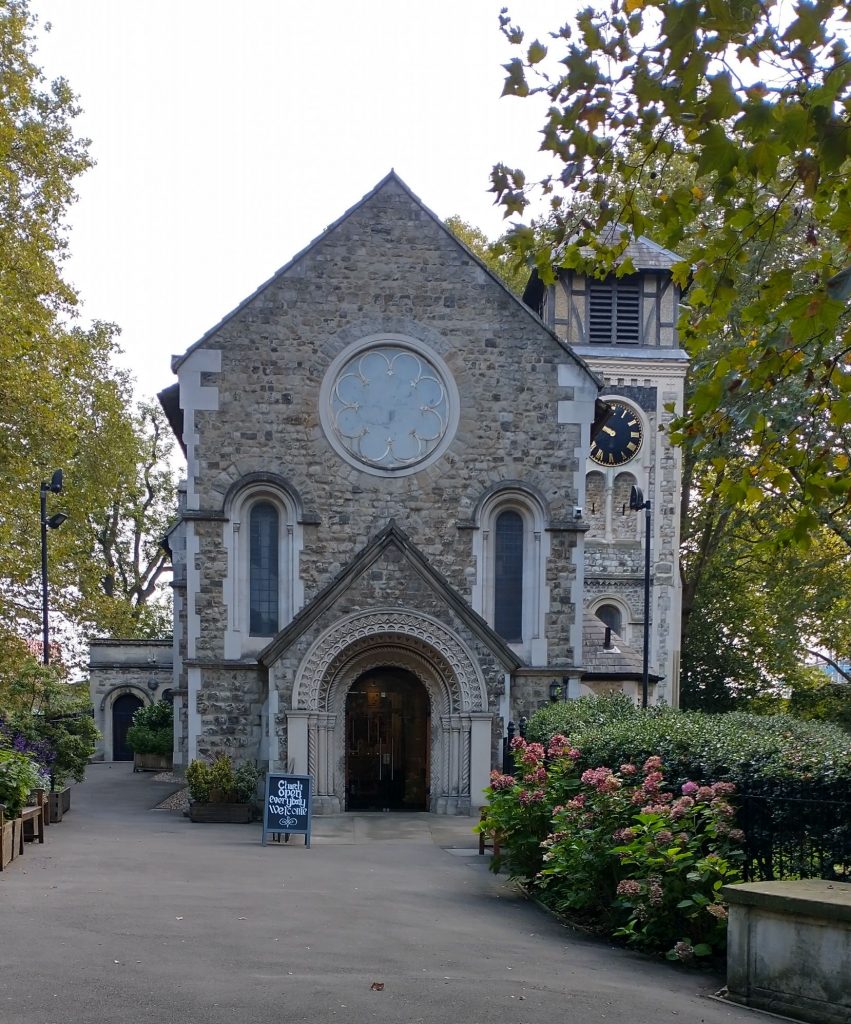
St Pancras, Old Church, London (Photo: Kevin Flude)
This story is partly responsible for the claims that St Pancras Old Church, in Camden (pictured above) is a very old foundation. It is claimed there was a late Roman place of worship here. But there is very little solid evidence for this. It is also argued that, if it isn’t late Roman, then it dates to just after 604AD. This is when St Mellitus, sent by St Augustine, established St Pauls Cathedral. It is suggested that Mellitus also founded St Pancras Church. St Pancras’ Church was a Prebend of St Pauls Cathedral (a Prebend provides the stipend (pay) to support a Canon of a Cathedral). But this is not evidence it was established as early as the Cathedral was, and there really isn’t any other credible evidence for a 604 date.
When the Church was restored, the architects said it was mostly Tudor work with traces of Norman architecture. However, it was reported that a Roman tile or two were reused in the fabric. This is about the only evidence, but it helps keep the legend going.
If you read the Wikipedia page, you will see evidence of two strands to the contributions. One is playing down the legends of its early foundation. The other trying to keep hold of its place as among the ‘earliest sites of Christian worship’. Read the wikipedia page here: https://en.wikipedia.org/wiki/St_Pancras_Old_Church to make up your own mind.
It is a lovely Church, on an impressive site, with links to Thomas Hardy, and Sir John Soane whose tomb is the design inspiration for the iconic Red Telephone Box.
As Patron Saint of Headaches, St Pancras Day is a good day to make worms come out of your head. Or so say the Fairfax Household Book of the 17th/18th Century as quoted in Charles Kightly’s ‘The Perpetual Almanac’:
‘To make a worm come out of the head. Take, in May, the marrow of a bull or cow, and put it warm into the ear, and the worm will come forth for sweetness of the marrow.’
Generally,willow bark was used for headaches. We know this would have worked as the bark contains salicin, which is converted by the body into salicylic acid. This is a precursor to aspirin (acetylsalicylic acid). But it is not as effective.
On This Day
113 – Trajan’s Column is finished in Rome. Reliefs sculptures on the Column celebrate his victory over the Dacians. There is a copy made of plaster on display at the V&A. The sculptures provide a prime document on the Roman army.
1593 – London playwright Thomas Kyd is arrested and tortured. He lived with Christopher Marlowe. In the search of their rooms, it was claimed they found evidence of atheism and blasphemous documents, including the claim that Jesus was homosexual. Kyd claimed the documents were Marlowe’s. Marlowe was awaiting news of whether he was going to prosecuted, when he was murdered in a tavern in Deptford, possibly by Government agents.
First Published in 2024, revised 2025 OnThis day added in 2026
A swarm in May Is worth a load of hay A swarm in June Is worth a silver spoon A swarm in July Is not worth a fly.‘
‘Five Hundred Points of Good Husbandry’ published 1573, suggests we should:
‘Take heed to thy Bees, that are ready to swarm, the loss thereof now, is a crown’s worth of harm.’
According to Hillman’s ‘Tusser Redivus’ of 1710, swarming in May produces particularly good honey. ‘Their hours of swarming are for the most part between the hours of ten and three, and they ought to be watched every day.’ He advises following the bees to retrieve them:
‘You are entitled by custom to follow them over anyone’s land and claim them … but only so long as you ‘ting-tang’ as you go, by beating some metal utensil – the sound whereof is also said to make your bees stop.’
Much of the above is quoted from The Perpetual Almanac of Folklore by Charles Kightly.
Queen Bee
Bees swarm when a new Queen Bee takes a proportion of the worker bees to form a new colony. They will latch unto a branch or a shrub, even a car’s wing mirror. Then sending worker bees out searching for a suitable new home, such as a hollow tree. There may be hundreds or even thousands in the new colony. This may be very alarming. But, at this point, they will not be aggressive as they do not have a hive to protect. Look here for more information on swarming.
Sweet, Long Distance Flyers
An average hive will produce 25 lbs of honey, and the bees will fly 1,375,000 miles to produce it. This is like flying 55 times around the world (according to the British beekeepers Association (and my maths)) https://www.bbka.org.uk/honey
Swarming in Hackney
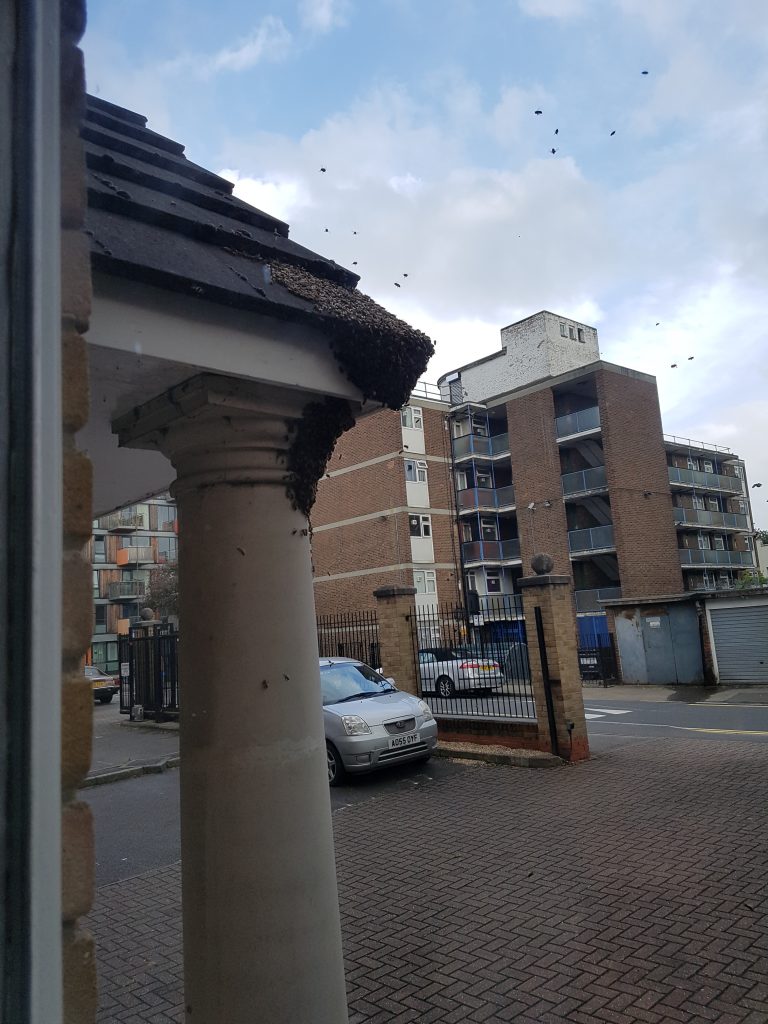
Swarm of Bees, Hackney (Photo Kevin Flude 30th May 2018). The Swarm is at the top of the Column and on the edge of the porch roof.
In 2018, on 30th May, I was perturbed to find a swarm of Bees hanging outside my front door. Frightened of leaving my house, I rang a local beekeeper, who came to take possession of the Bees and take them to a new home. By the time he came, they had moved 20 yards to a Buddleia bush.
Swarm of Bees, having moved 20 yards to a second perch, being ‘rescued’ by a bee keeper. You can see the swarm above his head.
Helping Bees
Bees are still having a hard time as their habitats are diminishing and threats increasing. In July, DEFRA hosts Bees’ Needs Week 2026: 13 to 19 July. This aims to increase public awareness of the importance of pollinators.
They suggest we can help by these 5 simple actions
Grow more nectar rich flowers, shrubs, and trees. Using window or balcony boxes are good options if you don’t have a garden.
Let patches of garden and land grow wild.
Cut grass less often.
Do not disturb insect nests and hibernation spots.
Think carefully about whether to use pesticides.
Patron Saints of Bees include: St. Ambrose, St. Gobnait, and St. Valentine. Click here to see my post of St Valentine.
On This Day
1821 – Napoleon dies in exile on the island of Saint Helena.
1835 – The first railway in continental Europe opens between Brussels and Mechelen, which is 36 kms.
1964 – Europe Day is launched by the Council of Europe but the European Union celebrates Peach and Unity in Europe on May 9th
First Published 2024, revised 2025, rearranged 2026
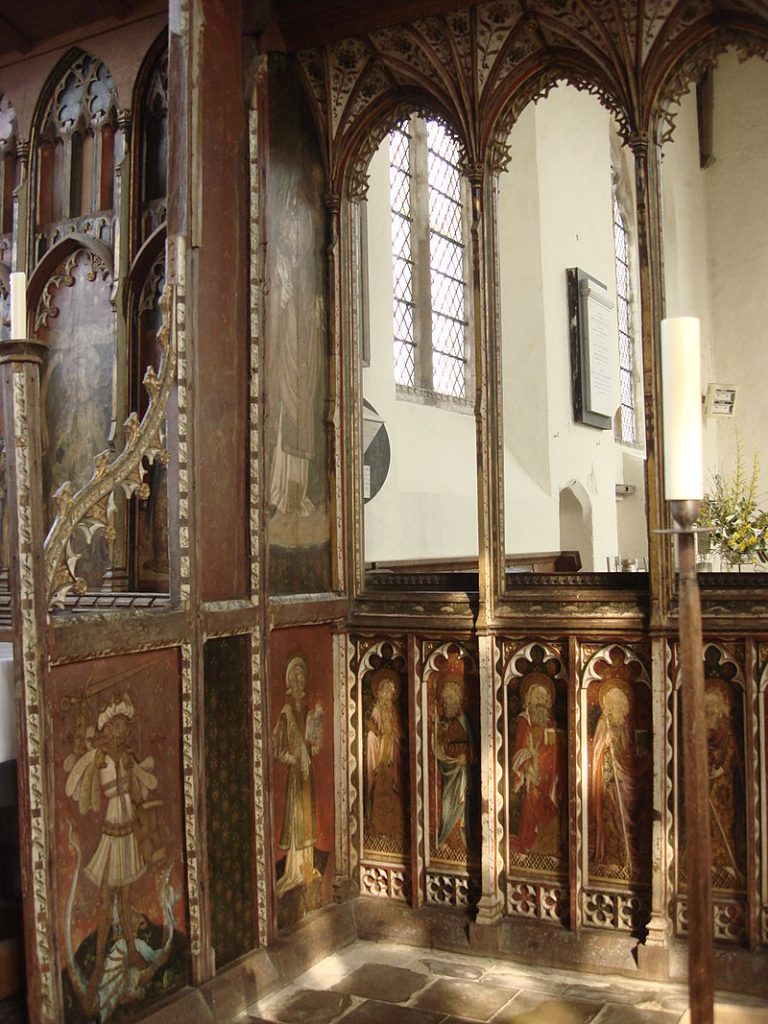
Rodmas – Rood screen in St. Helen’s church, Ranworth, Norfolk by Maria CC BY-SA 3.0
Rood is another word for the Cross. Parish Churches used to have a Rood Screen separating the holy Choir from the more secular Nave. This screen was topped with a statue of the Crucified Jesus nailed to a Rood. So, Roodmas, is the festival of the Holy Cross. Roodmas is celebrated on May 3rd and September 14th, although the Church of England aligned has itself with the Catholic Church’s main celebration on September 14th.
See my post on September 14th here for more on the True Cross.
Object of the Week
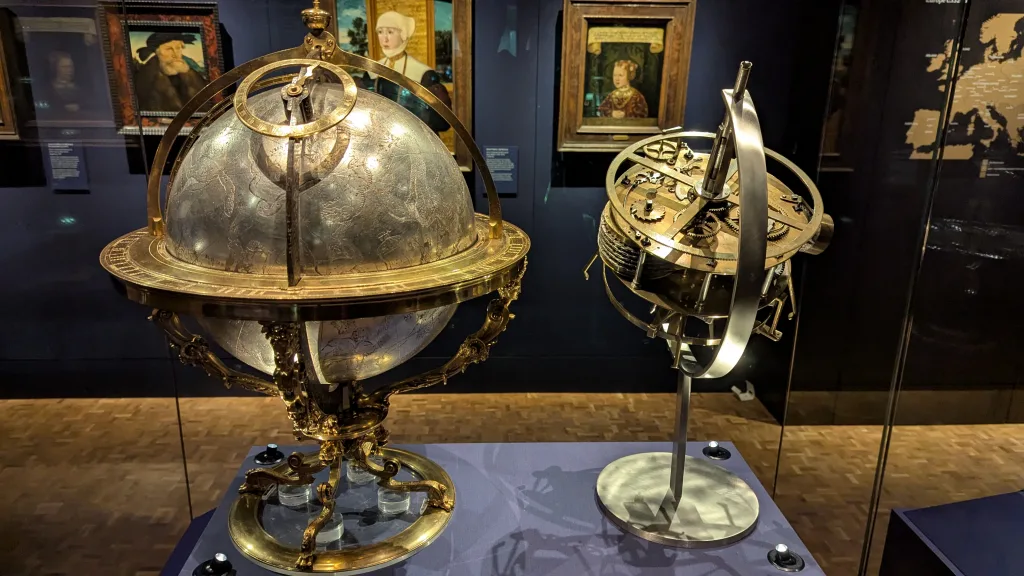
Mechanical Celestrial Globe, 1575 (Holburne Museum Bath) Photo K Flude
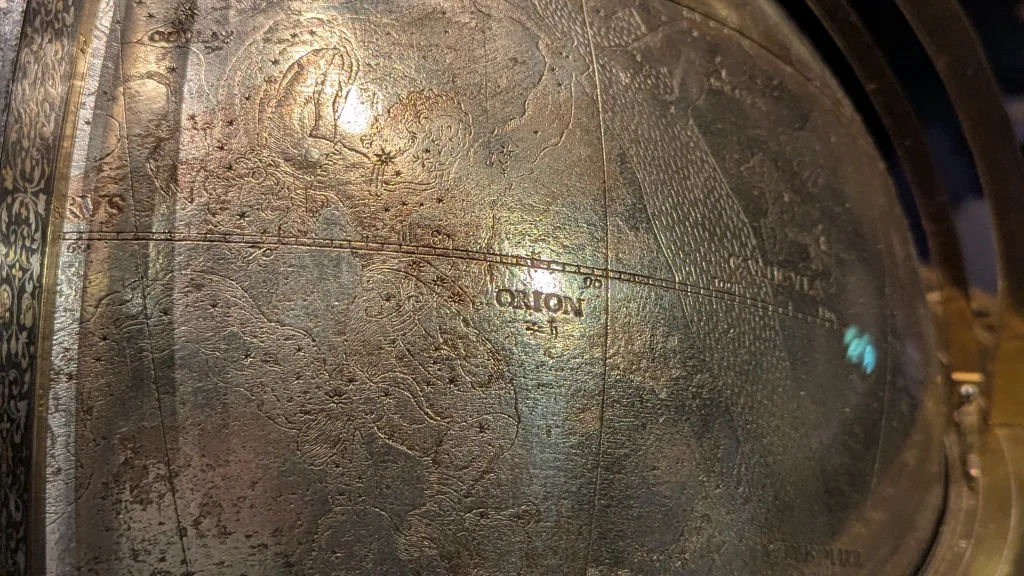
I spent a couple of days in Bath and revisited the Holburne Museum. Here I saw this amazing object from the 16th Century. The Globe is a model of the universe, and built to show the movement of the constellations, but it also tells the time and date. So the user can see when a constellation appears above the horizon and where it will be in real time. The mechanics are designed to be seen from inside the Globe, so reading it from the outside requires a mental adjustment to the mirror image of the stella sphere. It also show a pre-Copernican view as the stars were imagined as if on the inside of a huge sphere circulating around the earth. For more information please read the label below.
Museum Label for Celestial Globe.Close up of the surface of the Globe showing Orion. Photo K Flude
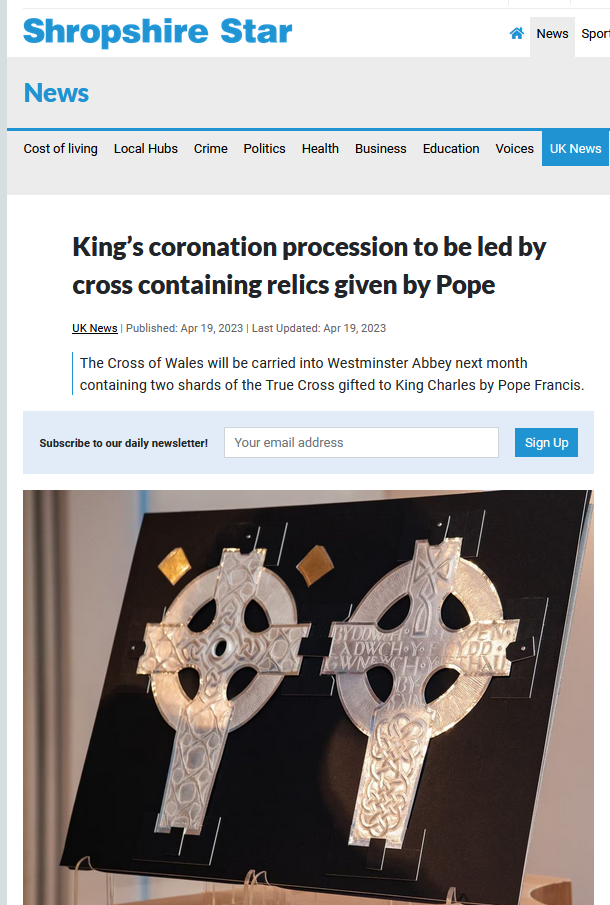
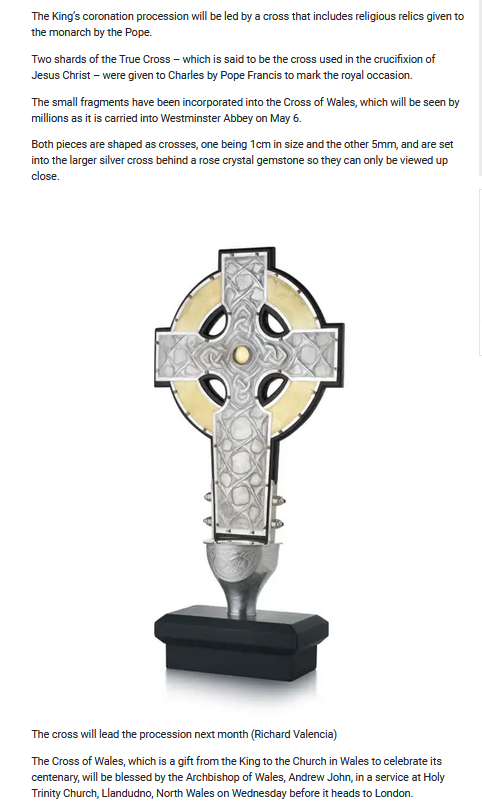
The Shropshire News reported that two pieces of the True Cross were given to Charles III by the Pope for the Coronation. They were installed into a cross called the Welsh Cross. This was part of the Coronation Procession. The King gave the Cross (I assume with the pieces of the Holy Cross) to the Church in Wales. Let the Shropshire News tell the story:
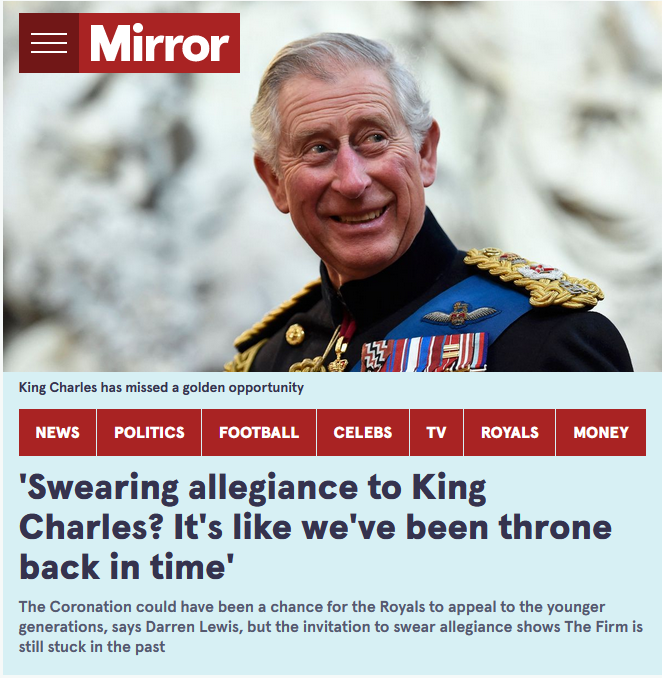
It is a clear reminder that we are subjects not citizens and news, as a nation, we still set store by superstitions.
The Duke of Buckingham and the True Cross
The Duke of Buckingham had a piece of the True Cross in his collection, which he kept at York House in the early 17th Century. How he got it, I don’t know. But I think he must have acquired it in the aftermath of the destruction of the Reformation. John Tradescant, who looked after the Duke’s collection until Buckingham was murdered, had a piece of the True Cross. Tradecant created Britain’s first Museum, Tradescant’s Ark. Again, I suspect (without any evidence) that he got the fragment from Buckingham. Was he gifted it? Did he acquire it after the murder? Or shiver off a timber fragment hoping no one would notice?
First Written on May 3rd 2023, revised 2024, 2025, Object of the Day added 2026
The Stinking Idol : An Imagined Scene at the Maypole at St Andrew Undershaft
This post is about the end of the Maypole in London but first:
On This Day
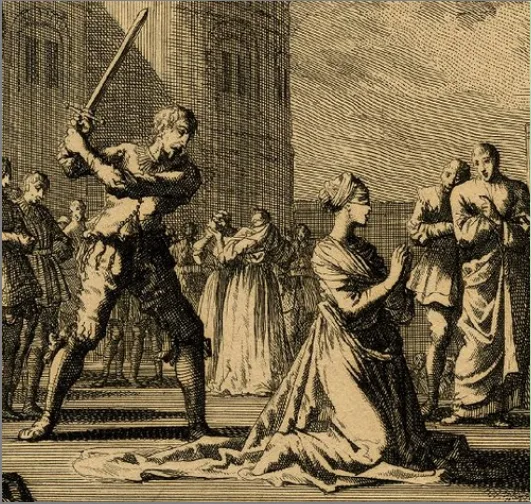
Old Print of the French Executioner dispatching Anne Boleyn with a sword rather than an axe.
1536 – Anne Boleyn arrested on ‘charges of adultery, incest, treason and witchcraft.’ But, Claire Ridgway in her post here and her book, show that she was never accused of witchcraft in court. The stories of extra fingers, and teats, are all later Catholic propaganda aimed at weakening Elizabeth’s claims to the throne. She was accused of adultery. Five men were executed for sleeping with her: her brother George Boleyn, (Lord Rochford); Sir Henry Norris, groom of the stool; courtier Sir Francis Weston; courtier William Brereton, and musician Mark Smeaton. Incest with her brother (one possible explanation of the incest is the idea that she desperately needed a baby and if she needed a surrogate then her brother was safest as the child would have a family resemblance to her and not rouse any suspicions from Henry of adultery. The other explanation is that Anne never commited incest!). Treason, well sleeping with someone other than the King risked imperilling the blood line of the Royal Family. It also gave a motive for killing the king.
A new portrait has been claimed to be of Anne Boleyn, the only one to have been done in her lifetime. But it has been revealed by AI, and some art historians are not convinced. Follow this link to see for your self.
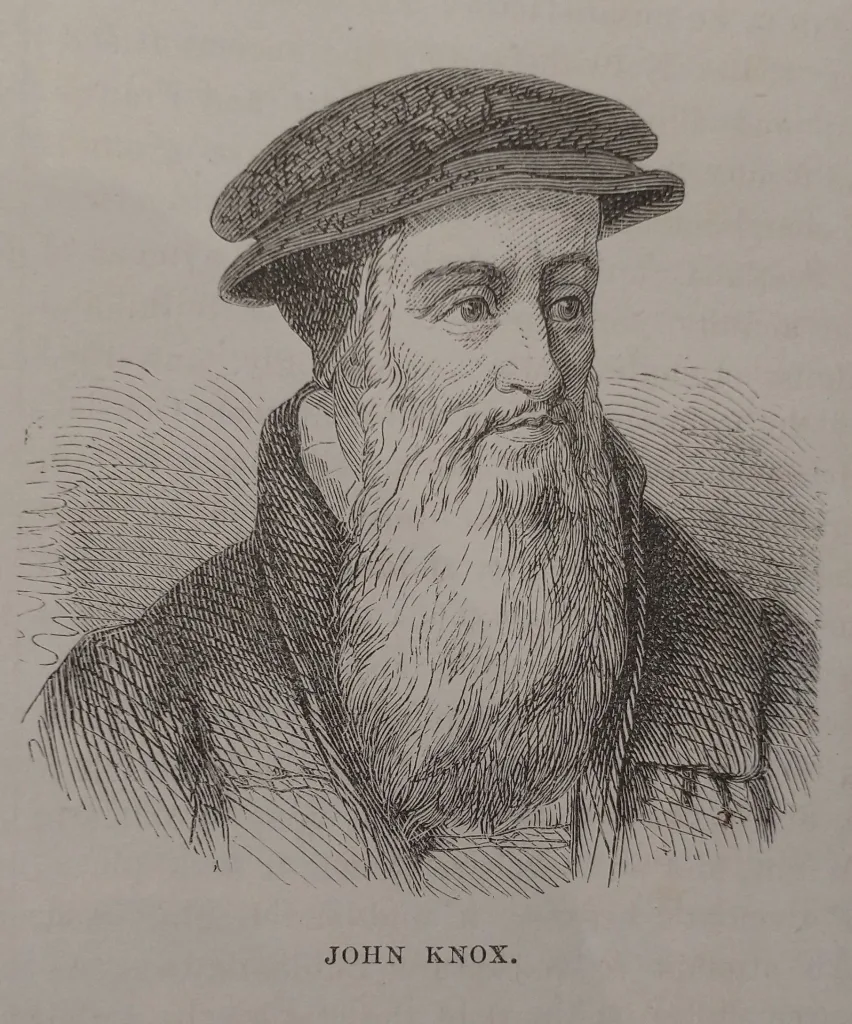
1559 – John Knox returns from exile to Scotland to lead the Scottish Reformation.
1568 – Mary, Queen of Scots, escapes from Lochleven Castle. You could blame John Knox for the hostility Mary faced as a Catholic governing a country rapidly turning Presbyterian.
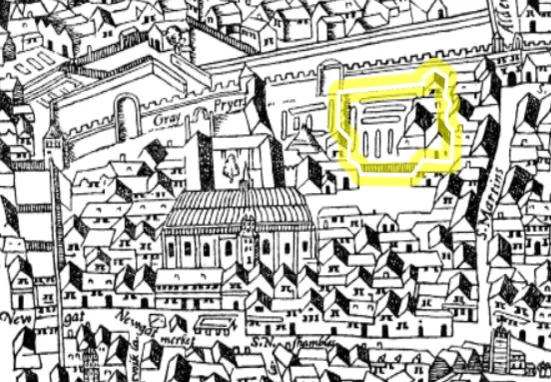
1611 – The King James Version of the Bible is published by printer Robert Barker. His printshop was at Northumberland House, Aldersgate Street, in the City of London. (as far as I can see no one else seems to know where the printing was done.)
Northumberland House marked in yellow nearAldersgate. The Map of Early Modern London, Edition 7.0, edited by Janelle Jenstad, U of Victoria, 05 May 2022, mapoflondon.uvic.ca/edition/7.0/NORT2.htm. INP.
The Printer then went on to create the worst possible error in publishing history by omitting the word NOT in the 6th or 7th Commandment, ‘Thou Shalt Commit Adultery’. This edition became known as the Wicked Bible. Barker & Howard are still in the publishing industry and have offices in the East End of London.
The King James Bible introduced many phrases into the English language, including:
The apple of his eye The four horsemen of the apocalypse Baptism of fire Chariots of Fire O death, where is thy sting? Like a thief in the night Weighed in the balance and found wanting
1670 – King Charles II of England granted a charter to the Hudson’s Bay Company. In 1917 my 17 year old Grandfather sailed to the Hudson bay as an able seaman for the Hudson’s Bay Company.
1982 – The British nuclear submarine HMS Conqueror sunk the Argentine cruiser ARA General Belgrano. It was controversial as the Belgrano was outside the Exclusion zone, and said to be sailing away from the conflict. 323 Argentine sailors were killed. The event, arguably, changed Mrs Thatcher political fortunes.
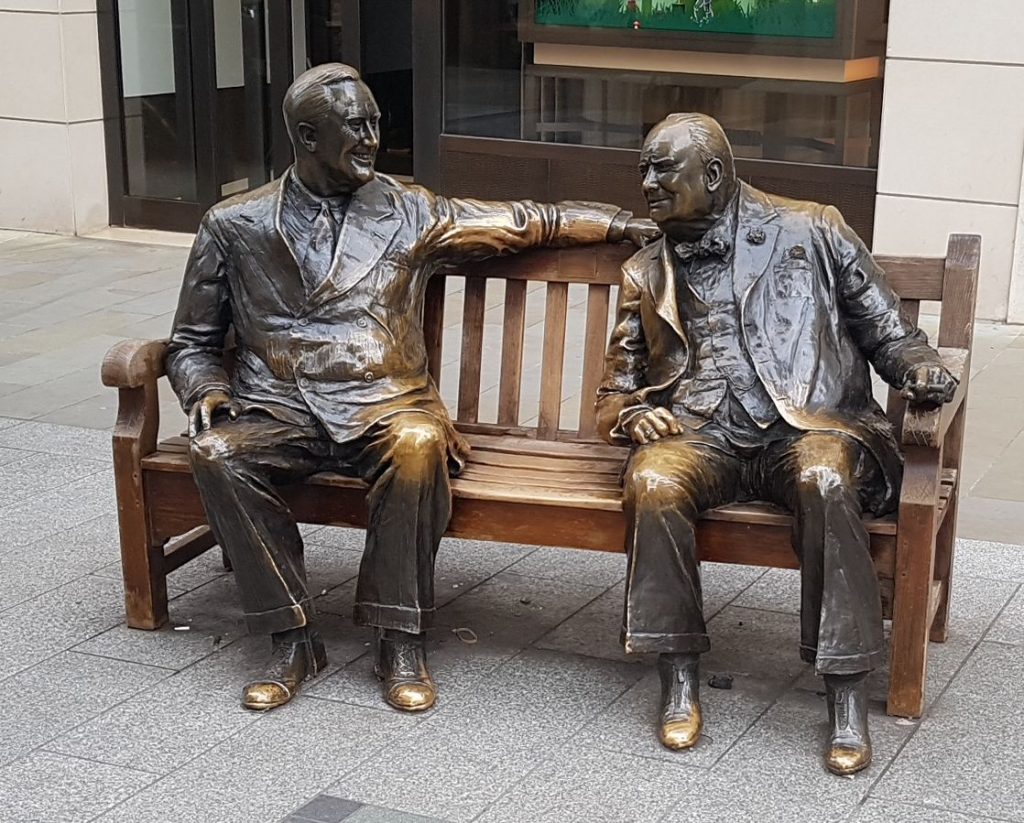
1995 – Allies Statue unveiled. The Statue of Churchill and Roosevelt set up to commemorate 50 years of peace. 30 years later, how we wonder what Churchill and Roosevelt would say about the current state of NATO? https://www.iwm.org.uk/memorials/item/memorial/11351
‘Allies’ Roosevelt and Churchill by by Lawrence Holofcener, unveiled on May 2nd 1995 by Princess Margaret and Lord Snowdon
The Maypole or rather ‘This Stinking Idoll’
Philip Stubbes, wrote a vitriolic attack on pagan practices in his ‘Anatomy of Abuses in 1583’. He fired a broadside at the tradition of dancing around the Maypole. He said they had: ‘as Superintendent and Lord ouer their pastimes and sportes: namely, Sathan Prince of Hell‘ as they erected ‘this stinking Idoll’. By which he meant the Maypole. Stubbes suggested that of the maids who went out to the woods on May Eve, less than one-third returned ‘undefiled‘.
Evil May Day Riots
The Maypole was stored at St Andrew Cornhill, which became known as St Andrew Undershaft. In 1517, it was attacked during the ‘Evil May Day riots’. The main focus of the riot was foreign workers. The Under Sheriff of the time, Thomas More, tried to quell it, meeting the rioters at the corner of Cheapside and St Martin’s Legrande. But 5,000 troops commanded by the Duke of Northfolk was necessary to regain control of the City. 300 rioters were arrested. One hanged, drawn and quartered, 13 hanged and nearly 300 pardoned after the intercession of Woseley and/or Katherine of Aragon (depending on which historian you read). The shaft was returned to its place under the eves of the houses in Shaft Alley. But apparently banned from being raised again.
1549 May Day Riots
However in 1549, the curate of nearby St Katharine Cree Church made an inflammatory speech. This incited a Puritan mob, who cut the shaft into pieces and burnt it. I always imagine the Curate’s sermons to be along the same lines as Phillip Stubbes attack on the Maypole.
Maypole: this Stinking Idol, Rather
Here is a longer description of the May Day Celebrations by Stubbes.
‘But their chiefest iewel they bring from thence is the Maie-poale, which they bring home with great veneration, as thus: They haue twentie, or fourtie yoake of Oxen, euery Oxe hauing a sweete Nosegaie of flowers tyed on the tip of his homes, and these Oxen drawe home this Maie-poale (this stinking ldoll rather) which is couered all ouer with Flowers and Hearbes, bound round about with strings from the top to the bottome, and sometimes painted with variable collours, with two or three hundred men, women and children following it, with great deuotion.
And thus being rearedvp, with handkerchiefes and flagges streaming on the top, they strawe the ground round about, bind green boughes about it, set vp Summer Haules, Bowers, and Arbours hard by it. And then fa! they to banquet and feast, to leape and daunce about it, as the a Heathen people did, at the dedication of their ldolles, whereof this is a perfect patteme, or rather the thing it selfe. I haue heard it crediblie reported (and that viua voce) by men of great grauity, credite, and reputation, that of fourtie, threescore, or a hundred Maides, going to the wood ouemight, there haue scarcely the third part of them returned home againe vndefiled.‘
The unraised pole seems to have survived until the beginning of the Civil War, (1644) when it was destroyed. But at the Restoration of Charles II a new and huge Maypole was ordered. It was joyously erected 134 ft high (41 metres) in the Strand. This one was danced around till 1713 when it was replaced. The original was sold to one Isaac Newton. He used it to support the biggest telescope in Europe, which was erected in Wanstead by a friend.
And that, my friends, is how you get from Superstition to Science in one easy story.
Old Print of Isaac Newton
Postscript.
I have always told people that the sermon leading to the destruction of the Shaft in 1549 was made at St Paul. I cannot remember where I read this. The suggestion that the Maypole in Cornhill was not used after 1517 seems strange. Why then would an unused maypole rouse a crowd to riot in 1549? Of the sources I have at hand, the London Encyclopedia mentions the riot of 1517 in its entry on St Andrew Undershaft but doesn’t elaborate more. ‘Layers of London‘ says ‘It was last raised in 1517 when ensuing riots led to the celebration being banned.’ which is definitive sounding. But is it? I wonder if it was banned for a year or two, then allowed again, and finally stopped in 1549?
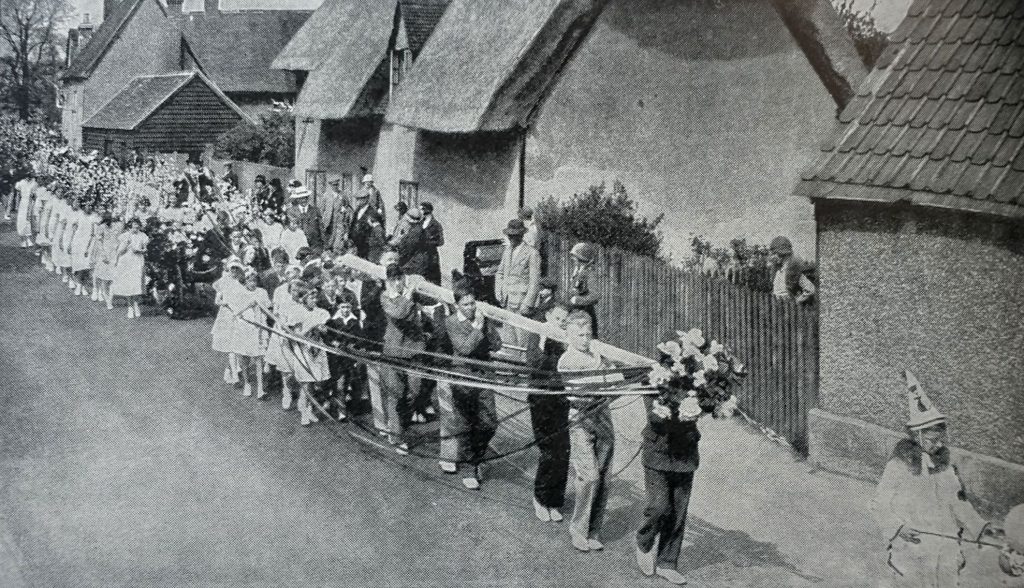
May Day – Bringing the Maypole, Bedfordshire. Image from ‘Romantic Britain’
May morning would commence with dancing around the Maypole, followed by feasting, and summer games. Maypoles were often stored during the year. A few days before May Day they were repainted, and bedecked with May Garlands – mostly made from Hawthorn. The Maypole used in London in 1660 was 134 feet high. Tall straight trees were used, sometimes of Larch, and they might be spliced together to get the requisite height. John Stow says that each parish in London had their own Maypole, or combined with a neighbouring Parish. The main Maypole was on the top of Cornhill, in Leadenhall Street. It was stored under the eves of St Andrew’s Church, which became known as St Andrew’s Undershaft as a result. For more about Maypoles and May Day see my post may-2nd-this-stinking-idol-the-end-of-may-day/.
Padstow May Day Festival
Padstow holds, perhaps, the most famous May Day festival on May 1st. It feels very ‘pagan’ or do I mean it is fuelled by an enormous amount of drink? Here is a video, watch until you see the ‘obby ‘orse and the teaser dancing.
Why May Eve?
The celebrations begin on May Eve because the Celtic calendar starts the day at Dusk. This seems strange to us who, perversely, ‘start’ our day at Midnight just after everyone has gone to bed! The other choice, and maybe the most logical is Dawn? But Dawn and Dusk are difficult to fix. Midnight was chosen by Julius Caesar when he created the Julian Calendar. Midnight has the virtue of being a fixed metric, being half way between Dawn and Dusk. From the Celtic point of view, the day ends when the Sun goes down over the western horizon. So the end of the old day, is the beginning of the new day. Makes sense?
Celebrations centred around the Bonfire. The day was sacred to the fire God Belenus (Gaulish: Belenos, Belinos, British Belinus, Bel, or Beli), and May Day was called Beltane. Bonfires continued to be a part of the celebration into the 16th Century, and in places until the 2st Century. According to folklore tradition, the bonfire should be made of nine types of wood. They must be collected by nine teams of married men (or first born men). They must not carry any metal with them. The fire has to be lit by rubbing oak sticks together or a wooden awl twisted in a wooden log.
Participants, have to run sunwise around the fire. Oatcakes are distributed, with one being marked with a black spot. The one who collects it has to jump through the fire three times. Bonfires would have been, by choice on the top of hills. But then they were also held in the streets in London. May celebrations have a similarity to Halloween. This was also a fire festival and both are uncanny times when sprites and spirits abound.
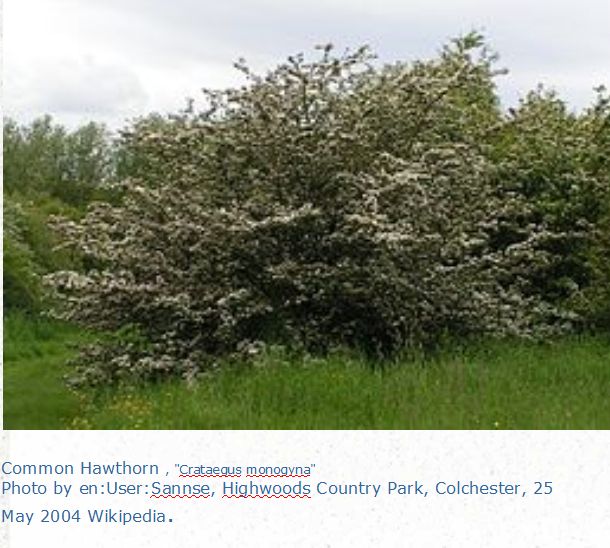
Hawthorn
Hawthorn was a favoured wood not only because of its beautiful may flower. It was also said to be the wood the crown of thorns was made from. Hawthorn had the power of resisting supernatural forces. Therefore, it was used to protect doors, cribs, cow sheds and other places from witches.
Protecting Babies from Witches
Witches, it was said, got their power to fly from potions made from chopped up infants. The best protection was Christening. The custom was to have the christening as early as possible. Normally three days after birth. Shakespeare was baptised on 26th April 1564, so we celebrate his birthday on 23rd April. See my post for more on this subject. Cribs would be bedecked with Hawthorn and protection might be augmented by a bible, rowan, and garlic.
Special May Babies
Babies born between May 1 and 8 were thought to be special. They were destined to have power over man and beast. Weddings were frowned upon in Lent and in May, so April became a popular choice for marriage.
May Dew
After celebrations on May Eve (April 30th), women would go out in the woods to collect May, and other flowering plants. They would wash their faces in May Dew, preferably from the leaves of Hawthorn. If not from beneath an oak tree, or from a new-made grave. The dew was said to improve their complexion. It was also used for medical conditions such as gout and weak eyes.
Thinking Can Make it Happen?
Thinking of one’s lover on May Day might bring marriage within the year., it was thought This is a little like the modern woo-woo technique of ‘Manifesting’. Woo-woo or just woo is slang for something to do with crystals or other new age nonsense. Manifesting can either be a visualisation technique, whereby visualising the thing you want happening helps you concentrate on making it happen. The woo-woo part of it is that if you think it hard enough, you will get the universe to help make it happen. An analysis I heard on BBC Radio 4 showed that people who believe in the power of manifesting to alter the universe were more reckless in their endeavours and had a higher rate of bankruptcy and investment losses. It seemed they were more willing to take the risk. On the other hand, those who thought through the process of achieving their goals and the obstacles in the way of success were more successful.
Belenus
is a Celtic God of whom very little is clear and unambiguous. He was linked in Gaul with Apollo. The name, some people think, comes from ‘Shining’ but others disagree and think it means ‘Master of Power.’ His association with Irish mythology and the festival of Beltane suggests he was a powerful god in Celtic Europe. Geoffrey of Monmouth has a King called Belinus, and spins a yarn about Belinus and Billingsgate. Linguists prefer the idea that Billingsgate is named after some unknown Saxon called Billings. This may be a little more likely but far less interesting.
305 – Diocletian and Maximian retire from the office of Roman emperor. Diocletian was a systems man. and changed the Empire so there were 2 Emperors, 4 Caesars, a lot of Prefects, and a shed load of Governors. It was supposed to make the Empire more efficient and less liable to Civil War. He also introduced a Wages and Prices freeze. For more about this see my post on Diocletian’s reforms here.
1328 – Wars of Scottish Independence end: By the Treaty of Edinburgh–Northampton, England recognises Scotland as an independent state. (Wikipedia)
1707 – The Union of Scotland and England Proclaimed. In which Scotland voluntarily (aided by bribery and corruption) gave up its independence.
1851 – Opening of the Great Exhibition of All Nations in Hyde Park, inspired by Prince Albert and put into place by Henry Cole. See the V&A on the building of the V&A.
1945 – German Fascist Goebbels kills himself and his entire family
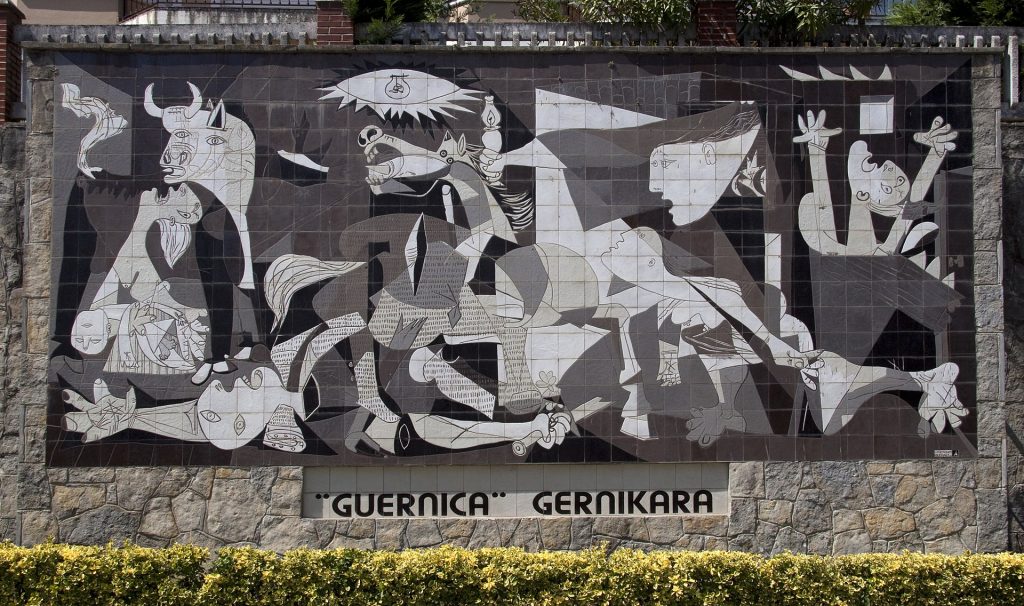
Tiled wall in Guernica after Picasso’s famous painting. Photo By Tony Hisgett from Birmingham, UK – Guernica, CC BY 2.0, https://commons.wikimedia.org/w/index.php?curid=64155674
This day is the anniversary of the bombing of Guernica in the Spanish Civil War but first we find out the origins of the London Cocktail Party.
The first Cocktail Party
The brother of Evelyn Waugh, Alex put on the first Cocktail party in 1924, or so he claims. He organised it at the studio of celebrated war painter C. R. W. Nevinson, in Haverstock Hill. Waugh felt there was nothing much to do between 5 and 7 except tea parties where tea, crumpets and cake were eaten. As he said to the Newinsons:
“What one needs, is some kind of a party that starts at half-past five, that lasts ninety minutes, at which alcohol is served but not much food.”
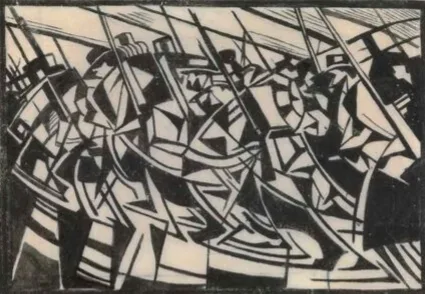
Study for Returning to the Trenches, drawn between 1914 and 1915. C.R.W. Newinson Public Domain (Wikipedia)
The first drink boded well:
‘I opted for rum. Jamaican rum had been blended with Rose’s (Newinson) lime juice and sharpened with Angostura. Large nuggets of ice kept the mixture cool. It was very potent. The first sip made me shiver, in the way that a dry martini does. It also sent a glow along my veins. “This,” I said, “is going to be a party.”‘
But it wasn’t as only one person turned up. So a year, later he tried again, but this time he disguised the event as a ‘Tea party’. But served, “A Daiquiri. It’s sweet, like a dessert, and very strong. It will produce the precise effect you need.” at the suggestion of a member of the US Embassy. As the drink tasted like sherbet, everyone drunk lots of them and the tea party went with a swing unlike any other. And thus, it caught on and became a part of the London scene.
Franco ordered the bombing as part of his campaign to overthrow the Basque Government. The Town was devasted and 1,654 civilians were killed. The bombing was undertaken by ‘the Condor Legion of Nazi Germany’s Luftwaffe and the Italian Aviazione Legionaria’ (Wikipedia). Picasso began his famous painting almost immediately after he heard an eyewitness account of the attack. The iconic painting was finished by 4 June 1937. The bombing showed the potential damage war from the air could do to crowded Cities. The painting became one of the most famous campaigning works of art.
The War from the Air
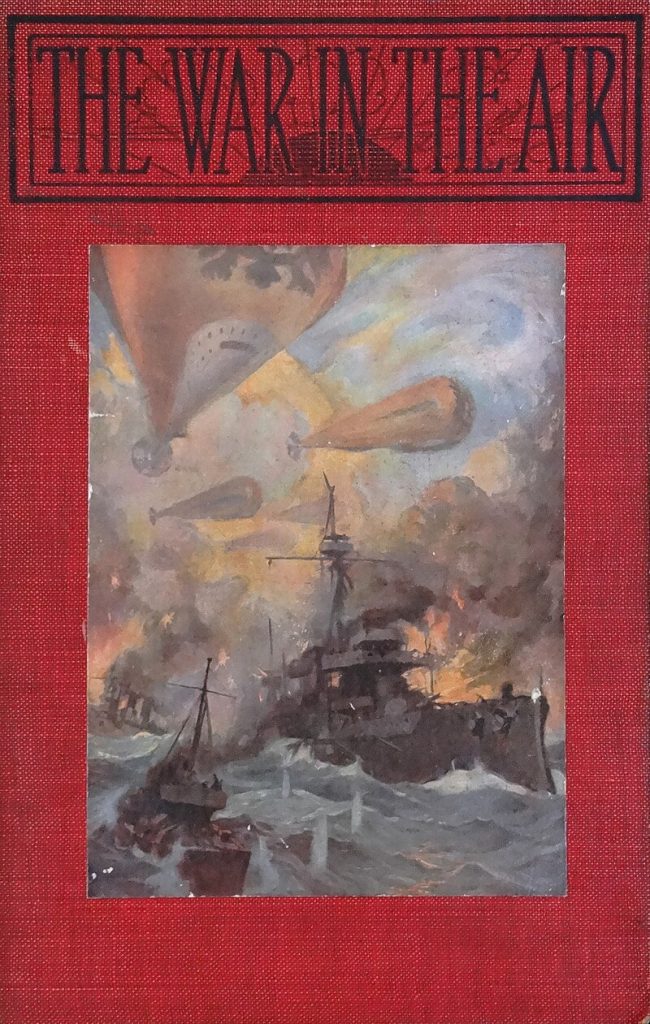
“The War in the Air” by H. G. Wells. London: George Bell & Sons, 1908. First Edition Illustration by A. C. Michael of Pall Mall Magazine –
Aerial warfare became a reality as soon as the Montgolfier Brothers flew the first Hot Air Balloon. (On 19 September 1783, they flew a balloon with a sheep called Montauciel (“Climb-to-the-sky”), a duck and a rooster in the basket). In the Revolutionary Wars, the French used hot air balloons for reconnaissance. Napoleon considered transporting troops by balloon in an invasion of Britain. With the arrival of planes and the development of the Zeppelin. Air warfare became a feature of speculative fiction, and began to absorb the planners.
H G Wells book, illustrated above, featured a war between Germany and the United States in which New York is obliterated by Aerial Bombing. This was written in 1908. In World War 1 London was the focus of a series of Zeppelin and Aeroplane raids. These killed over 500 people. (see my post on the London Zeppelin raid of Sept 8th 1916).
As planes developed in capacity, war departments created plans that seem now to have been exaggerated. It is thought that Appeasement was partly a response to the feared casualties from war in the air. The authorities were planning for 1 million killed in London and double that number of people deranged by fear. In the event, casualties were far less, some 43,000 killed. However, 2 million houses were destroyed. The scale of destruction was fairly accurately predicted but the casualties greatly exaggerated.
1564 – Shakespeare Baptised at Holy Trinity Church, Stratford on Avon.
1925 – World War 1 General von Hindenburg returned as the first directly elected President of the Weimar Republic. He played a crucial role in Hitler’s ascent to power. Hindenburg’s example is one of the main reasons I prefer an unelected powerless Royal Head of State, rather than an elected one.
1994 – The new South African constitution set up and democratic elections were held.
First Published on April 26th 2025, revised First Cocktail Party added 2026