St Matthews Day & Christ’s Hosptial September 21st

Christ’s Hospital from Wikipedia

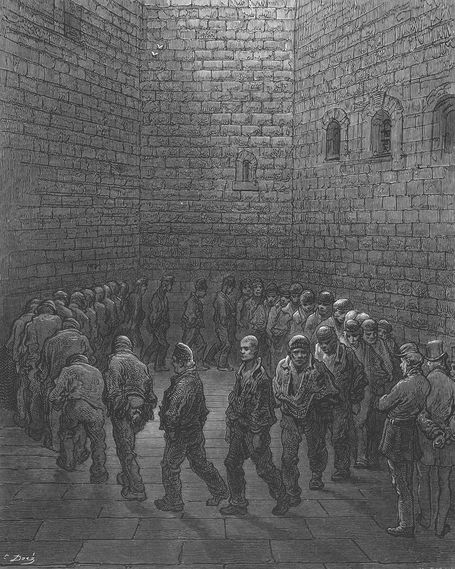
In the City of London, St Matthew’s Day was the day that they elected Governors to Christ’s Hospital, it was followed by a service at Christchurch attended by Aldermen, Sheriffs, the Lord Mayor and a procession of the children attending the school. 

Dissolution of the Monasteries

Christ’s Hospital was founded in 1552 by a settlement arranged by Edward VI after the Reformation.  The abolition of the Monasteries by Henry VIII caused a huge problem for the City of London, with the destruction of education and social services managed by monks and nuns.  Henry VIII had already re-established St Bartholomew’s to look after the Poor Sick in the City.  To complete the post dissolution, Edward IV established three Royal Hospitals to sort out additional problems.  Bridewell Hospital became an orphanage and place of correction for wayward women.  St Thomas Hospital for the homeless and poor sick of South London. Christ’s Hospital was to provide schooling.  The school was originally near Newgate and Christchurch Church, which was originally the Choir of the Greyfriars Church.

The school was set up in 1552 and was for boys and girls.   The Mathematical School was added in the late 17th Century to provide navigation skills for sailors.

Flogging the boys

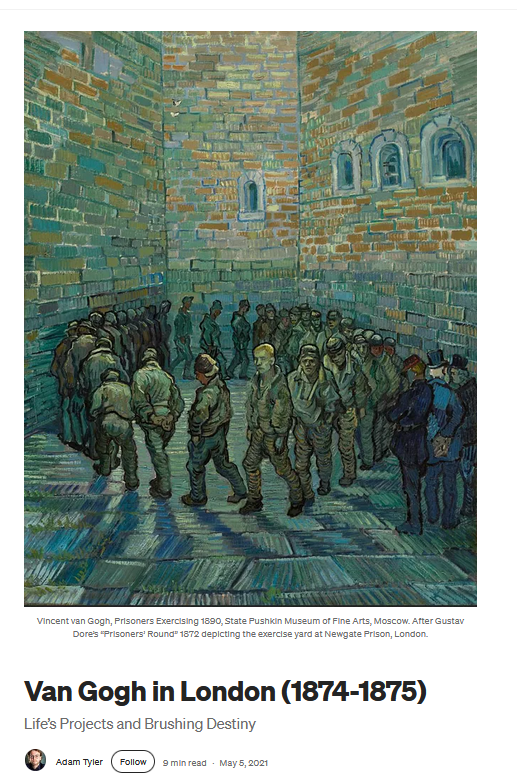
In 1815, a shocking event took place. An MP named Sir Eyre Coote entered the Mathematical school.  He shooed  the younger boys away but paid the older ones to participate in mutual flogging. He was discovered by the school nurse doing up his breeches.  George Cruikshank, a vaunted caricaturist, created a cartoon of the occasion, and it is extraordinary how it was treated far from seriously. 

Cruikshank Cartoon

The blue-coated boys of Christ’s Hospital, eventually moved to Hertford but are now in Horsham.  They maintain their City affiliation and still come to the City on or around St Matthews Day and take part in the Lord Mayor’s Show.  The school is a public school, but has a large percentage of its students funded by bursaries.  In 2016 former pupils opened up about historic sexual abuse leading to the prosecution of 6 teachers of Christchurch.

For more information look here: https://blogs.bl.uk/untoldlives/2015/09/st-matthews-day.html

Also on St Matthews Day, the historic Bush Hotel in Farnham distributed bread to the poor.  This began in 1660 a local benefactor bequeathed one pound annually to pay for the bread.

First Published in 2024, and revised 2025

The Ultimate RAF London Blitz Story September 15th 1940

Black and white photo from a german plane above another german bomber over docklands in the Blitz

On September 15th 1940 Ray Holmes, World War 2 RAF Pilot, flying a Hurricane, took on three Luftwaffe Bombers over Central London.  He shot one down, chased another off and engaged the third which seemed to be heading for Buckingham Palace.

Between the 8th and 13th of September 1940, the Palace had been hit 5 times. The London Blitz had only ‘begun’ on September 7th though the first raid on the City of London was on the 25th August on Fore Street.

Holmes, by now had ran out of bullets, but deliberately targeted the fin of the Dornier Bomber, and crashed into it causing the bomber to crash down into Victoria Station. Holmes’ Hurricane, spiralled down out of control, but he was able to bail out and landed in a dustbin, much to the bemusement of the locals. Holmes died aged 90 in 2005.

This post is heavily based on the story below, where it is told in full detail.

https://www.mylondon.news/news/nostalgia/battle-britain-fighter-pilot-who-19963243

Published in 2024 and revised in 2025

London Zeppelin Night September 8th 1915

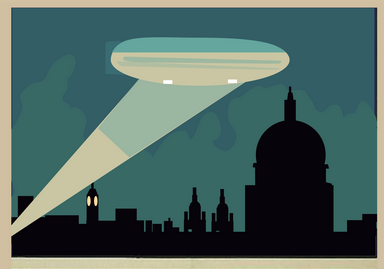
A silhouette of a Zeppelin caught in searchlights over the City of London

On the night of September 8th, 32 year old, Kapitanleutnant Heinrich Mathy piloted Zeppelin L 13 across Central London, dropping bombs as he went. This was the most damaging airship raid of the war.

Background to the War

Before World War One London was the centre of the largest Empire the world had ever known. It was the first great era of globalisation; international trade and finance was booming. London was full of the mega-rich, but poverty and substandard housing was extensive. Such extremes of rich and poor have only recently began to appear in our society.

Inner London was still the home of Industry, and home to large immigrant communities. Political dissent was widespread, with the Labour Party beginning to erode the Liberal Party’s power base. The issue of Female Suffrage was rocking society. Then, catastrophe struck as ‘the lights went out all over Europe’.

The Hague Convention in 1899 banned bombing from balloons or other aerial craft. But as the aircraft and air balloons developed, the threat moved from theoretical to actual. Zeppelins could undertake long flights at a speed of up to 47 mph. They could ascend and descend quicker than winged aircraft and achieve higher altitudes. The gas that held up the Zeppelins was held in over 200,000 bags of cattle intestines. The huge number needed in the war effort led to a shortage of sausages in Germany! But it also made them very difficult to be shot down with the technology available to Britain, France and Russia.

The Kaiser originally forbade bombing raids on London in deference to his relatives, the British Royal Family. But he progressively reduced restrictions until he allowed bombing of London itself. He first allowed bombing of the London docks on February 12th 1915, and on May 5th allowed London, East of the Tower of London to be bombed. The first Zeppelin raid on London took place on 31st May 1915. On July 20th, he allowed unrestricted bombing of London (albeit sparing historical and religious buildings).

On the 8th September, 1915 Mathy crossed the North Sea to the coast at King’s Lyne. He arrived at 8.45pm. The aircraft came South via Cambridge, Ware, circled to the North East of London and via Golders Green. Here he dropped 12 bombs at 10.40., and followed the Finchley Road to Primrose Hill, Regent’s Park. Over Euston he was at 8,500 ft, and slowed down to 37 mph.

The first incendiary bomb in Central London landed just north of Russell Square at Woburn Place.  The next one landed in the garden in the middle of Russell Sq. He dropped his first Central London explosive bomb in the garden in the centre of Queen’s Square, near the Great Ormond St Hospital, where it is marked with a plaque. He was turning east along the Theobald’s Road where he dropped a number of bombs. One hitting the National Penny Bank killing a person standing outside. Another landed on the nearby Dolphin pub, blowing out the front of the pub and killing someone standing there.   If you visit the Pub, on the wall you will see the clock that was stopped when the bomb exploded (10:40pm).

The next strike was on a cycle club, to the West of Gray’s inn. Then Gray’s Inn itself. At Portpool Lane his incendiary bombs killed three children and injured 25 others.

Maxim Gun

Near here are the workshops where Hiram Maxim developed the Maxim Gun that killed so many in the trenches in WW1. Unfortunately, the design was not kept as a state secret and in the War No Man’s Land was being strafed by British, French, German, Russian and later in American versions of the same gun. He had the idea for it when as a child his shoulder was broken by the recoil of a shotgun. He realised that the recoil could be used to load the next bullet. This created a machine gun that was far superior to the Gatling Gun.

A Bomb called the Love Gift

Hatton Garden and Farringdon were also hit, and the Zeppelin continued to Smithfield. The Zeppelin had one 660 lb bomb on board. Mathy’s ‘Love Gift’ fell on St Bartholomew’s Close. It shattered all the building fronts and killed 2 men running for cover when they emerged from a pub.

The Zeppelin kept north of St Paul’s and next bombed City workshops and warehouses in Wood St, Addle St, Basinghall St and Aldermanbury – just missing the historic Guildhall. He also failed to bomb the Bank of England which was a mere 300 yards south,

Searchlights were now scouring the sky and anti-aircraft guns were firing, but they were ;all firing too low’. An American reporter, William Shepherd wrote:

‘Among the autumn stars floats a long gaunt Zeppelin. It is dull yellow – the colour of the Harvest Moon. The long fingers of searchlights, reaching up from the roofs of the city are touching all sides of the death messenger with their white tips. Great, booming sounds shake the city. They are Zeppelin bombs falling- killing – burning. Lesser noises – of shooting – are nearer at hand, the noise of aerial guns sending shrapnel into the sky.’

The final bombs were released over Liverpool Street. Just by the station, an explosive bomb hit a No 35a bus, wounding the driver and killing the conductor and some of the passengers. Another bomb landed by a No 8 bus, killing the driver and 8 passengers.

Mathy turned north towards Edmonton and climbed to over 11,000 ft as an anti-aircraft gun on Parliament Hill put a shell uncomfortably close to the Zeppelin. He returned safely to Germany where he reported to the Kaiser. The raid killed 17 people, injured 78 and caused half a million pounds worth of damage. It was the most effective raid of the war.

The authorities in Britain were faced with a stark reality which was that a single German Airship could fly through the heart of Britain, into its Capital and bomb its people without any defensive measures capable of resisting attack. Although when we consider the horrors of civilian deaths in the 20th and 21st Centuries, the shock of random attacks on civilians should not be underestimated.

I will conclude Kapitanleutnant Heinrich Mathy’s story on October 1st, and add more images to this page.

Thanks to Ian Castle and his book ‘London 1914-17 ‘The Zeppelin Menace.

First published in 2024 and revised in 2025

To see my post war-from-the-air click here


Oliver Cromwell and his Lucky Day September 3rd

Frontispiece of ‘The Life of Oliver Cromwell’

September 3rd was Cromwell’s Lucky Day. This was because it was the date of two of his most famous victories. On September 3rd 1658 he refused to accept that he was dying because it was his lucky day.  Unluckily, he was wrong.

The Battle of Dunbar September 3rd 1650

Engraving of Charles I

After the execution of King Charles I, the Scots chose Charles II as their King. This changed the Scots from allies of the English Parliament to enemies. The Lord General of the New Model Army, Thomas Fairfax, refused to lead an attack on their erstwhile allies. So Oliver Cromwell was promoted to command. He launched a preemptive attack but the army was ill prepared, and the campaign seemed in danger of failing. They took Arthur’s seat and bombarded Edinburgh and Leith from its heights. But they could not take Edinburgh.

In need of supplies, Cromwell retreated to Dunbar, which is on the North Sea, close to the Firth of Forth. The Scots advanced on Dunbar, and Cromwell came out to meet them. After a hard battle, the English Calvary outflanked the Scots and the Battle was won. Pride, Monk, Lilburne and Lambert were all involved in the Battle. Cromwell claimed to have killed 4,000 Scots and captured 10,000. Scottish sources suggested over 1,000 Scottish casualties and 5,000 prisoners.

The Battle enabled Cromwell to seize control of Edinburgh, and Leith. So he could then cross the First of Forth and attack Fife, where he was also successful.

Cromwell interpreted the overwhelming victory as a

“A high act of the Lord’s Providence to us [and] one of the most signal mercies God hath done for England and His people”.[ (Wikipedia)

See my post on the execution of Charles 1st here:

March on England

engraving of Charles II
Engraving of Charles II

Meanwhile, the Scottish Army marched South in to England. in an attempt to raise the support of English Royalists. King Charles II was now with them, They hoped Cromwell would be held up in Fife, but he wasn’t. He secured Perth and put General Monck in charge in Scotland. Lambert was sent to harrass the Scottish Army as they marched south. Meanwhile, Cromwell forced marched his way to the Tyne. General Harrison had collected fresh troops from Newcastle and joined Cromwell. Thomas Fairfax came out of retirement and raised troops in Yorkshire. The Southern troops were collected at Banbury by General Fleetwood. 14,000 militia men from the trained bands of London joined the march to intercept the Scottish Invasion.

The Battle of Worcester September 3rd 1651

The decisive battle took place at Worcester, which the Royalist occupied. It was an unusual battle in that it took place on both sides of the River Severn. Cromwell delayed the start of the battle to build two pontoon bridges. This meant he could reinforce his troops on either side of the River. It also delayed the start of the battle to his lucky day.

The pontoon bridges proved decisive. The Parliamentary side had over 30,000 troops while the Royalists only 16,000. Cromwell could shore up besieged formation with troops from the other side of the River. The Royalists were pushed back to the High Street. Here, they rallied to allow King Charles II to escape. And that was the end of the Second English Civil War. (The first being the defeat of Charles I, the second the defeat of Charles II).

Charles II made a hair-raising escape from England, hiding in an Oak Tree. Eventually, finding a ship on the South Coast at Shoreham, in Dorset to take him into a long exile. (see my post on Charles’ escape here🙂

Of the Scottish army, perhaps 3,000 men were killed and 10,000 taken prisoners. Some prisoners were conscripted into the New Model Army and sent to fight in Ireland. Many of the rest (perhaps up to 8,000) were forced into indentured labour. They were sent to New England, Bermuda, the West Indies or the Fens. Others were taken to London and detained in prison camps. One of which was at Tothill Fields in Westminster. Conditions were often appalling, leading to death by disease and malnutrition.

American Presidents pay their respects to the ‘famous’ Battlefield.

John Adams and Thomas Jefferson visited the site of the Battle in 1786. Adams reported:

‘The people in the neighborhood appeared so ignorant and careless at Worcester that I was provoked and asked “And do Englishmen so soon forget the ground where liberty was fought for? Tell your neighbors and your children that this is holy ground, much holier than that on which your churches stand. All England should come in pilgrimage to this hill, once a year”‘

And indeed will now only see the battle as one of the many battles of the Civil War. Generally, we are not aware of its special significance.

Cromwell’s Death September 3rd 1658.

By now, the Monarch in all but name, Cromwell, the Lord Protector fell ill, probably of malaria. Then, when weakened, his kidney stone infection turned to septicemia. On August 30th, there was a mighty storm, the like Europe had not seen for hundreds of years. And there was talk of the Lord taking him away in the furious storm. As he weakened he was asked to name his successor. He appeared to affirm when the name of his son Richard was spoken to him. But, it wasn’t very clear. He rallied, perhaps hoping that if he could survive to September 3rd, he would overcome his illness.

On the day, he said to his doctors ‘I tell you I shall not die this hour; I am sure on’t …. I speak the Words of Truth upon surer grounds than Galen and Hippocrates furnish you with.’

But he died on his lucky day. He was given a splendid funeral and was buried in state among the Kings and Queens in Westminster Abbey. And then in 1660 dug up, executed posthumously at Tyburn and buried under the Gibbet.

See my post on the Puritans’ abolition of Christmas here:

See my post on John Evelyn’s diary entry on the Restoration of Charles II to the throne.

First written in September 2025

Dame Leonora Bennet. Died September 5th 1636, Uxbridge

Dame Leonora Bennet d.1636

Love this monument in St Margaret’s Uxbridge to Dame Leonora Bennet.

She lies there resting on her arm with an insouciant air. She had three husbands before spending the rest of her life on good works. And the sculptors John and Matthew Christmas seem to me portray her as an attractive woman.

Love the contrast with the glimpse into the Charnel House below with the jumbled bones almost fighting to get out.

The Tomb of Leonora Benet. St Margaret’s Church, Uxbridge.
The scene from the charnel house at the bottom of the tomb of Leonora Benet. St Margaret’s Church, Uxbridge.

St Giles Day and Cripplegate September 1st

Public domainThe Master of St Giles, National Gallery. ‘St Giles and the Hind’
This work is in the public domain in its country of origin and other countries and areas where the copyright term is the author’s life plus 100 years or fewer.

St Giles

Today, is St Giles’ Feast Day. His story is mostly unknown, but his legend holds that he was a hermit who had a pet Hind in the Arles District of France sometime after the fall of the Roman Empire. The hounds of King Wamba (a Visigothic King) were chasing the deer, and shot an arrow into the undergrowth. The King and his men followed to discover Giles wounded by the arrow, protecting the hind, who he held in his arms. The hounds were miraculously stayed motionless as they leaped towards the hind. Wamba, which apparently means ‘Big paunch’ in Gothic, also had a Roman name: Flavius. Giles was injured in the leg, although the image above shows the arrow hit his hand. Wamba set him up as an Abbot of a Benedictine Monastery.

St Giles is, therefore, the patron saint of disabled people. He is also also invoked for childhood fears, convulsions and depression. He was very popular in medieval Britain, with over 150 churches dedicated to him, including four in London. Perhaps the two most famous are St Giles Without Cripplegate in London and St Giles Cathedral in Edinburgh.

St Giles Cripplegate, photographed by the Author at night from the Barbican Centre.

St Giles Cripplegate

St Giles was built in the 11th Century, rebuilt in the 14th Century and again in 1545-50 after nearly being destroyed by fire. It survived the Great Fire of London, being just beyond the extent of the Fire. But it was badly damaged in the Blitz, although the Tower and the outer walls survived.

Oliver Cromwell married Elizabeth Bourchier here. John Foxe of the Book of Martyrs, John Speed, the Cartographer, Martin Frobisher, the explorer and John Milton, the Poet were buried here.

Shenanigans with Milton’s Coffin

Milton’s coffin was opened in 1793 and he was said to have looked as if he had just been buried. One of those present, then, had a go at pulling Milton’s teeth out. A bystander helped by hitting his jaw with a stone. The few teeth Milton had left in his head were divided between the men, who also took a rib bone and locks of his hair. The Caretaker then opened the coffin for anyone who wanted to see the corpse!

From the London City Wall Trail.

Cripplegate

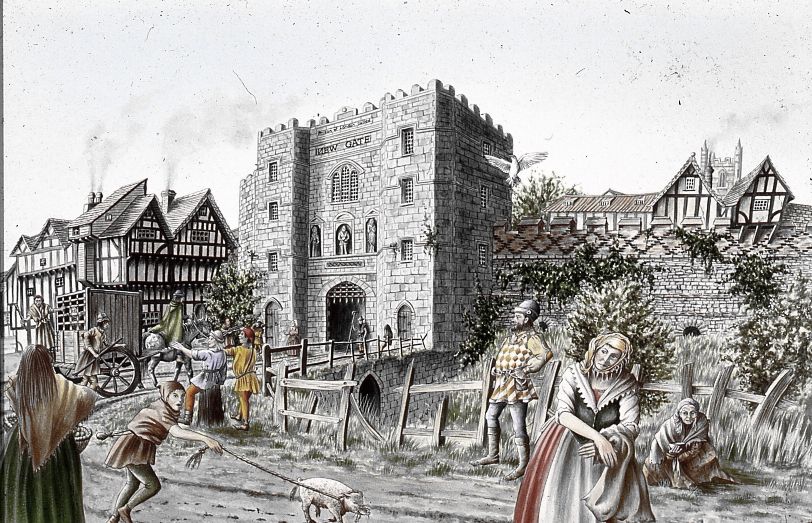
St Giles is without Cripplegate. It is one of the Gates in the City Wall (originally the North Gate of the Roman Fort). It may be named because St Giles made it agood place to gather for those trying to beg alms for their disabilities. An alternative explanation it from the Anglo Saxon crepel, which is an underground tunnel which is said to have run from the Gate’s Barbican to the Gate. Or perhaps because of the cure of cripples when Edmund the Martyr’s remains passed through the Gate in 1010.

The Corner Tower of the London City Wall, the Barbican in the background, and the tower of St Giles’ Church behind the Tower. Photo by the author

First Published in September 2024, and revised in 2025.

World Wide Web goes World Wide August 23rd 1991

Title Page of publication Published 1 February 1980
Archaeometry

Today is the day that the World Wide Web was first introduced to the world. I was working as a freelancer helping set up computer systems for the Freud Museum, in London. The Freud Museum was funded by an American organisation who wanted to support the history of Freud and Psychoanalysis. They were early adopters of email, and one of the staff, Tony Clayton, I think, introduced me to this new thing called the World Wide Web. How soon it changed our lives!

So, this post is the first in an occasional series on my role in digital heritage. 

My use of computers began in 1975/6 when I worked in the Research Laboratory for Archaeology and the History of Art, Keble College, Oxford University. I was a Research Assistant working with Mike Barbetti. He was a Research Fellow from Australia and an expert on the science of the earth’s magnetic field, and a pioneer in archaeomagnetism.

So what was it all about? In short, the Magnetic Pole does not always point due north. From time to time,  it wanders around and sometimes reverses completely, pointing south. Also, the intensity of the magnetic field changes with time. Mike was interested in the science behind these reversals but also interested in the archaeological by-products of the findings.

We were using archaeology to get well dated samples to plot accurately magnetic fluctuations through time. It was hoped the changes in direction or intensity of the magnetic field would allow archaeological sites to be dated. Secondly, we could use the readings to determine whether clay deposits had been heated or not.  The iron particles in clay would, when heated, align to the contemporary magnetic field.  Mike had collected samples from Africa including the famous Olduvai Gorge, and we contributed to the discussions on the first use of fire by the genus homo.

It turned out that dating applications were severally limited, as it proved difficult to create an effective reference curve. But sporadically, a use for archaeomagnetism crops up in the literature.

Mike was kind enough to include me as joint author on 3 papers which were accepted by Nature and which remain my most cited papers.

When I thanked him, saying how kind it was for him to include me.  He made a point of telling me I had every right to have my name on the papers as I not only did a lot of the work, but I contributed ideas to the study. He taught me a lesson that you should always be generous acknowledging contributions.

The specimens he brought back, were encased in plaster of Paris, I went to a shed in the garden of the terrace house that was the Research Lab. There I cut them up with a saw.  We then measured the intensity and direction of the magnetic field in the samples.  The results were processed by a computer program written by Mike. I prepared the experimental results on magnetic cards and uploaded them for a data run on the main frame computer at the Oxford University Computer Centre. The Computers were the size of a house, but there was a Unix minicomputer in the basement of our lab. There was always mistakes on the first run and then you reran the programme with edit cards at the front which were coded to do things like: ‘change 127 on the first card to 172’.  The corrected results were rerun the next day. Seems very primitive and slow now but then it was cutting-edge technology.

After a couple of years, I began my career as a field archaeologist. Having seen how powerful computers could be, I decided, in the late 1970’s, that Archaeology needed computers. So I set out to find out how to use them for myself and where they might come in useful.  This took me on an exciting journey of exploration which began with signing up for a Part-time PhD at Birkbeck College in Computer Applications in Archaeology, while I continued working at the Museum of London as an archaeologist. The study consisted of creating a database structure to hold archaeological field records, and to link this to digitised copies of context plans. I was hoping to show that we could interrogate the data, asking questions like ‘Draw a site plan of all contexts which have pottery dating to the Flavian period’. This would, perhaps, speed up the post excavation work, and enable a more sophisticated analysis of data.

To be continued.

St Albans Peasants Revolt June – August 3rd 1381

My battered copy of ‘England Arise!’, new study of the Peasants Revolt

We left the Peasants following Richard II out of Smithfield, going home after the murder of their leader, Wat Tyler.  If you want to refresh your knowledge see the three links to my ‘Almanac of the Past’ at the bottom of this post.  I want to follow the events from Mile End to August in St Albans. They give a good overview of what the Revolt was all about, and how the authorities responded to it.

My source is ‘England, Arise. The People, the King & the Great Revolt of 1381’ by Juliet Barker. I have been reading it for some time. It is very comprehensive and shows how much more there was to it, than the three or four days in London.

The aftermath of Mile End

Rebels from St Alban came back from the meeting with King Richard II at Mile End on June 14th. William Grindecobbe, who was identified as one of their leaders, travelled from St Albans to attend the meeting at Mile End on the day of the meeting.   Barker suggests he travelled on the morning of the event. Google tells me it is a 23 mile walk, and would take 9 hrs at least. So, he either travelled by horse or travelled down the day before?

The evidence suggests his interest in the Mile End meeting was to get charters from the King to free the people of St Albans from the onerous feudal demands of the Abbot of St Albans. Grindecobbe is said to have ‘knelt to the King six times’ to obtain ‘letters patent’ for St Albans. Remember, the young King was about 14 at this time, and went to the meeting without his senior government advisors. This leads some to believe he was sympathetic to the demands of the Peasants.

Grindecobbe then returned to St Albans with news of the liberation of the town from its feudal shackles. He left behind Richard Wallingford to collect further royal documentation of the momentous changes in society granted at Mile End.

These included:

the right of St Albans to have borough status
to pasture their animals freely within the town boundary
to enjoy fishing, hunting and fowling rights
to be able to use their own hand-mills rather than take their wheat to the Abbots expensive mill

Some of the monks of St Albans (including the Prior) were so scared of the rebels that they fled to Northumberland (to a daughter church of the Abbey).

The townsfolk, on their return from London, dismantled gates and enclosures protecting the Abbey’s woodland. They demolished a disputed house, and attacked houses of Abbey officials.

Next morning which is said to be the 15th of June (the Smithfield Day) the St Albans people assembled, swore an oath to be faithful to each other. They caught a live rabbit and fastened it to the Town Pillory. Thus, demonstrating their right to hunt on Abbey Lands. They went to the Abbey Prison and freed the prisoners, except one who they beheaded and added his head to the Pillory.

Richard Wallingford arrived from London with a banner of St George, erected it in the Town Square and marched to the Abbot to present the King’s letters he had obtained.

The letters ordered the Abbot to hand over certain charters made by ‘our ancestor King Henry’ concerning the various issues listed above (and others.)

Faced with documents signed with the King’s Privy Seal the Abbot had to comply. The rebels burned various of the deeds and charters in the market-place. But they felt the Abbot was still withholding an important document, which the Rebels said was illuminated with 2 capitals letters one in gold and another in blue.

The history of the dispute between towns people and Abbot went back to Domesday and possible beyond to the time of King Offa. Or to put it another way the peasants thought they were restoring rights that had been illegally taken from them by the Abbot.

For example, in 1251 Henry III had granted legal freedoms to the men of St Albans. But the Abbey had used its power to circumvent this much desired status. It obviously rankled bitterly with the men of St Albans. And here we have to remember those men were not just peasants, there were a number of substantial citizens who stood with the Rebels.  They were standing up for their rights against an oppresive Abbot.

An example of the arrogance of the Abbots is found in a previous dispute about the use of hand-mills. The Abbot had confiscated all the hand-mills used by the townsfolk and paved his parlour with them! Now, the Peasants dug the hand-mills up and took them home.

Over the next few days the Abbot was forced to confirm the abolition of villein status, and many other measures enshrined in the feudal system. For example, he had to confirm the legality of the locals using hand-mills rather than paying to use the Abbots Mill. The Rebels were scrupulous in documenting the new freedoms.  This suggests that their destruction of legal documents was not a sign of hatred of written records but their dislike of their use in oppressing them.

What is clear is that at this point of time, the Rebels and the authorities believed the King had indeed liberated peasants and towns people from feudal exactions.

Reaction

After the Rebels had scattered following the Smithfield confrontation, the Government eventually regained its nerve. Or to put it another way, maybe the older heads finally persuaded the young King Richard II that he was wrong to support the Rebels in their demands for reforms to the feudal system.

On 29th June, Sir Walter atte Lee, arrived in St Albans with 50 men-at-arms, and a large group of archers. He was an experienced soldier, ex Member of Parliament, and a Justice of the Peace. By this time St Albans was at peace. But Lee restored the Abbey’s supremacy over the town’s people, and arrested Grindecobbe and other leaders of the Town. However, the Town stood solid and juries refused to accept their leaders had done anything wrong. Grindecobbe was released.

However, the King and his Chiel Justice Tresilian arrived. They had been in Essex putting the revolt down.  On 2nd July Richard agreed to reverse all the concessions and charters he had conceded at Mile End. Why he changed his mind we do not know.

In St Albans Tresilian did not bother about the niceties of the legal system.  He made it clear that people who protected the rebels would suffer their fate. Grindcobbe was thrown back in prison on July 6th, and Grindecobbe and 14 others from St Albans were hanged, drawn and quartered. The hand-mills were returned to the Abbot who had them set back in his parlour floor, and all the reforms were reversed.

On the 13th July John Ball was tried at St Albans possibly having been captured in Coventry.  He was executed, beheaded and quartered on July 15th. His four quarters were sent to 4 cities to be displayed. We know very little about Ball’s role in the uprising and most of what we think we know was made up by his enemies. He may have been a simple honest preacher, pointing out the unfairness of the oppressive system.  Not perhaps the revolutionary firebrand, preaching a form of primitive communism as portrayed by Walsingham.

His execution was at St Albans presumably because this was where the King and his Chief Justice were.

The Rebels at St Albans were hung in the woods they had briefly gained access to. Their bodies were ordered to be hanged  ‘until they lasted’.  But a local man cut them down and buried them.  On August 3rd the authorities ordered that the town’s people find the bodies, dig them up ‘with their own hands’ and hang them up again but this time with chains.

Over a year later, on September 3rd 1382, the King, following a plea from his Queen Anne gave license for them to be taken down and buried.

80 other rebels in St Alban’s were sentenced and imprisoned.

Scenes like this were repeated all over England.

Chief Justice Tresilian

He became a leading member of King Richard’s Government.  Richard became increasingly unpopular as he grew up. And Tresilian, on 17th November 1387 was found guilty of Treason by the Lords Appellant (who were trying to restrain Richard’s misused power). 

Wikipedia tells us his fate:

He fled and on 19 February 1388, he was discovered hiding in sanctuary in Westminster. He was dragged into court with cries of ‘We have him!’ from the mob and, as he was already convicted, was summarily executed, being hanged naked before his throat was cut.’

Can’t help feeling he got what he deserved.

Richard II

Richard himself was eventually forced to abdicate (1399) and was supplanted and then murdered by Henry Bolingbroke.  There is some evidence that Londoners remembered his role in the repression of the Revolt.

Bolingbroke was saved during the events of 1381 by the intercession of a couple of the Rebels who evidently felt the young son of John of Gaunt should not suffer for the sins of his dad. One of these people was a woman who was identified as a leader of the Revolt, showing women did not have a passive role in it.

First published August 2025

St Clare’s Day & the Minoresses of St. Clare August 11th

The ‘Agas’Map of 16th Century Map of London showing the Abbey of the Minoresses of St Clare with the yellow circle and St Botolphs in mauve just outside Aldgate. from the Map of Early Modern London project.

Today is the Feast day of St Clare of Assisi.  An area of the City of London, called the Minories, is still to this day named after the Abbey of the Minoresses of St. Clare without Aldgate. This was was founded in 1294. The Abbey was part of the Order of St Clare or the Poor Clares as they were known . A minoress was a nun from the Order of Friars Minor (aka Franciscans) .who were also known as the Minoresses of St Clare.

Fresco of Saint Clare and sisters of her order, church of San Damiano, Assisi Wikipedia

Clare Sciffi was born in Assisi to a rich family. On Palm Sunday, 20 March 1212 Clare left her house, after refusing offers of an advantageous marriage. She had been inspired by hearing St Francis the founder of the Franciscan Monks who was also from Assisi. St Francis facilitated her transfer to Benedictine Nunneries. Her sisters followed her, one renamed Agnes became an Abbess and eventually a saint in her own right. Her family tried repeatedly to take her back into secular life. Eventually, they gave in – apparently when they saw that she had cut her flowing locks off and donned a plain robe.

A small nunnery was set up for them next to the church of San Damiano. More women joined, and they became known as the “Poor Ladies of San Damiano”. They undertook to live impoverished, and secluded.

The Franciscan friars were an itinerant order where the Friars preached to the people and were supported by begging. But this was not possible for women at that time so they lived a simple life of labour and prayer.:

‘The nuns went barefoot, slept on the ground, ate no meat, and observed almost complete silence.’ Wikipedia

Here is a site that gives information about the new Museum that will be established on the site of the Poor Clares. It also gives an outline history of the site.

https://www.ianvisits.co.uk/articles/new-museum-to-show-archaeology-from-the-abbey-of-st-clare-70048/?utm_source=newsletter&utm_medium=email

The following link explores the illustrious noble women who choose to be buried in the Minories. It shows how important the Poor Clares were considered to be. It was dissolved by Henry VIII in 1539.

To read about the nearby Roman Bastion at Crosswall see my post here:

St Germanus Day & Original Sin July 31st

St Germanus of Auxerre, Window in St Paul’s parish church, Morton, Lincolnshire, made by Sir Edward Burne-Jones and William Morris in 1914. Photo by Jenny of Jules & Jenny from Lincoln, UK (CC BY 2.0 Wikimedia Photo by Jenny of Jules & Jenny from Lincoln, UK)

St Germanus is the source of one of the few contemporary references to Britain in the 5th Century (the Dark Ages). One of his followers wrote his life story. The Saint, a Bishop in France, was sent to Britain because the Pelagian Heresy was endangering the Catholic version of Christianity. Pelagius was a highly educated British (or possibly Irish) priest who moved to Rome in the late 4th Century. He lived by a strict moral code, attacking Catholic laxity and opposing St Augustine of Hippo’s theory of Divine Grace. By contrast, Pelagius promoted human choice in salvation and denied the doctrine of original sin. Wikipedia tells us that he:

considered it an insult to God that humans could be born inherently sinful or biased towards sin, and Pelagius believed that the soul was created by God at conception, and therefore could not be imbued with sin as it was solely the product of God’s creative agency.

17th Century print of Pelagius

Germanus was sent to Britain, where he confronted Pelagian converts in a public debate which is thought to have taken place in a disused Roman amphitheatre. The author is not interested in Britain, per se, so does not tell us which town it was, but, it is mostly assumed to be St Albans, although London is possible.

In the stadium, the Saint and his acolytes confound the heretics and, so, convert the town’s people sitting watching the debate. St Germanus goes to a nearby shrine of St Alban to thank God, falls asleep in a hut, and is miraculously saved from a fire. He then comes across a man called a Tribune, and helps defeat a Saxon army in the ‘Alleluia’ victory. The importance of all this is that it gives us a few glimpses of Britain, in about 429AD, two decades after the Romans have left.

The British Bishops were led in their heresy by someone called Agricola. The writer describes these bishops as ‘conspicuous for riches, brilliant in dress and surrounded by a fawning multitude’. The use of the title ‘Tribune’ in the story suggests Roman administrative titles are still in use 19 years after the date of the ‘formal’ end of Roman Britain, 410AD. The Alleluia victory over the Saxons also gives us an early date for Saxon presence in the country as an enemy.

St Albans is the favoured choice for the location of the event because, Bede tells us St Albans was born, martyred and commemorated in Verulamium, now called St Albans. Archaeology shows possible post Roman occupation of the town. And it has a famous Amphitheatre.

However, Gildas, who is writing 200 years or more before Bede, tells us St Alban was born in Verulamium but martyred in London. This makes sense as London was the late Roman Capital and more likely to be the site of a martyrdom. There is also a church dedicated to St Albans close to the Roman Amphitheatre, where Gildas tells us the execution took place. Unfortunately, the Church cannot be, archaeologically dated back to 429AD.

Bede’s account of the martyrdom of St Albans is also somewhat farcical, as God divides the waters of the River Ver for Alban to get to his martyrdom more quickly. The bridge was said to be full of people walking to witness Alban’s execution, and blocking Alban’s path to Heaven. But the Ver is but a piddle, and it would be easy to walk across without even needing wellington boats, let along a miracle. This story is much more impressive, in Gildas’ version who has the miraculous crossing over the River Thames.

Had Pelegius won, and the Roman Church had a more optimistic view of the human spirit, would it have made any difference? It’s a big question, but maybe it would have left less room for pessimism and guilt?

Frances Marsden on Quora wrote:

What were the effects of original sin? …. it damaged our relationship with God. He seemed distant, we became mistrustful. We lost sanctifying grace. The weakening of the will, making us more prone to temptation. The darkening of the intellect. Increased vulnerability to sickness and disease. Spiritual death.

Germanus died in Ravenna. The story of his life by The Life of St. Germanus, Bishop of Auxerre by Constantius of Lyon written shortly after his death is a crucial source for the study of the 5th Century in Western Europe. It is an epic period where Imperial and Barbarian groups are fighting for control of Britain, France, Spain, Africa and Italy. There are competing views of what Christianity is and should be. not only the heresy of Pelagians but also the Arian Heresy which the German people tended to support. There were also the Nestorian and Eutychian heresy. I’ve just read a 2020 article about the Life of St Germanus by Leon Mintz which you can read here:

For more on Nick Fuentes and his theories on St Germanus, St Patrick and King Arthur read my post here:

For St Germanus and St Genevieve click here:

First written in January 2023, copied to its own page in July 2024, and republished 2025