Stone of Destiny Attacked with a Hammer at Perth Museum July 13th 2025

Screenshot of BBC Webpage annoucing the attack on the Stone of Destiny

I just tried to book a visit to see the Stone of Destiny, at Perth Museum. But I was told it was closed until at least the end of August. The reason being that a case had been damaged. A quick search revealed this notice that an Australian had attacked the case containing the Stone with a hammer. They are now repairing the Case, and double checking the condition of the stone, which is thought to be undamaged. The Stone is well protected in a special room of the Museum. But, until now, those booking to see it are not searched. So I imagine that this will become more formal in future.

Below is my post of 2024, updated on March 30th 2025.

New Home for the Stone of Destiny

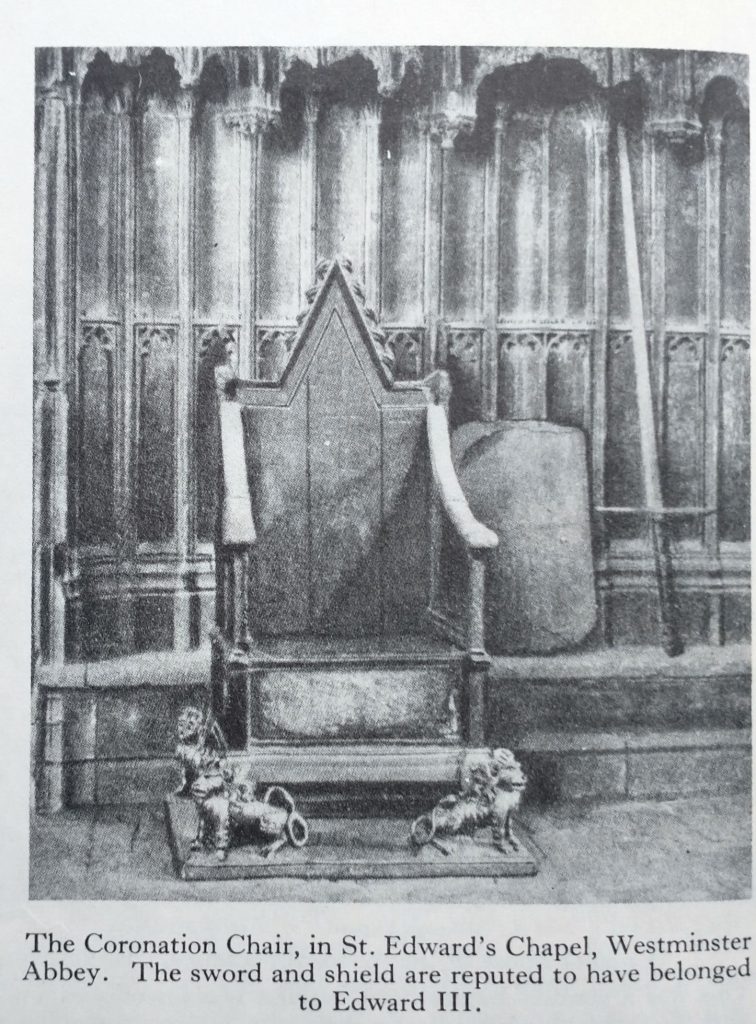
Old Photograph of the Stone of Destiny beneath the Coronation Chair.

Last year, the Stone of Destiny was set up in its new permanent place. The Stone was unveiled in a room at the centre of the redeveloped Perth Museum, in Scotland. This is near to its ‘original’ home at the Palace of Scone.

The Museums Association reported:

£27m development project ….funded by £10m UK government investment from the £700m Tay Cities Deal and by Perth & Kinross Council, the museum is a transformation of Perth’s former city hall by architects Mecanoo.’

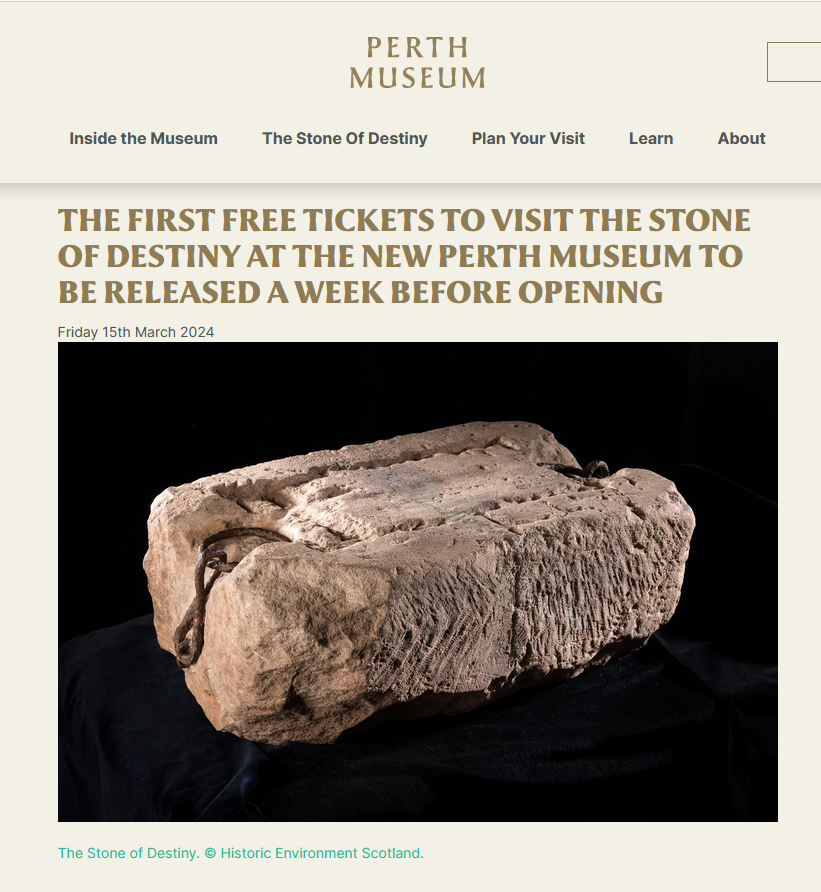
As well as the Stone of Destiny, the Museum has Bonnie Prince Charlie’s sword and a rare Jacobite wine glass. Both on public display for the first time. This is the first time the sword has been in Scotland since it was made in Perth in 1739. https://perthmuseum.co.uk/the-stone-of-destiny/. Since I first wrote this I have visited about 5 times. Entry is free but needs to be booked. It is held in a separate structure in the open space at the heart of the Perth Museum. There is an excellent-animated introduction, and then the doors open and the Stone is revealed in a glass cabinet. It is very effective.

Webpage of the Perth Museum show a photo of the Stone of Destiny

The Stone of Destiny in the Modern Era

Before Perth, the Stone was in London for a brief visit for the Coronation of King Charles III (6 May 2023) . It was put back, temporarily under the Coronation Chair. Before that it was on display in Edinburgh Castle. Tony Blair’s Labour Government sent it back to Scotland as a symbol of the devolution of power from Westminster. This was on the occasion of the restoration of the Scottish Parliament in Edinburgh in November 1996. Until then the Stone was under the Coronation Chair, where Edward I put it after he stole it (1296) from Scone. Virtually every English and British King has been crowned upon the Stone of Scone.

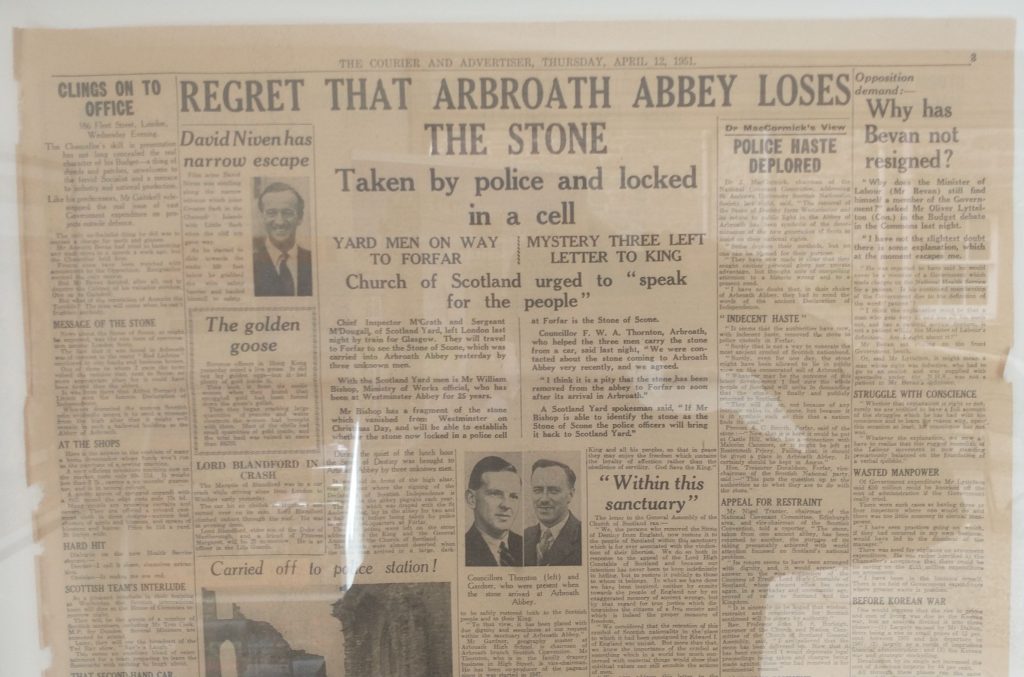
However, the Stone had a brief holiday in Scotland in 1950/51.  Four Scottish students removed it from Westminster Abbey on Christmas Day 1950. After three months, it turned up at the high altar of Arbroath Abbey. It was briefly in a Prison Cell, then returned to Westminster for the Coronation of Elizabeth II.

Poor photograph of a press cutting on display at the Palace of Scone (Photo by me!)

Declaration of Arbroath

I’m guessing the-would-be liberators of the Stone, thought Arbroath was the most suitable place to return it. For it was the Declaration of Arbroath which is the supreme declaration of Scottish Independence from England.

Following the Battle of Bannockburn the Scots wrote to the Pope of their commitment to Scotland as an independent nation. They said:

“As long as a hundred of us remain alive, never will we on any conditions be subjected to the lordship of the English. It is in truth not for glory, nor riches, nor honours that we are fighting, but for freedom alone, which no honest man gives up but with life itself”

The Pope agreed and Scotland remained independent until voluntarily joining England in the United Kingdom in 1707.

For an analysis of the Stone of Scone please look at my post here.

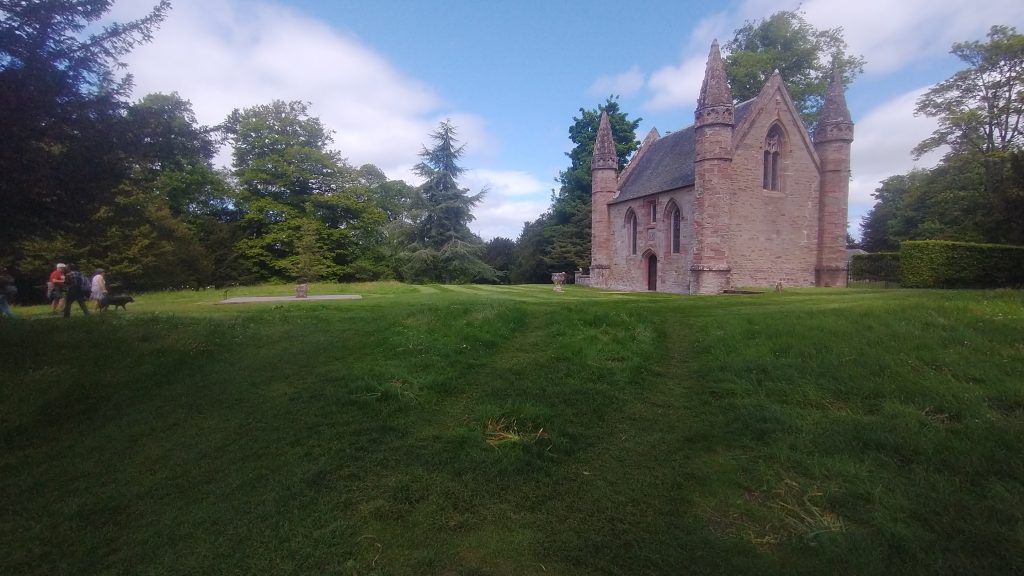
The Stone of Destiny at Scone Palace

Before Edward 1 stole the Stone, it was at Scone Palace. Here most of the Kings of Scotland were crowned, including Macbeth (August 14, 1040).

Moot or Boot Hill where Scottish Kings were crowned. Palace of Scone Photo Kevin Flude)

Those who attended the coronation traditionally shook their feet of all the earth they had brought from their homelands.  This over the centuries, grew into Boot Hill, aka Moot Hill. So the mound represents the sacred land of Scotland. 42 Kings were crowned upon its soil on its Stone. (but not Mary Queen of Scots she and her son were crowned at the Chapel Royal of Stirling Castle).

Where was the Stone of Destiny before Scone?

Before Scone, it was, possibly, in Argyllshire where the Gaelic Kings were crowned. Their most famous King was Kenneth MacAlpin. He united the Scots, Gaelic people originally from Ireland, the Picts, and the British. And created a new Kingdom which was originally called Alba, but became Scotland.

MacAlpin was the first king to be crowned on the Stone at Scone in 841 or so. He made Scone the capital of his new Kingdom because it was a famous Monastery, associated with the Culdees, an early sect of monks. MacAlpin brought sacred relics from Iona to sanctify the new capital. And Scottish Kings were by tradition crowned at Scone and buried on the holy Island of Iona.

Legend has it that the Scots bought the Stone from Ireland when they began to settle in Western Scotland (c500AD). The Scots, it is said, got the Stone from the Holy Land. Jacob lay his head on the stone to sleep. He had a dream of Angels ascending and descending a ladder to Heaven. Jacob used the stone as a memorial, which was called Jacob’s Pillow (c1652 years BC).

Fake, Copy or Genuine?

But, questions about the Stone remain. Firstly, would the Monks of the Abbey meekly hand over the stone to a raging King Edward I?  Sacking the Abbey was one of the last events of Edward’s failed attempt to unite the two countries. Isn’t it more likely that they hide the original and gave him a fake?

Secondly, was the Stone brought to Scone from Western Scotland in the 9th Century? Or was it made in  Scone?

These questions of doubt are based on the assumption that the Stone is made of the local Scone sandstone. If it were brought to Scone from somewhere else, it would be in a different type of stone, surely? So, either it was made in Scone, possibly for MacAlpin’s Coronation or the Monks fooled the English into taking a copy. The English would then have been crowning their Monarchs on a forgery.

Ha! Silly English but then the Scots have spent £27m on the same forgery.

Before bringing the stone to Scone, Historic Environment Scotland undertook a new analysis  of the stone. This confirmed:

the Stone as being indistinguishable from sandstones of the Scone Sandstone Formation, which outcrop in the area around Scone Palace, near Perth‘.

It also found that different stone workers had worked on the stone in the past. It bore traces of a plaster cast being made. It had markings which have not yet been deciphered. There was copper staining suggesting something copper or bronze was put on the top of it at some point in its life.

So it seems the Stone of Destiny was made in Scone. The simplest explanation is that it was made for MacAlpin in the 9th Century. But it does not rule out that it is a copy given to Edward I. But if this is the case it is still an awesome relic of history as so many Kings and Queens, Scottish and English, have been crowned upon it.

For more about MacBeth and St Margaret of Scotland see my post here:


First published in 2024, republished in 2025

St Columba (St Colmcille) Day June 9th

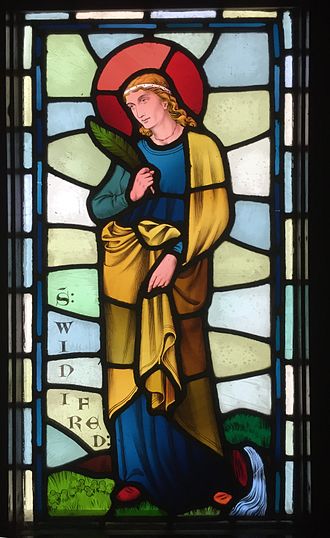
St Columba st margarets chapel by Graham van der Wielen  Edinburgh  Lead glass
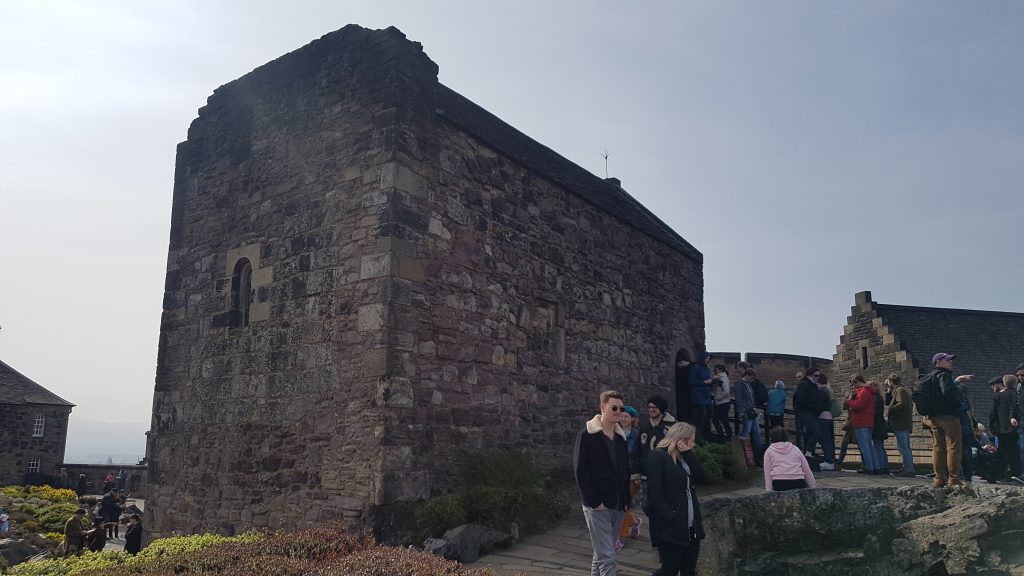
St Columba Stained Glass window in St Margaret’s Chapel Edinburgh Castle Photo by Graham van der Wielen Wikipedia CC BY 2.0

St Columba, or Colmcille is one of the most important saints for the early transmission of Christianity. He was born in 521 and said to be a descendant of the possibly legendary Irish King Niall of the Nine Hostages. (The Hostages were a token of Niall’s power over Ireland as they came from the five provinces of Ireland. These are Ulster, Connacht, Leinster, Munster, and Meath. The other four hostages represented Scotland, the Saxons, the Britons, and the Franks.)

St. Columba was sent at an early age to be brought up as a Monk, and went on to set up Monasteries in Ireland at Derry and Durrow. In 563, he left Ireland, possibly because he got involved in a dispute that had a deadly outcome. He went into exile to Scotland and set up the famous Monastery on the island of Iona, Inner Hebrides. This is off the coast of what would one day be called Scotland. At the time, it was under the control of the Kingdom of Dál Riata, which was, Gaelic, nominally Christian, and controlled parts of Ulster and Western Scotland.

From Iona, Columba led the conversion of the Picts to Christianity. The Picts were Britons, speaking a different dialect of Celtic than the Gaels of Ireland and Dál Riata. Their name is said to have been given by the Romans and meant Painted Men. A shared religion, which St Columba brought from Ireland, helped towards the eventual union of the Gaels, the Picts and other British groups into the Kingdom of Alba. Alba is the Gaelic name for Scotland – meaning white, and from which we also get Albion. Alba became Scotland, which is derived from the Roman word for the area which in Latin was “Scotia”. Iona became the traditional burial place of early Scottish Kings such as Macbeth (Mac Bethad mac Findlaích). These Kings were crowned at Scone and buried in Iona. Alba was also able to take territory from the Anglian Kingdom of Northumbria, namely, the Scots-speaking areas South of the Firth of Forth. (Scots being a dialect of English). There were also Norse settlers in the Ireland so Scotland was made of a coalition of Gaelic, Brittonic, Norse and English speakers.

St Columba and the Loch Ness Monster

Much of the events of this part of Columba’s life are recorded by St. Adamnan in The Life of Saint Columba. This was written in the 7th Century, much of which is apocryphal. One notable story tells how he came across a group of pagan Picts who were mourning a child killed by a monster in the River Ness. St Columba revived the child. He then sent one of the Brothers to swim across the Loch to fetch a boat. The “water beast” pursued the Monk and was about to attack him when St Columba told the monster to stop. So it did, retreating to the depths of Loch Ness. Thus began the legend of the Loch Ness monster.

St Columba died in 597AD. Iona continued to prosper and in, 634 sent St Aidan from Iona to found the Monastery at Lindisfarne. The island is on the Eastern coast of Britain in the Anglo-Saxon Kingdom of Northumbria. This Kingdom of the North Angles, was one of the most powerful at the time and Lindisfarne was instrumental in its conversion. The tradition of evangelism took hold in the British Isles, and it was from here that much of the German-speaking world was converted to Christianity.

This is St Columba’s legacy.

Northumbria’s Contribution to the development of Christianity

There is a developing understanding among scholars that this Irish inspired form of Christianity, fused with the Anglo-Saxon Northumbria took a leading role in ritual, art, scholarship in the Roman Catholic world. Just stop and think about that sentence for a moment. The northern parts of an out of the way set of islands off the edge of Europe took a leading role in the development of Western Christianity. This was highlighted in a recent exhibition of Anglo-Saxon art at the British Library.

British Library with Poster for Anglo-Saxons Kingdoms Exhibition, Photo K Flude

A look at the Lindisfarne Gospel and the Book of Kells showcases the amazing art of this period. For a real treat, look through this scrollable virtual copy of the Lindisfarne Gospel. (Currently this is unavailable, I suspect since the BL was hacked. So instead, here is a slightly breathless online introductory video of the Gospel.)

The Book itself has been missing from the displays of the British Library for a couple of years, but was on display in Northumberland in 2022. I’m not sure whether it is yet back on display at the British Library. I think not. You can see the Book of Kells at Trinity College, Dublin or look at their online offering here: Not quite as joyous an experience as the online Lindisfarne but beautiful enough.

Carpet Page from the Lindisfarne Gospel
Carpet Page from the Lindisfarne Gospel Photo Wikiepedia Eadfrith –
Lindisfarne evangeliarium, tapijtbladzijde op f26v, Matteüsevangelie

Click here to read my post on Scone and the emergence of Alba.

Here is a virtual tour of Iona

Here is a 360-degree panoramic photo tour of Lindisfarne Abbey

First Published in 2023, revised, 2024 and improved 2025

John Stow, London’s Historian 22nd April

John Stow

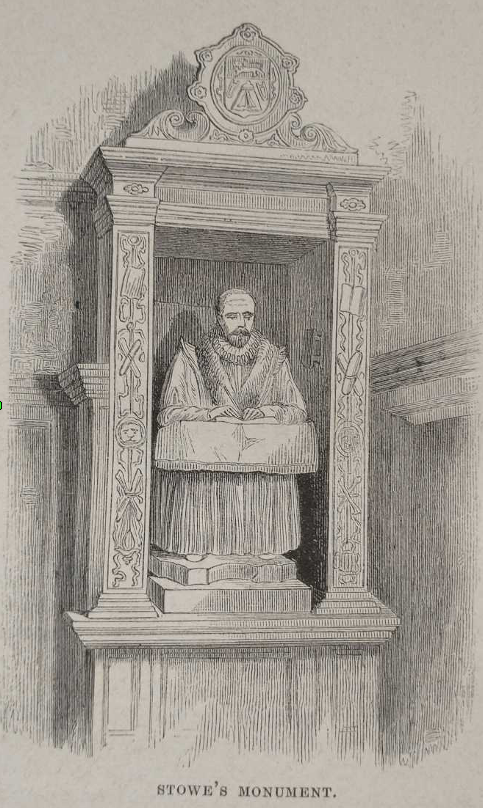
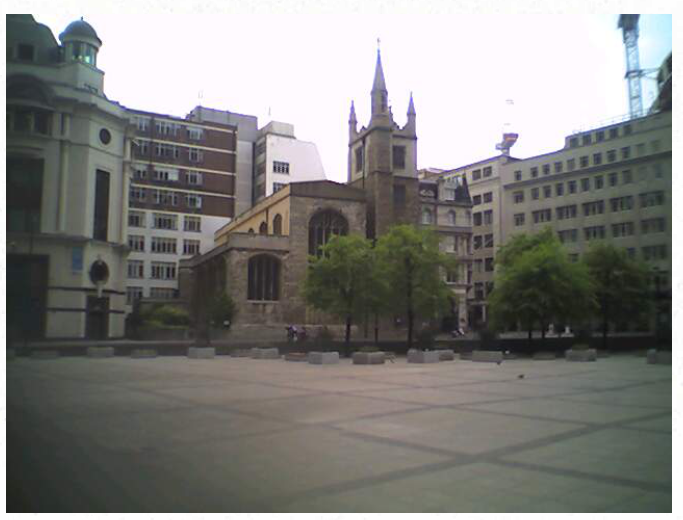
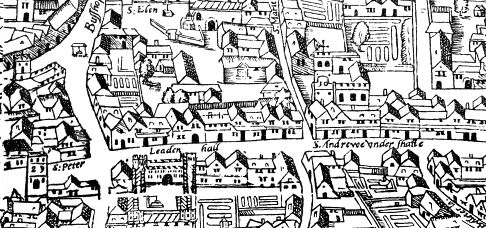
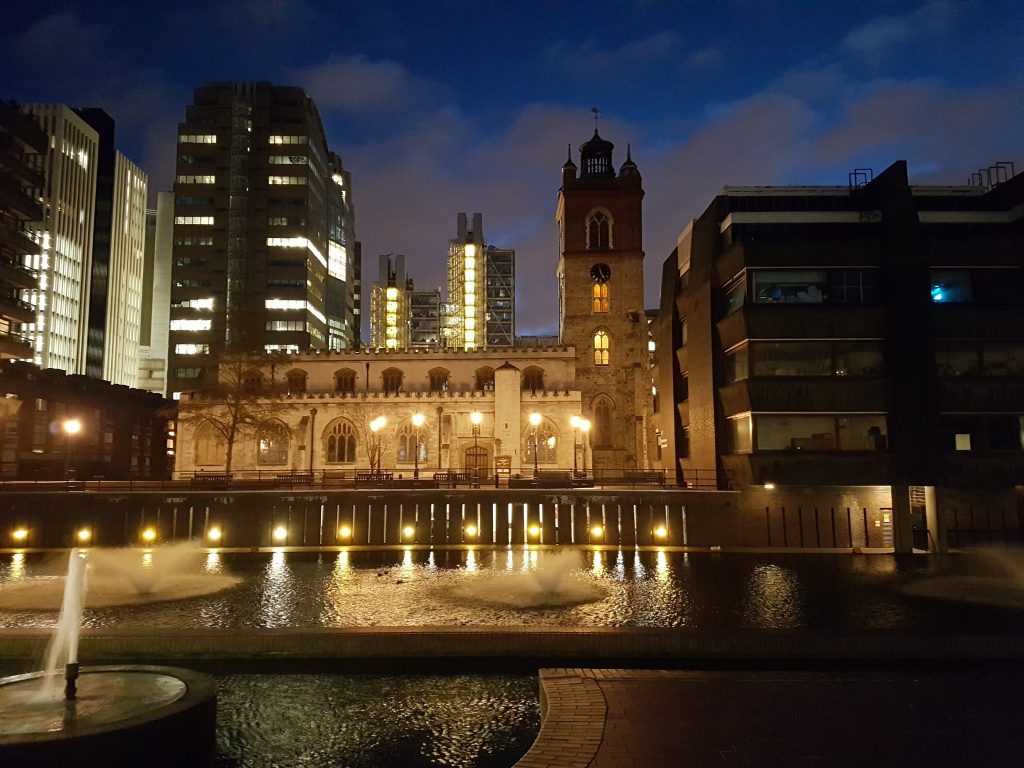
On the corner of Leadenhall Street and St Mary Axe in the City of London is one of the very few medieval Churches that survived the Great Fire of London is 1666. It was sheltered by the firebreak that was the Leadenhall, a big market building made of stone. This is where the great London historian John Stow is buried. His Survey of London is one of the best sources for Medieval and Tudor London. Every three years, there is a commemorative service and his quill is changed. Last year it was on the 22nd April. The Lord Mayor attends and it is organised by Stow’s Guild – the Merchant Taylors.

John Stow, author of the ‘Survey of London‘ first published in 1598. Available at the wonderful Project Gutenberg: ‘https://www.gutenberg.org/files/42959/42959-h/42959-h.htm’

John Stow records that his father returned to his home at Austin Friars one day to find his house had been moved. He had no warning, nor payment for the loss of land. He had the misfortune to live adjourning the property of Thomas Cromwell.

St Andrew Undershaft

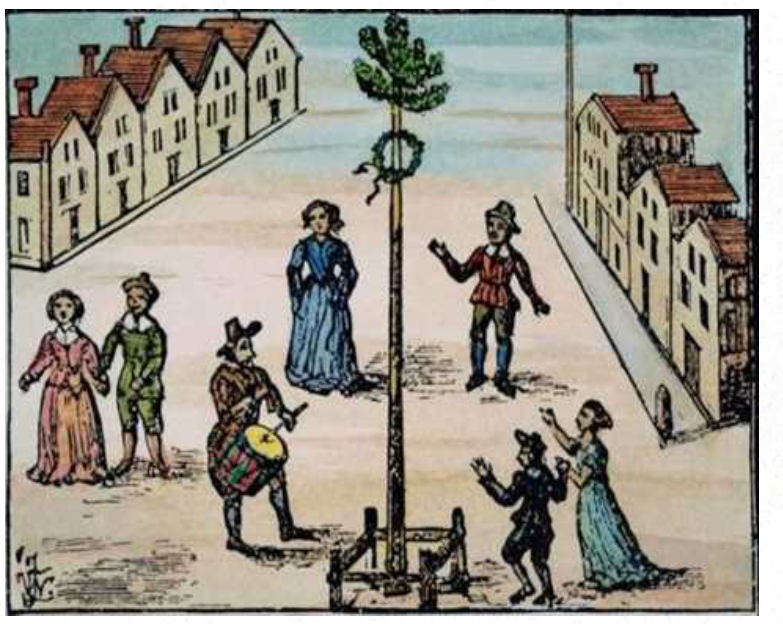
The Church is the Maypole Church as it was here the Maypole or the shaft was stored under the eves of the Church. Hence, St Andrew’s sobriquet of ‘Undershaft’. The May Day riot of 1517 put an end to the dancing around the Maypole but the pole itself survived until 1547. Then, in a Puritan riot, the ‘stynking idol’ was destroyed. (see my May Day blog post here for more more details.)

There is also a plaque to Hans Holbein, but no one knows for sure where he is buried. He died in London in 1543, possibly of plague. The present church was built in 1532, but it is first recorded in the 12th Century.

For my post on St Andrew – look here.

Agas Map 1561 showing St Andrews (right centre)

First Published on 30th November 2022, Revised 2023, moved to April in 2024, and revised 2025
April Fools Day April 1st

The Famous Spaghetti Tree April Fool’s Joke (from facebook)

April Fools Day and Spaghetti Growing on Trees

I nearly always forget to honour April Fool’s Day (or April Fish Day as the French call it). But in Britain, somewhere in our newspaper or TV station there is a April Fools Joke slipped in. The most remembered is the BBC piece showing film of Italian Farmers picking spaghetti from trees.

First Reference to April Fools Day

The first unambiguous British reference to April Fools Day is by diarist John Aubrey’s “Fooles holy day” in 1686 – although he might have been referring to Germany.

We observe it on ye first of April… And so it is kept in Germany everywhere.’

For more details read hoaxes.org.

Chaucer and April Fools Day

But there is a possible earlier reference in Chaucer in the Nun’s Priest’s Tale.   This I find quite compelling but most Chaucer scholars don’t. This is the text:

When that the monthe in which the world bigan
That highte March, whan God first maked man,
Was complet, and passed were also
Syn March bigan thritty dayes and two

So, if you have been keeping up with me, you will know that the first lines are referring to March 25th, (when the world began see my post here) when God made Adam and Eve, and when the Church started the New Year and the year number moved one on. This was a major Church festival, usually followed by a week of holiness. The Roman New Year, January 1st, ended with a light-hearted festival called Saturnalia, and it is suggested that April 1st was, similarly, a day of release after the festival of the official Church ceremony of the New Year.

Chaucer’s last line says ‘Since March began thirty-two days have passed.’ A foolish person would not realise this is a reference to April 1st. Hence, this suggests a Fool’s Day already existed. Some scholars think that Chaucer was referring to May 2nd, counting the 32 days not from the beginning of March but from the end of March. I think they look at the second and third lines which read ‘That high March…. was complete’ and so add the 32 days to the end of March. Foolish in my opinion and not reading what actually Chaucer wrote which is ‘Since March began….

April Fools Day in Recent Years

I have had a quick look at the Guardian for their 2025 April Fools Day Story and I think it is this one:
Guardian April Fools Day Joke article or the world gone mad?

£4,440 for a Coffee cup shaped handbag?

In 2023, Harry and Megan proved irresistible and the Guardian reported that:

The Sun published a piece announcing the launch of Prince Harry and Meghan’s new video game “Megxit: Call of Duke-y” in which the royal couple try to reach California while dodging obstacles, including rival royals and the media, along the way.

In 2024, there was an equivalent story (from the Guardian’s quiz on April Fool’s jokes:

Meghan Markle was criticised after it was revealed that when you put her lifestyle brand name – American Riviera Orchard – into the What3words location service, it points to a statue of Oliver Cromwell, who famously had a King Charles executed

Hunting the Gowk

Generally, in Britain, we play a prank and say ‘April Fool’ with great delight. But we are not allowed to continue beyond midday. The Scots used to call it ‘Hunting the Gowk’ and the main prank was to give someone a letter to deliver, and the person who opened the letter would read:

Dinna laugh, dinna smile. Hunt the gowk another mile” and send the fool onto another leg of his or her’s fool’s errand. In Ireland the letter would read ‘send the fool further’.

First published March 25th 4004 BC and republished yearly on every April Fool’s Day.

Section on the meaning of April moved to my post April on April 7th

The Stormy Borrowing Days of March 29th

small tree in a bleak windy landscape Photo by Khamkéo Vilaysing on Unsplash
Borrowing Days – Windy Days. Photo by Khamkéo Vilaysing on Unsplash

Sir Walter Scott recorded that ‘the last three days of March are called the borrowing days; for as they are remarked to be unusually stormy, it is feigned that March has borrowed them from April to extend his sphere of his rougher sway.’

There are various traditions and poems that record the borrowing days, and this is in the Scotch dialect:

March borrowed from April
Three Days, and they were ill:
The first was frost, the second was snaw,
The third was cauld as ever’t could blaw.

The Borrowing Days in Spain

There is a Spanish story which explains this a little more. A shepherd asked March to calm the winds to suit his flock of sheep, in return for a lamb. March compiled but, then, the Shepherd refused to hand over the lamb. So, March borrowed three days from April and made them fierce and stormy. Versions of this tale are known from Staffordshire, North England and Scotland. (Source ‘Weather Law’ by Richard Inwards 1994 (first published 1893).

Last year was windy with sunny spells followed by cold rain and fierce gusts.  This year has been sunny and warm, but today there was a pretty fierce wind.

Warm days at the end of March or the beginning of April bring the Blackthorns into bloom. This often followed by a cold snap which is known as a ‘Backthorn Winter.’

February 2023 in Haggerston Park, London showing early blossom (Blackthorn?) Photos K
February 2023 in Haggerston Park, London showing early blossom (Blackthorn?) Photo K Flude

For more on blossom and Haggerston Park follow my link to haggerston-park/

Nature in Art

For a glimpse of Nature in art, follow this link to the ‘Ny Carlsberg Glyptotek’ in Denmark. This is a Museum with ‘a vast collection of art and sculpture.’ The link will take you to the ‘After Nature’ Special Exhibition page. Here, you can see a few of the Spring paintings, including a Gauguin and a Van Gogh. But, you can see more, including the ‘After Nature’ exhibition if you download the app. Another excuse to visit the wonderful City of Copenhagen. On my first visit I stayed in a cabin on an historic Wooden Ship in the harbour.

screenshot of webpage Glyptotek Museum in Denmark
Screenshot of webpage Glyptotek Museum

On This Day.

Photo of cover of Chambers Book of Days

2024 – I purchased the Chamber’s Book of Days, updated from the original 1864 publication, and began adding occasional ‘On This Day’ epilogues to my posts.

1461 – The Battle of Towton, England’s bloodiest battle. Part of the Wars of the Roses.

1871 – Official Opening of the Royal Albert Hall

1912 – Captain Scott’s last entry in his diary

‘We shall stick it out to the end, but we are getting weaker, of course, and the end cannot be far, It seems a pity, but I do not think I can write more.’

See also my post Lawrence-oates-i-am-just-going-outside-and-may-be-some-time.

1971 – Charles Manson found guilty

Oh, and if you know anyone who would enjoy this content, please do send them a link and suggest they subscribe.

Burn’s Night January 25th

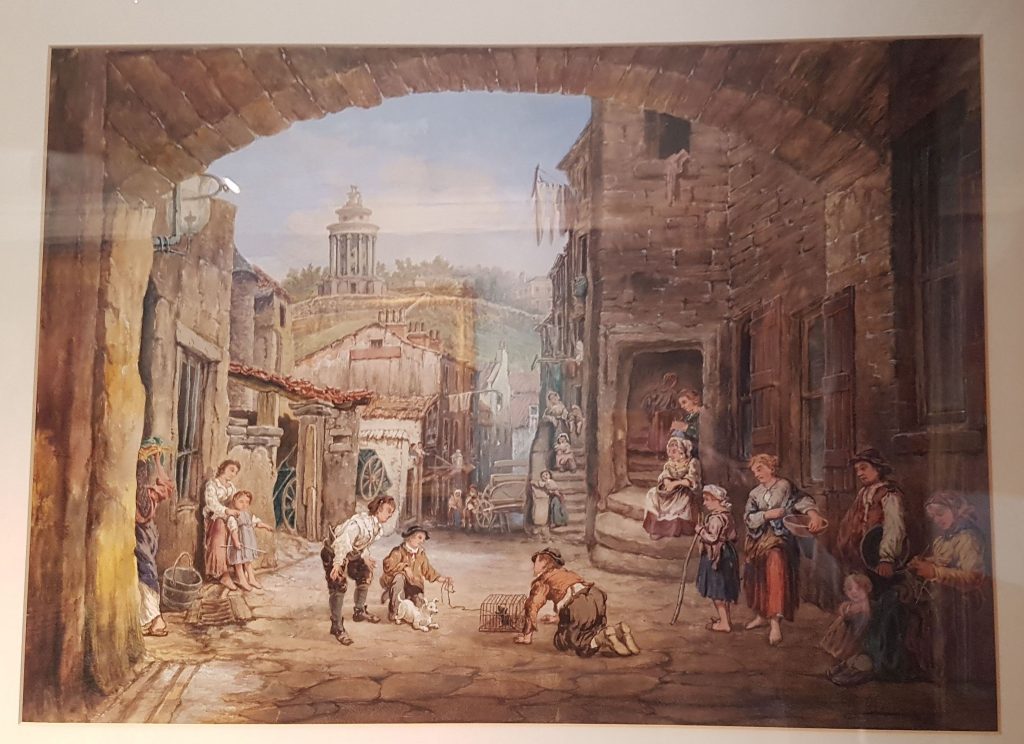
Edinburgh Writer’s Museum ‘Burn’s Monument from Campbell’s Close Canongate’ by John Bell. The Burn’s Monument is is on the hill in the background.

Burn’s Night is an increasingly important date on the calendar of Scotland’s Cultural Heritage. Wikipedia says it began:

at Burn’s Cottage in Ayrshire by Burns’s friends, on 21 July 1801

This was 5 years after his death. It is now celebrated around the world, making clear the importance of Robert Burns.

Burns himself would have been astonished at the spread of Burn’s Night. He was modest about his attainments, saying, in his introduction to the Commonplace Book:

‘As he was but little indebted to scholastic education, and bred at a plough-tail, his performance must be strongly tinctured with his unpolished rustic way of life. ‘

To celebrate Burn’s Night here is one of his most famous works. Also have a look at my post on his great narrative poem, Tam O’Shanter and the Cutty Shark.

Address to a Haggis

Fair fa’ your honest, sonsie face,
Great Chieftain o’ the Puddin-race!
Aboon them a’ ye tak your place,
Painch, tripe, or thairm:
Weel are ye wordy of a grace
As lang ‘s my arm.

The groaning trencher there ye fill,
Your hurdies like a distant hill,
Your pin wad help to mend a mill
In time o’ need,
While thro’ your pores the dews distil
Like amber bead.

His knife see Rustic-labour dight,
An’ cut ye up wi’ ready slight,
Trenching your gushing entrails bright,
Like onie ditch;
And then, O what a glorious sight,
Warm-reekin, rich!

(for the other five verses have a wee lookie here)

The Writer’s Museum

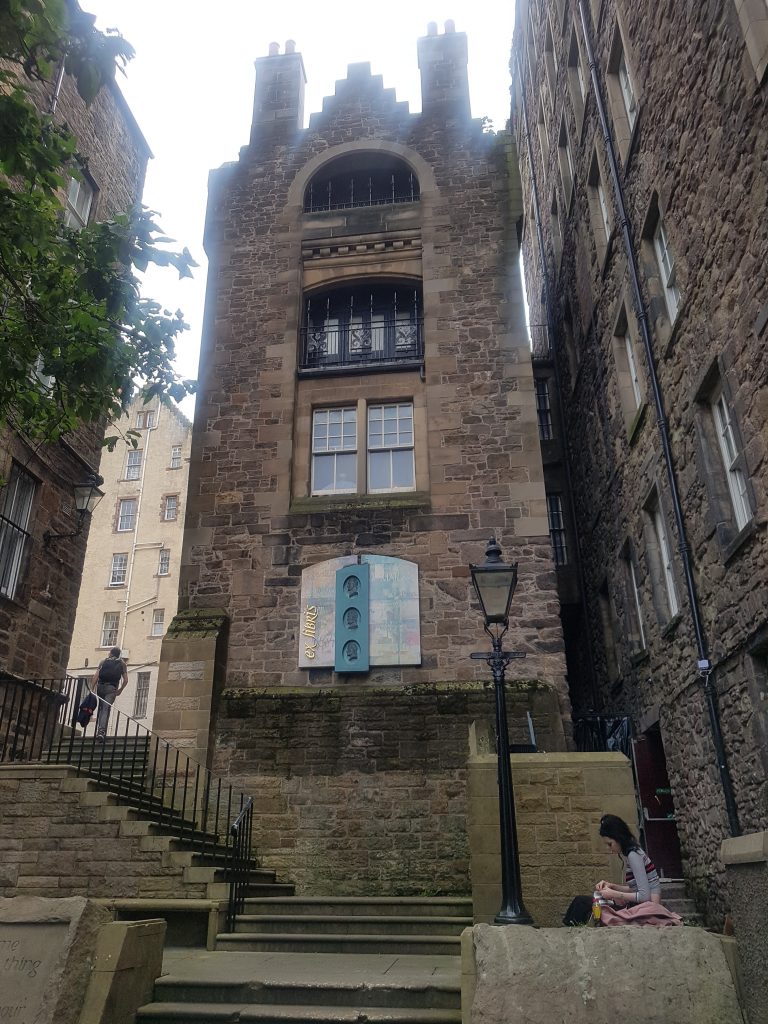
Often bypassed by the tourists on a visit to the wonderful City of Edinburgh is the Writer’s Museum. It is in one of those remarkable Tower houses which seem unique to the High Street in Edinburgh. Inside, it gives a great introduction to the great writers of Scotland.

Is it not strange’ wrote philosopher David Hume in 1757 ‘that a time when we have lost our Princes, our Parliament, Independent Government …..that we shou’d really be the people most distinguish’d for literature in Europe?’ (source: Museum display panel)

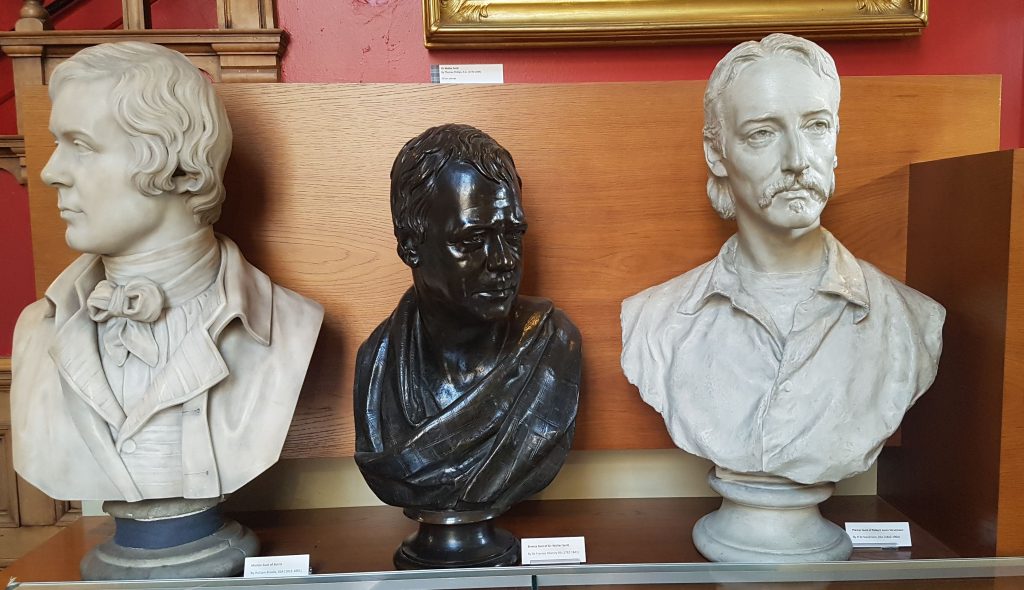
Edinburgh Writer’s Museum Burns, Scott, Stevenson.
A Visual for Burn’s Night ‘Window in the Writer’s Museum, Edinburgh’ Photo by K Flude
Writer’s Museum photo K. Flude

First published Jan 2023, republished Jan 2024, 2025

Edinburgh. What a City!

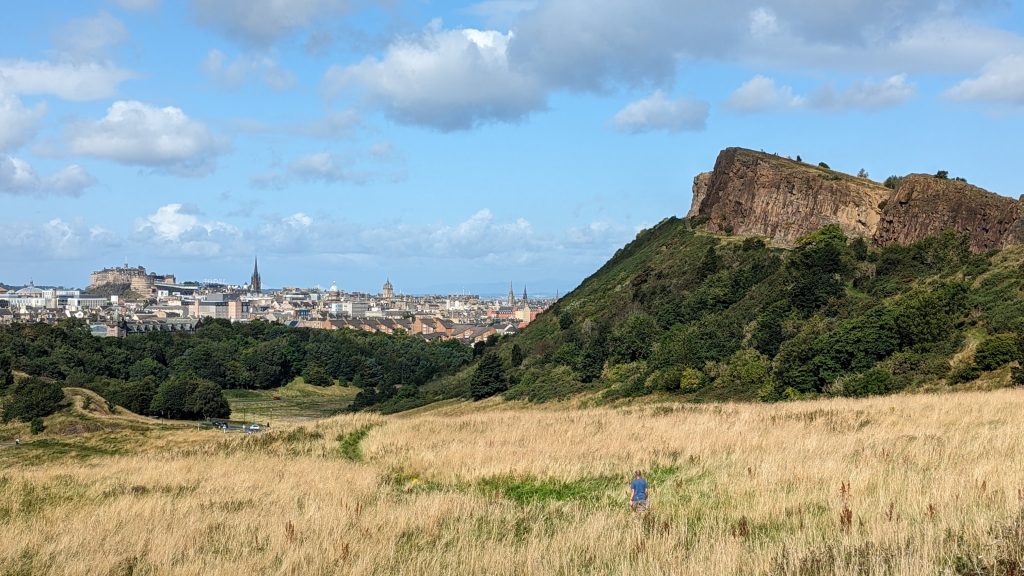
Edinburgh from Arthur’s Seat. Castle to the left, St Giles the ’rounded’ spire in the middle, and Salisbury Crags to the right

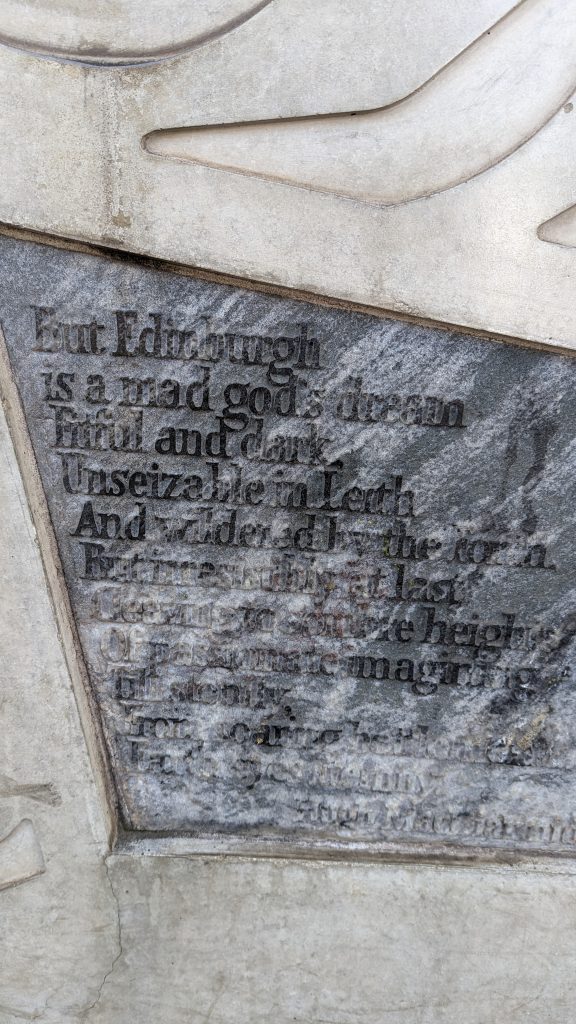
This is a poem which is ‘printed’ on the side of the Scottish Parliament.

by Hugh MacDiarmid

But Edinburgh is a mad god’s dream
Fitful and dark,
Unseizable in Leith
And wildered by the Forth,
But irresistibly at last
Cleaving to sombre heights
Of passionate imagining
Till stonily,
From soaring battlements,
Earth eyes Eternity

Hugh MacDiarmid (1892-1978)

Poem by Hugh MacDiarmid about Edinburgh

Digital Heritage – the Stone of Destiny yields secrets

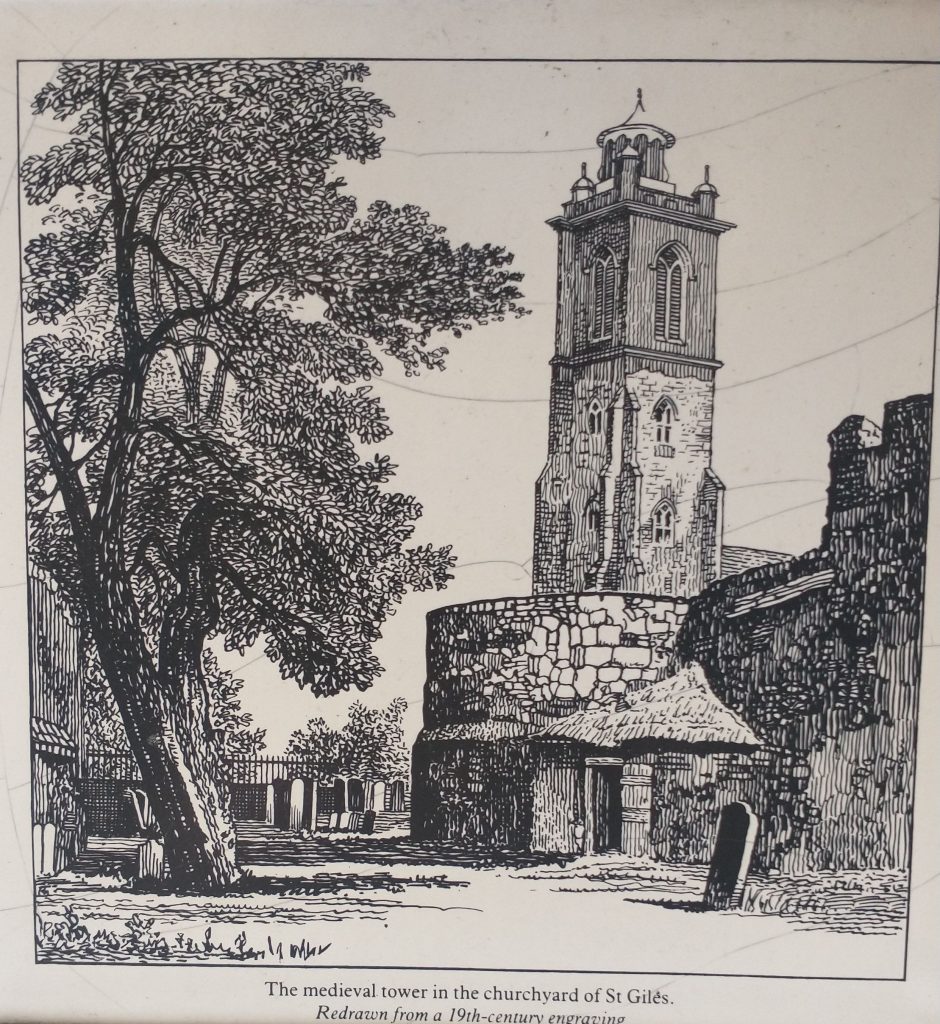
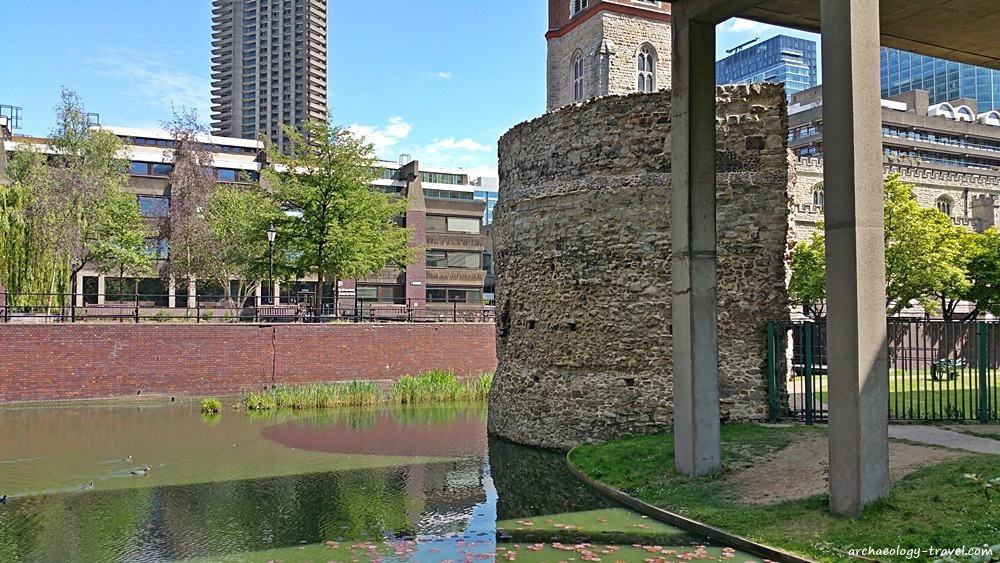
Photo of a replica of the Stone of Destiny at Scone Abbey. This is where Scottish Kings were crowned.  The chapel is built near to Scone Palace, and on a mound of earth which was said to be made up of the dust from the shoes, and trousers of those attending coronations from all over Scotland
Replica of the Stone of Destiny at Scone Palace, Photo Kevin Flude

A study of the Stone of Destiny, the Stone of Scone, the Coronation Stone, has revealed new information. Firstly, it has some markings which look like three X’s and something like a V – perhaps Roman Numerals or more likely, crosses.

The Stone also revealed traces of copper alloy showing that a metal object had been attached to the Stone for a considerable time. The most obvious suggestion would be a relic associated with a Saint, and a Bell is one possibility.

Traces of gypsum suggested someone sometime made a plaster copy of the stone. No one knows when or why, and it has not been found.

Historic Environment, Scotland has released this fascinating 3-D scan of the stone for the public to view – it is annotated too.

You can read more at the links below, and thank you to Jean Kelly of the Britarch mailing list for alerting me to this.

Hidden symbols and ‘anomalies’ (Live Science)

Cutting-edge digital technologies (Historic Environment Scotland)

The Stone has been moved from its permanent home at Edinburgh Castle for the first time since 1996, to be placed under the Coronation Chair for Charles’s May 6 Coronation at Westminster Abbey.

Coronation Chair, with Stone of Scone under the seat.
black and white photo
Coronation Chair, with Stone of Scone under the seat.

The Stone was kept at Scone before it was stolen by Edward 1 of England, who placed it under the Coronation Chair, at Westminster, to sanctify English Kings and to make the point that he was the overlord of the Scottish. In the 1950’s Scottish students stole it back, hid it for a few weeks and then left it at Arbroath Abbey. They did this because the so-called Declaration of Arbroath (1320) is a letter to the Pope asking for his endorsement of Scotland’s claim to be independent of England. The Pope agreed.

The Stone was recovered from Arbroath taken back to Westminster. The Labour Party under Tony Blair, granted Scotland back their own Parliament and as a symbol of their regained independence, the Stone of Destiny was taken back to Scotland.

Newspaper cutting showing the Stone being taken from Arbroath Abbey
Photo of six people, including policemen carrying away the Stone of Scone from Arbroath Abbey
Newspaper cutting showing the Stone being taken from Arbroath Abbey

To my mind it should be in Scone, which is where Macbeth and most other Scottish Kings were crowned, but perhaps they thought it should be in the Capital and in the safety of the Castle. At Scone, the Stone was placed on a mound of earth which was said to be made up of the dust from the feet of those attending Coronations symbolising the consent of all of Scotland for the new King.

New Irish Bank Holiday for St Bridget/Imbolc! February 6th

The celtic year shown as a circle
The Celtic Year

The Irish have created a brand new Bank Holiday for St Bridget. The first one is today Monday 6th February 2023 and it follows a public holiday given last year for Health Workers in March. The timing of the Bank Holiday is explained by the Irish Post:

St Brigid’s Day itself falls on February 1 each year but going forward the Imbolc/St Brigid’s Day public holiday will fall on the first Monday in February, unless February 1st falls on a Friday.

This means that Ireland now has a public holiday on the 4 Celtic festivals of Samain (Halloween), Imbolc (St Bridget’s Day), Beltane (May Day) and Lughnasa (Lammas Day). These festivals are quarter-days, which mean they fall half way between the Solstices and Equinoxes.

The Independent wrote that ‘then-Tánaiste, Leo Varadkar, said last year‘ ….“This will be the first Irish public holiday named after a woman,”  He also is quoted as saying:

“It marks the half-way point between the winter solstice and the equinox, the beginning of spring and the Celtic New Year.”

Extra Bank Holidays in the UK?

There are occasional calls for a new Bank Holiday in the UK. It’s often a Conservative MP calling for a National Day for the British and they often suggest a date like Trafalgar Day 21st October (commemorating the great Naval battle in 1805 in which Nelson was fatally wounded). It has several virtues in their eyes. Firstly, it is a day that confirmed Britain’s mastery of the Seas and thus is an ideal day for celebrating patriotism. Secondly, it is the school half term, and gives a much needed day off between summer and Christmas. Thirdly, they can suggest the day should be taken from May Day Bank holiday which coincides with the International Worker’s Day, which is obviously ‘a bad thing’.

For example, the Portsmouth MP’s supported a call for Trafalgar Day here: . The report says: ‘there are currently no bank holidays in the UK which celebrate battles or war victories’.

This, I think, leaves the rest of us thinking ‘What planet do these people live on?’ Yes, Trafalgar Day would have been a great day for a Bank Holiday IF this were 1839, maybe even 1939. But in 2023 it is just not on any ordinary person’s radar. We don’t think so very much about the Napoleonic War or Nelson, or nor do we often sing ‘Heart of Oaks, are our Men’ any more. In short, it is a reminder how distant from the rest of us Conservative MPs are, and how progressive Ireland has become by contrast.

Recently, we have been given a few Royal Bank Holidays, last year for the Queen, this year for the King. The Trade Union Congress proposed the need for more bank holidays because we only have the usual eight annual bank holidays for workers in England and Wales. Scotland has nine or ten; the average for the EU is ‘12.3 bank holidays a year. Finland and Romania get 15, while workers in Japan have 16 public holidays in total’.

A recent radio programme ‘The Bottom Line’ compared Britain with France and revealed that Britain is now 20% less productive than France, (up by 10% since Brexit) and that we make up the deficit by working longer hours. It appears that the French high tax. high worker’s protection regime, means they have to find ways of getting more out of the same hours, while we can just hire and fire, and are happy to make people work in a more inefficient way.

Here is my recent post about St Bridget’s Day

Why do you think Cutty Sark has been popular as a name for whiskey and sailing ships?

Is the question that Terry Cook asked me, and this is my answer.

Image of the Cutty Sark (from Facebook)

So the Cutty Sark is twice famous.

Her name comes from Tam O’Shanter, one of Robert Burns’ greatest poems. written in 1791. And everyone knows of Robert Burns, Scotland’s national poet. Burns night has become world famous for anyone interested in Scotland.

Figureheads on the prow of ships are very often  of a semi naked women with her torso breasting the water.  The sexy young witch, Nannie Dee, in Tam O’Shanter is identified as the one who is very ‘Vauntie’ and with a short shift that she wore as a child and so is now short and revealing. The poem names this garment as her ‘Cutty Sark. Sark is her shift. Cutty is dialect for short. The Cutty Sark’s figurehead shows Nannie in her shift holding the tail of Tam’s horse.

Her cutty sark, o’ Paisley harn,
That while a lassie she had worn,
In longitude tho’ sorely scanty,
It was her best, and she was vauntie.—
Ah! little kend thy reverend grannie,
That sark she coft for her wee Nannie,
Wi’ twa pund Scots, (’twas a’ her riches),
Wad ever grac’d a dance of witches!

The story is that the drunken Tam on his steady horse Maggie is travelling home when he seems a devilish dance taking place in a graveyard, presided over by the devil himself. Tam is so excited when he sees the young beautiful witch that he bellows his approval and all of a sudden the merriment ends, and in deadly silence the witches turn on Tam and race to catch him.

Tam tint his reason a’ thegither,
And roars out, ‘Weel done, Cutty-sark!’
And in an instant all was dark:
And scarcely had he Maggie rallied.
When out the hellish legion sallied.

As bees bizz out wi’ angry fyke,
When plundering herds assail their byke;
As open pussie’s mortal foes,
When, pop! she starts before their nose;
As eager runs the market-crowd,
When ‘Catch the thief!’ resounds aloud;
So Maggie runs, the witches follow,
Wi’ mony an eldritch skreech and hollow.

They have to get across a brook before the witches because the witches cannot cross the water. The witches must get him before the brook or face burning at the stake. All depends on Maggie (Meg). The young witch in the Cutty Sark is catching up as they approach the brook. Maggie makes a magnificent leap, the witch makes a despairing grab and only can reach Maggie’s tail but Tam and his horse make it to safety leaving the witch the tail.

Cutty Sark Figurehead

Ah, Tam! Ah, Tam! thou’ll get thy fairin!
In hell they’ll roast thee like a herrin!
In vain thy Kate awaits thy comin!
Kate soon will be a woefu’ woman!
Now, do thy speedy utmost, Meg,
And win the key-stane of the brig;
There at them thou thy tail may toss,
A running stream they dare na cross.
But ere the key-stane she could make,
The fient a tail she had to shake!
For Nannie, far before the rest,
Hard upon noble Maggie prest,
And flew at Tam wi’ furious ettle;
But little wist she Maggie’s mettle—
Ae spring brought off her master hale,
But left behind her ain gray tail:
The carlin claught her by the rump,
And left poor Maggie scarce a stump.

Now, follow the link below and read the whole poem but read it out loud, standing up and with gusto. Don’t worry about the pronunciation just enjoy it.