I went to the Stratford-upon-Avon Mop on October 12th

This year the Stratford Mop fair was on the 11th and 12th October, and I was there to see it!As I reposted a long post about the Mop a couple of days ago, I thought I should report back. To recap, the Mop began as a Michaelmas (Old Style) Hiring Fair, and has continued in Stratford ever since. But the modern incarnation is no longer a Hiring Fair and no shepherds were to be seen.

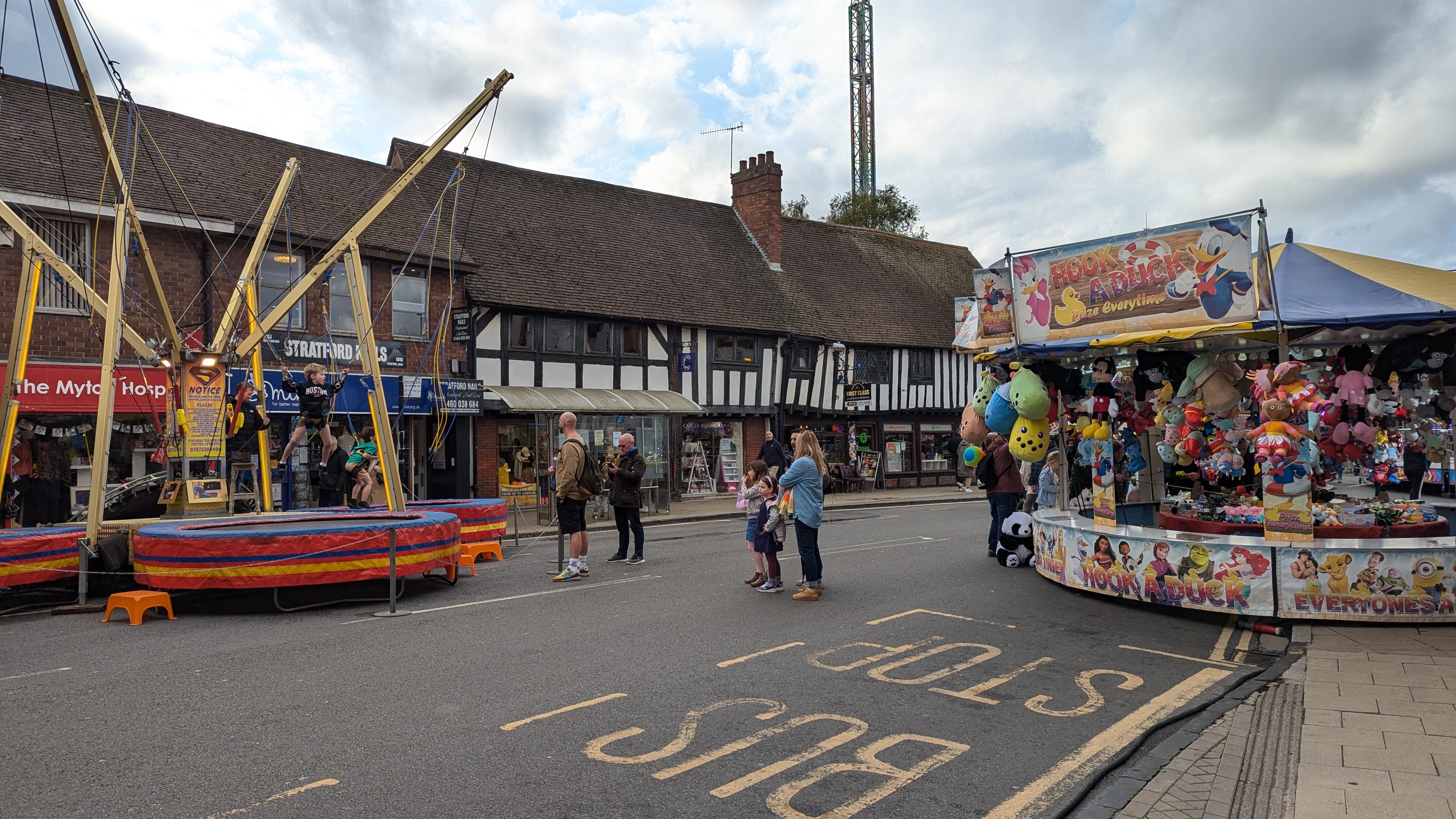
2024 Stratford on Avon Mop. Photo Kevin Flude

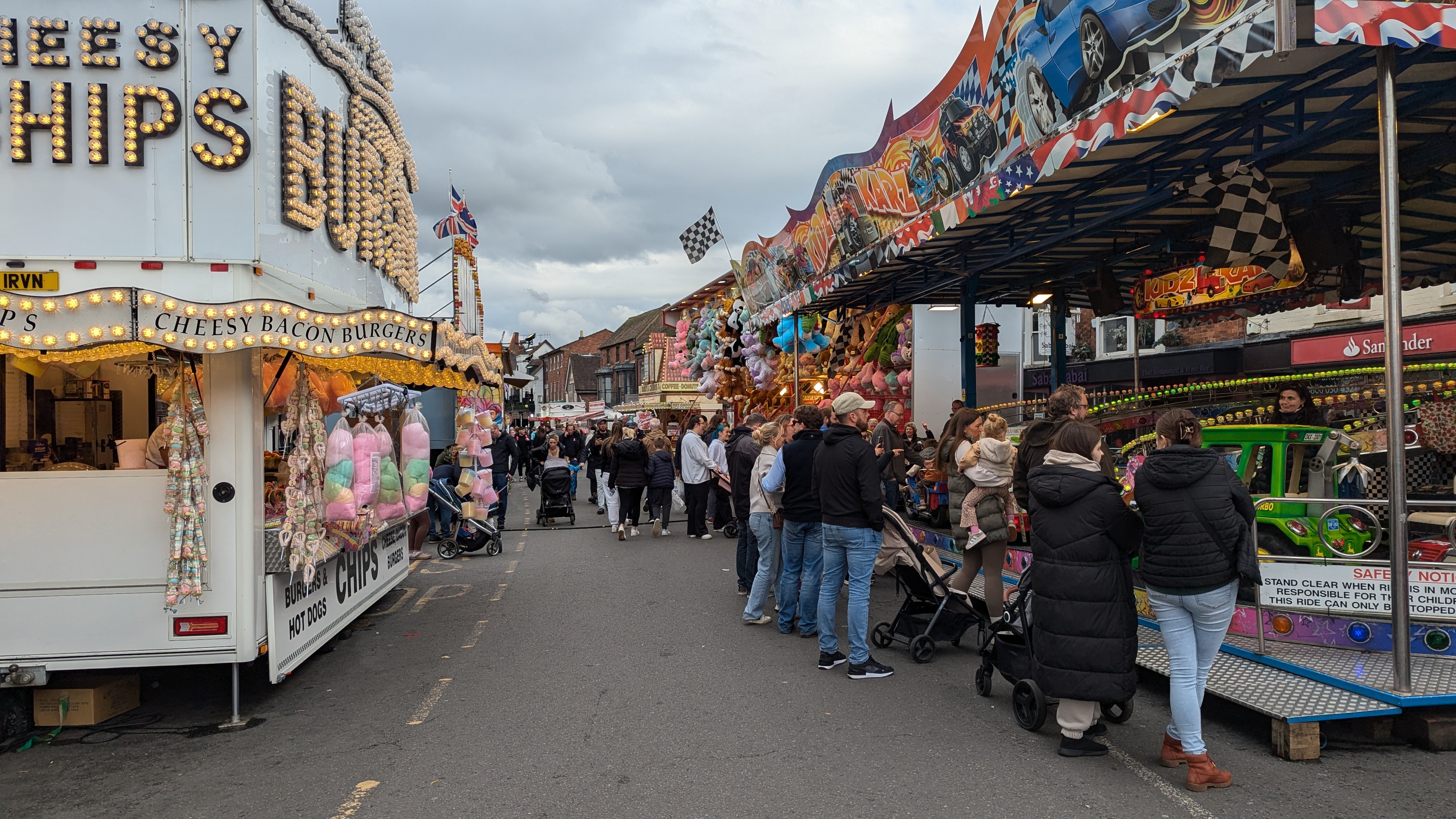
The centre of the Town was crowded with a cacophony of shooting galleries, games to win soft toys, stalls selling toffee apples, candy floss, burgers, and all things bad for you. And interspersed with the stalls were all sorts of rides, carousels and all the raucous fun of the fair.

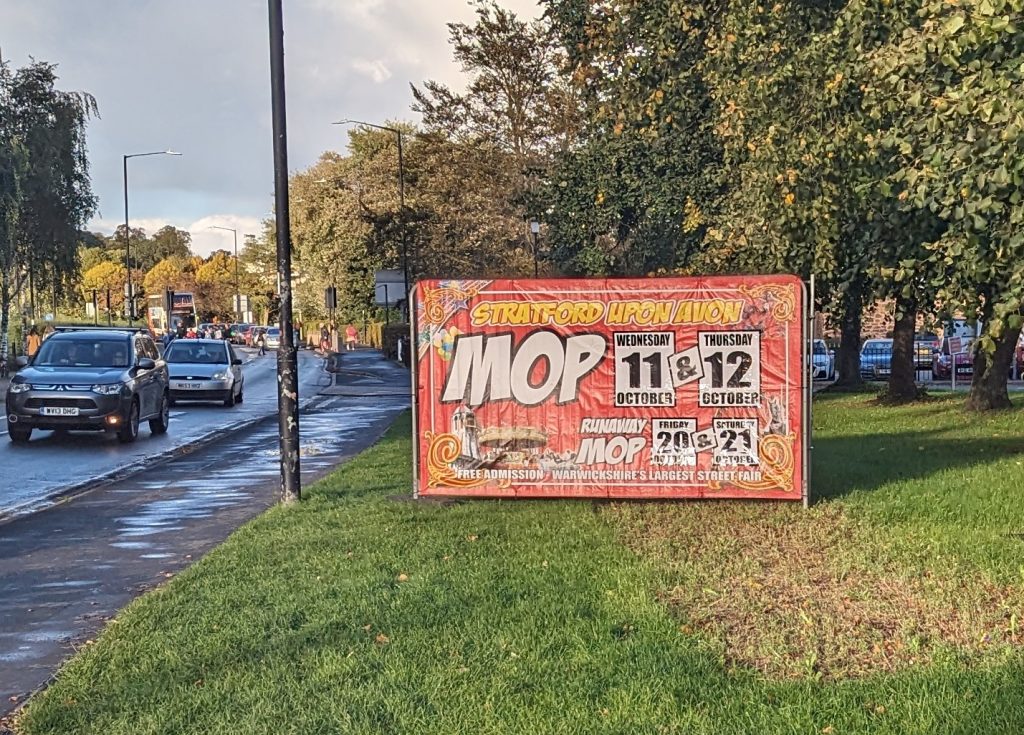
Stratford-upon-Avon Mop Festival (2023 sign)

You might have noticed I have labelled the photographs differently, one Stratford-upon-Avon, the other Stratford-on-Avon. Most prefer the ‘upon’ but I thought this wrong as the Council building in Church Street uses the simpler ‘on’. Having looked it up, I see that the answer is both are correct. Stratford-upon-Avon is used for the Town, and Stratford-on-Avon for the Town and area around the town. Now you know!

Now, I cannot find any reference in Shakespeare to a funfair, and all references to a Mop, are to the thing you mop the floor with. But he does mention St Bartholemew’s Fair obliquely, and certainly knew his friend, Ben Jonson’s Play ‘St Bartholemew’s Fair’. It is a great play based in London, at the annual fair in Smithfield. It was one of the great Wool fairs of England. It was held every year on St Bartholemew’s Day August 24th, and lasting sometimes weeks long. Please read my post on Bartlemas here.

Going to the Mop in Stratford-upon-Avon & Henley-in-Arden 11th & 12th October

The Mop Festival in Stratford-upon-Avon

This year the Stratford mop festival was on the 11th and 12th October. I am in Stratford. The the centre of town is a cacophany of shooting galleries, stalls selling toffee apples, candy floss, burgers and all things bad for you. And a fun fair.Nothing at all sophisticated, or literary or dramatic, or folkloric. Just a good old-fashioned fun fair in the middle of the town. Quite raucous, but they leave Henley Street, and Shakespeare’s’ Birthplace, free of it. Below I tell the story of my discovery of the Mop.

In 2023, I was on my way to Stratford-upon-Avon Railway station, I saw the sign at the top of this page, but had no idea what on earth a Mop was. I put it to the back of my mind as I took the train to Henley-in-Arden. My interest in the town was that Shakespeare was born in Henley St. And his mother was called Mary of Arden. So, naturally, I wanted to find out about Henley-in-Arden. To turn curiosity to action, it took our Tour Coach Driver telling me he lived there and that it was a pretty but small town.

Mary Arden doesn’t live here any more!

I had a free afternoon from my duties as Course Director on the ‘Best of England’ Road Scholar trip. I got on the very slow train to Henley-in-Arden. One of the first stops was Wilmcote, where Mary Arden’s House is. I visited two years ago, when I was astonished to find it was a different building to the one I had visited in the 1990s! In 2000, they discovered they had been showing the wrong building to visitors for years! Mary Arden’s House was, in fact, her neighbour Adam Palmer’s. And her house was Glebe Farm.

On that visit, I walked from Stratford-upon-Avon to Anne Hathaway’s Cottage. Then to Mary Arden’s House and back to Stratford along the Stratford Canal. It is a lovely country walk if you are ever in the area.

The Forest of Arden

The train route to Henley is through what remains of the ancient forest of Arden. The forest features in, or inspired, the woody Arcadian idylls which feature in several of Shakespeare’s plays, particularly the Comedies. ‘As You Like It’, for example, is explicitly set in the Forest of Arden, as this quotation from AYL I.i.107 makes clear:

Oliver:  Where will the old Duke live?

Charles. They say he is already in the Forest of Arden, and a many merry men with him; and there they live like the old Robin Hood of England: they say many young gentlemen flock to him every day, and fleet the time carelessly as they did in the golden world.

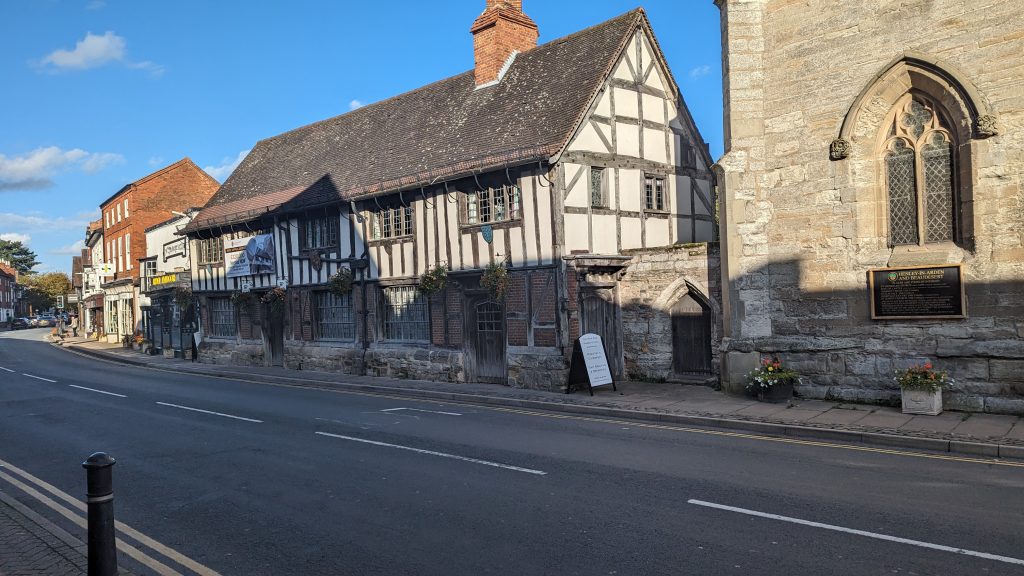
Guildhall, Henley-in-Arden

Henley-in-Arden

Not much remains of the old Forest. It was cut down to make timber-framed buildings and ships for the British Navy – the so-called Wooden Walls. Henley has a beautiful high street. Further down the road is a lovely Heritage Centre full of old-fashioned and DIY Information panels. And that is not a criticism, it provided a very enjoyable visit full of interesting stuff. And gave me a couple of snippets of information I have not seen anywhere else.

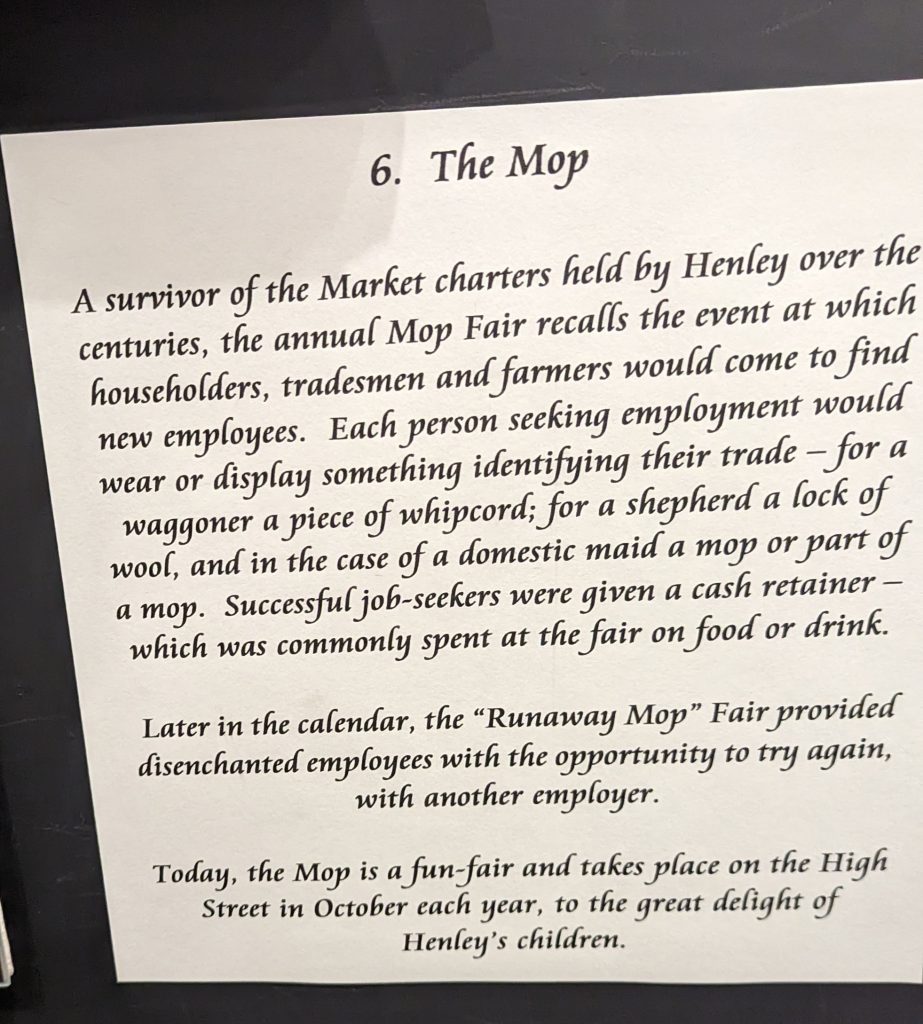
One, was a panel dedicated to the Henley Mop. A mop turns out to be a hiring fair. Think of Gabriel Oak in Hardy’s ‘Far from the Madding Crowd’. His attempt to become an independent farmer destroyed when his sheepdog runs amok. The dog sends his sheep over a cliff to their doom. So he takes his shepherd’s crock to the hiring fair or Mop as they are known in the Midlands. There, potential employers can size up possible employees and strike mutually agreeable terms and conditions. And Gabriel becomes the shepherd for the delightful and wilful Bathsheba Everdene.

So, a shepherd would take his staff, or a loop of wool. A cleaner her mop (hence the name of the fair). A waggoner a piece of whipcord. A shearer their shears etc. Similarly, in the Woodlanders (by Thomas Hardy) the cider-maker, Giles Winterborne, brings an apple tree in a tub to Sherborne, to advertise his wares.

The retainers thus employed would be given an advance and would be engaged, normally, for the year. So there was quite a widespread moving around of working people to new jobs and often new housing. Not quite how we imagine the past?

The perceptive among you will have noted the bottom of the sign in Stratford which advertised the ‘Runaway Mop’. This was held later in the year, so that employers could replace those who ran away from their contracts. And those who ran away could find a better, kinder or more generous boss. See also my post of Gabriel Oak and Pack Rag Day which is another hiring fair which was help on Martinmas Old Style.

Henley Mop – panel from the heritage centre

Court Leets and Barons

Also of interest to me was the panel about Court Leets and Barons. These were the ancient courts which dealt with, respectively, crime and disorder, and property and neighbourhood disputes. Henley still has its ancient manorial systems in use, at least ceremonially. The Centre shows a video of the installation of a new Lord of the Manor at the Guildhall. The title had been purchased by a cigar-smoking Stetson-wearing large rich American.

Johnson’s Coaches

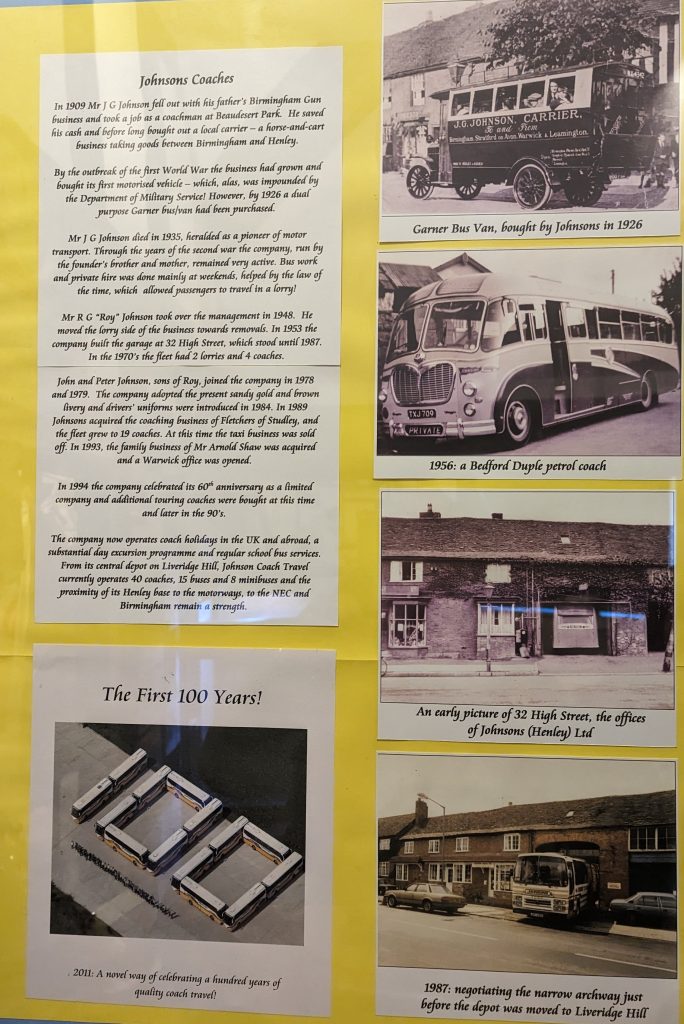
Another panel was the story of a Coaching Company. When I lead the Best of England programme we are driven around by Johnson’s Coach Company. It was a delight to discover that it has a history that can be traced back to 1909 in Henley. I conveyed this information to our group on the next day as we toured the Cotswolds. Curtis, our driver, was able to update the panel. He told us that the family were still involved with the firm, which is still operating from the area. He said the two brothers who run the company come in every working day. They do everything they require of their drivers to do; i.e. they drive coaches, clean coaches, sweep the floors and generally treat their staff like part of a big family. I should have asked him whether he got his job at the Mop, while holding a steering wheel in his hands!

Johnson’s Coach Company -Panel from Henley Heritage Centre

Note: It seems that Johnson has now merged with another company. But it keeps its depot in Henley and maintains its connection with the town.

First published in 2023 updated 2024, 2025
Michaelmas Old Style – October 11th

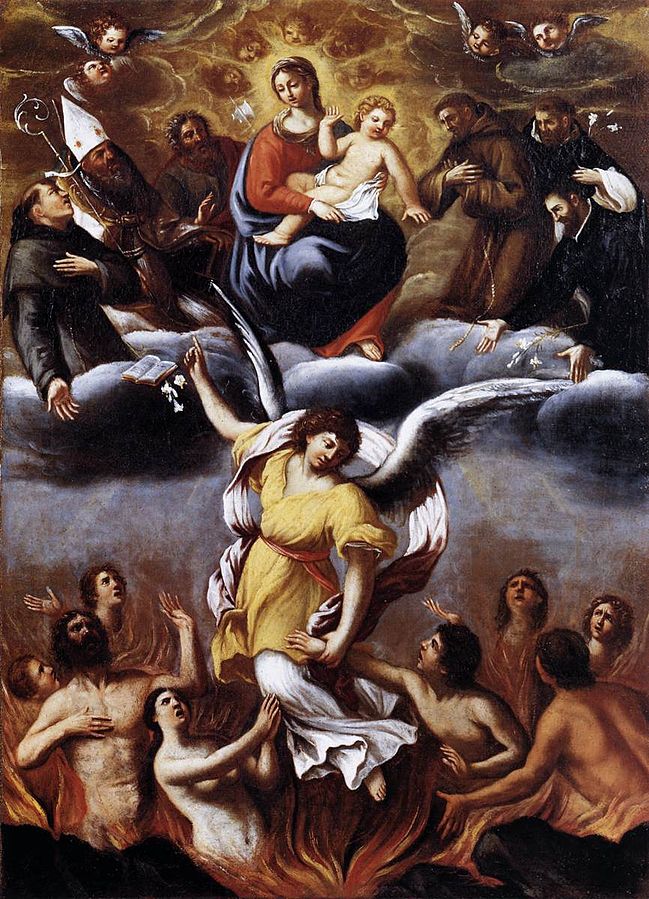
Michaelmas Old Style. St. Michael weighing souls during the Last Judgement, Antiphonale Cisterciense (15th century), Abbey Bibliotheca, Rein Abbey, Austria (Wikimedia by Dnalor_01 license (CC-BY-SA 3.0))

I am catching up as I have been away. So I’m a little behind in my days.

October 11th is the day that the Devil fell out of heaven and landed in a Blackberry Bush. So. you are, therefore, not wise to eat them after October 11th. St Michael’s Day is now celebrated on September 29th (see my post here). But before September 1752, it was celebrated on what is now October 11th, now styled ‘Michaelmas Old Style’. The change of date is due to the introduction in the UK of the Gregorian Calendar.

Saint Michael is the chief of the archangels. Saint Gabriel was celebrated on the eve of the Annunciation on 24 March (see my post here). St Raphael on the 24th October, But more recently the Churches celebrate all the Archangels at Michaelmas. It is now called the celebration of St Michael and All Angels.

Terms. Colleges, Lawyers and Quarterdays

Apart from its religious significance, St Michael’s Mass was an important date on the civic calendar. Terms began, rent fell due, and work contracts ran out. It was the end of the ploughman’s year, and the day when Hiring Festivals or Mop Festivals took place. Look at my post on the Stratford Mop festival

So in Oxford, the autumn term is called Michaelmas. The Spring Term Hilary on St Hilary’s Festival of January 14th. The third term is called Trinity, which takes place on Trinity Sunday the first Sunday after Pentecost. The law courts also have a Michaelmas term.

It is one of the Quarter Day’s of the year, close to the Solstices and the Equinox into which the medieval and early modern world was divided:

(The above list is copied from Wikipedia).

Eat a Goose for Good luck at Michaelmas

It is probably too late to tell you this year. But “if you eat goose on Michaelmas Day you will never lack money all year“. Or as they said in Yorkshire: ‘He’at eateth goose on Michaelmas won’t find his pockets short of brass.’ Jane Austen wrote to Cassandra on Michaelmas 1813 ‘I dined upon goose today, which I hope with secure a good sale of my second edition.’ Pride and Prejudice was published in 1813.

St Michael is one of several archangels. He was protector of the Israel. He has four main roles in heaven. He is the leader of the heavenly host in its defeat of Satan. He is the Angel of Death, the Weigher of Souls, and the Guardian of the Church. For more on archangels, see the second half of my post on Michaelmas here.

On this day

The Romans celebrated ‘meditrinalia’ where they celebrated the new wine and the Gods that made it possible. They toasted the wine chanting:

‘I drink old and new wine to cure old and new disease.’

First Published in 2024, revised in 2025
October – Winterfylleth, Hydref, or Deireadh Fómhair

October from the Kalendar of Shepherds

Kalendar of Shepherds

The 15th Century French illustration in the Kalendar of Shepherds shows October as a busy month. It is the time when the cereals are being flailed, the fields ploughed and sown. Perhaps winter wheat or barley or peas and beans?

The 16th Century English text of the Kalendar of Shepherds (read the illustration) shows what a busy month it was, but the writer comes down hard against the month as ‘a messenger of ill news’ the harbinger of cold dark nights.

About the Kalendar of Shepherds.

The Kalendar was printed in 1493 in Paris and provided ‘Devices for the 12 Months.’ I’m using a modern (1908) reconstruction of it using wood cuts from the original 15th Century version. It includes various text from 16th and 17th Century sources. (Couplets by Tusser ‘Five Hundred Parts of Good Husbandrie 1599. Text descriptions of the month from Nicholas Breton’s ‘Fantasticks of 1626. This provides an interesting view of what was going on in the countryside every month.

https://wellcomecollection.org/works/f4824s6t To see the full Kalendar, go here:

Astrological October

The star signs of October are the Scales of Libra and the Scorpion of Scorpio.

The star signs of October

Angelic October

Michael is the Angel of Autumn, the Angel of Judgement Day, and the Weigher of Souls. Uriel is the Angel of Libra and was sent by God sent to warn Noah. So the protector against, floods, fire and natural disasters. Scorpio’s Angel is Barbiel, he looks over health, genitalia and doubtful things. (‘An Angel Treasury’, Jacky Newcomb).

You might like to look at my post on Michaelmas here.

Roman October

In the Roman world it was, originally, the 8th Month (octo=8) but then they added January and February to the year. So it became the 10th Month. It was their time to celebrate the new wines of the Harvest. In Britain, the wine harvest is late September to October, but in hotter climes can be from July. But the grapes need to be processed, and the Romans thought that new wine was health giving and celebrated it in October.

Rustic October

But for many people, October is a beautiful month. The dying leaves bring a sophisticated array of rustic colours, which makes the wooded countryside exceptionally beautiful.

Autumn in Haggerston Park, London (photo Kevin Flude)

It can still be warm enough to go for pleasant walks. And the surfeit of the harvest and the culling of animals meant there was plenty to eat before winter austerity begins.

Anglo-Saxon Winter Fall

The Venerable Bede tells us that the month was called Winterfylleth, in the 8th Century. The English divided the year into Summer and Winter. And Winter began for the Anglo-Saxons on the first full moon of October. This means that this year winter begins on 7th October. This is the Harvest or Hunter’s Moon, which is also a supermoon, the first of 3 ending the year.

Celtic October

In Welsh, it is Hydref, which also means Autumn. For the Welsh it was the last month of Autumn and the last month of the year. The Celtic new year, and winter starts on 1st November. The same is true of the Irish Calendar. Autumn is called Fómhair, and October Deireadh Fómhair which means ‘End of Autumn’.

Astronomical & Meteorological Autumn

Astronomically, autumn ends at the Winter Solstice and meteorologically at the end of November. So the Celtic Autumn ends a whole month or more earlier than the other measures. My very personal view is that Winter begins on November 5th more often than not. This is an evening we often spend outside watching the fireworks displays to celebrate Guy Fawkes’ Night. It always seems to be the first time that you feel cold enough to need hat, gloves, and scarves.

First Published in Autumn 2024, revised 2025
The Archaeology of London Walk

Roman layer opus signinum,

This is Kevin Flude’s Walk for London Walks. It normally starts in the early evening and from Exit 3 Bank Underground Station To See if the walk is running soon follow this link.

Legend says that London was founded as New Troy. Historians believed it was founded as Londinium after the Bridge was built by the legionaries of the Emperor Claudius in AD 43.   Archaeologists in the 1970s and 1980s discovered that London was refounded as Lundenwic in the 7th Century and again in the 9th Century when it was called Lundeburg.

This walk tells the epic tale of the uncovering of London’s past by Archaeologists. And provides an insight into the dramatic history of the Capital of Britannia, and how it survived revolts, fires, plagues, and reacted to the decline and fall of the Roman Empire.  It became the foremost English City but with periods under Viking and Norman control.

We tell the story in the streets of the City of London, beginning in the valley of the River Walbrook by the Temple of Mithras, and visit many sites where important archaeological discoveries were made.

See my Roman London

Updated 7th October

Michaelmas, St Michael and All Angels September 29th

Detail from ‘The Creation and the Fall of Man’ by Mariotta Alberinelli 1513-14 showing Archangels helping in the creation of Eve from Adam’s Rib’

September 29th used to be St Michael’s Day, or Michaelmas. But in the 20th Century, the Catholic Church made it the day to celebrate the three chief Archangels and all Angels. Previously, September 29th was for St Michael, March 24th for St Gabriel, and October 24th for St Raphael.

It was an important day in the medieval civil calendar and was the date on which Oxford, Cambridge and the Legal system started their autumn terms. It is also the date the Lord Mayor of London is elected at Guildhall in the City of London.

For more about Michaelmas see my post on Old Michaelmas.

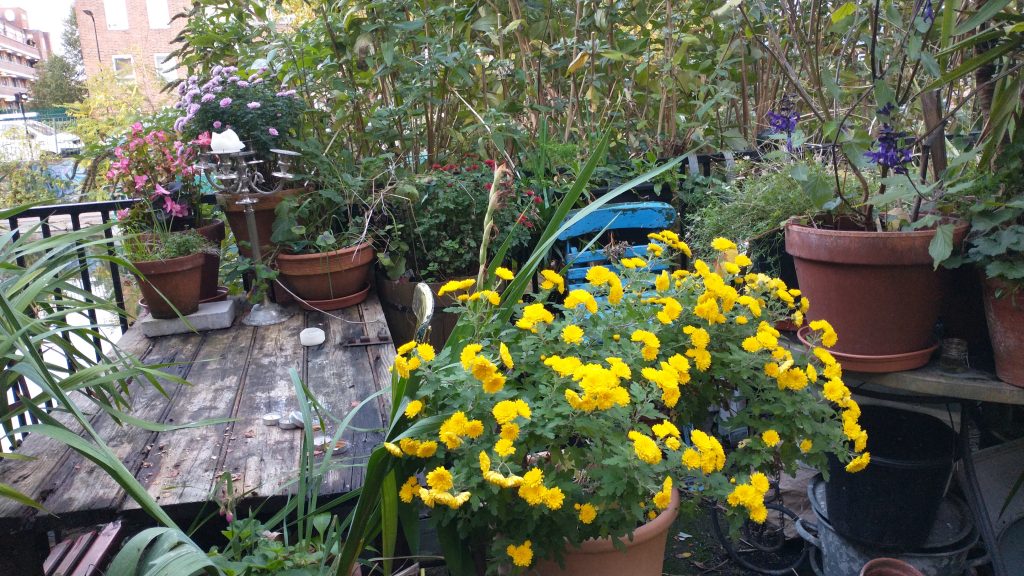
Michaelmas Daisies in my Father’s Garden

About this time, the Michaelmas Daisy (an Aster) comes out in profusion. They have been out in my Father’s garden since August, but have only been flowering for a few weeks in my own garden. Here is an old rhyme:

“The Michaelmas daisies, among dead weeds, Bloom for St Michael’s valorous deeds …

The Angelic Host

Personally, I don’t understand what Archangels are doing in a monotheistic religion. They seem to be supernatural demigods which seems odd. The Book of Revelations is one of the most important sources, but they are scattered around the Bible. Perhaps the most famous is the visitation of Gabriel to the Virgin Mary, (see my post here)They are 15 Archangels:Adabiel, Azrael, Chamuel, Gabriel, Haniel, Jeremiel, Jophiel, Melatron, Michael, Raguel, Raphael, Raziel, Sandalphon, Uriel, and Zadkiel.

Melatron has to be my favourite, given his name which sounds like something from a kids superheros cartoon! He is made from the human Enoch and Keeper of the Book of Life so perhaps the most powerful of the Archangels. He is good for relationship, career, and parenting advice!

The Book of Enoch mentions 200 Fallen Angels including Satan, but Alphonso di Spina a 15th Century Monk calculated there were 133 million fallen angels, one third of the original Angelic Host.

What are Angels for? Something to give us hope that somewhere, somehow something might be looking out for us? As Sir Antony Gormley says of the Angel of the North ;“People are always asking, why an angel? The only response I can give is that no-one has ever seen one and we need to keep imagining them.”

On This Day

1564 – Lord Dudley Created Earl of Leicester

After the service at St James on Michaelmas Day, Lord Robert Dudley was led by the earls of Sussex and Huntingdon into the queen’s presence chamber. He wore a black gown edged with lace with nineteen pairs of gold aglets on the sleeves. Before him, his brother Ambrose, Earl of Warwick bore his sword, Garter bore his patent and Lord Clinton, Lord Admiral, his cap and coronal. All made obeisance to the queen three times. Lord Robert knelt before her.

Garter gave the patent to Cecil, who read it out aloud. The Earl of Warwick presented the sword to the queen, who put it about the neck of her new Earl of Leicester, putting the point under his left arm and then, while putting his cap and coronal on his head, with a mischievous smile, tickled his neck. Solemn-faced, the new earl gave the queen his humble thanks and arose and went to the council chamber to dinner, trumpets sounding before him.’

From The Progresses and Public Processions of Queen Elizabeth by John Nichols (London, John Nichols & Son, 1823) with thanks to Jan Knights for the information.

First Written in September 2025
William the Bastard invades England September 28th 1066

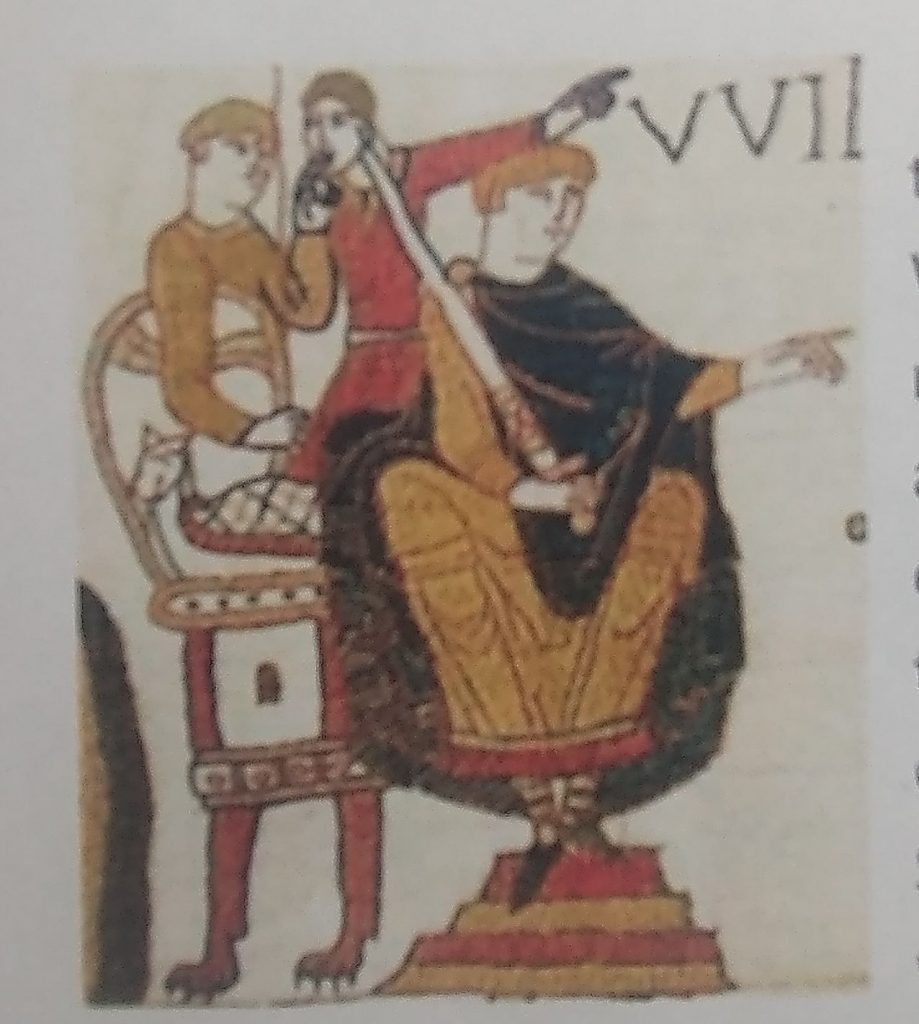
Bayeux Tapestry, Harold with moustache swearing an oath, William with pudding basin haircut sitting down at left.

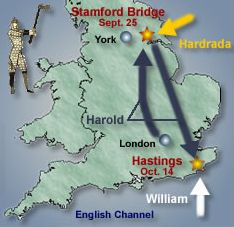
Harold II was scurrying south after almost annihilating the Viking army of Harold Hardrada, when he heard news that the Normans had landed at Pevensey. (see my post (battle-of-stamford-bridge-september-25th-1066)

William was an unlikely Duke because it is very rare for illegitimate children to take the title of their father. It was normally not even considered as an option. A legitimate cousin or uncle would be chosen instead.  But he not only got the title and survived many rebellions, but was known as the William the Bastard

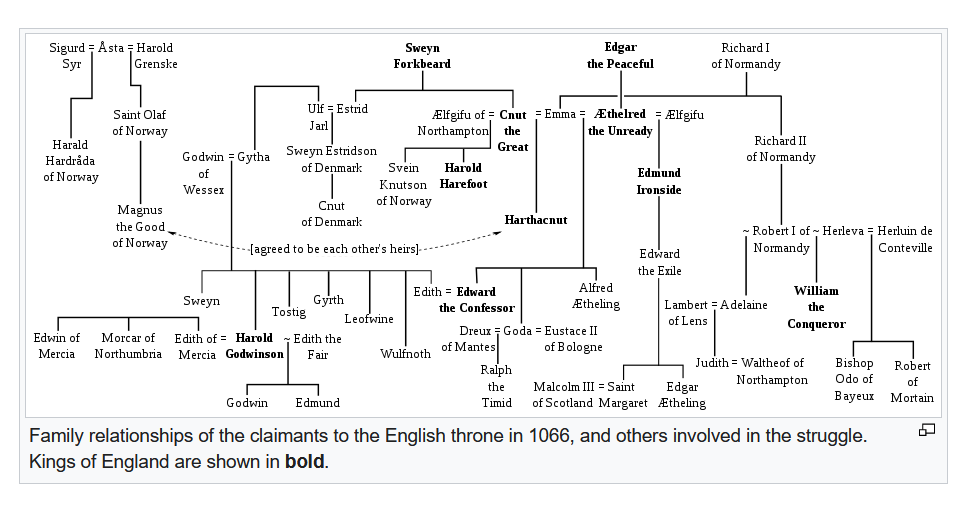
He came to England in 1051 to see his distant cousin Edward the Confessor, who was the son of the English King Aethelred the Redeless (the ill advised – more often called ‘the Unready) and Emma of Normandy.  Edward, whose marriage to Edith of Wessex was not great, insofar as both made claims to be holy virgins.  So, Edward had no children. He, according to William, offered him the throne.

Did he, though? Well, the Pope agreed he did.  William claimed that Harold of England accepted William as heir, too. And not only that, Harold, he said, agreed under Holy Oath.

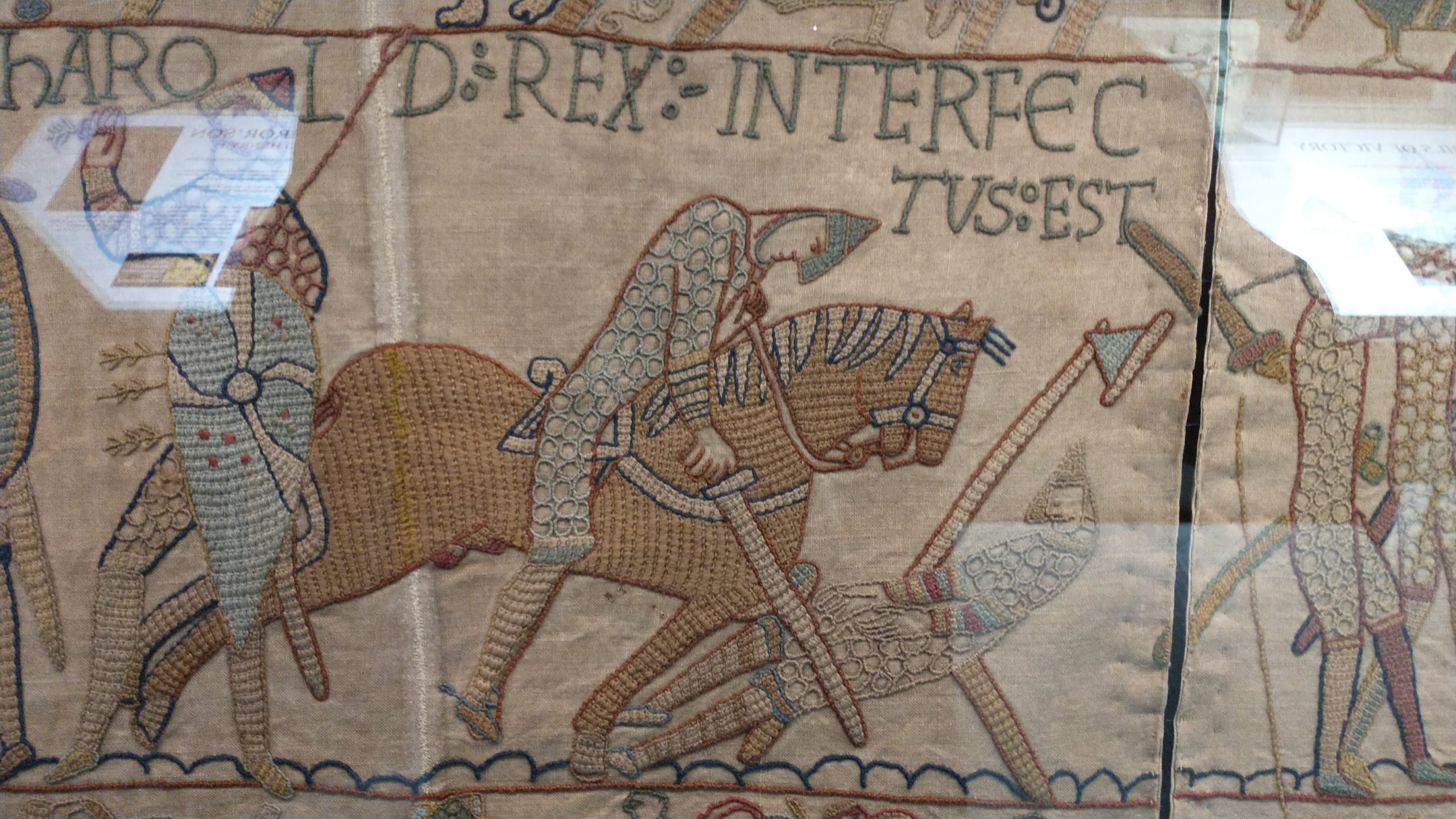
The Bayeaux Tapestry, shows Harold making an oath with his hands on holy relics. But British Historians believe it may never have happened.  And if it did, then it was an inadmissable endorsement as it was not freely given, Harold had been detained on a visit in 1064. He was probably never going to get home unless he took the oath.

But the clincher for the English viewpoint is that Harold was the legitimate King because he was elected as was traditional by the Witanagemote, the King’s Council.

But was he really the legitimate claimaint? He had no English Royal blood in him, only a distant touch of Danish royalty on his mum’s side.  It is true, that in England, the King’s Council or Witan elected Kings and often did not choose the first in line but preferred the best suited candidate be he brother, cousin or uncle. But Harold was only the brother of the King’s wife, no royal blood there. 

However, Harold was so powerful that he would have prepared the ground for his election irrespective of whether this was the freely given choice of the Witan. His father, Earl Godwin, had been a disloyal and over mighty subject of King Edward, but had prepared the way for Harold to be virtual ruler of the country long before the King died.

So, even if the Witan’s endorsement clearly choose Harold there was plenty of scope for a contested succession.

In late September 1066 Harold was the English King  who had already defeated the Norwegian claimant. Now, he was rushing to put to rest the Norman claim.

William Prepares for Conquest

William had begun by getting Pope Alexander II’s blessing for his claim to the English throne. He spent 10 months planning the invasion. He recruited adventurers from Normandy, France, Brittany, and Flanders. His allies collected boats for the invasion, while William had hundreds of new boats built, using thousands of carpenters, metalworkers, carters etc and cutting down a vast number of trees. 

The boats were ready by 12 August near Caen on the River Dives.  They set sail, but contrary winds blew them into Saint Valery-sur-Seine.  Winds in the summer are usually blowing south on that coast, and William had a long, frustrating wait for a north wind.

Meanwhile, Harold was waiting with his army and a 400 ship navy at his manor of Bosham, near Chichester, on the South Coast.  Then he heard about the Norwegian invasion of the North. He probably hoped it was getting too late in the year for William to risk invasion. So, Harold decided, on September 18th, to go North with his army, which was the more immediate risk to his throne.

Map of the the progress of William;s fleet. Opinion suggests landing was on 28th September 1066

On September 27th, the north winds blew, the Normans embarked, and on the 28th of September William and his boat, given as a present to him by his wife, found themselves alone in the Channel off the English coast.

After an anxious wait, the rest of the fleet was spotted sailing towards William.  They landed at Pevensey.  Built a castle at Hastings and proceeded to ravage the land of Harold’s homeland. Harold had by now destroyed the Norwegian threat at Stamford Bridge on 25th September. He heard William had landed and rushed towards London

To be continued

Battle of Stamford Bridge September 25th 1066

Battle of Stamford Bridge by Matthew Paris

Following the Viking victory at the Battle of Fulford Bridge, York, on September 20th the Viking army camped at Stamford Bridge.This was on the River Derwent. Here they intended to rest and celebrate the defeat of the English Earls of Mercia and Northumbria. They were unaware that King Harold I of England had left London for the north on September 18th. (See my post on the Battle of Fulford Bridge here.)

Five days later, on September 25th, Harold’s army surprised the Vikings by marching towards the bridge over the Derwent.  It is said that Harold’s army marched 185 miles from London in 4 days which is a scarcely believable 46 miles a day. But if they left on 18th and battle was 25th that’s as much as 7 days. This still means 26 miles a day which is still very quick for an army carrying weapons and armour. So no wonder the Vikings were surprised!

According to tradition, a large Viking held the English army as he blocked the narrow wooden bridge across the river.  No one could defeat him. But an enterprising English soldier found a boat, floated under the bridge and killed the Viking by pushing his spear through the bridge timbers, killing the Viking.

According to the 13th Century Icelandic historian, Snorri Sturlson, the fight began only after a rider approached the Viking Army. He offered Harold’s Brother, Tostig back his Earldom if he would withdraw from the fight.  Tostig asked what would be in it for his ally, the King of Norway? The reply was ‘Seven feet of English ground, as he is taller than other men’.  The offer was refused. It was said that the rider was King Harold himself.

Once over the Bridge, the English found the Vikings had formed a defensive formation.  However, they had left their armour behind at their boats.   The battle lasted all day but ended with the slaughter of most of the Vikings. King Harold Hardrada, one of the greatest warriors of his age and Tostig were both killed.  The extent of the slaughter is shown by the fact that of the 300 boats of the Viking army, only 24 returned to Norway.

A boat of the period, derived from the Bayeaux Tapestry

A stunning victory for Harold I. But, the English had suffered terrible losses at the battle of Fulford. Harold had also left the South Coast unguarded  And three days later, on September 28th, William, Duke of Normandy landed with his army at Pevensey. 256 miles south.

First published in 2024 revised 2025

Beware the Surfeits of Autumn September 23rd

Apples. Unsplash photo by Sydney Rae
A Surfeit of Apples. Unsplash photo by Sydney Rae

So, it may be a surprise that the Autumn is the time of plenty. I think, townies like me, would assume spring or summer. But in Autumn, not only is the Harvest in, but nuts and fruits are ripening and ready to pick. As we go deeper into Autumn, the livestock is culled to a level that can be sustained through the harsh winter. And so a lot of meat is also available. Truly a time of ‘mellow fruitfulness’.

A Surfeit of Autumn Peaches or Lamphreys

Anything with the word ‘surfeit’ in it must begin with the wonderful comic history of Britain called:1066 and All That: A Memorable History of England, Comprising All the Parts You Can Remember, Including 103 Good Things, 5 Bad Kings and 2 Genuine Dates

Here we find that King Henry I died of a ‘surfeit’ of lamphreys’, which he indulged in against his Doctors’ advice. This was in November,. While his Great Grandson, King John:

finally demonstrated his utter incompetence by losing the Crown and all his clothes in the wash and then dying of a surfeit of peaches and no cider; thus his awful reign came to an end.’

He is a fine example of a ‘Bad King’. He died on the night of October 18th — 19th. So another King to leave this mortal coil by the means of an autumnal surfeit. Other accounts say his ale was poisoned or the surfeit was of plums. But he did have dysentery shortly before he died.

If you haven’t already it got it you probably, at this point, need to buy my book ‘Divorced, Beheaded, Died’. This is the best selling book about the Kings and Queens of England, told in bite sized chunks. It is always on sale at the British Museum.

‘No surfeit so evil as the surfeit of eating naughty bread’

Andrew Boorde in ‘Dietary of Health’ 1547 says that Wheat Bread makes you fat, particularly when made from new wheat. He says’Evil Bakers’ will add half of Barley. This is no good, nor is bread made from beans or peas. He continues:

hot bread is unwholesome to any man, for it doth lie in the stomach like a sponge: yet the smell of new bread is comfortable to the head and the heart. Old or stale bread doth dry up the blood or natural moisture in man, and doth engender ill humours; and is evil and tardy of digestion: wherefore is no surfeit so evil as a surfeit of eating naughty bread.

Lavendar Caps

Now is the time to protect your head with Lavendar as winter approaches, or so says William Turner’s Herbal of 1568:

I judge that the flowers of lavender, quilted into a cap and daily worn, are good for all diseases of the head, that come of a cold cause, and that they comfort the brain very well, namely if it have any distemperature that cometh of moistness.

If you remember, I wrote about Turner’s medical education in Ferrara in Italy in June. You can read it here.

Apples and Pears & No Cider

The fate of King John (above) shows the danger of running out of cider. But the apple trees are now groaning with Apples and Pears. So production can begin. I have been at my Father’s House picking up all the pears that drop every night. We have been cutting them up and putting them in the freezer, making purée and crumbles. Also, giving them to anyone who enters the house. But still not able to keep up with the Pears! Lots of Apples too, infact a bumper crop, many more than in any previous year. Earlier there was a host of plums from which I made my very first plum jam. I am looking forward to making a batch of Quince Jam, for the third year running.

Storing a Surfeit of Apples

Picking up windfall is problematic, as it was thought they would soften and bruise much easier than those picked from the trees. They would also contaminate other apples if laid with them. So it is best to pick apples before they are completely ripe. Then you can use Gervase Markham’s apple storage advice, which I wrote about in January and you can see here:

But:

A Surfeit of unripe fruit is a danger:

Green fruits make sickness to abound
Use good advice to keep thee sound
Give not thy lusts what they do crave
Lest thou unawares step in to thy grave.

Ranger’s Almanack 1627

If you do succumb, you need a medicine of nettle-seeds and honey.

A Surfeit of Filberts

As a caution to persons at this season, when nuts are so very abundant, we state that the sudden death of Mr Nunn of Cley, Norfolk is generally attributed to eating a great quantity of filberts and drinking pork wine therewith.’

York Current, September 1794

I do hope you have found this post fruitful and not too nutty. Please consult a doctor if you are having head or brain issues. The Lavender in your Peaky Blinders Cap may not do the trick

Acknowledgement

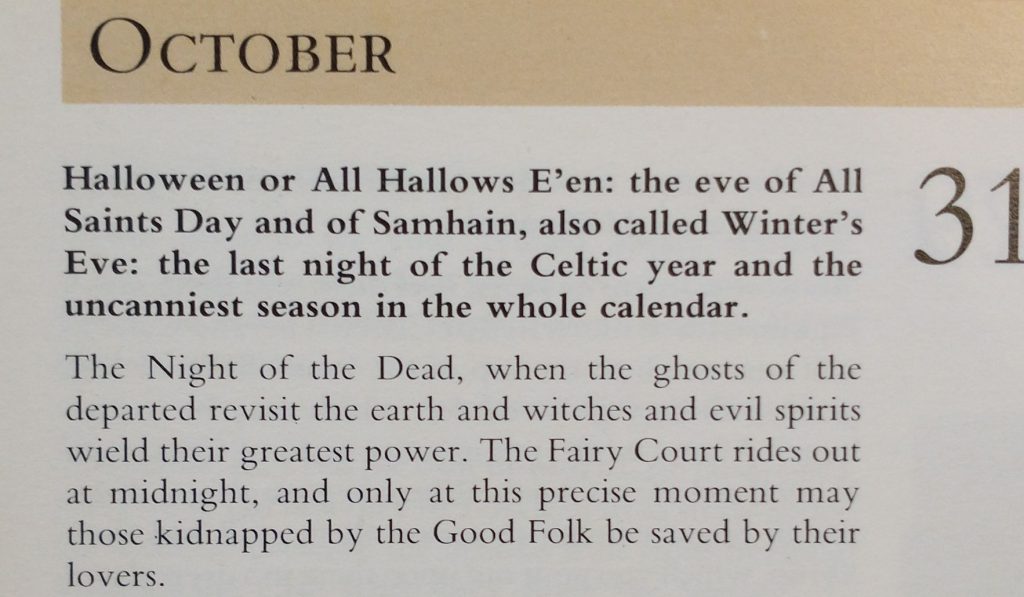
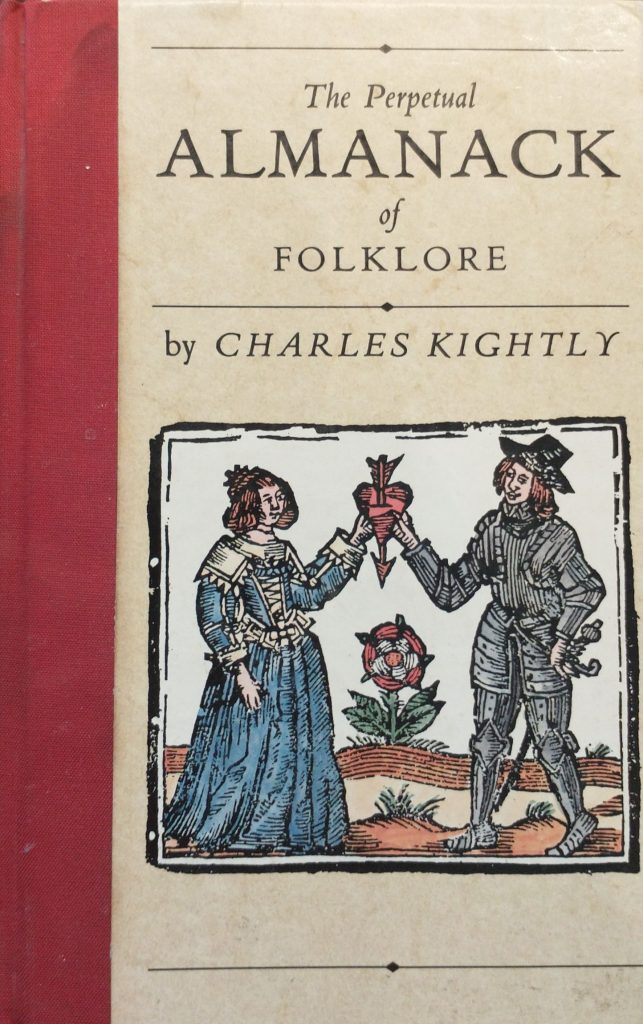
Again, I am very dependent on fruity tales from Charles Kightly’s A Perpetual Almanac of Folklore. It is worth buying as it also has many pretty pictures.

The Queensberry House Cannibal, Inspector Rebus and the Scottish Referendum September 11th 1997

Queensberry House to the right, home of the The Queensberry House Cannibal. The Scottish Parliament in the background. Royal Mile, Cannongate in the foreground. (Photo: K. Flude)

Ian Rankin’s Edinburgh

One of my favourite books on Edinburgh is by Ian Rankin.  It is one of the Inspector Rebus series. What makes Rankin a great crime writer is how the author makes Edinburgh central to the story. It adds realism to his stories.  As you read the stories you enjoy learning about Edinburgh, its culture, history, people, streets and topography. And get insights into Edinburgh’s moods.

Model of the Scottish Parliament, with Queensberry House in the bottom right hand corner.

I haven’t read all the Rebus books but the one I want to feature is ‘Set in Darkness’ published in 2000.  It is set in the period immediately after the success of the Scottish Referendum to set up a Scottish Parliament. The story also takes us back to 1979 when the first Scottish Referendum ‘failed’.

The Queensberry House Cannibal

The book begins with a body found in Queensbury House, which is being preserved and incorporated into the new Scottish Parliament buildings.

Scottish Parliament Building (photo by the author)

This setting was suggested by the well-known tale of the Queensberry House Cannibal; James Douglas the 3rd Marquess of Queensberry and, for a time, the Earl of Drumlanrig. The tale begins on the day, in 1707, that the Scottish Parliament agreed to disband itself. The Parliamentarians voted for an Act of Union with the United Kingdom.

On that day, the young Lord was left alone in Queensbury House with no one to look after him, except a kitchen boy. James had mental issues, and when the adults came home, they discovered that he had eaten the kitchen boy by spit-roasting him. The ghost of the boy is said to haunt the house. Or so the story goes.  It’s always treated as a true story, but there is a suspicion it was a black calumny on those who agreed to the end of the Scottish Parliament.

For more on the event, look here.

The Restoration of the Scottish Parliament 11th September 1997

So, as today is the anniversary of the day the Scots voted Yes to a restoration of its Parliament (11th September 1997), let’s have a look at the long history of devolution. We will take the story backwards.

The referendum asked the Scots two questions. The first was: did they support a separate Parliament for Scotland? The second. Should it have the power to vary levels of taxation? 74.3% voted yes to the Parliament, and 63.5% voted yes for powers of taxation. On the 1st July 1999 the Scottish Parliament was set up by the Blair Government. The new Parliament was elected by the Additional Member system of proportional representation. The country is split into regions, the regions into constituencies, and each constituency elects a member of the Scottish Parliament by first part the post system. Each region has a party list of additional potential members, and the seats are allocated between the parties to make the final result as proportion as possible. This is said to combine the advantages of constituency MPs, and PR.

The ‘Failed’ 1979 Referendum

But this wasn’t the first vote for a measure of independence.  In 1979, the Scottish Act set up a referendum for a Scottish assembly.  James Callaghan was the Prime Minister, and the act followed a Royal Commision on the Constitution. The Referendum was won with a majority of 52%, but an amendment to the Act had a stipulation that there had to be a vote of at least  40% of the registered electorate for the vote to succeed. It won only 32% of the 62% turnout so the Act failed. (if only Cameron had done something similar for the Brexit Referendum!).

So it would be another almost 20 years before the Scots got their own debating chamber.

1707 Act of Union

The Scots lost their Parliament on the 1st May 1707 when the Act of Union with England was enacted.  The Scottish Parliament had been in existence since the early 13th Century.  The Scots had no House of Commons, but its unicameral Parliament had representatives from the Three Estates: prelates representing the Church; Aristocrats representing the nobility, and Burgh Commissioners representing the Towns.  Later, Shire Commissioners were added to represent the countryside.

The decision to disband the Parliament of Scotland was very controversial, and blamed on the self-interest of the Nobility against the wishes of the people. Scotland had lost out on the huge profits being made by the Empire by England, excluded as the Scots were by the Navigation Acts from trading freely within the British Empire. So the Scots set up their own  Company of Scotland Trading to Africa and the Indies which invested in the disastrous  Darién scheme,

The idea was to build a colony on the Isthmus of Panama.  80% of the participants in the settlement died, and the 20% of Scottish wealth which was invested in the scheme was lost. Many of the Scottish members of Parliament lost money in the Scheme, and compensation and bribery offered by the English encouraged the Parliamentarians to accept the advantages of free trade within the British Empire and to join the Westminster Parliament.

Joint Monarchies

In 1603, the Scottish and English monarchies joined in the person of James VI of Scotland who became James 1st of England on the death of his childless aunt, Queen Elizabeth 1. But the Scots kept their own Parliament and legal system. There were attempts to bring a closer Union, but these all failed until 1707.

England Overlording it?

From the early beginnings of Scottish existence as an independent nation, the English Monarchy claimed to be the feudal overlord of Scotland. Scotland was normally able to deny this until the reign of Edward I. After the battle of Bannockburn the Scottish made a declaration of their complete independence from England at Arbroath. It was sent to the Pope who accepted it. This helped the Scots defy England until 1603 when the two monarchies joined.

To see the rest of my Edinburgh Booklist click here. or to see my post on poetry on the wall of the Scottish Parliament.

First Written in 2024, revised 2025

To follow up have a look at these websites:

The original Scottish Parliament

How the Scottish Parliament works