Time to guard children against witches April 29th

Witches From ‘The Wonderful Discoveries of the Witchcrafts of Margaret and Phillip Flower’, London, 1618

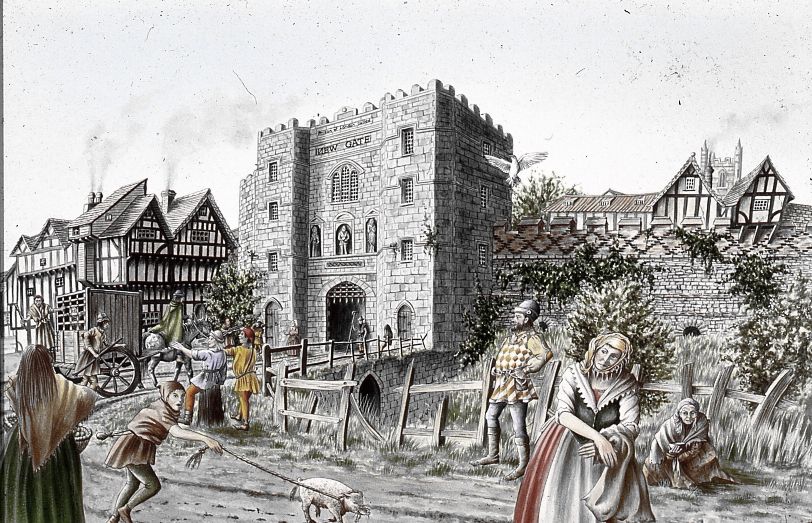
As May Eve approached, which like Halloween, was considered a particularly uncanny time, people were warned to guard against witches stealing their babies:

He (the Devil) teacheth the witches to make ointments of the bowels and members of children, whereby they ride in the air and accomplish all their desires. So as, if they be any children unbaptized, or not guarded with the sign of the cross or orisons: then the witches may and do catch them from their mother’s side at night, or out of their cradles. …. and after burial steal them out of the graves, then seethe them in a cauldron until their flesh been made possible.

Reginald Scott ‘The Discovery of Witchcraft’ 1594 (from ‘The perpetual Almanack of Folklore’ by Charles Kightley). Please note that Reginald Scott’s book was actually against the idea of witchcraft, i.e. he was debunking it. (for more on Reginald Scott read my post here)

Keeping Witches away

Ways to keep witches away were various, but baptising your children early was the best method. As you will have seen in previous posts, children were normally baptised as soon as possible. Normally, three days after birth in the early modern period.) There were various ways of protecting against witches including saying prayers (orisons), hanging garlic, bread, rowan-leaves, around the cradle.

Witch marks

In archaeological surveys of timber framed buildings increasing numbers of reports of ‘witches’ marks have been discovered. They are now so ubiquitous that it seems most people felt the need to deploy them to secure their houses. Or was it the Carpenters and Builders who felt the need to protect their work? It was believed that witches gained entry where there was an inlet of wind. So doors, windows, chimneys, and anywhere there was a draft. These would be marked by pentagons, which represent the five wounds of Christ. Also used were a variety of other marks ‘chequerboards, mesh patterns, peltas (a type of knot work design) and circle’. https://theartssociety.org/arts-news-features/ancient-symbols-once-used-ward-away-witches is an excellent read and gives more detail.

Also this article makes the case that they are not specifically anti-witch marks, but general marks to ward off evil. This is worth reading. The illustration below comes from the article.

Tam O’Shanter

Robert Burns poem ‘Tam O’Shanter’ gives a graphic, fictional, account of a witches’ coven presided over by the Devil (auld Nick) himself which features ‘wee, unchristen’d bairns‘. Tam, drunk, has come upon a witches coven, presided over by the devil himself.

And, vow! Tam saw an unco sight!
Warlocks and witches in a dance;
Nae cotillion brent new frae France,
But hornpipes, jigs, strathspeys, and reels,
Put life and mettle in their heels.
A winnock-bunker in the east,
There sat auld Nick, in shape o’ beast;
A towzie tyke, black, grim, and large,
To gie them music was his charge:
He screw’d the pipes and gart them skirl,
Till roof and rafters a’ did dirl.—
Coffins stood round, like open presses,
That shaw’d the dead in their last dresses;
And by some devilish cantraip slight
Each in its cauld hand held a light.—
By which heroic Tam was able
To note upon the haly table,
A murderer’s banes in gibbet airns;
Twa span-lang, wee, unchristen’d bairns;
A thief, new-cutted frae a rape,
Wi’ his last gasp his gab did gape;
Five tomahawks, wi’ blude red-rusted;
Five scymitars, wi’ murder crusted;
A garter, which a babe had strangled;
A knife, a father’s throat had mangled,
Whom his ain son o’ life bereft,
The grey hairs yet stack to the heft;
Wi’ mair o’ horrible and awefu’,
Which even to name wad be unlawfu’.

I talked more about Tam O’Shanter and the Cutty Sark here and to read the whole poem see below. Please do have a look and when you read it read it quick. Loud and don’t worry about how to pronounce it or understand it, just enjoy the ride!

Have a look at my post on the Cutty Sark for more of Tam O’Shanter.

Written in 2023 revised April 2024, 2025

John Stow, London’s Historian 22nd April

John Stow

On the corner of Leadenhall Street and St Mary Axe in the City of London is one of the very few medieval Churches that survived the Great Fire of London is 1666. It was sheltered by the firebreak that was the Leadenhall, a big market building made of stone. This is where the great London historian John Stow is buried. His Survey of London is one of the best sources for Medieval and Tudor London. Every three years, there is a commemorative service and his quill is changed. Last year it was on the 22nd April. The Lord Mayor attends and it is organised by Stow’s Guild – the Merchant Taylors.

John Stow, author of the ‘Survey of London‘ first published in 1598. Available at the wonderful Project Gutenberg: ‘https://www.gutenberg.org/files/42959/42959-h/42959-h.htm’

John Stow records that his father returned to his home at Austin Friars one day to find his house had been moved. He had no warning, nor payment for the loss of land. He had the misfortune to live adjourning the property of Thomas Cromwell.

St Andrew Undershaft

The Church is the Maypole Church as it was here the Maypole or the shaft was stored under the eves of the Church. Hence, St Andrew’s sobriquet of ‘Undershaft’. The May Day riot of 1517 put an end to the dancing around the Maypole but the pole itself survived until 1547. Then, in a Puritan riot, the ‘stynking idol’ was destroyed. (see my May Day blog post here for more more details.)

There is also a plaque to Hans Holbein, but no one knows for sure where he is buried. He died in London in 1543, possibly of plague. The present church was built in 1532, but it is first recorded in the 12th Century.

For my post on St Andrew – look here.

Agas Map 1561 showing St Andrews (right centre)

First Published on 30th November 2022, Revised 2023, moved to April in 2024, and revised 2025

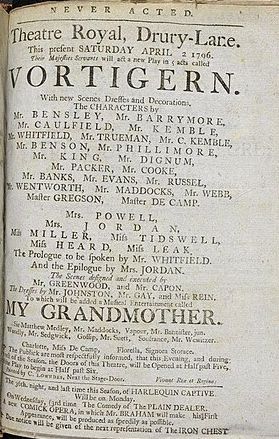
Vortigern April 2nd 1796

Bill for the 1796 play Vortigern and Rowena Public Domain Wikipedia

Content Move April 2nd 2026 to:

https://chr.org.uk/anddidthosefeet/?p=5187

The Jorvik Viking Festival February 2025

Screen shot from the Jorvik Viking Festival Site showing all the fun to be had if the Vikings invade your town!

The annual Jorvik Viking Festival is on from Monday 17th – Sunday 23rd February 2025 in York. The illustration above show there are Viking Trails, Feasts, Crafting, Berzerkering and encamping. And more! Visit the web site here.

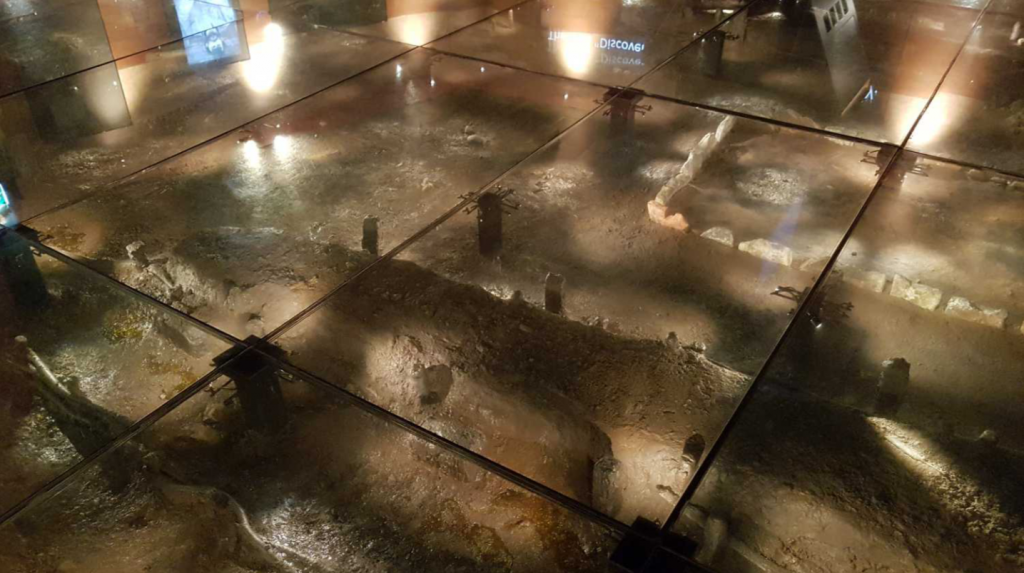
The excavations under the floor of the Jorvik Centre. Photo K. Flude

York or Jorvik as the Vikings knew it as, has become the centre of all things Viking in the UK. Viking York came to the fore with the Coppergate Excavations in the 1980s. Underneath what is now a shopping mall and Primark, were the streets of Viking York in all its waterlogged glory. The waterlogging allowed the survival of organic material that rarely survives.

Excavation of Jorvik visible under the floor of the Museum. Photo By Chemical Engineer – Own work, CC BY-SA 4.0, https://commons.wikimedia.org/w/index.php?curid=58524883

At the time, the excavations were a sensation. York Archaeological Trust made a bold decision to turn part of the site into a ‘Dark Ride Experience’. The remnants of the excavation were preserved under glass, and nearby a replica of the townscape was created. Tourists sat in ‘cars’ with an audio guide and given a guided tour. It was very successful. The extensive profits were used for other York Archaeological Trust projects such as the reconstruction of medieval Barley Hall. Other historic towns followed suit and soon there were Dark Rides in Canterbury, London, Oxford and others. All, as far as I know have died a death except for the Jorvik Centre which continues to enthral visitors to York.

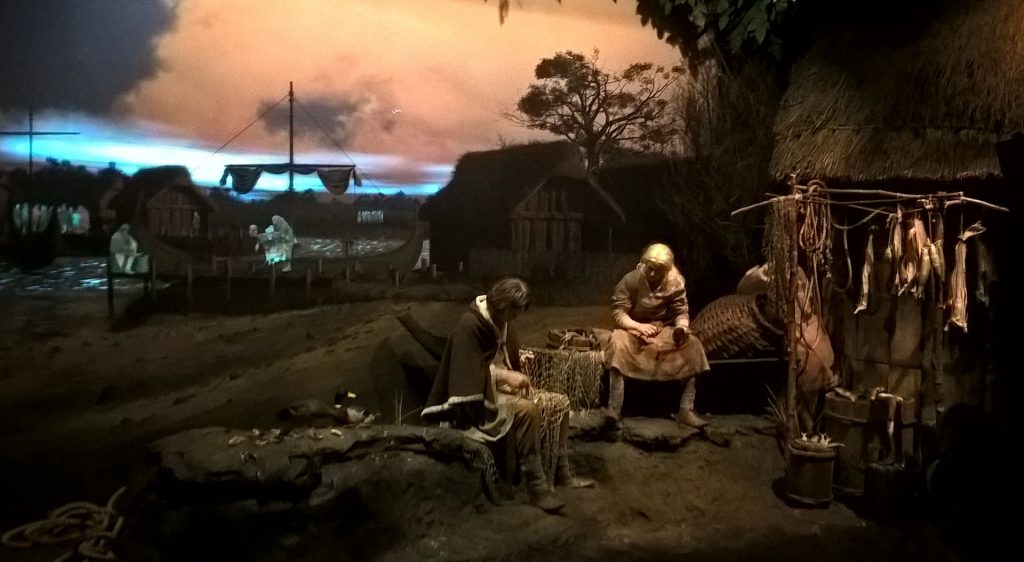
Tableau from the Jorvik Centre with Fishermen working. Photo By Chemical Engineer – Own work, CC BY-SA 4.0, https://commons.wikimedia.org/w/index.php?curid=58524883

The next best thing about Vikings are their colourfull names. Jorvik history vibrates with the deeds of ‘Ivan the Boneless’, Sihtric ‘the Squinty-eyed’and Erik Bloodaxe. For more on nicknames read my post!

First Published in February 2025

News of Virtual Tours

Sorry to send an additional post but coming up are a couple of fascinating Virtual Tours which I would like to remind you of!

Tonight is an exploration of early 19th Century London. It is based on the 1809 Picture of London Guide book. An original copy was given to me by someone grateful to have attended one of my lectures at the Old Operating Theatre Museum. It is a tour of what Jane Austen could have visited on her walks around London. There are Austen associations, but mainly we are looking at London in 1809.

Jane Austen’s ‘A Picture of London in 1809’ Virtual Walk Mon 7.30 27th Jan25 To book

Yesterday, I was asked to give a Cromwell’s London walk as a 75th Birthday present. I haven’t done one for at least 25 years. But I really enjoyed the research. So added a guided walk and a virtual tour to my programme. This is the first time I have done this VT and it is a cracking story.


The Civil War, Restoration and the Great Fire of London Virtual Tour 7:30pm Thurs 30th Jan25To book

Finally, April is the month we go on pilgrimages, as Chaucer said (in Old English). So, in addition to my Chaucer Walks, I have added a Virtual tour so we can go all the way to Canterbury.


Chaucer’s London To Canterbury Virtual Pilgrimage 7.30pm Friday 18th April 25 To book

I may add one or two more before the Sun comes back

To see all my walks see this page.

News from the Almanac of the Past January 22nd

News from the Almanac showing readership/viewership of the site.

I have been waiting for a day when I haven’ t got a post to publish. Why? To update readers about the Almanac of the Past. And with a bit of manoeuvring today is the day.

What is the News from the Almanac of the Past?

The plan is to have a post for each day. I am virtually there for November to March, but a way away for the warmer months.

In the winter months, I have been revising, improving, developing and adding content to previously published pages. For those of you who have been here a while, you will have been receiving posts you have seen before. Next year, you might be seeing some for the third time. I’m not sure what to do about this except improve posts and add content. But I am considering stopping automatically posting repeated posts to subscribers. Maybe from next November? Feed back would be good – please email me at kpflude at chr . org . uk (I’ve slightly scrambled the email to stop the robots).

What is the planned content for the Almanac of the Past?

The nature of an almanac is to be a pot-pourri. They are about seasons, time, folklore, history, important events, and anniversaries. I also like to cover history, famous people and discoveries. Gods, Goddesses, Saints, sinners, and archaeology. What I want it to be is something that makes us more mindful about the passing of the year. How seasons and time change the way people see their world. My focus is mostly on the UK, but also on Rome and Greece. With occasional excursions to other places. I am trying to find more content that is London-based, but not to the exclusion of everything else. I also have an ambition to add more important news of discoveries that change our view of the past. If I get the formula right, I will attempt to get a publication from it, otherwise it will remain online.

Developments for the Almanac

It takes quite a lot of time for me to keep it up. You will see, from the graph above, that the readership is yearly making progress. Particularly, last year. But then it’s a steady progress from a small base, rather than Kardashian viral.

This is, at least, partially because I would rather not spend my time marketing. I want to be writing. But, I have decided I need to spend a little more time marketing the site. When I ran the Old Operating Theatre Museum, I had the skills to get our web site to first place on google searches. But this was in the pioneering days of the World Wide Web. Now, it’s more difficult, but I am taking a ‘Search Engine Optimisation’ (SEO) course. I have also loaded some ‘plugins’ to WordPress which help with SEO. I thought you might be interested in some of the consequences.

The plugins ‘parse’ the site and give recommendations for improvements. This should, get the site further up the Google landing page. I have no doubt that it involves or will involve AI. The ‘Yoast’ plugin I am using as I type this, tells me words like ‘however’ are a ‘complex’ word and so they down grade my ‘readability’ quotient. It also tells me that that last sentence was too long. So, it wants simple sentences, and words that join sentences together. And not too many sentences in a paragraph and a proper scattering of headings.

It also assesses the SEOness of the text. So I have to tell it what the main subject of the page is. And it wants that word or phrase in:

the title:
the first paragraph
the image
the meta description tag
and scattered, but not too densely (because Google will punish the site for playing the algorithm) through the text.

Hence, you will see the phrase ‘News from the Almanac’ scattered more than I would normally like through this text. Of course, I know no one really will be searching for ‘News from the Almanac. So I should change the SEO phrase just to Almanac. But, then I’m not really interested in attracting non-readers to this page. I see this as between me and my email subscribers!

After writing that paragraph I realised that I would want people to land up here if they typed in ‘Almanac of the Past’. So you will see, I’ve editing the text scattering that phrase here and thereabouts.

In effect, I am being trained by a slightly stupid tutor who has no particular understanding of the needs of a writer of history! And you can’t answer back, you just get downgraded!

And it seems to be working as my numbers are getting better more quickly.

Any problems for the Almanac of the Past?

Obviously, my terrible proofreading is a concern! Maybe that’s one-way republishing helps. A year later, it’s easier to see the typos, the ugly writing, and issues with the content.

But there is another issue with the emails, which I have been trying to solve for about 6 months. The links in the emailed posts don’t work. But they do work if you visit the almanac on the web. This is nuts as I always use the full URL. For example: https://www.chr.org.uk/anddidthosefeet/december-29th-st-thomas-wassailing/.

So, this is very much a technical issue, one might say a bug in the system. I think it stems from the fact that my blog was stored not in https:/public_html/ but in https://public_html/anddidthosefeet. This seemed a logical choice at the time, as the blog shared space with other things. I haven’t managed to convince the tech guys at either the internet provider or WordPress that this is a bug. So, the alternative is to move the blog. But I am reluctant to do this in case it completely messes everything up.

Change the content of the newsletter, you might think. But I can find nothing that allows me to alter or add anything to the email version of the post. As I write this, I think I will temporarily add a line at the bottom of the post which says:

if the links are not working, copy and paste this URL https://www.chr.org.uk/anddidthosefeet/whateverkevinsalmanacpageiscalled

to your browser. This, will get you to the Almanac of the Past on the web where all the links will work.

And this will allow you to easily copy or link to the webpage and send the Almanac of the Past to your friends and followers. (I’m hoping you are Taylor Swift). You willalso be able to comment easily and maybe even like the post?

Another advantage of visiting the web version is that you get a better version to read. This is because I often find howling typos when I read the emailed post. I correct them, with a red embarrassed face.

If you are reading this on the web, then all the above must have been very annoying to read! Maybe I will move it down to the bottom of the post! (which I did).

Trying new things on the Blog

Do you want to make a comment?

Please leave me a comment – its great to hear what you think.

First Written and Published on 22nd January 2025

Mulled WIne and Blue Monday Posts

In order to clear January 22nd I moved the previous January 22nd post to December 10th. As its all about Mulled Wine, Glugg, and Gluwein., its better at the beginning of the Christmas Season than in late January.

To see it click here: or cut and past this url https://www.chr.org.uk/anddidthosefeet/january-22-22-time-to-mull-it-over/

I also didn't tell you Monday was Blue Monday because I had already sent you one post on the 20th. So this is the Blue Monday Post. https://www.chr.org.uk/anddidthosefeet/january-13th-18th-blue-monday-wolf-moon-start-of-lambing-and-twelfth-night-old-style/

If the links are not working on the email version of this post then:

copy and paste this URL https://www.chr.org.uk/anddidthosefeet/news-from-the-almanac-of-the-past-january-22nd/

To your browser. This, will get you to the Almanac of the Past on the web where all the links will work. (I hope).

First Written and Published on 22nd January 2025

January & Rabbiting January 19th

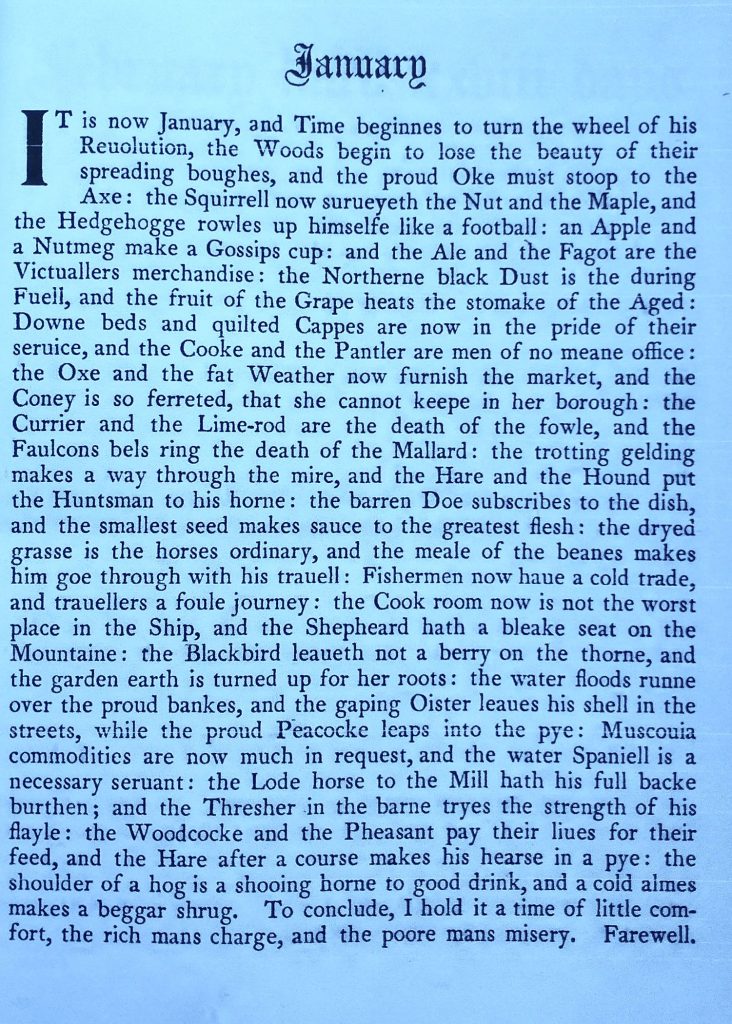
January from Nicholas Breton’s ‘Fantasticks 1626 from the Kalendar of Shepherds (digitised by Internet Archive)

The Kalendar of Shepherds was printed in 1493 in Paris and provided ‘Devices for the 12 Months.’ I use a modern (1908) reconstruction of it using wood cuts from the original French and adding various text from English 16th and 17th Century sources. The text of the month (as shown above) is provided from a 17th Century source. It gives an interesting view of the countryside in January. To see the full Kalendar, look here:

Nicholas Breton, the writer of the text above, concludes that January:

‘is a time of little comfort, the rich man’s charge, and the poore man’s misery.’

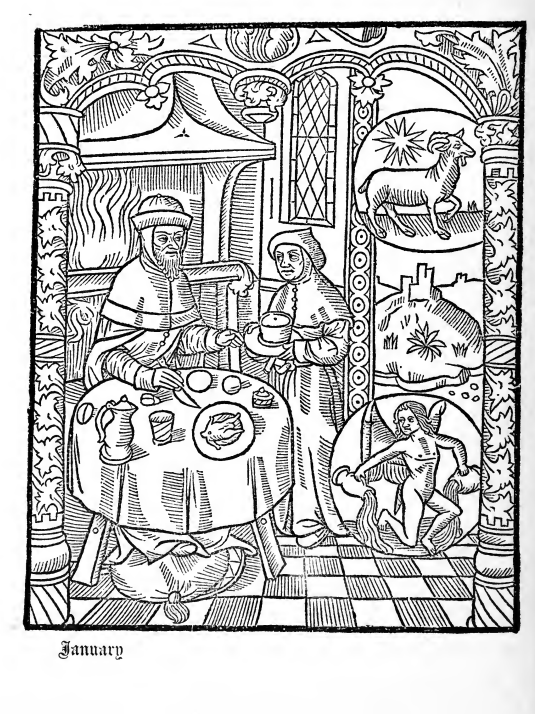
The rich man is burdened by having to help out all the poor people who depending upon him to get through the shortages of winter. The image for January shows that January is best spent indoors by a roaring fire, eating pies.

January from the Kalendar of Shepherds 15th Century French

The Kalendar introduces a ‘conceit’ which is that the year mirrors our lives, and we can forecast what will happen in our lives by looking at the months.

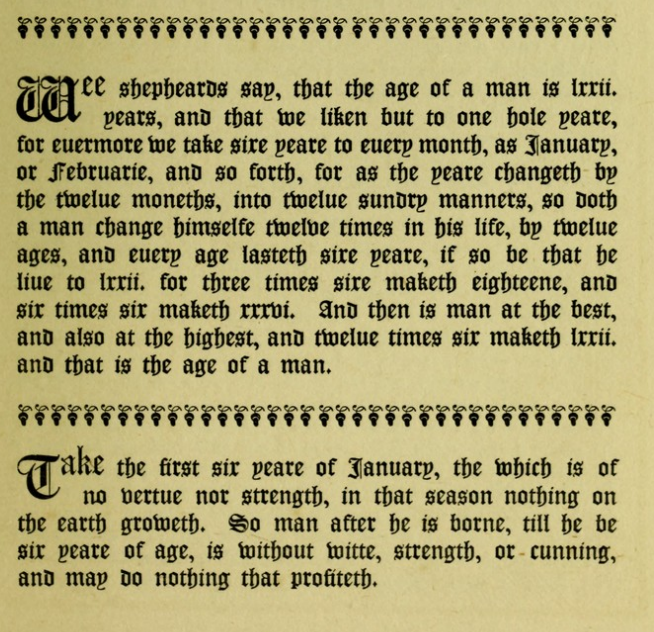
Kalendar of Shepherds January text
Kalendar of Shepherds, January text

So our lives, which are of 72 years, can be divided into 12 ages of man, each of 6 years. So, January represents the first 6 years of a person’s life. And as you can see, that during these first 6 years, the child is ‘without witte, strength, or cunning, and may do nothing that profiteth‘. As the year changes every month, so, ‘a man change himself twelve times in his life’. At three times 6 (18 or March) a child becomes a man, and 6 times 6 (36 or June) man is at his best and highest. And at 12 times 6 (72 or December) man is at the end of his allotted span.

Shakespeare numbered the Ages of Man as seven, in the great speech of Jacques in ‘As You Like it’ I dealt with this and other Ages of the World in my post:

January & Rabbits

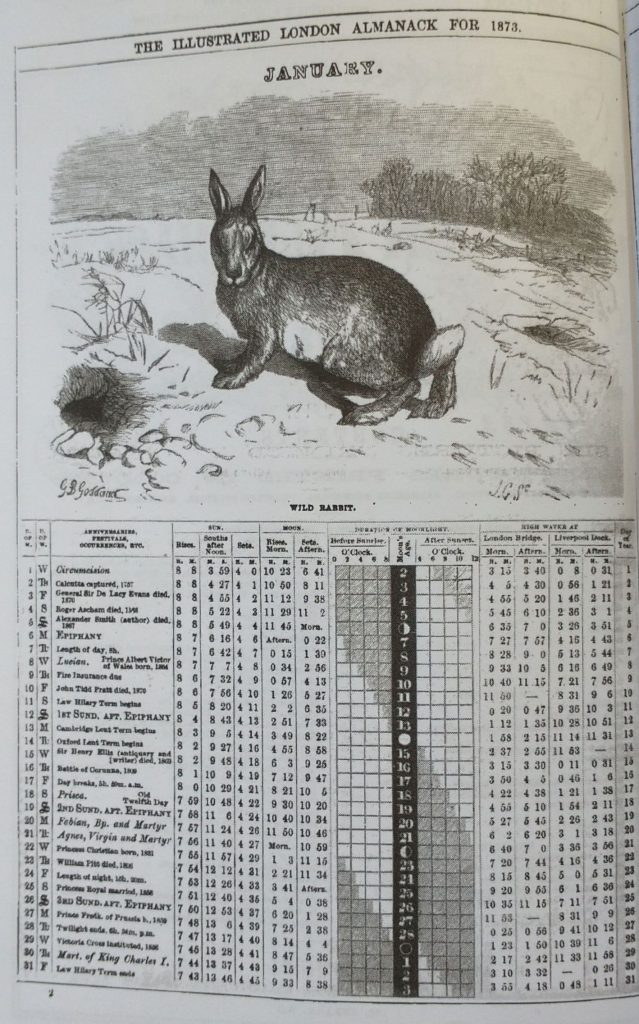
Bereton tells us that, in January, the ‘coney is so ferreted that she cannot keep in her borough’. To put that is modern speech, ‘the rabbit is so hunted with the aid of ferrets that she cannot keep in her burrow’. The London Illustrated Almanac of 1873 chose the Rabbit as its wild animal of the month.

London Illustrated Almanac of 1873
January from London Illustrated Almanac of 1873

To have luck for a month, you are supposed to say ‘Rabbit, Rabbit’. No less a person than FD Roosevelt used to say this. No one knows why. Rabbit’s feet are lucky too. I remember some of my friends had them in our Surrey village in the early 60s. Some of Dad’s nieghbours kept ferrets, and I remember dead Rabbits hanging from walls. The history.com website gives an idea, possibly exaggerated view, of the merits of the feet which depended upon how they were collected:

“A 1908 British account reports rabbits’ feet imported from America being advertised as ‘the left hind foot of a rabbit killed in a country churchyard at midnight, during the dark of the moon, on Friday the 13th of the month, by a cross-eyed, left-handed, red-headed bow-legged Negro riding a white horse,’

https://www.history.com/news/

As to why, no one really knows. But Pliny the Elder in 71AD reported that cutting off the foot of a live hare could cure gout. There are European traditions of rabbit and other animal’s feet amulets curing all sorts of ailments. There are associations with witches, who could shape-shift into a rabbit. So a rabbit’s foot would be witchy and therefore powerful. In March, I reported on the Hare, and their, similar, associations with witches:

Rabbit, Rabbit

For lovers of Music, Chas and Dave’s hit song ‘Rabbit’ has a chorus of ‘Rabbit, Rabbit’.According to the Cockney’s singers (they do love a Knee’s Up) it comes from the Cockney Rhyming Slang expression: Rabbit and Pork. This means ‘Talk’ because it rhymes with ‘Talk’. To hear the song, its gestation and Royal connections, click here.

Now, I must stop rabbiting on. Time to get things done.

First, published in 2023, revised in January 2024, 2025

Plough Monday January 13th

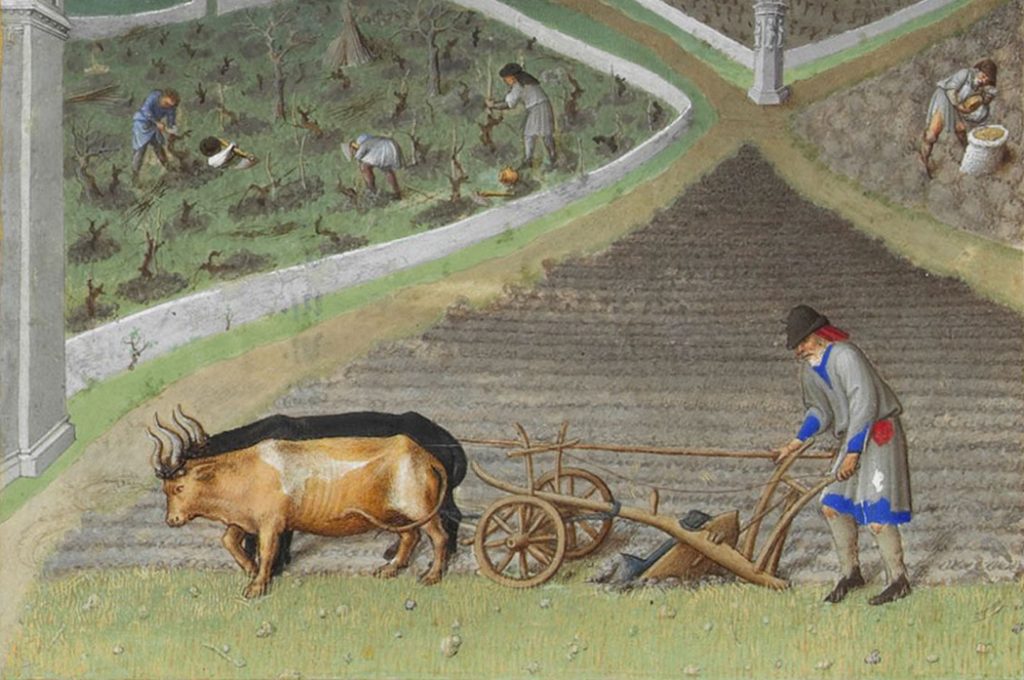
Medieval scene showing a man plouging with the plough pulled by a bullock from Les_Très_Riches_Heures_du_duc_de_Berry
Detail from LesTrès Riches Heures du Duc de Berry

Two posts today because it is also Plough Monday., the date to go back to work.

Bob Cratchet was back to work by Boxing Day. Some of us are back to work on 27th or 28th December. But increasing numbers holiday until the first weekend in January. It’s beginning to look medieval. Medieval society had even longer off. Distaff day was the day that women traditionally went back to work and Plough Monday was the men’s turn. Plough Monday was not just a normal day of work though. Particularly in the North, it was celebrated with a procession of ‘plough boys’. They used a decorated plough and team, known as ‘Fool Plough’. Mumming, sword dancing and foolery propelled people back to work.

Here is a lovely recipe for a ‘Norfolk Plough Pudding‘ brought to my attention by Sue Walker. The author is Karen Burn Jones who talks about her Grandmother’s plough pudding recipe. This is a great winter warmer being made of sausage meat and bacon. Norfolk also had traditions for Plough Monday. It was the day when the plough was blessed and the plough boys (Plough Jacks, Plough Bullocks or Plough Stots) performed “Molly Dances” . They did this partly to make up their income they had lost when the ground was too icy to plough.

The Christmas/Mid Winter break went on for some until Candlemas in early February. In Jane Austen’s day the school boys had a 6 week holiday at Christmas. This much distressed Mary Musgrove in ‘Persuasion’, Chapter 18. She complains bitterly of children being left with her during the long winter holiday. But as the letter was written on 1st February, I will leave the joy of that great FOMO letter until then.

The Wolf Moon and Mars

Not only is this Plough Monday but it is the first full moon of the year. At 5,27pm on January 13th the Wolf Moon rises and just below it to the left, at 7.30 UTC you will see the Red Planet Mars.

Wolf Moon is a nickname and a recent introduction to mainstream culture. It was borrowed from Native Americans as wolves howl at the moon at this time of the year. So can the wonder of the moon counter the reality of wintery bleakness following the joys of Christmas and the hopes of the New Year?

Full moon Socialising

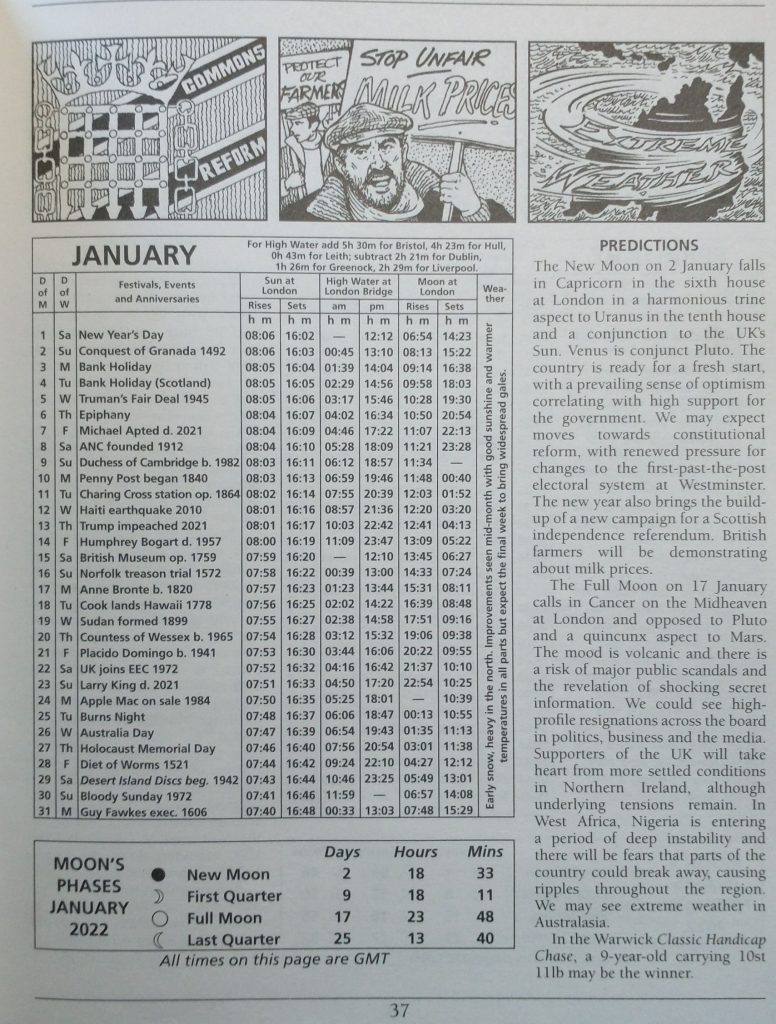
In Jane Austen’s time, winter socialising depended upon the moon. Generally, people would schedule balls and dinner parties on nights when the moon was bright. This would make the journey, on days before street lighting, safer. This is one reason why Almanacs were so ubiquitous, as they listed the rising and setting of the Moon.

page from Old Moore's Almanac
Page from 2022’s Old Moore’s Almanac showing the ‘Moon in London’

First Published 2023, revised 2024 and Wolf Moon added in 2025

St Distaff’s Day & the Triple Goddesses, January 7th

Spinning
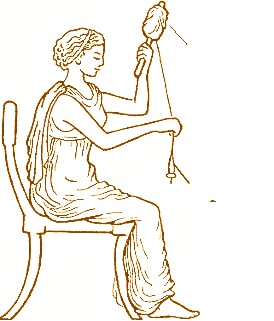
Spinning—showing the distaff in the left hand and the spindle or rock in the right hand

I’m not sure what the Three Kings were doing on the day after Epiphany. But, the shepherds, if they were like medieval English farmworkers, would still be on holiday. They went back to work, traditionally, next Monday, which is Plough Monday. By contrast, the women, according to folk customs, went back to work St. Distaff’s Day, the day after Epiphany. In an ideal world, St Distaff’s Day is the Sunday after Epiphany (January 6th), and Plough Monday is the next day. Of course, it doesn’t always work out that way. I am not sure the woman going back to work on the 7th January, would be happy with the men lounging about until Plough Monday,. This year on the 13th January.

A distaff is ‘a stick or spindle on to which wool or flax is wound for spinning’. Because of its importance in the medieval and early modern economy, it became a synecdoche for women. St Distaff is a ‘canonisation’ of this use of the word. So, a day to celebrate working women.

We know that medieval and early modern women were a vital part of the work force, despite the demands of childcare. Many women took on apprenticeships, even more continued their husband’s work after he died. Some professions like silk became a female speciality. Plus, London was full of female servants and nurses. Many women had several jobs. The exhibition at the British Library on Medieval Women. In Their Own Words, indicated that most of the sex workers had two or more other jobs. In the house, the wife was the mistress of a formidable range of technologies. Baking, Brewing, Cooking, Laundry, Gardening, Dairy, Medicine (including distillation), horticulture, spinning, sewing and embroidery. Even, aristocratic women did embroidery of the finest quality, and it often made an important financial contribution to the household.

St Distaff’s Day and Plough Monday

Robert Herrick (1591–1674), born in Cheapside, London, a Goldsmith, priest, Royalist and Poet wrote in ‘Hesperides’.

Partly work and partly play
You must on St. Distaff’s Day:
From the plough, soon free your team;
Then come home and fother them;
If the maids a-spinning go,
Burn the flax and fire the tow.
Bring in pails of water then,
Let the maids bewash the men.
Give St. Distaff all the right;
Then bid Christmas sport good night,
And next morrow every one
To his own vocation.

Here he links the plough team with St Distaff’s Day. This implies that the ploughs would be out on the next day. So as St Distaff’s Day is not always on a Sunday, perhaps Plough Monday is not always on a Monday? He certainly suggests everyone goes back to work on the day after St Distaff’s Day.

This image has an empty alt attribute; its file name is Screenshot-2022-01-07-18.53.35.png

Saints & Goddesses of the Distaff Side

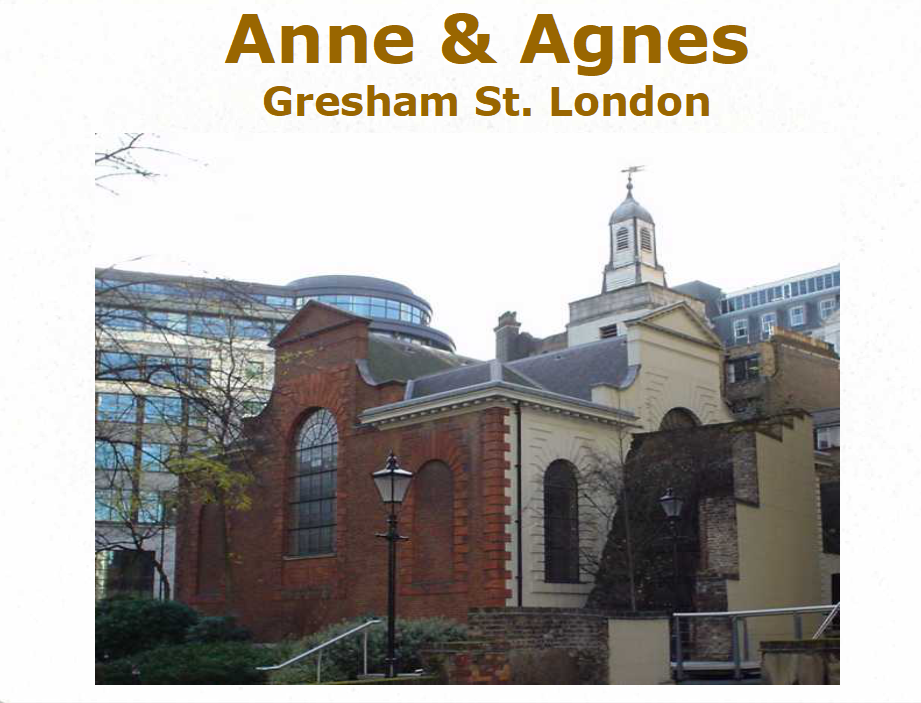
In London, the Fraternity of St Anne and St Agnes met at the Church dedicated to the saints. It is by a corner of the Roman Wall on the junction of Gresham Street and Noble Street. St Agnes is the patron saint of young girls, abused women and Girl Scouts. St Anne is the mother of the mother of the Son of God. So, she represents the three generations of women: maidens, mothers, and grandmothers.

This image has an empty alt attribute; its file name is romanmoreb0029.jpg
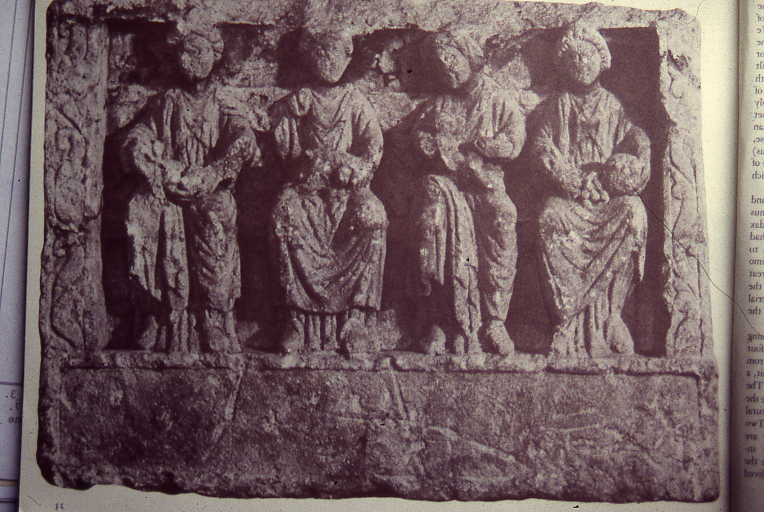
The Three Mother Goddesses (and someone else) “Limestone relief depicting four female figures sitting on a bench holding bread and fruit, a suckling baby, a dog and a basket of fruit’ the Museum of London

This trinity of women were worshipped by the Celts. Archaeologists discovered the sculpture above while investigating the Roman Wall a few hundred yards away at Blackfriars. Scholars believe it depicts the Celtic Three Mother Goddesses. The fourth person is a mystery, maybe the patron of a nearby temple. The relief sculpture was removed perhaps from a temple, or the temple was trashed at some point. Then the sculpture was used as rubble and became part of the defences of London.

The idea of triple goddesses is a common one. In Folklore and History they have been referred to as Maiden, Mother, and Crone, or even Maiden, Mother and Hag. They come in Roman, Greek, Celtic, Irish, and Germanic forms. Their names include the Norns, the Three Fates, the Weird Sisters, the Mórrígan and many more. The Three Fates, the Goddess Book of Days says, were celebrated during the Gamelia. This is the Greco/Roman January Festival to the marriage of Zeus and Juno. The Festival also gives its name to the Athenian month of January.

The use of the terms Hag and Crone for the third Goddess is rare now, but was common. It does a great disservice to the importance of the Grandmother figure. (Although the original meaning of the words were less pejorative. For example, Hag may have meant diviner, soothsayer.) The three phases of womanhood are equally as important to the continuation of the species. They provide love, support, and experience through the generations. Compare these three generations of supportive deities with Ouranos (Uranus), Cronus (Saturn) and Zeus (Jupiter). Saturn castrated and deposed his father, Uranus. Later, he tried to eat his son, Jupiter. But then, Jupiter is nobody’s idea of an ideal father. As one example, he eats his lover, Metis, to avoid her giving birth. (See my post on the birth of Athena.)

Recent work on human evolution has suggested that the role of the Grandmother is crucial to our species’ ability to live beyond the age of fertility. Because, in evolutionary terms, once an individual cannot procreate, their usefulness for the survival of the genes is finished. So what’s the point of putting resources into grandma’s survival? The theory is the Grandmother has such an impact on the survival of the next generation, that longevity. for the female, beyond fertility makes evolutionary sense.

Have a look at this site for more information.

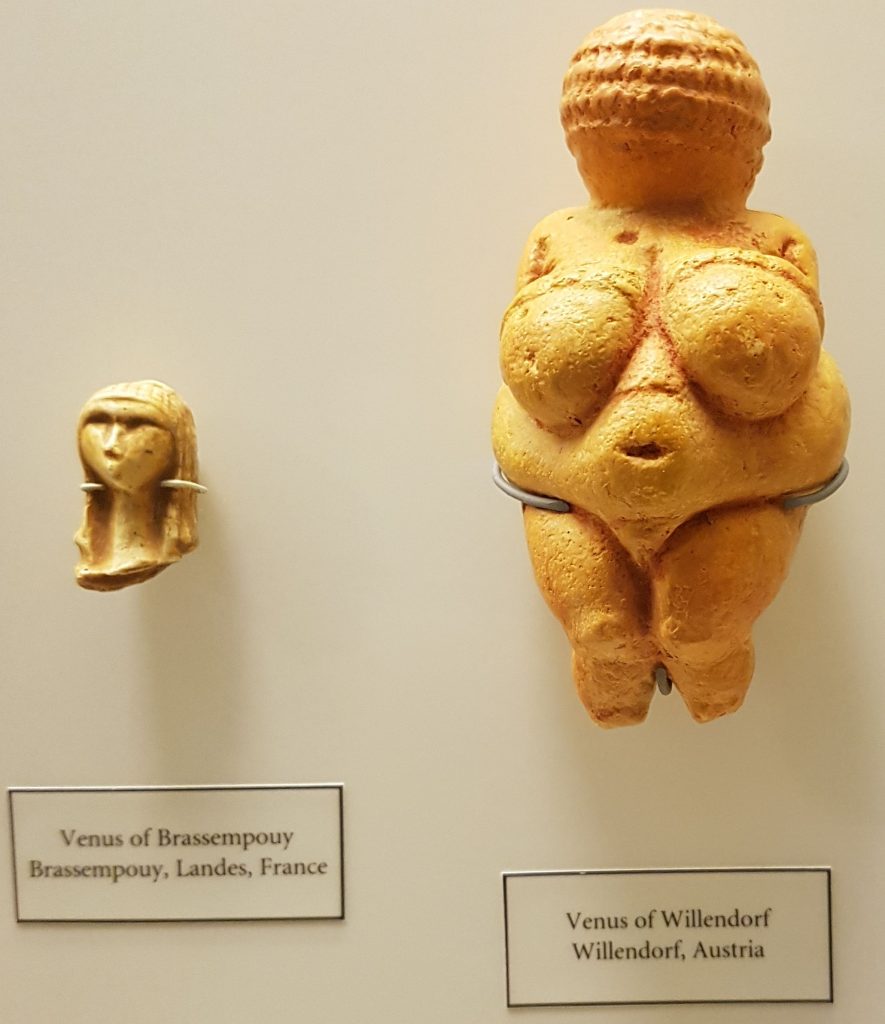
Natural History Museum, Oxford, K Flude photo.

There was a theory widely held that the original Deities, dating before the spread of farming, were mother goddesses. The idea is that the hunter-gather goddesses (perhaps like the Venus of Willendorf) were overthrown by the coming of farmers. These patriarchal societies worshipped the male gods, which destroyed the ancient Matriarchy. Jane Ellen Harrison proposed an ancient matriarchal civilization. Robert Graves wrote some interesting, but no longer thought to be very scientific studies, on the idea. Neopaganism has taken these ideas forward.

More information on St Agnes in this post below:

One This Day

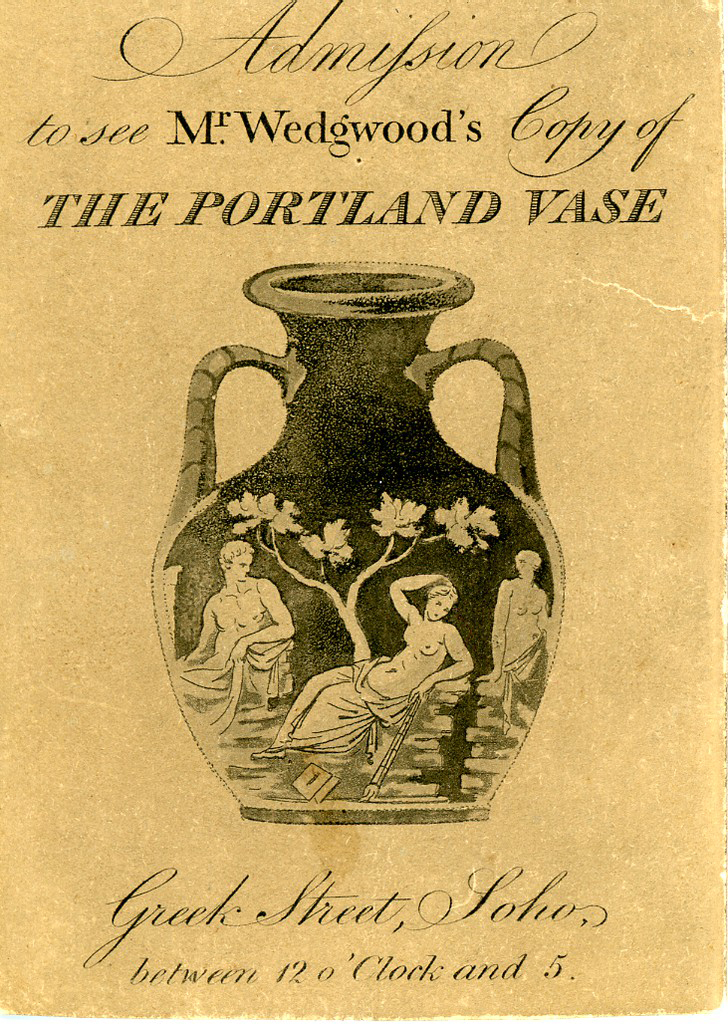
1845. Today is the anniversary of the breaking of the fabulous Portland Vase by a drunken visitor to the British Museum. It looks immaculate despite being smashed into myriad pieces, a wonder of the conservator’s art. To see the vase and read its story, go to the BM web site here:

wedgwood catalogue of its copy of the portland vase

In the orthodox church, дед Мороз  (Ded Moroz= father of frost), accompanied by Cнегурочка (Snieguroshka= fairy of the snow) brings gifts on New year’s eve, (which is on January 7th). He travels with a horse drawn troika.

Today’s Interesting link

Medieval Sin and the Pointy Shoe — for details, read the BBC’s interesting article.

First Published in 2022, and revised in January 2024 and 2025

The Lord of Misrule & London, December 30th

black and white illustration of John Stow memorial in St Andrew's Church
John Stow memorial in St Andrew’s Church

On the sixth day of Christmas

My true love sent to me
6 Geese a Laying;
5 Golden Rings;
4 Calling Birds; 3 French Hens; 2 Turtle Doves
and a Partridge in a Pear Tree

The Lord of Misrule, Masters of the Revels, and Boy Bishops

The Roman festival of Saturnalia, held between 17th and 23rd of December, included reversing rules so that slaves, ruled and masters served. In the medieval period, the disorder of Christmas was continued with the election of Lords of Misrule, Masters of the Revels, and Boy Bishops.

John Stow’s, Survey of London

He was London’s first great historian, wrote of the Lord of Misrule in London. In this section, Stow begins the role of the Lords of Misrule at Halloween and continues it until Candlemas, in erly February. See my post here for more details on Candlemas. This is what Stow says:

Now for sports and pastimes yearly used.

First, in the feast of Christmas, there was in the king’s house, wheresoever he was lodged, a lord of misrule, or master of merry disports, and the like had ye in the house of every nobleman of honour or good worship, were he spiritual or temporal. Amongst the which the mayor of London, and either of the sheriffs, had their several lords of misrule, ever contending, without quarrel or offence, who should make the rarest pastimes to delight the beholders.

These lords beginning their rule on Alhollon eve, continued the same till the morrow after the Feast of the Purification, commonly called Candlemas day. In all which space there were fine and subtle disguisings, masks, and mummeries, with playing at cards for counters, nails, and points, in every house, more for pastime than for gain.

Against the feast of Christmas every man’s house, as also the parish churches, were decked with holm, ivy, bays, and whatsoever the season of the year afforded to be green. The conduits and standards in the streets were likewise garnished; (…) , at the Leaden hall in Cornhill, a standard of tree being set up in midst of the pavement, fast in the ground, nailed full of holm and ivy, for disport of Christmas to the people…

John Stow, author of the ‘Survey of London‘ first published in 1598. Available at the wonderful Project Gutenberg: ‘https://www.gutenberg.org/files/42959/42959-h/42959-h.htm’

Cover page of The Survey of London by John Stow from Project Gutenberg

Holm is an evergreen oak called Quercus ilex. John Stow talks about the Tree in Leadenhall Street being destroyed in the great wind of 1444 which you can read about here. You might also like to see the following posts, which include information about John Stow and London’s customs, and churches.

First Published on December 30th 2023 and revised in 2024,2025