Whitsun

Pentecost by Giotto and Workshop, probably about 1310-18, National Gallery

Today, is Whitsun or Pentecost. (Sun, May 24th 2026, 16 May 2027, 4 June 2028), 50 days after the Crucifixion. Celebrated on the 7th Sunday after Easter. The Day the Holy Ghost descends on the disciples.  According to one of my teachers, it gave the disciples the power of expression and turned them from bereft disciples to self-confident Apostles.   They could now begin to spread the Christian message.

Giotto’s painting shows the Apostles with their halos in the chamber. There are 12 of them, St Matthias having replaced the dead, Judas. The Holy Spirit is represented by the little dove in the centre of the Ceiling. The narrative is carried by the two men in the foreground leaning towards each other. We imagine them saying something like ‘What’s all this about! Galilean nonentities, lost their guru and yet, confident, speaking authoritatively to all and sundry and they can all understand them?

Giotto was a forerunner of the Renaissance. According to the great Giorgio Vasari (30 July 1511 – 27 June 1574) who wrote about the advances in painting achieved by Italian artists:

‘that very obligation which the craftsmen of painting owe to nature, who serves continually
as model to those who are ever wresting the good from her best and most beautiful features and striving to counterfeit and to imitate her, should be owed, in my belief, to Giotto, painter of Florence, for the reason that, after the methods of good paintings and their outlines had lain buried for so many years under the ruins of the wars, he alone, although born among inept craftsmen, by the gift of God revived that art, which had come to a grievous pass, and brought it to such a form as could be called good.

The miracle was that this boy, a poor shepherd with no training in art was able to show nature its true face.

One day [the artist] Cimabue, going on business from Florence to Vespignano, found Giotto, while his sheep were feeding, drawing a sheep from nature upon a smooth and solid rock with a pointed stone, having never learnt from anyone but nature.’

One of the points Vasari is making is that the Byzantine Art had lost the use of perspective, something the Romans knew. Paintings had become cartoon like spaces had no solidarity, groups of people stood on shoulders. If you look at the painting above you will the room the Apostles are in has the beginnings of a realistic space, the rafters slope down to a vanishing point. The Apostles are ranged convincingly around the space. Their faces are rounded and realistic. They are separated from the outside world by a dividing wall. And two dudes at the front are convincingly on the ground, rather than hovering in mid air (though I might have cropped the photo too closely!)

It would be over one hundred years before photo realistic portraits and realistic perspective paintings were rediscovered but Giotto showed the way.

For more on Giotto see my post here:

And on Italian art and perspective my post here

First published on June 8th 2025

Beheading of Anne Boleyn May 19th 1536

Old Print showing the beheading of Anne Boleyn

The beheading of Anne Boleyn began at 8am with her speech.

Good Christian people, I am come hither to die, for according to the law, and by the law I am judged to die, and therefore I will speak nothing against it.

I am come hither to accuse no man, nor to speak anything of that, whereof I am accused and condemned to die, but I pray God save the King and send him long to reign over you, for a gentler nor a more merciful prince was there never: and to me he was ever a good, a gentle and sovereign lord.

And if any person will meddle of my cause, I require them to judge the best. And thus I take my leave of the world and of you all, and I heartily desire you all to pray for me. O Lord have mercy on me, to God I commend my soul.’

She was blindfolded. She knelt down, putting her neck on the block and repeated:

To Jesus Christ I commend my soul; Lord Jesu receive my soul.’

Recorded by Edward Hall (spelling modernized)

https://www.hevercastle.co.uk/news/19th-may-anniversary-of-anne-boleyns-execution

Here is a slightly annoyingly American youtube feature recreating what Anne Boleyn might have looked like.

To hear about Queen Elizabeth I’s nicknames for her chief advisers, read my post here.

Published in 2024, and revised in 2025.

Sentenced to Death for Extortion by an accusation of Sodomy May 16th 1719

Mast head of the St James Evening Post (June 1719)
Mast head of the St James Evening Post (June 1719), the paper that carried the accusation of Sodomy

On 16th May 1719, the St James Evening Post (later called the Evening Post) reported on the Guilty Verdict returned against ex-Servants Stephen Margrove and John Wood. The two men were accused of extorting money by threatening to expose George Smith as a sodomist (then punishable by death).

The Proceedings of the Old Bailey Archive gives details of the case. This took place in the Parish of St. Martins in the Fields (near what is now Trafalgar Square), on 18th, January 1718. George Smith told the Court that:

the Prisoners came up to him (and John Wood took him hold by the Collar of his Coat) and demanded his Money, and said if he would not give it them they would take away his Life and swear Sodomy against him; that by means of this Violence, and being under a Terror, and in great-Fear he gave them what he had in his Pocket.’

But they wanted more and forced Smith to take them to his Master’s House in Golden-Square. Here, he gave them another Guinea, to add to the 22 shillings they had already extorted.

The Accusation of Sodomy

Margrove and Wood protested that Smith: ‘came up to Wood while he was making Water, and took hold of his Yard, using some unseemly Expressions, whereupon he (Wood) called out a Sodomite‘.

At this accusation, Smith ‘fell on his Knees, and begg’d them not to expose him‘ and gave them the money. So, the accused argued it could not be ‘robbing on the High Way‘ because their victim gave them the money.

The Defence

The Court held that the threats, and violence they used made them guilty of Violent Robbery. The men called witnesses to their good employment record, but were unable to show any evidence of ‘how they spent the last 6 Months of their Lives.’ And so the Jury found them Guilty, and the judge put on the Black Cap to pronounce the death sentence.

The Verdict

On the 8th of June 1719 10 people, 7 men and 3 women were sentenced to hang, but 5 were reprieved. Wood, aged 22, and Margrove, aged 21, were however, executed. Rictor Norton in ‘Homosexuality in 18th Century England has more details, including the confessions of the two extortionists.

For the trail of Body snatchers look to the bottom of my post here:

First Published in 2024, and republished in 2025

St Pancras May 12th

Ruins of St Pancras, Canterbury Photo: K Flude (note the reused Roman Bricks.)

Pancras means ‘all-powerful’ in Greek. St Pancras was a 14 year old who refused to give up his Christian Faith during the persecution of Christians by the Emperor Diocletian. He was beheaded on the Via Aurelia, traditionally, on 12 May 303 AD. His youth makes him the Patron Saint of children, but he is also the patron saint of jobs and health. He is ‘invoked’ against cramps, false witnesses, headaches, and perjury. His body was buried in the Catacombs, but his head is kept in a reliquary in the Church of Saint Pancras in Rome, where he was buried.

Ice Saints

He is also one of the Ice Saints.  These are saints with feast days from May 11th to May 14th.  They are: St. Mamertus, St. Pancras, and St. Servatius (and in some countries, Saint Boniface of Tarsus – Wikipedia). They represent a belief that there was often a cold snap in early May.  Although modern statistics disprove this, it is however true that a late frost can cause havoc with crops.  So  the Ice Saints help persuade farmers to delay sowing.

In England, we have a saving ‘never cast  a clout while may is out’.  Which suggest you keep a coat at hand while the May flowers (Hawthorn) are still out, as it can be cold even in May. For more on the Folklore of Hawthorn -see my post here.

St Pancras in England

St Pancras, Old Church, London (Photo: Kevin Flude)

Pope Gregory is said to have given St Augustine relics from St Pancras when his mission came to Kent in 597AD. They built a church dedicated to St Pancras. The ruins still survive in the grounds of what is now St Augustine’s, Canterbury (see picture at tope of post).

This story is partly responsible for the claims that St Pancras Old Church, in Camden (pictured above) is a very old foundation. The idea being that there was a late Roman place of worship here. But there is very little solid evidence for this. It is also argued that, if it isn’t late Roman, then it dates to just after 604AD. This is when St Mellitus, sent by St Augustine, established St Pauls Cathedral. It is suggested that he also founded St Pancras Church. St Pancras’ Church was a Prebend of St Pauls Cathedral (a Prebend provides the stipend (pay) to support a Canon of a Cathedral). But this is not evidence it was established as early as the Cathedral was, and there really isn’t any other credible evidence for a 604 date.

When the Church was restored, the architects said it was mostly Tudor work with traces of Norman architecture. However, the suggested finding of a Roman tile or two, reused in the fabric, is used as evidence to keep the legend going.

If you read the Wikipedia page, you will see evidence of two strands to the contributions. One is playing down the legends of its early foundation. The other trying to keep hold of its place as among the ‘earliest sites of Christian worship’. Read the wikipedia page here: https://en.wikipedia.org/wiki/St_Pancras_Old_Church to make up your own mind.

It is a lovely Church, on an impressive site, with links to Thomas Hardy, and Sir John Soane whose tomb is the design inspiration for the iconic Red Telephone Box.

Headaches

As Patron Saint of Headaches, St Pancras Day is a good day to make worms come out of your head. Or so say the Fairfax Household Book of the 17th/18th Century as quoted in Charles Kightly’s ‘The Perpetual Almanac’:

‘To make a worm come out of the head. Take, in May, the marrow of a bull or cow, and put it warm into the ear, and the worm will come forth for sweetness of the marrow.’

Generally, willowbark was used for headaches. We know this would have worked as the bark contains salicin, which is converted by the body into salicylic acid. This is a precursor to aspirin (acetylsalicylic acid). But it is not as effective.

First Published in 2024, revised 2025

May the Swarm of Bees be with you! May 5th

Swarm of Bees, Hackney (Photo Kevin Flude 30th May 2018). The Swarm is at the top of the Column and on the edge of the porch roof.

In 2018, on 30th May, I was perturbed to find a swarm of Bees hanging outside my front door. Frightened of leaving my house, I rang a local beekeeper, who came to take possession of the Bees and take them to a new home. By the time he came, they had moved 20 yards to a Buddleia bush.

Swarm of Bees having moved 20 yards to a new home, being 'rescued' by a bee keeper.
Swarm of Bees, having moved 20 yards to a second perch, being ‘rescued’ by a bee keeper. You can see the swarm above his head.

A Swarm of Bees in May

‘Five Hundred Points of Good Husbandry’ published 1573, suggests we should:

Take heed to thy Bees, that are ready to swarm, the loss thereof now, is a crown’s worth of harm.’ The loss was particularly hard in May or June as the country verse tells us:

A swarm in May
Is worth a load of hay
A swarm in June
Is worth a silver spoon
A swarm in July
Is not worth a fly.

According to Hillman’s ‘Tusser Redivus’ of 1710, swarming in May produces particularly good honey. He advises following the bees to retrieve them:

You are entitled by custom to follow them over anyone’s land and claim them … but only so long as you ‘ting-tang’ as you go, by beating some metal utensil – the sound whereof is also said to make your bees stop.’

Much of the above is quoted from The Perpetual Almanac of Folklore by Charles Kightly.

Queen Bee

Bees swarm when a new Queen Bee takes a proportion of the worker bees to form a new colony. They will latch unto a branch or a shrub, even a car’s wing mirror. Then sending worker bees out searching for a suitable new home, such as a hollow tree. There may be hundreds or even thousands in the new colony. This may be very alarming, as I found, as I could not go out without walking through a cloud of bees. But, at this point, they will not be aggressive as they do not have a hive to protect. Look here for more information on swarming.

Sweet, Long Distance Flyers

An average hive will produce 25 lbs of honey, and the bees will fly 1,375,000 miles to produce it. This is like flying 55 times around the world (according to the British beekeepers Association (and my maths)) https://www.bbka.org.uk/honey

Helping Bees

Bees are still having a hard time as their habitats are diminishing and threats increasing. In July, DEFRA hosts ‘Bees Needs Week’ which aims to increase public awareness of the importance of pollinators.

They suggest we can help by these 5 simple actions

  1. Grow more nectar rich flowers, shrubs and trees. Using window or balcony boxes are good options if you don’t have a garden.
  2. Let patches of garden and land grow wild.
  3. Cut grass less often.
  4. Do not disturb insect nests and hibernation spots.
  5. Think carefully about whether to use pesticides.

For more above Bees Needs Week look here:

Patron Saints of Bees include: St. Ambrose, St. Gobnait, and St. Valentine. Click here to see my post of St Valentine.

First Published 2024, revised 2025

Roodmas, the True Cross and the Coronation May 3rd

Rodmas – Rood screen in St. Helen’s church, Ranworth, Norfolk by Maria CC BY-SA 3.0

Rood is another word for the Cross. Parish Churches used to have a Rood Screen separating the holy Choir from the more secular Nave. This screen was topped with a statue of the Crucified Jesus nailed to a Rood. So, Roodmas, is the festival of the Holy Cross. Roodmas is celebrated on May 3rd and September 14th, although the Church of England aligned has itself with the Catholic Church’s main celebration on September 14th.

See my post on September 14th here for more on the True Cross.

King Charles III and the True Cross

cutting from the Shropshire News article on the True Cross and the Coronation
Shropshire News article on the True Cross and the Coronation

The Shropshire News reported that two pieces of the True Cross were given to Charles III by the Pope! They have been put into a cross called the Welsh Cross. This was part of the Coronation Procession. The King gave the Cross (I assume with the pieces of the Holy Cross) to the Church in Wales. Let the Shropshire News tell the story:

Shropshire News article on the True Cross and the Coronation
Part 2 Shropshire News article on the True Cross and the Coronation

This is quite extraordinarily medieval, and fits in with the news that we were encouraged to take an oath of allegiance to the new King.

I, (Insert full name), do swear that I will be faithful and bear true allegiance to His Majesty King Charles, his heirs and successors, according to law. So help me God.

https://www.mirror.co.uk/news/royals/swearing-allegiance-king-charles-its-29861318

It is a clear reminder that we are subjects not citizens and news, as a nation, we still set store by superstitions.

The Duke of Buckingham and the True Cross

The Duke of Buckingham had a piece in his collection, which he kept at York House in the early 17th Century. How he got it, I don’t know. But I think he must have acquired it from the aftermath of the destruction of the Reformation. John Tradescant, who looked after the Duke’s collection until Buckingham was murdered, had a piece of the True Cross. Tradecant created Britain’s first Museum, Tradescant’s Ark. Again, I suspect (without any evidence) that he got the fragments from Buckingham. Did he acquire it after the murder? Or shiver off a timber fragment hoping no one would notice?

First Written on May 3rd 2023, revised May 3rd 2024, and 2025

The Maypole, This Stinking Idol & the End of May Day May 2nd

An Imagined Scene at the Maypole at St Andrew Undershaft
The Stinking Idol : An Imagined Scene at the Maypole at St Andrew Undershaft

Philip Stubbes, wrote a vitriolic attack on pagan practices in his ‘Anatomy of Abuses in 1583’. He fired a broadside at the tradition of dancing around the Maypole. He said they had: ‘as Superintendent and Lord ouer their pastimes and sportes: namely, Sathan Prince of Hell‘ as they erected ‘this stinking Idoll’. By which he meant the Maypole. Stubbes suggested that of the maids that went out to the woods on May Eve less than one-third returned ‘undefiled‘.

Evil May Day Riots

The Maypole was stored at St Andrew Cornhill, which became known as St Andrew Undershaft. In 1517, it was attacked during the ‘Evil May Day riots’. The main focus of the riot was foreign workers. The Under Sheriff of the time, Thomas More, tried to quell it. But 5,000 troops commanded by the Duke of Northfolk was necessary to regain control of the City. 300 rioters were arrested. One hanged, drawn and quartered, 13 hanged and nearly 300 pardoned after the intercession of Woseley and/or Katherine of Aragon. The shaft was returned to its place under the eves of the houses in Shaft Alley. But apparently banned from being raised again.

1549 May Day Riots

But in 1549, the curate of nearby St Katharine Cree Church made an inflammatory speech. This incited a Puritan mob who cut the shaft into pieces and burnt it. I always imagine the Curate’s sermons to be along the same lines as Phillip Stubbes attack on the Maypole.

Maypole: this Stinking Idol, Rather

Here is a longer description of the May Day Celebrations by Stubbes.

But their chiefest iewel they bring from thence is the Maie-poale,
which they bring home with great veneration, as thus: They haue
twentie, or fourtie yoake of Oxen, euery Oxe hauing a sweete
Nosegaie of flowers tyed on the tip of his homes, and these Oxen
drawe home this Maie-poale (this stinking ldoll rather) which is
couered all ouer with Flowers and Hearbes, bound round about
with strings from the top to the bottome, and sometimes painted
with variable collours, with two or three hundred men, women and
children following it, with great deuotion.

And thus being reared vp, with handkerchiefes and flagges streaming
on the top, they strawe the ground round about, bind green boughes about it, set
vp Summer Haules, Bowers, and Arbours hard by it. And then fa!
they to banquet and feast, to leape and daunce about it, as the

a Heathen people did, at the dedication of their ldolles, whereof this
is a perfect patteme, or rather the thing it selfe. I haue heard it
crediblie reported (and that viua voce) by men of great grauity,
credite, and reputation, that of fourtie, threescore, or a hundred Maides,
going to the wood ouemight, there haue scarcely the third part of them returned home againe vndefiled.

Phillip Stubbes from ”A Critical Edition Of Philip Stubbes’s Anatomie Of Abuses‘ By Margaret Jane Kidnie.

Restoration Maypole

The unraised pole seems to have survived until the beginning of the Civil War, (1644) when it was destroyed. But at the Restoration of Charles II a new and huge Maypole was ordered. It was joyously erected 134 ft high (41 metres) in the Strand. This one was danced around till 1713 when it was replaced. The original was sold to one Isaac Newton. He used it to support the biggest telescope in Europe which was erected in Wanstead by a friend.

And that, my friends, is how you get from Superstition to Science in one easy story.

Old Print of Isaac Newton

Postscript.

I have always told people that the sermon leading to the destruction of the Shaft in 1549 was made at St Paul. I cannot remember where I read this. The suggestion that the Maypole in Cornhill was not used after 1517 seems strange. Why then would an unused maypole rouse a crowd to riot in 1549? Of the sources I have at hand, the London Encyclopedia mentions the riot of 1517 in its entry on St Andrew Undershaft but doesn’t elaborate more. ‘Layers of London‘ says ‘It was last raised in 1517 when ensuing riots led to the celebration being banned.’ which is definitive sounding. But is it? I wonder if it was banned for a year or two, then allowed again, and finally stopped in 1549?

For more on May Day see yesterday’s post.

On This Day

‘Allies’ Roosevelt and Churchill by by Lawrence Holofcener, unveiled on May 2nd 1995 by Princess Margaret and Lord Snowdon

1995 Allies Statue Statue of Churchill and Roosevelt set up to commemorate 50 years of peace. 30 years later what is the state of the Allies relationship? Topical or what? https://www.iwm.org.uk/memorials/item/memorial/11351

First written in 2023 and revised on May 2nd 2024 and 2025.

May Day May 1st

May Day – Bringing the Maypole, Bedfordshire. Image from ‘Romantic Britain’

Maypoles were often stored during the year. A few days before May Day they were repainted, and bedecked with May Garlands – mostly made from Hawthorn. The Maypole used in London in 1660 was 134 feet high. Tall straight trees were used, sometimes of Larch, and they might be spliced together to get the requisite height. John Stow says that each parish in London had their own Maypole, or combined with a neighbouring Parish. The main Maypole was on the top of Cornhill, in Leadenhall Street. It was stored under the eves of St Andrew’s Church, which became known as St Andrew’s Undershaft as a result.

Padstow May Day Festival

Padstow holds, perhaps, the most famous May Day festival on May 1st. It feels feels very ‘pagan’ or do I mean it is fuelled by an enormous amount of drink?

Here is a video, watch until you see the ‘obby ‘orse and the teaser dancing.

Why May Eve?

The celebrations begin on May Eve because the Celtic calendar starts the day at Dusk. This seems strange to us who, perversely, ‘start’ our day at Midnight just after everyone has gone to bed! The other choice, and maybe the most logical is Dawn. But Dawn and Dusk are difficult to fix. Midnight was chosen by Julius Caesar when he created the Julian Calendar. Midnight has the virtue of being a fixed metric, being half way between Dawn and Dusk. From the Celtic point of view. The day ends when the Sun goes down over the western horizon. So the end of the old day, is the beginning of the new day. Makes sense?

For Walpurgis Nacht see my post on April 30th here: walpurgis-nacht-april-30th/

Beltane

Celebrations centred around the Bonfire. The day was sacred to the fire God Belenus (Gaulish: Belenos, Belinos, British Belinus, Bel, or Beli), and May Day was called Beltane. Bonfires continued to be a part of the celebration into the 16th Century, and in places until the 20th Century. According to folklore tradition, the bonfire should be made of nine types of wood. They must be collected by nine teams of married men (or first born men). They must not carry any metal with them. The fire has to be lit by rubbing oak sticks together or a wooden awl twisted in a wooden log.

Participants, have to run sunwise around the fire. Oatcakes are distributed, with one being marked with a black spot. The one who collects it has to jump through the fire three times. Bonfires would have been, by choice on the top of hills. But then they were also held in the streets in London.

May celebrations have a similarity to Halloween. This was also a fire festival and both are uncanny times when sprites and spirits abound. Hawthorn was a favoured wood not only because of its beautiful may flower. It was also said to be the wood the crown of thorns was made from. Hawthorn had the power of resisting supernatural forces. Therefore, it was used to protect doors, cribs, cow sheds and other places from witches. Witches, it was said, got their power to fly from potions made from chopped up infants. The best protection was Christening. The custom was that christening took place as early as possible and normally three days after birth. Shakespeare was baptised on 26th April 1564, so we celebrate his birthday on 23rd April. See my post for more on this subject.

Special May Babies

Cribs would be bedecked with Hawthorn and protection might be augmented by a bible, rowan, and garlic. Babies born between May 1 and 8 were thought to be special. They were destined to have power over man and beast. Weddings were frowned upon in Lent and in May, so April became a popular choice for marriage.

May Dew

After celebrations on May Eve (April 30th), women would go out in the woods to collect May, other flowering plants. They would wash their faces in May Dew preferable from the leaves of Hawthorn. If not from beneath an oak tree, or from a new-made grave. The dew was said to improve their complexion. It was also used for medical conditions such as gout and weak eyes. Thinking of one’s lover on May Day might bring marriage within the year.

May morning would commence with dancing around the Maypole, followed by feasting, and summer games. for more about Maypoles and May Day see my post may-2nd-this-stinking-idol-the-end-of-may-day/

Belenus is a Celtic God of whom very little is clear and unambiguous. He was linked in Gaul with Apollo. The name, some people think, comes from ‘Shining’ but others disagree and think it means ‘Master of Power.’ His association with Irish mythology and the festival of Beltane suggests he was a powerful god in Celtic Europe. Geoffrey of Monmouth has a King called Belinus, and spins a yarn about Belinus and Billingsgate. Linguists prefer the idea that Billingsgate is named after some unknown Saxon called Billings. This may be a little more likely but far less interesting.

See my post on Midsummer for more on Celtic Festivals.

On This Day

1707 The Union of Scotland and England Proclaimed

1945 German Fascist Goebbels kills himself and his entire family

Revised May 1st 2024 and 2025

St Mellitus Day And the Birth of the Chocolate Digestive April 24th

St Mellitus (Source: from saint-mellitus-of-canterbury-died-624

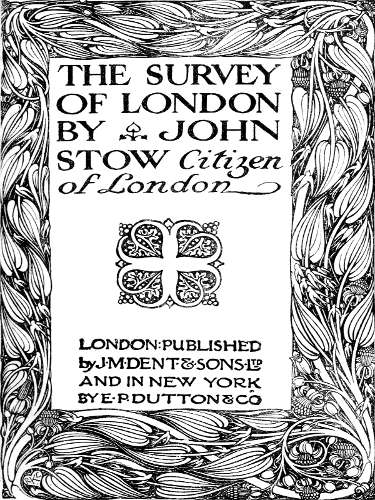
St Mellitus was the first Bishop of London (AD604) and the third Archbishop of Canterbury. But was he really? No, he was the first Bishop of London of the English Church. There were many before him. We know there were bishops of London from Britannia during the Roman period. And, according to John Stow, London’s first history. there were also post-Roman bishops. That line of Bishops ended, in 584 AD, when the 14th Bishop, Theanus, fled London. He headed for Wales to escape the Anglo-Saxon threat. However, even Stow was uncertain whether the list was genuine.

I tell this story in my post on St Lucius.

The Synod of Arles

In 314 a Church Council or Synod was called at Arles, in France. Amongst those attending were three bishops from Britain, (and a Deacon and a presbyter) :

  • Eborius “de civitate Eboracensi” – from the city of Eboracum (York);
  • Restitutus “de civitate Londenensi” – from the city of Londinium (London);
  • Adelfius “de civitate Colonia Londenensium” – that is, from the “colonia of the people of London”.

(Wikipedia)

The fact that two came from London suggests to some a mistake. Adelfus, perhaps, was either from Lincoln or Colchester which were Colonies. The Synod was called by the Emperor Constantine. Amongst its acts were to order that Easter should be held at the same time throughout the Empire. (See also my post on the Synod of Whitby which fixed the date of Easter in Britain as late as 684). They also banned Races, and Games. and excommunicated all actors and charioteers. (Synod_of_Arles). But it gives us our first certain facts about the origins of Christianity in Britain.

The Augustinian Mission and Mellitus

St Mellitus Burial Place, St Augustine’s Abbey, Canterbury. Photo K. Flude

In 597, the Augustinian Mission came to Kent. Mellitus was sent by Pope Gregory to join St Augustine’s mission in 601AD,. He was then sent to London to set up St Pauls and become its bishop (604). But he was kicked out in 618AD when King Sæberht of Essex died and was replaced by a pagan son. Mellitus went into exile in Gaul but came back to become the third Archbishop of Canterbury. He was buried in St Augustine’s Abbey in Canterbury. He is known as St Mellitus of Canterbury. London reverted to paganism until 654AD when St Cedd became its next Bishop.

I tell the story of the Augustinian misson in my post here

St Mellitus had gout so is the go-to Saint for sufferers of gout.

Also on this day

1925 – McVitie’s Chocolate Digestive was created. There were made in Stockport and in Harlesden, London. I have moored my narrowboat outside the factory and been kept awake by the churning of chocolate in vast vats. Or so I imagine. News stories suggest that the Digestive was meant to be eaten with the chocolate on the bottom side. This is one of the most ridiculous things I have heard! But you can read this page for the facts. And this one for more on the history of the Chocolate Digestive.

First published in April 2025

Vortigern April 2nd 1796

Bill for the 1796 play Vortigern and Rowena Public Domain Wikipedia

Content Move April 2nd 2026 to:

https://chr.org.uk/anddidthosefeet/?p=5187