
Chelsea Buns, Hot Cross Buns. Long Rope Day & Good Friday

photo of three hot cross buns on a blue transfer ware plate
Good Friday Hot Cross Buns

This year, Good Friday is on Friday 18th of April, and the day we eat Hot Cross Buns. It is a simpler sort of bun than the Chelsea Bun, which was the bun to have at Easter, in London in the 18th Century. Read on to hear about the Chelsea Buns.

Hot Cross Buns Good Friday Traditions

There seem to be all sorts of dubious traditions around the origins of the Hot Cross Bun. It has been suggested that the Greeks knew how to put a cross on a bun. Also, that the Anglo-Saxons celebrated the Goddess Eostre with the crossed bun. The cross represents the four quarters of the moon, the four seasons and the Wheel of the Year. But there is very little evidence for Eostre other than the Venerable Bede’s mentioning her name. So her association with Hot Cross Buns cannot be known.

However, the cross, and the association with Easter, makes the bun powerful, so there are many superstitions on record. A piece of an Easter Hot Cross Bun given to the sick may promote a cure. It was said that a bun cooked and served at Easter will not go off for a year. This might help explain the traditions that hanging them up on a string or ribbon is a good thing. One hung in a kitchen prevents fire. On a ship prevents sinking. In East London, the Widow’s Son Pub in East London has an old bun. This remembers a sailor-son who never returned to eat it on Good Friday.

Making and Eating Hot Cross Buns

The technology of putting a cross on a Bun requires nothing more complicated than a flour and water paste so it might well be an ancient tradition. A more impressive cross can be made with shortcrust pastry. The bun itself is simply flour, milk, butter, egg, salt, spices and mixed fruit. Here is a recipe from the BBC www.bbcgoodfood.com

In my opinion, they need to be purchased from a shop. Home-made Hot Cross Bun might be better but would be strangely disappointing. It’s normally eaten toasted and buttered although I prefer the soft doughy untoasted and unbuttered bun. But then it is possible to get carried away and eat the entire pack of four.

The Good Friday Chelsea Bun
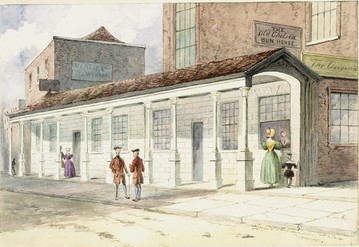
Old Chelsea Bun House Frederick Napoleon Shepherd - from a print at the Museum of London (Wikipedia)
Old Chelsea Bun House Frederick Napoleon Shepherd – from a print at the Museum of London (Wikipedia)

‘RRRRRare Chelsea Buns’ as Jonathan Swift called them in a letter to Stella in 1711.

Fragrant as honey and sweeter in taste
As flaky and white as if baked by the light
As the flesh of an infant soft, doughy and slight.

The buns were made from eggs, butter, sugar, lemon and spices. The tradition was that, on Good Friday, 18th and 19th Century Londoners would go to Chelsea to buy Chelsea Buns. Thousands of people would turn up at the Five Fields. These stretched from Belgravia to what is now Royal Hospital Street. There were swings, drinking booths, nine pins and ‘vicious events that disgraced the metropolis’. The Bun House was on Jew’s Row as Royal Hospital Street was then called. As several King Georges visited the Bun House it became known as the Royal Chelsea Bun House. It was run by the Hands family. They were said to sell 50,000 Buns on the day. Stromboli tea garden was nearby.

Chelsea Cabinets of Curiosity

Inside the Chelsea Bun House was a collection of curiosities. Chelsea became known for its collection of curiosities in the 18th Century. Of course, there was the great Hans Sloane’s collection which was the founding collection of the British Museum. And then there was Don Saltero’s which was a coffee house that had curiosities on the wall. The Bun House displayed clocks, curiosities, models, paintings, and statues on display to attract a discerning Public.

Me. I love a Chelsea Bun above all buns, But can you get them any more? The British Library Cafe was the last place I found that sold them. And that was 6 years ago. Their place has been taken first by Danish Pastries and more recently the ubiquitous Cinnamon Bun. If you see any on sale let me know.

To make yourself one follow this link. https://www.christinascucina.com/chelsea-buns-british-buns-similar-to-cinnamon-rolls/
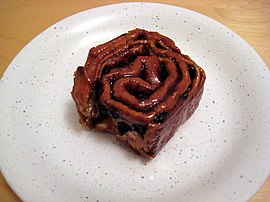
Chelsea_bun by Petecarney wikipedia
Chelsea Bun by Petecarney wikipedia

Long Rope Day

There is a tradition of Skipping on Good Friday. I can’t say I ever saw it – in my school skipping was a perennial activity, mostly enjoyed by the girls, but the boys would sometimes be intrigued enough to join in.

There is a great article about Long Rope Day in the Guardian with a wonderful picture of a collective skip.

https://www.theguardian.com/culture/2023/apr/06/english-heritage-tradition-skipping-aeaster

More traditions here. My post on Pancake Day. For Lardy Cake read my Fat Thursday post.

First Written in 2023, and combined with the Chelsea Bun in April 2025

Beginning of the Financial Year April 6th

Google Screenshot welcoming the Beginning of the Financial Year

At last, I can relax! Today, is the beginning of the Financial Year. I have been trying to get money into my pension. I wanted to take advantage of tax concessions before the end of the financial year. How hard was that! But now done and I won’t bore you with the tedious details. And of course, it was probably the wrong time to do it, given the Trumpian Meltdown on stock exchanges. Thanks, Mr Trump.

Here is President Ronald Reagan talking about the inevitable disaster of high tariffs. Surprisingly, erudite? It makes me wonder whether Mr Trump is actually a Conservative?

Why is April 6th the Beginning of the Financial Year?

If you remember, in the medieval period, the official New Year was on March 25th. This was the Day of the Annunciation, the Day Mary conceived Jesus. (for much more on this see my post march-25th-feast-of-the-annunciation/). But in 1752, we followed belatedly, the Pope’s reorganisation of the Julian Calendar. We had to put our days back in sync with the Sun. This had gone 11 days out of kilter since Julius Caesar’s Reorganisation (see my post here!). As we lost 11 days, we had to put them back. So the beginning of the Financial Year in 1753 was changed to April 5th. A further adjustment in 1800 was necessary as this would have been a leap year. So the new Financial Year moved to April 6th. And it has remained so ever since. For more on the Gregorian Calendar look here.

Churchill & Roosevelt

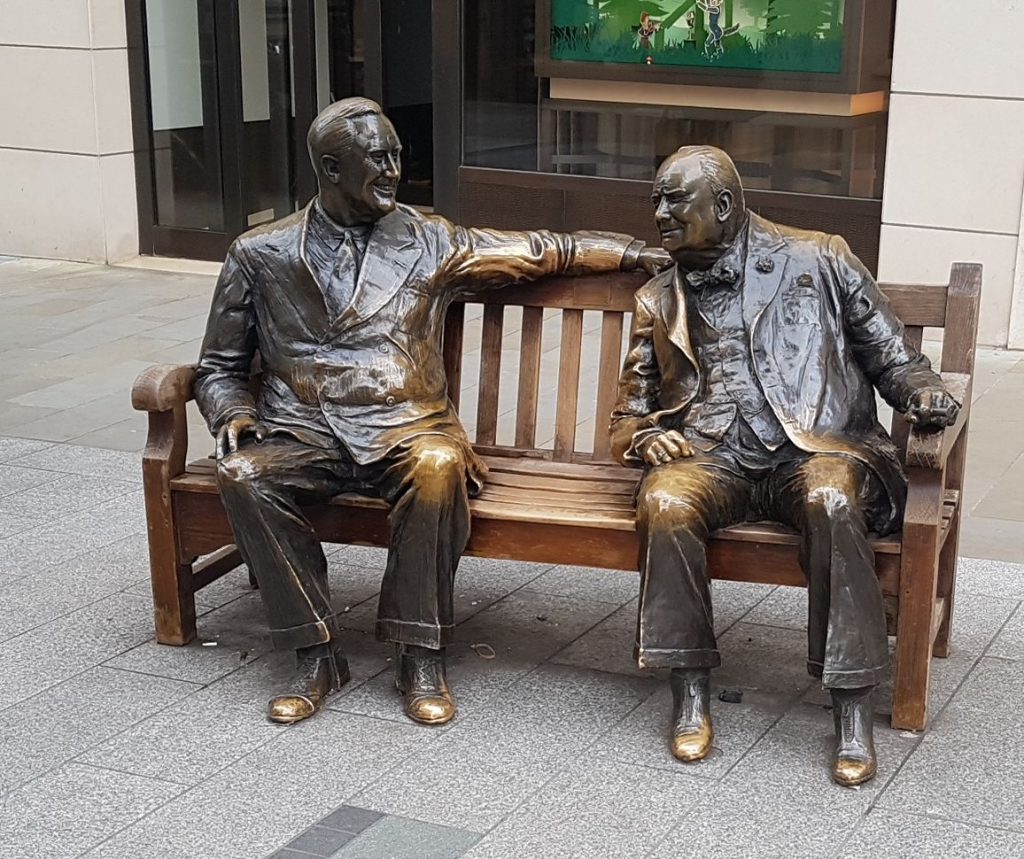
Today, I did my Jane Austen Walk. I took people to Bond Street past the statue of Churchill sitting on a park bench chatting with Roosevelt. Seemed like it was from a different world?

Allies by Lawence Holofcener. 2nd May 1995 to commemorate 50 years of Peace. Photo by K Flude
Details of the Statue

On my Chaucer Walk this afternoon, one of the attendees told me he has been signed up to my Almanac for several years. He said he was very happy to see posts reposted from previous years. Thank you and good to know.

First Published 6th April 2025
Vortigern April 2nd 1796

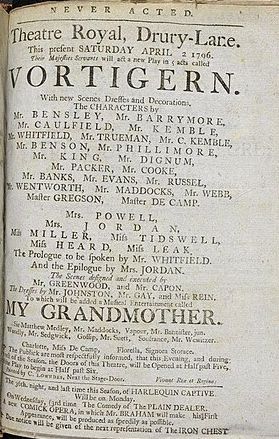
Bill for the 1796 play Vortigern and Rowena Public Domain Wikipedia

Vortigern was chosen as leader of Britannia immediately after the Romans withdrew in the early 5th Century AD. His name means Great Leader in Brittonic. He is one of the few leaders we know to be a real person in what used to be called the Dark Ages. We accept him as real, as he appears in the near contemporary source by the Monk Gildas.

However, very little is known of him except legends. He was associated with Merlin. Legend accuses him of betraying the British for the lust for Rowena. She was the daughter of the Saxon Leader Hengist. Whatever the truth of this, he continued the late Roman policy of hiring Germanic mercenaries. They were used to defend against the many barbarian threats to the Empire. The threats to Britain including the Picts, the Irish, and, of course the Saxons. The legends say that Hengist and Horsa were hired with their three ‘keels’ of Saxon mercenaries. In payment for services rendered, or for lust, Vortigern surrendered the sovereignty of Kent to the Saxons. Thus began the so-called ‘Adventus Saxonum’, and the destruction of the power of the Britons.

Kent and the Survival of pre-Saxon names

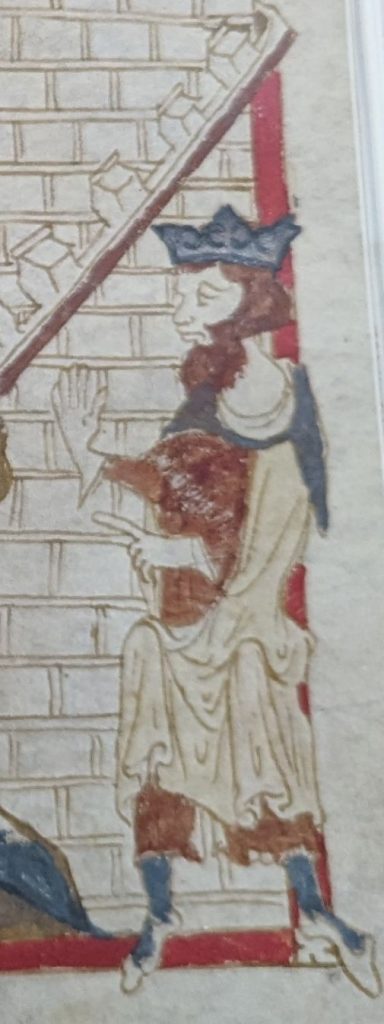
Medieval portrait of Vortigern

How much of this is ‘true’ we have no idea. But the name of Kent survives from the prehistoric, into the Roman. And unlike most tribal names survives to the modern day. This is probably because it was the first Roman Civitas to be taken over by the Saxons. Most likely still largely a working political unit. So it kept its name. The other Roman political units mostly lost their names in the anarchy of this period. Who now has heard of the Trinovantes, the Catuvellauni, or the Atrebates? The political boundaries from the Prehistoric period survived through the Roman period. But mostly did not survive the fall of Rome.

For more legends of this period look at my post

Vortigern & Rowena the Play

In 1796, a great cast at the Drury Lane Theatre, owned and managed by Sheridan, put on a newly discovered play by William Shakespeare. The cast included Kemble, Barrymore, and Mrs Jordan who was the mistress of Prince William (aka William III). Rumours swirled around about the authenticity of the play. Shakespeare was interested in Britain’s legendary history having written Cymberline and King Lear. But critics thought it was too simple to be genuine. Eventually, William Henry Ireland admitted he was the author.

‘A London Year’ by Travis Elborough and Nick Rennison has a great quote from a visit to the play. It took place on April 2nd 1796 and is recorded in Joseph Farington’s diary. Compare this description to your last polite experience at the Theatre.

Shakespeare’s forgery staged

Island’s play of Vortigern, I went to. Prologue, spoken in 35 minutes past six, play over at 10. A strong party was evidently made to support it, which clapped without opposition frequently through near three acts. When some ridiculous passages caused a laugh, which infected the house during the remainder of the performance, mixed with groans. Kemble requested the audience to hear the play out about the end of the fourth act, and prevailed. The epilogue was spoken by Mrs. Jordan, who skipped over some lines which claimed the play as Shakespeare’s

Barrymore attempted to give the play out for Monday next, but was hooted off the stage. Kemble then came on. And after some time, was permitted to say that ‘School for Scandal’ would be given, which the house approved by clapping.

Sturt of Dorsetshire was a Stage Box drunk and exposed himself indecently to support the play. And when one of the stage attendants attempted to take up the green cloth, Sturt seized him roughly by the head. He was slightly pelted with oranges. Ireland, his wife, a son and a daughter and two others were in the centre box at the head of the Pitt. Ireland occasionally clapped. But towards the end of the fourth act, he came into the front row and for a little time, leaned his head on his arm. And then went out of the box and behind the scenes. The Playhouse contained an audience that amounted to £800 pounds.

April 2nd 1796 from Joseph Farington’s Diary, (I have changed some of the punctuation.)

On This Day

Today is St. Urban of Langres Day.

He is the patron of Langres; Dijon; vine-growers, vine-dressers, gardeners, vintners, and coopers. And invoked against blight, frost, storms, alcoholism, and faintness. (www.catholic.org/saints/) But is also called upon to make maid’s hair long and golden.

On the feast of St Urban, (forsooth) maids hang up some of their hair before the image of St Urban, because they would have the rest of their hair grow long and golden.

Reginald Scott, the Discovery of Witchcraft, 1584. (Thanks to the Perpetual Almanac by Charles Kightly.) For more on Reginald Scott and Witches see my post.

1744 – First Golf Tournament. No, not at St Andrews but at Leith Links, Edinburgh.

First Published, 2nd April 2025
Campden House Fire Sunday March 23rd 1862

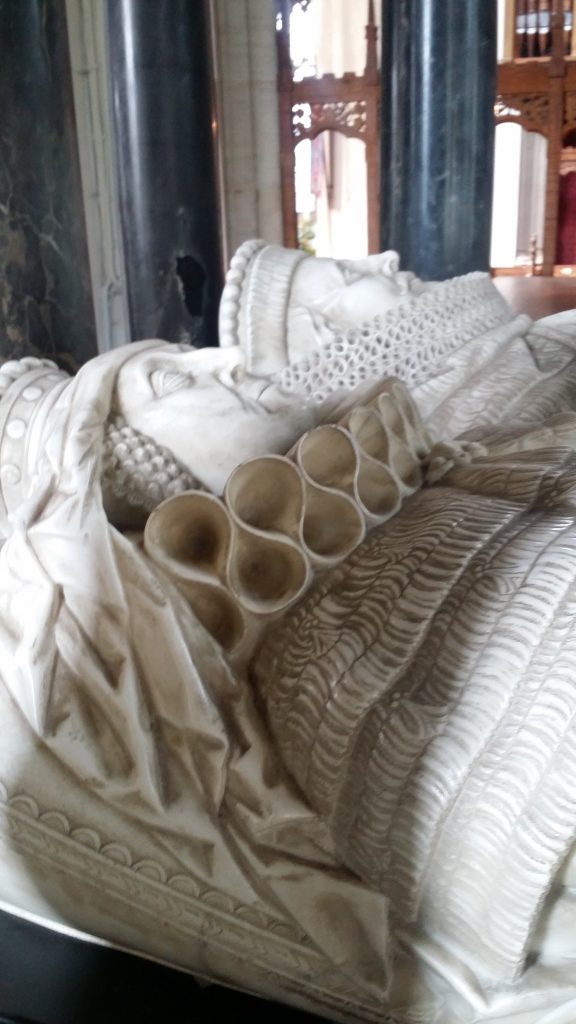
Monument to Baptist Hicks and his, wife, Elizabeth in their Chapel at St James Church, Chipping Campden (Photo Kevin Flude)
Baptist Hicks and his, wife, Elizabeth in their Chapel at St James Church, Chipping Campden (Photo Kevin Flude)

This anniversary commanded my attention because I spend a few weekends each summer in the Cotswolds. There I see the ruins of Campden House in Chipping Campden. This was was burnt down in 1645. So, when I read about the burning down of Campden House in the 19th Century, it had to be another one. And it turns out there is one in Kensington, London, and another in Chipping Campden. Both were built for Sir Baptist Hicks, Viscount Campden.

Baptist Hicks Rise to Aristocracy

Baptist Hicks is an example of the flexibility of the British system of aristocracy. Hicks was a commoner, the son of a wealthy Mercer from Cheapside in the City of London. His mother is said to have been a moneylender. But when her husband died, she was resourceful enough to take over the business. She made a success of it and eventually passed it on to her son. The family shop was on the corner of Cheapside and Soper Lane, near the Great Conduit. It was signposted by the sign of the White Bear.

Soper Lane was in the Cordwainers Ward. It was the haunt of soap makers and shoemakers (cordwainers as they were called). But Cheapside, itself, was the home of Goldsmiths and generally a wealthy area.

Hicks was educated at Trinity College, Cambridge and at the Inner Temple in London. But despite the rudiments of an education as a lawyer, he chose to continue in the family business. He supplied members of the Aristocracy with silk, velvet, taffeta, and other expensive fabrics. He rose to be Mercer to Queen Elizabeth I in 1598, and supplied James VI of Scotland. Indeed, he provided velvet, damask, and satin for the coronation of James 1st on 25 July, 1603.

As his business grew, he was able to lend large sums of money to the aristocracy and the King. He was duly knighted in 1603. He was still running his shop but was elected as an MP. Now, Hicks needed a country estate to transition to the aristocracy. So, in 1608, purchased the manor in Chipping Campden.

Baptist Hicks and Campden House, Kensington

At about the same time, he won a game of cards with Sir Walter Cope of the Strand. Cope was engaged in building himself a mansion (Holland House) on top of the Hill in Kensington. Hicks won a few acres of the Estate at cards. He asked Cope’s architect John Thorpe to design him a house, which Hicks also called Campden House. Thus, Kensington became fashionable, and Campden Hill got its name. Campden Hill continues as Notting Hill.

After Baptist Hicks death there were many tenants of the house. One was Princess Anne before she became Queen Anne. Also Lady Burlington and her son, Richard Boyle, who became Britain’s first Palladian Architect.

Hicks was made a Baron in 1620 and Viscount of Campden in 1628. (a viscount is 4th in the ranks of aristocracy, being below an Earl and above a Baron). He died in 1629. He was buried in a very impressive marble monument in St James Church, Chipping Campden shown above.

Campden house, Chipping Campden

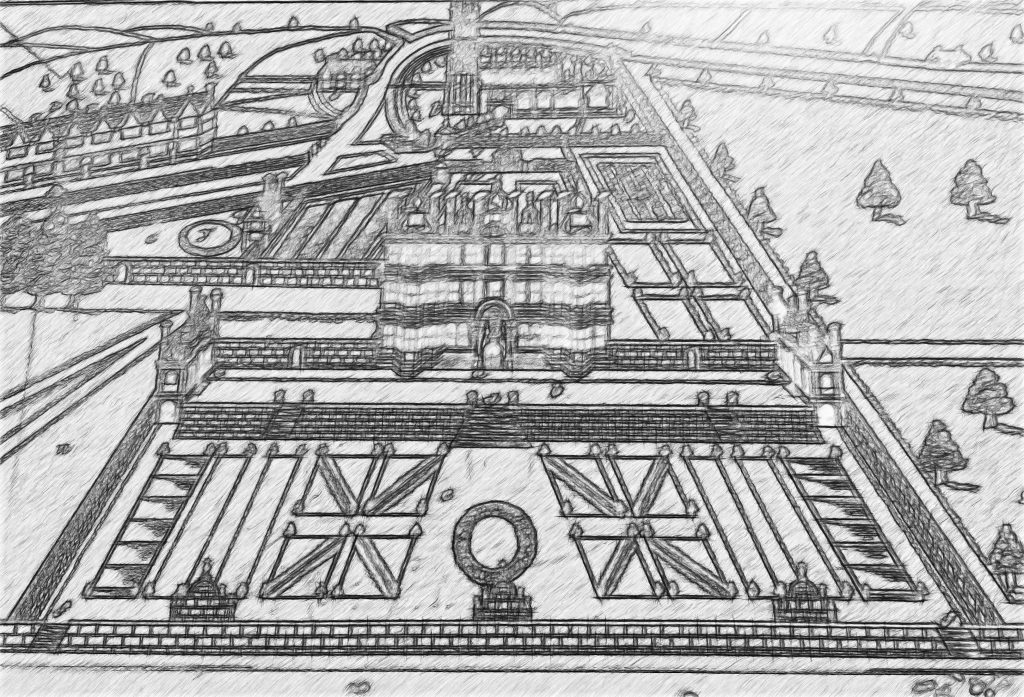
Sketch from a display of Campden House, Chippping Campden.  St James Church at the back, House in the Centre, Banqueting Houses in front of, and other side of the house. (A Banqueting House was originally where you had your pudding.)
Sketch from a display of Campden House, Chippping Campden. St James Church at the back, House in the Centre, Banqueting Houses in front of, and other side of the house. (A Banqueting House was originally where you had your pudding.)

After his death, the house in Chipping Campden was held by the Royalists in the Civil War. But the Parliamentary Army forced the King’s men to retreat towards Oxford. Prince Maurice ordered the house to be burned down. All that survives of the property are two banqueting houses, and the entrance. All show what a fine building it was.

To read my post on the infamous Chipping Campden Murder follow this link.

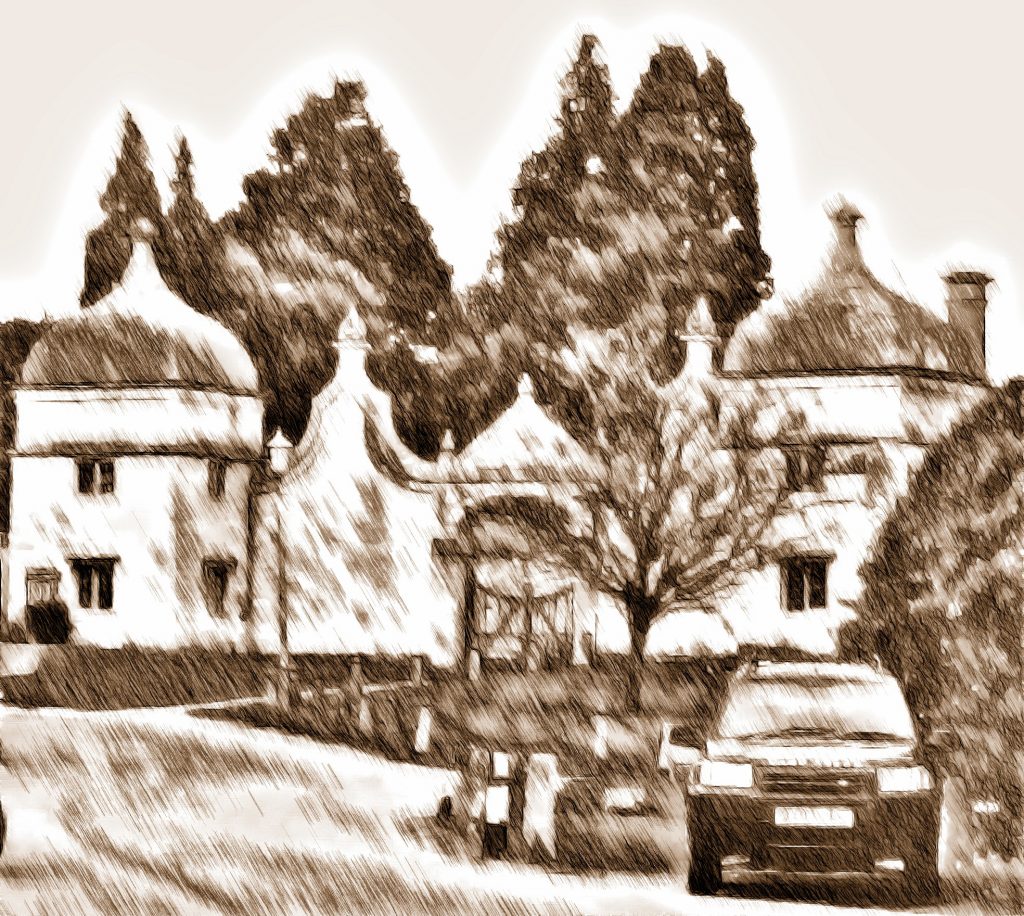
Sketch from photo of the entrance to Campden House, Chipping Camden.
Behind the wall can be seen the fire reddened ruin of the Banqueting House of Campden House, Chipping Campden
Behind the wall can be seen the fire reddened ruin of the Banqueting House of Campden House, Chipping Campden. Photo of the other Banqueting House to follow in April

The Fire at Campden House, Kensington.

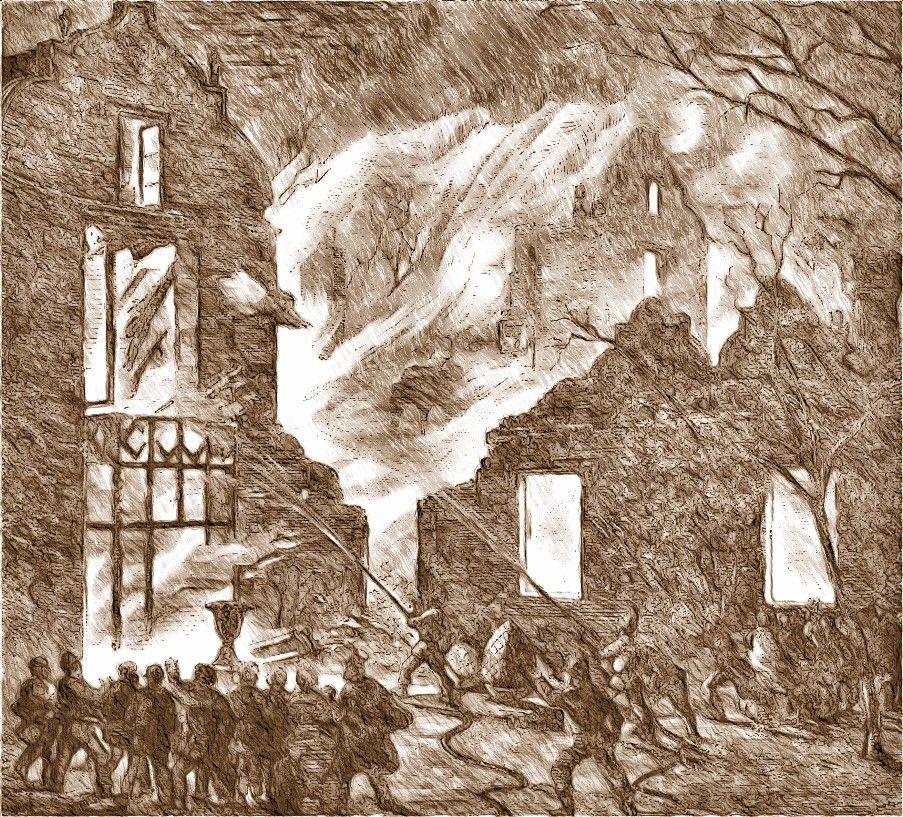
The fire at Campden House on 23rd March, 1862 gutted the building.  It is really well described in this post which I recommend you read.  Briefly, a neighbour saw the fire. A fire engine was summoned, but before it could arrive a servant was seen at a window.  Her son tried to push past her, and she fell out of the window but survived.  When the fire engine arrived, it was too late and the house and its wonderful contents were destroyed.  The owner was sued by the Insurance Company for fraud, but they lost the case.

Sketch from contemporary Magazine,showing the servant dropping out of the window. )In reality it was a first floor window.)

The English Year Almanac

I came across the anniversary of the fire in a secondhand book I picked up. It is by my old boss, Sir Roy Strong. The book is called ‘The English Year’ and is written with Julia Trevelyan Oman. It is described as ‘A Personal Selection from Chambers’ Book of Days’. Last year I also purchased the Chambers book on Abebooks for £ 2.10!). Both have been a useful source of information for my Almanac of the Past.

Sir Roy Strong was the Director of the V&A. Sir Roy is a dapper dresser you might almost call him a neo-Georgian. Certainly, a bit of a dandy. I always thought he resembled Charles 1, one of our most ineffectual Kings. I didn’t really have much contact with him, being a lowly Assistant Keeper at the V&A. But at the one Keepers’ Meeting I did attend he seemed rather ineffectual as the chairman of the meeting. But this is mere gossip! And I mention it to show how wrong one can be, in judging people.

However, when I consider the revival of the V&A under his tenure, my judgement was facile. Sir Roy transformed the V&A. The Museum had been damaged by years of under-investment in the building since WW2. Sir Roy began a campaign to restore the rich and very beautiful old Victorian architecture. The original Victorian Restaurant was transformed. The shop turned into a retail paradise. Generally, the V&A ceased to be dusty and old under his tenure. The wonders of the Victorian Museum shone again with rich and vibrant colours. It reminds me that good leadership is allowing beneficial change to happen. It’s not about the leader being a dynamic leader. It’s about moving an institution positively forward, which Sir Roy certainly did.

On this day

23 March 1769 Born William ‘Strata’ Smith (died 28 August 1839) was an English geologist, created ‘the first detailed, nationwide geological map of any country’. (Wikipedia). He worked in a town just down the road from Chipping Camden, and there is a plaque to him in Stow-on-the-Wold which I will write up at some point.

Aries, the Nose and the King’s Evil March 22nd

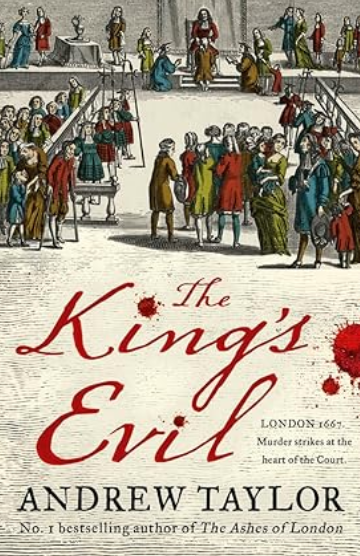
Fascinating read about the King’s Evil by Andrew Taylor

Here is a post on the King’s Evil, that I forgot to post yesterday.

Aries & Noses

aries star sign

We have just entered Aries. Now according to astrology, Aries is associated with health issues of the face. This, according to ‘Skin and Astrology Signs‘ is because of the “level of heat in their bodies”. So Arians tend to have problems such as “flushing, heat rashes, skin eruptions, and rosacea”. They suggest using chilled cucumber for the eyes and forehead, and using beauty products with soothing aloe vera in them.

Charles Kightly, in his Perpetual Almanac enjoins us to ‘Observe the features of the face which are ruled by Aries and seek cures for ills of the nose’.

The first example, Kightly gives is from an 18th Century publication which explains how to understand people by studying their noses:

Nose round with a sharpness at the end signifies one to be wavering of mind; the nose wholly crooked, to be sure unshamefaced and unstable; crooked like an eagle’s beak, to be bold. The nose flat, to be lecherous and hasty in wrath; the nostrils large, to be ireful.’

The Shepherd’s Prognostication 1729

A Fungous Nose & the King’s Evil

The second rather revolting tale is from John Aubrey.

Arise Evans had a fungous Nose and said, it was revealed to him, that the king’s hand would cure him At the first coming of Charles II into St James Park he kissed the king’s hand and rubbed his nose with it: which disturbed the king, but cured him.

John Aubrey Miscellanies 1695. (for more miscellany from Aubrey read my post here.

People believed that Scrofula, could be cured by touching the Monarch. Tuberculous cervical lymphadenitis was, thus, known as the King’s Evil. So, the King or Queen would make herself, very reluctantly, available for his sick public to touch her.

Scofula and the King’s Touch

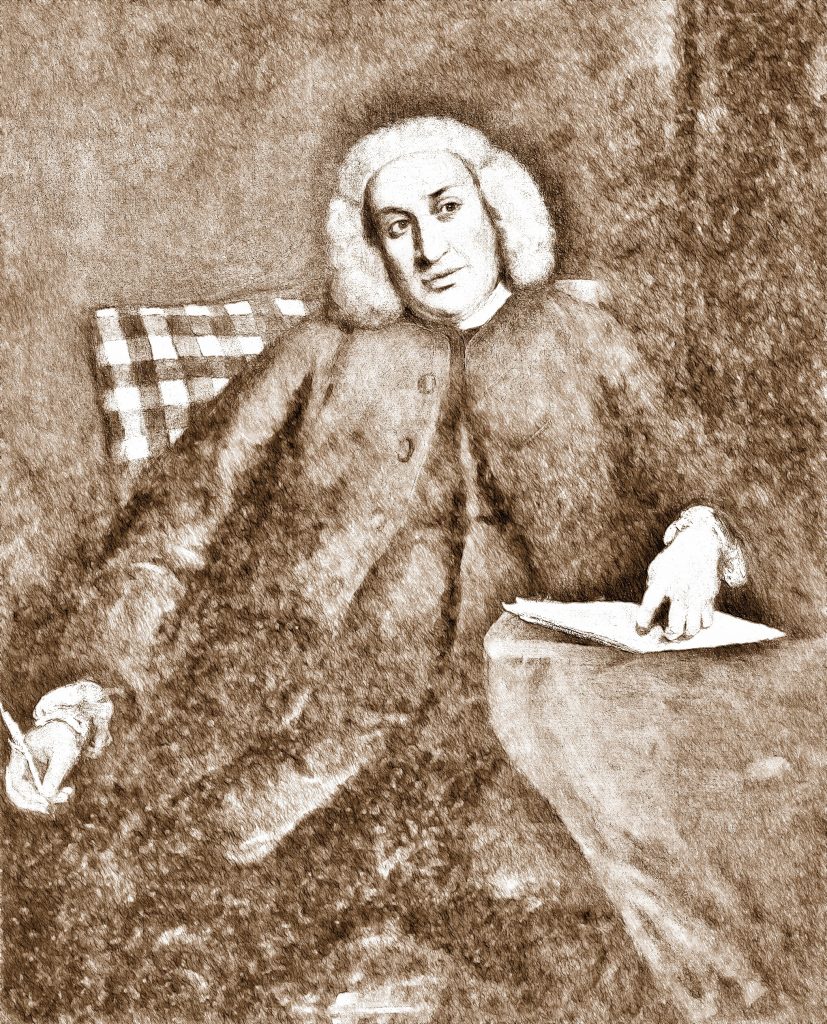
Sketch of Dr Johnson from a portrait.

Dr Samuel Johnson suffered from Scofula and received the “royal touch” from Queen Anne on 30 March 1712 at St James’s Palace. He was given a ribbon, which he wore around his neck for the rest of his life. But it did not cure the disease, and he had to have an operation.

It took place in the winter, between Michaelmas and Easter, when cold weather provoked the disease. The lucky few who were allowed the Touch, would be touched or stroked by the King or Queen on the face or neck. Then a special gold coin, touched by the Monarch, was put around their neck. Readings from the bible and prayer finished the ceremony. Before Queen Elizabeth, the Touch was said to cure many diseases such as Rheumatism, convulsions, fever and blindness, but after it was reserved for Scrofula.

Who Started touching for the King’s Evil?

It was only the French and the English who believed the King’s touch could cure people. The French claimed it began with Philip 1 in the 11th Century. The English claimed Edward the Confessor as the first. But this was denied by the French who claimed that the French King of England, Henry 1 introduced it to the English. The practice lasted until George 1 who resolutely refused to have anything to do with it.

For more on the King’s Evil have a look at this blogpost. Or read the book pictured at the top of the post.

First published in 2024, and revised in 2025
Blossom and Haggerston Park March 18th

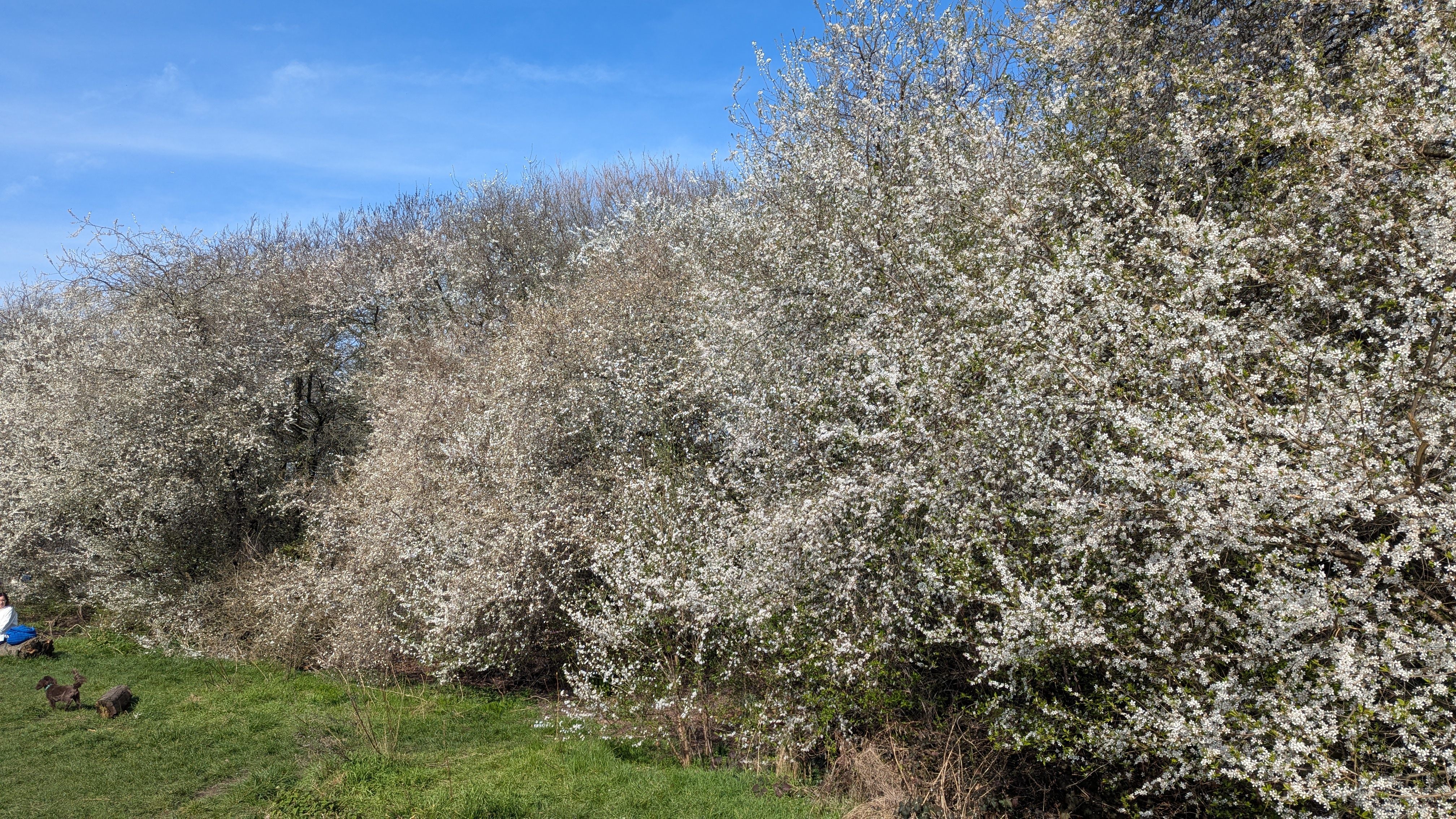
Blosson in Haggerston Park on 9th March 2025, photo by kevin flude
Blosson in Haggerston Park on 9th March 2025, photo by K Flude

Last year on March 19th, I declared it was Peak Blossom! This year, it doesn’t seem to be quite that time yet, which is normally in April. However, walking around my local Park Haggerston Park today, I am revising my opinion a little. Haggerston is whitewashed with amazing blossom. I thought it was Blackthorn, until I read that Blackthorn was the tree from which Sloes are grown.

My ‘Flora Incognita’ tells me that it is Cherry Plum, Prunus cerasifera. This makes sense as in the summer, there were people collecting the small plums that were growing on the trees. The pink variety of cherry are not yet at peak blossom. I will post about peak blossom, later today.

I am using this occasion to write about my local park which I have been saving up for a ‘vacant day’. (see my post of Ovid and Vacant days)

Haggerston Park & Park Henges

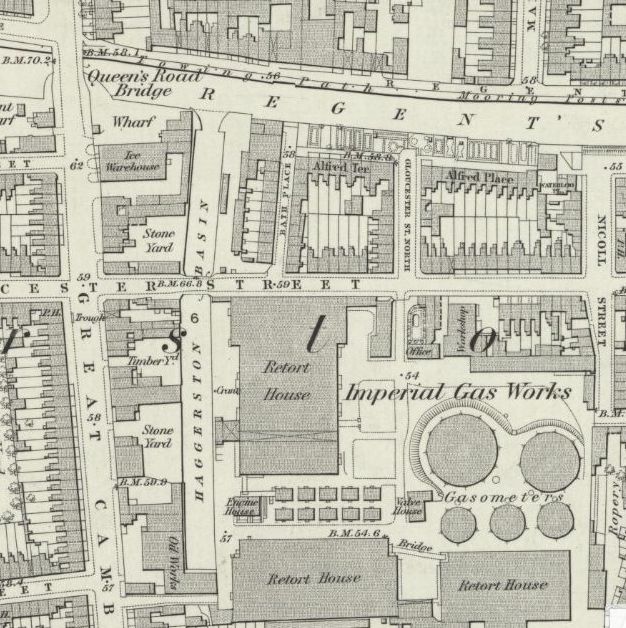
Haggerston Park was built on the site of derelict houses, a tile manufacturer and a Gas Works in the post war years. The Gas works was situated by the Regent’s Canal with its own basin for loading supplies. In the 80s the Park was expanded to take in some areas which were residential streets. All that really remains of the Gas works are the perimeter walls, and the outline of the canal basin.

The park is a well-loved local facility with green lawns, trees and flowers. It also has a great new playground for kids; astroturf football pitches; tennis courts, toilets, cafe, City farm, and a wild wooded area. This is dominated by the Cherry Plum, trees and is a haven for squirrels. Rats loved it too, but I haven’t seen one for 18 months or so.

The Gardeners obviously like the hengiform design because the Park has a lot of henges, and circuses. I have named most of them.

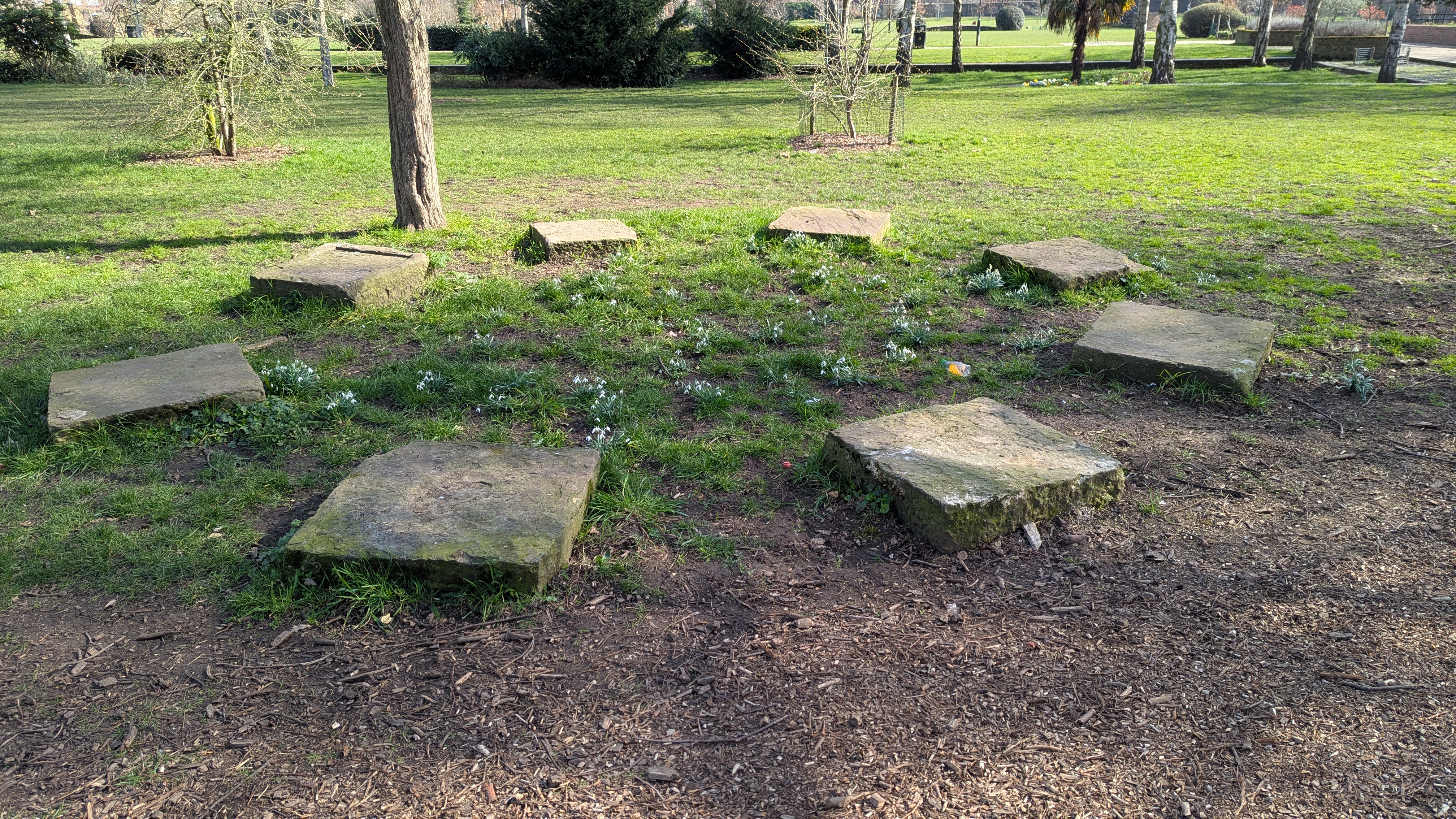
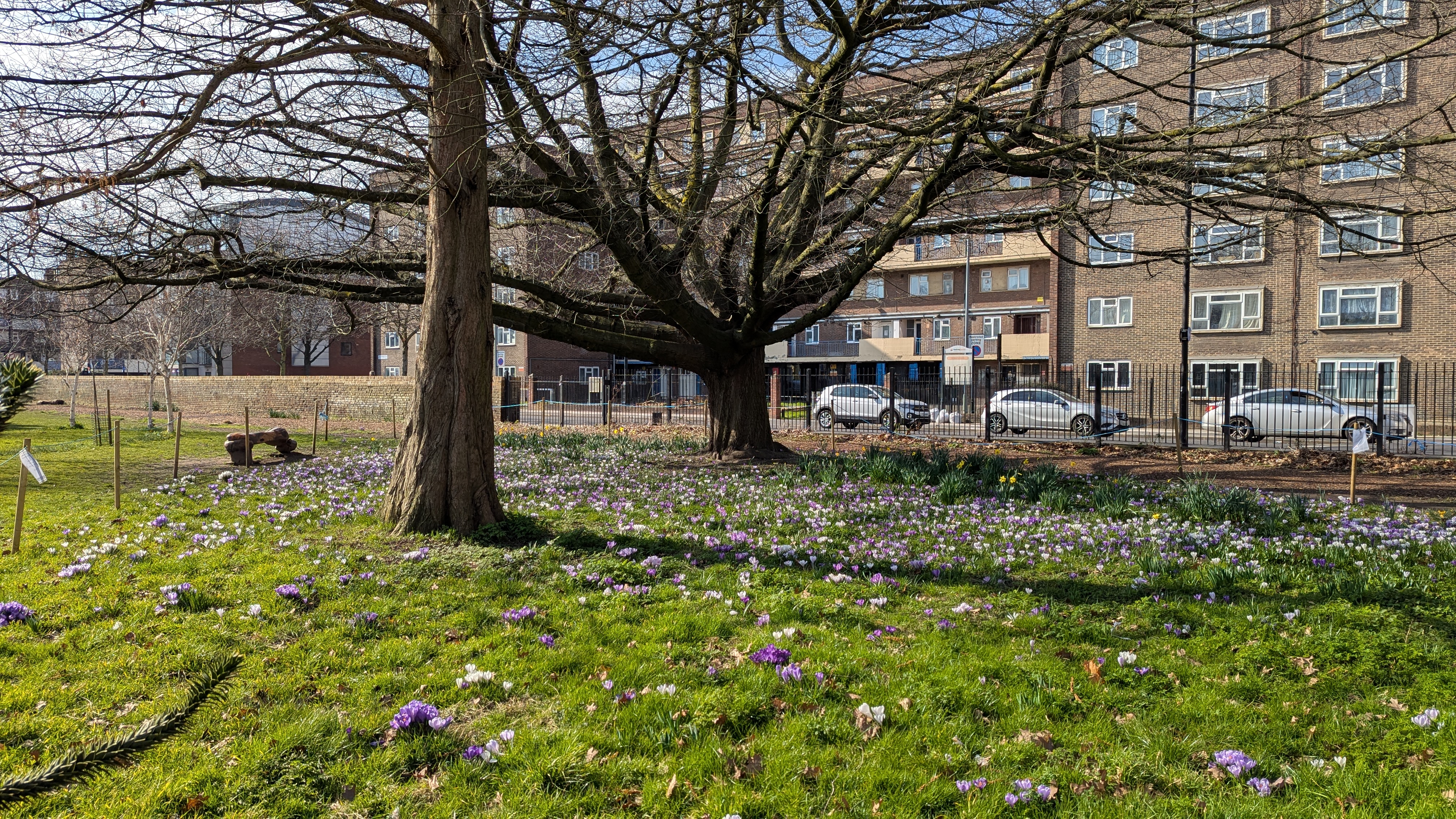
Snowdrop Henge

Snowdrop henge Haggerston Park, photo K Flude

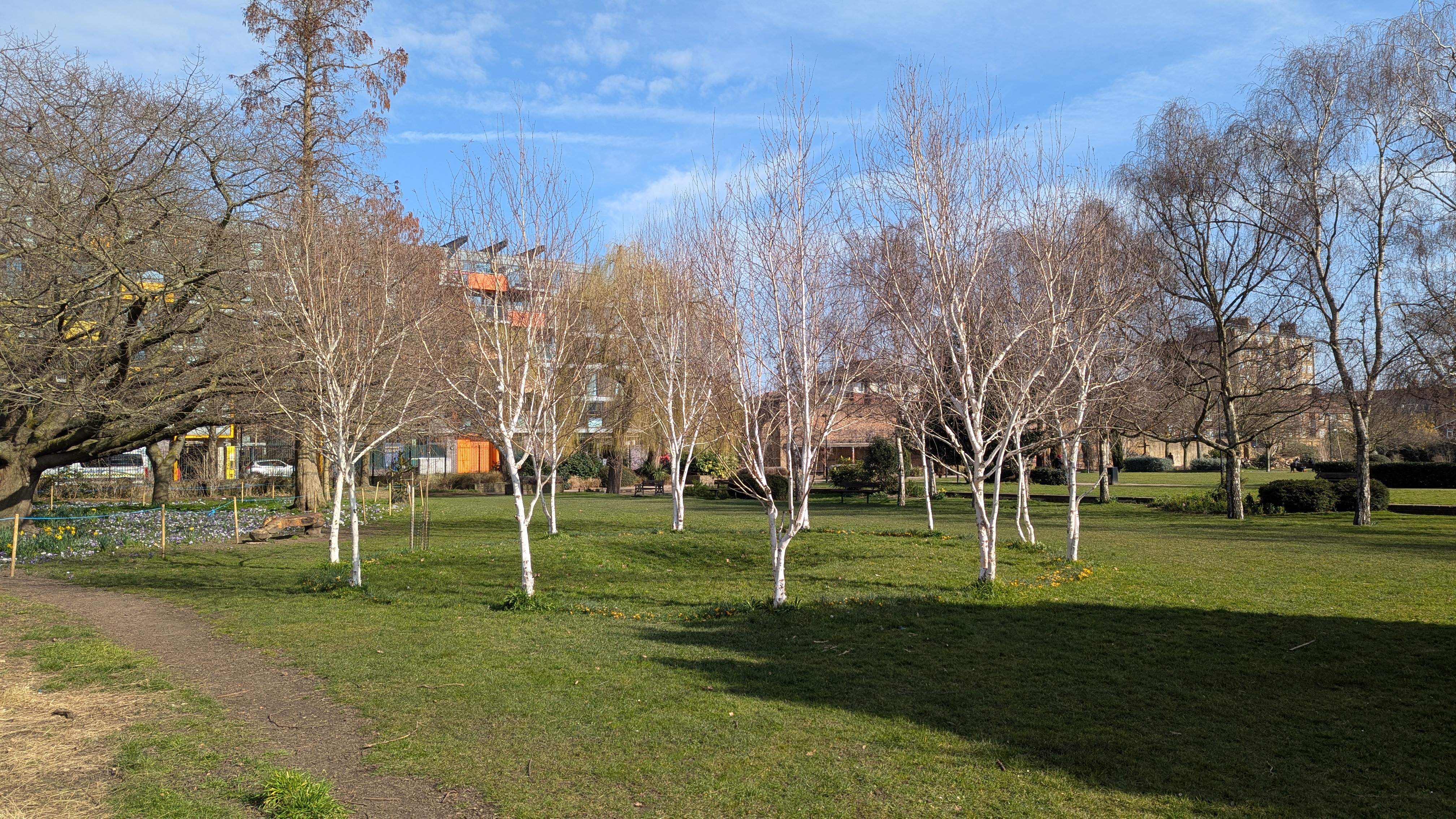
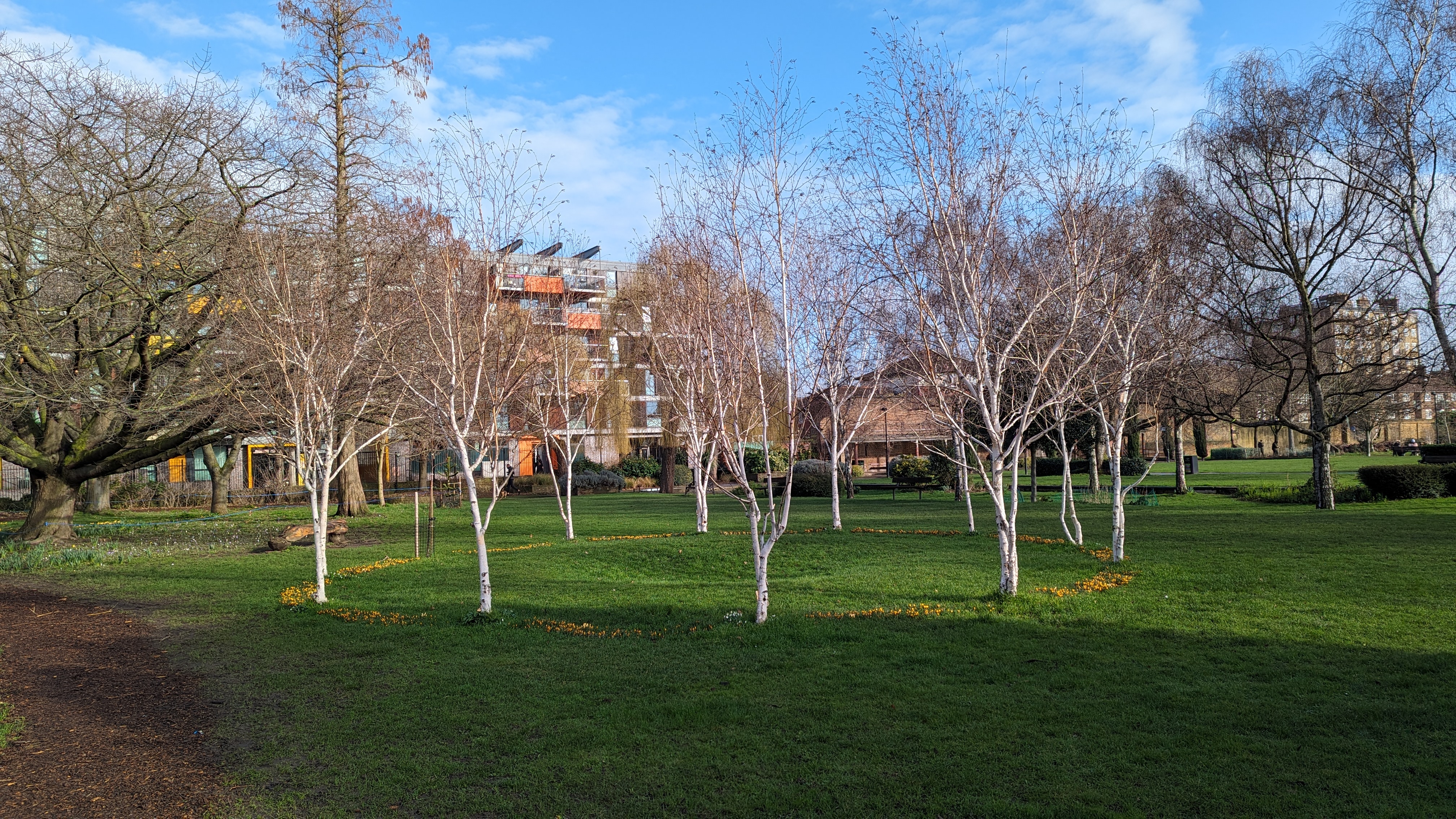
Silver Birch Circle

Silver Birch Circle Haggerston Park, Photo Kevin Flude

The beautiful croci are not so clear in this picture, but they are really lovely! (See my post on Croci here). Last year I got a better photo of the croci.

Haggerston Park, 2024 Photo K Flude

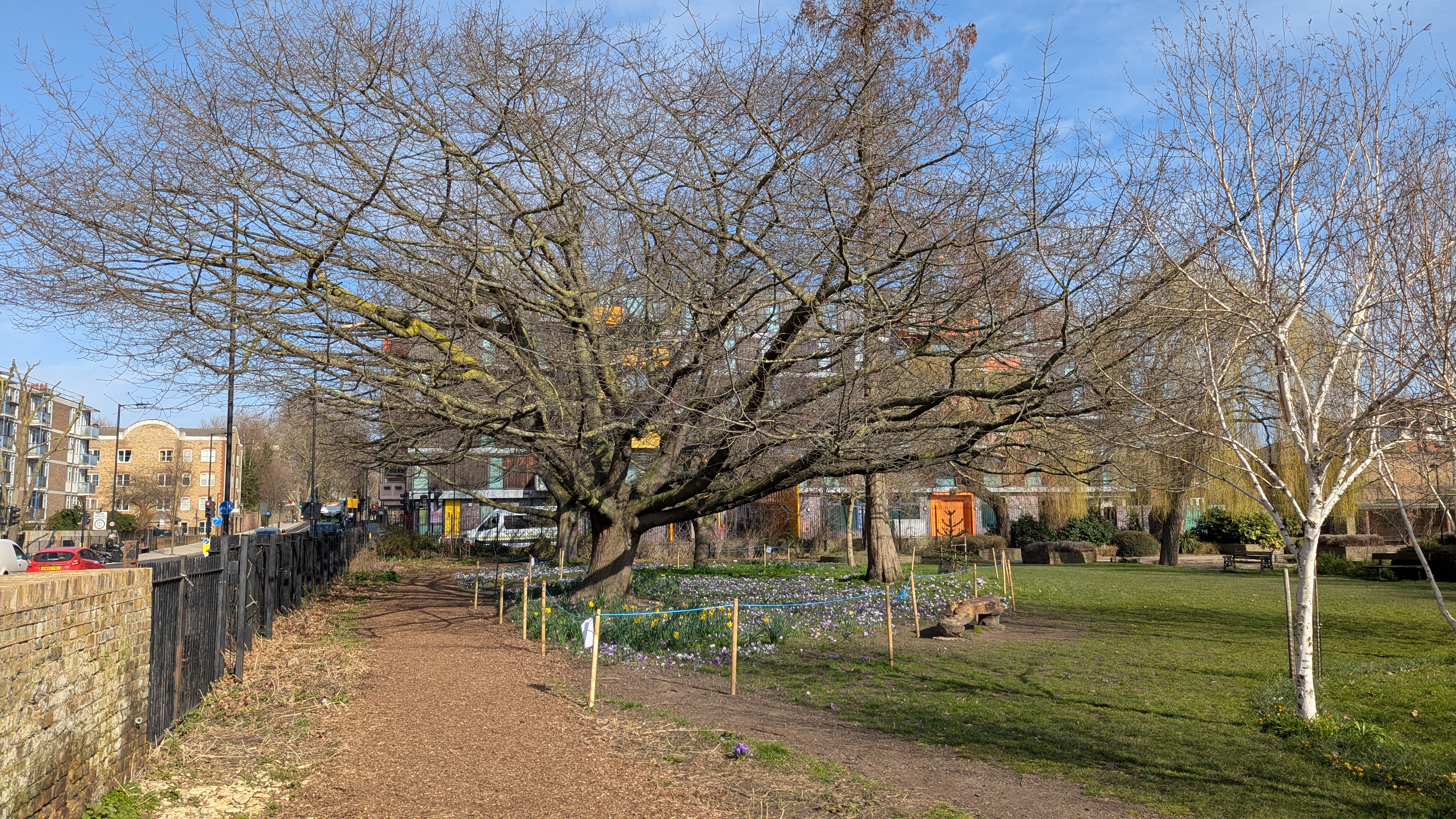
Oak Tree Cluster

Oak Tree Cluster, Haggerston Park photo by Kevin Flude

This wonderful Oak tree is surrounded by daffodils and croci.

Oak Tree and flowers, Haggerston Park Photo K Flude

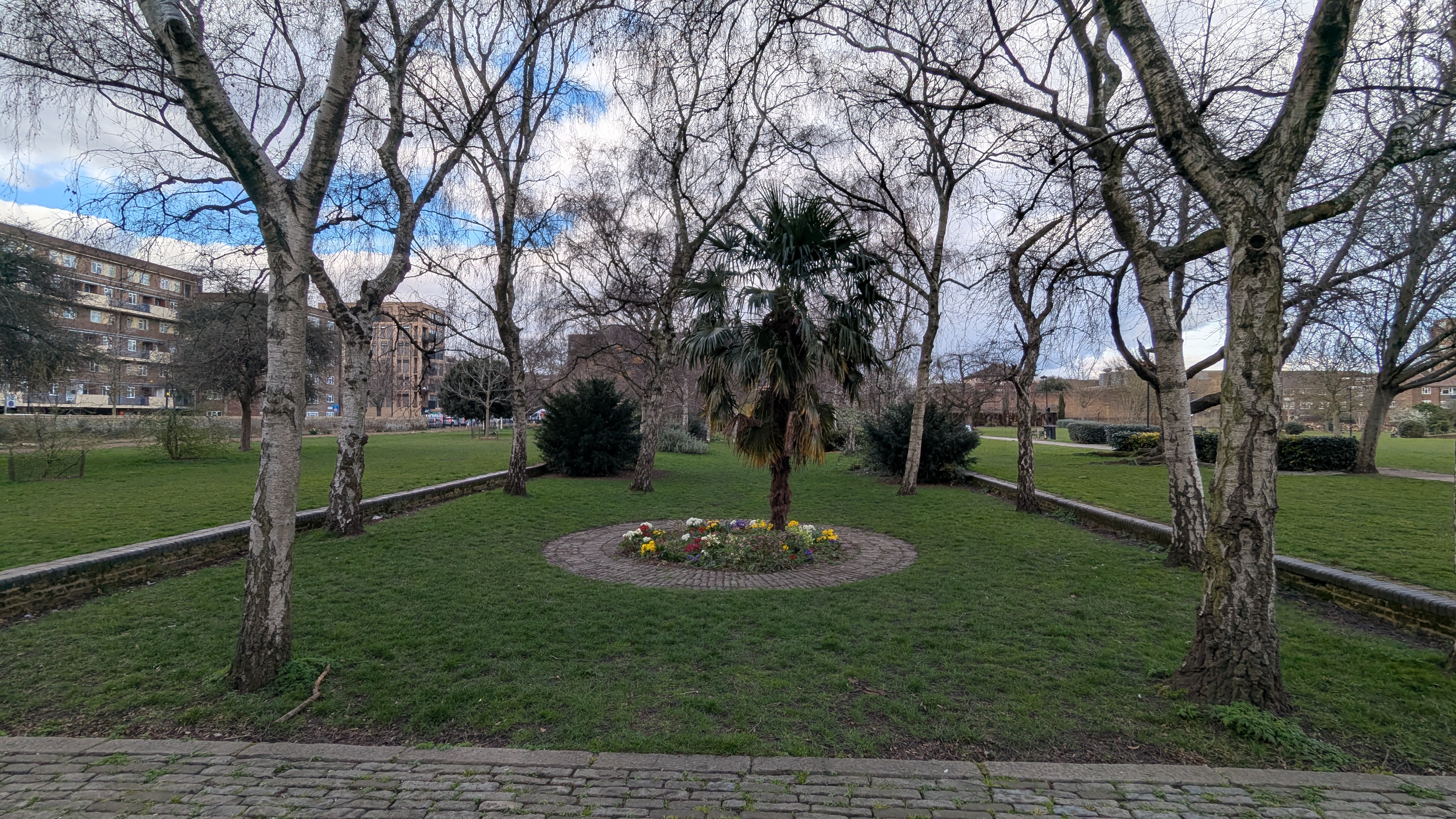
Primula Patch

Primula Patch, Haggerston Park, Photo K Flude

The circle is in the middle of the Basin that connected the Gas Works to the Regent’s Canal. I do hope they are primulas. There is also a lovely circle of Roses.

Gas Works

Haggerston Park before WW2.

The Park covers the area of the Imperial Gas Works shown above. The photos above of the circles of flowers and trees are mostly in the area of the old Retort House (top left of the Gas works). You might also notice the Ice House, near the top left. (for my post on Ice House please look here).

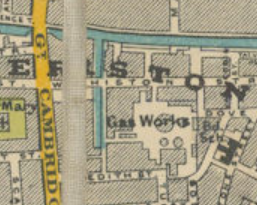
An earlier map shows the basin leading to the Gas Works from the Canal:

1909 map of Haggerston.

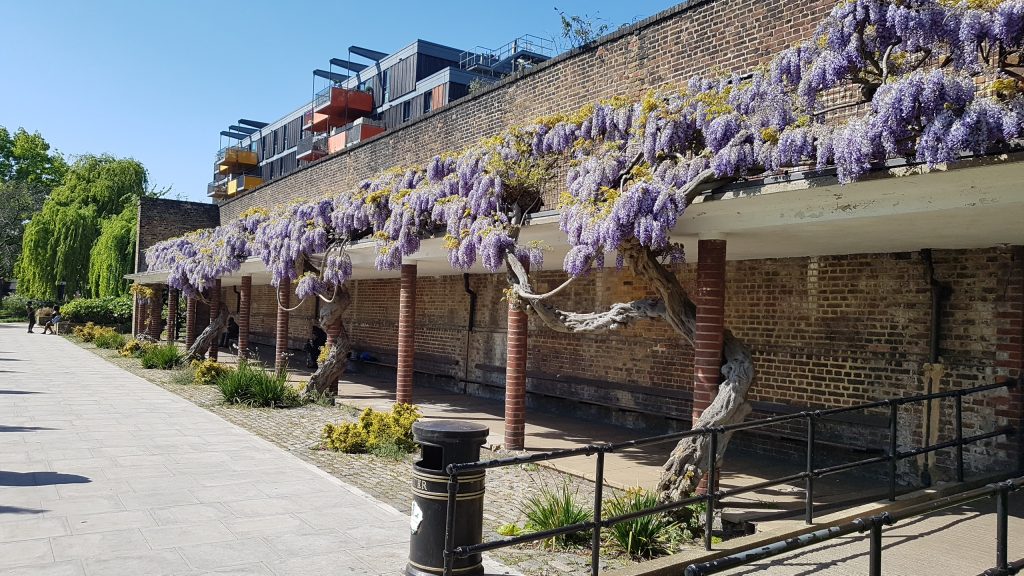
Heron in the Pond, Ancient Wisteria

Looking at the maps, it makes it obvious how important the canal was for London’s 19th Century Industry. The whole strip of land on either side was full of factories, warehouses, and basins.

First written on 19th March 2025
St. Patrick’s Day, St Albans, Nicholas Fuentes, & Cats March 17th

Stained Glass window depicting St Patrick with a  crock and a castle
Stained Glass window depicting St Patrick (source of image, lost in the mists of time!)

St. Patrick has a very interesting autobiography (Confession).  He was captured by Irish pirates while living in a Romano-British Town.  He says his father was a Decurion and a Deacon which suggests elements of Roman political organisation continued.  No one knows the dates of St Patrick’s life but these titles suggested an early date perhaps just after the end of Roman rule.  Perhaps in the early 400s.

The town he lived in was called Bannavem Taburniae.  Many places have been proposed for it.  The closest linguistically is Bannaventa in Northamptonshire but this seems a very unlikely place for Irish raiders to land, being about as far away from the sea as it is possible to get in Britain!

Scholars have suggested South Wales and the Scottish borders most commonly.  But my favourite suggestion, but about as unlikely as Northampton, is Battersea in London.  This suggestion was made in the pages of the London Archaeologist by editor Nicolas Fuentes. 

Fuentes was one of a pioneering group of archaeologists when Rescue Archaeology first began a campaign to record the archaeology, being destroyed by massive redevelopment of town centres in the 70s.

He changed his name from the anglicised Nicholas Farrant back to its original Fuentes. He then wrote a magnificent series of papers, in London Archaeologist, which located St. Patrick in Battersea; St Alban’s execution in London and all 12 battles of King Arthur around Greater London.

St Albans Martyrdom in London

All were well argued, but as a set they do raise an eyebrow, being unsupported by any clear evidence. And, as far as I know, without much scholarly support.  The one I really like is locating St Alban’s Martyrdom in London rather than in St Albans. It reminds everyone that the first reference to St Alban, which is by Gildas in the 6th Century, places the execution of the Saint firmly in London. It also makes sense of the story that Alban, keen for martyrdom, gets God to part the River so he can go quickly to the execution spot. The bridge it was said was full of people going to see the execution.

In Gildas’s case, the execution is in London, probably at the Amphitheatre, up a hill from the the mighty Thames. So God parted the Thames for Alban. Anglo-Saxon historian, the Venerable Bede places St Alban’s death firmly in St Albans, but the river that God needs to part there- the River Ver, is a piddle. Alban could have crossed it easily, hardly requiring even Wellington boots! Not much of a miracle compared with parting the Thames. The likely site of execution in both cases would have been the Amphitheatre, rather than the side of the hill where the St Albans execution site is located. But Gildas did mention the hill, which makes sense in the case of London and not in St Albans, as it is outside of the Roman City.

To my, unscholarly mind, when we worship people we tend to venerate them, at their birthplace and death place. So to me, it makes sense that St Alban’s main shrine was at Verulamium where he was born (now known as St Albans) and London where he died.

There is some supporting evidence from the hagiography of St Germanus of Auxerre. This tells us that Germanus came to an amphitheatre for a religious debate about 15 years after the end of the Roman occupation of Britain. After the debate he went to a nearby shrine dedicated to St Alban. Unfortunately, the writer of the memoir is not really interested in post-Roman Britain, so does not tell us whether it was in London or St Albans. But there is an early church dedicated to St Alban just by the Roman Amphitheatre in London. For more on St Germanus follow this link to my post.

However, archaeology does not reveal any evidence early enough to support the idea that the Church is that early. Fuentes, argued that London as the Capital was likely to have been the place where capital punishments were carried out, particularly in the case of a Roman Citizen like Alban. I must note that in placing any credibility to Fuentes theory, I am standing largely alone.

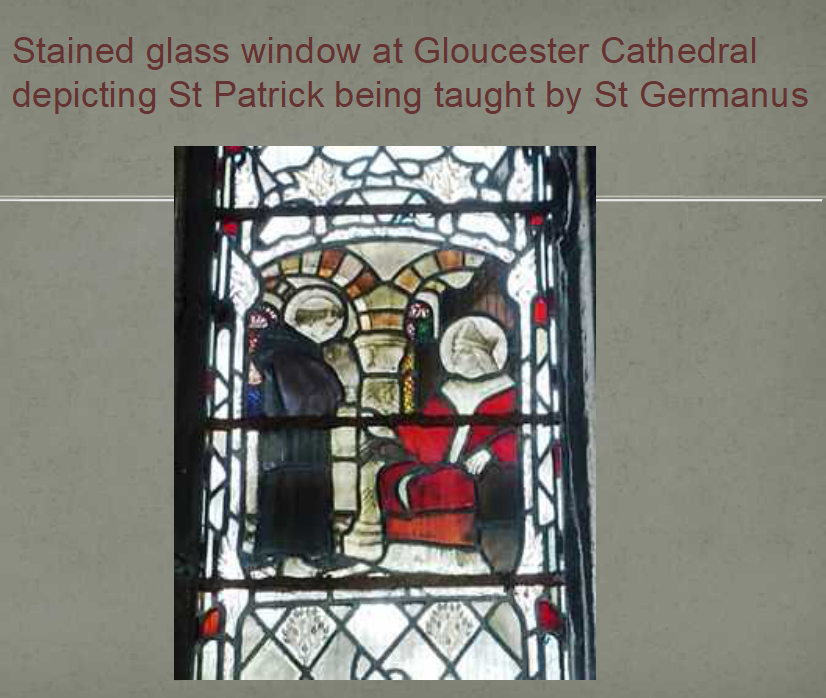
stained glass window from Gloucester Cathedral of St Patrick being taught by St Germanus
Stained glass window of St Patrick and St Germanus

The Twelve London Battles of King Arthur

I’m not so convinced by the 12 Battles of King Arthur, for which there is just never going to be enough evidence to locate. They are more likely to have been spread throughout Britannia.

St Patrick From Battersea?

So, to the point – St Patrick in Battersea?  The evidence, as I remember it, was really only the suggestion that Battersea was derived from: Badrices īeg, ‘Badric’s Island’ and later Old English: Patrisey (Wikipedia), So, Patrick’s Island.  The word ‘sea’ being used in that sense along the River Thames as in Chelsea, Thorney, Putney derived from ey which is short for eyot (island).

St Patrick lived as a teenage slave for 6 years, then escaped from captivity in Ireland and returned home. Trained as a priest, in perhaps Auxerre (home to St. Germanus who is another crucial witness to post Roman Britain) and returned to Ireland to begin the conversion to Christianity. He is the Patron Saint of Ireland, with St. Brigitte and St. Colomba.

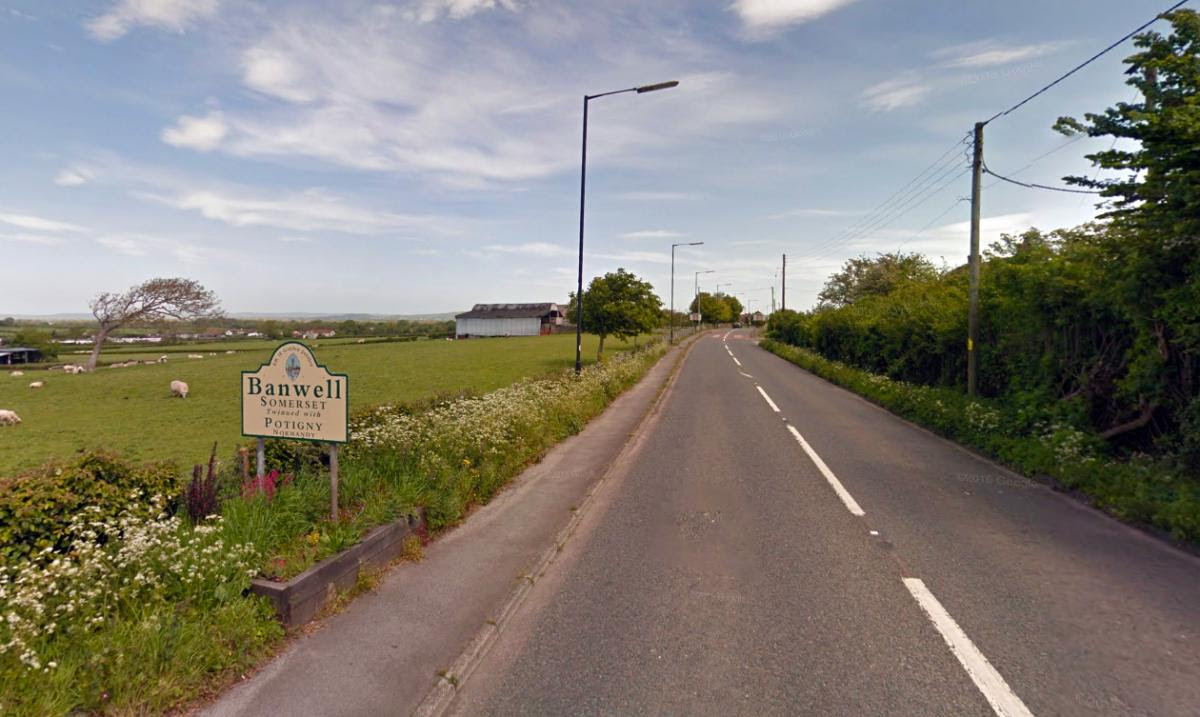
Another candidate for Bannavem Taburniae’ comes from Andrew Breeze FSA. I read about this in Salon IFA, the newsletter of the Society of Antiquaries, and it is also discussed in this History First article. Breeze has revived a theory that the Saint comes from the West Country, and that the ‘Bannavem Taburniae’ is Banwell, near Weston-super-Mare in North Somerset. He suggests that ‘Bannaventa was a Latinisation of a Brittonic name that included banna, for a bend’, crook or peak. Venta is a well known word for an area of local administration or marketplace (for example, Venta Bulgarum, was the name for Winchester in the Roman period.) . He suggests that these ‘elements, as well as the Berniae element of ‘Taburniae’, can be found in the name Banwell, itself a compound name of the Brittonic ‘Banna’ and the Old English wylle, both meaning pool, or in the names of surrounding villages.’ I’m sure Fuentes did something similar for Battersea.

mage credit: Looking south from Winthill, near Banwell, Somerset, Colin S Pearson; Banwell in Somerset, Google Street View
Image credit: Looking south from Winthill, near Banwell, Somerset, Colin S Pearson; Banwell in Somerset, Google Street View

What Banwell has over the London theory is that it is more likely to have been subject to Irish Raiders than London. But, for me, it is just another theory based on placename evidence that might or might not be true. I have read any number of Archaeology books where arguments about placenames are deployed to add some solidity to some theory about King Arthur, or a tale from Geoffrey of Monmouth. I therefore distrust them all. They essentially create circular arguments.

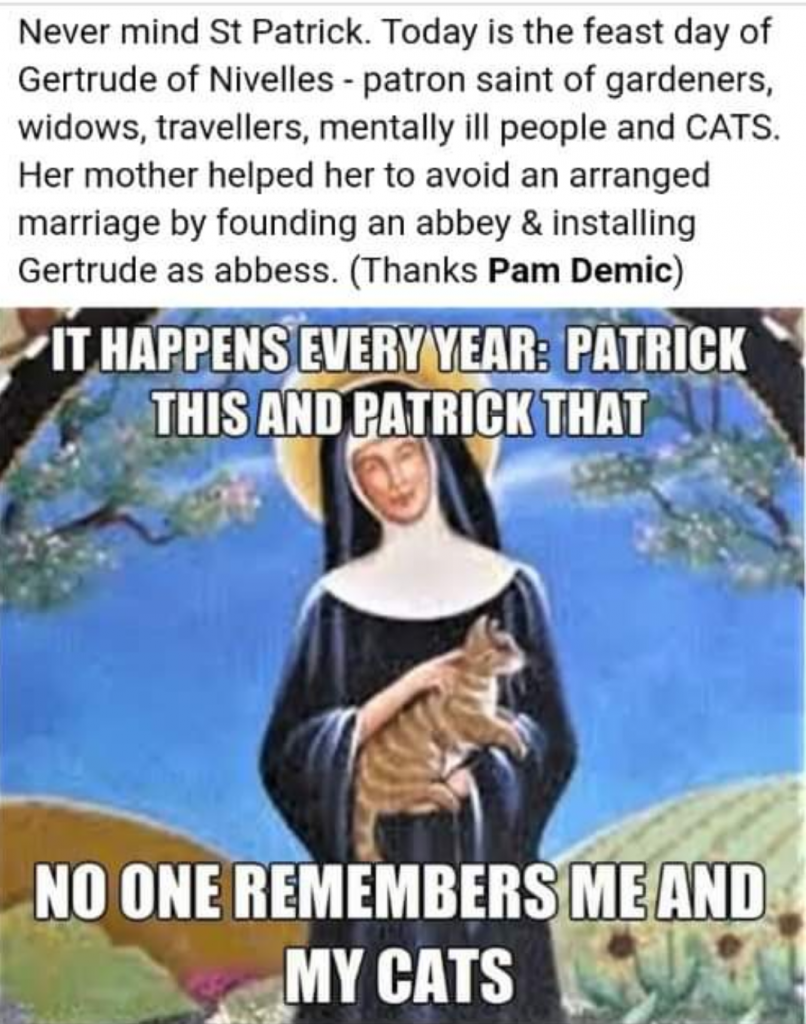
And least we forget, today is also St Gertrude’s Day, patron saint of Cats.

comical post from facebook of St Gertrude Patron saint of cats
Facebook post, posted by a friend, and about St Gertude patron saint of cats.

First Published in 2024, republished in 2025
Heritage with my Grandson 2 – British Library & British Museum March 9th

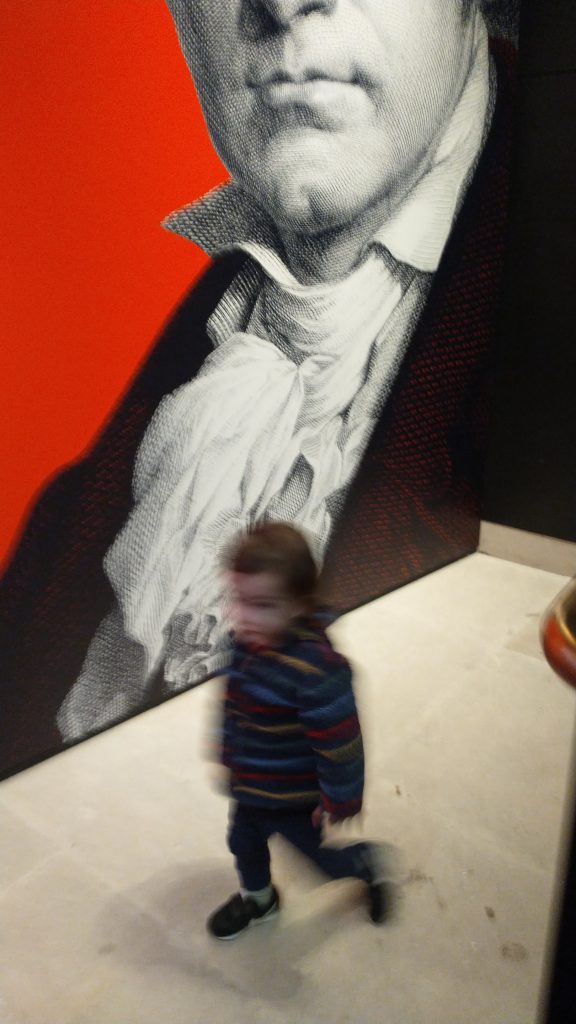
Grandson on a visit to the British Library and British Museum. Photo of the Beethoven Exhibition, British Library, March 2022

A visit to the Britsh Museum & British Library? I think this might be worth reposting in the absence of anything else compelling for the day!

So this was my outing with my grandson on March 9th 2022.

For our second museum outing we went to the British Library. He didn’t like the Beethoven exhibition. It was too dark and nothing to surreptitiously climb on. He definitely does not like dark exhibitions. This is a shame because it seems to be the design idea of the moment. The Nero and the Stonehenge exhibitions were also dark spaces. The desigers working on creating atmospheric views using bright colours, spot lighting and spectacular objects on a dark background. But it doesn’t work for a sensitive 20 month year old!

Nor did the largely text based Paul McCartney’s Lyrics exhibition attract a second of his attention. ‘Paul who?’ he seemed to be saying as we stumped past to the very quiet sound of ‘Hey Jude’.

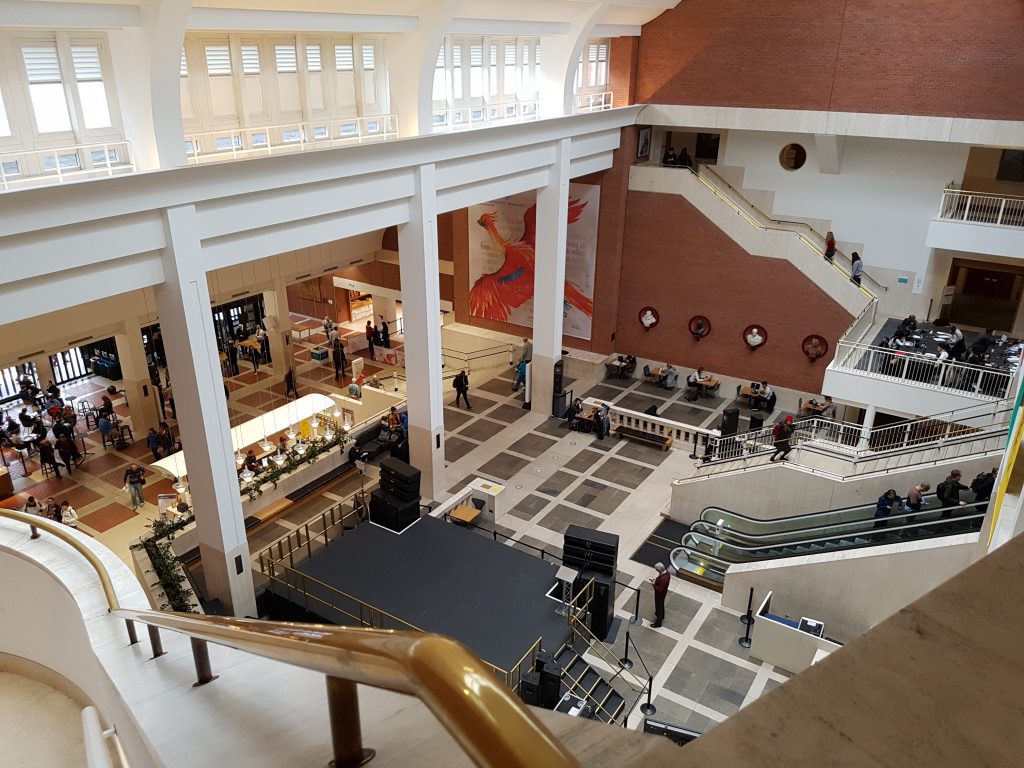
What he did like was the escalators. We went up and down, and up and down, and then onto the second set where we repeated the repeat.

British Library – note the escalator to the right

And then we went down and back up again, and no time to see the enigma machine. We ate in the upstairs Restaurant, which is a really pleasant place to spend a lunch time.

Enigma Machine, British Library

Time for him to have a sleep so we walked to the British Museum through Bloomsbury. However, there was very little sign that he wanted to nod off. But we found a couple of interesting revolutionaries of the 19th Century en-route. The first was to Robert Owen, the founder of the Cooperative Movement, famous for his model factories in New Lanarkshire.

Plaque to Robert Owen ‘father of the Cooperative Movement’, Burton Street

Then to Cartwright Gardens, named after John Cartwright, who was called ‘the Father of Reform’. He had quite an amazing life. He refused to serve in the Navy against the American Colonists in the War of Independence. Not only that, but he supported reform of Parliament, universal suffrage, annual Parliaments and secret ballots.

John Cartwright Statue Cartwright Gardens.

The milk soon did its job and my grandson was asleep. So I took him to the Member’s Room for a cup of tea.

Sleep in the Member’s Room overlooking the Great Court

When he woke we whizzed around the third Floor. But he was reluctant to leave his buggy because it was much more crowded than our last visit. Then he could run free around the almost empty galleries which he loved.

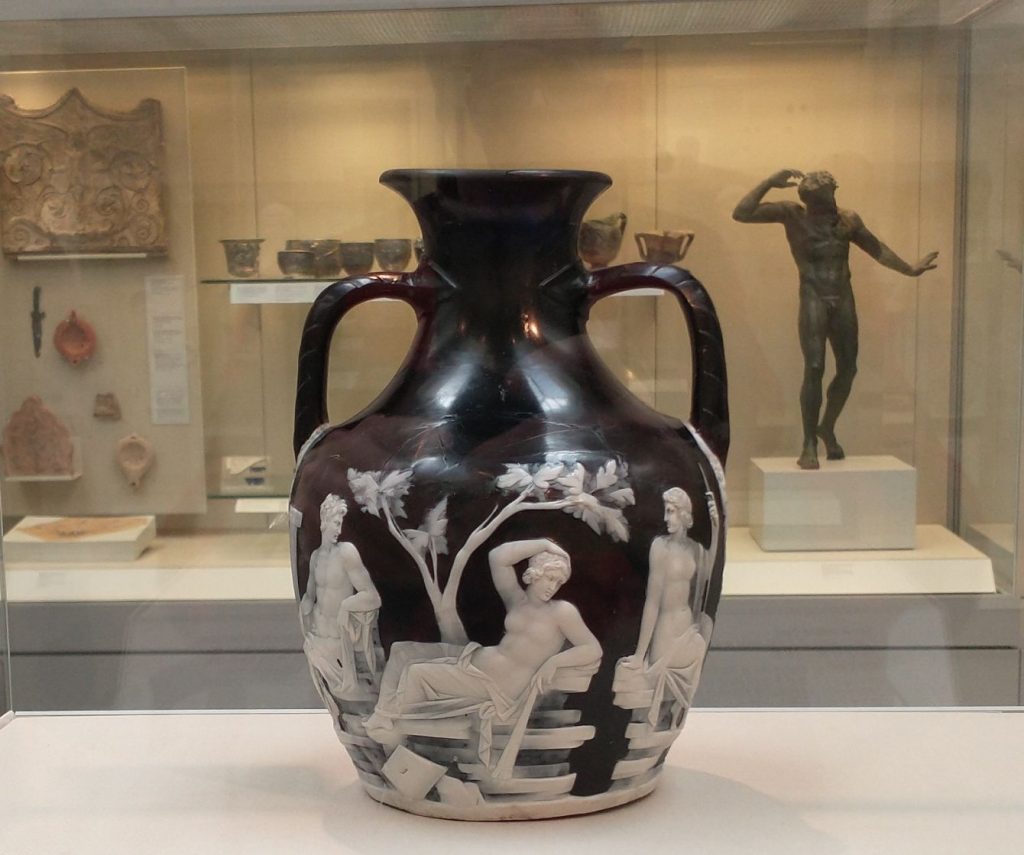
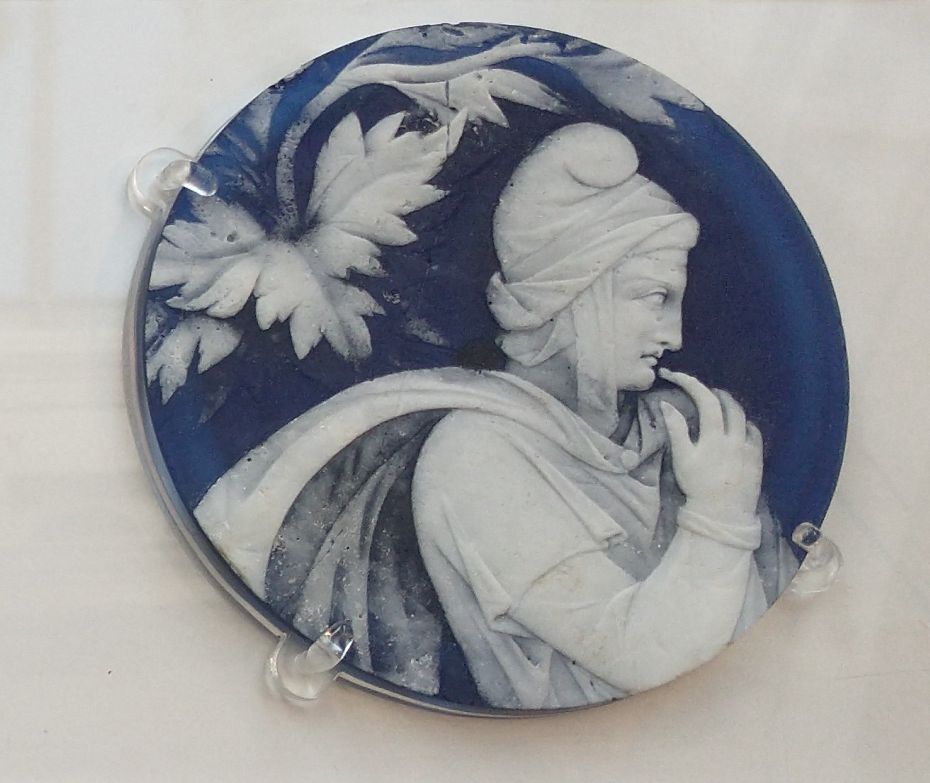
But, I was able to visit old favourites like the Portland Vase. This was smashed into hundreds of pieces, in 1848 by a drunken visitor. He threw a sculpture into the case and smashed the vase. It was restored, but 37 pieces were missing. In 1988 the vase was reunited with the missing pieces and expertly restored.

The Portland Vase – 15BC = 25AD Cameo Glass
Plate Cameo Glass 15BC – 25AD

For more exploration of Museums with toddlers see my post: https://www.chr.org.uk/anddidthosefeet/museums-for-toddlers/

First Published 9th March 2022.. Revised and reposted 2025
News of Virtual Tours

Sorry to send an additional post but coming up are a couple of fascinating Virtual Tours which I would like to remind you of!

Tonight is an exploration of early 19th Century London. It is based on the 1809 Picture of London Guide book. An original copy was given to me by someone grateful to have attended one of my lectures at the Old Operating Theatre Museum. It is a tour of what Jane Austen could have visited on her walks around London. There are Austen associations, but mainly we are looking at London in 1809.

Jane Austen’s ‘A Picture of London in 1809’ Virtual Walk Mon 7.30 27th Jan25 To book
Yesterday, I was asked to give a Cromwell’s London walk as a 75th Birthday present. I haven’t done one for at least 25 years. But I really enjoyed the research. So added a guided walk and a virtual tour to my programme. This is the first time I have done this VT and it is a cracking story.


The Civil War, Restoration and the Great Fire of London Virtual Tour 7:30pm Thurs 30th Jan25To book

Finally, April is the month we go on pilgrimages, as Chaucer said (in Old English). So, in addition to my Chaucer Walks, I have added a Virtual tour so we can go all the way to Canterbury.


Chaucer’s London To Canterbury Virtual Pilgrimage 7.30pm Friday 18th April 25 To book

I may add one or two more before the Sun comes back

To see all my walks see this page.

Sementivae Dies—the Days of Sowing January 24–26

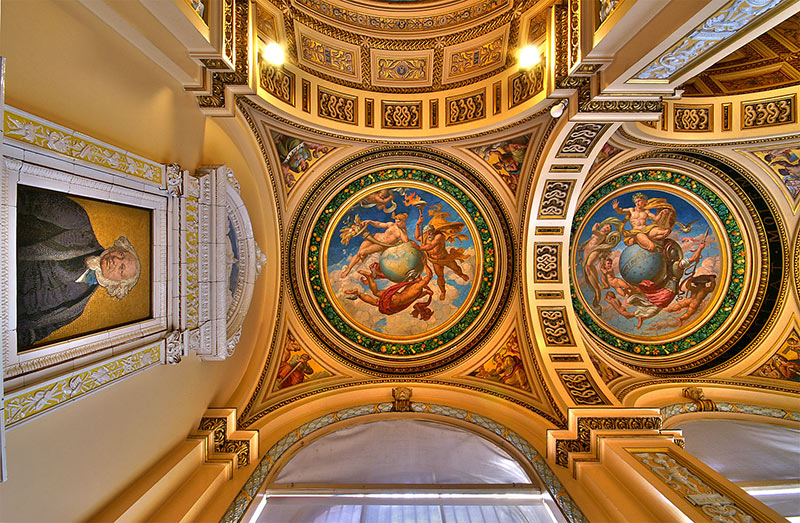
Victoria and Albert Museum” by Nick Garrod, licensed under CC BY-NC-ND 2.0. First V&A Director, Sir Henry Cole, to the left of the picture. Greek Deities in the roundells

Sementivae, was a festival dedicated to seed and to Ceres. Ceres is an Earth Goddess who gives her name to our word cereal. The festival was also called. Paganalia. The Mediterranean world had many names for the Earth Goddess. Tellus, Demeter, Cybele, Gaia, Rhea etc..

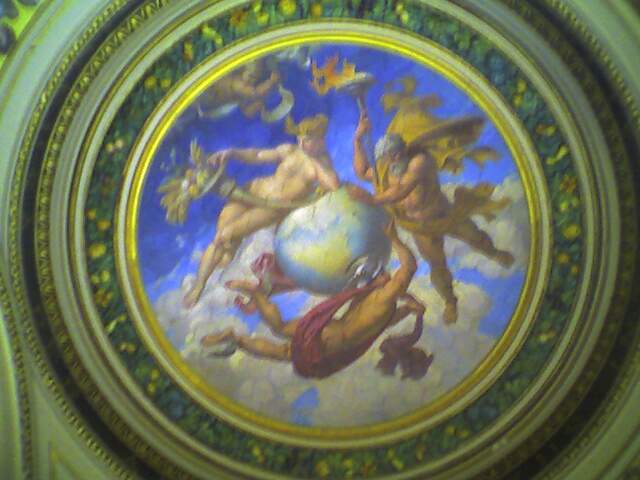
Ceres can be seen on the top left roundel resting on the Globe on the marvellous Ceramic Staircase at the V&A (photo above). And in my slightly out of focus photograph below. (To be honest, in real life, it looks a little more like my photo than the gorgeous photo above!)

Ceres represented Agriculture, Mercury Commerce, and Vulcan Industry.  Old Photo by the Author.  T
Ceres represented Agriculture, Mercury Commerce, and Vulcan Industry. Old Photo by the Author.

Sementivae Dies – a moveable feast.

To create life, we need earth and water to nurture and seeds for fertility. And so into the cold dead world of January the Romans created a festival of sowing. It had two parts, one presided over by Mother Earth (Tellus) and the other by Ceres, the Goddess of Corn. The actual day of the festival was chosen not by rote on a set day of the calendar but by the priests, in accordance with the weather. This seems very sensible, as there is no point sowing seeds in terrible weather conditions. I’m assuming the Priests took professional advice!

On the 24th-26th January Tellus prepared the soil, and in early February seeds were sown under the aegis of Ceres. Tellus Mater (also Terra Mater) was known as Gaia to the Greeks.

Gaia

Gaia was selected by James Lovelock & Lynn Margulis in the 1970s as the face of their Gaia hypothesis. To me, the importance of the idea is not the scientific principle that environments co-evolve with the organisms within them. But, rather in Gaia as a personification of our world as a complex living ecosystem. One that we have to care for. Gaia exists as a series of feedback loops. Lovelock hypotheses that she will spit us out unless we can live in balance with our alma mater.

Ovid and Sementivae

This is what the Roman Poet Ovid has to say in his poetic Almanac known as ‘Fasti’ (www.poetryintranslation.com)

Book I: January 24

I have searched the calendar three or four times,
But nowhere found the Day of Sowing:
Seeing this, the Muse said: That day is set by the priests,
Why are you looking for moveable days in the calendar?
Though the day of the feast ís uncertain, its time is known,
When the seed has been sown and the land ís productive.
You bullocks, crowned with garlands, stand at the full
trough,
Your labour will return with the warmth of spring.
Let the farmer hang the toil-worn plough on its post:
The wintry earth dreaded its every wound.

Steward, let the soil rest when the sowing is done,
And let the men who worked the soil rest too.
Let the village keep festival: farmers, purify the village,
And offer the yearly cakes on the village hearths.
Propitiate Earth and Ceres, the mothers of the crops,
With their own corn, and a pregnant sow ís entrails.
Ceres and Earth fulfil a common function:
One supplies the chance to bear, the other the soil.
Partners in toil, you who improved on ancient days
Replacing acorns with more useful foods,
Satisfy the eager farmers with full harvest,
So they reap a worthy prize from their efforts.
Grant the tender seeds perpetual fruitfulness,
Don’t let new shoots be scorched by cold snows.
When we sow, let the sky be clear with calm breezes,
Sprinkle the buried seed with heavenly rain.
Forbid the birds, that prey on cultivated land,
To ruin the cornfields in destructive crowds.
You too, spare the sown seed, you ants,
So you’ll win a greater prize from the harvest.

For more on Ovid look at my post on Ovid and Juno here. Or you can search for Ovid in the Search box.

First Published in January 2023, republished in January 2024, 2025