William the Bastard invades England September 28th 1066

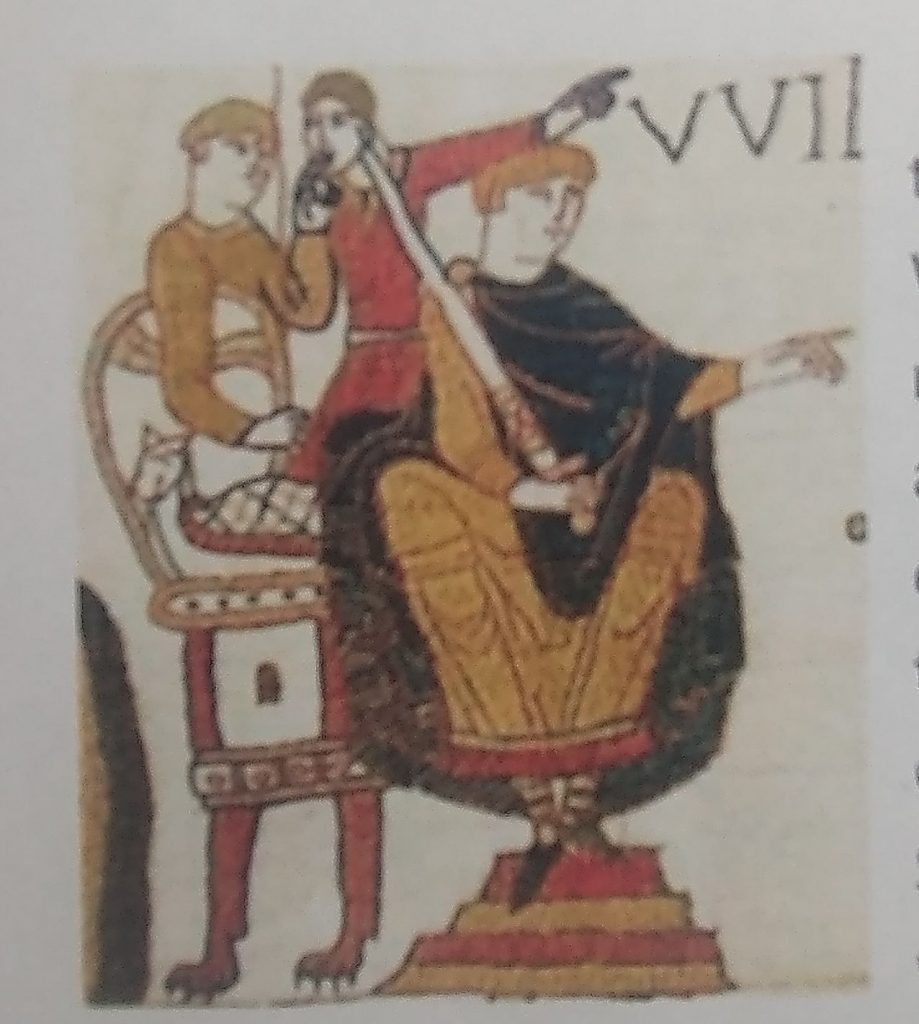
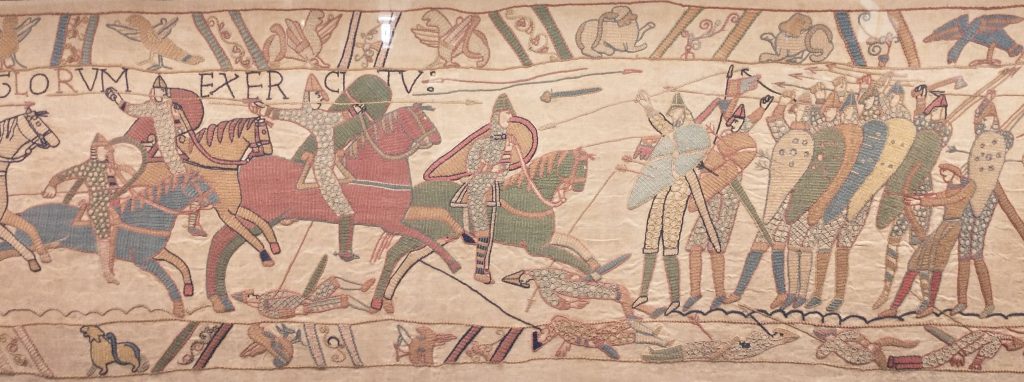
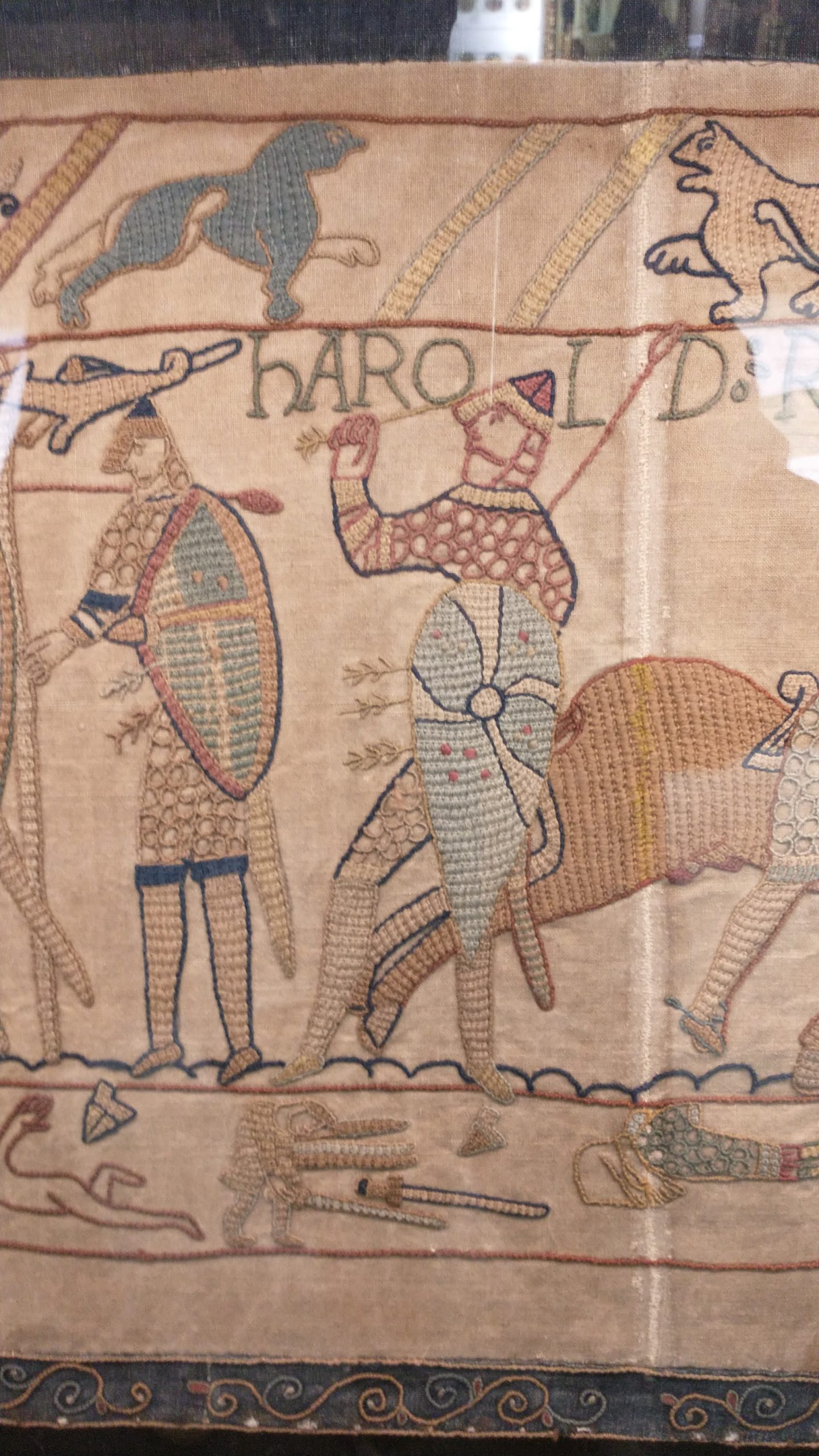
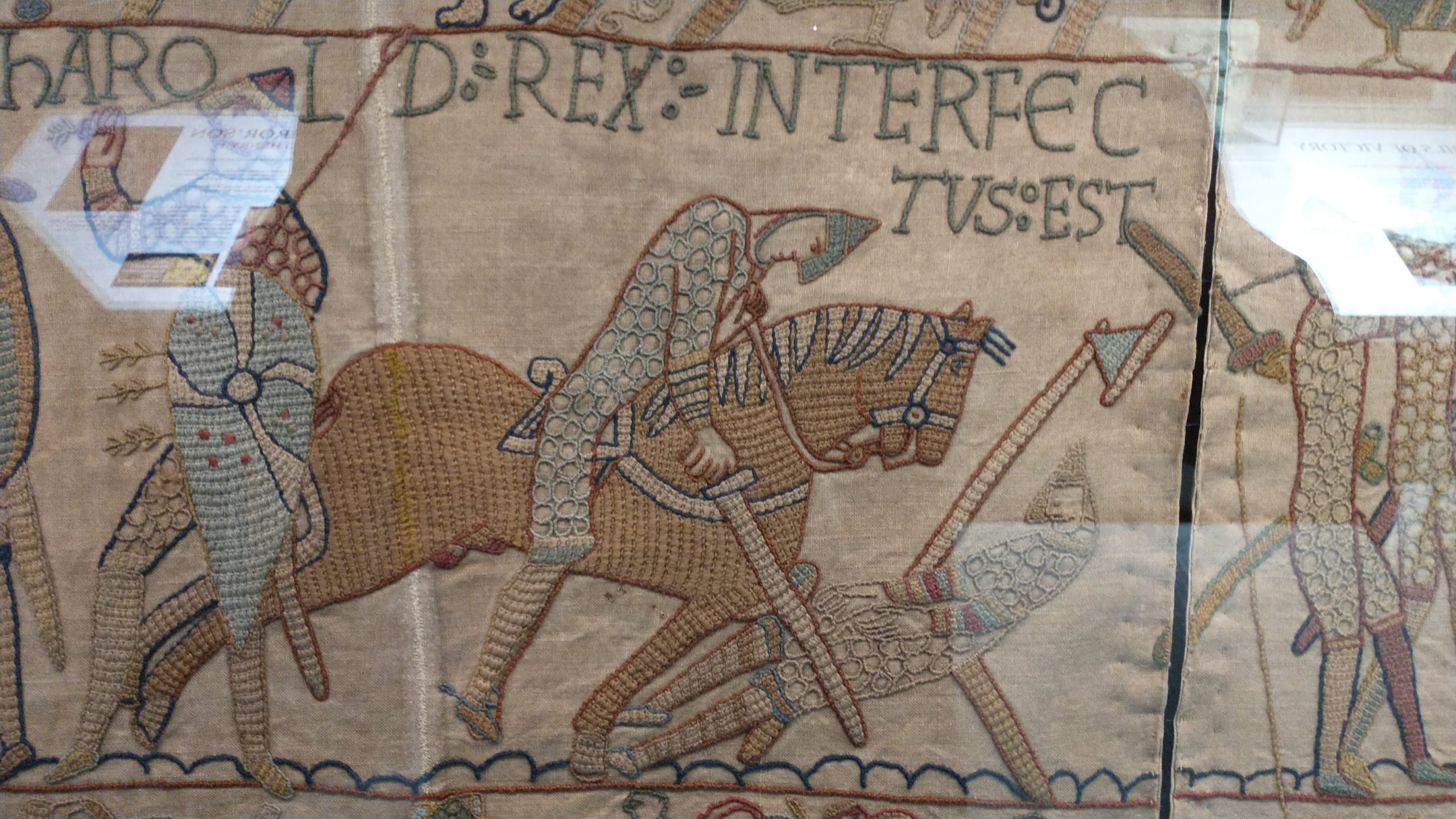
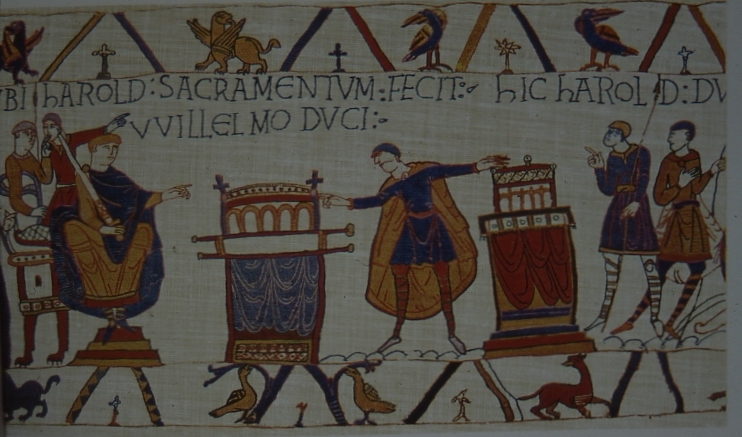
Bayeux Tapestry, Harold with moustache swearing an oath, William with pudding basin haircut sitting down at left.

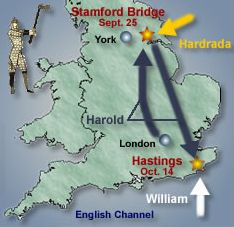
Harold II was scurrying south after almost annihilating the Viking army of Harold Hardrada, when he heard news that the Normans had landed at Pevensey. (see my post (battle-of-stamford-bridge-september-25th-1066)

William was an unlikely Duke because it is very rare for illegitimate children to take the title of their father. It was normally not even considered as an option. A legitimate cousin or uncle would be chosen instead.  But he not only got the title and survived many rebellions, but was known as the William the Bastard

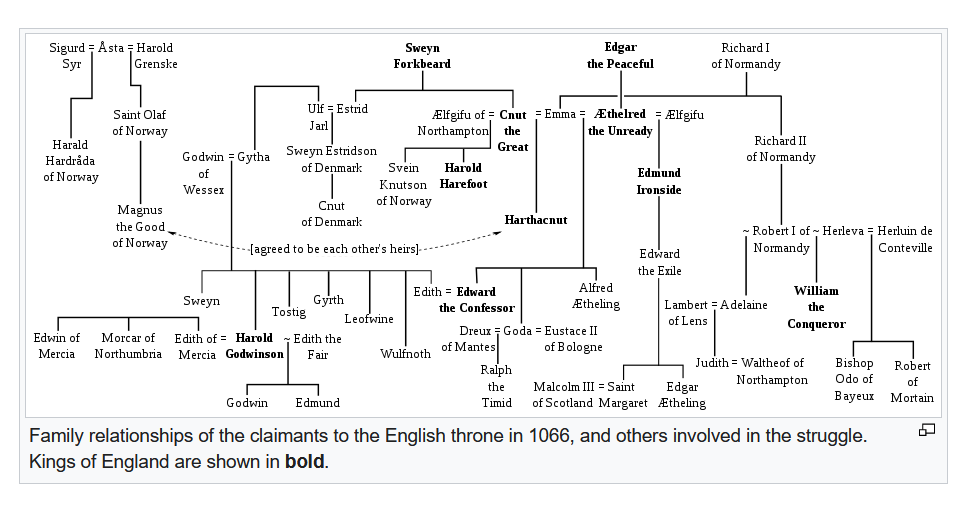
He came to England in 1051 to see his distant cousin Edward the Confessor, who was the son of the English King Aethelred the Redeless (the ill advised – more often called ‘the Unready) and Emma of Normandy.  Edward, whose marriage to Edith of Wessex was not great, insofar as both made claims to be holy virgins.  So, Edward had no children. He, according to William, offered him the throne.

Did he, though? Well, the Pope agreed he did.  William claimed that Harold of England accepted William as heir, too. And not only that, Harold, he said, agreed under Holy Oath.

The Bayeaux Tapestry, shows Harold making an oath with his hands on holy relics. But British Historians believe it may never have happened.  And if it did, then it was an inadmissable endorsement as it was not freely given, Harold had been detained on a visit in 1064. He was probably never going to get home unless he took the oath.

But the clincher for the English viewpoint is that Harold was the legitimate King because he was elected as was traditional by the Witanagemote, the King’s Council.

But was he really the legitimate claimaint? He had no English Royal blood in him, only a distant touch of Danish royalty on his mum’s side.  It is true, that in England, the King’s Council or Witan elected Kings and often did not choose the first in line but preferred the best suited candidate be he brother, cousin or uncle. But Harold was only the brother of the King’s wife, no royal blood there. 

However, Harold was so powerful that he would have prepared the ground for his election irrespective of whether this was the freely given choice of the Witan. His father, Earl Godwin, had been a disloyal and over mighty subject of King Edward, but had prepared the way for Harold to be virtual ruler of the country long before the King died.

So, even if the Witan’s endorsement clearly choose Harold there was plenty of scope for a contested succession.

In late September 1066 Harold was the English King  who had already defeated the Norwegian claimant. Now, he was rushing to put to rest the Norman claim.

William Prepares for Conquest

William had begun by getting Pope Alexander II’s blessing for his claim to the English throne. He spent 10 months planning the invasion. He recruited adventurers from Normandy, France, Brittany, and Flanders. His allies collected boats for the invasion, while William had hundreds of new boats built, using thousands of carpenters, metalworkers, carters etc and cutting down a vast number of trees. 

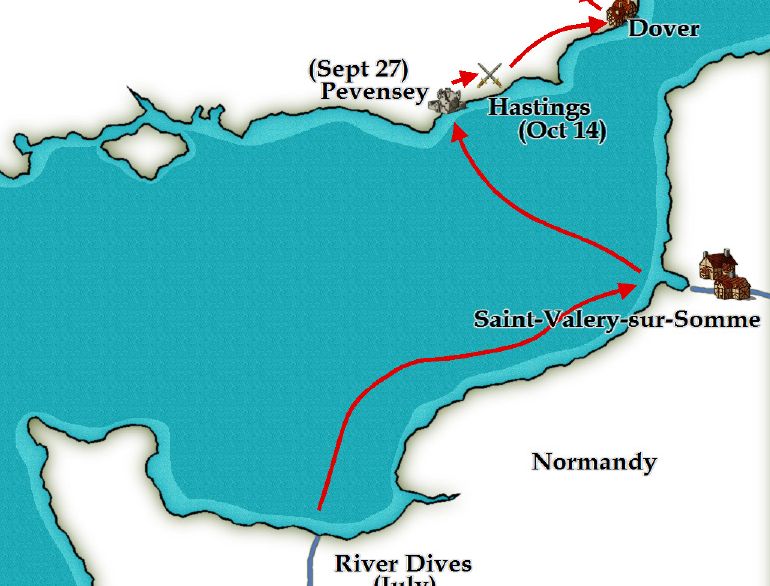
The boats were ready by 12 August near Caen on the River Dives.  They set sail, but contrary winds blew them into Saint Valery-sur-Seine.  Winds in the summer are usually blowing south on that coast, and William had a long, frustrating wait for a north wind.

Meanwhile, Harold was waiting with his army and a 400 ship navy at his manor of Bosham, near Chichester, on the South Coast.  Then he heard about the Norwegian invasion of the North. He probably hoped it was getting too late in the year for William to risk invasion. So, Harold decided, on September 18th, to go North with his army, which was the more immediate risk to his throne.

Map of the the progress of William;s fleet. Opinion suggests landing was on 28th September 1066

On September 27th, the north winds blew, the Normans embarked, and on the 28th of September William and his boat, given as a present to him by his wife, found themselves alone in the Channel off the English coast.

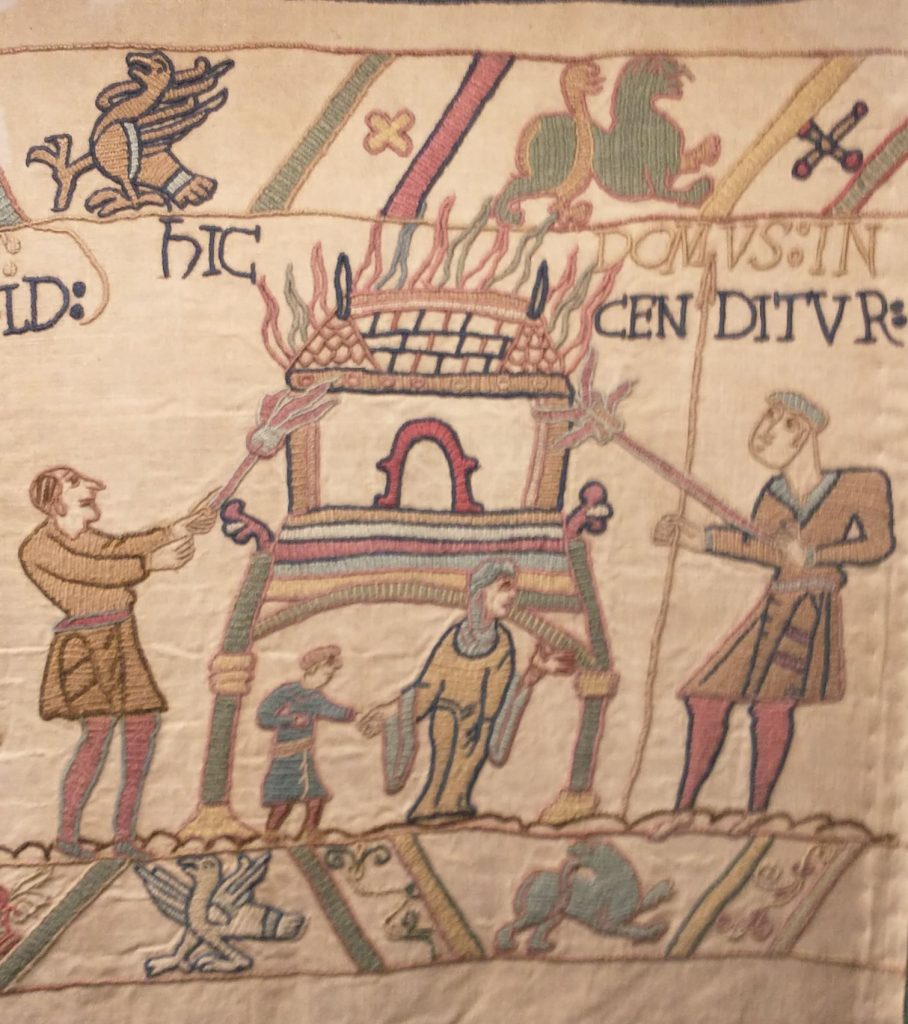
After an anxious wait, the rest of the fleet was spotted sailing towards William.  They landed at Pevensey.  Built a castle at Hastings and proceeded to ravage the land of Harold’s homeland. Harold had by now destroyed the Norwegian threat at Stamford Bridge on 25th September. He heard William had landed and rushed towards London

To be continued

Battle of Stamford Bridge September 25th 1066

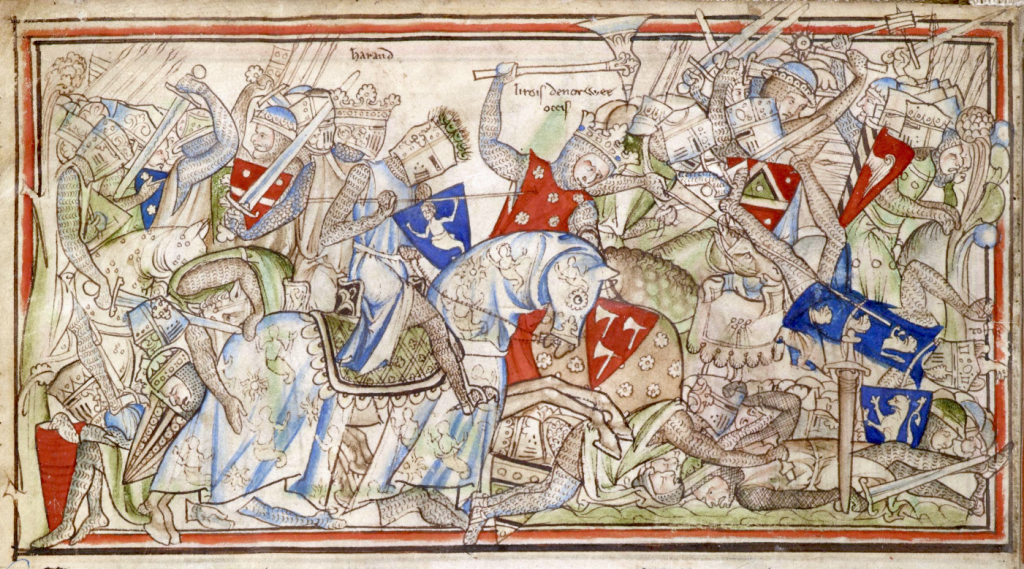
Battle of Stamford Bridge by Matthew Paris

Following the Viking victory at the Battle of Fulford Bridge, York, on September 20th the Viking army camped at Stamford Bridge.This was on the River Derwent. Here they intended to rest and celebrate the defeat of the English Earls of Mercia and Northumbria. They were unaware that King Harold I of England had left London for the north on September 18th. (See my post on the Battle of Fulford Bridge here.)

Five days later, on September 25th, Harold’s army surprised the Vikings by marching towards the bridge over the Derwent.  It is said that Harold’s army marched 185 miles from London in 4 days which is a scarcely believable 46 miles a day. But if they left on 18th and battle was 25th that’s as much as 7 days. This still means 26 miles a day which is still very quick for an army carrying weapons and armour. So no wonder the Vikings were surprised!

According to tradition, a large Viking held the English army as he blocked the narrow wooden bridge across the river.  No one could defeat him. But an enterprising English soldier found a boat, floated under the bridge and killed the Viking by pushing his spear through the bridge timbers, killing the Viking.

According to the 13th Century Icelandic historian, Snorri Sturlson, the fight began only after a rider approached the Viking Army. He offered Harold’s Brother, Tostig back his Earldom if he would withdraw from the fight.  Tostig asked what would be in it for his ally, the King of Norway? The reply was ‘Seven feet of English ground, as he is taller than other men’.  The offer was refused. It was said that the rider was King Harold himself.

Once over the Bridge, the English found the Vikings had formed a defensive formation.  However, they had left their armour behind at their boats.   The battle lasted all day but ended with the slaughter of most of the Vikings. King Harold Hardrada, one of the greatest warriors of his age and Tostig were both killed.  The extent of the slaughter is shown by the fact that of the 300 boats of the Viking army, only 24 returned to Norway.

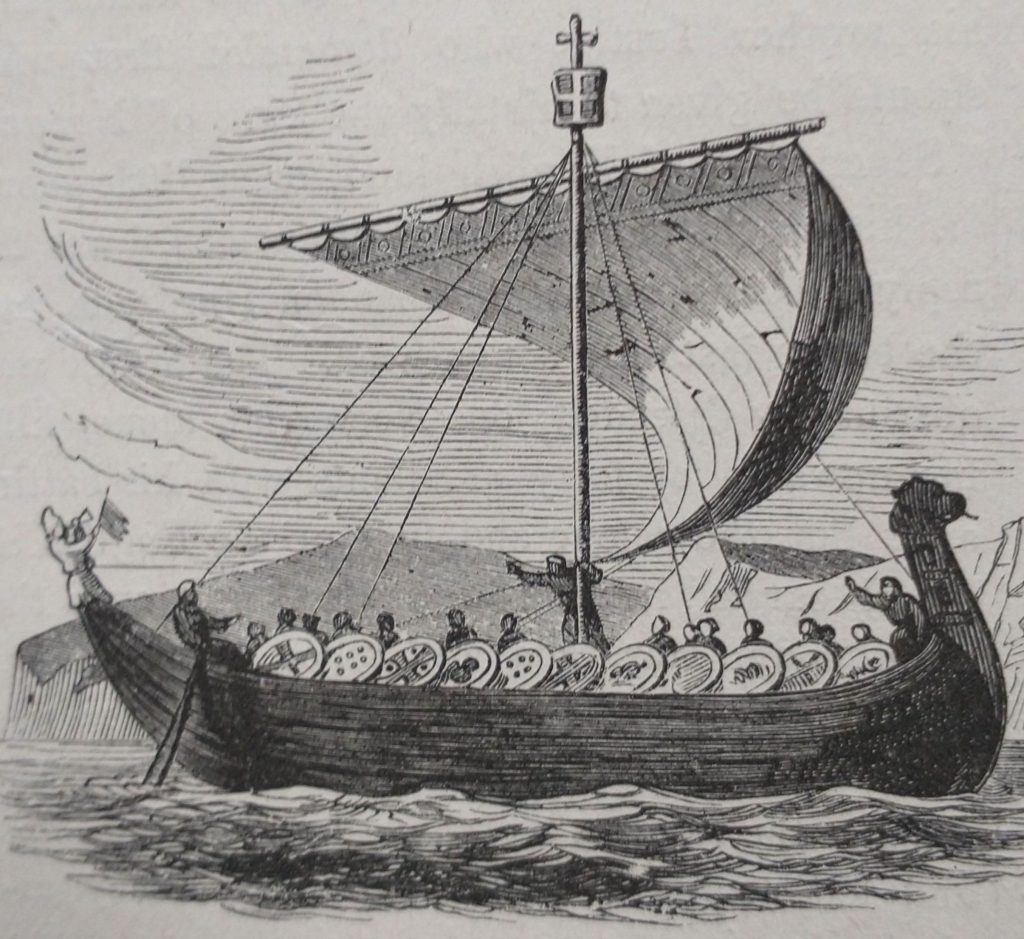
A boat of the period, derived from the Bayeaux Tapestry

A stunning victory for Harold I. But, the English had suffered terrible losses at the battle of Fulford. Harold had also left the South Coast unguarded  And three days later, on September 28th, William, Duke of Normandy landed with his army at Pevensey. 256 miles south.

First published in 2024 revised 2025

Beware the Surfeits of Autumn September 23rd

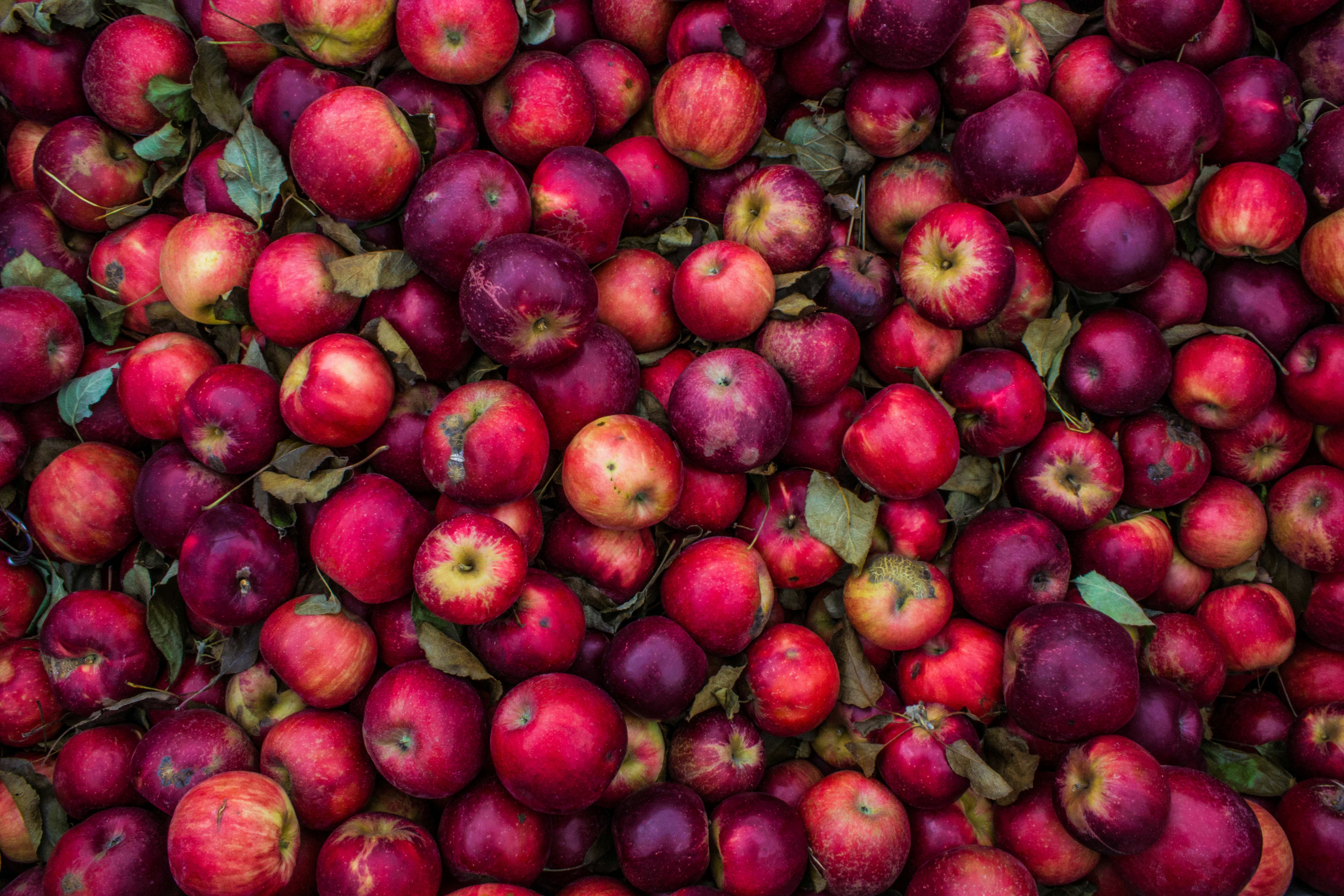
Apples. Unsplash photo by Sydney Rae
A Surfeit of Apples. Unsplash photo by Sydney Rae

So, it may be a surprise that the Autumn is the time of plenty. I think, townies like me, would assume spring or summer. But in Autumn, not only is the Harvest in, but nuts and fruits are ripening and ready to pick. As we go deeper into Autumn, the livestock is culled to a level that can be sustained through the harsh winter. And so a lot of meat is also available. Truly a time of ‘mellow fruitfulness’.

A Surfeit of Autumn Peaches or Lamphreys

Anything with the word ‘surfeit’ in it must begin with the wonderful comic history of Britain called:1066 and All That: A Memorable History of England, Comprising All the Parts You Can Remember, Including 103 Good Things, 5 Bad Kings and 2 Genuine Dates

Here we find that King Henry I died of a ‘surfeit’ of lamphreys’, which he indulged in against his Doctors’ advice. This was in November,. While his Great Grandson, King John:

finally demonstrated his utter incompetence by losing the Crown and all his clothes in the wash and then dying of a surfeit of peaches and no cider; thus his awful reign came to an end.’

He is a fine example of a ‘Bad King’. He died on the night of October 18th — 19th. So another King to leave this mortal coil by the means of an autumnal surfeit. Other accounts say his ale was poisoned or the surfeit was of plums. But he did have dysentery shortly before he died.

If you haven’t already it got it you probably, at this point, need to buy my book ‘Divorced, Beheaded, Died’. This is the best selling book about the Kings and Queens of England, told in bite sized chunks. It is always on sale at the British Museum.

‘No surfeit so evil as the surfeit of eating naughty bread’

Andrew Boorde in ‘Dietary of Health’ 1547 says that Wheat Bread makes you fat, particularly when made from new wheat. He says’Evil Bakers’ will add half of Barley. This is no good, nor is bread made from beans or peas. He continues:

hot bread is unwholesome to any man, for it doth lie in the stomach like a sponge: yet the smell of new bread is comfortable to the head and the heart. Old or stale bread doth dry up the blood or natural moisture in man, and doth engender ill humours; and is evil and tardy of digestion: wherefore is no surfeit so evil as a surfeit of eating naughty bread.

Lavendar Caps

Now is the time to protect your head with Lavendar as winter approaches, or so says William Turner’s Herbal of 1568:

I judge that the flowers of lavender, quilted into a cap and daily worn, are good for all diseases of the head, that come of a cold cause, and that they comfort the brain very well, namely if it have any distemperature that cometh of moistness.

If you remember, I wrote about Turner’s medical education in Ferrara in Italy in June. You can read it here.

Apples and Pears & No Cider

The fate of King John (above) shows the danger of running out of cider. But the apple trees are now groaning with Apples and Pears. So production can begin. I have been at my Father’s House picking up all the pears that drop every night. We have been cutting them up and putting them in the freezer, making purée and crumbles. Also, giving them to anyone who enters the house. But still not able to keep up with the Pears! Lots of Apples too, infact a bumper crop, many more than in any previous year. Earlier there was a host of plums from which I made my very first plum jam. I am looking forward to making a batch of Quince Jam, for the third year running.

Storing a Surfeit of Apples

Picking up windfall is problematic, as it was thought they would soften and bruise much easier than those picked from the trees. They would also contaminate other apples if laid with them. So it is best to pick apples before they are completely ripe. Then you can use Gervase Markham’s apple storage advice, which I wrote about in January and you can see here:

But:

A Surfeit of unripe fruit is a danger:

Green fruits make sickness to abound
Use good advice to keep thee sound
Give not thy lusts what they do crave
Lest thou unawares step in to thy grave.

Ranger’s Almanack 1627

If you do succumb, you need a medicine of nettle-seeds and honey.

A Surfeit of Filberts

As a caution to persons at this season, when nuts are so very abundant, we state that the sudden death of Mr Nunn of Cley, Norfolk is generally attributed to eating a great quantity of filberts and drinking pork wine therewith.’

York Current, September 1794

I do hope you have found this post fruitful and not too nutty. Please consult a doctor if you are having head or brain issues. The Lavender in your Peaky Blinders Cap may not do the trick

Acknowledgement

Again, I am very dependent on fruity tales from Charles Kightly’s A Perpetual Almanac of Folklore. It is worth buying as it also has many pretty pictures.

The Queensberry House Cannibal, Inspector Rebus and the Scottish Referendum September 11th 1997

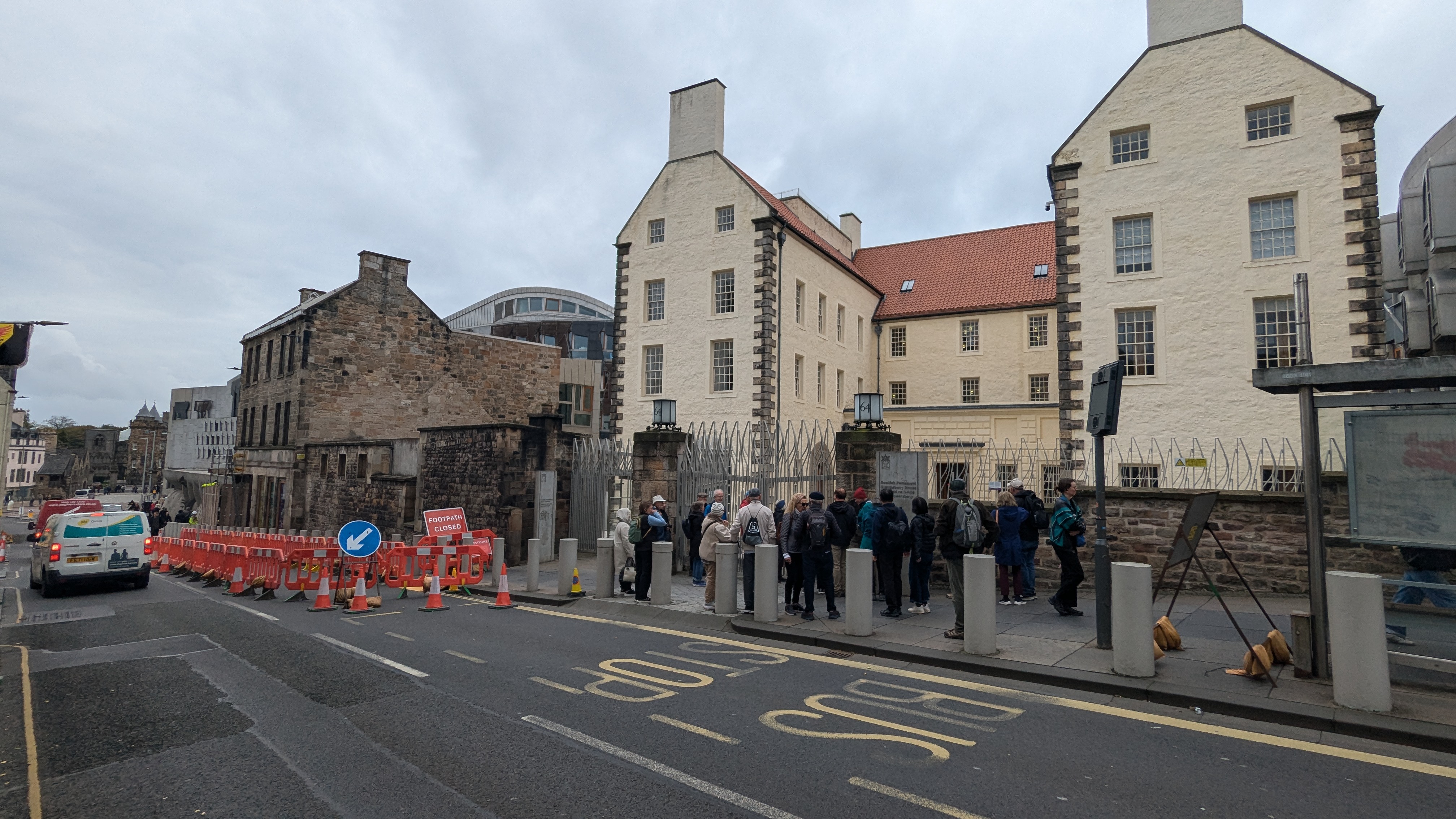
Queensberry House to the right, home of the The Queensberry House Cannibal. The Scottish Parliament in the background. Royal Mile, Cannongate in the foreground. (Photo: K. Flude)

Ian Rankin’s Edinburgh

One of my favourite books on Edinburgh is by Ian Rankin.  It is one of the Inspector Rebus series. What makes Rankin a great crime writer is how the author makes Edinburgh central to the story. It adds realism to his stories.  As you read the stories you enjoy learning about Edinburgh, its culture, history, people, streets and topography. And get insights into Edinburgh’s moods.

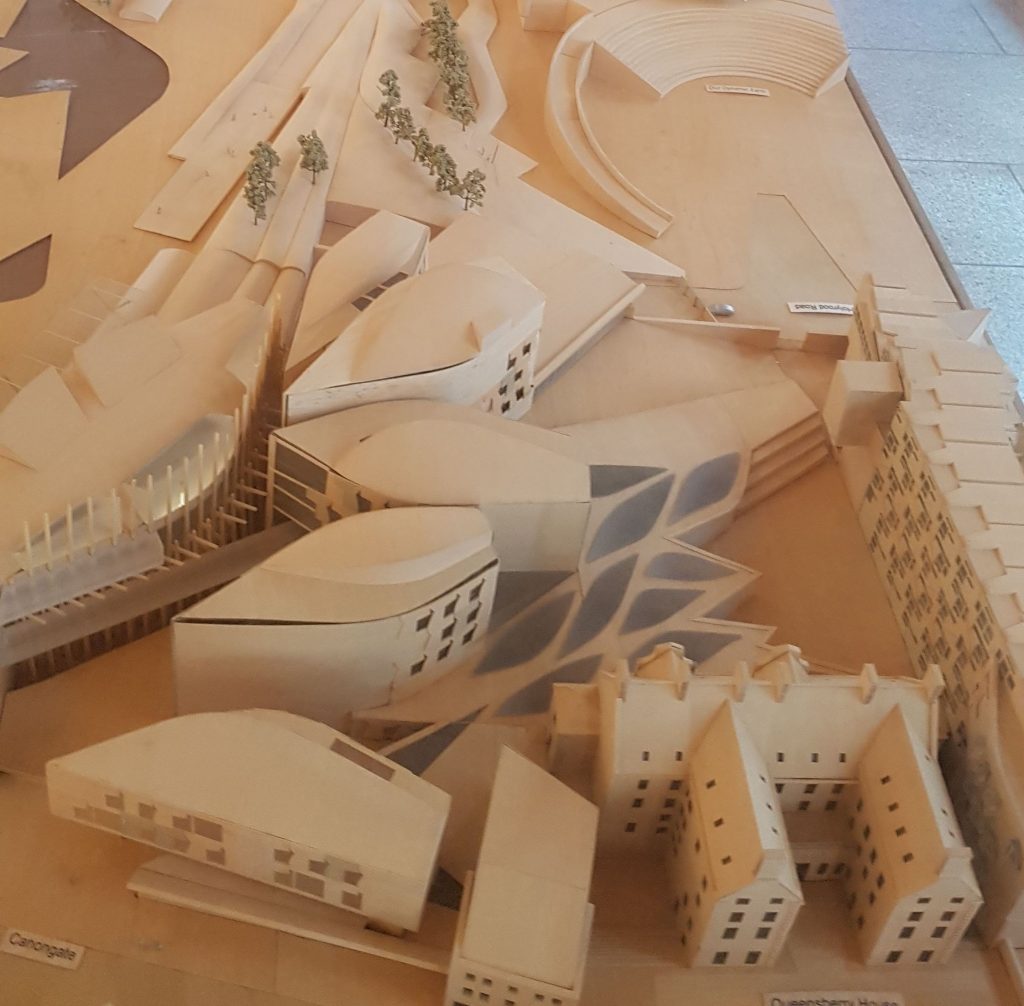
Model of the Scottish Parliament, with Queensberry House in the bottom right hand corner.

I haven’t read all the Rebus books but the one I want to feature is ‘Set in Darkness’ published in 2000.  It is set in the period immediately after the success of the Scottish Referendum to set up a Scottish Parliament. The story also takes us back to 1979 when the first Scottish Referendum ‘failed’.

The Queensberry House Cannibal

The book begins with a body found in Queensbury House, which is being preserved and incorporated into the new Scottish Parliament buildings.

Scottish Parliament Building (photo by the author)

This setting was suggested by the well-known tale of the Queensberry House Cannibal; James Douglas the 3rd Marquess of Queensberry and, for a time, the Earl of Drumlanrig. The tale begins on the day, in 1707, that the Scottish Parliament agreed to disband itself. The Parliamentarians voted for an Act of Union with the United Kingdom.

On that day, the young Lord was left alone in Queensbury House with no one to look after him, except a kitchen boy. James had mental issues, and when the adults came home, they discovered that he had eaten the kitchen boy by spit-roasting him. The ghost of the boy is said to haunt the house. Or so the story goes.  It’s always treated as a true story, but there is a suspicion it was a black calumny on those who agreed to the end of the Scottish Parliament.

For more on the event, look here.

The Restoration of the Scottish Parliament 11th September 1997

So, as today is the anniversary of the day the Scots voted Yes to a restoration of its Parliament (11th September 1997), let’s have a look at the long history of devolution. We will take the story backwards.

The referendum asked the Scots two questions. The first was: did they support a separate Parliament for Scotland? The second. Should it have the power to vary levels of taxation? 74.3% voted yes to the Parliament, and 63.5% voted yes for powers of taxation. On the 1st July 1999 the Scottish Parliament was set up by the Blair Government. The new Parliament was elected by the Additional Member system of proportional representation. The country is split into regions, the regions into constituencies, and each constituency elects a member of the Scottish Parliament by first part the post system. Each region has a party list of additional potential members, and the seats are allocated between the parties to make the final result as proportion as possible. This is said to combine the advantages of constituency MPs, and PR.

The ‘Failed’ 1979 Referendum

But this wasn’t the first vote for a measure of independence.  In 1979, the Scottish Act set up a referendum for a Scottish assembly.  James Callaghan was the Prime Minister, and the act followed a Royal Commision on the Constitution. The Referendum was won with a majority of 52%, but an amendment to the Act had a stipulation that there had to be a vote of at least  40% of the registered electorate for the vote to succeed. It won only 32% of the 62% turnout so the Act failed. (if only Cameron had done something similar for the Brexit Referendum!).

So it would be another almost 20 years before the Scots got their own debating chamber.

1707 Act of Union

The Scots lost their Parliament on the 1st May 1707 when the Act of Union with England was enacted.  The Scottish Parliament had been in existence since the early 13th Century.  The Scots had no House of Commons, but its unicameral Parliament had representatives from the Three Estates: prelates representing the Church; Aristocrats representing the nobility, and Burgh Commissioners representing the Towns.  Later, Shire Commissioners were added to represent the countryside.

The decision to disband the Parliament of Scotland was very controversial, and blamed on the self-interest of the Nobility against the wishes of the people. Scotland had lost out on the huge profits being made by the Empire by England, excluded as the Scots were by the Navigation Acts from trading freely within the British Empire. So the Scots set up their own  Company of Scotland Trading to Africa and the Indies which invested in the disastrous  Darién scheme,

The idea was to build a colony on the Isthmus of Panama.  80% of the participants in the settlement died, and the 20% of Scottish wealth which was invested in the scheme was lost. Many of the Scottish members of Parliament lost money in the Scheme, and compensation and bribery offered by the English encouraged the Parliamentarians to accept the advantages of free trade within the British Empire and to join the Westminster Parliament.

Joint Monarchies

In 1603, the Scottish and English monarchies joined in the person of James VI of Scotland who became James 1st of England on the death of his childless aunt, Queen Elizabeth 1. But the Scots kept their own Parliament and legal system. There were attempts to bring a closer Union, but these all failed until 1707.

England Overlording it?

From the early beginnings of Scottish existence as an independent nation, the English Monarchy claimed to be the feudal overlord of Scotland. Scotland was normally able to deny this until the reign of Edward I. After the battle of Bannockburn the Scottish made a declaration of their complete independence from England at Arbroath. It was sent to the Pope who accepted it. This helped the Scots defy England until 1603 when the two monarchies joined.

To see the rest of my Edinburgh Booklist click here. or to see my post on poetry on the wall of the Scottish Parliament.

First Written in 2024, revised 2025

To follow up have a look at these websites:

The original Scottish Parliament

How the Scottish Parliament works

Oliver Cromwell and his Lucky Day September 3rd

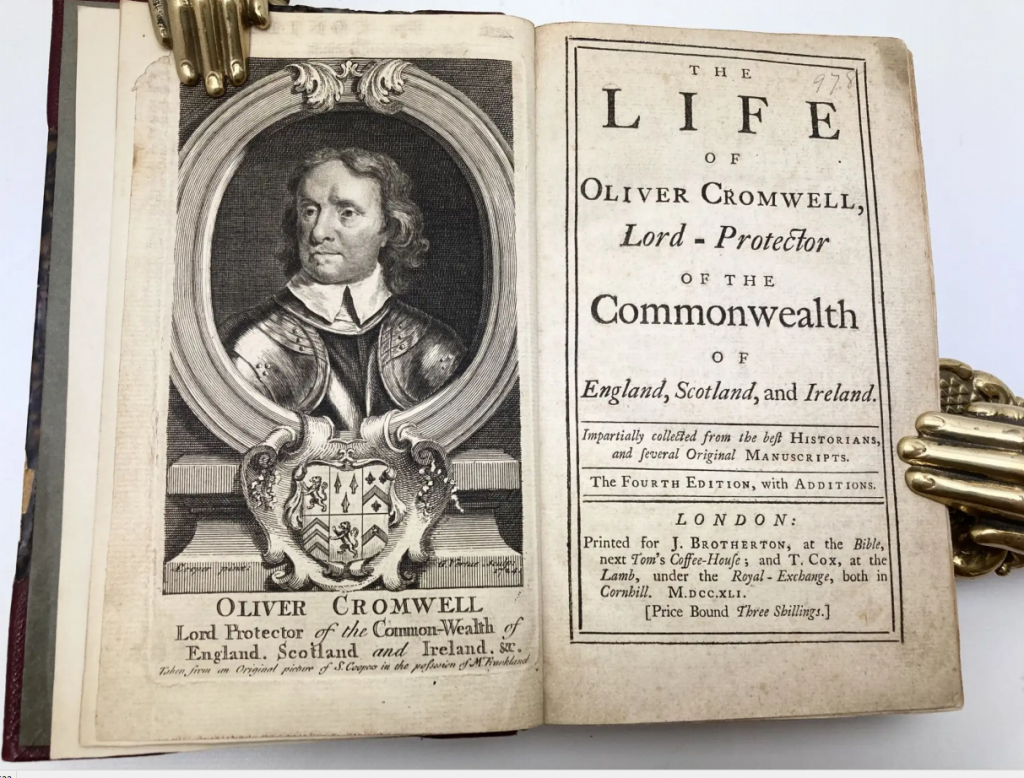
Frontispiece of ‘The Life of Oliver Cromwell’

September 3rd was Cromwell’s Lucky Day. This was because it was the date of two of his most famous victories. On September 3rd 1658 he refused to accept that he was dying because it was his lucky day.  Unluckily, he was wrong.

The Battle of Dunbar September 3rd 1650

Engraving of Charles I

After the execution of King Charles I, the Scots chose Charles II as their King. This changed the Scots from allies of the English Parliament to enemies. The Lord General of the New Model Army, Thomas Fairfax, refused to lead an attack on their erstwhile allies. So Oliver Cromwell was promoted to command. He launched a preemptive attack but the army was ill prepared, and the campaign seemed in danger of failing. They took Arthur’s seat and bombarded Edinburgh and Leith from its heights. But they could not take Edinburgh.

In need of supplies, Cromwell retreated to Dunbar, which is on the North Sea, close to the Firth of Forth. The Scots advanced on Dunbar, and Cromwell came out to meet them. After a hard battle, the English Calvary outflanked the Scots and the Battle was won. Pride, Monk, Lilburne and Lambert were all involved in the Battle. Cromwell claimed to have killed 4,000 Scots and captured 10,000. Scottish sources suggested over 1,000 Scottish casualties and 5,000 prisoners.

The Battle enabled Cromwell to seize control of Edinburgh, and Leith. So he could then cross the First of Forth and attack Fife, where he was also successful.

Cromwell interpreted the overwhelming victory as a

“A high act of the Lord’s Providence to us [and] one of the most signal mercies God hath done for England and His people”.[ (Wikipedia)

See my post on the execution of Charles 1st here:

March on England

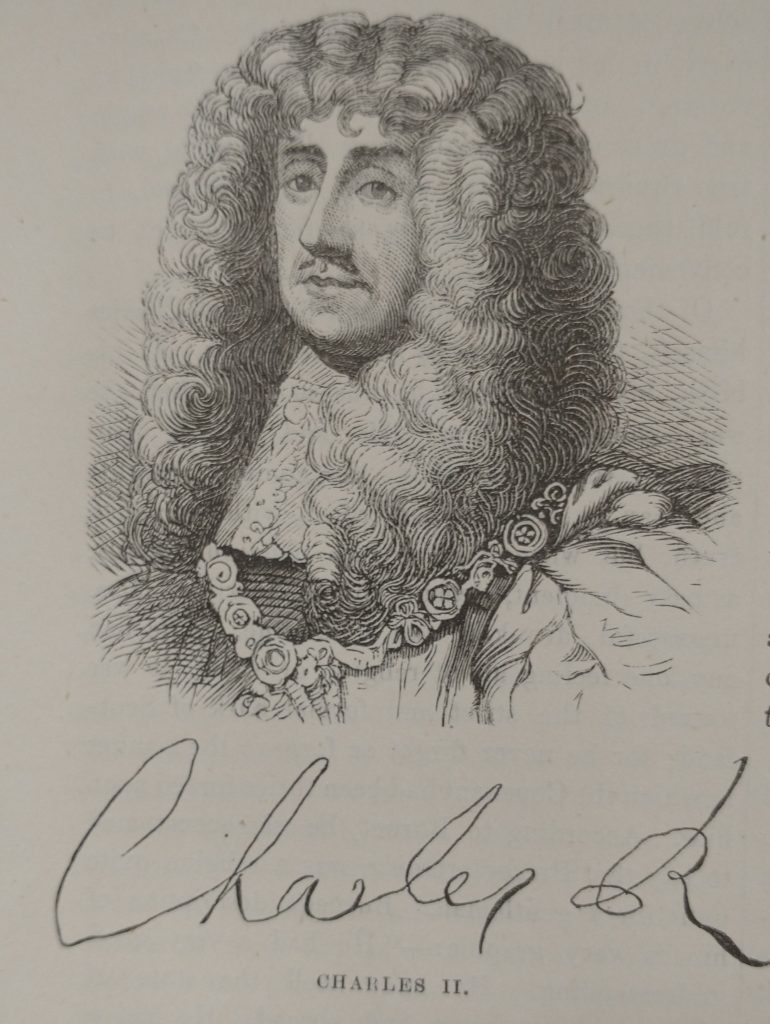
engraving of Charles II
Engraving of Charles II

Meanwhile, the Scottish Army marched South in to England. in an attempt to raise the support of English Royalists. King Charles II was now with them, They hoped Cromwell would be held up in Fife, but he wasn’t. He secured Perth and put General Monck in charge in Scotland. Lambert was sent to harrass the Scottish Army as they marched south. Meanwhile, Cromwell forced marched his way to the Tyne. General Harrison had collected fresh troops from Newcastle and joined Cromwell. Thomas Fairfax came out of retirement and raised troops in Yorkshire. The Southern troops were collected at Banbury by General Fleetwood. 14,000 militia men from the trained bands of London joined the march to intercept the Scottish Invasion.

The Battle of Worcester September 3rd 1651

The decisive battle took place at Worcester, which the Royalist occupied. It was an unusual battle in that it took place on both sides of the River Severn. Cromwell delayed the start of the battle to build two pontoon bridges. This meant he could reinforce his troops on either side of the River. It also delayed the start of the battle to his lucky day.

The pontoon bridges proved decisive. The Parliamentary side had over 30,000 troops while the Royalists only 16,000. Cromwell could shore up besieged formation with troops from the other side of the River. The Royalists were pushed back to the High Street. Here, they rallied to allow King Charles II to escape. And that was the end of the Second English Civil War. (The first being the defeat of Charles I, the second the defeat of Charles II).

Charles II made a hair-raising escape from England, hiding in an Oak Tree. Eventually, finding a ship on the South Coast at Shoreham, in Dorset to take him into a long exile. (see my post on Charles’ escape here🙂

Of the Scottish army, perhaps 3,000 men were killed and 10,000 taken prisoners. Some prisoners were conscripted into the New Model Army and sent to fight in Ireland. Many of the rest (perhaps up to 8,000) were forced into indentured labour. They were sent to New England, Bermuda, the West Indies or the Fens. Others were taken to London and detained in prison camps. One of which was at Tothill Fields in Westminster. Conditions were often appalling, leading to death by disease and malnutrition.

American Presidents pay their respects to the ‘famous’ Battlefield.

John Adams and Thomas Jefferson visited the site of the Battle in 1786. Adams reported:

‘The people in the neighborhood appeared so ignorant and careless at Worcester that I was provoked and asked “And do Englishmen so soon forget the ground where liberty was fought for? Tell your neighbors and your children that this is holy ground, much holier than that on which your churches stand. All England should come in pilgrimage to this hill, once a year”‘

And indeed will now only see the battle as one of the many battles of the Civil War. Generally, we are not aware of its special significance.

Cromwell’s Death September 3rd 1658.

By now, the Monarch in all but name, Cromwell, the Lord Protector fell ill, probably of malaria. Then, when weakened, his kidney stone infection turned to septicemia. On August 30th, there was a mighty storm, the like Europe had not seen for hundreds of years. And there was talk of the Lord taking him away in the furious storm. As he weakened he was asked to name his successor. He appeared to affirm when the name of his son Richard was spoken to him. But, it wasn’t very clear. He rallied, perhaps hoping that if he could survive to September 3rd, he would overcome his illness.

On the day, he said to his doctors ‘I tell you I shall not die this hour; I am sure on’t …. I speak the Words of Truth upon surer grounds than Galen and Hippocrates furnish you with.’

But he died on his lucky day. He was given a splendid funeral and was buried in state among the Kings and Queens in Westminster Abbey. And then in 1660 dug up, executed posthumously at Tyburn and buried under the Gibbet.

See my post on the Puritans’ abolition of Christmas here:

See my post on John Evelyn’s diary entry on the Restoration of Charles II to the throne.

First written in September 2025

Battle of Crécy August 26th 1346

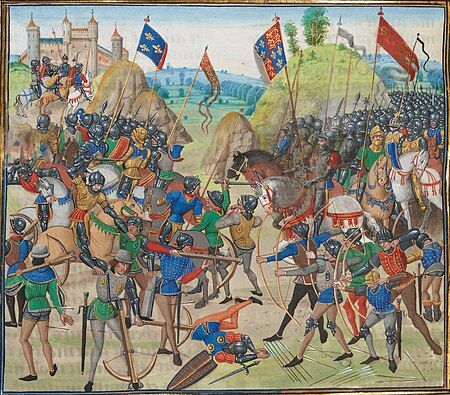
Jean Froissart - From Chapter CXXIX of Jean Froissart's Chronicles. From Wikipedia ,
Battle of Crécy Jean Froissart’s Chronicles (Wikipedia)

The Battle of Crécy was one of the most decisive victories in the Middle Ages.  Events began with King Philip VI of France declaring the English land in France forfeit.  Henry, Earl of Derby made significant gains in Gascony for King Edward III but then was besieged by the French. He demanded support from the English King. 

So King Edward gathered an army and landed in Normandy.  It was the largest invasion force until D-Day.

Edward burnt his way to Paris.  Within 2 miles of Paris Edward was confronted by superior forces and trapped on the wrong side of the Somme. His army was starved by the French scorched earth policy.

The English, only 6 miles away from the French Army forced their way across a defended tidal ford. Here they broke into an area which had not been scorched and were able to  resupply. This success also restored English moral as the French defenders could not stand against the longbow men.

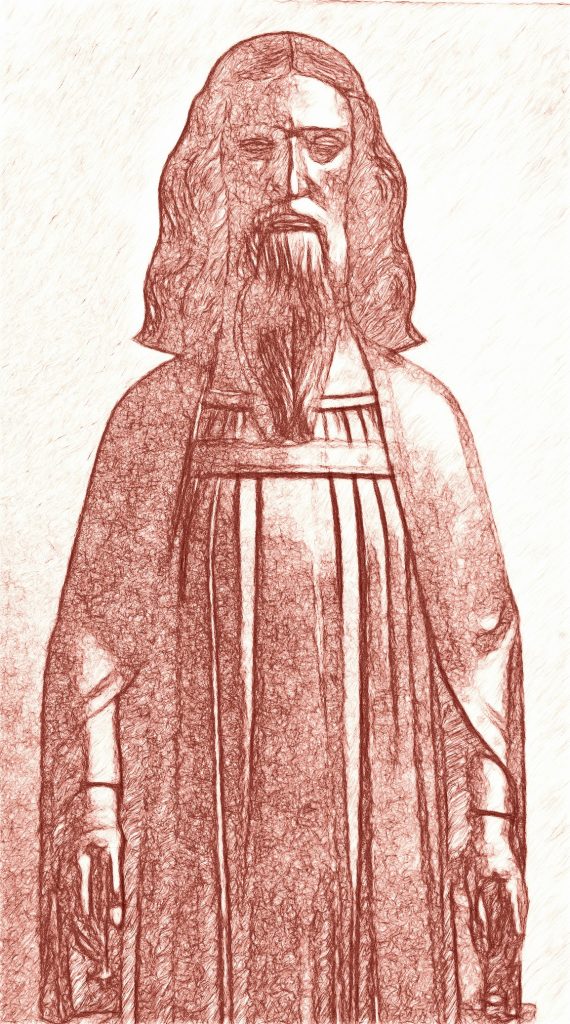
Sketch of statue of Edward III from Westminster Abbey

King Edward set up a defensive position at Crecy-en-Ponthieu, on land he owned.  It offered protection from flanking attacks and an uphill struggle for the French attackers.  The English dug pits to make French attacks more difficult. The English were badly outnumbered.  Estimates vary but the French at least had double the number of troops.  The English had about 15,000 troops, the French between 30,000 and 100,000.

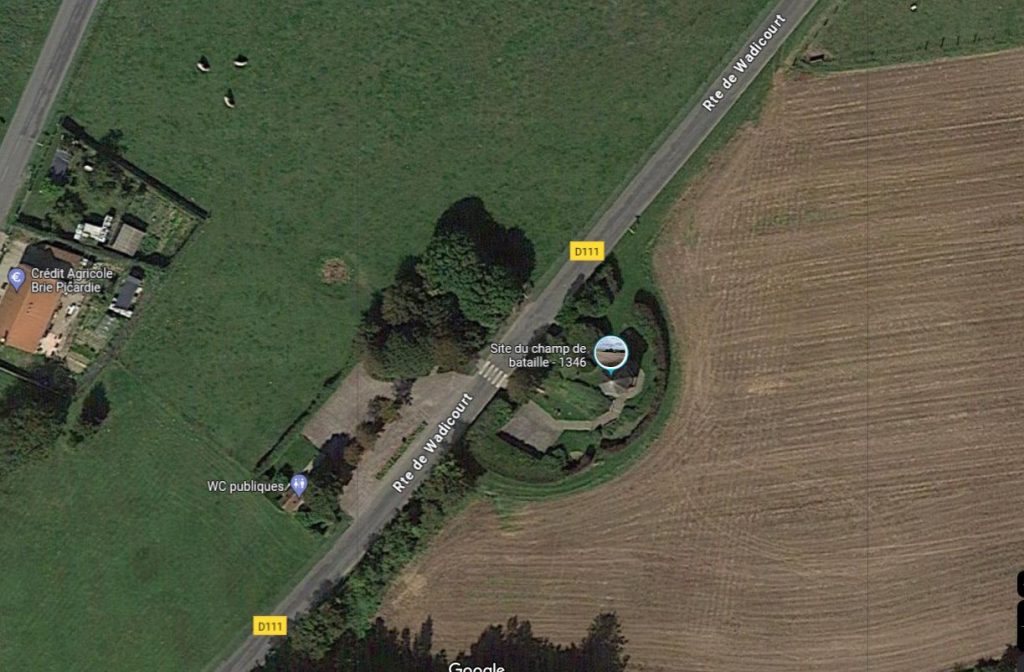
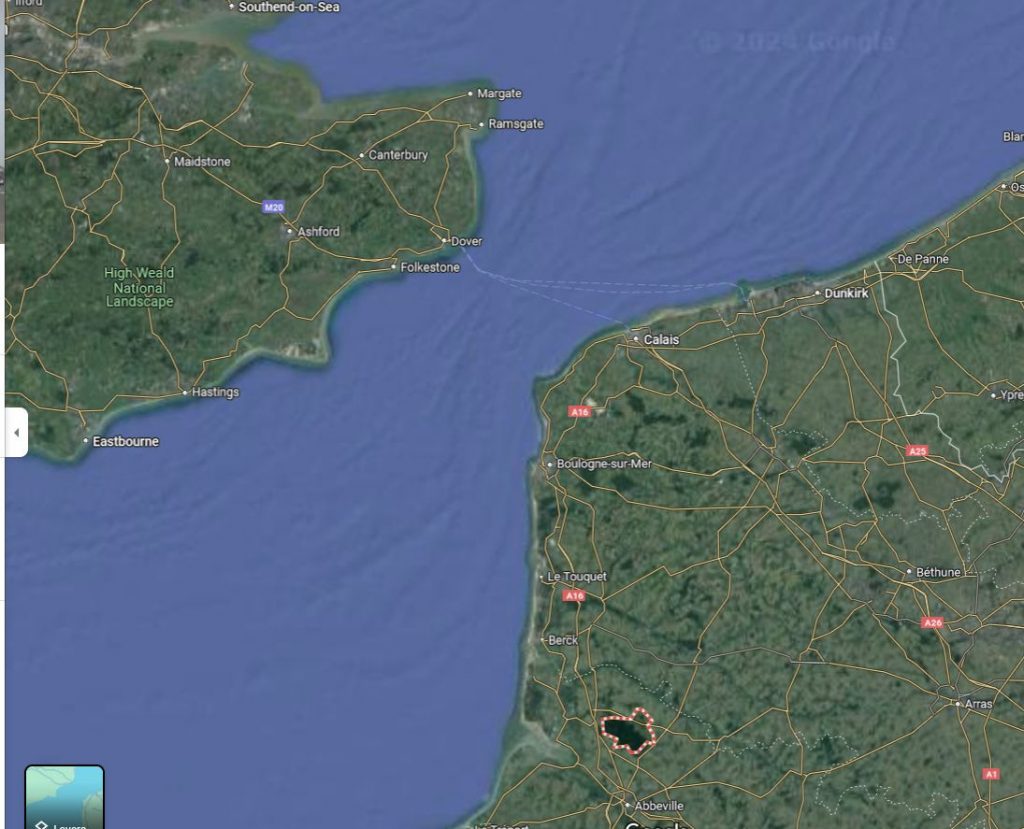
Aerial view of the battle site according to Google.

The first attack came from Genoese crossbowmen but the English and Welsh longbow men had the advantage of range and the Italians soon retreated.  French men-at-arms attacked in some confusion, killing Genoese as they attacked but were repulsed after terrible fighting.  Wave after wave of French attacks followed. None succeeding.  At the end of the two day battle very few English men were killed and many thousands of French, including the flower of the nobility.

English losses were 300 or less and the French lost are sometimes estimated as 30,000, but a third of that is probably more realistic.

The battle changed opinions about British fighting ability, and showed that heavily armoured wealthy knights could not stand against trained yeoman archers armed with long bows.  The archers could shoot 3 arrows a minute with a range of up to 300 yards. There may have shot half a million arrows.

But it can also be argued that the victory lulled the English into the belief that they could hold France. This led to the fruitless slaughter of the 100 years war which England ultimately lost.

On the other hand Edward III captured Calais which remained an important and strategic asset until the 16th Century.

Google image with the Crecy  in the orange bounded area bottom middle of the screen

Source of image: Jean Froissart – From Chapter CXXIX of Jean Froissart’s Chronicles, example source at http://www.maisonstclaire.org/resources/chronicles/froissart/book_1/ch_126-150/fc_b1_chap129.html

First published 2024, revised 2025

Feast of St Mary & Days off in Anglo-Saxon England August 15th

Titian’s Assumption of the Virgin Mary (Wikipedia)

August 15th is the date of the celebration of the Assumption of St Mary.  This is the day she went to heaven.  Opinion is divided as to whether she died and went straight to heaven. Or did she go directly to heaven without having to pass go?  The stories about the Virgin Mary were a big part of the controversy in the Reformation. Protestants did not find evidence in the Bible supporting many of the tales they had been told by the clergy.  Once they could read the Bible in their own language they were able to assess the evidence for themselves.

August 15th was taken as a day off in the Medieval oeriod.  My post is inspired by Octavia Randolph who has an excellent web site with a fine post on Anglo Saxon Slavery. You can read the post here: https://octavia.net/slavery-in-anglo-saxon-england.  But what particularly caught my attention was the excerpt from King Alfred the Great’s laws.  It lays down the law on the days off which should be given to freemen.

These days are to be given to all free men, but not to slaves and unfree labourers: twelve days at Christmas; and the day on which Christ overcame the devil (15 February); and the anniversary of St Gregory (12 March); and the seven days before Easter and the seven after; and one day at the feast of St Peter and St Paul (29 June); and in harvest-time the whole week before the feast of St Mary (15 August); and one day at the feast of All Saints (1 November). And the four Wednesdays in the four Ember weeks are to be given to all slaves, to sell to whomsoever they please anything of what anyone has given them in God’s name, or of what they can earn in any of their spare time.
Translated by Simon Keynes and Michael Lapidge and taken from Octavia.net

That comes to 38 days by my reckoning.  In the UK 4 weeks off is a good average holiday entitlement.  If we add 8 bank holidays in England and Wales  that gives us 36 days off a year.  So 1500 years of ‘progress’ has given us minus 2 days, and a lot less in the USA!

How depressing!  Of course, most of these days off were lost during the Industrial Revolution and only clawed back by Trade Unions.

The days off are interesting, obviously Christmas and Easter. Harvest is more of a surprise in that one would expect to be working very hard bringing in the harvest.  But, maybe the 7 days off were given after it was brought in?

The individual days make sense as they are the feasts of major saints or festivals – so St Gregory’s Day – he being the Pope who ordered the mission to convert the English to Christianity in 597AD.  (See my post on St Gregory here).

Saints Peter and Pauls Day. St Mary and All Saints Day. I’m surprised there is no Candlemas or Michelmas.(More information about celebration of St Peter and St Paul in London in my post here)

Slaves holidays

Slaves seem to only have 4 days however.  These are the Wednesday in Ember Weeks.  Ember Days and Ember Weeks were Fasting Days, either named after a latin phrase for fasting or from Ymbren which is the Anglo-Saxon for circuit or revolution.  It is thought that the days were originally tied to the ‘cycle of life’ that it part of each year.  But later on became more liturgical and based on fasting.

They may have been founded in Roman roots. There only seems to be 3  in the days of the early church, rising to 4 ember weeks by the late 5th Century. They were brought to Britain by the mission of St Augustine, under Pope Gregory.  These seem to be the dates:

December the week starting after St Lucy’s Day (Dec 13th)

March between 1st and 2nd Sunday

June between Pentecost and Trinity Sunday

September 3rd Week ending at Michaelmas.

So, the poor old slaves get 4 Wednesdays off in the year!  This is presumably because the work of the household continues throughout the year, irrespective of season or festival.  Maybe they are given a day off on the fasting days because household work can be put off as everyone is fasting?

But the laws make it clear: this is the time the poor slaves can work for themselves and make a little on the side.

Do have a look at Octavia’s web site which for more on slaves in the Anglo-Saxon period.

First published in August 2025

Stone of Destiny Attacked with a Hammer at Perth Museum July 13th 2025

Screenshot of BBC Webpage annoucing the attack on the Stone of Destiny

I just tried to book a visit to see the Stone of Destiny, at Perth Museum. But I was told it was closed until at least the end of August. The reason being that a case had been damaged. A quick search revealed this notice that an Australian had attacked the case containing the Stone with a hammer. They are now repairing the Case, and double checking the condition of the stone, which is thought to be undamaged. The Stone is well protected in a special room of the Museum. But, until now, those booking to see it are not searched. So I imagine that this will become more formal in future.

Below is my post of 2024, updated on March 30th 2025.

New Home for the Stone of Destiny

Old Photograph of the Stone of Destiny beneath the Coronation Chair.

Last year, the Stone of Destiny was set up in its new permanent place. The Stone was unveiled in a room at the centre of the redeveloped Perth Museum, in Scotland. This is near to its ‘original’ home at the Palace of Scone.

The Museums Association reported:

£27m development project ….funded by £10m UK government investment from the £700m Tay Cities Deal and by Perth & Kinross Council, the museum is a transformation of Perth’s former city hall by architects Mecanoo.’

As well as the Stone of Destiny, the Museum has Bonnie Prince Charlie’s sword and a rare Jacobite wine glass. Both on public display for the first time. This is the first time the sword has been in Scotland since it was made in Perth in 1739. https://perthmuseum.co.uk/the-stone-of-destiny/. Since I first wrote this I have visited about 5 times. Entry is free but needs to be booked. It is held in a separate structure in the open space at the heart of the Perth Museum. There is an excellent-animated introduction, and then the doors open and the Stone is revealed in a glass cabinet. It is very effective.

Webpage of the Perth Museum show a photo of the Stone of Destiny

The Stone of Destiny in the Modern Era

Before Perth, the Stone was in London for a brief visit for the Coronation of King Charles III (6 May 2023) . It was put back, temporarily under the Coronation Chair. Before that it was on display in Edinburgh Castle. Tony Blair’s Labour Government sent it back to Scotland as a symbol of the devolution of power from Westminster. This was on the occasion of the restoration of the Scottish Parliament in Edinburgh in November 1996. Until then the Stone was under the Coronation Chair, where Edward I put it after he stole it (1296) from Scone. Virtually every English and British King has been crowned upon the Stone of Scone.

However, the Stone had a brief holiday in Scotland in 1950/51.  Four Scottish students removed it from Westminster Abbey on Christmas Day 1950. After three months, it turned up at the high altar of Arbroath Abbey. It was briefly in a Prison Cell, then returned to Westminster for the Coronation of Elizabeth II.

Poor photograph of a press cutting on display at the Palace of Scone (Photo by me!)

Declaration of Arbroath

I’m guessing the-would-be liberators of the Stone, thought Arbroath was the most suitable place to return it. For it was the Declaration of Arbroath which is the supreme declaration of Scottish Independence from England.

Following the Battle of Bannockburn the Scots wrote to the Pope of their commitment to Scotland as an independent nation. They said:

“As long as a hundred of us remain alive, never will we on any conditions be subjected to the lordship of the English. It is in truth not for glory, nor riches, nor honours that we are fighting, but for freedom alone, which no honest man gives up but with life itself”

The Pope agreed and Scotland remained independent until voluntarily joining England in the United Kingdom in 1707.

For an analysis of the Stone of Scone please look at my post here.

The Stone of Destiny at Scone Palace

Before Edward 1 stole the Stone, it was at Scone Palace. Here most of the Kings of Scotland were crowned, including Macbeth (August 14, 1040).

Moot or Boot Hill where Scottish Kings were crowned. Palace of Scone Photo Kevin Flude)

Those who attended the coronation traditionally shook their feet of all the earth they had brought from their homelands.  This over the centuries, grew into Boot Hill, aka Moot Hill. So the mound represents the sacred land of Scotland. 42 Kings were crowned upon its soil on its Stone. (but not Mary Queen of Scots she and her son were crowned at the Chapel Royal of Stirling Castle).

Where was the Stone of Destiny before Scone?

Before Scone, it was, possibly, in Argyllshire where the Gaelic Kings were crowned. Their most famous King was Kenneth MacAlpin. He united the Scots, Gaelic people originally from Ireland, the Picts, and the British. And created a new Kingdom which was originally called Alba, but became Scotland.

MacAlpin was the first king to be crowned on the Stone at Scone in 841 or so. He made Scone the capital of his new Kingdom because it was a famous Monastery, associated with the Culdees, an early sect of monks. MacAlpin brought sacred relics from Iona to sanctify the new capital. And Scottish Kings were by tradition crowned at Scone and buried on the holy Island of Iona.

Legend has it that the Scots bought the Stone from Ireland when they began to settle in Western Scotland (c500AD). The Scots, it is said, got the Stone from the Holy Land. Jacob lay his head on the stone to sleep. He had a dream of Angels ascending and descending a ladder to Heaven. Jacob used the stone as a memorial, which was called Jacob’s Pillow (c1652 years BC).

Fake, Copy or Genuine?

But, questions about the Stone remain. Firstly, would the Monks of the Abbey meekly hand over the stone to a raging King Edward I?  Sacking the Abbey was one of the last events of Edward’s failed attempt to unite the two countries. Isn’t it more likely that they hide the original and gave him a fake?

Secondly, was the Stone brought to Scone from Western Scotland in the 9th Century? Or was it made in  Scone?

These questions of doubt are based on the assumption that the Stone is made of the local Scone sandstone. If it were brought to Scone from somewhere else, it would be in a different type of stone, surely? So, either it was made in Scone, possibly for MacAlpin’s Coronation or the Monks fooled the English into taking a copy. The English would then have been crowning their Monarchs on a forgery.

Ha! Silly English but then the Scots have spent £27m on the same forgery.

Before bringing the stone to Scone, Historic Environment Scotland undertook a new analysis  of the stone. This confirmed:

the Stone as being indistinguishable from sandstones of the Scone Sandstone Formation, which outcrop in the area around Scone Palace, near Perth‘.

It also found that different stone workers had worked on the stone in the past. It bore traces of a plaster cast being made. It had markings which have not yet been deciphered. There was copper staining suggesting something copper or bronze was put on the top of it at some point in its life.

So it seems the Stone of Destiny was made in Scone. The simplest explanation is that it was made for MacAlpin in the 9th Century. But it does not rule out that it is a copy given to Edward I. But if this is the case it is still an awesome relic of history as so many Kings and Queens, Scottish and English, have been crowned upon it.

For more about MacBeth and St Margaret of Scotland see my post here:


First published in 2024, republished in 2025

Smithfield & the Peasants’ Revolt June 15th 1381

Smithfield & the Peasants’ Revolt. illustration from ‘Chroniques de France et d’Angleterre’, by Jean Froissart, c.1460-80. Walworth is showing killing Wat Tyler, King Richard is shown twice, first watching the death of Tyler, and secondly taking control of the Rebels

On the 15th June, King Richard went to pray at Westminster Abbey before the climax of Smithfield & the Peasants’ Revolt.  He prayed at the shrine of St Edward the Confessor. A King who knew all about the sins Kings are forced to commit to rule an unruly Kingdom and could intercede on the King’s behalf in Heaven

The Peasants’ met at Smithfield, or maybe they had camped out there overnight.  It was a big field where the livestock market was held.  And where people were executed.  Most famously Scottish patriot, William Wallace, who was hanged, drawn and quartered here on 23 August 1305.  It was also used for jousting, and one of the streets off Smithfield is called GiltSpur Street.

The King, Smithfield and the Peasants’ Revolt

The King had agreed to meet the Peasants again.  We don’t know how that was organised.  The King turned up supported by a group of men who included members of the City of London Corporation including the Lord Mayor, Fishmonger, William Walworth.  They seem to have worn armour under their clothes.  The King’s Party lined up in front of St Bartholomew’s the Great Priory.

The rebels were on the other side of the field, presumably armed with the weapons and armour they had plundered from the Tower of  London.  It is not clear exactly what happened, and the sources are prejudiced against the rebels.

The Rebels demands were: the abolition of all Lords except the King; all bishops except the Archbishop; all monasteries except the Friaries and the  replacement of the false House  of Commons, with the True House of Commons.

Wat Tyler rode towards the King’s party. Got off his pony, spat out the wine he had been drinking, and ‘Hailed, Brother’ slapping the King on the shoulder.  This was not normal court etiquette.

One of the King’s party shouted at Tyler that he was a thief and a murderer.  Tyler drew his sword, and William Walworth struck him down, mortally wounding him. 

Commentators speculate that this might have been part of a plan.  To arrive seemingly without armour, to provoke a crisis, and disrupt the rebels.

The City’s part in the events in Smithfield is fascinating.  City Merchants were not generally fighting men, but they seem to be the active group the King could rely on.  Interestingly, there is no evidence that the Rebels attacked the Guildhall and destroyed the legal records. They attacked most important legal institutions in London, in the days before Smithfield. So why no attack  on the Guildhall?

This surely must be because the Guildhall was protected by a competent military force. And it seems these are the same people who took on and defeated Wat Tyler.

In Smithfield, the Rebels didn’t know what to do.  Is  it possible the King’s party shielded the murder of Tyler behind a screen of people?  So they didn’t know what happened and therefore didn’t know what to do?

For surely this was a  moment of true danger.  The Rebels would have had hundreds if not thousands in Smithfield, some at least well armed. Some must have been archers who would have been deadly.  This is not that long after the Battles of Crecy and Poitiers, where the flower of the French Nobility was killed by the English Archers.  Archers were normally rank and file soldiers, exactly the class of people supporting the Rebellion. Tyler was taken to St Bartholomew’s Hospital, where he died of his wounds.

In the moment of crisis, the King is said to have ridden forward on his horse and told the Rebels:

‘I will be your leader.’

And then he led them, like the Pied Piper of Hamlin, to their destruction.

He led them out of Smithfield into the field surrounding and told them they had their Charters so it was time to go home.  And mostly they did.

To be continued.

To read my post mile-end-the-peasants-revolt-june-14th-1381/

Also on this day June 15th Magna Carta was signed in 1215

First Published on 15th June 2025

Mile End & the Peasants’ Revolt, June 14th 1381

The Execution of Treasurer Robert Hales and Chancellor Archbishop Sudbury on the Day the King met the Peasants at Mile End

To recap.  On June 14th the 1381 Rebels have control of London.  They are destroying any repository of legal records they can find. People are walking the streets dispensing street justice.  Foreigners who speak Flemish are being beheaded.  Enemies of the people are being dragged out of sanctuary and beheaded.  Properties of the leaders of the government are being ransacked and burnt.

The King is in the Tower with his advisors, fearful that the Rebels will breach the defences.  I would love to be a fly on the wall of that conversation. You would think it would go something like.

‘Sire.  Your safety is paramount.  We will leave the castle and draw off the rebels so you can go to a place of greater safety.’

What happened is astonishing.  The Royal plan was to send the 14-year-old King Richard out to draw off the rebels so that the hated Chancellor of England, Archbishop Sudbury and the Treasurer of England, Robert Hales could slip away unseen! Putting the young boy king in the direct line of fire!

There are two explanations. Hales and Sudbury were arrant cowards. Or the King was very confident of his safety and despite his youth made his advisors accept his command.  This was an age where young princes took adult responsibilities early.

The King left the Tower on horse back, accompanied by two half-brothers and his mother (and others). Their reception was hostile. We have eyewitness accounts of angry rebels pulling at the King’s bridle and that of one of his attendants from the City government. The King sent his mum and brothers back to the Tower as it was too dangerous. We can only assume the King sent them back sure that the peasants did not blame him for the mess the country was in.

He went to Mile End.  His clerks set up tables and began writing charters freeing the peasants from feudal duties and turning their tenure into monetary rents.

As each village received its charter, many of the villagers went home.  Back at home they sometimes attacked the people who had been manipulating the legal system, believing the King had given them permission to punish the guilty.

Whether the king believed in the justness of their claim or was just placating them to gain time, we do not know. But some historians believe that the young King was sympathetic to some of their claims, until older counsel made him change his mind.

Not all the rebels followed the King to Mile End, nor went home when their charters were sealed.  It is thought Wat Tyler and thousands of rebels stayed at the Tower.

They saw the Archbishop of Canterbury trying to escape.  They forced their way into the Tower.  Here they jumped up and down on the Queen Mother’s bed, stole armour and weapons.  Then dragged Hales, Sudbury, a Franciscan Friar (William Appleton, John of Gaunt’s physician), and John Legge, a royal sergeant to the scaffold at Tower Hill and beheaded them.  Their heads were put on poles and paraded around town.

When the King left Mile End he couldn’t go to the Tower so he went to Baynards Castle, near Blackfriars. We also know that, the King’s cousin, Henry Bolingbroke was in the Tower.  He was the son of the hated John of Gaunt.  Years later, when he was King, he acknowledged the fact that a Londoner had been instrumental in saving his life in the Tower on the 14th of June, 1381. The man was fighting charges of stealing gold from the ransacking of Gaunt’s Savoy Palace.  He was given a pardon.

That night rebels remained in London, and the king’s cause had been considerably weakened.

The Archbishop’s Head

You may wonder what happened to his head! Well, here is the answer!

To be continued. See also my post peasants-revolt-june-13th-1381/

First published in 2025.

.