Brussels: home of beer, chips and chocolate. This is a Trappist beer which is 9% proof!
My idea of a holiday is to go to a historic town without any prior research; grab a town plan; work out where I think the walls were and go out and prove myself right.
It’s such a thrill when you find that remaining section of wall, that place called Porte de something, or some other clue just where you expected it to be.
Often there are 2 circuits: the ancient or medieval wall and another one usually marked by an extensive inner ring road or boulevard or a charming linear park or garden. This is nearly always the Renaissance wall alignment when the town had expanded and the old walls became useless in the face of cannons. So a new circuit was built with low walls backed with extensive banks and star shaped ramparts. The medieval or ancient circuit leaves clues as it nearly always has curved sections and these stand out amongst the mostly linear streets patterns.
So far, in Brussels, I have found both but not yet traced the whole circuits or found out much about them.
It’s a surprisingly good way of discovering a City. The walls explains a lot about the character of the various districts, but also walls tend to fairly randomly take you through central places as well as peripheral places. So the exploration takes you to places you would otherwise not get to.
It’s my form of Guy Debord’s Dérive https://en.m.wikipedia.org/wiki/D%C3%A9rive. He was founder of the Situationist International and believed a flâneur without a preconceived purpose would find out the unexpected. Ofcourse, I do have a purpose, but the route of the walls and the tooing and frooing to find the correct alignment add an element of the random.
My mother Jean Flude, with her adopted dad Percy Engal.
March always comes upon me in a shock. It still feels like Christmas has just finished but the new year is rushing towards us. I have to get those seeds into those pots on the windowsills, and tidy the garden. The novel has to start the rounds of the agents and publishers, and my dad’s autobiography needs finishing off, with a final edit and more picture research.
For a 17th Century view of what March means please follow this link to last year;s MArch 2nd post which I am republishing:
I am working on a new season, and these are the walks for the first six months – but more to come.
The Archaeology Of London Walk Sunday 2nd April 2023 11:15 Exit 3 Bank Underground Station To book Jane Austen’s London Sat 2.30 pm 2nd April 2023 Green Park underground station, London (north exit, on the corner). To book Chaucer’s Medieval London Guided Walk Aldgate Tube Sunday 16 April 2023 11.30pm To book Chaucer’s London To Canterbury Virtual Pilgrimage Sunday 16th April 2023 7.30pm To book The Peasants Revolt Anniversary Guided Walk Aldgate Underground Sunday 11th June 2023 10.45am. To book The Peasants Revolt Anniversary Virtual Tour Sunday 11th June 2023 7.30pm To book
Detail of photo from the American Viscountess showing a medlar (link to the site below:)
Medlars were a very common and useful fruit particularly in the Medieval and Early Modern period. They are best harvested after the first frosts, although some say harvest in late October and store them because they can only be eaten when they are rotten and ‘bletted’. They also store well. They, therefore, provide a source of winter sweetness when there were few other fresh sources available.
They are from the Rosaceae family which includes apples, pears, rosehips and quinces. The English called them ‘open arses’ or ‘dog’s arses’ or ‘granny’s arses’ because of the way they looked until the more polite French name the Medlar caught on.
Shakespeare uses both words and uses their sexual connotations as they were thought also to look like female genitalia. A medlar was also a name for a prostitute. So in Romeo and Juliet this speech by Mercutio to Romeo and their mates contains some very bawdy thoughts:
If love be blind, love cannot hit the mark. Now will he sit under a medlar tree And wish his mistress were that kind of fruit As maids call medlars when they laugh alone. O, Romeo, that she were, O that she were An open-arse and thou a poppering pear!
RJ 2.1.33
I think you can also see how good Shakespeare was at making his allusions available to all classes. For the sophisticated he begins with the reference to the French medlar and in case the groundlings are missing out throws in the ‘open-arse’ so they know what he is alluding to.
On this day, 2021, the United Kingdom, formally left the European Union.
I remember vividly the morning the referendum result was announced. We were all in Glasgow for my daughter’s Graduation, and we all burst into tears.
So how is it going? Just look at the graph above, exports down 7.7% compared to other advantaged economies since 2018.
Support for Brexit has gone right down. 51% think it was a mistake, 31% think it was the right decision. We all guffaw when someone says ‘Brexit Opportunities’ and think Jacob Rees Moog a throw back to the Age of Empire. (I’m being polite).
I’ve long seen the parallels with the Decline and Fall of Roman Britain. In AD 407, Britain threw off Roman rule and took independent control. We had 4 leaders of no great distinction in a short span. Seem familiar?
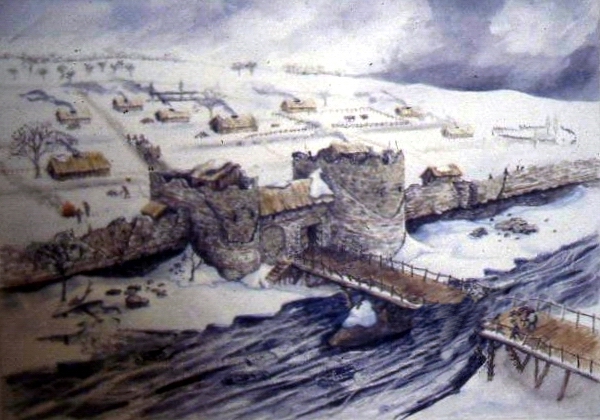
London in the 5th Century Reconstruction painting.
Then we wrote, in AD 410, a letter to the Emperor Honourius asking him to take us back. He said ‘Sorry, pals, the Goths are at the gates of Rome, but you can raise your own Armies to defend yourself.’
Now, the archaeology of this period is very difficult so it’s hard to know what happened in detail. But we do know that coins went out of circulation, pottery manufacture ceased in Britain and Roman Towns declined dramatically.
My friend, Oxford Professor Bryan Ward-Perkins, to wrote a book on the Decline of the Roman Empire in which he says that we next reached the level of international trade achieved at the height of the Roman Empire in 1500. 1000 years after the fall of Rome.
It would seem that the destruction of a free trade zone is a disastrous choice.
The second example would be when Henry VIII took Britain out of Christendom as Parliament adopted Protestantism. The auguries are much better here despite the worst destruction of cultural heritage in England’s history. It can be argued that the selling off of the one third of the land of the kingdom owned by the monasteries boosted the gentry and broadened the elite to include a more entrepreneurial class.
Also, the downside in terms of turning our back on Europe wasn’t so destructive because Catholic Europe wasn’t a free trade zone, and much of Northern Europe was protestant.
The other possible parallels are the Napoleonic War and World War 1 and 2. I think two major exceptions figure here. Firstly, the UK was a global trading nation and Empire which made it much less dependent on trade with Europe. Secondly, the economy was on a war footing so lost production was more than compensated for.
I’ve been writing these last two posts from Homerton Hospital where I am awaiting discharge after hernia surgery. Not too painful and I mention it just to remind everybody what a marvelous job the NHS does. What happens is that Labour Governments boost spending to a reasonable level while the Conservatives squeeze the NHS to unsustainable levels.
10 years of austerity followed by Covid and Ukraine have brought parts of the NHS to their knees, in particular the ambulance services.
So, yes, the country cannot trust a conservative government with the NHS, but perhaps another question has to be asked. Can the country trust a system that cannot trust 1 of its 2 main governing parties?
But maybe, we need not worry because this is by far and away, the worst government, most incompetent, most corrupt, most cruel, least able to plan, least respected of any government I have seen in my life time. Maybe we will soon see the back of them?
And what is, in some ways, worse is that the government is planning a Bonfire of the EU Regulations. Rees-Moog is responsible to this obscene anti-democratic Bill presented to the House of Commons. He sees it as getting rid of a whole raft of EU regulations that have entered our legal system during our 40 years of membership of the EU.
He claims anyone who opposes his bill is reopening the Brexit debate. This is a natural autocrat’s lie. Brexit was presented as ‘bringing back control to the people and to Parliament’. What this Bill is, is bringing massive power back to Ministers in the Government. All these European regulations will be examined by Ministers and their departments, and THEY decide what to drop and what to not. European Regulations govern of lot of our laws on work, farming and industry and much more. If the Minister decides he does not like a regulation HE or SHE can get rid of it. It does not need parliament to approve it, nor an election. There is not enough time or resources put to this for proper scrutiny by the Department’s Civil Servants, nor the Government, and none for Parliament.
It is an outrage to my mind, and shows that people like Rees-Moog have really been trying to turn Britain into a de-regulated economy for the benefit of people like himself with very little thought for the health of our democracy.
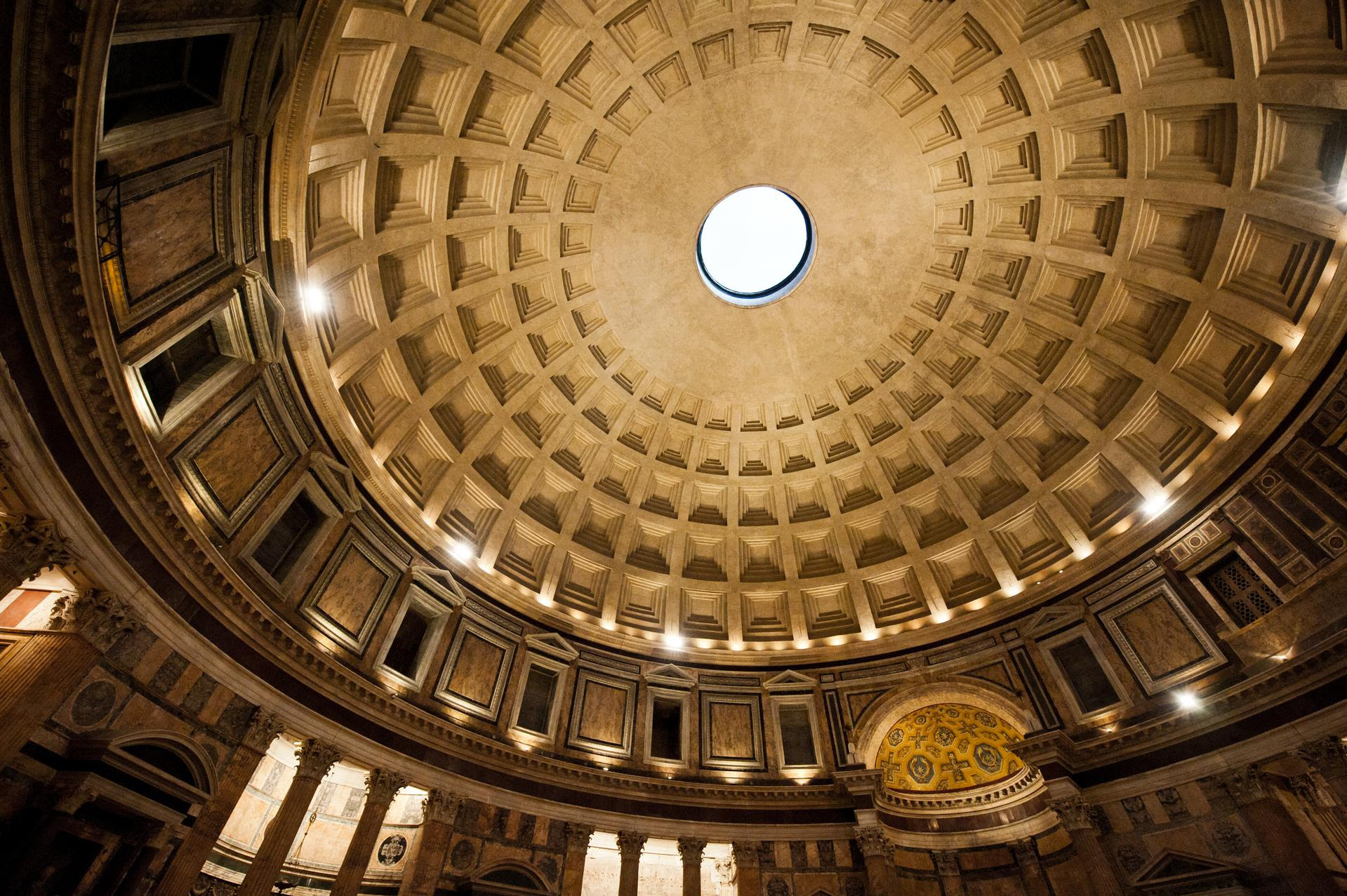
Image credits: Concrete Interior or the Pantheon, FLICKR / CC BY-SA 2.0
The Society of Antiquaries Salon Newsletter has a fascinating report on an analysis of the virtues of Roman Concrete. Working as an archaeologist in the City of London, Roman concrete (opus signinum and opus caementicium) has long been a fascinating subject upon which I have pontificated (without a huge amount of research).
I first came across it at the GPO site just north of St Paul’s Cathedral and what I remember is the contrast to the sandy mortar of 10th/11th Century St Nicholas Church which we were also excavating.
Roman cement, which was pink, was incredibly hard. Medieval mortar was yellow and soft. You could successfully get through the medieval stuff with a trowel or, if you had to, with your finger nail. But opus signinum required a kango pneumatic drill. Properly, signinum has fragments of pottery bonded into the concrete, but we also found it used without inclusions.
Roman Cemement – Opus Signinum
According to the 10 Books of Architecture by Vitruvius (Marcus Vitruvius Pollio) it should be made using volcanic ash which outcropped around Rome and Naples. Without volcanic ash in Britain, the Romans ground down tiles/bricks and added it to lime and sand to make a very effective cement. It was often then ‘reinforced’ by using a mixture of cement and rubble limestone in the core of a wall.
As medieval Londoners dug under the City during building work or while digging pits, they often struck unlucky by hitting some rock-hard Roman foundations. The legend spread that the Roman cement was so hard because it was made of a magical formula that contained Bull’s Blood. (It was also normally said to be built by Julius Caesar!)
The Roman cement was also made in a water-proof version, allowing Roman amphitheatres to be flooded for naval re-enactments. All proper Roman archaeologists have also paid homage by going to Rome to see the totally amazing domed roof of the Pantheon, commissioned by Augustus’ right hand man Marcus Agrippa. Marcus Agrippa (27 BC – 14 AD).
So, this article by the Salon gives some explanation as to how the concrete vault of the Pantheon roof can have stayed up for 2,000 years and defied inevitable cracking. I have copied it word for word, (I did once ask if they minded and they said no) but also give a link to the original below.
By the way, the GPO site was a landmark in Roman Archaeology because it completely changed the view of early Roman London when we discovered densely occupied Roman houses, a long way outside of the area thought to be the core of the early City. And Vitruvius’s book on architecture is well worth reading. I might add a sample tomorrow?. Finally, I remember reading that when the Custom House in London suffered a collapse after only a few years, it was rebuilt by Robert Smirke (who also bulit the Classical British Museum building) using a new formulae for cement was is said to be the first concrete in Britain to surpass the quality of the Roman original.
‘Analysis of Roman Concrete Reveals Self-Healing Properties
Many of us will have stood in the Pantheon in Rome and wondered how this beautiful structure can still be standing today. It is the largest unreinforced concrete dome in the world, built under the emperor Hadrian in 126 AD. Researchers have recently been analysing the content and technique of mixing Roman concrete to identify why it has lasted so long and they may have uncovered its secret.
Admir Masic, Professor of civil and environmental engineering at Massachusetts Institute of Technology, led the research project, working with Harvard University. In his paper published in Science Advances, Masic explains that Roman concrete contains millimetre-scale white lumps known as lime clasts, which may have helped seal up cracks, formed over time.
The Romans made concrete by made by mixing lumps of volcanic rock and other aggregates, together with a mortar such as volcanic ash, a source of lime (calcium oxide) and water. The lime clasts found were ‘porous with cracks’ and had most likely been formed at a high temperature in a low water environment. This suggests the quicklime was not mixed with water before it was added to the other ingredients as is the case in modern concrete, but was mixed with the ash and aggregates first. This ‘hot mixing’ produces heat, which helps set the concrete and reduces the water content around the lime clasts.
This means that, if subsequently, water seeps into the Roman concrete, it will dissolve the calcium carbonate and form new calcite as it passes through the lime clasts, which will help to seal up any cracks that have formed. Indeed, cracks filled with recently formed calcium carbonate have been found in Roman concrete.
Masic and his team tested this theory out by creating chunks of Roman-style concrete, containing cracks 0.5mm wide. They ran water over the concrete and in the samples containing lime clasts, within two weeks, the cracks sealed over with newly-formed calcite. Control samples of the concrete made without the lime clasts, did not seal.
Masic believes modern construction techniques could learn something from the Romans; ‘Roman-inspired approaches, based for example on hot mixing, might be a cost-effective way to make our infrastructure last longer through the self-healing mechanisms we illustrate in this study.’ An added bonus is that the development of a more resilient concrete ‘could help reduce the environmental impact of cement production, which currently accounts for about 8% of global greenhouse gas emissions’.
Image credits: Concrete Interior or the Pantheon, FLICKR / CC BY-SA 2.0′
John Worlidge in 1697 has a calendar discussing the farming year. and this is part of the discussion of January.
This Moneth is the rich mans charge, and the poor mans misery; the cold like the days increase, yet qualified with the hopes and expectations of the approaching Spring: The Trees, Meadows and Fields are now naked, unless cloathed in white, whilest the Countryman sits at home, and enjoys the fruit of his past labours, and contemplates on his intended Enterprises. Now is welcom a cup of good Cider, or other excellent Liquors, such that you prepared the Autumn before; moderately taken, it proves the best Physick.
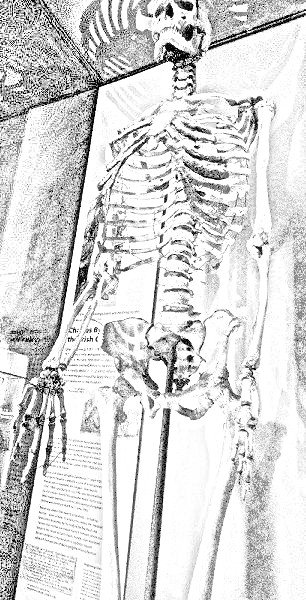
A few days ago the Hunterian Museum announced the decision to remove Charles Byrne from display. I have been watching the case for many years. It’s a fascinating story which was retold by Hilary Mantel in her excellent book ‘The Giant O’Brien’ published in 1998.
Generally, I’m all in favour of human remains on display in Museums. My own feelings is that I’d love my old bones to be displayed in a Museum in a few thousand years time. However, Byrne’s story is particularly poignant and argues the opposite case. Bryne was a giant, he just could not stop growing until he died. He died young and after making a name for himself (as the Giant O’brien) on account of his soaring height. (look at the catalogue entry in the Museum online collection for details of Byrne’s condition.)
John Hunter was the pre-eminent surgeon of the time, and was furiously collecting as many animal and human specimens as he could. Fantastically interested in anything and everything anatomical, he gives a shape to a Doctor Frankenstein figure. For example, his interest in electrical experiment – trying to get dead frogs to twitch with ‘life’ and he had a very active engagement with the Body Snatchers in order to investigate what made someone tall, small, fat, thin, ill, healthy, intelligent, thick, good, criminal and so on.
He pioneered various surgical techniques. Postillions (the people who rode on the horses pulling coaches) were prone to aneurysms as the horses kept squashing their inside leg. Hunter developed an operation to bypass the aneurysm. He tried it out successfully and then kept track of the patient somehow. When the postillion died the Resurrection Men would pay a visit to the local graveyard and dig up the body of the patient. Part of his thigh is on display in the Hunterian Museum (or at least it was the last time I looked). So you can see the success of Hunter’s ground breaking operation – one of wave of surgical developments of the 18th Century. The Hunterian Museum is the museum of the Royal College of Surgeons, and was founded by Hunter.
So, Hunter hears about the Giant O’Brien and finds out he is ill, possibly dying. He has his people keep tabs on him. Charles Byrne is determined not to end up on the anatomist’s slab. So, he organises his funeral in advance paying guards to look after his coffin. He orders a secure iron coffin and in addition, decides to be buried at sea. Because Byrne knows, as an eminent surgeon later on reported to a Commons Committee, that it wasn’t a case of whether the Body Snatchers would get a body but more how much they would have to pay for it if they really wanted it.
But, Byrne thinks he has done enough to die in peace.
Unfortunately, Hunter’s men tracked down the guarded room, and bribed the guards with what would have been a huge amount of money. Byrne was taken back to Hunter’s place, the body melted down, mounted, and was on display until the Hunterian Museum closed for refurbishment recently.
So, a step forward as he is no longer the subject of the public gaze. But in this case we absolutely know that Byrne did not want to be the property of the medical establishment. My own feeling is that he should be given his last wishes and be buried at sea.
Reference collections are very important for Science, and it is for this reason, I am sure, the Museum has not let go of Charles Byrne. But in this case, with this history, an exception should surely be made? He died on 1 June 1783
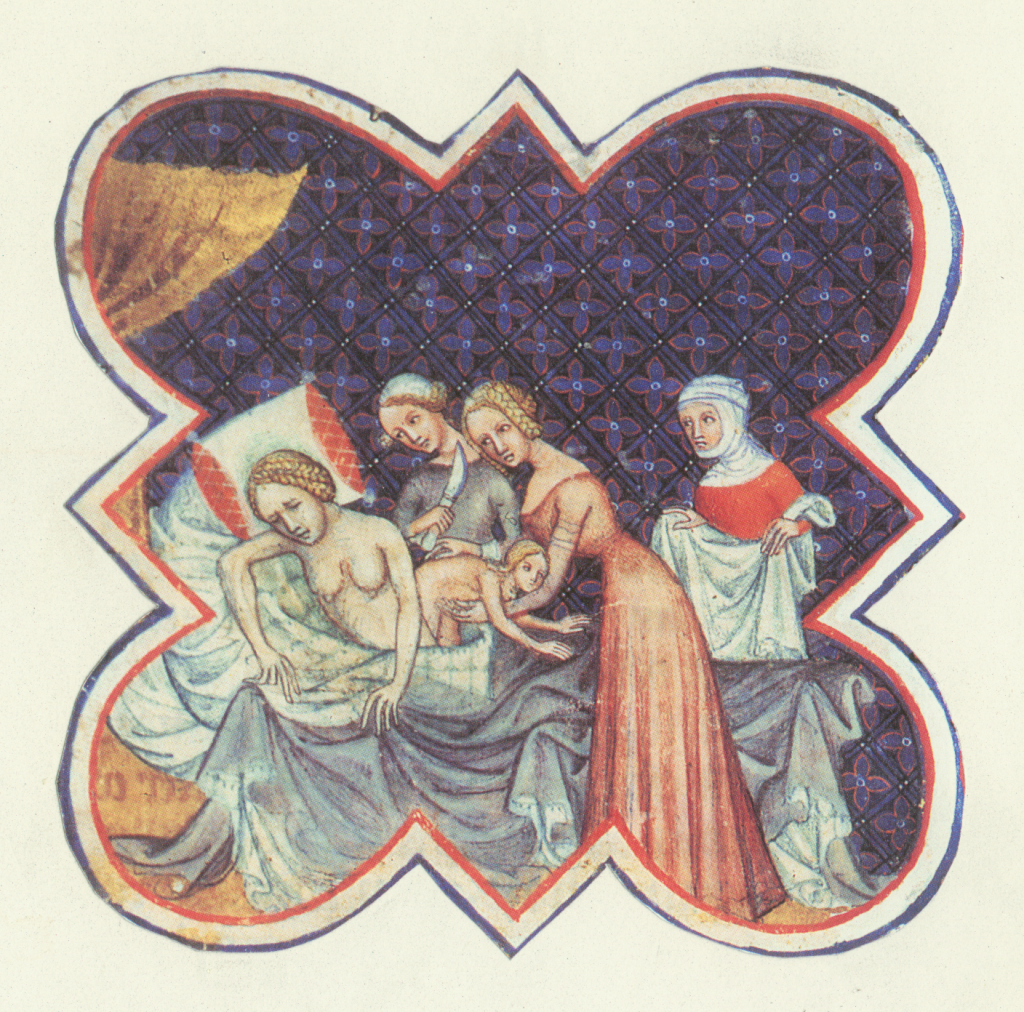
1375, French Caesarian Birth, (most likely to have killed the mother or be performed when she was already dead or dying.)
When Britain reluctantly joined the Gregorian Calendar, in 1752, we lost 11 days, so if you add 11 to 31st December you get to New Year Old Style. You can do this with any date, and when celebrating feel you are being really authentic.
So, anything you did on the New Year’s Eve New Style (31st Dec). you can do today – except, of course, you need to convince your boss of the illegitimacy of the Gregorian Calendar, when you call in sick because of a hangover! In case you have forgotten what you should be doing on New Year’s Eve you can look here to look back on for New Year’s Eve, New Style.
It’s a particularly ‘witchy’ evening because it is the traditional Eve, not the new-fangled one. Reginald Scot in his ‘Discovery of Witchcraft’ first published in 1584 reports
‘a charm to find who has bewitched your cattle’. Put a pair of breeches upon the cow’s head, and beat her out of the pasture with a good cudgel upon a Friday and she will run right to the witch’s door and strike it with her horns‘
When I first posted this post 2023. I did not, to my shame, know the background to the book. I assumed the author ‘believed’ this nonsense that a cow could lead you its bewitcher. On the contrary. Reginald Scot was debunking the absurd claims for witchcraft and magic. His book tries to prove that witchcraft and magic were rejected both by reason and religion. Manifestations of either were ‘wilful impostures or illusions due to mental disturbance in the observers’ .
Given the number of people who were executed as witches in the 16th and 17th Century it makes you realise that it was a very divisive topic. With only part of the country that was convinced by the QAnon like conspiracy that there are people in this world with diabolical intentions. Have a good look at the cover of this 17th Century edition of Member of Parliament Reginald Scot’s book to get an idea of his standpoint.
Carmentalia
It is also Carmentalia, the festival for the Roman Goddess of prophecy and childbirth. She was a much loved Goddess in the Roman pantheon But little is known about her perhaps because she had no clear match in the Greek pantheon.
She has a long history in Roman history being said to be the mother of…. Well this may surprise you, she was the mother of Evander. Evander is the founder of Pallantium, which was a City on the site of Rome that predated Rome!
Who knew that? (the people at Vindolanda Roman Fort know and they have a great page on Carmenta here. ) Carmenta had two sidekicks who were her sisters and attendants. Postvorta and Antevorta, They might be explained as Past and Future. Or after and before as part of her role in prophecy. Ot the two figures might represent babies that are either born head or legs first.
She was important enough to command one of the the fifteen flamen. These were priests of state sponsored religions. One of their jobs was to ensure no one came to the temple wearing anything of leather because leather was created from death, and not suitable for the Goddess of Childbirth.
Vindolanda make the point that 2% of births in the past are likely to have caused the death of the mother, and, because of a high mortality in the children, to keep a population stable a mother might have to have 5 children on average, giving her a 12% chance of death by giving birth.