Beware the Surfeits of Autumn September 23rd

Apples. Unsplash photo by Sydney Rae
A Surfeit of Apples. Unsplash photo by Sydney Rae

So, it may be a surprise that the Autumn is the time of plenty. I think, townies like me, would assume spring or summer. But in Autumn, not only is the Harvest in, but nuts and fruits are ripening and ready to pick. As we go deeper into Autumn, the livestock is culled to a level that can be sustained through the harsh winter. And so a lot of meat is also available. Truly a time of ‘mellow fruitfulness’.

A Surfeit of Autumn Peaches or Lamphreys

Anything with the word ‘surfeit’ in it must begin with the wonderful comic history of Britain called:1066 and All That: A Memorable History of England, Comprising All the Parts You Can Remember, Including 103 Good Things, 5 Bad Kings and 2 Genuine Dates

Here we find that King Henry I died of a ‘surfeit’ of lamphreys’, which he indulged in against his Doctors’ advice. This was in November,. While his Great Grandson, King John:

finally demonstrated his utter incompetence by losing the Crown and all his clothes in the wash and then dying of a surfeit of peaches and no cider; thus his awful reign came to an end.’

He is a fine example of a ‘Bad King’. He died on the night of October 18th — 19th. So another King to leave this mortal coil by the means of an autumnal surfeit. Other accounts say his ale was poisoned or the surfeit was of plums. But he did have dysentery shortly before he died.

If you haven’t already it got it you probably, at this point, need to buy my book ‘Divorced, Beheaded, Died’. This is the best selling book about the Kings and Queens of England, told in bite sized chunks. It is always on sale at the British Museum.

‘No surfeit so evil as the surfeit of eating naughty bread’

Andrew Boorde in ‘Dietary of Health’ 1547 says that Wheat Bread makes you fat, particularly when made from new wheat. He says’Evil Bakers’ will add half of Barley. This is no good, nor is bread made from beans or peas. He continues:

hot bread is unwholesome to any man, for it doth lie in the stomach like a sponge: yet the smell of new bread is comfortable to the head and the heart. Old or stale bread doth dry up the blood or natural moisture in man, and doth engender ill humours; and is evil and tardy of digestion: wherefore is no surfeit so evil as a surfeit of eating naughty bread.

Lavendar Caps

Now is the time to protect your head with Lavendar as winter approaches, or so says William Turner’s Herbal of 1568:

I judge that the flowers of lavender, quilted into a cap and daily worn, are good for all diseases of the head, that come of a cold cause, and that they comfort the brain very well, namely if it have any distemperature that cometh of moistness.

If you remember, I wrote about Turner’s medical education in Ferrara in Italy in June. You can read it here.

Apples and Pears & No Cider

The fate of King John (above) shows the danger of running out of cider. But the apple trees are now groaning with Apples and Pears. So production can begin. I have been at my Father’s House picking up all the pears that drop every night. We have been cutting them up and putting them in the freezer, making purée and crumbles. Also, giving them to anyone who enters the house. But still not able to keep up with the Pears! Lots of Apples too, infact a bumper crop, many more than in any previous year. Earlier there was a host of plums from which I made my very first plum jam. I am looking forward to making a batch of Quince Jam, for the third year running.

Storing a Surfeit of Apples

Picking up windfall is problematic, as it was thought they would soften and bruise much easier than those picked from the trees. They would also contaminate other apples if laid with them. So it is best to pick apples before they are completely ripe. Then you can use Gervase Markham’s apple storage advice, which I wrote about in January and you can see here:

But:

A Surfeit of unripe fruit is a danger:

Green fruits make sickness to abound
Use good advice to keep thee sound
Give not thy lusts what they do crave
Lest thou unawares step in to thy grave.

Ranger’s Almanack 1627

If you do succumb, you need a medicine of nettle-seeds and honey.

A Surfeit of Filberts

As a caution to persons at this season, when nuts are so very abundant, we state that the sudden death of Mr Nunn of Cley, Norfolk is generally attributed to eating a great quantity of filberts and drinking pork wine therewith.’

York Current, September 1794

I do hope you have found this post fruitful and not too nutty. Please consult a doctor if you are having head or brain issues. The Lavender in your Peaky Blinders Cap may not do the trick

Acknowledgement

Again, I am very dependent on fruity tales from Charles Kightly’s A Perpetual Almanac of Folklore. It is worth buying as it also has many pretty pictures.

Autumn Equinox and the Jewish New Year September 22nd

Autumn Equinox in Haggerston Park.Photo by K Flude.

Autumn Equinox.

This is the second day of the year when the sun rises due east and sets due west. When the day and night are of equal length.  It is the beginning of the astronomical autumn.  It is determined by the 23.5-degree tilt of the Earth’s rotation in relation to the orbit around the Sun.

In the Jewish Calendar, and the French Revolutionary Calendars it marks the new year. Many cultures preferred spring. But autumn is the end of harvest, when seeds are sown and the food stores are full of food. Similarly, the Celts started their new year at Halloween, half way between the equinox and the solstice.

For more about autumn, look at my post here. For my post on the Spring Equinox, see here. For the Celtic New Year see this post here and for the French Revolutionary Calendar, my post is here.

Rosh Hashanah, September 22nd to 25th.

Rosh Hashanah is the New Year in Judaism. There are other new years in the Jewish calendar.  But this is for the Civil Year and to celebrate the anniversary of the birth of Adam.

The biblical name for this holiday is Yom Teruah. One of the High Holy Days, as specified by Leviticus 23:23–25. Like most New Years it is a time to reflect on life and put in place changes. It is after all a celebration of the beginning of the world.

Here is an excellent BBC web site which will tell you more.

First Published on September 22nd 2025

John Goodricke and the Variable Star. September 17th 1764

John Goodricke and the Variable Star

Newton

What I really admire are people who, through their sheer brain power, can change our views of the world.  The first example that comes to mind is Newton’s insight that if the universe were infinite, the night sky would not be dark as everywhere there would be tiny pinpricks of starlight.  So, we don’t live in a infinite universe. Another one is Einstein’s thought experiment that proves that time is relative. But see below for a description of that.  But, now to John Goodricke and the Variable Star. (for Newton and the Maypole see my post here).

Goodricke

Last year in York, near the Minster, I saw the blue sign above. I thought, what on earth are ‘variable stars’?  Behind me, I heard two women say something like. ‘Here it is,”variable stars”‘.  I turned around and asked them what was a variable star?

‘Donno’ they said, ‘we’ve ‘just doing this escape room walk around York.’  They showed me a booklet they had received on the internet,. This is what I would call a treasure trail. Sadly, they showed no interest in finding out what a variable star is!

Aristotle and ancient philosophers held that the universe was unchanging and eternal. The first breach in that theory was the identification in 1638 of star Omicron Ceti. Johannes Holwarda discovered that the star pulsed on an 11-month cycle.  This and the discovery, of supernovae (first observed in 1572), proved that the ‘The starry sky was not eternally invariable’. But there was, as yet, no explanation for the phenomena.

John Goodricke was educated at Thomas Braidwood‘s Academy, school for deaf pupils in Edinburgh, and Warrington Academy. He returned to live with his parents, who rented an apartment at the Treasurer’s Hall. This is near the Minister in York. He used a friend’s personal observatory to look for variable stars. He found two of the first 10, and was the first to propose a solution. This was that two stars orbited each other causing eclipses between them and the observer. Thus creating a variation in the light emitted. To be able to extrapolate from a simple observation, and provide an explanation which necessitates a complete rethink about the nature of the universe seems, to me, to be awesome.

Einstein’s Thought Experiment

Back to Einstein, his thought experiment was something like this:

A train is travelling through a station. There is an observer on the train towards the front, another on the platform as the train goes through. There are two simultaneous lighting strikes at either end of the train. The observer on the platform sees the strikes as simultaneous. Why? Because she is in the middle between the two lighting strikes and light travels at the same speed. The observer on the train who is near the front of the train will see the lighting strike at the front of the train before the light from the strike at the back of the train can reach him. It has further to go.

This means that time is not a constant, it is relative to the observer. And yet, we think of time as a constant, something that remorselessly ticks forward and which we cannot alter. But it isn’t.

For a better explanation, see https://en.m.wikipedia.org/wiki/Relativity_of_simultaneity

First written 2024, revised 2025

The Ultimate RAF London Blitz Story September 15th 1940

Black and white photo from a german plane above another german bomber over docklands in the Blitz

On September 15th 1940 Ray Holmes, World War 2 RAF Pilot, flying a Hurricane, took on three Luftwaffe Bombers over Central London.  He shot one down, chased another off and engaged the third which seemed to be heading for Buckingham Palace.

Between the 8th and 13th of September 1940, the Palace had been hit 5 times. The London Blitz had only ‘begun’ on September 7th though the first raid on the City of London was on the 25th August on Fore Street.

Holmes, by now had ran out of bullets, but deliberately targeted the fin of the Dornier Bomber, and crashed into it causing the bomber to crash down into Victoria Station. Holmes’ Hurricane, spiralled down out of control, but he was able to bail out and landed in a dustbin, much to the bemusement of the locals. Holmes died aged 90 in 2005.

This post is heavily based on the story below, where it is told in full detail.

https://www.mylondon.news/news/nostalgia/battle-britain-fighter-pilot-who-19963243

Published in 2024 and revised in 2025

Roodmass and the Legend of the Holy Cross September 14th

Roodmas is celebrated September 14th (and May 3rd). It was celebrated with processions, and the cooking of Cross-shaped food. Parish Churches used to have a Rood Screen separating the holy Choir from the more secular Nave. This screen was topped with a statue of the Crucified Jesus.

Roodmas commemorates the discovery of the Holy Cross in Jerusalem in 326 by Helena, wife of Constantius Chlorus and mother of Constantine the Great. Most of the Cross was sent back to the care of Constantine the Great in Constantinople. The part of the Holy Cross that was left in Jerusalem was taken by Persians but recovered by the Byzantine Emperor Heraclius in 628. The two events are celebrated on the two dates for Roodmas.

Over the years, the cross was shivered into ever smaller pieces as Emperors, Kings, Dukes, Counts, Popes, Bishops, Abbots and Abbesses swopped relics with each other. The fragments were cased in beautiful reliquaries and had enormous power for those of faith and those who could be helped by healing by faith.

The Rood in Stratford-upon-Avon

One of my favourite places to go is the Chapel of the Guild of the Holy Cross at Stratford-upon-Avon. It is a medieval chapel, opposite the house Shakespeare was living in when he died, and near the school he went to. The Guild which ran it was dedicated to the legend of the Holy Cross, or the Rood as it was called in the medieval period. The Guild also ran the local council.

The Guild Chapel was built in 1269 and developed in the 15th Century. The legend of the Holy Cross held that seeds from the Tree of Knowledge were grown on Adam’s Grave, honoured by the Queen of Sheba, buried by King Solomon, possibly used in the building of the Temple, and used as the Cross to crucify Jesus. Then buried and found, with the nails, and the crown of thorns by St. Helena. She knew it was the real thing as a deathly sick women was revived by contact with the timber of the Holy Cross.

In the 15th Century Hugh Clopton, former Lord Mayor of London and richest man of Stratford on Avon, paid to enlarge the Chapel. Included in the restoration was a new paint scheme for the interior of the Chapel. This is now thought to be one of the most complete survivals of a unified medieval decorative Church interior design. What makes it even more interesting is that in 1564, the person responsible for defacing the wall paintings was one John Shakespeare, father of William.

The most striking part of the scheme is ‘Doom’ which is high on the Chancel Arch. The detail of the figures are pecked out and defaced, but the outline of the bodies can be seen. It shows Jesus in the middle. with corpses sitting upright in their graves, as they are called to Judgement. To the Left is the City of God, still in good condition, and on the right is the mouth to hell. Hellish creatures are collecting lost souls, brandishing huge clubs. Hellfire is seen in a building above the hellhole, where figures representing the Seven Deadly Sins are seen.

Other set pieces including the story of Adam, the Whore of Babylon, an illustrated poem: Earth to Earth, St Thomas, St Christopher. The left-hand side of the nave contains traces of a French scheme called the Dance of Death which shows a pope dancing with a skeleton dancing with a Cardinal, dancing with a skeleton dancing with a Patriarch dancing with a skeleton and so on through the ranks of society. All equal in the face of death, and rendered in a vivid vermillion. There was a version of it in the Pardon Cloister, at St Pauls in London which is where Clopton might have seen it. A poem on the subject was written by John Lydgate.

For my post on Charles III, his coronation, and the True Cross please look here:

Féill Ròid – in Scotland

In Scotland, Roodmas (or Féill Ròid) is the beginning of the rutting season for deer. And if the night before was wet, it would followed by a month of dry weather, so the farmer need not worry about his crops.

Please return to the page as I will add images when I return to London.

First draft September 2024, revised 2025

The Queensberry House Cannibal, Inspector Rebus and the Scottish Referendum September 11th 1997

Queensberry House to the right, home of the The Queensberry House Cannibal. The Scottish Parliament in the background. Royal Mile, Cannongate in the foreground. (Photo: K. Flude)

Ian Rankin’s Edinburgh

One of my favourite books on Edinburgh is by Ian Rankin.  It is one of the Inspector Rebus series. What makes Rankin a great crime writer is how the author makes Edinburgh central to the story. It adds realism to his stories.  As you read the stories you enjoy learning about Edinburgh, its culture, history, people, streets and topography. And get insights into Edinburgh’s moods.

Model of the Scottish Parliament, with Queensberry House in the bottom right hand corner.

I haven’t read all the Rebus books but the one I want to feature is ‘Set in Darkness’ published in 2000.  It is set in the period immediately after the success of the Scottish Referendum to set up a Scottish Parliament. The story also takes us back to 1979 when the first Scottish Referendum ‘failed’.

The Queensberry House Cannibal

The book begins with a body found in Queensbury House, which is being preserved and incorporated into the new Scottish Parliament buildings.

Scottish Parliament Building (photo by the author)

This setting was suggested by the well-known tale of the Queensberry House Cannibal; James Douglas the 3rd Marquess of Queensberry and, for a time, the Earl of Drumlanrig. The tale begins on the day, in 1707, that the Scottish Parliament agreed to disband itself. The Parliamentarians voted for an Act of Union with the United Kingdom.

On that day, the young Lord was left alone in Queensbury House with no one to look after him, except a kitchen boy. James had mental issues, and when the adults came home, they discovered that he had eaten the kitchen boy by spit-roasting him. The ghost of the boy is said to haunt the house. Or so the story goes.  It’s always treated as a true story, but there is a suspicion it was a black calumny on those who agreed to the end of the Scottish Parliament.

For more on the event, look here.

The Restoration of the Scottish Parliament 11th September 1997

So, as today is the anniversary of the day the Scots voted Yes to a restoration of its Parliament (11th September 1997), let’s have a look at the long history of devolution. We will take the story backwards.

The referendum asked the Scots two questions. The first was: did they support a separate Parliament for Scotland? The second. Should it have the power to vary levels of taxation? 74.3% voted yes to the Parliament, and 63.5% voted yes for powers of taxation. On the 1st July 1999 the Scottish Parliament was set up by the Blair Government. The new Parliament was elected by the Additional Member system of proportional representation. The country is split into regions, the regions into constituencies, and each constituency elects a member of the Scottish Parliament by first part the post system. Each region has a party list of additional potential members, and the seats are allocated between the parties to make the final result as proportion as possible. This is said to combine the advantages of constituency MPs, and PR.

The ‘Failed’ 1979 Referendum

But this wasn’t the first vote for a measure of independence.  In 1979, the Scottish Act set up a referendum for a Scottish assembly.  James Callaghan was the Prime Minister, and the act followed a Royal Commision on the Constitution. The Referendum was won with a majority of 52%, but an amendment to the Act had a stipulation that there had to be a vote of at least  40% of the registered electorate for the vote to succeed. It won only 32% of the 62% turnout so the Act failed. (if only Cameron had done something similar for the Brexit Referendum!).

So it would be another almost 20 years before the Scots got their own debating chamber.

1707 Act of Union

The Scots lost their Parliament on the 1st May 1707 when the Act of Union with England was enacted.  The Scottish Parliament had been in existence since the early 13th Century.  The Scots had no House of Commons, but its unicameral Parliament had representatives from the Three Estates: prelates representing the Church; Aristocrats representing the nobility, and Burgh Commissioners representing the Towns.  Later, Shire Commissioners were added to represent the countryside.

The decision to disband the Parliament of Scotland was very controversial, and blamed on the self-interest of the Nobility against the wishes of the people. Scotland had lost out on the huge profits being made by the Empire by England, excluded as the Scots were by the Navigation Acts from trading freely within the British Empire. So the Scots set up their own  Company of Scotland Trading to Africa and the Indies which invested in the disastrous  Darién scheme,

The idea was to build a colony on the Isthmus of Panama.  80% of the participants in the settlement died, and the 20% of Scottish wealth which was invested in the scheme was lost. Many of the Scottish members of Parliament lost money in the Scheme, and compensation and bribery offered by the English encouraged the Parliamentarians to accept the advantages of free trade within the British Empire and to join the Westminster Parliament.

Joint Monarchies

In 1603, the Scottish and English monarchies joined in the person of James VI of Scotland who became James 1st of England on the death of his childless aunt, Queen Elizabeth 1. But the Scots kept their own Parliament and legal system. There were attempts to bring a closer Union, but these all failed until 1707.

England Overlording it?

From the early beginnings of Scottish existence as an independent nation, the English Monarchy claimed to be the feudal overlord of Scotland. Scotland was normally able to deny this until the reign of Edward I. After the battle of Bannockburn the Scottish made a declaration of their complete independence from England at Arbroath. It was sent to the Pope who accepted it. This helped the Scots defy England until 1603 when the two monarchies joined.

To see the rest of my Edinburgh Booklist click here. or to see my post on poetry on the wall of the Scottish Parliament.

First Written in 2024, revised 2025
To follow up have a look at these websites:

The original Scottish Parliament

How the Scottish Parliament works

Oliver Cromwell and his Lucky Day September 3rd

Frontispiece of ‘The Life of Oliver Cromwell’

September 3rd was Cromwell’s Lucky Day. This was because it was the date of two of his most famous victories. On September 3rd 1658 he refused to accept that he was dying because it was his lucky day.  Unluckily, he was wrong.

The Battle of Dunbar September 3rd 1650

Engraving of Charles I

After the execution of King Charles I, the Scots chose Charles II as their King. This changed the Scots from allies of the English Parliament to enemies. The Lord General of the New Model Army, Thomas Fairfax, refused to lead an attack on their erstwhile allies. So Oliver Cromwell was promoted to command. He launched a preemptive attack but the army was ill prepared, and the campaign seemed in danger of failing. They took Arthur’s seat and bombarded Edinburgh and Leith from its heights. But they could not take Edinburgh.

In need of supplies, Cromwell retreated to Dunbar, which is on the North Sea, close to the Firth of Forth. The Scots advanced on Dunbar, and Cromwell came out to meet them. After a hard battle, the English Calvary outflanked the Scots and the Battle was won. Pride, Monk, Lilburne and Lambert were all involved in the Battle. Cromwell claimed to have killed 4,000 Scots and captured 10,000. Scottish sources suggested over 1,000 Scottish casualties and 5,000 prisoners.

The Battle enabled Cromwell to seize control of Edinburgh, and Leith. So he could then cross the First of Forth and attack Fife, where he was also successful.

Cromwell interpreted the overwhelming victory as a

“A high act of the Lord’s Providence to us [and] one of the most signal mercies God hath done for England and His people”.[ (Wikipedia)

See my post on the execution of Charles 1st here:

March on England

engraving of Charles II
Engraving of Charles II

Meanwhile, the Scottish Army marched South in to England. in an attempt to raise the support of English Royalists. King Charles II was now with them, They hoped Cromwell would be held up in Fife, but he wasn’t. He secured Perth and put General Monck in charge in Scotland. Lambert was sent to harrass the Scottish Army as they marched south. Meanwhile, Cromwell forced marched his way to the Tyne. General Harrison had collected fresh troops from Newcastle and joined Cromwell. Thomas Fairfax came out of retirement and raised troops in Yorkshire. The Southern troops were collected at Banbury by General Fleetwood. 14,000 militia men from the trained bands of London joined the march to intercept the Scottish Invasion.

The Battle of Worcester September 3rd 1651

The decisive battle took place at Worcester, which the Royalist occupied. It was an unusual battle in that it took place on both sides of the River Severn. Cromwell delayed the start of the battle to build two pontoon bridges. This meant he could reinforce his troops on either side of the River. It also delayed the start of the battle to his lucky day.

The pontoon bridges proved decisive. The Parliamentary side had over 30,000 troops while the Royalists only 16,000. Cromwell could shore up besieged formation with troops from the other side of the River. The Royalists were pushed back to the High Street. Here, they rallied to allow King Charles II to escape. And that was the end of the Second English Civil War. (The first being the defeat of Charles I, the second the defeat of Charles II).

Charles II made a hair-raising escape from England, hiding in an Oak Tree. Eventually, finding a ship on the South Coast at Shoreham, in Dorset to take him into a long exile. (see my post on Charles’ escape here🙂

Of the Scottish army, perhaps 3,000 men were killed and 10,000 taken prisoners. Some prisoners were conscripted into the New Model Army and sent to fight in Ireland. Many of the rest (perhaps up to 8,000) were forced into indentured labour. They were sent to New England, Bermuda, the West Indies or the Fens. Others were taken to London and detained in prison camps. One of which was at Tothill Fields in Westminster. Conditions were often appalling, leading to death by disease and malnutrition.

American Presidents pay their respects to the ‘famous’ Battlefield.

John Adams and Thomas Jefferson visited the site of the Battle in 1786. Adams reported:

‘The people in the neighborhood appeared so ignorant and careless at Worcester that I was provoked and asked “And do Englishmen so soon forget the ground where liberty was fought for? Tell your neighbors and your children that this is holy ground, much holier than that on which your churches stand. All England should come in pilgrimage to this hill, once a year”‘

And indeed will now only see the battle as one of the many battles of the Civil War. Generally, we are not aware of its special significance.

Cromwell’s Death September 3rd 1658.

By now, the Monarch in all but name, Cromwell, the Lord Protector fell ill, probably of malaria. Then, when weakened, his kidney stone infection turned to septicemia. On August 30th, there was a mighty storm, the like Europe had not seen for hundreds of years. And there was talk of the Lord taking him away in the furious storm. As he weakened he was asked to name his successor. He appeared to affirm when the name of his son Richard was spoken to him. But, it wasn’t very clear. He rallied, perhaps hoping that if he could survive to September 3rd, he would overcome his illness.

On the day, he said to his doctors ‘I tell you I shall not die this hour; I am sure on’t …. I speak the Words of Truth upon surer grounds than Galen and Hippocrates furnish you with.’

But he died on his lucky day. He was given a splendid funeral and was buried in state among the Kings and Queens in Westminster Abbey. And then in 1660 dug up, executed posthumously at Tyburn and buried under the Gibbet.

See my post on the Puritans’ abolition of Christmas here:

See my post on John Evelyn’s diary entry on the Restoration of Charles II to the throne.

First written in September 2025

St Giles Day and Cripplegate September 1st

Public domainThe Master of St Giles, National Gallery. ‘St Giles and the Hind’
This work is in the public domain in its country of origin and other countries and areas where the copyright term is the author’s life plus 100 years or fewer.

St Giles

Today, is St Giles’ Feast Day. His story is mostly unknown, but his legend holds that he was a hermit who had a pet Hind in the Arles District of France sometime after the fall of the Roman Empire. The hounds of King Wamba (a Visigothic King) were chasing the deer, and shot an arrow into the undergrowth. The King and his men followed to discover Giles wounded by the arrow, protecting the hind, who he held in his arms. The hounds were miraculously stayed motionless as they leaped towards the hind. Wamba, which apparently means ‘Big paunch’ in Gothic, also had a Roman name: Flavius. Giles was injured in the leg, although the image above shows the arrow hit his hand. Wamba set him up as an Abbot of a Benedictine Monastery.

St Giles is, therefore, the patron saint of disabled people. He is also also invoked for childhood fears, convulsions and depression. He was very popular in medieval Britain, with over 150 churches dedicated to him, including four in London. Perhaps the two most famous are St Giles Without Cripplegate in London and St Giles Cathedral in Edinburgh.

St Giles Cripplegate, photographed by the Author at night from the Barbican Centre.

St Giles Cripplegate

St Giles was built in the 11th Century, rebuilt in the 14th Century and again in 1545-50 after nearly being destroyed by fire. It survived the Great Fire of London, being just beyond the extent of the Fire. But it was badly damaged in the Blitz, although the Tower and the outer walls survived.

Oliver Cromwell married Elizabeth Bourchier here. John Foxe of the Book of Martyrs, John Speed, the Cartographer, Martin Frobisher, the explorer and John Milton, the Poet were buried here.

Shenanigans with Milton’s Coffin

Milton’s coffin was opened in 1793 and he was said to have looked as if he had just been buried. One of those present, then, had a go at pulling Milton’s teeth out. A bystander helped by hitting his jaw with a stone. The few teeth Milton had left in his head were divided between the men, who also took a rib bone and locks of his hair. The Caretaker then opened the coffin for anyone who wanted to see the corpse!

From the London City Wall Trail.

Cripplegate

St Giles is without Cripplegate. It is one of the Gates in the City Wall (originally the North Gate of the Roman Fort). It may be named because St Giles made it agood place to gather for those trying to beg alms for their disabilities. An alternative explanation it from the Anglo Saxon crepel, which is an underground tunnel which is said to have run from the Gate’s Barbican to the Gate. Or perhaps because of the cure of cripples when Edmund the Martyr’s remains passed through the Gate in 1010.

The Corner Tower of the London City Wall, the Barbican in the background, and the tower of St Giles’ Church behind the Tower. Photo by the author

First Published in September 2024, and revised in 2025.

September – ‘Winter’s Forewarning and Summer’s Farewell’

Kalendar of Shepherds illustration of September showing harvesting grapes and the astrological signs for Virgo (August 23 – September 22) and Libra (September 23 – October 22)

It is that time of the year when you say ‘Where has the Summer gone? It can’t be September already?’ But, meteorology, speaking, Autumn starts today. September 1st was chosen on a numerical basis for ease of measuring rather than any profound floral, agricultural or solar reason. So, there are three Gregorian Calendar months for each season, and each season starts on the first of the month. Autumn: September, November and December.

Autumn, Harvest, Fall

Autumn comes from Latin (autumnus) which went into French and then into English. The season was also called Harvest (which went into Dutch herfst, German Herbst, and Scots hairst -Wikipedia) or from the 16th Century: the ‘fall of the year’ or ‘fall of the leaf’ which spread to America as Fall.

Summer’s Ending

It still feels like summer. In England, we often have a glorious September, and what we can an ‘Indian’ Summer, an unexpectedly warm period in mid-September to October.

Solar Autumn

Of course, for the real Autumn, we have to wait for the Equinox, the beginning of Astronomical or Solar Autumn. This year, it is on Monday, September 22nd, 2025, 7:19 pm.

Astrological September

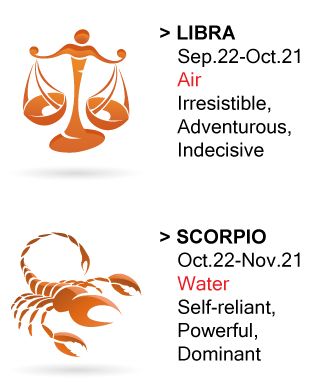
The star signs for astrological September are: Virgo which is linked to Aphrodite (Venus) the Goddess of Love and Libra which is linked to Artemis (Diana), virgin goddess of many things, including hunting, wild animals, children, and birth.

Star signs for September

September

September gets its name from the Romans, for whom it was the 7th Month of the year (septem is Latin for seven). Later, they added two new months so it became our 9th Month. (For more on the Roman year, look at my post here).

It is called Halegmonath in the early English language, or the holy month, named because it is the month of offerings, because of the harvest, and the mellow fruitfulness of September? Medi in Welsh is the month of reaping, and An Sultuine in Gaelic which means the month of plenty.

Roman personification of Autumn from Lullingstone mosaic

Early Modern September and the autumn of Life

Here is an early 17th Century look at September from the Kalendar of Shepherds – for more on the Kalendar, look at my post here.

From the Kalendar of Shepherds

The Kalendar has an additional shorter look at September (see below). And it continues with its theme, linking the 12 months of the year with the lifespan of a man – 6 years for each month. So September is a metaphor for man at 56 years of age, in their prime and preparing for old age.

September from the Kalendar of Shepherds. The last sentence beginning ‘and then is man’ shows the link between September and the beginning of the autumn of life.

Season of ‘mists and mellow fruitfulness

John Keats (1795 – 1821) wrote a great poem called ‘To Autumn’:

Season of mists and mellow fruitfulness,
  Close bosom-friend of the maturing sun;
Conspiring with him how to load and bless
  With fruit the vines that round the thatch-eves run;
To bend with apples the moss’d cottage-trees,
  And fill all fruit with ripeness to the core;
    To swell the gourd, and plump the hazel shells
  With a sweet kernel; to set budding more,
And still more, later flowers for the bees,
Until they think warm days will never cease,
    For summer has o’er-brimm’d their clammy cells.

Who hath not seen thee oft amid thy store?
  Sometimes whoever seeks abroad may find
Thee sitting careless on a granary floor,
  Thy hair soft-lifted by the winnowing wind;
Or on a half-reap’d furrow sound asleep,
  Drowsed with the fume of poppies, while thy hook
    Spares the next swath and all its twined flowers:
And sometimes like a gleaner thou dost keep
  Steady thy laden head across a brook;
  Or by a cider-press, with patient look,
    Thou watchest the last oozings, hours by hours.

Where are the songs of Spring? Ay, where are they?
  Think not of them, thou hast thy music too,—
While barred clouds bloom the soft-dying day,
  And touch the stubble-plains with rosy hue;
Then in a wailful choir the small gnats mourn
  Among the river sallows, borne aloft
    Or sinking as the light wind lives or dies;
And full-grown lambs loud bleat from hilly bourn;
  Hedge-crickets sing; and now with treble soft
  The redbreast whistles from a garden-croft,
    And gathering swallows twitter in the skies.

Written September 19, 1819; first published in 1820. This poem is in the public domain and available here:

First published September 2024, revised 2025
Battle of Crécy August 26th 1346

Jean Froissart - From Chapter CXXIX of Jean Froissart's Chronicles. From Wikipedia ,
Battle of Crécy Jean Froissart’s Chronicles (Wikipedia)

The Battle of Crécy was one of the most decisive victories in the Middle Ages.  Events began with King Philip VI of France declaring the English land in France forfeit.  Henry, Earl of Derby made significant gains in Gascony for King Edward III but then was besieged by the French. He demanded support from the English King. 

So King Edward gathered an army and landed in Normandy.  It was the largest invasion force until D-Day.

Edward burnt his way to Paris.  Within 2 miles of Paris Edward was confronted by superior forces and trapped on the wrong side of the Somme. His army was starved by the French scorched earth policy.

The English, only 6 miles away from the French Army forced their way across a defended tidal ford. Here they broke into an area which had not been scorched and were able to  resupply. This success also restored English moral as the French defenders could not stand against the longbow men.

Sketch of statue of Edward III from Westminster Abbey

King Edward set up a defensive position at Crecy-en-Ponthieu, on land he owned.  It offered protection from flanking attacks and an uphill struggle for the French attackers.  The English dug pits to make French attacks more difficult. The English were badly outnumbered.  Estimates vary but the French at least had double the number of troops.  The English had about 15,000 troops, the French between 30,000 and 100,000.

Aerial view of the battle site according to Google.

The first attack came from Genoese crossbowmen but the English and Welsh longbow men had the advantage of range and the Italians soon retreated.  French men-at-arms attacked in some confusion, killing Genoese as they attacked but were repulsed after terrible fighting.  Wave after wave of French attacks followed. None succeeding.  At the end of the two day battle very few English men were killed and many thousands of French, including the flower of the nobility.

English losses were 300 or less and the French lost are sometimes estimated as 30,000, but a third of that is probably more realistic.

The battle changed opinions about British fighting ability, and showed that heavily armoured wealthy knights could not stand against trained yeoman archers armed with long bows.  The archers could shoot 3 arrows a minute with a range of up to 300 yards. There may have shot half a million arrows.

But it can also be argued that the victory lulled the English into the belief that they could hold France. This led to the fruitless slaughter of the 100 years war which England ultimately lost.

On the other hand Edward III captured Calais which remained an important and strategic asset until the 16th Century.

Google image with the Crecy  in the orange bounded area bottom middle of the screen

Source of image: Jean Froissart – From Chapter CXXIX of Jean Froissart’s Chronicles, example source at http://www.maisonstclaire.org/resources/chronicles/froissart/book_1/ch_126-150/fc_b1_chap129.html

First published 2024, revised 2025