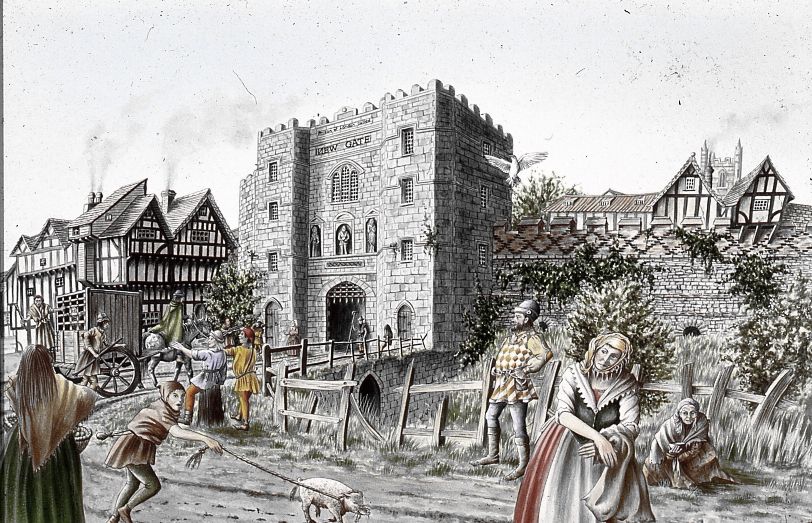
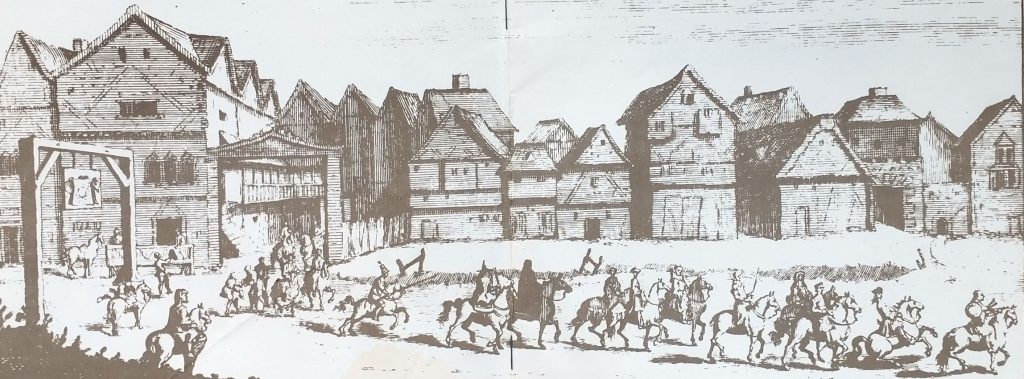
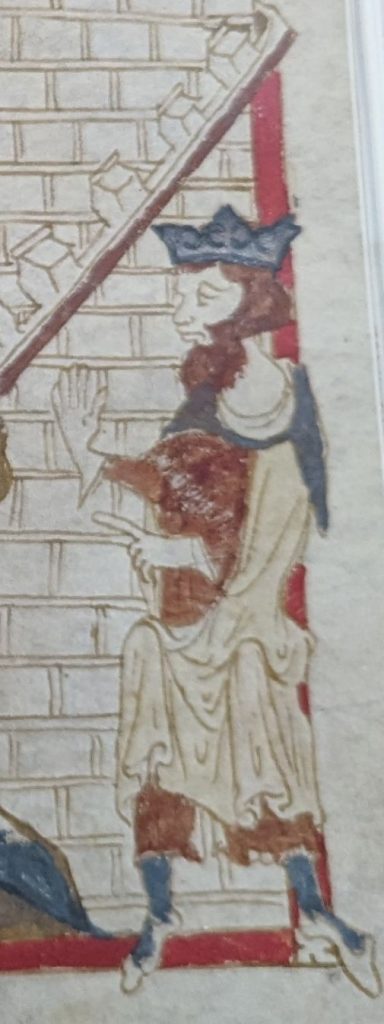
Pilgrims leaving the Tabard for the Canterbury Pilgrimage
Canterbury Pilgrimage
Tonight (April 18th 2026 7.45pm) , I am leading my annual Canterbury Tales Virtual Pilgrimage. This is the day Chaucer’s pilgrims leave London to ride to Canterbury. (For more details or to book look here.) Also, at 11am today i do my Chaucer’s London walk – for details click here.
At the beginning of the prologue, Chaucer gives clues as to the date. They go when April showers and Zephyrus’s wind is causing sap to rise in plants, engendering flowers. It is also when Aries course across the sky is half run. The pilgrims are accompanied by Harry Bailly who is the landlord of the Tabard Inn in Southwark. He was a real person and a fellow Member of Parliament of Chaucer. He is jolly and quite knowledgeable. In the Man of Law’s prologue we get a glimpse of Harry time telling in the days before clocks.
Telling the Time
A mass clock (scratch dial) at Steventon Church. Hampshire, Photo K Flude
Chaucer mentions ‘artificial day’ and this is a reference to the way days were divided into hours. There were twelve hours in the daylight part of the day, and twelve hours in the dark night. So in the winter daylight hours were short, and in the summer long.
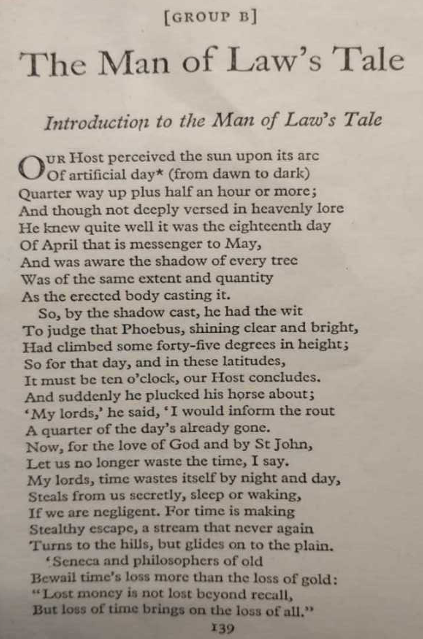
Romans used water clocks. King Alfred used candles marked into hours. Harry Bailly knows how to tell the time by the height of the Sun. Harry tells the pilgrims it’s about time they got underway. Here is an extract:
Essentially, he is telling the time by the length of the shadows. On April 18th the shadows of trees are equal in length to the tree. Showing that the Sun has climbed 45 degrees and in this latitude it must be 10 o’clock. Time to get going on the Pilgrimage!
Mass Clocks & Time Divisions
The illustration of the mass clock at Jane Austen’s Church at Steventon shows how easy it was to tell the time by the sun. The first mass clock I noticed was at St James’ Cooling in Kent. Dickens used this in Great Expectations, where Pip’s brothers and sisters were buried. Once you find one mass clock, you suddenly discover them everywhere!
Telling the time, before mechanical clocks, was not complicated. The basic unit is the day and the night, and we can all tell when the dawn has broken. The Moon provides another simple unit of time. The month’s orbit around the Earth is roughly every 29 days. The new, the crescents and full moons provide a quartering of the month. For longer units, the Earth orbits around the Sun on a yearly basic. But it is easily divided into four, the winter solstice; the spring equinox, the summer solstice and the autumn equinox.
Nature’s Way of Time Telling
But there were other ways of marking days in the calendar, with natural time markers marked by, for example, migrating birds, lambing, and any number of budding and flowering plants such as snowdrops, daffodils and elm leaves:
When the Elmen leaf is as big as a mouse’s ear, Then to sow barley never fear; When the Elmen leaf is as big as an ox’s eye, Then says I, ‘Hie, boys” Hie!’ When elm leaves are as big as a shilling, Plant, kidney beans, if to plant ’em you’re willing; When elm leaves are as big as a penny, You must plant kidney beans if you mean to have any.’
In my north-facing garden, I have my very own solar time marker. All through the winter, the sun never shines directly on my garden. Spring comes appreciably later than the front, which is a sun trap facing south. But on 17th April, just after 12 o’clock the sun peeks over the block of flats to the south of me. It finds a gap between my building and the converted warehouse next door. For a short window of time, a shaft of a sunbeam brings a belated and welcome spring. This for my garden is the real beginning of spring. I took a photo of it this year.
The First Chink of Sun in the year in my Garden. Photo K Flude
New Light on Thomas Becket’s Window at Canterbury
Recent research has revealed the true story behind stained glass windows at Canterbury which had been reassembled wrongly. The story is told here:
On This Day
2026 The Tweed Run is a mass cycle ride around London with everyone dressed in Tweeds. It’s a twelve-mile ride around London (not a run). This year it is starting near Spa Fields, which is near Exmouth Market in Islington. The route is only published on the day of the race. See here for some photos of last year’s run. https://www.tweedrun.com
Magnolia and Cherry blossom in Weymouth Terrace Haggerston London. Photo K Flude
It might already have peaked in London, but there are lots of lovely magnolias still flowering. This year, last week was very hot and plant experts feared it would lead to a brief spring. However, the shirt-sleeve warmth was soon followed by a cold spell, dropping in some places to 0 degrees C. This may have saved the situation and prolonged the spring flowering.
Magnolias, Earnest ‘Chinese’ Wilson, said were the most esteemed of all flowers. He introduced new species from the Himalayas. Magnolias are among the oldest flowers and have their origins in the Cretaceous period. They evolved 100 million years ago before the evolution of bees. So they are pollinated by beetles, which is one reason for the size of the flowers.
The first magnolias to come to Britain were from America. John Banister sent Magnolia Virginiana to Henry Compton Bishop of London, who was also highly involved in the colony in Virginia. Compton sent Banister out as a missionary, but both loved flowers. Banister wrote the first flora of N. America which was included in John Ray‘s Historia Plantarum. Sadly, he was accidently shot while exploring.
Magnolias were named after the French botanist Pierre Magnol (1638-1715) ‘Professor of Botany and Director of the Royal Botanic Garden of Montpellier’. Magnol invented the idea of plant families, which Linnaeus developed.
Herbal uses
Mrs Grieve’s ‘A Modern Herbal’ suggests Magnolia was used for rheumatism and malaria. A warm infusion was thought to be laxative, sudorific (induces ‘sweating so that the sweat runs down the body in rills!’), If cold. If warm was antiperiodic (useful against diseases like malaria which keep coming back) and mildly tonic.
Where to see Magnolias
In London, they can be seen everywhere but Google suggests:
Kensington (Phillimore Gardens, The Boltons), Chelsea (Carlyle Square), and Notting Hill (Lancaster Road). And of course Kensington Gardens and Kew Gardens. My favourites ones are in the roads around my house, often in the most unprepossessing of places.
Magnolias and Camelias in Albion Square, Haggerston,. London. Photo by K Flude
But it is a delight to go to Hidecote the National Trust Property in Mickleton just off the edge of the Cotswolds. In April, it has spectacular magnolias. Unfortunately, I don’t have any good photos except this one which shows all the magnolia petals on the ground!
Hdcote in Magnolia time. Photo K Flude
Ernest ‘Chinese’ Wilson 1876 – 1930
Prunus Serrula, (aka Tibetan Cherry) brought to England by Ernest Wilson. My favourite tree because of its bark which feels like copper. Photo K Flude
He was born in Chipping Camden where there is a lovely memorial garden which contains my favourite tree, and many plants he introduced. He brought back over 2000 species into the West of which 60 are named after him. One of his expeditions took place during the Boxer revolution. So he adopted a native disguise and risked execution.
At 16, he was apprenticed at the Birmingham Botanical Gardens. Then he worked at the Royal Botanic Gardens, Kew. His next adventure was to be hired as the Chinese plant collector with James Veitch & Sons (originally based in Chelsea). He eventually moved to America, where he became keeper of the Arnold Arboretum in Boston. Unfortunately, he and his wife died in a car accident in 1930.
1116 (or 1117) – St Magnus the Martyr Executed. He was executed because of dynastic disputes amongst Vikings in the Orkneys. Magnus lived a pious life refusing, for example, to fight in the Battle of Menai Straits in Wales, and various miracles took place after his death. He is remembered by the Church of St Magnus at the foot of London Bridge in London. But that was, before the 18th Century, thought to be dedicated one or other of the other many St Magnus’s (6). The Church is by Christopher Wren, and very high Church Protestant. On the occasion I visited on his feast day I felt like I was in a Roman Temple.
Google Screenshot welcoming the Beginning of the Financial Year
Why is April 6th the Beginning of the Financial Year?
If you remember, in the medieval period, the official New Year was on March 25th. This was the Day of the Annunciation, the Day Mary conceived Jesus. (for much more on this see my post march-25th-feast-of-the-annunciation/). But in 1752, we followed belatedly, Pope Gregory’s reorganisation of the Julian Calendar. We had to put our days back in sync with the Sun. This had gone 11 days out of kilter since Julius Caesar’s reorganisation of the calendar (see my post here!). As we lost 11 days, we had to put them back. So the beginning of the Financial Year in 1753 was changed to April 5th. A further adjustment in 1800 was necessary, as this would have been a leap year. So the new Financial Year moved to April 6th. And it has remained so ever since. For more on the Gregorian Calendar look here.
Today, we breathe a sigh of relief if we have transferred money into our ISAs or briefed our investment advisers, or rue the day that we didn’t get around to any of it, yet again, or didn’t have any money to take advance of tax breaks.
Exploring Mayfair
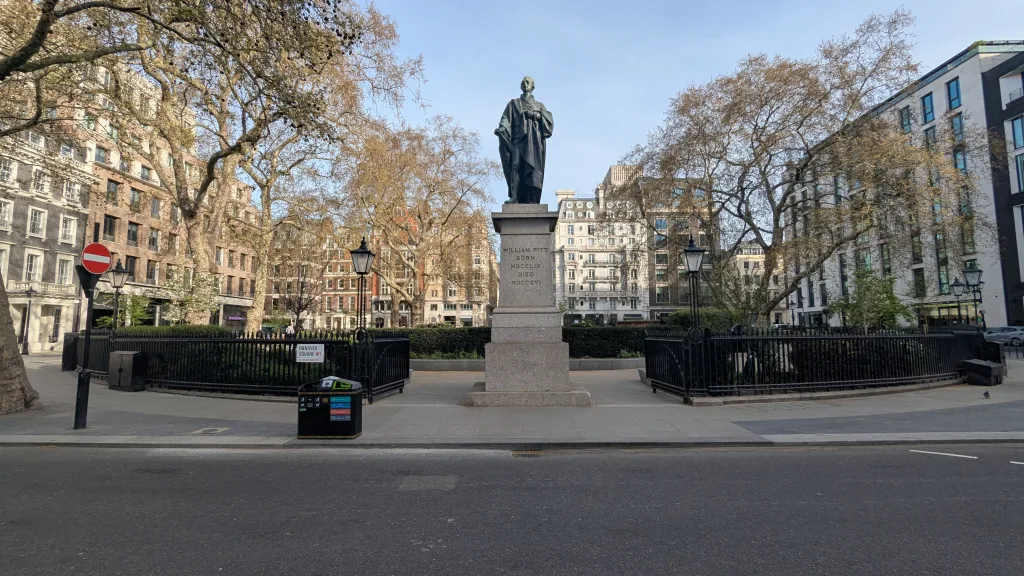
Hanover Square laid out in 1717. Statue of William Pitt the Younger.
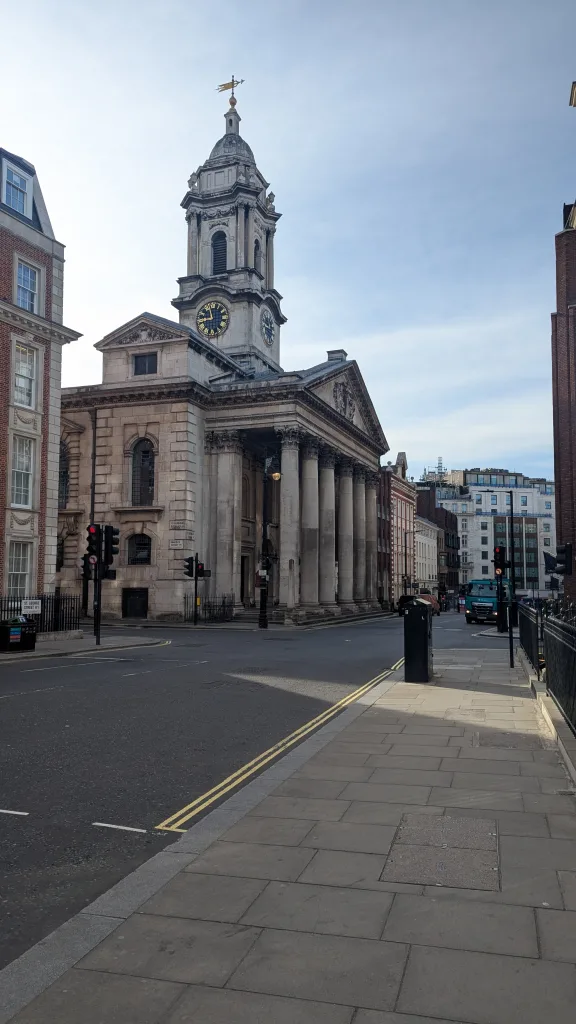
On April 6th 2025, and 2026. I did Jane Austen in Mayfair walks. Today, I met my client at Claridges, (£930 a night). Arriving early, I had a chance to look around, and work out some changes to my Jane Austen walk. I decided to start it at Bond Street, rather than Green Park. This gives a chance to look at Hanover Square, where the tedious Palmers fictionally live (Sense & Sensibility). It is also the location of St George’s Church where Henry Crawford is telling Fanny he will marry her (Mansfield Park). (He won’t).
St George’s Church – St George’s Street, Mayfair London.
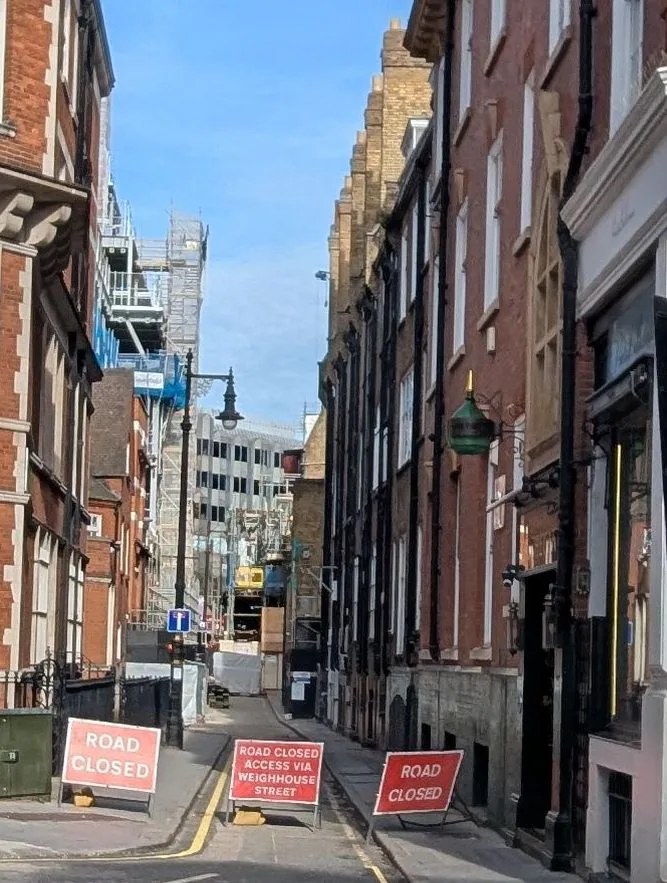
I really love exploring Cities, and here are a few reasons. I knew the Tyburn River used to flow near here. So, I was delighted to see a place where the road to the west rose in height and the road to the east also climbed a small hill. This was the valley of the Tyburn. As I reached the depression, looking left and right, instead of grand boulevards were two pokey little lanes, cutting at an angle in which you could imagine the babbling brook.
Avery LaneS Morton Lane
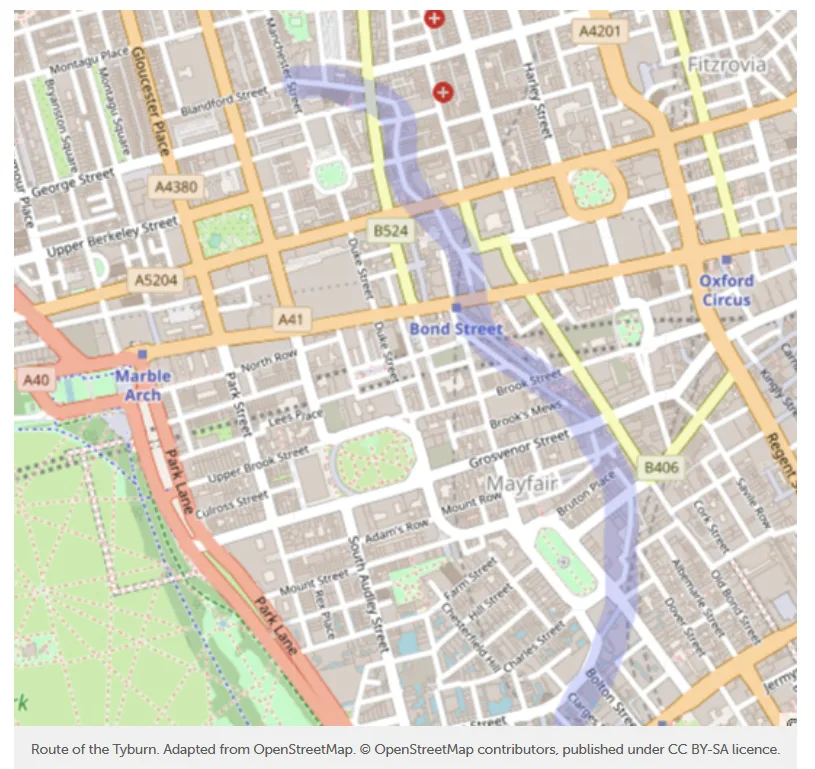
Post walk research confirmed the guess, this was the course of the Tyburn. Below is an open-source map from the Londonist. Look at their post for more on the Tyburn.
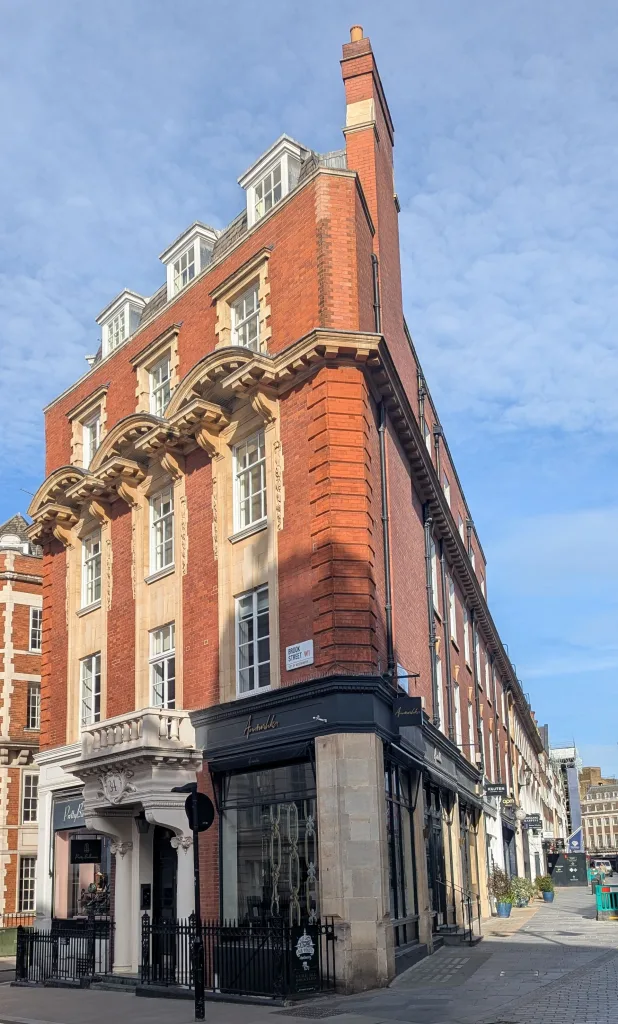
Further down Brook Street were a couple of delightful buildings. First a juxta-position of a Georgian town house with a fine brutalist tower, and then a fabulous triangular brick corner house.
Brook St, London, Photos K Flude
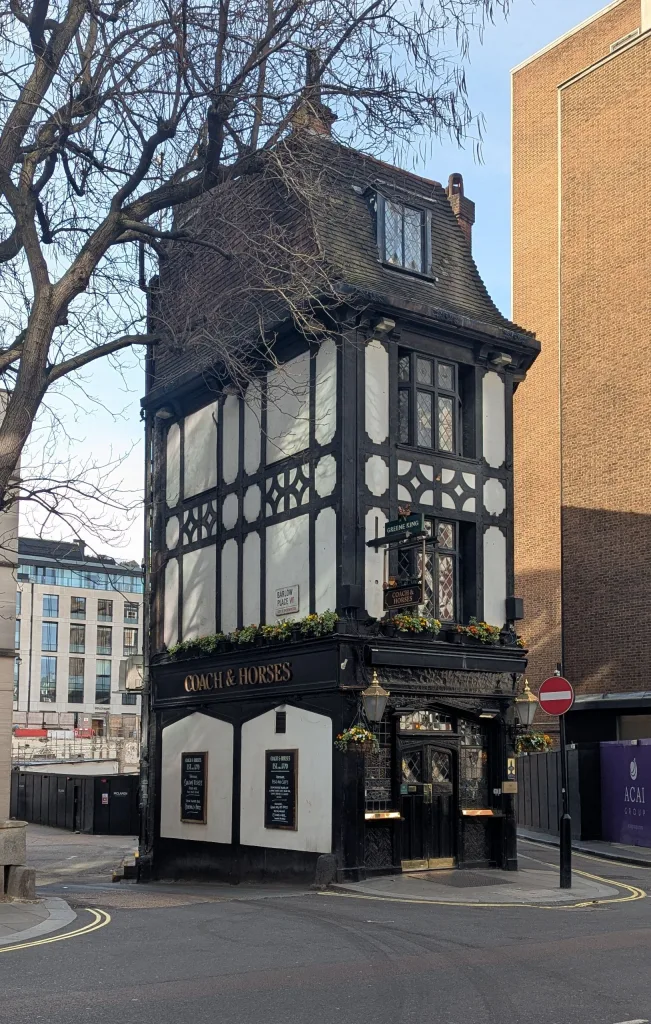
Finally, in Bruton Street just where the Tyburn would have crossed the road was the very epitome of an old inn – the Coach & Horses which survives since 1770, 5 years before the birth of Jane Austen! It is the ‘oldest surviving unreconstructed tavern in Mayfair.’ If you want to do my Jane Austen walk for London Walks, please follow this link.
Coach & Horses Bruton Street Photo K Flude
Object of the Day – Allies
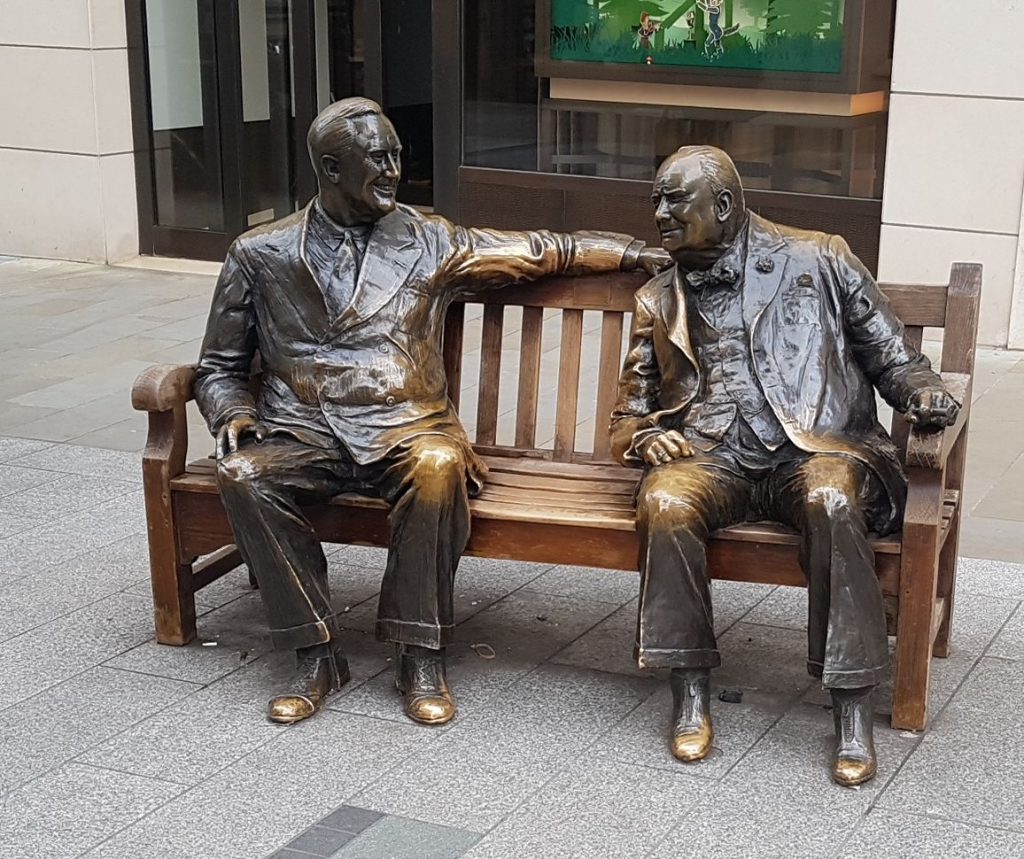
Allies by Lawence Holofcener. 2nd May 1995 to commemorate 50 years of Peace. Photo by K Flude
On my walk, like last year, we saw the statue of Churchill sitting on a park bench chatting with Roosevelt. Seemed like it was from a different world? Given President Trump’s recent statements on NATO?
Details of the Statue
Wise Words on Tariffs.
As it’s the end of the financial year I might be forgiven for keeping in this post words from last year when, coincidentally, I did the same walk. Last year the issue was Tariffs. This is what President Ronald Reagan said about high tariffs.
YouTube video of Ronald Reagan on Tariffs
First Published 6th April 2025, Mayfair content added and post revised 2026
Easter – Lullingstone Roman Mosaic representing Spring
The German name for Easter is Ostern. The English name is Easter which the Venerable Bede, in the 8th Century, derived from the Goddess Eostra. They probably have the same derivation. But this is all the evidence there is for the Goddess, despite many claims for the deep history of Easter traditions.
Easter, Estry and Canterbury
Philip A. Shaw has proposed that the name of Eastry in Kent might derive from a local goddess, called Eostra. Canterbury had a leading place in the development of the early Church both in England and Germany. So, perhaps, this led to the adoption of a local cult name in these two countries. Otherwise, the name for Easter in Europe derives from Pascha which comes from the Hebrew Passover and Latin. In French it’s Pâques, in Italian Pasqua, Spanish Pascua; Dutch Pasen, Swedish Påsk; Norwegian Påske and so on.
Eleanor Parker in her lovely book ‘Winter in the World’ gives a lyrical insight into how the dates were chosen. The Anglo-Saxons held the belief that God would only choose the perfect time for the Creation and the events of Easter. The Creation began with the birth of the Sun and the Moon. So it was fixed to the Equinox, when the days were of equal length, and the fruits of the earth were stirring into life. But Holy Week also needed to be in harmony with the Moon. Therefore, Easter was tied, like Passover, to the first full moon after the Equinox, which is also when the events take place in the Gospels.
Winters in the World by Eleano Parker
The quotations Parker uses from early English religious writing and poetry shows a profound interest in nature and the universe. It is a very appealing viewpoint. It seems to me that this is something the Church lost in later times, and replaced with a fixation with dogma and ‘worship’ of the Holy Trinity, rather than a spiritual sense of wonder at the Universe.
Celtic & Roman Churches in Conflict
At the time, fixing the date of Easter was very controversial as the Celtic Church in Britain had a different calendar to the Roman Catholic Church. Easter fell on a different day. The Anglian King of Northumberland, for example, celebrated Easter on a different day to that of his wife. King Oswiu was exiled to Ireland where he was influenced by Celtic Christianity. His wife, Eanflæd, from Northumberland, had been baptised by the Roman Catholic missionary, Paulinus.
Easter and the Synod of Whitby
Oswiu, became King of Northumberland and ‘Bretwalda’ (ruler of all Britain). He encouraged a reconciliation. This culminated at the Synod of Whitby (664AD), between the two churches. The Celtic Church finally agreed to follow the Catholic calendar and other controversial customs. The Abbess at Whitby during the Synod was Hilda of Whitby. The Celtic position was defended by Bishop Colmán and the Roman position by St Wilfred. Bishop Colmán resigned his position as Bishop of Lindisfarne, returned to Iona and then set up a monastery back in Ireland. Wilfrid studied at Lindisfarne, Canterbury, France and Rome. After her husband’s death, Queen Eanflaed became Abbess of Whitby,
The antagonism between the two churches went back to the time of St Augustine in the early 7th Century. In a meeting between St Augustine and Celtic churchmen, St Augustine was judged to have been arrogant, unwilling to listen. So agreement was not reached. Sometime afterwards, the Anglo-Saxons attacked the Celts at the Battle of Chester. Hundreds of monks from the Abbey at Bangor were slaughtered.
Days off at Easter & Rituals
Ælfric of Eynsham gives a powerful commentary on the rituals of the Church over Easter. They were full of drama and participation. These included Palm leaf processions on Palm Sunday, feet washing and giving offerings to the poor on Maundy Thursday. Then followed three ‘silent days’ with no preaching. Instead there were rituals and services aiming to encourage empathy for the ordeal of Jesus. This included the nighttime service of Tenebrae. All lights were extinguished in the Church while the choir sang ‘Lord Have Mercy’. The darkness represented the despair that covered the world after Jesus’ death. Good Friday was the day for the adoration of the Cross. The Cross would be decorated with treasures and symbolised turning a disaster into a triumph.
It seemed to me that I saw a wondrous tree Lifted up into the air, wrapped in light, brightest of beams. All that beacon was covered with gold; gems stood beautiful at the surface of the earth,….
The Dream of the Rood quoted in Eleanor Parker’s ‘Winter in the World’
The Harrowing of Hell
The days before Easter Sunday are known as the ‘Harrowing of Hell’. This was a very popular theme in the medieval period (featuring in Piers Plowman for example). Jesus went down to hell to free those, like John the Baptist, who had been trapped. Becauase when he died the world had no saviour until the first Easter. The name ‘Harrowing’ comes from ‘Old English word hergian ‘to harry, pillage, plunder’. The ‘Clerk of Oxford’ Blog provides more information on the Harrowing of Hell on this page,
The Clerk of Oxford Blog is written by Eleanor Parker. She started in 2008, whilst an undergraduate student at Oxford. The blog won the 2015 Longman-History Today award for Digital History‘.
The above is but a very poor précis of Eleanor Parker’s use of Anglo-saxon poetry and literature. She brings an Anglo-Saxon Easter to life. So if you are interested to know more please get a copy of her book.
Easter Days off
King Alfred’s law code gave labourers the week before and after Easter off work. This made it the main holiday of the year.
First Published in 2023 and republished in 2025, 2026
This year, Good Friday is on Friday 3rd of April, and the day we eat Hot Cross Buns. The Hot Cross Bun is a simpler sort of bun than the Chelsea Bun, which was the bun to have at Easter in London in the 18th Century.
Hot Cross Buns Good Friday Traditions
There seem to be all sorts of dubious traditions around the origins of the Hot Cross Bun. It has been suggested that the Greeks knew how to put a cross on a bun. Also, that the Anglo-Saxons celebrated the Goddess Eostre with the crossed bun. It is suggested that the cross represents, not the cross, but the four quarters of the moon, the four seasons and the Wheel of the Year. But there is very little evidence for Eostre other than the Venerable Bede’s mentioning her name. Bede says:
‘‘Eosturmonath has a name which is now translated ‘Paschal month’, and which was once called after a goddess of [the English people] named Eostre, in whose honour feasts were celebrated in that month’ (quoted from florencehrs.substack.com/p/eostre-pagan-fertility-goddess)
So nothing is known about Eostra herself nor her rituals and customs. So her association with Hot Cross Buns cannot be known. However, the cross, and the association with Easter, makes the bun powerful, so there are many superstitions on record. A piece of an Easter Hot Cross Bun given to the sick may promote a cure. It was said that a bun cooked and served at Easter will not go off for a year. This might help explain the traditions that hanging them up on a string or ribbon is a good thing. One hung in a kitchen prevents fire. On a ship prevents sinking. In East London, the Widow’s Son Pub in East London has an old bun. This remembers a sailor-son who never returned to eat it on Good Friday.
Making and Eating Hot Cross Buns
The technology of putting a cross on a Bun requires nothing more complicated than a flour and water paste so it might well be an ancient tradition. A more impressive cross can be made with shortcrust pastry. The bun itself is simply flour, milk, butter, egg, salt, spices and mixed fruit. Here is a recipe from the BBC www.bbcgoodfood.com
In my opinion, they need to be purchased from a shop. Home-made Hot Cross Bun might be better but would be strangely disappointing. It’s normally eaten toasted and buttered although I prefer the soft doughy untoasted and unbuttered bun. But then I can get carried away and eat the entire pack of four.
‘RRRRRare Chelsea Buns’ as Jonathan Swift called them in a letter to Stella in 1711.
Fragrant as honey and sweeter in taste As flaky and white as if baked by the light As the flesh of an infant soft, doughy and slight.
The buns were made from eggs, butter, sugar, lemon and spices. The tradition was that, on Good Friday, 18th and 19th Century Londoners would go to Chelsea to buy Chelsea Buns. Thousands of people would turn up at the Five Fields. These stretched from Belgravia to what is now Royal Hospital Street. There were swings, drinking booths, nine pins and ‘vicious events that disgraced the metropolis’. The Bun House was on Jew’s Row as Royal Hospital Street was then called. As several King Georges visited the Bun House it became known as the Royal Chelsea Bun House. It was run by the Hands family. They were said to sell 50,000 Buns on the day. Stromboli tea garden was nearby.
Chelsea Cabinets of Curiosity
Inside the Chelsea Bun House was a collection of curiosities. Chelsea became known for its collection of curiosities in the 18th Century. Of course, there was the great Hans Sloane’s collection which was the founding collection of the British Museum. And then there was Don Saltero’s which was a coffee house that had curiosities on the wall. The Bun House displayed clocks, curiosities, models, paintings, and statues on display to attract a discerning Public.
Find me a Chelsea Bun! (Or make one yourself!)
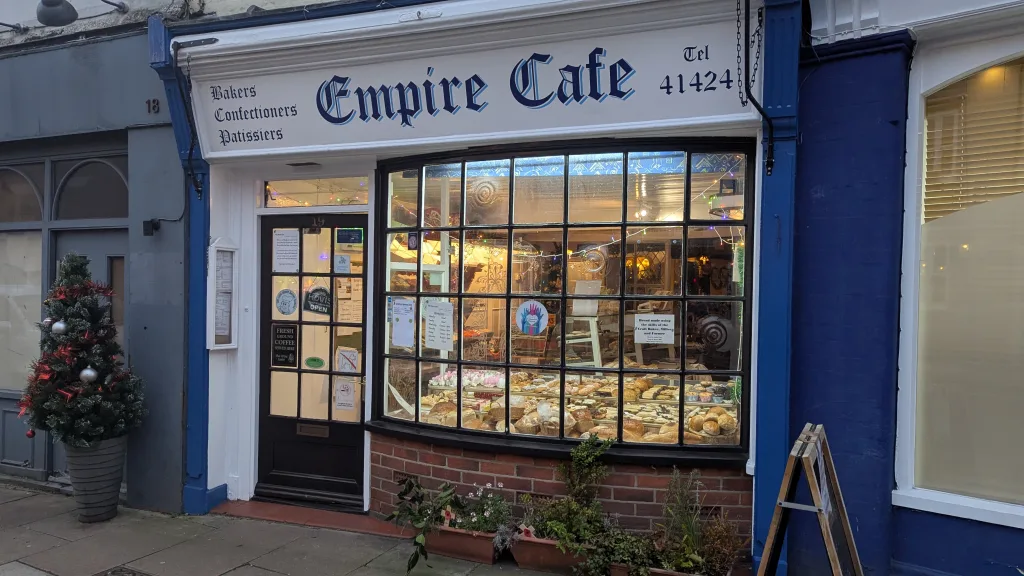
Me. I love a Chelsea Bun above all buns, But can you get them any more? The British Library Cafe was the last place I found that sold them. And that was 7 years ago. I did Chelsea Buns on sale in the Empire Cafe in Newbury but apart from that nada. Their place has been taken first by Danish Pastries and more recently the ubiquitous Cinnamon Bun. If you see any Chelsea Buns on sale please let me know.
Chelsea Buns, middle top row, next to the white cakesEmpire Cafe baking in Newbury since 1874
There is a tradition of Skipping on Good Friday. I can’t say I ever saw it – in my school skipping was a perennial activity, mostly enjoyed by the girls, but the boys would sometimes be intrigued enough to join in.
Copy of the Last Supper by Leonardo da Vinca at the Collection Gallery, Royal Academy, UK (Copy made 1515-1520, and was in the Carthusian Monsatery at Pavia in the 17th Century before being brought to the RA in the 19th Century) Photo K flude
April 2nd, 2026 is the day before Good Friday. It was on the Wednesday or the Thursday that the Last Supper took place. So I have relocated my ‘Sandals of the Saints’ post to here.
Whilst visiting Flaming June at the Royal Academy, it was nice to have another look at the RA’s copy of the Last Supper. What strikes me most is their sandals (and the beautifully pressed table cloth).
Detail of the RA Sandals in the copy of the Last Supper Photo Kflude
Details that bring the past to life. The shoes would surely sell today, while the table cloth really destroys the common idea that the past was dirty and smelly. It wasn’t. People took pride in their appearance and surroundings. Just look at the ironing!
Here, by way of contrast, is a medieval shoe from the 14th Century from the Museum of London. And this is a link to the Museum of London’s collections of medieval shoes, most have been collected from excavations, and it is one of the best collections.
On This Day
Today is St. Urban of Langres Day.
He is the patron of Langres; Dijon; vine-growers, vine-dressers, gardeners, vintners, and coopers. And invoked against blight, frost, storms, alcoholism, and faintness. (www.catholic.org/saints/) But is also called upon to make maid’s hair long and golden.
On the feast of St Urban, (forsooth) maids hang up some of their hair before the image of St Urban, because they would have the rest of their hair grow long and golden.
Reginald Scott, the Discovery of Witchcraft, 1584. (Thanks to the Perpetual Almanac by Charles Kightly.) For more on Reginald Scott and Witches see my post.
1744 – First Golf Tournament. No, not at St Andrews but at Leith Links, Edinburgh.
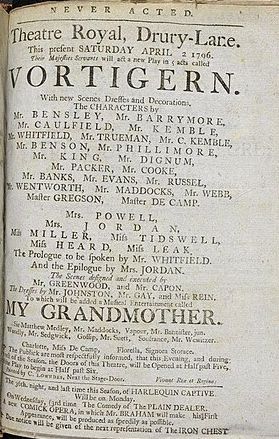
Bill for the 1796 play Vortigern and Rowena Public Domain Wikipedia
1796 – A great cast at the Drury Lane Theatre, owned and managed by Sheridan, put on a newly discovered play by William Shakespeare. The cast included Kemble, Barrymore, and Mrs Jordan, who was the mistress of Prince William (aka William III). Rumours swirled around about the authenticity of the play. Shakespeare was interested in Britain’s legendary history, having written Cymberline and King Lear. But critics thought it was too simple to be genuine. Eventually, William Henry Ireland admitted he was the author.
‘A London Year’ by Travis Elborough and Nick Rennison has a great quote from a visit to the play. It took place on April 2nd 1796 and is recorded in Joseph Farington’s diary. Compare this description to your last polite experience at the Theatre.
Shakespeare’s forgery staged
‘Island’s play of Vortigern, I went to. Prologue, spoken in 35 minutes past six, play over at 10. A strong party was evidently made to support it, which clapped without opposition frequently through near three acts. When some ridiculous passages caused a laugh, which infected the house during the remainder of the performance, mixed with groans. Kemble requested the audience to hear the play out about the end of the fourth act, and prevailed. The epilogue was spoken by Mrs. Jordan, who skipped over some lines which claimed the play as Shakespeare’s
Barrymore attempted to give the play out for Monday next, but was hooted off the stage. Kemble then came on. And after some time, was permitted to say that ‘School for Scandal’ would be given, which the house approved by clapping.
Sturt of Dorsetshire was a Stage Box drunk and exposed himself indecently to support the play. And when one of the stage attendants attempted to take up the green cloth, Sturt seized him roughly by the head. He was slightly pelted with oranges. Ireland, his wife, a son and a daughter and two others were in the centre box at the head of the Pitt. Ireland occasionally clapped. But towards the end of the fourth act, he came into the front row and for a little time, leaned his head on his arm. And then went out of the box and behind the scenes. The Playhouse contained an audience that amounted to £800 pounds.’
April 2nd 1796 from Joseph Farington’s Diary, (I have changed some of the punctuation.)
Who Was Vortigern?
Vortigern’s history is shrouded in Myth. But he was chosen as leader of Britannia after the Romans withdrew in the early 5th Century AD. His name means Great Leader in Brittonic. He is one of the few leaders we know to be a real person in what used to be called the Dark Ages. We accept him as real, as he appears in the near contemporary source by the Monk Gildas.
However, very little is known of him except legends. He was associated with Merlin. Legend accuses him of betraying the British for the lust for Rowena. She was the daughter of the Saxon Leader Hengist. Whatever the truth of this, Vortigern continued the late Roman policy of hiring Germanic mercenaries. They defend Britannia against Picts, Irish, Scotti,and, of course the Saxons. The legends say that Hengist and Horsa were hired with their three ‘keels’ of Saxon mercenaries. In payment for services rendered, or for lust, Vortigern surrendered the sovereignty of Kent to the Saxons. Thus began the so-called ‘Adventus Saxonum’, and the destruction of the power of the Britons.
Kent and the Survival of pre-Saxon names
Medieval portrait of Vortigern
How much of this is ‘true’ we have no idea. But the name of Kent survives from the prehistoric, into the Roman, unlike most tribal names. And unlike most tribal names survives to the modern day. Who now has heard of the Trinovantes, the Catuvellauni, Regneses or the Atrebates. The pre-Roman tribe were called the Cantii, or the Cantiaci. Caesar says they had 4 Kings, and the Cante part of Canterbury comes from their name. Why did the name survive? Probably because it was the first Roman Civitas to be taken over by the Saxons. Most likely still largely a working political unit. So it kept its name. The other Roman political units mostly lost their names in the anarchy of this period. The political boundaries from the Prehistoric period survived through the Roman period. But the names at least do not survive the fall of Rome.
Maundy Thursday Money Pouches. and cover of the Order of Service for Royal Maundy service 1974 Photo Wehwalt
Maundy Thursday Meaning
Maundy Thursday is on April 2nd in 2026. This is the last day of Lent, and the day before the Passion. It’s also called Holy Thursday when Christians remember the Washing of the Feet, and the Last Supper. . Maundy is thought to be from the:
‘Latin word mandatum, or commandment, reflecting Jesus’ words “I give you a new commandment.’ (Wikipedia).
I much prefer the derivation of Maundy Thursday from the English Kings giving alms to poor people.
‘English name “Maundy Thursday” arose from “maundsor baskets” or “maundy purses” of alms which the king of England distributed to certain poor at Whitehall before attending Mass on that day. Thus, “maund” is connected to the Latin mendicare, and French mendier, to beg.‘
The monarch gives out money in special red and white pouches to old people. In modern times, the money is specially minted for the occasion. It is now more symbolic than a practical gesture. But It dates back to the 13th Century, when the money was a vital lifeline for its recipients.
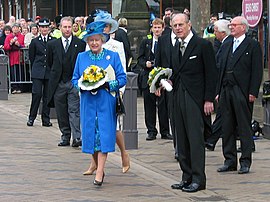
Queen Elizabeth II and Prince Philip after the 2005 Royal Maundy Ceremony at Wakefield Cathedral. Photo Runner1928
In 1572 Queen Elizabeth 1 washed one foot of a group of poor women, then wiped, crossed and kissed them. In fact, the Queen was ‘protected ‘ as the women first had their feet washed by the laundress, then the sub-almoner, then the almoner. Only finally by the Queen. (The Perpetual Almanac of Folklore by Charles Kightley’)
When was The Last Supper?
One scholar, Prof Humphreys author of ‘The Mystery Of The Last Supper’, (2011) has reconciled differences between John and the other evangelists. He believes two calendars were in use, one from before the exile and the other using a Babylonian Calendar. This confusion means that there is too much going on between the Last Supper and the Crucifixion. He suggests that the solution is that Last Supper was on the Wednesday not the Thursday. He also calculates a date for the Last Supper as:
Wednesday, 1 April AD33.
Maundy Thursday at Chester Cathedral
Last year, I was in Chester Cathedral on Maundy Thursday where the Diocesan Eucharist was held. The Cathedral was awash with Clergy, (I counted at least 4 Bishops) and most of the priests in the area.
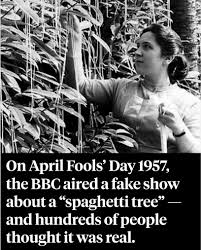
The Famous Spaghetti Tree April Fool’s Joke (from facebook)
First Reference to April Fools Day
The first unambiguous British reference to April Fools Day is by diarist John Aubrey’s “Fooles holy day” in 1686 – although he might have been referring to Germany.
‘We observe it on ye first of April… And so it is kept in Germany everywhere.’ For more details read hoaxes.org.
Chaucer and April Fools Day
But there is a possible earlier reference in Chaucer in the Nun’s Priest’s Tale. This I find quite compelling but most Chaucer scholars don’t. This is the text:
When that the monthe in which the world bigan That highte March, whan God first maked man, Was complet, and passed were also Syn March bigan thritty dayes and two
So, if you have been keeping up with me, you will know that the first lines are referring to March 25th. This was the day Adam and Eve were created. The day when the Church started the New Year and the year number moved one on. This was a major Church festival, usually followed by a week of holiness. The Roman New Year, January 1st, ended with a light-hearted festival called Saturnalia, and it is suggested that April 1st was, similarly, a day of release after the festival of the official Church ceremony of the New Year.
Chaucer’s last line says ‘Since March began thirty-two days have passed.’ A foolish person would not realise this is a reference to April 1st. Hence, this suggests a Fool’s Day already existed. Some scholars think that Chaucer was referring to May 2nd, counting the 32 days not from the beginning of March but from the end of March. I think they look at the second and third lines which read ‘That high March…. was complete’ and so add the 32 days to the end of March. Foolish in my opinion and not reading what actually Chaucer wrote which is ‘Since March began….’
Hunting the Gowk
Generally, in Britain, we play a prank and say ‘April Fool’ with great delight. But we are not allowed to continue beyond midday. The Scots used to call it ‘Hunting the Gowk’ and the main prank was to give someone a letter to deliver, and the person who opened the letter would read:
“Dinna laugh, dinna smile. Hunt the gowk another mile” and send the fool onto another leg of his or her’s fool’s errand. In Ireland the letter would read ‘send the fool further’.
April Fools Day and Spaghetti Growing on Trees
I nearly always forget to honour April Fool’s Day (or April Fish Day as the French call it). But in Britain, somewhere in our newspaper or TV station there is an April Fools Joke slipped in. The most remembered is the BBC piece showing film of Italian Farmers picking spaghetti from trees.
2026 – Introduction of Coffee to England 200 years earlier than previously thought!
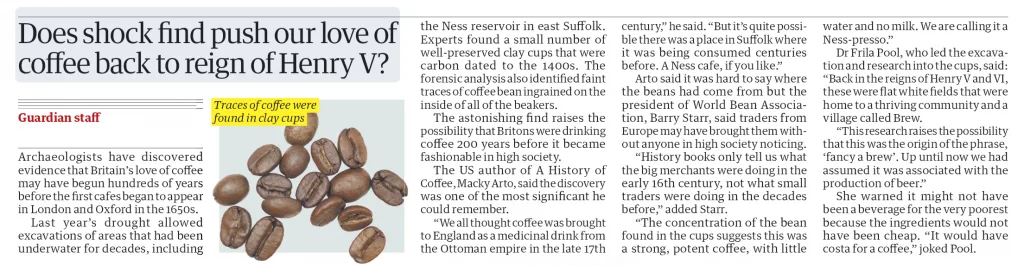
I have had a quick look at the Guardian for their 2026 April Fools Day Story and I think it is this one:
Guardian April Fools Joke for 2026
The clues are the expert is called Macky Arto. The find was in Ness, allowing them to say ‘Ness Cafe’, and ‘Ness-presso’, and the use of a pun ‘It would have costa for a coffee.’ The final confirmation is this sentence: ‘Back in the reigns of Henry V and VI, these were flat white fields …. and a village called Brew.’ Allowing the journalist to make up an origin for the expression ‘Fancy a Brew?’ it goes on to say.
2025 – Coffee Cups as Haut Courture?
Guardian April Fools Day Joke article or the world gone mad?
‘Meghan Markle was criticised after it was revealed that when you put her lifestyle brand name – American Riviera Orchard – into the What3words location service, it points to a statue of Oliver Cromwell, who famously had a King Charles executed‘
2023 – “Megxit: Call of Duke-y”
In 2023, Harry and Megan proved irresistible and the Guardian reported that:
‘The Sun published a piece announcing the launch of Prince Harry and Meghan’s new video game “Megxit: Call of Duke-y” in which the royal couple try to reach California while dodging obstacles, including rival royals and the media, along the way.‘
This post is about April Fools Day. But it is also the anniversary of the formation of the RAF.
On This Day
1854 – Hard Times by Charles Dickens Serialised in Household Words. A recent study of Victorian Grave yards in Yorkshire highlights the grim reality for young children. For the article see: https://core.ac.uk/reader/220156990
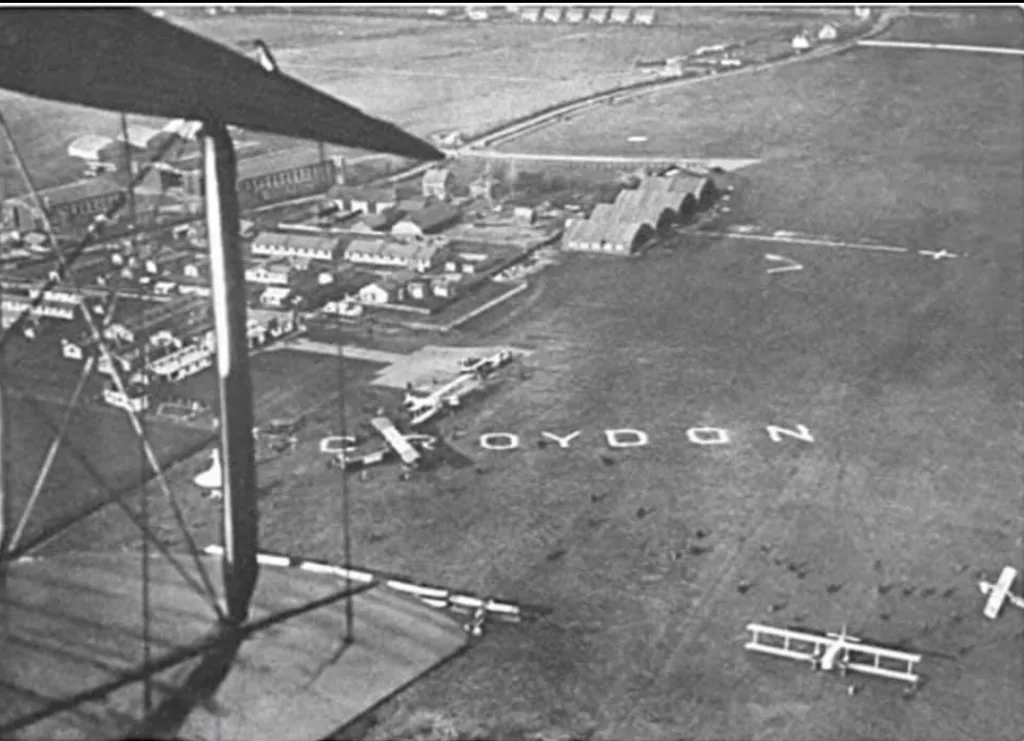
1918 – Near the end of World War 1 the Royal Flying Corps (RFC) and the Royal Naval Air Service were merged to create the Royal Air Force (RAF). It was the world’s biggest air force, and went on to secure Britain from invasion by Hitler.
Croydon RFC/RAF base for anti-Zeppelin Raids in WW1 and one of the world’s first international airports.
RAF Rigger, Benjamin Flude
My Grandfather was in the RAF as a fitter. My father tells some of his story in his autobiography ‘A Boy from Haggerston’:
Benjamin Flude in RFC Uniform. My father, Ben Flude remembers a small model biplane hanging from the portrait.
‘I was 9 months old when he died, and he was just 28 years old. Everyone seemed to like him, and as a child, he was always my hero. In my imagination, I promoted him to being a brilliant and brave Ace RAF Pilot. But he was, in fact, a mechanic rather than a pilot in World War I. Following the war, he worked with Imperial Airways in Purley, Croydon. I don’t know the exact details and so have to piece the story together from the little information I have at my disposal.
My friend, Roy, tells me that the badge on his uniform in the oval picture is of the Royal Flying Corp. (RFC). But they were disbanded in 1916/17, and replaced by the RAF thereafter. As my dad was born in 1900, he must have joined up to fight in the war while underage at 16 or 17 as a volunteer. ‘
How a London lad became a Rigger for the RFC we don’t know, but the Fludes at that time were all employed as umbrella or walking stick makers in the East End of London. I think it is a case of transferable skills. WWI aeroplanes were made of wood, metal wire and fabric, which is precisely what an umbrella is made of.
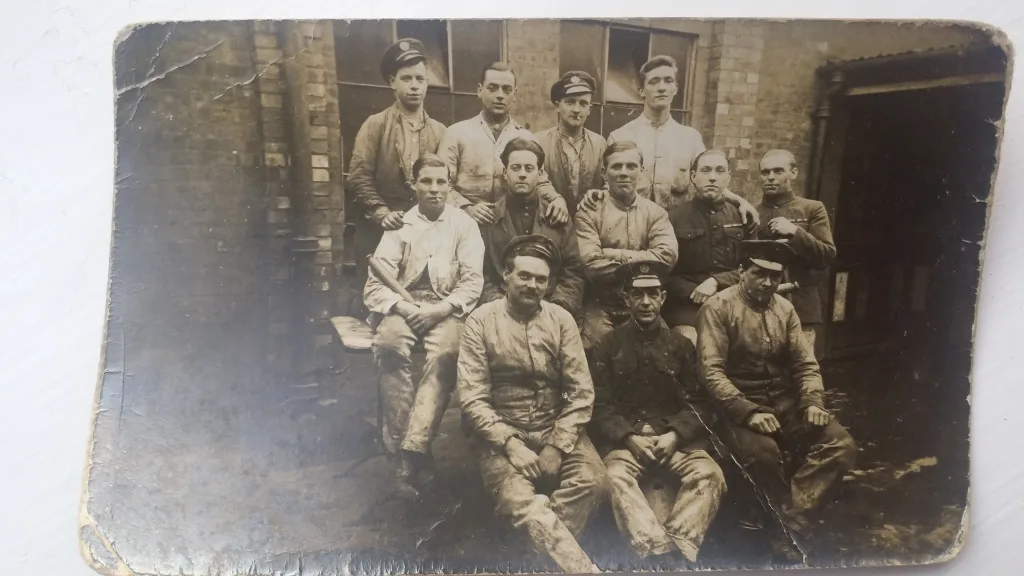
RAF/RFC mecanics c 1917 . My grandfather is the handsome man standing tall in the back row extreme right
RAF Mechanic Ben Flude
My father went on to serve in the RAF during his national service: He writes:
Ben Flude RAF Metfield. (dad is lying down at the bottom right. he is now 98)
‘Early in 1946 I received my call-up papers for the RAF. I was to report to the Recruitment Centre at Padgate in Lancashire. This is where I received my uniform after a medical examination, and then there were a number of intelligence/aptitude tests when they decided what trade I would join. I tried to get Air Crew and while there were no vacancies, I did have a wide group of trade offers open to me. The group that I was interested in was aircraft maintenance and repair, following in my Dad’s footsteps.’
‘However, before I could start, I had to do my basic training. This was designed to get you fit, and we did plenty of square-bashing or parade drills. For this, they sent me to Metfield in Suffolk, which had only very recently been made available to the RAF by the American Army Air Force. In fact, it was so recent a hand-over that whilst on picket duty, a coach rolled up packed with girls who were so disappointed by the lack of Americans that they got straight back on and returned to Ipswich! The motto of ‘overpaid, oversexed, over here’ certainly applied to these Americans in Suffolk.’
‘We found out that Metfield had been a US Army Air Force Base, where two squadrons of Flying Fortresses operated from. In all the Nissen Huts, those with the semicircular roofs, the ceilings were completely covered with pin-up pictures. My bed was just feet away from the huge Crocodile Stove, round which every evening we all clustered – as it was warm.‘
Interior of Nissan Hut 1944, Lasham
Dad specialised in the recovery of instruments from crashed planes, and was complimented by Air Chief Marshal Hugh Caswall Tremenheere Dowding, 1st Baron Dowding, GCB, GCVO, CMG on his ability to fix an instrument he had never seen before.
First published March 25th 4004 BC and republished yearly on every April Fool’s Day. The section on the meaning of April moved to my post on April 2025. On This Day added in 2026
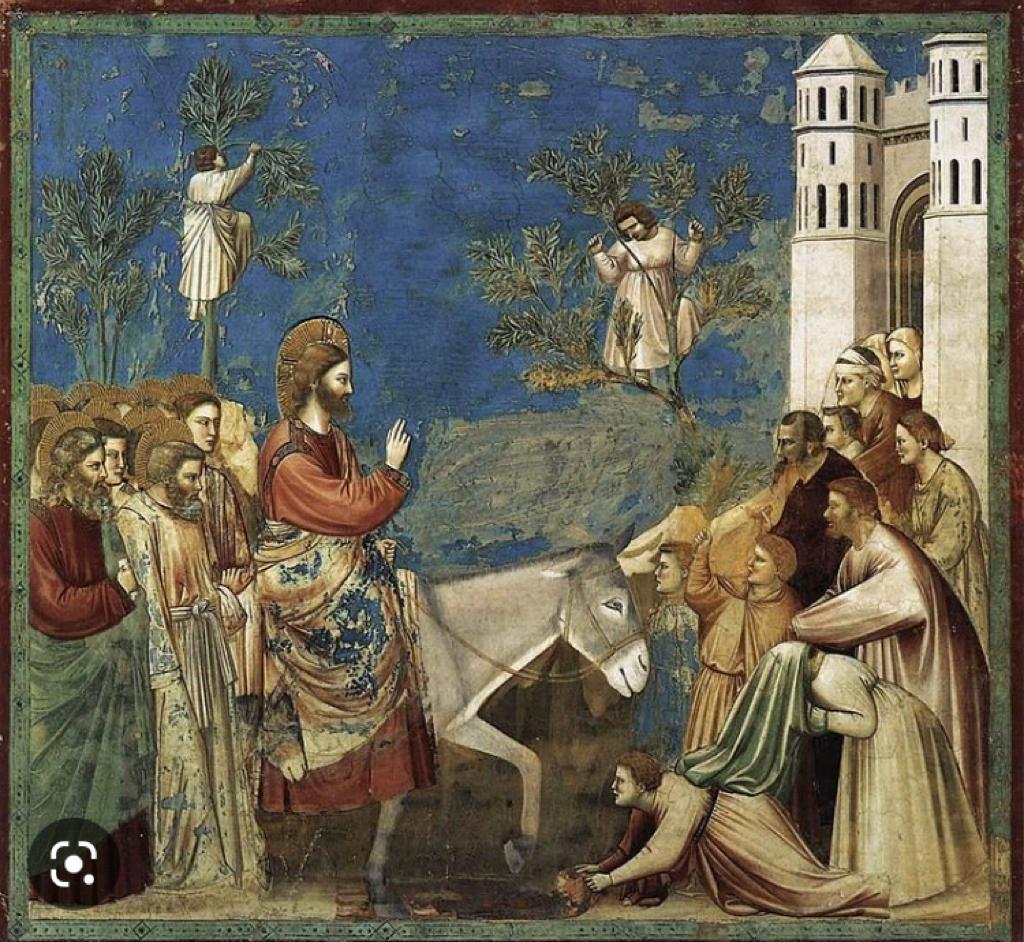
Palm Sunday (Yew Sunda) by Giotto. Entry into Jerusalem from the Cappella degli Scrovegni in Padova (sent to me by Lucia Granatella)
Yew Sunday (Domhnach an Iúir in Irish) is the medieval name for Palm Sunday. This is the day that Jesus entered Jerusalem in triumph on a donkey, with palm leaves being laid in front of him. It has always been very curious to me, this triumph preceded such heavy and heartbreaking tragedy. It is the Sunday before the Betrayal, which leads to the Crucifixion on Good Friday and the Resurrection on Sunday. A busy week for the Church.
I got a little insight into the powers of the procession when on a Field trip to Nice with Students from Central Saint Martins College. We set the Students the task of creating an ‘art intervention’. They came up with the idea of a Procession to the Mayor. It was extraordinary how deploying a few placards, saucepans as drums, and some chanting could create an instant event,. It made people smile and join in, even if clueless about the cause!!
Palms
Palm Sunday can be celebrated by making crosses out of palms, or with processions bearing palm branches or eating special cakes. There is always room in any ritual for cake). But in the North, where do you get your Palms from? So, it was often substituted by Box, or Olive or Willow and particularly, in Britain and Ireland, by Yew. Yew is evergreen and is so long-lived as to be a symbol of everlasting life. (I wrote more about the Yew here). See also my post on Ash Wednesday.
Giotto Bondone
Giotto was a Florentine painter of the 14th Century of whom Giorgio Vasari, in his essential guide to the artists of the Renaissance, ‘The Lives of the Artists‘ said of the 10 year old:
One day Cimabue, going on business from Florence to Vespignano, found Giotto, while his sheep were feeding, drawing a sheep from nature upon a smooth and solid rock with a pointed stone, having never learnt from any one but nature. Cimabue, marvelling at him, stopped and asked him if he would go and be with him. And the boy answered that if his father were content he would gladly go. Then Cimabue asked Bondone for him, and he gave him up to him, and was content that he should take him to Florence.
There in a little time, by the aid of nature and the teaching of Cimabue, the boy not only equalled his master, but freed himself from the rude manner of the Greeks, and brought back to life the true art of painting, introducing the drawing from nature of living persons, which had not been practised for two hundred years; or at least if some had tried it, they had not succeeded very happily.
Written in 1550.
Giotto & The Development of Perspective
If you look at the painting, above. you will see, even the faces of the people are rounded and, and at least somewhat, individual. The crowd scene, particularly, to the right, has some depth. The people further away seem to recede from the viewer. This contrasts with the Byzantine style of paintings, where figures either float or seem to stand on or support themselves on each other’s shoulders. The Gate into Jerusalem has been rendered by an arist who has seen something that he believes has the key to realistic scenes. One day it will be rediscovered, and named single-point perspective.
Yes, Giotto doesn’t know the secret but he is working to find out what the trick is. The people in the trees are also in the distance. These are the giant strides that Vasari is referring to in the quotation above. Realistic people, in spaces with depth. The donkey is quite sweet too! Cimabue, Giotto’s Master was particularly good at painting Crucifix scenes.
For more on early attempts at creating perspective, see my post on Duccio and the Annunciation here.
Digital tour of the Cappella degli Scrovegni
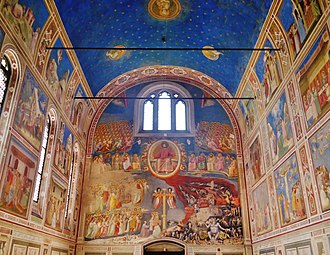
The Cappella degli Scrovegni in Padova is a World Heritage Site decorated by Giotto and his team. They covered all the walls and ceiling with frescos. Depicting the Life of Jesus, the Life of Mary, and the Last Judgement.
Giotto, The Last Judgement. Cappella degli Scrovegni, In Padova. Wikipedia
Here is a real Digital Heritage treat – a 360 Degree tour of the Chapel! Follow the link below. If it seems to be taking a long time to load press the information button. Once pressed will allow the panorama to load immediately.
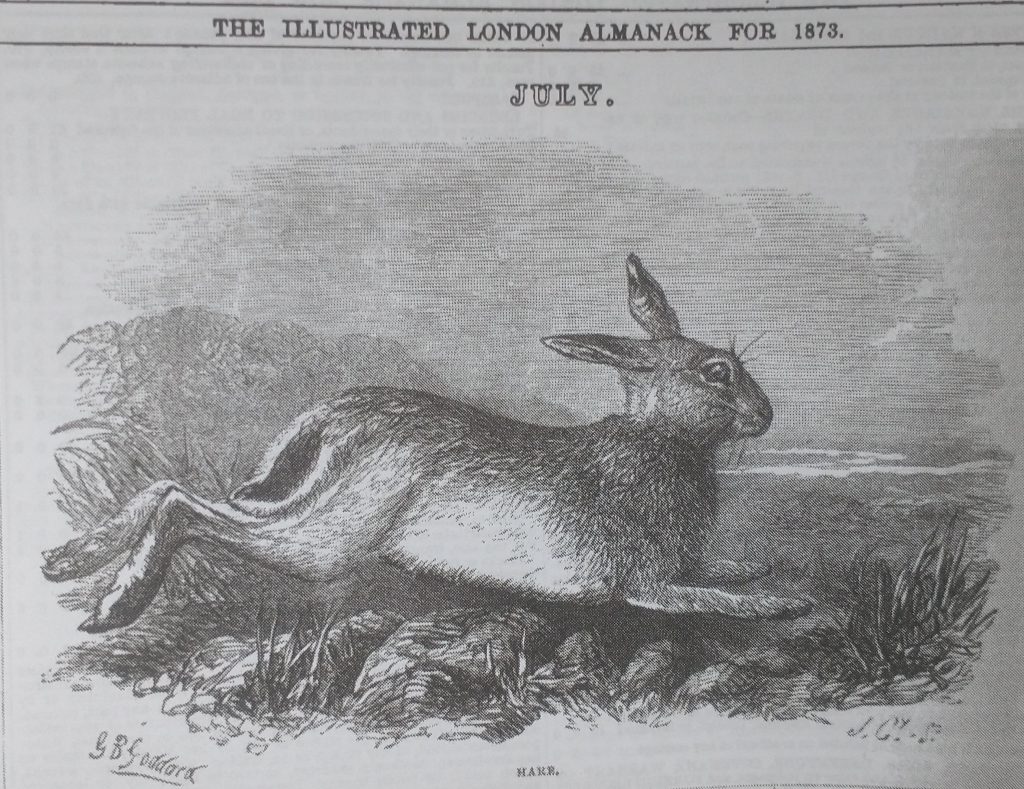
The expression ‘Mad as a March Hare’ comes from the displays of hare boxing that takes place as the Hare mating season begins. And no, it’s not the male March Hare fighting in the spirit of romantic rivalry. It is the female hares fighting off unwanted attention from the males. Hares are solitary creatures, and the mating season is, perhaps, particularly difficult for them. The Country File website has more on the subject. www.countryfile.com
Not only March Hares but March Kittens too
There are also March Kittens and March Chickens. Edward Topsell in his ‘History of Four-footed Beasts‘ 1607 says the best Kittens to keep are those born in March. ‘The Closet of Sir Kenelm Digby Opened‘ 1669 says:
‘Keep a black cock hatched in March as a protection against evil spirits: his crowing terrifies them.’
He also gives a recipe for Cock Ale:
Eight gallons of Ale, a boiled March Cock, four pounds of stoned Raisins, half a pound of dates, nutmegs, mace. Beat the ingredients in a mortar, add to two quarts of Sherry. Add to the ale. Stop it in a container for 6 or 7 days. Bottle it, drink after a month.
Very weird. I challenge my readers to try it and let me know how it goes?
Was the March Hare Sacred?
But it’s not only March Hares because the hare itself was a sacred animal. It was sacred to Aphrodite because of their prodigious ability to have offspring:
‘For you know, I imagine, what is said of the hare, that it possesses the gift of Aphrodite to an unusual degree. At any rate it is said of the female that while she suckles the young she has borne, she bears another litter to share the same milk; forthwith she conceives again, nor is there any time at all when she is not carrying young.’
Classical Texts Library. Philostratus the Elder, ‘Imagines’ Book 1.1-15 c 3rd Century AD. Translated by Arthur Fairbanks.
Divine Celtic & Neolithic Hares
Research reported by Exeter University suggests that hares were worshipped in pre-Roman Britain. Julius Caesar wrote:
“The Britons consider it contrary to divine law to eat the hare, the chicken, or the goose.”
‘The Battle for Gaul’ Translation by Wiseman, Anne, Wiseman, T. P. Published by Penguin Random House, 1980 ISBN 10: 0701125047 (TP Wiseman was my professor for Classical Studies at Leicester University).
Hares are thought to be the original Easter Bunny. But finding good evidence before Germany in the early modern period is difficult. There is a tradition that witches can be scared away at Easter. Exactly, how this works is not at all clear to me. But it has been said that witches could take on the form of a hare. So eating Hare Pie at Easter helps rid the land of the witches.
Jugged Hares
You could have a jugged hare. Jugging is cooking a whole animal in a container over water. Follow this link for a recipe for jugged wild hare. Remember, you are not allowed to shot or trap them on a Sunday or on Christmas Day! For a discussion of hares and folklore, click here:
Hare’s Feet Totems
A jointed hare’s foot was considered very lucky and a remedy against gout, stomach pains and insomnia. (The Perpetual Almanack of Folklore by Charles Kightly, which I have used several times in this piece.) You can buy one on eBay. (Don’t click the links, it’s not an advert but a picture of an advert). I remember friends having rabbit feet which they carried around with them for luck. The foot would often be on a key rings.
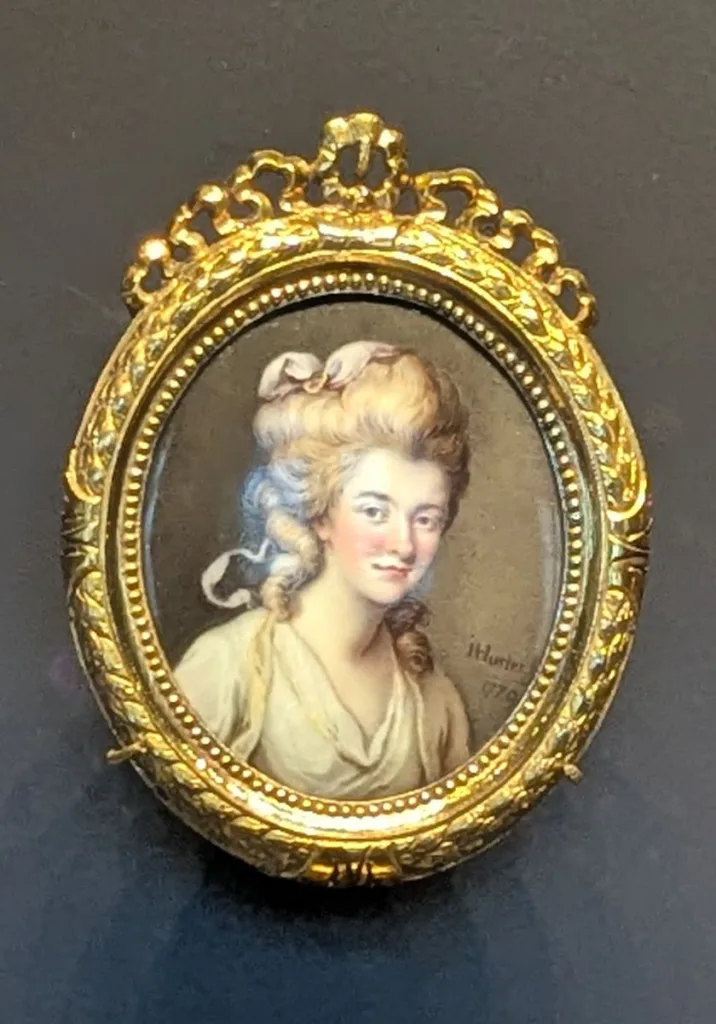
Georgiana, Duchess of Devonshire (Johann Heinrich Hurter after Angelica Kaufman). Photo by K Flude of the miniature at the Victoria and Albert Museum
The Gilbert Collection has been re-displayed in the V&A in London. It has just opened, and is one of the most opulent displays you could hope to see! But, I loved this miniature of Georgiana. She was one of the richest women in Britain, a compulsive gambler, and a powerful political force for the Whig Party. And despite the Georgian Hairstyle the artist has contrived to make a very down to earth portrait. I can imagine bumping into her at the local Overground Station! She became better known after the bio graphy by Amanda Foreman, followed by the Film starring Keira Knightly. The Museum label says the portrait is ‘after Angelica Kaufman’. But I cannot find a Kaufman of Georgiana, that has this charming informality.
I have just heard news that the Arts Council wants to charge overseas visitors to visit our wonderful free national Museums, while allowing British Citizens free entry. Now, there are lots of arguments to be made about it, particularly in a time where money is in short supply. But, one result will be longer waits to get into Museums and Galleries. I am not sure how we Brits, are going to be asked to prove our nationality. If they have to inspect our Electricity Bills, Drivers Licenses, Passports, Library Cards, or Bank Statements, expect chaos.
One more object from the Collection is made of minature mosaics, and the V&A has several, But I have chosen this fabulous image of the Colosseum in Rome:
Colosseum by Domenico Moglia c1851
First published March 28th 2023, revised 2024, 2025. 2026 Object of the Day added and post revised 2026