December and Kalendar of Shepherds December 1st

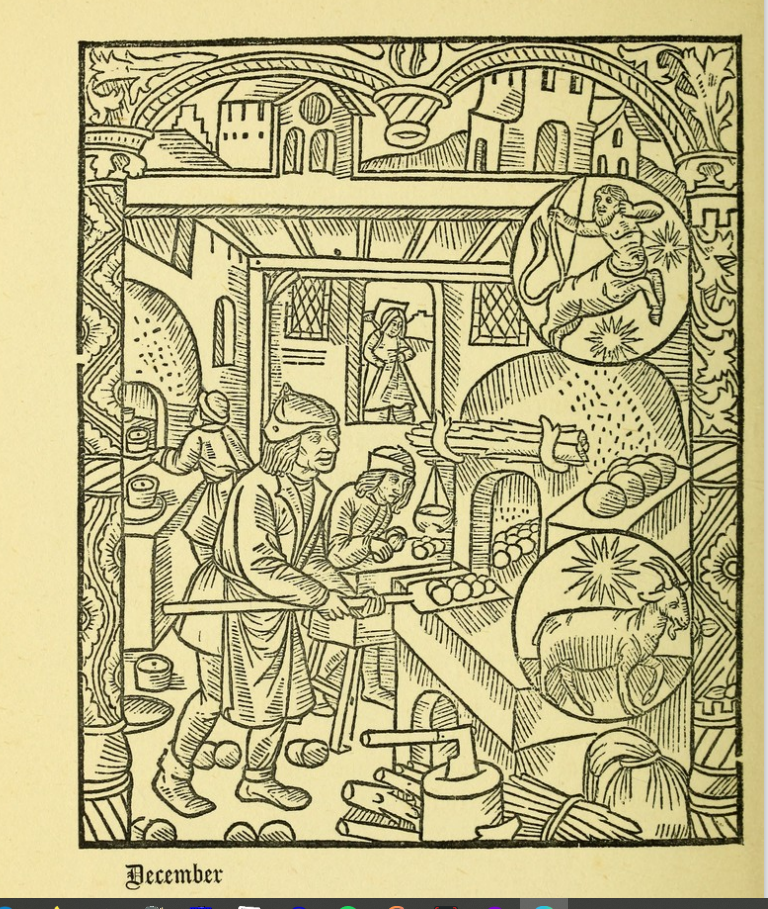
French 15th Century December and the ‘Kalendar of Shepherds’

December comes from the Latin for ten – meaning the tenth month. Of course, it is the twelfth month because the Romans added a couple of extra months especially to confuse us. For a discussion on this, look at an early blog post which explains the Roman Calendar.

In Anglo-Saxon it is ærra gēola which means the month before Yule. In Gaelic it is An Dùbhlachd – the Dark Days which is part of An Geamhrachd, meaning the winter. The word comes from an early Celtic term for cold, from an ‘ancient linguistic source for ‘stiff and rigid’’, which describes the hard frosty earth. (see here for a description of the Gaelic Year). In Welsh, Rhafgyr, the month of preparation (for the shortest day).

For the Christian Church, it’s the period preparing for the arrival of the Messiah into the World. (see my post on Advent Sunday which this year was yesterday November 30th).

For a closer look at the month, I’m turning to the 15th Century Kalendar of Shepherds. Its illustration (see above) for December shows an indoor scene, and is full of warmth as the bakers bake pies and cakes for Christmas. Firewood has been collected, and the Goodwife is bringing something in from the Garden. The stars signs are Sagittarius and Capricorn.


The Sparrow and the Warm Hall

The Venerable Bede has an interesting story (reported in ‘Winters in the World’ by Eleanor Parker) in which a Pagan, contemplating converting to Christianity, talks about a sparrow flying into a warm, convivial Great Hall, from the bitter cold winter landscape. The sparrow enjoys this warmth, but flies straight out, back into the cold Darkness. Human life, says the Pagan, is like this: a brief period in the light, warm hall, preceded and followed by cold, unknown darkness. If Christianity, he advises, can offer some certainty as to what happens in this darkness, then it’s worth considering.

This contrast between the warm inside and the cold exterior is mirrored in Neve’s Almanack of 1633 who sums up December thus:

This month, keep thy body and head from cold: let thy kitchen be thine Apothecary; warm clothing thy nurse; merry company thy keepers, and good hospitality, thine Exercise.

Quoted in ‘the Perpetual Almanack of Folklore’ by Charles Kightly

December in the ‘Kalendar of Shepherds’

The Kalendar of Shepherds text below gives a vivid description of December weather. Dating from 1626 it gives a detailed look at the excesses of Christmas, which people are on holiday, and who is still working hard. But it concludes it is a costly month.
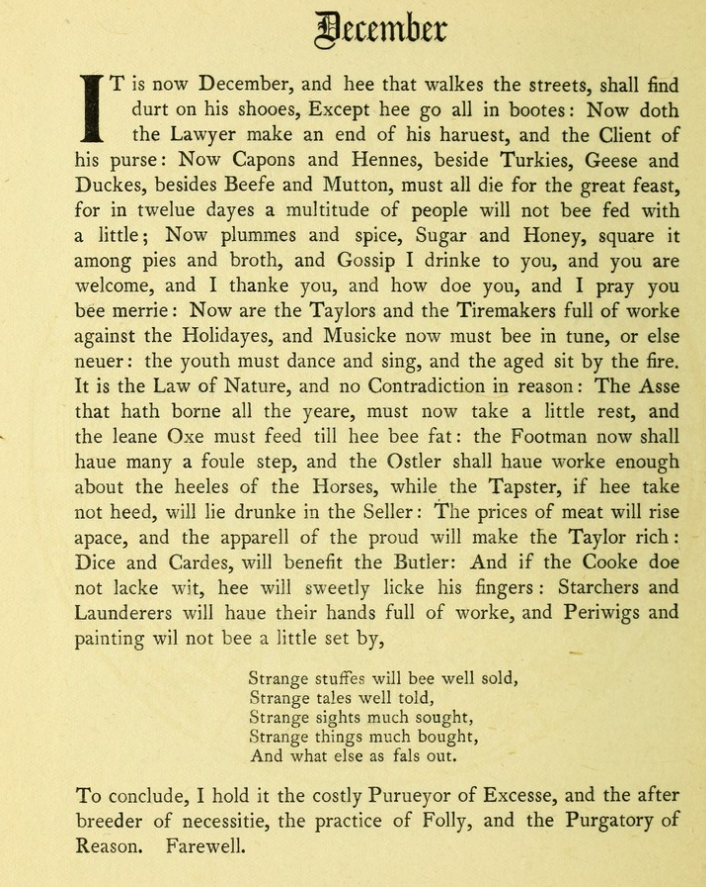
Nicholas Breton’s ‘Fantasticks of 1626 – December from the Kalendar of Shepherds

Six Dozen Years – a Lifespan

The other section of the Kalendar then elaborates on the last six years of a man’s life, with hair going white, body ‘crooked and feeble’. (from 66 to 72). The conceit here is that there are twelve months of the year, and a man’s lot of ‘Six score years and ten’ is allocated six years to each month. So December is not just about the 12th Month of the Year but also the last six years of a person’s allotted span. The piece allows the option of living beyond 72, ‘and if he lives any more, it is by his good guiding and dieting in his youth.’ Good advice, as we now know. But living to 100 is open to but few.
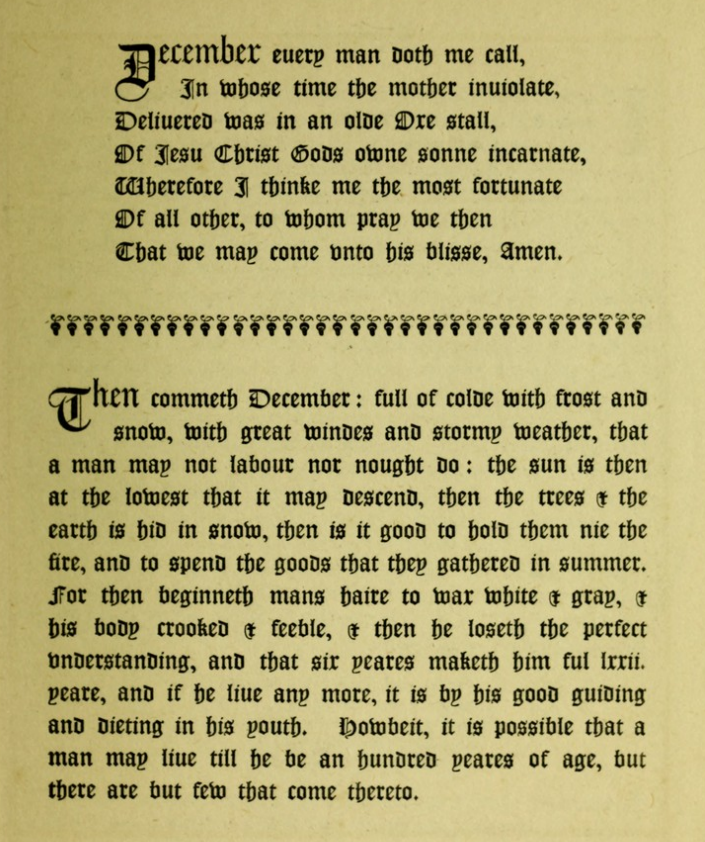
Kalendar of Shepherds

Interesting from my point of view as I have reached the end of my life span as suggested by the Calendar, and my father is 98 and approaching his hundred!

About the Kalendar of Shepherds.

The Kalendar was printed in 1493 in Paris and provided ‘Devices for the 12 Months.’ The version I’m using is a modern (1908) reconstruction of it. It uses wood cuts from the original 15th Century version and adds various texts from 16th and 17th Century sources. (Couplets by Tusser ‘Five Hundred Parts of Good Husbandrie 1599. Text descriptions of the month from Nicholas Breton’s ‘Fantasticks of 1626.) This provides an interesting view of what was going on in the countryside every month.

For more on the Kalendar look at my post here.

The original Kalendar can be read here: https://wellcomecollection.org/works/f4824s6t

To see the full Kalendar, go here:

On This Day

1990 The UK was rejoined to Europe for the first time for 8000 years, when the Channel Tunnellers breached the final wall of rock. French and British workers exchanged flags and shook hands. The Tunnel was opened to traffic in 1994 more than 10 years after work started and 200 years since Napoleon proposed the idea. Read what ICE has to say about the (ICE – Institute of Civil Engineers!).

Britain was connected to the Continent until about 6,100BC, the North Sea, the Channel, and the Irish Sea were all dry (or marshy lands). Water levels were rising and ice melting. the Storegga Slides in Norway saw huge cliffs of ice slipped into the sea. This caused a tsunami over 30ft high and penetrating 25 miles inland. Read the BBC here.

Since then, Britain has been an Island. Archaeologists have been exploring the flooded area which is known as Dogger Land, after the Dogger Bank. (for more on Dogger Land.)

First Published in 2024, republished 2025

St Andrew’s Day November 30th

The Saltire – flag of Scotland

Saint Andrew was the first Apostle and, it was he who introduced his brother, Simon Peter, to Jesus. He was a simple fisherman. Not much about his later life is known, but the idea that he was martyred on a X-shaped cross, the saltire, is probably a medieval invention. As a fisherman, he is patron of fishermen, and fishmongers. Furthermore, the patron saint of Scotland and Russia; of singers and pregnant woman, and efficacious in offering protection against sore throats and gout.

His association with Russia comes from Eusebius, who quotes Origen recording that Andrew preached in Scythia. The Chronicle of Nestor says he travelled to Kiev and Novgorod and so became a patron saint of Ukraine, Romania, and Russia. (Wikipedia).

Scottish legends has St Andrew both visiting Scotland himself and some of his relics coming to Fife in the 4th Century or the 8th Century. St Rule (aka St Regulus) was tasked with taking some of Andrew’s relics to the edges of the world. In the 4th Century he turned up in Fife where he was welcomed by the Pictish King, Óengus I. He brought with him a kneecap, arm, and finger bone of St Andrew, which were kept in St Rule’s Church. This gave St Andrew’s name to the town. Óengus I is actually an 8th Century Pictish King, so perhaps the relics came to Scotland in the 8th Century which is a little more realistic. The relics were transferred to the Cathedral, but they were destroyed in the Reformation. In 1979, the Archbishop of Amalfi gifted a piece of Saint Andrew’s shoulder blade to St Andrews and Pope Paul VI gave further remains to Scotland in 1969.

The Town of St Andrews

The earliest recorded name for the town is Gaelic and is Cennrígmonaid, which means something like the King’s Peninsula near the Moor. The fame of the Church changed the name of the town to St Andrews (no apostrophe, as it was named before the French gave us apostrophes in the 1600s). St Andrews is also famous as the home of golf and the oldest University in Scotland, (founded in 1412).

St Andrew’s Day Celebrations

The Day is an official bank holiday in Scotland and is celebrated with events all over the country, including a torchlight procession in Glasgow. (https://theculturetrip.com/europe/united-kingdom/scotland/articles/what-is-st-andrews-day-and-how-do-people-celebrate-it-in-scotland/). Celebrate with a Haggis and a Whisky!

In Kent and Sussex Andrewtide gave the right to hunt squirrels, and in Hasted’s History of Kent (1782) the day is said to allow the ‘lower kind’ to form a lawless rabble hunting any manner of hares, partridges, and pheasants. (Perpetual Almanac by Charles Kightly).

St Andrew in London

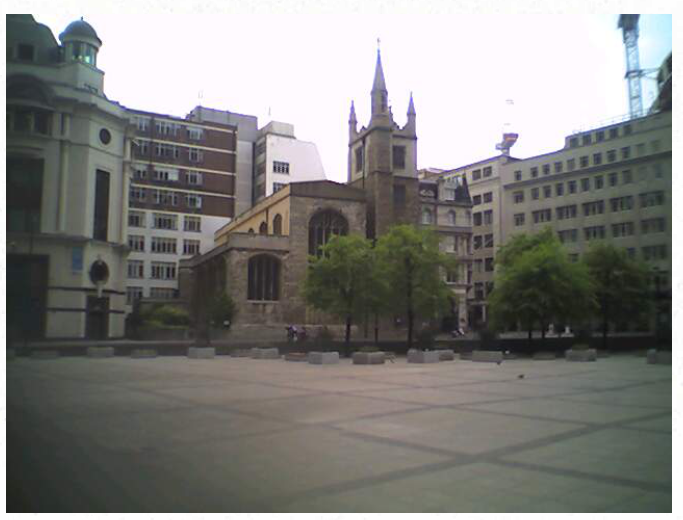
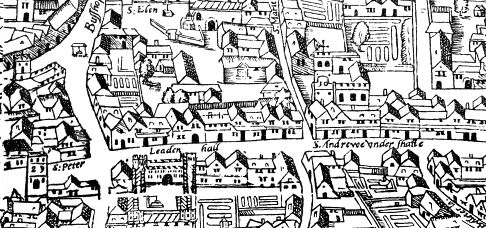
On the corner of Leadenhall Street and St Mary Axe in the City of London is one of the very few medieval Churches that survived the Great Fire of London is 1666. It was sheltered by the firebreak that was the Leadenhall, a big market building made of stone (but with a big lead roof).

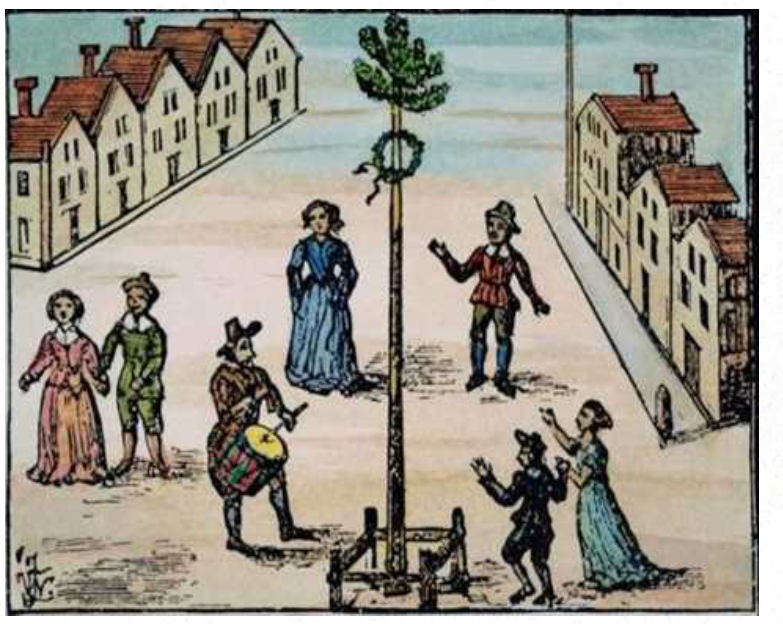
The Church is the Maypole Church, as it was here the Maypole or the shaft was stored under the eves of the Church when not in use. Hence, St Andrew’s sobriquet of ‘Undershaft’. The May Day riot in 1517 put an end to the dancing around the Maypole but the pole itself survived until 1547 when, in a Puritan riot, the ‘stynking idol’ was destroyed. (see my May Day blog post here for more details of Mayday.)

John Stow and Hans Holbein, memorials in St Andrews

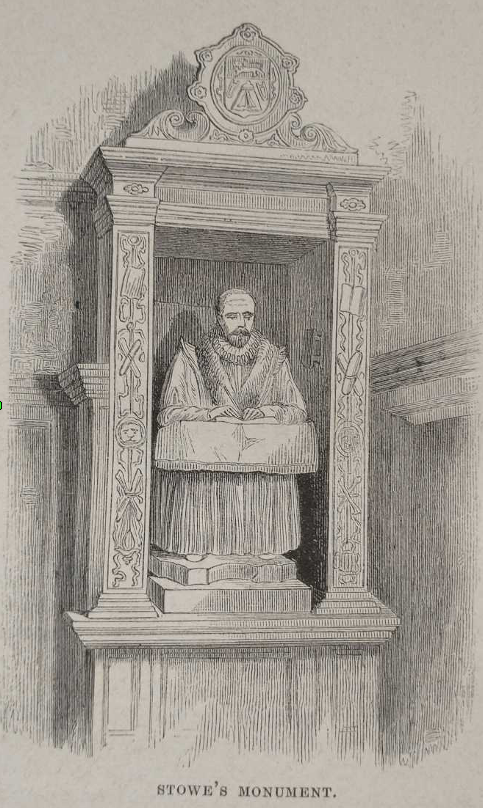
This is where the great London historian John Stow is buried. His Survey of London is one of the best sources for Medieval and Tudor London. Every three years, on April 5th or thereabouts, there is a commemorative service and his quill is changed. The Lord Mayor attends. The service is organised by Stow’s Guild – the Merchant Taylors.

John Stow, author of the ‘Survey of London‘ first published in 1598. Available at the wonderful Project Gutenberg: ‘https://www.gutenberg.org/files/42959/42959-h/42959-h.htm’

There is also a plaque to Hans Holbein, but no one knows, for sure, where he is buried. He died in London in 1543, possibly of plague.

Agas Map 1561 showing St Andrews (right centre)

Last Day to get married before Advent.

Traditionally, you could not marry after Advent and before 12th Night. So now might be the last chance to marry before that bump gets too big! This may be the reason that Shakespeare had to organise a special licence to get married in 1582! Advent that year was on 2nd December. See my post on their wedding here.

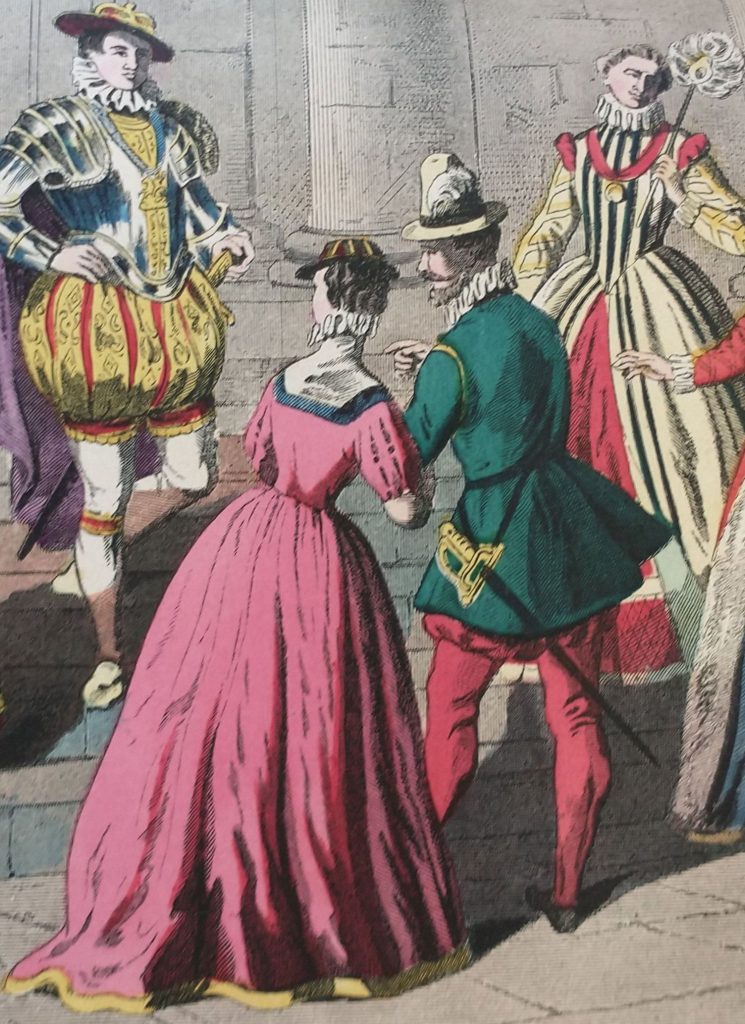
19th Century Illustration (From Author’s Collection)

Wedding dresses were traditionally whatever pretty dress you had. White only became de rigueur once Queen Victoria wore one, and the costs of material reduced because of mass production.

The Saltire

The story of the Saltire stretches back to the Picts. In 832AD Picts under the High King Angus MacFergus were returning from a punitive raid into Northumbria. They were chased by the North Anglians led by Athelstan (not the English King) into East Lothian at place still called Athelstaneford. It is to the south of Edinburgh. Angus led prayers to St Andrew for victory. Above the battle appeared in the clowds a white diagonal cross, against a blue sky. Angus promised St Andrew he would become the Patron Saint of the Country. (at the time called Alba, and later called Scotland). Athelstaneford still calls itself ‘Birthplace of the Scottish Flag.’ the-flag-heritage-centre/the-legend-of-the-saltire/

First Published on 30th November 2022, Revised and republished on 30th November 2023, Advent weddings added in 2024, Revised and Saltire added 2025

Thanksgiving Day in the USA (4th Thursday in November)

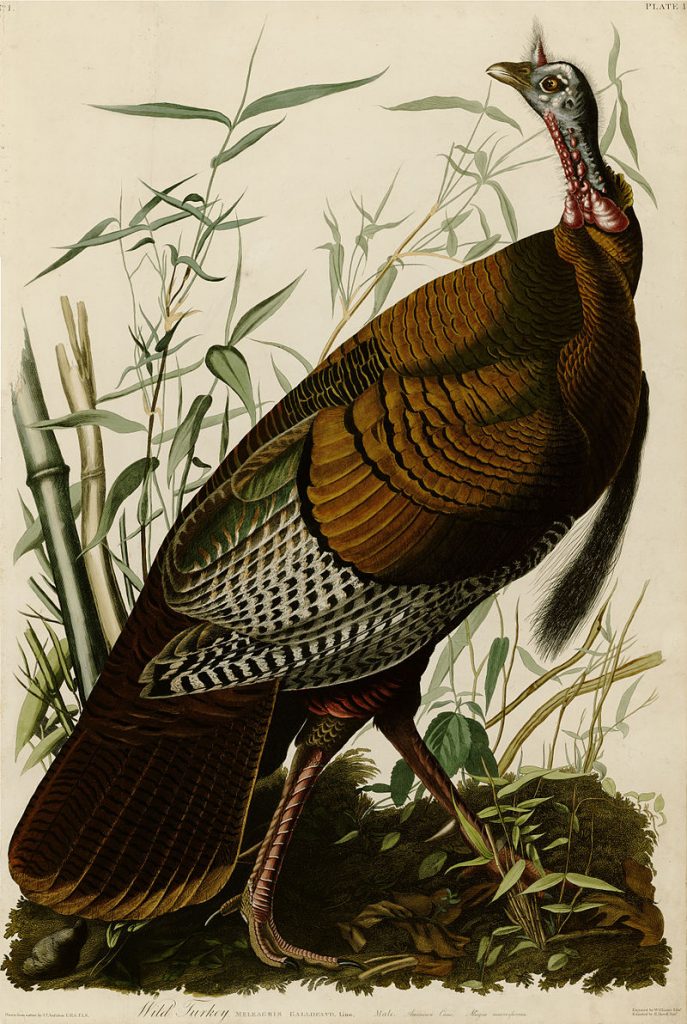
Plate 1 of The Birds of America by John James Audubon, depicting a wild turkey (Wikipedia) eaten for Thanksgiving

Thanksgiving is a festival given over to celebrating God’s Bounty. There are unanswerable debates about which was the ‘First’ Thanksgiving, but the date of the 4th Thursday in November was set by Abraham Lincoln. It is basically a harvest festival, but was adopted by Lincoln as one method to unite a divided nation during the Civil War.

Thanksgiving today is mostly roast turkey with stuffing, cranberry sauce, mashed potatoes and pumpkin pie. But there are many variants and additions such as a first course of soup, and vegetables like Brussels sprouts and broccoli. Very like an English Christmas dinner, but replacing the Christmas Pudding with pumpkin pie.

Food eaten on the first Thanksgiving.

As to what the first Pilgrims would have eaten is not known, but their chronicler Edward Winslow noted:

“Our harvest being gotten in, our governor sent four men on fowling, that so we might after a special manner rejoice together, after we had gathered the fruits of our labours; they four in one day killed as much fowl, as with a little help beside, served the Company almost a week.”

https://www.history.com/topics/thanksgiving/first-thanksgiving-meal

So the birds shot by 4 marksmen would have been wild turkey but also other birds such as ducks, geese, and swans. Seafood; Mussels, lobster, and eel were also available.

As to ‘gathering the fruits of our labors’. This might have included onions, beans, lettuce, spinach, cabbage, carrots, and peas. Stuffing might be seasoned with sage, thyme, parsley, marjoram, fennel, anise or dill, The Pilgrims had plenty of Corn from their first harvest which would have been turned into cornmeal, and eaten as a mush if savoury or sweetened with molasses as a porridge, or made into cornbread, or for stuffing. Perhaps not so different to Frumenty. (see my post on Wife selling and Frumenty.

Native Americans & Thanksgiving

Indigenous Wampanoag Americans might have been present, but only to investigate the shooting of canons in celebration by the Pilgrims. Relationships were tense between the native Americans and the immigrants. Some Indigenous Americans consider it a day of mourning; others use it as a day of gathering for the family, but generally, consider images of the Pilgrims and Indigenous Americans sitting down peacefully celebrating together to be ‘a lie’. (Native Americans and the First Thanksgiving.)

First Published on 24th November 2022, Republished on 23rd November 2023, 27th November 2025

St Catherine, Torture Victim & Patroness of the Catherine Wheel, November 25th

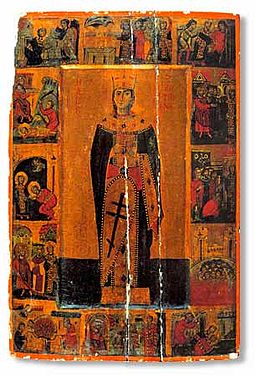
Icon of Saint Catherine of Alexandria, with scenes from her martyrdom (Wikipedia)

In the pantheon of horror that is the Saints’ martyrs’ calendar, St Catherine of Alexandria is very appropriate for, today, the UN’s International Day for the Elimination of Violence against Women.

Catherine was high-born, beautiful and learned. She disputed with pagan learned men against the worship of idols. She wiped the floor with them, and Emperor Maxentius had 50 of the learned men burnt alive for their failure to answer adequately.

Catherine was imprisoned, where many people came to visit her and were converted to Christianity. The most illustrious visitor was the Emperor’s wife, Valeria Maximilla who was, herself, martyred. Then, the Emperor offered to marry Catherine, but she refused to abandon her faith. So he had her tortured. In prison, she was fed by the holy dove and had visions of Christ.

Her gaolers then tried to break her on a wheel, although the wheel broke, killing spectators with the splinters, she stood steadfast. Two hundred soldiers were converted to the faith on the spot. They were then beheaded, followed by Catherine herself. Milk, not blood, flowed from her severed veins.

The persecution in the early 4th Century was real, but it wasn’t driven by Maxentius, who came to power promising religious tolerance. But, following the accession of Constantine the Great, Maxentius’s reputation was blackened. There is no contemporary evidence for the events of Catherine’s life. There is a modern theory that her tale was conflated with the remarkable story of Hypatia of Alexandria (d. 415), a pagan and a real learned woman; The first female Mathematician we know any facts about. She was murdered by a rampaging mob of xenophobic Christians.

Catherine is remembered by the firework: the Catherine Wheel and is, of course, the patron of Philosophers, Theologians, and Royal women; young women, students, spinsters, and anyone who lives by working with a wheel: carters, potters, wheelwrights, spinners, millers. And, I imagine, Formula 1 drivers.

St Catherine in London

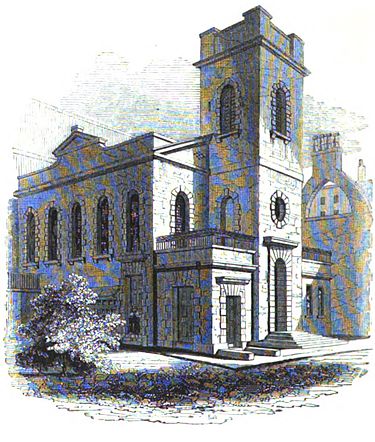
St Catherine Coleman
(Wikipedia: Robert William Billings and John Le Keux: The Churches of London by George Godwin (1839))

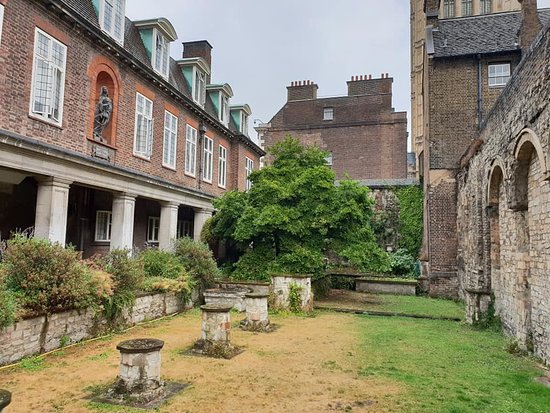
There are several Churches in London dedicated to St Catherine or St Katherine, dedicated to St Catherine of Alexandria. The one in Coleman Street, rebuilt by Christopher Wren and his team, was demolished in the 1920s. There was a Chapel to St Catherine at Westminster Abbey (c1160), the ruins of which are visible in St Catherine’s Garden. I am sure that St Katherine’s Dock and St Katherine’s Cree Church are also so dedicated, but cannot as yet find a dedication for either. Katherine of Aragorn was patron of the Royal Foundation of St Katherines’ which gives its name to the Dock.

Ruins of Chapel of St Catherine, Westminster Abbey

There are customs that have attached themselves to St Catherine including the baking and eating of Catten Cakes. These are really a biscuit (or cookie) made of dough, and cinnamon and dried fruit. Carraway seeds are also suggested. Here is a recipe.

It’s considered a good day for rituals and prayers to summon a husband. Katherine of Aragorn was also commemorated on this day. Lace makers would play ‘jump the candlestick’. If they put the candle out they had bad luck. Katherine of Aragorn is said to have introduced lace making to England.

Finally, for my thoughts why female saints martydrom stories are so violent, extreme and often downright bizarre. Have a look at my post on St Margaret. She is the Saint who suffered probably the most torture in her convoluted route to Martyrdom.

My post which includes a link to an article about medieval attitudes to these terrifying stories of martyrdom, illustrated by a reredos on display at the V&A, in Kensington, London here.

Gladiators Exhibition Touring Britain

Exhibition post of the British Museum Exhibition ‘Gladiators of Britain’

I was just reading an article about the British Museum touring exhibition: ‘Gladiators of Britain’ exhibition. And so updated my August 12th post on St Lawrence who is remembered in a Church in London on the site of the Roman Amphitheatre. But the Exhibition will be closed by August, so here is what I wrote, in time to go to see the Exhibition.

The exhibition is currently at the Grosvenor Museum in Chester – until 25th January 2026.It then moves to Tullie House Museum & Art Gallery, Carlisle from 7th February to 19th April 2026. Recent research has shown that a young man buried in what seems to be a Gladiators Cemetary near Michelgate in York has lion’s teeth marks on his pelvis. When talking about Gladiators I was always reticent about whether animals as exotic as Lions would have been used in the distance province of Britannia. Now we know they were. The Exhibition has a marble relief from Ephesus showing a venetor (beast fighter), taking on a lion. We also know one Roman legionary in Britain had the title of Bear Keeper.

Displayed on the poster above is the Colchester vase which shows an actual gladiatorial combat. The gladiators are named as Secundus, Marius, Memnon, and Valentinus. Secundus and Marius are fighting a bear, while Memmon is fighting Valentinus. Memmon is a secutor and Valentinus, a retiarius. The secutor is the chaser and lightly armed with a heavy shield and short sword. The retiarius has a net and trident. Memmon is described as a 9th time victor, and Valentinus, a legionary of the Legio XXX Ulpia Victrix raises his finger to acknowledge defeat.

Although death and life threatening injuries were often the result, the competition was also not, necessarily, a fight to the death, it was a fight until one or other was defeated. So they could be ended by surrender. Gladiators tombstones, often announce the number of fights a gladiator was involved in such as fighting 25 fights of which he was victorious in 22. The chairman of the show would be given the duty of deciding whether the defeated deserved to be spared, or hit over the head with a big hammer, or decapitated. The Gladiatorial cemetery in Driffield Terrace, York has a high proportion of decapitated corpses. The normal ratio of normal burials is 5% or less of decapitated skulls. Of the 80 burials in Driffield Street 46 were decapitated. Many of the young men in the cemetery have healed wounds. One had leg irons one which showed evidence of being put on while still red hot from the blacksmiths forge. For more on the Cemetery follow this link.

On this Day

1471 – the Thames froze over strongly enough to hold a Frost Fair upon it.

In the year 1434 a great frost began on the 24th of November, and held till the 10th of February, following ; whereby the River Thames was so strongly frozen, that all sorts of merchandizes and provisions brought into the mouth of the said river were unladen, and brought by land to the city.’

1715 – the Thames froze again 281 years later

‘The Thames seems now a solid rock of ice; and booths for sale of brandy, wine, ale, and other exhilarating liquors, have been for some time fixed thereon; but now it is in a manner like a town; thousands of people cross it, and with wonder view the mountainous heaps of water that now lie congealed into ice. On Thursday, a great cook’s-shop was erected, and gentlemen went as frequently to dine there as at any ordinary. Over against Westminster, Whitehall, and Whitefriars, printing presses are kept on the ice.(description of 14th January 1716 of the remaining ice by Dawkes’ News Letter.

Both quotes are from a list of times the Thames froze you can see here: https://thames.me.uk/s00051.htm. I have no idea where the evidence comes from for the Roman and Saxon era freezing, but the author says the source of it is:

The earliest chronology is given by Charles Mackay in “The Thames and its Tributaries”, 1840. He omits to mention how he knows!

1952 Agatha Christie’s the ‘Mousetrap’ opened in London, so it has now been continuously running for 73 years if my maths are correct.

First published on 25th November 2022. Revised and republished 25th November 23, 24, 25

St Clements Day, the Blacksmith’s Holiday, the Early Church, Lydia and Wickham November 23rd

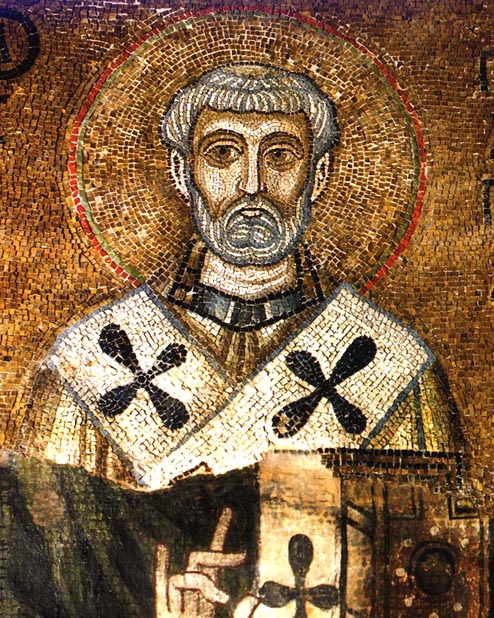
Clemens I, the Pope of Rome. Mosaic from St. Sophia of Kyiv, 11th c. In places of loss (lower part of the composition) — oil painting of the 18th c. (Wikipedia) for St Clements Day

St Clement was a very early Bishop of Rome, shortly after St Peter. Although thought to be a historical and therefore a very important peron in the history of Christianity, his mode of martyrdom is a matter of legend. He is supposed to have been tied to an anchor and thrown in the Black Sea in around AD 99. He is, therefore, particularly venerated by Blacksmiths and Sailors. Some believe he is earlier than AD99 and place his letter as early as AD60.

St Clements and the Early Church

A letter of St Clements survives and is addressed to the Christians of Corinth. This letter is of fundamental importance, as it appears to have been written when the martyrdoms of St Peter and St Paul were relatively recent memories. The letter is also important as a counterargument to the Protestant view that there is no evidence that Peter was ‘Pope’. In this letter, St Clement is giving advice to the Church of Corinth as a Pope would. This can be used as early proof of Papal supervision of the early Church.

The letter is therefore worth reading, and you can read a version of it here. . I have chosen two extracts from a long letter. The first illustrates how close to the deaths of Peter and Paul it was. The second extract gives a great insight into an early Christian World view. I think there is also very little here that a Pagan would object to? The main message of the letter is to follow the example of Jesus and adopt humility.

Chapter 5. No Less Evils Have Arisen from the Same Source in the Most Recent Times. The Martyrdom of Peter and Paul.

But not to dwell upon ancient examples, let us come to the most recent spiritual heroes. Let us take the noble examples furnished in our own generation. Through envy and jealousy the greatest and most righteous pillars [of the church] have been persecuted and put to death. Let us set before our eyes the illustrious apostles. Peter, through unrighteous envy, endured not one or two, but numerous labours; and when he had at length suffered martyrdom, departed to the place of glory due to him. Owing to envy, Paul also obtained the reward of patient endurance, after being seven times thrown into captivity, compelled to flee, and stoned. After preaching both in the east and west, he gained the illustrious reputation due to his faith, having taught righteousness to the whole world, and come to the extreme limit of the west, and suffered martyrdom under the prefects. Thus was he removed from the world, and went into the holy place, having proved himself a striking example of patience.

Chapter 20. The Peace and Harmony of the Universe.

The heavens, revolving under His government, are subject to Him in peace. Day and night run the course appointed by Him, in no wise hindering each other. The sun and moon, with the companies of the stars, roll on in harmony according to His command, within their prescribed limits, and without any deviation. The fruitful earth, according to His will, brings forth food in abundance, at the proper seasons, for man and beast and all the living beings upon it, never hesitating, nor changing any of the ordinances which He has fixed. The unsearchable places of abysses, and the indescribable arrangements of the lower world, are restrained by the same laws. The vast unmeasurable sea, gathered together by His working into various basins, never passes beyond the bounds placed around it, but does as He has commanded. For He said, Thus far shall you come, and your waves shall be broken within you. Job 38:11 The ocean, impassable to man and the worlds beyond it, are regulated by the same enactments of the Lord. The seasons of spring, summer, autumn, and winter, peacefully give place to one another. The winds in their several quarters fulfil, at the proper time, their service without hindrance. The ever-flowing fountains, formed both for enjoyment and health, furnish without fail their breasts for the life of men. The very smallest of living beings meet together in peace and concord. All these the great Creator and Lord of all has appointed to exist in peace and harmony; while He does good to all, but most abundantly to us who have fled for refuge to His compassions through Jesus Christ our Lord, to whom be glory and majesty for ever and ever. Amen.

https://www.newadvent.org/fathers/1010.htm (Translated by John Keith. From Ante-Nicene Fathers, Vol. 9. Edited by Allan Menzies. Revised and edited for New Advent by Kevin Knight. )

Towards the bottom of this post you will find out more about St Clements place in Christian History, but first, lets find out his associations with London.

London & St Clements

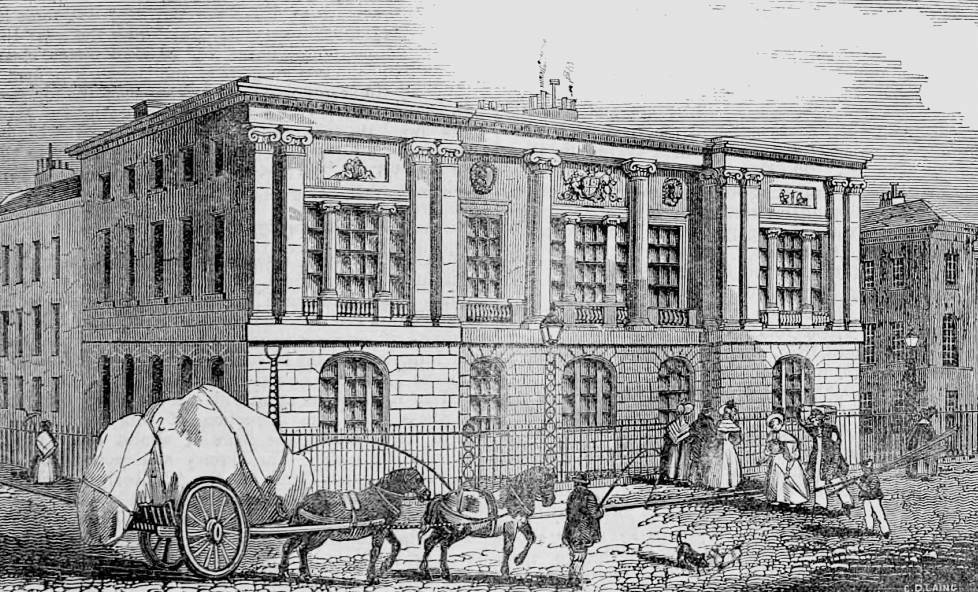
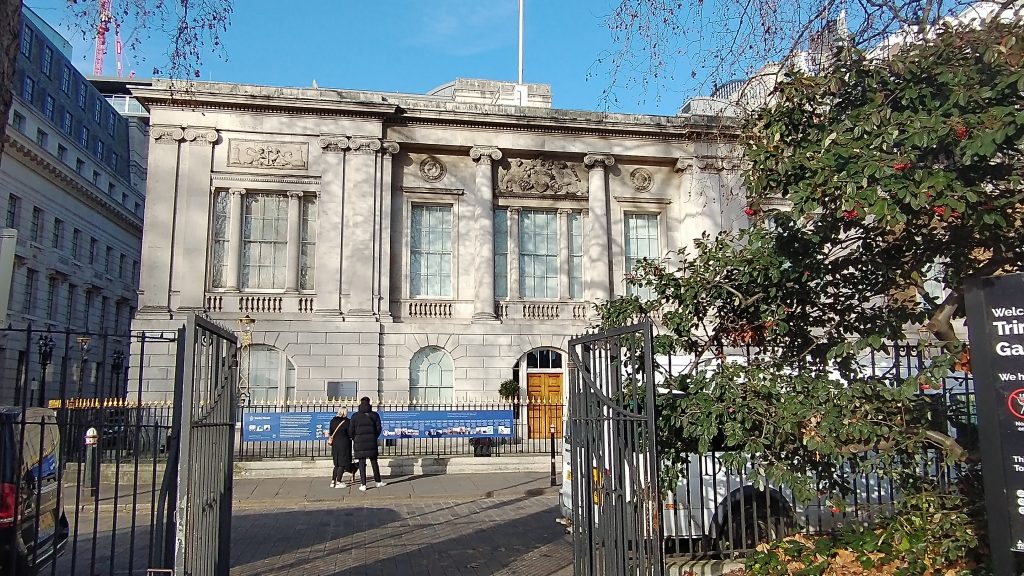
The maritime connection may explain the three St Clements connections in London. Trinity House On Tower Hill has been working to keep shipping safe since being founded in Deptford in the 16th Century as:

The Master, Wardens and Assistants of the Guild Fraternity or Brotherhood of the most glorious and undivided Trinity and of St Clement in the Parish of Deptford Strond in the County of Kent.

They look after light ships, lighthouses, navigation buoys and licence Deep Sea Pilots. The HQ moved to Tower Hill in 1796.

London has two churches dedicated to St Clements. Both are by early London waterfronts and rebuilt by Christopher Wren and his team.

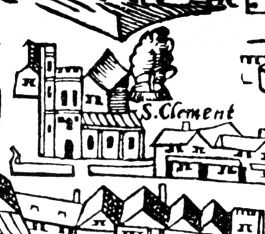
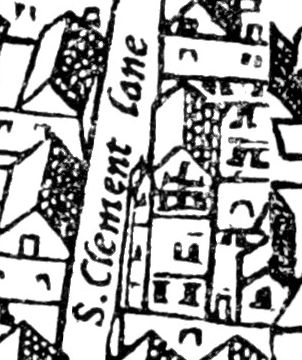
St Clement’s Eastcheap is on the terrace above the Roman port of London, near London Bridge (which leads to Wikipedia speculation that it might have been an early Roman foundation). And St Clements Danes is where the Strand meets Fleet Street on the terrace above the Lundenwic Saxon waterfront.

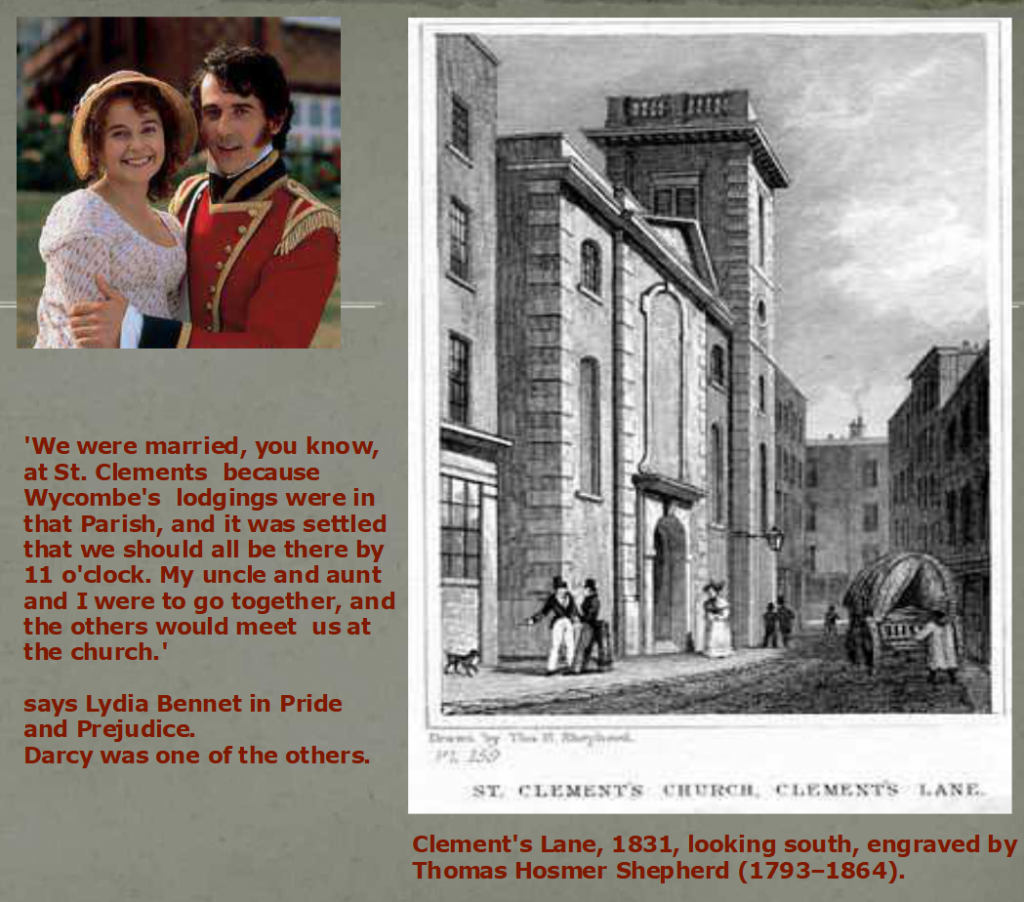
Lydia and Wickham get married

St Clements is where Lydia and Wickham finally get married in Jane Austen’s Pride and Prejudice. But which of the two St Clements? Wickham had lodgings in the East Cheap area. The Gardiners, Lydia’sUncle and Aunt were the only people at the wedding except Darcy. They lived in nearby Gracechurch Street. But perhaps St Clements Dane was more fashionable and might be more the raffish Mr Wickham’s cup of tea? (Jane Austen bought her family’s tea from Twinings, just off Fleet Street, where you can still buy it today )

Slide from my ‘Jane Austen’s 1809 Virtual Tour of London’

Oranges & Lemons

St Clements appears in the nursery rhyme/game Oranges and Lemons and both churches claim it refers to them, but as both are by the waterfront, either will do.

Oranges and lemons,
Say the bells of St. Clement’s.

You owe me five farthings,
Say the bells of St. Martin’s.

When will you pay me?
Say the bells at Old Bailey.

When I grow rich,
Say the bells at Shoreditch.

When will that be?
Say the bells of Stepney.

I do not know,
Says the great bell at Bow.

Here comes a candle to light you to bed,
And here comes a chopper to chop off your head!
  Chip chop chip chop the last man is dead

I remember playing this as a child. Two children form an arch with their hands. The other children go through the arch reciting the rhyme until the chopper comes down when the hands forming the arch traps one of the children. The trapped child then whispers which side they want to be join, and they leave the procession to stand behind one or other of the arch-makers. I seem to remember we ended it off by having a tug of war between the two teams.

Alternatively, the trapped/chopped children make an additional arch and the remaining kids have to rush through a large space, fearing the chop.

On this day:

1963 the first episode of Dr Who was broadcast on the BBC, starring William Hartnell and his assistants played by William Russell;Jacqueline Hill; and Carole Ann Ford. The ‘An Unearthly Child’ episode may be responsible for me becoming an archaeologist. It begins in London and the Tardis is transported 100,000 years into the past where stone-age humans are fighting over lost fire-lighting skills. I don’t remember hiding behind a sofa but I do remember being gripped by it. This is now 62 years of Doctor Who.

Originally published Nov 23rd, 2022. Revised & Rewritten on Nov 23rd 2023, 2024 and 2025
Sagittarius, Martinmas Old Style and Pack-Rag Day November 22nd

November 22nd is the dawning of Sagittarius.

According to the Kalendar of Shepherds 1604, women born on this day should marry at age 13, shall have many sons and live to 72 years old. Men born on November 22nd will be merciful, far-travelled, prosperous after early dangers and live to 72 years and 8 months. Can’t help feeling that prophecy this precise is heading for a fall. (see my post sliding-ducks-and-the-equivocation-of-prophecy/).

Martinmas Old Style and Pack-Rag Day

Pack-Rag Day, hiring of farm workers

Martinmas was the Festival of Winter’s Beginning and is celebrated on November 11. It was one of the most famous medieval festivals. In 1752, the calendar was transformed when Britain transferred from the Julian to the Gregorian Calendar, 11 days were lost from the Calendar, so the original date of the festival would be what we know as November 22nd. So this is Martinmas Old Style.

In the East Riding of Yorkshire, hiring fairs were held around this time. It was also called Pack-Rag Day as servants carried their clothes to their new place of work.

A hiring fair is how Gabriel Oak is hired by Batheseba Everdene in ‘Far From the Madding Crowd’ by Thomas Hardy. They were often also held at Michaelmas, and in Warwickshire are called Mops. See my post on the Mop here.

On this Day

As you may have noticed, I have been adding a section called ‘On this Day’ which highlights some notable events that have happened on this day in history. In my quest to create an almanac of the past with a reasonable post for every day, my loyal subscribers will be getting a post they read last year. So, I am trying to add extra content to make it worthwhile. Hence, this ‘new’ section (one year old today).

So, I will either republish a previously published post. It should be better proofread (although I’m perfectly capable of adding extra embarrassing typos). The content should be improved or expanded. Or with an added ‘On this Day’ section. Therefore, if you find you have read the post before, just scroll down to the new content at the bottom.

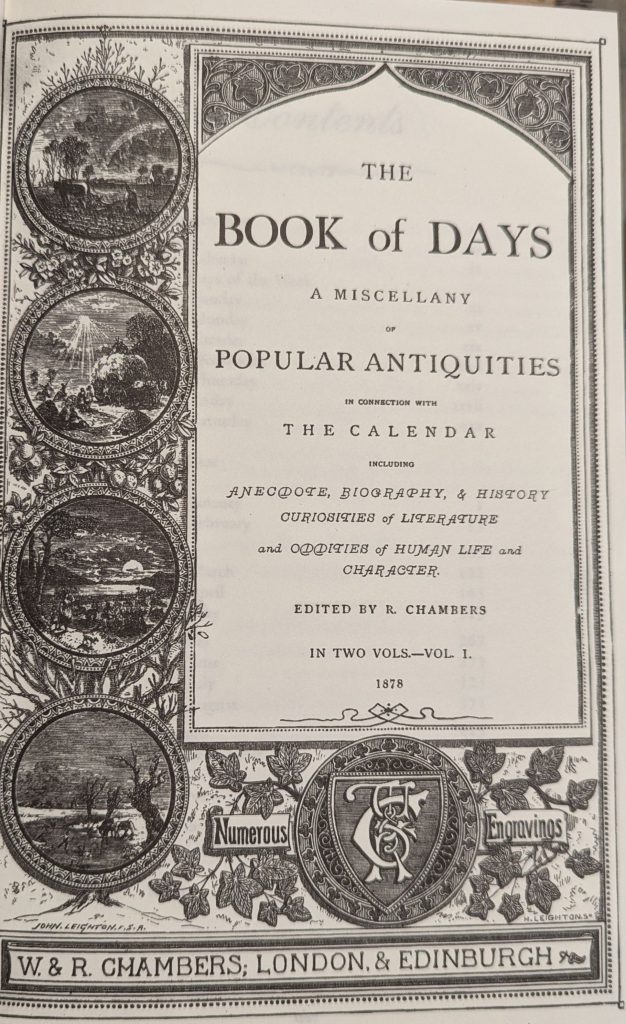
One of my sources for the ‘On this Day’ section is Chambers’ ‘Book of Days A Miscellany of Popular Antiquities’in connection with the Calendar’. The original was published, in 1864, by Robert Chambers one of the original founders of Chambers Publishing. The new one takes is inspiration from the original. I found out about it from Sir Roy Strong and Julia Trevelyan Oman’s ‘The English Year, which is itself a personal selection from the Chambers Book of Days. Sir Roy was my boss when I was an Assistant Keeper at the V&A.

1963 President Kennedy and Governor John Connally were shot while part of a motorcade in Dallas.

1968 The Beatles White Album was released

1990 British Prime Minister Mrs Thatcher resigned.

Originally published as two separated posts on 22nd November 2022, republished on 22nd November 2023, merged 2024, and expanded 2025
November ‘the month of immolations’

Kalendar of Shepherds November

This post slipped through the editorial net.  So, I need to get it out there before November is a cold memory.

November is the 9th Month of the Roman Calendar. Novem coming from the Latin for nine. But the Romans added two months to the calendar during the time of the Dictator, Julius Caesar (for his reforms click here). So 9th month is now the 11th.

In Welsh it is ‘Tachwedd’ which means the month of slaughtering. Blōtmōnaþ (Blotmonath) in Anglo -Saxon – the month of blood. These reference the fact that this was the month when the surplus animals were slaughtered or as the historian, Venerable Bede has it, ‘the month of immolations’. In Irish the month of November is called sawhain. It is also the name of the festival marking the beginning of winter which starts at dusk on 31st October. We call it Halloween, the celts Sawhain or words similar. (see my post on Halloween).

The image, at the top of the page, from the Kalendar of Shepherds shows some aspects of November – star signs Scorpio and Sagittarius; Pigs are fattening up on the acorns in the forest and then being slaughtered, smoked or dried to preserve them through the hard winter. The text of the Kalendar (read it below) gives a good summary of what early modern life in November was like. In summary, the day when the ‘poore die through want of Charitie’.

Kalendar of Sherherds – November

For more details on the Kalendar of Shepherds see my post here.

Time to see the Pleiades

They can be seen from Autumn to Spring, but they are visible all night in the Northern Hemisphere in November and December.

Nebra Sun disc from Stonehenge Exhibition British Museum
Nebra Sun disc from Stonehenge Exhibition British Museum. The Pleiades is thought to be represented by the 7 stars in the cluster above and between the Sun and the Cresent Moon, on this bronze age copper and gold disc

First published in 2024, revised in 2025

Feast of St Edmund of East Anglia November 20th

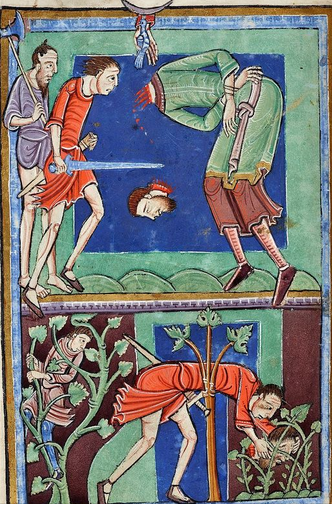
The Martyrdom of St Edmund.

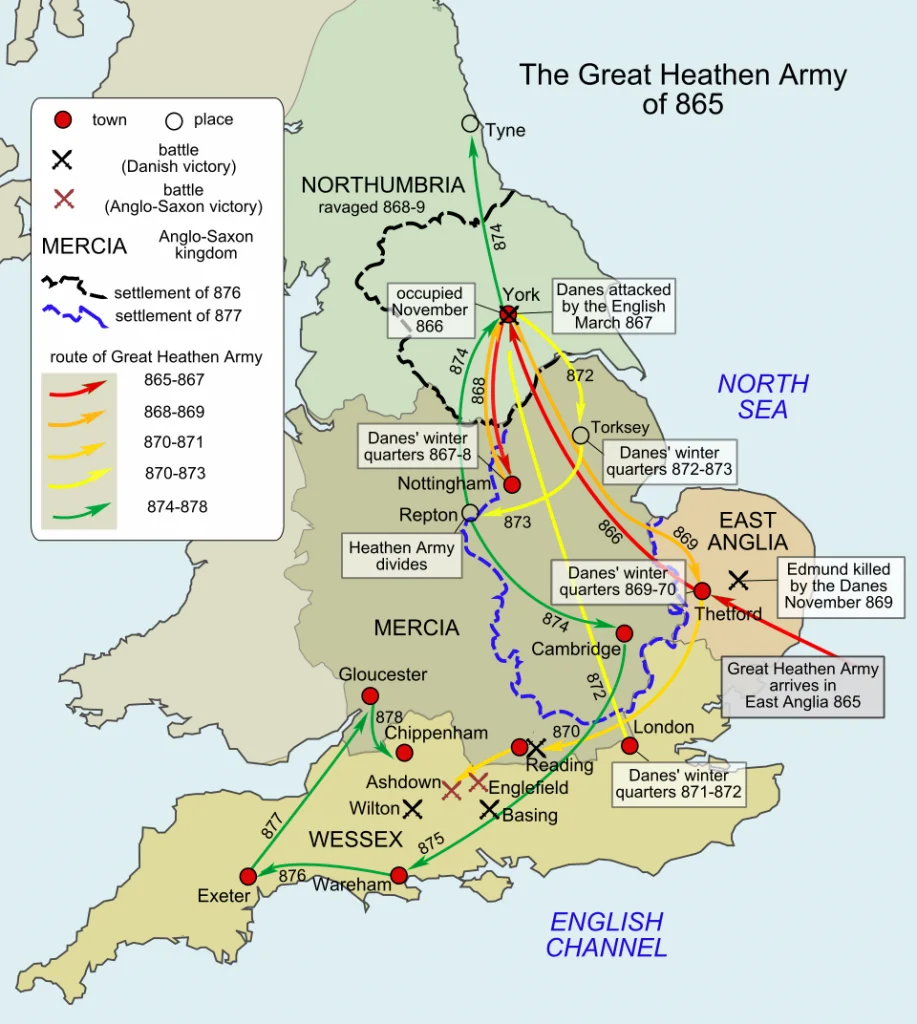
He was killed with an arrow by Vikings from the Great Heathen Army in 869. He was trying to convert them to Christianity, and they were trying to do the opposite. So, fed up, they tied him to a tree, shot him full of arrows and then beheaded him.

Based on Stenton ‘Anglo-Saxon England’ chapter 8 and Hill ‘ An Atlas of Anglo-Saxon England’ pp. 40-41By Hel-hama – Own work, CC BY-SA 3.0, https://commons.wikimedia.org/w/index.php?curid=20042870

Afterwards, the English set up a search party to find their King. As they passed nearby, his head shouted ‘Here! Here! Here!’ So they were able to retrieve his head. His remains were eventually taken to Bury which was renamed Bury St Edmunds. It became one of the most famous places of pilgrimage in England.

As a Royal martyr he was, with St Edward the Confessor, the saint of the monarchy. Being Kings themselves, they could explain to St Peter how difficult it was to be a King. Kings, they would explain, have to undertake actions which might be strictly against the Ten Commandments. King Edmund and King Edward could thus speed the King through to heaven from purgatory.

To hear about life after a beheading please read my post on St Winifred and her head.

St Edmund, King & Martyr Church

St Edmund Lombard Street (church at bottom left) Agas Map 16th Century

The City of London has a church dedicated to St Edmund, King, and Martyr. It is in Lombard Street, coincidentally, right above the South West corner of the Roman Forum. St Peter’s (29) top right corner is above the NE corner of the Forum, and St Michael’s which I think is no 27, above the North West corner. It is entirely possible their positioning original owed something to the masonry of the original Roman building. (click here to read my post about St Lucius and St Peter’s Church.)

St Edmunds is first mentioned in 1292, and rebuilt by Christopher Wren after the Great Fire of London. It was hit by bombs dropped from a German Gotha bombing on On 7 July 1917. It was also damaged in World War 2.

November 20th the day to Grow Garlic

Set garlic and beans, at St Edmund the King
The moon in the wane, therefore hangeth a thing.

Quoted in Perpetual Almanac of Folklore Charles Kightly

Garlic is either a wondrous ‘healall’ for the rustics as Galen said. Or a foul herb detested by right-thinking people, (such as Horace and Shakespeare; ‘The breath of Garlic-eaters’ Coriolanus). In 1916, the British Government called for as much Garlic as could be produced at a good price for use as antiseptic for wounds. (Mrs Grieve’ A Modern Herbal’).

Garlic ….. mingled with soft cheese ‘stauncheth’ the falling down of humours called catarrh and so is good against hoarseness’.

William Turner Herbal 1568

On this Day

1917 Tanks were used effectively for the first time in warfare at the Battle of Cambrai. For more on Cambrai read my post here🙂

1947 Princess Elizabeth married her distant cousin Philip Mountbatten (He was created the Duke of Edinburgh on the evening before the wedding) Philip was renowned for his gaffes: ‘Do you still throw spears at each other?‘ he said to native Australians. And of himself he said: As so often happens, I discovered that it would have been better to keep my mouth shut.’ For more of Philip’s gaffes please look at The BBC’s page here.

1945 The Nuremberg Trials began. (Fascinating new film called Nuremberg currently showing! I ‘can recommend it. And it has clear lessons for future generations in how to deal with totalitarian evil).

2024 the Cambridge Dictionary announced that ‘manifest’ was the word of the year. The reason is that the word has been used in a very different way, and acquired a whole new definition and receiving many more mentions on the internet.

The new definition of the word is:

“To manifest” in the sense of “to imagine achieving something you want, in the belief doing so will make it more likely to happen”.

As in:

I’m manifesting my belief that this blog will go viral next year with the help of all my loyal readers who will recommend it to all their friends and, particularly, their acquaintances, and social media contacts!

For more information on the word of the year, have a look at this page on the BBC.

2025 This year the Cambridge Dictionary word of the year is ‘Parasocial’. They define it as:

‘involving or relating to a connection that someone feels between themselves and a famous person they do not know, a character in a book, film, TV series, etc, or an artificial intelligence’.

First Published Nov 20th 2022. Republished Nov 20th 2023, 2024,2025

St Cecilia’s Day, Henry Wood and the BBC Proms November 17th

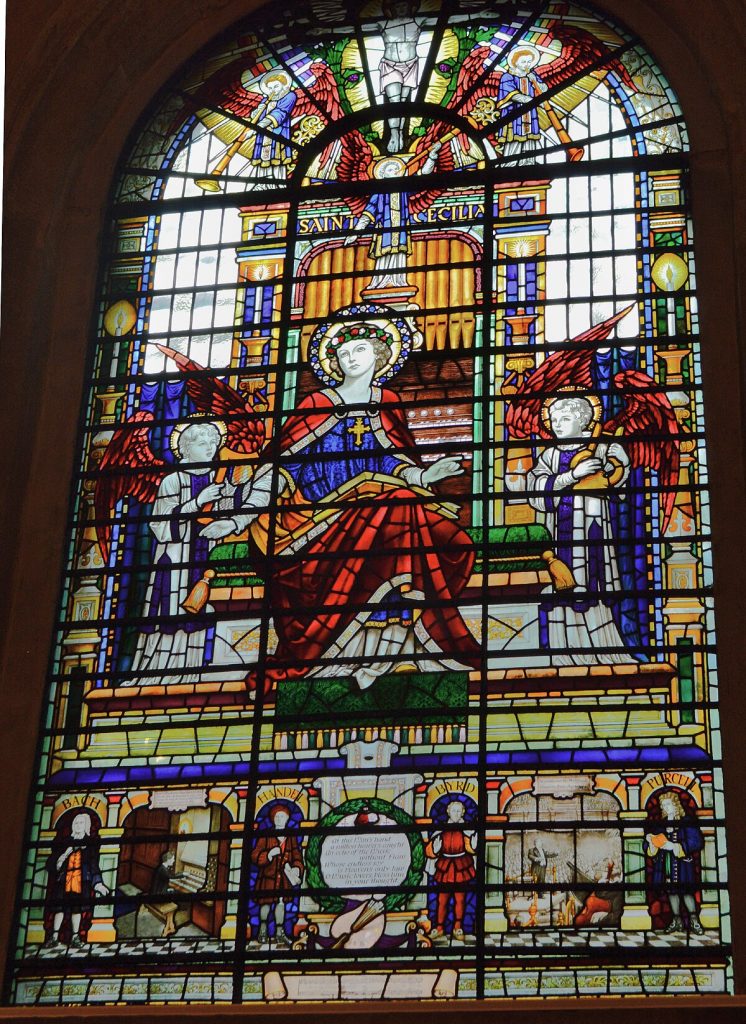
St Sepulchre-without-Newgate, Musician’s Chapel, St Cecilia window. 17 August 2022, Andy Scott

November 17th is St Cecilia’s Day She is the patron saint of musicians and was martyred in Rome in the Second or Third Century AD. The story goes that she was married to a non-believer. During her marriage ceremony she sang to God in her heart (hence her affiliation with musicians). She then told her husband that she was a professed Virgin. So, if he violated her, he would be punished by God. Cecilia told him she was being protected by an Angel of the Lord who was watching over her. Valerian, her husband, asked to see the Angel. ‘Go to the Third Milestone along the Appian Way’ he was told where he would be baptised by Pope Urban 1. Only then would he see the Angel. He followed her advice, was converted and he and his wife were, later on, martyred.

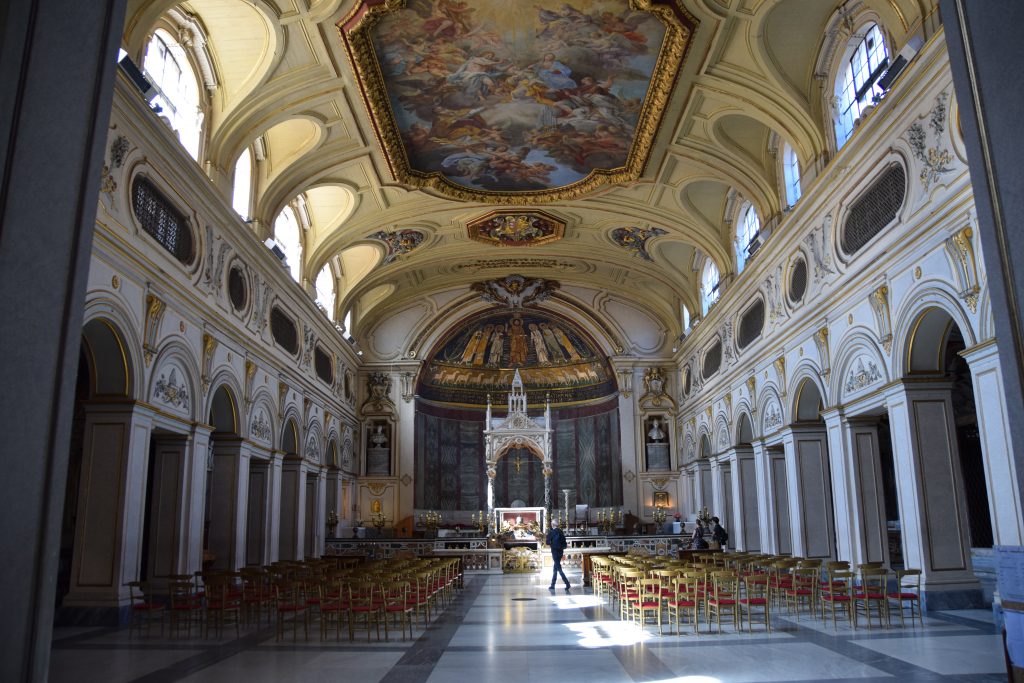
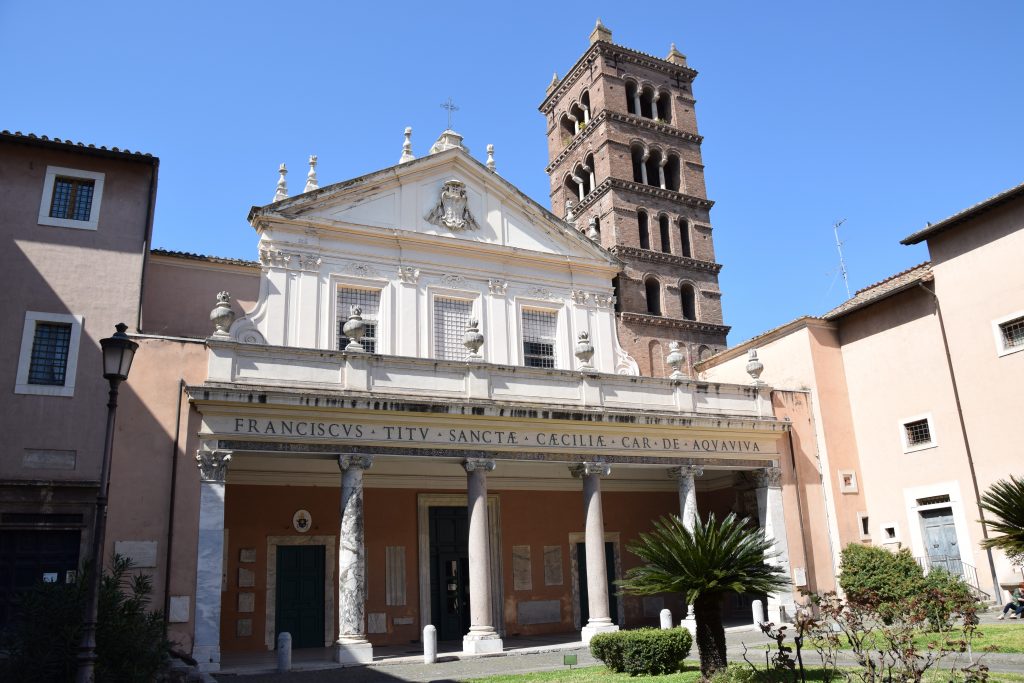
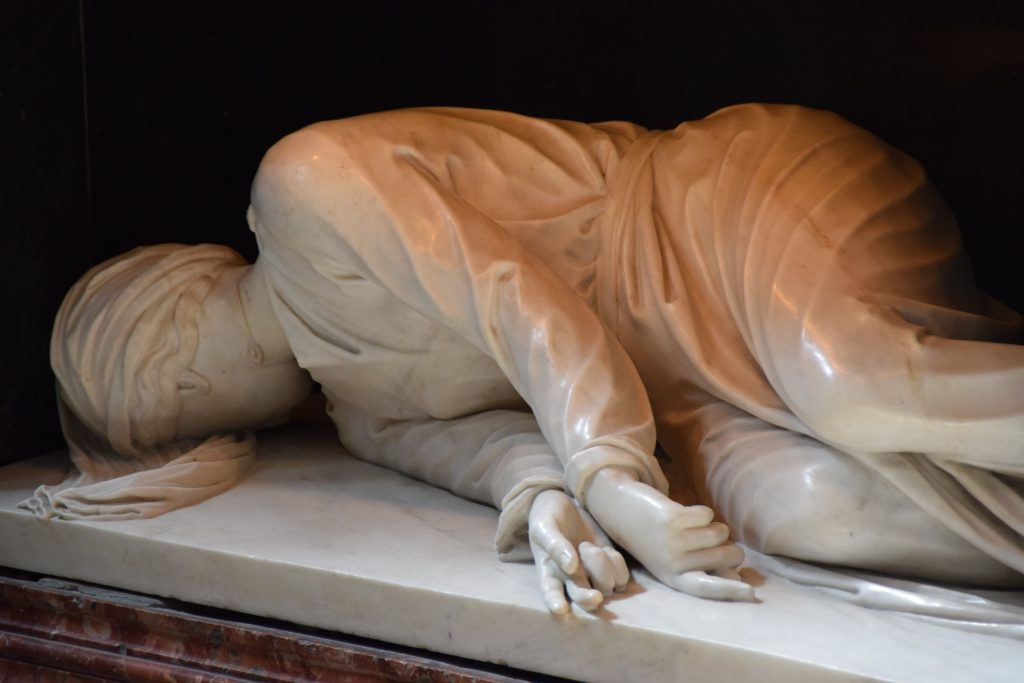
The Church in Rome, Santa Cecilia in Trastevere, is said to be built on the site of her house, and has 5th Century origins. My friend, Derek Gadd, recently visited and let me use these photographs:

St Cecilia in London

There is a window dedicated to her in the Holy Sepulchre Church-without-Newgate, In London, opposite the site of the infamous Newgate Prison.  Henry Wood, one of our most famous conductors and the founder of the Promenade Concerts, played organ here when he was 14. In 1944, his ashes were placed beneath the window dedicated to St Cecilia and, later, the Church became the National Musician’s Church.

This window is dedicated to the memory of
Sir Henry Wood, C.H.,
Founder and for fifty years Conductor of
THE PROMENADE CONCERTS
1895-1944.
He opened the door to a new world
Of sense and feeling to millions of
his fellows. He gave life to Music
and he brought Music to the People.
His ashes rest beneath.

The Concerts are now called the BBC Proms and continue an 18th and 19th Century tradition of, originally, outdoor concerts, and then indoor promenade concerts. At the end of the 19th Century, the inexpensive Promenade Concerts were put on to help broaden the interest in classical music. Henry Wood was the sole conductor.

Wikipedia reports :

Czech conductor Jiří Bělohlávek described the Proms as “the world’s largest and most democratic musical festival”.

The Eight-week Festival is held at the Royal Albert Hall. It moved here during World War 2 after the original venue, the Queen’s Hall, was destroyed in the Blitz in May 1941.

On This Day

1278 Edward 1 had over 600 Jews imprisoned in the Tower of London for coining, clipping and other counterfeiting. Of these, 269 Jews, along with 29 Christians, were executed. They were hanged at the Guildhall in the City of London. By 1290, the King had squeezed all the money he could from the Jews, and they were expelled, not to be let back into the Kingdom until the reign of Oliver Cromwell in the 17th Century. This ended a long period of savage state run antisemitism. Click here for further information.

First Published on November 17th 2023 and revised in November 2024, 2025.

Anniversary of the accession of Queen Elizabeth I and the end of burning of heretics November 17th

Black and white drawing of Queen Elizabeth I with a copy of her signature below it
Queen Elizabeth

The anniversary was celebrated in London with bonfires and bell-ringing. Lighted fire-barrels were rolled along Cheapside. It was, in a way, the precursor to Guy Fawkes Day (1605 onwards). Protestants celebrated it with such joy as it was the end of the reign of Elizabeth’s sister, Queen Mary I. ‘Bloody’ Mary, as she was named by Protestants, was the daughter of Katherine of Aragon. Her Government had 287 Protestants burnt at the stake, mostly relatively ordinary people: clergy, apprentices, artisans, and agricultural workers.  60 were women; 67 were Londoners: the majority were of the younger generation, and most from the South East of England.

The executions were overwhelmingly unpopular, ghastly exhibitions of brutality. In 1555 the weather was unusually wet, so the burnings were an even slower form of torture.  The savagery was blamed by the Protestants on the Old Religion and particular the Spaniards who came over with Mary’s Spanish husband.  Ironically, Philip, in fact, urged caution. When Mary refused to be as lenient to religious dissidents as she was to political ones, he suggested the executions should, at least, be in private. She refused, as the immortal souls of the population were put at risk by Protestant dogma. So the public nature of the deaths was a justifiable deterrent.

When, three years later, in 1558, in the early hours of the 17th November (6am) Queen Mary died, London rejoiced. An old regime, a foreign regime, a Catholic regime was swept away by a young Queen (Elizabeth was 25), with a young Court sworn to protect the new Protestant religion. (For my post on the nicknames for her courtiers look here.)

More on the accession of Elizabeth I at ‘History Today, here.

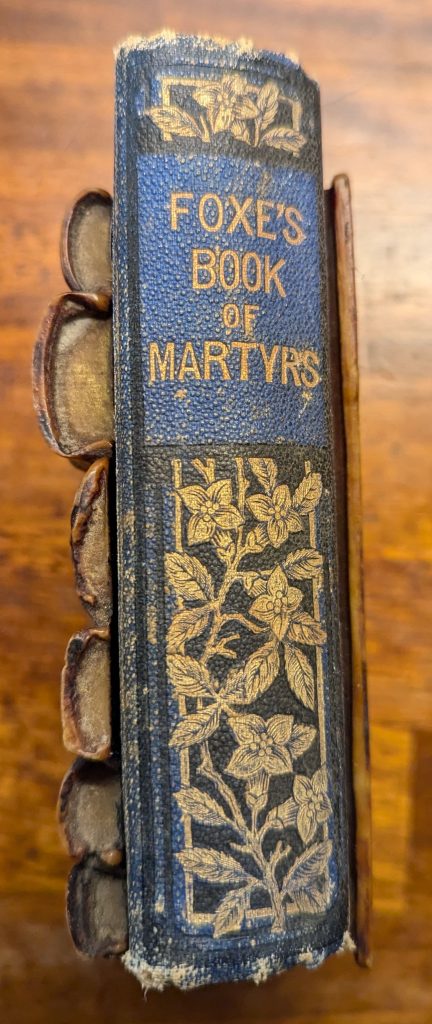
Soon, Foxe’s Book of Martyrs outsold all other books printed except the Bible, and enthusiasm for religious reform morphed into anti-Catholic intolerance.

The Author’s copy of Foxe’s Book of Martyrs

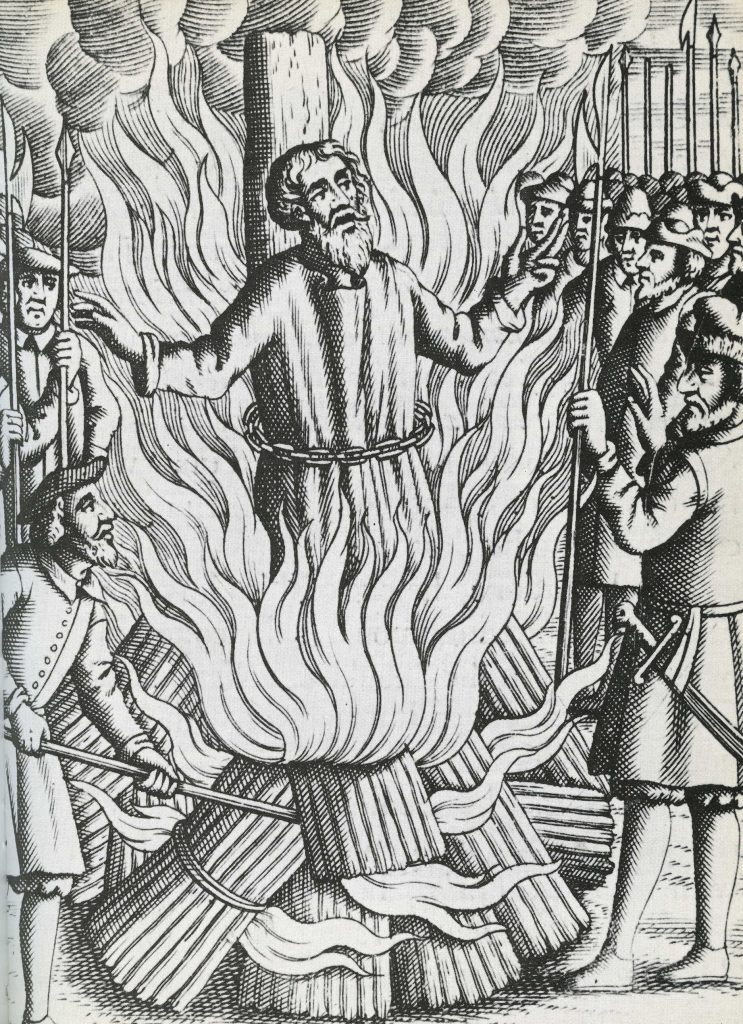
One of the martyrs in the book is Thomas Tomkins, a weaver and a Londoner from Shoreditch, a few hundred yards from where I live.

Tomkins was a humble but godly man who was kept imprisoned by Bishop Bonner, the Bishop of London, at his Palace at Fulham. Here he was beaten. The Bishop personally beat him around the face and ripped off part of his beard. The beatings continued for six months. Finally, exasperated at his failure to persuade the weaver of his error, Bonner burnt Tomkins hand with a lighted taper until ‘the veins shrunk and the sinews burst’. I assume Bonner would defend his action by saying he wanted to give the weaver Tomkins a foretaste not only of the burning he faced but of the very fires of Hell.

But nothing would avail; Tomkins, the simple man that he was, would not accept that bread was made into flesh.  (Transubstantiation). He would not say that which he did not believe. So he met his end at Smithfield by fire with his bandaged hand in the reign of Queen Mary on 16th March 1555.

Thomas Bilney martyred in Smithfield. Black and white engraving
Thomas Bilney martyred in Smithfield.

First Published 17th November 2023, revised 2024,2025