Becket & St. Thomas Day & Wassailing December 29th

Murder of Becket at Canterbury Cathedral 1170
Murder of Becket at Canterbury Cathedral on 29th December 1170 (Late 12th Century Manuscript from British Museum)

On the fifth day of Christmas
my true love sent to me:
5 Golden Rings; 4 Calling Birds; 3 French Hens; 2 Turtle Doves
and a Partridge in a Pear Tree

St Thomas Becket

The fifth day of Christmas is dedicated to Thomas Becket, our most famous Archbishop of Canterbury. He was martyred at Canterbury on this day in 1170. But, he was made a Saint in 1173.  This is double-quick time, as the Pope was determined to rub Henry II’s nose in his complicity with the murder.

Becket was a Londoner from a well-known London family, who became a friend of Henry II. Henry was troubled by the freedoms and fees owed to the Catholic Church. So he thought it would be a good idea to make his friend Archbishop. But as soon as Becket became Archbishop he went ‘native’, became a very stubborn and adamant defender of the Pope’s privileges in Britain. After various confrontations, Henry said, in anger, ‘Who will rid me of this troublesome priest?’ And three knights took him at his word, so Becket was murdered in the Cathedral in Canterbury.

Illustration from ‘an old manuscript’ showing Henry II being scourged in penance for his part in the death of Becket

Lousy Saints

In November 2023 Katherine Harvey wrote an article, in History Today’ called ‘Lousy Saints’. It began with the discovery that Becket wore a hair shirt.  This is how it was described:

This goat hair underwear was swarming, inside and out, with minute fleas and lice, masses of them all over in large parches, so voraciously attacking his flesh that it was nothing short of a miracle that he was able to tolerate such punishment.’

Becket was a former sophisticated courtier.  The assumption is that Becket sought this discomfort deliberately. He also concealed the horror under magnificent clothes. The monks duly cited the lice as evidence of the piety of the man who was willing to suffer for his religion. They even suggested that the daily agony of the lice was worse than the swift death at the hands of the Knights.

Many other pious clerics were similarly lousy by choice. Society as a whole found uncleanliness of this magnitude disgusting. They had the technology to avoid it too. Becket himself had a manservant to look after his clothes and access to a bath. But he limited his baths to once every 40 days by choice. The fact that it was a choice is why people admired such discipline on the part of people like Becket. Altogether very strange and disturbing to this modern reader.

Bridge and Pilgrimage

Soon, a new, magnificent bridge was built to replace the wooden London Bridge. In the centre of that Bridge was a grand Chapel dedicated to St Thomas Becket. It was refurbished by the renowned architect Henry Yevele (c. 1320 – 1400). It was here that pilgrims began their pilgrimage to Canterbury. That is, they travelled from where he was born, to where he was martyred.

Stained Glass window showing St Thomas's Chapel on London Bridge (Window is in St Magnus the Martyr's Church on the site of the approach to London Bridge
Stained Glass window showing St Thomas’s Chapel on London Bridge (this window is in St Magnus the Martyr’s Church on the site of the approach to London Bridge

The Legend of the Epic Walk of Mathilda Becket

In London, there was a legend that his mother, Mathilda, was a Muslim who fell in love with Thomas’s dad, Gilbert, during the Crusades. She helped him escape captivity. He abandoned her and return to England. She then found her own way from Acre to London. She made the journey knowing only the name ‘London’ in English and walked most of the way.  On St Thomas Day, people walked around St Paul’s multiple times to commemorate her epic walk of love.

The story was told as true from the 13th Century until the 19th Century. Then researchers found that Mathilda had more prosaic Norman origins. The speculation is that the foundation of the Hospital St Thomas of Acre on the site of Becket’s birthplace led to the story of his connection with Acre. I was quite disappointed to find out the tale I told was a myth which is told in full here:

Medieval St Thomas’s Pilgrim’s Badge showing the murder of Becket. The ampullae contained holy water.

Henry VIII’s hatred of Becket

When Henry VIII began the reform of the Church of England, he was particularly keen to end the cult of Becket. This rebel against one of the great Kings of England.

Thomas Becket, sometime archbishop of Canterbury, shall no longer be named a saint, as he was really a rebel who fled the realm to France and to the bishop of Rome to procure the abrogation of wholesome laws, and was slain upon a rescue made with resistance to those who counselled him to leave his stubbornness. His pictures throughout the realm are to be plucked down and his festival shall no longer be kept, and the services in his name shall be razed out of all books.

Westminster, 16 Nov. 30 Hen. VIII’

A blog post by the British Museum highlights some fascinating research.  Henry’s government ordered the deleting of unacceptable content in church service books.  Research into the deletion of content found that it was very varied in extent, except where it concerned Becket.  The vast majority of references to him were either completely defaced or mostly defaced, suggesting that Henry had a particular hatred of Becket.

Henry made a lot of money from the gold and jewels that were stripped from Becket’s magnificent shrine at Canterbury Cathedral.

Another of my posts is on Becket and can be read here.

Wassailing

Black and white drawing of a servant Bringing in the Wasaill Bowl (from Washington Irving's 'Old Christmas
Bringing in the Wassail Bowl (from Washington Irving’s ‘Old Christmas’)

The Twelve Days of Christmas are full of wassailing.

Was hail Drinc hail

The name comes from the Anglo-Saxon version of ‘Cheers’ or good health. Its ceremonial use is described by Geoffrey of Monmouth, writing in 1135.

From that day to this, the tradition has endured in Britain that the one who drinks first at a banquet says “was hail” and he who drinks next says “drinc hail.”

Geoffrey is explaining how Vortigern, in the 5th Century, betrayed Britain for the love of Rowena. She was the Saxon King Hengist’s daughter, and, only incidentally, speculating on the origins of the tradition of wassail.

Geoffrey of Monmouth tells us that the word means ‘Good Health’ or as we would say ‘Cheers!’

For more on Vortigern, leader of the Britons in the 5th Century read my post here.

Wassail

This has at least two different facets. Firstly, it is a formal drinking tradition at the centre of Christmas hospitality. Secondly, it is part of the tradition of the Waits, the Mummers, and Carol Singers. These are groups who go around the village singing or performing in exchange for a drink or some food, or money.

Wassailing is either a lovely gentle social activity, or it is an anti-social custom in which the drunkards get to stand outside your house caterwauling. In effect they are demanding drink with menaces. Imagine a Trick or Treat with the drunkards from the pub instead of children!

A Wassail bowl would be full of some form of mulled alcohol or hot punch. A couple of pints of ale or cider, a pint of wine/brandy/mead. Add sugar, cinnamon, and nutmeg. You should have an apple or crab-apple floating in the bowl. To find out more, look at ‘British Food, a History’ here.

‘Into the bowl is first placed half a pound of sugar in which is one pint of warm beer; a little nutmeg and ginger are then grated over the mixture, and 4 glasses of sherry and 5 pints of beer added to it. It is then stirred, sweetened to taste and allowed to stand covered for 2 to 3 hours. Roasted apples are then floated on the creaming mixture and the wassail bowl is ready.

The Curiosities of Ale and Beer, by John Bickerdike, published about 1860 from a Jesus College, Oxford recipe of 1732. (From Recipes of Old England by Bernard N. Bessunger

Wassail in the Orchard

For this New Year’s Eve custom see my post here:

First Published on 29th December 2022, republished in December 2023, 2024,2025

Childermas & Christmas Games December 28th

Pick-up-sticks or Spillikins

On the fourth day of Christmas
My true love sent to me
Four calling birds, Three French hens, Two turtle-doves
And a partridge in a pear tree.

Holy Innocents Day or Childermas is dedicated to children on the day Herod ordered the slaughter of children aged two or under, in an attempt to kill the prophesied Messiah. However, the massacre is only mentioned by Matthew, and other classical sources, despite being anti-Herod, don’t mention it. It is thought to be ‘modelled’ on the massacre of young children mentioned in Exodus when the Pharoah hears about the birth of Moses.

It is, therefore, as far as folklore is concerned, an ill-omened day so don’t begin any new enterprise or, indeed, attempt to go back to work. And remember, as Childermas falls on a Sunday this year, Sundays throughout the year are all ill-omened days. There was a medieval tradition that people should avoid work on the day of the week that Childermas fell until the next childermas. Bad luck this year as it’s a Sunday!

Weather wise, according to a 17th formulae, as the fourth day of Christmas is warm, expect the fourth month, April to be similarly warm.

Christmas Games

So, no sloping off to the Study, it’s best to spend the time playing Christmas Games. The one I remember, most fondly, is pick-up-sticks or spillikins. You drop a pile of sticks onto a table-top or the floor. Then have to pick up as many sticks as you can without disturbing any others. Your turn ends when you move a stick. Different sticks have different values. We also played Dominoes, Ludo and Snakes and Ladders.

But, to get the whole room joining in, we played two card games. Participants could sit in their comfy armchairs rather than at a table.  Chase the Ace.  Newmarket. 

Chase the Ace is, apparently, also, rather unpleasantly, called Screw Your Neighbour in the US! Each person is dealt a card. In turn, they choose to swap it with their neighbour.  At the end of the round, the lowest cardholder (ace is low) loses a life.  A player is excluded after losing 3 lives. Last one standing is the winner.

Newmarket (or Michigan) is a gambling game in which everyone places a stake on 4 picture cards. Theare are placed in the centre of the room.  If your cards comes out in the play, you win the money staked on the card.  The point of both these games is that any number of people can play, and they are simple and fast.

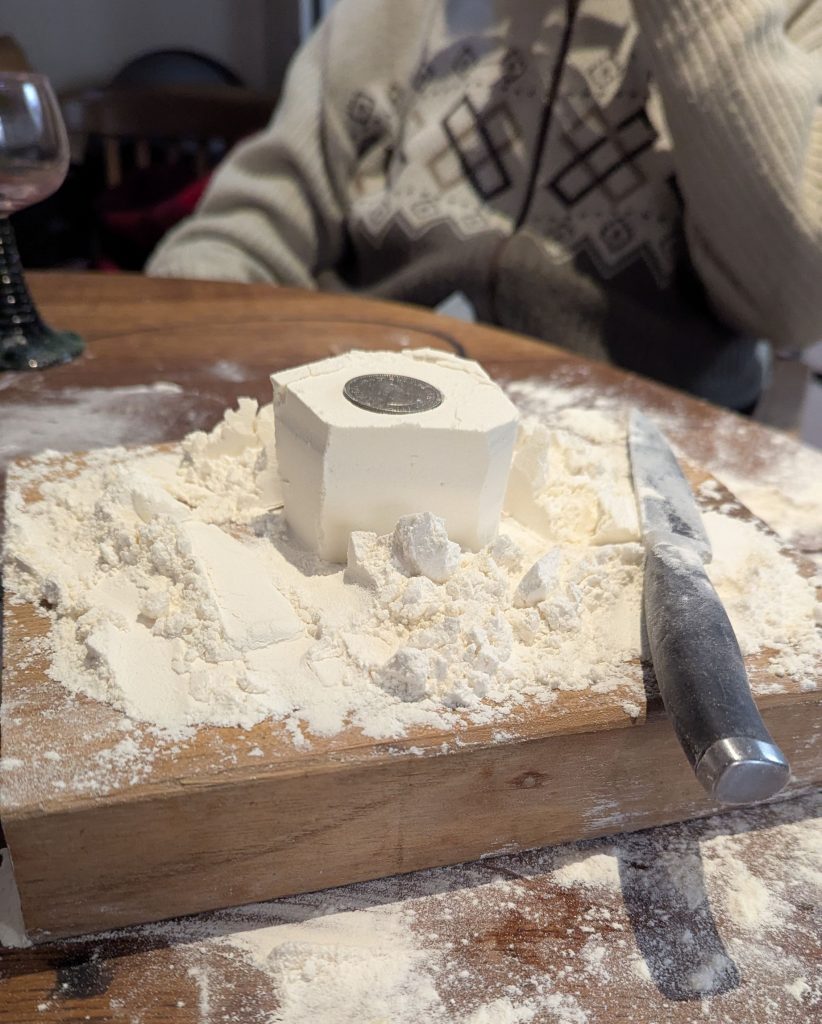
Another game we played at parties was Bullet Pudding. Players cut off bits of a flour pudding until the coin or bullet falls into the basin.  The unlucky player (me last time I played) has to pick it up with his teeth.

Bullet Pudding Christmas game as played in the Flude family 24th December 2024

Here is a photo of the one we played on 24th December,2024. My 97-year-old dad is in the background. You can see what a messy game it can be!

I have moved the 18th Century Jane Austen Christmas Games content from here to the page shown below.

Santa Klaus for the Elite

Apparently, the development of the American Santa Klaus was a way for the elite to keep control of the rowdy working class in New York. The argument, in a nutshell, is that the folk Christmas was outside and rowdy. Then Clement Moore wrote “A Visit from St. Nicholas”. This introduced a domesticated indoor middle-class version of Father Christmas. It’s a fascinating spin on the traditional story.

https://skippedhistory.substack.com/p/professor-stephen-nissenbaum-on-santa-a48?utm_source=post-email-title&publication_id=53190&post_id=90879443&isFreemail=true&utm_medium=email

First written on December 28th 2022, revised and republished in December 2023, 2024, 2025

St John’s Day. Forecasting the Weather. December 27th

On the third day of Christmas
My true love sent to me:
3 French Hens
2 Turtle Doves
And a Partridge in a Pear Tree

Folklore is full of risible methods of forecasting the future and Gervase Markham’s ‘The English Husbandman of 1635 is no exception. He says:

‘What weather shall be on the sixth and twentieth day of December, the like weather will be all the month of January.’

Then and so on for the 12 days of Christmas. Please note that he numbers the 12 days from the 26th, not as I have done from the 25th. I deal with this in one of the forthcoming posts.

So the weather today, the 27th, will be the weather for ‘the following February’ if you follow Markham, or March if you follow me. And so on until the 12th Day when that will give you the weather on December 2026.

According to Gervase’s method, then weather in early 2026 will be cold but sunny.

The St Johns

This is St, John’s Day, he who was loved by Jesus and, possibly also wrote the Gospel. So, he is the patron saint of booksellers, publishers, printers, writers and friendship. Lecterns in the Church of England are normally shaped as an Eagle as this is the symbol of St John.

Black and white advert for a lectern with an eagle at the top from 19th Century Ecclesiastical Suppliers Catalogue
19th Century Ecclesiastical Suppliers Catalogue

John was the brother of James, and with Peter the three were Jesus inner support group. In the Gospel, an unnamed disciple is called ‘the disciple who Jesus loved’. This is thought to be John. The loved one is said to have ‘borne witness and wrote’ the gospel according to John. John the Evangelist is often identified as John the Apostle. There are also three letters attributed to John, as well as the Book of Revelations. It is still a controversial subject, but Revelations is generally thought to be by a different John. Some believe the letter writer was another John. There could be as many as 4 Johns or as few as one. ‘He’ appears to have lived to a grey haired old age, was not martyred, although escaping death from a poisoned chalice. He was supposed to have been challenged by a pagan to drink a poison potion. He took on the challenge and, not only survived, but resurrected two people killed by the poison.

It worries me all these saints who resurrect people. There is St Winifred whose head St Bono successfully put back on her shoulder. Then St Werburgh of Chester who’s favourite goose had been cooked, and she managed to resurrect him. Surely, if you are a believer then the Resurrection is the central miracle (along with the virgin birth) which ‘legitimises’ your faith? And these other miracles make it somewhat ‘trivial’? In the case of the Goose almost a party trick? Although maybe the Goose and St Winifred thought differently about it? Please read my post on St Bono and St Winifred here.

In the beginning was the Word

The Gospel opens with these famous words:

‘In the beginning was the Word, and the Word was with God, and the Word was God. The same was in the beginning with God. All things were made by him; and without him was not any thing made that was made. In him was life; and the life was the light of men. And the light shineth in darkness; and the darkness comprehended it not.’

John is normally depicted with an Eagle, or at the bottom of the Cross with Mary. Or with a palm frond which I always think of as a quill (he being a writer). Or with a chalice.

The use of the Eagle as a symbol goes back to

‘Jerome’s Commentary on Matthew, which says it signifies “John the Evangelist who, having taken up eagle’s wings and hastening toward higher matters, discusses the Word of God”‘

according to www.christianiconography.info

Or perhaps referring to his ‘soaring’ prose?

On This Day

Today, is the day, Freemasons install their Grand Master. I wonder if this has anything to do with the Holy Grail being a chalice?

Ring in the New Year.

Remember, on 1st January 7.30 I am doing my annual ‘Ring in the New Year’ virtual walk for London Walks where I look at all things New Year. To see more details, click here:

First Published in December 2021, revised and republished in December 2023, 2024,2025
Boxing Day & St Stephens Day December 26th

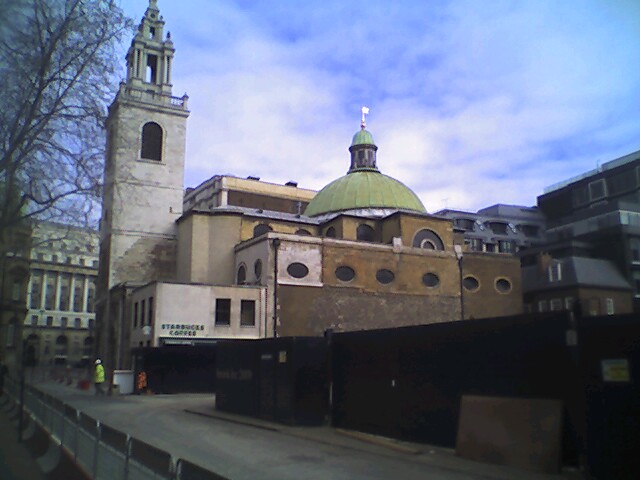
St Stephens, Walbrook. This view of the Church is not normally visible. The brown brick area to the right is much ‘cruder’ than the left. Christopher Wren was saving money by not ‘finishing off’ parts that were not visible from the public thoroughfare. Photo by the Author in 2008

On the second day of Christmas
my true love sent to me:
2 Turtle Doves
and a Partridge in a Pear Tree

Feast Day of St Stephens

It is the Feast day of St Stephen. He was the first Christian Martyr and was stoned to death not long after Jesus’ apotheosis. He was a deacon in the early Church, brought before the Sanhedrin for blasphemy. At the trial, he made a long speech outraging the audience. St Paul was in the audience (also known as Saul).

Stephen attacked the importance of the Temple to Judaism, making parallels with idolatry. Perhaps, I wonder, this explains why there are so few early Christian Churches identified in the archaeological record? Were they consciously avoiding large Temple Basilican structures to differentiate themselves from pagan religions?

Wrens & Presents

The 26th is the day when Wrens could be hunted. Read my post about Robins and Wrens and their seasonal importance here. Also, the day, people gave presents (Boxes) to servants and working people. Other days for presents included St Nicholas’s Day (December 6th), Christmas Eve, Christmas Day, New Year’s Day, and Twelfth Night.

St Stephens Walbrook

Wren’s most beautiful Parish Church is dedicated to St Stephen. It is one of the first Parish Churches to have a dome. There is also a splendid Altar designed by Henry Moore. I took a Swedish Choir around the City of London on a guided walk. St Stephen’s was open, and, once inside, they just fancied the acoustics. So, they sang. I recorded. Listen below:

Swedish Choir singing in St Stephen’s London

If you wish to read the post on St Lucy click here:

Picture of Christmas greenery on a gift box
by Tjana Drndarski-via unsplash

Victorian Boxing Day

In 1858, James Ewing Richie wrote about ‘Boxing Night’ in ‘The Night Side of London’. I’ve mixed it up with another source. So here is a list of the people who might come knocking at the door for their traditional Boxing Day Box.

Richie’s advice was to tie up your knocker to avoid paying these people:

The Chimney sweep.  Then varlets playing French Horns pretending to be the Waits – {The Waits were licensed musical beggars}

Then came the Turncock, who switched the water supply to your side of the street on alternative days. Followed by the Postman, the Dustman; the Road Waterer in summer, and the Road Scrapper in Winter. After this, the real Waits turned up for a musical turn. Then the Lamplighter, the Grocer’s Boy and the Butcher’s Boy.

I imagine the Knocker-upper also got a Box. My grandmother told me about the knocker-upper in Old Street in the early Twentieth Century. He would tap on the window with his long stick to wake up those people without a reliable clock.

Google search image 'knocker-upper', the lady at top left worked in Limehouse
Google search image of the ‘knocker-upper’, the lady at top left worked in Limehouse and is using a pea-shooter.

Richie records that he had to give a tip to 6 people who wished him a Happy Christmas on his way to work. The tip he gave was half a crown each. He thought his wife would be lucky to get away with a shilling per person for the trade men listed above. Strange that he gave more than twice as much to random strangers than his wife gave to people who served them all year. Perhaps this reflects his belief that the size of his tip reflected his position in society. It is all curmudgeonly. This is probably because he believed it would be spent on drink, leading to the miseries of drunkenness.

The Drunkards Children by Cruikshank  1848.
The Drunkards Children by Cruikshank 1848. Cruikshank was a famous illustrator from a dynasty of visual satirists and one of Dickens illustrators. The story shows the effect of alcoholism on a family. It ends with the suicide from London Bridge of the mother.

First Published on Dec 26th 2022, Republished December 2023, 2024, 2025

.

Birthday Of The Sun December 25th

The First Day of Christmas, my true love sent to me a Partridge in a Pear Tree

Nebra Sun disc from Stonehenge Exhibition British Museum
Nebra Sun disc. Photo from Stonehenge Exhibition British Museum (photo Kevin Flude) The Disc shows the Sun, the Moon, the Pleides, and illustrates the Summer and Winter Solstice movements of the Sun.

Dies Natalis Solis Invicti

On the 25th December were born Jesus, Mithras, Attis, Saturn, Apollo, and the Invincible Sun.

The Sun Gods have quite a complicated interrelationship. Zeus, and Apollo are both also considered to be Sun Gods. Apollo is particularly interrelated to Helios, the Greek God who drives the Chariot that carries the Sun across the skies every day. The Romans had a God called Sol who some say was a deity but who declined to be of minor importance. Then Sol was championed by the transexual Emperor Elagabalas. Aurelian revived the cult in 274 AD. Sol Invictus was the focus of Constantine the Great. Sol has been suggested as a response of the Romans to a trend towards monotheism in the later Roman period. Sol for Constantine was a gateway God to Christianity.

It is also notable that early worship of Jesus is full of solar metaphors, Jesus being, for example, the light of the world. Churches are also virtually all orientated East West, aligned with the rising and setting suns. The Altar is always at the East End, and effigies on tombs face the rising sun.

First Christmas?

The first recorded Christmas Day is in AD336. It was in an almanac that lists Roman Holidays, officials and martyrs. The entry for December 25th says: ‘natus Christus in Betleem Judeae’. For more early Christian Dates have a look here.

Celtic Sun Gods?

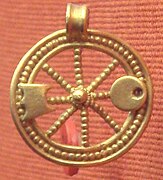
The Golden Wheel from Haute Marne in France

The Golden Wheel from Haute Marne in France, (Public Domain, Wikipedia)

Did the Celts have a sun-god? Belenos is a contender, but linguists are proposing his name does not come from words meaning bright but from strong. The God Lugh’s name is suggested to mean ‘shining’ but his attributes are more of a warrior than a sun god. Taranis is probably the best candidate, but he is more of a sky or thunder god than specifically a sun god. However, his symbol is a 8 spoked wheel is said to be symbolic of the Sun. It also represents the division of the year by the 4 quarterly sun festivals (Winter Solstice, Spring Equinox, Summer Solstice and Autumn Equinox) and the 4 cross-quarter festivals, (Samhain or Halloween, Imbolc or Candlemas, Beltane or May Day, Lughnasa or Harvest Festival).

December 25th is a few days after our reckoning of the Solstice. But, as we have previously seen, Christians believed the world was created on the Spring Equinox, and humans on the 4th day, so Adam was created on March 25th. Mary conceived on the same day, and therefore Jesus, after a perfect labour was born 9 Months later on December 25th. (See my post on March 25th and the Creation)

Christmas Cake

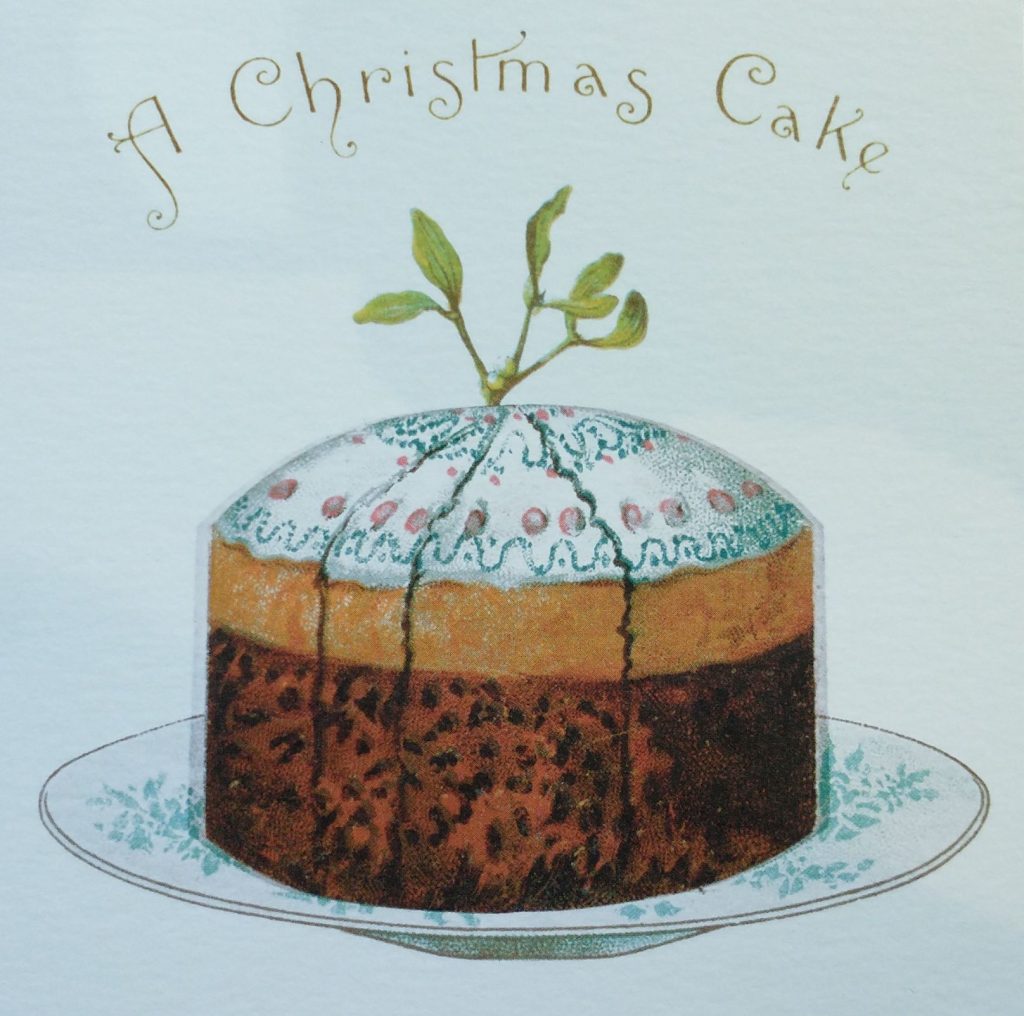
Today, you might be tucking into a Christmas Cake (originally eaten on Twelfth Night). Now, I know many Americans have a bizarre belief that fruit cake is the cake of the devil. Something you receive as a gift and give away to someone else, as most Americans hate it. More fool them for missing out on one of the delights of the Christmas period, that and cold turkey sandwiches. Christmas Cake is made on stir up Sunday, the last Sunday in November, to let the ingredients develop their flavour. They are then covered with marzipan and decorative icing.

19th Century Christmas Cake, generally now the icing continues down the side of the cake.

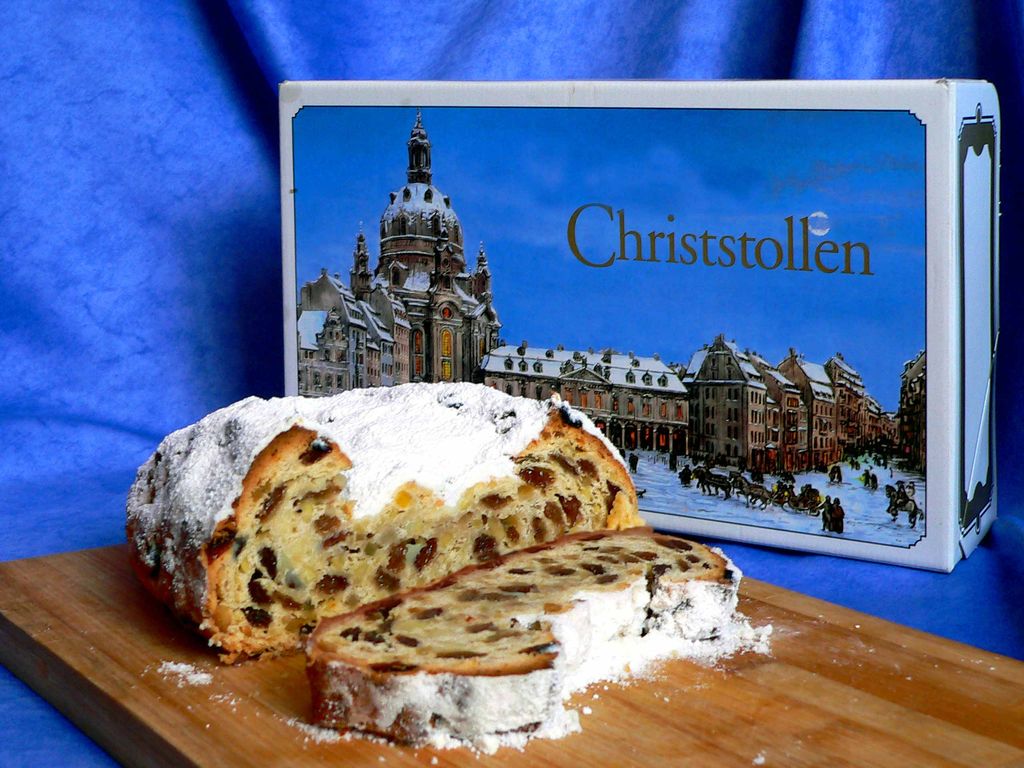
In Germany, they also eat a fruit bread called Stollen or Weihnachtsstollen. The tradition is said to have been started in the 15th Century, when the Pope gave dispensation to allow the use of butter in the fasting period of Advent. Previously, the Germans had to use oil to replace the banned butter, but they could only make oil from turnips, so eventually the Pope allowed the use of butter, with which they made bread with added dried fruits.

Stollen By Gürgi – Own work, Public Domain, https://commons.wikimedia.org/w/index.php?curid=3720379

In Italy, they eat Panettone, a fruit bread/cake. It is a sourdough, and a cross between a brioche and a cake. It often comes in a beautiful decorative tin, and is delicious. The centre of panettone production is Milan. Last year was the 200th Anniversary of Milan’s famous Marchesi 1824 which makes artisanal Panettone. It used ‘fine ingredients such as six-crown sultan as, naturally candied fruit, Bourbon vanilla from Madagascar, Italian honey and eggs from free-range hens, blended in a slow-rising dough with the exclusive use of Marchesi 1824 sourdough starter‘. Thank you, Mara from Milan, for the heads-up.

Screen shot from website – does not click through to sales!

Which is best? The only way to find out is to eat several slices of each. America, you don’t know what you are missing.

For stir up sunday see the second half of this post of mine.

First Published 24th December 2022, Republished 25th December 2023, 2024, 2025

Eve of the Birthday Of the Sun God December 24th

Helios, Colossus of Rhodes, artist's impression, 1880
Helios Colossus of Rhodes, artist’s impression, 1880

The Eve of the Day

Tomorrow is the Dies Natalis Solis Invicti – the birth of the Invincible Sun.  In some calendars, such as the Celtic & the Anglo Saxon, the day begins at dusk.  So Christmas Eve is not the evening before Christmas Day. It is the beginning of Christmas Day itself.

So some countries celebrate the eve as much or more than the day.  The Church would have encouraged this to accommodate former pagan belief into newly converted societies. (the most obvious example is Halloween see my post here).

But the Church also suggests celebration of the Eve derives from the Jewish tradition of the beginning of the day at dusk.  In Genesis are the words;

‘And there was evening, and there was morning—the first day.’

Christian tradition holds that Jesus was born on the holy night and thus is celebrated by the midnight mass.

When does the day begin?

This seems a silly question.  In our society, the day officially begins at midnight.  But it clearly begins at dawn. This was the normal start of day for Ancient Egypt,
Republican Romans, and Western Europe till the coming of clocks in about 1400. We have already seen there are calendars that start the day at Sunset: Muslim, Jews, Celts, and the
Saxons. In Britain, astronomers started the day at midday until an Act of Parliament reset it to midnight as recently as 1925.

Dawn seems the obvious choice, it’s called daybreak after all. But the problem is that the first light is so variable.  It is an opinion when the light arrives and will vary depending on clouds, hills and height above sea level etc. Midnight is halfway between dawn and dusk, and I assume can be determined mathematically and astronomically.  So Julius Caesar changed the Roman start of day to midnight when he reformed the Roman Calendar. (See my post on the Julian Calendar here).

Dusk is a counterintuitive choice, I think. The reasoning is that the Sun has gone down. It is finished for the day.   Sunset is the end of the day. So it is also the start of the next daily cycle. 

The Celts started their year at Halloween for similar reasons.  In autumn, the various harvests have been collected.  Most plants have ended their growing cycle and shed their leaves. Therefore, November 1st (or its eve) is the end of the growing year. On the ground, the seeds are ready and waiting to begin sprouting to bring new life. So, this is the new year.  Sort of makes sense?

Christmas Eve Celebrations

In Britain, among the general population, there are no special customs except for preparing for the arrival of Father Christmas, and perhaps going to Midnight Mass.  In Germany, Heiliger Abend is when Gifts are exchanged.  Afterwards, is a relatively light dinner, often consisting of potato salad and sausages. 

In my experience, Christmas Eve is a relaxing evening in front of the TV while wrapping presents.  (After the children have gone to bed of course). Sometimes in front of the first roaring fire of the winter.

Then the filling of pillow cases or stockings full of presents. Last thing is tip-toeing upstairs placing a plate in the hall upstairs with a mince pie, shot of brandy for Father Christmas and a carrot for the reindeer. Then the crinkle of the wrapping paper as the presents are placed on the children’s bed.  Now, the little darlings are finally fast asleep after an overexcited bedtime. These are the precious moments of family life.

Mothers of God’s Eve

December 24th is a day for Mothers, as tomorrow, the 25th, will be born Jesus, Mithras, Attis, Saturn, Apollo, and the Day of the Birth of the Invincible Sun, Solis Invictus. And so we think of Mary, Isis, Theia, the Three Mother Goddesses and mothers everywhere.

First Published 24th December 2022, Republished 2023,2024,2025

No More Christmas December 23rd, 1652

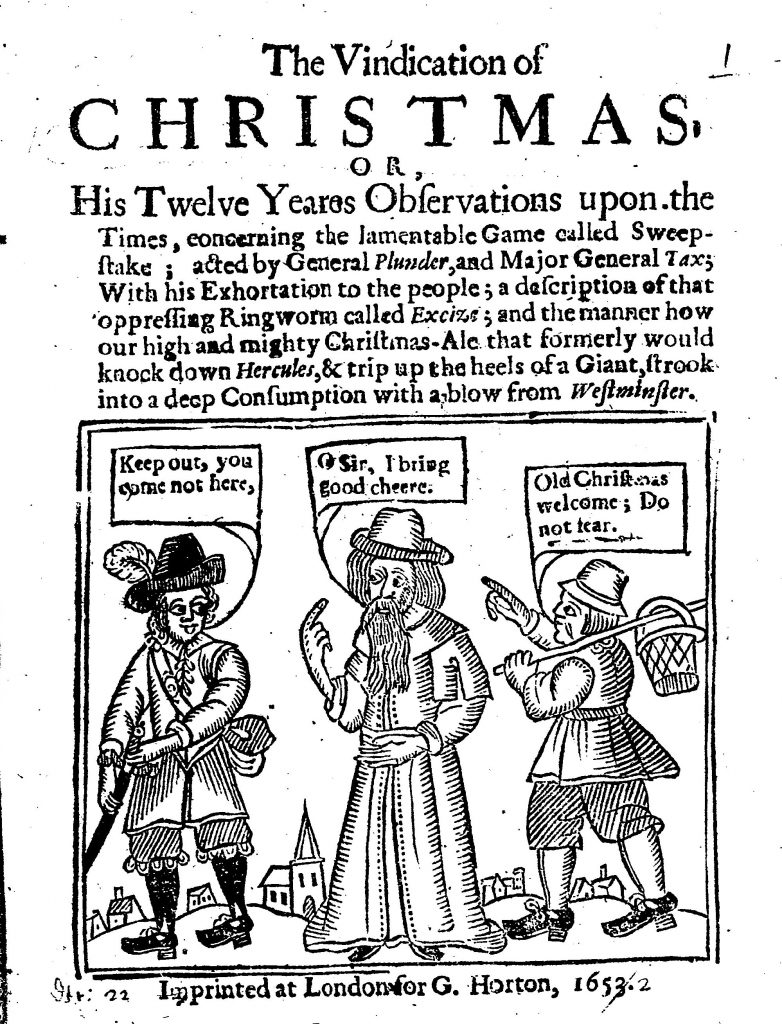
1653 Illustration of Old Christmas being rejected by the Puritan from London and welcome from the rustic from Dorset

23rd December 1652 Resolved by Parliament. : ‘That no Observation shall be had of the five-and-twentieth day of December, commonly called Christmas-Day.’

This was one of several bans on Christmas that Parliament introduced. (Parliament not Cromwell). It banned Christmas Services and ordered that shops be kept open, but it was, at least, inside people’s homes, largely unenforceable.

The logic for banning it was that Christmas is not mentioned in the Bible and was thus a Catholic superstition.

Christmas struggled through the Commonwealth, and then came back with a bang in 1660 on the Restoration of Charles II. However, it did shorten the period of Christmas festivities and make it more low-key, really all the way till the 19th Century when Dickens and Washington Irving revived the traditions of Christmas.

For my post on Cromwell’s lucky Day click here

On This Day

1800 – Jacquard Patents his First loom, and begins the digitisation of the world.

First Published in 2023, revised 2025

Winter Solstice, December 21st

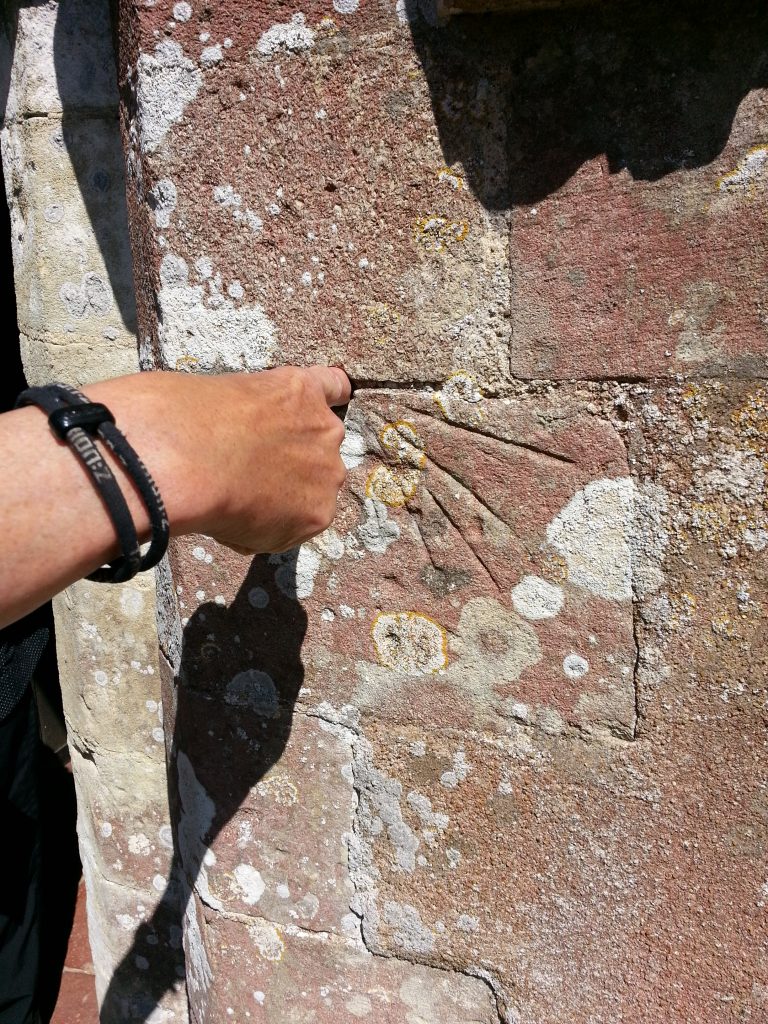
Mass Clock Steventon Church Hampshire

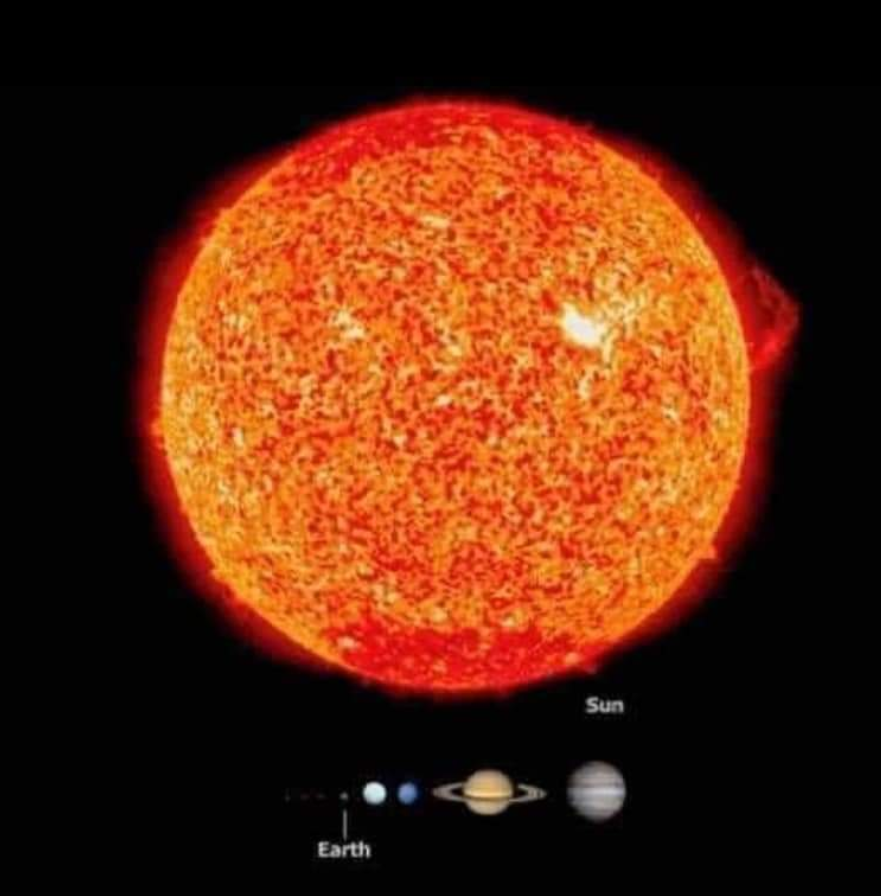
The Winter Solstice this year is: Sunday, December 21, at 3.03pm GMT in the UK. according to the Royal Museums Greenwich. Today, the Sun is at its lowest midday height of the year.  This morning was the most southerly rising of the Sun this year. If the southward diminishing of the Sun everyday were to continue, life will be extinguished on earth. The world would have no light and no heat. So, societies all round the world, made a point of honouring their Sun Gods and Goddesses on this day.

And so on this day, or so it was thought, our Deities renew their promises as the Sun begins its rebirth. It begins to rise further north each day, the Sun at noon is higher, and it sets further north. So the days are longer, brighter, eventually warmer. Thank God(s)!

For some, it’s just the turn in the cycle of life. For others, it’s the death of the old Sun and the birth of a brand-new Sun.  The Egyptians believed that the sun was reborn every day as a dung beetle.

Symbolically, the winter solstice is an ending as well as a beginning. It is a turning point and a promise by the Deity that the world will continue. It will turn, the wheel will turn. Warmth and growth will return. Buds already growing in the earth will break out and bring new growth.

The Winter Solstice – time for a party!

Culturally, it’s a time to have a party before the weather gets really cold. It is a time to evaluate your life; look back at the lessons from the last year. A time to begin, like the Sun, a new and hopefully better cycle.

Note. So if the Sun is at its shortest and weakest, why isn’t it the coldest time of the year? That is because the earth and particularly the oceans retain the heat of the Sun, and so the coldest time is at the end of January.

For a discussion, on the Solstice and the Parthenon Marbles look at my post:

First published on Dec 21st 2021, revised and republished on Dec 22nd 2023, Dec 21st 2024,2025

Greater Cycles & the Ages of Man December 19th

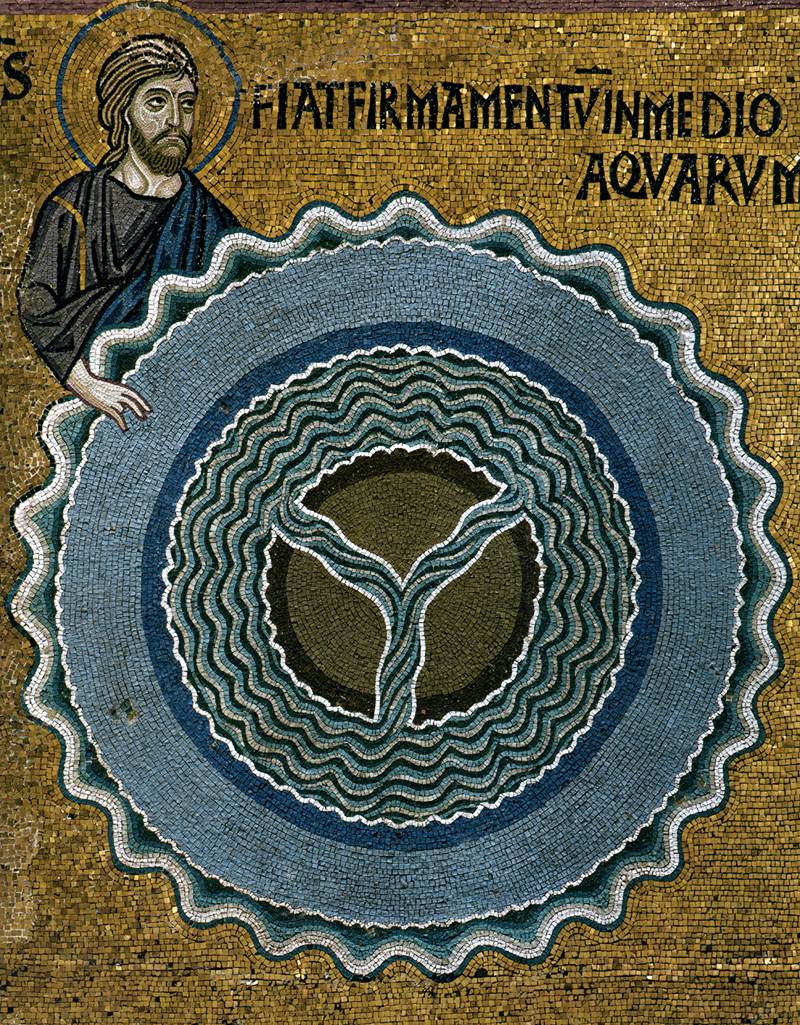
Capella Palatina Palermo 12th Century Mosaics God is shown creating the firmament. ‘And God said, Let there be a firmament in the midst of the waters, and let it divide the waters from the waters’

We are coming up to the key days in the year. And so will be looking at calendars and counting days. But what about ages, epochs and aeons?

‘Practical Magic in the Northern Tradition’ reports that there are seven ages of the world:

This is how they calculate it: the life of a yew tree is 729 years, and there are seven ages from the creation of the world until its doom. So the world will last 5103 years.

‘Practical Magic’ divides ages up as follows:

A wattle has a life of 3 years (1*3)
Three wattles are the life of a hound – 9 years (3*3)
Three hounds are the life of a steed – 27 years (9*3)
Three steeds are the life of a man – 81 years (27*3)
Three men are the life of an eagle – 243 years (81*3)
Three Eagles are the life of a yew. – 729 years (243*3)

How Old is a Yew Tree/Eagle

A comment by a reader has prompted me to write the following about the ages given above:

‘Practical magic’ says the poem is ‘Ancient’. So it’s folklore and not science, and the ages are opinion not scientific fact.

As I understand it Yew trees live a long time but not quite as long as many people think. I base this on the Yew Tree at Steventon, Hampshire where Jane Austen was born. The tree has/had a plague on it saying it was 1200 years old. I used to visit it regularly. On one visit, I was told that an expert opinion suggested it was more like 700 years old. (ifmy memory serves). I do not have the details, but my source would have been one of the people associated with the Church.

The Woodland Trust (says Yew Trees get old at 900 years. They cite a few which are ‘said to be’ over 2000 years old. But are they? The scientific sites I have looked at suggest that Yew Trees should be described as ‘ancient’ from 400 not 900 years. There are problems with dendrochronology dating of yew trees, and so most methods depend upon an estimation from the width of the tree trunk. But that, itself, depends upon how much you believe in the claims of the ancient trees. So, I think it’s best to take the extreme cases with a very large pitch of salt. So 729 years is probably not so far off the mark for a Yew tree.

As to Eagles, this website on eagles says they can live to 30ish in the wild and 68 years in captivity. So the claim for 243 years is way off the mark! Wattles what are they? I have searched, but not found any reference. My guess is a short-lived bird.

The End Was Nigh

Archbishop Usher of Armagh (1581 – 1656) calculated that the world was created in 4004 BC. He counted the begettings in the Bible. If we accept his date, and apply the seven yew tree ages rule (5,103), then the world should have ended in AD 1099 (give or take a year). But it didn’t end then, did it? We are in the 9th Age and counting.

It doesn’t make sense to me to have a factor of 3 for the smaller divisions, and then to switch to a factor of seven. Surely, far more logical is to have a factor of 3*3 years. So, if there were nine ages of the world, then it would survive for 6561 years, which will end in approx. 535 years time (cAD2557). This calculation has the massive advantage of not yet being proved wrong! (Please note, cult owners, I have copyright on this date).

It’s notable that when a Cult declares the imminent end of the world, and they trudge up to the top of a high eminence to observe it (normally by Hampstead Pond in London). They seem quite happy to trudge back down again. Soon they are up and running again with the same enthusiasm for the next ‘end of the world’ date.

Of course, the world was created around 4.54 ± 0.05 billion years ago according to Wikipedia. According to the Doomsday Clock the world will end at 12 O’clock and we are 89 seconds away from it. This is based on a catastrophic end for our civilisation. If we avoid this then other scientists have suggested mammals will be wiped out in approximately 250 million years.

Abrahamic Ages

The Jewish tradition was for six or seven ages of 1000 years. The seventh didn’t really count because it was the age of the messiah when there was a 1000-year sort of super sabbath. Or another idea is that it was an age that ran parallel with the other six. So the world was to be 6000 years long.

With the coming of Christianity, dating the Creation, and (therefore the Day of Judgement) became more important. The Romans dated from the foundation of Rome, and the Greeks from the First Olympiad. But beyond that they had a whole mythology and creation myths about an Age of Gold. Followed by a Bronze Age (Troy and all that) followed by their very own base Iron age. You can read about this in my post about Hesiod.

The Anno Munda

An early Christian attempt to tell the age of creation was the Anno Munda‘s arrangement of the Year. This is pretty complicated and is based on a Talmudic tradition. A late Roman version uses ‘the Diocletian Years’, which is when the persecution of Christians began. It held that the world was created 5500 years before the Birth of Christ. So we are 5500BC plus 2025 years since the date of the creation. And it was supposed to have ended in 500AD. 6000 years after the Creation. so we have outlived Creation by 1525 years.

St Augustine of Hippo took the tradition of six ages and brought it into the Christian canon. These are the six ages:

  • The First Age “is from the beginning of the human race. That is, from Adam, who was the first man that was made. Down to Noah, who constructed the ark at the time of the flood“, i.e. the Antediluvian period.
  • The Second Age “extends from that period on to Abraham, who was called the father indeed of all nations”.
  • The Third Age “extends from Abraham on to David the king”.
  • The Fourth Age is “from David on to that captivity whereby the people of God passed over into Babylonia”.
  • The Fifth Age is “from that transmigration down to the advent of our Lord Jesus Christ
  • The Sixth Age: “With His [Jesus Christ’s] coming, the sixth age has entered on its process.”

Wikipedia.

As each age is 1000 years, then you can see why so many people were worried as 1000 AD approached.

The Seven Ages of Man

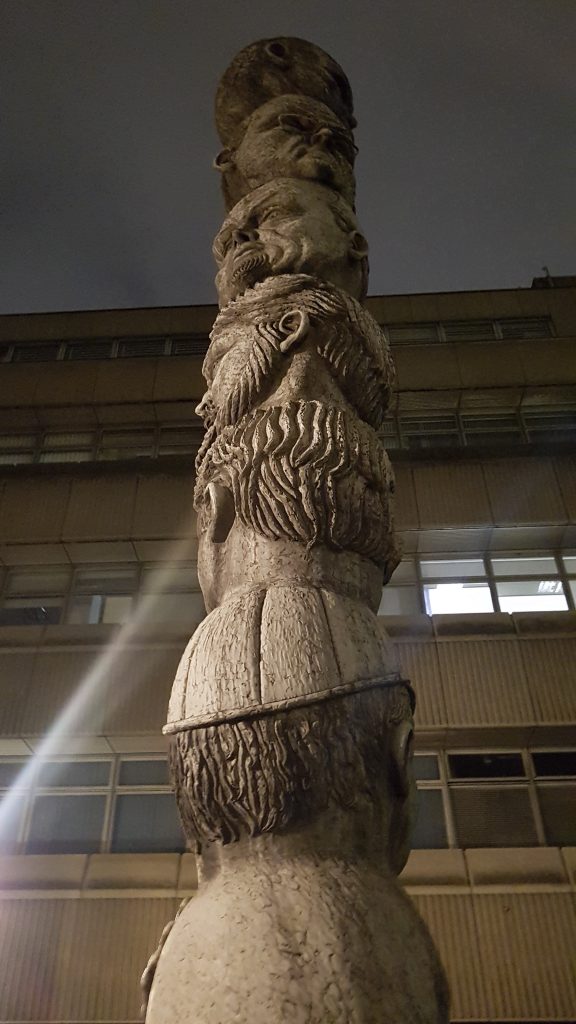
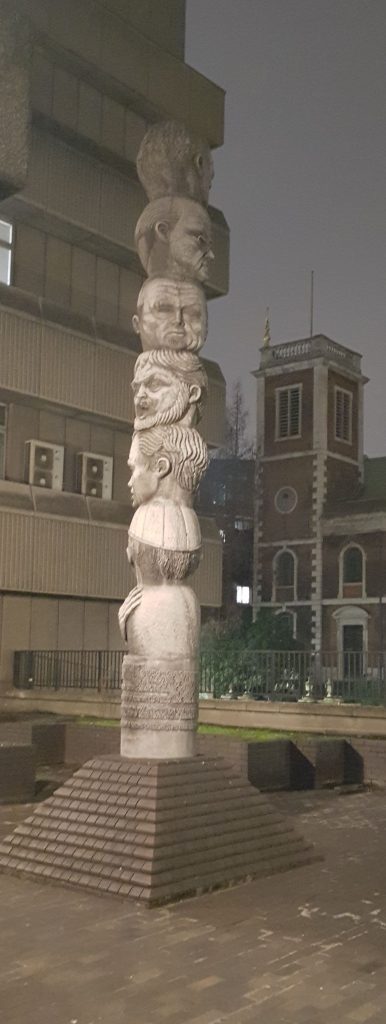
The Age of Man can also relate to the average age of a human lifespan. Of course, six is not such a magical number as seven, and so Shakespeare ran with the idea in the Seven Ages of Man spoken by Jacques in ‘As you like it’. If there are seven ages of human life, and we have a span of six score and ten, then each age is ten years.

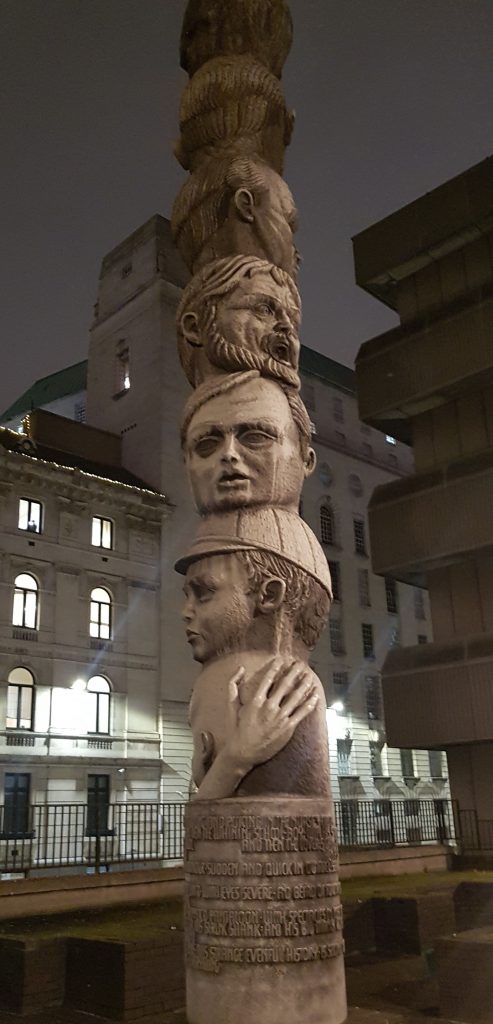
All the world’s a stage,
And all the men and women merely players;
They have their exits and their entrances,
And one man in his time plays many parts,
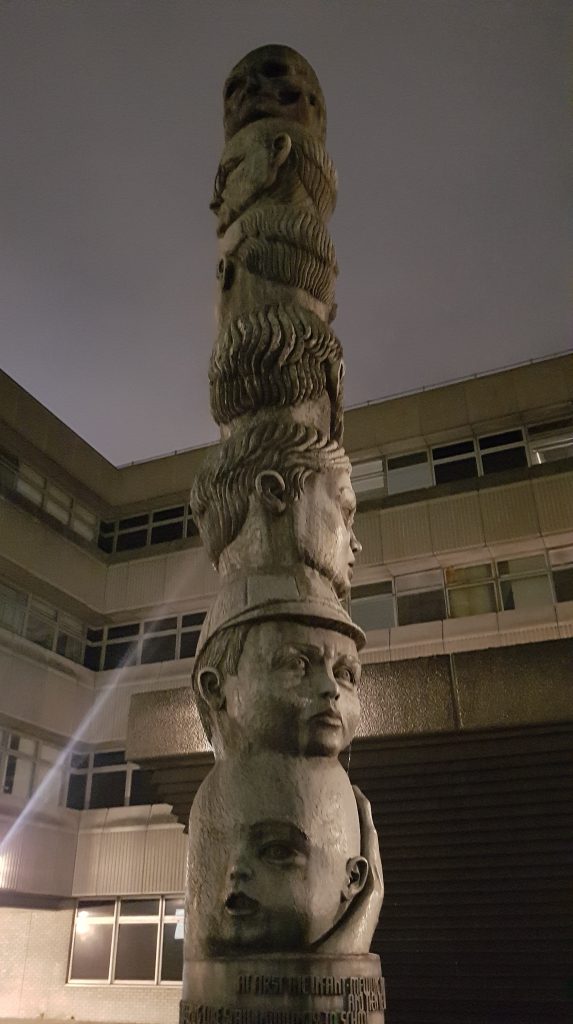
His acts being seven ages. At first, the infant,
Mewling and puking in the nurse’s arms.
Then, the whining school-boy with his satchel
And shining morning face, creeping like snail
Unwillingly to school. And then the lover,
Sighing like furnace, with a woeful ballad
Made to his mistress’ eyebrow. Then, a soldier,
Full of strange oaths, and bearded like the pard,
Jealous in honour, sudden, and quick in quarrel,
Seeking the bubble reputation
Even in the cannon’s mouth.

And then, the justice,
In fair round belly, with a good capon lined,
With eyes severe, and beard of formal cut,
Full of wise saws, and modern instances,
And so he plays his part. The sixth age shifts
Into the lean and slippered pantaloon,
With spectacles on nose and pouch on side,
His youthful hose, well saved, a world too wide
For his shrunk shank, and his big manly voice,
Turning again toward childish treble, pipes
And whistles in his sound. Last scene of all,
That ends this strange eventful history,
Is second childishness and mere oblivion,
Sans teeth, sans eyes, sans taste, sans everything.


(Jacques, Act 2, Scene 7)

The Kalendar of Shepherds

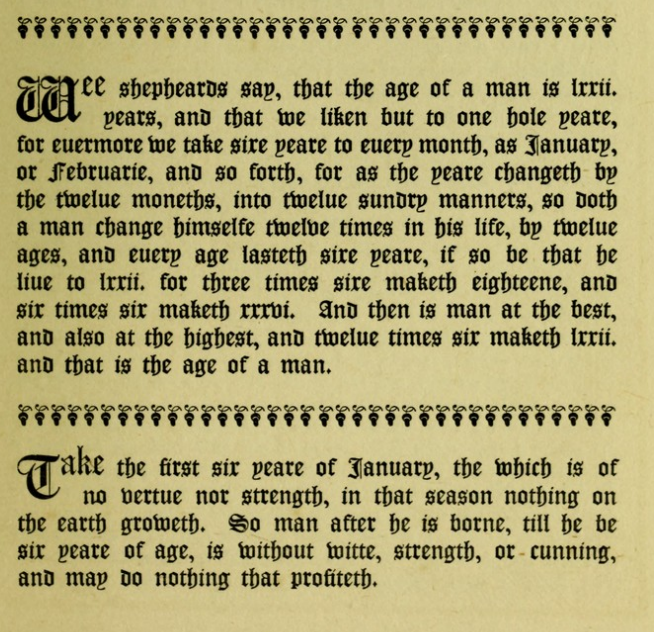
Now, the Kalendar of Shepherds has a similar idea, but it calculates it differently. The Kalendar, based on a 15th Century French original, says there are 12 ages of man, corresponding with the 12 months of the year. Each age is 6 years long, and so our likely lifespan is 72.

Kalendar of Shepherds

Each month is allocated to one of the ages, and has an insight into human life for that span. In January, the first 6 years of a human life are mapped out. If you read above you will see we have no ‘wit, strength or cunning. Nor ‘may do nothing that profiteth’ in those first years. A little harsh, and as a fond grandfather, it, I refute it. In December, the last 6 years are prefigured.

Our alloted span, says Practical Magic is 81 years, Kalendar of Shepherds say 72, and Shakespeare offers us 70.

The Office of National Statistics says:

In 2022 to 2024:

  • Life expectancy at birth in the UK was 83.0 years for females and 79.1 years for males. This is an increase of 18 weeks from 82.7 years for females and 21 weeks from 78.7 years for males since 2019 to 2021.

Capella Palatina, Sicily

By the way, the Capella Palatina, illustrated at the top of this post, is a marvel of gold mosaics. It is absolutely stunning. It makes a trip to Palermo a must.

On This Day

1843 – Charles Dickens published ‘A Christmas Carol’

First Published on December 18th 2022, revised and republished in December 2023, 2024,2025

Collect your Holly & Ivy December 18th

Picture of Christmas greenery on a gift box
Holly and Ivy by Tjana Drndarski-via unsplash

So, the old Sun is dying, and if the Sun keeps going down we are all going to die. With all of nature dying or hibernating, evergreens are a symbol of a promise/proof that life will continue through the dark days. So, with its bright-green leaves and its luminous berries, Holly is the ideal evergreen for the Solstice. And as the prickles symbolise Christ’s Crown of Thorns, and the berries the red blood of Jesus, the symbolism works, too, for Christians.

Henry Mayhew (editor of Punch) in his ‘London Labour and London Poor’ (1851–62) talks of Christmasing for Laurel, Ivy, Holly, and Mistletoe. He calculated that 250,000 branches of Holly were purchased from street coster mongers every Christmas. He says that every housekeeper will expend something from 2d to 1s 6d, while the poor buy a pennyworth or halfpennyworth each. He says that every room will have the cheery decoration of holly. St Pauls Cathedral would take 50 to a 100 shillings worth.

He also calculates that 100,000 plum puddings are eaten. Mistletoe he believes is less often used than it used to be, and he hopes that ‘No Popery’ campaigners will not attack Christmassing again.

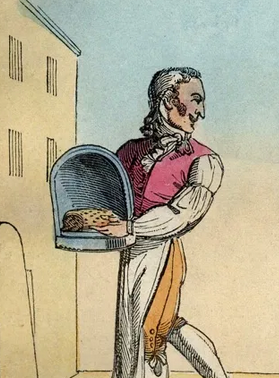
Hot plum pudding seller from Sam Syntax Cries of London 1820s
from the Gentle Author Spitalfields Life web site
Hot plum pudding seller from Sam Syntax Cries of London, 1820s
from the Gentle Author Spitalfields Life website

Culpeper on Ivy (1814 edition):

‘Ivy’ says Culpeper in his Herbal of 1653, its winter-ripening berries are useful to drink before you ‘set to drink hard’ because it will ‘preserve from drunkenness’. And, moreover, the leaves (bruised and boiled) and dropped into the same wine you had a ‘surfeit’ of the night before provides the ‘speediest cure’. (The Perpetual Almanac of Charles Kightly)

It is so well known to every child almost, to grow in woods upon the trees, and upon the stone walls of churches, houses, &c. and sometimes to grow alone of itself, though but seldom.

Time. It flowers not until July, and the berries are not ripe until Christmas, when they have felt Winter frosts.

Government and virtues. It is under the dominion of Saturn. A pugil of the flowers, which may be about a dram, (saith Dioscorides) drank twice a day in red wine, helps the lask, and bloody flux. It is an enemy to the nerves and sinews, being much taken inwardly, out very helpful to them, being outwardly applied. Pliny saith, the yellow berries are good against the jaundice; and taken before one be set to drink hard, preserves from drunkenness, and helps those that spit blood; and that the white berries being taken inwardly, or applied outwardly, kills the worms in the belly. The berries are a singular remedy to prevent the plague, as also to free them from it that have got it, by drinking the berries thereof made into a powder, for two or three days together. They being taken in wine, do certainly help to break the stone, provoke urine, and women’s courses. The fresh leaves of Ivy, boiled in vinegar, and applied warm to the sides of those that are troubled with the spleen, ache, or stitch in the sides, do give much ease. The same applied with some Rosewater, and oil of Roses, to the temples and forehead, eases the head-ache, though it be of long continuance. The fresh leaves boiled in wine, and old filthy ulcers hard to be cured washed therewith, do wonderfully help to cleanse them. It also quickly heals green wounds, and is effectual to heal all burnings and scaldings, and all kinds of exulcerations coming thereby, or by salt phlegm or humours in other parts of the body. The juice of the berries or leaves snuffed up into the nose, purges the head and brain of thin rheum that makes defluxions into the eyes and nose, and curing the ulcers and stench therein; the same dropped into the ears helps the old and running sores of them; those that are troubled with the spleen shall find much ease by continual drinking out of a cup made of Ivy, so as the drink may stand some small time therein before it be drank. Cato saith, That wine put into such a cup, will soak through it, by reason of the antipathy that is between them.

https://www.complete-herbal.com/culpepper/ivy.htm

Happy Eponalia

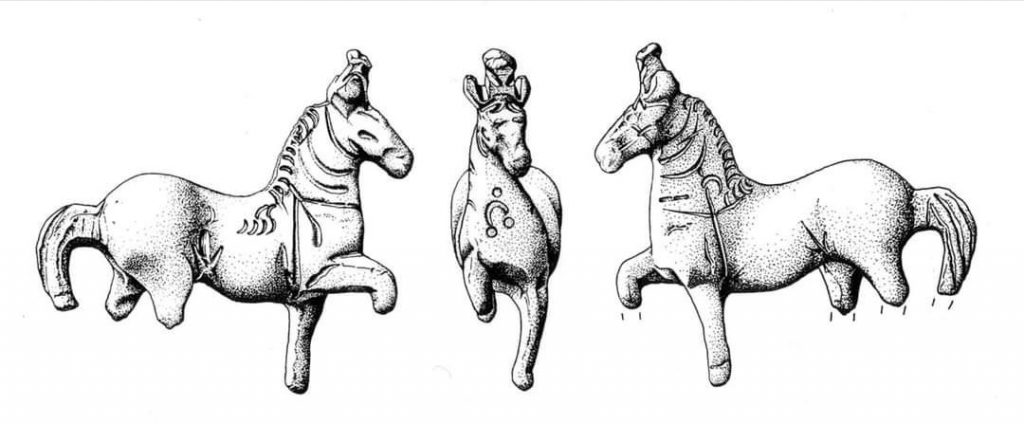
Roman Horse from Bunwell, Norfolk. Illustration by Sue Walker.

In 2021 I posted about Eponalia for the 18th Dec but I have now added the text to this page.

I’ve been too busy working on my Jane Austen and Christmas Virtual Tour ) to post over the last few days. And I have, therefore, shamelessly stolen this post off my Facebook friend Sue Walker, who is a talented archaeological illustrator, artist and a very good photographer.

She wrote: ‘the 18th December is the festival of the Celtic goddess Epona, the protector of horses, she was adopted by the Romans and became a favourite with the cavalry. This finely sculpted bronze horse with a head dress and symbol on its chest is 37mm high – found in Bunwell #Norfolk #Archaeology’

First published on December 17th 2022, Revised and republished December 2023