A perpetual almanac of the Year. Folklore, Customs, Myths, Legends, Religions, Ceremonies. Calendars, How the year, months, days, hours, minutes work. Who started them. How different societies have different arrangements. Zodiacs, Seasons, Folklore, Gods and Goddesses. Its all here day by day.
eBay advert screenshot for Old Moore’s Almanac 2024
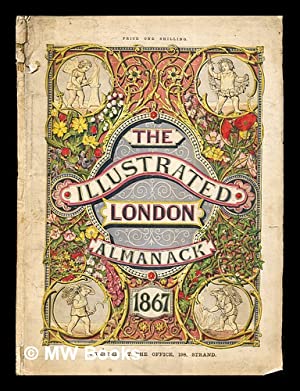
This week I received my copy of Old Moore’s Almanac. This is probably the best known Almanac in the Uk. It follows the format of Alamancs which have been published since the medieval period as I discussed in an earlier post about the Kalendar of Shepherds of the 15th Century. Almanacs became the third most popular book published in London.
Old Moore’s, which claims ancestry back to 1697, begins with a large tranche of predictions both for the world and for celebrities, based on astrology. 2024, Frances Moore says, is the ‘Year of Hope’. He says, ‘we may have a good time, [but] a severe money problem from elsewhere may surface to worry us’. Hedging his bets or what?!
He predicts astonishing advances in technology, and thinks that Britain is in a good place to profit from these advances in healthcare, IT, and Robotics.
We need good, old-fashioned leadership to get through challenging times, with Pluto in Aquarius and Saturn through Pisces, we should be steered to ‘safe management.’
Wokery will lead us down a spiral to weakness. However, the Tories will remain disorganised with the country receptive to caring Socialism, with an upsurge in local power. The UK will become a more caring society.
Old Moore hints that Putin might be indicted. The US will have deep financial and social problems. The election might be close, but he also suggests Trump’s support might be on the wane.
There is a page for each month, noting the calendar events such as Epiphany, Burns Night, Australia Day, and other days filled with very random notable events chosen to represent that day through history- 2nd Jan Conquest of Granada 1462. 9th Jan Duchess of Cambridge b. 1982, 13th Jan Trump impeached 2021 etc. It also gives a forecast for the Month. January is likely to see constitutional change, Old Moore predicts which seems very unlikely.
Next are columns for Sun rise and set, high water at London Bridge, moon at London. And a weather column. (Early cold spell followed by normal rainy pattern), which isn’t wrong yet.
It has pages of predictions for celebrities such as King Charles III, which suggests ‘communication problems’ in the family. Who could have guessed that! Anton Du Beke, Adele. Zelenskyy, whose entry suggests success will be achieved only by diplomacy; otherwise the stubbornness predicted by the stars will lead to a long stalemate.
Then there are charts for each star sign. Towards the back are astrological help for winning on Horse Racing, Greyhound Racing, Football pools, Bingo, Lottery, Lucky Lotto, Euro Millions and pages for sowing and planting times for gardening by the moon, and a Guide for Anglers.
£5.41 good value, or is it just cheap? It was £3.50 in 2022.
Me. Im nown to be the world’s worse prooofreader. And I quiet often only spot errors after i have prest the ‘publish’ button.
So, if you are reading this via the email, click on the title and this will take you to the blog in the cloud, and you are likely to have a version where I have got rid of some of the most horrifiable, embrasing igregious erors. But only, some obvs.
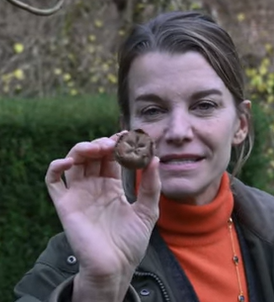
Detail of photo from the American Viscountess showing a medlar (link to the site below:)
Medlars were a very common and useful fruit particularly in the Medieval and Early Modern period. They are best harvested after the first frosts, although some say harvest in late October and store them because they can only be eaten when they are rotten and ‘bletted’. They also store well. They, therefore, provide a source of winter sweetness when there were few other fresh sources available.
They are from the Rosaceae family which includes apples, pears, rosehips and quinces. The English called them ‘open arses’ or ‘dog’s arses’ or ‘granny’s arses’ because of the way they looked until the more polite French name the Medlar caught on.
Shakespeare uses both words and uses their sexual connotations as they were thought also to look like female genitalia. A medlar was also a name for a prostitute. So in Romeo and Juliet this speech by Mercutio to Romeo and their mates contains some very bawdy thoughts:
If love be blind, love cannot hit the mark. Now will he sit under a medlar tree And wish his mistress were that kind of fruit As maids call medlars when they laugh alone. O, Romeo, that she were, O that she were An open-arse and thou a poppering pear!
RJ 2.1.33
I think you can also see how good Shakespeare was at making his allusions available to all classes. For the sophisticated he begins with the reference to the French medlar and in case the groundlings are missing out throws in the ‘open-arse’ so they know what he is alluding to.
This is the 300th Post on this my ‘new’ blog. I thought I would mark it by a reminder of what I am trying to do with it.
Over the years I have given a lot of walks on special occasions: Christmas, New Year, Halloween,Easter, May Day etc. as well as my regular ‘Myths, Legends of the Archaeological Origins of London Walk’. I have always had an interest in the Celtic Year, and when researching for my New Year’s Walks I came across Almanacks, and the more I found out about them the more I plundered them for content! I found that one third of books sold in London in the early modern period were Almanacks. That is how important they were.
So, I decided to create an ‘Almanack of the Year’ which changed title to an ‘Almanack of the Past’. In particular, what I am hoping to do is to create a London Almanack of the Past, where each day is remembered by an interesting and relevant post with a view to enlightening our understanding of London’s past.
Content is around these ideas and themes:
Folklore Seasons & Nature Measurement of Time Calendars Religion Mythology Legend Anniversaries of Famous & Important events in the past Historical & Archaeological news News of my Walks
What I am aiming for is a really focussed London version of an Almanack of the Past. I need a good entry for every day of the year, and I’m hoping to do that over a three year period, and then get it published.
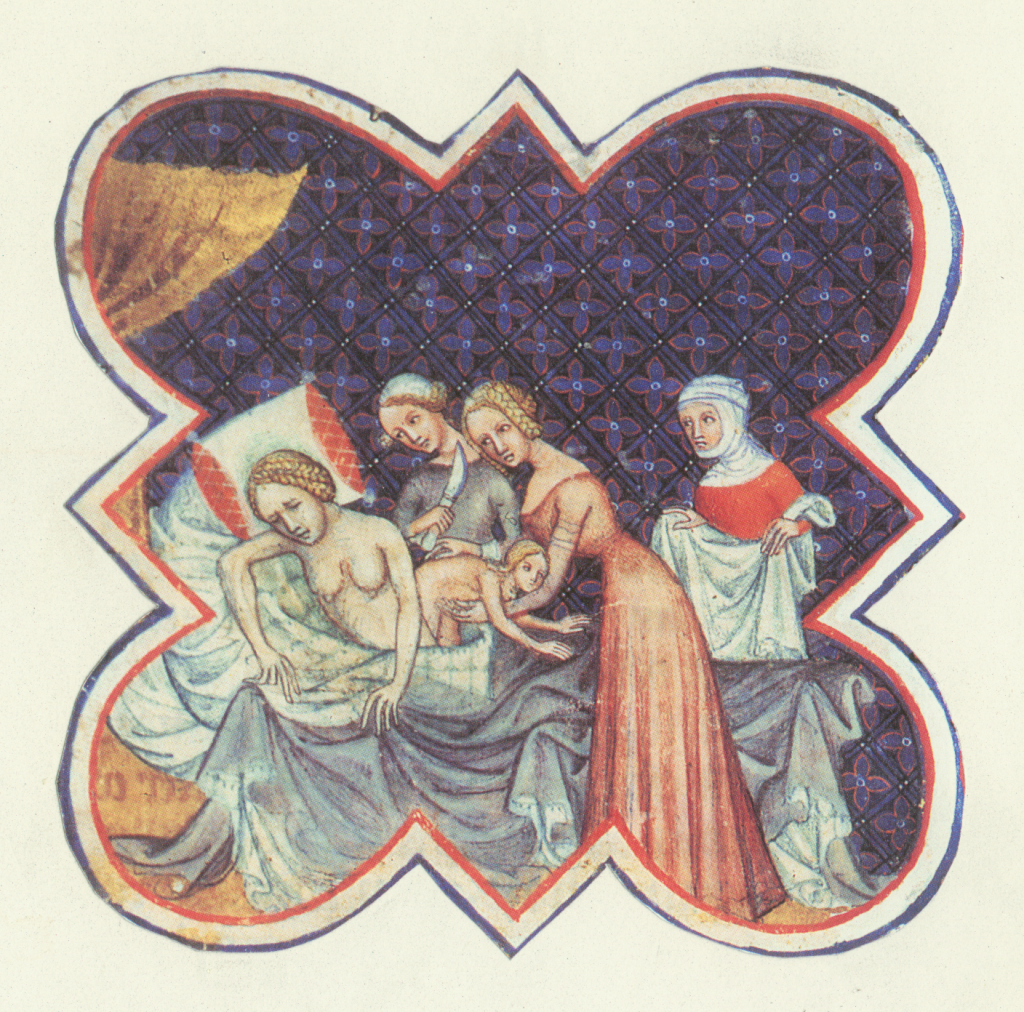
1375, French Caesarian Birth, (most likely to have killed the mother or be performed when she was already dead or dying.)
When Britain reluctantly joined the Gregorian Calendar, in 1752, we lost 11 days, so if you add 11 to 31st December you get to New Year Old Style. You can do this with any date, and when celebrating feel you are being really authentic.
So, anything you did on the New Year’s Eve New Style (31st Dec). you can do today – except, of course, you need to convince your boss of the illegitimacy of the Gregorian Calendar, when you call in sick because of a hangover! In case you have forgotten what you should be doing on New Year’s Eve you can look here to look back on for New Year’s Eve, New Style.
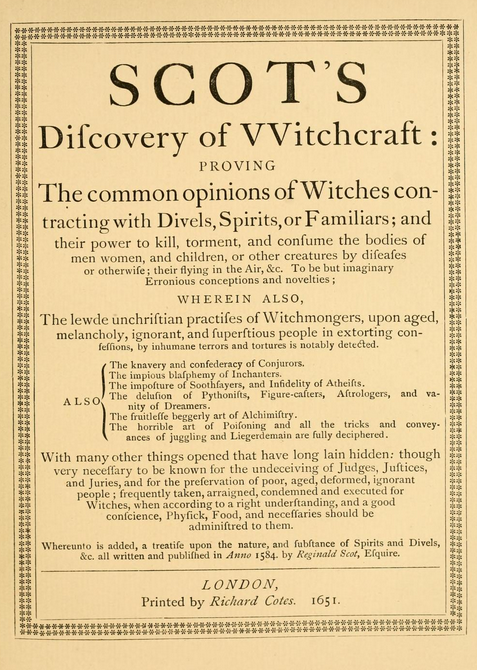
It’s a particularly ‘witchy’ evening because it is the traditional Eve, not the new-fangled one. Reginald Scot in his ‘Discovery of Witchcraft’ first published in 1584 reports
‘a charm to find who has bewitched your cattle’. Put a pair of breeches upon the cow’s head, and beat her out of the pasture with a good cudgel upon a Friday and she will run right to the witch’s door and strike it with her horns‘
When I first posted this post 2023. I did not, to my shame, know the background to the book. I assumed the author ‘believed’ this nonsense that a cow could lead you its bewitcher. On the contrary. Reginald Scot was debunking the absurd claims for witchcraft and magic. His book tries to prove that witchcraft and magic were rejected both by reason and religion. Manifestations of either were ‘wilful impostures or illusions due to mental disturbance in the observers’ .
Given the number of people who were executed as witches in the 16th and 17th Century it makes you realise that it was a very divisive topic. With only part of the country that was convinced by the QAnon like conspiracy that there are people in this world with diabolical intentions. Have a good look at the cover of this 17th Century edition of Member of Parliament Reginald Scot’s book to get an idea of his standpoint.
Carmentalia
It is also Carmentalia, the festival for the Roman Goddess of prophecy and childbirth. She was a much loved Goddess in the Roman pantheon But little is known about her perhaps because she had no clear match in the Greek pantheon.
She has a long history in Roman history being said to be the mother of…. Well this may surprise you, she was the mother of Evander. Evander is the founder of Pallantium, which was a City on the site of Rome that predated Rome!
Who knew that? (the people at Vindolanda Roman Fort know and they have a great page on Carmenta here. ) Carmenta had two sidekicks who were her sisters and attendants. Postvorta and Antevorta, They might be explained as Past and Future. Or after and before as part of her role in prophecy. Ot the two figures might represent babies that are either born head or legs first.
She was important enough to command one of the the fifteen flamen. These were priests of state sponsored religions. One of their jobs was to ensure no one came to the temple wearing anything of leather because leather was created from death, and not suitable for the Goddess of Childbirth.
Vindolanda make the point that 2% of births in the past are likely to have caused the death of the mother, and, because of a high mortality in the children, to keep a population stable a mother might have to have 5 children on average, giving her a 12% chance of death by giving birth.
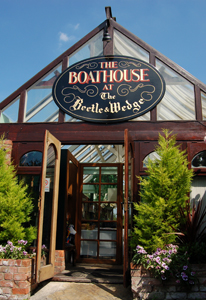
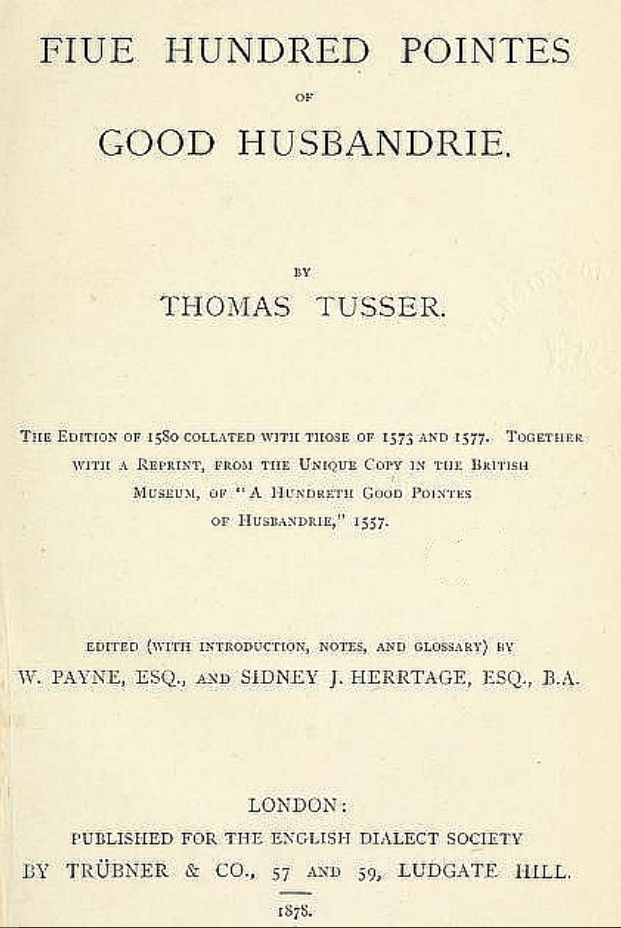
A beetle is a hammer and a wedge is used to split logs, so the first thing Tusser enjoins his readers to do for December is to stop digging and hedging and, instead, cut firewood.
He also suggests (if I read the Tudor writing correctly):
He suggests covering strawberries with straw to protect them; Making sure your dried cod and ling don’t rot. Store the products of the Orchard in the attic. Bleed the horse and help the bees with ‘liquor and honie’.
‘Thus endeth Decembers abstract, agréeing with Decembers husbandrie.’