St Gregory.  Punster Extraordinary March 12th

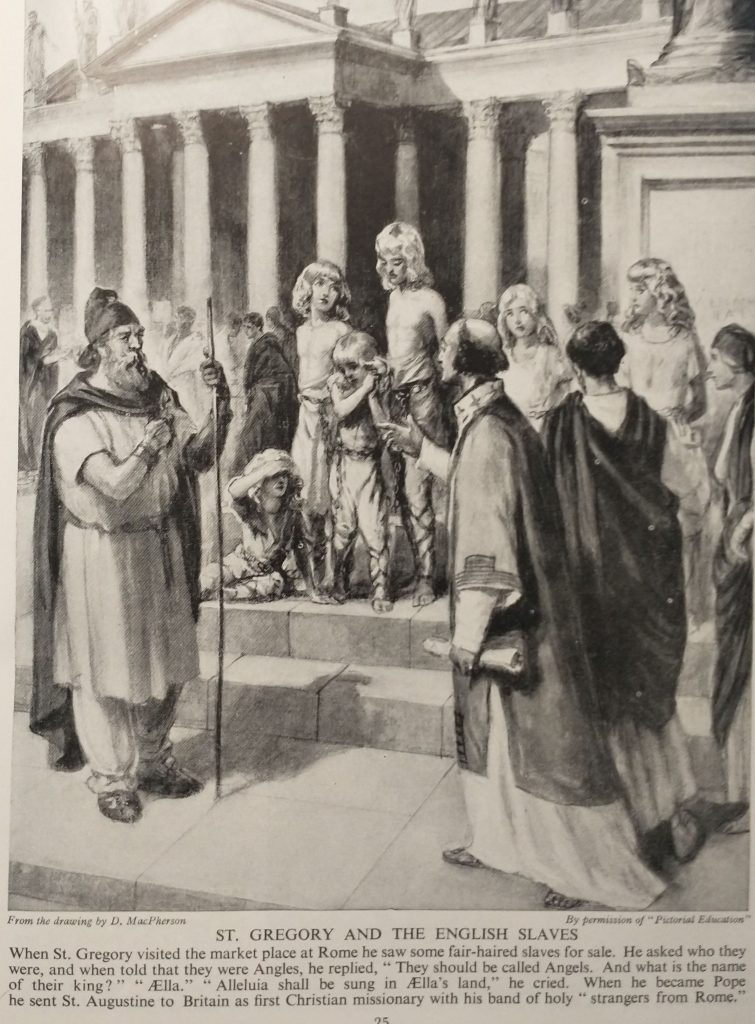
St Gregory and the Angles

Gregorius I is known as Saint Gregory the Great. Pope from 3 September 590 to his death on 12th March 604. So 12th March is traditionally his feast day. It was changed to September 3rd, the date of his elevation to Pope because 12th March was often in Lent.

His is the 2nd most popular name for Popes. This is the top 18. I guess St Peter was too hard an act to follow, but then there are only 6 Pauls? I can’t help feeling there should be six Sixtus’s?

  • John (23),
  • Gregory (16),
  • Benedict (16),
  • Clement (14),
  • Leo (13),
  • Innocent (12),
  • Pius (12),
  • Stephen (9),
  • Urban (8),
  • Alexander (7),
  • Adrian (6),
  • Paul (6),
  • Sixtus (5),
  • Martin (5),
  • Nicholas (5),
  • Celestine (5),
  • Anastasius (4),
  • Honorius (4).
  • Source: https://conclaveblog.wordpress.com

St Gregory the Great

St Gregory is the patron saint of musicians, singers, students, and teachers. It is traditionally believed he instituted the form of plainsong known as Gregorian Chant. However, he was also a formidable organiser and reformer. He made changes that helped the Catholic tradition survive Arian and Donatist challenges. To read more about the Arian Heresy look at my post on St. Hilary and the Arians. (St Gregory and the Angles – why do these all sound like 80’s post punk bands?)

In the UK, St Gregory is venerated with St Augustine for bringing Christianity to the largely pagan Anglo-Saxons. The caption to the illustration above tells the story of how he came to send a mission to the pagan Angles in Briton. It includes his two most famous puns, riffing on the similarity of the words Angles/Angels and Aella/Alleluia. But in between these two he also punned on the name of Aella’s kingdom. This was called Deira which later joined with Bernicia to become the Kingdom of Northumbria. St Gregory said he would save them from the wroth of God which is ‘de ira’ in Latin. The ire of God. Deira. No? Not hitting your funny bone?

St Augustine’s Mission

In 597AD St Gregory sent St Augustine to Canterbury. His mission to convert the Germanic peoples of the former Roman Province of Britannia. Canterbury was chosen because its King was the ‘Bretwalda’ of Britain. And he, was married to Bertha, a French Princess who was already a Christian. The enigmatic title of Bretwalda was given to Britain’s most powerful King. At the time, it was Ethelbert of Kent. So, it was a relatively safe haven for St Augustine’s mission. The King was baptised, shortly, after in Canterbury.
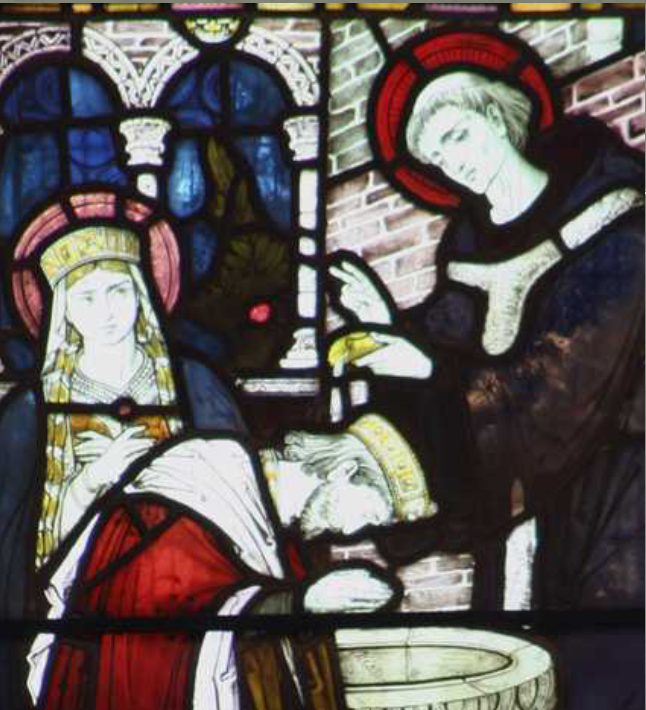
Stained glass window showing Baptism of King Ethelbert of Kent by St Augustine watched by Queen Bertha. In St Martins Church, Canterbury
Stained glass window showing the Baptism of King Ethelbert of Kent by St Augustine watched by Queen Bertha. In St Martins Church, Canterbury

Archbishop of London?

The mission came with a plan to recreate the ecclesiastical arrangements set up in the Roman period. From the early 4th Century there were archbishops in the two main capitals at London and York. (We know because they attended the Synod of Arles in 314). After Kent was converted, St Augustine sent St Mellitus to London. London was part of the Kingdom of Essex, ruled by St Ethelbert’s nephew, Sæberht. Mellitus was the first Anglo-Saxon bishop of London and he established St Pauls Cathedral in 604. St Paulinus was sent to convert Northumbria and established a Cathedral in York.

Unfortunately, for the plan, Sæberht died. His sons returned to paganism and Mellitus was kicked out. He returned to Canterbury, where he, eventually, became Archbishop. Ever since we have had an Archbishop of Canterbury and York and never had an Archbishop of London.

Photo of St Martin's Church - where the Church of England began. showing Roman tiles in the wall.
St Martin’s Church, Canterbury – where the Church of England began. Note the Roman tiles in the wall.

St Gregory and England

It is possible to argue (and I do) that St Gregory’s encounter with the Angles is why we are called English, not Saxons, nor Wessexians. Gregory sent Augustine to set up the Church of the Angles, not the Church of the Saxons. Saxon was the normal name used by the Romans for Germanic barbarians. The old Roman province of Brittania was by now divided into 3 Saxon Kingdoms. Essex, Wessex, and Sussex. (East, West, and South Saxons). 3 Anglian Kingdom, Mercia, East Anglia and Northumbria. (Middle, East and North Angles). And Kent, which the Venerable Bede says was a Jutish King of Germans from Jutland. These Kingdoms were often at war., sometimes allied, or subjected.

The Vikings then conquered most of these Kingdoms, except parts of Wessex and Mercia. After the attacks of the Vikings were beaten back, Alfred and his son, daughter and grandson reconquered or ‘liberated’ the ex-Viking areas. Alfred renamed the united kingdoms of Wessex and Mercia, the Kingdom of the Anglo-saxons. Athelstan his son liberated Northumbria and other areas, and in joining it to the Kingdom of the Anglo-Saxons renamed it Angeland or England.

The Church of England had made the term Anglish/English became a unifying term to unite Angles, Saxons and Jutes. Otherwise, the ‘liberated’ Angles and Jutes would have to swallow being part of Greater Wessex, rubbing in their loss of independence. Of course, it was all a bit more complicated, but it gives a summary of the formation of England, which was created by the end of the 10th Century.

St Gregory in Amsterdam

On a visit to Amsterdam and the Rijksmuseum I came across this painting which features Pope Gregory the Great. He is in the left hand part of the Triptych, shown in green kneeling at the altar. It shows Utrecht in the background.
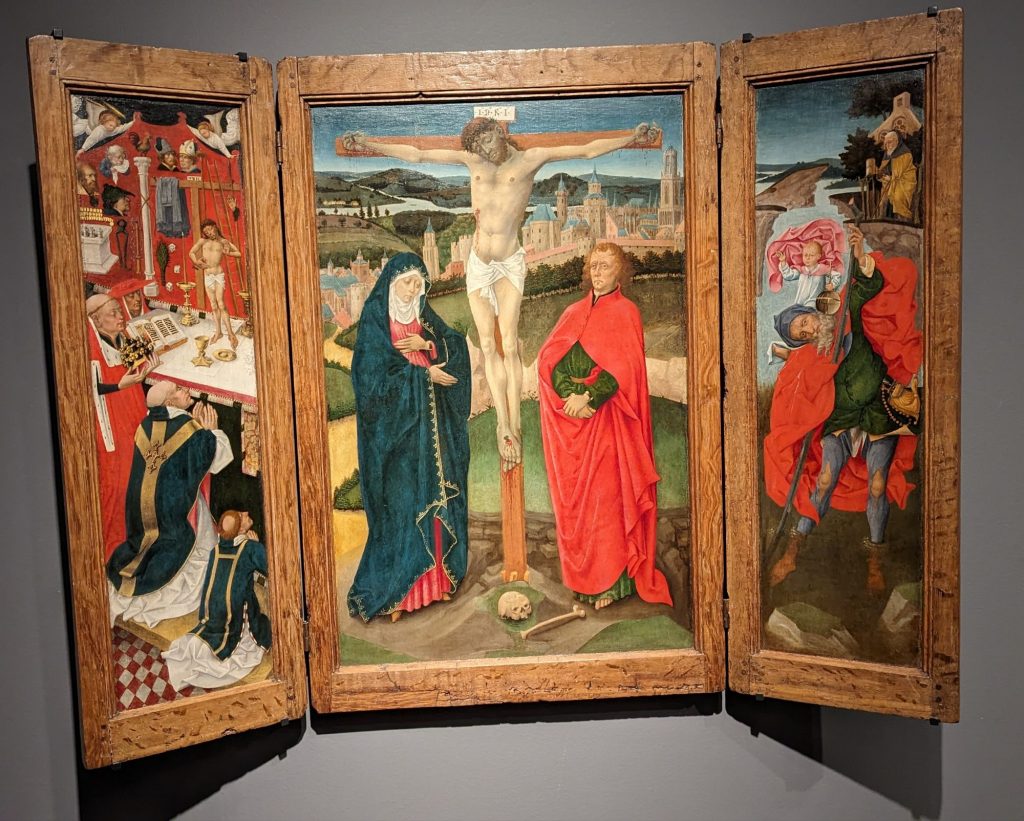
Triptych of the Crucifixion.  Showing the vision of the Crucifixion that St Gregory had while celebrating Mass (left). Crucifixion centre.  St Christopher (right)

What is fascinating is all the paraphernalia of the Crucifixion above Gregory’s head.  You’ll see 30 pieces of silver, dice to decide who gets Jesus’  robes, flails and torture devices, sponge and spear etc. Close up below.
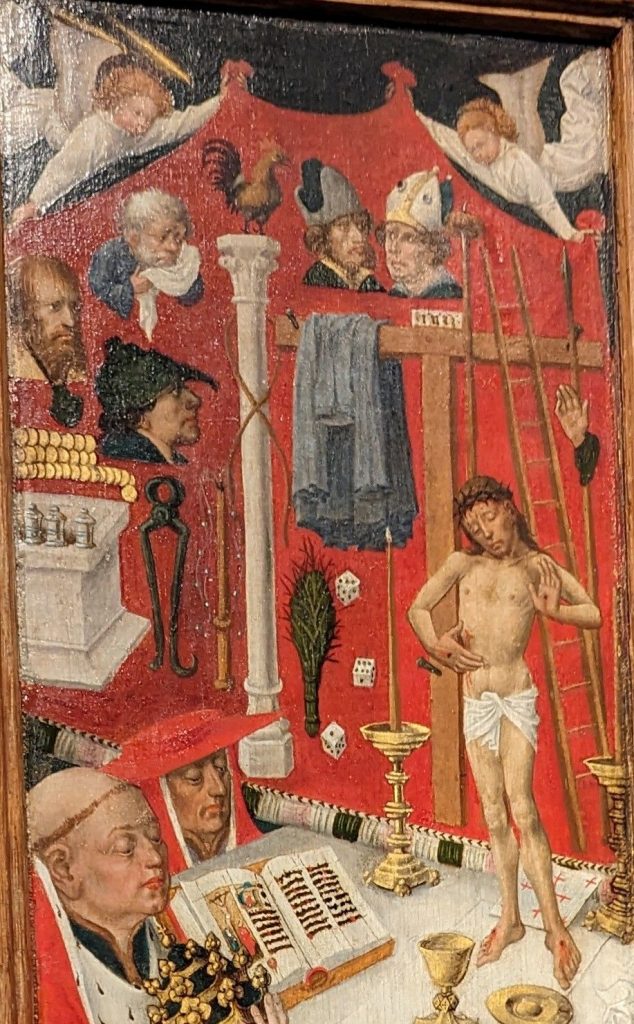
Detail Triptych of the Crucifixion. 

For King Ethelbert’s Feast Day see my post: st-wapburga-and-st-ethelbert-of-kents-day

On This Day

Lazy Day in Anglo-Saxon Times. In the Laws of King Alfred the Great, this day was a day off for freemen.  For more on Days off in the Anglo Saxon Calender see my post on August 15th.

1689 – Catholic King James II landed at Kinsale, County Cork, Ireland, in an attempt to regain the Kingdom from his daughter and son-in-law, William and Mary. James had fled to the continent following riots against his rule. William defeated James II at the Battle of the Boyne. James II returned to France never to return. Mary ruled jointly with her husband until she died of Smallpox, and he ruled alone until he fell off his horse.

1930 – Mahatma Gandhi begins the Salt March, a 200-mile march to protest the British monopoly on salt in India. One of the defining moments in non-violent civil disobedience. Offering the world a possible alternative to violent revolution, or military regime change.

1999 – Former Warsaw Pact countries, Czech Republic, Hungary and Poland join NATO. Bulgaria, Estonia, Latvia, Lithuania, Romania, Slovenia and Slovakia joined in March 2004; Croatia and Albania joined on 1 April 2009. Montenegro 2017. North Macedonia. 2020: (Ukraine) can forget about (NATO membership). That’s probably the reason the whole thing (war) started,” said U.S. President Donald Trump on February 26, 2026

First published in 2024, republished in 2025. On This Day added 2026
Newark & the Penny Loaf Day March 11th

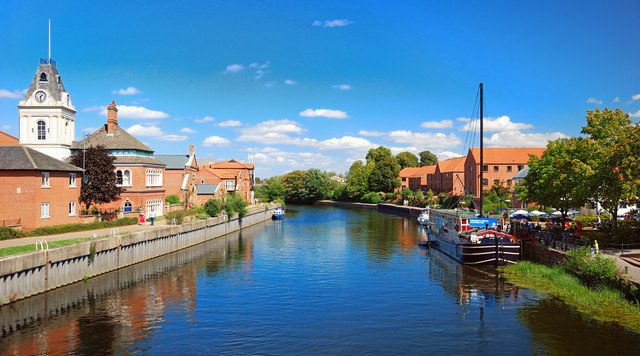
River Trent from Trent Bridge, Newark on Trent by Peter Tarleton WIKIPEDIA -CC BY-SA 2.0
Newark on Trent by Peter Tarleton Wikipedia CC BY-SA 2.0 Newark & the Penny Loaf Day

This post is about Newark & the Penny Loaf, but as it is still Women’s Week, I’d like to share with you a discovery I have just made:

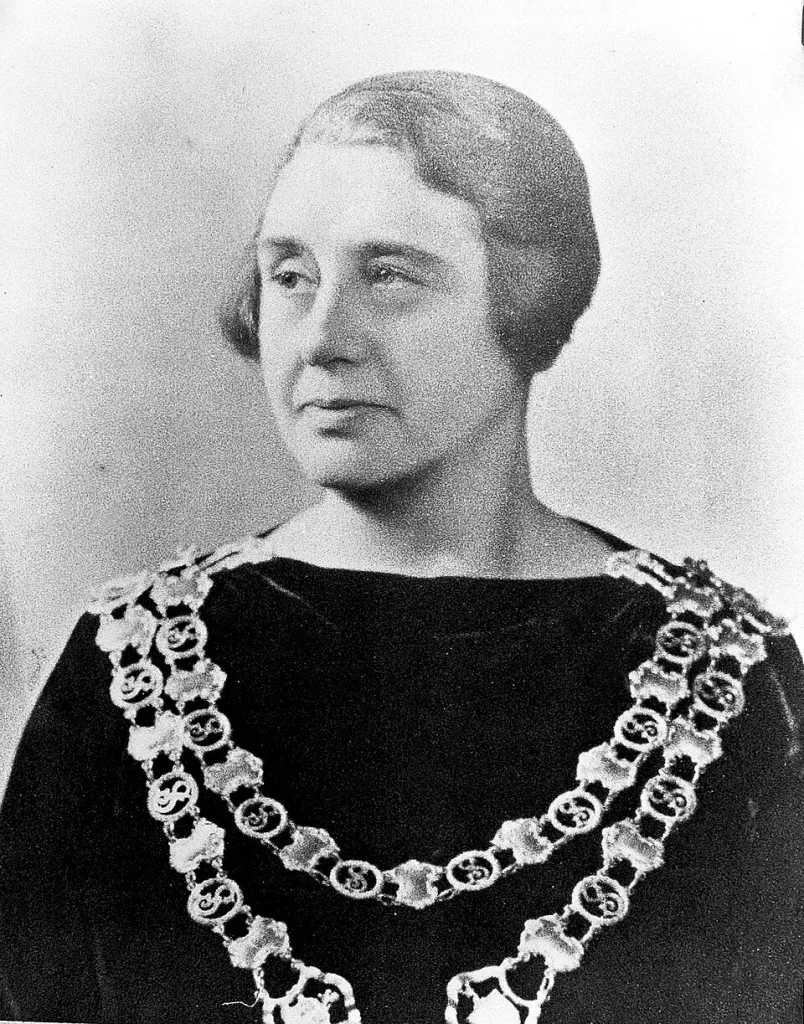
Dorothy Thurtle

Dorothy Thurtle. By https://wellcomeimages.org/indexplus/obf_images/b5/be/a6cfe553603c25fd36627e6c24d4.jpgGallery: https://wellcomeimages.org/indexplus/image/L0026656.html, CC BY 4.0, https://commons.wikimedia.org/w/index.php?curid=36012910

By chance, a few days after International Women’s Day, I was reading the Hackney Society’s Newsletter and read about some canon bollards in Shoreditch Park, in the Dorothy Thurtle Memorial Garden. Well, my nearest Bus Stop is Thurtle Street, which always seemed a strange turtle-like name. So, I looked her up!

Turns out she was a pioneer of the Labour Party. Also, daughter of the great George Lansbury. And a redoubtable pioneer of contraception, and abortion rights. Her opinion was that the Labour Party’s commitment to equality between the sexes made no sense unless it supported contraception and legal abortion. She and her husband, Ernest, founded the Workers’ Birth Control Group. Dorothy was general secretary of Shoreditch Trades Council and Labour Party, became a councillor and eventually Mayor of Shoreditch. She was the only supporter of Abortion Law reform on the Birkett Committee, and issued an influential dissenting report. In her report, she ‘argued that because many married women would face pregnancy every one or two years until their menopause, withholding access to fertility advice and birth control was “a form of class discrimination and penalisation”‘ (Wikipedia). World War 2 delayed any reform.

Right on my doorstep! For more read: https://en.wikipedia.org/wiki/Dorothy_Thurtle

George Lansbury

George Lansbury making a speech. By LSE Library – Flickr: George Lansbury, c1935, Public Domain, https://commons.wikimedia.org/w/index.php?curid=31131566

Dorothy’s father was originally a Radical Liberal Party member. He then joined the Labour Party and became an MP for Bow and Bromley in 1910. During the struggle for Women’s Suffrage he was imprisoned. He was also imprisoned in the Poplar Rates Revolt of 1921. (He was the first labour Mayor of Poplar). After Ramsay MacDonald joined the National Government, Lansbury replaced MacDonald. He lead the few remaining ‘loyal’ Labour Party members who would not join a Conservative dominated Government. He was elected leader from 1932 to 1935, with Clement Atlee as his deputy. Lansbury was a life long Pacifist and so stood down in 1935, as he was out of step with the need for rearming with the rise of Fascism. Atlee became leader.

Canon Bollards

Canon Bollards are made of repurposed canons from the British Navy. They are sometimes hard to distinguish from those made from repurposed canon moulds, or bollards that are designed to look like canons.

Newark in the Civil War

I will move the Dorothy Thurtle content to International Women’s Day, by next year. Which leaves us with an abrupt change of subject! On the 11th March 1644, the Parliamentary forces were besieging the Royalist-held Newark-on-Trent. Newark was a strategic centre as it was on the River Trent and on a major road junction.  Here, the Great North Road (A1 from London to the North) and the Fosse Way (from Exeter, via the Cotswolds to Leicester) meet. It was vital for the King, as the roads linked Chester and York to Oxford.  Oxford was the King’s HQ; Chester was the key to Wales and the North West. York controlled access to the North East.

Newark withheld three sieges and only ‘fell’ when King Charles I surrendered. The Castle and other military defences were slighted.

Newark & the Penny Loaf & Hercules Clay,

During the second siege, in 1644, Hercules Clay dreamt that his house was on fire. He ignored the dream at first. Then it repeated, so he took his family out of the house (next door to the Town Hall).

Shortly after, a ‘bombshell’ hit his house, fired by the Parliamentary side.  Because of his miraculous delivery, he left £100 in his will for a distribution of ‘penny loaves’ to the poor of Newark. His Will said:

‘Upon the 11th day of March yearly forever upon which day it pleased God of his infinite mercy wonderfully to preserve me and my wife from a fearful destruction by a terrible blow of a granado in the time of the last siege’

And also he left £100 for a commemorative sermon to be read on the anniversary of the incident. The service is normally held on the closest Sunday to the 11th March. The Church is being refurbished, so instead they had an event in the Town Hall and a procession.

Clay was a Mercer and a Royalist. After his death he was fined for lending £600 for the maintenance of the Royalist Garrison. It was paid by his brother.

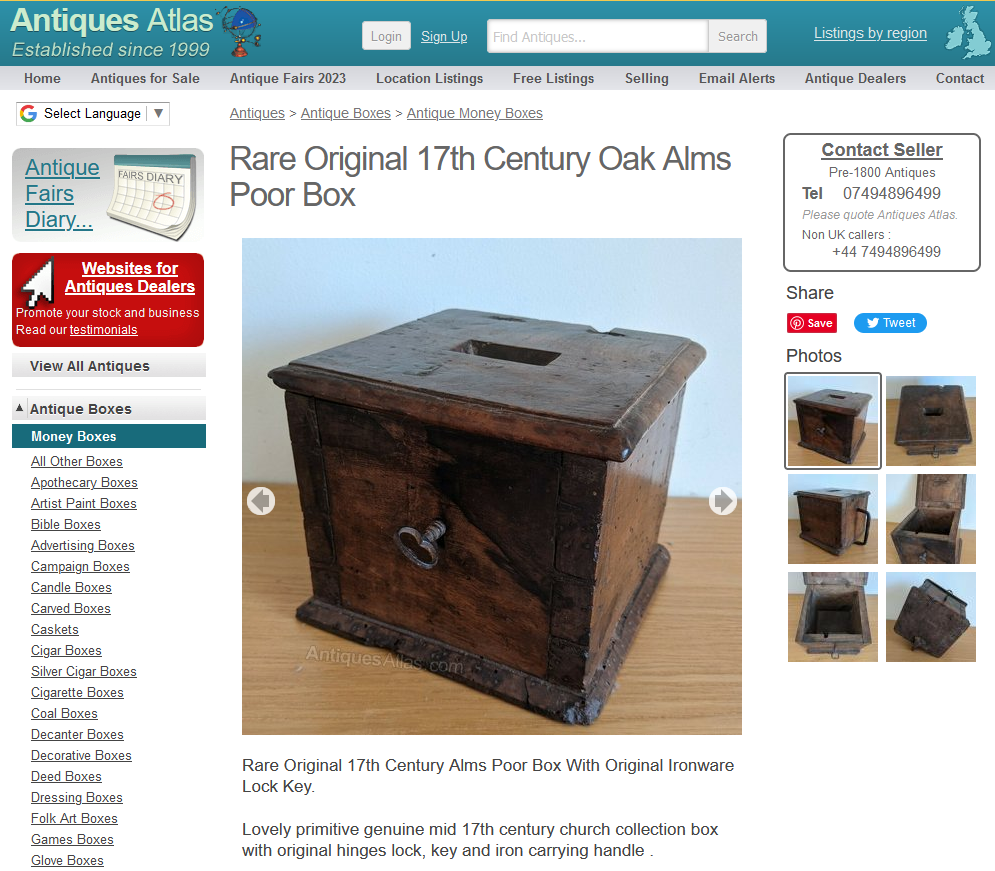
At the time Churches had poor or bread boxes into which the women of the Parish would place loaves for the poor.

Auction Web site showing 17th Century Poor Box used for holding loaves for the poor

For more information on Hercules Clay see https://www.clayofderbyshire.co.uk/mayors. And thanks to the Clays for the research.

Penny loaf day see https://calendarcustoms.com/articles/newark-penny-loaf-day/

For my post on the execution of Charles 1 look here https://www.chr.org.uk/anddidthosefeet/january-28th-31st-charles-i-martyrdom-get-back/

On This Day

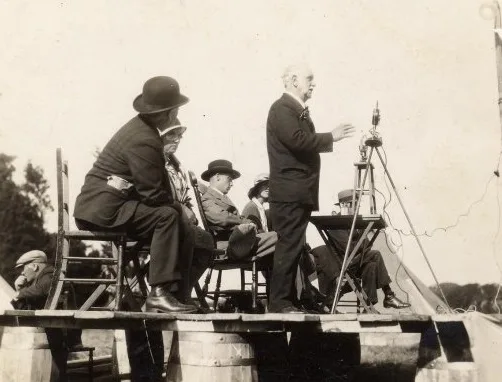
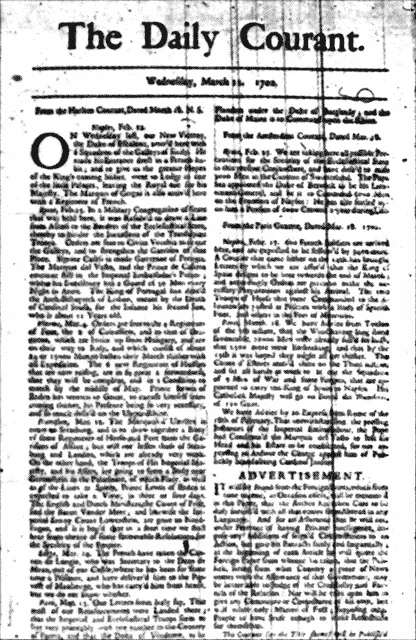
1702 – Elizabeth Mallet published the first English daily newspaper the Daily Courant, on Fleet Bridge, next to the King’s Arms. She, previously, dominated the publishing of ‘last dying speeches’ of people executed at Tyburn.

The Daily Courant By Edward Mallet from rooms above the White Hart pub in Fleet Street – The Daily Courant, Public Domain, https://commons.wikimedia.org/w/index.php?curid=880402. Elizabeth Mallet published under a male name.

1941 – Roosevelt signed the Lend-Lease Bill – this was a life-line to the UK as it enabled the supply of war materials to flow to Britain who stood alone, in Europe, against fascism. see my post for Roosevelt’s 4 freedoms.

1985 – Mikhail Gorbachev, appointed General Secretary of the USSR

First written in 2024, revised 2025, Thurtle and Lansbury and On This Day added in 2026

Nettle. Tea, Beer, Pudding & Flagellation March 10th

Nettle – photo by Paul Morley Unsplash

Nettle Tea

The store cupboards are getting denuded of the fruits, nuts, preserves, pickles, salted and dried foods saved from the summer and autumnal abundance. Of course, this is alleviated by the reduced consumption of the Lenten fast.  (I’m continuing my lenten practice of giving up, giving up things for Lent). But nettles are budding. I take a regular cup of nettle tea. Normally, provided by the excellent Cowan’s tea emporium in the Covered Market in Oxford. But I’m running out and not due to visit Oxford for a month or so. So Charles Kightley in his Perpetual Almanac tells me that young stinging nettles are appearing and this is the time to collect own young, juicy nettles.

Here is a video about collecting them.

YouTube Video on making Nettle Tea

Nettle Beer

Or better still, change up the tea for a nettle beer:

Take a gallon measure of freshly gathered young nettles washed well dried and well packed down. Boil them in a gallon of water for at least a quarter of an hour. Then strain them, press them and put the juice in an earthenware pot with a pound of brown sugar and the juice and grated skin of a lemon. Stir well, and before it grows cool put in an ounce of yeast dissolved in some of the liquid. Cover with a cloth and leave in a warm place for four or five days and strain again and bottle it, stopping the bottles well.  It’ll be ready after a week, but better if left longer.

Nettle Beer was brewed for old people against ‘gouty and rheumatic pains’.

Nettle: Detecting Virgins

A more sinister use is provided by William Coles who gives a method of detecting virginity.

Nettle tops are usually boiled in pottage in the Springtime, to consume the Phlegmatic superfluities in the body of man, that the coldness and moistness of the winter have left behind. And it is said that if the juice of the roots of nettles be mixed with ale and beer, and given to one that suspected to have lost her maidenhood, if it remain with her, she is a maid, But if she’s spews forth, she is not.

William Cole’s Adam in Eden 1657.

Flagellation with Nettles?

William Camden reported that Roman soldiers used nettles to heat up their legs in the cold of a British winter. (from Mrs Greaves’ ‘A Modern Herbal). Perhaps, I should have sent that idea to PM Keir Starmer? He might have suggested the method to Senior Citizens to alleviate the loss of their Winter Fuel Allowance? (which he has now restored). Flogging with nettles was a cure for rheumatism and the loss of muscle power in the early modern period. Nettles were also added to horse feed to make their coats shine. It was used as a hair tonic for humans. 

Nettle Fabrics

The 18th century poet Thomas Campbell is quoted on the virtues of nettles:

“I have slept in nettle sheets, and I have dined off a nettle tablecloth. The young and tender nettle is an excellent potherb. The stalks of the old nettle are as good as flax for making cloth. I have heard my mother say that she thought nettle cloth more durable than any other linen.”

In 2012, a Danish Bronze Age Burial was found to be dressed in a shroud made of Nettle. Strangely, the nettle was not local, perhaps being made in Austria where other objects in the rich burial came from. However, the person was thought to be Scandinavian. For more have a look at this article on www.nbcnews.com.

In the Irong Age, also in Denmark, Huldremose Woman was found buried in a bog. She had a severed arm and was buried in elaborate sheep and goat skin clothes, but underneath:

she wore a white inner garment made from plant fibres that reached from the shoulders to below the knees. The type of plant fiber is unclear but other evidence from the time period suggests that it could have been made of nettle.’

To find out more: the-woman-from-huldremose/the-huldremose-woman-clothes/

World War 1 use of Nettle cloth

Greaves tells us that the German and Austrians had a shortage of cotton during the blockade of World War 1. They turned to nettles to replace cotton production believing it to be the only effective substitute.  It was also substituted for sugar, starch, protein, paper and ethyl alcohol. 

YouTube Video on making fabric from nettles

Nettle Pudding

Pepys ate Nettle Pudding in February 1661 and pronounced it ‘very good’.  Here is more on Nettles in history AND a recipe for Nettle Pudding! I can see I’m going to have to get out there and carefully pick myself some nettles! ( For Folklore of Nettles look here).

Nettles Photo by Les Argonautes on Unsplash

Remember, none of the above is necessarily good advice as far as medicine is concerned. For smoking herbs see my post coltsfoot-smoking-cholera

March Weather

In the early modern almanacs there is much weather and horticultural advice to be had (Weather Lore. Richard Inwards).

March damp and warm
Will do farmer much  harm

or

‘In March much snow
to plants and trees much woe

On This Day

241 BC – The Battle of the Aegates in which the Carthaginian fleet is sunk, and the First Punic War ends. Carthage was destroyed in the Third Punic War in 146BC. Rebuilt as a Roman City 100 years later.

1629 – Parliament is dissolved by Charles I. This was followed by a Royal dictatorship which lasted 11 years, and then led to Civil War.

1906 – Bakerloo Line Opened. The name originated from the Baker Street and Waterloo Railway. It goes from Harrow &Wealdstone in the NW to Elephant & Castle in the South East, via the Central London section which goes from Bakers Street to Waterloo, Sherlock Holmes didn’t use the Tube very much (see this post here for those times he did). There is a proposed extension from Elephant & Castle to Lewisham.

1969 – James Earl Ray sentenced to 99 years in jail for murdering Martin Luther King. While Ray was a segrationalist and a supporter of George Wallace, he maintained he was set up as the scapegoat. He died in prison in 1998.

Written 2024, revised 2025, the content on Hesiod and a Grecian Spring moved to: march-13th-hesiod-and-a-grecian-spring/. On this Day added 2026.

My trip (in March 2022) to the British Museum with my 20 month year old Grandson is posted here:

The Affair of the Sausage March 9th 1522

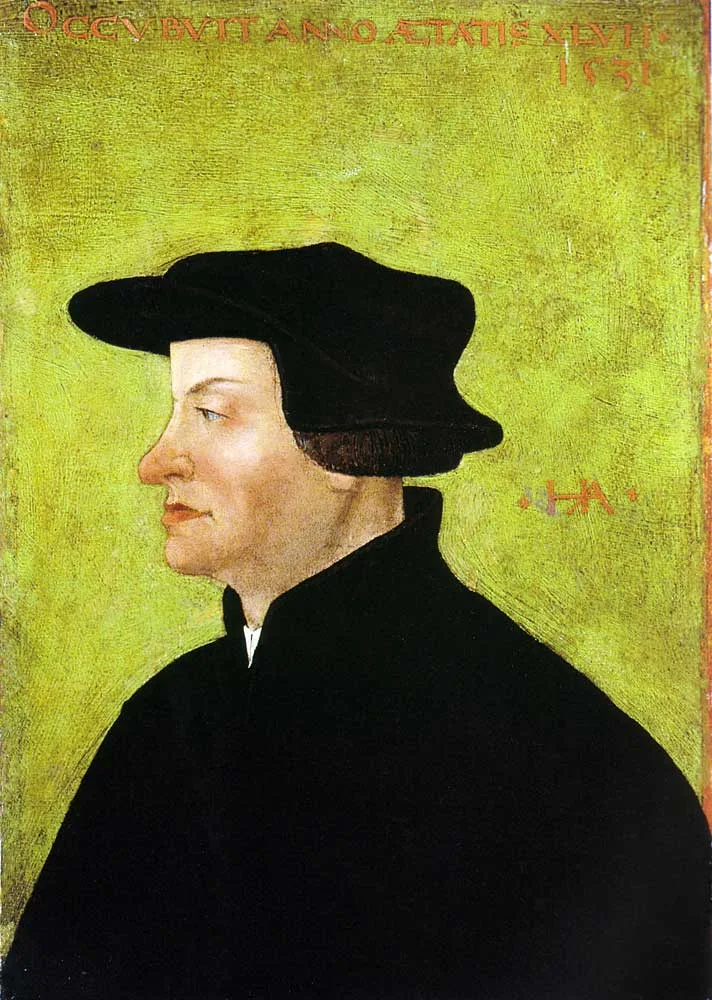
Portrait of Ulrich Zwingli (1484-1531) attendee of the Affair of the Sausage. By Hans Asper – Winterthur Kunstmuseum, Public Domain, https://commons.wikimedia.org/w/index.php?curid=553075 Public Domain

Om March 9th 1522, Huldrych Zwingla, amongst others, was invited to a Sausage Supper at the house of printer, Christoph Froschaue. The printer published 700 works including those by Erasmus, Luther and Zwingla. Zwingla led the Reformation in Switzerland, and the Affair of the Sausage, took place in Zurich. In 1519 Zwingla was appointed as the People’s Priest at the Grossmünster in Zurich. Inspired by humanism and the example of Erasmus he believed true belief could only come through studying the scriptures. Sola scriptura is how Luther put it. ‘Verbum Dei lux est quae omnia clarificat’ – The Word of God is the light that brightens everything. So said German Protestant Johannes Oecolampadius.

Erasmus made a new translation of the Bible into Greek using modern scholarship to make it as accurate as possible. Erasmus believed that reform of the Church was necessary as some of the theology was based either on corrupt translations, had no backing in scripture. or was subject to different interpretations. But, he believed that reform should be from within the Catholic Church. And they should be based on morality, education, and the recovery of the pure text of Scripture. Zwingli, Luther and other Protestants agreed. However, ultimately, they were not prepared to stay within a Church which used its power to thwart scripture-based reforms.

Sausages & Scripture Supper?

Zwingla took one of his target examples, from Catholic traditions of fasting, for which he found no backing for the specific dietary prohibitions in the Bible. He preached against these practices, which particularly impacted the poor. The Affair of the Sausage, was a meeting where critics ate sausages during the Catholic fast of Lent. Meat was forbidden by the Church during Lent. The Sausages were eaten with Swiss Fasnachtskiechli which are fritters. And here is a recipe!

Twelve people attended. The Supper caused an uproar and Froschaue was arrested. Zwingla wrote a Sermon on the subject called ‘Regarding the Choice and Freedom of Foods’ which Froschaue published. If, Zwingla argued, it is such a sin to eat eggs on Fast days, why did it take the Church 14 centuries to outlaw the practice?

Two years later, attendee Hottinger, a boot maker, was beheaded in Baden for challenging the Mass. It is inspiring, although baffling, how so many ordinary people were prepared to die rather than admit something they believed false. For the martyrdom of one such Londoner see my post on Thomas Tomkins here.

Secret Marriage

Zwingla’s next campaign was to oppose the ban on priests marrying. He could show that Bible does not ban Priests from marriage, although there are many verses praising celibacy. Zwingla had already secretly married. Thomas Cranmer, in England, similarly jumped the starting gun by marrying before Protestant regimes made it legal for priests. Thanks to History to Today for alerting me to this sausage-based heritage item, and to Wikipedia for additional details.

For a complete chance of subject read a former March 9th post of mineheritage-with-my-grandson-2-british-library-museum/

First Published on March 9th, 2026

International Women’s Day March 8th

The Soviet Union 1949 CPA 1368 stamp (International Women’s Day, March 8. (Wikipedia)

Today, is International Women’s Day. It began, as an idea within Socialist organisations in 1909/1910. Following the February Revolution in Russia and women gaining the vote, March 8th was chosen as the day to celebrate. The wider feminist movement adopted it in the 1960s followed by the UN in 1977. Since when, it has been a day to celebrate women’s achievements and campaigns worldwide.

Harper’s Road burial

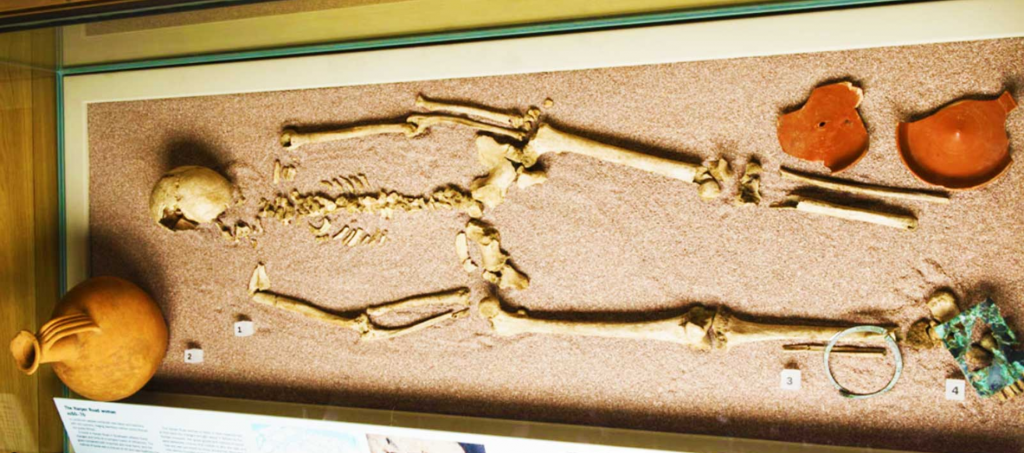
The Harper Road Burial Southwark a photo of a skeleton in a museum case with grave goods.
The Harper Road Burial Southwark (museum of London web site)

Another important historic female was found in an excavations at the Harper’s Road. . I was reminded about it by reading Dominic Perring’s new book ‘London in the Roman World.’ He uses it to establish that Southwark was a place where people lived both before and after the Roman Conquest in 43AD. The burial was found in the 1970s’ and dated to 50 – 70 AD (Roman Invasion of Britain was in 43 AD). Recent scientific analysis has shown that the burial was of a woman (21 – 38 years of age). She had brown eyes and black hair and was brought up in Britain. Her grave goods indicate she was wealthy. She had both imported Roman pottery but also typically British Iron Age objects. The combination shows some adaption between her native culture and the new Roman ways.

Her British objects included a bronze necklace (a torc possibly of Catevalaunian or Trinovantian origin) and a mirror. Dr Rebecca Redfern & Michael Marshall on the Museum of London’s website make a case for her being a:

‘Powerful women in late Iron Age London’.

Mirrors of Power?

They make a case for the mirror being

‘used by women for divination and magic, and were a source of knowledge that only women could command. Being able to use and read the mirror meant that the woman was highly regarded by her community.’

To read about her story follow this link:

Iron age burials are often found either with a sword or a mirror and the thinking is that the mirror reflects an equivalent status to a sword. I think we can say that the finds do reflect someone of standing, but as to the use of the mirror that must be speculation. Divination using a mirror is called ‘scrying’ and the British Museum has John Dee’s scrying apparatus from the 16th Century. You can buy scrying mirrors on etsy. https://www.etsy.com/uk/market/scrying_mirror. But to make a case that Mirrors were not just utilitarian and prestige objects but also in use for supernatural/religious purposes is surely just speculation?

Melanie Giles & Jody Joy in ‘Mirrors in the British Iron Age: performance, revelation and power published in 2007 (and available to read here) concludes:

‘Iron Age mirrors, whether made of iron or bronze were beautiful,  powerful, and potentially terrifying or dangerous objects. They were used in the  preparation and presentation of the body and prestigious displays, but may also have been associated with powers of augury and insight into the past, or access to ancestral or spiritual worlds.’

Women in the Age of Iron

The evidence we have for iron communities is for a powerful role for women in contrast to the Romans. The Romans dismissed women when they wrote that Boudicca was ‘uncommonly intelligent for a women’. In fact, she nearly forced the Romans to abandon their conquest of Britain. We also know that Queen Cartimandua of the Brigantes had executive power in the North of Britain. The Britons also worshipped the three Mother Goddesses, which focussed on the value of woman as maidens, mothers, and grand-mothers.

For more about Roman Southwark read my post of Roman Mosaic is biggest found in London for 50 years.

A book to order for International Women’s Day is ‘Patriarchs’ in which Angela Saini investigates when the Patriarchy took over. I heard her talk about it and it seems an excellent introduction.

https://www.theguardian.com/books/2023/mar/08/the-patriarchs-by-angela-saini-review-the-roots-of-male-domination

On This Day

1702 – Queen Anne ascends the throne on the occasion of her brother-in-law William III falling off his horse and dying.

First Published in 2023, and revised in 2025, Dorothy Thurtle added March 11th 2026

St Perpetua and Felicitas and Companions March 7th

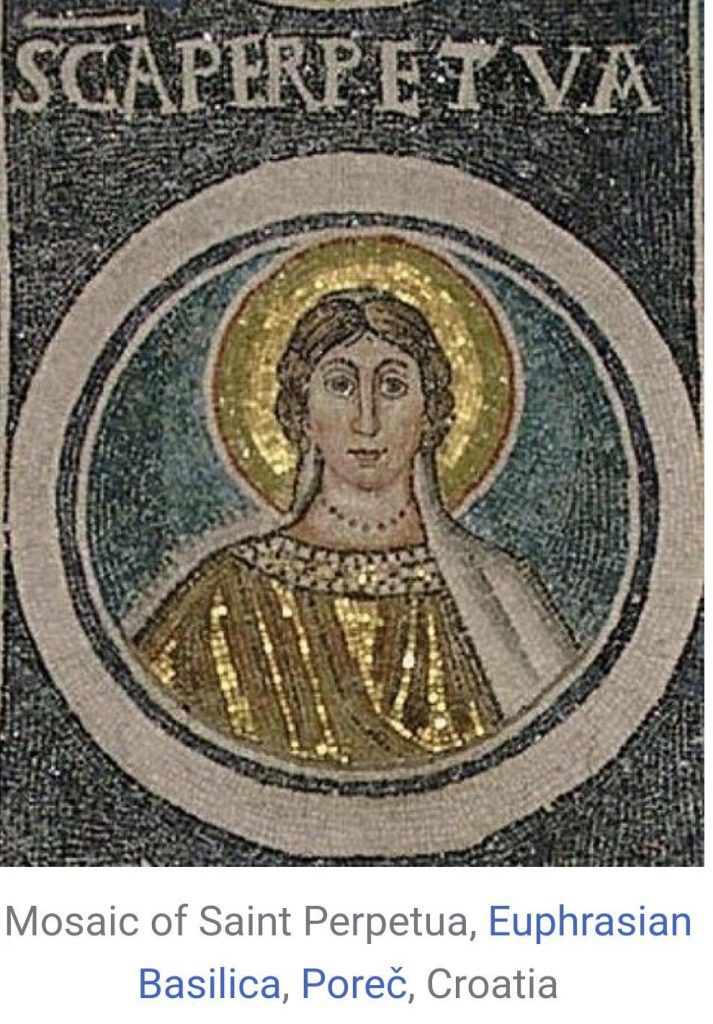
St Perpetua Mosaic, Croatia

Many martyrdom stories seem made up, often too extreme to take seriously.  But Vivia Perpetua of Carthage told her own story in her own words. It has a ring of authenticity.  In 203AD, the educated, noble 22 year old, against her father’s advice, decided to become a Christian.  He beat her up and she was glad that her arrest as a Christian, kept her safe from him.  She was arrested with her small group of converts and teacher: two slaves, Felicity and Revocatus, Saturninus and Secundulus. Their instructor, Saturus chose to share death with his flock. Perpetua was a mother and Felicitas pregnant.

Prison conditions were atrocious, crowded and stifling hot, particularly for the women.  Perpetua was separated from her breastfeeding baby. Her father came to beg his daughter to recant, but she refused.  They were, however, treated better as they bribed the jailors who allowed her to have her baby with her and moved them to better cells.

For the martyrdom, she persuaded the jailors to allow the condemned to be cleaned up and dressed in their own clothes. Her argument was that this was better for the honour of the Emperor Severus, whose birthday the Games celebrated.  Perpetua acted with immense dignity during the proceedings of the Games in the Amphitheatre. She also encouraged the crowd to adopt Christianity. 

When they were taken out to face the wild animals, she told her fellows to stand calmly.  The men had to face bears, leopards, and wild boars, while the women were stripped to face a rabid heifer.  The crowd reacted against their treatment. So, they were allowed to be dressed and to meet their ends at the hand of the gladiators’ swords.

Perpetua and Felicity (the enslaved woman) are the patron saints of mothers and  expectant mothers.  Presumably because of the heifer in the story, they are also the patron saints of ranchers and butchers!  Their feast day is celebrated on March 7.

https://www.catholic.org/saints/saint.php?saint_id=48

On this Day

321 AD – Roman Emperor Constantine I decrees that Sunday (the dies Solis Invicti) is the day of rest in the Empire. For more on the naming of days of the week, see my blog post here.

1799 – Napoleon Bonaparte captures Jaffa in Palestine. His troops slaughter more than 2,000 Albanian captives.

1969 – Victoria Line opened by Queen Elizabeth II

First published in 2024, revised 2025, 2026

Mars, Vesta & the Sabine Women March 6th

photo of the Reconstruction of the Temple of Vesta in Rome
Reconstruction of the Temple of Vesta in Rome

Vesta and the Vestal Virgins

For March 6th, Ovid in his Almanac Poem called ‘Fasti’ (Book III: March 6) tells the story of Vesta. She is Hestria, in Greece and is depicted on the Parthenon Marbles, standing near Zeus and Athene. She was the Goddess of the Hearth, of the fire that keeps families warm, and fed. Vesta had 6 Virgins as her Priestesses. They had to remain 30 years, from before puberty, as a virgin. The punishment for breaking their vows was to be buried alive. Any partners in sin were beaten to death. At the end of their term they could marry, retire, or renew their vows. That suggests they would be late 30s, early 40s before they could be released

The Vestal Virgins tended Vesta’s hearth. It was not supposed to go out as it had, in theory, come from Troy with Aeneas. Vesta’s Temple also housed the Palladium. This was a wooden status of Pallas Athene, that kept Troy, then Rome free from invasion. Odysseus and Diomedes had stolen it just before the Trojan Horse episode ended the 10-year-long Trojan War. (To read more about palladiums, look at my post here.)

The Temple of Vesta was in Rome’s Forum, and it was a circular temple or a Tholos. Next to the Sacred Shrine at Bath was a circular Tholos, which may have been dedicated also to Vesta.

Ovid & Vesta

Here is what Ovid says in his March 6th entry:

a sketch of several books of Swan vesta matches
Sketch of Swan Vesta Matches

When the sixth sun climbs Olympus’ slopes from ocean,
And takes his way through the sky behind winged horses,
All you who worship at the shrine of chaste Vesta,
Give thanks to her, and offer incense on the Trojan hearth.
To the countless titles Caesar chose to earn,
The honour of the High Priesthood was added.
Caesar’s eternal godhead protects the eternal fire,
You may see the pledges of empire conjoined.
Gods of ancient Troy, worthiest prize for that Aeneas
Who carried you, your burden saving him from the enemy,
A priest of Aeneas’ line touches your divine kindred:
Vesta in turn guard the life of your kin!
You fires, burn on, nursed by his sacred hand:
Live undying, our leader, and your flames, I pray.

Translated by A. S. Kline online here.

Caesar is Julius Caesar. Aeneas was the last Trojan who survived the end of Troy. He came to Italy, founded a Kingdom (Latium) in which his descendant, Romulus, would found Rome. This is told in Virgil’s Aeneid.

Rhea Silvia the Vestal Virgin

At the beginning of Book 3 of Fasti. Ovid tells us the story of Rome’s foundation, and how Mars took Silvia the Vestal while she slept. She was descended from Aeneas. She later gave birth to Romulus and Remus. The betrayal displeased the Goddess Vesta. The holy fires went out, the altar shook and the eyes of Vesta’s statue shut. Venus was more forgiving. The children survived. But Silvia eventually drowned in the Tiber. (For more on the foundation of Rome see my post here)

Foundation Calendars

The new City chose Mars, the Roman God of War, father of their founder – as its patron God. He suited the Romans with their destiny to rule the world. So March was named after Mars, and 1st March was the beginning of the Roman year. (At least in Rome’s early days as I discussed in my post on March 1st). Ovid in the ‘Fasti’ makes the point, through Romulus’s voice, and explains something about the various Calendars run by different tribes/Cities:

‘And the founder of the eternal City said:
‘Arbiter of War, from whose blood I am thought to spring,
(And to confirm that belief I shall give many proofs),
I name the first month of the Roman year after you:
The first month shall be called by my father’s name.’
The promise was kept: he called the month after his father.
This piety is said to have pleased the god.
And earlier, Mars was worshipped above all the gods:

A warlike people gave him their enthusiasm.
Athens worshipped Pallas: Minoan Crete, Diana:
Hypsipyleís island of Lemnos worshipped Vulcan:
Juno was worshipped by Sparta and Pelopsí Mycenae,
Pine-crowned Faunus by Maenalian Arcadia:
Mars, who directs the sword, was revered by Latium:
Arms gave a fierce people possessions and glory.
If you have time examine various calendars.
And you’ll find a month there named after Mars.
It was third in the Alban, fifth in the Faliscan calendar,
Sixth among your people, Hernican lands.
The position’s the same in the Arician and Alban,
And Tusculum’s whose walls Telegonus made.
It’s fifth among the Laurentes, tenth for the tough
Aequians,

First after the third the folk of Cures place it,
And the Pelignian soldiers agree with their Sabine
Ancestors: both make him the god of the fourth month.
In order to take precedence over all these, at least,
Romulus gave the first month to the father of his race.
Nor did the ancients have as many Kalends as us:
Their year was shorter than ours by two months.

The Sabine Women

This section mentions the Sabines, these were a neighbouring tribe. The Romans were short of women, so they kidnapped the Sabine Women. This became known as the Rape of the Sabine Women. People argue whether they were raped or kidnapped. Romulus worked to convince the women that it was done out of necessity for Rome’s future. The Women, or some of them, certainly tried to escape. Many became pregnant. The Sabine Army approached and entered Rome determined to free them and enact revenge on their neighbours. Ovid tells the story of Hersilia, Romulus’s wife trying to persuade the women to stay. The poem then returns to Mars’ viewpoint, and ends with a beautiful description of spring in March.

The battle prepares, but choose which side you will pray
for:
Your husbands on this side, your fathers are on that.
The question is whether you choose to be widows or
fatherless:
I will give you dutiful and bold advice.
She gave counsel: they obeyed and loosened their hair,
And clothed their bodies in gloomy funeral dress.
The ranks already stood to arms, preparing to die,
The trumpets were about to sound the battle signal,
When the ravished women stood between husband and
father,
Holding their infants, dear pledges of love, to their breasts.
When, with streaming hair, they reached the centre of the
field,

They knelt on the ground, their grandchildren, as if they
understood,
With sweet cries, stretching out their little arms to their
grandfathers:
Those who could, called to their grandfather, seen for the
first time,
And those who could barely speak yet, were encouraged
to try.
The arms and passions of the warriors fall: dropping their
swords
Fathers and sons-in-law grasp each other’s hands,
They embrace the women, praising them, and the
grandfather
Bears his grandchild on his shield: a sweeter use for it.

Hence the Sabine mothers acquired the duty, no light one,
To celebrate the first day, my Kalends.
Either because they ended that war, by their tears,
In boldly facing the naked blades,
Or because Ilia happily became a mother through me,
Mothers justly observe the rites on my day.
Then winter, coated in frost, at last withdraws,
And the snows vanish, melted by warm suns:
Leaves, once lost to the cold, appear on the trees,
And the moist bud swells in the tender shoot:
And fertile grasses, long concealed, find out
Hidden paths to lift themselves to the air.

Now the field’s fruitful, now ís the time for cattle breeding,
Now the bird on the bough prepares a nest and home:
It’s right that Roman mothers observe that fruitful season,
Since in childbirth they both struggle and pray.
Add that, where the Roman king kept watch,
On the hill that now has the name of Esquiline,
A temple was founded, as I recall, on this day,
By the Roman women in honour of Juno.
But why do I linger, and burden your thoughts with
reasons?
The answer you seek is plainly before your eyes.
My mother, Juno, loves brides: crowds of mothers
worship me:
Such a virtuous reason above all befits her and me.í
Bring the goddess flowers: the goddess loves flowering
plants:
Garland your heads with fresh flowers,

Ovid Fasti translated by A. S. Kline online here.

Seven Brides for Seven Brothers

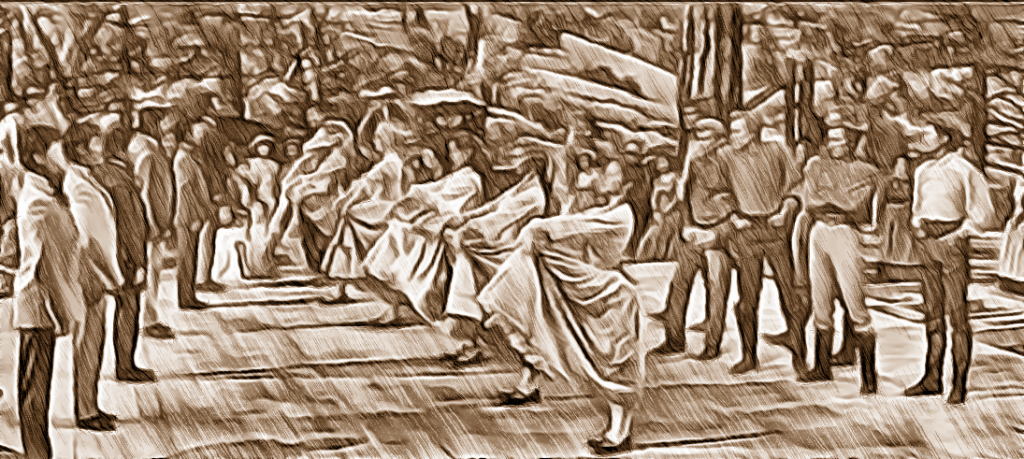
sepia Sketch of scene from 'Seven Brides for Seven Brothers'
Sketch of scene from ‘Seven Brides for Seven Brothers’

My children’s favourite film in childhood was ‘Seven Brides for ‘Seven Brothers’. It was loosely based on the Rape of the Sabine Women, and very Hollywood.

On This Day

12 BC – Augustus named Pontifex Maximus, which is essentially ‘Chief Priest’ which is a bit like King Henry VIII being the Supreme Head of the Church of England.

1836 – The Alamo in Texas fell to Mexican General Santa Anna after a 13-day siege. (apologising to Texas for posting this yesterday on the wrong day)

1957 – Ghana becomes an Independent State, the first of the UK’s colonies in Sub-Saharan Africa to be independent. Ghana consists of four separate colonial territories: Gold Coast, Ashanti, the Northern Territories, and British Togoland. Ghana remained within the Commonwealth of Nations. Kwame Nkrumah was the first President. It ranks 7th (out of 54 African states) for good governance on the Ibrahim Index of African Governance (IIAG).

First published in 2024, republished in 2025. On This Day added 2026

5th of Lide St Piran’s Day March 5th

Lide 5th is St Piran’s Day. Photo of St Piran’s Oratory at Trézilidé, Finistère (wikipedia) By Kieffer92 – Own work, CC BY-SA 4.0,

March is named after the Roman War God Mars, whose Month it was. But in England it had, until recent times, a dialect name which survived in the South west of England. This was ‘Lide’.

Lide was still used in the 17th Century, and then survived into the 19th Century only in Cornwall.  The Cornish named the first Friday in March ‘Friday in Lide’. They had a proverb.

Ducks won’t lay till they’ve drunk Lide water’.

Daffodils were called Lide-lillies. Eleanor Parker, who is a Lecturer in Medieval Literature at Brasenose College, Oxford, wrote an interesting article in History Today. She called March the loudest month of the year. The early English names for March were Hlyda or Lide monath meaning stormy or loud month. Other names include Hraed monath (rugged month) and Lentmonath (month of lent).

The ‘loudness’ comes from the March winds, which were noisy – as described in this rhyme. (thanks to Millie Thom for the rhyme and all things March. )

March brings breezes loud and shrill,
Stirs the dancing daffodil.

Sara Coleridge (1802–1852), “The Months,” Pretty Lessons In Verse, For Good Children; With Some Lessons in Latin, In Easy Rhyme, 1834

There are many references to the changeable weather in March. Sometimes lovely spring days, and at others raging storms, and frosts. Parker quotes a proverb which says that March comes in:

like a lion and goes out like a lamb’.

In 2026, the 5th of Lide has been a beautiful spring like day, with, over the last few days a outburst of Hawthorn and Plum blossom.

St Piran

Lide 5th was a holiday for Miners, probably because it was St Piran’s Day. Very little is clear about St Piran. But he is thought to have been an Irish Missionary who founded an Abbey in Cornwall in the 5th Century. His legend says he was tied to a millstone by the Irish, who rolled the stone over a cliff. The sea was stormy, but calmed as soon as he fell into it. He floated on his stone to Perranzabuloe in Cornwall. Here he landed and got his first converts: a badger, a fox, and a bear. Then, he founded the Abbey of Llanpirran.

He is said to have reintroduced smelting to Cornwall, hence his attribution as patron Saint of Miners. Piran was martyred by Theodoric or Tador, King of Cornwall in 480. His bones scattered in reliquaries in the South West and in Brittany. He is the patron saint of Cornwall, so the week before the 5th of March is known as Pirrantide. And there are events and parades to commemorate him. People dress in black white and gold, carrying daffodils and walk across the dunes to St Piran’s Cross.

Screenshot from the Cornish Guide showing St Piran’s Cross. https://www.cornwalls.co.uk/history/sites/st_pirrans_cross.htm

For more about March look at my post https://www.chr.org.uk/anddidthosefeet/march-1st-the-month-of-new-life

On This Day

1702 – Queen Anne becomes Queen – the last of the Stuarts. She had 18 pregnancies. The eldest survived to 11 and then died. Of the other 17, 8 miscarried, 5 were stillborn. 4 were born alive but died soon after. She had poor health, gout and drank a lot, but she might well have had an autoimmune deficiency and her body rejected the offspring. The fact that the eldest was the only one to survive might suggest rhesus disease, which can now be prevented with an injection of a medication called anti-D immunoglobulin. The problem occurs when a woman with RhD negative blood is exposed to RhD positive blood and develops an immune response to it. The first child is not affected, subsequent ones risk miscarriage.

1936 – The Spitfire makes its maiden test flight. By 1947 over 20,000 had been made and it had been in continuous production throughout the war, unlike most other aircraft.

1946 – Churchill makes his”Sinews of Peace” Speech in which he coins the phrase ‘Iron Curtain. President Trueman invited the unemployed Statesman to Fulton Missouri to make the speech. In 1961, the proposal was made to commemorate the speech by reconstructing the blitzed City Christopher Wren Church, St Mary Aldermanbury in Fulton, Missouri. The Church was shipped to the States, rebuilt and rededicated on the 7 May 1969.

First published in 2024, rewritten March 2025 Revised, On This Day added 2026.

Dung, Time to Manure your Garden March 4th

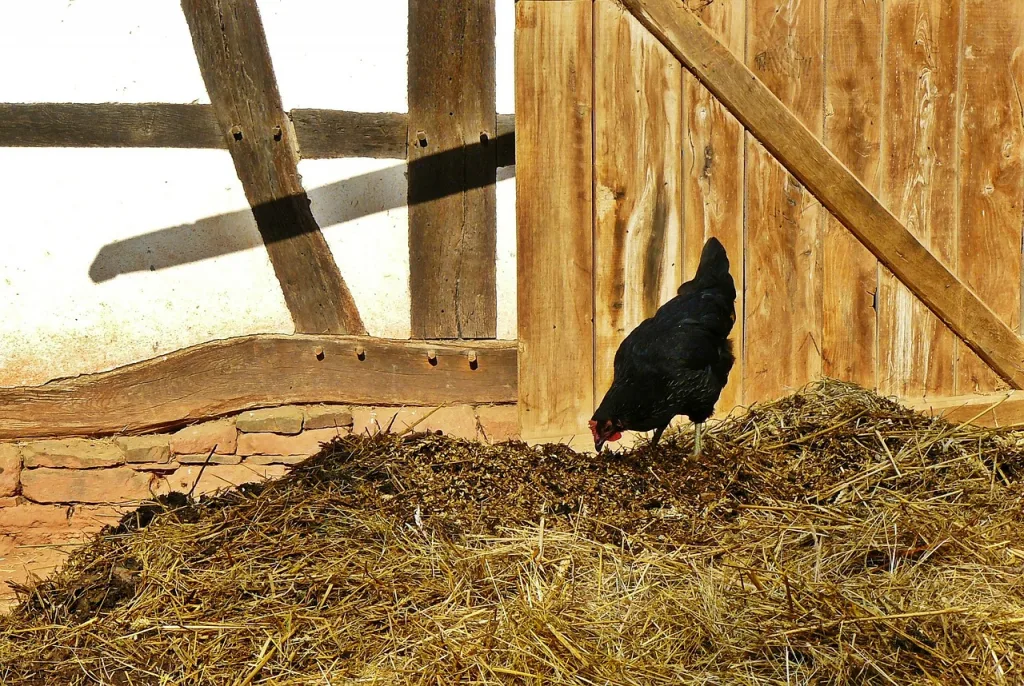
Hen’s Dung. Image by Anja from Pixabay

John Worlidge knew all about dung. And it is all spread out in his ‘Worlidge Systema Agriculurae’ of 1697 brought to my attention by Charles Kightly’s Perpetual Almanac.

Worlidge tells us that although it used not be esteemed, but Hens and Pigeons’s Dung is the best if mixed with common earth or sand, and let to rot. He says:

Pigeons or Hens dung is incomparable, one Load is worth ten Load of other Dung, and therefore it’s usually sown on Wheat (or Barly) that lieth afar off, and not easily to be helped; it’s extraordinary likewise on a Hop-garden.

… It’s generally little set by, because our Fore-fathers did not make any great matter of it, and because they understand not the strength and power of it; for when they take it out of the houses it’s of a very hot nature, and must needs injure some things, if laid thereon; but if it be mixed well with common Earth, Sand, or such-like, and let lie till it rot well together, you will finde it a very rich Manure, and of value to answer a great part of your Poultreys expence.

I have known a Quince-tree whereon Poultrey always pearched, that by reason of the Rain washing to its Roots the salt and fatness of the Dung, did bear yearly an incredible number of very excellent Quinces.

To read the Systems see https://quod.lib.umich.edu. For more on Worlidge wisdom see my post on Hawthorn.

Before we turn to the sweet Quincwe I’ve found a poem about dung:

Dilbert Dung Beetles Delicacy

Mr. Camel is fascinated by his friend Dilbert Dung Beetle’s diet.
He thinks eating up excrement, feces and manure is a riot.
It is tasty! Delicious! You should try a salty elephant pie!
Dilbert Dung Beetle says. You would love it if you gave it a try!

Mr. Camel watches Dilbert dig in, gulping down gobs of the stuff.
He thinks it must have a weird smell, but Dilbert can’t get enough.
You might sample a tiny bit Dilbert says, it is delicious you see!
Mr. Camel shakes his head and says “Sorry, it does not appeal to me.”

© Caren Krutsinger

All things Quince

I made quince jam this winter for the third year running from my Father’s Tree. Likely to be the last year as he is 98 and has just gone into a lovely home. It’s very easy to make (although very hard to cut up the fruit) and delicious because it is not too sweet. Here is a recipe (not necessarily the one I used}. Indeed, my most successful year was when I didn’t use a recipe, just boiled the fruit with sugar to taste. Beginner’s Luck, I expect.

Quince is mentioned once in Shakespeare, when the Nurse says the pastry makers are calling for Quince and Dates. (Here is a recipe for Tudor Quince Pie) And of course, the mechanicals theatre director is Peter Quince the Carpenter. But the most famous reference is in the Owl and the Pussycat by Edward Lear.

They dined on mince, and slices of quince
Which they ate with a runcible spoon;
And hand in hand, on the edge of the sand,
They danced by the light of the moon.

Quinces are native to the Caspian Seas, and Wikipedia says spread to England when planted at the Tower of London at the order of Edward I. Quinces were sacred to Aphrodite. and taste great with Cheese (dulce de membrillo) if you are in Span. The Balkans have an aqua vita called rakija. Quince is considered old-fashioned and not grown very much in gardens in the UK.

First published on March 4th, 2026

The Feast Day of St Winnold March 3rd

Portrait of Saint Guénolé (St Winnold) after a bust in silver on a reliquary from the Church Saint-Guénolé in Locquénolé.Public Domain Abgrall Jean-Marie (1846-1926) – Bibliothèque nationale de France

Here is a weather poem in which St Winnold appears

First comes David, then comes Chad.
And comes Winnold, roaring like mad.
White or black.
Or old house thack.

St David’s Day was March 1st. St Chad, the 2nd. St Winnold’s Day is the third of March. Winnold is his English name, and Winneral, or Winwaloe or Guénolé his Celtic names.

The poem suggests that snow, rain or wind is going to come on these three days. When the wind roars, it will threaten the thatch of houses. If the storms do not come in the first 3 days, then they will come on the last three days of March, which were called ‘the Borrowing Days’. Or so it is said.

St Winnold was around 50 years (460 – 3 March 532) after the end of Roman Britain. His family was from Cornwall. He was the son of a Prince Fragan of Dumnonia, and St Gwen the Three-Breasted, His mother’s Feast day is October 3rd. She is a Saint of fertility, because of God’s Gift of an extra breast. They moved to Brittany to escape a British Plague. Their son grew up to be holy and was the founder and first abbot of Landévennec Abbey (the Monastery of Winwaloe). It is south of Brest.

Winwaloe became what is known as a ‘phallic saint’ because he was associated with fertility. Wikipedia says this came about because of confusion about the origin of his name:

his name was thought to derive from gignere (French engendrer, “to beget”)’

St Winnold’s Breton name is Guénolé. How this etymology works is not clear to me! But surely, he as likely to have got a reputation for helping people with fertility problems from his mother? Supplicants would make a wax phallus to persuade the Saint to help them conceive. There are several churches/ chapels dedicated to him in Wales, and a Priory in East Anglia.

You might like to read my post about St Blaise Day & The Tadpole Revels February 3rd, or on St Chad.

On This Day

March 3rd 1847 Alexander Graham Bell was born. He was born in Edinburgh, and lived Scotland, in London, Canada and the US.

First written August 2024, republished MArch 2026