Tudor London – The City of Wolf Hall 6pm 1st May 2026 To Book
Myths, Legends, Archaeology, and the Origins of London 11:15am Sat 2nd May 26 to Book
London Bridge to Bermondsey 2:15pm Sat 2nd May 2026 To book
Jane Austen’s London Walk 2.30pm Sun 31st May 2026 To Book
The First Blitz – Zeppelin London New Walk! 6pm Sun 31 May 2026 To Book
Roman London – Literary & Archaeology Walk 3pm Sat 6th June 2026 Tobook
The Rebirth Of Saxon London Archaeology Walk 11am Sun 7th June 2026 To book
Tudor London – The City of Wolf Hall 3pm 4th July 2026 To Book
Jane Austen’s London Walk 2:30pm Sun 5th July 2026 To book
London. 1066 and All That Walk 11.30am Sun 12th July 26 Tobook
Bloody, Flaming, Poxy London 3pm Sun 12th July 26 To book
Myths, Legends, Archaeology and the Origins of London 3pm Sat 1 Aug 2026 Tower Hill Underground To book
The Decline And Fall Of Roman London Walk 11:15am 2nd Aug 26 To book
Jane Austen’s London Walk 2:30pm Sun 2nd Aug 26 To book
Chaucer’s Medieval London Guided Walk 11.00am Sat 5th Sept 2026 To book
Jane Austen’s London Walk 2:30pm Sun 5th Sept 2026 To book
Jane Austen’s London Walk 2:30pm Sat 24th Oct 2026 To book
For a complete list of my guided walks for London Walks in 2026 look here
May Day May 1st
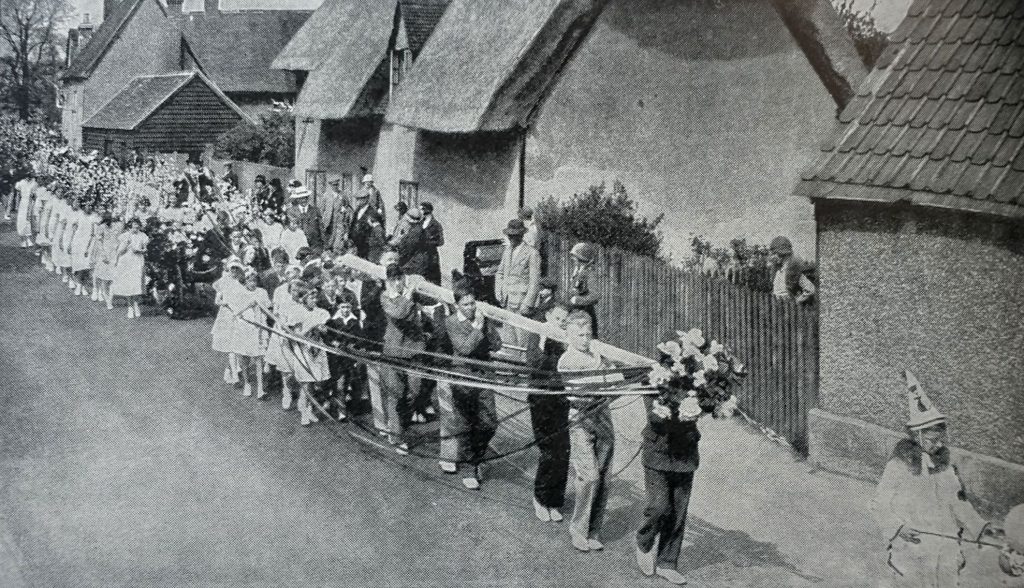
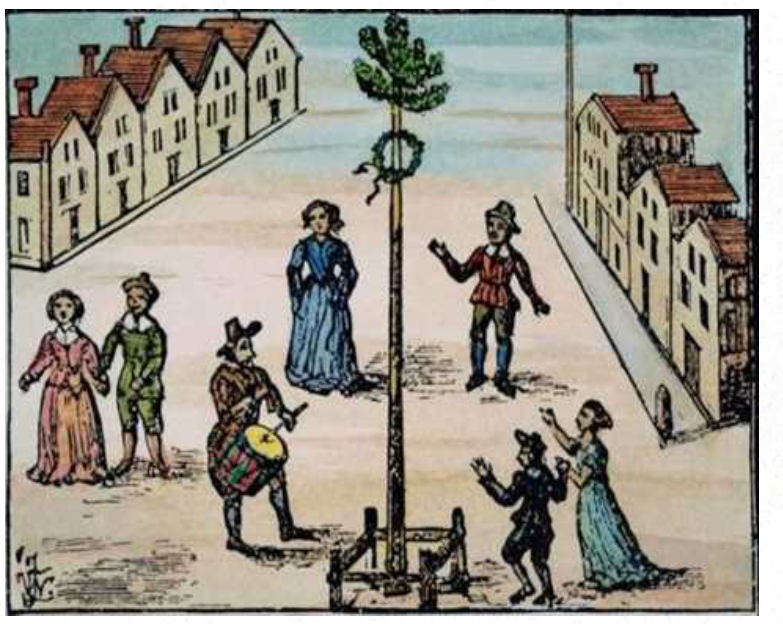
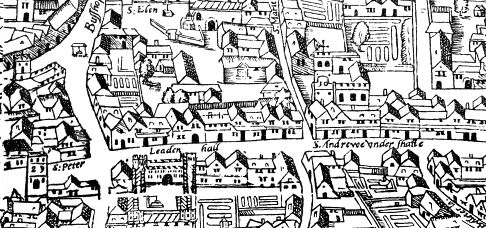
May morning would commence with dancing around the Maypole, followed by feasting, and summer games. Maypoles were often stored during the year. A few days before May Day they were repainted, and bedecked with May Garlands – mostly made from Hawthorn. The Maypole used in London in 1660 was 134 feet high. Tall straight trees were used, sometimes of Larch, and they might be spliced together to get the requisite height. John Stow says that each parish in London had their own Maypole, or combined with a neighbouring Parish. The main Maypole was on the top of Cornhill, in Leadenhall Street. It was stored under the eves of St Andrew’s Church, which became known as St Andrew’s Undershaft as a result. For more about Maypoles and May Day see my post may-2nd-this-stinking-idol-the-end-of-may-day/.
Padstow May Day Festival
Padstow holds, perhaps, the most famous May Day festival on May 1st. It feels very ‘pagan’ or do I mean it is fuelled by an enormous amount of drink? Here is a video, watch until you see the ‘obby ‘orse and the teaser dancing.
Why May Eve?
The celebrations begin on May Eve because the Celtic calendar starts the day at Dusk. This seems strange to us who, perversely, ‘start’ our day at Midnight just after everyone has gone to bed! The other choice, and maybe the most logical is Dawn? But Dawn and Dusk are difficult to fix. Midnight was chosen by Julius Caesar when he created the Julian Calendar. Midnight has the virtue of being a fixed metric, being half way between Dawn and Dusk. From the Celtic point of view, the day ends when the Sun goes down over the western horizon. So the end of the old day, is the beginning of the new day. Makes sense?
For Walpurgis Nacht see my post on April 30th here: walpurgis-nacht-april-30th/
Beltane Fire
Celebrations centred around the Bonfire. The day was sacred to the fire God Belenus (Gaulish: Belenos, Belinos, British Belinus, Bel, or Beli), and May Day was called Beltane. Bonfires continued to be a part of the celebration into the 16th Century, and in places until the 2st Century. According to folklore tradition, the bonfire should be made of nine types of wood. They must be collected by nine teams of married men (or first born men). They must not carry any metal with them. The fire has to be lit by rubbing oak sticks together or a wooden awl twisted in a wooden log.
Participants, have to run sunwise around the fire. Oatcakes are distributed, with one being marked with a black spot. The one who collects it has to jump through the fire three times. Bonfires would have been, by choice on the top of hills. But then they were also held in the streets in London. May celebrations have a similarity to Halloween. This was also a fire festival and both are uncanny times when sprites and spirits abound.
Hawthorn

Hawthorn was a favoured wood not only because of its beautiful may flower. It was also said to be the wood the crown of thorns was made from. Hawthorn had the power of resisting supernatural forces. Therefore, it was used to protect doors, cribs, cow sheds and other places from witches.
Protecting Babies from Witches
Witches, it was said, got their power to fly from potions made from chopped up infants. The best protection was Christening. The custom was to have the christening as early as possible. Normally three days after birth. Shakespeare was baptised on 26th April 1564, so we celebrate his birthday on 23rd April. See my post for more on this subject. Cribs would be bedecked with Hawthorn and protection might be augmented by a bible, rowan, and garlic.
Special May Babies
Babies born between May 1 and 8 were thought to be special. They were destined to have power over man and beast. Weddings were frowned upon in Lent and in May, so April became a popular choice for marriage.
May Dew
After celebrations on May Eve (April 30th), women would go out in the woods to collect May, and other flowering plants. They would wash their faces in May Dew, preferably from the leaves of Hawthorn. If not from beneath an oak tree, or from a new-made grave. The dew was said to improve their complexion. It was also used for medical conditions such as gout and weak eyes.
Thinking Can Make it Happen?
Thinking of one’s lover on May Day might bring marriage within the year., it was thought This is a little like the modern woo-woo technique of ‘Manifesting’. Woo-woo or just woo is slang for something to do with crystals or other new age nonsense. Manifesting can either be a visualisation technique, whereby visualising the thing you want happening helps you concentrate on making it happen. The woo-woo part of it is that if you think it hard enough, you will get the universe to help make it happen. An analysis I heard on BBC Radio 4 showed that people who believe in the power of manifesting to alter the universe were more reckless in their endeavours and had a higher rate of bankruptcy and investment losses. It seemed they were more willing to take the risk. On the other hand, those who thought through the process of achieving their goals and the obstacles in the way of success were more successful.

Belenus
is a Celtic God of whom very little is clear and unambiguous. He was linked in Gaul with Apollo. The name, some people think, comes from ‘Shining’ but others disagree and think it means ‘Master of Power.’ His association with Irish mythology and the festival of Beltane suggests he was a powerful god in Celtic Europe. Geoffrey of Monmouth has a King called Belinus, and spins a yarn about Belinus and Billingsgate. Linguists prefer the idea that Billingsgate is named after some unknown Saxon called Billings. This may be a little more likely but far less interesting.
See my post on Midsummer for more on Celtic Festivals.
On This Day
305 – Diocletian and Maximian retire from the office of Roman emperor. Diocletian was a systems man. and changed the Empire so there were 2 Emperors, 4 Caesars, a lot of Prefects, and a shed load of Governors. It was supposed to make the Empire more efficient and less liable to Civil War. He also introduced a Wages and Prices freeze. For more about this see my post on Diocletian’s reforms here.
1328 – Wars of Scottish Independence end: By the Treaty of Edinburgh–Northampton, England recognises Scotland as an independent state. (Wikipedia)
1707 – The Union of Scotland and England Proclaimed. In which Scotland voluntarily (aided by bribery and corruption) gave up its independence.
1945 – German Fascist Goebbels kills himself and his entire family
Revised May 1st 2024,2025 and 2026
Walpurgis Nacht & St Erconwald’s Day April 30th

Walpurgis Nacht is the eve of the Feast of St Walpurga. On May 1st 870AD, St. Walpurga remains were ‘translated’ to Eichstätt. St Walpurgis Day is her feast day. Walpurga’s brother St Williibald had set up Eichstätt as the Diocesan centre of this part of Bavaria. Walpurga and her two brothers, Willibald and Winibald were Anglo-Saxon Saints who helped convert Germany to Christianity in the 8th Century. But, I wrote about the Saint and her brothers in on my page on St. Walpurga.
The Celtic Day began at Dusk, so May Day and the Feast of St Walpurga begins on 30th April. The Christian Church took over many local traditions and adapted them to the calendar of the Church. So a Saint’s Day, is preceded by an Eve. For example, All Hallows’ Day and Halloween, and May Day and May Eve.
Eve of Beltane
The evening of April 30th is also the beginning of Beltane. Beltane is one of the principal Celtic Festivals, dedicated to the God Belinus. It is a Celtic Fire Ceremony and the traditional beginning of Summer. It is 6 months before Halloween, (see my post of Halloween here.) Walpurgis Nacht is also halfway between the Spring equinox and the Summer solstice. So, a very important day in the Celtic Calendar. (see my post on May Day).
In Sweden it is known as Valborg and as Čarodejnice in the Czech Republic.
A day of Uncanny Weirdness?
As May Day was an uncanny period dedicated to Pagan Deities, Walpurgis Nacht became a time when all the weird things are alive in the world. In response, the Christian Church associated a saint to the day to be a focus for defeating witchcraft. So, it is a popular tradition for this Night to see the burning of an effigy of a witch on a bonfire.
Walpurgis Nacht has really been taken over by Heavy Metal, and I refer you this page to begin your journey down a dark rabbit hole of head-banging rock. https://astromagicklounge.com/2021/04/30/celebrating-walpurgis-night-with-black-sabbath-aleister-crowley/
St Erconwald’s Day

It is also the Feast Day of St Erconwald. He was a Royal Prince but no one can agree of which Saxon Kingdom. He became one of the most famous Bishops of London (675 and 693). Chertsey Abbey and Barking Abbey were founded by the Saint. His sisterwhich his sister, St Ethelburga, became Abbess of Barking. Not only that, but he was known as the light of London and was responsible for rebuilding St Pauls Cathedral. And helping to complete the conversion of the Kingdom of Essex.
You might enjoy reading this alliterative poem, of the 14th Century about his life. He is one of the patron saints of London, associated with early pilgrimage and many miracles. Here is more information on the poem.
First Published in 2024, revised in April 2025, 2026
Time to guard children against witches April 29th
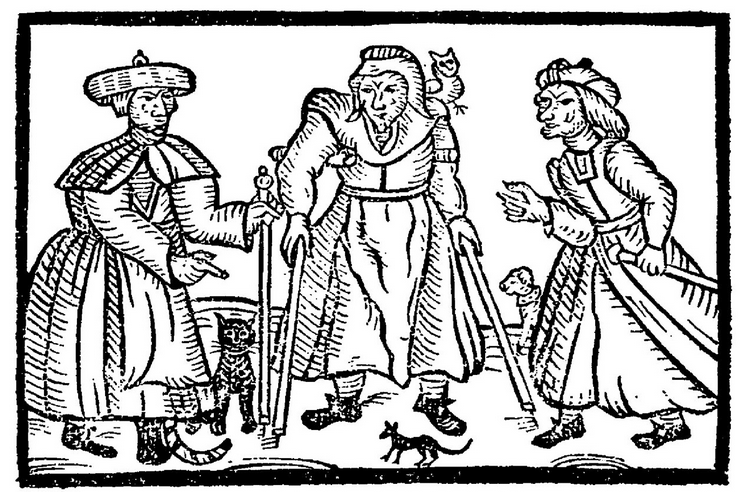
As May Eve approached, which like Halloween, was considered a particularly uncanny time, people were warned to guard against witches stealing their babies:
He (the Devil) teacheth the witches to make ointments of the bowels and members of children, whereby they ride in the air and accomplish all their desires. So as, if they be any children unbaptized, or not guarded with the sign of the cross or orisons: then the witches may and do catch them from their mother’s side at night, or out of their cradles. …. and after burial steal them out of the graves, then seethe them in a cauldron until their flesh been made possible.
Reginald Scott ‘The Discovery of Witchcraft’ 1594 (from ‘The perpetual Almanack of Folklore’ by Charles Kightley). Please note that Reginald Scott’s book was actually against the idea of witchcraft, i.e. he was debunking it. (for more on Reginald Scott read my post here)
Keeping Witches away
Ways to keep witches away were various, but baptising your children early was the best method. As you will have seen in previous posts, children were normally baptised as soon as possible. Normally, three days after birth in the early modern period.) There were various ways of protecting against witches including saying prayers (orisons), hanging garlic, bread, rowan-leaves, around the cradle.
Witch marks
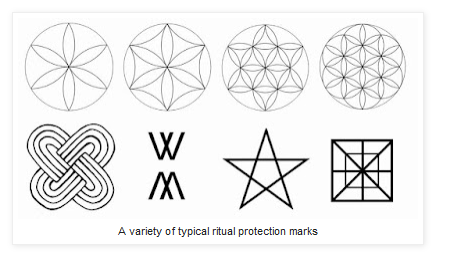
In archaeological surveys of timber framed buildings increasing numbers of reports of ‘witches’ marks have been discovered. They are now so ubiquitous that it seems most people felt the need to deploy them to secure their houses. Or was it the Carpenters and Builders who felt the need to protect their work? It was believed that witches gained entry where there was an inlet of wind. So doors, windows, chimneys, and anywhere there was a draft. These would be marked by pentagons, which represent the five wounds of Christ. Also used were a variety of other marks ‘chequerboards, mesh patterns, peltas (a type of knot work design) and circle’. https://theartssociety.org/arts-news-features/ancient-symbols-once-used-ward-away-witches is an excellent read and gives more detail.
Also this article makes the case that they are not specifically anti-witch marks, but general marks to ward off evil. This is worth reading. The illustration below comes from the article.
Tam O’Shanter
Robert Burns poem ‘Tam O’Shanter’ gives a graphic, fictional, account of a witches’ coven presided over by the Devil (auld Nick) himself which features ‘wee, unchristen’d bairns‘. Tam, drunk, has come upon a witches coven, presided over by the devil himself.
And, vow! Tam saw an unco sight!
Warlocks and witches in a dance;
Nae cotillion brent new frae France,
But hornpipes, jigs, strathspeys, and reels,
Put life and mettle in their heels.
A winnock-bunker in the east,
There sat auld Nick, in shape o’ beast;
A towzie tyke, black, grim, and large,
To gie them music was his charge:
He screw’d the pipes and gart them skirl,
Till roof and rafters a’ did dirl.—
Coffins stood round, like open presses,
That shaw’d the dead in their last dresses;
And by some devilish cantraip slight
Each in its cauld hand held a light.—
By which heroic Tam was able
To note upon the haly table,
A murderer’s banes in gibbet airns;
Twa span-lang, wee, unchristen’d bairns;
A thief, new-cutted frae a rape,
Wi’ his last gasp his gab did gape;
Five tomahawks, wi’ blude red-rusted;
Five scymitars, wi’ murder crusted;
A garter, which a babe had strangled;
A knife, a father’s throat had mangled,
Whom his ain son o’ life bereft,
The grey hairs yet stack to the heft;
Wi’ mair o’ horrible and awefu’,
Which even to name wad be unlawfu’.
I talked more about Tam O’Shanter and the Cutty Sark here and to read the whole poem see below. Please do have a look and when you read it read it quick. Loud and don’t worry about how to pronounce it or understand it, just enjoy the ride!
Have a look at my post on the Cutty Sark for more of Tam O’Shanter.
Written in 2023 revised April 2024, 2025, 2026
Floralia. Old Goats and an extraordinary Elephant April 28th

On the 28th of April began the Floralia. It continued to the Kalends (15th) of May. According to Ovid in the ‘Fasti’ Book IV, the Romans celebrated Flora, the Goddess of Spring. The Floralia celebrated flowering, blossoming, budding, planting and fertility.
Flora was one of the 15 Roman Deities offered a state-financed Priest. Her home in Rome, was on the lower slopes of the Aventine Hill near the Circus Maximus.

Celebrations began with theatrical performances, at the end of which the audience were pelted with beans and lupins. Then there were competitive games, and spectacles. The latter, in the reign of Galba, including a tight-rope walking animal. A monkey you might guess but no, it was a tight-rope walking elephant!
The Year of the Four Emperors
Incidentally, Galba only survived for 7 months as Emperor. A little longer than our Liz Truss’s 44 days. But then she was not murdered by a rampaging mob at the end of her reign. It was the year known to history as the year of the 4 Emperors. (great description by Tacitus here).
Spectacles and Battles
Juvenal records that prostitutes were included in the celebration of Floralia by dancing naked, and fighting in mock gladiatorial battles. There is a raging debate about the existence of female gladiators. A burial in Southwark has been said to be one such. To hear what Natalie Haynes has to say on the subject look here🙂
Fauns, Satyrs, Goats and Hares
Hares and goats were released as part of the ceremonies. These animals were both considered to be very fertile and have a ‘salacious’ reputation! (Satyrs or Fawns were, famously, obsessed with sex and were half man half goat. A man can still be referred to, normally behind his back, as an ‘old goat’). Fauns were Roman, Satyrs Greek. The one half man half goat, the other half man half horse. It all got a little mixed up and fauns became very similar to satyrs.
To read about the myths of hare see my post march-28th-as-mad-as-a-march-hare/
On this day
1789 – Mutiny in the Bounty
1792 – France invaded the Spanish Netherlands to begin the French Revolutionary Wars which begin a period of near continuous European War until the defeat of Buonaparte in 1815.
1945 – Mussolini and mistress are shot by the Italian Resistance.
1967 – Muhammed Ali refuses his induction into the US Army on moral grounds. ‘I ain’t got no quarrel with them Viet Cong’. He said.
Written in 2023 revised April 2024, 2025, On This Day 2026
Bluebells. Hyacinthus, Ruffs, Books, and Arrows April 27th

Bluebells, on average, bloom on April 9th, but can be seen through April and into May. Past their prime in London currently, although still thriving in my north-facing back garden. The Londonist has a great website on where to see them in London. And for the rest of the country, see the National Trust’s Bluebell walk page.
Hyacinthus
Our wild hyacinth is officially called Hyacinthoides non-scripta. Mrs Grieve, in her ‘Modern Herbal’ gives this charming account of the Linnean name:
‘Linnaeus first called it Hyacinthus, tradition associating the flower with the Hyacinth of the Ancients, the flower of grief and mourning. Hyacinthus was a charming youth whom both Apollo and Zephyrus loved, but Hyacinthus preferred the Sun-God to the God of the West Wind, who sought to be revenged, and one day when Apollo was playing quoits with the youth, a quoit (blown by Zephyrus out of its proper course) killed Hyacinthus. Apollo, stricken with grief, raised from his blood a purple flower, on which the letters Ai, Ai were traced, so that his cry of woe might for evermore have existence upon earth. As our native variety of Hyacinth had no trace of these mystic letters our older botanists called it Hyacinthus nonscriptus, or ‘not written on.”
Avoid the Spanish
The Spanish variety is causing havoc in some places. It is more robust and can interbreed with ours and endangers our beautiful bluebell walks. Native bluebells are therefore a protected species. We are not allowed to pick them, nor even tread on them.
Old Medical and Practical Uses of Bluebells
It was used as a diuretic and is styptic (Contracting the tissues or blood vessels; stopping blood flow). The bulbs are poisonous in the fresh state. But were used as a starch, much used when stiffs ruffs needed starching. Its gummy qualities led it to be used as a bookbinders gum, and to set feathers upon an arrow.
For Coltsfoot see my post here.
First Posted April 27th 2026
Guernica & War from the Air April 26th 1937

This day is the anniversary of the bombing of Guernica in the Spanish Civil War but first we find out the origins of the London Cocktail Party.
The first Cocktail Party
The brother of Evelyn Waugh, Alex put on the first Cocktail party in 1924, or so he claims. He organised it at the studio of celebrated war painter C. R. W. Nevinson, in Haverstock Hill. Waugh felt there was nothing much to do between 5 and 7 except tea parties where tea, crumpets and cake were eaten. As he said to the Newinsons:
“What one needs, is some kind of a party that starts at half-past five, that lasts ninety minutes, at which alcohol is served but not much food.”

The first drink boded well:
‘I opted for rum. Jamaican rum had been blended with Rose’s (Newinson) lime juice and sharpened with Angostura. Large nuggets of ice kept the mixture cool. It was very potent. The first sip made me shiver, in the way that a dry martini does. It also sent a glow along my veins. “This,” I said, “is going to be a party.”‘
But it wasn’t as only one person turned up. So a year, later he tried again, but this time he disguised the event as a ‘Tea party’. But served, “A Daiquiri. It’s sweet, like a dessert, and very strong. It will produce the precise effect you need.” at the suggestion of a member of the US Embassy. As the drink tasted like sherbet, everyone drunk lots of them and the tea party went with a swing unlike any other. And thus, it caught on and became a part of the London scene.
To read Alex Waugh’s account of the invention please read here.
Guernica
Franco ordered the bombing as part of his campaign to overthrow the Basque Government. The Town was devasted and 1,654 civilians were killed. The bombing was undertaken by ‘the Condor Legion of Nazi Germany’s Luftwaffe and the Italian Aviazione Legionaria’ (Wikipedia). Picasso began his famous painting almost immediately after he heard an eyewitness account of the attack. The iconic painting was finished by 4 June 1937. The bombing showed the potential damage war from the air could do to crowded Cities. The painting became one of the most famous campaigning works of art.
The War from the Air

Illustration by A. C. Michael of Pall Mall Magazine –
Aerial warfare became a reality as soon as the Montgolfier Brothers flew the first Hot Air Balloon. (On 19 September 1783, they flew a balloon with a sheep called Montauciel (“Climb-to-the-sky”), a duck and a rooster in the basket). In the Revolutionary Wars, the French used hot air balloons for reconnaissance. Napoleon considered transporting troops by balloon in an invasion of Britain. With the arrival of planes and the development of the Zeppelin. Air warfare became a feature of speculative fiction, and began to absorb the planners.
H G Wells book, illustrated above, featured a war between Germany and the United States in which New York is obliterated by Aerial Bombing. This was written in 1908. In World War 1 London was the focus of a series of Zeppelin and Aeroplane raids. These killed over 500 people. (see my post on the London Zeppelin raid of Sept 8th 1916).
As planes developed in capacity, war departments created plans that seem now to have been exaggerated. It is thought that Appeasement was partly a response to the feared casualties from war in the air. The authorities were planning for 1 million killed in London and double that number of people deranged by fear. In the event, casualties were far less, some 43,000 killed. However, 2 million houses were destroyed. The scale of destruction was fairly accurately predicted but the casualties greatly exaggerated.
(see my post on the-ultimate-raf-london-blitz-story)
On this Day
1564 – Shakespeare Baptised at Holy Trinity Church, Stratford on Avon.
1925 – World War 1 General von Hindenburg returned as the first directly elected President of the Weimar Republic. He played a crucial role in Hitler’s ascent to power. Hindenburg’s example is one of the main reasons I prefer an unelected powerless Royal Head of State, rather than an elected one.
1994 – The new South African constitution set up and democratic elections were held.
First Published on April 26th 2025, revised First Cocktail Party added 2026
St Mark’s Day & the History of Pens April 25th

This is St Mark’s Feast Day. So this post is about St Mark, and as he was a writer, a history of pens. But first new content:
Object of the Week – the Humble Aglet
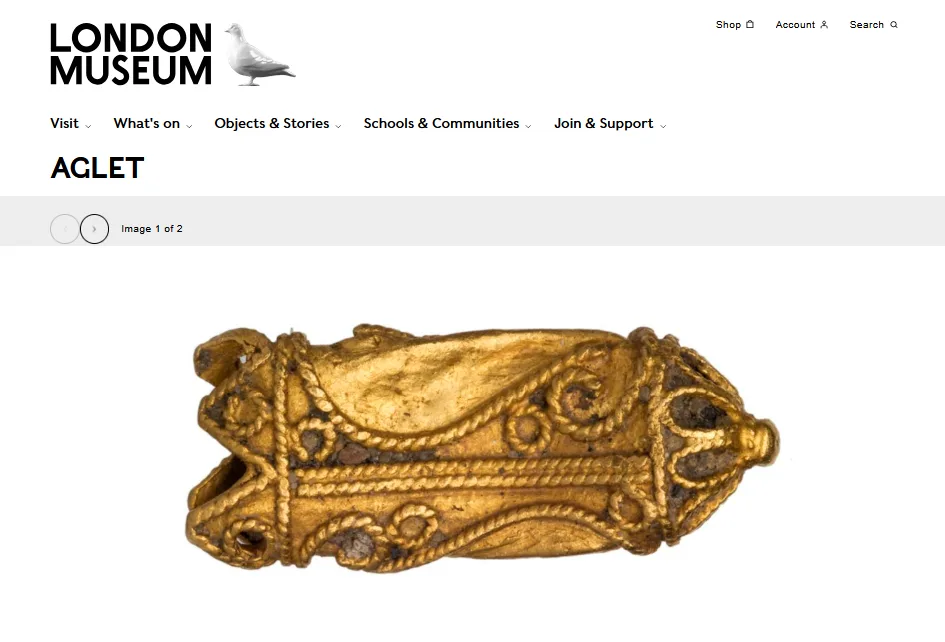
I suspect most of us don’t think much about aglets. They are that little pointy thing at the end of a lace. When they break we discover how useful they are at poking a string through a hole. The one above is a glorious gold example found at Greenwich, and possibly from Royal Tudor clothing. Details of it are here on the London Museum web site: https://www.londonmuseum.org.uk/collections/v/object-919752/aglet.
This morning, Roseann Milano sent me a link to an instagram reel from the National Gallery in which aglets are discovered on very famous paintings. I cannot find a non-Instagram version of it, for which apologies, but I do recommend you spend 3 minutes looking at https://www.instagram.com/reels/DXeGFiwjYhL/. It’s a great little video with an excellent narrative. Thanks Roseann.
St Mark. Who He?
There is a lot of discussion about who he was. So, various Marks might be St. Mark the Evangelist but there is no consensus. Modern scholars tend to think none of the Gospel writers were contemporary witnesses. So, Mark, whoever he was, is a convenient label for the person who wrote St Mark’s Gospel. I will let you use Google to follow the discussion. But from Wikipedia, here is a taste of it:
‘However, Hippolytus of Rome, in On the Seventy Apostles, distinguishes Mark the Evangelist (2 Timothy 4:11), John Mark (Acts 12:12, 25; 13:5, 13; 15:37), and Mark the cousin of Barnabas (Colossians 4:10;Philemon 24). According to Hippolytus, they all belonged to the “Seventy Disciples” who were sent out by Jesus to disseminate the gospel (Luke 10:1ff.) in Judea.’
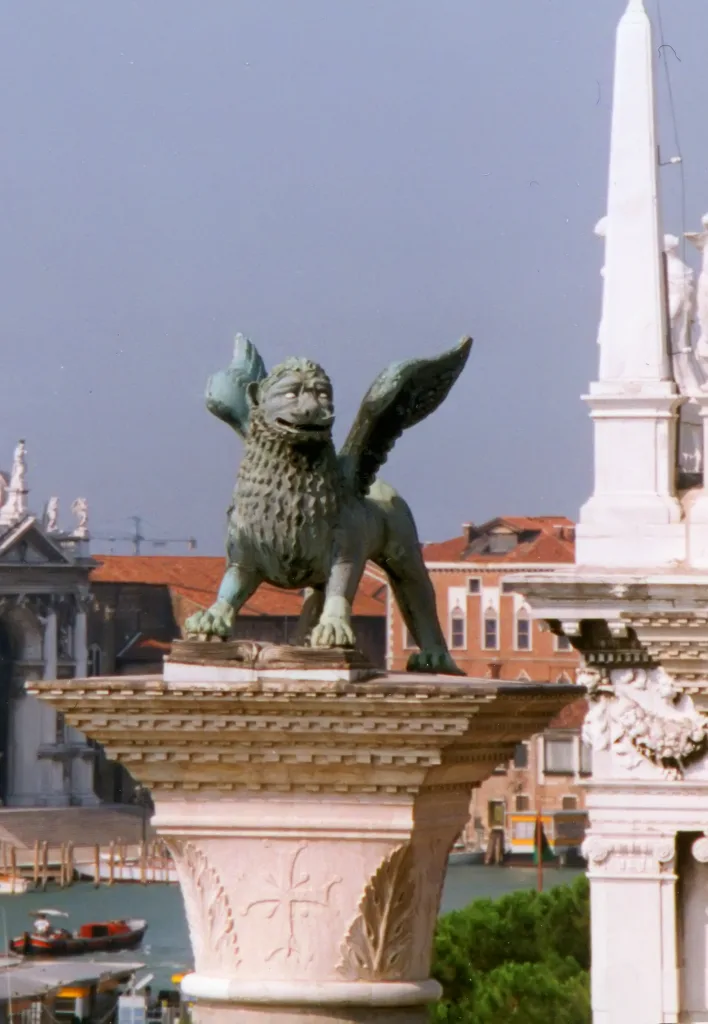
One of the Marks went with St Paul on his first missionary journey, but he fell out with Paul so didn’t go on the second one. But they patched it up and he was with Paul in Rome where Paul was martyred. Where, if, Mark was martyred is not known, but there is a tradition that he was the first bishop of Alexandria and martyred there in the reign of Trajan. In 829 relics arrived in Venice which were claimed to be St Marks, and so Venice’s famous Cathedral is called St Marco, and the symbol of St Mark is the winged Lion.
Saints
Just to explain my interest in Saints: The main reasons are: One to shed some light on the history of Roman and Early Medieval Europe, and secondly, to highlight those Saints which were important to everyday Medieval life. Of course, I enjoy the frequently, far-fetched and bizarre, stories that are told about the saints. In this case, my interest in St Mark was to find a home for a little research on the history of Pens!
Reed Pens
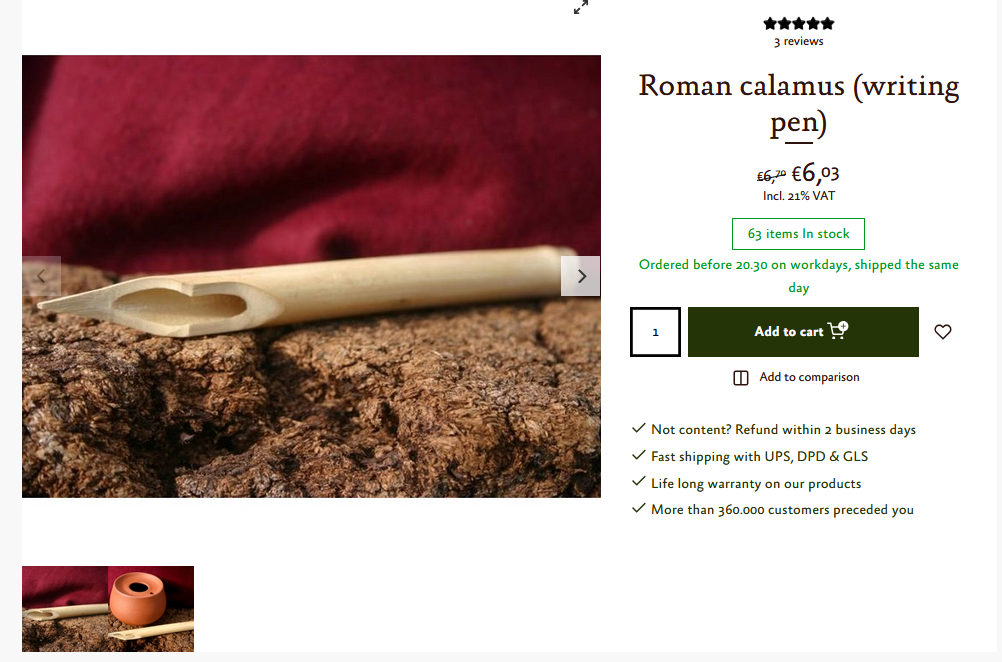
The history of Pens arguably begins with the Reed pen. These were used from 3000BC by the Egyptians. They were made from sea rushes and were ideal for writing on papyrus.
Here is a replica Roman reed pen you can buy:
Metal Stylus
The metal stylus was invented around 1300 BC and used by the Romans to write on wax Tablets. These had a point at one end and a flat triangle at the other to erase any mistakes.
At the Bloomberg site in the Walbrook Valley in London, a metal stylus was found with this inscription on its four faces, showing it was a novelty pen!
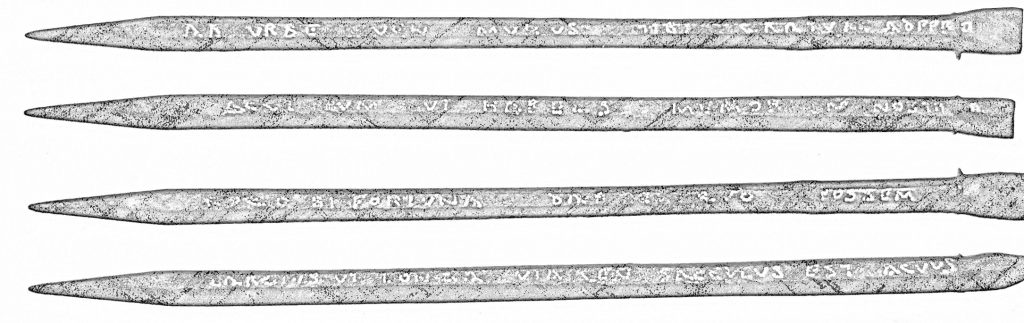
From Rome, a keepsake to bring you pleasure –
a pointed gift so you will always remember;
I wish I could have given you so much more
but the journey is long and funds are short.
To see a photo of it look at this web site.
Wax Tablets
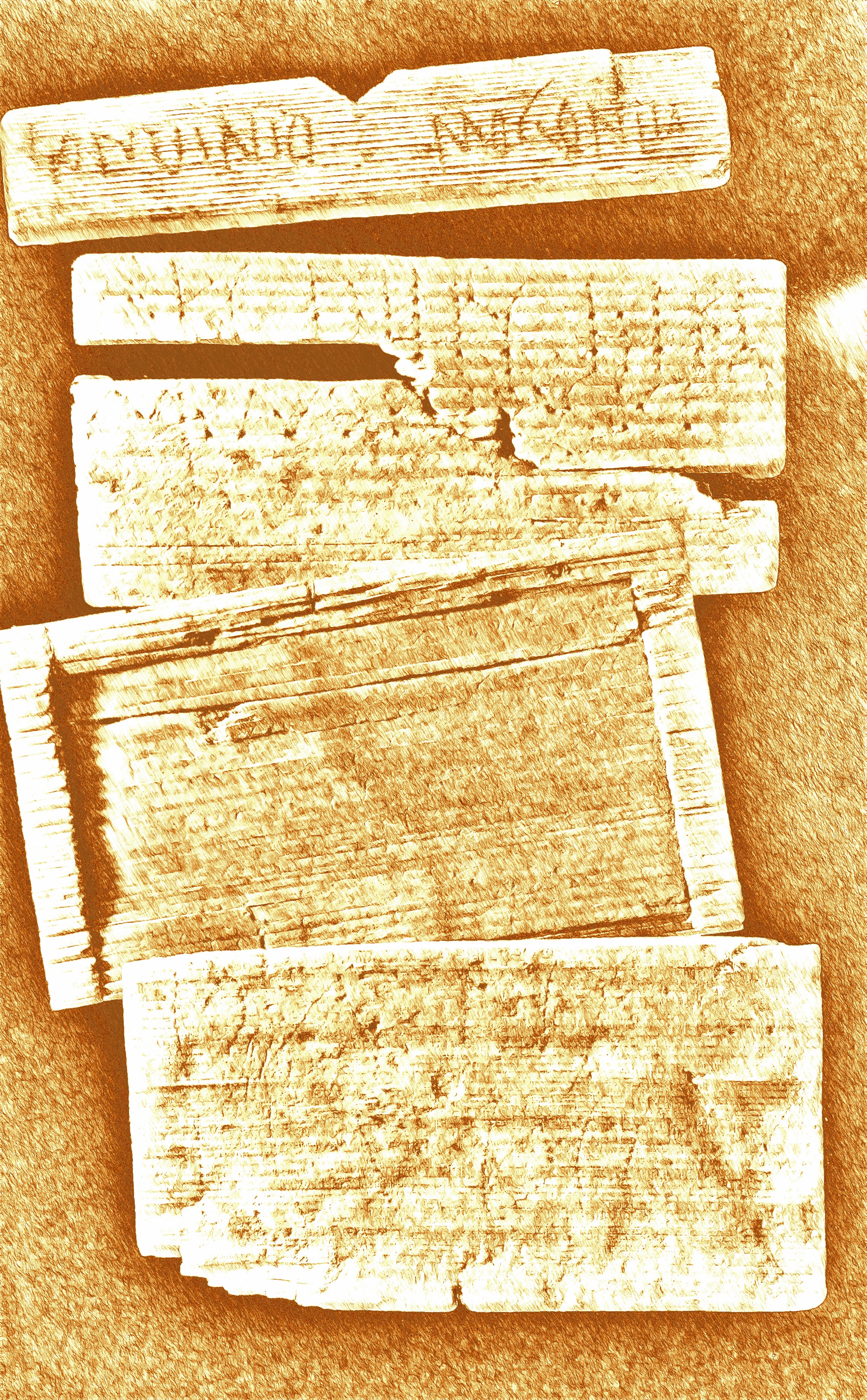
Here are some examples of Roman wax tablets that have been deciphered from London.
Rufus, son of Callisunus, sends greeting to Epillicus, and all his fellows. I believe you know that I am very well. If you have made the list, please send it. Do look after everything
carefully so that you turn the girl into cash.
Writing Tablet, ‘Museum of London (now called the London Museum!)
The most important information from this find is that the son (Rufus) has been given a Latin name by his father (Callisunus) whose name seems to be of Celtic origin; the girl referred to could be a slave.
Another tablet found at No. 1 Poultry (the Bloomberg site) dates to the early 2nd Century and reveals the astonishing fact that slaves could own other slaves.
‘Vegetus, assistant slave of Montanus the slave of the August Emperor, has brought the girl Fortunata, by nationality a Diablintian… … for 600 denarii. She is warranted healthy
and not liable to run away’
So we have a slave owning a slave who owns a slave who is selling a slave! Fortunata comes from what is now called Rheims in France. These were all written in Latin on a wooden wax writing table.
Curses
The next one was scratched onto a scrap of lead before consigning it to the ground:
‘I curse Tretia Maria and her life and mind and memory and liver and lungs mixed up together, and her words, thoughts and memory; thus may she be unable to speak
things that are concealed nor be able-‘
The rest of it is missing. This is a ‘curse’. It was probably written by a Priest for the sad supplicant who wanted Maria to keep schtum. The above example are from my book on the origins of London. (To buy click here ).
Roman Vindolanda & Underwear
The Romans also wrote on papyrus and on birchbark. The British Museum has a marvellous collection of birchbark pads which were written on in Vindolanda (near Hadrian’s Wall) and using ink. My favourite tells the recipient they are to receive underwear, socks and sandals in the post. To find out more follow this link: https://www.britishmuseum.org/collection/galleries/roman-britain/vindolanda-tablets
Romans made little inkwells out of Samian ware – you can see one in the small picture above near the reed pen. The stylus was the most frequent artefact found in Roman London. So it was a pen-pushers City. Read this excellent piece on Roman writing.
For more on Roman London read my post roman-mosaic-is-biggest-found-in-london-for-50-years-in-roman-britain/
Quill Pens

The history of pens then is in the hands of the Quill. They took over from the Egyptian Reed pen and in Europe from the 6th Century onwards. They remained the most common type of pen until the mass production of steel nibs. This was pioneered in Birmingham in the 19th century. These made the previously ubiquitous hand made quills and reed pens redundant.
Fountain Pens

At end of the 19th Century, the first reliable fountain pens were introduced. Many authors date the invention of fountain pens to the early 17th century or even earlier. But, all of these early efforts were failures. None of them led to any revolution in pen technology.’ The problem was flow control and the ‘lack of recognition of the importance of air exchange in the ink delivery system’. The first successful fountain pens were by Waterman of New York and Parker of Janesville, Wisconsin 1884 and 1894 respectively.
This information, which sparked this post, came from the website below, which has much of interest on fountain pens.
I’m working on pencils for St Luke’s Feast Day! Then to finish the history of pens with biros on St Matthew’s Day? Sadly, still an aspiration!
First Published on April 25th 2025. Object of the day added in 2026 and text revised.
St Mellitus Day And the Birth of the Chocolate Digestive April 24th
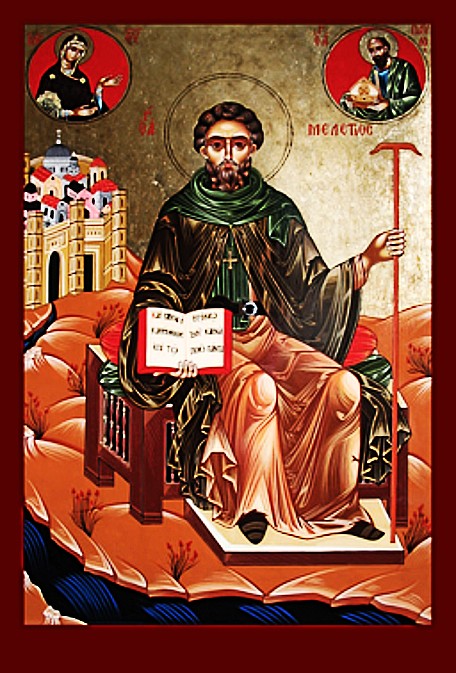
St Mellitus was the first Bishop of London (AD604) and the third Archbishop of Canterbury. But was he really? No, he was the first Bishop of London of the English Church. There were many before him. We know there were bishops of London from Britannia during the Roman period. And, according to John Stow, London’s first history. there were also post-Roman bishops. That line of Bishops ended, in 584 AD, when the 14th Bishop, Theanus, fled London. He headed for Wales to escape the Anglo-Saxon threat. However, even Stow was uncertain whether the list was genuine.
I tell this story in my post on St Lucius.
The Synod of Arles
In 314 a Church Council or Synod was called at Arles, in France. Amongst those attending were three bishops from Britain, (and a Deacon and a presbyter) :
- Eborius “de civitate Eboracensi” – from the city of Eboracum (York);
- Restitutus “de civitate Londenensi” – from the city of Londinium (London);
- Adelfius “de civitate Colonia Londenensium” – that is, from the “colonia of the people of London”.
(Wikipedia)
The fact that two came from London suggests to some a mistake. Adelfus, perhaps, was either from Lincoln or Colchester which were Colonies. The Synod was called by the Emperor Constantine. Amongst its acts were to order that Easter should be held at the same time throughout the Empire. (See also my post on the Synod of Whitby which fixed the date of Easter in Britain as late as 684). They also banned Races, and Amphitheatre Games. and excommunicated all actors and charioteers. But it gives us our first certain facts about the origins of Christianity in Britain.
The Augustinian Mission and Mellitus
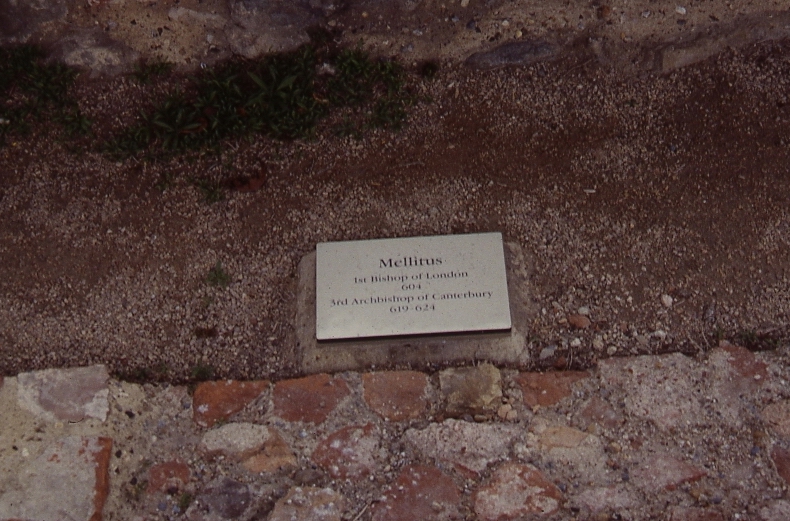
In 597, the Augustinian Mission came to Kent. Mellitus was sent by Pope Gregory to join St Augustine’s mission in 601AD,. He was then sent to London to set up St Pauls and become its bishop (604). London was under the control of the Kingdom of Essex in those days. The King was Saberht, who was the nephew of St Ethelred, King of Kent. Saberht accepted Christianity but when he died. His heirs reverted to paganism and kicked Mellitus out. Mellitus went into exile in Gaul but came back to become the third Archbishop of Canterbury. He was buried in St Augustine’s Abbey in Canterbury. He is known as St Mellitus of Canterbury. St Mellitus had gout so is the go-to Saint for sufferers of gout.
London reverted to paganism until 654AD when St Cedd became its next Bishop.
I tell the story of the Augustinian misson in my post here
On this day
1925 – McVitie’s Chocolate Digestive was created. There were made in Stockport and in Harlesden, London. I have moored my narrowboat outside the factory and been kept awake by the churning of chocolate in vast vats. News stories suggest that the Digestive was meant to be eaten with the chocolate on the bottom side. This is one of the most ridiculous things I have heard! But apparently it helps the chocolate get to your taste buds that bit quicker. But judge for yourself and read this page for the facts. And this one for more on the history of the Chocolate Digestive.
First published in April 2025, revised in 2026
St George’s Day, Shakespeare’s Birthday April 23rd

By tradition, Shakespeare was born on St George’s Day April 23rd 1564. He died on the same day in 1616 at age 52. Cervantes died on the same day.
Shakespeare’s death date is given by the burial register at the Holy Trinity Church, Stratford on Avon where he was buried. His baptismal record also survives at the same church and is on April 26th 1564. So, we don’t actually know when he was born, but christening were held soon after birth for fear of the high infant mortality rates, so 23rd April has been assigned to be Shakespeare’s birthday.
Taken to the chamber
Anne Shakespeare would have ‘taken to her chamber’ about four weeks before the due date. The windows or shutters were fastened, as fresh air was thought to be bad for the birthing process. Female friends and relatives came to visit; the room would be decorated with fine carpets, hangings, silver plates and fine ornaments. It was held that external events could influence the birth, any shocks or horrors might cause deformities and anomalies, so a calm lying-in room was clearly a good idea.
When labour began, female friends, relatives, and the midwife were called to help out. A caudle of spiced wine or beer was given to the mother to strengthen her through the process. Today, the maternal mortality rate is 7 per 100,000. An estimate for the 16th Century is 1500 per 100,000. So most women would have heard of or attended the birth of a women who had died during or following children birth. There were also no forceps. So if a baby were stuck and could not be manually manipulated out, then the only way forward was to get a surgeon to use hooks to dismember the baby. This was the only way to save the life of the mother. Doctors were not normally in attendance, but could be called in emergency,
Swaddling
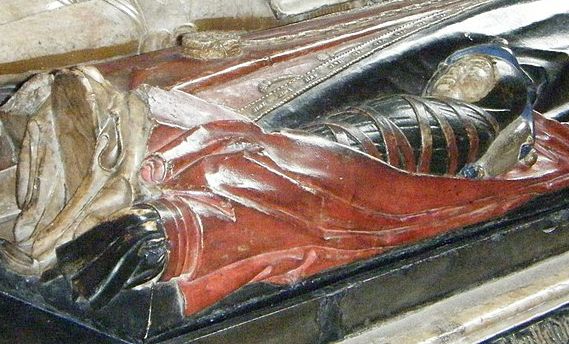
Immediately after washing, the baby was swaddled. The swaddling was often very tight and could affect the baby’s growth. Also, it might have affected the learning process. The free movemenb of hands and feet are now considered important in the early learning process. Swaddling lasted eight to nine months, and only went out of fashion after Jean Jacques Rousseau wrote against the practice.
Christening & Registration
Puerperal fever killed many women even after successful childbirth, for example Queen Jane Seymour who died after 5 days. During these dangerous early days, the mother was kept in a dark room. Perhaps three days after birth, friends were invited to celebrate ‘upsitting’ when the mother was no longer confined to bed. This is when christening would take place. Edward VI was christened to a huge audience in the chapel at Hampton Court three days after his birth.
Licensed midwives could baptise newborn babies provided they used the correct wording and informed the Church. This allowed the registration of the birth to be properly reported. Thomas Cromwell was responsible for the law in 1538 which insisted on a parish register to record weddings, christenings, and funerals. The law was reaffirmed by Queen Elizabeth in 1558. Registers had to be stored in a locked chest in the Church. In 1597, the records had to be on parchment not paper. In 1603 the chest had to have three locks! Since writing this I have realised the significance of the three locks. In St Eadburga’s Church in Broadway in there is a locked box for alms, and it has three locks too. This was so that it could only be opened when all 3 Church Wardens were present.
If the christening were in the church, the mother might not be there as she was expected to stay in her chamber for another week or so. A week or a few weeks later, the mother would be ‘churched.’ This was a thanks-giving ceremony. Puritans did not like the idea as it might be confused with a purification ceremony.
Breastfeeding
Breastfeeding would last a year or so but, buty high status women choose to use a wet-nurse. They went to some effort to find a suitable wet nurse. It was believed that the quality of the breast milk was important for the babies’ development both physically and temperamentally. Poor children who lost their mothers were unlikely to survive. For without breast milk, the baby would be fed pap – bread soaked in cow’s milk.
Thanks very much to Alison Sim’s book ‘The Tudor Household’ for a lot of the above.
On This Day
1016 – Edmund Ironside succeeded his father Æthelred the Unready as King of England. Unfortunately, Edmund dies soon after dividing England with Danish King Cnut. Subsequently, Cnut takes over the entire country.
1661 – King Charles II crowned in Westminster Abbey. Read my post on John Evelyn’s reaction to the restoration of Monarchy after the the Commonwealth period of Republican Government.
1942 – World War II: German bombers hit Exeter, in what became known as the Baedeker Raids. They were in retaliation for the success of the British bombing of Lübeck, and of Rostock. In the following days the Luftwaffe bombed Bath, Norwich and York. A German official said they would bomb every building with three stars in the Baedeker Tourist Guide. Hitler said the English were: ‘beings with whom you can only talk after you have first knocked out their teeth‘
First published in 2023 and republished in April 2024. On This day added 2026
John Stow, London’s Historian 22nd April
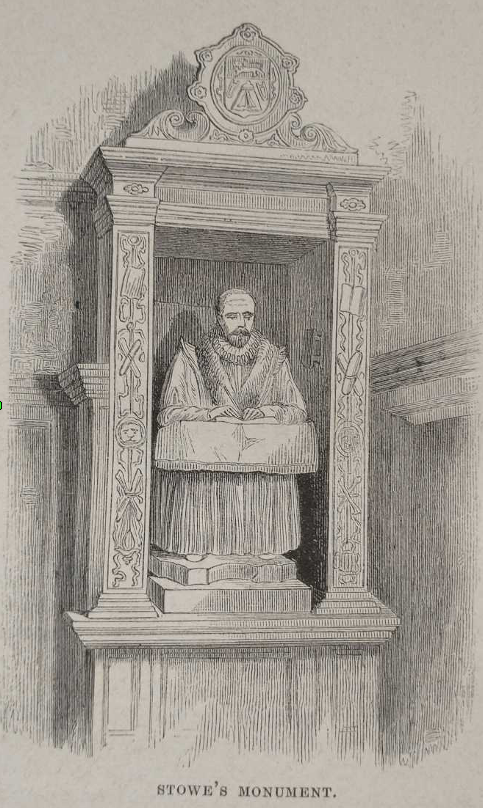
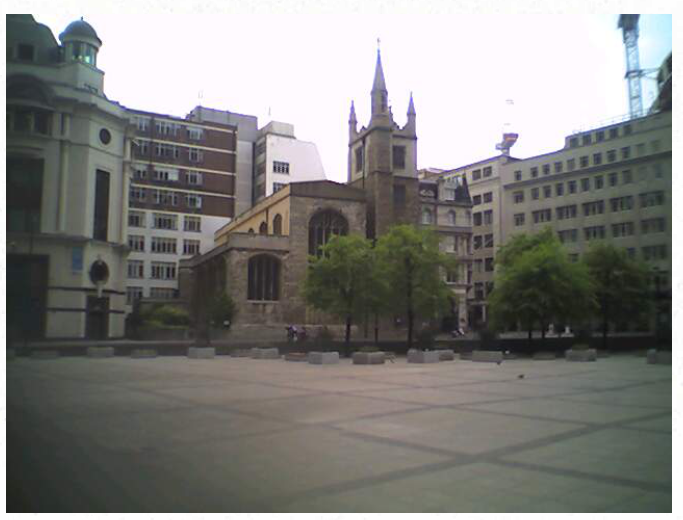
On the corner of Leadenhall Street and St Mary Axe in the City of London is one of the very few medieval Churches that survived the Great Fire of London is 1666. It was sheltered by the firebreak that was the Leadenhall, a big market building made of stone. This is where the great London historian John Stow is buried. His Survey of London is one of the best sources for Medieval and Tudor London. Every three years, there is a commemorative service and his quill is changed. Last year it was on the 22nd April. The next is due in 2027, date yet to be announced. The Lord Mayor attends, and it is organised by Stow’s Guild – the Merchant Taylors.
John Stow, author of the ‘Survey of London‘ first published in 1598. Available at the wonderful Project Gutenberg: ‘https://www.gutenberg.org/files/42959/42959-h/42959-h.htm’
John Stow records that his father returned to his home at Austin Friars one day to find his house had been moved. He had no warning, nor payment for the loss of land. He had the misfortune to live adjourning the property of Thomas Cromwell. This is what Stow wrote:
‘My father had a garden there, and a house standing close to his south pale; this house they loosed from the ground, and bare upon rollers into my father’s garden twenty-two feet, ere my father heard thereof; no warning was given him, nor other answer, when he spake to the surveyors of that work, but that their master Sir Thomas commanded them so to do; no man durst go to argue the matter, but each man lost his land, and my father paid his whole rent, which was 6s. 6d. the year, for that half which was left. Thus much of mine own knowledge have I thought good to note, that the sudden rising of some men causeth them to forget themselves.’
St Andrew Undershaft
The Church is London’s Maypole Church as it was here the Maypole or the shaft was stored under the eves of the Church. Hence, St Andrew’s sobriquet of ‘Undershaft’. The May Day riot of 1517 put an end to the dancing around the Maypole but the pole itself survived until 1547. Then, in a Puritan riot, the ‘stynking idol’ was destroyed. (see my May Day blog post here for more more details.)
There is also a plaque to Hans Holbein, but no one knows for sure where he is buried. He died in London in 1543, possibly of plague. The present church was built in 1532, but it is first recorded in the 12th Century.
For my post on St Andrew – look here.
On This Day
Today is Earth Day. It was set up in 1970. For more information click here.
2016 – On Earth Day the landmark Paris Agreement was signed by 123 countries including the United States, the United Kingdom, and China. The USA is the World’s the second largest emitter. They withdrew from the agreement in 2020, rejoined in 2021, and withdrew again in 2026. Iran has signed it but not ratified it.
First Published on 30th November 2022, Revised 2023, moved to April in 2024, and revised 2025, On This Day added 2026