The story of Crocus and Smilax is in Ovid’s Metamorphoses. The book tells the story of myths which involve the metamorphosis of a person to a flower, or to a constellation, or to an echo or some supernatural change in being. This poem is one of the most famous in the world, written in about 6 AD. It influenced Dante, Bocaccio, Chaucer, Shakespeare, Keats, Bernard Shaw, and me. Seamus Heaney and Ted Hughes have translated modern versions of some of the tales.
The mechanicals in ‘The Midsummers Night Dream’ perform Ovid’s story of Pyramus and Thisbe, Titian painted Diana and Actaeon. Shaw wrote about Pygmalion, and we all know the story of Arachne. She claimed to be better than Athene at weaving. And then was turned into a spider.
The poem is about love, beauty, change, arrogance and is largely an Arcadian/rural poem. This is a contrast to Ovid’s ‘Art of Love’ which I use for illustrations of life in a Roman town. The stories are all about metamorphoses, mostly changes happening because of love. But it is also an epic as it tells the classical story of the universe from creation to Julius Caesar.
Ovid’s Metamorphoses and the Crocus
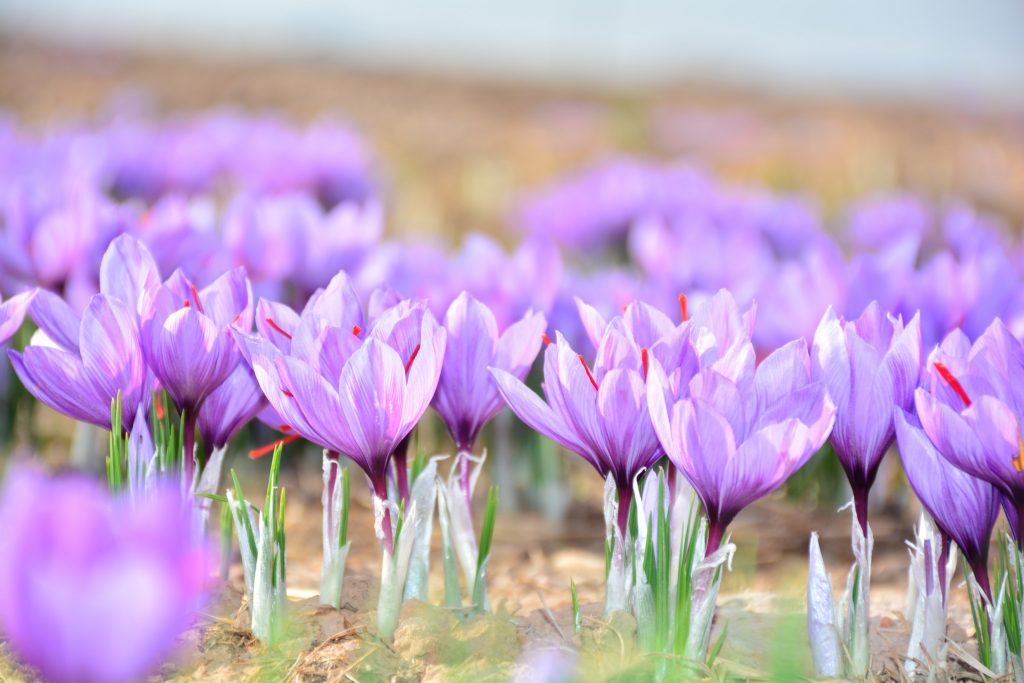
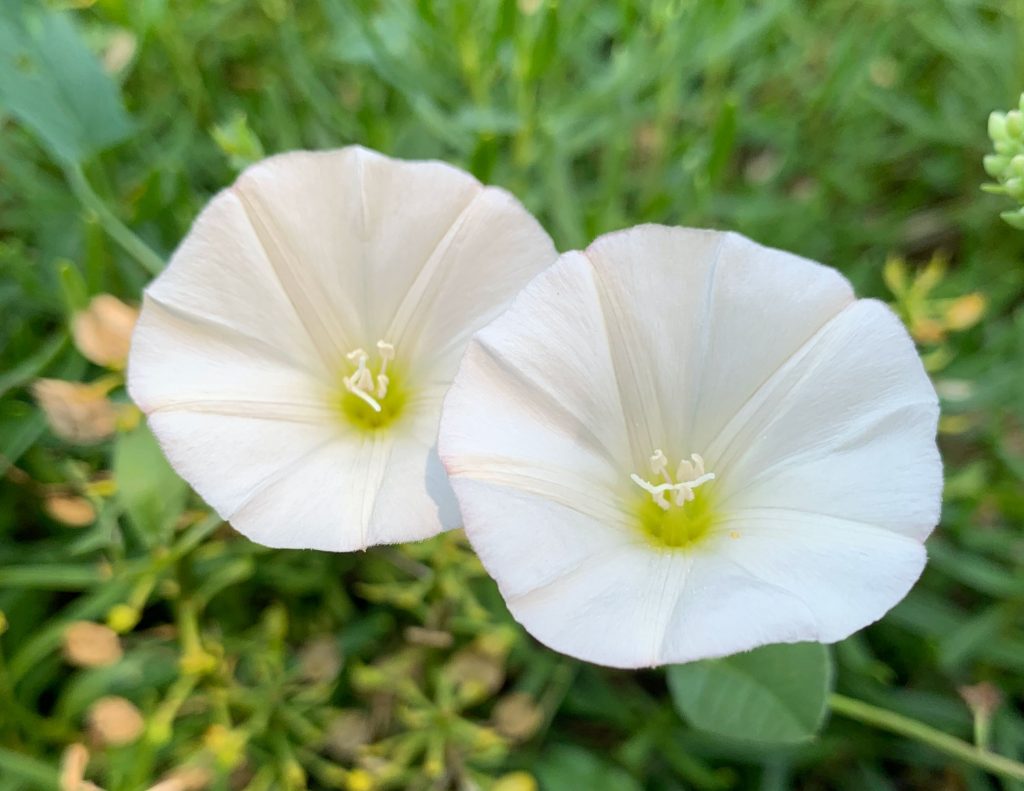
‘Crocus and his beloved Smilax were changed into tiny flowers.’ Ovid tell us, but chooses to give us no more details. So we have to look elsewhere. There are various versions. In the first, Crocus is a handsome mortal youth, beloved of the God Hermes (Mercury). They are playing with a discus which hits Crocus on the head and kills him. Hermes, distraught, turns the youth into a beautiful flower. Three drops of his blood form the stigma of the flower. In another version, Crocus and the nymph Smilax, fall in love. And are rewarded by immortality as a flower. One tale has Smilax turned into the Bindweed.
Ovid’s Metamorphoses and Bindweed
It turns out that Smilax means ‘bindweed’ in Latin. Bindweed is from the Convolvulus family, and I have grown one very successfully in a pot for many years. But they have long roots. According to the RHS ‘Bindweed‘ refers to two similar trumpet-flowered weeds. Both of which twine around other plant stems, smothering them in the process. They are difficult to remove. This, could suggest that Smilax is either punished for spurning Crocus, or that she smothered him with love. Medically, Mrs Grieve’s Modern Herbal says all the bindweeds have strong purgative virtues, perhaps another insight into Smilax’s psychology?
The Metamorphosis of Data and the correct use of the plural
Apparently, in the UK some say crocuses and others use the correct Latin plural, croci. On an earlier version of this post I used the incorrect plural crocii.
On the subject of Roman plurals, the Financial Times editorial department made an earth-shattering decision, a couple of years ago. They updated their style guide to make the plural word data (datum is the singular form) metamorphise into the singular form.
So it is now wrong to say ‘data are’ but right to say ‘data is’. For example, it was correct to say: ‘the data are showing us that 63% of British speakers use crocuses as the plural’ but now, it is better to write ‘the data is showing us that 37% of British people prefer the correct Latin form of croci’.
Violets and Crocuses
Violets and crocuses are coming out. They often come out for St Valentine’s Day, and so obviously associated with Love. White croci usually represented truth, innocence, and purity. The purple variety imply success, pride and dignity. The yellow type is joy.’ according to www.icysedgwick.com/, which gives a fairly comprehensive look at the Crocus.
Crocus & Saffron
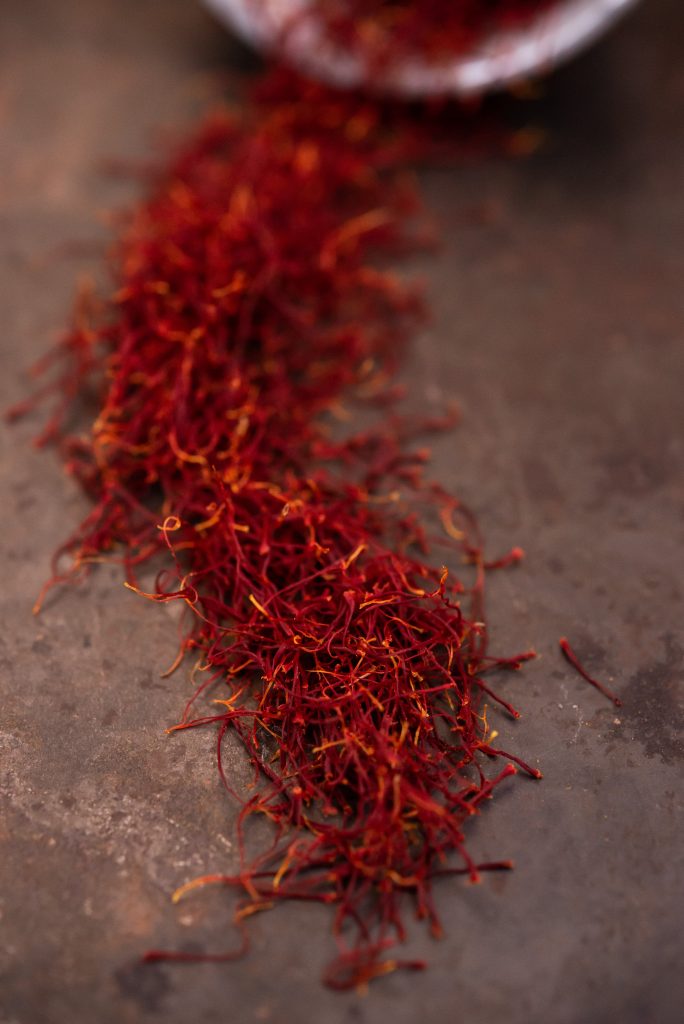
The autumn-flowering perennial plant Crocus sativus, is the one whose stigma gives us saffron. Roman civilisation spread the plants around Europe. They used it for medicine, as a dye, and a perfume. It was much sought after as a protection against the plague, and extensively grown in the UK. Saffron Walden was a particularly important production area in the 16th and 17th Centuries.
Saffron in London
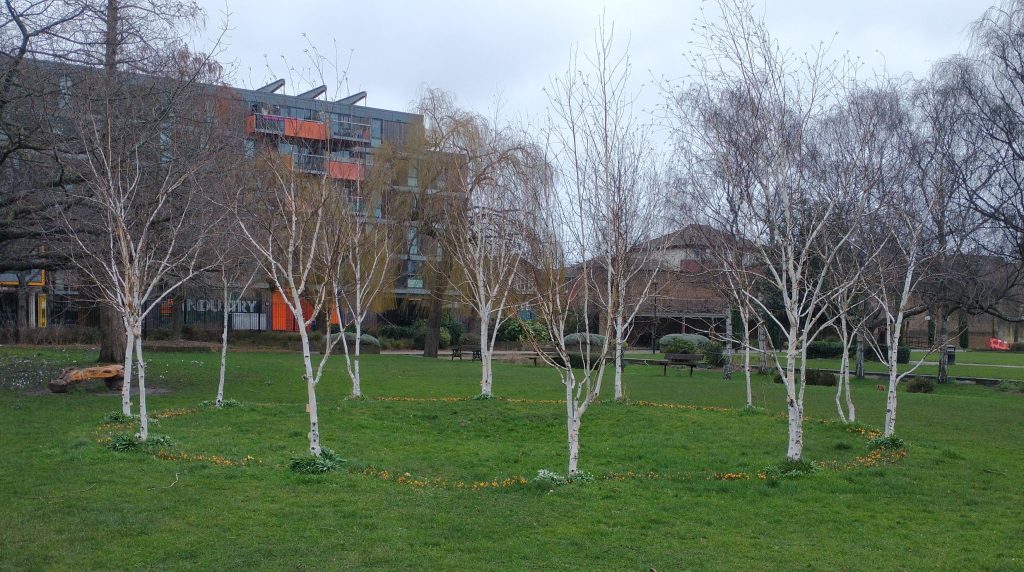
The Bishop of Ely grew Saffrom in his beautiful Gardens just outside of the City of London. The area remembered by the London street name: Saffron Hill. It is home to the fictional Scrooge. This area became the London home of Christopher Hatton, the favourite of Queen Elizabeth 1. His garden was on the west bank of the River Fleet, in London EC1, in the area now known as Hatton Garden. (For more on Christopher Hatton see my post on nicknames Queen Elizabeth I gave to her favourites).
I found out more about Saffron from listening to BBC Radio 4’s Gardener’s Question time and James Wong.
Croydon (on the outskirts of London) means Crocus Valley. A place where Saffron was grown. The Saffron crops in Britain failed eventually because of the cost of harvesting, and it became cheaper to import it. So, we now import it from Spain, Iran, and India amongst other places. But it is being reintroduced in Norfolk, Suffolk, Kent, and Sussex. These are – the hot and dry counties. The plant enjoys a South-facing aspect. But it needs protection from squirrels and sparrows who love it. To grow it, look at this post from the Garden Doctor.
Violets
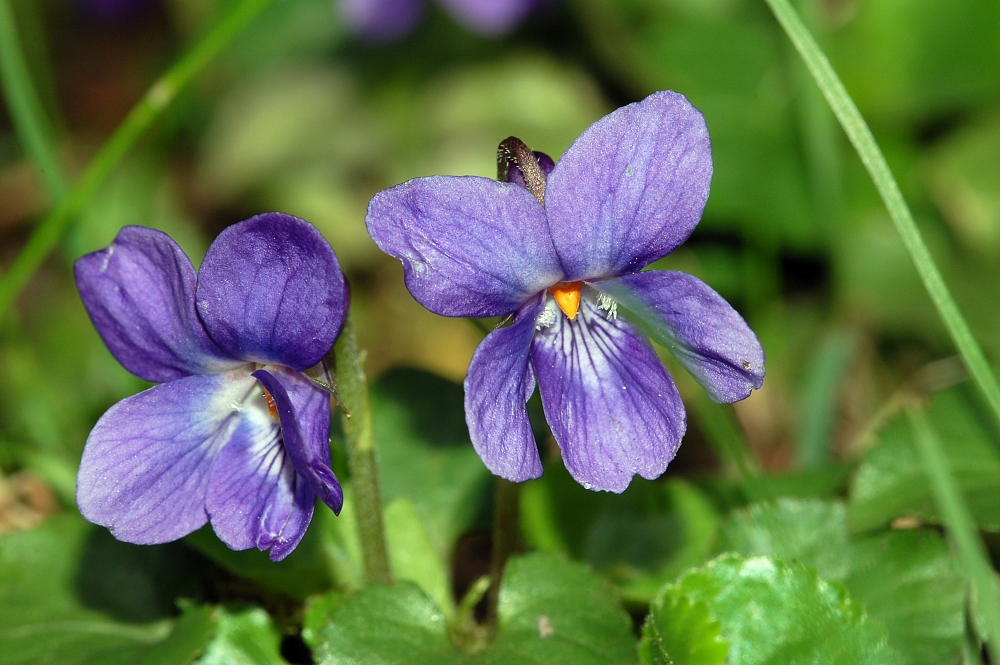
The Celts used Violets as cosmetics; the Athenians to moderate anger; the Iranians for insomnia, and are loved by all because of their beauty and fragrance. They have been symbols of death for the young, and used as garlands, nosegays posies, which Gerard says are ‘delightful’.
For more on Ovid, use the search facility (click on menu) or read my post here.
On This Day
197 – The Battle of Lugdunum sees the victory of Septimius Severus over Clodius Albinus reputedly the bloodiest battle between Roman armies. The previous emperor Pertinax died in 193 during the Year of the Five Emperors. Three main contenders emerged Severus who was African, Niger was from Central Italy, Albinus was the Governor of Britain.
1800 – Napoleon proclaims himself First Consul making him the dictator of France.
1846 – The Republic of Texas officially transfers power to the State of Texas government and becomes part of the United States.
1878 – Thomas Edison patents the phonograph.
1945 – Battle of Iwo Jima began with the landing of 30,000 US troops.
First written 2023, revised 2024, 2025 and 2026