
This post is about the end of the Maypole in London but first:
On This Day
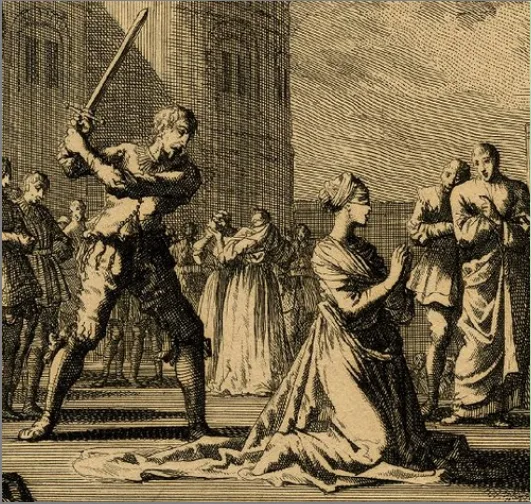
1536 – Anne Boleyn arrested on ‘charges of adultery, incest, treason and witchcraft.’ But, Claire Ridgway in her post here and her book, show that she was never accused of witchcraft in court. The stories of extra fingers, and teats, are all later Catholic propaganda aimed at weakening Elizabeth’s claims to the throne. She was accused of adultery. Five men were executed for sleeping with her: her brother George Boleyn, (Lord Rochford); Sir Henry Norris, groom of the stool; courtier Sir Francis Weston; courtier William Brereton, and musician Mark Smeaton. Incest with her brother (one possible explanation of the incest is the idea that she desperately needed a baby and if she needed a surrogate then her brother was safest as the child would have a family resemblance to her and not rouse any suspicions from Henry of adultery. The other explanation is that Anne never commited incest!). Treason, well sleeping with someone other than the King risked imperilling the blood line of the Royal Family. It also gave a motive for killing the king.
A new portrait has been claimed to be of Anne Boleyn, the only one to have been done in her lifetime. But it has been revealed by AI, and some art historians are not convinced. Follow this link to see for your self.
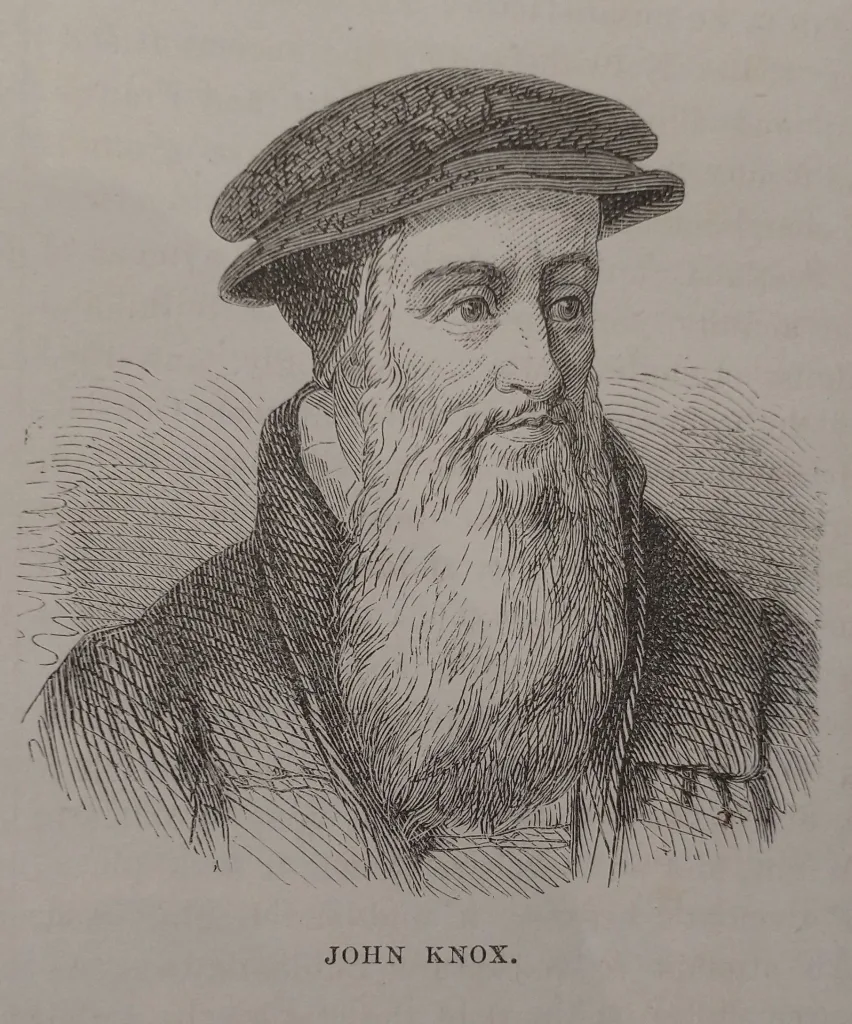
1559 – John Knox returns from exile to Scotland to lead the Scottish Reformation.
1568 – Mary, Queen of Scots, escapes from Lochleven Castle. You could blame John Knox for the hostility Mary faced as a Catholic governing a country rapidly turning Presbyterian.
1611 – The King James Version of the Bible is published by printer Robert Barker. His printshop was at Northumberland House, Aldersgate Street, in the City of London. (as far as I can see no one else seems to know where the printing was done.)
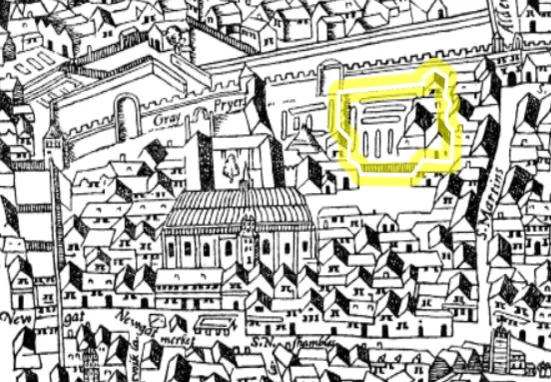
Northumberland House marked in yellow nearAldersgate.The Map of Early Modern London, Edition 7.0, edited by Janelle Jenstad, U of Victoria, 05 May 2022, mapoflondon.uvic.ca/edition/7.0/NORT2.htm. INP.
The Printer then went on to create the worst possible error in publishing history by omitting the word NOT in the 6th or 7th Commandment, ‘Thou Shalt Commit Adultery’. This edition became known as the Wicked Bible. Barker & Howard are still in the publishing industry and have offices in the East End of London.
The King James Bible introduced many phrases into the English language, including:
The apple of his eye
The four horsemen of the apocalypse
Baptism of fire
Chariots of Fire
O death, where is thy sting?
Like a thief in the night
Weighed in the balance and found wanting
To find more look here
1670 – King Charles II of England granted a charter to the Hudson’s Bay Company. In 1917 my 17 year old Grandfather sailed to the Hudson bay as an able seaman for the Hudson’s Bay Company.
1982 – The British nuclear submarine HMS Conqueror sunk the Argentine cruiser ARA General Belgrano. It was controversial as the Belgrano was outside the Exclusion zone, and said to be sailing away from the conflict. 323 Argentine sailors were killed. The event, arguably, changed Mrs Thatcher political fortunes.
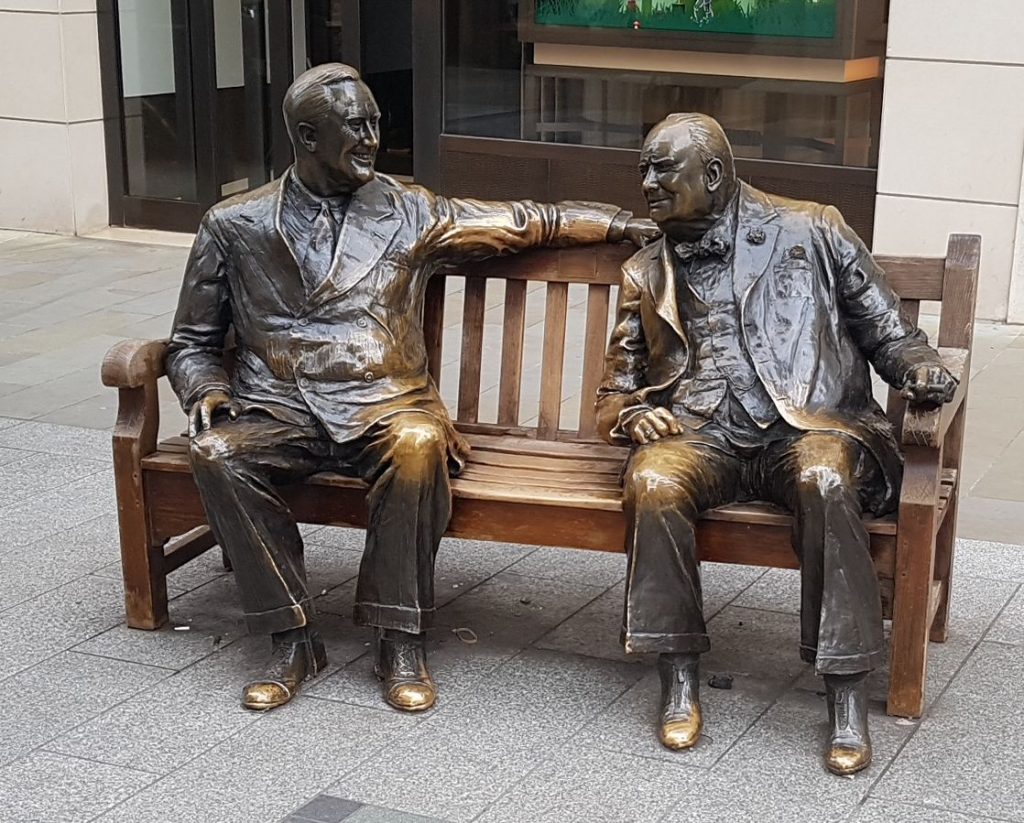
1995 – Allies Statue unveiled. The Statue of Churchill and Roosevelt set up to commemorate 50 years of peace. 30 years later, how we wonder what Churchill and Roosevelt would say about the current state of NATO? https://www.iwm.org.uk/memorials/item/memorial/11351

The Maypole or rather ‘This Stinking Idoll’
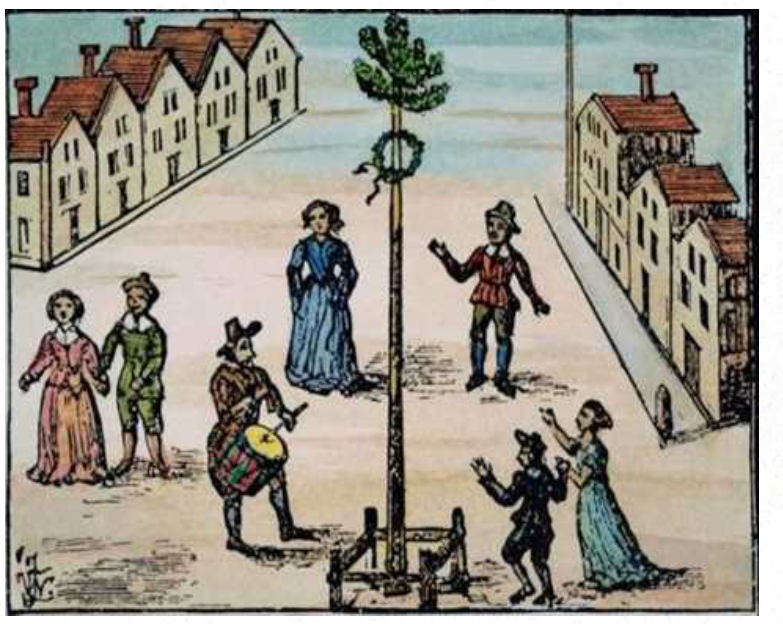
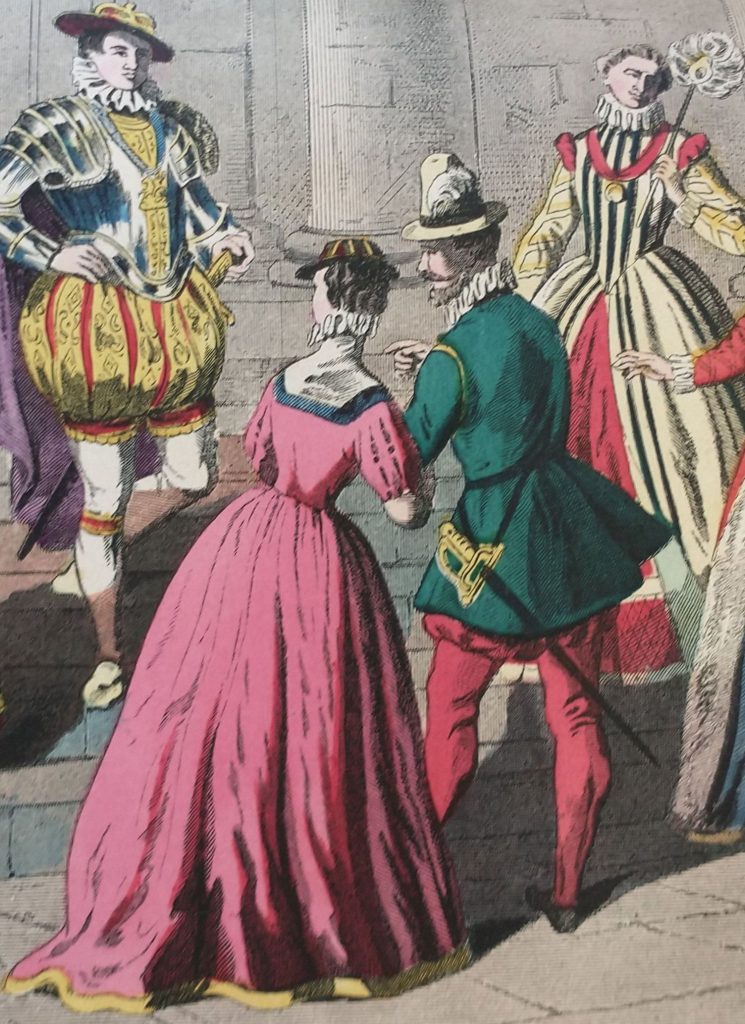
Philip Stubbes, wrote a vitriolic attack on pagan practices in his ‘Anatomy of Abuses in 1583’. He fired a broadside at the tradition of dancing around the Maypole. He said they had: ‘as Superintendent and Lord ouer their pastimes and sportes: namely, Sathan Prince of Hell‘ as they erected ‘this stinking Idoll’. By which he meant the Maypole. Stubbes suggested that of the maids who went out to the woods on May Eve, less than one-third returned ‘undefiled‘.
Evil May Day Riots
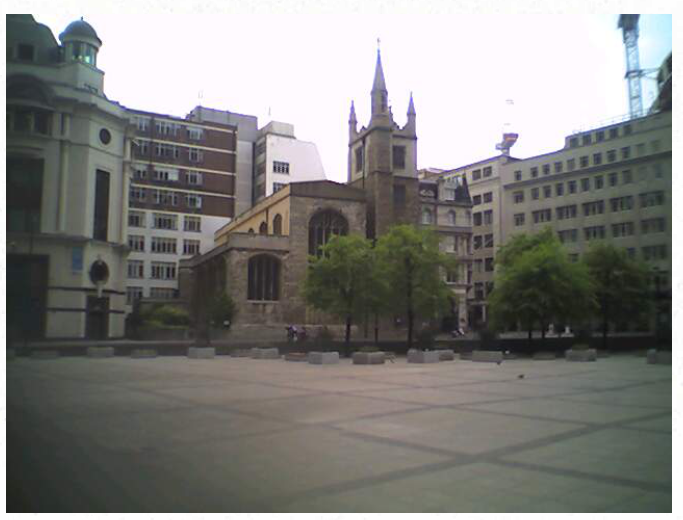
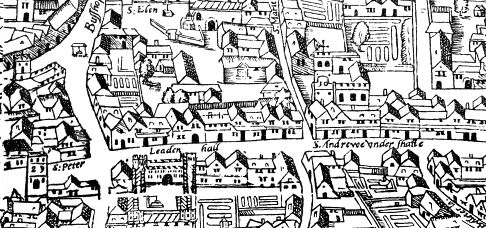
The Maypole was stored at St Andrew Cornhill, which became known as St Andrew Undershaft. In 1517, it was attacked during the ‘Evil May Day riots’. The main focus of the riot was foreign workers. The Under Sheriff of the time, Thomas More, tried to quell it, meeting the rioters at the corner of Cheapside and St Martin’s Legrande. But 5,000 troops commanded by the Duke of Northfolk was necessary to regain control of the City. 300 rioters were arrested. One hanged, drawn and quartered, 13 hanged and nearly 300 pardoned after the intercession of Woseley and/or Katherine of Aragon (depending on which historian you read). The shaft was returned to its place under the eves of the houses in Shaft Alley. But apparently banned from being raised again.
1549 May Day Riots
However in 1549, the curate of nearby St Katharine Cree Church made an inflammatory speech. This incited a Puritan mob, who cut the shaft into pieces and burnt it. I always imagine the Curate’s sermons to be along the same lines as Phillip Stubbes attack on the Maypole.
Maypole: this Stinking Idol, Rather
Here is a longer description of the May Day Celebrations by Stubbes.
‘But their chiefest iewel they bring from thence is the Maie-poale,
which they bring home with great veneration, as thus: They haue
twentie, or fourtie yoake of Oxen, euery Oxe hauing a sweete
Nosegaie of flowers tyed on the tip of his homes, and these Oxen
drawe home this Maie-poale (this stinking ldoll rather) which is
couered all ouer with Flowers and Hearbes, bound round about
with strings from the top to the bottome, and sometimes painted
with variable collours, with two or three hundred men, women and
children following it, with great deuotion.
And thus being reared vp, with handkerchiefes and flagges streaming
on the top, they strawe the ground round about, bind green boughes about it, set
vp Summer Haules, Bowers, and Arbours hard by it. And then fa!
they to banquet and feast, to leape and daunce about it, as the
a Heathen people did, at the dedication of their ldolles, whereof this
is a perfect patteme, or rather the thing it selfe. I haue heard it
crediblie reported (and that viua voce) by men of great grauity,
credite, and reputation, that of fourtie, threescore, or a hundred Maides,
going to the wood ouemight, there haue scarcely the third part of them returned home againe vndefiled.‘
Phillip Stubbes from ”A Critical Edition Of Philip Stubbes’s Anatomie Of Abuses‘ edited by Margaret Jane Kidnie.
Restoration Maypole
The unraised pole seems to have survived until the beginning of the Civil War, (1644) when it was destroyed. But at the Restoration of Charles II a new and huge Maypole was ordered. It was joyously erected 134 ft high (41 metres) in the Strand. This one was danced around till 1713 when it was replaced. The original was sold to one Isaac Newton. He used it to support the biggest telescope in Europe, which was erected in Wanstead by a friend.
And that, my friends, is how you get from Superstition to Science in one easy story.

Postscript.
I have always told people that the sermon leading to the destruction of the Shaft in 1549 was made at St Paul. I cannot remember where I read this. The suggestion that the Maypole in Cornhill was not used after 1517 seems strange. Why then would an unused maypole rouse a crowd to riot in 1549? Of the sources I have at hand, the London Encyclopedia mentions the riot of 1517 in its entry on St Andrew Undershaft but doesn’t elaborate more. ‘Layers of London‘ says ‘It was last raised in 1517 when ensuing riots led to the celebration being banned.’ which is definitive sounding. But is it? I wonder if it was banned for a year or two, then allowed again, and finally stopped in 1549?
For more on May Day see yesterday’s post.
First written in 2023 and revised on May 2nd 2024, 2025 On This Day expanded 2026