
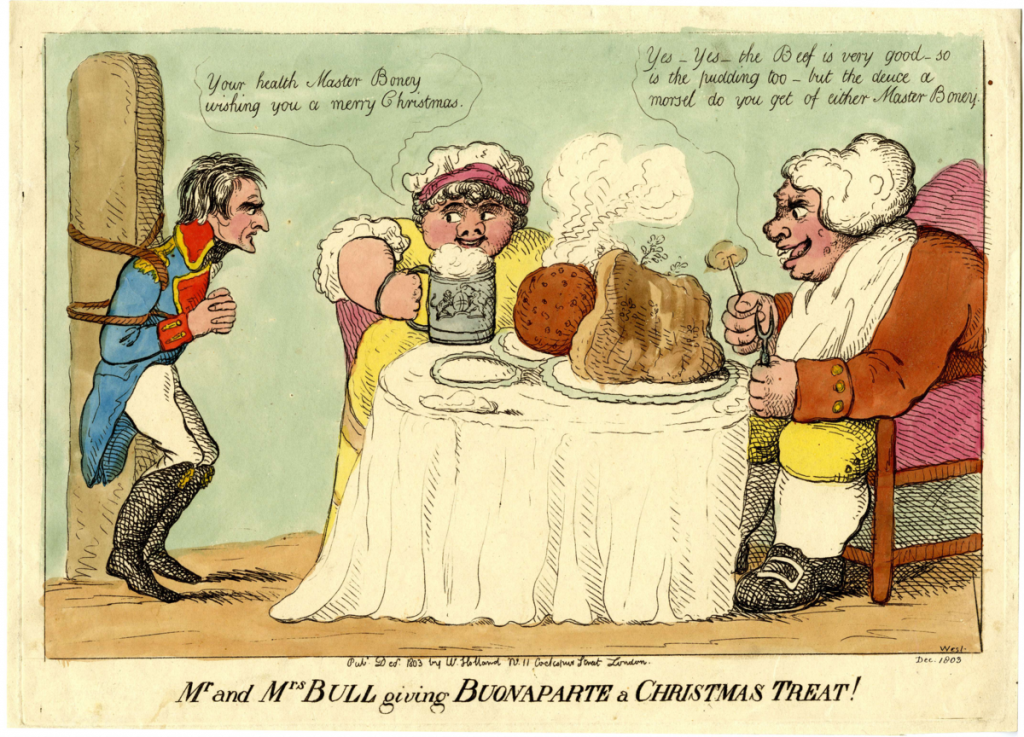
Stir-up Sunday is the last Sunday before advent and the day for stirring the Christmas Pudding. And I missed it! Last year it was on the 24th November. This year, November 23rd. Stir-up Sunday gets its name from the Book of Common Prayer, which has a verse:
“Stir-up, we beseech thee, O Lord, the wills of thy faithful people;
that they, plenteously bringing forth the fruit of good works,
may of thee be plenteously rewarded, through Jesus Christ, our Lord. Amen.’
So, the Christmas pudding was made with dried fruit and had 13 ingredients for Jesus and the Disciples. It is stirred from west to east, in honour of the Three Wise Men, and stirred by every member of the household who get to make a secret wish.
These are the ingredients, and here is the recipe.
Ingredients
225g/8oz golden caster sugar
225g/8oz vegetarian suet
340g/12oz sultanas
340g/12oz raisins
225g/8oz currants
120g/4oz chopped candied peel
120g/4oz plain flour
120g/4oz fresh white breadcrumbs
60g/2oz flaked almonds
Zest of 1 lemon
5 eggs, beaten
1level tsp ground cinnamon
1level tsp mixed spice
1 level tsp freshly grated nutmeg
Pinch of salt
150ml/5fl oz brandy or rum
Add a Silver Joey to Stir-up Sunday Christmas Pudding.
Normally, a coin in put in the pudding for the lucky one to get. My grandma, a Londoner, used to put in a couple of ‘silver joeys’, long out of legal tender even when I was young. She would watch us like a hawk while we ate, and claim the coins back as soon as we found them! She would then put them in an old folded brown envelope and put them away for next year.
MJ Hughes Coins website gives the following excellent history of the Silver Joey:
‘Originally a Joey was the nickname given to a groat (4 pence) but when that went out of circulation in 1855 the silver 3 pence inherited the name. The name came about due to the reintroduction of 4 pence coins in the 1830s by the politician Joseph Hume, MP (1777-1855).‘
For some great, coin-based facts! Look no further.
https://mjhughescoins.com/how-quids-bobs-florins-tanners-and-joeys-got-their-names
A Digression on Nicknames: Toad Testicles, Foul-Beard and Broad-Arse’
Joey is a nickname. This digression is prompted by my ‘rediscovery’ of a History Today essay from March 2023. It is by PhD student Tristan Alphey. entitled ‘Toad Testicles, Foul-Beard and Broad-Arse’ Tristan is researching nicknames before 1000. It’s a tough gig but someone had to do it!
I have long had an interest in nicknames, since a school bully, when I was about 7, decided he was going to call me Acid. He explained his logic. Flude sounds like fluid and acid is a fluid. It never caught on perhaps because chanting ‘Fludey is a rudey’ in the playground was more fun! In my dad’s day, anyone called Clarke was nicknamed Nobby, and anyone small ‘Lofty’. Why Clerks are ‘nobby’ no one really knows. But the best bet is because clerks were well educated, and with a public facing role had to be smarter that the average member of the public. So clerks were posh. Posh people were called ‘nobs’. Hence, Nobby Clark. (for more on nobby look here.
Generally, only a few people got themselves primarily identified by nicknames. This will, of course, be the meat of Tristan’s PhD. The social significance of the nicknames.
The Border Reivers
My interest was revived when reading a book about the Border Reivers, (by Allistair Moffet). These clans terrorised the borders between Northumberland and Scotland, particularly in the 13th – 17th Century. The people were controlled by a clan leader of ‘Heidsman’ and all his followers being in the same clan had the same surname. And the Names were many Armstrongs, Batesons, Bells, Croziers, Elliots, Glendinnings, Hendersons, Irvines, Johnstones, Scots, Moffets, Nixons, Routledges, Thomsons, Maxwells, Kers, And not to forget the Carletons, Fenwicks, Forsters, Robsons, Turnballs, Selbys, Storeys, Guthries.
The problem arose because there were so many with the same surname, and with the restricted use of a small number of first names (John being by far the most popular) a way of differentiating people was necessary. As I am short of time, I will cut and past from the Wikipedia page:
‘Some Border Reiver nicknames referred to physical injuries or impairments, such as “Fingerless,” “Gleyed” (blind in one eye), “Burnt Hand,” “Half-Lugs,” or “Lugless” (missing ears). Others followed a tradition similar to Highland naming customs, where the father’s (and occasionally the mother’s) name was added to the son. Many nicknames described physical appearance, such as “Black Heid,” “Hen-Heid,” “Sweet Milk” (meaning beautiful), or “Fergus the Plump.” Some appear to reference mental health or emotional states, including “Unhappy Anthone” and “Jock Unhappy.”‘
‘A number of nicknames seem metonymic or ironic, reflecting professions or roles, such as “The Sheriff,” “The Lawyer,” or “The Priest.” Intriguingly, certain names may hint at queer or LGBT identities, including “Buggerback,” “The Lady Elliot,” “The Lady Scott,” “The Lady Kerr,” “Bang-tail,”[108] and “Sym ‘the Lady’.” Other nicknames defy easy interpretation, such as “Hob-Wait-About-Him,” “Laird-Give-Me-Little,” “Bide Him Jock,” “the Pleg,” “Dog-Pyntle” (Dog Penis),[109] “Geordie Go Wi Him,” and “Cheesebelly,” illustrating the creative and often enigmatic nature of Border Reiver culture.’ Wikipedia entry
By the way ‘Buggerback’ Elliot was related to ‘the Lady Elliot’, and also, if I recall correctly, to Dog pyntle.
Tristan Alphey’s study takes the study back before 1100, wwhere wecan find King’s nicknames such as
Edward the Confessor, Alfred the Great, Edmund Ironsides, and Aethelred the Ill-advised (redeless). Further down the scale he presents: Alfred ‘Toad-Testicles from Winchester, where were also Alwin ‘Pebbles, Aelfstan ‘Broad-Arse’, Aelfstan ‘the Bald’, Thurstand ‘Buttock’, Aethelstan ‘The fat’, Osferth ‘Blackbeard’, Aelfstan ‘Limping’. Elsewhere we have Alvin ‘Sardine’, Wulfric ‘Large Pole’, Eadwig ‘the Wholly Drunk’, Wulfwiug ‘Wild’, Aelfric ‘Foul-Beard’.
Women are less frequently given nicknames, but we have Athelgifu ‘the Good’ and King Harold’s first wife, the beautiful Edith ‘Swan-Neck’.
To finish my look at nicknames, we go to Viking York among whom are the peerless warriors: ‘Ivarr the Boneless’, Sihtric ‘the Squinty-eyed’and Erik Bloodaxe. Other Vikings include Thorkell the Tall and Thorkell Thorfinn. An archaeologist believes he has found the burial place of Ivar the Boneless – have a look here for more details.
First Published Nov 27th 2022. The Jimi Hendrix content transferred to its own page, and this post republished Nov 26th 2023, revised with a section on nicknames in 2024,2025