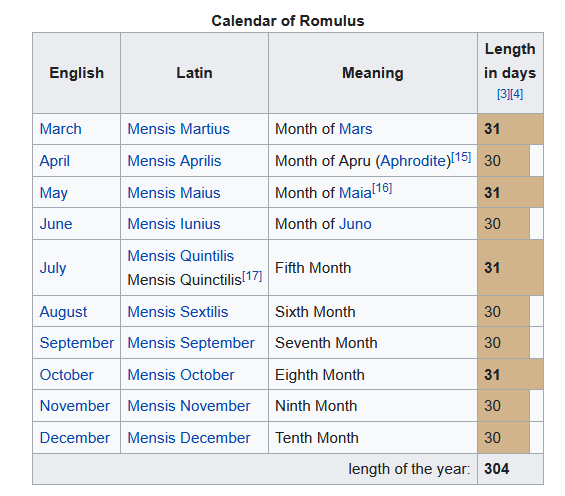
Roman Months, and April the Month of Love – Table from Wikipedia
April was Aphrodite’s month. The goddess of love and beauty. Hence, the month of love. It is also National Couple Appreciation Month! (‘National Couple Appreciation Month was founded in 2010 by Blissful Escapes to, in the words of the company, “encourage couples to do something special to re-enforce and celebrate their relationship.”’ Quote taken from this site.). But first, the new section of:
On This Day
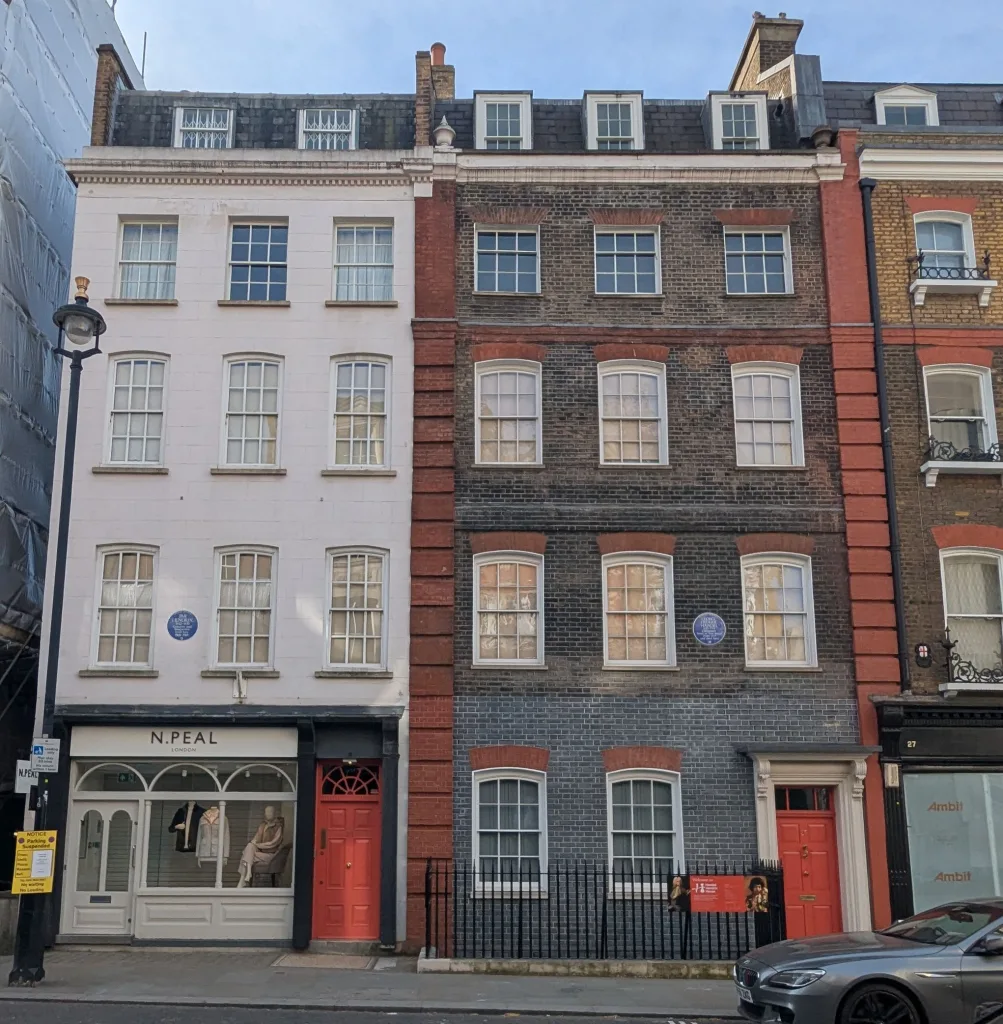
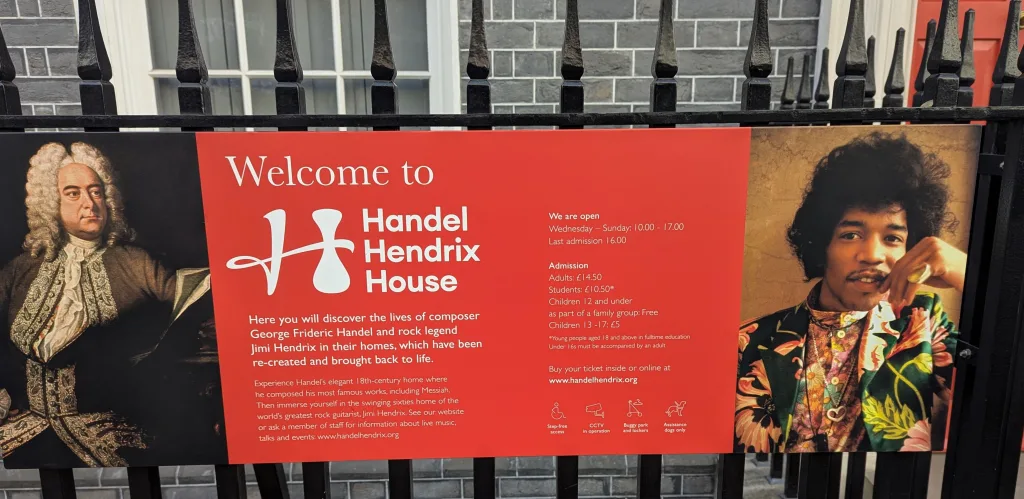
1738 –George Frideric Handel’s Serse, has its premiere performance in London, England. From 1723 Handel lived in a House at 23, Brook Street which is in Mayfair. The House became a museum. Jimi Hendrix lived next door. And so now it is the Handel Hendrix House.
1755 – Samuel Johnson published his famous ‘A Dictionary of the English Language’.
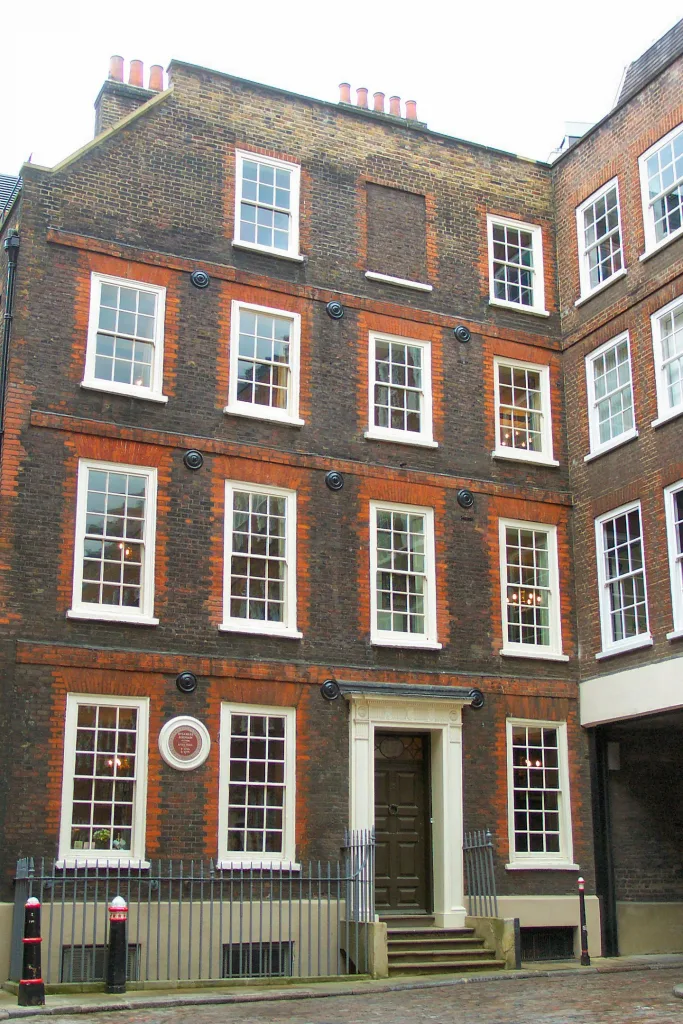
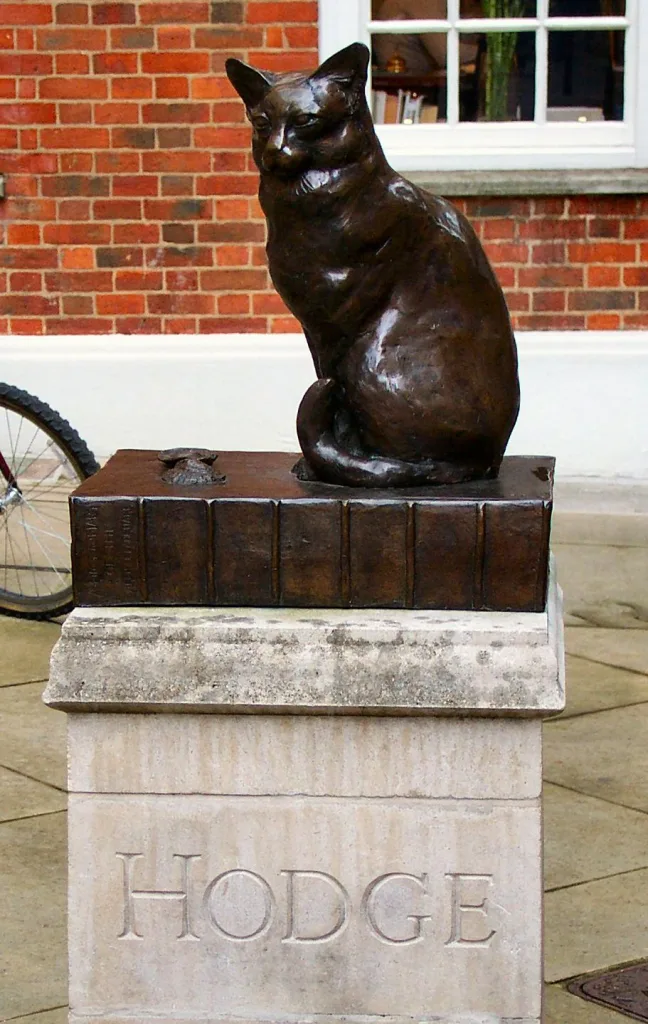
He had a team of clerks in his attic in Bolt Court. They wrote down his definitions and illustrations of their use. He was often quite naughty in including funny, rude or idiosyncratic definitions. For example, a lexicographer was ‘A writer of dictionaries. A harmless drudge.’ A Second Marriage was: ‘ A triumph of hope over experience.’ Oats. ”A grain which in England is generally given to horses, but in Scotland supports the people.’ The innovation of his dictionary was that the definitions came with copious illustrations of a word’s use from well-known authors. While researching he borrowed books from friends. When he eventually returned them they were marked with lots of underlining and annotation in the margins.
Dr Johnstone’s House in Bolt Court, Fleet Street, Photo K FludeStatue of Dr Johnstone, in Fleet Street Photo K FludeDr Johnstone’s famous Cat Photo K flude
1912 – Titanic sinks at 2:20 a.m. This was 2 hours and 40 minutes after she hit the iceberg. 1514 people were lost of 2,224.
1923 – Insulin becomes generally available for use by people with diabetes. Its development involved decades of work over 2 continents, but it was extracted by a team from the University of Toronto in 1921.
1945 – Bergen-Belsen concentration camp is liberated. The Imperial War Museum writes: ‘Thousands of bodies lay unburied around the camp and some 60,000 starving and mortally ill people were packed together without food, water or basic sanitation. Many were suffering from typhus, dysentery and starvation.… Nearly 14,000 died after the liberation.’
1989 – 97 Liverpool fans packed into the Hillsborough Stadium, were crushed to death watching the FA Cup Semi-final. 766 were injured. The Police tried to cover up the events, and the press blamed the Liverpool fans, particularly Rupert Murdoch’s the Sun.
Roman Months
I have spoken about the Roman Calendar in previous posts. Today, I’m concentrating on the Months. The Romans wrote about a ‘legendary’ calendar, set up by Romulus when he founded Rome. It consisted of 10 months of 30 and 31 days followed by a winter period not divided into months. This allowed them to extend the year so that it fitted into the Celestial cycle. The year began in March, suitable names were given to March, April, May and June.
Having given names to June the Romans gave up and the next 6 months were given numbers from 5th month to 10th month as in the diagram above. The Calendar was not well regulated and the months eventually began to lose their integration with the seasons, and needed reform.
Photo by Manasvita S on Unsplash
The Calendar was reformed several times. January and February were added by the legendary Numa Pompilius about 713 BC replacing the monthless winter period. But, Julius Caesar undertook the major reform in 46BC. This was the so-called ‘Year of Confusion’. This first year was 445 days long. This is how far out of sync the Calendar had got. The Julian Calendar realigned the calendar to the seasons.
The Year began on January 1st, with 365 days, 12 months and a 4 year leap year cycle. This held sway until the 16th Century when a further reform was ordered by Pope Gregory as the year is not exactly 365.25 days long. It was not adopted in the UK until 1752 when we lost 11 days to align ourselves with Europe.
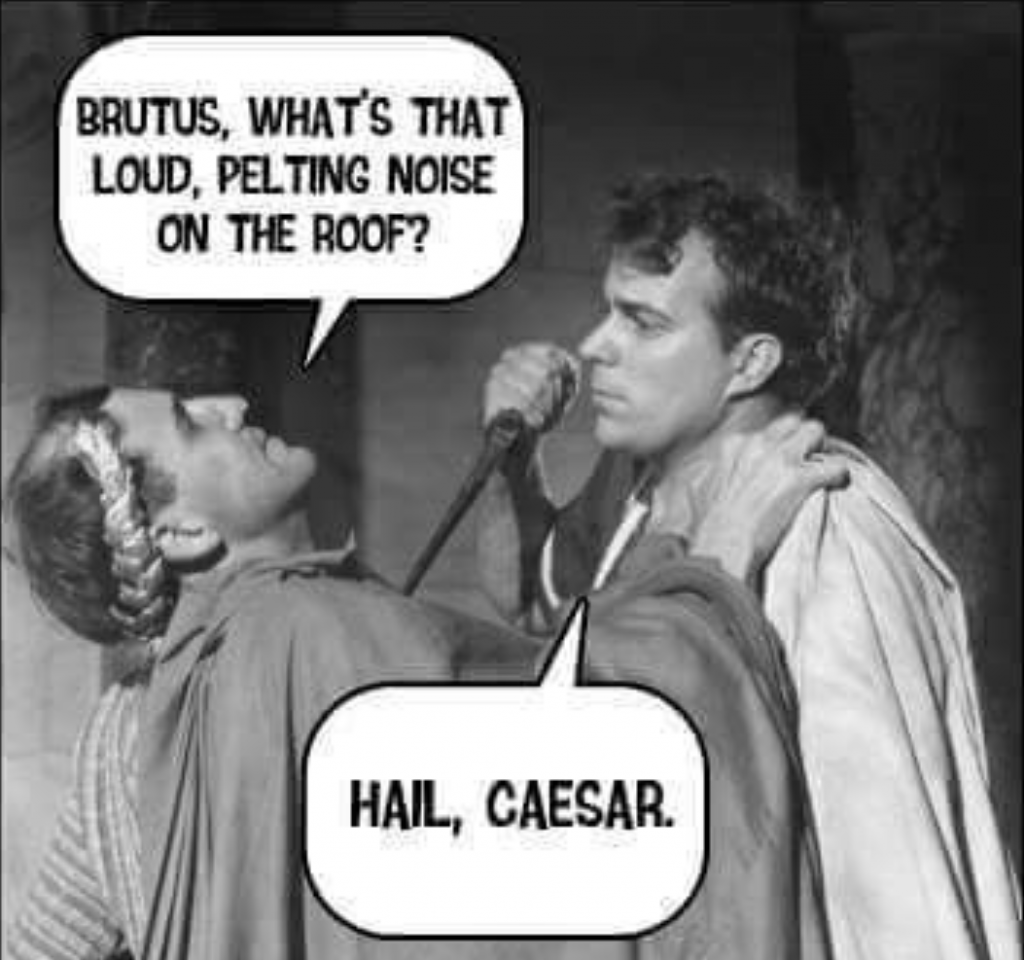
Beware the Ides of March – With Apologies.Image from Facebook
Beware the Ides of March
SOOTHSAYER: Caesar! CAESAR: Ha! Who calls? CASCA: Bid every noise be still; peace yet again! CAESAR: Who is it in the press that calls on me? I hear a tongue shriller than all the music Cry ‘ Caesar!’ Speak. Caesar is turned to hear. SOOTHSAYER: Beware the ides of March. CAESAR: What man is that? BRUTUS: A soothsayer bids you beware the ides of March. CAESAR: Set him before me; let me see his face. CASSIUS: Fellow, come from the throng; look upon Caesar. CAESAR: What sayst thou to me now? Speak once again. SOOTHSAYER: Beware the Ides of March. CAESAR: He is a dreamer. Let us leave him. Pass.
Julius Caesar by William Shakespeare
Julius Caesar and the Ides of March, 44 BC
The Ides of March is the 15th of March. The day Julius Caesar didn’t take the warning that might have saved his life. You might suggest he got what was coming to the first populist Dictator. But any study of Roman History will find many precursors to Caesar in Roman and Greek History. Among populists, I rank Caesar with Napoleon a Dictators who was, personally, an intelligent, rational man. They, in some ways, ruled ‘wisely’ but were nonetheless willing to sacrifice millions of people for their own personal ambition.
Warning from history – Assassination is not the Answer!
Today, the world is faced with the populists who are geniuses only in their own minds. I know, we as humans, might think, if only X would drop dead, how much better it would be? Brutus, being an honourable man, took action upon his thought. But, as often is the case, what seemed the ‘right thing’ to do, turned out to be a disaster. The plotters were trying to save the Roman Republic, but the murder destroyed the Republic.
So, still those assassinary thoughts, read this article in ‘History Today’ about the impact of Julius Caesar’s murder. Do everything you can but use democratic means to defeat egotists to whom truth means nothing. In my opinion this is the major problem for humanity, it seems we do not know how to stop homicidal maniacs (like Hitler) causing war without needing to fight a war to stop them. We do not have a method of peaceful mass rebellion. Perhaps Gandhi came closest but then he was working against a system that was not a dictatorship. (I mentioned Gandhi in ‘On This Day’ on my post here.
Ides of March
Now, what the heck are or indeed is the Ides of March?
A Roman month was divided into three, first the Kalends, then the Nones and finally the Ides. These three days were the important days of the month. The Kalends is the 1st of the Month. The Nones the 7th of the Month, And the Ides the Fifteenth. It is said to go back to the early days of Rome and a lunar calendar. The Kalends being the first tiny sliver of a crescent moon a couple of days after the New Moon. The Nones the first quarter of the Moon and the Ides was the full moon. To me, as a way of dividing a month it is very lopsided. The cycle of the moon is 29 days not 15. So the tripartite division divides up the first half of the month, and leave the second half undivided.
Debts were supposed to be paid on the Kalends and that is where we get our word calendar from. These public calendars were called Fasti. This is the name of Ovid’s great Almanac Poem, the Fasti, which I often quote from.
Kalendar
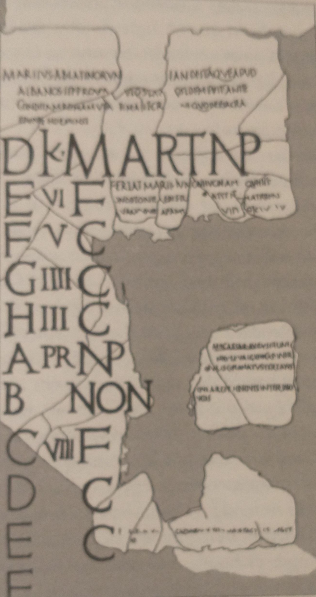
This is a very bad photograph of a drawing by Herbert E Duncan Jr of a 1st Century Calendar
How was it used? When talking about a day in the future month you might say I’ll meet you on the 5th day before the Kalends. I’ve never really understood this system, despite a few attempts, until I saw this drawing of a Roman Calendar. You’ll have to read this closely.
The first column, on the left, with the letters from D to H then A – H. This is a recurring cycle of 8 market days, running in tandem with Kalends, Nones etc.. This gives an 8 day week.
Now reading across the top line in capitals: DKMARTNP. So the D is the 4 day of the 8 day ‘market week’. The second column begins with the Letter K for Kalends, then MART for March. So it’s the Kalends of March. Then NP which means this day is a day for public festivals.
Back to the second column. Below the K for Kalends, the days are counted down to the upcoming Nones. So the next one after Kalends is VI, meaning the 6th day before the March Nones. Then V, IIII, III. There is no II because PR means the day before Nones. Below and to the right of the PR are the letters NON which is, as you might hope, is short for Nones.
In the second column below this is the number VIII which means the next day is the 8th day before the Ides of March. The fragment of stone from which this drawing comes does not continue down to the Ides, unfortunately.
Complicated, huh? It gets worse. The third column has a series of letters in it: F C C C NP NON F C C. We already know that the NON is short for Nones, The F means it’s a fastus, a permissible day when legal action can be taken. (the plural of Fastus is Fasti.) The C means Ccomitialis which on fasti days the Roman people could hold assemblies. (see my post for more on the curiae).
Market and Public Days
We have already seen that NP marks days for public festivals. An N would mean days when political and judicial actions were prohibited, although there is not one here. The small unreadable text to the right is information, I believe, about holidays and historic events to be marked in the calendar. This is, in fact, a Roman Stone Almanac.
This confusing system survived Caesar’s major calendrical reforms. He transformed the Roman calendar, which was rotten at the core. He re-aligned with an almost accurate calculation of the time the Sun takes to circle the earth. (or the other way around!) This is known as the Julian Calendar.
But the Kalends, Nones, and Ides he left intact and it survived until Constantine the Great got rid of them. They were replaced with the familiar 4 fold division of the month. So, for the first time, you could work 24/7.
493 – Odoacer, the first barbarian King of Italy after the fall of the Western Roman Empire, was slain by Theodoric the Great, king of the Ostrogoths, while the two kings were feasting together. Odoacer was a mercenary General for the Romans, but seized the Throne from the child Emperor Romulus Augustulus, who ruled for only 10 months. Theodoric took over and ruled an Empire centred on Italy from 496 to 526. Both Kings followed the Arian version of Christianity, although generally did not persecute the Catholic Tradition.
Theodoric was, more powerful than the later Roman Emperors and had good relations with the Roman Senate, which continued in operation. Later in his rule, that relationship broke down. This lead to Theodoric arresting Boethius for treason. While awaiting execution, Boethius wrote ‘On The Consolation of Philosophy’. Often called the last great literary work of the Western Roman Empire. Amongst many translations into English are those by King Alfred the Great, Geoffrey Chaucer and Queen Elizabeth I. Boethius was executed in 523
1493 – Christopher Columbus arrived in Castille, back from the journey that changed the world. He made landfall in the Bahamas on 12th October 1492, ending what became known as the pre-Columbian Age (aka pre-contact era). The voyage began the era of exploration that turned the world into a global entity, but also bringing in its wake horrific genocide of indigenous peoples.
1877 – First Cricket Test Match between England and Australia, held at Melbourne which the Aussies won by 45 runs.
1909 – Selfridge’s opened on Oxford Street
1927 – The first Oxford v Cambridge Women’s Boat Race took place in Oxford on the Isis. The Isis is what posh folk call the River Thames as it flows passed the University Town. In Latin the Thames is called the Tamesis. And a conceit grew up at the University that the River was called the Isis until it was joined by the River Thame at Dorchester, where the conjoined river was called the Tamesis.
The Boat Race was won by Oxford. Strangely, the boats did not row at the same time. On the first leg they were judged by the style of their rowing, and on the second by the speed. The judges could not agree on the style scores, so in the end the decision was given to Oxford on account of being the faster of the two boats.
This post slipped through the editorial net. So, I need to get it out there before November is a cold memory.
November is the 9th Month of the Roman Calendar. Novem coming from the Latin for nine. But the Romans added two months to the calendar during the time of the Dictator, Julius Caesar (for his reforms click here). So 9th month is now the 11th.
In Welsh it is ‘Tachwedd’ which means the month of slaughtering. Blōtmōnaþ (Blotmonath) in Anglo -Saxon – the month of blood. These reference the fact that this was the month when the surplus animals were slaughtered or as the historian, Venerable Bede has it, ‘the month of immolations’. In Irish the month of November is called sawhain. It is also the name of the festival marking the beginning of winter which starts at dusk on 31st October. We call it Halloween, the celts Sawhain or words similar. (see my post on Halloween).
The image, at the top of the page, from the Kalendar of Shepherds shows some aspects of November – star signs Scorpio and Sagittarius; Pigs are fattening up on the acorns in the forest and then being slaughtered, smoked or dried to preserve them through the hard winter. The text of the Kalendar (read it below) gives a good summary of what early modern life in November was like. In summary, the day when the ‘poore die through want of Charitie’.
They can be seen from Autumn to Spring, but they are visible all night in the Northern Hemisphere in November and December.
Nebra Sun disc from Stonehenge Exhibition British Museum. The Pleiades is thought to be represented by the 7 stars in the cluster above and between the Sun and the Cresent Moon, on this bronze age copper and gold disc
July is named for Julius Caesar. Originally, the Roman Month was called Quintilis, as it was the fifth month of the Roman calendar, which originally started in March. Caesar reformed the calendar in 44BC and the Senate renamed the month after him. For more on Roman Months, see my post here.
The 7th month is called Lúil in Irish and Gorffennaf in Welsh. In Anglo Saxon it was Æfteraliða, or “after-mild;”, Liða, means “mild” or “gentle,” or the period of warm weather around Midsummer. June is Arraliða, or “before-mild”.
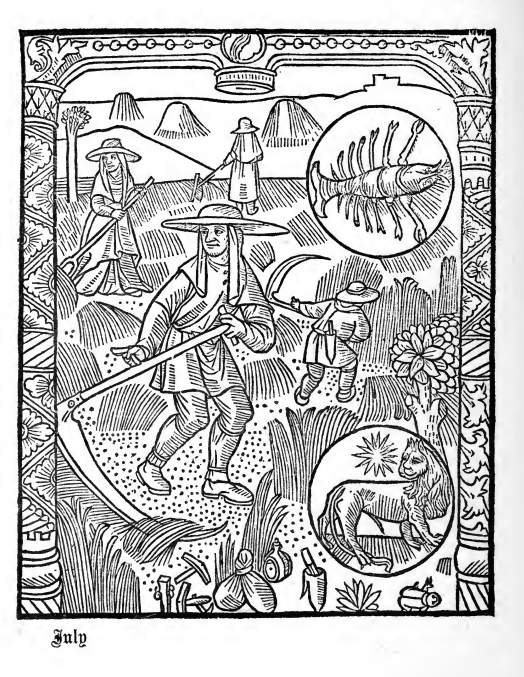
It is on average the warmest month in most of the Northern Hemisphere, where it is the second month of summer. The star signs are: Cancer (until July 22) and Leo (July 23 onwards),
‘
July is the month of Haymaking, as you can see from the image (above from Kalendar of Shepherds). To find out more about haymaking, wait for the next post.
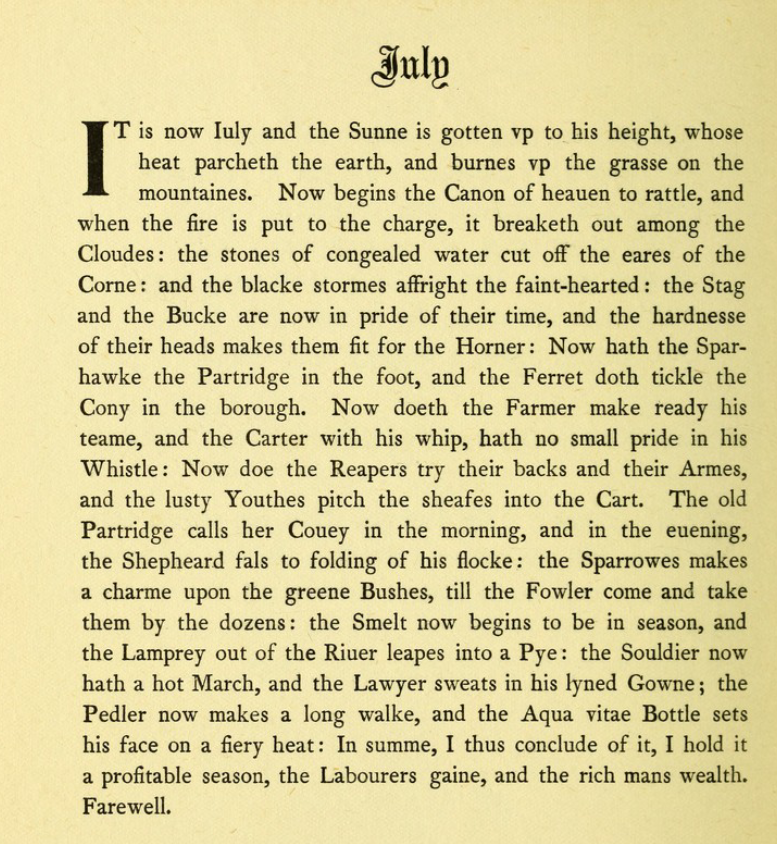
From the Kalendar of Shepherds comes this description of the month.
First published, in 2023 and republished in 2024, 2025
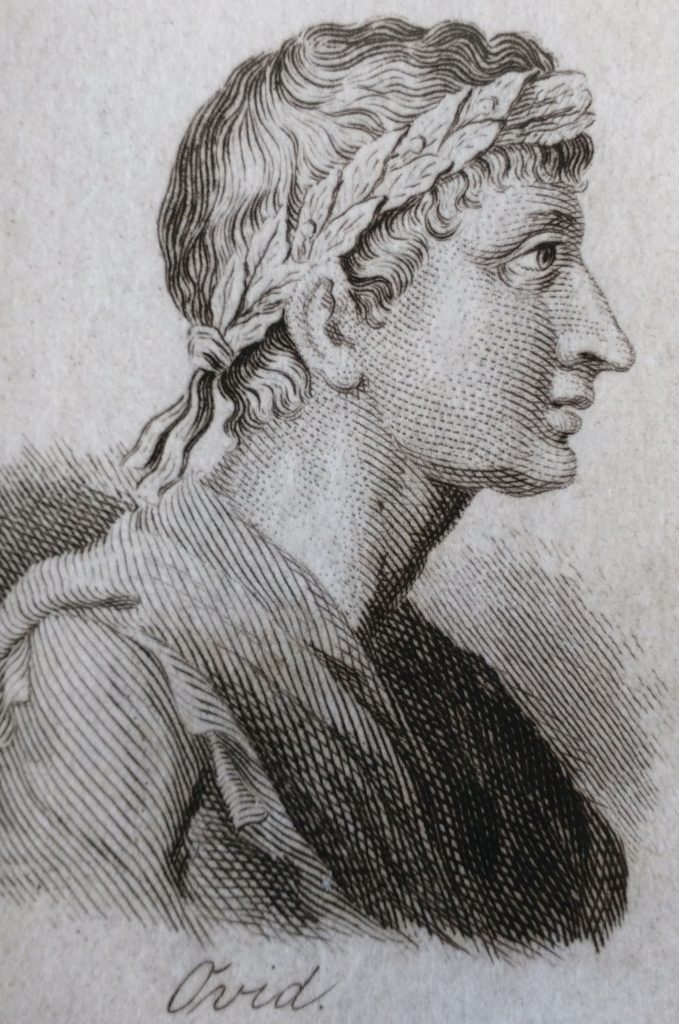
If you want to read Ovid’s almanac of the year, the ‘Fasti’, for yourself, this is the translation I am using. Fasti is very valuable because it tells the stories of the main religious and folk festivals of the Roman year. It also tells the story of the Gods and Goddesses behind the festivals,
Fasti is sadly unfinished because Pūblius Ovidius Nāsō was exiled by the Emperor Augustus. The last entry is for 30th June where Ovid writes: ‘put the last touches to my undertaking’. It suggests he knew he was finished, despite only being halfway through the year.
He was exiled to the Black Sea at Tomis where he died ten years later. It is not clear exactly why he was exiled. Ostensibly it was for the immorality of his book ‘The Art of Love’. But that was published almost a decade earlier. So, it seems a strange, delayed, cause for exile.
Was he involved with a plot against Augustus that saw the Emperor’s own daughter exiled? Her lover was Lullus Antonius, son of Mark Antony. Unlike Julia’s other lovers, he was forced to commit suicide.
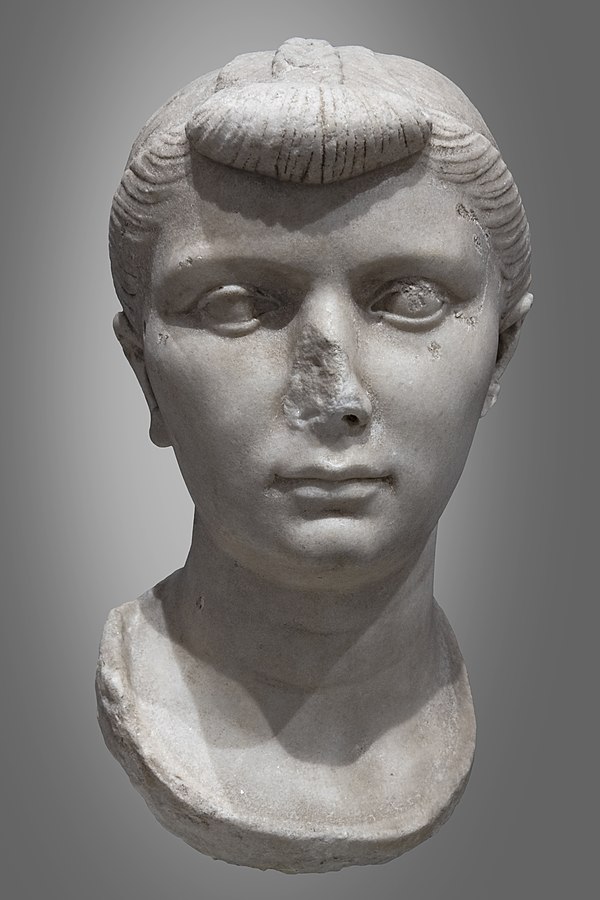
Sculpture of Julia the Elder, daughter of Augustus, divorced wife of Tiberius Public Domain . Musée Saint-Raymond in Béziers
But this also happened years before Ovid’s exile. Julia’s daughter, Julia the Younger, was herself exiled closer to the time of Ovid’s exile. Her husband, Lucius Aemilius Paullus, was executed for treason. So, might this be the context of his exile? No one knows. Ovid said the reason for his exile was a ‘poem and a mistake’. The nature of that mistake is not recorded, but he said the crime was worse than murder and more harmful than poetry.
Here is one of my favourite Ovid quotations. Here he recommends how the aspiring male should dress for a night out on the town:
Don’t torture your hair, though, with curling-iron: don’t pumice Your legs into smoothness. Leave that To Mother Cybele’s votaries, ululating in chorus With their Phrygian modes. Real men Shouldn’t primp their good looks …
… Keep pleasantly clean, take exercise, work up an outdoor Tan; make quite sure that your toga fits And doesn’t show spots; don’t lace your shoes too tightly, Or ignore any rusty buckles, or slop Around in too large a fitting. Don’t let some incompetent barber Ruin you looks: both hair and beard demand Expert attention. Keep your nails pared, and dirt-free; Don’t let those long hairs sprout In your nostrils, make sure your breath is never offensive.
Avoid the rank male stench That wrinkles noses. Beyond this is for wanton women – Or any half-man who wants to attract men.
The translation is from Green, Peter (Trans) ‘Ovid The Erotic Poems’ Penguin Classics, London 1982‘
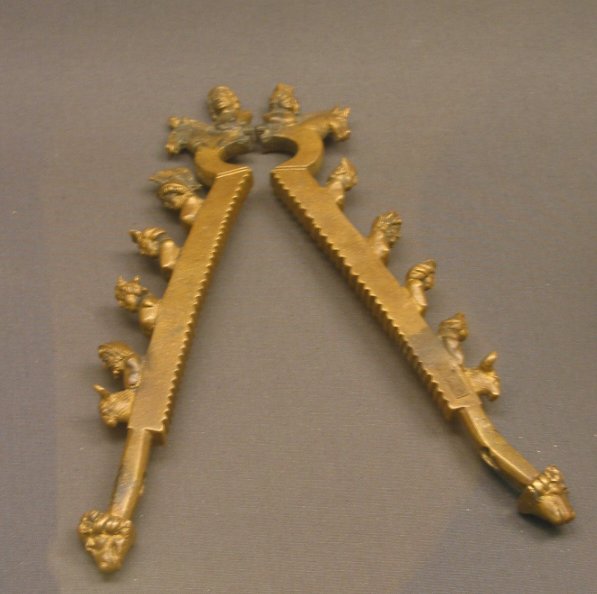
Mother Cybele’s votaries were castrati, hence their high-pitched voices. The Cybele, the Mother Goddess, fell in love with Attys, who made her jealous. She made him mad, whereupon he castrated himself and bled to death. The Goddess had him resurrected body and soul. They enjoyed divine bliss ever after. A Cybelian castration device, dredged out of the Thames, can be seen in the Roman Gallery of the British Museum.
British Museum Castration Device from the River Thames at London Bridge Photo: K Flude
The paragraph above is a quotation from In Their Own Words – A Literary Companion To The Origins Of London‘ D A Horizons, 2009. by Kevin Flude. To buy the Kindle or Paperback version click here.
1381 – King revokes abolition of Serfdom. This had been ‘forced’ upon the Government at Mile End during the Peasants Revolt. The royal charter was revoked July 2nd