Lambing
You are getting another copy of this because it was published without additions I made to the On This Day section.
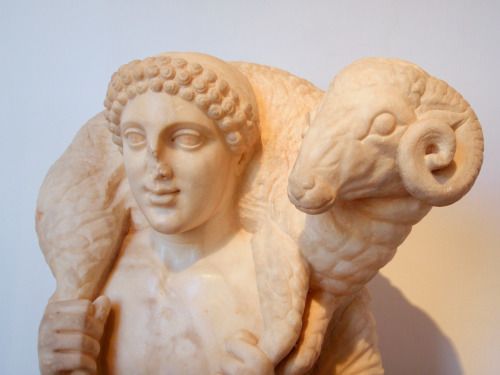
If a lamb be born sick and weak, the Shepherd shall fold it in his cloak, blow into the mouth of it and then, drawing the Dam’s dog, shall squirt milk into the mouth of it. If an Ewe grow unnatural, and will not take her Lamb after she has yeaned it, you shall take a little of the Clean of the Ewe (which is the bed in which the Lamb lay) and force the Ewe to eat it, or at least chew it in her mouth and she will fall to love a Lamb naturally. But if an Ewe have cast her Lamb, and you would have her take to another Ewe’s Lamb, you shall take the Lamb which is dead, and with it rub and daub the live Lamb all over, and so put it to the Ewe, and she will take to it as naturally as if it were her own.
Gervase Markham, ‘Cheap and Good Husbandry’ 1613 (quoted in the Perpetual Almanac by Charles Kightly).
All about Lambing
Lambing can begin in the second part of Janauary in the south-west of the UK. But it gets progressively later as you travel north. Itinerant shearers, now often from New Zealand, travel the country shearing sheep. They will begin in the south and then progress north.
March and April are peak lambing time in the UK. But the season runs from February to April. Some farmers even lamb before Christmas (and it is not unknown to lamb in November).
The country expression is ‘in with a bang and out with the fool’ which suggests an ideal time to tup, is November 5th, on Fireworks Night. So that the lambs will be born, 5 months later, around the 1st of April. A litter is normally one or two but occasionally more. Ewe’s get fed depending on how many lambs they will be having.
Thomas Hardy & the Reddle Man
In the ‘Return of the Native’, Thomas Hardy has a character called Diggory Venn, he is a reddle man. He travels the country in a little pony and trap selling reddle. This is a red ochre dye with which shepherds mark their flock. Part of the plot is about the reluctance of women to marry a man whose red, reddle-stained face, makes him look like a devil.
The reddle is used to mark sheep, particularly before lambing. The ram is given a collar or girdle with a marker full of reddle in it. When he mounts the ewe, she will have a red mark on her back. When she has been tupped twice, she will have two red marks on her back. She will then be taken out of the field, to encourage the ram to impregnate the others. Reddle and other dyes can be used to mark lambs chosen for slaughter, or dipping, or weighing etc
(Tup is a country verb: I tup. You tup. We are tupping etc., and means what happens when the ram ‘covers’ the ewe).
For more on Thomas Hardy see my posts:
Hardy’s Henge
The End of Hardy;s Tree
And about the Mayor of Casterbridge:
Wife selling
Failed Weather Forecasting
And the most popular of all my posts: The Skimmity Ride
On This Day!
1486 – Dynastic marriage of King Henry of Lancaster (Henry VII) to Elizabeth of York, daughter of Edward IV, ends rivalry that led to the War of the Roses
1779 – Peter Mark Roget, physician, scholar, thesaurus creator was born, brought into this world, delivered, popped out, brought forth, sprogged, engendered, begat, birthed.
1896 – First xray generating machine displayed to the public by American H L Smith, but building on the work of English physicist William Crookes and German, Wilhelm Röntgen. Portable machines, designed for hospital use on the Battlefields were developed by Spaniard Mónico Sánchez Moreno and the Polish/French scientist Marie Curie.
First Published 2023, revised 24,25,26

