St Augustine & the Origins of Christianity in Britain May 27th

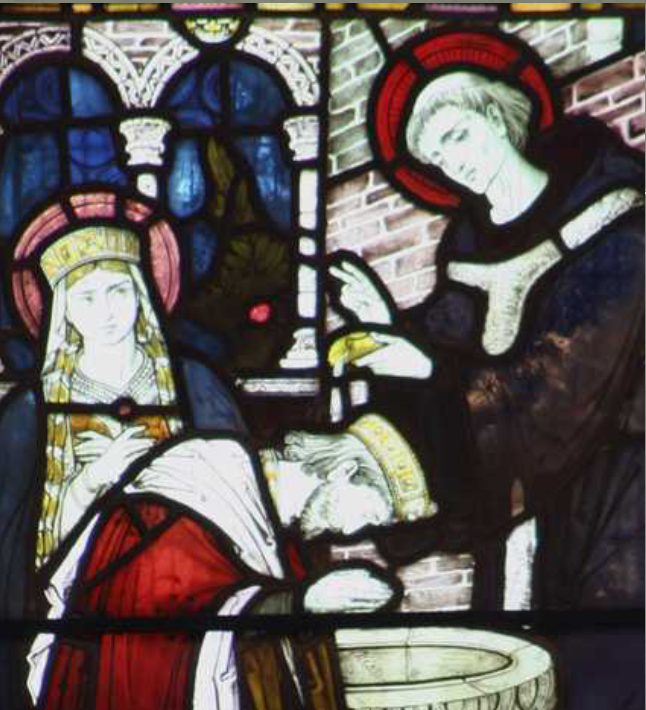
Stained glass window showing Baptist of King Ethelred of Kent by St Augustine watched by Queen Bertha. In St Martins Church, Canterbury

This post is about St Augustine and Christianity in Roman and Post Roman Britain. But first:

On This Day
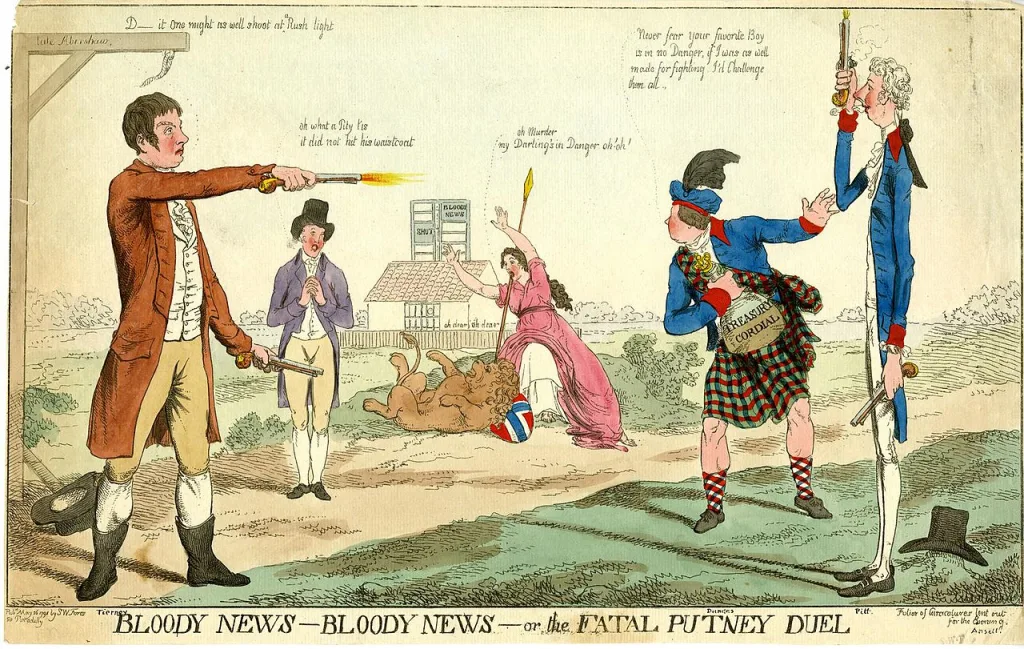
A satirical print of the duel by Charles Williams. showing the duel between Pitt and Tierney on Putney Heath

On May 27th 1798, Prime Minister Pitt, a Tory, meet George Tierney on Putney Heath for a two pistol duel. In the absence of the Whig Leader Charles James Fox, Tierney questioned the Prime Minister’s plan to increase the Royal Navy’s man power. Pitt suggested Tierney’s opposition came about through ‘desire to obstruct the defence of the country’. Tierney objected, the Speaker upheld his complaint. Pitt refused to withdraw the remark. Tierney sent his second to demand satisfaction. Pitt accepted. Both missed their first shots, Pitt shot his second shot vertically up. The seconds stopped Tierney responding. The King was furious that Pitt should put his own pride against the interests of the Country. The other two people are the seconds.

The Cartoon above shows, skinny Pitt on the right, Tierney on the left under the shadow of the Gibbet. Britannia is horrified with the British Lion in the background. Behind them is one of the new Telegraph systems which is conveying news of the duel.

The Augustinian Mission

St Augustine brought Christianity to England, leading the mission sent by Pope Gregory to Canterbury in 597AD. He was the Abbot of a Monastery in Rome before the Pope sent him to convert the Angles. I tell the story of the mission in my post: March-12th-St-Gregory-Punster-Extraordinary/.

Augustine is the patron saint of England and the Anglican Communion. But he is not the person who brought Christianity to Britain. To England, maybe.  Britain. No. The Romans did this. I summarise the evidence in my post on St Lucius, who is claimed to have brought Christianity to Britain in the 2nd Century. Our first martyr was  St. Albans. (see my post on St Albans here.

Feast Day(s) of St Augustine.

We have a variety of days to celebrate St Augustine of Canterbury.  These are according to Google; 26 May (Anglican, Eastern Orthodox, and Catholic Extraordinary Form calendar in Great Britain). 27 May (Catholic Ordinary Form calendar). 28 May (Catholic Extraordinary Form calendar outside Great Britain).

Perhaps, like the Venerable Bede he died after Dusk?  (see yesterday’s post.)

Romano-Britain and Christianity

There is good reason to think Christianity was strong in Roman Britain, particularly in towns. There is also some evidence of non-Christian religious centres surviving in the countryside (the Roman word for non-Christians, pagans, comes from the Latin word paganus, which meant someone who lived in the country.)

After the Romans, the Christian Church continued to thrive, with a host of Saints particularly in Cornwall, and Wales. The first substantial eye-witness account of post-Roman Britain, dated to the early 5th Century, concerns the Catholic Bishop Germanus. This shows a battle for souls in Britain not between Christians and Pagans, but between Catholics and other Christians who the Catholic Church targeted as heretics. I talk about this in my post about St Germanus here.

The next insight comes from the conversion of the Irish to Christianity later in the 5th Century. St Patrick’s account gives an eyeyewitness view. What is interesting is that St Patrick’s family were living in a town where aspects of Roman life were still continuing.  After being kidnapped by Irish raiders, St Patrick went on to lead the conversion of the Irish (with the help of St Bridget).  See my post on St Patrick here, St Bridget here.

I cannot see any sense of personality or charisma in the story of St Augustine.  But Welsh history shows him to be an unsympathetic hierarchical character.

Clashes with Celtic Christianity

What many people forget is that St Augustine came to a country with over two hundred years of Christian belief.  So, meetings were held between the British Church and St Augustine, culminating in the Synod of Chester in the early 7th Century.   Seven British Bishops and others prepared for their response to St Augustine’s insistence on the primacy of the Roman Catholic Church. One of the contentious issues was the ‘computus’ for deciding the date of Easter. Another was the style of the monks’ tonsure.  But it was a major step for the British churches to align themselves with a foreign ecclesiastical structure.

The delegates were advised by a wise hermit to arrive late at the planned meeting with St Augustine to see how he reacted.  If he got up and welcomed them, then he was a fit leader to follow. If he acted imperiously, then he was not worthy.  St Augustine failed the test, the meeting was a failure. And St Augustine cursed the British, which was said to have led to  a military campaign against them by the Anglo-Saxons.  The British lost the subsequent battle of Chester.  It was said that 2000 monks from the nearby monastery of Bangor-in-Dee were slaughtered. This seems like a huge exaggeration, unless the definition of a monk was just loosely people associated with the Monastery..

The battle severed the connections between the British Kingdoms in Cumbria and Scotland from the Kingdoms in Wales and made it very unlikely that the British would ever regain control of Britain from the English.

The two churches were reconciled at the Synod of Whitby (664AD).  For more about the calculations for Easter and the Synod of Whitby look at my post here.

First written on 27th May 3025, revised On This Day added 2026
St. Walburga and St. Ethelbert of Kent’s Day February 25th

engraving of St Walburga
St. Walburga
(public domain)

Today is the Feast day of two significant Saints, St. Walpurga and St. Ethelbert.

St. Walpurga

St. Walpurga was a nun at Wimborne in Dorset.  She, and her brothers St Willibald and St Winebald, accompanied their uncle, St Boniface of Crediton (in Devon) on his mission to convert the Germans to Christianity. They all became leading figures in the new German Church. Willibald set up the Monastery at Heidenheim, which was a duel monastery housing both Monks and Nuns. His sister, St Walpurga, became Abbess of the Monastery in 761. She died on 25 February 777 or 779 (the records are unclear),

In 870, St. Walpurga remains were ‘translated’ to Eichstätt, which St Willibald had set up as the Diocesan centre of this part of Bavaria. The date of the transfer was the night of April 30th/May 1st. This was her feast day. But the Church moved it to February 25th, to commemorate her death. However, May Eve is now ‘notorious’ as Walpurgis Night. This is the night of May Eve when witches are abroad up to all sorts of mischief, May Day being one of the main pagan festival days. Her body was placed in a rock-cut niche and her bones started exuding an oil called Walpurgis Oil which was said to have medical properties. She was also involved in a miracle of a boat saved in a storm-tossed sea.

For these reasons, Walpurgis is the Saint for battling pests, rabies, whooping cough, storms and sailors. She is also associated with witchcraft but not because of any actual association with it. Her remains were moved again in 1035 when she was enshrined at the Benedictine Abbey of St. Walburga which was named after her.

Walpurgis Nacht

Terrible things happen on Walpurgis Night in Dracula by Bram Stoker. So, the night has now become a trope for Heavy Metal Bands, doyens of horror stories and the Satanic. For more on this read my piece on Walpurgis Nacht.

Coincidently, I was reading about the fuss made about a Heavy Metal Band, called a Plague of Angels, playing in the glorious York Minster. A member of the band tried to calm down the controversy, saying people should just chill out. But other group members used to be in a band called ‘The Cradle of Filth’. Among their claims for Heavy Metal Fame is that they wore the most controversial t-shirt in heavy metal history. This has a visual of a nun in a compromising position and a slogan saying ‘Jesus is a ……..’ (add your favourite swear word here). All very silly. But it struck a cord with me, as I have a scene in my novel (unpublished) which is based on extreme forms of Heavy Metal Bands. I thought I might have gone over the top, but this story reassures me that extreme Metal can be extremely offensive!

To read more read the Guardian page. To publish my novel, email me!

St. Ethelbert.

Ethelbert is responsible for welcoming the Augustinian Mission to the Angles sent by the Pope, St Gregory. This re-established Christianity in Eastern Britain, and set up the Anglican Church or the Church of England as it became known.

I tell this story in this post.

On This Day

1308 – Edward II crowned King of England. His reign ended disastrously, with his Queen having an affair with Lord Mortimer and Edward losing control of the country (and Scotland). He was forced to abdicate, and died/was murdered/killed with red-hot pokers/or escaped to live a life as a hermit on the continent. Choose your favourite or read my History of the Kings and Queens of Britain.

1507 – Queen Elizabeth I excommunicated by Pope Pius and declared usurper of the throne, leading to the Spanish Armada and various plots against her life. (my post on Queen Elizabeth’s nicknames is here)

1836 – The Colt Revolver awarded a United States patent. Previously, he had obtained a UK Patent. It created the classic ‘Western’ Revolver’, much later called the Colt 45. It was a revolving-breech loading, folding trigger hand gun.

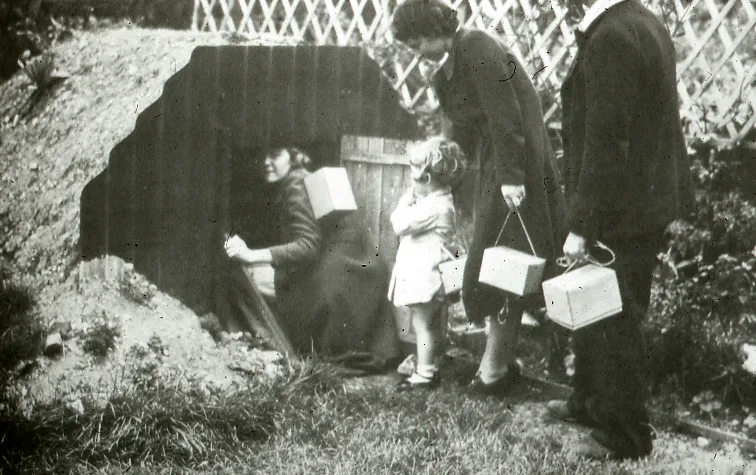
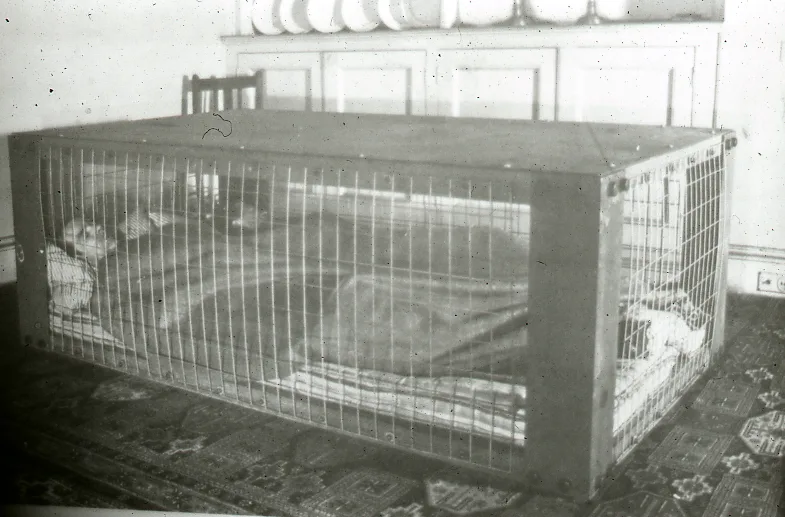
1939 – The first Anderson shelter built in a garden in Islington, London. They were named after the Home Secretary, and were dug in a trench with soil piled over the corrugated iron domed roof. Inside were bunks for the occupants to sleep in. They were 6 ft high, 4.5 ft wide, and 6.5 ft long. 2.5 million were built. The next shelter was the Morrison Shelter named after Herbert Morrison, who succeeded Anderson as Home Secretary. The Morrison Shelter was like a massive table that would protect the shelterers if the house collapsed above it. It allowed the family to sleep inside. London also had public shelters made of brick in many streets, or used cellars and brick arches as shelters. A small proportion of the population preferred to sleep in the Underground. Many stayed in their beds, unless planes were directly overhead. Photos from ‘The British People at War’ published during the war.

1956 – Nikita Khrushchev denounces Stalin.

First Written February 2024, revised February 2025. On This Day added in 2026