June & Juno, Queen of Goddesses

Palazzo Scifanoia, Ferrara Showing Fresco of June

June is, probably, named after Juno, the leading lady of Olympus, sister and brother to the Great God Jupiter (Jove). In Welsh, it’s ‘Mehefin’ – Midsummer. In Gaelic, ‘An t’Og mhios’ – the Young Month. In Anglo-Saxon, ‘Litha’, the month of the Midsummer Moon.

I am in Ferrara where I worked on a joint UK/Italian excavation in the 1980’s. We are currently at a reunion, in the beautiful UNESCO World Heritage City. The weather is beautiful, and so are the people and the City! One of its gems is the Palazzo Schifanioa, which was the home of the Este Family, Dukes of Ferrara. Borso D’Este in the 15th Century initiated the frescos on the wall of the Hall of the Months. There is one for each month although not all survive in recognisable form. But above is June. The top panels show the Gods of the Month with their chariots or waggons. Below are the star signs for the month, and at the bottom a scene from 15th Century seen from an aristocratic perspective. June has a delightful agricultural scene. You will see more of these in future months. Although I won’t say much today as its difficult to do anything serious without a desk and a decent internet connection.

Black and white engraving for June from Kalendar of Shepherds.
Kalendar of Shepherds. Title page for June

The picture above is from the Kalendar of Shepherds, with its 15th Century French Illustration. It shows shearing as the main occupation for the month but set within a flowery summer scene. In the roundels are the Gemini twins and the Cancer Crab, the star signs of June.

The text of the Kalendar of Shepherds gives a lyrical view of the joys of June:

From Kalendar of Shepherds, 17th Century Text Wellcome Library

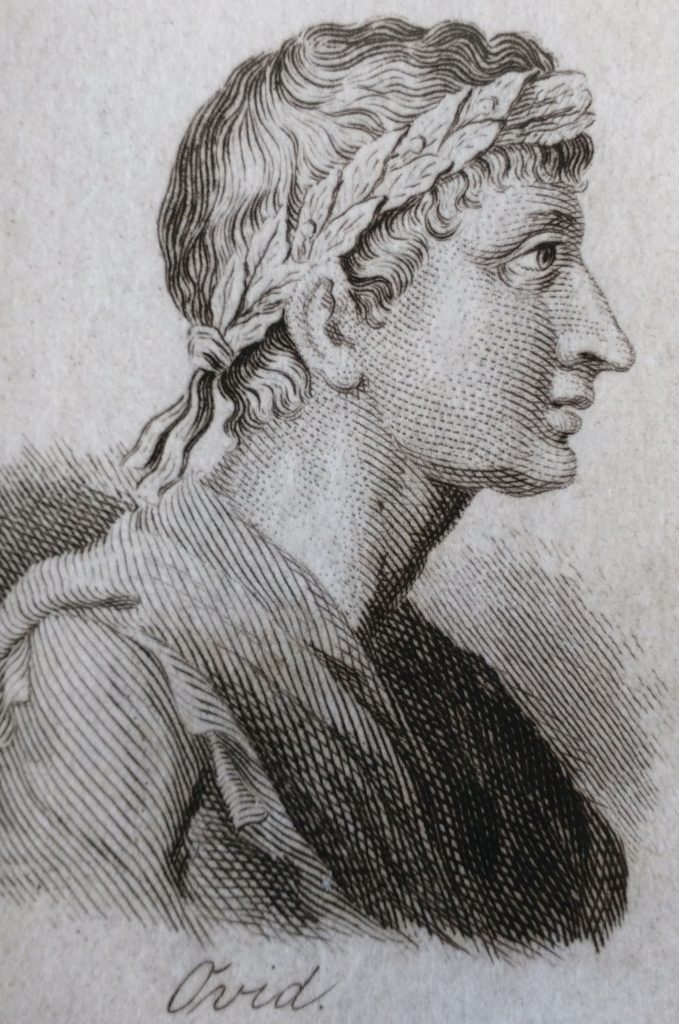
June might come, not from Juno’s name, but from an Indo-European word for youth or vital energy. Ovid in Fasti, his poem about the Roman Year, lets Juno make her own case:

O poet, singer of the Roman year,
Who dares to tell great things in slender measures,
You’ve won the right to view a celestial power,
By choosing to celebrate the festivals in your verse.
But so you’re not ignorant or led astray by error.
June in fact takes its name from mine.
It’s something to have wed Jove, and to be Jove’s sister:
I’m not sure if I’m prouder of brother or husband.
If you consider lineage, I was first to call Saturn
Father, I was the first child fate granted to him.
Rome was once named Saturnia, after my father:
This was the first place he came to, exiled from heaven.
If the marriage bed counts at all, I’m called the
Thunderer’s Wife, and my shrine’s joined to that of Tarpeian Jove.
If his mistress could give her name to the month of May,
Shall a similar honour be begrudged to me?
Or why am I called queen and chief of goddesses?
Why did they place a golden sceptre in my hand?’

Translated by A. S. Kline © Copyright 2004 All Rights Reserved

In the previous Book (on May), Ovid told another story that June was named for young men.

‘So I deduce that the elders gave their own title
To the month of May: and looked after their own interests.
Numitor too may have said: ‘Romulus, grant this month
To the old men’ and his grandson may have yielded.
The following month, June, named for young men’
Gives no slight proof of the honour intended.’

The Latin for ‘Young men’ comes from the Latin iuvenis, “youth”)

But let’s not go into Indo-European roots, and let’s simply accept the most wonderful month is named after Juno, the Queen of Goddesses, the deity of marriage and women. Probably most famous for hating the Trojans – she had a grudge against Paris, as he ruled against her in that famous divine beauty competition. And more seriously, what other reaction can the Deity of Marriage, have to the man who showed such disregard for the sanctity of marriage that he ran away with the already spoken for Helen?

The Judgment of Paris 1700 by Daniel Purcell. Houghton Museum (Paris, Venus, Juno, Minerva)

‘A sweet season, the senses perfume and the spirits comfort.’

First Written in June 2023 and revised June 2024, 2025

Floralia. Old Goats and an extraordinary Elephant April 28th

Flora (Floralia festival named after her) on a gold aureus of 43–39 BC Wikipedia photot by АНО Международный нумизматический клуб

This post got forgotten because April 28th was unexpectedly St George’s Day.  But it’s still relevant as the Roman festival of Floralia continued to May 15th.

On the 28th of April began the Floralia.  It continued to the Kalends (15th) of May. According to Ovid in the ‘Fasti’ Book IV, the Romans celebrated Flora, the Goddess of Spring.  The Floralia celebrated flowering, blossoming, budding, planting and fertility.

Flora was one of the 15 Roman Deities offered a state-financed Priest. Her home in Rome, was on the lower slopes of the Aventine Hill near the Circus Maximus.

The Circus Maximus is the large long arena in the middle of Rome. Model Musee Arte et Histoire, Brussels, photo Kevin Flude

Celebrations began with theatrical performances, at the end of which the audience were pelted with beans and lupins. Then there were competitive games, and spectacles. The latter, in the reign of Galba, including a tight-rope walking animal. A monkey you might guess but no, it was a tight-rope walking elephant!

The Year of the Four Emperors

Incidentally, Galba only survived for 7 months as Emperor.  A little longer than our Liz Truss’s 44 days. But then she was not murdered by a rampaging mob at the end of her reign. It was the year known to history as the year of the 4 Emperors. (great description by Tacitus here:)

Spectacles and Battles

Juvenal records that prostitutes were included in the celebration of Floralia by dancing naked, and fighting in mock gladiatorial battles. There is a raging debate about the existence of female gladiators. A burial in Southwark has been said to be one such.  To hear what Natalie Haynes has to say on the subject look here🙂

Fauns, Satyrs, Goats and Hares

Hares and goats were released as part of the ceremonies. These animals were both considered to be very fertile and have a ‘salacious’ reputation! (Satyrs or Fawns were, famously, obsessed with sex and were half man half goat. A man can still be referred to, normally behind his back, as an ‘old goat’). Fauns were Roman, Satyrs Greek. The one half man half goat, the other half man half horse. It all got a little mixed up and fauns became very similar to satyrs.

To read about the myths of hare see my post march-28th-as-mad-as-a-march-hare/

Written in 2023 revised April 2024, 2025

Sementivae Dies—the Days of Sowing January 24–26

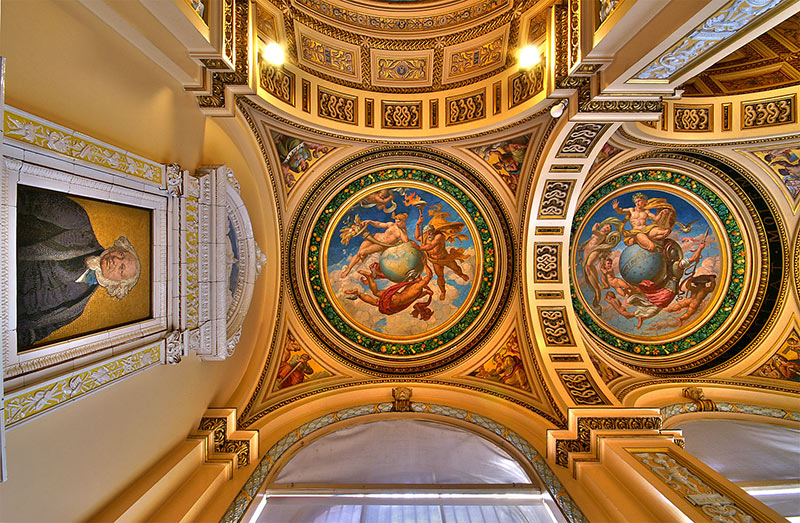
Victoria and Albert Museum” by Nick Garrod, licensed under CC BY-NC-ND 2.0. First V&A Director, Sir Henry Cole, to the left of the picture. Greek Deities in the roundells

Sementivae, was a festival dedicated to seed and to Ceres. Ceres is an Earth Goddess who gives her name to our word cereal. The festival was also called. Paganalia. The Mediterranean world had many names for the Earth Goddess. Tellus, Demeter, Cybele, Gaia, Rhea etc..

Ceres can be seen on the top left roundel resting on the Globe on the marvellous Ceramic Staircase at the V&A (photo above). And in my slightly out of focus photograph below. (To be honest, in real life, it looks a little more like my photo than the gorgeous photo above!)

Ceres represented Agriculture, Mercury Commerce, and Vulcan Industry.  Old Photo by the Author.  T
Ceres represented Agriculture, Mercury Commerce, and Vulcan Industry. Old Photo by the Author.

Sementivae Dies – a moveable feast.

To create life, we need earth and water to nurture and seeds for fertility. And so into the cold dead world of January the Romans created a festival of sowing. It had two parts, one presided over by Mother Earth (Tellus) and the other by Ceres, the Goddess of Corn. The actual day of the festival was chosen not by rote on a set day of the calendar but by the priests, in accordance with the weather. This seems very sensible, as there is no point sowing seeds in terrible weather conditions. I’m assuming the Priests took professional advice!

On the 24th-26th January Tellus prepared the soil, and in early February seeds were sown under the aegis of Ceres. Tellus Mater (also Terra Mater) was known as Gaia to the Greeks.

Gaia

Gaia was selected by James Lovelock & Lynn Margulis in the 1970s as the face of their Gaia hypothesis. To me, the importance of the idea is not the scientific principle that environments co-evolve with the organisms within them. But, rather in Gaia as a personification of our world as a complex living ecosystem. One that we have to care for. Gaia exists as a series of feedback loops. Lovelock hypotheses that she will spit us out unless we can live in balance with our alma mater.

Ovid and Sementivae

This is what the Roman Poet Ovid has to say in his poetic Almanac known as ‘Fasti’ (www.poetryintranslation.com)

Book I: January 24

I have searched the calendar three or four times,
But nowhere found the Day of Sowing:
Seeing this, the Muse said: That day is set by the priests,
Why are you looking for moveable days in the calendar?
Though the day of the feast ís uncertain, its time is known,
When the seed has been sown and the land ís productive.
You bullocks, crowned with garlands, stand at the full
trough,
Your labour will return with the warmth of spring.
Let the farmer hang the toil-worn plough on its post:
The wintry earth dreaded its every wound.

Steward, let the soil rest when the sowing is done,
And let the men who worked the soil rest too.
Let the village keep festival: farmers, purify the village,
And offer the yearly cakes on the village hearths.
Propitiate Earth and Ceres, the mothers of the crops,
With their own corn, and a pregnant sow ís entrails.
Ceres and Earth fulfil a common function:
One supplies the chance to bear, the other the soil.
Partners in toil, you who improved on ancient days
Replacing acorns with more useful foods,
Satisfy the eager farmers with full harvest,
So they reap a worthy prize from their efforts.
Grant the tender seeds perpetual fruitfulness,
Don’t let new shoots be scorched by cold snows.
When we sow, let the sky be clear with calm breezes,
Sprinkle the buried seed with heavenly rain.
Forbid the birds, that prey on cultivated land,
To ruin the cornfields in destructive crowds.
You too, spare the sown seed, you ants,
So you’ll win a greater prize from the harvest.

For more on Ovid look at my post on Ovid and Juno here. Or you can search for Ovid in the Search box.

First Published in January 2023, republished in January 2024, 2025