The Maypole, This Stinking Idol & the End of May Day May 2nd

An Imagined Scene at the Maypole at St Andrew Undershaft
The Stinking Idol : An Imagined Scene at the Maypole at St Andrew Undershaft

This post is about the end of the Maypole in London but first:

On This Day
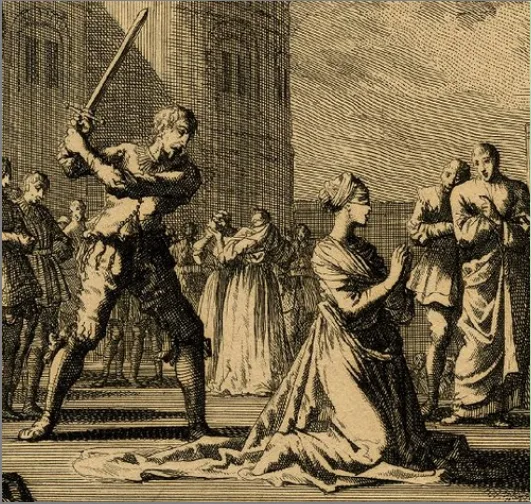
Old Print of the French Executioner dispatching Anne Boleyn with a sword rather than an axe.

1536 – Anne Boleyn arrested on ‘charges of adultery, incest, treason and witchcraft.’ But, Claire Ridgway in her post here and her book, show that she was never accused of witchcraft in court. The stories of extra fingers, and teats, are all later Catholic propaganda aimed at weakening Elizabeth’s claims to the throne. She was accused of adultery. Five men were executed for sleeping with her: her brother George Boleyn, (Lord Rochford); Sir Henry Norris, groom of the stool; courtier Sir Francis Weston; courtier William Brereton, and musician Mark Smeaton. Incest with her brother (one possible explanation of the incest is the idea that she desperately needed a baby and if she needed a surrogate then her brother was safest as the child would have a family resemblance to her and not rouse any suspicions from Henry of adultery. The other explanation is that Anne never commited incest!). Treason, well sleeping with someone other than the King risked imperilling the blood line of the Royal Family. It also gave a motive for killing the king.

A new portrait has been claimed to be of Anne Boleyn, the only one to have been done in her lifetime. But it has been revealed by AI, and some art historians are not convinced. Follow this link to see for your self.
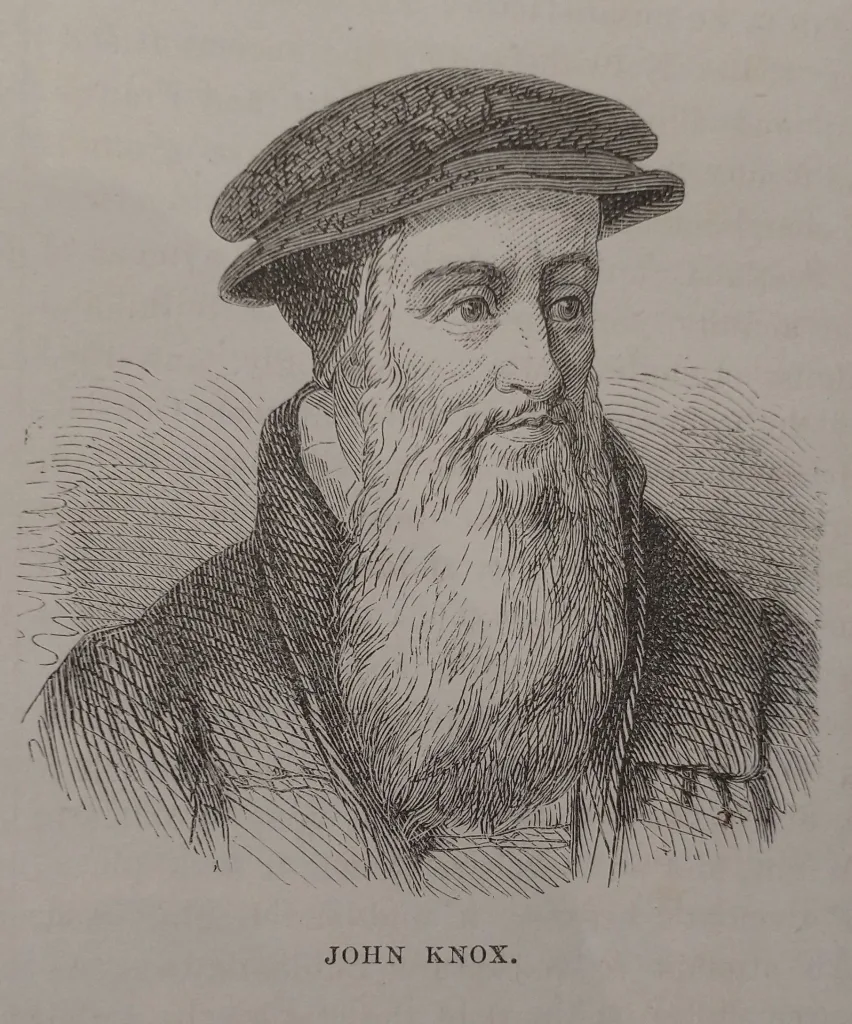
1559 – John Knox returns from exile to Scotland to lead the Scottish Reformation.

1568 – Mary, Queen of Scots, escapes from Lochleven Castle. You could blame John Knox for the hostility Mary faced as a Catholic governing a country rapidly turning Presbyterian.

1611 – The King James Version of the Bible is published by printer Robert Barker. His printshop was at Northumberland House, Aldersgate Street, in the City of London. (as far as I can see no one else seems to know where the printing was done.)
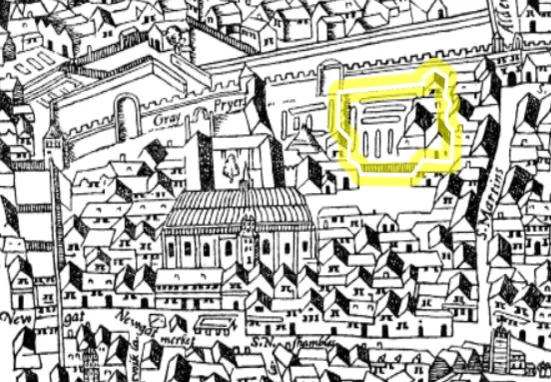
Northumberland House marked in yellow nearAldersgate. The Map of Early Modern London, Edition 7.0, edited by Janelle Jenstad, U of Victoria, 05 May 2022, mapoflondon.uvic.ca/edition/7.0/NORT2.htm. INP.

The Printer then went on to create the worst possible error in publishing history by omitting the word NOT in the 6th or 7th Commandment, ‘Thou Shalt Commit Adultery’. This edition became known as the Wicked Bible. Barker & Howard are still in the publishing industry and have offices in the East End of London.

The King James Bible introduced many phrases into the English language, including:

The apple of his eye
The four horsemen of the apocalypse
Baptism of fire
Chariots of Fire
O death, where is thy sting?
Like a thief in the night
Weighed in the balance and found wanting

To find more look here

1670 – King Charles II of England granted a charter to the Hudson’s Bay Company. In 1917 my 17 year old Grandfather sailed to the Hudson bay as an able seaman for the Hudson’s Bay Company.

1982 – The British nuclear submarine HMS Conqueror sunk the Argentine cruiser ARA General Belgrano. It was controversial as the Belgrano was outside the Exclusion zone, and said to be sailing away from the conflict. 323 Argentine sailors were killed. The event, arguably, changed Mrs Thatcher political fortunes.

1995 – Allies Statue unveiled. The Statue of Churchill and Roosevelt set up to commemorate 50 years of peace. 30 years later, how we wonder what Churchill and Roosevelt would say about the current state of NATO? https://www.iwm.org.uk/memorials/item/memorial/11351
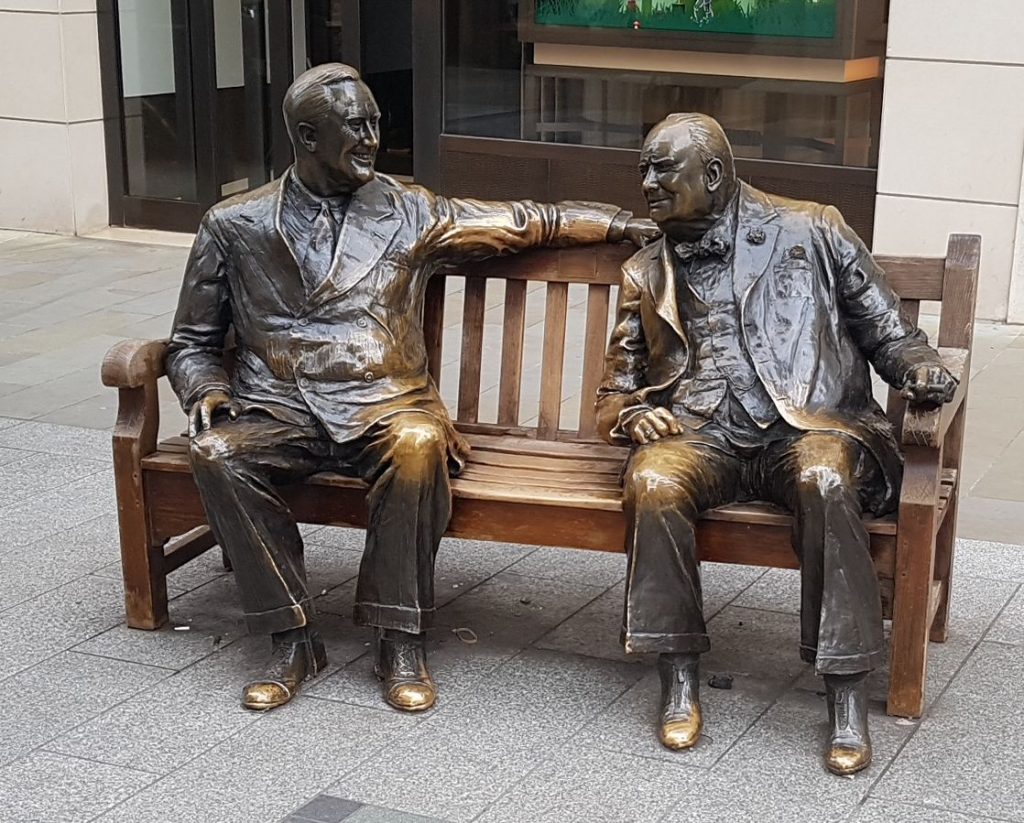

‘Allies’ Roosevelt and Churchill by by Lawrence Holofcener, unveiled on May 2nd 1995 by Princess Margaret and Lord Snowdon

The Maypole or rather ‘This Stinking Idoll’

Philip Stubbes, wrote a vitriolic attack on pagan practices in his ‘Anatomy of Abuses in 1583’. He fired a broadside at the tradition of dancing around the Maypole. He said they had: ‘as Superintendent and Lord ouer their pastimes and sportes: namely, Sathan Prince of Hell‘ as they erected ‘this stinking Idoll’. By which he meant the Maypole. Stubbes suggested that of the maids who went out to the woods on May Eve, less than one-third returned ‘undefiled‘.

Evil May Day Riots

The Maypole was stored at St Andrew Cornhill, which became known as St Andrew Undershaft. In 1517, it was attacked during the ‘Evil May Day riots’. The main focus of the riot was foreign workers. The Under Sheriff of the time, Thomas More, tried to quell it, meeting the rioters at the corner of Cheapside and St Martin’s Legrande. But 5,000 troops commanded by the Duke of Northfolk was necessary to regain control of the City. 300 rioters were arrested. One hanged, drawn and quartered, 13 hanged and nearly 300 pardoned after the intercession of Woseley and/or Katherine of Aragon (depending on which historian you read). The shaft was returned to its place under the eves of the houses in Shaft Alley. But apparently banned from being raised again.

1549 May Day Riots

However in 1549, the curate of nearby St Katharine Cree Church made an inflammatory speech. This incited a Puritan mob, who cut the shaft into pieces and burnt it. I always imagine the Curate’s sermons to be along the same lines as Phillip Stubbes attack on the Maypole.

Maypole: this Stinking Idol, Rather

Here is a longer description of the May Day Celebrations by Stubbes.

But their chiefest iewel they bring from thence is the Maie-poale,
which they bring home with great veneration, as thus: They haue
twentie, or fourtie yoake of Oxen, euery Oxe hauing a sweete
Nosegaie of flowers tyed on the tip of his homes, and these Oxen
drawe home this Maie-poale (this stinking ldoll rather) which is
couered all ouer with Flowers and Hearbes, bound round about
with strings from the top to the bottome, and sometimes painted
with variable collours, with two or three hundred men, women and
children following it, with great deuotion.

And thus being reared vp, with handkerchiefes and flagges streaming
on the top, they strawe the ground round about, bind green boughes about it, set
vp Summer Haules, Bowers, and Arbours hard by it. And then fa!
they to banquet and feast, to leape and daunce about it, as the

a Heathen people did, at the dedication of their ldolles, whereof this
is a perfect patteme, or rather the thing it selfe. I haue heard it
crediblie reported (and that viua voce) by men of great grauity,
credite, and reputation, that of fourtie, threescore, or a hundred Maides,
going to the wood ouemight, there haue scarcely the third part of them returned home againe vndefiled.

Phillip Stubbes from ”A Critical Edition Of Philip Stubbes’s Anatomie Of Abuses‘ edited by Margaret Jane Kidnie.

Restoration Maypole

The unraised pole seems to have survived until the beginning of the Civil War, (1644) when it was destroyed. But at the Restoration of Charles II a new and huge Maypole was ordered. It was joyously erected 134 ft high (41 metres) in the Strand. This one was danced around till 1713 when it was replaced. The original was sold to one Isaac Newton. He used it to support the biggest telescope in Europe, which was erected in Wanstead by a friend.

And that, my friends, is how you get from Superstition to Science in one easy story.

Old Print of Isaac Newton

Postscript.

I have always told people that the sermon leading to the destruction of the Shaft in 1549 was made at St Paul. I cannot remember where I read this. The suggestion that the Maypole in Cornhill was not used after 1517 seems strange. Why then would an unused maypole rouse a crowd to riot in 1549? Of the sources I have at hand, the London Encyclopedia mentions the riot of 1517 in its entry on St Andrew Undershaft but doesn’t elaborate more. ‘Layers of London‘ says ‘It was last raised in 1517 when ensuing riots led to the celebration being banned.’ which is definitive sounding. But is it? I wonder if it was banned for a year or two, then allowed again, and finally stopped in 1549?

For more on May Day see yesterday’s post.

First written in 2023 and revised on May 2nd 2024, 2025 On This Day expanded 2026
May Day May 1st

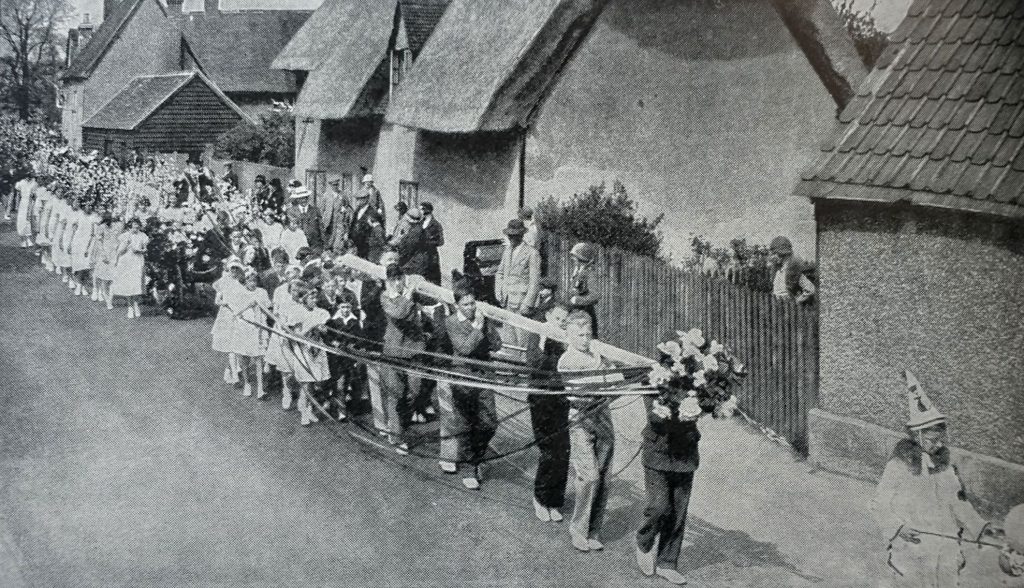
May Day – Bringing the Maypole, Bedfordshire. Image from ‘Romantic Britain’

May morning would commence with dancing around the Maypole, followed by feasting, and summer games. Maypoles were often stored during the year. A few days before May Day they were repainted, and bedecked with May Garlands – mostly made from Hawthorn. The Maypole used in London in 1660 was 134 feet high. Tall straight trees were used, sometimes of Larch, and they might be spliced together to get the requisite height. John Stow says that each parish in London had their own Maypole, or combined with a neighbouring Parish. The main Maypole was on the top of Cornhill, in Leadenhall Street. It was stored under the eves of St Andrew’s Church, which became known as St Andrew’s Undershaft as a result. For more about Maypoles and May Day see my post may-2nd-this-stinking-idol-the-end-of-may-day/.

Padstow May Day Festival

Padstow holds, perhaps, the most famous May Day festival on May 1st. It feels very ‘pagan’ or do I mean it is fuelled by an enormous amount of drink? Here is a video, watch until you see the ‘obby ‘orse and the teaser dancing.

Why May Eve?

The celebrations begin on May Eve because the Celtic calendar starts the day at Dusk. This seems strange to us who, perversely, ‘start’ our day at Midnight just after everyone has gone to bed! The other choice, and maybe the most logical is Dawn? But Dawn and Dusk are difficult to fix. Midnight was chosen by Julius Caesar when he created the Julian Calendar. Midnight has the virtue of being a fixed metric, being half way between Dawn and Dusk. From the Celtic point of view, the day ends when the Sun goes down over the western horizon. So the end of the old day, is the beginning of the new day. Makes sense?

For Walpurgis Nacht see my post on April 30th here: walpurgis-nacht-april-30th/

Beltane Fire

Celebrations centred around the Bonfire. The day was sacred to the fire God Belenus (Gaulish: Belenos, Belinos, British Belinus, Bel, or Beli), and May Day was called Beltane. Bonfires continued to be a part of the celebration into the 16th Century, and in places until the 2st Century. According to folklore tradition, the bonfire should be made of nine types of wood. They must be collected by nine teams of married men (or first born men). They must not carry any metal with them. The fire has to be lit by rubbing oak sticks together or a wooden awl twisted in a wooden log.

Participants, have to run sunwise around the fire. Oatcakes are distributed, with one being marked with a black spot. The one who collects it has to jump through the fire three times. Bonfires would have been, by choice on the top of hills. But then they were also held in the streets in London. May celebrations have a similarity to Halloween. This was also a fire festival and both are uncanny times when sprites and spirits abound.

Hawthorn

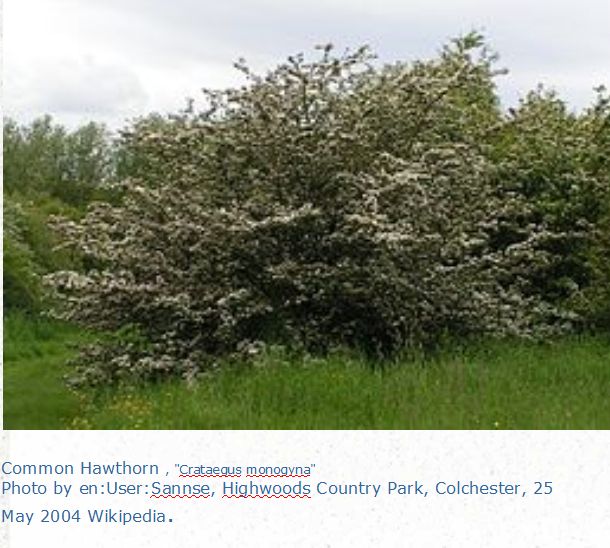
Hawthorn was a favoured wood not only because of its beautiful may flower. It was also said to be the wood the crown of thorns was made from. Hawthorn had the power of resisting supernatural forces. Therefore, it was used to protect doors, cribs, cow sheds and other places from witches.

Protecting Babies from Witches

Witches, it was said, got their power to fly from potions made from chopped up infants. The best protection was Christening. The custom was to have the christening as early as possible. Normally three days after birth. Shakespeare was baptised on 26th April 1564, so we celebrate his birthday on 23rd April. See my post for more on this subject. Cribs would be bedecked with Hawthorn and protection might be augmented by a bible, rowan, and garlic.

Special May Babies

Babies born between May 1 and 8 were thought to be special. They were destined to have power over man and beast. Weddings were frowned upon in Lent and in May, so April became a popular choice for marriage.

May Dew

After celebrations on May Eve (April 30th), women would go out in the woods to collect May, and other flowering plants. They would wash their faces in May Dew, preferably from the leaves of Hawthorn. If not from beneath an oak tree, or from a new-made grave. The dew was said to improve their complexion. It was also used for medical conditions such as gout and weak eyes.

Thinking Can Make it Happen?

Thinking of one’s lover on May Day might bring marriage within the year., it was thought This is a little like the modern woo-woo technique of ‘Manifesting’. Woo-woo or just woo is slang for something to do with crystals or other new age nonsense. Manifesting can either be a visualisation technique, whereby visualising the thing you want happening helps you concentrate on making it happen. The woo-woo part of it is that if you think it hard enough, you will get the universe to help make it happen. An analysis I heard on BBC Radio 4 showed that people who believe in the power of manifesting to alter the universe were more reckless in their endeavours and had a higher rate of bankruptcy and investment losses. It seemed they were more willing to take the risk. On the other hand, those who thought through the process of achieving their goals and the obstacles in the way of success were more successful.

Belenus

is a Celtic God of whom very little is clear and unambiguous. He was linked in Gaul with Apollo. The name, some people think, comes from ‘Shining’ but others disagree and think it means ‘Master of Power.’ His association with Irish mythology and the festival of Beltane suggests he was a powerful god in Celtic Europe. Geoffrey of Monmouth has a King called Belinus, and spins a yarn about Belinus and Billingsgate. Linguists prefer the idea that Billingsgate is named after some unknown Saxon called Billings. This may be a little more likely but far less interesting.

See my post on Midsummer for more on Celtic Festivals.

On This Day

305 – Diocletian and Maximian retire from the office of Roman emperor. Diocletian was a systems man. and changed the Empire so there were 2 Emperors, 4 Caesars, a lot of Prefects, and a shed load of Governors. It was supposed to make the Empire more efficient and less liable to Civil War. He also introduced a Wages and Prices freeze. For more about this see my post on Diocletian’s reforms here.

1328 – Wars of Scottish Independence end: By the Treaty of Edinburgh–Northampton, England recognises Scotland as an independent state. (Wikipedia)

1707 – The Union of Scotland and England Proclaimed. In which Scotland voluntarily (aided by bribery and corruption) gave up its independence.

1851 – Opening of the Great Exhibition of All Nations in Hyde Park, inspired by Prince Albert and put into place by Henry Cole. See the V&A on the building of the V&A.

1945 – German Fascist Goebbels kills himself and his entire family

Revised May 1st 2024,2025 and 2026

The Lord of Misrule & London, December 30th

black and white illustration of John Stow memorial in St Andrew's Church
John Stow reports on the Lord of Misrule. Memorial in St Andrew’s Church

On the sixth day of Christmas

My true love sent to me
6 Geese a Laying;
5 Golden Rings.
4 Calling Birds; 3 French Hens; 2 Turtle Doves
and a Partridge in a Pear Tree

The Lord of Misrule, Masters of the Revels, and Boy Bishops

The Roman festival of Saturnalia reversed the rules so that slaves, ruled and masters served. It was held between 7th and 23rd of December. It also included giving gifts. In the medieval period, the disorders of Saturnalia was continued. Monarchs, Lords and Gentlemen, City Institutions elected Lords of Misrule, Masters of the Revels, and Boy Bishops. John Stow was London’s first great historian. In his Survey of London, he wrote of the Lords of Misrule in London. They were chooses at Halloween and continued until Candlemas, in early February. See my post here for more details on Candlemas.

From John Stow’s Survey of London

This is what Stow says:

Now for sports and pastimes yearly used.

First, in the feast of Christmas, there was in the king’s house, wheresoever he was lodged, a lord of misrule, or master of merry disports, and the like had ye in the house of every nobleman of honour or good worship, were he spiritual or temporal. Amongst the which the mayor of London, and either of the sheriffs, had their several lords of misrule, ever contending, without quarrel or offence, who should make the rarest pastimes to delight the beholders.

These lords beginning their rule on Alhollon eve, continued the same till the morrow after the Feast of the Purification, commonly called Candlemas day. In all which space there were fine and subtle disguisings, masks, and mummeries, with playing at cards for counters, nails, and points, in every house, more for pastime than for gain.

Against the feast of Christmas every man’s house, as also the parish churches, were decked with holm, ivy, bays, and whatsoever the season of the year afforded to be green. The conduits and standards in the streets were likewise garnished; (…) , at the Leaden hall in Cornhill, a standard of tree being set up in midst of the pavement, fast in the ground, nailed full of holm and ivy, for disport of Christmas to the people…

John Stow, author of the ‘Survey of London‘ first published in 1598. Available at the wonderful Project Gutenberg: ‘https://www.gutenberg.org/files/42959/42959-h/42959-h.htm’

Cover page of The Survey of London by John Stow from Project Gutenberg

Bedecking and the Maypole

Holm is an evergreen oak. Its Latin name is Quercus ilex. The Tree in Leadenhall Street was also used as the Maypole. And he tells us it was destroyed in the great wind of 1444. You can read all about that here. You might also like to see my posts. These include information about John Stoww and midsummer celebrations and Boy Bishops, and l Stow’s Memorial.

First Published on December 30th 2023 and revised in 2024,2025

The Lord of Misrule & London, December 30th

black and white illustration of John Stow memorial in St Andrew's Church
John Stow memorial in St Andrew’s Church

On the sixth day of Christmas

My true love sent to me
6 Geese a Laying;
5 Golden Rings;
4 Calling Birds; 3 French Hens; 2 Turtle Doves
and a Partridge in a Pear Tree

The Lord of Misrule, Masters of the Revels, and Boy Bishops

The Roman festival of Saturnalia, held between 17th and 23rd of December, included reversing rules so that slaves, ruled and masters served. In the medieval period, the disorder of Christmas was continued with the election of Lords of Misrule, Masters of the Revels, and Boy Bishops.

John Stow’s, Survey of London

He was London’s first great historian, wrote of the Lord of Misrule in London. In this section, Stow begins the role of the Lords of Misrule at Halloween and continues it until Candlemas, in erly February. See my post here for more details on Candlemas. This is what Stow says:

Now for sports and pastimes yearly used.

First, in the feast of Christmas, there was in the king’s house, wheresoever he was lodged, a lord of misrule, or master of merry disports, and the like had ye in the house of every nobleman of honour or good worship, were he spiritual or temporal. Amongst the which the mayor of London, and either of the sheriffs, had their several lords of misrule, ever contending, without quarrel or offence, who should make the rarest pastimes to delight the beholders.

These lords beginning their rule on Alhollon eve, continued the same till the morrow after the Feast of the Purification, commonly called Candlemas day. In all which space there were fine and subtle disguisings, masks, and mummeries, with playing at cards for counters, nails, and points, in every house, more for pastime than for gain.

Against the feast of Christmas every man’s house, as also the parish churches, were decked with holm, ivy, bays, and whatsoever the season of the year afforded to be green. The conduits and standards in the streets were likewise garnished; (…) , at the Leaden hall in Cornhill, a standard of tree being set up in midst of the pavement, fast in the ground, nailed full of holm and ivy, for disport of Christmas to the people…

John Stow, author of the ‘Survey of London‘ first published in 1598. Available at the wonderful Project Gutenberg: ‘https://www.gutenberg.org/files/42959/42959-h/42959-h.htm’

Cover page of The Survey of London by John Stow from Project Gutenberg

Holm is an evergreen oak called Quercus ilex. John Stow talks about the Tree in Leadenhall Street being destroyed in the great wind of 1444 which you can read about here. You might also like to see the following posts, which include information about John Stow and London’s customs, and churches.

First Published on December 30th 2023 and revised in 2024,2025