Time to make Sausages November 18th

Hackney City Farm. Photo K Flude

Following Martinmas, farmers used to slaughter a good many of their animals because of the difficulty of feeding them during the winter. So this was the time to make sausages from all that meat and guts. Follow this link for a Tudor Sausage recipe.

Pigs were a very productive part of the Medieval and Early modern farmers’ economy. Almost as much pork was eaten as lamb. The upper classes, of course, preferred beef. But even the lowliest family would keep a pig. They would be pastured in forests, commons and fallow fields around the village, foraging for themselves on whatever they could get. In Autumn, they would be taken to specially grown copses of pollarded oak groves. The farmers pollarded the trees to keep them short and bushy. They could use the wood they pruned for wood working projects, or for firewood. When the acorn season came, they would hit the low branches with cudgels to release a lovely torrent of acorns on the floor for the pigs to feast themselves upon. So they grew fat for Martinmas when they were slaughtered.

Another benefit for a community of peasants living on the margin was that the sow might have 6 – 14 piglets. When the time came to slaughter the pig, the small holder could swap piglets with others, and share the bounty of the slaughtered animal. This would be reciprocated, and help made good food available more of the time.

Window of Edinburgh Royal Mile Cafe. Photo KFlude

For more on the benefits of pigs to agroecolog, have a read of this fascinating site: forests-of-pork-the-agroecology-of.

Random Sausage Fact
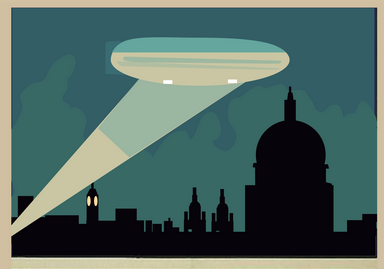
A silhouette of a Zeppelin caught in searchlights over the City of London. Zeppelins

Sausages were severely rationed in Germany in World War 1 because they used nearly 200,000 cattle guts to make gasbags for each of the Zeppelins that bombed London. This made them very difficult to shoot down as the gas was held in so many separate bags.

To read my Zeppelin post look here:

On this Day

1477 – Caxton Prints 1st Book in England. Westminster

https://information-britain.co.uk/linkunit.htm

‘The Dictes or Sayingis of the Philosophres’, dated 18th November 1477. was from the French by Anthony Woodville, the 2nd Earl River brother-in-law of King Edward IV,

However, some people say the first book he published in Englandwas an edition of Chaucer‘s The Canterbury Tales. See https://www.merton.ox.ac.uk/library-and-archives/exhibitions/caxtons-first-edition-of-canterbury-tales for more/

First published November 2024, revised 2025

Martinmas – Festival of Winter’s Beginning November 11th

Martinmas. Statue of St Martin at Ligugé

So, this is All Saints Day, Old style, also known as Martinmas, St Martin’s Day, one of the most important Christian festivals of the medieval world.

Father Francis Weiser in the Handbook of Christian Feasts and Customs suggests this was the Thanksgiving of Medieval Europe:

It was a holiday in Germany, France, Holland, England and in Central Europe. People first went to Mass and observed the rest of the day with games, dances, parades, and a festive dinner, the main feature of the meal being the traditional roast goose (Martin’s goose). With the goose dinner, they drank “Saint Martin’s wine,” which was the first lot of wine made from the grapes of the recent harvest. Martinmas was the festival commemorating filled barns and stocked larders.

It was celebrated with Bonfires in Germany, and with St Martin’s Beef and Mumming plays in England. Following the Reformation, its place in the Calendar has been taken by  Halloween and Bonfire Night.

St. Martin of Tours

St Martin of Tours, 20th Century Stained Glass, St James Church. Chipping Camden.Window 1925 Commemorating World War 1. St Martin’s Feast Day is Armistice Day.Photo K Flude

Martin was a soldier in the Roman Army who would not fight because of his Christian beliefs. When he met a beggar, he cut his cloak in half and shared his cloak. He rose in the hierarchy of the Gallic Church and became Bishop of Tours. According to legend, his funeral barge on the River Loire was accompanied by flowers and birds. He died in AD397. He is one of the few early saints not to be martyred. Martin is the saint of soldiers, beggars and the oppressed. Furthermore, he stands for holding beliefs steadfastly and helping those in need.

St Martin’s in the fields

Early 20th Century Image of Trafalgar Sq. St Martin’s is in the top right-hand corner.

There are two famous Churches dedicated to St Martin in Central London with possible early origins. St Martin’s in the Fields, near Trafalgar Square, has been the site of excavations where finds show a very early settlement, with early sarcophagi. It is the one place where a convincing case can be made for continuity between the Roman and the Anglo-Saxon period. It is possible, that the Church was founded soon after St Martin’s death (397AD). A kiln making Roman-style bricks was found. A settlement grew up near the Church and this expanded to become Lundenwic, the successor settlement to Londinium.

St Martin’s Within

Old Print of London c1540 showing St Pauls, with St Martin's by the wall to the left of the photo
Old Print of London c1540 showing St Pauls, with St Martin’s by the wall to the left of the photo

The other St Martins is St Martins Within, just inside the Roman Gate at Ludgate. Many early churches are found at or indeed above Gates. This one also has legendary links to burial places for King Lud, and for King Cadwallo. He. Cadwallon ap Cadfan, was the last British Kings to have any chance of recovering Britain from the Anglo-Saxons. Geoffrey of Monmouth says that Cadwallo was buried here in a statue of a Bronze Horseman. This was thereby a ‘Palladium’ – something which protects a place from invasion. (See my post about Palladiums of London). It has been suggested by John Clark, Emeritus Curator at the Museum of London, that Geoffrey of Monmouth might have used the discovery of a Roman Equestrian Statue as an inspiration for the story.

St Martin was also the saint of Travellers, and this might explain the location of the Church near the gate. Although there is nothing but legendary ‘evidence’, it would make sense for an early church to be built near Ludgate,. This is the Gate that leads to St Pauls which was founded in 604AD from Lundenwic which was booming in AD650.

Although the City seems to have mostly devoid of inhabitants from the end of the Roman period to the 9th Century, the presence of St Pauls Cathedral means that Ludgate was most likely still in use or at least restored around this period. It leads via Fleet Street and Whitehall, almost directly to the other St Martin.

St Martin and lime plaster

Michaelmas was also the time of year when lime plaster was renewed because lime needs to be kept moist when renewed. It takes three to four days to form the calcite crystals that make it waterproof. Lime plaster was used on most timber framed buildings.

On This Day

1100 – Matilda married King Henry I, thus united the English and Norman Royal Blood lines. The marriage nearly didn’t happen because she, originally called Edith, sheltered in Wilton Nunnery, as a teenager, fearful of kidnap and rape by Normans. Was she a Bride of Christ? or a visitor free to resume a normal life?

(Originally, posted 11 Nov 2021, revised 2022, 2023, 2024, 2025)