
St Columba, or Colmcille is one of the most important saints for the early transmission of Christianity. He was born in 521 and said to be a descendant of the possibly legendary Irish King Niall of the Nine Hostages. But then again, there are legends that say he fathered a good proportion of the Irish.
Niall & the Nine Hostages
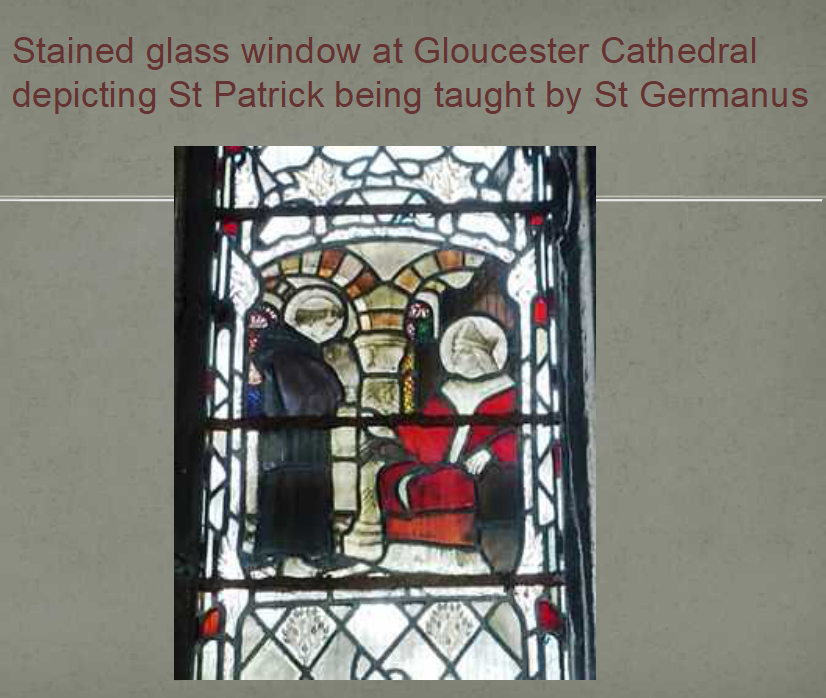
(Why do so many of my titles and subtitles sound like a 70/80s band?) The Hostages were a token of Niall’s power over Ireland as they came from the five provinces of Ireland. These are Ulster, Connacht, Leinster, Munster, and Meath. The other four hostages represented Scotland, the Saxons, the Britons, and the Franks.) His legend suggests he lived in the 5th Century (although some say 100 years earlier) and that he raided Britain and Brittany. It is also said that on one of his raids he captured St Patrick. (see my post on St Patrick) .
Iona
St. Columba was sent at an early age to be brought up as a Monk. He went on to set up Monasteries in Ireland at Derry and Durrow. In 563, he left Ireland, possibly because he got involved in a dispute that had a deadly outcome. He went into exile to Scotland and set up the famous Monastery on the island of Iona, Inner Hebrides. This is off the coast of what would one day be called Scotland. At the time, the west coast was under the control of the Kingdom of Dál Riata, which was, Gaelic, nominally Christian, and controlled parts of Ulster and Western Scotland. These people the Romans called the Scotti.
Picts
From Iona, Columba led the conversion of the Picts to Christianity. The Picts were Britons, speaking a different dialect of Celtic than the Gaels of Ireland and Dál Riata. Their name is said to have been given by the Romans and meant Painted Men. A shared religion, which St Columba brought from Ireland, helped towards the eventual union of the Gaels, the Picts and other British groups into the Kingdom of Alba.
Alba
Alba is the Gaelic name for Scotland – meaning white, and from which we also get Albion. Alba became Scotland, which is derived from the Roman word for the area which in Latin was “Scotia” (from the Scotti). Iona became the traditional burial place of early Scottish Kings such as Macbeth (Mac Bethad mac Findlaích). These Kings were crowned at Scone and buried in Iona. Alba was also able to take territory from the Anglian Kingdom of Northumbria, namely, the Scots-speaking areas South of the Firth of Forth. (Scots being a dialect of English). There were also Norse settlers in the Ireland so Scotland was made of a coalition of Gaelic, Brittonic, Norse, and Scots (English) speakers.
St Columba and the Loch Ness Monster
Much of the events of this part of Columba’s life are recorded by St. Adamnan in The Life of Saint Columba. This was written in the 7th Century, much of which is apocryphal. One notable story tells how he came across a group of pagan Picts who were mourning a child killed by a monster in the River Ness. St Columba revived the child. He then sent one of the Brothers to swim across the Loch to fetch a boat. The “water beast” pursued the Monk and was about to attack him when St Columba told the monster to stop. So it did, retreating to the depths of Loch Ness. Thus began the legend of the Loch Ness monster.
From Iona to Lindisfarne
St Columba died in 597AD. Iona continued to prosper and in, 634 sent St Aidan from Iona to found the Monastery at Lindisfarne. The island is on the Eastern coast of Britain in the Anglo-Saxon Kingdom of Northumbria. This Kingdom of the North Angles, was one of the most powerful at the time and Lindisfarne was instrumental in its conversion to Christianity. Also to the reconciliation between Celtic and Roman Catholic traditions, at the Synod of Whitby. The tradition of evangelism took hold in the British Isles, and it was from here that much of the German-speaking world was converted to Christianity.
This is St Columba’s legacy.
Northumbria’s Contribution to the development of Christianity
There is a developing understanding among scholars that this Irish inspired form of Christianity, fused with the Anglo-Saxon Northumbria took a leading role in ritual, art, scholarship in the Roman Catholic world. Just stop and think about that sentence for a moment. The northern parts of an out of the way set of islands off the edge of Europe took a leading role in the development of Western Christianity. This was highlighted in a recent exhibition of Anglo-Saxon art at the British Library.

A look at the Lindisfarne Gospel and the Book of Kells showcases the amazing art of this period. For a real treat, look through this scrollable virtual copy of the Lindisfarne Gospel. (Currently this is unavailable, I suspect since the BL was hacked. So instead, here is a slightly breathless online introductory video of the Gospel.)
https://smarthistory.org/the-lindisfarne-gospels
The Book itself has been missing from the displays of the British Library for a couple of years, but was on display in Northumberland in 2022. I’m not sure whether it is yet back on display at the British Library. I think not. You can see the Book of Kells at Trinity College, Dublin or look at their online offering here: Not quite as joyous an experience as the online Lindisfarne but beautiful enough.

Lindisfarne evangeliarium, tapijtbladzijde op f26v, Matteüsevangelie
Click here to read my post on Scone and the emergence of Alba.
Here is a virtual tour of Iona
Here is a 360-degree panoramic photo tour of Lindisfarne Abbey
For a tour of virtual treats about Celtic art follow this link: https://harvardartmuseums.org/exhibitions/6342/celtic-art-across-the-ages
First Published in 2023, revised, 2024 and improved 2025, and Niall & the Nine Hostages added 2026