Blossom and Haggerston Park March 18th

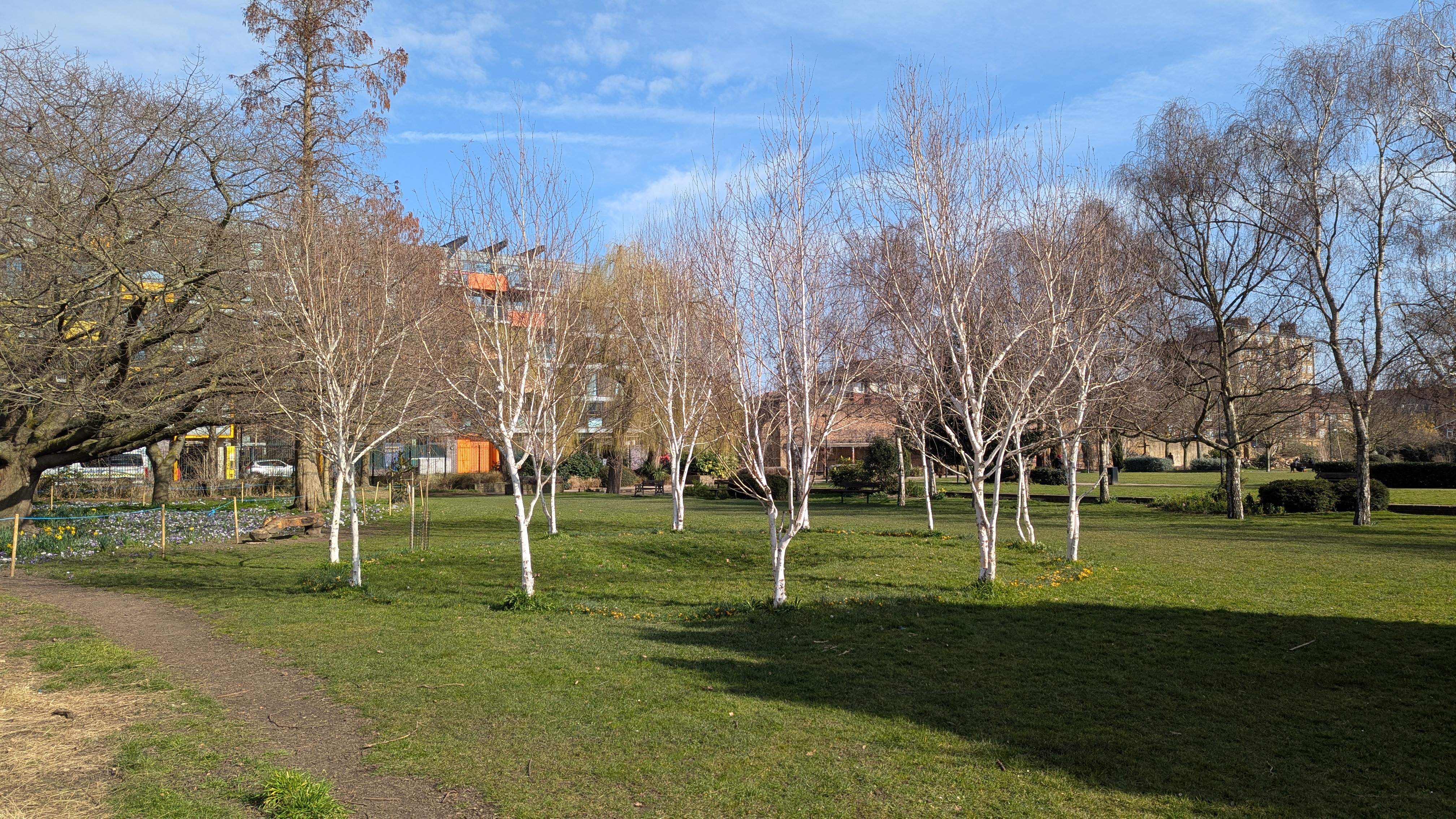
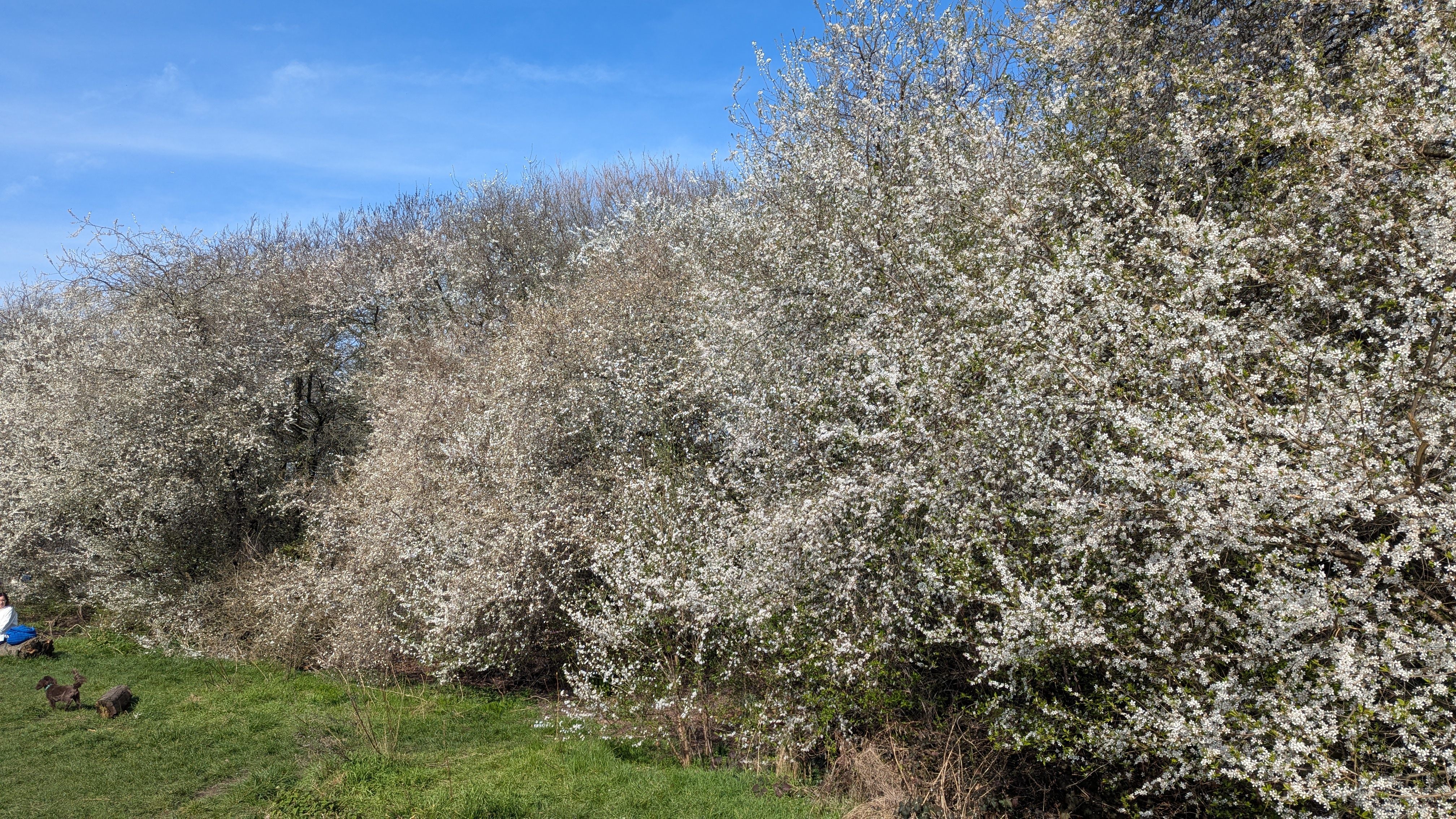
Blosson in Haggerston Park on 9th March 2025, photo by kevin flude
Blosson in Haggerston Park on 9th March 2025, photo by K Flude

Peak Blossom varies year by year. Two years ago, I declared it on March 19th, last year it was later. Normally, it is late March – Early April.However, walking around my local Park Haggerston Park today, Haggerston is whitewashed with amazing blossom. I thought it was Blackthorn, until I read that Blackthorn was the tree from which Sloes are grown.

My ‘Flora Incognita’ app tells me that it is Cherry Plum, Prunus cerasifera. This makes sense as in the summer, there were people collecting the small plums that were growing on the trees. The pink variety of cherry are not yet at peak blossom. I will post about peak blossom, later today.. To read about Cherry Blossom read my post here.

Local magnolia’s are beginning to come out, although I noticed a lot more in my Dad’s area which is 40 miles south. I bought a magnolia about 18 months ago, had quite a fine show in its first year, but this year the scaffolders managed to destroy all the buds, and the squirrels did further damage. So keeping my fingers crossed.

Haggerston Park

I am using this occasion to write about my local park which I have been saving up for a ‘vacant day’. (see my post of Ovid and Vacant days)

Haggerston Park was built on the site of derelict houses, a tile manufacturer and a Gas Works in the post war years. The Gas works was situated by the Regent’s Canal with its own basin for loading supplies. In the 80s the Park expanded to take in some areas which were formerly residential streets. All that really remains of the Gas works are the perimeter walls, and the outline of the canal basin.

The park is a well-loved local facility with green lawns, trees and flowers. It also has a great new playground for kids; astroturf football pitches; tennis courts, toilets, cafe, City farm, and a wild wooded area. This is dominated by the Cherry Plum trees and is a haven for squirrels. Rats loved it too, but I haven’t seen one for 2 years or so. I think they have been successfully ‘controlled’.

There are some strange parts of the design which, I hoped, were traces or inspired by industrial archaeology, but it turns out the designer wanted a maritime theme. So there are flagpoles, tripods and brick structures which are supposedly somewhat maritime.

Park Henges

The Gardeners obviously like the hengiform design because the Park has a lot of henges, and circles. I have my own name for most of them.

Snowdrop Henge
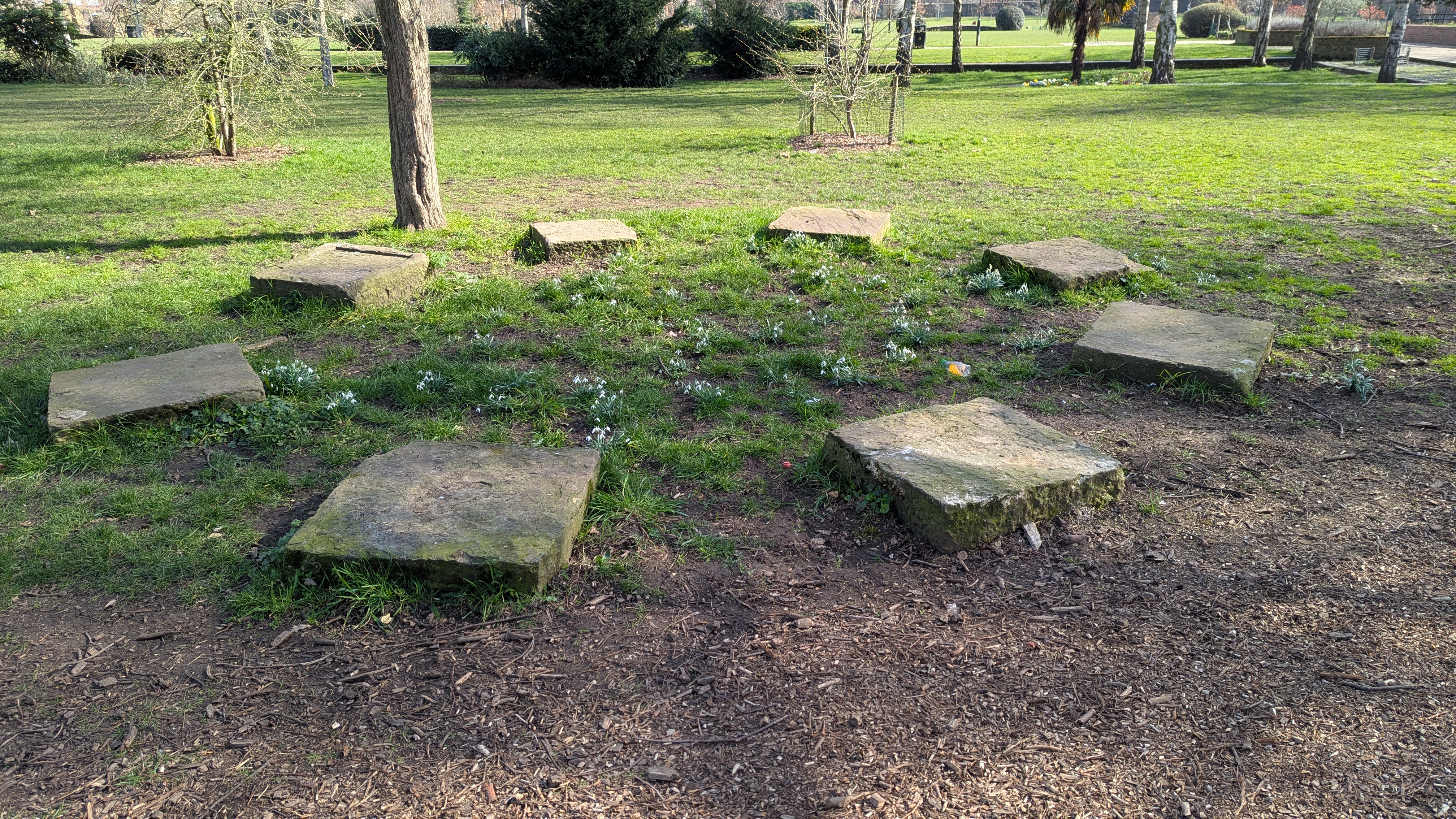
Snowdrop henge Haggerston Park, photo K Flude

Silver Birch & Crocus Circle

Silver Birch Circle Haggerston Park, Photo Kevin Flude

The beautiful crocuses are not so clear in this picture, but they are really lovely! (See my post on Croci here). Last year I got a better photo of the croci.
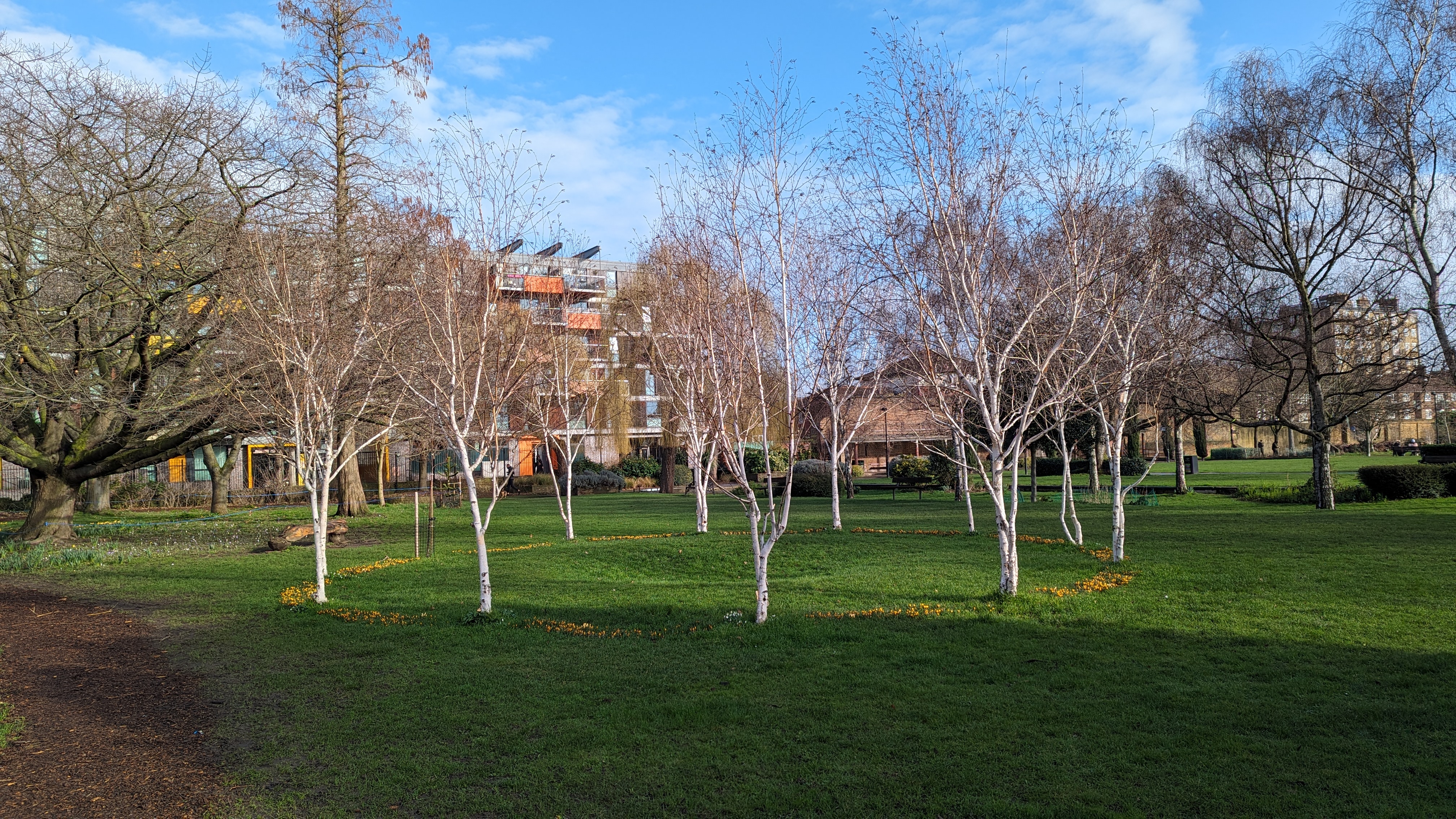
Haggerston Park, 2024 Photo K Flude

Oak Tree Cluster

Oak Tree Cluster, Haggerston Park photo by Kevin Flude

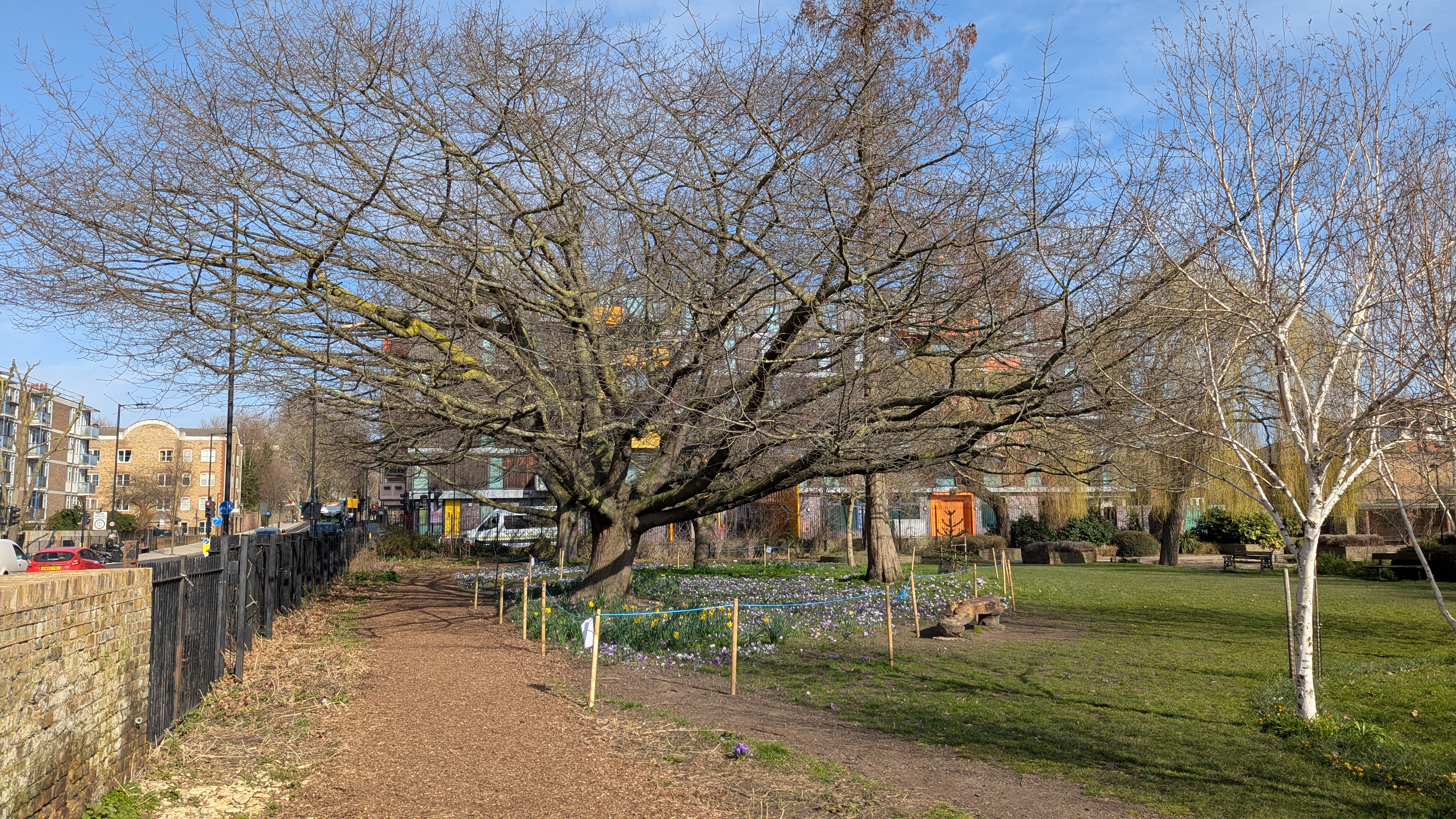
This wonderful Oak tree is surrounded by daffodils and crocuses.
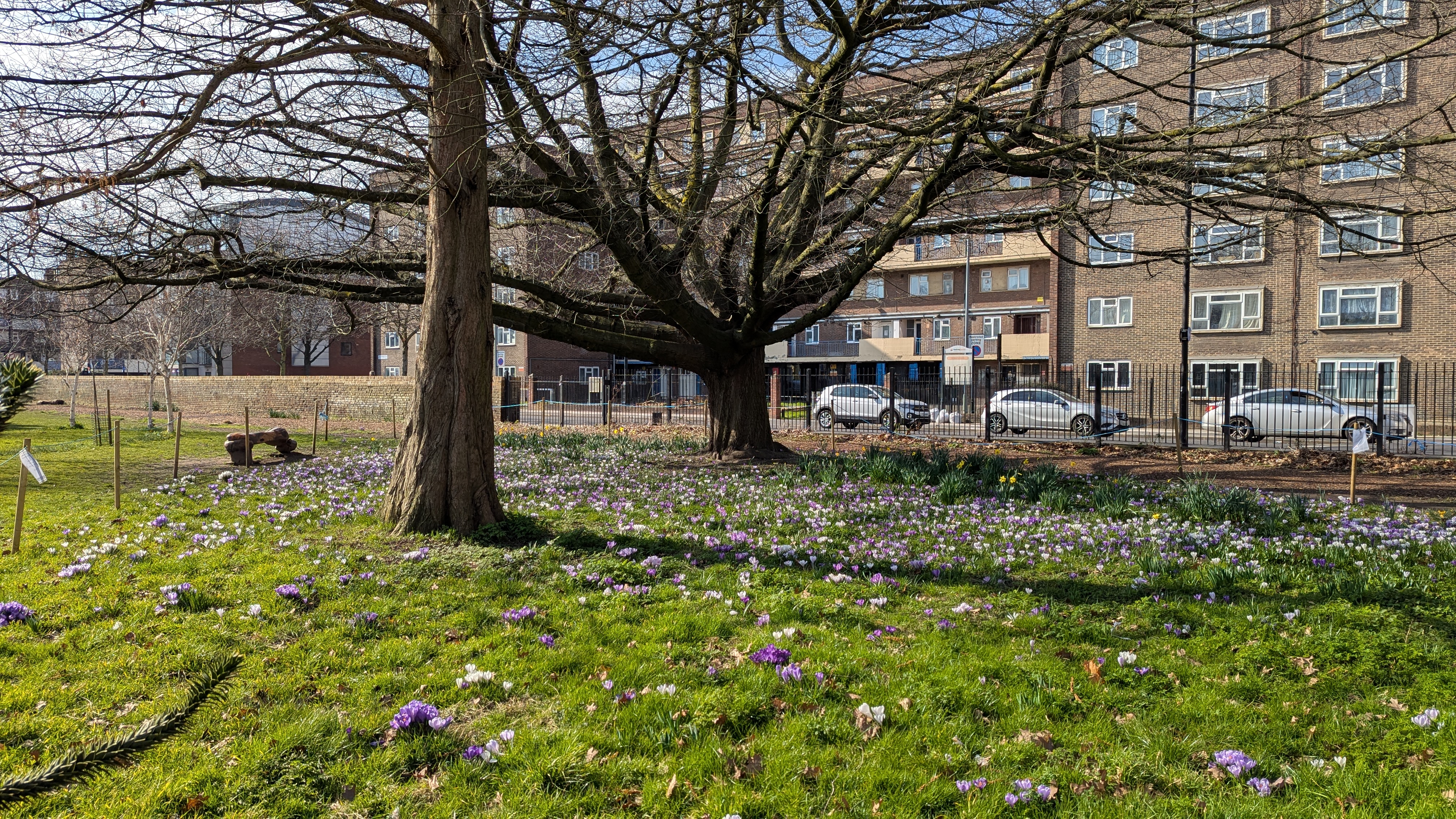
Oak Tree and flowers, Haggerston Park Photo K Flude

Primula Patch

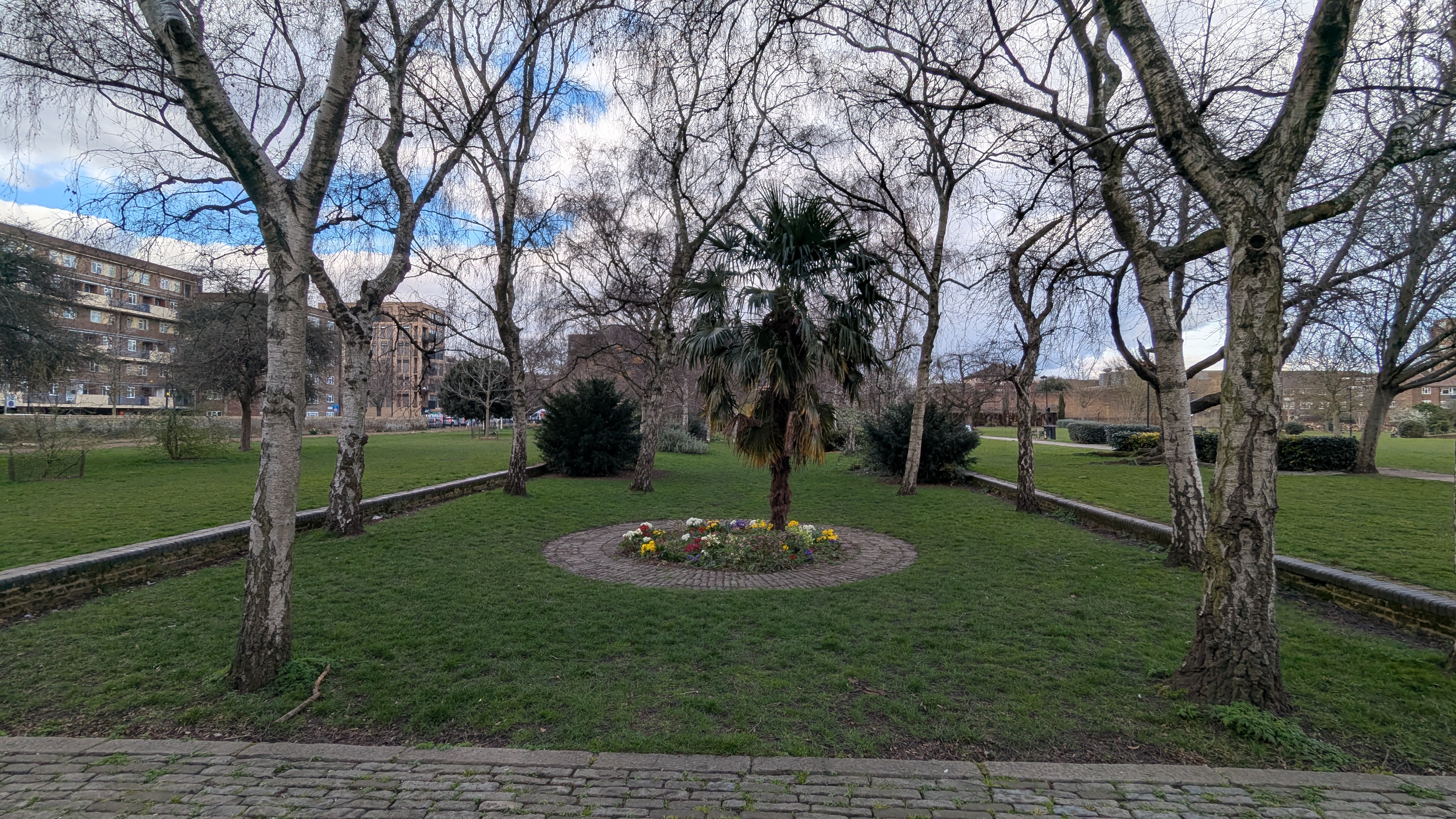
Primula Patch, Haggerston Park, Photo K Flude

The circle is in the middle of the Basin that connected the Gas Works to the Regent’s Canal. Theh patch would have been in the middle of the water, and the stone and brick walls, are the edge of the Basin. See the map below. I do hope they flowers are primulas. If not viola’s, primroses or other winter, spring flowering plants.

Rose and Tripod Circle
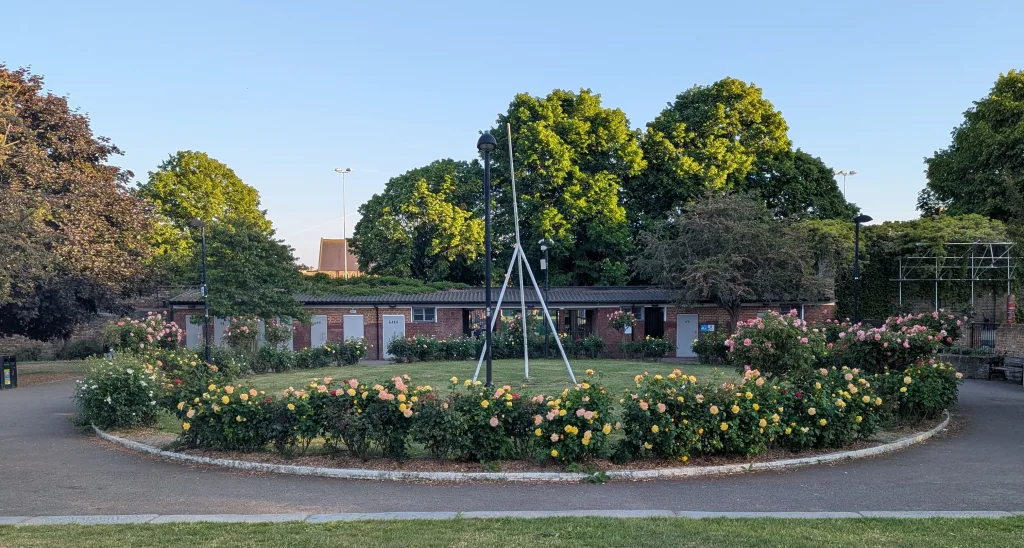
Rose and Tripod Circle. This becomes particularly beautiful at the height of summer.

The Avenue
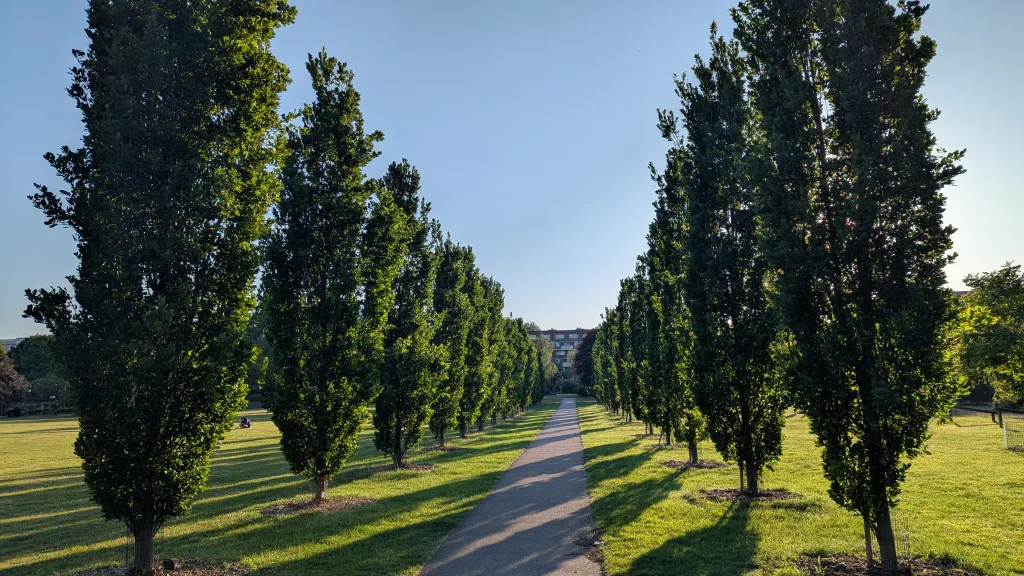
The Avenue, Haggerston Park, photo Kevin Flude

City Farm

The City Farm was set up in 1984 on a site that was once a brewery. It provides a community and educational resource to give people experience of animals and growing plants. It has poultry, ducks, geese, sheep, pigs, goats, donkeys and bees. There is also a lovely cafe callled Frizzante and a shop that sells groceries without packaging. For more on the bluefaced Leicester Sheep at the farm see my post here, and on City Farm piglets here.

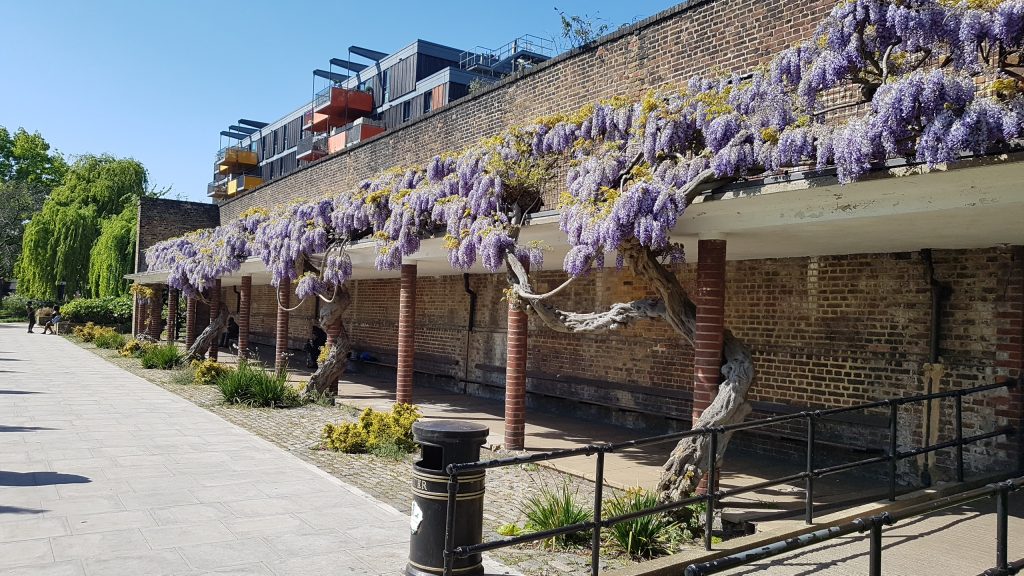
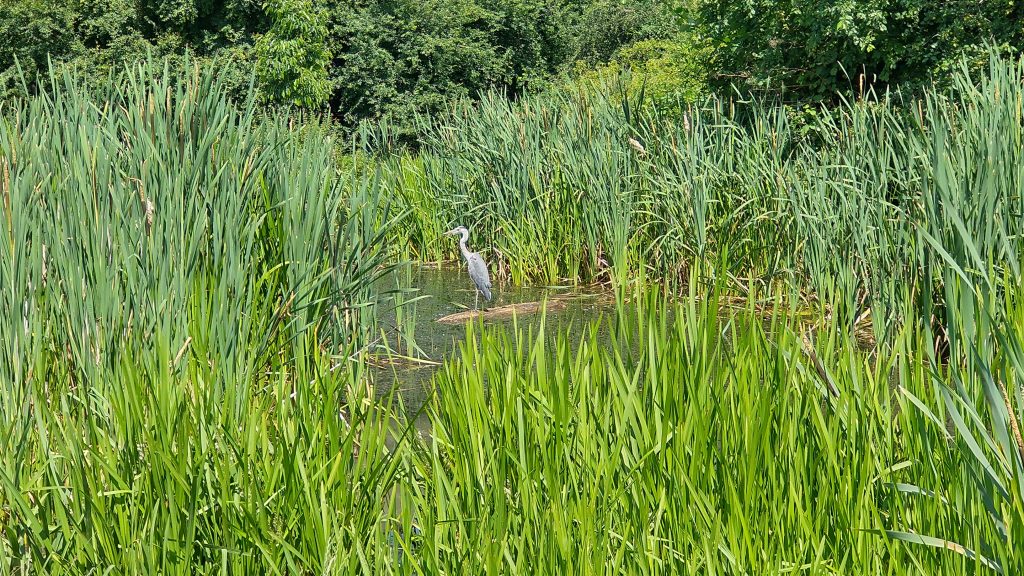
Heron in the Pond, Ancient Wisteria
Gas Works
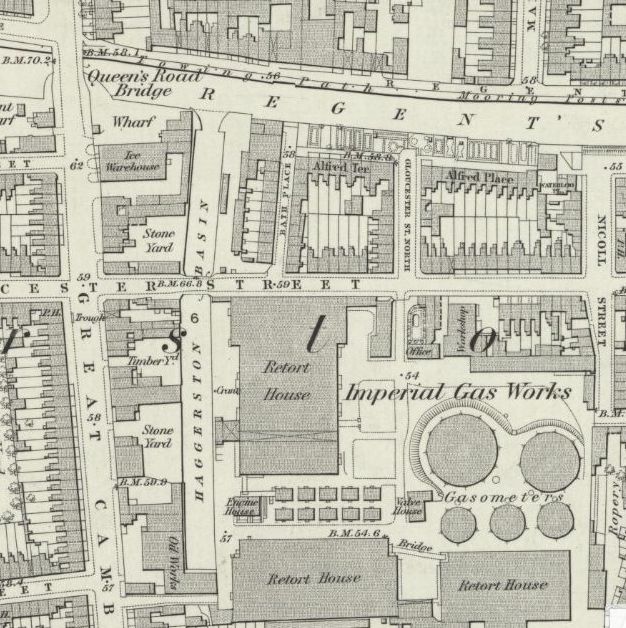
Haggerston Park 1877 Ordance Survey Map

The Park covers the area of the Imperial Gas Works shown above. The photos above are in the area of the old Retort House (top left of the Gas works). The Haggerston Basin is to the left of that. To the left of the Basin are a series of Factories and Yards: Stone Yard, Timber Yard. North of the second Stone Yard is the Ice Warehouse. Near the top left. (for my post on Ice Houses please look here). The Regent’s Canal is just below the top of the map. It was constructed in 1820 or so. This stretch is now the ‘Haggerston Riviera’, and is trendy!). The Canal is the reason for the concentration of 19th Century Industry here. There were brick works, cigarette, breweries, gun, gunpowder, chemical, furniture and many other industries strung along the canal and connecting roads.

Here is a more colourful map.
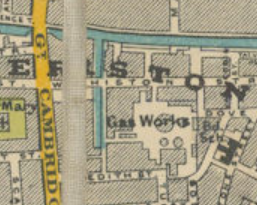
1909 map of Haggerston.

First written on 19th March 2025, revised 2026
How to make a Dish of Snow & Ice Houses November 29th

Photo Zdenek Machacek -unsplash

Yesterday, I posted about the exciting discovery that Ann Shakespeare might have stayed in London with her husband. Here you can read the academic article about the research. Really worth reading!

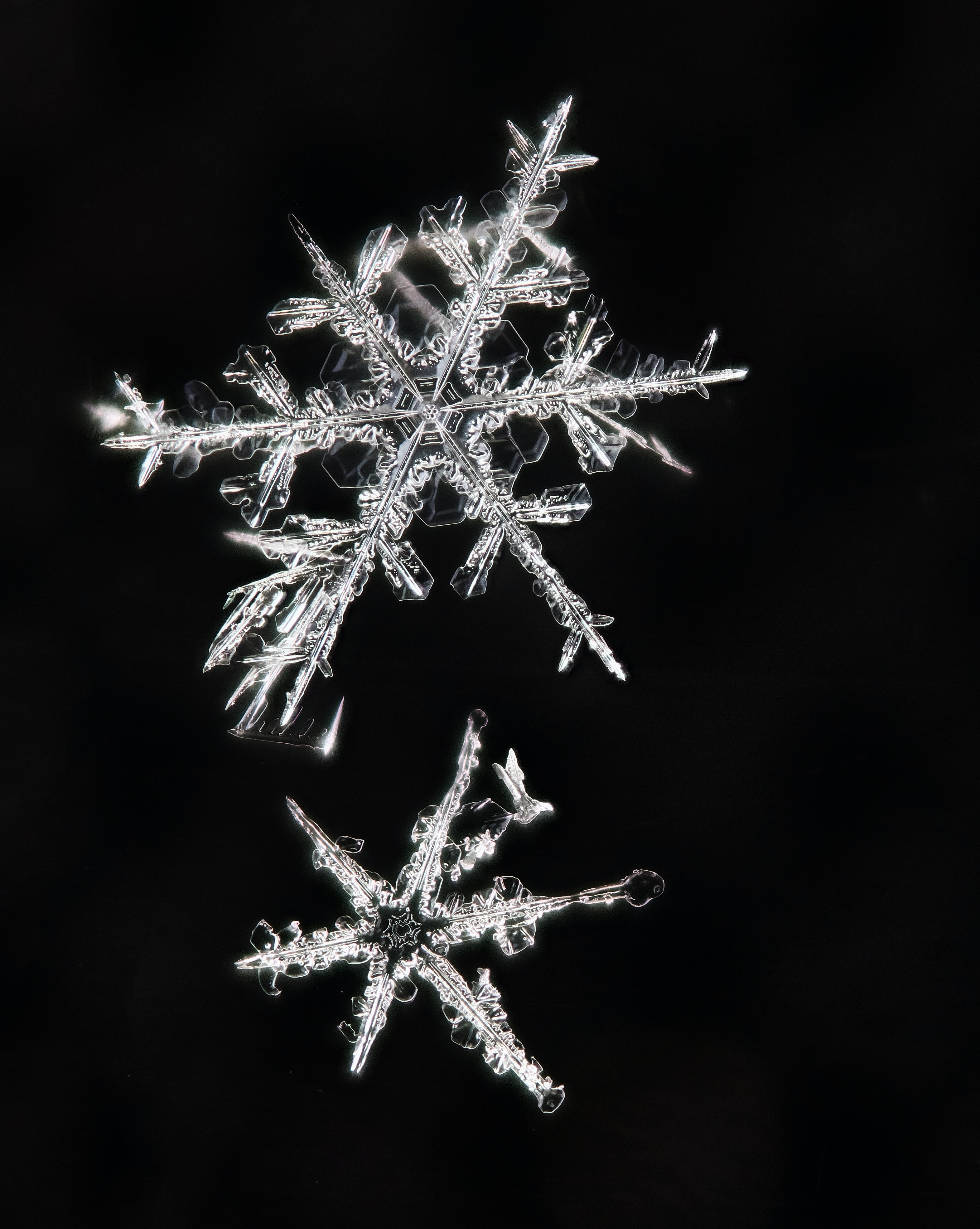
A Dish of Snow

There is a 0% chance of snow, in London and 90% chance of snow in Glen Shee, Scotland, according to the Snow Risk Forecast. And here is an appropriate medieval recipe:

To make a dish of Snowe

Take a potte of sweete thicke creme and the white of eight egges and beate them altogether with a spoone then putte them into your creame with a dish full of Rose Water and a dishfull of Sugar withall then take a sticke and make it cleane and then cutt it in the ende fowre square and therewith beate all the aforesayd thinges together and ever as it ariseth take it of and putte it into a Cullander thys done take a platter and set an aple in the middest of it and sticke a thicke bush of Rosemarye in the apple then cast your snowe upon the rosemarye and fill your platter therewith and if you have wafers cast some withall and thus serve them forth

From Medieval Manuscripts, British Library. Blog. https://blogs.bl.uk/digitisedmanuscripts/medieval-history/page/2/

BF – Before Fridges

Before fridges, snow gave the chance for ice cream and other cold desserts. The problem was keeping it for longer than the cold spell. So many Stately Homes had ice-houses. The V&A had an ice-house just outside their glorious, Henry Cole commissioned restaurant. There is an ice house preserved at the Canal Museum, in Kings Cross. It was set up by Carlo Gatti in 1857 to store ice shipped in from Norway. Another one, in Holland Park, dates from 1770 and served the infamous Fox family (PM Charles James Fox etc).

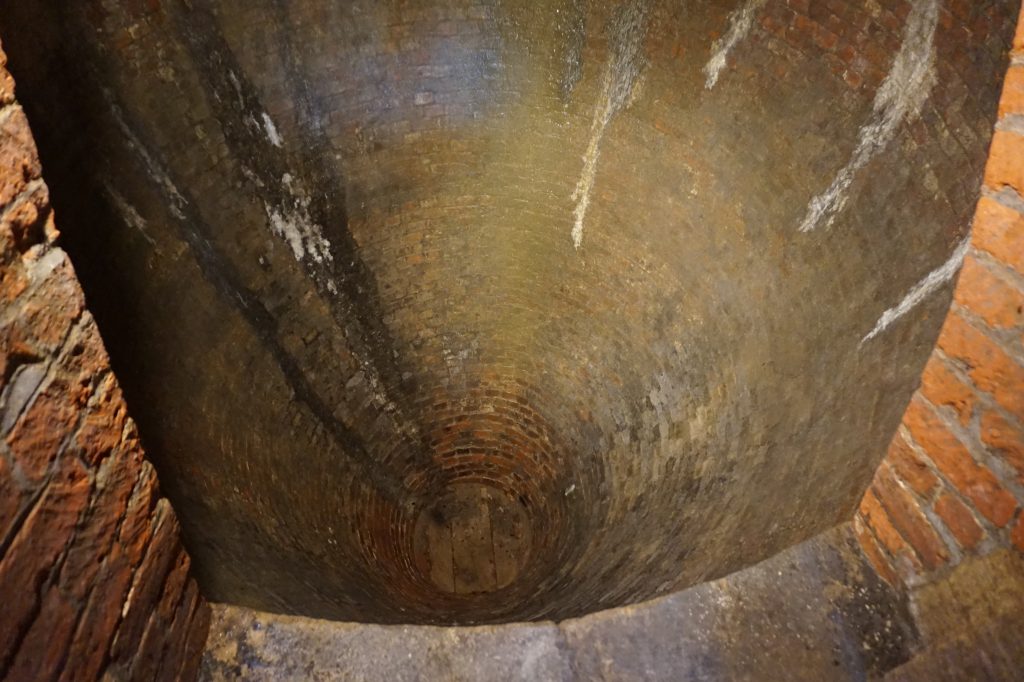
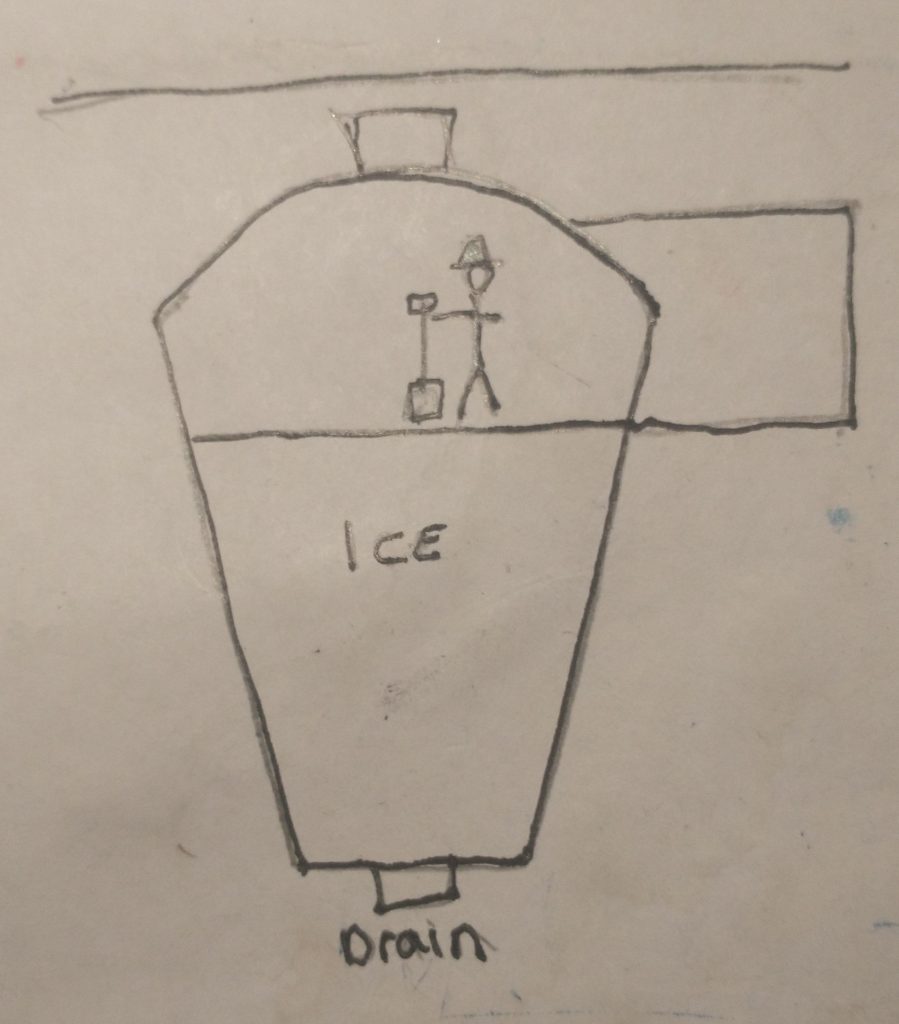
The first ice house was in Mesopotamian, but in the UK they were introduced by James 1 at his palaces in, first, Greenwich Park, and then Hampton Court. An ice house generally consists of a pit in the ground, brick lined, which tapered to a point. Above was a circular, often domed building. The ice was protected by insulation such as straw, and this structure would allow ice to be available all through the summer.

Ice House Dillington, Somerset
Ice House Dillington, Somerset, photo K Flude

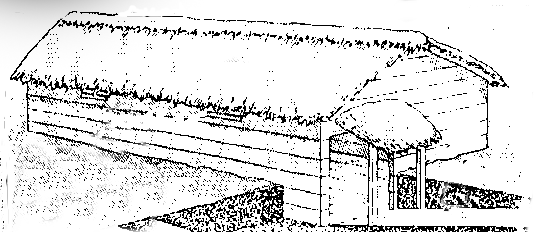
My great-grandmother hung a basket outside the window in winter to keep things cold. On my fridge-less narrow boat, I have been known to keep milk and butter outside the door on the front deck. And to suspend and submerge wine in a plastic bag in the canal in high summer. Butteries and Pantries were typically cut into the ground to make them cooler. A Roman Warehouse in Southwark, of which the wooden floor still survived, had a ramp down to the floor which was cut into the ground surface. The ramp suggests it was used for storing barrels, where they were kept cool.

Sketch of Roman Warehouse found in Southwark.

For more on Icehouses (and an Icehouse in York) and the history of ice cream, see my post from August.

Written November 28th 2022, revised and republished 2023, 2024,2025

Time for Ice Cream August 20th

Photo of Ice House in grounds of Keystone Pub, York, from Doubletree Hilton
Ice House in grounds of Keystone Pub, York, from Doubletree Hilton Photo K Flude

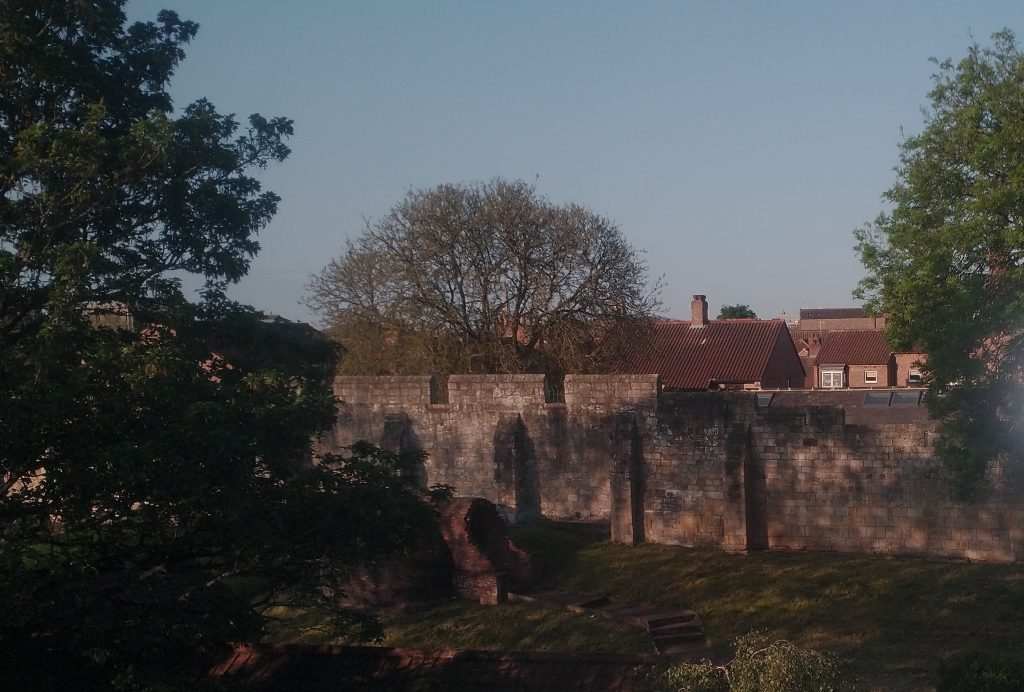
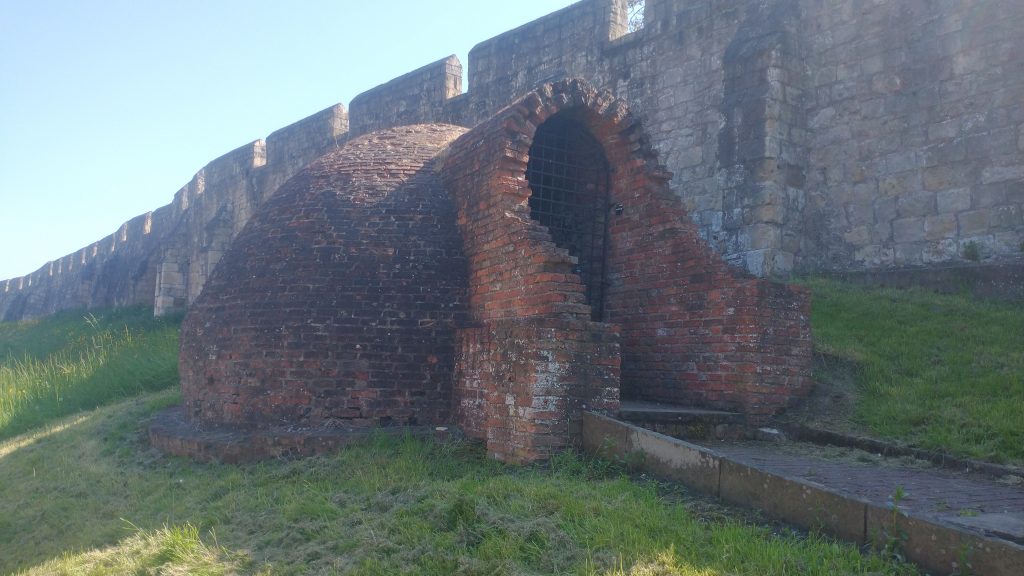
In 2023 I noticed a strange brick building dug into the bank in front of the City Wall. I could only see it from my Hotel Window, near Monk Bar. ‘Very curious.’ I thought, as I looked, ‘It’s either a kiln or an Icehouse. ‘ A ridiculous place for a kiln, I concluded, and as the weather was nice, I went out to explore.

By Monk Bar (Bar means Gate in York) I found a pub called the Keystones. Through its yard I could see the round brick structure, in the photo below.

Ice House in grounds of Keystone Pub, York
Ice House in grounds of Keystone Pub, York Photo K Flude

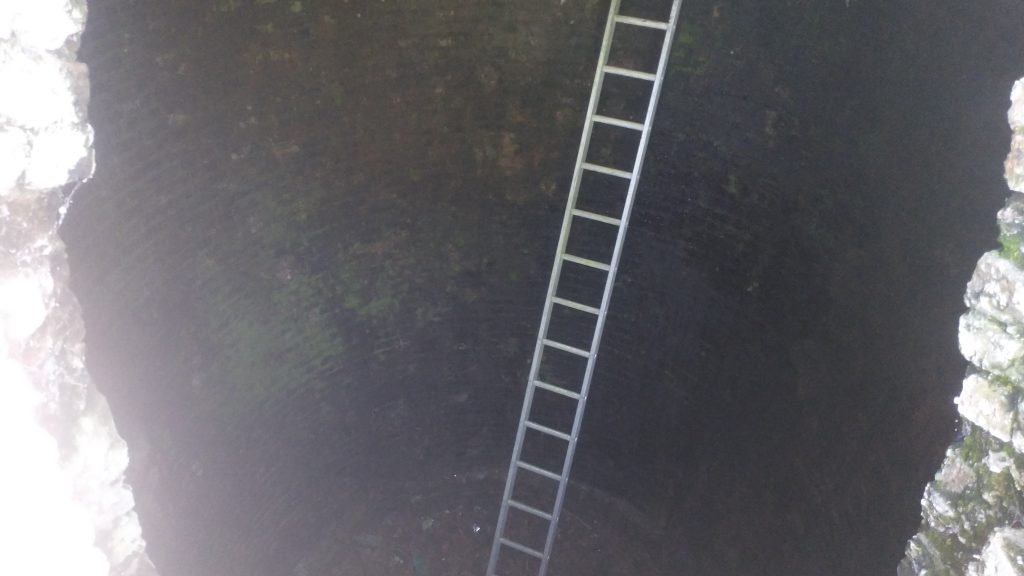
‘Icehouse!’ I thought to myself with increasing confidence. The ladder to the cavernous conical hole beneath it proved the point. It dates to about 1800.

Detail of Ice House in grounds of Keystone Pub, York Photo K Flude

I wrote a brief history of Ice Houses in November 2022. This you can read in my post ‘How to Make a Dish of Snow’ here. But it doesn’t say much about ice cream. I have been meaning to write a piece on that subject since I read an article on the history of Ice Cream. It was in the Friends of the British Museum magazine. I intended to précis it and do a little research and include here. But, in the meantime, I received an email from ‘Jetpack’, a plugin for WordPress users, that offered me an AI plugin, which I wanted to try. So this is the first AI generated piece of information I have ever used (Aug 2023).

WARNING AI GENERATED TEXT!

Ice cream has a long and fascinating history. It’s believed that the ancient Chinese were the first people to eat a form of ice cream, flavoured with fruit and honey. The Persians also had a version of ice cream using ice and grape syrup. In the 13th century, Marco Polo brought the idea of ice cream to Europe from China. The dessert became popular in Italy, where early recipes called for flavoured snow and ice. By the 18th century, ice cream was regularly served in English and American households. Today, ice cream is enjoyed all over the world in many variations and with a plethora of flavours.

JetPack AI Generated (I’ve improved spelling and grammar.)

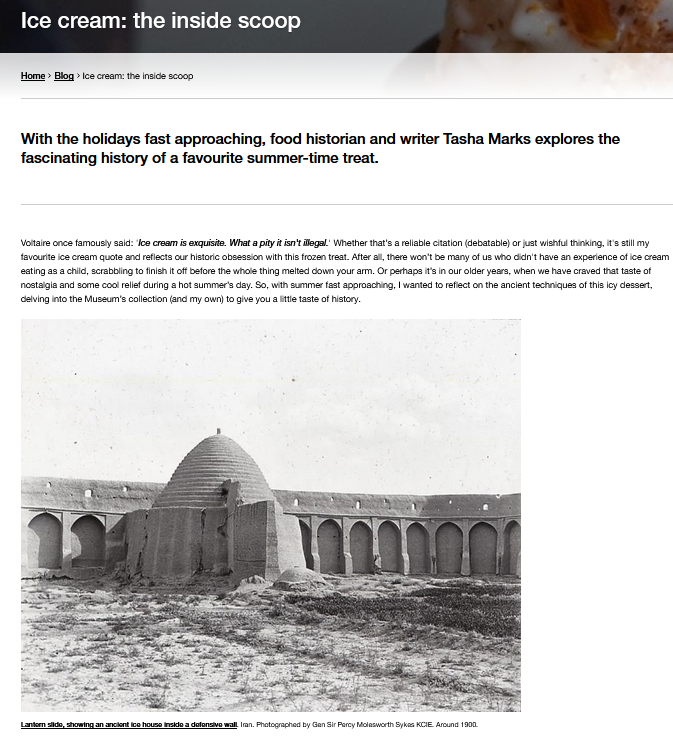
Now, settle yourself down with that pistachio and ciocolata gelato and read real writing on the subject. This from the British Museum. Please note that the ice house pictured below is also, weirdly, just by a City Wall. But this time in Mesopotamia.

Blog Page from British Museum showing picture of an ancient Mesopotamian Ice House by a defensive wall.

To read the British Museum Post click British Museum Blog ice-cream-inside-scoop

First published August 2023, republished August 2024. August 2025