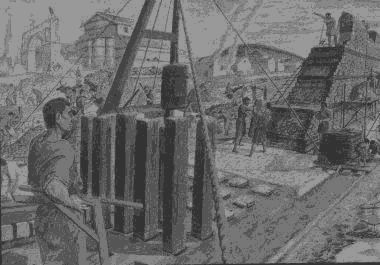
Reconstruction View of Roman Riverside Wall being built
Saturday 30 October 20/22 11.30 am Monument Underground Station
This is a walking tour features the amazing archaeological discoveries of Roman London, and looks at life in the provincial Roman capital of Londinium.
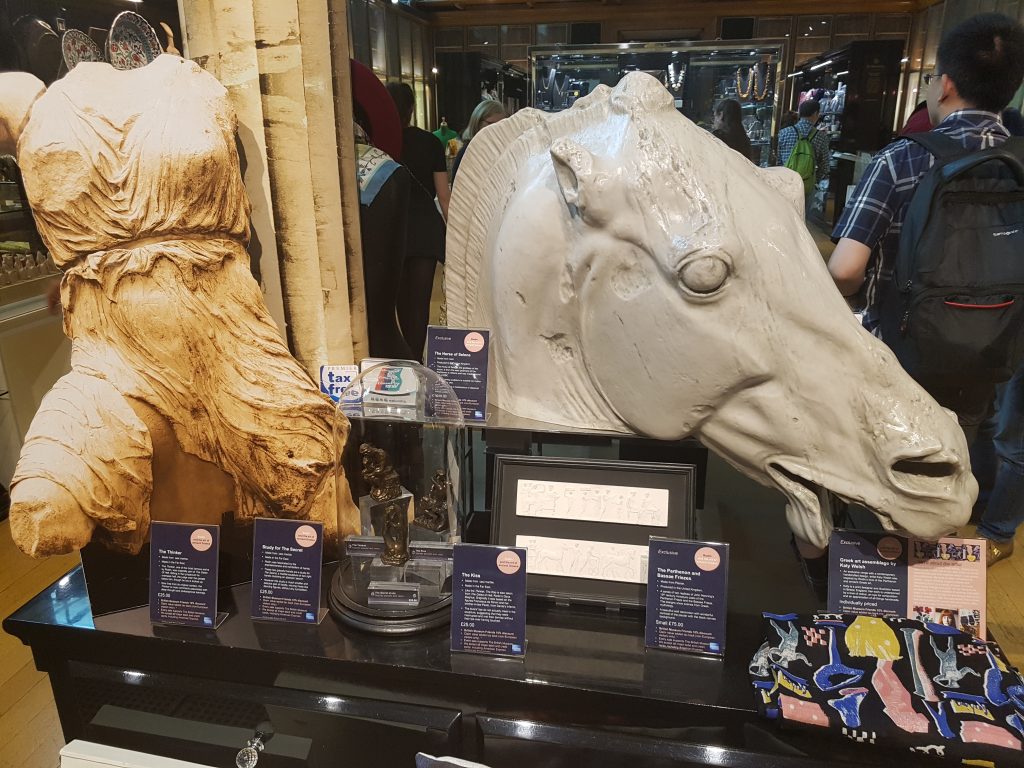
Copies of the Parthenon available in BM shop! Photo: KFlude
AKA the Elgin Marbles. All my life it seems as if we haven’t been talking to Greece about sending them home. Recently, there was a strong dismissal of any such hope. But today, I read that the British Museum is open to discussion. Statements from the Deputy Jonathan Williams and even the Chairman, ex Tory Chancellor of the Exchequer, George Osborne, have expressed optimism that there is a ‘deal to be done’.
Reading between the lines, the position appears to be based on the ‘fact’ that we own them legally, and that, by discussion of mutual loan arrangements, some, if not all, of the stones, can go home on loan, in exchange for other loans from Greece coming to the UK.
Nearly, all ‘restitution’ cases are settled by the realisation that there are mutual benefits to be had for the return of items. The Horniman is leading the way with its announcement to return 72 Benin Bronzes to Nigeria.
The statement from Nigeria suggests that mutual loans are a part of the deal here too.
Abba Tijani, director-general of Nigeria’s National Commission for Museums and Monuments (NCMM), said: “We very much welcome this decision by the trustees of the Horniman Museum & Gardens. Following the endorsement by the Charity Commission, we look forward to a productive discussion on loan agreements and collaborations between the NCMM and the Horniman.”
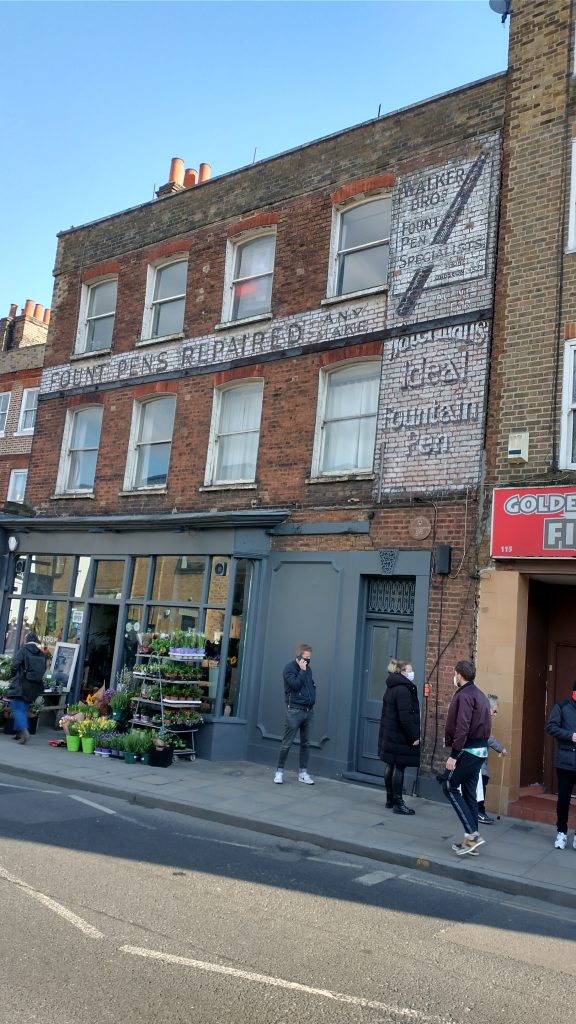
Ghost Sign. Church Street, Stoke Newington photo K Flude
This is a graph by Flourish who make superb business graphics. Just watch as you see the composition of the Stoke Newington Church Street change year by year before your eyes.
The Society of Antiquities newsletter ( Salon: Issue 494) reports on a restitution deal of one of the major collections of Benin bronzes back to Nigeria.
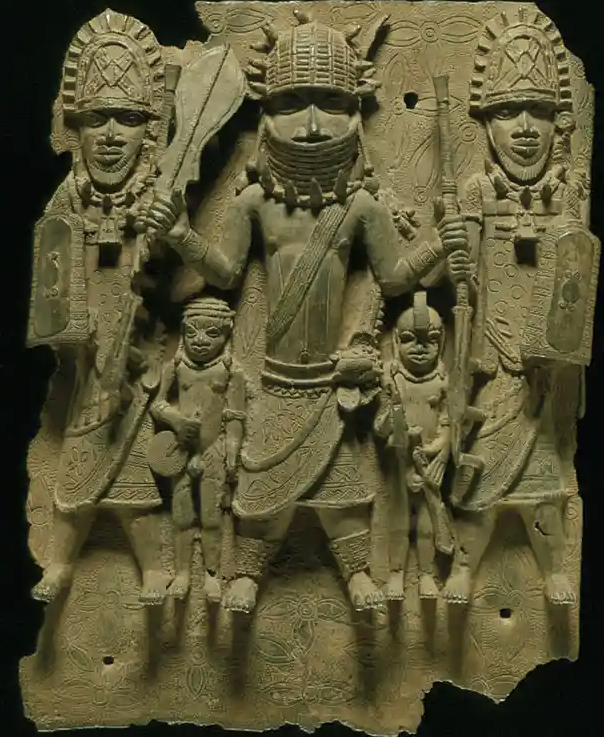
The Bronzes, which are actually Brasses, are from the Royal Palace of the Kingdom of Benin which was looted by the British during the Benin Expedition of 1897 as part of British subjection of Nigeria.
Wikipedia reports that ‘Two hundred pieces were taken to the British Museum in London, while the rest found their way to other European museums. A large number are held by the British Museum[ with other notable collections in Germany and the United States.’
The Smithsonian has recently made a similar arrangement to restore their brasses to Nigeria, and UK collection The Great North Museum: Hancock, has followed suit joining Jesus College, Cambridge and the University of Aberdeen. (The Art Newspaper)The British Museum has refused and is indeed prevented from so doing by an Act of Parliament.
An interesting sidelight on the collection is that the wealth of the Benin Kingdom benefited from income from the slave trade.
This is what The Society of Antiquities newsletter ( Salon: Issue 494) says:
Two Benin Bronzes Returned
Last week, Germany signed a restitution agreement with Nigeria. The agreement covers 1,100 artefacts currently held by the Linden Museum in Stuttgart, Berlin’s Humboldt Forum, the Cologne Rautenstrauch-Joest Museum, Hamburg’s Museum of World Cultures and the State Ethnographic Collections of Saxony. The agreement immediately puts these objects into Nigerian ownership; the affected Museums will then negotiate directly with the Nigerian Government whether they return to Nigeria, or remain in Germany under custodial agreements.
Lai Mohammed, Nigeria’s Culture Minister, described the agreement as ‘the single largest known repatriation of artefacts in the world’. It was marked by the return of two Benin Bronzes – an eighteenth century 35kg head of an oba and a 16th-century relief depicting an oba accompanied by guards or companions. German foreign minister, Annalena Baerbock, said ‘It was wrong to take the bronzes and it was wrong to keep them. This is the beginning to right the wrongs.’
Image credits: The returned Benin Bronzes, Martin Franken
The Society of Antiquities newsletter ( Salon: Issue 494)
Hark! hark! The lark at heaven’s gate sings, And Phoebus ‘gins arise, His steeds to water at those springs On chalic’d flowers that lies; And winking Mary-buds begin To ope their golden eyes; With everything that pretty is, My lady sweet, arise: Arise, arise. Cloten Scene III Cymberline
Arise, O Sun! Let the Darkness of Night Fade before the beams of your glorious Radiance
Midsummer, astronomically, is 21st June. So, summer has started. But, meteorologically speaking it has been here since the beginning of June.
In Christian London celebrations were at their height on the Church’s Midsummer’s Day, 24th June, on the Vigil and Day of St John the Baptist (23rd, 24th June). Stow points the way:
‘every mans doore being shadowed with greene Birch, long Fennel, Saint John wort, Orpin, white Lillies, and such like, garnished upon with Garlands of beautiful flowers, had also Lampes of glasse, with oyle burning in them all the night, some hung out braunches of yron curiously wrought, contayning hundreds of Lampes, light at once, which made a goodly shew, namely in new Fishstreet, Thames Streets, &c’
Survey of London, John Stow
Bonfires from the night before were smouldering, where the ‘wealthier sort’ set out tables, furnished with ‘sweete beade and drinks plentifully’ where ordinary people could rub shoulders with the rich and ‘be merrie with them in great familiaritie’. There were large processions of ‘Captains, Lieutenants, Sergeants, Corporals, &c Wilfers, Drummers, and Fifes, ….Ensign bearers, Sword Players, Trumpeters on horseback, … Gunners, …. Archers, …Pike Men, ….Pageants, and, poor people in straw hats holding cresset lamps to make a show in exchange for a wage. All accompanying the Lord Mayor, Sheriffs each with their own Giants, Henchmen and Pageants from the Little Conduit in Cheape to Aldgate, and back via Fenchurch Street.
Midsummer was a mix of May Day, Halloween and a street festival with ‘Robin Hood games’, bale fires, the ‘summer pole’ dancing, merriment and pervading sense of the uncanny.
First published in 2022, revised and reposted in June 2024
Tuesday June 21st 2022 7.30 pm Tower Hill Underground Station (meet by the Tower Hill Tram coffee stand) |
We explore London’s History through its celebrations, festivals, calendars, almanacs and its myths and legends.
As the Sun and Moon move around our skies we look at how Londoners organised and celebrated their year throughout history.
The tour is led by Kevin Flude, a former archaeologist at the Museum of London, Curator and Lecturer
One of the most popular forms of publication in London was the Almanac. It was full of seasonal advice, of prophecy, traditional wisdom, and important events past and future. Different cultures, religions and institutions had their own methods of organisation and celebrations. We explore the varied calendars that ruled people’s lives from the prehistoric period to the present.
On the way we look at customs, and folklore of the Celts, Romans, Saxons, and into the Medieval and Modern period. We look at different calendars such as the Pagan year, the Egyptian year, the Roman, Christian, Jewish, Church and Financial years. On the route we discover the people who lived in London and walk through fascinating areas with their deep histories.
This is a London Walks Guided Walk. Look at their web site for a list of other of their amazing walks
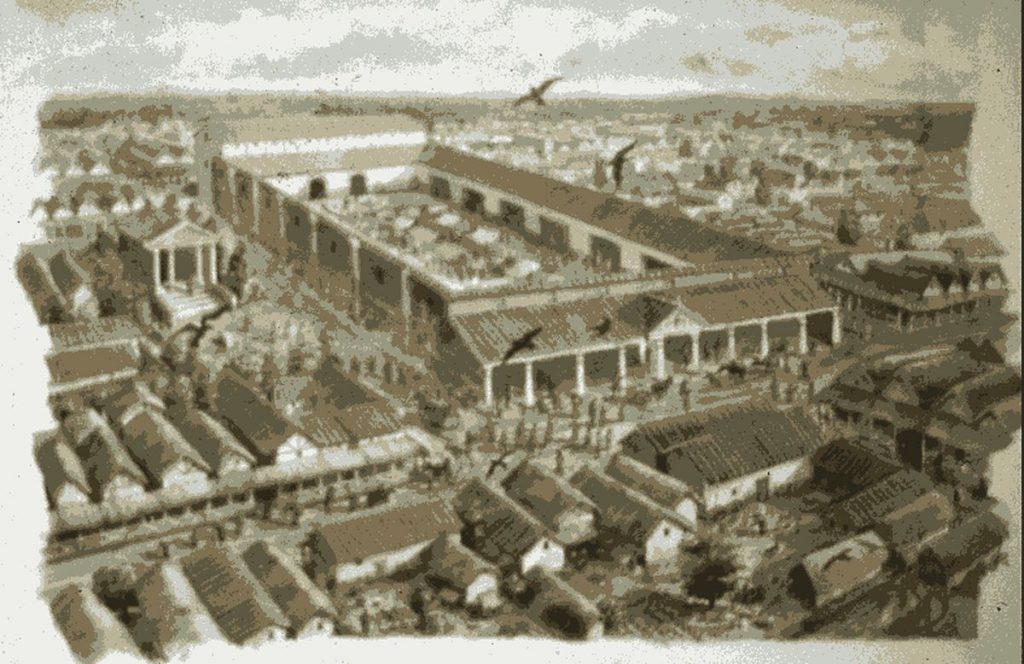
Painting of the Roman Forum of London from the air
So on Saturday the 30th I am doing 2 guided walks and one Virtual Walk.
ROMAN LONDON – A LITERARY & ARCHAEOLOGICAL WALK
Saturday 30 April 20/22 11.30 am Monument Underground Station
This is a walking tour features the amazing archaeological discoveries of Roman London, and looks at life in the provincial Roman capital of Londinium.
We disembark at the Roman Waterfront by the Roman Bridge, and then explore the lives of the citizens as we walk up to the site of the Roman Town Hall, and discuss Roman politics. We proceed through the streets of Roman London, with its vivid and cosmopolitan street life via the Temple of Mithras to finish with Bread and Circus at the Roman Amphitheatre.
Publius Ovidius Naso and Marcus Valerius Martialis will be helped by Kevin Flude, former Museum of London Archaeologist, Museum Curator and Lecturer.
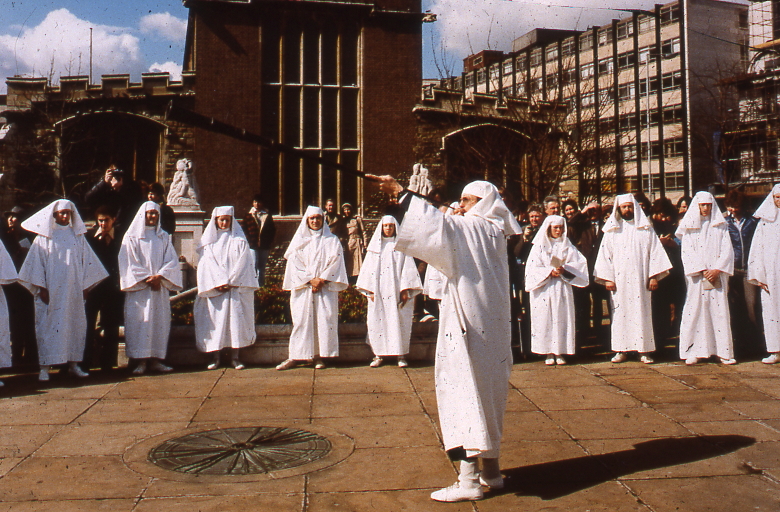
The walk tells the story of London’s myths and legends and the Celtic Festival of Beltane.
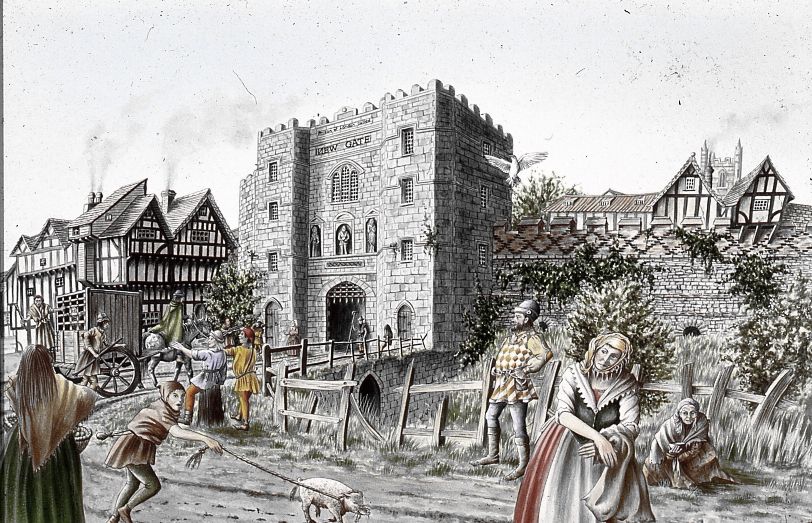
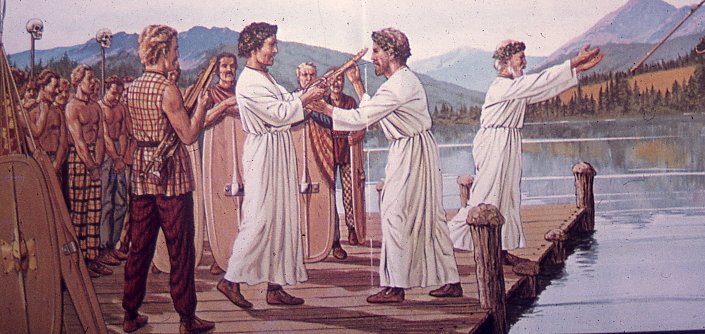
The walk begins with the tale of London’s legendary origins in the Bronze Age by an exiled Trojan called Brutus. Stories of Bladud, Bellinus, Bran and Arthur will be interspersed with how they fit in with archaeological discoveries. As we explore the City we also look at evidence for ‘Celtic’ origins of London and how Imbolc may have been celebrated in early London.
The virtual route starts at Tower Hill, then down to the River Thames at Billingsgate, to London Bridge and Southwark Cathedral, to the Roman Forum at the top of Cornhill, into the valley of the River Walbrook, passed the Temple of Mithras, along Cheapside to the Roman Amphitheatre, and finishing up in the shadow of St Pauls
This is a London Walks Virtual Walk. Look at their web site for a list of other of their amazing walks.
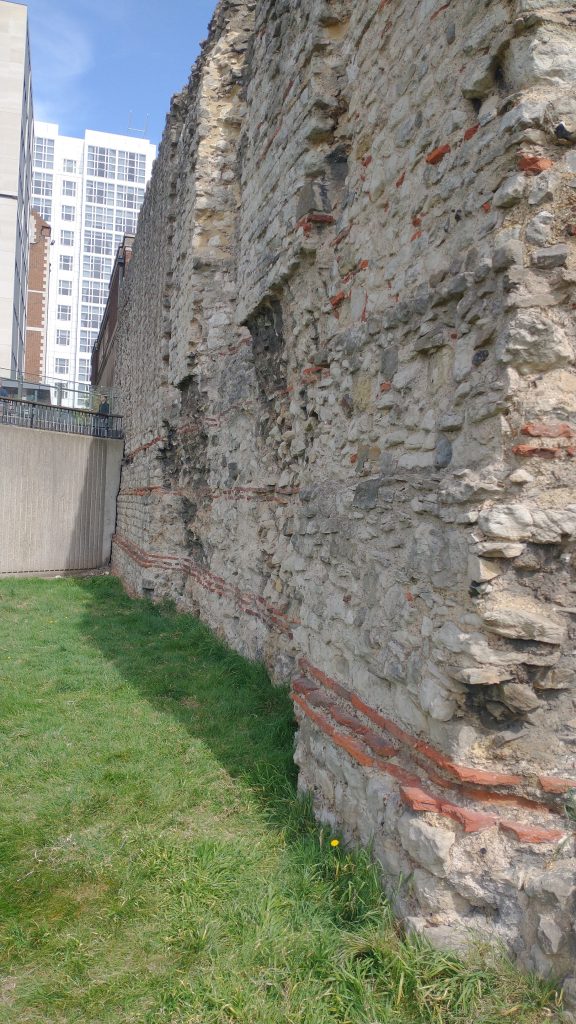
Roman and Medieval Town Wall at Tower Hill, London
Yesterday I had a meeting with a couple of archaeologists at Tower Hill to discuss my recent letter to the London Archaeologist which suggests a piece of conservation of the wall was wrong and based on an misunderstanding of the physical remains. To my relief they agreed with my assessment of the wall and we agreed to follow it up.
It is a complex issue and I will try to upload a copy of the report at the bottom of this page. But briefly. at some point in the past the inner face of part of the wall collapsed (the piece closest to the camera). You can see that only the bottom Roman tile courses continue to the camera end of the wall – the ones above were swept away in the collapse on the inner face, they survived on the outer face.
The section just visible at the front used to show this collapse graphically because only half of the width of the tile courses survived (i.e. on the outer face not the inner face.) At some point someone in the 1980s picked up some fragments of the tile and stuck them superficially on the wall to complete the tile courses. This shows a complete lack of understanding of the archaeology of the wall and ignores the collapse. You can just see the end of that false tile course a few feet above the bottom genuine Roman tile course.
Not a great nor important bit of history but the Wall Walk plaque is wrong on this matter too so it would be good to get that changed.
Its difficult to date the original collapse but the wall at the top looks clearly medieval.
What was even more exciting is that while waiting for the archaeologists to turn up I was looking from afar at the section above. If you look very carefully at the wall nearest the camera you will see a few feet above the bottom of the wall a string of stones which are aligned to the Roman tile course and it seems that whoever recreated this section of the Roman wall after the collapse tried to copy the Roman wall but did not have any tiles so did it in stone. This part of the ‘repair’ is clearly different in style to the medieval repair above (although I had not noticed the difference in 40 years of looking at this wall).
I was very excited about this and thought maybe this is Post Roman work, because it is different to the section above which is medieval, and mimicking or continuing the Roman design the Roman. Identifying a pre-Medieval repair to the wall would be, I think, unique.
I pointed it out to Jane Sidell and Jenny Hall, and they were also interested in this finding. Jane pointed out that it seems that whoever did this seems to have been copying the Roman core of the wall just to the left, rather than copying the original Roman inner face which you can see at the end of the wall away from the camera. She thought it was more likely to have been a 19th or 20th Century repair. But we are following it up.
Here is the letter as published in London Archaeologist Vol.16 No. 2 / Autumn 2020
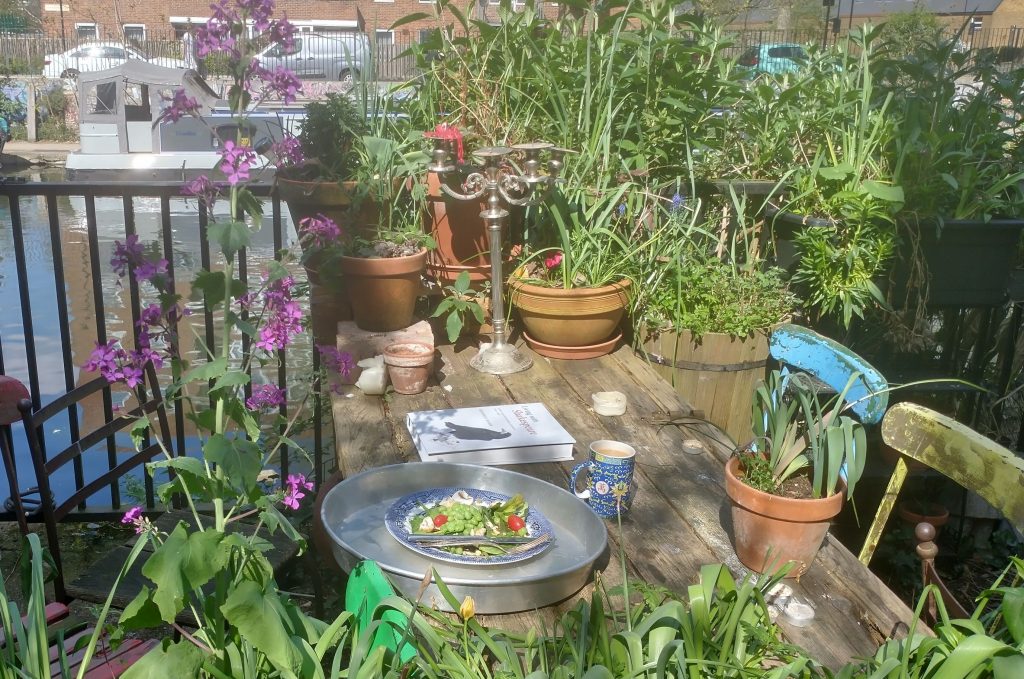
The first sunny day of the year inviting enough to eat in the garden, partly because is is north facing, and its only now getting a decent time in the sun; and partly because it was a stonking warm sun. The Haggerston Rivera in the background is full of people deciding that this is the day to get it all out out in the sun. But also there is still a small proportion of people dressed ready just in case a chill north wind arrives unexpectedly.
Its also the death of the daffodils day – at least in my garden. Still a few tulips and even one or two yet to bloom. But the star of my garden at the moment is Honesty, which you can see to the left of the table (an old door repurposed). I first grew it on the balcony and it has now spread down and appeared in three places, and is rather lovely.
Its latin name is Lunaria annua because the silver seed pods look like a full moon, but they also look like silver coins. Therefore it symbolises wealth. It’s name Honesty is said to come from the translucent pod revealing the seeds beneath, honestly.
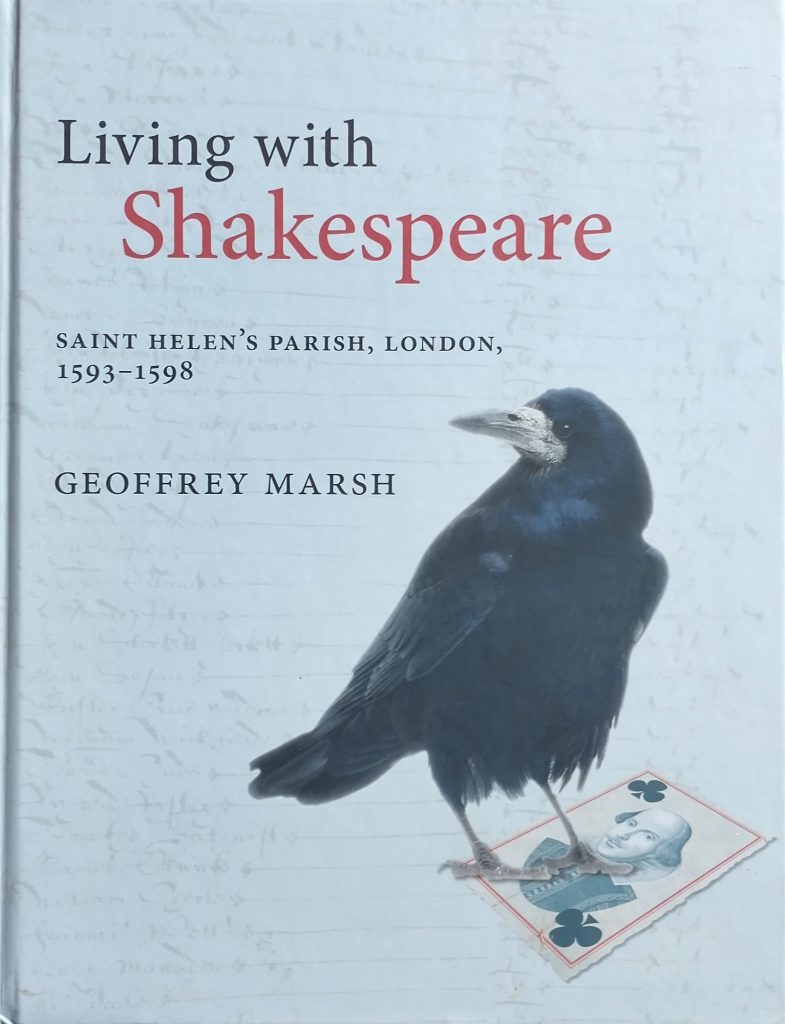
The book you see on the table s written by a friend from my Museum of London days who has recently published a book on Shakespeare’s time living in the Parish of St Helen’s near Bishopsgate.
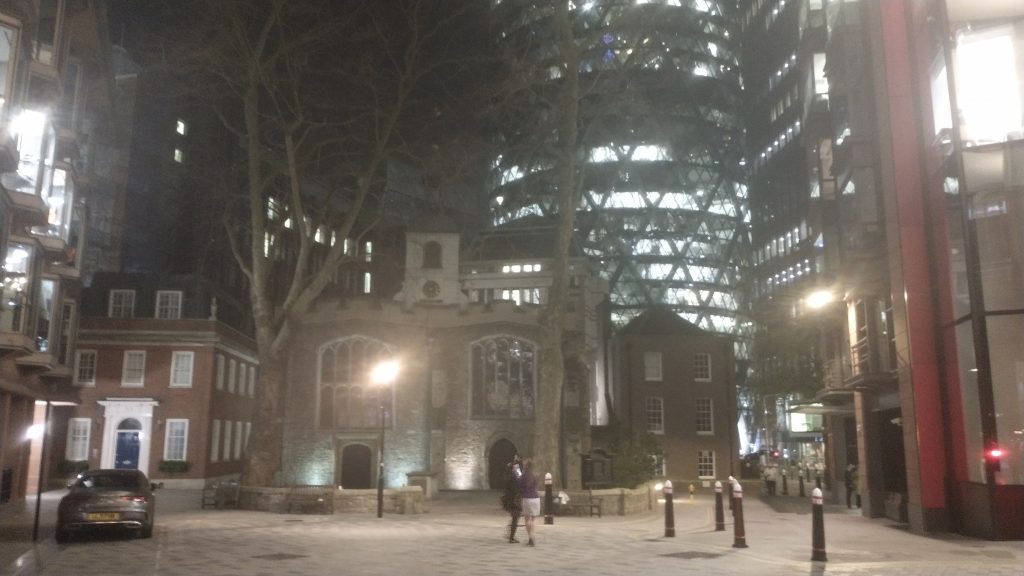
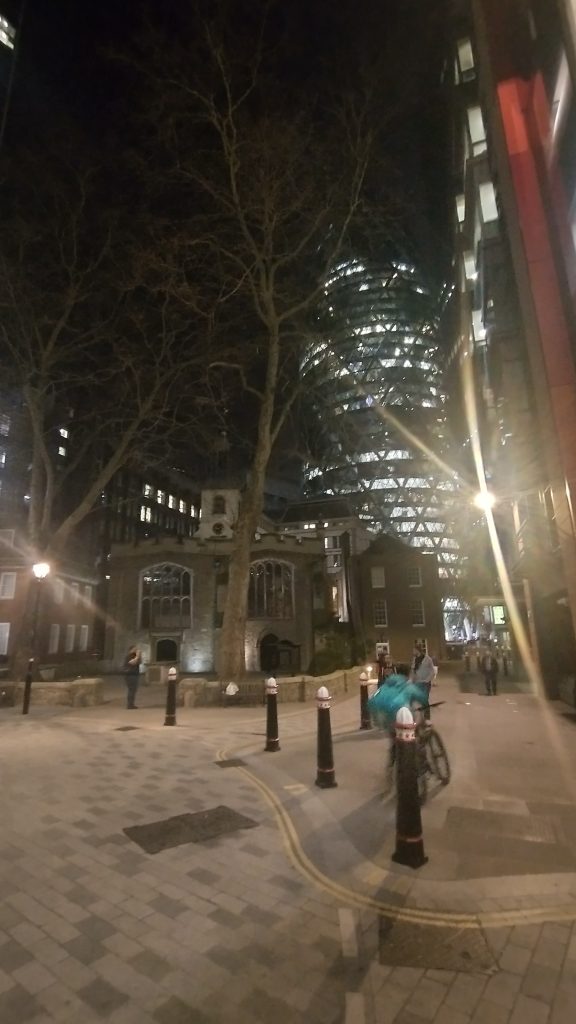
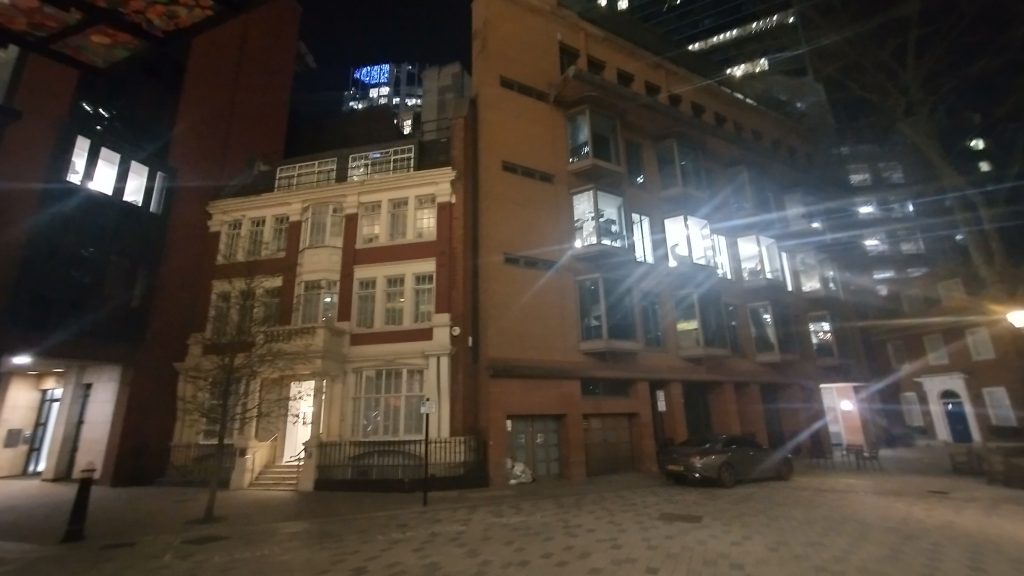
St Helens ChurchSt Helens ChurchShakespeare, Geoff Marsh says, lived on the site of the building on the right. Great St Helens St
 negotiate directly with the Nigerian Government whether they return to Nigeria, or remain in Germany under custodial agreements.