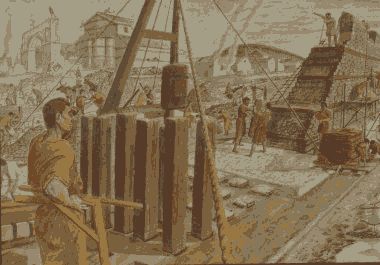
This is the Podcast which is a taster for the Roman Walk on Saturday 16th December 2023 starting at Monument Tube Station. This is a London Walks Walk by Kevin Flude. To book click here.

The Past brought to Life
This is the Podcast which is a taster for the Roman Walk on Saturday 16th December 2023 starting at Monument Tube Station. This is a London Walks Walk by Kevin Flude. To book click here.
Below, I give links to the Late November and early December Posts I have revised and republished. But, first, I would like to tell you about a great lecture I heard at the British Museum, this evening. It was given by Dr Emma Southon on her book about women in the Roman Empire. Her viewpoint was that a study of women in the Roman Empire gives a radically different insight into the Roman world than the traditional. One full of humanity rather than normal evidence which is, generally, about wars, and Empires and bravery and horrific cruelty and ambition and honour. She started with the story of Turia, whose extraordinary epitaph on her tombstone miraculous survived and gave her husband’s view of his extraordinary wife, and his utter sorrow at his loss on her death. Below, is a review of the book and a link to a podcast with the Author.
So, here are the December posts. December 1st and 2nd give an overview of December and the meaning of Winter. December 3rd is about Advent and the fact that you were not allowed to marry during Advent. December 4 gives a Shakespearean view of a cold winter’s day, and a composition by Vaughan Williams.
And late November posts, November 28th tells some interesting tales, both ancient and modern, about Eels, Pies, Rock ‘n’ Roll and my horror of Jellied Eels. November 29th, tells you how to make a ‘dish of snow’ and introduces Ice Houses. November 30th is about Scotland and St Andrews. Like them if you like them! And share them if you want to share them.
In Lia Leendertz’ lovely ‘The Almanac – A Seasonal Guide to 2022’ she lists the following as in season for foraging:
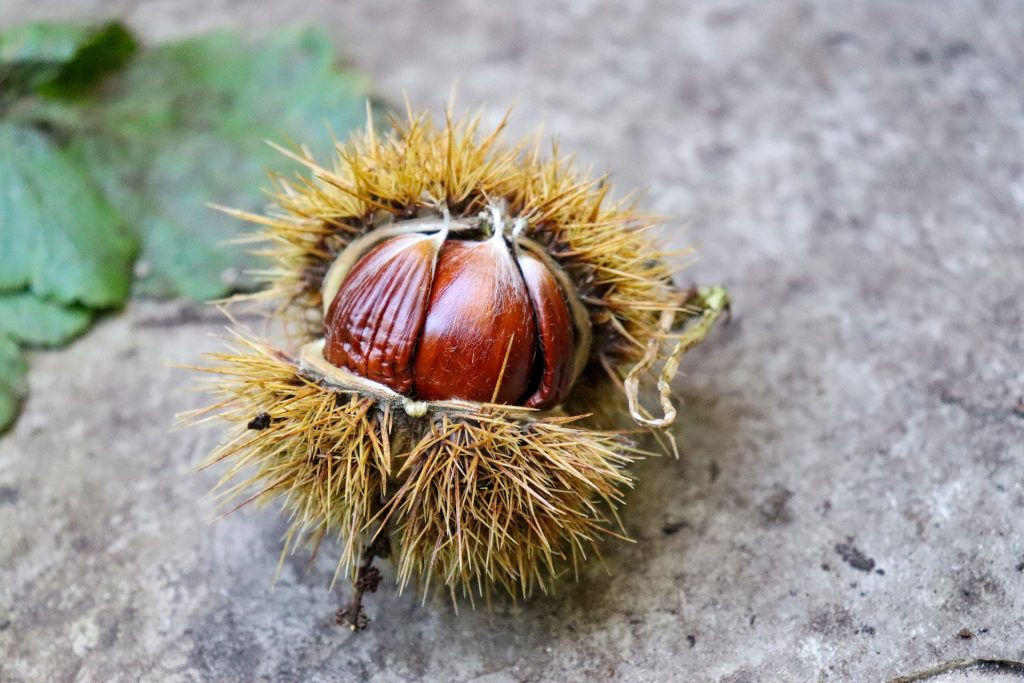
Crab Apples and sweet chestnuts
Roots: Dandelion, horseradish, Jerusalem Artichokes, and wild garlic
Wild Greens: chickweed, dandelion, and wintercress
Game: Hare, rabbit, pheasant, and venison
Sweet Chestnuts were introduced by the Romans and have long been a feature of Christmas. They can be ‘baked, roasted, boiled or microwaved’. You need to prepare them by scoring a cross in them; otherwise they will explode when cooked. They are often sold by street vendors (there is often a seller on the Millennium Bridge on the way to Tate Modern in London) and, in my family, are always a part of the stuffing for the Turkey. They can also be candied, puréed or stored in syrup. (The Woodland Trust Foraging in November and December).
John Evelyn, the 17th Century Diarist and author of a book on trees (Sylva, or A Discourse of Forest-Trees and the Propagation of Timber) wrote that the nuts were:
‘delicacies for princes and a lusty and masculine food for rusticks, and able to make women well-complexioned’
He complained that in England they are chiefly given to pigs to eat.
Chestnut meal was also used for whitening linen and for making starch. Marones, imported from Italy, France, Switzerland, and S. Germany contain 15% sugar and so were used to make a thick syrup and a ‘very usable’ sugar, from which Marons Glacés are made.
The wood of the chestnut is very useful and is/was used for building, pit props, furniture, poles for hops etc. but is nowhere near as long-lasting as oak.
Medically, they were used for treating convulsive coughs such as whooping-cough, where the leaves were infused in a pint of boiling water. (A Modern Herbal by Mrs M Grieve)
First Published on 3rd December 2022, Revised and republished in December 2023
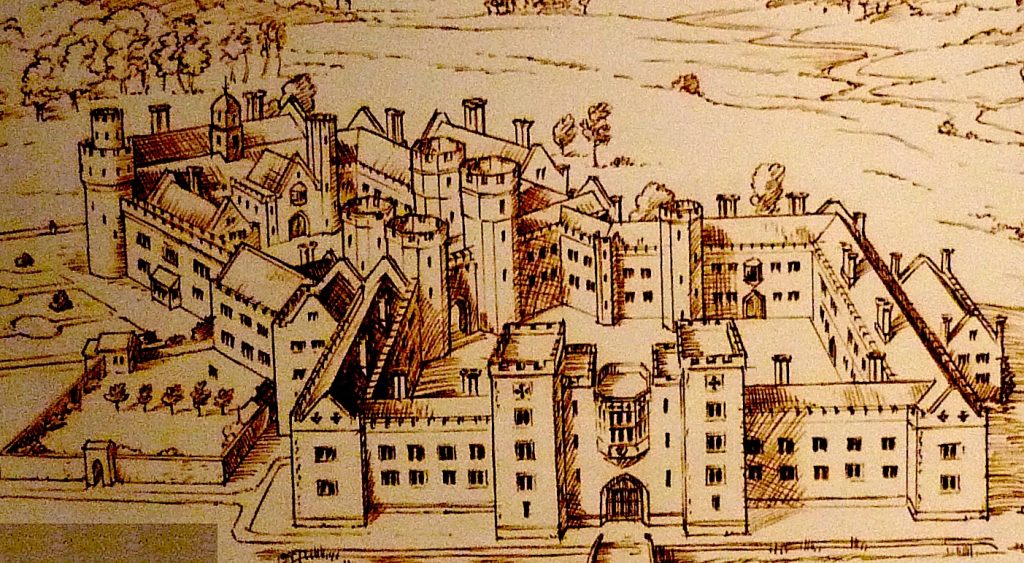
I was interested in this site because it was one of the many palaces owned by Henry VIII, and it began as a moated manor house before a transition into a small red brick courtyarded Palace, as seen above. Henry had, if my memory serves me well, approximately 57 Palaces and Manor Houses. 16 in the London area and 11 along the River Thames
But what I really liked when I visited the website was the charm of this lovely video by the Enfield Archaeology Society. Now those who know the wonderful TV Sitcom called the ‘Detectorists’ starring Toby Jones, Mackenzie Crook, Diana Rigg and others, will recognise the styling of the amateur archaeologists – all looking like rumpled would be Indiana Jones’s! Very English.
https://www.enfarchsoc.org/elsyng/
The good news is that the show is having an extended Christmas Special outing this year.
I have revised and republished the following Almanac of the Past posts.
I have just given a guided walk and a virtual tour of London in the prehistoric period. I rashly promised, as follow-up, a booklist. I have many books that I have found pivotal in shaping my own opinions, but I find myself very reluctant to recommend them in the light of the remarkable new, and recent, DNA discoveries.
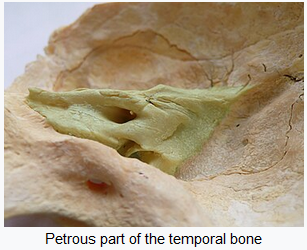
The cause of this ‘revolution’ is the Petrous Bone – a small bone in/near the ear from which scientists can extract, without too much damage to ancient skeletons, a reliable source of ancient DNA. Previous studies were done on modern DNA and extrapolating backwards. Now, archaeologists can, relatively cheaply, investigate (and often debunk) archaeological theories about the spread of human cultures.
It is a salutary story. Early archaeologists had, what you might call, a colonial, diffusionist model of the past. So when a new culture was identified, normally on the back of the arrival of a new form of pottery. It was interpreted as being spread by diffusion, normally from the ‘civilised’ fertile crescent to barbaric pre-literate Europe. Hence, Stonehenge was thought to be built by a prince from Mycenae, on the basis of the Lion Gate in Mycenae having vague similarities with the Trilithons at Stonehenge (and other diffused cultural markers). And with a viewpoint, that the uncivilised Britons would not be able to build something so amazing!
Archaeologists in the 1970s rejected this imperialist model and preferred to think that cultures need not depend on advances from their betters, nor should ‘invasion’ be allowed to be the main means of technical and cultural advancement. The advent of Radio Carbon Dating profoundly affected how the past was dated, and showed that diffusionist chronologies, often, did not stand up. And thus Stonehenge was freed from cultural imperialism, and we Brits could take all the credit. And Prehistory lost a whole host of ‘invasions’ and ‘migrations’, and a start was also made on diminishing the centrality of the ‘invasions’ at the core of the Anglo/Saxon/Viking migrations into Briton.
Along comes the petrous bone and the development of the study of Ancient DNA, and we discover, in the last couple of years, that:
So we now have at least 3 major population replacements before the coming of the Romans, Saxons, Vikings and Normans. Very annoying to find that those old-fashioned imperial archaeologists of the early 20th Century had it more correct than the enlightened archaeologists of the Late 20th Century.
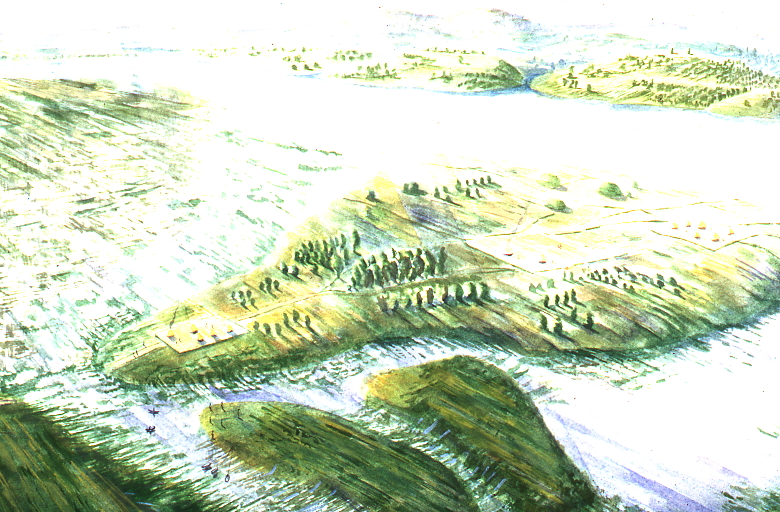
So to my book list. Firstly, you will have noted above that I have linked the stories to reliable websites, so you can get further information. Here are a few other important websites:
Neolithic Houses at the Horton site at the Wessex archaeology site
Archaeology of Heathrow Terminal 5 https://framearch.co.uk/
Bronze Age Bridges at Dorney: https://heritageportal.buckinghamshire.gov.uk
Vauxhall Mesolithic and Bronze Ages Structures: https://www.vauxhallandkennington.org.uk/
Principle Place Feasting Site?: https://www.independent.co.uk/
Hill forts in the London Area: https://hillforts.arch.ox.ac.uk/
As to books, I suggest the best start is to read Mike Parker Pearson’s ‘Stonehenge A Brief History, Bloomsbury Academic 2023’ because it is up-to-date and Pearson has considered the DNA studies noted above.
For similar reasons and for a more general introduction to Britain in the Prehistoric period, you could try:
Roberts, Alice ‘Ancestors: A Prehistory Of Britain In Seven Burials ‘ Publisher: Simon & Schuster Ltd 2022
which has good reviews, but I have not yet read it.
I know that neither is about London, but the only ‘book’ on Prehistoric London I have is:
Merriman, N ‘Prehistoric London’ Museum Of London, 1991
And this is more of a booklet than a full academic book. There is another book, but then it was published in 1914:
Prehistoric London : its mounds and circles / by E.O. Gordon ; with appendices by John Griffith. Volume c.1 1914
For the period just before the Roman Invasion, I would highly recommend reading Julius Caesar’s opinions on Prehistoric Britain.
Caesar, Julius (ed Anne & Peter Wiseman). ‘The Battle For Gaul’ Chatto And Windus Ltd, London 1989
Peter Wiseman was my Professor at University, and it is an excellent introduction, still available new but also cheaply second hand at Abebooks.
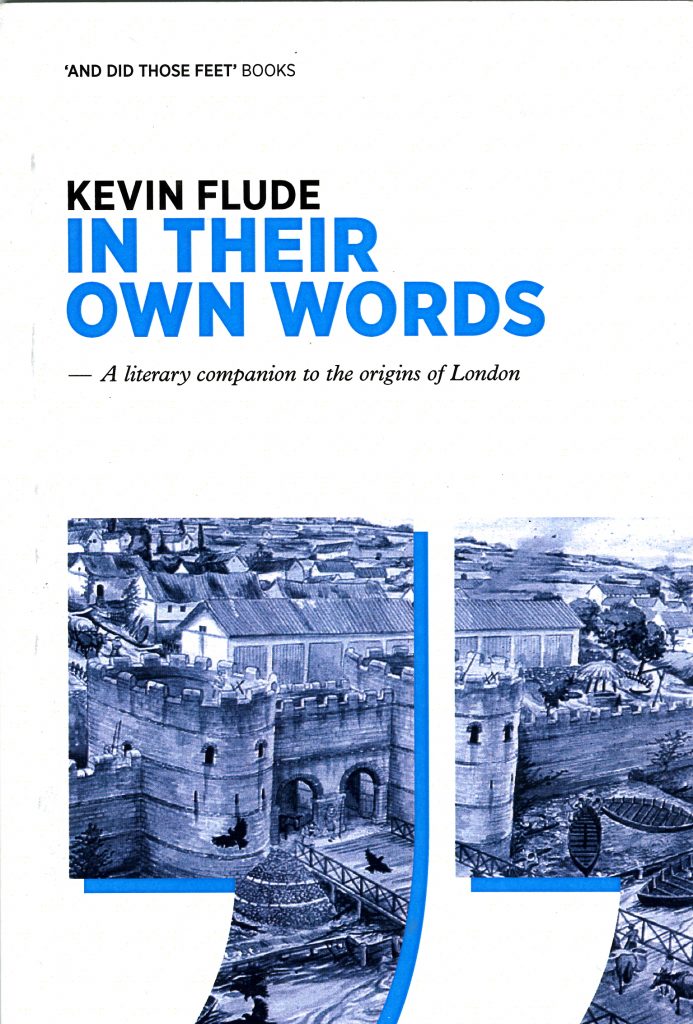
You will find some interesting, relevant passages in my book:
Flude, Kevin ‘In Their Own Words – A Literary Companion To The Origins Of London’ D A Horizons, 2009
You can buy a hardback copy from me for £5 plus postage (email me, kpflude@chr.org.uk) or from Amazon in a Kindle version.
I will add more as I find them!
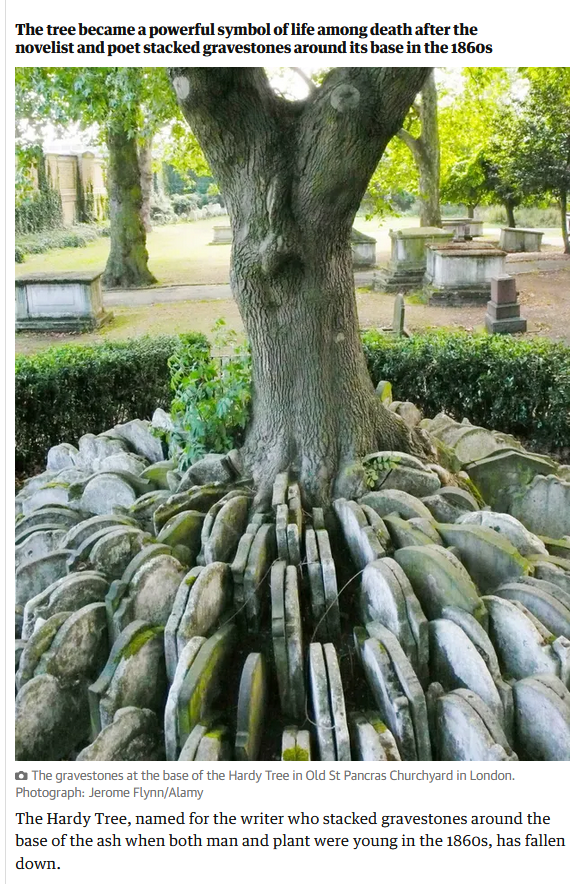
I published the following post about Hardy’s Tree on 28th December 2022. Here, follows the original post and an update which suggests the tree and the gravestones were not erected by Thomas Hardy.
This is the day that Herod ordered the slaughter of the Innocents, or Childermas, and I am glad to see that my Grandson is now older than Herod’s prescription.
Hardy’s Tree in St Pancras Church, Camden, London has fallen down. Hardy was an architect and worked in London for a while, where one of his jobs was to supervise the clearance of the graveyard. Several poems of Hardy refer to the removal of graves from their original positions and in this case, the gravestones were set around an Ash tree that inspires many, including my Central St Martin’s students who used it in a project recently. So, I was shocked to read a Guardian article (since deleted) which noted the sad demise of the Tree.
Extracts from one of several Hardy Poems about moving graves and gravestones follow, but I need to update the post about the connection to Hardy. The Guardian has now got an article which suggests the connection with Hardy is a more recent one than previously thought (Guardian article).
I (and I think the Guardian) were alerted to this by the work of Lester Hillman, who wrote a Churchyard Guide and a recent pamphlet about the Tree, which is reported in ‘Context ISSN 1462-7574’. This is the Journal of the City of London Archaeological Society. Evidence proves that the Ash Tree dates to the 1930s, and that the mound of gravestones is from burials relocated from St Giles in the Fields, and therefore unlikely to have been in St Pancras at the time Hardy was responsible for clearing it.
So it is not ‘the’ Hardy Tree, but then nor was the tree at Sycamore Gap anything to do with Robin Hood. What it was, was a beautiful piece of nature, in a poignant setting. May she rest in peace.
The Levelled Churchyard
Thomas Hardy
O Passenger, pray list and catch
Our sighs and piteous groans,
Half stifled in this jumbled patch
Of wrenched memorial stones!We late-lamented, resting here,
Are mixed to human jam,
And each to each exclaimed in fear,
I know not which I am.Where we are huddled none can trace,
And if our names remain,
They pave some path or porch or place
Where we have never lain!
The Sir John Soane Museum is my second favourite London Museum. It’s the place I choose to take people who don’t know London. What I like about it is the atmosphere. It’s not a place I go because of the collection, it’s a place I go because I’m just awestruck when I enter the doors.
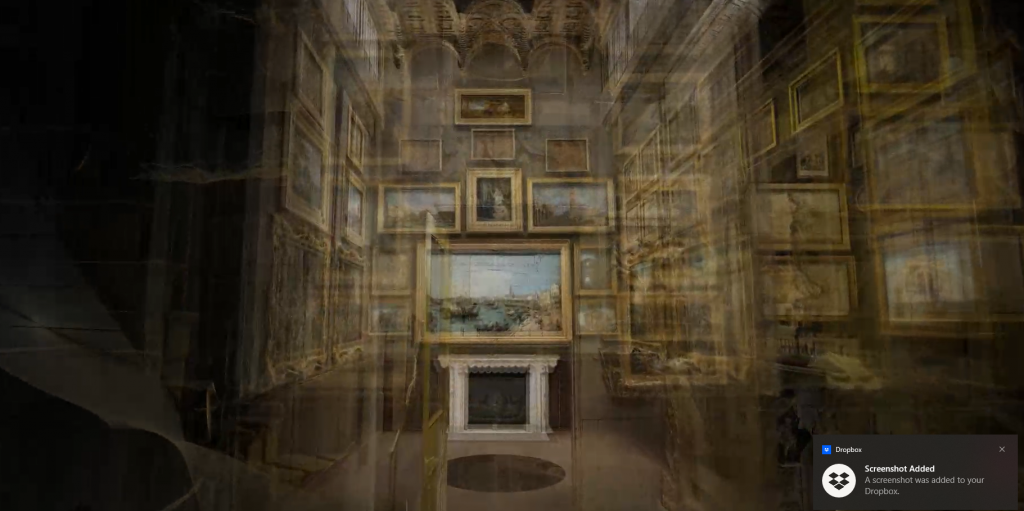
Architect Soane, made a Museum of his house, filling it with architectural and sculptural pieces but also some stupendous Art, particularly paintings by William Hogarth. But that isn’t my motivation to keep going back. It’s the Picture Room (and the domed ceilings). Soane had a great collection of paintings, but not enough walls. What he did was to design the Paintings Room. When you visit you go in, admire the paintings on the wall, and the attendant comes in, opens a shutter, and behind the great paintings are another wall of great paintings. And then he opens another set of shutters, and there, is another feast for your eyes.
Now, they have made high quality digital images of the rooms, and put them together using photogrammetry into a digital model which you can explore.
So, feast your eyes on it here: (choose Picture Room from the three options).
It’s not quite as user-friendly as it might be. Firstly, when the tour delivers you to the Picture Room, you have to take over control to go in and explore the 360 degree image of the room. Unfortunately, the pictures are not clickable, so you cannot get information about them from here. Also, the ‘hot spots’ which allow you to open the shutters, only reveal themselves, on my computer, if you approach them at a certain angle.
But don’t let this put you off, I’m sure you will find your way around. So go into the Room, look around, move the cursus, and you will see little signs pop up which open and close the shutters. Really, do try it! There are a couple of other rooms to explore too.
Here is a link to descriptions of the Picture Room and the paintings.
Oh, and the Dome Ceilings? Soane was a specialist in buildings that didn’t want windows in normal places. He was the architect of the Bank of England where windows in the walls were a security risk, and also of London’s first purpose built art gallery – the Dulwich Picture Gallery. Windows reduced the space for paintings, so he designed special low domed ceilings, and the Soane Museum is full of his experimentation in the form.
Scara Brae Three D Model
Another delight is the 3D model of Scara Brae which allows you to explore the Neolithic village, and walk around it. There are labels on this one, so you do get information too.
360 Degree Panorama Virtual Tours. My part in their development.
I was an early adopter of this form of virtual reality, setting up virtual tours of the Old Operating Theatre Museum in the 1990’s. I have a draft post of this which I have been awaiting time to finish, which I hope to finish soon….
Thanks to the Museum’s Journal article on Photogrametry of May/June 2022 for the two examples above.
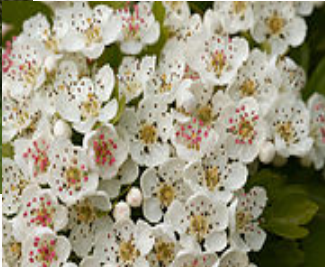
It’s bad luck to buy, make or use a new broom in May because:
Sweep with a broom that is cut in May
You’ll sweep the head of the house away.
But you can give good luck to a friend by leaving a branch of hawthorn flowers on the doorstep. But other woody messages were not so friendly according to traditional verses:
Alder for a scrowler; pear for the fair
Nut for a Slut; plum for the glum
Bramble if she ramble; gorse for the whores
It is basically rhyming slang, so no great wisdom involved, also I’m not sure quite how some of the rhymes work, and it does seem rather at the expense of women.
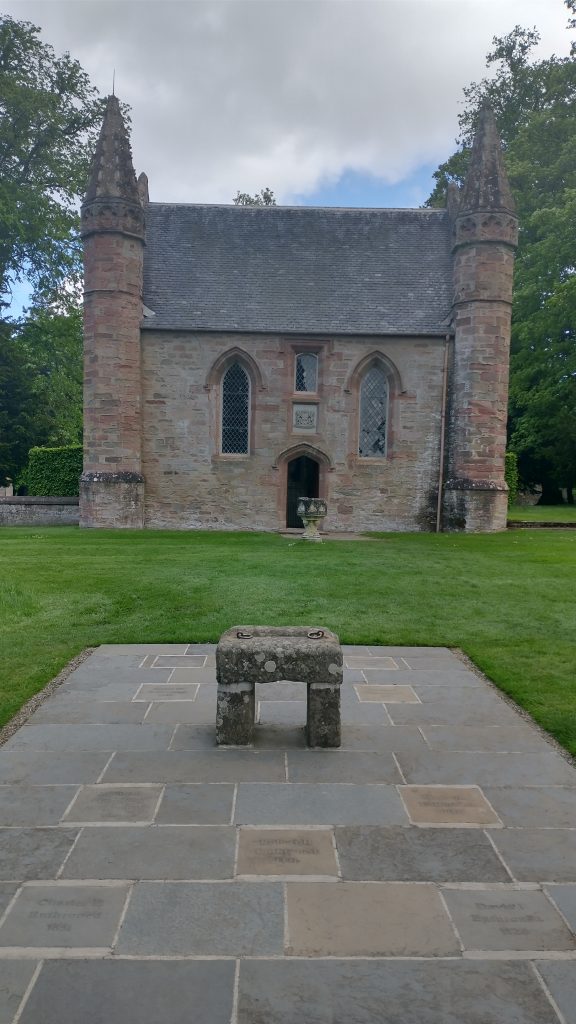
A study of the Stone of Destiny, the Stone of Scone, the Coronation Stone, has revealed new information. Firstly, it has some markings which look like three X’s and something like a V – perhaps Roman Numerals or more likely, crosses.
The Stone also revealed traces of copper alloy showing that a metal object had been attached to the Stone for a considerable time. The most obvious suggestion would be a relic associated with a Saint, and a Bell is one possibility.
Traces of gypsum suggested someone sometime made a plaster copy of the stone. No one knows when or why, and it has not been found.
Historic Environment, Scotland has released this fascinating 3-D scan of the stone for the public to view – it is annotated too.
You can read more at the links below, and thank you to Jean Kelly of the Britarch mailing list for alerting me to this.
Hidden symbols and ‘anomalies’ (Live Science)
Cutting-edge digital technologies (Historic Environment Scotland)
The Stone has been moved from its permanent home at Edinburgh Castle for the first time since 1996, to be placed under the Coronation Chair for Charles’s May 6 Coronation at Westminster Abbey.
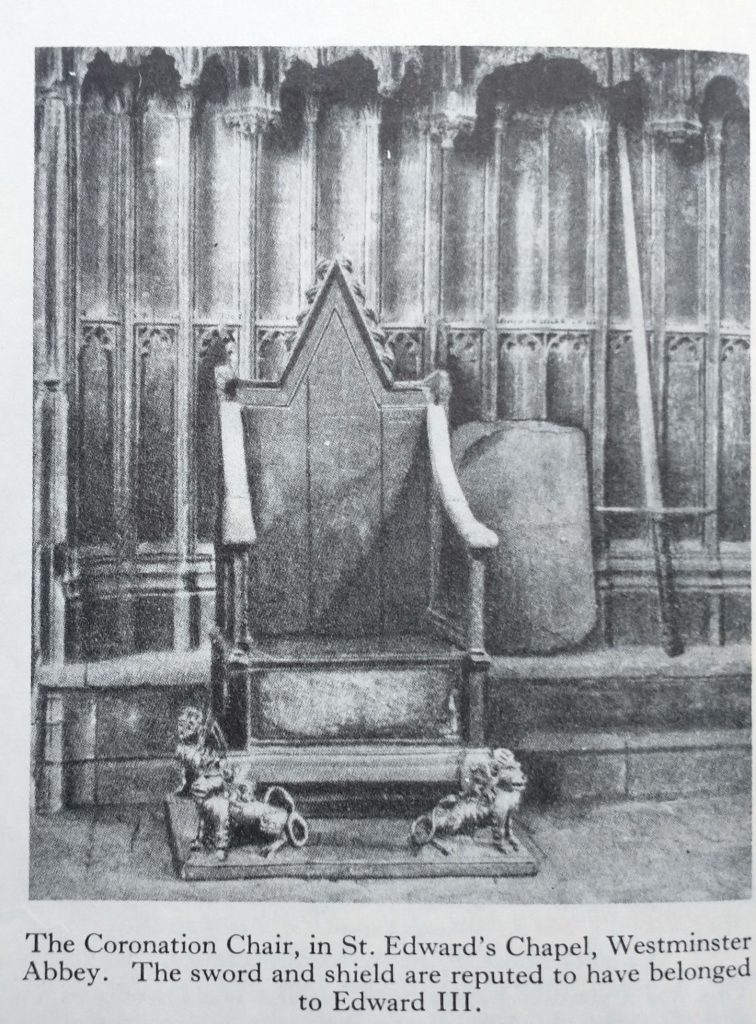
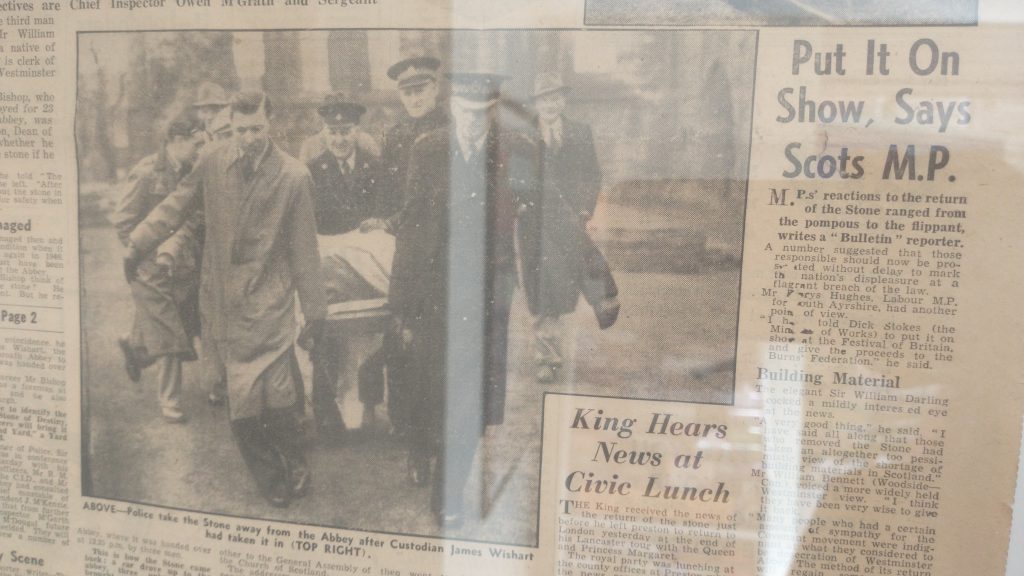
The Stone was kept at Scone before it was stolen by Edward 1 of England, who placed it under the Coronation Chair, at Westminster, to sanctify English Kings and to make the point that he was the overlord of the Scottish. In the 1950’s Scottish students stole it back, hid it for a few weeks and then left it at Arbroath Abbey. They did this because the so-called Declaration of Arbroath (1320) is a letter to the Pope asking for his endorsement of Scotland’s claim to be independent of England. The Pope agreed.
The Stone was recovered from Arbroath taken back to Westminster. The Labour Party under Tony Blair, granted Scotland back their own Parliament and as a symbol of their regained independence, the Stone of Destiny was taken back to Scotland.
To my mind it should be in Scone, which is where Macbeth and most other Scottish Kings were crowned, but perhaps they thought it should be in the Capital and in the safety of the Castle. At Scone, the Stone was placed on a mound of earth which was said to be made up of the dust from the feet of those attending Coronations symbolising the consent of all of Scotland for the new King.
Page moved to Good Friday page here