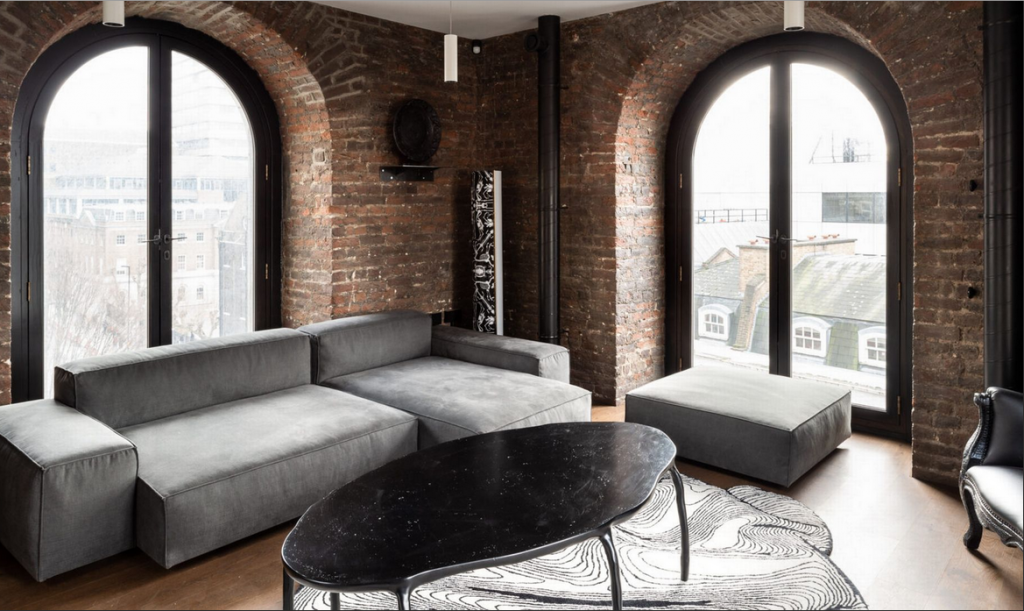
The Old Operating Theatre Museum is in St Thomas Church, Southwark, part of the old St Thomas Hospital. The Church, built in 1703, by Thomas Cartwright has a fine baroque Tower, the top two chambers of which have been empty for many years. The conversion to a bijou pied a terre has been completed and details can be found in the link above.
This virtual walk is led by Kevin Flude, a former archaeologist at the Museum of London, who has an interest both in the archaeological evidence as well as the myths and legends of London’s origin.
A Walk for London Walks.
Archaeology in the late 20th and early 21st Centuries has revolutionised our view of the early history of London while its rich set of myths and legends have been largely forgotten. This walk is designed to set that right and give an insight into London’s legends, and how they relate to modern archaeological discoveries.
According to legend London was founded in the Bronze Age by an exiled Trojan called Brutus. He called the new City Troia Nova or New Troy, which became corrupted to Trinovantum. Around the time of Julius Caesar the name changed to Lud’s Dun and eventually to Londinium. Early archaeologists therefore looked for a prehistoric City, to add to the history they could read by classical authors of a City founded shortly after the Roman Invasion of 43 AD. When the Roman system broke down in 410 AD, historical and archaeological records become almost non-existent, until the foundation of St Pauls Cathedral in 604 AD. The two hundred year gap, sometimes called the Dark Ages, has another rich selection of legends. The walk will explore these stories and compare to the archaeology.
The route starts at Tower Hill, then down to the River at Billingsgate, along the River to London Bridge, up to the Roman Forum at the top of Cornhill, into the valley of the River Walbrook, passed the Temple of Mithras, along Cheapside to the Roman Amphitheatre, and finishing up in the shadow of St Pauls.
This is a London Walks Guided Walks. Look at their web site for a list of more of their amazing walks
This is astonishing prehistoric find. A huge circle of pits surrounding Durrington Walls which is itself Britain’s biggest henge, and a mile or so away from Stonehenge, and Woodhenge. Continuing the golden age of Stonehenge archaeology.
A couple of my regular places have been affected by the effects of the toppling of the Colston Statue in Bristol.
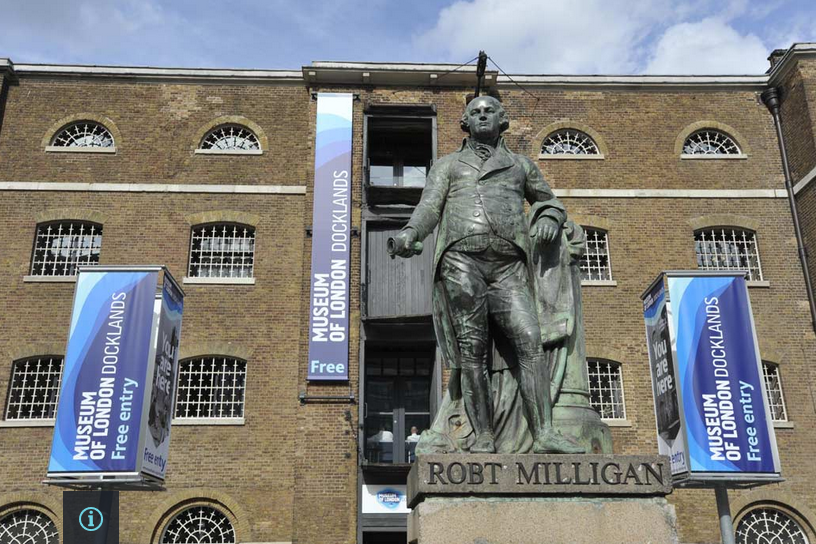
Firstly, the statue of Robt Milligan outside the Museum of London, Docklands has been taken down. I have often used this as a meeting point for my students from Westminster University as we explore the Docks and the Docklands Museum.
Slavery was a big part of the visit, although we didn’t make Milligan the villain.
Another site is the Geffrey Museum which is going to open as the Museum of the Home, although this was determined before the George Floyd murder, but now I expect the Geffrey part of it to quietly disappear, as he is also contaminated by slavery.
Interesting fact about slavery, is that UCL have done a brilliant study of all the recipients of the compensation for the end of slavery. The govt at the time paid compensation of £20m to the slave OWNERS. This was a vast amount said to be 45% of the GDP for the year. It was funded by a long term loan which was paid back, as late as, 2015. In modern terms it was 16 billion £.
This has completely changed my mind on compensation for slavery which I was against. But it seems to me if we know that £16 billion was spent then to compensate the owners we could set up a fund of £16 billion now to give, for example, educational grants and start up grants for black people to give them the boost they need to make up for centuries of oppression..
This is a great find – very little neolithic pottery has been found in or near the City so this fills in a blank. It still doesn’t give us enough information to write authoritatively about the City before the Romans, but its a significant step forward.
bob clip dance hornpipe leather pleasure roust sport stroke till trade trick bed foin foutre frig frisk have jape juggle jumble leap niggle nock occupy plough rifle seal sport swive thrum thump tick-tack till towze tread tumble twang vault wap.
2.30 Sat 2 May 2020 Tower Hill Tube (meet by the Tower Hill Tram)
Please check that the walks have not been cancelled.
The Head of Bran by John Everett Millais
The walk is led by Kevin Flude, a former archaeologist at the Museum of London, and it looks at the archaeological evidence for the origins of London and reconsiders London’s myths and legends.
London has a rich set of origin myths and legends which are not as well known as they should be. This walk is designed to set that right and give an insight into London’s myths and legends.
Worth knowing for their own right do these origin myths have anything to say about the actual origins of London? This is what this walk explores. It is split into two halves – the first reveals the myths and the second finds out where the ‘truth’ of the origins of London may lie.
This is a London Walks Guided Walks. Look at their web site for a list of other of their amazing walks
Victoria & Albert & Albertopolis March 28 2020
2.30 High Street Kensington Tube
All London Walks have been cancelled until further notice due to Social Isolation
If this is a disappointment please email me and I’ll send you a print out.
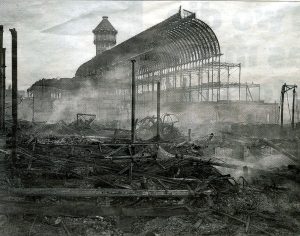
On this walk we discover the story of the Great Exhibition of 1851 and the foundation of the one of the world’s Greatest Museums.
Led by Kevin Flude, who worked as an Assistant Keeper at the V&A, We begin in the new Victorian suburb of Kensington, prospering in the shadow of Kensington Palace, birthplace of Queen Victoria. We then explore the site of the Great Exhibition, and the great buildings inspired by Albert around the Albert Hall, before ending the walk with a tour of the Victoria and Albert Museum.
The area was originally part of the lowly area of Brompton until the huge success of the Great Exhibition created by Prince Albert and his right-hand man Henry Cole, the first Director of the V&A. The area became known as Albertopolis,as a memorial to a remarkable man, and a testament to the energy and wealth of Victorian England.
Medieval London Walk. April 18th 2.30
Liverpool St Bishopsgate Exit top of escalator
All London Walks have been cancelled until further notice due to Social Isolation
If this is a disappointment please email me and I’ll send you a print out.
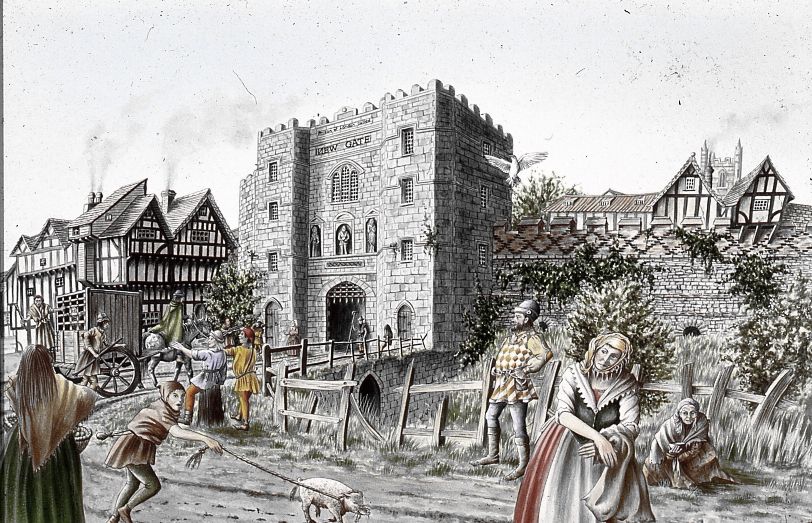
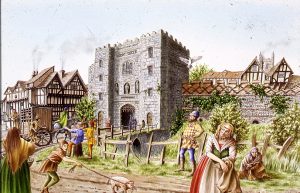
A walk which explores London in the Middle Ages. By 1400 London was dominating the affairs of the Kingdom and was growing into a sophisticated medieval Capital. We begin in the extra-mural area amongst the Monasteries and burial grounds before entering the City via Bishopsgate. and to the site of one of the few remaining medieval Churches at St Helens. We then look at everyday life in the City in the main markets streets of Cornhill, Poultry, Bucklersbury and Cheapside before visiting the Guildhall and ending at the City Wall. We will walk in the footsteps of Geffrey Chaucer, in the muddy City Streets, exploring the unhealthy conditions and poverty amidst great riches and pageantry. We will see where the Italians, the German, the Dutch, the Jews, and the French lived cheek by jowl with native Londoners and immigrants from the Midlands.