
Stone of Destiny Attacked with a Hammer at Perth Museum July 13th 2025

Screenshot of BBC Webpage annoucing the attack on the Stone of Destiny

I just tried to book a visit to see the Stone of Destiny, at Perth Museum. But I was told it was closed until at least the end of August. The reason being that a case had been damaged. A quick search revealed this notice that an Australian had attacked the case containing the Stone with a hammer. They are now repairing the Case, and double checking the condition of the stone, which is thought to be undamaged. The Stone is well protected in a special room of the Museum. But, until now, those booking to see it are not searched. So I imagine that this will become more formal in future.

Below is my post of 2024, updated on March 30th 2025.

New Home for the Stone of Destiny

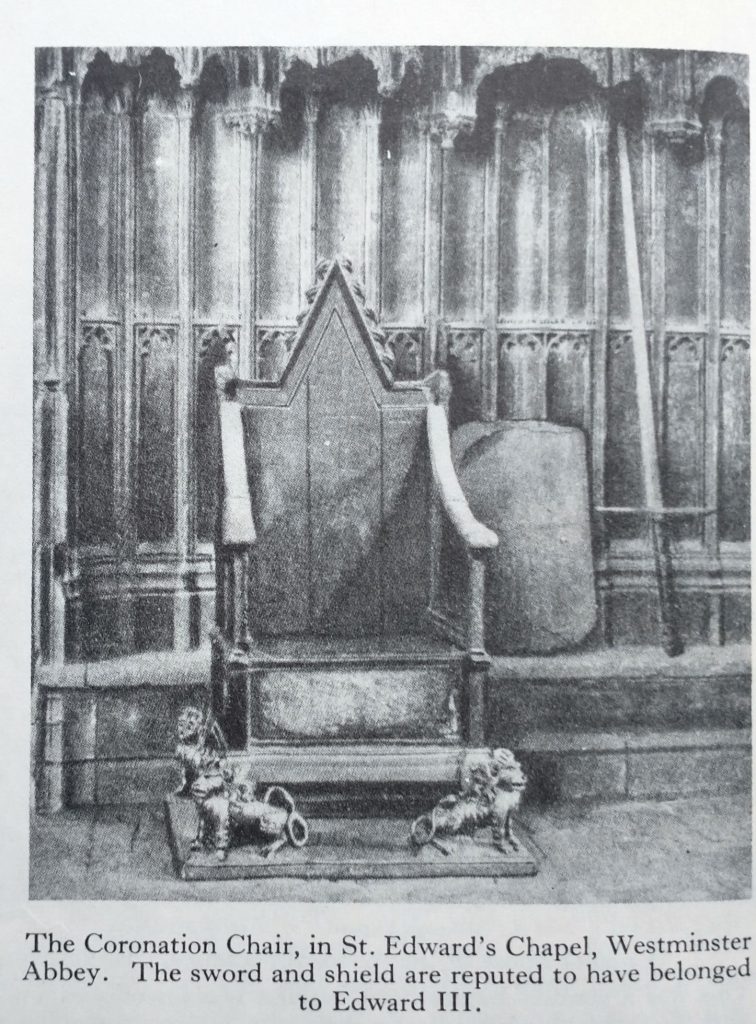
Old Photograph of the Stone of Destiny beneath the Coronation Chair.

Last year, the Stone of Destiny was set up in its new permanent place. The Stone was unveiled in a room at the centre of the redeveloped Perth Museum, in Scotland. This is near to its ‘original’ home at the Palace of Scone.

The Museums Association reported:

£27m development project ….funded by £10m UK government investment from the £700m Tay Cities Deal and by Perth & Kinross Council, the museum is a transformation of Perth’s former city hall by architects Mecanoo.’

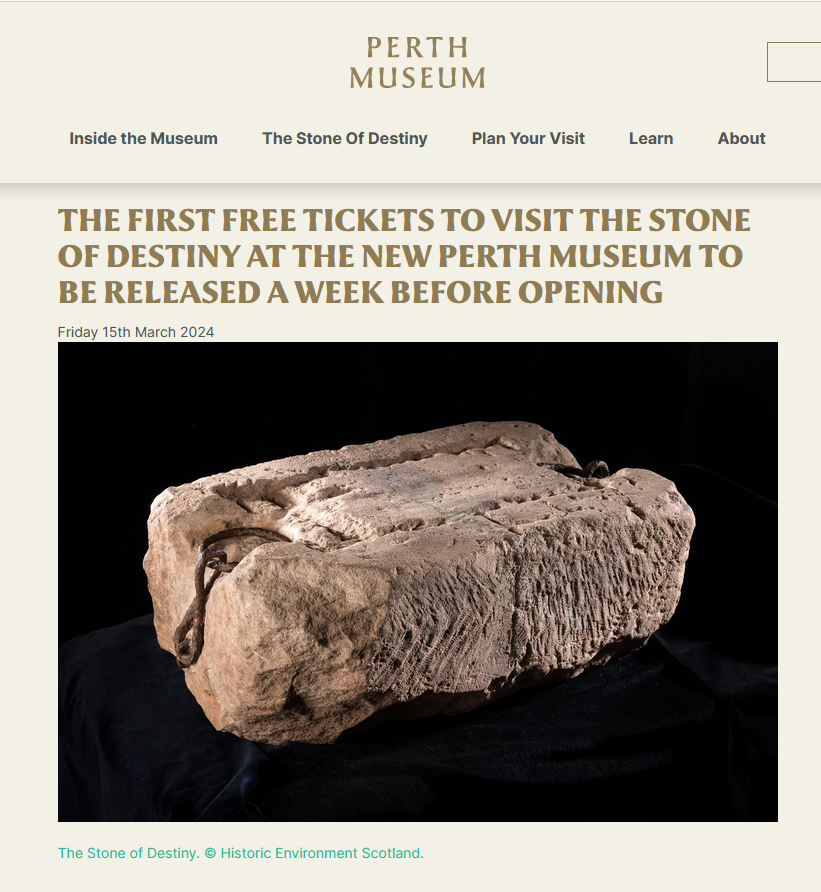
As well as the Stone of Destiny, the Museum has Bonnie Prince Charlie’s sword and a rare Jacobite wine glass. Both on public display for the first time. This is the first time the sword has been in Scotland since it was made in Perth in 1739. https://perthmuseum.co.uk/the-stone-of-destiny/. Since I first wrote this I have visited about 5 times. Entry is free but needs to be booked. It is held in a separate structure in the open space at the heart of the Perth Museum. There is an excellent-animated introduction, and then the doors open and the Stone is revealed in a glass cabinet. It is very effective.

Webpage of the Perth Museum show a photo of the Stone of Destiny

The Stone of Destiny in the Modern Era

Before Perth, the Stone was in London for a brief visit for the Coronation of King Charles III (6 May 2023) . It was put back, temporarily under the Coronation Chair. Before that it was on display in Edinburgh Castle. Tony Blair’s Labour Government sent it back to Scotland as a symbol of the devolution of power from Westminster. This was on the occasion of the restoration of the Scottish Parliament in Edinburgh in November 1996. Until then the Stone was under the Coronation Chair, where Edward I put it after he stole it (1296) from Scone. Virtually every English and British King has been crowned upon the Stone of Scone.

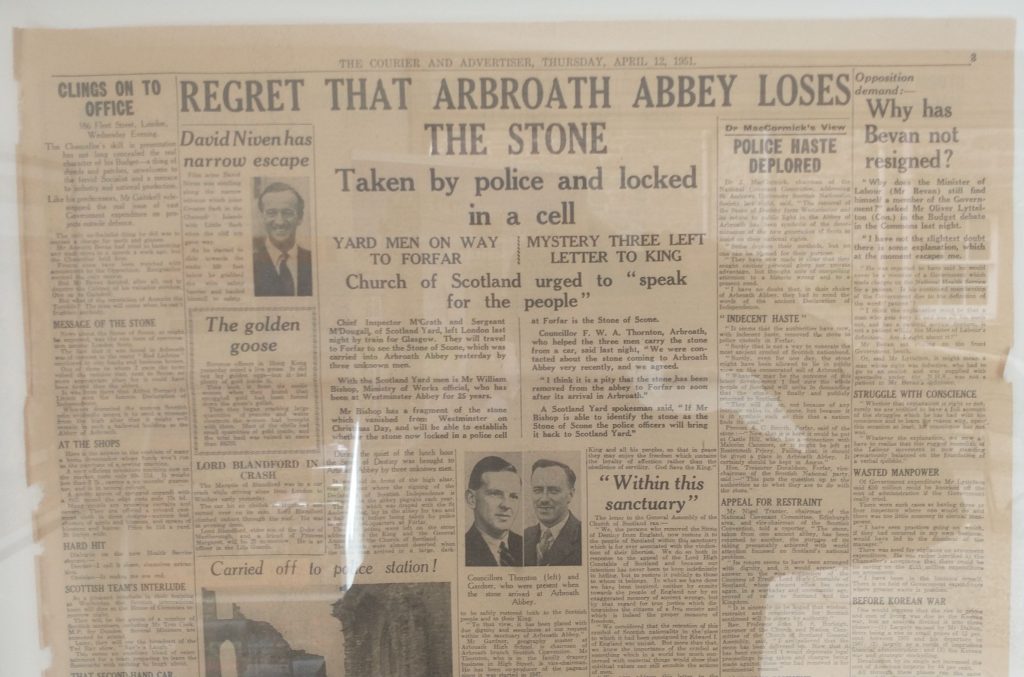
However, the Stone had a brief holiday in Scotland in 1950/51.  Four Scottish students removed it from Westminster Abbey on Christmas Day 1950. After three months, it turned up at the high altar of Arbroath Abbey. It was briefly in a Prison Cell, then returned to Westminster for the Coronation of Elizabeth II.

Poor photograph of a press cutting on display at the Palace of Scone (Photo by me!)

Declaration of Arbroath

I’m guessing the-would-be liberators of the Stone, thought Arbroath was the most suitable place to return it. For it was the Declaration of Arbroath which is the supreme declaration of Scottish Independence from England.

Following the Battle of Bannockburn the Scots wrote to the Pope of their commitment to Scotland as an independent nation. They said:

“As long as a hundred of us remain alive, never will we on any conditions be subjected to the lordship of the English. It is in truth not for glory, nor riches, nor honours that we are fighting, but for freedom alone, which no honest man gives up but with life itself”

The Pope agreed and Scotland remained independent until voluntarily joining England in the United Kingdom in 1707.

For an analysis of the Stone of Scone please look at my post here.

The Stone of Destiny at Scone Palace

Before Edward 1 stole the Stone, it was at Scone Palace. Here most of the Kings of Scotland were crowned, including Macbeth (August 14, 1040).

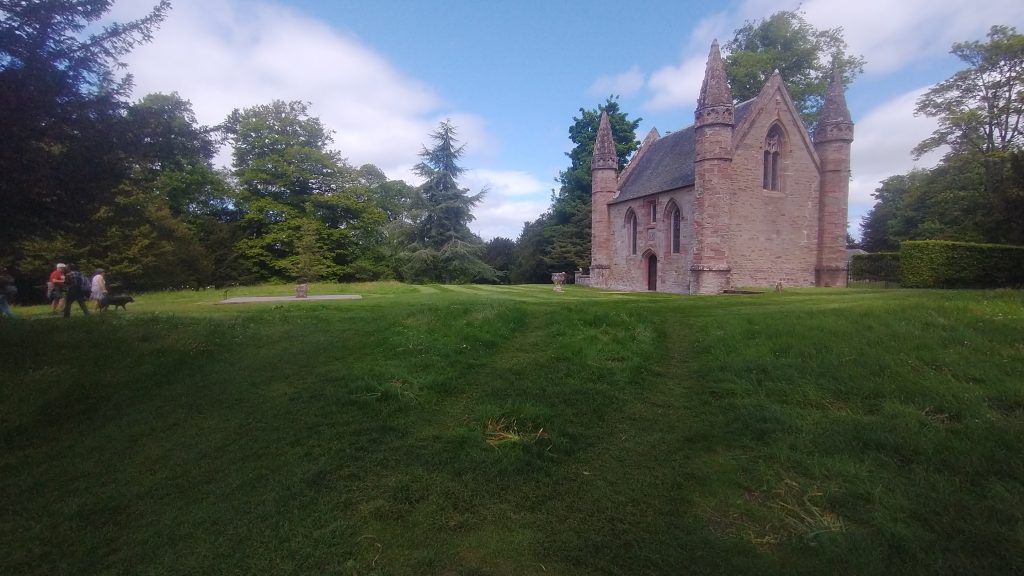
Moot or Boot Hill where Scottish Kings were crowned. Palace of Scone Photo Kevin Flude)

Those who attended the coronation traditionally shook their feet of all the earth they had brought from their homelands.  This over the centuries, grew into Boot Hill, aka Moot Hill. So the mound represents the sacred land of Scotland. 42 Kings were crowned upon its soil on its Stone. (but not Mary Queen of Scots she and her son were crowned at the Chapel Royal of Stirling Castle).

Where was the Stone of Destiny before Scone?

Before Scone, it was, possibly, in Argyllshire where the Gaelic Kings were crowned. Their most famous King was Kenneth MacAlpin. He united the Scots, Gaelic people originally from Ireland, the Picts, and the British. And created a new Kingdom which was originally called Alba, but became Scotland.

MacAlpin was the first king to be crowned on the Stone at Scone in 841 or so. He made Scone the capital of his new Kingdom because it was a famous Monastery, associated with the Culdees, an early sect of monks. MacAlpin brought sacred relics from Iona to sanctify the new capital. And Scottish Kings were by tradition crowned at Scone and buried on the holy Island of Iona.

Legend has it that the Scots bought the Stone from Ireland when they began to settle in Western Scotland (c500AD). The Scots, it is said, got the Stone from the Holy Land. Jacob lay his head on the stone to sleep. He had a dream of Angels ascending and descending a ladder to Heaven. Jacob used the stone as a memorial, which was called Jacob’s Pillow (c1652 years BC).

Fake, Copy or Genuine?

But, questions about the Stone remain. Firstly, would the Monks of the Abbey meekly hand over the stone to a raging King Edward I?  Sacking the Abbey was one of the last events of Edward’s failed attempt to unite the two countries. Isn’t it more likely that they hide the original and gave him a fake?

Secondly, was the Stone brought to Scone from Western Scotland in the 9th Century? Or was it made in  Scone?

These questions of doubt are based on the assumption that the Stone is made of the local Scone sandstone. If it were brought to Scone from somewhere else, it would be in a different type of stone, surely? So, either it was made in Scone, possibly for MacAlpin’s Coronation or the Monks fooled the English into taking a copy. The English would then have been crowning their Monarchs on a forgery.

Ha! Silly English but then the Scots have spent £27m on the same forgery.

Before bringing the stone to Scone, Historic Environment Scotland undertook a new analysis  of the stone. This confirmed:

the Stone as being indistinguishable from sandstones of the Scone Sandstone Formation, which outcrop in the area around Scone Palace, near Perth‘.

It also found that different stone workers had worked on the stone in the past. It bore traces of a plaster cast being made. It had markings which have not yet been deciphered. There was copper staining suggesting something copper or bronze was put on the top of it at some point in its life.

So it seems the Stone of Destiny was made in Scone. The simplest explanation is that it was made for MacAlpin in the 9th Century. But it does not rule out that it is a copy given to Edward I. But if this is the case it is still an awesome relic of history as so many Kings and Queens, Scottish and English, have been crowned upon it.

For more about MacBeth and St Margaret of Scotland see my post here:


First published in 2024, republished in 2025

Swan Upping July 16th

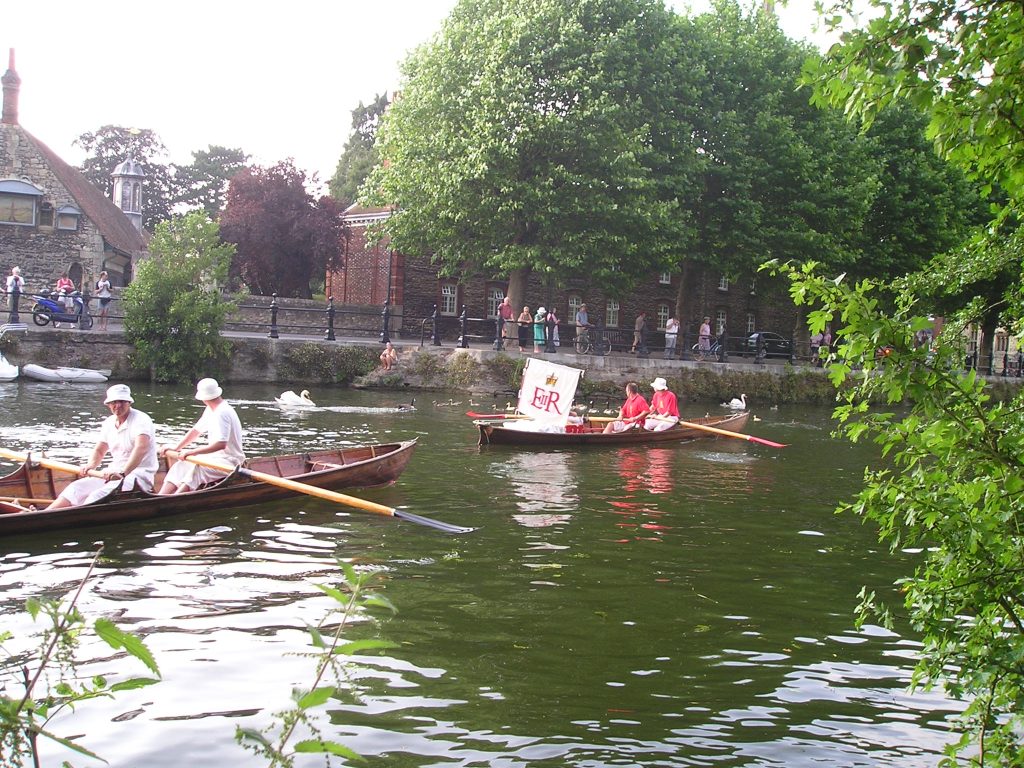
Swan Upping By Philip Allfrey Abingdon 2006 – CC BY-SA 3.0, https://commons.wikimedia.org/w/index.php?curid=2464315. The Royal Uppers are to the right and the Vintners’ Uppers on the left.

Swan upping takes place on the 3rd Week of July. It is an annual census of the Swans on the River Thames. This year it began on Monday, July 14th. It began in the 12th Century.

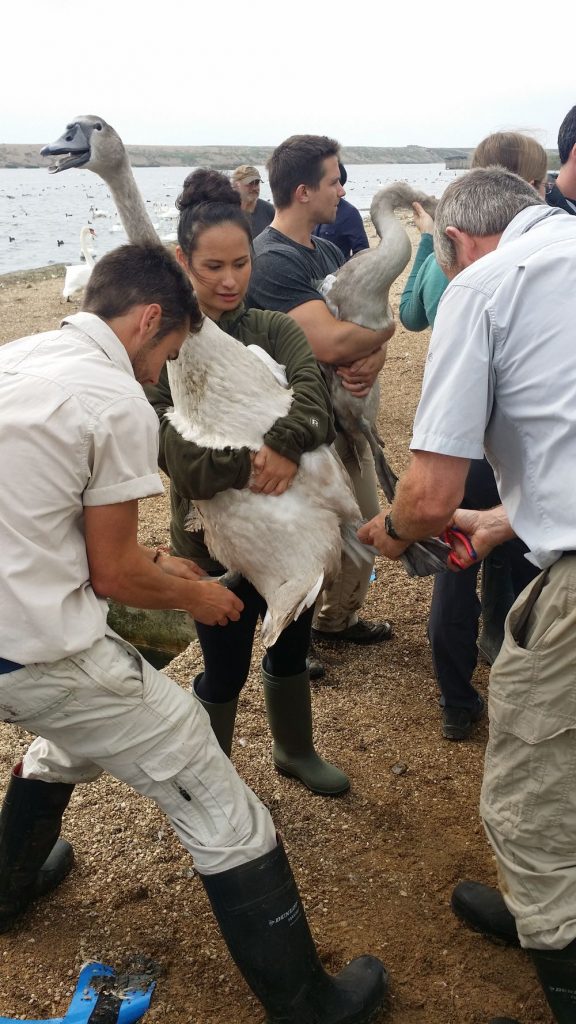
In theory, the King has the ownership of all unmarked Mute Swans on open water in the UK. Swan Upping is an ancient ceremony during which Swans are upped, checked for health and ringed if they do not belong to the King. In fact, it is the Cygnets which are upped. They are checked for weight and health. Their parents are checked for an ownership ring. If the parents are ringed then the young cygnets will be ringed accordingly. If the parents are not ringed, then they belong to the King and remain unringed.

This ceremony now only takes place on the Thames. It begins at Sunbury and progresses to Abingdon. The Swan Uppers have traditional wooden rowing skiffs and a scarlet Upping Shirt. They are managed by the Swan Marker. The Royal Uppers are accompanied by Swan Uppers from the two City Livery Companies that still have rights to ownership of Thames Mute Swans. These companies are the Dyers Company and the Vintners Company.

If you want to catch Swan Upping this year you will find them upping Swans at the following places:

Thursday 17th July 2025 
Sonning-on-Thames 09.00 – Departure point 
Caversham Lock 10.15 
Mapledurham Lock 12.30 
Goring Lock 17.00 
Moulsford 18.00 
  
Friday 18th July 2025 
Moulsford 09.00 – Departure point 
Benson Lock 10.00 
Clifton Hampden Bridge 13.00 
Culham Lock 16.15 
Abingdon Bridge 17.00 

King Charles is Seigneur of the Swans and you can find more details at https://www.royalswan.co.uk

Swans moult in July and August, and this renders them flightless. This can last for a period of up to 6 weeks. So it makes them a lot easier to up!

The Swannery at Abbotsbury

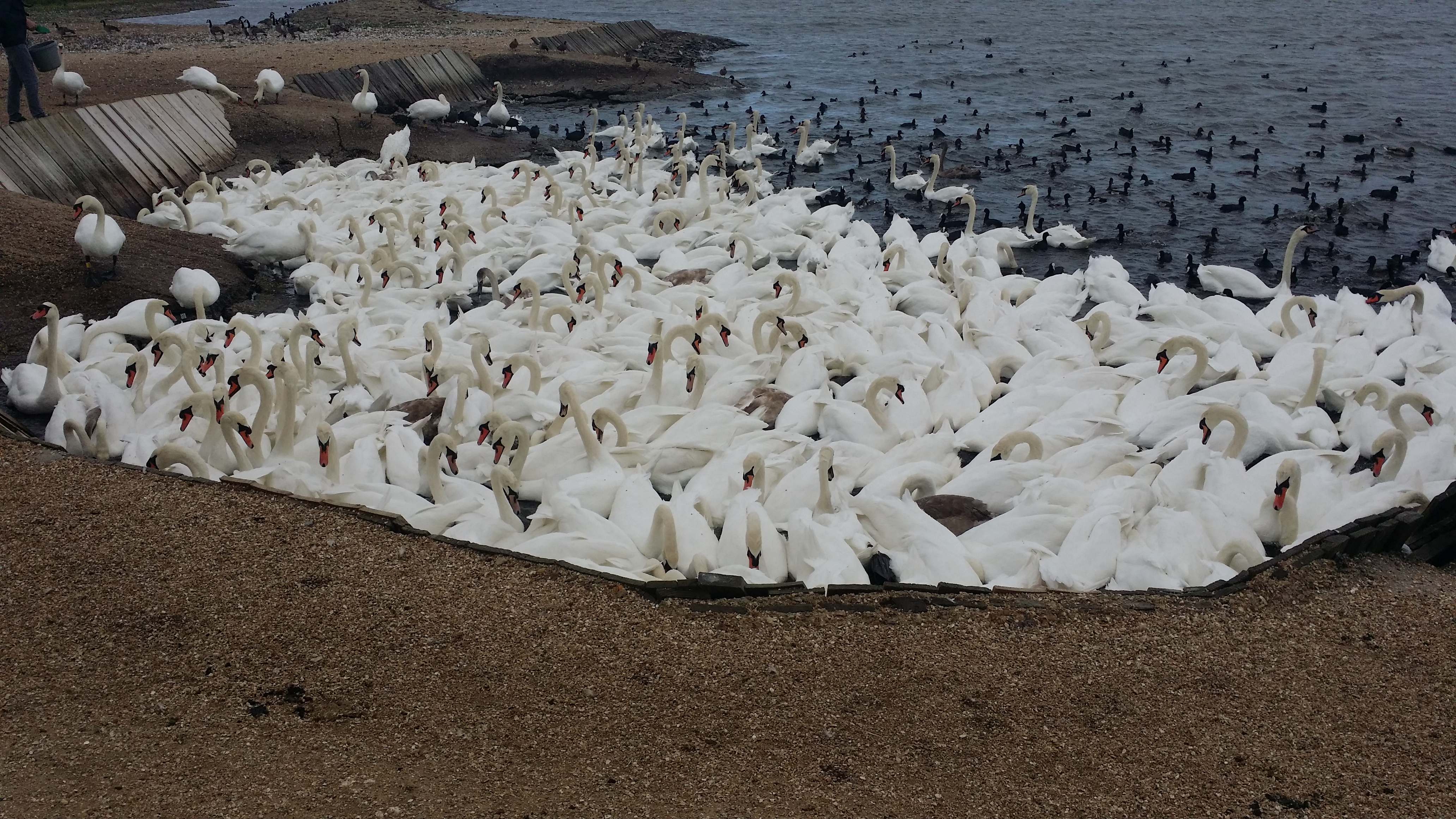
Now I didn’t find that fact on any of the web sites I consulted about Swan Upping. For many years I gave a wonderful programme called Literary Landscapes where we explored lanscapes associated with Jane Austen, Thomas Hardy, Agatha Christie, Conan-Doyle and Charles Dickens. On it, we went to the Swannery at Abbotsbury in Dorset. This was founded by Benedictine Monks in the time of King Cnut. The Strangeways family acquired the Monastery after the Dissolution and still own the Swannery. So they are the fourth authority in the UK who own Swans.

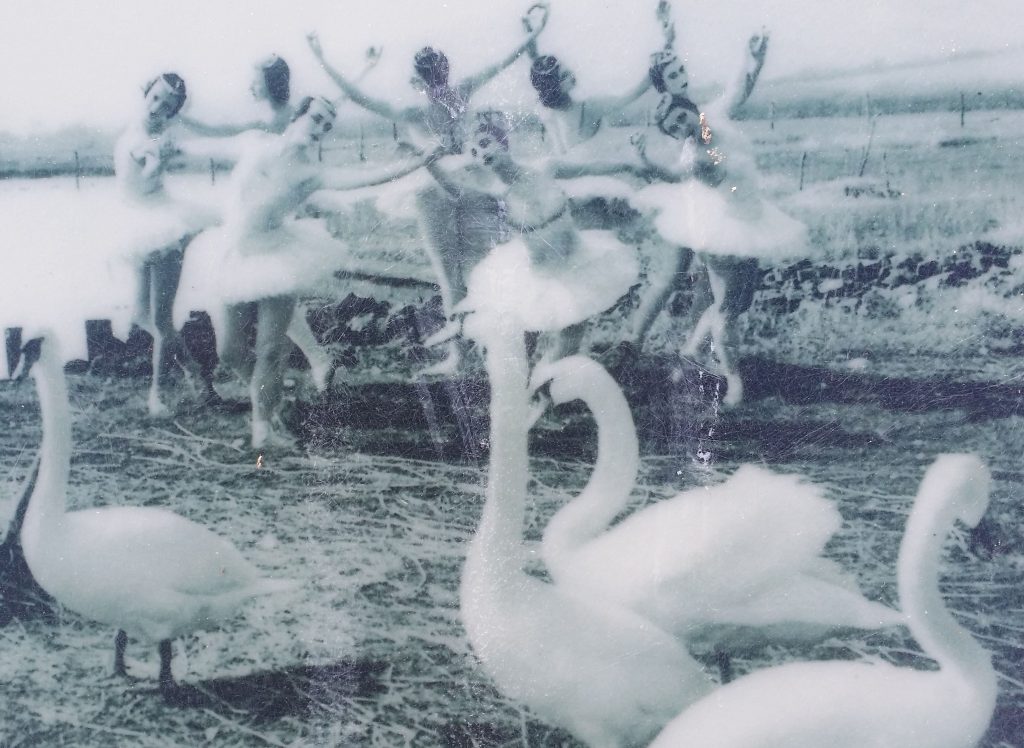
It is a remarkable place, in the heart of Hardy’s Wessex and by the glorious Chesil Beach. Every other year, the Mute Swans are checked and ringed during the flightless period. When Pavlova was working on Swan Lake, she took the dancers to Abbotsbury to observe the behaviour of the Swans.

Photo by the author of a panel at Abbotsbury showing Pavlova’s dancers posing by the Swans of Abbotsbury

Feathers are collected during the moulting season. They are used by Lloyds Registry, the Society of Calligraphers, illuminators, and other scribes for writing-quills. Other feathers are used by the Plummery to make headdresses for the Royal Bodyguard. They are also used for artists’ brushes, brushes for sweeping bees from honeycomb and arrow flights! (Source: panel at Abbotsbury).

Ringing the Swans at Abbotsbury 2018 Photo by Kevin Flude

Cartmarking is taking place On Saturday at the Guildhall in London 19th July. For more details of the historic vehicle events: https://thecarmen.co.uk/history/cart-marking/

Created July 16th 2025

June & July – Street Parties in London on the Vigils of Feast Days

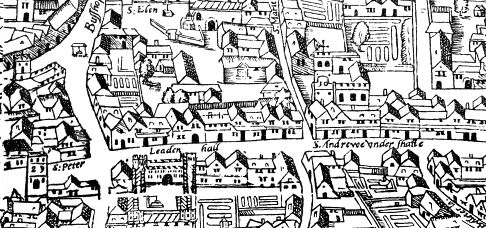
Image from the Agas Map of London
Civitas Londinum is a bird’s-eye view of London first printed from woodblocks in about 1561

John Stow tells us that there were bonfires and street parties in London throughout June and July. These were held on the Vigils of Saints’ Feast Days. The Vigil is the evening before a festival. A custom that might owe a little to the Celtic choice of dusk as the beginning of the new day.

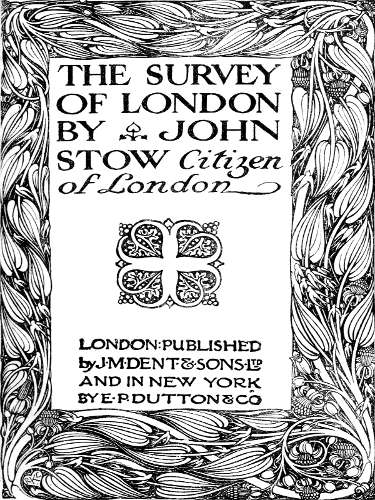
Front cover of the Survey of London by John Stow

Stow was the author of the ‘Survey of London‘ first published in 1598. Unfortunately, he does not give a list of the vigils thus celebrated. He only mentions those of St John the Baptist and of St Paul and St Peter. For these he gives a very vivid description, which I included in my post on June 24th here.

The other festivals would be for prominent Saints, particularly those with London Churches or Chapels named after them. These might include: St Botolph, St Alban, St James, St Thomas, St Margaret, St Wilgerfortis, St. Mary Magdalen, St Bridget, St James, as well as Saints John, Peter, and Paul. I’m guessing that City wide street parties would be reserved for the most important Saints. But with local celebrations for the Saint on the local Church. I am assuming these celebrations were ended or much reduced after the Reformation.

This is what Stow says of the Vigil celebrations.

In the months of June and July, on the vigils of festival days, and on the same festival days in the evenings after the sun setting, there were usually made bonfires in the streets, every man bestowing wood or labour towards them; the wealthier sort also, before their doors near to the said bonfires, would set out tables on the vigils, furnished with sweet bread and good drink, and on the festival days with meats and drinks plentifully, whereunto they would invite their neighbours and passengers also to sit and be merry with them in great familiarity, praising God for his benefits bestowed on them. These were called bonfires as well of good amity amongst neighbours that being before at controversy, were there, by the labour of others, reconciled, and made of bitter enemies loving friends; and also for the virtue that a great fire hath to purge the infection of the air.

John Stow is one of the most important sources for Tudor and Medieval London. He was a Londoner, buried in St Andrews Undershaft (see map above), who wrote up all he could glean about London. I use him all the time – for example, on my Wolf Hall Tudor London Walk. Stow’s Survey of London can be accessed online, in full, here: or via the wonderful online Agas Map, from which the map above came from.

First Published 2022 and republished 2025

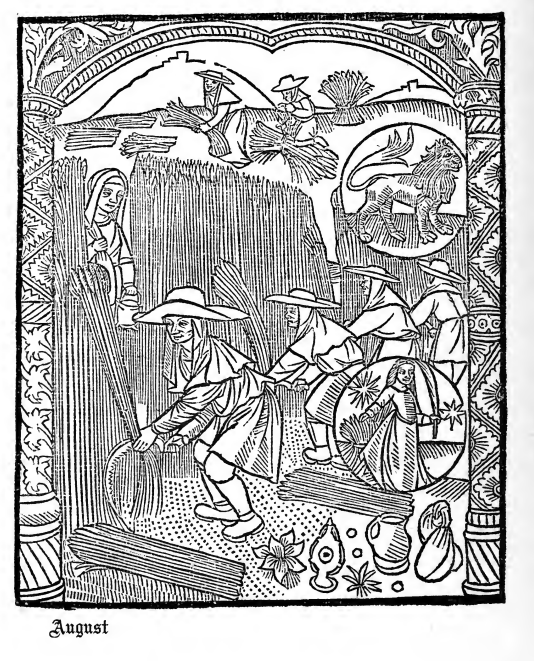
July Julius Caesar’s Month

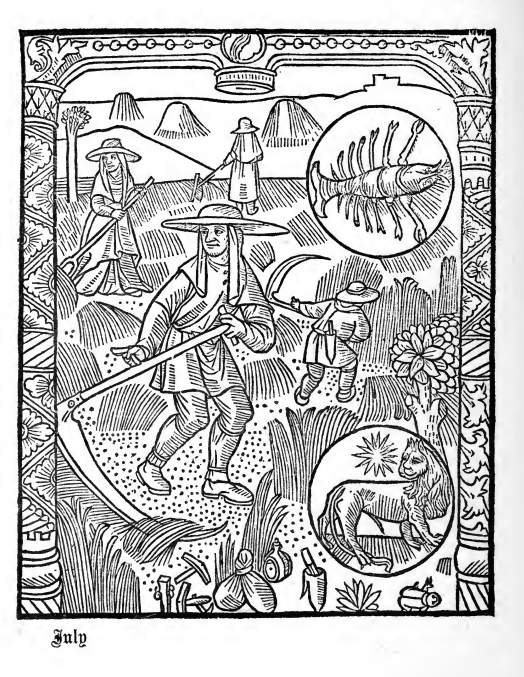
July – Kalendar of Shepherds 15th Century

July is named for Julius Caesar. Originally, the Roman Month was called Quintilis, as it was the fifth month of the Roman calendar, which originally started in March. Caesar reformed the calendar in 44BC and the Senate renamed the month after him. For more on Roman Months, see my post here.

The 7th month is called Lúil in Irish and Gorffennaf in Welsh. In Anglo Saxon it was Æfteraliða, or “after-mild;”, Liða, means “mild” or “gentle,” or the period of warm weather around Midsummer. June is Arraliða, or “before-mild”.

It is on average the warmest month in most of the Northern Hemisphere, where it is the second month of summer. The star signs are: Cancer (until July 22) and Leo (July 23 onwards),

July is the month of Haymaking, as you can see from the image (above from Kalendar of Shepherds). To find out more about haymaking, wait for the next post.

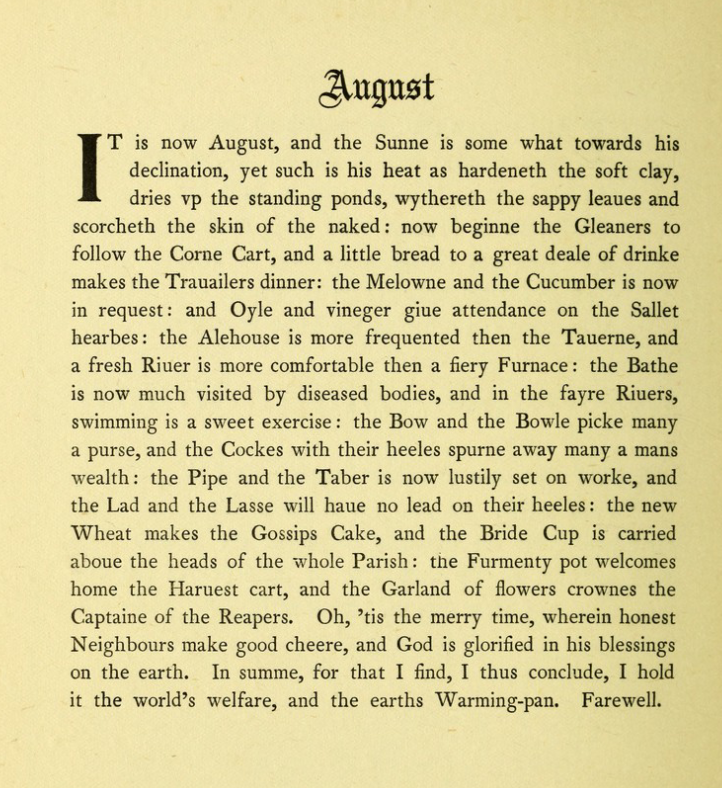
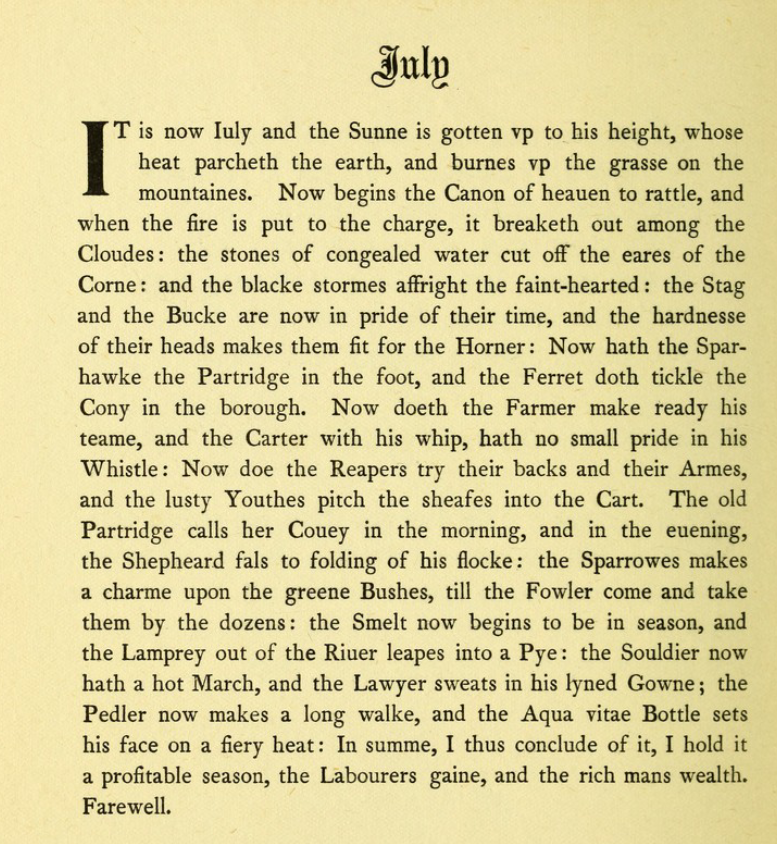
From the Kalendar of Shepherds comes this description of the month.

First published, in 2023 and republished in 2024, 2025

Midsummer June 21st

A gentle midsummer reminder of our place in the universe – source Facebook post.

Midsummer Solstice is the 21st of June. The Celtic version begins when the Celtic Day begins. This is at dusk on June 20th, which we would call Midsummer’s Eve. Midsummer, astronomically, begins on 21st June.  But, meteorologically speaking, it has been here Summer since the beginning of June.

Midsummer is a fire festival, dedicated to the Celtic Fire God, Belinus. His name might mean Powerful One or Shining One, and he is linked to Apollo, one of the Greco-Roman Sun Gods. His main festival is Beltane, May Day, but many of the attributes of May celebrations and indeed Halloween celebrations are also carried out at Midsummer. (See my post on May Day)

In the early medieval period, the Church hijacked Midsummer’s Day and transferred it to June 24th. St John the Baptist’s Day. John was born 6 months before Jesus. John Aubrey in the 17th Century writes:

‘Still in many places on St John’s Night they make Fires on the Hills: but the Civil Warres coming on have putt all these Rites or customes quite out of fashion.’

John Aubrey, Miscellanies, 1695

For my post on St John the Baptist’s Day read my post here.

Appropriate Words for Midsummer?

Hark! hark!

The lark at heaven’s gate sings, And Phoebus ‘gins arise, His steeds to water at those springs. On chalic’d flowers that lies; And winking Mary-buds begin To ope their golden eyes; With everything that pretty is, My lady sweet, arise: Arise, arise.

Cloten Scene III Cymberline. William Shakespeare

Or words for a Druid watching the Sun rise?

Arise, O Sun!
Let the Darkness of Night
Fade before the beams of your glorious Radiance

Uncanny Summer

To prepare for Midsummer, remember that it is, like Halloween, an uncanny period. Hobgoblins, Fairies and Sprites, are, as in Shakespeare’s Play, Midsummer’s Night’s Dream, all abroad making mischief. Like May Fires, Belinus’ fire should be made from wood donated from all farms in the area, and using a range of trees. Ideally, collected by 9 men and from 9 different trees. Blazing branches should be carried sunwise around the fields to bless the crops, and it was good luck to jump over the ashes of the fire.

St John’s Wort

First in the line of defence against the infernal is St John’s Wort, known as Chasse-diable, Demon Chaser, Fuga Daemonum (amongst many other appellations). It was used to keep demons away, and to exorcise haunted houses. John Aubrey in ‘Miscellanies’ talks about a haunted London house which was cured by a Doctor who put St John’s Wort under the pillow of the bed. Bankes Herbel 1525 says:

Sedum_telephium by Bernd Haynold wikipedia

‘The virtue of St John’s Wort is thus. If it be put in a man’s house, there shall come no wicked sprite therein.’

Vervain, yarrow, corn marigold, and orpins were also used, often woven into garlands, and hung around the necks of cows, or on door lintels as protection. If the St John’s Wort withered, the picker was to die or at least endure disappointment. If orpins entwined themselves on Midsummer’s Night, marriage would follow. Orpine, (Sedum Telephium) aka Live Long, or Life Everlasting was valued for the length of time it remained fresh after being gathered. Medicinally, it was considered good to use outwardly to cool scaldings, inflammations, and wounds.

St John’s Wort has a reputation for helping with depression, menopausal symptoms, ADHD, anxiety and other conditions.

St John’s Wort Photo by Lex Melony on Unsplash

Hempseed & Love & Churches

A girl seeking love should walk around the Church seven or twelve times (accounts vary!) at midnight scattering hempseed, and singing:

Hempseed I sow
Hempseed I hoe
Let him that is my true love
Come after me and mow

In the South West of England, there was a custom to watch the church porch on Midsummer Evening. This was when the spirits of all the living people of the village could be seen entering the church. Those not seen coming out again would surely die, as would any watcher foolish enough to fall asleep.

Thanks to the ‘Customs and Ceremonies of Britain’ by Charles Kightly.

First written in June 2023, and revised and republished in June 2024, and 2025

Death of Luca Pacioli the Father of Double Entry Bookkeeping June 19th 1517

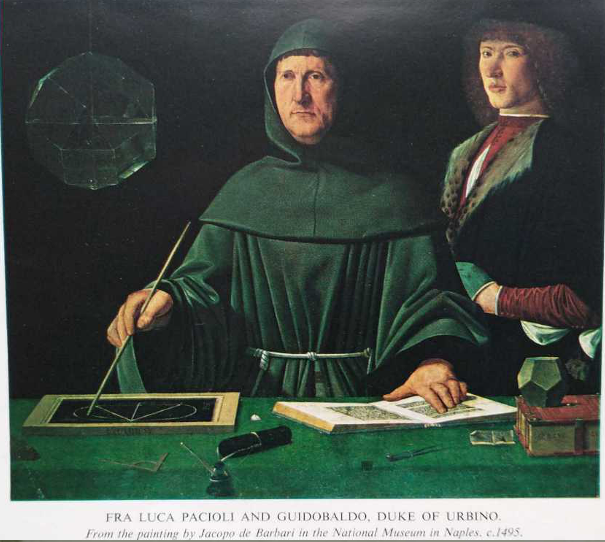
Luca Pacioli, father of double entry book keeping.

Luca Pacioli was a mathematician, whose mathematical text book had a section on Venetian book-keeping.  It was published in 1494 although double entry booking keeping was probably being used earlier.  The accountancy is a 27-page section called “Particularis de computis et scriptus.  It is part of the compendious ‘Summa de Arithmetica, Geometrica, Portiona et Proportionali’.

It is the source of modern double entry accounting, which spread from Venice as it was the printing capital of Southern Europe.

The key discovery, reported by Luca Pacioli, was that every transaction had to have an entry in both a debit and credit account.  So if I lend you £10,000 then my account is debited by 10k and yours is credited by the same amount.  Fra Luca (he was a Franciscan Friar) would have it that the accountant could not go to bed until the ledgers balanced. That is, that all the credits and balances in all the ledgers balance.

Double entry bookkeeping has prevented numberless frauds, kept many businesses on the straight and narrow. But it is of course not proof against sophisticated fraud.

Assyrian Double Entry booking keeping?

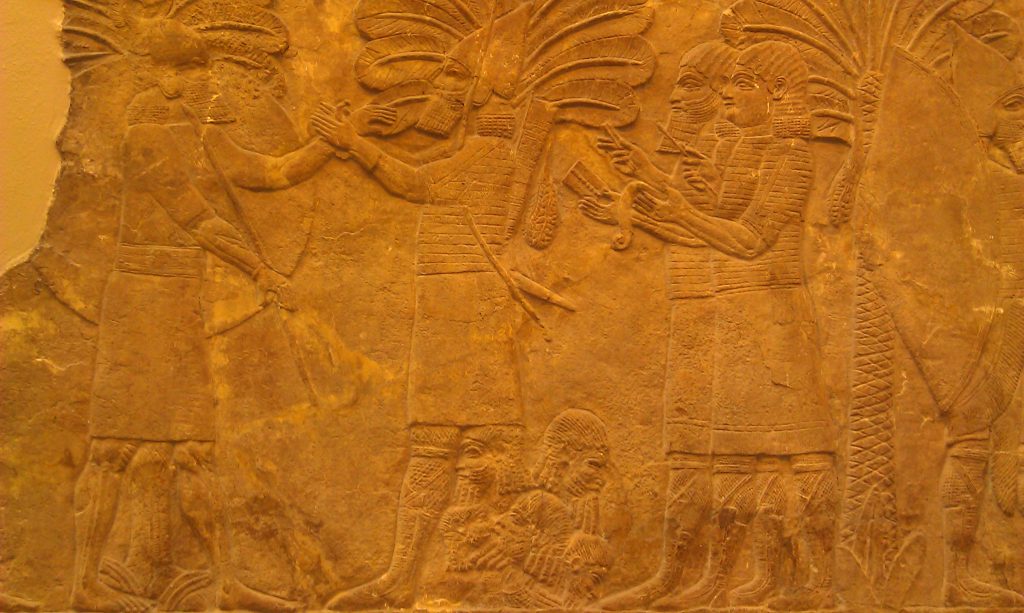
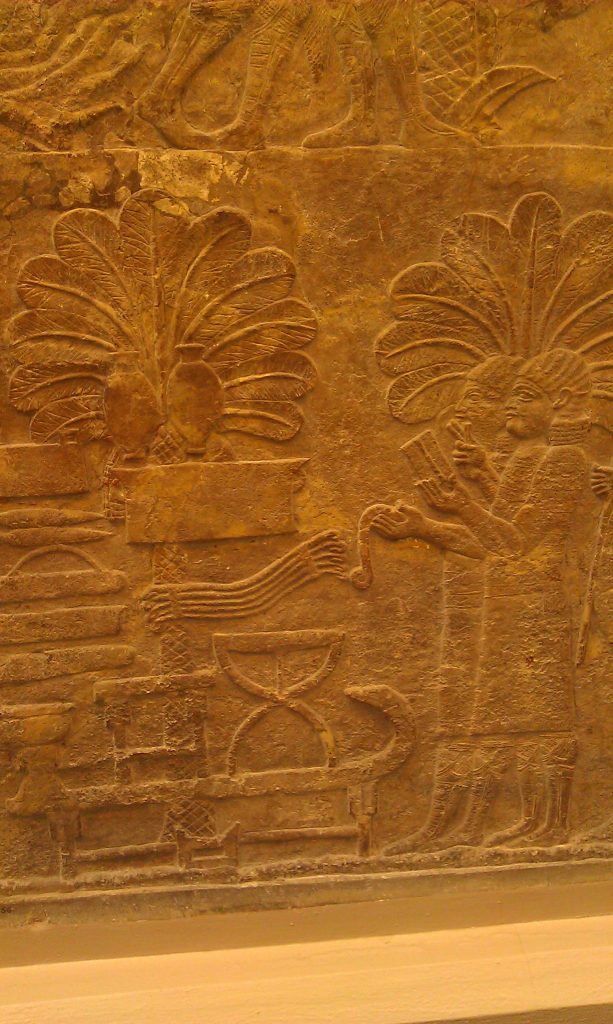
The gypsum stone reliefs shown below on display in the British Museum show clerks recording booty plundered in the Assyrians’ wars.  The soldiers are bringing goods in to be counted.  In the first picture, the goods are severed skulls.  In the second are a wide range of booty.

In every scene like this, there are two scribes writing notes on clay tablets with styli.  They stand side by side.  I presume their role is to make sure the other man doesn’t cheat, rather than to facilitate double entry book keeping as such.  Assyrians paid their soldiers for each enemy soldier they killed, and the head was the proof. You will see a little pile of severed heads between the soldier and the scribes.

Assyrian scribes recording severed heads.. British Museum. Photo Kevin Flude

Assyrian scribes recording war booty. British Museum.  Photo Kevin Flude

Italians, Accountancy and London.

The earliest work on double entry in England was by Oldcastle in 1543.  There were a lot of Italian businessmen in Tudor London. Thomas Cromwell was friends, and indeed neighbours, with some. As a young man he was helped out by the head of one of the great Florentine Finance houses, Frescobaldi.  They had branches in Bruges and London, and were major financiers to the Kings of England. Thomas More lived among the colony of Merchants from Lucca. The business centre of London before the building of the Royal Exchange was in Lombard St, where the Lombardian bankers hung out. 

More on the British Museum in my post here

First Published on June 19th 2025

Smithfield & the Peasants’ Revolt June 15th 1381

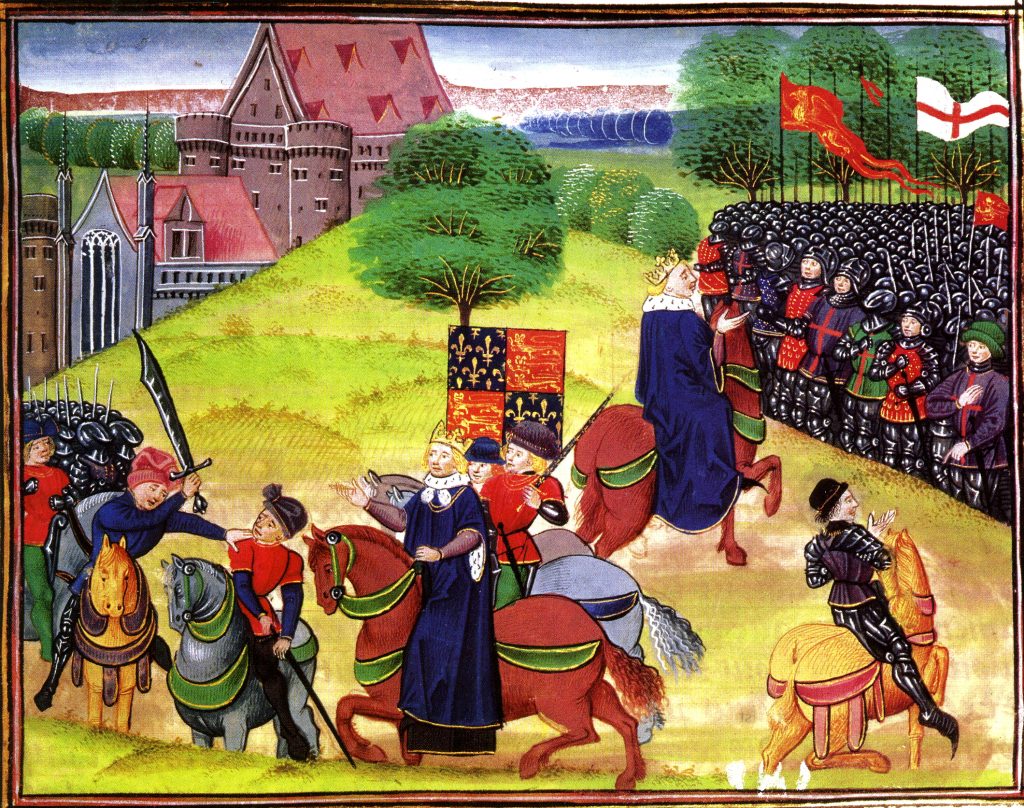
Smithfield & the Peasants’ Revolt. illustration from ‘Chroniques de France et d’Angleterre’, by Jean Froissart, c.1460-80. Walworth is showing killing Wat Tyler, King Richard is shown twice, first watching the death of Tyler, and secondly taking control of the Rebels

On the 15th June, King Richard went to pray at Westminster Abbey before the climax of Smithfield & the Peasants’ Revolt.  He prayed at the shrine of St Edward the Confessor. A King who knew all about the sins Kings are forced to commit to rule an unruly Kingdom and could intercede on the King’s behalf in Heaven

The Peasants’ met at Smithfield, or maybe they had camped out there overnight.  It was a big field where the livestock market was held.  And where people were executed.  Most famously Scottish patriot, William Wallace, who was hanged, drawn and quartered here on 23 August 1305.  It was also used for jousting, and one of the streets off Smithfield is called GiltSpur Street.

The King, Smithfield and the Peasants’ Revolt

The King had agreed to meet the Peasants again.  We don’t know how that was organised.  The King turned up supported by a group of men who included members of the City of London Corporation including the Lord Mayor, Fishmonger, William Walworth.  They seem to have worn armour under their clothes.  The King’s Party lined up in front of St Bartholomew’s the Great Priory.

The rebels were on the other side of the field, presumably armed with the weapons and armour they had plundered from the Tower of  London.  It is not clear exactly what happened, and the sources are prejudiced against the rebels.

The Rebels demands were: the abolition of all Lords except the King; all bishops except the Archbishop; all monasteries except the Friaries and the  replacement of the false House  of Commons, with the True House of Commons.

Wat Tyler rode towards the King’s party. Got off his pony, spat out the wine he had been drinking, and ‘Hailed, Brother’ slapping the King on the shoulder.  This was not normal court etiquette.

One of the King’s party shouted at Tyler that he was a thief and a murderer.  Tyler drew his sword, and William Walworth struck him down, mortally wounding him. 

Commentators speculate that this might have been part of a plan.  To arrive seemingly without armour, to provoke a crisis, and disrupt the rebels.

The City’s part in the events in Smithfield is fascinating.  City Merchants were not generally fighting men, but they seem to be the active group the King could rely on.  Interestingly, there is no evidence that the Rebels attacked the Guildhall and destroyed the legal records. They attacked most important legal institutions in London, in the days before Smithfield. So why no attack  on the Guildhall?

This surely must be because the Guildhall was protected by a competent military force. And it seems these are the same people who took on and defeated Wat Tyler.

In Smithfield, the Rebels didn’t know what to do.  Is  it possible the King’s party shielded the murder of Tyler behind a screen of people?  So they didn’t know what happened and therefore didn’t know what to do?

For surely this was a  moment of true danger.  The Rebels would have had hundreds if not thousands in Smithfield, some at least well armed. Some must have been archers who would have been deadly.  This is not that long after the Battles of Crecy and Poitiers, where the flower of the French Nobility was killed by the English Archers.  Archers were normally rank and file soldiers, exactly the class of people supporting the Rebellion. Tyler was taken to St Bartholomew’s Hospital, where he died of his wounds.

In the moment of crisis, the King is said to have ridden forward on his horse and told the Rebels:

‘I will be your leader.’

And then he led them, like the Pied Piper of Hamlin, to their destruction.

He led them out of Smithfield into the field surrounding and told them they had their Charters so it was time to go home.  And mostly they did.

To be continued.

To read my post mile-end-the-peasants-revolt-june-14th-1381/

Also on this day June 15th Magna Carta was signed in 1215

First Published on 15th June 2025

Mile End & the Peasants’ Revolt, June 14th 1381

The Execution of Treasurer Robert Hales and Chancellor Archbishop Sudbury on the Day the King met the Peasants at Mile End

To recap.  On June 14th the 1381 Rebels have control of London.  They are destroying any repository of legal records they can find. People are walking the streets dispensing street justice.  Foreigners who speak Flemish are being beheaded.  Enemies of the people are being dragged out of sanctuary and beheaded.  Properties of the leaders of the government are being ransacked and burnt.

The King is in the Tower with his advisors, fearful that the Rebels will breach the defences.  I would love to be a fly on the wall of that conversation. You would think it would go something like.

‘Sire.  Your safety is paramount.  We will leave the castle and draw off the rebels so you can go to a place of greater safety.’

What happened is astonishing.  The Royal plan was to send the 14-year-old King Richard out to draw off the rebels so that the hated Chancellor of England, Archbishop Sudbury and the Treasurer of England, Robert Hales could slip away unseen! Putting the young boy king in the direct line of fire!

There are two explanations. Hales and Sudbury were arrant cowards. Or the King was very confident of his safety and despite his youth made his advisors accept his command.  This was an age where young princes took adult responsibilities early.

The King left the Tower on horse back, accompanied by two half-brothers and his mother (and others). Their reception was hostile. We have eyewitness accounts of angry rebels pulling at the King’s bridle and that of one of his attendants from the City government. The King sent his mum and brothers back to the Tower as it was too dangerous. We can only assume the King sent them back sure that the peasants did not blame him for the mess the country was in.

He went to Mile End.  His clerks set up tables and began writing charters freeing the peasants from feudal duties and turning their tenure into monetary rents.

As each village received its charter, many of the villagers went home.  Back at home they sometimes attacked the people who had been manipulating the legal system, believing the King had given them permission to punish the guilty.

Whether the king believed in the justness of their claim or was just placating them to gain time, we do not know. But some historians believe that the young King was sympathetic to some of their claims, until older counsel made him change his mind.

Not all the rebels followed the King to Mile End, nor went home when their charters were sealed.  It is thought Wat Tyler and thousands of rebels stayed at the Tower.

They saw the Archbishop of Canterbury trying to escape.  They forced their way into the Tower.  Here they jumped up and down on the Queen Mother’s bed, stole armour and weapons.  Then dragged Hales, Sudbury, a Franciscan Friar (William Appleton, John of Gaunt’s physician), and John Legge, a royal sergeant to the scaffold at Tower Hill and beheaded them.  Their heads were put on poles and paraded around town.

When the King left Mile End he couldn’t go to the Tower so he went to Baynards Castle, near Blackfriars. We also know that, the King’s cousin, Henry Bolingbroke was in the Tower.  He was the son of the hated John of Gaunt.  Years later, when he was King, he acknowledged the fact that a Londoner had been instrumental in saving his life in the Tower on the 14th of June, 1381. The man was fighting charges of stealing gold from the ransacking of Gaunt’s Savoy Palace.  He was given a pardon.

That night rebels remained in London, and the king’s cause had been considerably weakened.

The Archbishop’s Head

You may wonder what happened to his head! Well, here is the answer!

To be continued. See also my post peasants-revolt-june-13th-1381/

First published in 2025.

.

St Columba (St Colmcille) Day June 9th

St Columba st margarets chapel by Graham van der Wielen  Edinburgh  Lead glass
St Columba Stained Glass window in St Margaret’s Chapel Edinburgh Castle Photo by Graham van der Wielen Wikipedia CC BY 2.0

St Columba, or Colmcille is one of the most important saints for the early transmission of Christianity. He was born in 521 and said to be a descendant of the possibly legendary Irish King Niall of the Nine Hostages. (The Hostages were a token of Niall’s power over Ireland as they came from the five provinces of Ireland. These are Ulster, Connacht, Leinster, Munster, and Meath. The other four hostages represented Scotland, the Saxons, the Britons, and the Franks.)

St. Columba was sent at an early age to be brought up as a Monk, and went on to set up Monasteries in Ireland at Derry and Durrow. In 563, he left Ireland, possibly because he got involved in a dispute that had a deadly outcome. He went into exile to Scotland and set up the famous Monastery on the island of Iona, Inner Hebrides. This is off the coast of what would one day be called Scotland. At the time, it was under the control of the Kingdom of Dál Riata, which was, Gaelic, nominally Christian, and controlled parts of Ulster and Western Scotland.

From Iona, Columba led the conversion of the Picts to Christianity. The Picts were Britons, speaking a different dialect of Celtic than the Gaels of Ireland and Dál Riata. Their name is said to have been given by the Romans and meant Painted Men. A shared religion, which St Columba brought from Ireland, helped towards the eventual union of the Gaels, the Picts and other British groups into the Kingdom of Alba. Alba is the Gaelic name for Scotland – meaning white, and from which we also get Albion. Alba became Scotland, which is derived from the Roman word for the area which in Latin was “Scotia”. Iona became the traditional burial place of early Scottish Kings such as Macbeth (Mac Bethad mac Findlaích). These Kings were crowned at Scone and buried in Iona. Alba was also able to take territory from the Anglian Kingdom of Northumbria, namely, the Scots-speaking areas South of the Firth of Forth. (Scots being a dialect of English). There were also Norse settlers in the Ireland so Scotland was made of a coalition of Gaelic, Brittonic, Norse and English speakers.

St Columba and the Loch Ness Monster

Much of the events of this part of Columba’s life are recorded by St. Adamnan in The Life of Saint Columba. This was written in the 7th Century, much of which is apocryphal. One notable story tells how he came across a group of pagan Picts who were mourning a child killed by a monster in the River Ness. St Columba revived the child. He then sent one of the Brothers to swim across the Loch to fetch a boat. The “water beast” pursued the Monk and was about to attack him when St Columba told the monster to stop. So it did, retreating to the depths of Loch Ness. Thus began the legend of the Loch Ness monster.

St Columba died in 597AD. Iona continued to prosper and in, 634 sent St Aidan from Iona to found the Monastery at Lindisfarne. The island is on the Eastern coast of Britain in the Anglo-Saxon Kingdom of Northumbria. This Kingdom of the North Angles, was one of the most powerful at the time and Lindisfarne was instrumental in its conversion. The tradition of evangelism took hold in the British Isles, and it was from here that much of the German-speaking world was converted to Christianity.

This is St Columba’s legacy.

Northumbria’s Contribution to the development of Christianity

There is a developing understanding among scholars that this Irish inspired form of Christianity, fused with the Anglo-Saxon Northumbria took a leading role in ritual, art, scholarship in the Roman Catholic world. Just stop and think about that sentence for a moment. The northern parts of an out of the way set of islands off the edge of Europe took a leading role in the development of Western Christianity. This was highlighted in a recent exhibition of Anglo-Saxon art at the British Library.

British Library with Poster for Anglo-Saxons Kingdoms Exhibition, Photo K Flude

A look at the Lindisfarne Gospel and the Book of Kells showcases the amazing art of this period. For a real treat, look through this scrollable virtual copy of the Lindisfarne Gospel. (Currently this is unavailable, I suspect since the BL was hacked. So instead, here is a slightly breathless online introductory video of the Gospel.)

The Book itself has been missing from the displays of the British Library for a couple of years, but was on display in Northumberland in 2022. I’m not sure whether it is yet back on display at the British Library. I think not. You can see the Book of Kells at Trinity College, Dublin or look at their online offering here: Not quite as joyous an experience as the online Lindisfarne but beautiful enough.

Carpet Page from the Lindisfarne Gospel
Carpet Page from the Lindisfarne Gospel Photo Wikiepedia Eadfrith –
Lindisfarne evangeliarium, tapijtbladzijde op f26v, Matteüsevangelie

Click here to read my post on Scone and the emergence of Alba.

Here is a virtual tour of Iona

Here is a 360-degree panoramic photo tour of Lindisfarne Abbey

First Published in 2023, revised, 2024 and improved 2025

Whitsun

Pentecost by Giotto and Workshop, probably about 1310-18, National Gallery

Today, is Whitsun or Pentecost. (Sun, May 24th 2026, 16 May 2027, 4 June 2028), 50 days after the Crucifixion. Celebrated on the 7th Sunday after Easter. The Day the Holy Ghost descends on the disciples.  According to one of my teachers, it gave the disciples the power of expression and turned them from bereft disciples to self-confident Apostles.   They could now begin to spread the Christian message.

Giotto’s painting shows the Apostles with their halos in the chamber. There are 12 of them, St Matthias having replaced the dead, Judas. The Holy Spirit is represented by the little dove in the centre of the Ceiling. The narrative is carried by the two men in the foreground leaning towards each other. We imagine them saying something like ‘What’s all this about! Galilean nonentities, lost their guru and yet, confident, speaking authoritatively to all and sundry and they can all understand them?

Giotto was a forerunner of the Renaissance. According to the great Giorgio Vasari (30 July 1511 – 27 June 1574) who wrote about the advances in painting achieved by Italian artists:

‘that very obligation which the craftsmen of painting owe to nature, who serves continually
as model to those who are ever wresting the good from her best and most beautiful features and striving to counterfeit and to imitate her, should be owed, in my belief, to Giotto, painter of Florence, for the reason that, after the methods of good paintings and their outlines had lain buried for so many years under the ruins of the wars, he alone, although born among inept craftsmen, by the gift of God revived that art, which had come to a grievous pass, and brought it to such a form as could be called good.

The miracle was that this boy, a poor shepherd with no training in art was able to show nature its true face.

One day [the artist] Cimabue, going on business from Florence to Vespignano, found Giotto, while his sheep were feeding, drawing a sheep from nature upon a smooth and solid rock with a pointed stone, having never learnt from anyone but nature.’

One of the points Vasari is making is that the Byzantine Art had lost the use of perspective, something the Romans knew. Paintings had become cartoon like spaces had no solidarity, groups of people stood on shoulders. If you look at the painting above you will the room the Apostles are in has the beginnings of a realistic space, the rafters slope down to a vanishing point. The Apostles are ranged convincingly around the space. Their faces are rounded and realistic. They are separated from the outside world by a dividing wall. And two dudes at the front are convincingly on the ground, rather than hovering in mid air (though I might have cropped the photo too closely!)

It would be over one hundred years before photo realistic portraits and realistic perspective paintings were rediscovered but Giotto showed the way.

For more on Giotto see my post here:

And on Italian art and perspective my post here

First published on June 8th 2025