December and Kalendar of Shepherds December 1st

French 15th Century December and the ‘Kalendar of Shepherds’

December comes from the Latin for ten – meaning the tenth month. Of course, it is the twelfth month because the Romans added a couple of extra months especially to confuse us. For a discussion on this, look at an early blog post which explains the Roman Calendar.

In Anglo-Saxon it is ærra gÄ“ola which means the month before Yule. In Gaelic it is An Dùbhlachd – the Dark Days which is part of An Geamhrachd, meaning the winter. The word comes from an early Celtic term for cold, from an ‘ancient linguistic source for ‘stiff and rigid’’, which describes the hard frosty earth. (see here for a description of the Gaelic Year). In Welsh, Rhafgyr, the month of preparation (for the shortest day).

For the Christian Church, it’s the period preparing for the arrival of the Messiah into the World. (see my post on Advent Sunday which this year was yesterday November 30th).

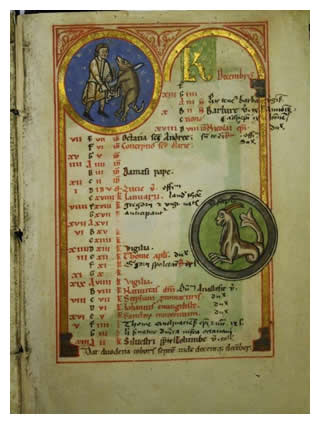
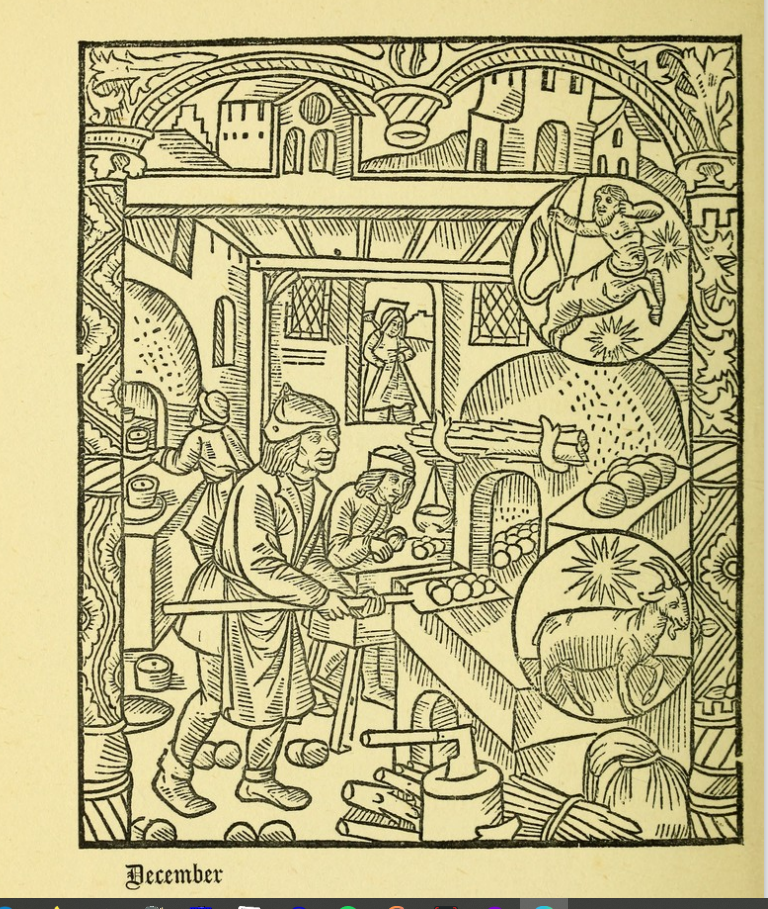
For a closer look at the month, I’m turning to the 15th Century Kalendar of Shepherds. Its illustration (see above) for December shows an indoor scene, and is full of warmth as the bakers bake pies and cakes for Christmas. Firewood has been collected, and the Goodwife is bringing something in from the Garden. The stars signs are Sagittarius and Capricorn.

The Sparrow and the Warm Hall

The Venerable Bede has an interesting story (reported in ‘Winters in the World’ by Eleanor Parker) in which a Pagan, contemplating converting to Christianity, talks about a sparrow flying into a warm, convivial Great Hall, from the bitter cold winter landscape. The sparrow enjoys this warmth, but flies straight out, back into the cold Darkness. Human life, says the Pagan, is like this: a brief period in the light, warm hall, preceded and followed by cold, unknown darkness. If Christianity, he advises, can offer some certainty as to what happens in this darkness, then it’s worth considering.

This contrast between the warm inside and the cold exterior is mirrored in Neve’s Almanack of 1633 who sums up December thus:

This month, keep thy body and head from cold: let thy kitchen be thine Apothecary; warm clothing thy nurse; merry company thy keepers, and good hospitality, thine Exercise.

Quoted in ‘the Perpetual Almanack of Folklore’ by Charles Kightly

December in the ‘Kalendar of Shepherds’

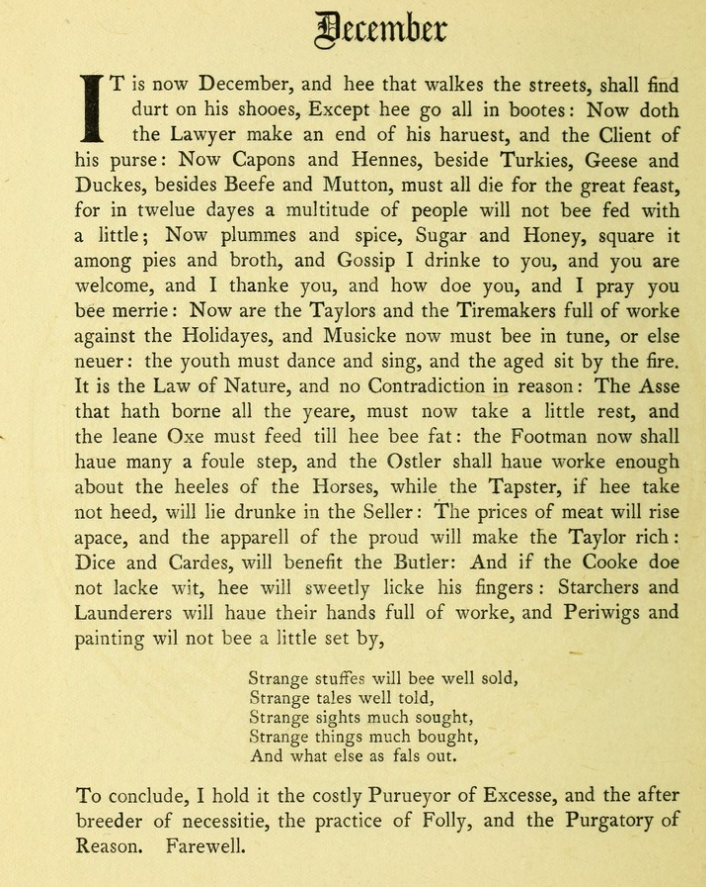
The Kalendar of Shepherds text below gives a vivid description of December weather. Dating from 1626 it gives a detailed look at the excesses of Christmas, which people are on holiday, and who is still working hard. But it concludes it is a costly month.

Nicholas Breton’s ‘Fantasticks of 1626 – December from the Kalendar of Shepherds

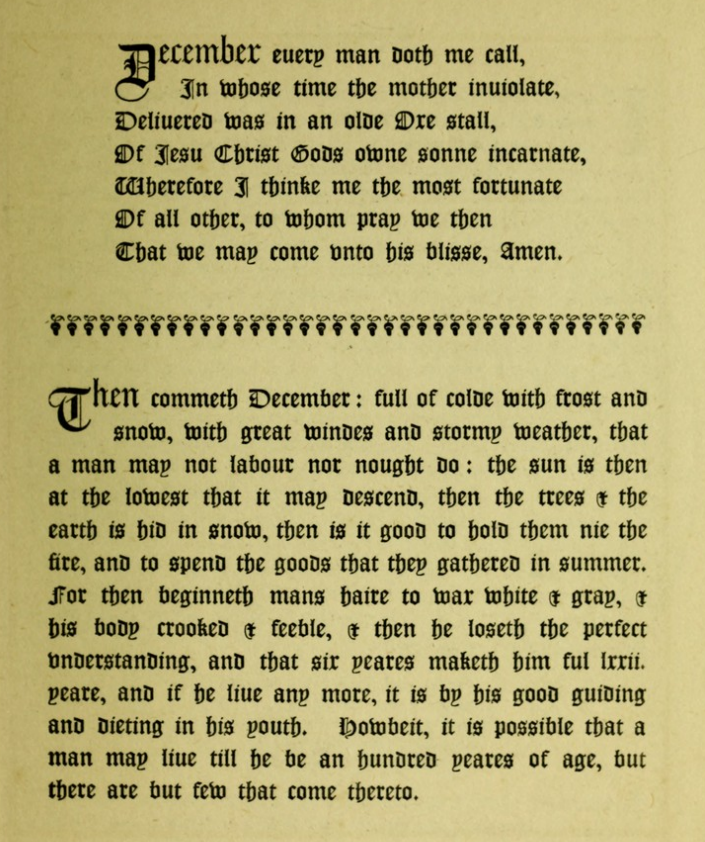
Six Dozen Years – a Lifespan

The other section of the Kalendar then elaborates on the last six years of a man’s life, with hair going white, body ‘crooked and feeble’. (from 66 to 72). The conceit here is that there are twelve months of the year, and a man’s lot of ‘Six score years and ten’ is allocated six years to each month. So December is not just about the 12th Month of the Year but also the last six years of a person’s allotted span. The piece allows the option of living beyond 72, ‘and if he lives any more, it is by his good guiding and dieting in his youth.’ Good advice, as we now know. But living to 100 is open to but few.

Kalendar of Shepherds

Interesting from my point of view as I have reached the end of my life span as suggested by the Calendar, and my father is 98 and approaching his hundred!

About the Kalendar of Shepherds.

The Kalendar was printed in 1493 in Paris and provided ‘Devices for the 12 Months.’ The version I’m using is a modern (1908) reconstruction of it. It uses wood cuts from the original 15th Century version and adds various texts from 16th and 17th Century sources. (Couplets by Tusser ‘Five Hundred Parts of Good Husbandrie 1599. Text descriptions of the month from Nicholas Breton’s ‘Fantasticks of 1626.) This provides an interesting view of what was going on in the countryside every month.

For more on the Kalendar look at my post here.

The original Kalendar can be read here: https://wellcomecollection.org/works/f4824s6t

To see the full Kalendar, go here:

On This Day

1981 – Launch of the BBC Micro

1990 The UK was rejoined to Europe for the first time for 8000 years, when the Channel Tunnellers breached the final wall of rock. French and British workers exchanged flags and shook hands. The Tunnel was opened to traffic in 1994 more than 10 years after work started and 200 years since Napoleon proposed the idea. Read what ICE has to say about the (ICE – Institute of Civil Engineers!).

Britain was connected to the Continent until about 6,100BC, the North Sea, the Channel, and the Irish Sea were all dry (or marshy lands). Water levels were rising and ice melting. the Storegga Slides in Norway saw huge cliffs of ice slipped into the sea. This caused a tsunami over 30ft high and penetrating 25 miles inland. Read the BBC here.

Since then, Britain has been an Island. Archaeologists have been exploring the flooded area which is known as Dogger Land, after the Dogger Bank. (for more on Dogger Land.)

First Published in 2024, republished 2025

St Andrew’s Day November 30th

The Saltire – flag of Scotland

Saint Andrew was the first Apostle and, it was he who introduced his brother, Simon Peter, to Jesus. He was a simple fisherman. Not much about his later life is known, but the idea that he was martyred on a X-shaped cross, the saltire, is probably a medieval invention. As a fisherman, he is patron of fishermen, and fishmongers. Furthermore, the patron saint of Scotland and Russia; of singers and pregnant woman, and efficacious in offering protection against sore throats and gout.

His association with Russia comes from Eusebius, who quotes Origen recording that Andrew preached in Scythia. The Chronicle of Nestor says he travelled to Kiev and Novgorod and so became a patron saint of Ukraine, Romania, and Russia. (Wikipedia).

Scottish legends has St Andrew both visiting Scotland himself and some of his relics coming to Fife in the 4th Century or the 8th Century. St Rule (aka St Regulus) was tasked with taking some of Andrew’s relics to the edges of the world. In the 4th Century he turned up in Fife where he was welcomed by the Pictish King, Óengus I. He brought with him a kneecap, arm, and finger bone of St Andrew, which were kept in St Rule’s Church. This gave St Andrew’s name to the town. Óengus I is actually an 8th Century Pictish King, so perhaps the relics came to Scotland in the 8th Century which is a little more realistic. The relics were transferred to the Cathedral, but they were destroyed in the Reformation. In 1979, the Archbishop of Amalfi gifted a piece of Saint Andrew’s shoulder blade to St Andrews and Pope Paul VI gave further remains to Scotland in 1969.

The Town of St Andrews

The earliest recorded name for the town is Gaelic and is Cennrígmonaid, which means something like the King’s Peninsula near the Moor. The fame of the Church changed the name of the town to St Andrews (no apostrophe, as it was named before the French gave us apostrophes in the 1600s). St Andrews is also famous as the home of golf and the oldest University in Scotland, (founded in 1412).

St Andrew’s Day Celebrations

The Day is an official bank holiday in Scotland and is celebrated with events all over the country, including a torchlight procession in Glasgow. (https://theculturetrip.com/europe/united-kingdom/scotland/articles/what-is-st-andrews-day-and-how-do-people-celebrate-it-in-scotland/). Celebrate with a Haggis and a Whisky!

In Kent and Sussex Andrewtide gave the right to hunt squirrels, and in Hasted’s History of Kent (1782) the day is said to allow the ‘lower kind’ to form a lawless rabble hunting any manner of hares, partridges, and pheasants. (Perpetual Almanac by Charles Kightly).

St Andrew in London

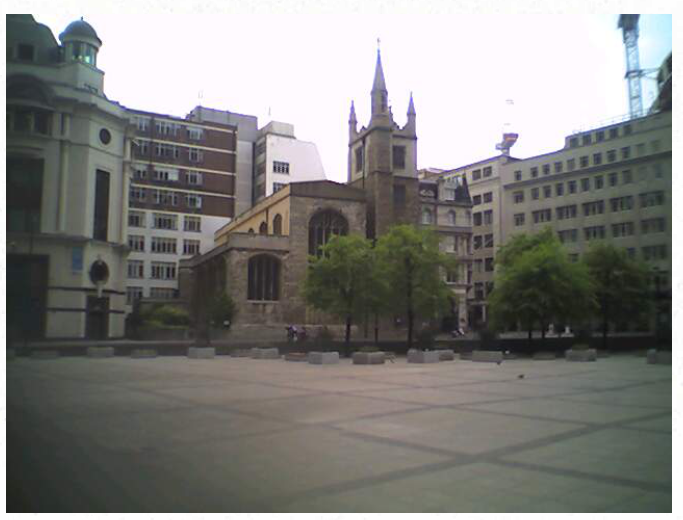
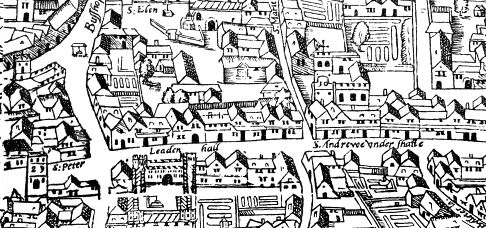
On the corner of Leadenhall Street and St Mary Axe in the City of London is one of the very few medieval Churches that survived the Great Fire of London is 1666. It was sheltered by the firebreak that was the Leadenhall, a big market building made of stone (but with a big lead roof).

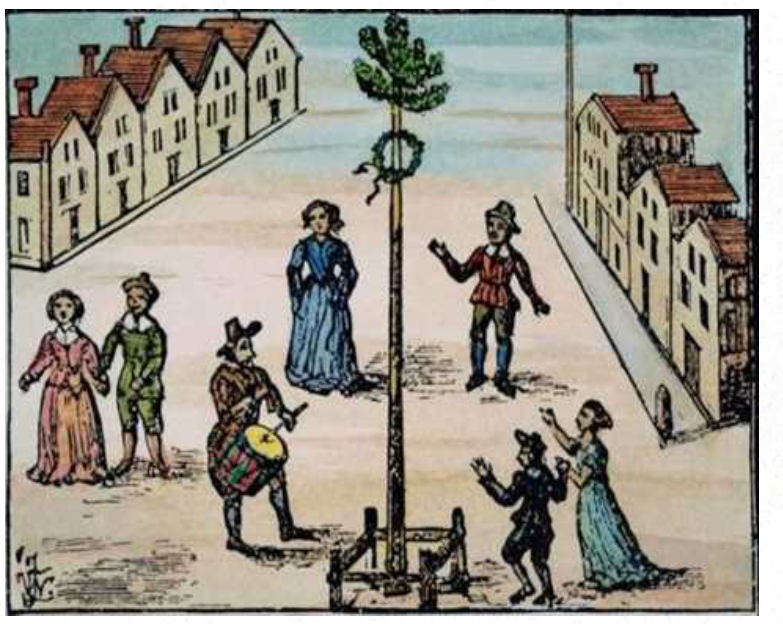
The Church is the Maypole Church, as it was here the Maypole or the shaft was stored under the eves of the Church when not in use. Hence, St Andrew’s sobriquet of ‘Undershaft’. The May Day riot in 1517 put an end to the dancing around the Maypole but the pole itself survived until 1547 when, in a Puritan riot, the ‘stynking idol’ was destroyed. (see my May Day blog post here for more details of Mayday.)

John Stow and Hans Holbein, memorials in St Andrews

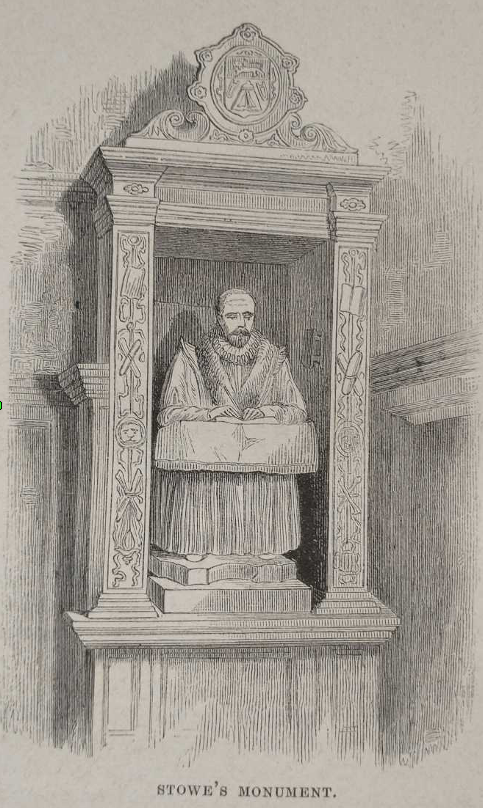
This is where the great London historian John Stow is buried. His Survey of London is one of the best sources for Medieval and Tudor London. Every three years, on April 5th or thereabouts, there is a commemorative service and his quill is changed. The Lord Mayor attends. The service is organised by Stow’s Guild – the Merchant Taylors.

John Stow, author of the ‘Survey of London‘ first published in 1598. Available at the wonderful Project Gutenberg: ‘https://www.gutenberg.org/files/42959/42959-h/42959-h.htm’

There is also a plaque to Hans Holbein, but no one knows, for sure, where he is buried. He died in London in 1543, possibly of plague.

Agas Map 1561 showing St Andrews (right centre)

Last Day to get married before Advent.

Traditionally, you could not marry after Advent and before 12th Night. So now might be the last chance to marry before that bump gets too big! This may be the reason that Shakespeare had to organise a special licence to get married in 1582! Advent that year was on 2nd December. See my post on their wedding here.

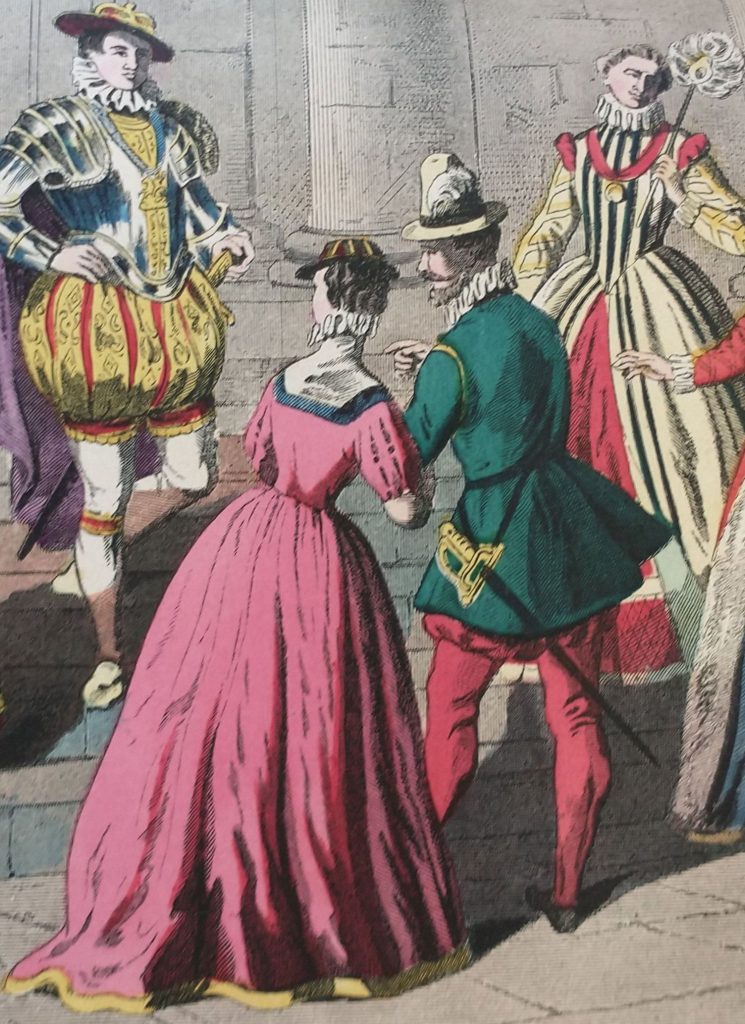
19th Century Illustration (From Author’s Collection)

Wedding dresses were traditionally whatever pretty dress you had. White only became de rigueur once Queen Victoria wore one, and the costs of material reduced because of mass production.

The Saltire

The story of the Saltire stretches back to the Picts. In 832AD Picts under the High King Angus MacFergus were returning from a punitive raid into Northumbria. They were chased by the North Anglians led by Athelstan (not the English King) into East Lothian at place still called Athelstaneford. It is to the south of Edinburgh. Angus led prayers to St Andrew for victory. Above the battle appeared in the clowds a white diagonal cross, against a blue sky. Angus promised St Andrew he would become the Patron Saint of the Country. (at the time called Alba, and later called Scotland). Athelstaneford still calls itself ‘Birthplace of the Scottish Flag.’ the-flag-heritage-centre/the-legend-of-the-saltire/

First Published on 30th November 2022, Revised and republished on 30th November 2023, Advent weddings added in 2024, Revised and Saltire added 2025

How to make a Dish of Snow & Ice Houses November 29th

Photo Zdenek Machacek -unsplash

Yesterday, I posted about the exciting discovery that Ann Shakespeare might have stayed in London with her husband. Here you can read the academic article about the research. Really worth reading!

A Dish of Snow

There is a 0% chance of snow, in London and 90% chance of snow in Glen Shee, Scotland, according to the Snow Risk Forecast. And here is an appropriate medieval recipe:

To make a dish of Snowe

Take a potte of sweete thicke creme and the white of eight egges and beate them altogether with a spoone then putte them into your creame with a dish full of Rose Water and a dishfull of Sugar withall then take a sticke and make it cleane and then cutt it in the ende fowre square and therewith beate all the aforesayd thinges together and ever as it ariseth take it of and putte it into a Cullander thys done take a platter and set an aple in the middest of it and sticke a thicke bush of Rosemarye in the apple then cast your snowe upon the rosemarye and fill your platter therewith and if you have wafers cast some withall and thus serve them forth

From Medieval Manuscripts, British Library. Blog. https://blogs.bl.uk/digitisedmanuscripts/medieval-history/page/2/

BF – Before Fridges

Before fridges, snow gave the chance for ice cream and other cold desserts. The problem was keeping it for longer than the cold spell. So many Stately Homes had ice-houses. The V&A had an ice-house just outside their glorious, Henry Cole commissioned restaurant. There is an ice house preserved at the Canal Museum, in Kings Cross. It was set up by Carlo Gatti in 1857 to store ice shipped in from Norway. Another one, in Holland Park, dates from 1770 and served the infamous Fox family (PM Charles James Fox etc).

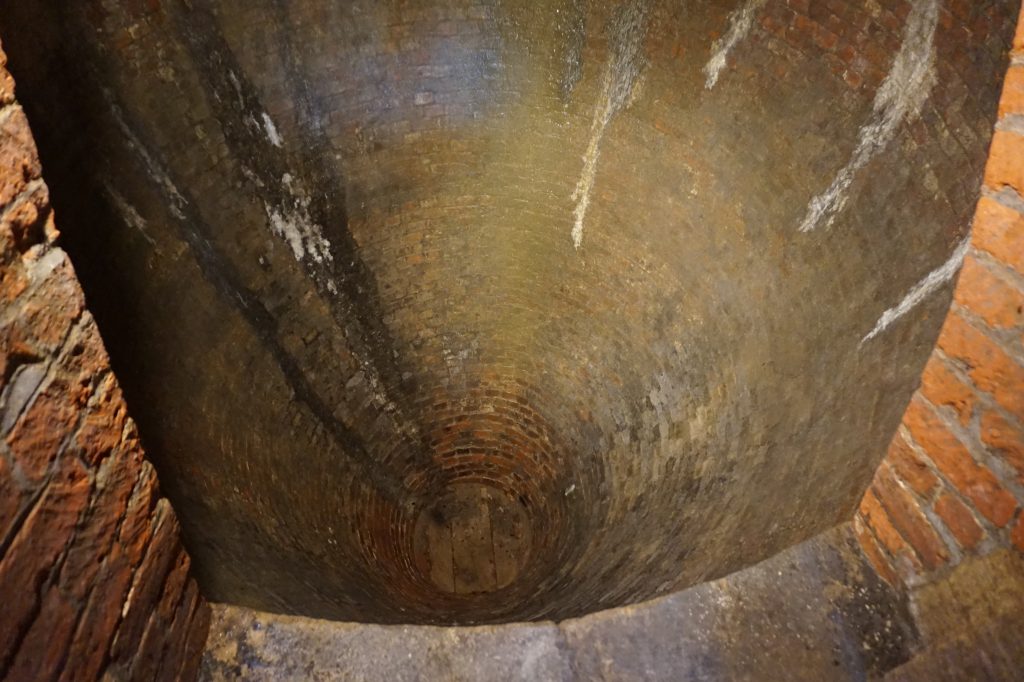
The first ice house was in Mesopotamian, but in the UK they were introduced by James 1 at his palaces in, first, Greenwich Park, and then Hampton Court. An ice house generally consists of a pit in the ground, brick lined, which tapered to a point. Above was a circular, often domed building. The ice was protected by insulation such as straw, and this structure would allow ice to be available all through the summer.

Ice House Dillington, Somerset
Ice House Dillington, Somerset, photo K Flude

My great-grandmother hung a basket outside the window in winter to keep things cold. On my fridge-less narrow boat, I have been known to keep milk and butter outside the door on the front deck. And to suspend and submerge wine in a plastic bag in the canal in high summer. Butteries and Pantries were typically cut into the ground to make them cooler. A Roman Warehouse in Southwark, of which the wooden floor still survived, had a ramp down to the floor which was cut into the ground surface. The ramp suggests it was used for storing barrels, where they were kept cool.

Sketch of Roman Warehouse found in Southwark.

For more on Icehouses (and an Icehouse in York) and the history of ice cream, see my post from August.

Written November 28th 2022, revised and republished 2023, 2024,2025

Murmurations of Starlings and Queen Branwen November 26th

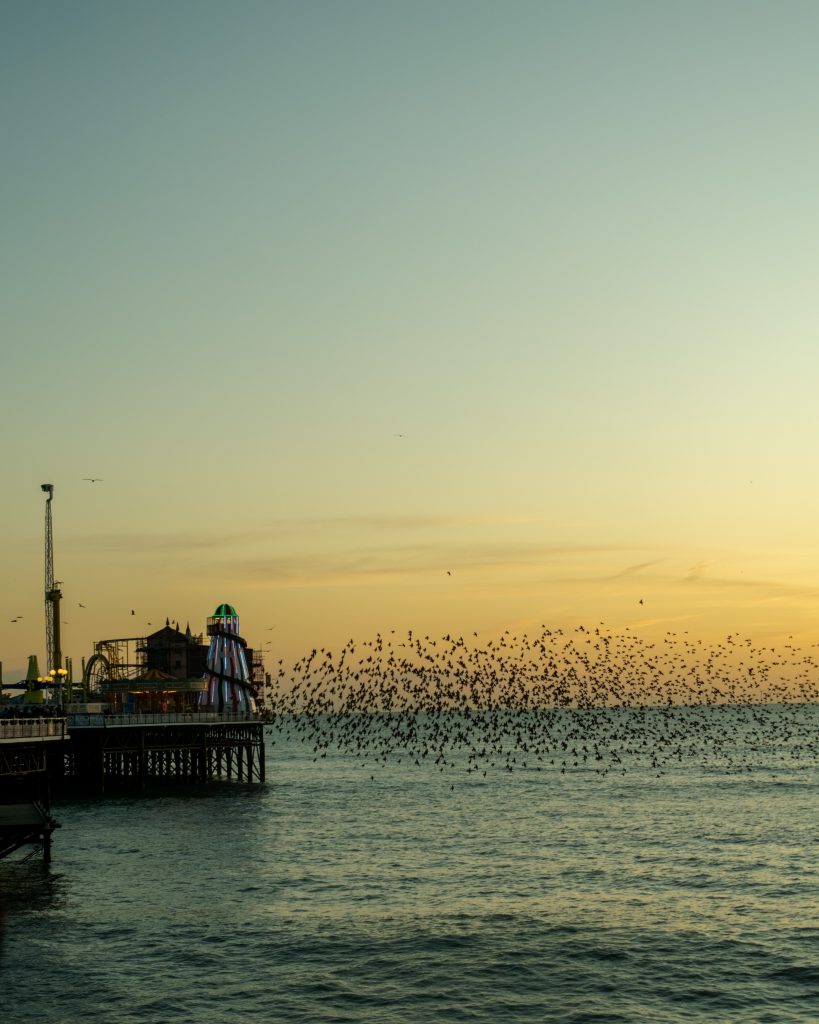
Starlings Photo by Rhys Kentish on Unsplash

Starlings begin to roost in September but their numbers increase as November passes. The RSPB says:

They mainly choose to roost in places which are sheltered from harsh weather and predators, such as woodlands, but reed beds, cliffs, buildings and industrial structures are also used. During the day, however, they form daytime roosts at exposed places such as treetops, where the birds have good all-round visibility.

RSPB Website

Starling numbers have been declining because of ‘loss of permanent pasture, increased use of farm chemicals and a shortage of food and nesting sites in many parts of the UK.’ The Starling was the most popular bird reported in gardens, it has now fallen to fourth. Prior to the year 2000, the starling was regularly the most numerous species recorded in the survey. This year it is behind the house sparrow, the blue tit and the wood pigeon.

Murmurations

Early evening, up to 100,000 birds will rise above their roosts wheeling and turning in tight formations. Research suggests that they achieve this not by following leaders but by, each bird, making small adjustments in accord with the birds immediately around them. Scientists have been able to construct algorithms that mimic the movement of a murmuration. These will allow flocks of drones to be easily controlled on mass with implications for agriculture, aerial displays and warfare. (https://www.bbc.co.uk/news/science-environment)

Sacred Birds

Starlings were sacred to the Celts and were used for divination by the Romans. Their augurs scrutinised the geometric patterns made by the murmurations to interpret the will of the Gods. In the Welsh Mabinogian a starling appears in the story of Bran, God-King of prehistoric Britain and his sister, Branwen, who was married to the King of Ireland.

Bran's head taken to Tower Hill
King Bran’s head buried at Tower Hill

To cut a long story short, (a version of which you can read on my February 18th’s blog post here), Branwen was banished to the scullery. So she trained a starling to send a message to her brother. He took an army over the Irish Sea to restore her to her rightful state, but Bran was mortally wounded in the battle that followed. He told his companions to cut off his head and take it back to the White Hill, London. His head was as good a companion on the way back as it was on the way out, but the journey home took 90 years. At last, they got to London and his head was buried on the White Hill, near the Tower of London, and as long as it were there Britain was safe from invasion. This was one of the Three Fortunate Concealments and is found in ‘the Triads of the Island of Britain.’

I am giving a Walk on the Myths, legends, and Archaeology of London, for London Walks on 24th January 2026.

Shakespeare and Starlings

Shakespeare in Henry IV Part 1 has Hotspur, annoyed with Bolinbroke say:

I’ll have a starling shall be taught to speak nothing but ‘ Mortimer,’ and give it him

Now if you think the idea of a talking starling is nonsense, have a look at this video.

First published on November 26, 2023. Revised in 2025.

St Catherine, Torture Victim & Patroness of the Catherine Wheel, November 25th

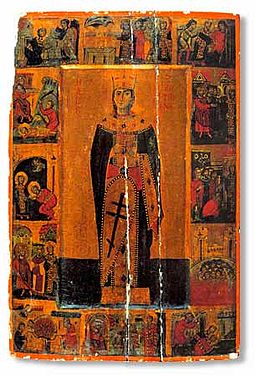
Icon of Saint Catherine of Alexandria, with scenes from her martyrdom (Wikipedia)

In the pantheon of horror that is the Saints’ martyrs’ calendar, St Catherine of Alexandria is very appropriate for, today, the UN’s International Day for the Elimination of Violence against Women.

Catherine was high-born, beautiful and learned. She disputed with pagan learned men against the worship of idols. She wiped the floor with them, and Emperor Maxentius had 50 of the learned men burnt alive for their failure to answer adequately.

Catherine was imprisoned, where many people came to visit her and were converted to Christianity. The most illustrious visitor was the Emperor’s wife, Valeria Maximilla who was, herself, martyred. Then, the Emperor offered to marry Catherine, but she refused to abandon her faith. So he had her tortured. In prison, she was fed by the holy dove and had visions of Christ.

Her gaolers then tried to break her on a wheel, although the wheel broke, killing spectators with the splinters, she stood steadfast. Two hundred soldiers were converted to the faith on the spot. They were then beheaded, followed by Catherine herself. Milk, not blood, flowed from her severed veins.

The persecution in the early 4th Century was real, but it wasn’t driven by Maxentius, who came to power promising religious tolerance. But, following the accession of Constantine the Great, Maxentius’s reputation was blackened. There is no contemporary evidence for the events of Catherine’s life. There is a modern theory that her tale was conflated with the remarkable story of Hypatia of Alexandria (d. 415), a pagan and a real learned woman; The first female Mathematician we know any facts about. She was murdered by a rampaging mob of xenophobic Christians.

Catherine is remembered by the firework: the Catherine Wheel and is, of course, the patron of Philosophers, Theologians, and Royal women; young women, students, spinsters, and anyone who lives by working with a wheel: carters, potters, wheelwrights, spinners, millers. And, I imagine, Formula 1 drivers.

St Catherine in London

St Catherine Coleman
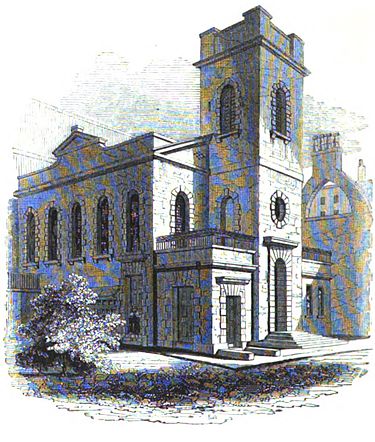
(Wikipedia: Robert William Billings and John Le Keux: The Churches of London by George Godwin (1839))

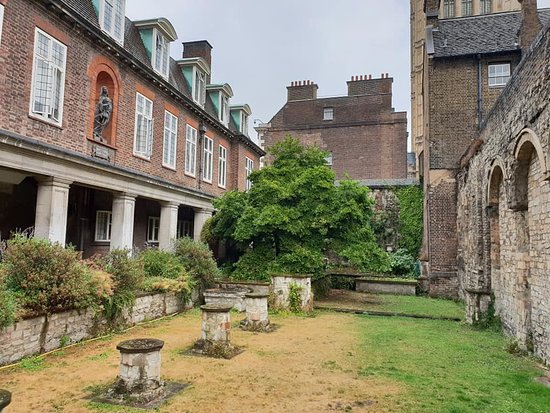
There are several Churches in London dedicated to St Catherine or St Katherine, dedicated to St Catherine of Alexandria. The one in Coleman Street, rebuilt by Christopher Wren and his team, was demolished in the 1920s. There was a Chapel to St Catherine at Westminster Abbey (c1160), the ruins of which are visible in St Catherine’s Garden. I am sure that St Katherine’s Dock and St Katherine’s Cree Church are also so dedicated, but cannot as yet find a dedication for either. Katherine of Aragorn was patron of the Royal Foundation of St Katherines’ which gives its name to the Dock.

Ruins of Chapel of St Catherine, Westminster Abbey

There are customs that have attached themselves to St Catherine including the baking and eating of Catten Cakes. These are really a biscuit (or cookie) made of dough, and cinnamon and dried fruit. Carraway seeds are also suggested. Here is a recipe.

It’s considered a good day for rituals and prayers to summon a husband. Katherine of Aragorn was also commemorated on this day. Lace makers would play ‘jump the candlestick’. If they put the candle out they had bad luck. Katherine of Aragorn is said to have introduced lace making to England.

Finally, for my thoughts why female saints martydrom stories are so violent, extreme and often downright bizarre. Have a look at my post on St Margaret. She is the Saint who suffered probably the most torture in her convoluted route to Martyrdom.

My post which includes a link to an article about medieval attitudes to these terrifying stories of martyrdom, illustrated by a reredos on display at the V&A, in Kensington, London here.

Gladiators Exhibition Touring Britain

Exhibition post of the British Museum Exhibition ‘Gladiators of Britain’

I was just reading an article about the British Museum touring exhibition: ‘Gladiators of Britain’ exhibition. And so updated my August 12th post on St Lawrence who is remembered in a Church in London on the site of the Roman Amphitheatre. But the Exhibition will be closed by August, so here is what I wrote, in time to go to see the Exhibition.

The exhibition is currently at the Grosvenor Museum in Chester – until 25th January 2026.It then moves to Tullie House Museum & Art Gallery, Carlisle from 7th February to 19th April 2026. Recent research has shown that a young man buried in what seems to be a Gladiators Cemetary near Michelgate in York has lion’s teeth marks on his pelvis. When talking about Gladiators I was always reticent about whether animals as exotic as Lions would have been used in the distance province of Britannia. Now we know they were. The Exhibition has a marble relief from Ephesus showing a venetor (beast fighter), taking on a lion. We also know one Roman legionary in Britain had the title of Bear Keeper.

Displayed on the poster above is the Colchester vase which shows an actual gladiatorial combat. The gladiators are named as Secundus, Marius, Memnon, and Valentinus. Secundus and Marius are fighting a bear, while Memmon is fighting Valentinus. Memmon is a secutor and Valentinus, a retiarius. The secutor is the chaser and lightly armed with a heavy shield and short sword. The retiarius has a net and trident. Memmon is described as a 9th time victor, and Valentinus, a legionary of the Legio XXX Ulpia Victrix raises his finger to acknowledge defeat.

Although death and life threatening injuries were often the result, the competition was also not, necessarily, a fight to the death, it was a fight until one or other was defeated. So they could be ended by surrender. Gladiators tombstones, often announce the number of fights a gladiator was involved in such as fighting 25 fights of which he was victorious in 22. The chairman of the show would be given the duty of deciding whether the defeated deserved to be spared, or hit over the head with a big hammer, or decapitated. The Gladiatorial cemetery in Driffield Terrace, York has a high proportion of decapitated corpses. The normal ratio of normal burials is 5% or less of decapitated skulls. Of the 80 burials in Driffield Street 46 were decapitated. Many of the young men in the cemetery have healed wounds. One had leg irons one which showed evidence of being put on while still red hot from the blacksmiths forge. For more on the Cemetery follow this link.

On this Day

1471 – the Thames froze over strongly enough to hold a Frost Fair upon it.

In the year 1434 a great frost began on the 24th of November, and held till the 10th of February, following ; whereby the River Thames was so strongly frozen, that all sorts of merchandizes and provisions brought into the mouth of the said river were unladen, and brought by land to the city.’

1715 – the Thames froze again 281 years later

‘The Thames seems now a solid rock of ice; and booths for sale of brandy, wine, ale, and other exhilarating liquors, have been for some time fixed thereon; but now it is in a manner like a town; thousands of people cross it, and with wonder view the mountainous heaps of water that now lie congealed into ice. On Thursday, a great cook’s-shop was erected, and gentlemen went as frequently to dine there as at any ordinary. Over against Westminster, Whitehall, and Whitefriars, printing presses are kept on the ice.(description of 14th January 1716 of the remaining ice by Dawkes’ News Letter.

Both quotes are from a list of times the Thames froze you can see here: https://thames.me.uk/s00051.htm. I have no idea where the evidence comes from for the Roman and Saxon era freezing, but the author says the source of it is:

The earliest chronology is given by Charles Mackay in “The Thames and its Tributaries”, 1840. He omits to mention how he knows!

1952 Agatha Christie’s the ‘Mousetrap’ opened in London, so it has now been continuously running for 73 years if my maths are correct.

First published on 25th November 2022. Revised and republished 25th November 23, 24, 25

St Cecilia’s Day, Henry Wood and the BBC Proms November 17th

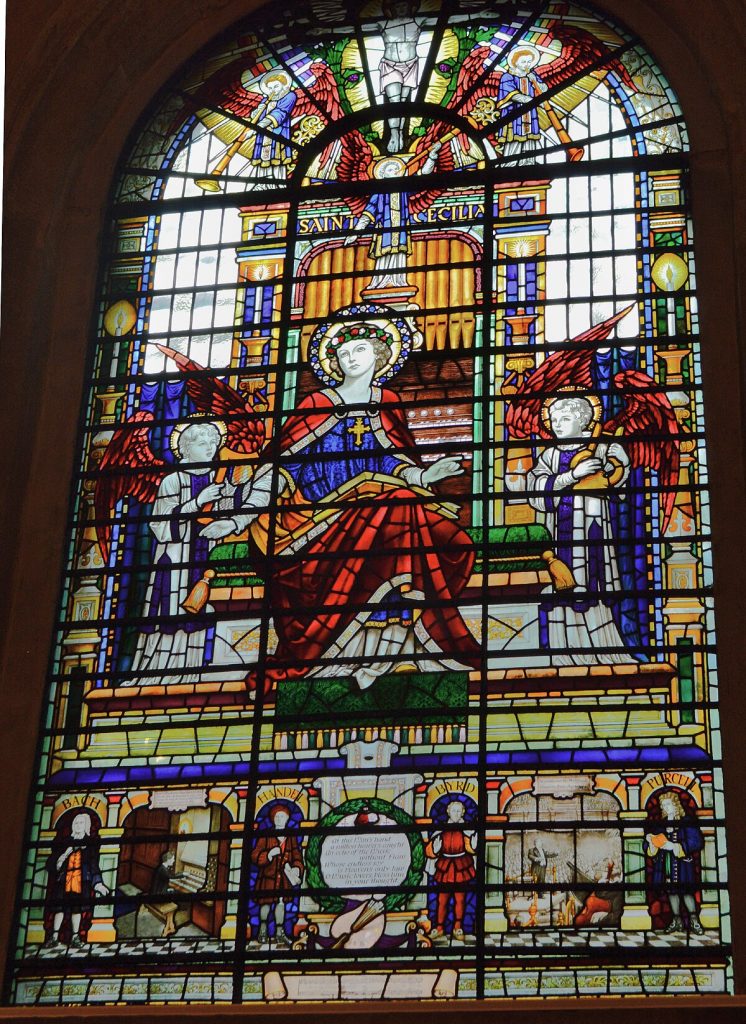
St Sepulchre-without-Newgate, Musician’s Chapel, St Cecilia window. 17 August 2022, Andy Scott

November 17th is St Cecilia’s Day She is the patron saint of musicians and was martyred in Rome in the Second or Third Century AD. The story goes that she was married to a non-believer. During her marriage ceremony she sang to God in her heart (hence her affiliation with musicians). She then told her husband that she was a professed Virgin. So, if he violated her, he would be punished by God. Cecilia told him she was being protected by an Angel of the Lord who was watching over her. Valerian, her husband, asked to see the Angel. ‘Go to the Third Milestone along the Appian Way’ he was told where he would be baptised by Pope Urban 1. Only then would he see the Angel. He followed her advice, was converted and he and his wife were, later on, martyred.

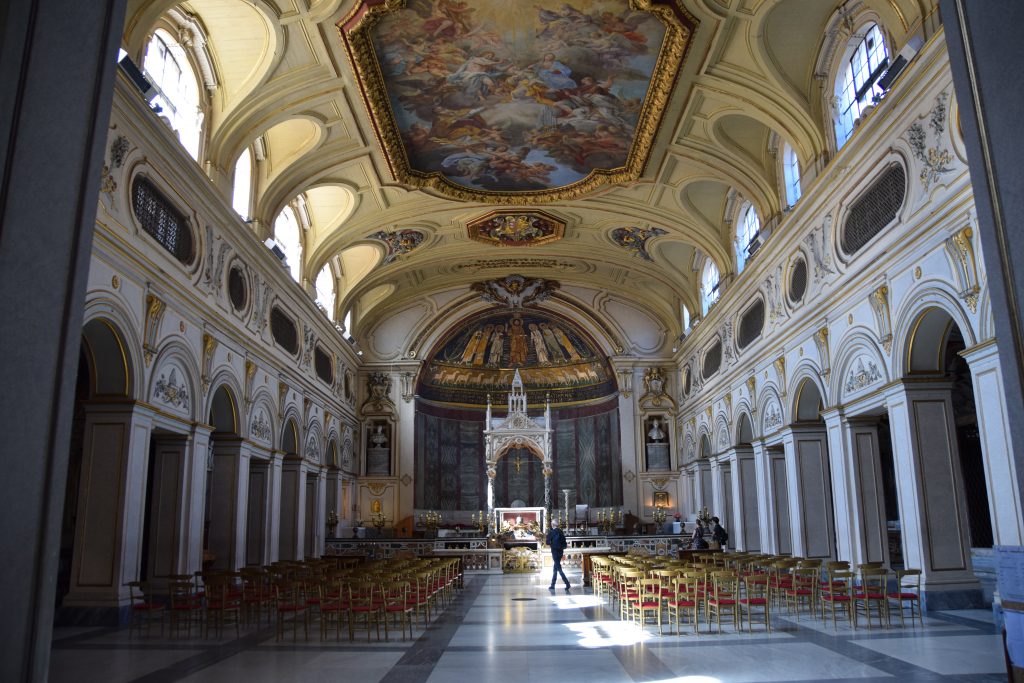
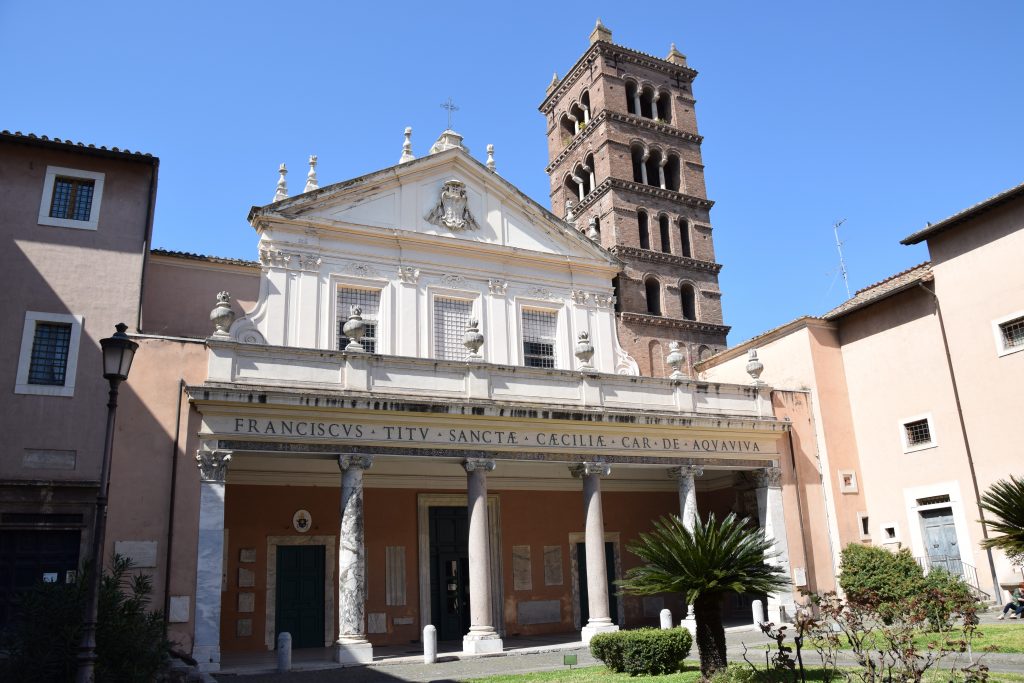
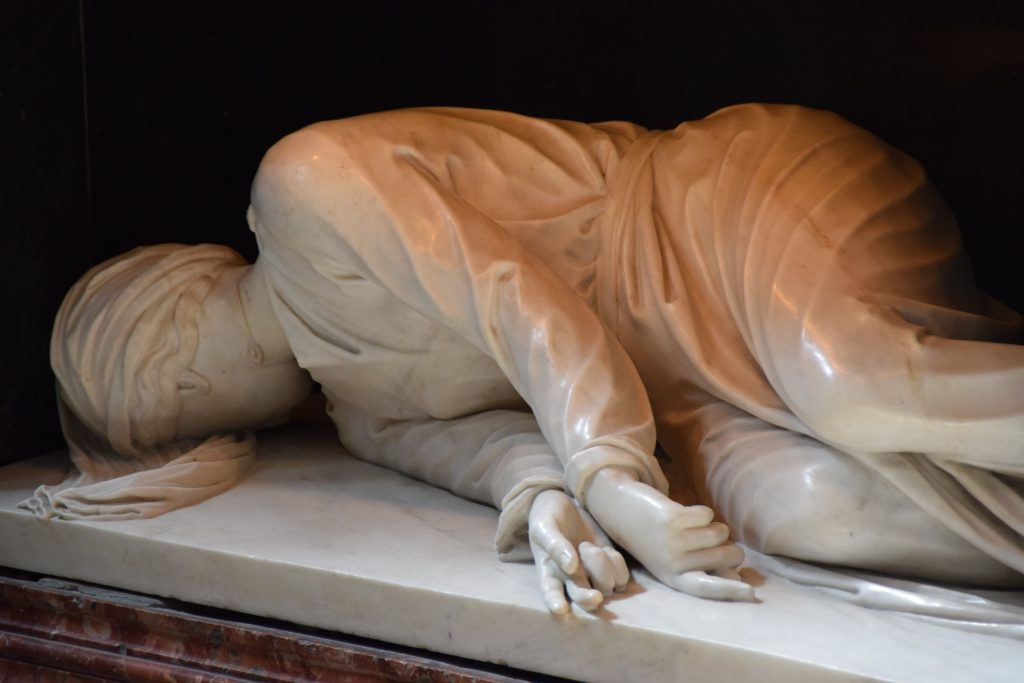
The Church in Rome, Santa Cecilia in Trastevere, is said to be built on the site of her house, and has 5th Century origins. My friend, Derek Gadd, recently visited and let me use these photographs:

St Cecilia in London

There is a window dedicated to her in the Holy Sepulchre Church-without-Newgate, In London, opposite the site of the infamous Newgate Prison.  Henry Wood, one of our most famous conductors and the founder of the Promenade Concerts, played organ here when he was 14. In 1944, his ashes were placed beneath the window dedicated to St Cecilia and, later, the Church became the National Musician’s Church.

This window is dedicated to the memory of
Sir Henry Wood, C.H.,
Founder and for fifty years Conductor of
THE PROMENADE CONCERTS
1895-1944.
He opened the door to a new world
Of sense and feeling to millions of
his fellows. He gave life to Music
and he brought Music to the People.
His ashes rest beneath.

The Concerts are now called the BBC Proms and continue an 18th and 19th Century tradition of, originally, outdoor concerts, and then indoor promenade concerts. At the end of the 19th Century, the inexpensive Promenade Concerts were put on to help broaden the interest in classical music. Henry Wood was the sole conductor.

Wikipedia reports :

Czech conductor Jiří BÄ›lohlávek described the Proms as “the world’s largest and most democratic musical festival”.

The Eight-week Festival is held at the Royal Albert Hall. It moved here during World War 2 after the original venue, the Queen’s Hall, was destroyed in the Blitz in May 1941.

On This Day

1278 Edward 1 had over 600 Jews imprisoned in the Tower of London for coining, clipping and other counterfeiting. Of these, 269 Jews, along with 29 Christians, were executed. They were hanged at the Guildhall in the City of London. By 1290, the King had squeezed all the money he could from the Jews, and they were expelled, not to be let back into the Kingdom until the reign of Oliver Cromwell in the 17th Century. This ended a long period of savage state run antisemitism. Click here for further information.

First Published on November 17th 2023 and revised in November 2024, 2025.

Feast Day of St Margaret of Scotland November 16th

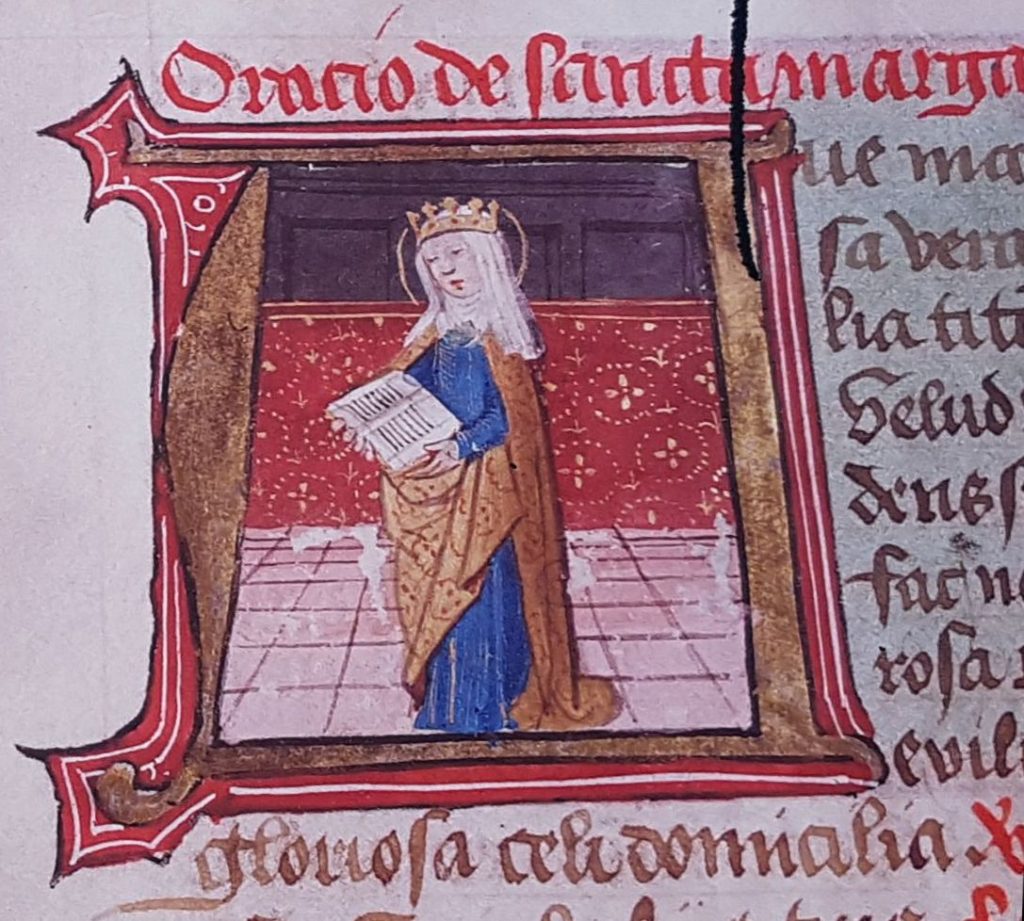
St Margaret (15th Century Prayer Book)

St Margaret should be better known in England because of her important rule in the bloodline of the English Monarchy. Her story is also of interest as it intertwines with the events of 1066 and of Macbeth.

She was the granddaughter of King Edmund Ironside. He was the last English King before the Danish Kings took over. He died after a peace treaty dividing England into an English and a Danish half.

This is what a draft of the text for my book on the Kings of Britain says about him:

Margaret’s Grandfather – King Edmund II 1016

Edmund was born in around 988AD and nicknamed Ironside. He was a formidable warrior who spent his short life fighting the Danes. In 1016, he was crowned in St Pauls Cathedral. Although he was defeated in battle by King Canute, the son of King Swein of Denmark, Edmund’s prowess won him a peace treaty in which England was divided between the two Kings. Unfortunately, Edmund died unexpectedly and Canute inherited the Kingdom. Edmund was buried in Glastonbury Abbey.

To buy ‘Divorced, Beheaded, Died – the history of the Kings of Britain in Bite-size Chunks’. click here.

Edmund’s wife Edith and her 2 children were exiled to Sweden and then, somehow, got to Hungary. Edmund’s eldest son was called Edward the Exile and was married to Agatha. Margaret was their third child. In 1056 Edward the Confessor invited the family back to England and soon made Margaret’s father the heir to the throne. Unfortunately, he died in 1057. He was buried in St Paul’s Cathedral.

Margaret’s Brother – Edgar the Atheling

The rest, as they say, is history. Edward the Exile’s son, Edgar the Atheling was only 6 or 7 and the throne was disputed between William of Normandy, Harald Hadarada of Norway, and Harold Godwinson.

In short, Margaret’s brother Edgar the Atheling was briefly chosen as King after the death of Harold. He was then forced to cede the throne to William the Conqueror. William was crowned King in December 1066.

Margaret’s brother Edgar the Atheling had an extraordinary life, living into his 70s. He continued to fight against the Norman rule of England, mostly from Scotland. Eventually, he reconciled with the Norman dynasty but was involved in any number of disputes, rebellions and dynastic fights.

Margaret’s Husband

Margaret was forced to flee and went to Scotland. In 1070, Margaret married the Scottish King Malcolm III ( Mael Column Mac Donnchada). Malcolm was the son of King Duncan (murdered by Macbeth – see my book Divorced, Beheaded, Died for a short biography!). In 1040, Malcolm fled to England, but returned with English help to defeat Macbeth at Dunsinane. (see my post on Macbeth and Equivocation of Phrophecy). After his first wife’s death he married the deeply pious Margaret. Their court was very influenced by Saxon and Norman ways. She helped aligned the Church more closely with the rest of Christendom, and brought up her children piously.

Margaret’s Son – David

The Royal couple had 6 sons and two daughters. Her son David became one of the most influential Kings of Scotland. He introduced Norman ideas of feudalism, and created Boroughs to strengthen the Scottish economy. He also encouraged ‘modern’ forms of monasticism, encouraging the Cistercians to come to Scotland. By these means, he hoped to turn Scotland a Feudal society with a thriving market economy based on towns and monasteries.

Margaret – the Moderniser?

So, in many ways, Margaret had an influential role in ‘modernising’ the Scottish Monarchy from its Gaelic clan-based structure to a more European style that was ruled from the Lowlands and spoke the Scots version of English, rather than the Gaelic version of the Celtic branch of languages.

She died on 16th November 1093 AD and is ‘particularly noted’ for concern for orphans and poor people. There is an annual procession to her altar, followed by Evensong at Durham Cathedral on the following day. She was buried at Dunfermline following the violent death of her husband. The Abbey has recently celebrated the 950th anniversary of Queen Margaret consecrating the site.

Margaret’s Daughter

Margaret’s daughter, Matilda, married the son of William the Conqueror, King Henry I. This marriage was important for the Normans because it added a strong dose of English Royal blood to the French Norman Royal line. Their daughter was the formidable Empress Matilda, designated heir to the throne of England and founder of the Plantagenet line of English Kings. She was an uncrowned monarch of England and mother of Henry II. She was never crowned because of the disruption caused by the usurpation of the throne by King Stephen.

To read my posts on the events of 1066:

You can read what happened, in my detail, in my posts on the three battles that decided England’s fate in 1066.

Battle-of-fulford-september-20th-1066/
Battle-of-stamford-bridge-september-25th-1066/
William-the-bastard-invades-england-september-28th-1066/
Battle-of-hastings-october-14th-1066/

Also around this time in November

Foul privies are now to be cleansed and fide,
let night be appointed such baggage to hide:
Which buried in garden,in trenches alowe,
shall make very many things better to growe.

The chimney all sootie should now be made cleene,
for feare of mischances, too oftentimes seene:
Old chimney and sootie, if fier once take,
by burning and breaking, soone mischeefe will make.

Five Hundred Points of Good Husbandry. 1573 by Thomas Tusser

Full copy of 1580 edition available online.

First Published on November 19th 2021. Revised on Nov 15th, 2023, 2024, 2025

Death of Old Parr (and Yarrow) November 13th 1635

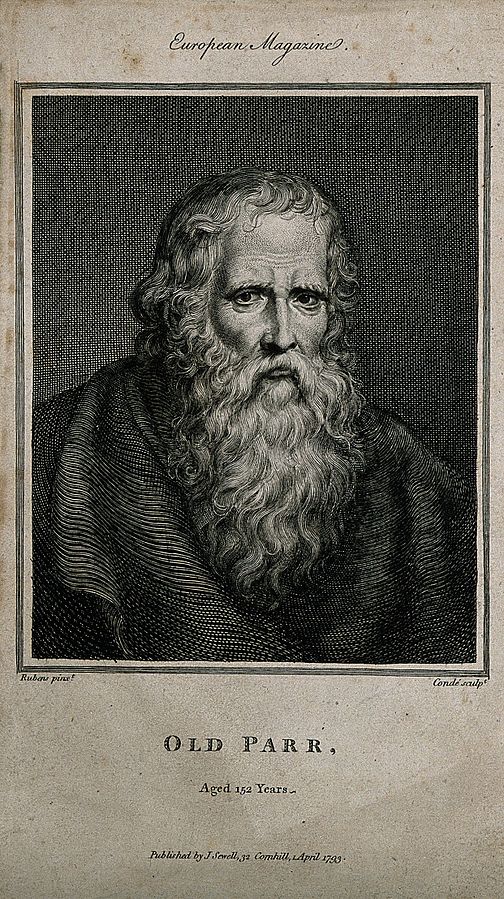
Thomas Parr, aged 152. Line engraving by J. Condé, after Sir P.P. Rubens, 1793

(V0007249EL, aft Credit: Wellcome Library, London. Wellcome Images images@wellcome.ac.uk http://wellcomeimages.org Thomas Parr,
Copyrighted work available under Creative Commons Attribution only licence CC BY 4.0 http://creativecommons.org/licenses/by/4.0/)

I first came across the story of Old Parr, when I lived in Camden Town. It was the name of a local pub, in Plender Street, near to my flat. I found out it was named after a very long-lived man called Thomas Parr. He was said to be 152 years old when he died in 1635. He was on his way to visit King Charles 1st in London.

If we are to believe his story, he was born in 1483 and was married when he was 80. He fathered two children. Then married for a second time at 120 years old. He was buried in Westminster Abbey.

There are, or I should say were,, 3 London Pubs named Old Parr’s Head or Parr’s Head. They were in Camden, Islington, and West Kensington. But have all closed either converted to flats or into a branch of Jigsaw (Islington).

His tomb in Westminster Abbey has this inscription:

THO: PARR OF YE COUNTY OF SALLOP, BORNE.
IN AD: 1483. HE LIVED IN YE REIGNES OF TEN
PRINCES VIZ: K.ED.4. K.ED.5. K.RICH.3.
K.HEN.7. K.HEN.8. K.EDW.6. Q.MA. Q.ELIZ.
K.JA. & K. CHARLES. AGED 152 YEARS.
& WAS BURYED HERE NOVEMB. 15. 1635.

Medical Opinions of Old Parr

The famous William Harvey (discoverer of the circulation of blood) undertook an autopsy. He found Parr’s internal organs to be in a good state. He suggested this might be due to Parr’s diet of:

‘subrancid cheese and milk in every form, coarse and hard bread and small drink, generally sour whey’ and lived free of care.

However, medically his age is nigh on impossible to believe. Wikipedia has the following 10 oldest verified humans. All I think, female:

1Jeanne Calment21 February 18754 August 1997122 years, 164 days[b]France
2Kane Tanaka2 January 190319 April 2022[10]119 years, 107 daysJapan
3Sarah Knauss24 September 188030 December 1999119 years, 97 daysUnited States
4Lucile Randon11 February 190417 January 2023[13]118 years, 340 daysFrance
5Nabi Tajima4 August 190021 April 2018117 years, 260 daysJapan
6Marie-Louise Meilleur29 August 188016 April 1998117 years, 230 daysCanada
7Violet Brown10 March 190015 September 2017117 years, 189 daysJamaica
8Maria Branyas4 March 190719 August 2024[16]117 years, 168 daysSpain[c]
9Emma Morano29 November 189915 April 2017117 years, 137 daysItaly
10Chiyo Miyako2 May 190122 July 2018[19]117 years, 81 daysJapan

Wikipedia lists the top 100. The oldest man is a mere 116 years old. A Guardian article reports on a study on Maria Branyas, number 8 above. It concludes she had a number of genetic factor that made her less vulnerable to killer diseases like heart attack and diabetes, But she was also not overweight, ate a lot of yoghurt, did not drink or smoke, and had a lively social life in her local area.

BP Doughty thinks Parr might have been over 100 when he died, although others suggest perhaps only as old as 70 – 80. Doughty BP. Old Parr: or how old is old? South Med J. 1988 Jul;81(7):906-8. doi: 10.1097/00007611-198807000-00023. PMID: 3293237.

Old Parr’s death is reputed on different days in the sources I found. But it seems he was buried on 15th November 1635, but died on 13th, not 14th, of November.

For more on Camden see my post on Thomas Hardy and St Pancras.

November 13th is also the Time to Gather Yarrow

Yarrow
(achillea millefolium) – image by CongerDesign

This is the time to gather yarrow which is often still flowering. It grows everywhere creeping through its roots and spreading with its seeds, until it becomes a garden weed.

Traditionally, it is one of the most useful of medicinal plants. It had a myriad of uses and a plethora of names (see thefreedictionary for a comprehensive list). It was used for wounds (aka ‘Soldier’s Woundwort’); staunches nose bleeds (aka ‘Nosebleed’); inflammations (aka ‘Stauchweed’). It also slows hair lose, reduces pain of tooth-ache and good for those who cannot hold their water. Generally, it was considered excellent for stomach problems, diabetes, periods pains, anything to do with blood flow (aka ‘Bloodwort’)..

It also has a devilish tradition so used for divination by spells, and thus aka Devil’s Nettle, Devil’s Plaything, Bad Man’s Plaything.

On a gentler note, hopeful lovers will put it under their pillow and dream, thereby, of their future spouse. (Mrs Grieve). In Sussex and Devonshire, so Wikipedia tells me, one should pick Yarrow from a young man’s grave and recite this poem:

Yarrow, sweet yarrow, the first that I have found,
in the name of Jesus Christ, I pluck it from the ground;
As Joseph loved sweet Mary, and took her for his dear,
so in a dream this night, I hope, my true love will appear.

The yarrow is then put under the pillow. preparatory to falling asleep and dreaming of someone dark and handsome.

See my post below on the medical and other effects of Dandelions.

Old Parr was first published on 14th November 2022. Revised 14th November 2023, and 13th November 2024. Yarrow was first published on 14 November 2022, revised 13 November 2023, and combined with Old Parr in 2024.

Revised and republished 2025

Sliding Ducks & the Equivocation of Prophecy – November 3rd

Ducks in Winter 
Photo by <a href="https://unsplash.com/@timromanov?utm_content=creditCopyText&utm_medium=referral&utm_source=unsplash">Timur Romanov</a> on <a href="https://unsplash.com/photos/ducks-on-water-a5U8v7Pm-yg?utm_content=creditCopyText&utm_medium=referral&utm_source=unsplash">Unsplash</a>
Sliding Ducks? or Swimming Ducks? Timur Romanov, Photo from Unsplash

Folklore is full of ways of predicting the future – mostly about the weather or love. The Perpetual Almanac by Charles Kightly features many of these in rhyme form of the ‘Sky at Night Shepherd’s Delight’ type. Here is a seasonal one.

If ducks do slide at Hallowentide
At Christmas they will swim
If ducks do swim at Hallowentide
At Christmas they will slide

From my experience, in the south of the UK, this is simply not true as we very rarely get ice in early November. Nor do we get snow at Christmas that often. But maybe, the further north you go, the truer this becomes.

Macbeth & Prophecy

But, as far as taking prophecy seriously, it’s good to remember what Macbeth said on seeing the wood moving to Dunsinane.

‘(I) begin to doubt the equivocation of the fiend, that lies like truth.’

He has just realised that prophecy is a double-edged sword which has led him to his doom. He had been told by the Three Witches that he:

‘shall never vanquish’d be until Great Birnam Wood to high Dunsinane Hill shall come against him’

Still, as he heads to the final battle, Macbeth knows he is invincible and that

‘none of woman born shall harm Macbeth’.

But in his savage fight with Macduff, he is told that Macduff was not of woman born, but was:

from his mother’s womb / Untimely ripped’.

So Macbeth is killed.

Google Map showing Birnam (Scotland), top left, and Dunsinane Hillwith red markers in the middle. Note Scone is where Macbeth is Macbeth was crowned

King Macbeth (Mac Bethad mac Findlaích) 1040 – 1057

In reality, Macbeth, was a successful King who reigned for 17 years. He was one of the last Gaelic Kings as Scottish society was changing with contact with England.

This is a draft of the text that (edited) forms part of my best-selling book ‘Divorced, Beheaded, Died’ The Kings and Queens of Britain in Bite-sized Chunks’

Macbeth was nicknamed the Red King. He was a Gaelic speaker, descended from the Kings of Dal Riata. Macbeth’s father, Finlay MacRory, was Mormaer (Grand Steward) of Moray and was was murdered by Gillacomgain. He took MacRory’s title. Gillacomgain was burnt to death with 50 of his followers, probably by Macbeth, who thus not only regained the title as ruler of Moray but married his dead rival’s widow, Gruoch. She was the granddaughter of Kenneth II. Macbeth was also himself descended from the Kings of Scotland via his mother Donada probably daughter of Malcolm II.

His claim to the throne was therefore strong, and following the disasters of King Duncan’s reign, Macbeth seized the opportunity to take the throne for himself.

He ruled well for nearly 2 decades imposing a strong sense of law and order, encouraging Christianity and leading successful raids across the border into England. In 1050 he went on pilgrimage to Rome. Exiled Normans, supporters of Edward the Confessor were settled in Scotland in Macbeth’s reign. There is no evidence that Macbeth was any more evil then the rest of the early Scottish Kings.

In 1057 Macbeth was killed in battle against Duncan I’s son who became Malcolm III. Macbeth is buried on Iona. He and Gruoch had no children but Guoch’s son, Lulach, son of Gillacomgain briefly followed Macbeth as king before being assassinated by Malcolm III

‘Divorced, Beheaded, Died’ The Kings and Queens of Britain in Bite-sized Chunks’ for more details look here.

Prophecy ‘lies like the truth’ a trope that is used in many ancient tales such as Oedipus Rex.

On this Day

Hilaria

The 3rd of November is also the Hilaria, the last day of the festival of Isis/Osiris. This is the day of the rebirth of Osiris. He was ‘the god of fertility, agriculture, the afterlife, the dead, resurrection, life, and vegetation.’ Isis was the wife (and sister) of Osiris God-King of Egypt. Osiris was killed by his brother. Set. Isis restored his body to life for long enough to conceive their son Horus.

Horus revenged his father, regained the throne, restored Cosmic Order and completed the resurrection of Osiris. Isis is normally shown holding the baby Horus in a pose that may have influenced images of the Virgin Mary. Londinium would have had a celebration on this day as there is a pot found near London Bridge inscribed ‘At London, at the Temple of Isis).

Roman pot with Isis inscription, London

Head Graft and St Winifred

Stained glass depiction of St Winifred, designed by William Burges, at Castell Coch, Cardiff. Wikipedia Hchc2009 – Own work

St Winifred’s Day She was beheaded by Caradog who would not accept her refusal to have him because of her religious views. She was restored to life by St Beuno, or St Bono. Head and all. Where her head fell their slowed a spring. This is on the North Welsh Coast, and called Holywell. It was one of the Seven Wonders of Wales, and called the Lourdes of Wales.

First Posted on 3 November 2021. Revised 3 November 2023 & 2024 & 2025

All Souls Day – November 2nd

Picture of window sill with skulls, Chrysanthemums  and pictures of remembrance
El Dia de los Muertos – All Souls Day, in Haggerston, London. Photo K Flude.

Today is the Mexican Day of the Dead. In fact, the second day of El Dia de Muertos. Here is a video from Mexico, which you will enjoy for its Latin song and images of the Day of the Dead in Mexico. (It’s on Facebook, so may not work unless you have a login). And here is a YouTube explanation of celebrations in Mexico.

Today is the day to celebrate all those loved ones who have passed away. To keep them in mind, to remind you that you still care about them. It is the third day of the season of Allhallowstide, following All Hallows Evening (Halloween), and All Saint’s Day.

Beata, who comes from Poland, tells me that, November the 1st is the day when relatives visit the cemeteries of the dead. Loved ones bringing chrysanthemums to decorate the graves. It’s a happy day for the dead because they are being remembered and visited. Today, November 2nd, is a more sombre day – a day to stay at home and think of the loved ones. Perhaps looking through albums of photographs?

Souling

In England, it was the time of year in which ‘Souling’ used to take place. Households made soul-cakes. Children or people in need of food come to visit and are given soul cakes in exchange for praying for the dead.

Soul, soul, for a souling cake.
I pray good Missus for a souling cake.
Apple or pear, plum or cherry.
Anything good to make us merry.

Traditional rhyme from Shropshire and Cheshire

Moving on from Purgatory

This is based upon the idea of Purgatory, and the belief that intervention on Earth can influence the amount of time an ancestor spends in purgatory for their sins. John Aubrey (1626 – 1697), antiquarian, collector of folklore and writer, mentions a custom in Hereford which shows a variant of the idea.

John Aubrey (Wikipedia)

In the County of Hereford was an old Custom at Funerals, to hire poor people, who were to take upon them all the Sins of the part deceased. One of them I remember (he was a long, lean, lamentable poor rascal). The manner was that when a Corpse was brought out of the house and laid on the Bier; a Loaf of bread was brought out and delivered to the Sin-eater over the corps, as also a Mazer-bowl full of beer, which he was to drink up, and sixpence in money, in consideration whereof he took upon him all the Sins of the Defunct, and freed him (or her) from Walking after they were dead.

John Aubrey, Remains of Gentilism 1688

This belief in the power of action in the Here and Now to lubricate passage through Purgatory to the Ever After was a major part of fund-raising for Catholic Institutions before the Reformation. For example, in the records of St Thomas Hospital, Southwark, a wealthy widow called Alice (de Bregerake – if I remember the spelling correctly) left her wealth to the hospital in return for an annual Rose rent; lifetime accommodation in the Hospital in Southwark, and for the monks and nuns to pray for her soul and the souls of her ancestors.

Purgatory was not a settled thing in Catholic Theology before the 12th Century or so. However, the idea that prayers for the dead could be useful dates back before the Roman period. Catholics took 2 Maccabees as their biblical authority for Purgatory. But Luther demoted Maccabees to “apocrypha“. And today the Anglicans view it as ‘useful’ but not to be used for ‘doctrine.’

Ludovico Carracci: English: An Angel Frees the Souls of Purgatory (Wikipedia)
Ludovico Carracci: English: An Angel Frees the Souls of Purgatory 1610 (Wikipedia)

All Souls, London

One of London’s most beautiful churches is dedicated to All Souls. It is All Souls, Langham Place. It is just near the BBC HQ and on a wonderful site, as it is on a bend in Regent’s Street. This shows it to great advantage. The architect was John Nash (1824) as part of his transformation of the West End with his boulevard from Regent’s Park south to Westminster. As he could not get all the property owners on the alignment of the road to sell him the land, he disguised this enforced bend with a magnificent Church.

All Souls Langham Place By David Castor (dcastor) – Own work, Public Domain, https://commons.wikimedia.org/w/index.php?curid=6516081
Regent’s Street looking north to All Souls (photo K Flude)

See my posts on Halloween and, and All Hallows Day here

Revised 2nd November 2025, 2024, 2023 and first published 2nd Nov 2021