Fury in France at Destruction of 7,000 Year-Old Standing Stones June 2023

Salon IF reported a shocking destruction in France – this is the report, verbatim from Salon IF issue 514.

Dozens of standing stones, erected over 7,000 years ago, have been demolished to make way for a DIY store near Carnac, in Brittany, in North West France. Some 37 stones, measuring between 0.5 – 1.5m tall, were removed despite the fact the site had long been on France’s National Archaeological Map. The stones, moreover, had been submitted to the tentative list of UNESCO World Heritage Sites (although the application had not yet been approved).

The region of Carnac is famous for its ancient ‘menhir’ – heavy, raised standing stones. Indeed, the area is often described as ‘the French Stonehenge’, with over 3,000 stone megaliths at the two sites of Menec and Kermario. There, the stone columns are arranged in long, straight rows and, according to the Carnac Tourist Office, it is the largest gathering of this type of standing stone in the world.

The land at the centre of the recent controversy, along the Montauban activity zone, had been granted a building permit by the local mayor’s office in August 2022 and construction of the new store, ‘Mr Bricolage’, was already underway. According to local amateur archaeologist, Christian Obeltz, who had originally raised concerns about the ‘brutal developments’, a bulldozer destroyed the stones overnight.

The Regional Office of Cultural Affairs for Brittany, the body responsible for the protection of the monument, said ‘Given the uncertain and in any case non-major character of the remains, as revealed by

checks, damage to a site of archaeological value has not been established’, but Obeltz maintains that archaeological investigation into the area had not been sufficient.

‘The Chemin de Montauban site included two intersecting rows of small granite stelae, each spreading out over fifty meters in length. One had been exactly in its original place for 7,000 years,’ according to Obletz. ‘The small menhirs of the Chemin de Montauban were undoubtedly one of the oldest sets of stelae in the town of Carnac’ believed to date between 5480 and 5320 BC, ‘the highest dating obtained for a menhir in the west of France’.

Digital Heritage – the Stone of Destiny yields secrets

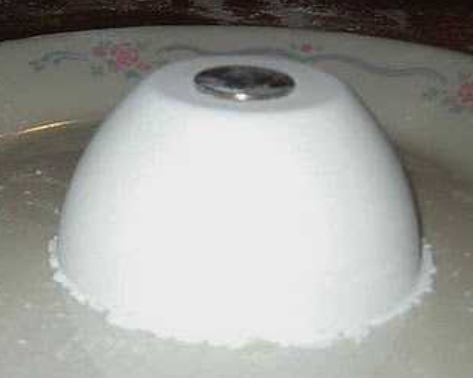
Photo of a replica of the Stone of Destiny at Scone Abbey. This is where Scottish Kings were crowned.  The chapel is built near to Scone Palace, and on a mound of earth which was said to be made up of the dust from the shoes, and trousers of those attending coronations from all over Scotland
Replica of the Stone of Destiny at Scone Palace, Photo Kevin Flude

A study of the Stone of Destiny, the Stone of Scone, the Coronation Stone, has revealed new information. Firstly, it has some markings which look like three X’s and something like a V – perhaps Roman Numerals or more likely, crosses.

The Stone also revealed traces of copper alloy showing that a metal object had been attached to the Stone for a considerable time. The most obvious suggestion would be a relic associated with a Saint, and a Bell is one possibility.

Traces of gypsum suggested someone sometime made a plaster copy of the stone. No one knows when or why, and it has not been found.

Historic Environment, Scotland has released this fascinating 3-D scan of the stone for the public to view – it is annotated too.

You can read more at the links below, and thank you to Jean Kelly of the Britarch mailing list for alerting me to this.

Hidden symbols and ‘anomalies’ (Live Science)

Cutting-edge digital technologies (Historic Environment Scotland)

The Stone has been moved from its permanent home at Edinburgh Castle for the first time since 1996, to be placed under the Coronation Chair for Charles’s May 6 Coronation at Westminster Abbey.

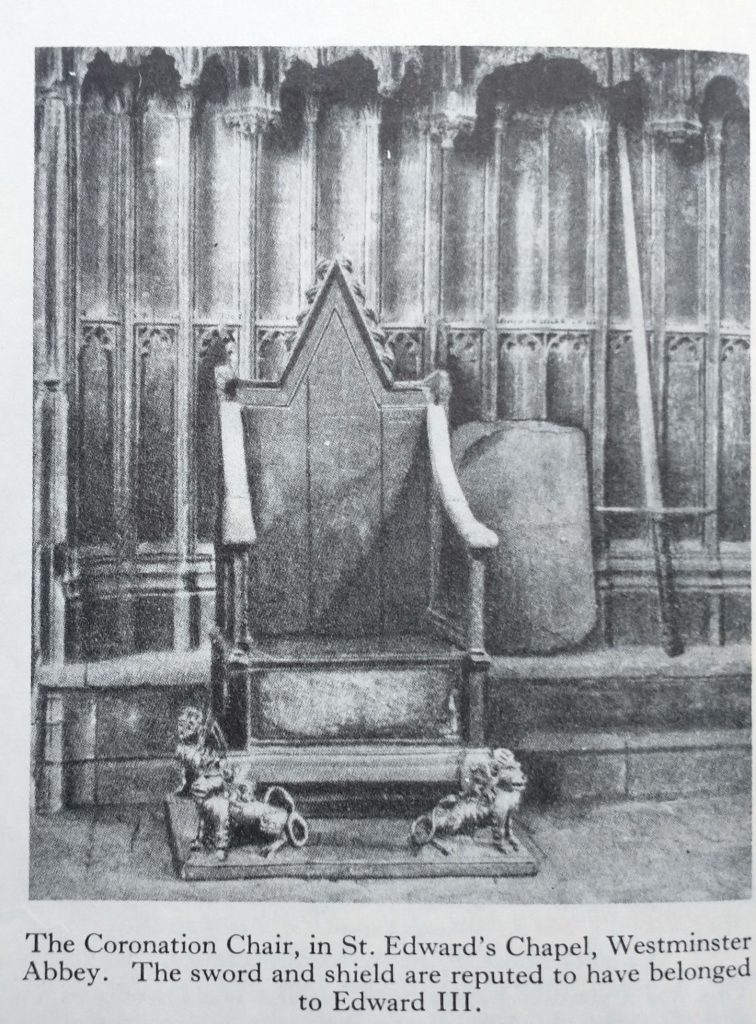
Coronation Chair, with Stone of Scone under the seat.
black and white photo
Coronation Chair, with Stone of Scone under the seat.

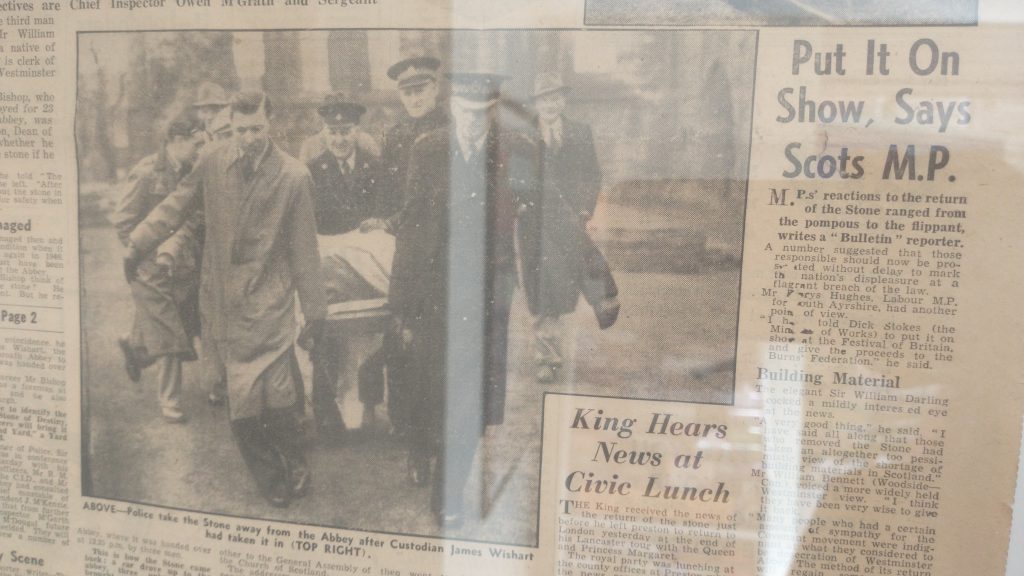
The Stone was kept at Scone before it was stolen by Edward 1 of England, who placed it under the Coronation Chair, at Westminster, to sanctify English Kings and to make the point that he was the overlord of the Scottish. In the 1950’s Scottish students stole it back, hid it for a few weeks and then left it at Arbroath Abbey. They did this because the so-called Declaration of Arbroath (1320) is a letter to the Pope asking for his endorsement of Scotland’s claim to be independent of England. The Pope agreed.

The Stone was recovered from Arbroath taken back to Westminster. The Labour Party under Tony Blair, granted Scotland back their own Parliament and as a symbol of their regained independence, the Stone of Destiny was taken back to Scotland.

Newspaper cutting showing the Stone being taken from Arbroath Abbey
Photo of six people, including policemen carrying away the Stone of Scone from Arbroath Abbey
Newspaper cutting showing the Stone being taken from Arbroath Abbey

To my mind it should be in Scone, which is where Macbeth and most other Scottish Kings were crowned, but perhaps they thought it should be in the Capital and in the safety of the Castle. At Scone, the Stone was placed on a mound of earth which was said to be made up of the dust from the feet of those attending Coronations symbolising the consent of all of Scotland for the new King.

Chelsea Buns Good Friday

Page moved to Good Friday page here

Old Moore’s Almanac, January 12th

ebay advert screenshot for Old Moore's Almanac 2024
eBay advert screenshot for Old Moore’s Almanac 2024

This week I received my copy of Old Moore’s Almanac. This is probably the best known Almanac in the Uk. It follows the format of Alamancs which have been published since the medieval period as I discussed in an earlier post about the Kalendar of Shepherds of the 15th Century. Almanacs became the third most popular book published in London.

Old Moore’s, which claims ancestry back to 1697, begins with a large tranche of predictions both for the world and for celebrities, based on astrology. 2024, Frances Moore says, is the ‘Year of Hope’. He says, ‘we may have a good time, [but] a severe money problem from elsewhere may surface to worry us’. Hedging his bets or what?!

He predicts astonishing advances in technology, and thinks that Britain is in a good place to profit from these advances in healthcare, IT, and Robotics.

We need good, old-fashioned leadership to get through challenging times, with Pluto in Aquarius and Saturn through Pisces, we should be steered to ‘safe management.’

Wokery will lead us down a spiral to weakness. However, the Tories will remain disorganised with the country receptive to caring Socialism, with an upsurge in local power. The UK will become a more caring society.

Old Moore hints that Putin might be indicted. The US will have deep financial and social problems. The election might be close, but he also suggests Trump’s support might be on the wane.

There is a page for each month, noting the calendar events such as Epiphany, Burns Night, Australia Day, and other days filled with very random notable events chosen to represent that day through history- 2nd Jan Conquest of Granada 1462. 9th Jan Duchess of Cambridge b. 1982, 13th Jan Trump impeached 2021 etc. It also gives a forecast for the Month. January is likely to see constitutional change, Old Moore predicts which seems very unlikely.

Next are columns for Sun rise and set, high water at London Bridge, moon at London. And a weather column. (Early cold spell followed by normal rainy pattern), which isn’t wrong yet.

It has pages of predictions for celebrities such as King Charles III, which suggests ‘communication problems’ in the family. Who could have guessed that! Anton Du Beke, Adele. Zelenskyy, whose entry suggests success will be achieved only by diplomacy; otherwise the stubbornness predicted by the stars will lead to a long stalemate.

Then there are charts for each star sign. Towards the back are astrological help for winning on Horse Racing, Greyhound Racing, Football pools, Bingo, Lottery, Lucky Lotto, Euro Millions and pages for sowing and planting times for gardening by the moon, and a Guide for Anglers.

£5.41 good value, or is it just cheap? It was £3.50 in 2022.

Walks 2023 – February – June

I am working on a new season, and these are the walks for the first six months – but more to come.

The Archaeology Of London Walk Sunday 2nd April 2023 11:15 Exit 3 Bank Underground Station To book
Jane Austen’s London Sat 2.30 pm 2nd April 2023 Green Park underground station, London (north exit, on the corner). To book
Chaucer’s Medieval London Guided Walk Aldgate Tube Sunday 16 April 2023 11.30pm To book
Chaucer’s London To Canterbury Virtual Pilgrimage Sunday 16th April 2023 7.30pm To book
The Peasants Revolt Anniversary Guided Walk Aldgate Underground Sunday 11th June 2023 10.45am. To book
The Peasants Revolt Anniversary Virtual Tour Sunday 11th June 2023 7.30pm To book

For a complete list of my walks in 2023 look here

The Giant O’Brien

Charles Bryne

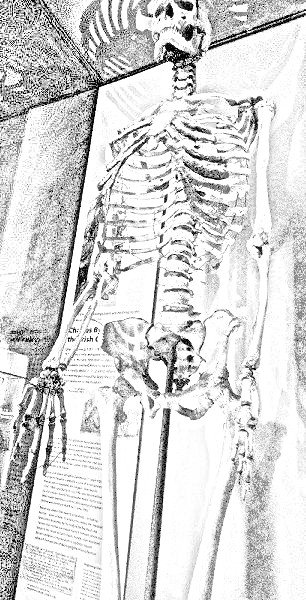
A few days ago the Hunterian Museum announced the decision to remove Charles Byrne from display. I have been watching the case for many years. It’s a fascinating story which was retold by Hilary Mantel in her excellent book ‘The Giant O’Brien’ published in 1998.

Generally, I’m all in favour of human remains on display in Museums. My own feelings is that I’d love my old bones to be displayed in a Museum in a few thousand years time. However, Byrne’s story is particularly poignant and argues the opposite case. Bryne was a giant, he just could not stop growing until he died. He died young and after making a name for himself (as the Giant O’brien) on account of his soaring height. (look at the catalogue entry in the Museum online collection for details of Byrne’s condition.)

John Hunter was the pre-eminent surgeon of the time, and was furiously collecting as many animal and human specimens as he could. Fantastically interested in anything and everything anatomical, he gives a shape to a Doctor Frankenstein figure. For example, his interest in electrical experiment – trying to get dead frogs to twitch with ‘life’ and he had a very active engagement with the Body Snatchers in order to investigate what made someone tall, small, fat, thin, ill, healthy, intelligent, thick, good, criminal and so on.

He pioneered various surgical techniques. Postillions (the people who rode on the horses pulling coaches) were prone to aneurysms as the horses kept squashing their inside leg. Hunter developed an operation to bypass the aneurysm. He tried it out successfully and then kept track of the patient somehow. When the postillion died the Resurrection Men would pay a visit to the local graveyard and dig up the body of the patient. Part of his thigh is on display in the Hunterian Museum (or at least it was the last time I looked). So you can see the success of Hunter’s ground breaking operation – one of wave of surgical developments of the 18th Century. The Hunterian Museum is the museum of the Royal College of Surgeons, and was founded by Hunter.

So, Hunter hears about the Giant O’Brien and finds out he is ill, possibly dying. He has his people keep tabs on him. Charles Byrne is determined not to end up on the anatomist’s slab. So, he organises his funeral in advance paying guards to look after his coffin. He orders a secure iron coffin and in addition, decides to be buried at sea. Because Byrne knows, as an eminent surgeon later on reported to a Commons Committee, that it wasn’t a case of whether the Body Snatchers would get a body but more how much they would have to pay for it if they really wanted it.

But, Byrne thinks he has done enough to die in peace.

Unfortunately, Hunter’s men tracked down the guarded room, and bribed the guards with what would have been a huge amount of money. Byrne was taken back to Hunter’s place, the body melted down, mounted, and was on display until the Hunterian Museum closed for refurbishment recently.

So, a step forward as he is no longer the subject of the public gaze. But in this case we absolutely know that Byrne did not want to be the property of the medical establishment. My own feeling is that he should be given his last wishes and be buried at sea.

Reference collections are very important for Science, and it is for this reason, I am sure, the Museum has not let go of Charles Byrne. But in this case, with this history, an exception should surely be made? He died on 1 June 1783

www.museumsassociation.org/museums-journal/news/2023/01/hunterian-museum-defends-decision-to-retain-skeleton-of-irish-giant-charles-byrne

Jane Austen Walks

I have set up my year of Jane Austen walks.

Jane Austen’s London Walks

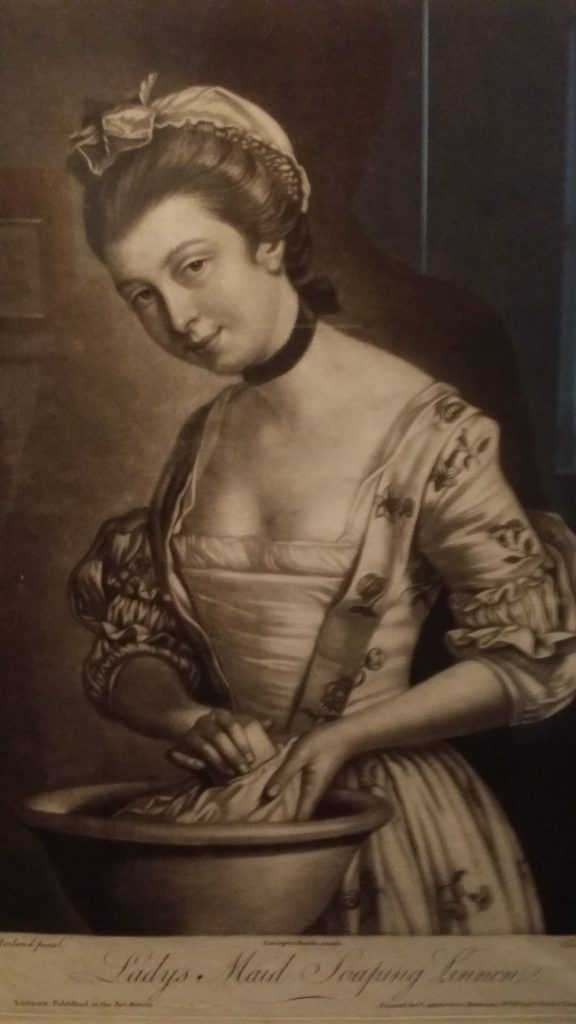
Georgian female engraving


Sat 2.30 pm Green Park underground station, London (north exit, on the corner)

on the following dates in 2023: 2 April. 11 June. 9 September. 12 November.

And a Special Christmas version on 23 December 2023

An exploration of Mayfair, the centre of the London section of Sense & Sensibility and where Jane came to visit her brother

“It is a truth universally acknowledged, that a Jane Austen devotee in possession of the good fortune of a couple of free hours today must be in want of this walk.”

People associate Jane Austen and her characters with a rural setting. But London is central to both Jane Austen’s real life and her literary life. So, this tour will explore Jane’s connections with London and give the background to Sense and Sensibility, a good part of which is based in this very area. We begin with the place Jane’s coach would arrive from Hampshire, and then walk the streets haunted by Willougby; past shops visited by the Palmers, the Ferrars; visit the location of Jane Austen’s brother’s bank and see the publisher of Jane’s Books. The area around Old Bond Street was the home of the Regency elite and many buildings and a surprising number of the shops remain as they were in Jane Austen’s day.

This is a London Walk Guided Walk lead by Kevin Flude

To Book:

Christmas With Jane Austen Virtual London Tour

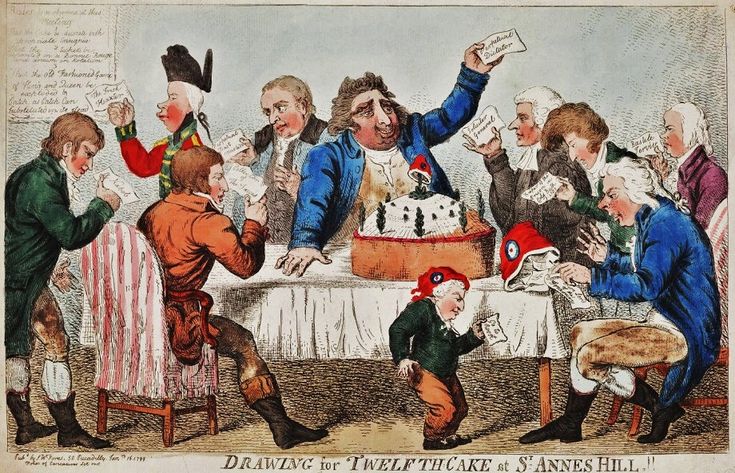
12th Night


Saturday 23 December 2023 7.30pm

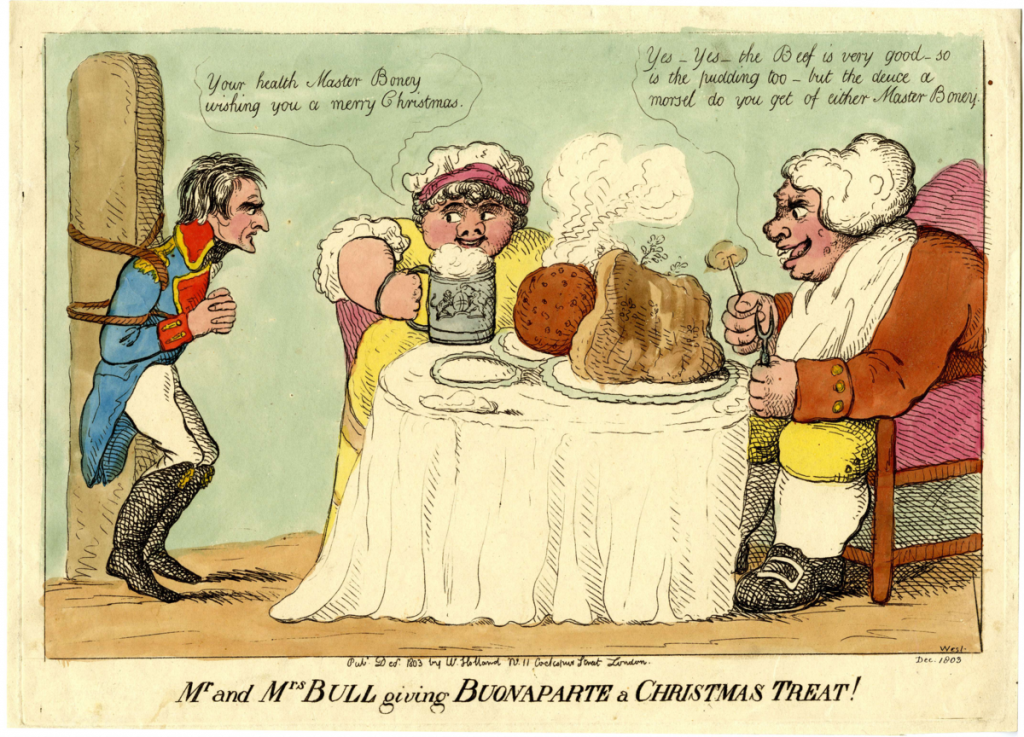
We look at how Jane Austen spent Christmas and at Georgian Christmas traditions and amusements.

“It is a truth universally acknowledged, that a Jane Austen devotee in possession of the good fortune of a couple of free hours must be in want of this virtual walk.”

This is a special walk, which looks at the traditions of Christmas during the Regency period and how Jane Austen might have celebrated it. It will give some background to Jane Austen’s life and her knowledge of London. We used her novels and her letters to find out what she might have done at Christmas, but also at how Christmas was kept in this period, and the range of ‘Curiosities, Amusements, Exhibitions, Public Establishments, and Remarkable Objects in and near London available to enjoy.

This is a London Walks Guided Walk by Kevin Flude, Museum Curator and Lecturer.

Review: ‘Thanks, again, Kevin. These talks are magnificent!’

To Book:

New Walk! The Decline And Fall Of Roman London Walk

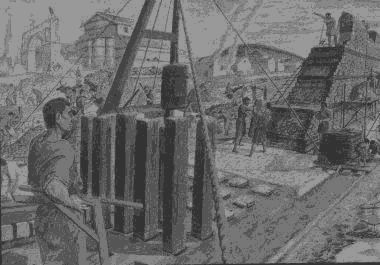
Reconstruction View of Roman Riverside Wall being built

Sunday 22nd January 11.30am Exit 2 St Pauls Underground Station
 

An exploration of what happened at the end of the Roman Period, and how the City became deserted, and then, reborn as an English City.


The first British Brexit?   The Roman Britons kicked out the Romans in 407AD, and, soon, asked them to come back after a catastrophic collapse.  Faced with plague, civil war, invasion, mass immigration,  industrial decline, reversion to barter; the authorities struggled against anarchy and descent into a dark age.

But was that how it was?  Wasn’t it a rather a transition into the Late Antique period in which life for most people went on much as before except paying taxes to local rulers rather than distant Romans?

The walk investigates why the Roman system in London broke down, and what really was the impact of the end of the Roman system in London? What is the evidence?  and can we trust it? Or can we really do nothing much more than guess? 

We tramp the streets of London in search of light to shine on the dark age of London.

This is a London Walks event by Kevin Flude, ex Museum of London Archaeology and Museum Curator

To Book:

New Walk for Next Week – London before and after the Roman Invasion

London before the Romans
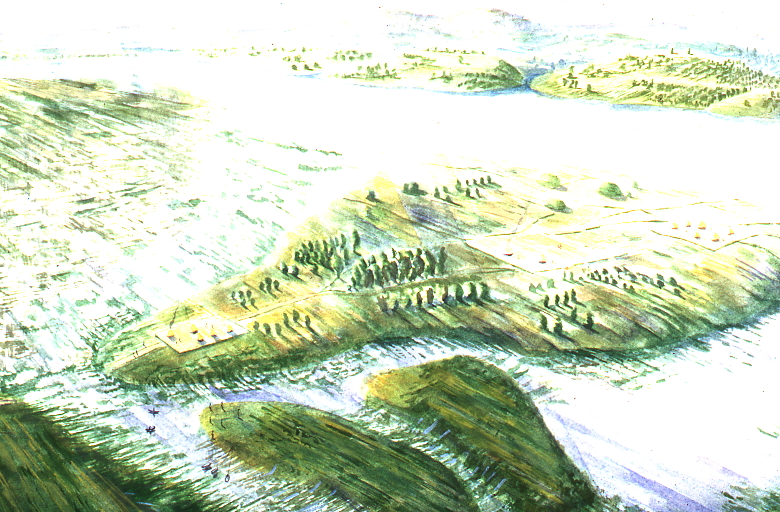
View of London from the SE as it might have looked before the Roman Invasion

Tower Hill Underground
Sunday 8th January 2023 11.30pm

The walk looks into the evidence for a prehistoric London and tells the story of the coming of the Romans in AD43

The walk is led by Kevin Flude, a former archaeologist at the Museum of London.

The walk investigates the City of London before and after the the Roman Conquest. What is the evidence for settlement before the Romans set up town of Londinium? Why did the Romans establish the town on this spot? Who were the early Roman Londoners and what made their choice of site so successful?

The fledgling Town was then burnt down by Queen Boudiccan and her Icenian rebels. We look at the evidence for the Revolt and London’s recovery to became the capital of Britain.

This is a London Walks Guided Walk. Look at their web site for a list of other of their amazing walks.

REVIEWS (from London Walks website)
“Kevin, I just wanted to drop you a quick email to thank you ever so much for your archaeological tours of London! I am so thrilled to have stumbled upon your tours! I look forward to them more than you can imagine! They’re the best 2 hours of my week! 🙂 Best, Sue

To Book:

Upcoming December 2022 Virtual Tours

I have began to prepare my next set of tours both virtual and real. But here are the first two virtual tours, both with a seasonal theme.

The London Winter Solstice Virtual Tour

Wed, 21 Dec 2022 19:30

The Sun & the Solar System


We explore London’s History through its celebrations, festivals, calendars and almanacs of the Winter Solstice


Winter Solstice festivals have been a time of review, renewal and anticipation of the future from time immemorial. The Ancient Britons saw the Solstice as a symbol of a promise of renewal as the world entered bleak mid winter. The Roman season was presided over by Janus, a two headed God who looked both backwards and forwards, and Dickens based his second great Christmas Book on the renewal that the New Year encouraged.

We look at London’s past to see where and how the Solstice might be celebrated. We also explore the different Calendars – the Pagan year, the Christian year, the Roman year, the Jewish year, the Financial year, the Academic year and we reveal how these began. We look at folk traditions, Medieval Christmas Festivals, Boy Bishops, Distaff Sunday and Plough Monday, and other London winter traditions and folklore.

At the end we use ancient methods to divine what is in store for us in 2022.

To Book:

CHRISTMAS WITH JANE AUSTEN VIRTUAL LONDON TOUR

Friday 23 December 2022 7.30pm

We look at how Jane Austen spent Christmas and at Georgian Christmas traditions and amusements.

“It is a truth universally acknowledged, that a Jane Austen devotee in possession of the good fortune of a couple of free hours must be in want of this virtual walk.”

This is a special walk, which looks at the traditions of Christmas during the Regency period and how Jane Austen might have celebrated it. It will give some background to Jane Austen’s life and her knowledge of London. We used her novels and her letters to find out what she might have done at Christmas, but also at how Christmas was kept in this period, and the range of ‘Curiosities, Amusements, Exhibitions, Public Establishments, and Remarkable Objects in and near London available to enjoy.

This is a London Walks Guided Walk by Kevin Flude, Museum Curator and Lecturer.

Review: ‘Thanks, again, Kevin. These talks are magnificent!’

To Book: