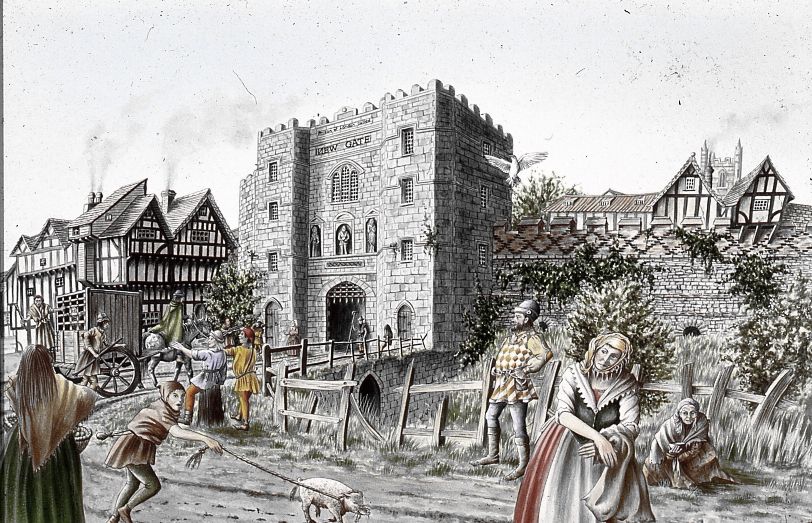

News from the Almanac of the Past January 22nd

News from the Almanac showing readership/viewership of the site.

I have been waiting for a day when I haven’ t got a post to publish. Why? To update readers about the Almanac of the Past. And with a bit of manoeuvring today is the day.

What is the News from the Almanac of the Past?

The plan is to have a post for each day. I am virtually there for November to March, but a way away for the warmer months.

In the winter months, I have been revising, improving, developing and adding content to previously published pages. For those of you who have been here a while, you will have been receiving posts you have seen before. Next year, you might be seeing some for the third time. I’m not sure what to do about this except improve posts and add content. But I am considering stopping automatically posting repeated posts to subscribers. Maybe from next November? Feed back would be good – please email me at kpflude at chr . org . uk (I’ve slightly scrambled the email to stop the robots).

What is the planned content for the Almanac of the Past?

The nature of an almanac is to be a pot-pourri. They are about seasons, time, folklore, history, important events, and anniversaries. I also like to cover history, famous people and discoveries. Gods, Goddesses, Saints, sinners, and archaeology. What I want it to be is something that makes us more mindful about the passing of the year. How seasons and time change the way people see their world. My focus is mostly on the UK, but also on Rome and Greece. With occasional excursions to other places. I am trying to find more content that is London-based, but not to the exclusion of everything else. I also have an ambition to add more important news of discoveries that change our view of the past. If I get the formula right, I will attempt to get a publication from it, otherwise it will remain online.

Developments for the Almanac

It takes quite a lot of time for me to keep it up. You will see, from the graph above, that the readership is yearly making progress. Particularly, last year. But then it’s a steady progress from a small base, rather than Kardashian viral.

This is, at least, partially because I would rather not spend my time marketing. I want to be writing. But, I have decided I need to spend a little more time marketing the site. When I ran the Old Operating Theatre Museum, I had the skills to get our web site to first place on google searches. But this was in the pioneering days of the World Wide Web. Now, it’s more difficult, but I am taking a ‘Search Engine Optimisation’ (SEO) course. I have also loaded some ‘plugins’ to WordPress which help with SEO. I thought you might be interested in some of the consequences.

The plugins ‘parse’ the site and give recommendations for improvements. This should, get the site further up the Google landing page. I have no doubt that it involves or will involve AI. The ‘Yoast’ plugin I am using as I type this, tells me words like ‘however’ are a ‘complex’ word and so they down grade my ‘readability’ quotient. It also tells me that that last sentence was too long. So, it wants simple sentences, and words that join sentences together. And not too many sentences in a paragraph and a proper scattering of headings.

It also assesses the SEOness of the text. So I have to tell it what the main subject of the page is. And it wants that word or phrase in:

the title:
the first paragraph
the image
the meta description tag
and scattered, but not too densely (because Google will punish the site for playing the algorithm) through the text.

Hence, you will see the phrase ‘News from the Almanac’ scattered more than I would normally like through this text. Of course, I know no one really will be searching for ‘News from the Almanac. So I should change the SEO phrase just to Almanac. But, then I’m not really interested in attracting non-readers to this page. I see this as between me and my email subscribers!

After writing that paragraph I realised that I would want people to land up here if they typed in ‘Almanac of the Past’. So you will see, I’ve editing the text scattering that phrase here and thereabouts.

In effect, I am being trained by a slightly stupid tutor who has no particular understanding of the needs of a writer of history! And you can’t answer back, you just get downgraded!

And it seems to be working as my numbers are getting better more quickly.

Any problems for the Almanac of the Past?

Obviously, my terrible proofreading is a concern! Maybe that’s one-way republishing helps. A year later, it’s easier to see the typos, the ugly writing, and issues with the content.

But there is another issue with the emails, which I have been trying to solve for about 6 months. The links in the emailed posts don’t work. But they do work if you visit the almanac on the web. This is nuts as I always use the full URL. For example: https://www.chr.org.uk/anddidthosefeet/december-29th-st-thomas-wassailing/.

So, this is very much a technical issue, one might say a bug in the system. I think it stems from the fact that my blog was stored not in https:/public_html/ but in https://public_html/anddidthosefeet. This seemed a logical choice at the time, as the blog shared space with other things. I haven’t managed to convince the tech guys at either the internet provider or WordPress that this is a bug. So, the alternative is to move the blog. But I am reluctant to do this in case it completely messes everything up.

Change the content of the newsletter, you might think. But I can find nothing that allows me to alter or add anything to the email version of the post. As I write this, I think I will temporarily add a line at the bottom of the post which says:

if the links are not working, copy and paste this URL https://www.chr.org.uk/anddidthosefeet/whateverkevinsalmanacpageiscalled

to your browser. This, will get you to the Almanac of the Past on the web where all the links will work.

And this will allow you to easily copy or link to the webpage and send the Almanac of the Past to your friends and followers. (I’m hoping you are Taylor Swift). You willalso be able to comment easily and maybe even like the post?

Another advantage of visiting the web version is that you get a better version to read. This is because I often find howling typos when I read the emailed post. I correct them, with a red embarrassed face.

If you are reading this on the web, then all the above must have been very annoying to read! Maybe I will move it down to the bottom of the post! (which I did).

Trying new things on the Blog

Do you want to make a comment?

Please leave me a comment – its great to hear what you think.

First Written and Published on 22nd January 2025

Mulled WIne and Blue Monday Posts

In order to clear January 22nd I moved the previous January 22nd post to December 10th. As its all about Mulled Wine, Glugg, and Gluwein., its better at the beginning of the Christmas Season than in late January.

To see it click here: or cut and past this url https://www.chr.org.uk/anddidthosefeet/january-22-22-time-to-mull-it-over/

I also didn't tell you Monday was Blue Monday because I had already sent you one post on the 20th. So this is the Blue Monday Post. https://www.chr.org.uk/anddidthosefeet/january-13th-18th-blue-monday-wolf-moon-start-of-lambing-and-twelfth-night-old-style/

If the links are not working on the email version of this post then:

copy and paste this URL https://www.chr.org.uk/anddidthosefeet/news-from-the-almanac-of-the-past-january-22nd/

To your browser. This, will get you to the Almanac of the Past on the web where all the links will work. (I hope).

First Written and Published on 22nd January 2025
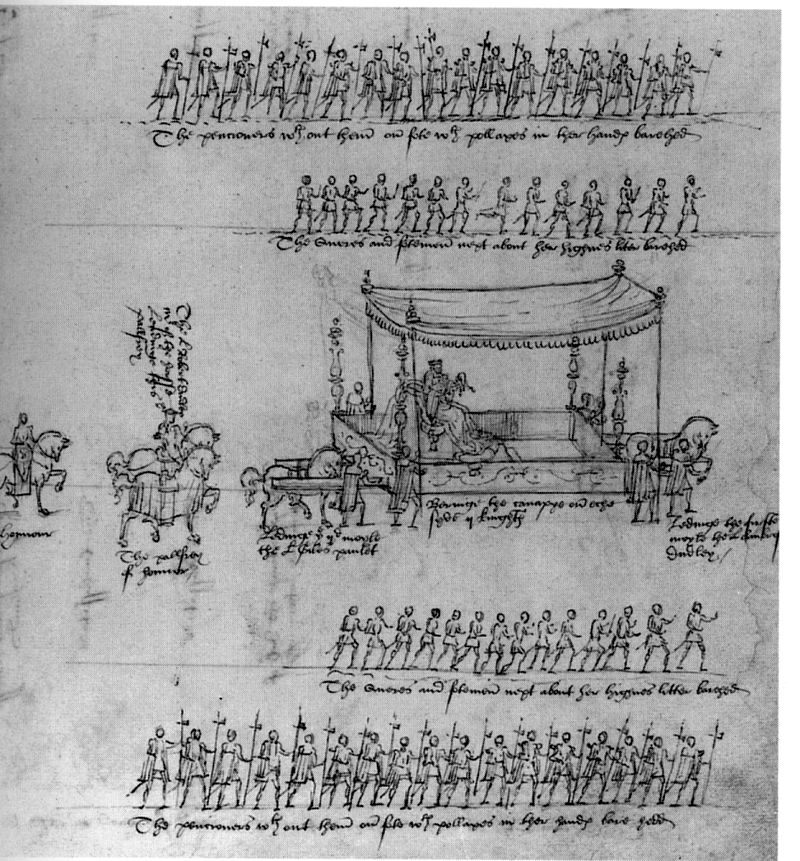
Queen Elizabeth 1 Coronation January 15th

Queen Elizabeth 1 Coronation. Litter at her royal entry, accompanied by footmen and Gentlemen Pensioners. Unidentified engraver. (Wikipedia)

Queen Elizabeth 1 Accession

Queen Elizabeth 1 ascended the throne on 17 Nov 1558. Her accession was greeted with an outbreak of joy by the Protestant population. But the supporters of her dead sister Mary 1 did not want a Protestant monarch. On hearing the news of the death, Elizabeth rushed to occupy the Tower of London. She even risked shooting London Bridge, such was her haste. (see my post of the accession of Queen Elizabeth I)

She consulted lawyers about the legal position. Elizabeth, and her sister Mary, were declared bastards by two Succession Acts passed during Henry VIII’s ‘troubled’ married life. The Third Succession Act of 1543/44, following Henry’s marriage to Katherine Parr, restored Mary and Elizabeth to the Royal line. But it did not restore their legitimacy. Rather than tackle the complex legislation, Sir Nicholas Bacon, the Lord Keeper of the Great Seal, advised:

“the English laws have long since pronounced, that the Crown once worn quite taketh away all Defects whatsoever“. (Wikipedia)

Which, when you think about it, basically legitimises any successful ‘coup’! And, from a legal perspective, she was still, arguably, illegitimate.

Queen Elizabeth 1 Coronation

Her courtiers immediately began work on the Coronation, scheduled for January 15th 1559. In terms of Coronations, this was rushed. The precise date was, in fact, chosen by the Royal Astrologer. John Dee, a famous mathematician and credulous astrologer, found a date that the celestial bodies deemed propitious. But it needed to be sooner rather than later because Elizabeth’s position was so insecure.

Queen Elizabeth 1 Coronation Procession

The Coronation began with a procession from the Whitehall Palace in Westminster. Then back to the Tower of London for the Vigil. Followed by a Royal Procession through the City of London to Westminster Abbey for the Coronation service. After the Coronation, there was the traditional Coronation Banquet at Westminster Hall.

The Vigil Procession was on the Thames where she was escorted to the Tower by ‘ships, galleys, brigantines‘ sumptuously decorated. The Royal Entry consisted of 5 Pageants and 11 Triumphal Arches.

The first pageant showed the Queen’s descent from Henry VII and his marriage to Elizabeth of York. This marriage effectively ended the Wars of the Roses by linking the House of York and the House of Lancaster. The pageant also emphasised her ‘Englishness’ as opposed to the Spanish affiliations of Mary. The second pageant demonstrated that the Queen would rule by the four virtues of True Religion, Love of Subjects, Wisdom and Justice. At the same time she was shown trampling on Superstition, Ignorance and other vices.

The Procession at Cheapside

The third pageant, at the upper end of Cheapside near the Guildhall, provided the opportunity for the City to give Elizabeth a handsome present. This was a crimson purse with 1000 marks of gold, showing the closeness of the City and the Crown. The fourth pageant, contrasted a decaying country during the time of Mary with a thriving one under Elizabeth. It featured the figure of Truth, who was carrying a Bible written in English and entitled ‘the Word of Truth’. The Bible was lowered on a silken thread to the Queen. The Queen kissed it and laid it on her breast to the cheers of the crowd. She promised to read it diligently. The final pageant was Elizabeth portrayed as Deborah, the Old Testament prophet. Deborah rescued Israel and ruled for 40 years. So she was an ideal role model for Elizabeth. (For more details, look here.)

‘All the houses in Cheapside were dressed with banners and streamers, and the richest carpets, stuffs and cloth of gold tapestried the streets’.

British History.ac.uk Vol 1 pp315 -332

Queen Elizabeth 1 Coronation in Westminster Abbey

The Coronation was traditional – in Latin and presided by a Catholic Bishop, but there were significant innovations. Important passages were read both in Latin and in English. The Queen added to the Coronation Oath the promise that she would rule according to the:

‘true profession of the Gospel established in this Kingdom.’

This showed the path Queen Elizabeth was going to take. She would introduce innovation gradually into tradition, but emphasizing that the fundamentals had indeed changed. This was going to be a Protestant reign.

See also tomorrow’s post on the Nicknames the Queen gave to her advisors.

Can I remind you that I wrote a best-selling book on the Kings and Queens of Britain? It has sold over 130,000 copies, has been reprinted several times and in several editions and is available here.

First published in January 2023, republished January 2024, 2025

St Distaff’s Day & the Triple Goddesses, January 7th

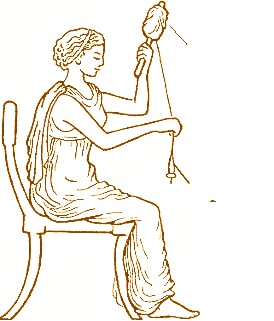
Spinning
Spinning—showing the distaff in the left hand and the spindle or rock in the right hand

I’m not sure what the Three Kings were doing on the day after Epiphany. But, the shepherds, if they were like medieval English farmworkers, would still be on holiday. They went back to work, traditionally, next Monday, which is Plough Monday. By contrast, the women, according to folk customs, went back to work St. Distaff’s Day, the day after Epiphany. In an ideal world, St Distaff’s Day is the Sunday after Epiphany (January 6th), and Plough Monday is the next day. Of course, it doesn’t always work out that way. I am not sure the woman going back to work on the 7th January, would be happy with the men lounging about until Plough Monday,. This year on the 13th January.

A distaff is ‘a stick or spindle on to which wool or flax is wound for spinning’. Because of its importance in the medieval and early modern economy, it became a synecdoche for women. St Distaff is a ‘canonisation’ of this use of the word. So, a day to celebrate working women.

We know that medieval and early modern women were a vital part of the work force, despite the demands of childcare. Many women took on apprenticeships, even more continued their husband’s work after he died. Some professions like silk became a female speciality. Plus, London was full of female servants and nurses. Many women had several jobs. The exhibition at the British Library on Medieval Women. In Their Own Words, indicated that most of the sex workers had two or more other jobs. In the house, the wife was the mistress of a formidable range of technologies. Baking, Brewing, Cooking, Laundry, Gardening, Dairy, Medicine (including distillation), horticulture, spinning, sewing and embroidery. Even, aristocratic women did embroidery of the finest quality, and it often made an important financial contribution to the household.

St Distaff’s Day and Plough Monday

Robert Herrick (1591–1674), born in Cheapside, London, a Goldsmith, priest, Royalist and Poet wrote in ‘Hesperides’.

Partly work and partly play
You must on St. Distaff’s Day:
From the plough, soon free your team;
Then come home and fother them;
If the maids a-spinning go,
Burn the flax and fire the tow.
Bring in pails of water then,
Let the maids bewash the men.
Give St. Distaff all the right;
Then bid Christmas sport good night,
And next morrow every one
To his own vocation.

Here he links the plough team with St Distaff’s Day. This implies that the ploughs would be out on the next day. So as St Distaff’s Day is not always on a Sunday, perhaps Plough Monday is not always on a Monday? He certainly suggests everyone goes back to work on the day after St Distaff’s Day.

This image has an empty alt attribute; its file name is Screenshot-2022-01-07-18.53.35.png

Saints & Goddesses of the Distaff Side

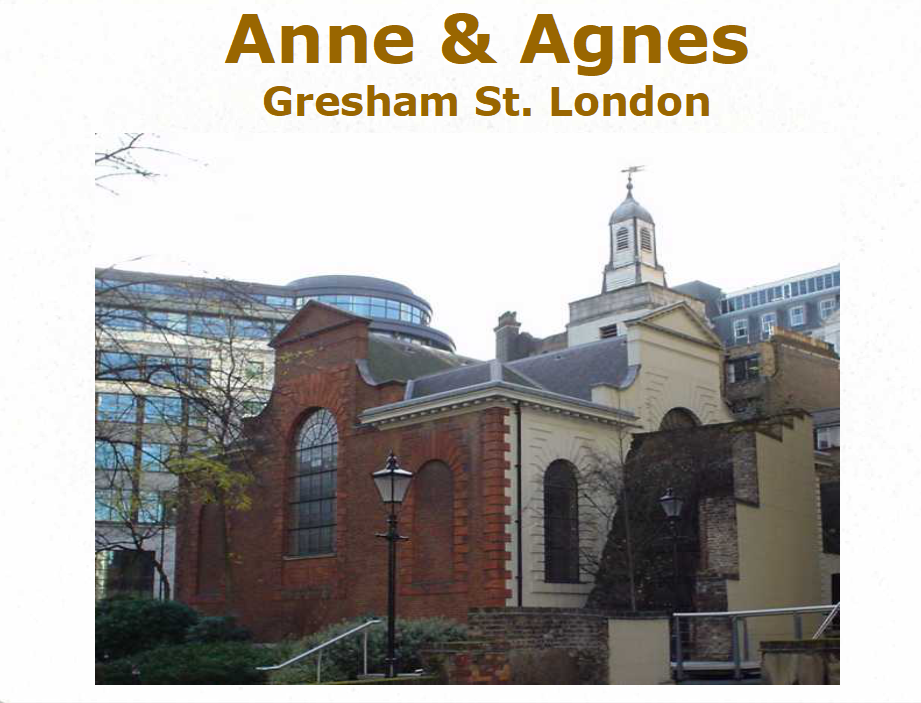
In London, the Fraternity of St Anne and St Agnes met at the Church dedicated to the saints. It is by a corner of the Roman Wall on the junction of Gresham Street and Noble Street. St Agnes is the patron saint of young girls, abused women and Girl Scouts. St Anne is the mother of the mother of the Son of God. So, she represents the three generations of women: maidens, mothers, and grandmothers.

This image has an empty alt attribute; its file name is romanmoreb0029.jpg
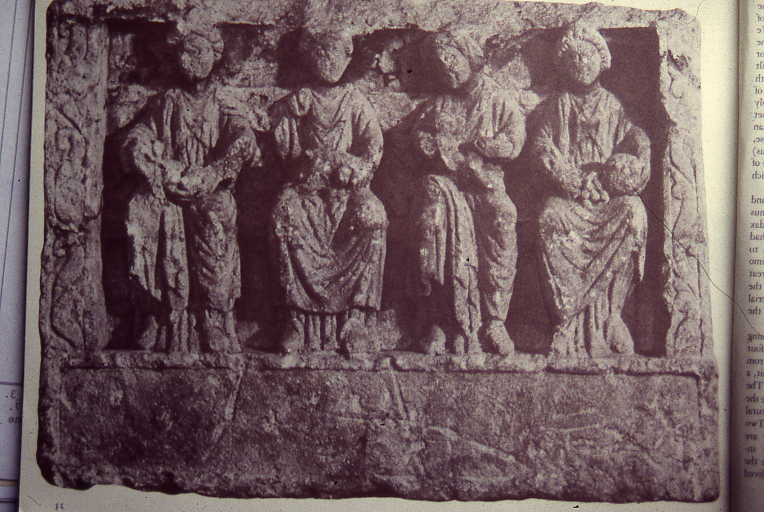
The Three Mother Goddesses (and someone else) “Limestone relief depicting four female figures sitting on a bench holding bread and fruit, a suckling baby, a dog and a basket of fruit’ the Museum of London

This trinity of women were worshipped by the Celts. Archaeologists discovered the sculpture above while investigating the Roman Wall a few hundred yards away at Blackfriars. Scholars believe it depicts the Celtic Three Mother Goddesses. The fourth person is a mystery, maybe the patron of a nearby temple. The relief sculpture was removed perhaps from a temple, or the temple was trashed at some point. Then the sculpture was used as rubble and became part of the defences of London.

The idea of triple goddesses is a common one. In Folklore and History they have been referred to as Maiden, Mother, and Crone, or even Maiden, Mother and Hag. They come in Roman, Greek, Celtic, Irish, and Germanic forms. Their names include the Norns, the Three Fates, the Weird Sisters, the Mórrígan and many more. The Three Fates, the Goddess Book of Days says, were celebrated during the Gamelia. This is the Greco/Roman January Festival to the marriage of Zeus and Juno. The Festival also gives its name to the Athenian month of January.

The use of the terms Hag and Crone for the third Goddess is rare now, but was common. It does a great disservice to the importance of the Grandmother figure. (Although the original meaning of the words were less pejorative. For example, Hag may have meant diviner, soothsayer.) The three phases of womanhood are equally as important to the continuation of the species. They provide love, support, and experience through the generations. Compare these three generations of supportive deities with Ouranos (Uranus), Cronus (Saturn) and Zeus (Jupiter). Saturn castrated and deposed his father, Uranus. Later, he tried to eat his son, Jupiter. But then, Jupiter is nobody’s idea of an ideal father. As one example, he eats his lover, Metis, to avoid her giving birth. (See my post on the birth of Athena.)

Recent work on human evolution has suggested that the role of the Grandmother is crucial to our species’ ability to live beyond the age of fertility. Because, in evolutionary terms, once an individual cannot procreate, their usefulness for the survival of the genes is finished. So what’s the point of putting resources into grandma’s survival? The theory is the Grandmother has such an impact on the survival of the next generation, that longevity. for the female, beyond fertility makes evolutionary sense.

Have a look at this site for more information.

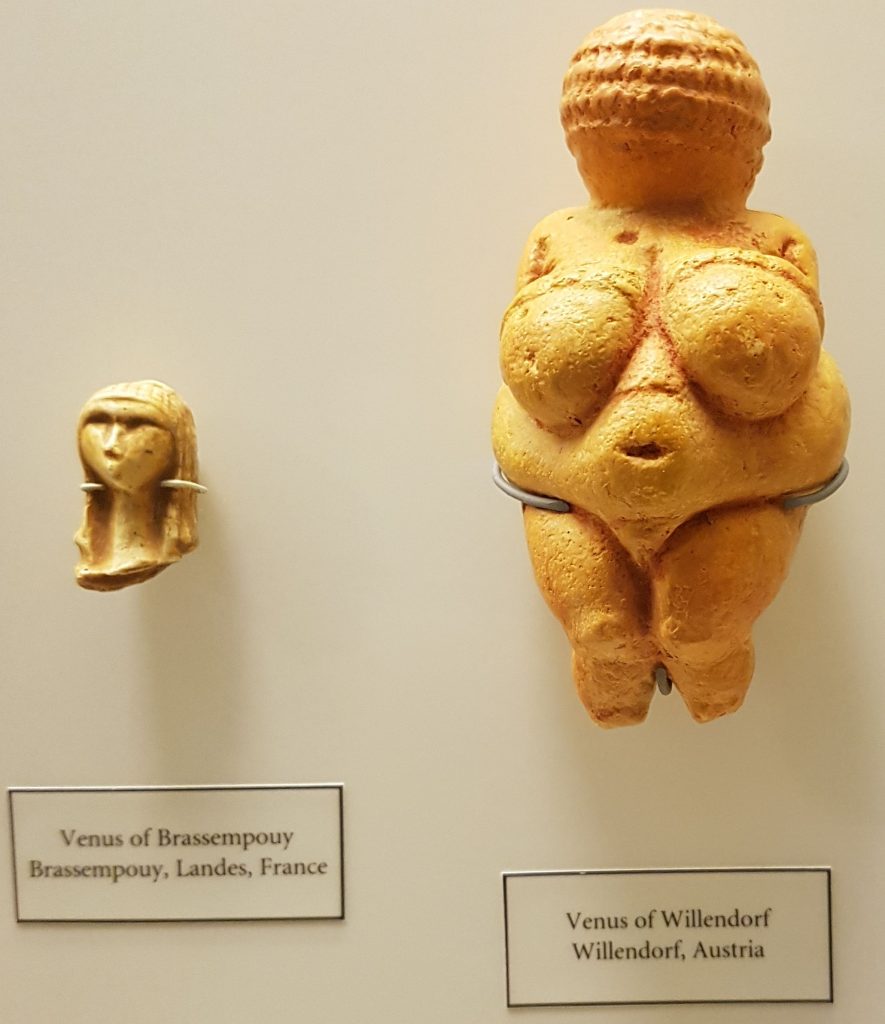
Natural History Museum, Oxford, K Flude photo.

There was a theory widely held that the original Deities, dating before the spread of farming, were mother goddesses. The idea is that the hunter-gather goddesses (perhaps like the Venus of Willendorf) were overthrown by the coming of farmers. These patriarchal societies worshipped the male gods, which destroyed the ancient Matriarchy. Jane Ellen Harrison proposed an ancient matriarchal civilization. Robert Graves wrote some interesting, but no longer thought to be very scientific studies, on the idea. Neopaganism has taken these ideas forward.

More information on St Agnes in this post below:

One This Day

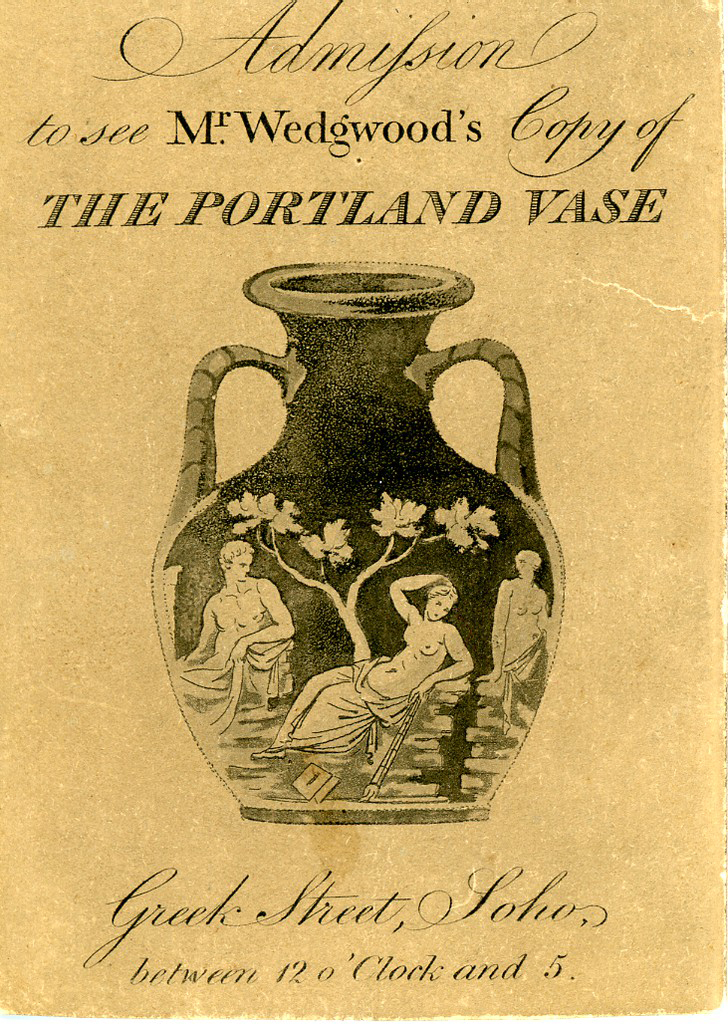
1845. Today is the anniversary of the breaking of the fabulous Portland Vase by a drunken visitor to the British Museum. It looks immaculate despite being smashed into myriad pieces, a wonder of the conservator’s art. To see the vase and read its story, go to the BM web site here:

wedgwood catalogue of its copy of the portland vase

In the orthodox church, дед Мороз  (Ded Moroz= father of frost), accompanied by Cнегурочка (Snieguroshka= fairy of the snow) brings gifts on New year’s eve, (which is on January 7th). He travels with a horse drawn troika.

Today’s Interesting link

Medieval Sin and the Pointy Shoe — for details, read the BBC’s interesting article.

First Published in 2022, and revised in January 2024 and 2025

The Lord of Misrule & London, December 30th

black and white illustration of John Stow memorial in St Andrew's Church
John Stow memorial in St Andrew’s Church

On the sixth day of Christmas

My true love sent to me
6 Geese a Laying;
5 Golden Rings;
4 Calling Birds; 3 French Hens; 2 Turtle Doves
and a Partridge in a Pear Tree

The Lord of Misrule, Masters of the Revels, and Boy Bishops

The Roman festival of Saturnalia, held between 17th and 23rd of December, included reversing rules so that slaves, ruled and masters served. In the medieval period, the disorder of Christmas was continued with the election of Lords of Misrule, Masters of the Revels, and Boy Bishops.

John Stow’s, Survey of London

He was London’s first great historian, wrote of the Lord of Misrule in London. In this section, Stow begins the role of the Lords of Misrule at Halloween and continues it until Candlemas, in erly February. See my post here for more details on Candlemas. This is what Stow says:

Now for sports and pastimes yearly used.

First, in the feast of Christmas, there was in the king’s house, wheresoever he was lodged, a lord of misrule, or master of merry disports, and the like had ye in the house of every nobleman of honour or good worship, were he spiritual or temporal. Amongst the which the mayor of London, and either of the sheriffs, had their several lords of misrule, ever contending, without quarrel or offence, who should make the rarest pastimes to delight the beholders.

These lords beginning their rule on Alhollon eve, continued the same till the morrow after the Feast of the Purification, commonly called Candlemas day. In all which space there were fine and subtle disguisings, masks, and mummeries, with playing at cards for counters, nails, and points, in every house, more for pastime than for gain.

Against the feast of Christmas every man’s house, as also the parish churches, were decked with holm, ivy, bays, and whatsoever the season of the year afforded to be green. The conduits and standards in the streets were likewise garnished; (…) , at the Leaden hall in Cornhill, a standard of tree being set up in midst of the pavement, fast in the ground, nailed full of holm and ivy, for disport of Christmas to the people…

John Stow, author of the ‘Survey of London‘ first published in 1598. Available at the wonderful Project Gutenberg: ‘https://www.gutenberg.org/files/42959/42959-h/42959-h.htm’

Cover page of The Survey of London by John Stow from Project Gutenberg

Holm is an evergreen oak called Quercus ilex. John Stow talks about the Tree in Leadenhall Street being destroyed in the great wind of 1444 which you can read about here. You might also like to see the following posts, which include information about John Stow and London’s customs, and churches.

First Published on December 30th 2023 and revised in 2024,2025

The Last Supper April 2nd

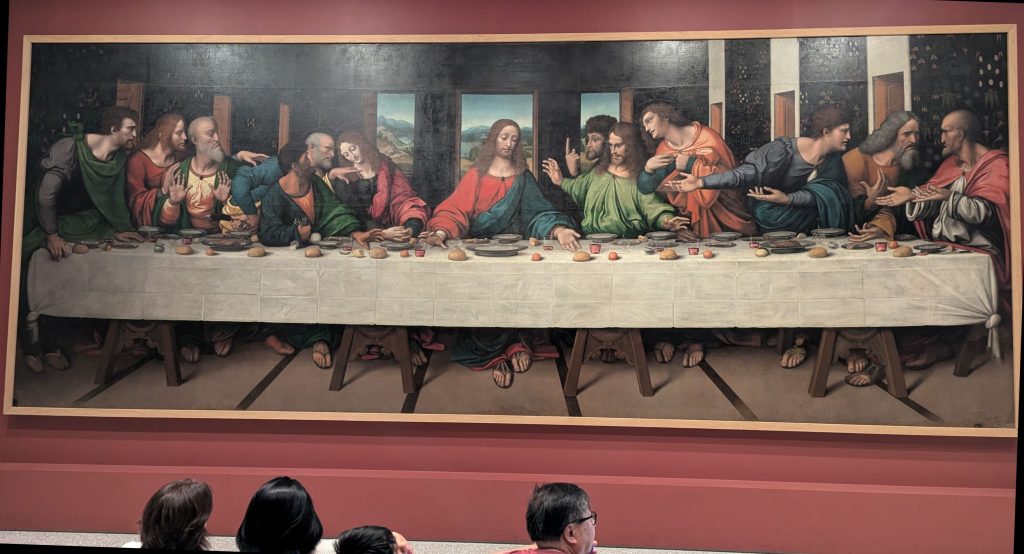
Copy of the Last Supper by Leonardo da Vinca at the Collection Gallery, Royal Academy, UK
(Copy made 1515-1520, and was in the Carthusian Monsatery at Pavia in the 17th Century before being brought to the RA in the 19th Century)

April 2nd, 2026 is the day before Good Friday. It was on the Wednesday or the Thursday that the Last Supper took place. So I have relocated my ‘Sandals of the Saints’ post to here.

Whilst visiting Flaming June at the RA, it was nice to have another look at the Last Supper. What strikes me most is their sandals (and the beautifully pressed table cloth).

Detail of the RA copy of the Last Supper

Details that bring the past to life. The shoes would surely sell today, while the table cloth really destroys the common idea that the past was dirty and smelly. It wasn’t. People took pride in their appearance and surroundings. Just look at the ironing!

Here, by way of contrast, is a medieval shoe from the 14th Century from the Museum of London. And this is a link to the Museum of London’s collections of medieval shoes, most have been collected from excavations, and it is one of the best collections.

Mothering Sunday & Simnel Cake

In 2026 Mothering Sunday is on March 15th. In 2027 it will be on March 7th. Strangely, very little to do with Mothers! Mothering Sunday is the 4th Sunday in Lent and is a day in which we are enjoined to visit our Mother Churches. It, therefore, became a day when people made processions to their Churches.  Servants and workers could go to their home parishes, and not only go to the Mother Church but also to say hello to their mothers.

It was called Mothering Sunday when I was little but since then has morphed into the Americanism that is Mother’s Day.

In Church the Reading is often Isaiah 66:10–11

‘Rejoice ye with Jerusalem; and be ye glad for her, all ye that delight in her: exult and sing for joy with her, all ye that in sadness mourn for her; that ye may suck, and be satisfied with the breasts of her consolations.

Jerusalem is personified, here, as the Mother. Further associations with motherhood came from the Gospel for the day which is John 6:1–14, the story of the Feeding of the Five Thousand, which led to associations with the bounty of Mother Earth.

In the medieval period visits to the Mother Church seem to have become fiercely competitive. The Bishop of Lincoln, Robert Grosseteste decreed:

In each and every church you should strictly prohibit one parish from fighting with another over whose banners should come first in processions at the time of the annual visitation and veneration of the mother church. […] Those who dishonour their spiritual mother should not at all escape punishment, when those who dishonour their fleshly mothers are, in accordance with God’s law, cursed and punished with death.

(Letter 22.7 – Wikipedia)

Simnel Cake

It was also the Sunday in the fasting period of Lent in which the restrictions were relaxed, so you could eat what is called Simnel Cake.

I’ll to thee a Simnel bring
‘Gainst thou goest a-Mothering
So that, when she blesseth thee
Half that blessing thou’lt give me.

Herrick Hesperides 1647

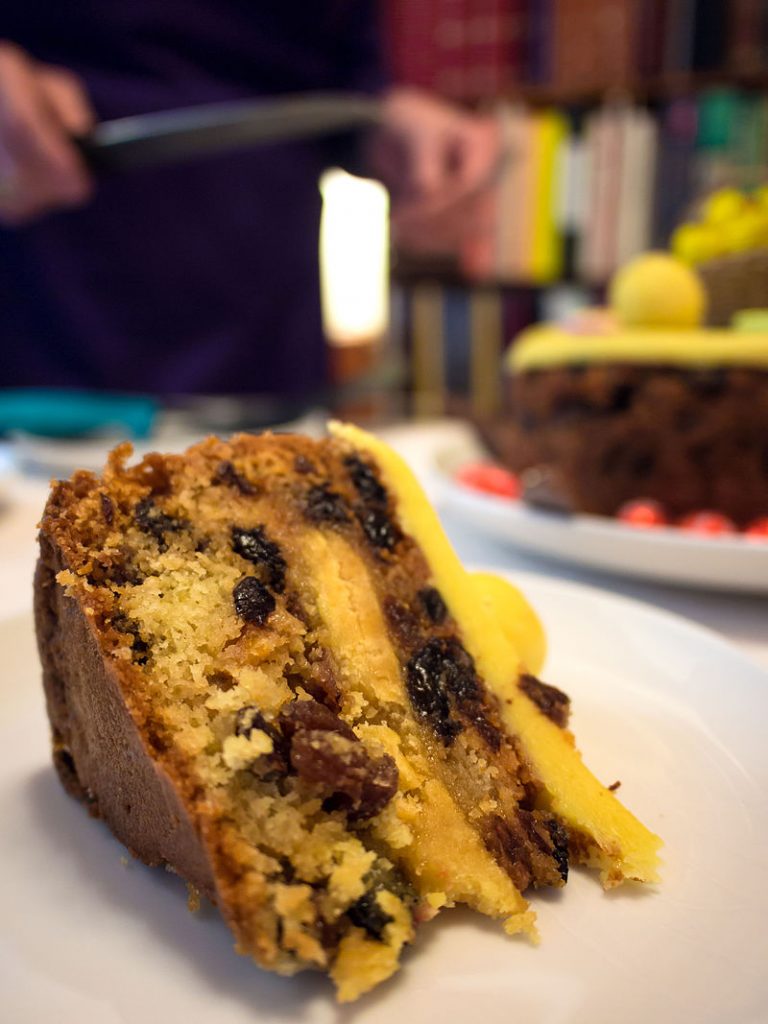
Photo: James Petts from London, England – Simnel cake (wikipedia
Easter 2012

The Simnel cake is a fine flour light fruit cake (Latin simila, fine flour), with layers of marzipan in it. It often has 11 balls of marzipan on the top, representing the 11 (not Judas) apostles. The cake is first boiled for two hours and then baked.

Now, I know 95% of my American readers hate fruit cake, but believe me when I tell you – you are completely wrong! Its delicious, and here is the BBC’s recipe for you to try:

https://www.bbcgoodfood.com/recipes/easter-simnel-cake

And I’m beginning to see that cake is an emerging theme of this Almanac of the Past.

Written in March 23, slightly revised in March 24, and 25

Festival of Imbolc, St. Bridget’s Day February 1st

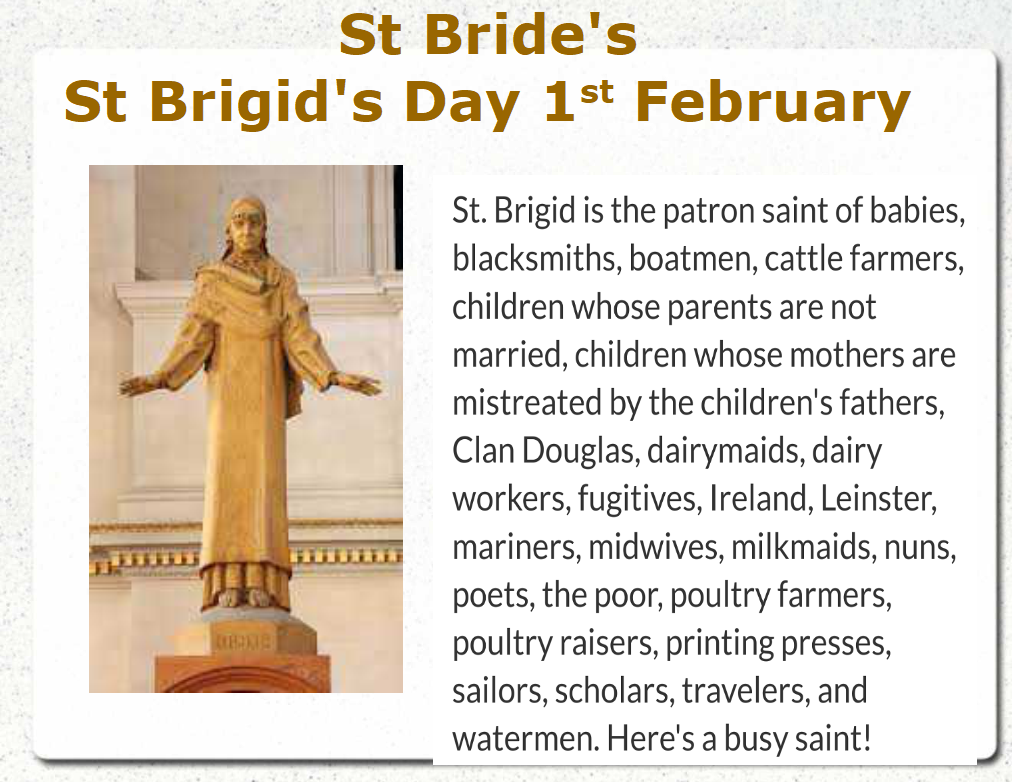
Today is Imbolc, one of the four Celtic Fire Festivals. It corresponds with St Bridget’s Day, which is a Christian festival for the Irish Saint, and is the eve of Candlemas. Bridget is the patron saint of all things to do with brides, marriage, fertility, and midwifery (amongst many other things, see above). And in Ireland, last year (2024) was the very first St Bridget’s/ Imbolc Day Bank Holiday!

St Bride,s Statue St Bride's Church. Fleet Street
St Bride’s Statue, St Bride’s Church. Fleet Street from K.Flude’s virtual tour on Imbolc

St Bridget, aka Briddy or Bride, converted the Irish to Christianity along with St Patrick in the 5th Century AD. She appears to have taken on the attributes of a Celtic fertility Goddess, called Bridget or Brigantia, so some doubt she was a real person.

Brigantia

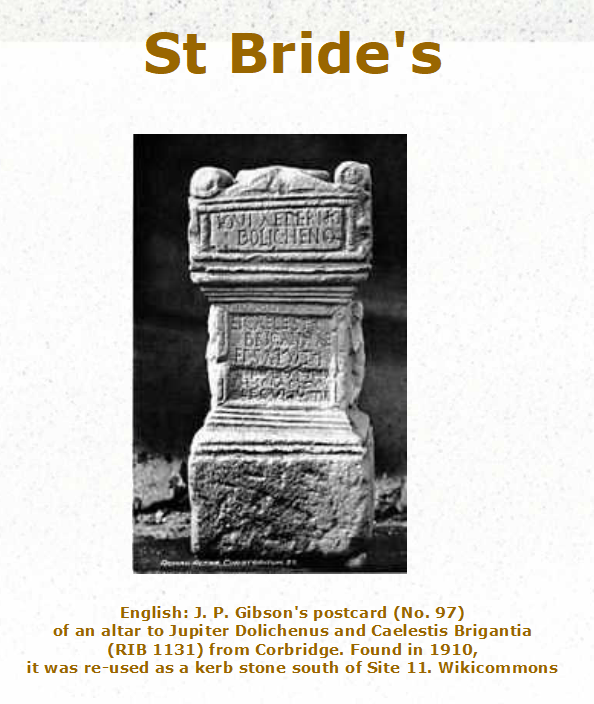
There are Roman altars dedicated to Brigantia The Brigantes tribe in the North were named after the Goddess. The Brigantes were on the front line against the invading Romans in the 1st Century AD, and led by Queen Cartimandua.  Cartimandua tried to keep her independence by cooperating with the Romans, while, a few years later, Boudica took the opposite strategy. But both women appear to have had agency as leaders of their tribes and show a great contrast with Roman misogyny.

altar to Brigantia
Altar to Brigantia from K Flude’s virtual tour on Imbolc

Last day of medieval Christmas and the Lords of Misrule.

This was the end of the Christmas period. John Stow, in the 16th Century describes the period between Halloween and Candlemas being the time that London was ruled by various Lords of Misrule and Boy Bishops (see my post here). In the piece below Stow goes on to talk about a terrible storm that took place on st February 1444.

Against the feast of Christmas every man’s house, as also the parish churches, were decked with holm, ivy, bays, and whatsoever the season of the year afforded to be green. The conduits and standards in the streets were likewise garnished; amongst the which I read, in the year 1444, that by tempest of thunder and lightning, on the 1st of February, at night, Powle’s steeple was fired, but with great labour quenched; and towards the morning of Candlemas day, at the Leaden hall in Cornhill, a standard of tree being set up in midst of the pavement, fast in the ground, nailed full of holm and ivy, for disport of Christmas to the people, was torn up, and cast down by the malignant spirit (as was thought), and the stones of the pavement all about were cast in the streets, and into divers houses, so that the people were sore aghast of the great tempests.’

Wells dedicated to St Bridget

There are many wells dedicated to St Bride. They were often used in rituals and dances concerned with fertility and healthy babies. And perhaps, the most famous, was near Fleet Street. Henry VIII’s Palace of Bridewell, later an infamous prison, was named after the Well. St Bride’s Church has long been a candidate as an early Christian Church, and although the post World War Two excavations found nothing to suggest an early Church, they did find an early well near the site of the later altar of the Church, and by the remains of a Roman building, possibly a mausoleum. Therefore, it is possible that the Church was built on the site of an ancient, arguably holy, well.

St Bridget's Well Glastonbury
St Bridget’s Well, Glastonbury

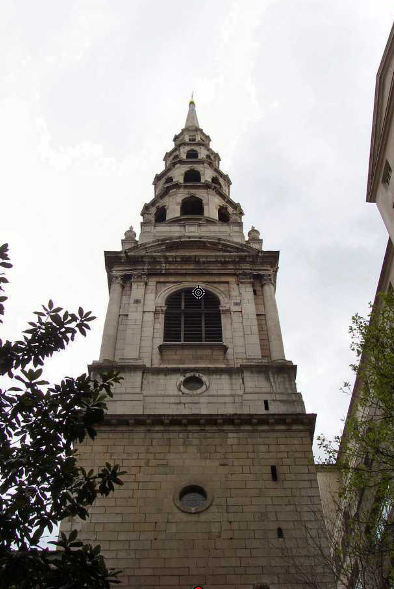
The steeple of St Brides is said to be the origin of the tiered Wedding Cake, which, in 1812, inspired a local baker to bake for his daughter’s wedding.

Steeple of St Brides Fleet Street

Imbolc and St Bridget’s Day are the time to celebrate the return of fertility to the earth as spring approaches. In my garden and my local park, the first snowdrops, violets, and daffodils are coming out, and below the bare earth, there is a frenzy of bulbs and seeds budding, and beginning to poke their shoots up above the earth, ready for the Spring. In the meadows, ewes are lactating, and the first lambs are being born.

Violets, bulbs, and my first Daffodil of the year. Hackney (2022), London by K Flude

I, occasionally, do walks about Imbolc and other Celtic festivals, in conjunction with the Myths and Legends of London, and at May Eve, the Solstices, Halloween and Christmas (when I have time). See the walks page of this blog

https://www.chr.org.uk/anddidthosefeet/walks

And let’s end with the Saint Brigid Hearth Keeper Prayer Courtesy of SaintBrigids.org

Brigid of the Mantle, encompass us,
Lady of the Lambs, protect us,
Keeper of the Hearth, kindle us.
Beneath your mantle, gather us,
And restore us to memory.
Mothers of our mother, Foremothers strong.
Guide our hands in yours,
Remind us how to kindle the hearth.
To keep it bright, to preserve the flame.
Your hands upon ours, Our hands within yours,
To kindle the light, Both day and night.
The Mantle of Brigid about us,
The Memory of Brigid within us,
The Protection of Brigid keeping us
From harm, from ignorance, from heartlessness.
This day and night,
From dawn till dark, From dark till dawn.

For more about St Bridget.

First published in 2023, revised and republished Feb 2024, 2025

I have republished my post of the Chinese New Year which you can see here:

Midwinter Links: Edo in Winter & Society & Santa Claus’ Elitist Origins

Here are some fascinating links with a seasonal theme, and at the end of the post the December posts I have reviewed, revised and reposted. And to remind you, I have a Winter Solstice Virtual Tour on Friday, and a Jane Austen Virtual Tour taking place on Saturday.. Follow the links on the www.chr.org.uk to find out more or book.

The wintery landscapes of Utagawa Hiroshige | with Alfred Haft |

This is a short video of an event held for British Museum members. It’s on YouTube, so it should be available for non-members. It shows, with some animation, beautiful snowy landscapes by the great Hiroshige. It is 12 minutes long.

Santa Claus’ Elitist Origins

I came across Ben Tumin’s conversation with Professor Stephen Nissenbaum on Santa Claus’ Elitist Origins in Tumin’s Skipped History Substack posts. Nissebnaum wrote a highly rated book called the ‘Battle for Christmas’, which pointed out that, before the 19th Century, Christmas was largely outdoors, and a riotous time of debauchery, gluttony, and drunkenness. The ruling classes managed in the 19th Century to change this for a quieter, indoor, family-based experience. Well worth a listen.

https://skippedhistory.substack.com/p/professor-stephen-nissenbaum-on-santa?utm_source=substack&utm_medium=email

Almanac of the Past December Posts:

Here are the posts I have reviewed and republished since the last email for subscribers:

International Day for the Elimination of Violence against Women November 25th

Poster from the UN promoting #noexcuse campaign, 'protecting women and girls isn't an expense. It's an investment.'
#noexcuse

Almost ‘one in three women have been subjected to physical and/or sexual violence at least once in their life.’ says the UN on its page Ending Violence Against Women Day.

In writing my Almanac of the Past, I have been struck by how violent are most of the stories of the Saints of the early Catholic Church. At the bottom of this post, you will find an essay touching upon this thorny subject. And click here for research on violence against women. Their results are not good news countries that speak English. South Africa is the worst, the USA 7th, Australia 11th, UK 12th, and New Zealand 15th. They admit the figures are difficult to interpret as what is being counted is reported crimes. It is likely that the worst countries are those where women do not feel free to report sexual violence.

Today is St Catherine of Alexandria’s Day, which makes an appropriate Saint for the UN Day. So I have updated this very interesting story and republished it today. Have a read.

Also, buffed up and republished are the following seasonal posts:

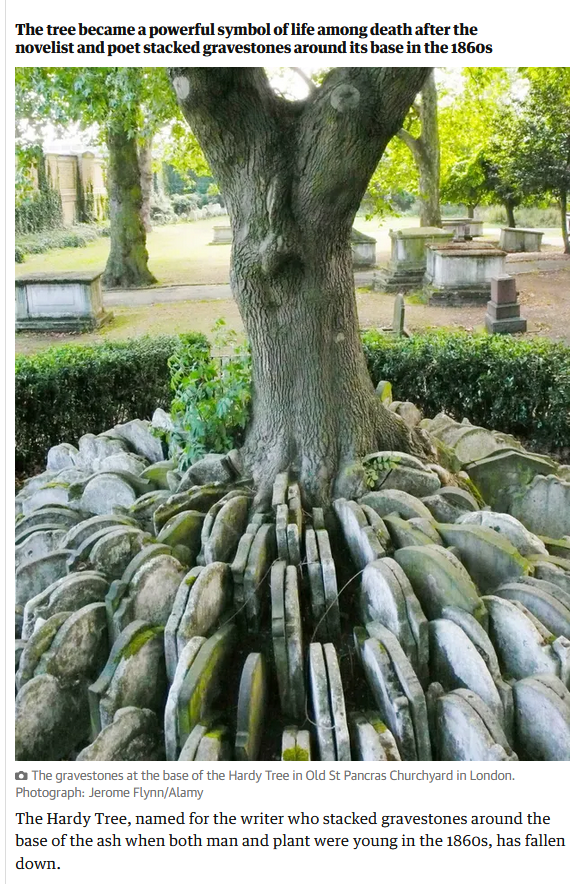
The End of Hardy’s tree

From the Guardian Article

I published the following post about Hardy’s Tree on 28th December 2022. Here, follows the original post and an update which suggests the tree and the gravestones were not erected by Thomas Hardy.

This is the day that Herod ordered the slaughter of the Innocents, or Childermas, and I am glad to see that my Grandson is now older than Herod’s prescription.

Hardy’s Tree in St Pancras Church, Camden, London has fallen down. Hardy was an architect and worked in London for a while, where one of his jobs was to supervise the clearance of the graveyard. Several poems of Hardy refer to the removal of graves from their original positions and in this case, the gravestones were set around an Ash tree that inspires many, including my Central St Martin’s students who used it in a project recently. So, I was shocked to read a Guardian article (since deleted) which noted the sad demise of the Tree.

Extracts from one of several Hardy Poems about moving graves and gravestones follow, but I need to update the post about the connection to Hardy. The Guardian has now got an article which suggests the connection with Hardy is a more recent one than previously thought (Guardian article).

I (and I think the Guardian) were alerted to this by the work of Lester Hillman, who wrote a Churchyard Guide and a recent pamphlet about the Tree, which is reported in ‘Context ISSN 1462-7574’. This is the Journal of the City of London Archaeological Society. Evidence proves that the Ash Tree dates to the 1930s, and that the mound of gravestones is from burials relocated from St Giles in the Fields, and therefore unlikely to have been in St Pancras at the time Hardy was responsible for clearing it.

So it is not ‘the’ Hardy Tree, but then nor was the tree at Sycamore Gap anything to do with Robin Hood. What it was, was a beautiful piece of nature, in a poignant setting. May she rest in peace.

The Levelled Churchyard
Thomas Hardy

O Passenger, pray list and catch
Our sighs and piteous groans,
Half stifled in this jumbled patch
Of wrenched memorial stones!

We late-lamented, resting here,
Are mixed to human jam,
And each to each exclaimed in fear,
I know not which I am.

Where we are huddled none can trace,
And if our names remain,
They pave some path or porch or place
Where we have never lain!