St Etheldreda October 17th 679

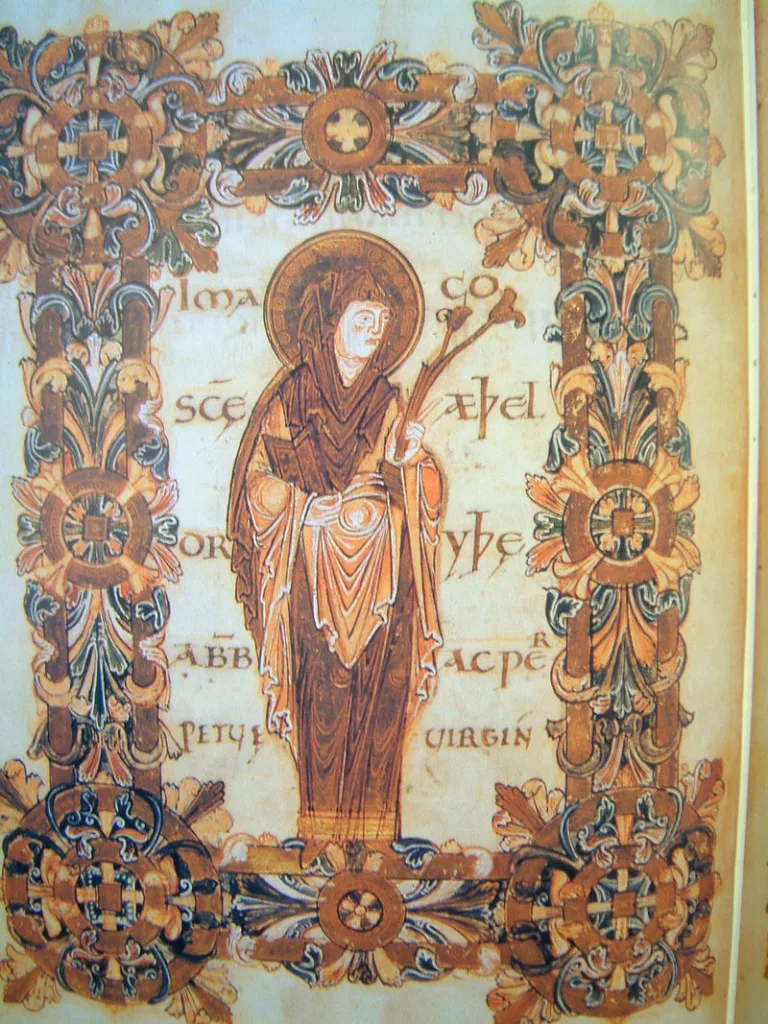
St Etheldreda or St Audrey By monk – [1], Public Domain, https://commons.wikimedia.org/w/index.php?curid=32907989

I’m republishing this post as I dated it to February 17th rather than October 17th and a few other egregious typos.

Etheldreda, also known as Audrey or Æthelthryth or Æðelþryð or Æþelðryþe is celebrated on October 17th, (the date her remains were ‘translated’ from her burial place to the Church at Ely) and on 23 June the date she died,

She lived from March 4th 636 to June 23rd 679. She is one of the well-born Saxon Virgin Saints of the 7th Century. This is when many royal Abbeys were founded by female members of the Anglo-Saxon Royal families, in the years following the conversion of the Anglo-Saxons to Christianity. She is the daughter of King Anna of East Anglia, and the sister of Saint Sexburga (widow of King Erconbert of Kent).

Etheldreda is said to be a Virgin despite being married twice. Etheldreda was widowed after three years of her first marriage. Then she married Egfrid, son of King Oswy of Northumbria. Egfrid got fed up with her virgin state. With the support of St Wilfrid, St Etheldreda was released to a Nunnery run by Wilfred’s aunt. In 672 she founded the famous double monastery at Ely, which is where the wondrous Cathedral of Ely still stands.

Here she died, and the many miracles that followed, led to Ely being one of the main destinations for Pilgrimages. St Sesxburga took over as Abbess after her death. By the number of Churches and holy days remembering Etheldreda show she was perhaps the most famous female saint of the era.

Tawrdy Audrey

Etheldreda died of a neck tumour, which she blamed on the heavy jewellery she wore around her neck before she became a nun. So she is a patron of those with neck or throat ailments. Accordingly, on February 3rd St Etheldreda’s Church in London holds the Blessing of the Throats ceremony. St Blaise is also a saint protecting the throat and you might like to read my post about him and throats here.

Pilgrims used to buy cheap, old-fashioned linen from the market at Ely, which they would wear around their neck to protect or cure them of throat illnesses. Puritans satirised the practice by coining the word Tawdry, from St Audrey, which came to represent cheap goods sold to gullible pilgrims.

Mopsa the shepherdess in Shakespeare’s Twelfth night says to her sweetheart:

“Come, you promised me a tawdry-lace and a pair of sweet gloves.

Have a look at this excellent article to read more about Tawdry and St Etheldreda.

However, I thought something was amiss and searched for Tawdry in the excellent website SHAKESPEARE’S WORDS by DAVID CRYSTAL & BEN CRYSTAL (which I use all the time). And indeed Mopsa is not in Twelfth Night but in the Winter’s Tale which I saw recently at the RSC. Mopsa’s man can’t buy it for her as he has been cheated out of his money by the fey Autolycus.

St Etheldreda’s Church in Ely Place London

Church of St Etheldreda., Ely Place London

St Etheldreda’s in London is in Ely Place, near Hatton Garden. There is a lovely old pub there called the ‘Ye Olde Mitre’ (which is a reference to a Bishop’s Mitre). The Church was founded (1250 and 1290) as the London residence of the Bishops of Ely. Inside are memorials to Catholic martyrs executed during the Reformation. (see my post on the Douai Martyrs here).

Ely place was lived in by John of Gaunt following the destruction of his Savoy Palace in the Peasants Revolt. Christopher Hatton rented parts of it in the reign of Queen Elizabeth II. During the Civil War it was used to hold Royalist Prisoners of War. Agnes Wicks fictionally lives at Ely Place. (Agnes is the woman David Copperfield should have married, rather than the ridiculous Dora).

In the 19th Century, the former Chapel was bought by the Catholic Church and restored by George Gilbert Scott.

Etheldreda is remembered in the Church of England with a Lesser Festival on 17 October according to Book of Common Prayer tradition, and alternatively 23 June in the Common Worship calendar of Saints. (Wikipedia.

First Published on October 17th 2025
Michaelmas Old Style – October 11th

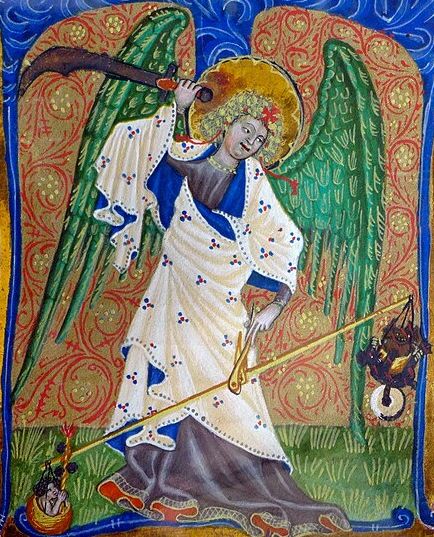
Michaelmas Old Style. St. Michael weighing souls during the Last Judgement, Antiphonale Cisterciense (15th century), Abbey Bibliotheca, Rein Abbey, Austria (Wikimedia by Dnalor_01 license (CC-BY-SA 3.0))

I am catching up as I have been away. So I’m a little behind in my days.

October 11th is the day that the Devil fell out of heaven and landed in a Blackberry Bush. So. you are, therefore, not wise to eat them after October 11th. St Michael’s Day is now celebrated on September 29th (see my post here). But before September 1752, it was celebrated on what is now October 11th, now styled ‘Michaelmas Old Style’. The change of date is due to the introduction in the UK of the Gregorian Calendar.

Saint Michael is the chief of the archangels. Saint Gabriel was celebrated on the eve of the Annunciation on 24 March (see my post here). St Raphael on the 24th October, But more recently the Churches celebrate all the Archangels at Michaelmas. It is now called the celebration of St Michael and All Angels.

Terms. Colleges, Lawyers and Quarterdays

Apart from its religious significance, St Michael’s Mass was an important date on the civic calendar. Terms began, rent fell due, and work contracts ran out. It was the end of the ploughman’s year, and the day when Hiring Festivals or Mop Festivals took place. Look at my post on the Stratford Mop festival

So in Oxford, the autumn term is called Michaelmas. The Spring Term Hilary on St Hilary’s Festival of January 14th. The third term is called Trinity, which takes place on Trinity Sunday the first Sunday after Pentecost. The law courts also have a Michaelmas term.

It is one of the Quarter Day’s of the year, close to the Solstices and the Equinox into which the medieval and early modern world was divided:

(The above list is copied from Wikipedia).

Eat a Goose for Good luck at Michaelmas

It is probably too late to tell you this year. But “if you eat goose on Michaelmas Day you will never lack money all year“. Or as they said in Yorkshire: ‘He’at eateth goose on Michaelmas won’t find his pockets short of brass.’ Jane Austen wrote to Cassandra on Michaelmas 1813 ‘I dined upon goose today, which I hope with secure a good sale of my second edition.’ Pride and Prejudice was published in 1813.

St Michael is one of several archangels. He was protector of the Israel. He has four main roles in heaven. He is the leader of the heavenly host in its defeat of Satan. He is the Angel of Death, the Weigher of Souls, and the Guardian of the Church. For more on archangels, see the second half of my post on Michaelmas here.

On this day

The Romans celebrated ‘meditrinalia’ where they celebrated the new wine and the Gods that made it possible. They toasted the wine chanting:

‘I drink old and new wine to cure old and new disease.’

First Published in 2024, revised in 2025

October – Winterfylleth, Hydref, or Deireadh Fómhair

October from the Kalendar of Shepherds

Kalendar of Shepherds

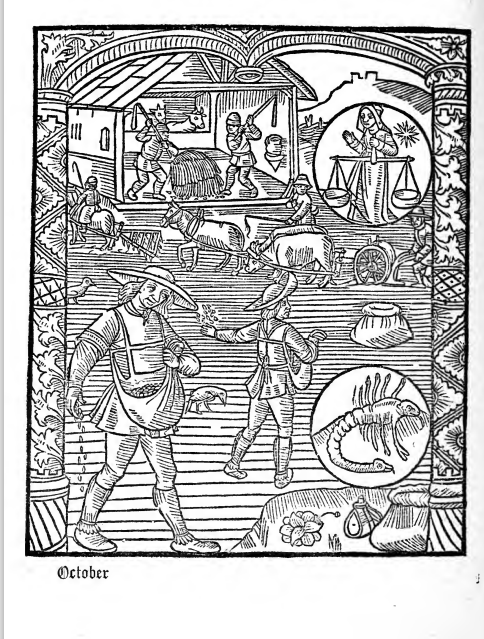
The 15th Century French illustration in the Kalendar of Shepherds shows October as a busy month. It is the time when the cereals are being flailed, the fields ploughed and sown. Perhaps winter wheat or barley or peas and beans?

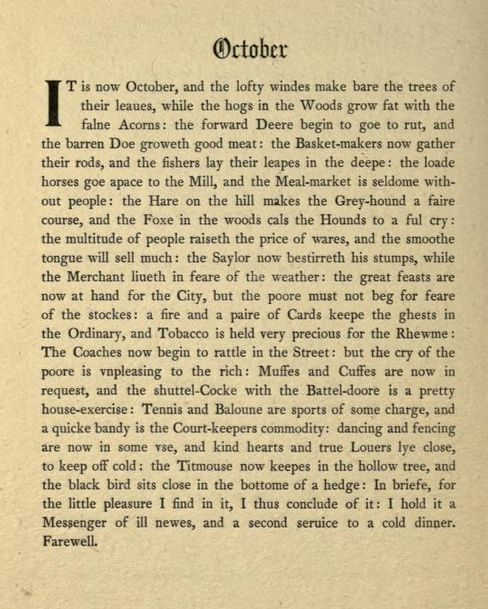
The 16th Century English text of the Kalendar of Shepherds (read the illustration) shows what a busy month it was, but the writer comes down hard against the month as ‘a messenger of ill news’ the harbinger of cold dark nights.

About the Kalendar of Shepherds.

The Kalendar was printed in 1493 in Paris and provided ‘Devices for the 12 Months.’ I’m using a modern (1908) reconstruction of it using wood cuts from the original 15th Century version. It includes various text from 16th and 17th Century sources. (Couplets by Tusser ‘Five Hundred Parts of Good Husbandrie 1599. Text descriptions of the month from Nicholas Breton’s ‘Fantasticks of 1626. This provides an interesting view of what was going on in the countryside every month.

https://wellcomecollection.org/works/f4824s6t To see the full Kalendar, go here:

Astrological October

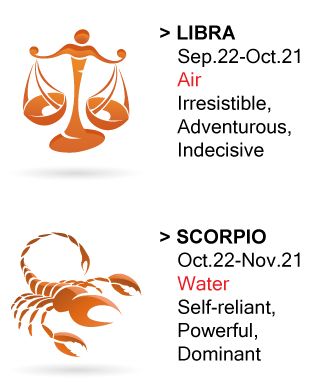
The star signs of October are the Scales of Libra and the Scorpion of Scorpio.

The star signs of October

Angelic October

Michael is the Angel of Autumn, the Angel of Judgement Day, and the Weigher of Souls. Uriel is the Angel of Libra and was sent by God sent to warn Noah. So the protector against, floods, fire and natural disasters. Scorpio’s Angel is Barbiel, he looks over health, genitalia and doubtful things. (‘An Angel Treasury’, Jacky Newcomb).

You might like to look at my post on Michaelmas here.

Roman October

In the Roman world it was, originally, the 8th Month (octo=8) but then they added January and February to the year. So it became the 10th Month. It was their time to celebrate the new wines of the Harvest. In Britain, the wine harvest is late September to October, but in hotter climes can be from July. But the grapes need to be processed, and the Romans thought that new wine was health giving and celebrated it in October.

Rustic October

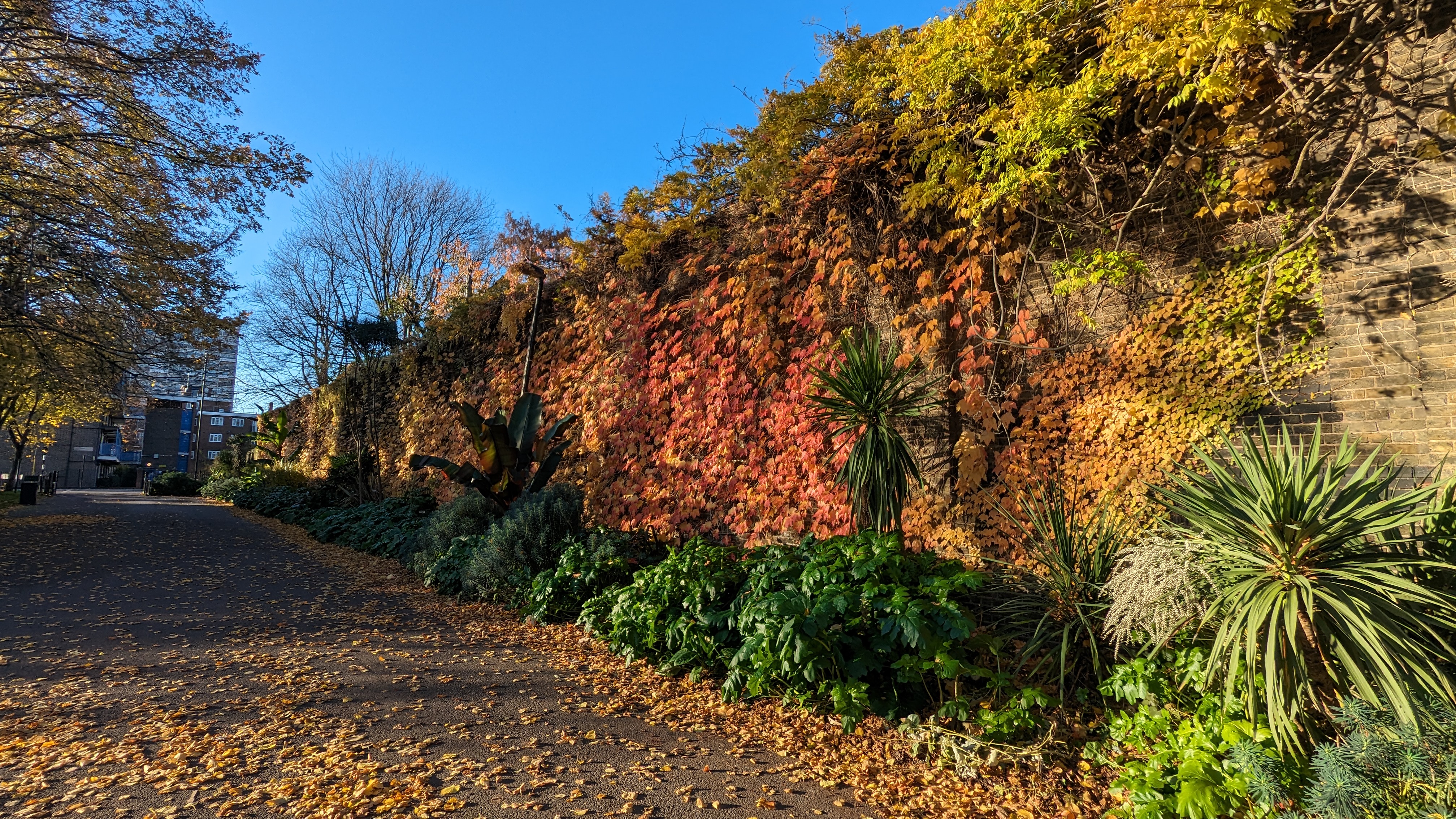
But for many people, October is a beautiful month. The dying leaves bring a sophisticated array of rustic colours, which makes the wooded countryside exceptionally beautiful.

Autumn in Haggerston Park, London (photo Kevin Flude)

It can still be warm enough to go for pleasant walks. And the surfeit of the harvest and the culling of animals meant there was plenty to eat before winter austerity begins.

Anglo-Saxon Winter Fall

The Venerable Bede tells us that the month was called Winterfylleth, in the 8th Century. The English divided the year into Summer and Winter. And Winter began for the Anglo-Saxons on the first full moon of October. This means that this year winter begins on 7th October. This is the Harvest or Hunter’s Moon, which is also a supermoon, the first of 3 ending the year.

Celtic October

In Welsh, it is Hydref, which also means Autumn. For the Welsh it was the last month of Autumn and the last month of the year. The Celtic new year, and winter starts on 1st November. The same is true of the Irish Calendar. Autumn is called Fómhair, and October Deireadh Fómhair which means ‘End of Autumn’.

Astronomical & Meteorological Autumn

Astronomically, autumn ends at the Winter Solstice and meteorologically at the end of November. So the Celtic Autumn ends a whole month or more earlier than the other measures. My very personal view is that Winter begins on November 5th more often than not. This is an evening we often spend outside watching the fireworks displays to celebrate Guy Fawkes’ Night. It always seems to be the first time that you feel cold enough to need hat, gloves, and scarves.

First Published in Autumn 2024, revised 2025

Michaelmas, St Michael and All Angels September 29th

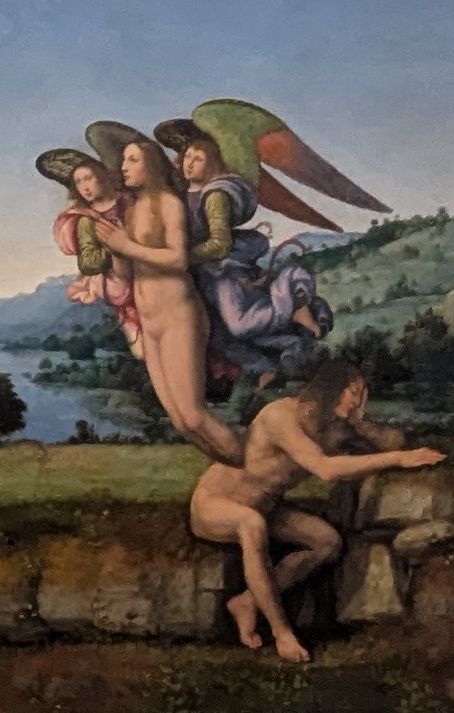
Detail from ‘The Creation and the Fall of Man’ by Mariotta Alberinelli 1513-14 showing Archangels helping in the creation of Eve from Adam’s Rib’

September 29th used to be St Michael’s Day, or Michaelmas. But in the 20th Century, the Catholic Church made it the day to celebrate the three chief Archangels and all Angels. Previously, September 29th was for St Michael, March 24th for St Gabriel, and October 24th for St Raphael.

It was an important day in the medieval civil calendar and was the date on which Oxford, Cambridge and the Legal system started their autumn terms. It is also the date the Lord Mayor of London is elected at Guildhall in the City of London.

For more about Michaelmas see my post on Old Michaelmas.

Michaelmas Daisies in my Father’s Garden

About this time, the Michaelmas Daisy (an Aster) comes out in profusion. They have been out in my Father’s garden since August, but have only been flowering for a few weeks in my own garden. Here is an old rhyme:

“The Michaelmas daisies, among dead weeds, Bloom for St Michael’s valorous deeds …

The Angelic Host

Personally, I don’t understand what Archangels are doing in a monotheistic religion. They seem to be supernatural demigods which seems odd. The Book of Revelations is one of the most important sources, but they are scattered around the Bible. Perhaps the most famous is the visitation of Gabriel to the Virgin Mary, (see my post here)They are 15 Archangels:Adabiel, Azrael, Chamuel, Gabriel, Haniel, Jeremiel, Jophiel, Melatron, Michael, Raguel, Raphael, Raziel, Sandalphon, Uriel, and Zadkiel.

Melatron has to be my favourite, given his name which sounds like something from a kids superheros cartoon! He is made from the human Enoch and Keeper of the Book of Life so perhaps the most powerful of the Archangels. He is good for relationship, career, and parenting advice!

The Book of Enoch mentions 200 Fallen Angels including Satan, but Alphonso di Spina a 15th Century Monk calculated there were 133 million fallen angels, one third of the original Angelic Host.

What are Angels for? Something to give us hope that somewhere, somehow something might be looking out for us? As Sir Antony Gormley says of the Angel of the North ;“People are always asking, why an angel? The only response I can give is that no-one has ever seen one and we need to keep imagining them.”

On This Day

1564 – Lord Dudley Created Earl of Leicester

After the service at St James on Michaelmas Day, Lord Robert Dudley was led by the earls of Sussex and Huntingdon into the queen’s presence chamber. He wore a black gown edged with lace with nineteen pairs of gold aglets on the sleeves. Before him, his brother Ambrose, Earl of Warwick bore his sword, Garter bore his patent and Lord Clinton, Lord Admiral, his cap and coronal. All made obeisance to the queen three times. Lord Robert knelt before her.

Garter gave the patent to Cecil, who read it out aloud. The Earl of Warwick presented the sword to the queen, who put it about the neck of her new Earl of Leicester, putting the point under his left arm and then, while putting his cap and coronal on his head, with a mischievous smile, tickled his neck. Solemn-faced, the new earl gave the queen his humble thanks and arose and went to the council chamber to dinner, trumpets sounding before him.’

From The Progresses and Public Processions of Queen Elizabeth by John Nichols (London, John Nichols & Son, 1823) with thanks to Jan Knights for the information.

First Written in September 2025

St Matthews Day & Christ’s Hosptial September 21st

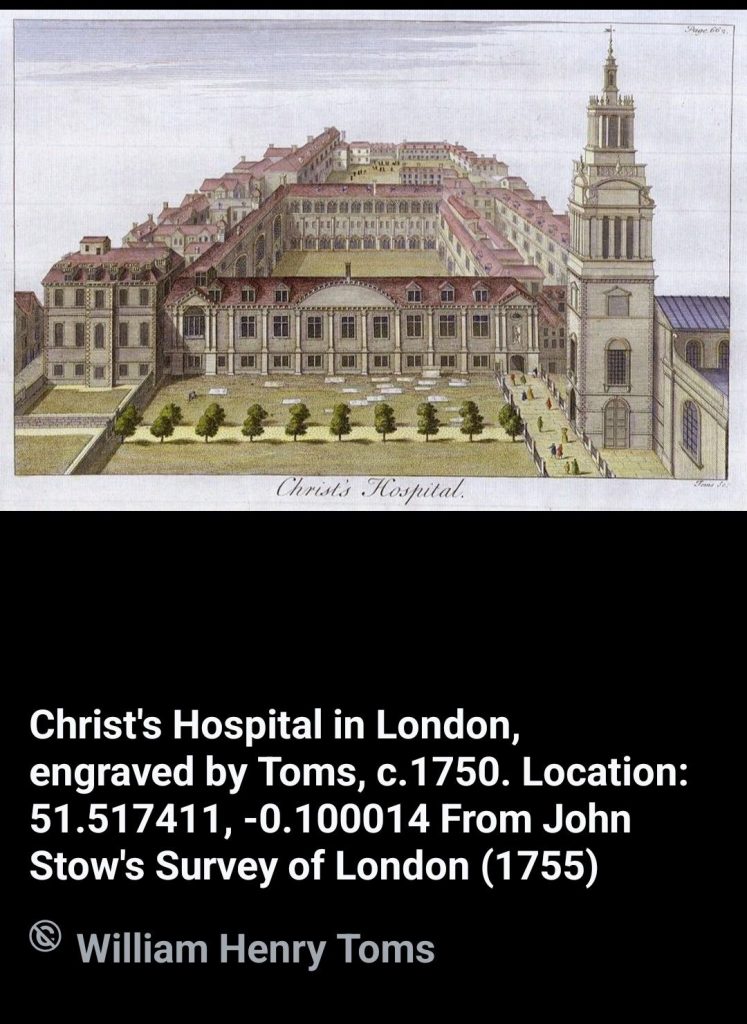
Christ’s Hospital from Wikipedia

In the City of London, St Matthew’s Day was the day that they elected Governors to Christ’s Hospital, it was followed by a service at Christchurch attended by Aldermen, Sheriffs, the Lord Mayor and a procession of the children attending the school. 

Dissolution of the Monasteries

Christ’s Hospital was founded in 1552 by a settlement arranged by Edward VI after the Reformation.  The abolition of the Monasteries by Henry VIII caused a huge problem for the City of London, with the destruction of education and social services managed by monks and nuns.  Henry VIII had already re-established St Bartholomew’s to look after the Poor Sick in the City.  To complete the post dissolution, Edward IV established three Royal Hospitals to sort out additional problems.  Bridewell Hospital became an orphanage and place of correction for wayward women.  St Thomas Hospital for the homeless and poor sick of South London. Christ’s Hospital was to provide schooling.  The school was originally near Newgate and Christchurch Church, which was originally the Choir of the Greyfriars Church.

The school was set up in 1552 and was for boys and girls.   The Mathematical School was added in the late 17th Century to provide navigation skills for sailors.

Flogging the boys

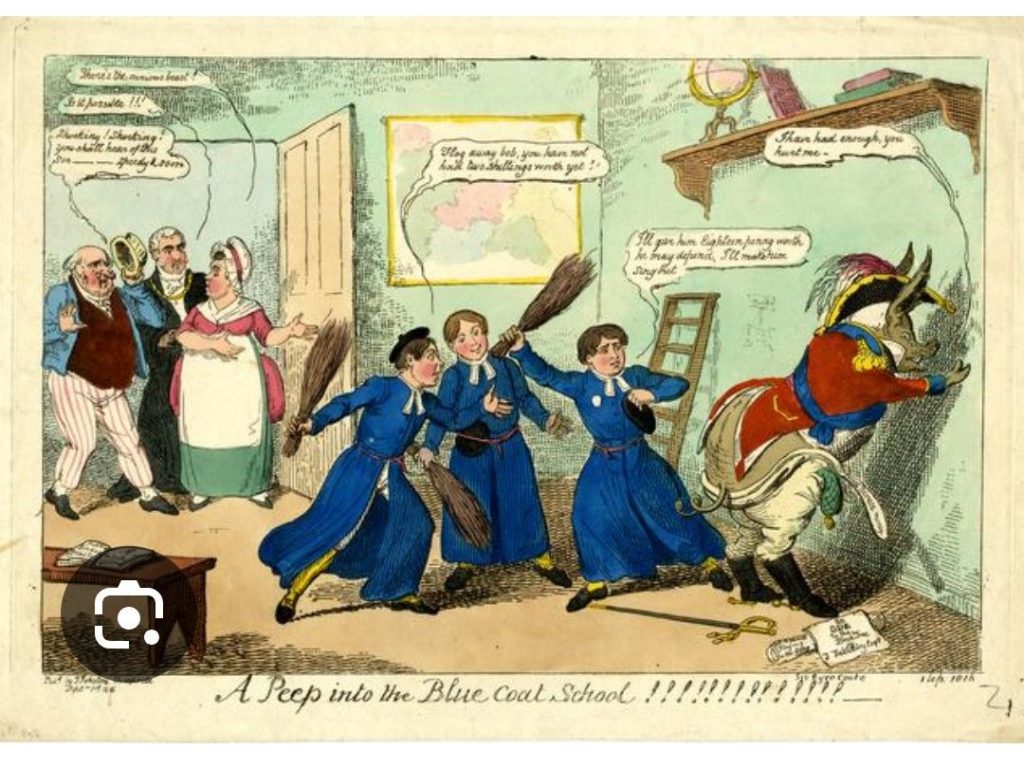
In 1815, a shocking event took place. An MP named Sir Eyre Coote entered the Mathematical school.  He shooed  the younger boys away but paid the older ones to participate in mutual flogging. He was discovered by the school nurse doing up his breeches.  George Cruikshank, a vaunted caricaturist, created a cartoon of the occasion, and it is extraordinary how it was treated far from seriously. 

Cruikshank Cartoon

The blue-coated boys of Christ’s Hospital, eventually moved to Hertford but are now in Horsham.  They maintain their City affiliation and still come to the City on or around St Matthews Day and take part in the Lord Mayor’s Show.  The school is a public school, but has a large percentage of its students funded by bursaries.  In 2016 former pupils opened up about historic sexual abuse leading to the prosecution of 6 teachers of Christchurch.

For more information look here: https://blogs.bl.uk/untoldlives/2015/09/st-matthews-day.html

Also on St Matthews Day, the historic Bush Hotel in Farnham distributed bread to the poor.  This began in 1660 a local benefactor bequeathed one pound annually to pay for the bread.

First Published in 2024, and revised 2025

Oliver Cromwell and his Lucky Day September 3rd

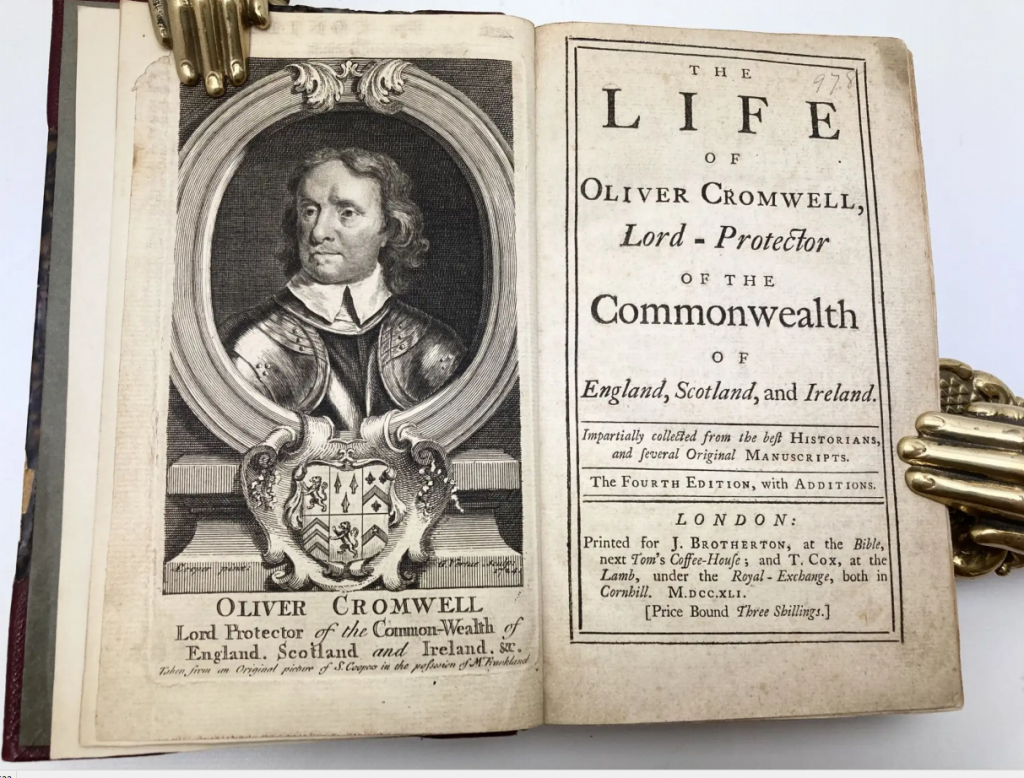
Frontispiece of ‘The Life of Oliver Cromwell’

September 3rd was Cromwell’s Lucky Day. This was because it was the date of two of his most famous victories. On September 3rd 1658 he refused to accept that he was dying because it was his lucky day.  Unluckily, he was wrong.

The Battle of Dunbar September 3rd 1650

Engraving of Charles I

After the execution of King Charles I, the Scots chose Charles II as their King. This changed the Scots from allies of the English Parliament to enemies. The Lord General of the New Model Army, Thomas Fairfax, refused to lead an attack on their erstwhile allies. So Oliver Cromwell was promoted to command. He launched a preemptive attack but the army was ill prepared, and the campaign seemed in danger of failing. They took Arthur’s seat and bombarded Edinburgh and Leith from its heights. But they could not take Edinburgh.

In need of supplies, Cromwell retreated to Dunbar, which is on the North Sea, close to the Firth of Forth. The Scots advanced on Dunbar, and Cromwell came out to meet them. After a hard battle, the English Calvary outflanked the Scots and the Battle was won. Pride, Monk, Lilburne and Lambert were all involved in the Battle. Cromwell claimed to have killed 4,000 Scots and captured 10,000. Scottish sources suggested over 1,000 Scottish casualties and 5,000 prisoners.

The Battle enabled Cromwell to seize control of Edinburgh, and Leith. So he could then cross the First of Forth and attack Fife, where he was also successful.

Cromwell interpreted the overwhelming victory as a

“A high act of the Lord’s Providence to us [and] one of the most signal mercies God hath done for England and His people”.[ (Wikipedia)

See my post on the execution of Charles 1st here:

March on England

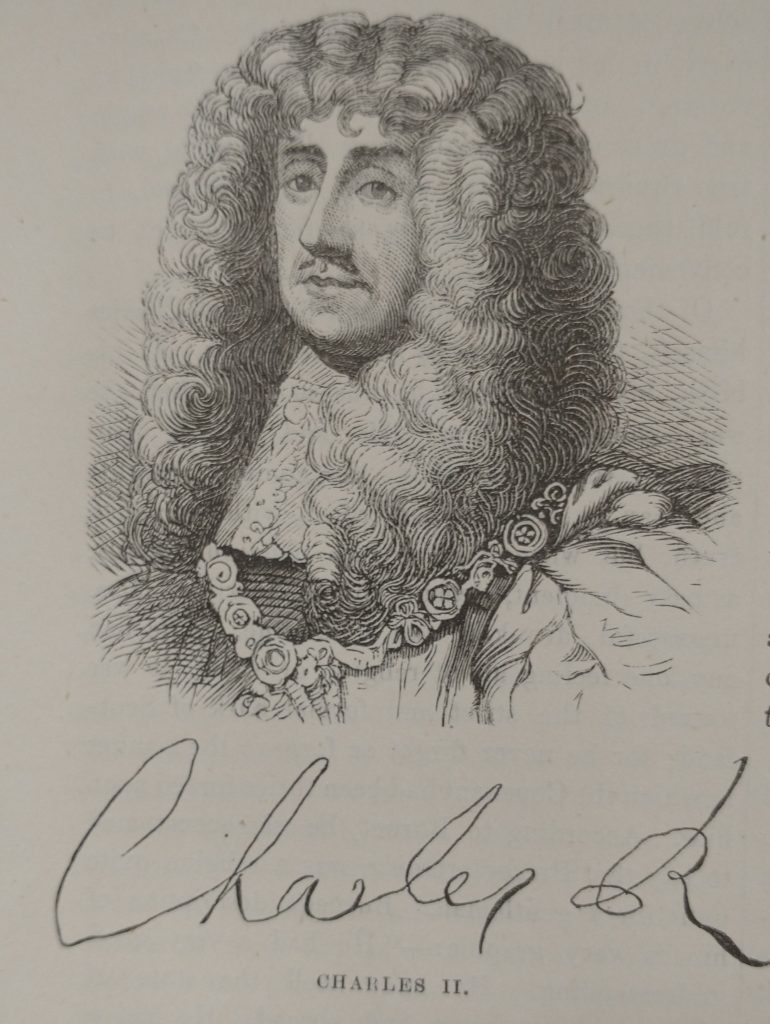
engraving of Charles II
Engraving of Charles II

Meanwhile, the Scottish Army marched South in to England. in an attempt to raise the support of English Royalists. King Charles II was now with them, They hoped Cromwell would be held up in Fife, but he wasn’t. He secured Perth and put General Monck in charge in Scotland. Lambert was sent to harrass the Scottish Army as they marched south. Meanwhile, Cromwell forced marched his way to the Tyne. General Harrison had collected fresh troops from Newcastle and joined Cromwell. Thomas Fairfax came out of retirement and raised troops in Yorkshire. The Southern troops were collected at Banbury by General Fleetwood. 14,000 militia men from the trained bands of London joined the march to intercept the Scottish Invasion.

The Battle of Worcester September 3rd 1651

The decisive battle took place at Worcester, which the Royalist occupied. It was an unusual battle in that it took place on both sides of the River Severn. Cromwell delayed the start of the battle to build two pontoon bridges. This meant he could reinforce his troops on either side of the River. It also delayed the start of the battle to his lucky day.

The pontoon bridges proved decisive. The Parliamentary side had over 30,000 troops while the Royalists only 16,000. Cromwell could shore up besieged formation with troops from the other side of the River. The Royalists were pushed back to the High Street. Here, they rallied to allow King Charles II to escape. And that was the end of the Second English Civil War. (The first being the defeat of Charles I, the second the defeat of Charles II).

Charles II made a hair-raising escape from England, hiding in an Oak Tree. Eventually, finding a ship on the South Coast at Shoreham, in Dorset to take him into a long exile. (see my post on Charles’ escape here🙂

Of the Scottish army, perhaps 3,000 men were killed and 10,000 taken prisoners. Some prisoners were conscripted into the New Model Army and sent to fight in Ireland. Many of the rest (perhaps up to 8,000) were forced into indentured labour. They were sent to New England, Bermuda, the West Indies or the Fens. Others were taken to London and detained in prison camps. One of which was at Tothill Fields in Westminster. Conditions were often appalling, leading to death by disease and malnutrition.

American Presidents pay their respects to the ‘famous’ Battlefield.

John Adams and Thomas Jefferson visited the site of the Battle in 1786. Adams reported:

‘The people in the neighborhood appeared so ignorant and careless at Worcester that I was provoked and asked “And do Englishmen so soon forget the ground where liberty was fought for? Tell your neighbors and your children that this is holy ground, much holier than that on which your churches stand. All England should come in pilgrimage to this hill, once a year”‘

And indeed will now only see the battle as one of the many battles of the Civil War. Generally, we are not aware of its special significance.

Cromwell’s Death September 3rd 1658.

By now, the Monarch in all but name, Cromwell, the Lord Protector fell ill, probably of malaria. Then, when weakened, his kidney stone infection turned to septicemia. On August 30th, there was a mighty storm, the like Europe had not seen for hundreds of years. And there was talk of the Lord taking him away in the furious storm. As he weakened he was asked to name his successor. He appeared to affirm when the name of his son Richard was spoken to him. But, it wasn’t very clear. He rallied, perhaps hoping that if he could survive to September 3rd, he would overcome his illness.

On the day, he said to his doctors ‘I tell you I shall not die this hour; I am sure on’t …. I speak the Words of Truth upon surer grounds than Galen and Hippocrates furnish you with.’

But he died on his lucky day. He was given a splendid funeral and was buried in state among the Kings and Queens in Westminster Abbey. And then in 1660 dug up, executed posthumously at Tyburn and buried under the Gibbet.

See my post on the Puritans’ abolition of Christmas here:

See my post on John Evelyn’s diary entry on the Restoration of Charles II to the throne.

First written in September 2025

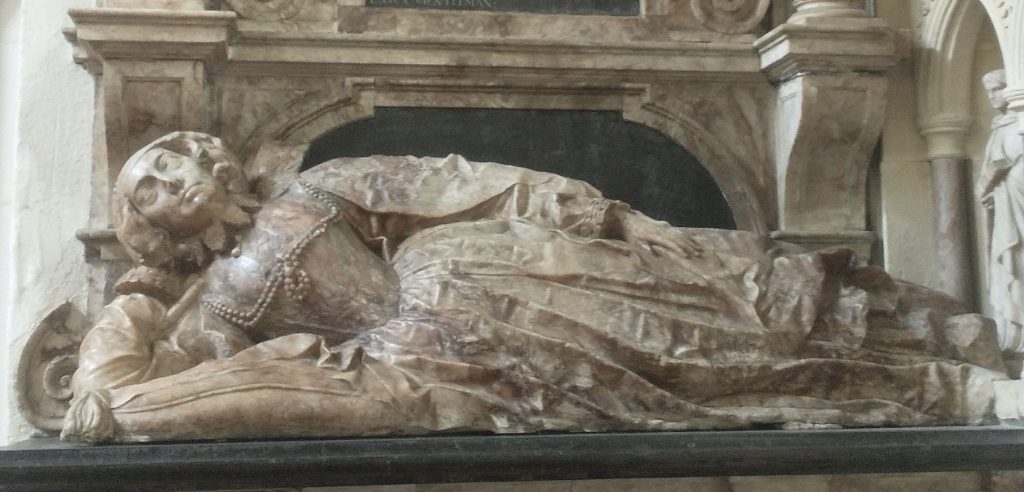
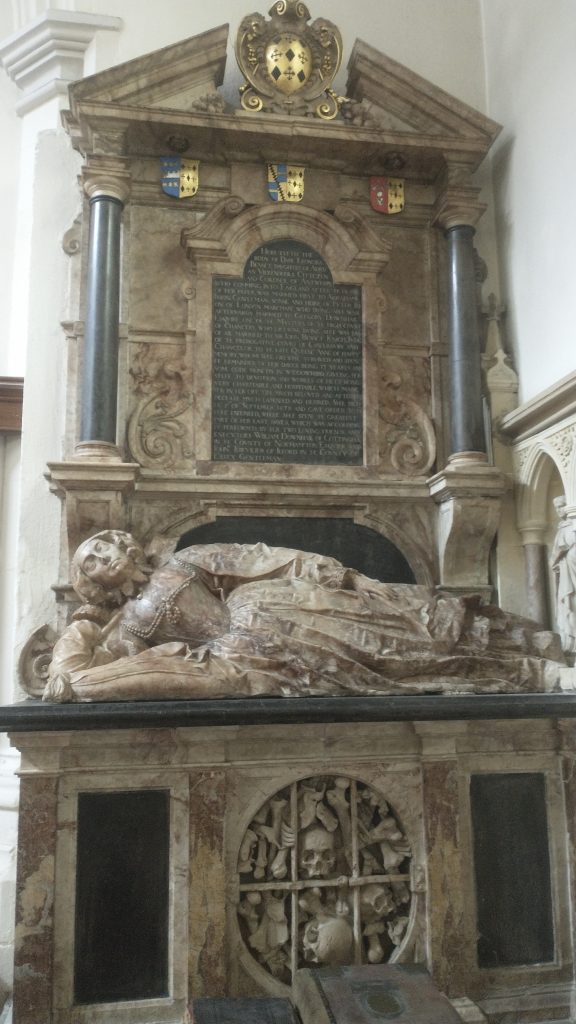
Dame Leonora Bennet. Died September 5th 1636, Uxbridge

Dame Leonora Bennet d.1636

Love this monument in St Margaret’s Uxbridge to Dame Leonora Bennet.

She lies there resting on her arm with an insouciant air. She had three husbands before spending the rest of her life on good works. And the sculptors John and Matthew Christmas seem to me portray her as an attractive woman.

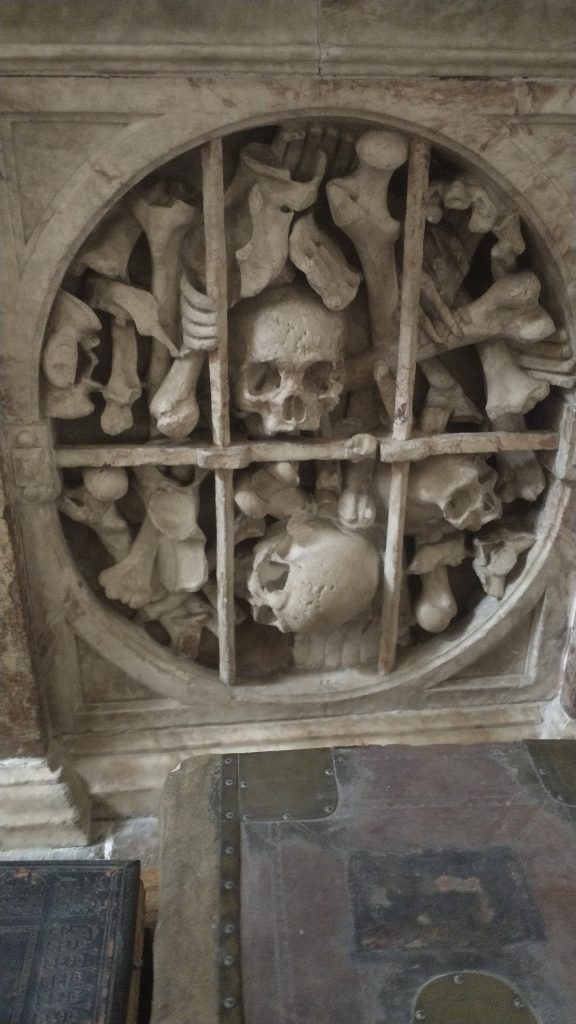
Love the contrast with the glimpse into the Charnel House below with the jumbled bones almost fighting to get out.

The Tomb of Leonora Benet. St Margaret’s Church, Uxbridge.
The scene from the charnel house at the bottom of the tomb of Leonora Benet. St Margaret’s Church, Uxbridge.

St Giles Day and Cripplegate September 1st

Public domainThe Master of St Giles, National Gallery. ‘St Giles and the Hind’
This work is in the public domain in its country of origin and other countries and areas where the copyright term is the author’s life plus 100 years or fewer.

St Giles

Today, is St Giles’ Feast Day. His story is mostly unknown, but his legend holds that he was a hermit who had a pet Hind in the Arles District of France sometime after the fall of the Roman Empire. The hounds of King Wamba (a Visigothic King) were chasing the deer, and shot an arrow into the undergrowth. The King and his men followed to discover Giles wounded by the arrow, protecting the hind, who he held in his arms. The hounds were miraculously stayed motionless as they leaped towards the hind. Wamba, which apparently means ‘Big paunch’ in Gothic, also had a Roman name: Flavius. Giles was injured in the leg, although the image above shows the arrow hit his hand. Wamba set him up as an Abbot of a Benedictine Monastery.

St Giles is, therefore, the patron saint of disabled people. He is also also invoked for childhood fears, convulsions and depression. He was very popular in medieval Britain, with over 150 churches dedicated to him, including four in London. Perhaps the two most famous are St Giles Without Cripplegate in London and St Giles Cathedral in Edinburgh.

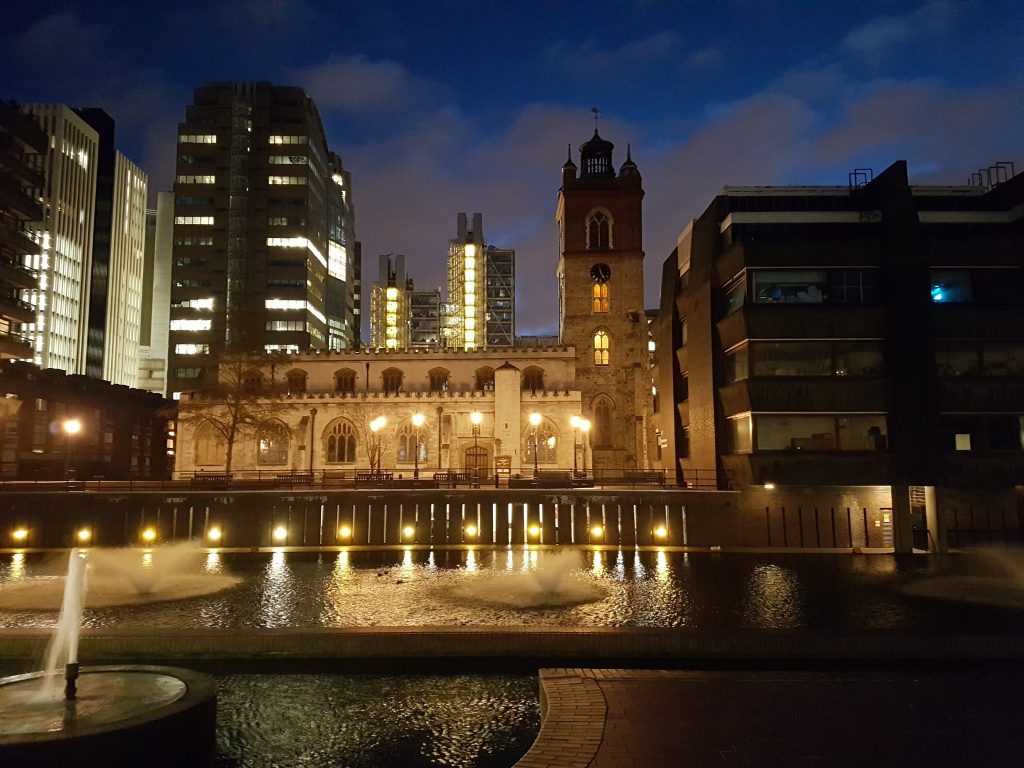
St Giles Cripplegate, photographed by the Author at night from the Barbican Centre.

St Giles Cripplegate

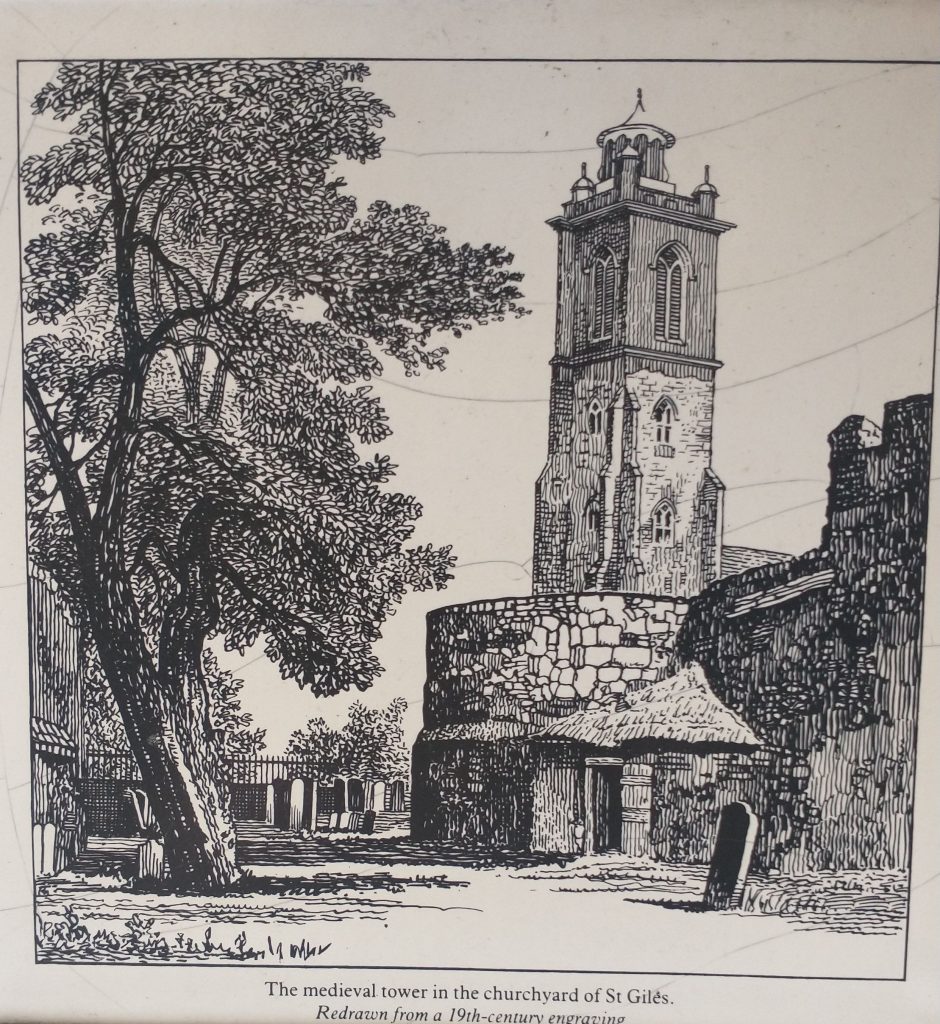
St Giles was built in the 11th Century, rebuilt in the 14th Century and again in 1545-50 after nearly being destroyed by fire. It survived the Great Fire of London, being just beyond the extent of the Fire. But it was badly damaged in the Blitz, although the Tower and the outer walls survived.

Oliver Cromwell married Elizabeth Bourchier here. John Foxe of the Book of Martyrs, John Speed, the Cartographer, Martin Frobisher, the explorer and John Milton, the Poet were buried here.

Shenanigans with Milton’s Coffin

Milton’s coffin was opened in 1793 and he was said to have looked as if he had just been buried. One of those present, then, had a go at pulling Milton’s teeth out. A bystander helped by hitting his jaw with a stone. The few teeth Milton had left in his head were divided between the men, who also took a rib bone and locks of his hair. The Caretaker then opened the coffin for anyone who wanted to see the corpse!

From the London City Wall Trail.

Cripplegate

St Giles is without Cripplegate. It is one of the Gates in the City Wall (originally the North Gate of the Roman Fort). It may be named because St Giles made it agood place to gather for those trying to beg alms for their disabilities. An alternative explanation it from the Anglo Saxon crepel, which is an underground tunnel which is said to have run from the Gate’s Barbican to the Gate. Or perhaps because of the cure of cripples when Edmund the Martyr’s remains passed through the Gate in 1010.

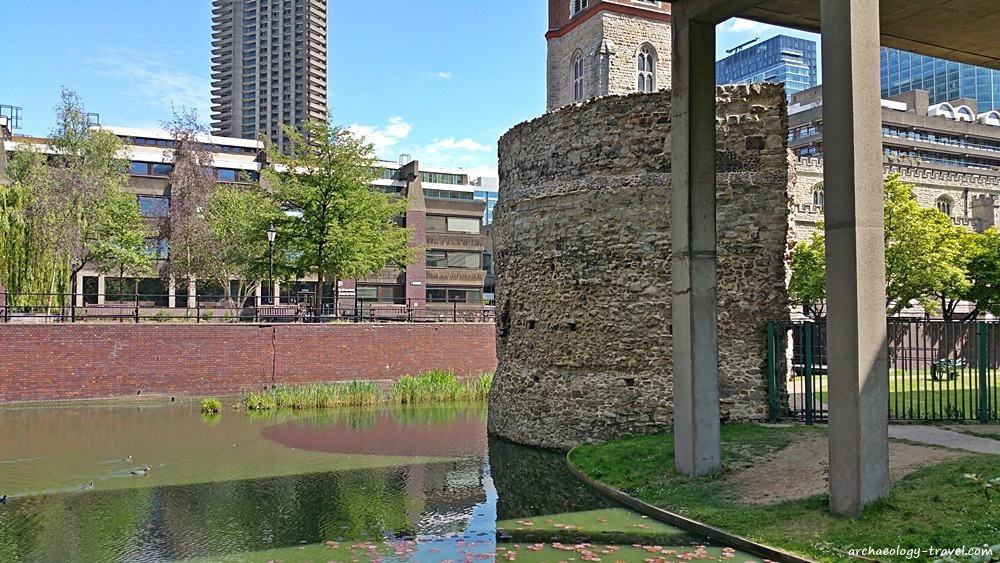
The Corner Tower of the London City Wall, the Barbican in the background, and the tower of St Giles’ Church behind the Tower. Photo by the author

First Published in September 2024, and revised in 2025.

Feast of St Mary & Days off in Anglo-Saxon England August 15th

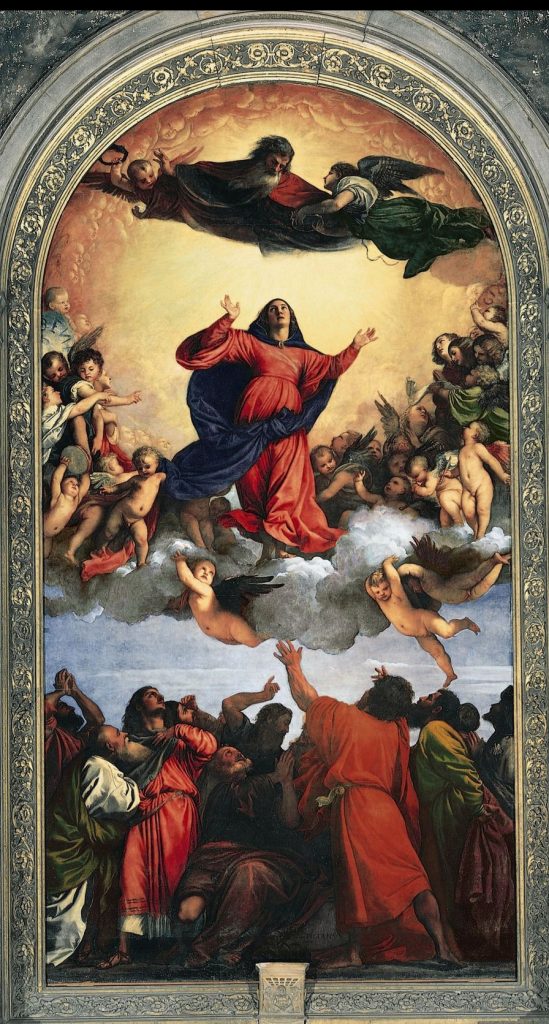
Titian’s Assumption of the Virgin Mary (Wikipedia)

August 15th is the date of the celebration of the Assumption of St Mary.  This is the day she went to heaven.  Opinion is divided as to whether she died and went straight to heaven. Or did she go directly to heaven without having to pass go?  The stories about the Virgin Mary were a big part of the controversy in the Reformation. Protestants did not find evidence in the Bible supporting many of the tales they had been told by the clergy.  Once they could read the Bible in their own language they were able to assess the evidence for themselves.

August 15th was taken as a day off in the Medieval oeriod.  My post is inspired by Octavia Randolph who has an excellent web site with a fine post on Anglo Saxon Slavery. You can read the post here: https://octavia.net/slavery-in-anglo-saxon-england.  But what particularly caught my attention was the excerpt from King Alfred the Great’s laws.  It lays down the law on the days off which should be given to freemen.

These days are to be given to all free men, but not to slaves and unfree labourers: twelve days at Christmas; and the day on which Christ overcame the devil (15 February); and the anniversary of St Gregory (12 March); and the seven days before Easter and the seven after; and one day at the feast of St Peter and St Paul (29 June); and in harvest-time the whole week before the feast of St Mary (15 August); and one day at the feast of All Saints (1 November). And the four Wednesdays in the four Ember weeks are to be given to all slaves, to sell to whomsoever they please anything of what anyone has given them in God’s name, or of what they can earn in any of their spare time.
Translated by Simon Keynes and Michael Lapidge and taken from Octavia.net

That comes to 38 days by my reckoning.  In the UK 4 weeks off is a good average holiday entitlement.  If we add 8 bank holidays in England and Wales  that gives us 36 days off a year.  So 1500 years of ‘progress’ has given us minus 2 days, and a lot less in the USA!

How depressing!  Of course, most of these days off were lost during the Industrial Revolution and only clawed back by Trade Unions.

The days off are interesting, obviously Christmas and Easter. Harvest is more of a surprise in that one would expect to be working very hard bringing in the harvest.  But, maybe the 7 days off were given after it was brought in?

The individual days make sense as they are the feasts of major saints or festivals – so St Gregory’s Day – he being the Pope who ordered the mission to convert the English to Christianity in 597AD.  (See my post on St Gregory here).

Saints Peter and Pauls Day. St Mary and All Saints Day. I’m surprised there is no Candlemas or Michelmas.(More information about celebration of St Peter and St Paul in London in my post here)

Slaves holidays

Slaves seem to only have 4 days however.  These are the Wednesday in Ember Weeks.  Ember Days and Ember Weeks were Fasting Days, either named after a latin phrase for fasting or from Ymbren which is the Anglo-Saxon for circuit or revolution.  It is thought that the days were originally tied to the ‘cycle of life’ that it part of each year.  But later on became more liturgical and based on fasting.

They may have been founded in Roman roots. There only seems to be 3  in the days of the early church, rising to 4 ember weeks by the late 5th Century. They were brought to Britain by the mission of St Augustine, under Pope Gregory.  These seem to be the dates:

December the week starting after St Lucy’s Day (Dec 13th)

March between 1st and 2nd Sunday

June between Pentecost and Trinity Sunday

September 3rd Week ending at Michaelmas.

So, the poor old slaves get 4 Wednesdays off in the year!  This is presumably because the work of the household continues throughout the year, irrespective of season or festival.  Maybe they are given a day off on the fasting days because household work can be put off as everyone is fasting?

But the laws make it clear: this is the time the poor slaves can work for themselves and make a little on the side.

Do have a look at Octavia’s web site which for more on slaves in the Anglo-Saxon period.

First published in August 2025

St Clare’s Day & the Minoresses of St. Clare August 11th

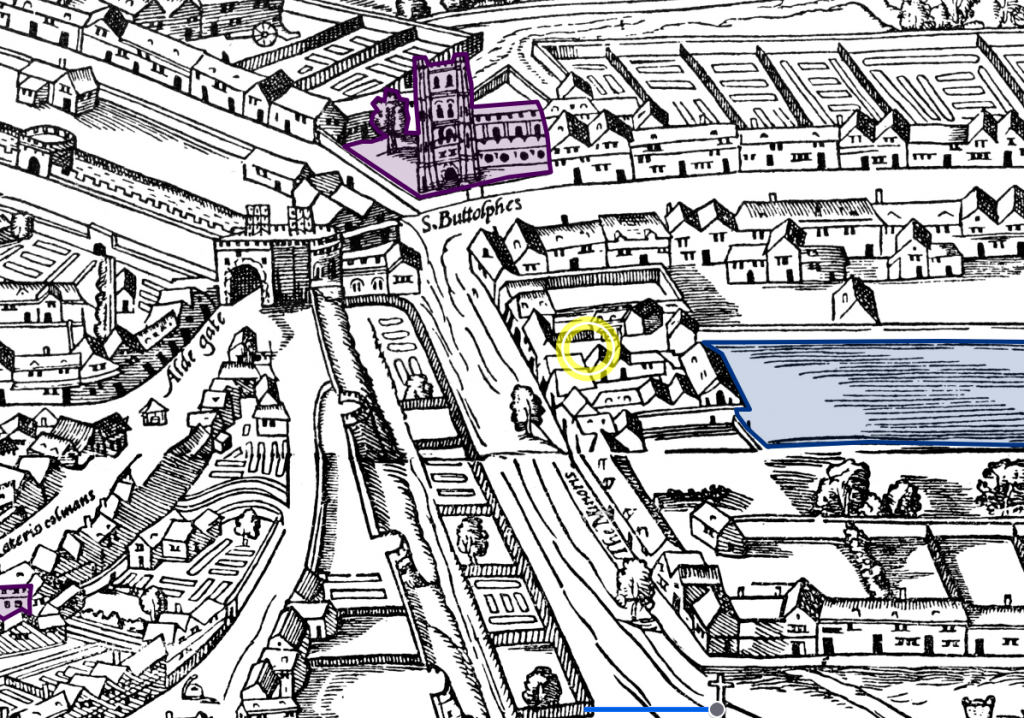
The ‘Agas’Map of 16th Century Map of London showing the Abbey of the Minoresses of St Clare with the yellow circle and St Botolphs in mauve just outside Aldgate. from the Map of Early Modern London project.

Today is the Feast day of St Clare of Assisi.  An area of the City of London, called the Minories, is still to this day named after the Abbey of the Minoresses of St. Clare without Aldgate. This was was founded in 1294. The Abbey was part of the Order of St Clare or the Poor Clares as they were known . A minoress was a nun from the Order of Friars Minor (aka Franciscans) .who were also known as the Minoresses of St Clare.

Fresco of Saint Clare and sisters of her order, church of San Damiano, Assisi Wikipedia

Clare Sciffi was born in Assisi to a rich family. On Palm Sunday, 20 March 1212 Clare left her house, after refusing offers of an advantageous marriage. She had been inspired by hearing St Francis the founder of the Franciscan Monks who was also from Assisi. St Francis facilitated her transfer to Benedictine Nunneries. Her sisters followed her, one renamed Agnes became an Abbess and eventually a saint in her own right. Her family tried repeatedly to take her back into secular life. Eventually, they gave in – apparently when they saw that she had cut her flowing locks off and donned a plain robe.

A small nunnery was set up for them next to the church of San Damiano. More women joined, and they became known as the “Poor Ladies of San Damiano”. They undertook to live impoverished, and secluded.

The Franciscan friars were an itinerant order where the Friars preached to the people and were supported by begging. But this was not possible for women at that time so they lived a simple life of labour and prayer.:

‘The nuns went barefoot, slept on the ground, ate no meat, and observed almost complete silence.’ Wikipedia

Here is a site that gives information about the new Museum that will be established on the site of the Poor Clares. It also gives an outline history of the site.

https://www.ianvisits.co.uk/articles/new-museum-to-show-archaeology-from-the-abbey-of-st-clare-70048/?utm_source=newsletter&utm_medium=email

The following link explores the illustrious noble women who choose to be buried in the Minories. It shows how important the Poor Clares were considered to be. It was dissolved by Henry VIII in 1539.

To read about the nearby Roman Bastion at Crosswall see my post here: