Time for a Tansy!

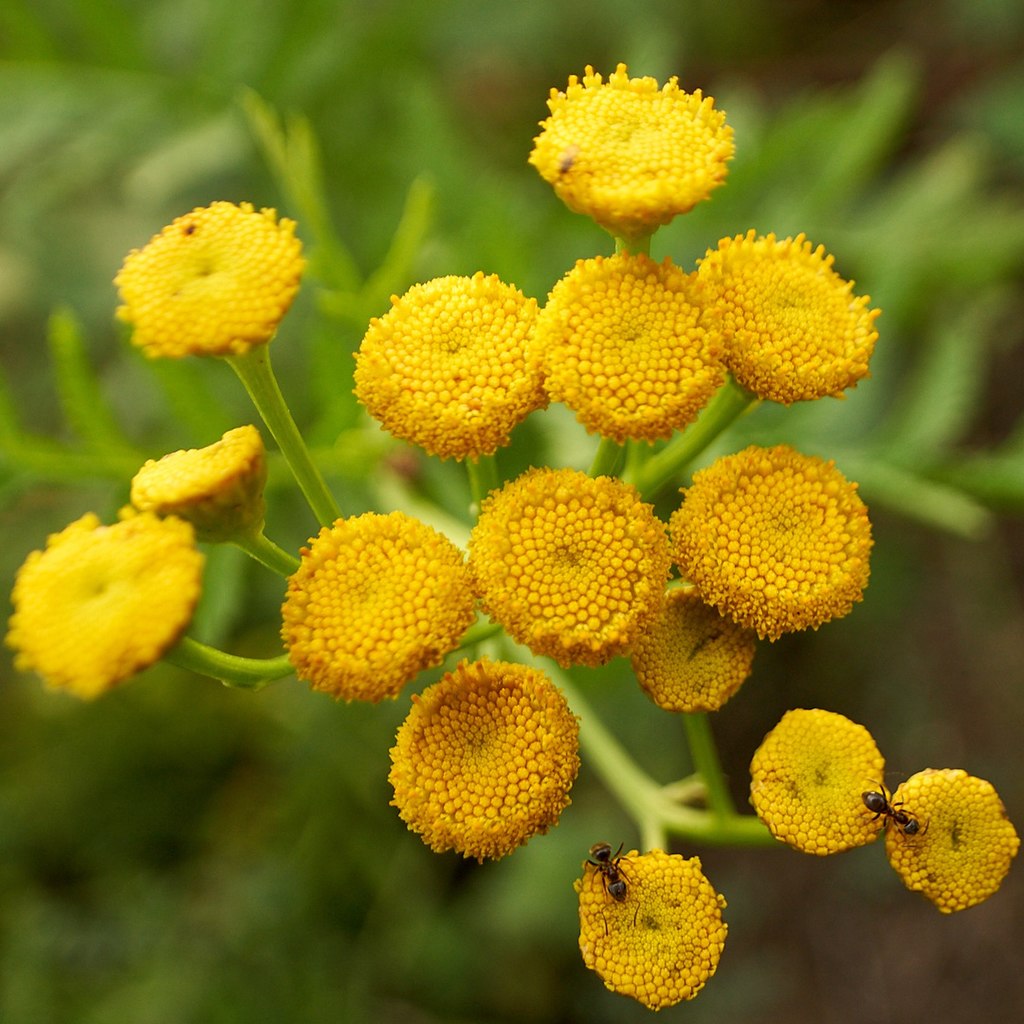
Tansy: by Georg Buzin (wikipedia)

Spring is time for a tansy, so time to bring out again the many stories behind this awesome plant.  The tansy not flowers display a classical  Fibonacci spiral, which is two counter-rotating  logarithmic spirals.

Mrs Grieve in her Modern Herbal repeats the belief that their name derives from the Greek word for immortality ‘Athanaton’.  This might be because they grow so well that in some areas they are proscribed they are so prolific. But Tansy was supposed to have been given to Ganymede by Zeus to make him immortal. And, they were used for preserving dead bodies from corruption. So, Tansy was placed in coffins and winding sheets and tansy wreaths placed with the dead.

Its toxicity means that it repels many insects, particularly, flies and ants, and so it was used as a medieval and early modern strewing herb. And yet there are other insects that love Tansy – it seems to have a dark side and a light side.

It was collected in August (along with meadowsweet or elder leaves) and strewn on the floors of houses (and the ‘thresh’ was held in by the threshold). But it was also placed between mattresses to keep away bugs. People rubbed meat with Tansy to keep flies off. It is now used as a natural protection for crops from insects to reduce the amount of artificial pesticides.

It was an important medical and culinary herb, said to be a substitute for nutmeg and cinnamon, and the leaves, shredded, as a flavouring for puddings and omelettes. At Easter ball games a Tansy Cake was the reward for the winners. It was symbolic of the bitter herbs eaten by the Israelites at Passover. Tansy was thought to be a very wholesome ingredient to eat after the sparsity of Lent and Winter, and voiding the body of the worms caused by eating too many fish. It was used for expelling worms from the stomachs of children.

Interestingly it contains thujone, which is also in Wormwood, the other main herb for expelling intestinal worms. Thujone can cause convulsions, liver and brain damage if too much is taken.

In the 14th Century it was used for treating wounds. It was thought to be useful both to induce abortions but also to help women conceive and to prevent miscarriages. Culpepper and Gerard suggests the root was a cure for gout.

Here is a recipe from the ‘The Closet of Kenelm Digby Opened‘ 1669. It was essentially a form of omelette. I would not try the recipe! In the BBC documentary “The Supersizers go … Restoration“, Sue Perkins suffered from the effects of the toxic tansy.

A TANSY (Do not try this at home!)

Take three pints of Cream, fourteen New-laid-eggs (seven whites put away)
one pint of juyce of Spinage, six or seven spoonfuls of juyce of Tansy, a
Nutmeg (or two) sliced small, half a pound of Sugar, and a little Salt.
Beat all these well together, then fryit in a pan with no more Butter then
is necessary. When it is enough, serve it up with juyce of Orange or slices
of Limon upon it.

Sir Kenelm Digby was a Catholic and a natural philosopher of some reputation. After his death an employee published his cookery book. His father was executed after the Gunpowder Plot, and he supported Charles 1st but found a way to work with Oliver Cromwell.

He made a great success of his idea of the ‘powder of sympathy’ – 29 editions of his book on the subject were sold. He found the powder in France and it was made with precise ‘astrological’ techniques. The most famous example of a suggested application for the powder was to win the competition for a method of working out longitude (in the 18th Century). Basically, a working method meant knowing the time, normally noon, in two different places. This allowed a triangle to be created between the two points and the Sun which allowed the distance between the two places to be discovered by triangulation. Clocks were not accurate enough (yet) to help so Digby’s famous powder of sympathy was suggested.

This is the method:

A wounded dog would be taken on board a ship, and a bandage from the wound would be left in London. At noon in London it would be sprinkled with the powder of sympathy. The dog on the ship would, perforce, yelp when the powder was administered on the bandage in London and so the Captain would know when it was noon in London! Digby was long dead when the application for the prize money was made and rejected.

‘Longitude’ by Dava Sobel tells the story of the discovery of a clock-based method of calculating longitude.
Walks 2023 – February – June

I am working on a new season, and these are the walks for the first six months – but more to come.

The Archaeology Of London Walk Sunday 2nd April 2023 11:15 Exit 3 Bank Underground Station To book
Jane Austen’s London Sat 2.30 pm 2nd April 2023 Green Park underground station, London (north exit, on the corner). To book
Chaucer’s Medieval London Guided Walk Aldgate Tube Sunday 16 April 2023 11.30pm To book
Chaucer’s London To Canterbury Virtual Pilgrimage Sunday 16th April 2023 7.30pm To book
The Peasants Revolt Anniversary Guided Walk Aldgate Underground Sunday 11th June 2023 10.45am. To book
The Peasants Revolt Anniversary Virtual Tour Sunday 11th June 2023 7.30pm To book

For a complete list of my walks in 2023 look here

Upcoming December 2022 Virtual Tours

I have began to prepare my next set of tours both virtual and real. But here are the first two virtual tours, both with a seasonal theme.

The London Winter Solstice Virtual Tour

Wed, 21 Dec 2022 19:30

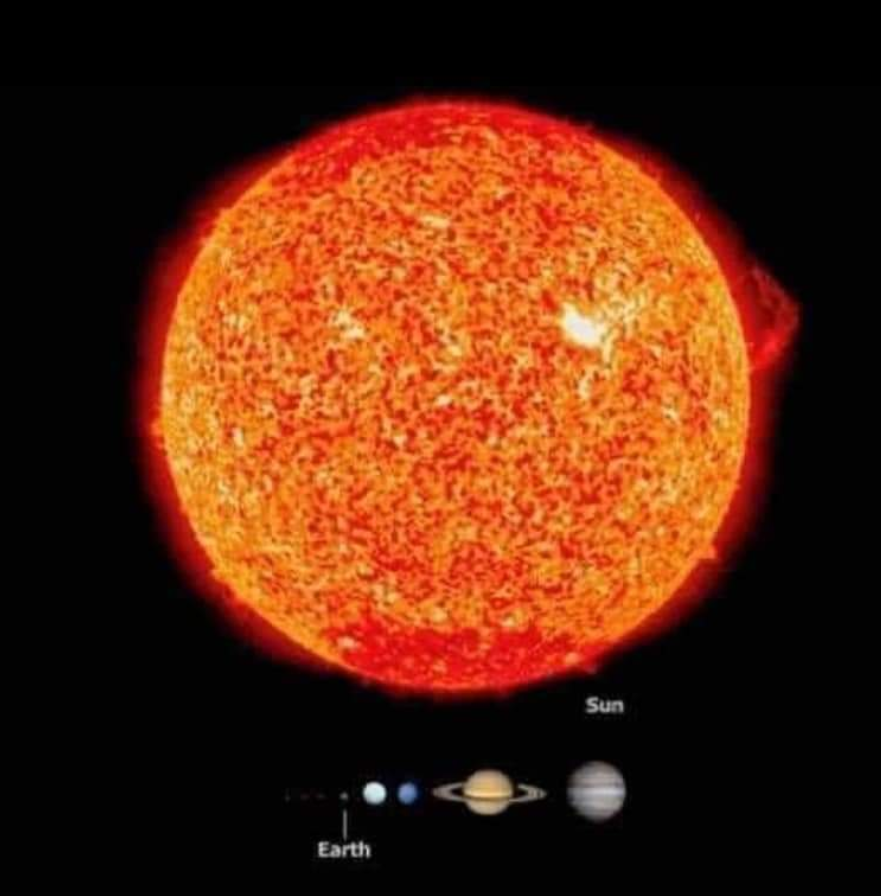
The Sun & the Solar System


We explore London’s History through its celebrations, festivals, calendars and almanacs of the Winter Solstice


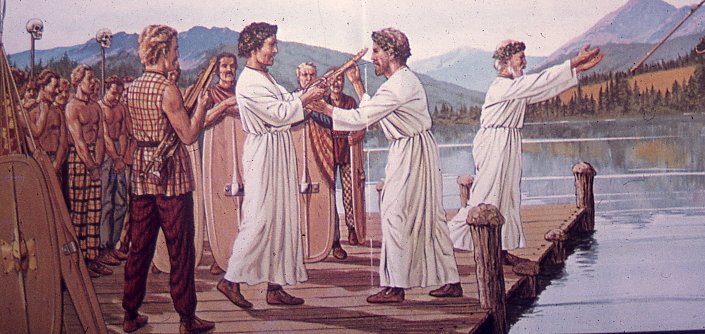
Winter Solstice festivals have been a time of review, renewal and anticipation of the future from time immemorial. The Ancient Britons saw the Solstice as a symbol of a promise of renewal as the world entered bleak mid winter. The Roman season was presided over by Janus, a two headed God who looked both backwards and forwards, and Dickens based his second great Christmas Book on the renewal that the New Year encouraged.

We look at London’s past to see where and how the Solstice might be celebrated. We also explore the different Calendars – the Pagan year, the Christian year, the Roman year, the Jewish year, the Financial year, the Academic year and we reveal how these began. We look at folk traditions, Medieval Christmas Festivals, Boy Bishops, Distaff Sunday and Plough Monday, and other London winter traditions and folklore.

At the end we use ancient methods to divine what is in store for us in 2022.

To Book:

CHRISTMAS WITH JANE AUSTEN VIRTUAL LONDON TOUR

Friday 23 December 2022 7.30pm

We look at how Jane Austen spent Christmas and at Georgian Christmas traditions and amusements.

“It is a truth universally acknowledged, that a Jane Austen devotee in possession of the good fortune of a couple of free hours must be in want of this virtual walk.”

This is a special walk, which looks at the traditions of Christmas during the Regency period and how Jane Austen might have celebrated it. It will give some background to Jane Austen’s life and her knowledge of London. We used her novels and her letters to find out what she might have done at Christmas, but also at how Christmas was kept in this period, and the range of ‘Curiosities, Amusements, Exhibitions, Public Establishments, and Remarkable Objects in and near London available to enjoy.

This is a London Walks Guided Walk by Kevin Flude, Museum Curator and Lecturer.

Review: ‘Thanks, again, Kevin. These talks are magnificent!’

To Book:

Walks coming up this Weekend!

ROMAN LONDON – A LITERARY & ARCHAEOLOGICAL WALK

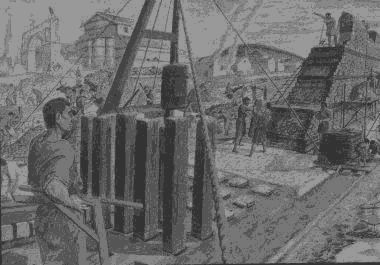
Reconstruction View of Roman Riverside Wall being built

Saturday 30 October 20/22 11.30 am Monument Underground Station

This is a walking tour features the amazing archaeological discoveries of Roman London, and looks at life in the provincial Roman capital of Londinium.

To book

Myths, Legends & Halloween Walk

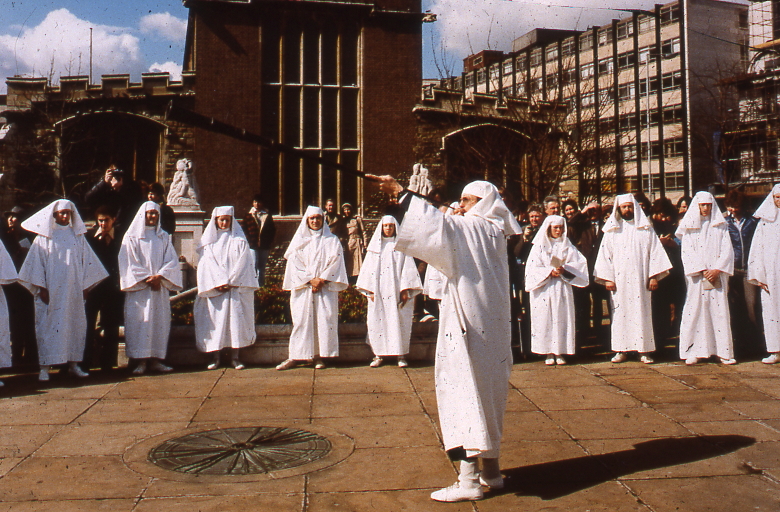
Druids at All Hallows, by the Tower

Sunday 30th October 2022 2.30pm Tower Hill Tube

The walk tells the story of London’s myths and legends and the celtic origins of Halloween

To book

Myths, Legends & Halloween Virtual Tour

MONDAY 31st October 2022 7.30pm

The tour tells the story of London’s myths and legends and the celtic origins of Halloween

To book

St. John’s Day & Summer Solstice June 24th

Hark! hark! The lark at heaven’s gate sings, And Phoebus ‘gins arise, His steeds to water at those springs On chalic’d flowers that lies; And winking Mary-buds begin To ope their golden eyes; With everything that pretty is, My lady sweet, arise: Arise, arise.
Cloten Scene III Cymberline

Arise, O Sun!
Let the Darkness of Night
Fade before the beams of your glorious Radiance

Midsummer, astronomically, is 21st June.  So, summer has started. But, meteorologically speaking it has been here since the beginning of June.

In Christian London celebrations were at their height on the Church’s Midsummer’s Day, 24th June, on the Vigil and Day of St John the Baptist (23rd, 24th June). Stow points the way:

‘every mans doore being shadowed with greene Birch, long Fennel, Saint John wort, Orpin, white Lillies, and such like, garnished upon with Garlands of beautiful flowers, had also Lampes of glasse, with oyle burning in them all the night, some hung out braunches of yron curiously wrought, contayning hundreds of Lampes, light at once, which made a goodly shew, namely in new Fishstreet, Thames Streets, &c’

Survey of London, John Stow

Bonfires from the night before were smouldering, where the ‘wealthier sort’ set out tables, furnished with ‘sweete beade and drinks plentifully’ where ordinary people could rub shoulders with the rich and ‘be merrie with them in great familiaritie’. There were large processions of ‘Captains, Lieutenants, Sergeants, Corporals, &c Wilfers, Drummers, and Fifes, ….Ensign bearers, Sword Players, Trumpeters on horseback, … Gunners, …. Archers, …Pike Men, ….Pageants, and, poor people in straw hats holding cresset lamps to make a show in exchange for a wage. All accompanying the Lord Mayor, Sheriffs each with their own Giants, Henchmen and Pageants from the Little Conduit in Cheape to Aldgate, and back via Fenchurch Street.

Midsummer was a mix of May Day, Halloween and a street festival with ‘Robin Hood games’, bale fires, the ‘summer pole’ dancing, merriment and pervading sense of the uncanny.

First published in 2022, revised and reposted in June 2024

The London Equinox and Solstice Walk

Druids at All Hallows, by the Tower
Druids at All Hallows by the Tower


Tuesday June 21st 2022 7.30 pm Tower Hill Underground Station
(meet by the Tower Hill Tram coffee stand) |


We explore London’s History through its celebrations, festivals, calendars, almanacs and its myths and legends.


As the Sun and Moon move around our skies we look at how Londoners organised and celebrated their year throughout history.

The tour is led by Kevin Flude, a former archaeologist at the Museum of London, Curator and Lecturer

One of the most popular forms of publication in London was the Almanac. It was full of seasonal advice, of prophecy, traditional wisdom, and important events past and future. Different cultures, religions and institutions had their own methods of organisation and celebrations. We explore the varied calendars that ruled people’s lives from the prehistoric period to the present.

On the way we look at customs, and folklore of the Celts, Romans, Saxons, and into the Medieval and Modern period. We look at different calendars such as the Pagan year, the Egyptian year, the Roman, Christian, Jewish, Church and Financial years. On the route we discover the people who lived in London and walk through fascinating areas with their deep histories.

This is a London Walks Guided Walk. Look at their web site for a list of other of their amazing walks

To Book: click here

PODCAST FOR MYTHS, LEGENDS & MAY DAY GUIDED AND VIRTUAL WALKS

Detail of medieval manuscript showing Giants Gog and Magog

This is the Podcast for the Myths & Legends Walk this Saturday.

To find out about the three walks this Saturday click here

CHAUCER, ST MARY-AT-HILL & ST MARGARET PATTENS

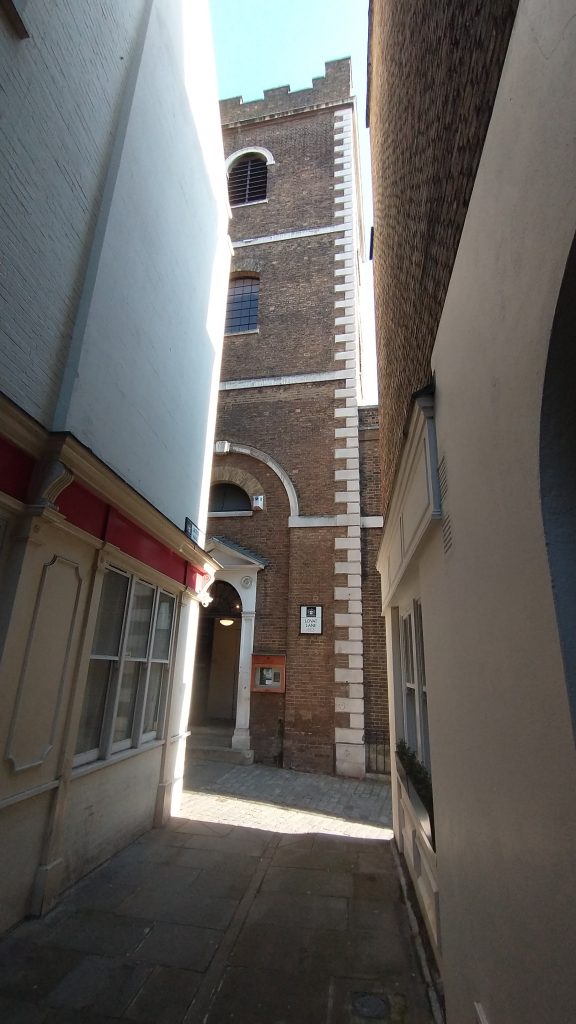
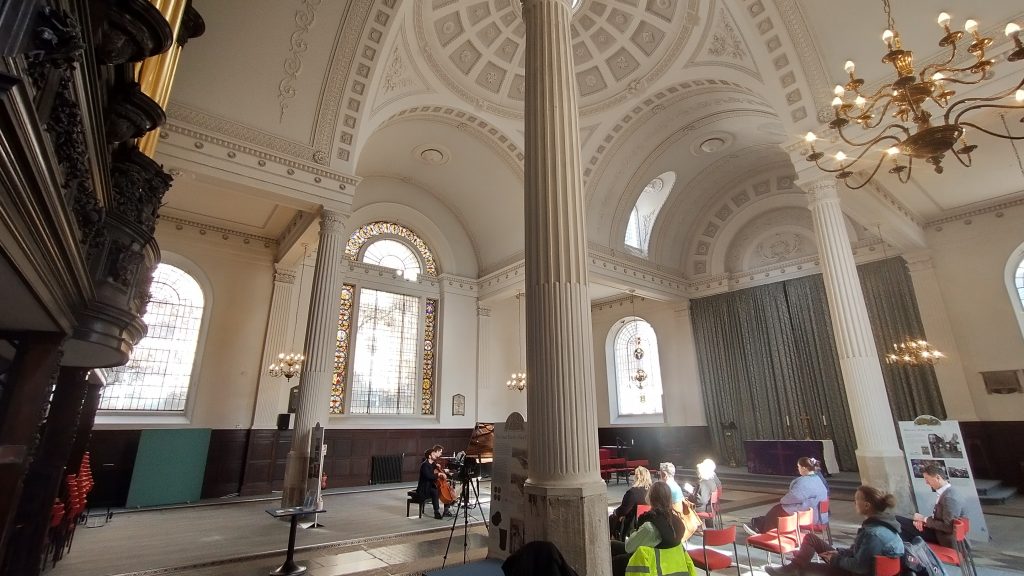
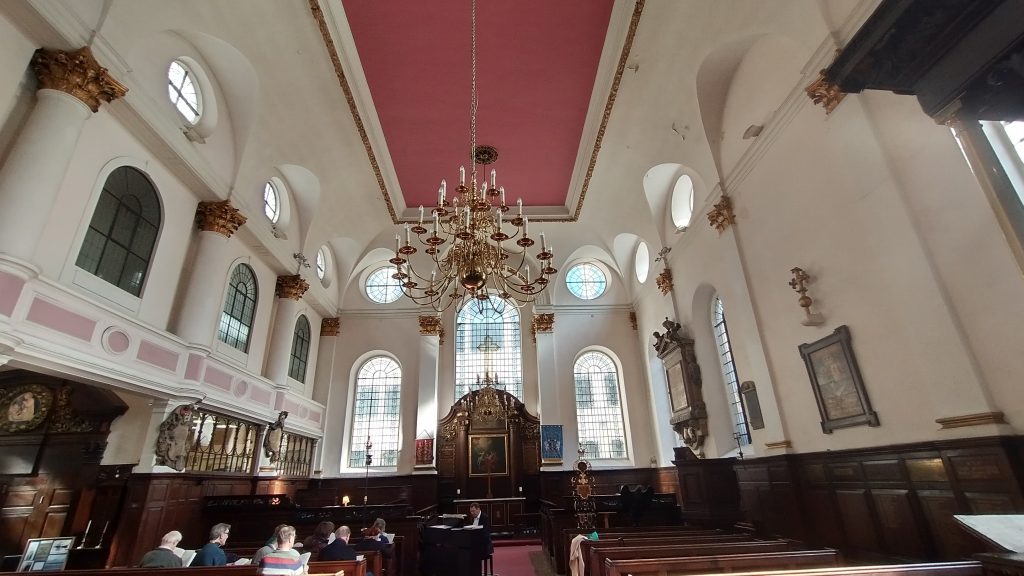
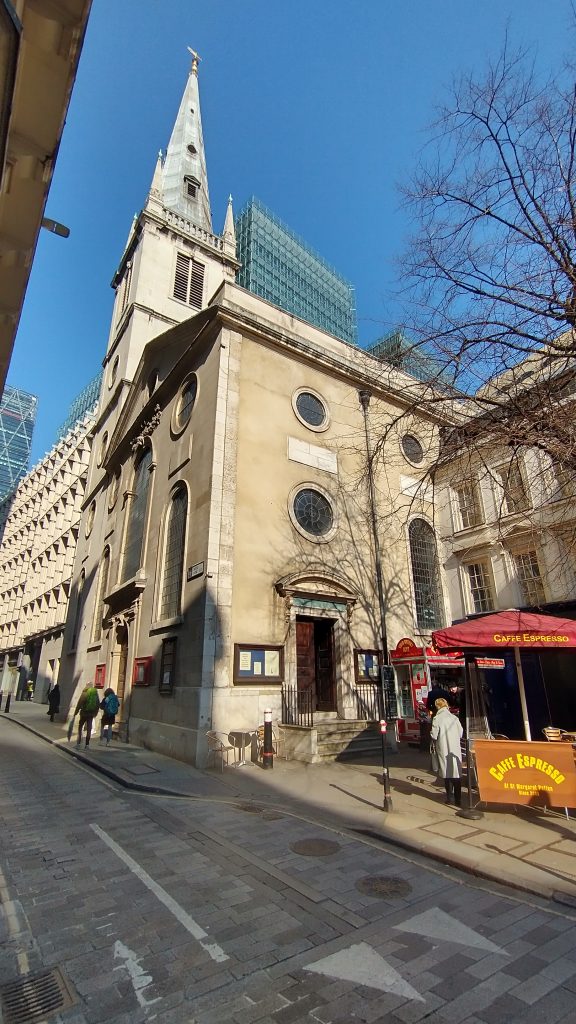
St. Mary-at-Hill, by Christopher Wren, photo K Flude

So, having finished a walk around Chaucer’s London for a mother and her two very bright home educated children. I had to walk back over London Bridge and through the City to Aldgate where Chaucer used to live (and where I had parked my bike).

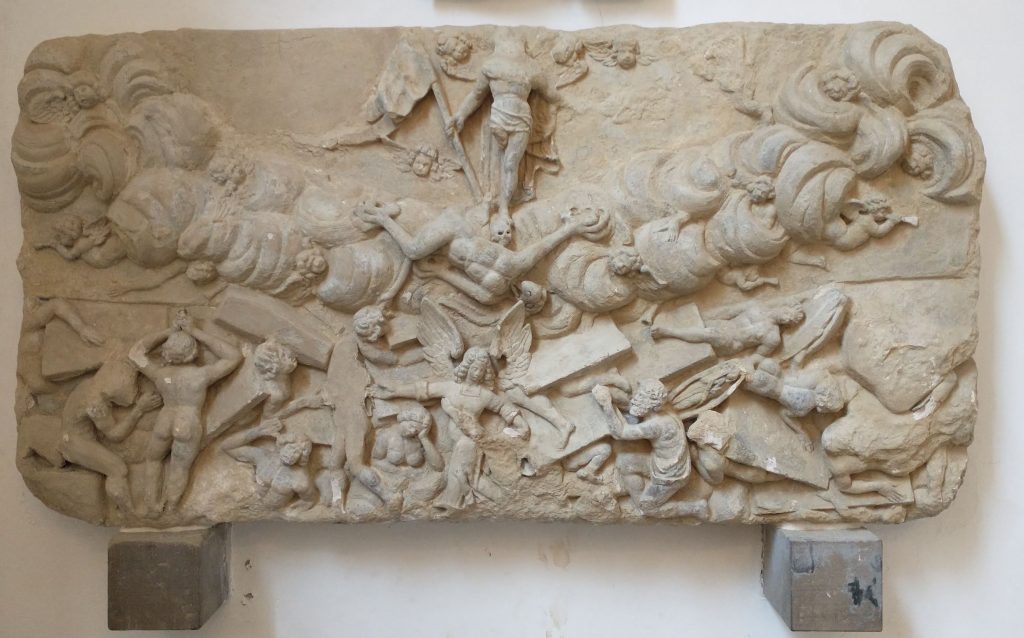
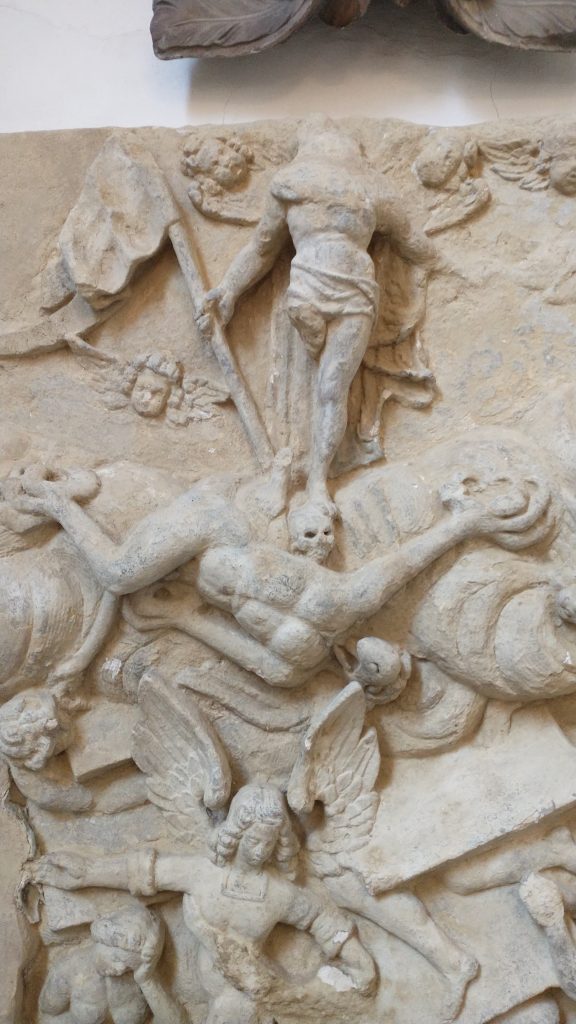
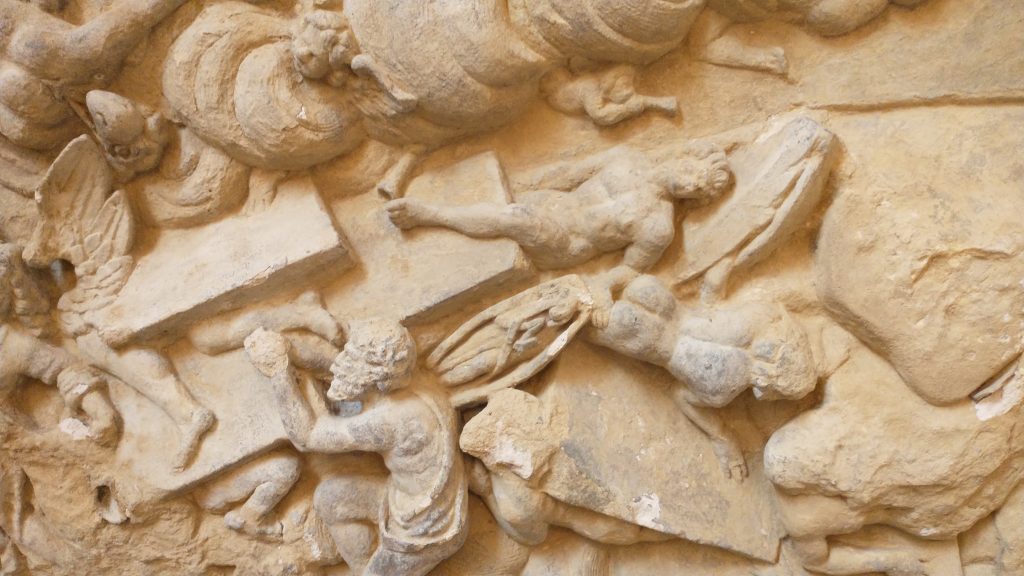
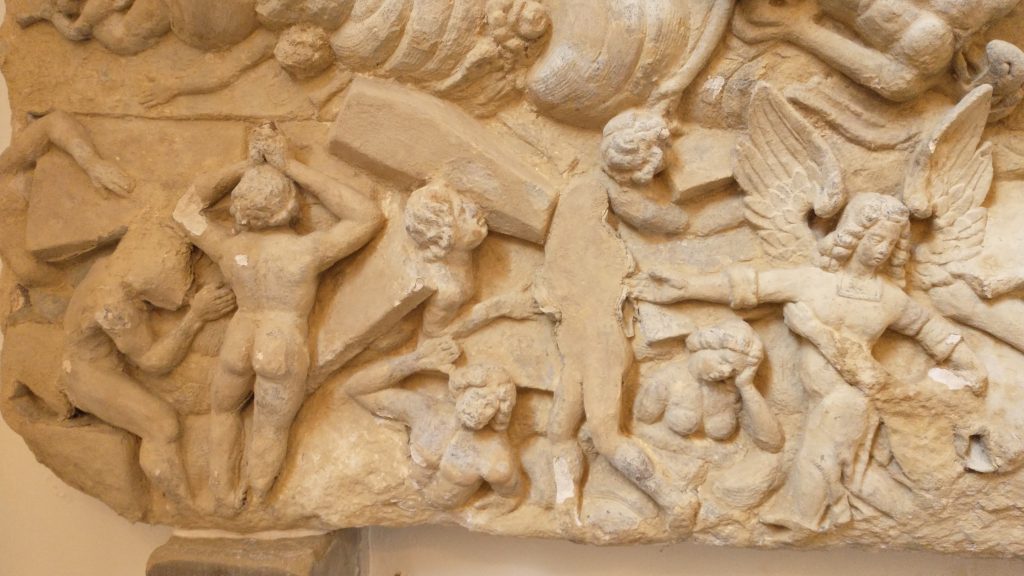
I took a couple of short cuts which I don’t usually take although often in and around this area. St Mary in Lovat Lane was open so I went in to find this amazing relief.

Judgement Day Relief Sculpture by workshop of Joshua Marshall c 1670

The panel beside it suggests its a sculpture of hope. Well yes, of sorts, if by hope you mean, facing your maker. It represents scenes from the end of days from the Book of Revelation. Jesus stands on a skull, trampling upon Satan, and below the heavenly clouds the Archangels, direct the newly risen from the coffins and graveyards to the Day of Judgement.

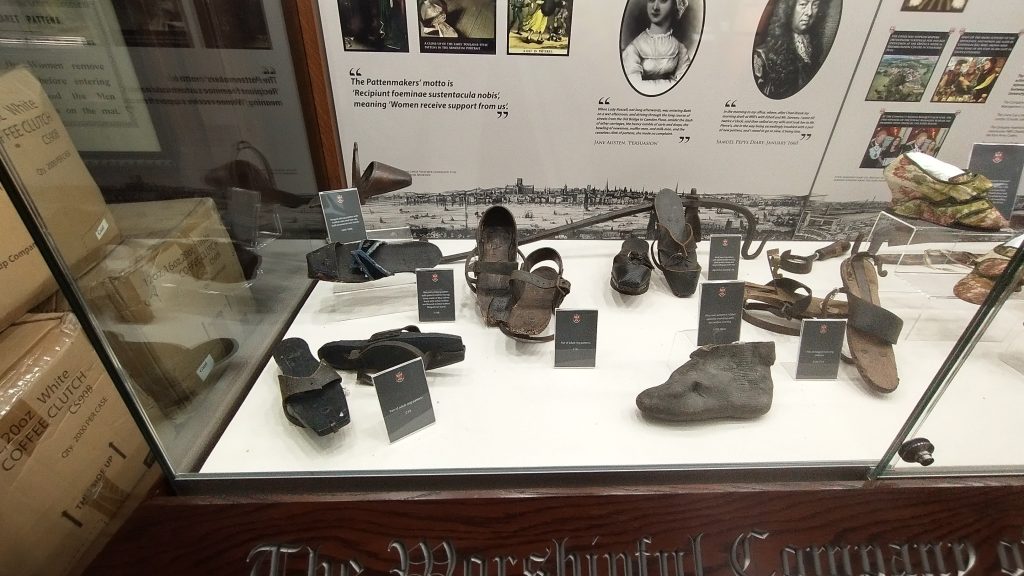
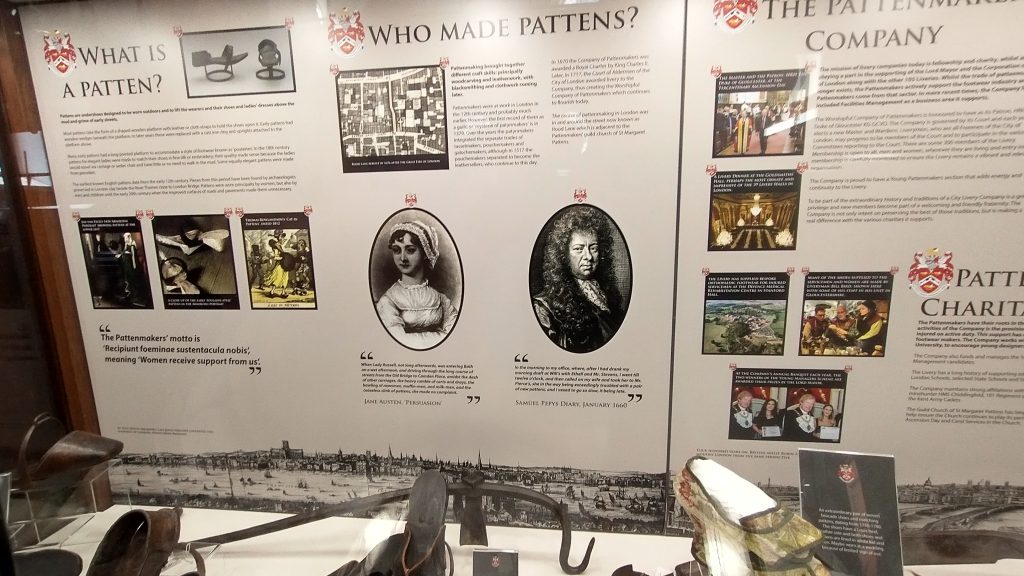
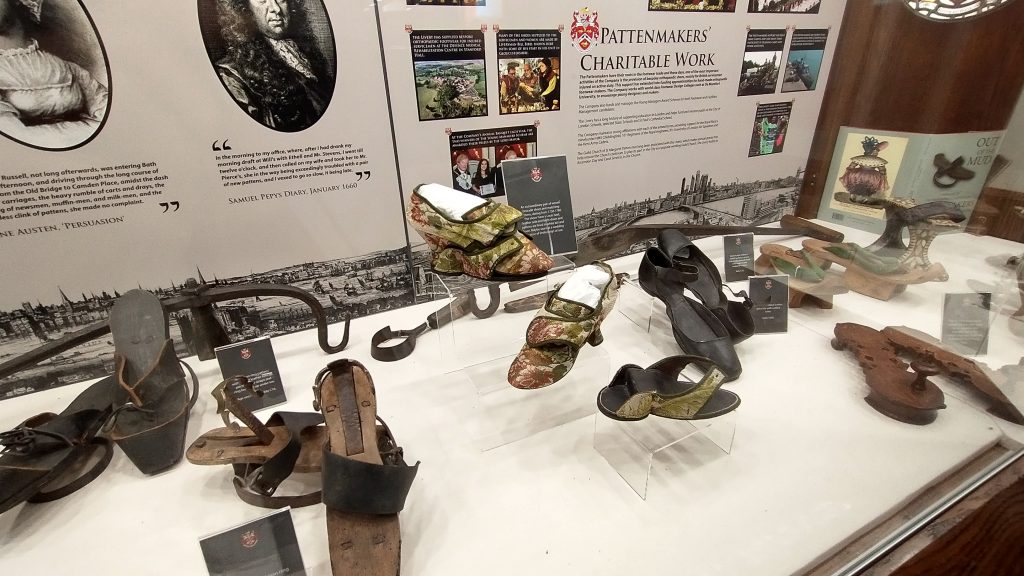
I then went past St Margaret Pattens, another Wren Church and was delighted to see a little display on pattens – overshoes worn to keep shoes clean. My ancestor was a beadle for the Patten makers.

DECEMBER – THE MONTH OF ADVENT OF ‘EXPECTANT WAITING’ LOOKING FORWARD TO CHRISTMAS, YULE, SATURNALIA SOLSTICE

Text has been transferred to two pages:

NOVEMBER 27th – NOVEMBER 30TH St Andrews

27th Eels This content has now been moved to how-to-take-eels-in-winter-eel-pies-and-islands-28th-november

28th November – Time to Wed before Advent

29th November To make a Dish of Snow This content is moved to Ice-houses-and-how-to-make-a-dish-of-snow/

30th November St Andrew’s Day

One of the first Apostles. It seems all Christian martyrs have to be killed in a different grizzly way and Andrew was martyred on a X-shaped cross. As he was formerly a simple fisherman so patron of fishermen.

Celebrate with a Haggis and a Whisky!

In Kent and Sussex Andrewtide gave the right to hunt squirrels, and in Hasted’s History of Kent (1782) it allowed the ‘lower kind’ to form a lawless rabble hunting any manner of hares, partridges and pheasants.

The sort of squirrel that might deserve hunting? Cheeky devil.