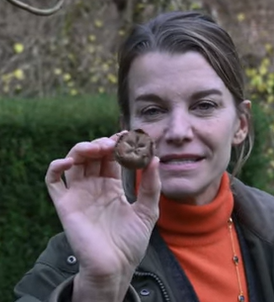
Detail of photo from the American Viscountess showing a medlar (link to the site below:)
Medlars were a very common and useful fruit particularly in the Medieval and Early Modern period. They are best harvested after the first frosts, although some say harvest in late October and store them because they can only be eaten when they are rotten and ‘bletted’. They also store well. They, therefore, provide a source of winter sweetness when there were few other fresh sources available.
They are from the Rosaceae family which includes apples, pears, rosehips and quinces. The English called them ‘open arses’ or ‘dog’s arses’ or ‘granny’s arses’ because of the way they looked until the more polite French name the Medlar caught on.
Shakespeare uses both words and uses their sexual connotations as they were thought also to look like female genitalia. A medlar was also a name for a prostitute. So in Romeo and Juliet this speech by Mercutio to Romeo and their mates contains some very bawdy thoughts:
If love be blind, love cannot hit the mark. Now will he sit under a medlar tree And wish his mistress were that kind of fruit As maids call medlars when they laugh alone. O, Romeo, that she were, O that she were An open-arse and thou a poppering pear!
RJ 2.1.33
I think you can also see how good Shakespeare was at making his allusions available to all classes. For the sophisticated he begins with the reference to the French medlar and in case the groundlings are missing out throws in the ‘open-arse’ so they know what he is alluding to.
This is the 300th Post on this my ‘new’ blog. I thought I would mark it by a reminder of what I am trying to do with it.
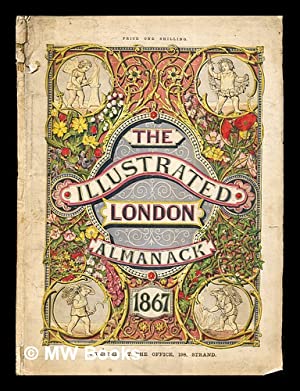
Over the years I have given a lot of walks on special occasions: Christmas, New Year, Halloween,Easter, May Day etc. as well as my regular ‘Myths, Legends of the Archaeological Origins of London Walk’. I have always had an interest in the Celtic Year, and when researching for my New Year’s Walks I came across Almanacks, and the more I found out about them the more I plundered them for content! I found that one third of books sold in London in the early modern period were Almanacks. That is how important they were.
So, I decided to create an ‘Almanack of the Year’ which changed title to an ‘Almanack of the Past’. In particular, what I am hoping to do is to create a London Almanack of the Past, where each day is remembered by an interesting and relevant post with a view to enlightening our understanding of London’s past.
Content is around these ideas and themes:
Folklore Seasons & Nature Measurement of Time Calendars Religion Mythology Legend Anniversaries of Famous & Important events in the past Historical & Archaeological news News of my Walks
What I am aiming for is a really focussed London version of an Almanack of the Past. I need a good entry for every day of the year, and I’m hoping to do that over a three year period, and then get it published.
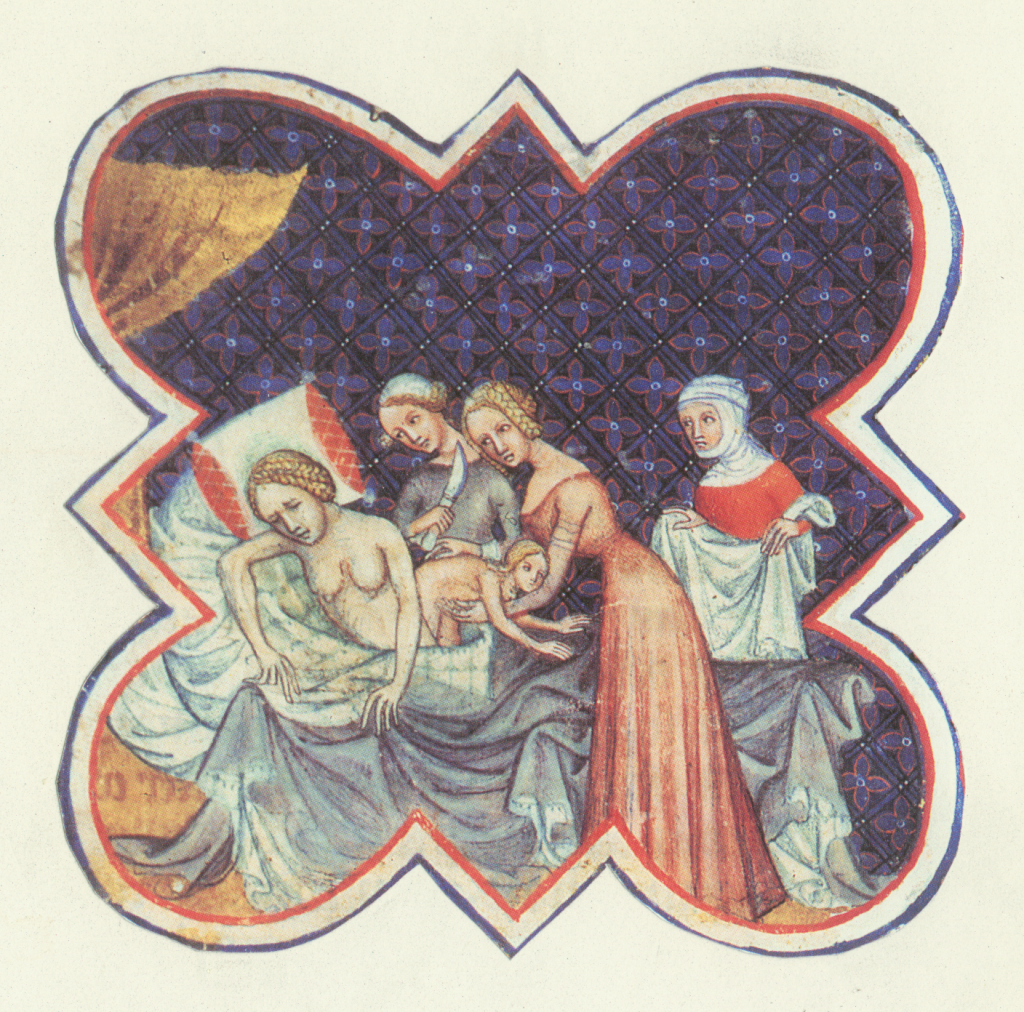
1375, French Caesarian Birth, (most likely to have killed the mother or be performed when she was already dead or dying.)
When Britain reluctantly joined the Gregorian Calendar, in 1752, we lost 11 days, so if you add 11 to 31st December you get to New Year Old Style. You can do this with any date, and when celebrating feel you are being really authentic.
So, anything you did on the New Year’s Eve New Style (31st Dec). you can do today – except, of course, you need to convince your boss of the illegitimacy of the Gregorian Calendar, when you call in sick because of a hangover! In case you have forgotten what you should be doing on New Year’s Eve you can look here to look back on for New Year’s Eve, New Style.
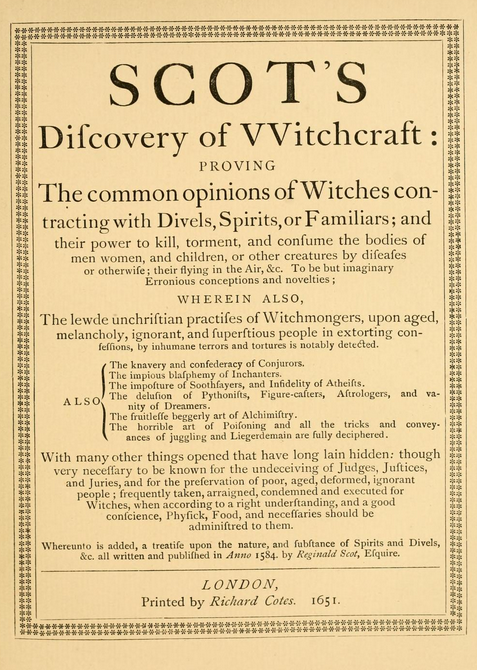
It’s a particularly ‘witchy’ evening because it is the traditional Eve, not the new-fangled one. Reginald Scot in his ‘Discovery of Witchcraft’ first published in 1584 reports
‘a charm to find who has bewitched your cattle’. Put a pair of breeches upon the cow’s head, and beat her out of the pasture with a good cudgel upon a Friday and she will run right to the witch’s door and strike it with her horns‘
When I first posted this post 2023. I did not, to my shame, know the background to the book. I assumed the author ‘believed’ this nonsense that a cow could lead you its bewitcher. On the contrary. Reginald Scot was debunking the absurd claims for witchcraft and magic. His book tries to prove that witchcraft and magic were rejected both by reason and religion. Manifestations of either were ‘wilful impostures or illusions due to mental disturbance in the observers’ .
Given the number of people who were executed as witches in the 16th and 17th Century it makes you realise that it was a very divisive topic. With only part of the country that was convinced by the QAnon like conspiracy that there are people in this world with diabolical intentions. Have a good look at the cover of this 17th Century edition of Member of Parliament Reginald Scot’s book to get an idea of his standpoint.
Carmentalia
It is also Carmentalia, the festival for the Roman Goddess of prophecy and childbirth. She was a much loved Goddess in the Roman pantheon But little is known about her perhaps because she had no clear match in the Greek pantheon.
She has a long history in Roman history being said to be the mother of…. Well this may surprise you, she was the mother of Evander. Evander is the founder of Pallantium, which was a City on the site of Rome that predated Rome!
Who knew that? (the people at Vindolanda Roman Fort know and they have a great page on Carmenta here. ) Carmenta had two sidekicks who were her sisters and attendants. Postvorta and Antevorta, They might be explained as Past and Future. Or after and before as part of her role in prophecy. Ot the two figures might represent babies that are either born head or legs first.
She was important enough to command one of the the fifteen flamen. These were priests of state sponsored religions. One of their jobs was to ensure no one came to the temple wearing anything of leather because leather was created from death, and not suitable for the Goddess of Childbirth.
Vindolanda make the point that 2% of births in the past are likely to have caused the death of the mother, and, because of a high mortality in the children, to keep a population stable a mother might have to have 5 children on average, giving her a 12% chance of death by giving birth.
Beautiful rhyme of a working boat on the Regent’s Canal, Haggerston. Video K Flude from the author’s garden
Not much time to post today as I had to move my boat to a new location. I started at 9.15pm, at Notting Hill and got the boat to Camden to find the Canal shut for major engineering work. Turned round in a small space, and a bit of trailing rope from a garden got caught in my propeller. Moored, got moved on to a suggested new site by the engineers. Found, after mooring and shutting up the shop, that the towpath was closed off and there was no way out to the rest of the world. So, as there are no mooring from Paddington to Camden had to take the boat back almost to where I started. So by 2pm had returned to within 10 minutes of my starting point…….
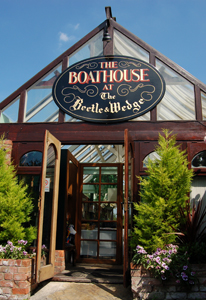
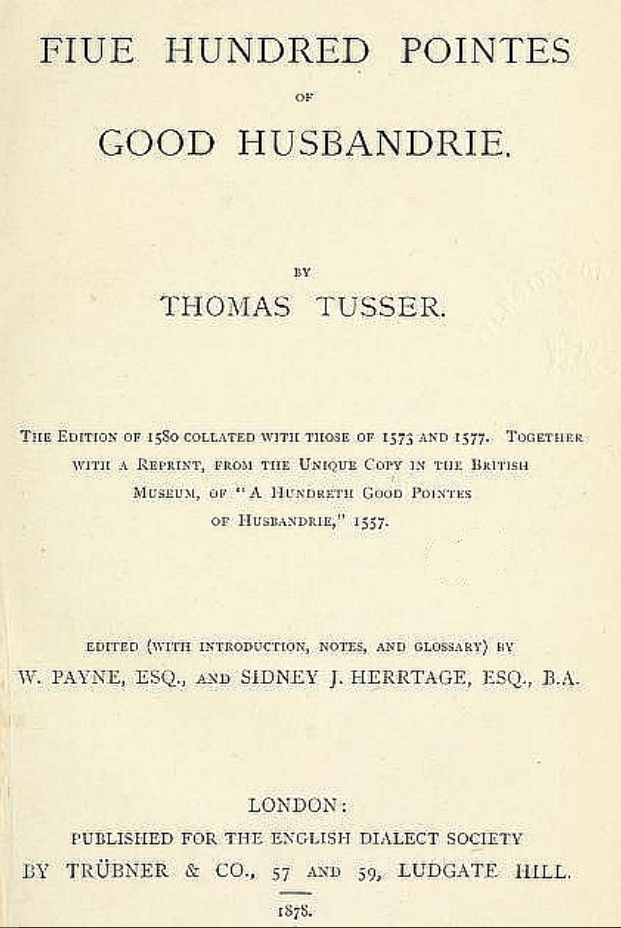
A beetle is a hammer and a wedge is used to split logs, so the first thing Tusser enjoins his readers to do for December is to stop digging and hedging and, instead, cut firewood.
He also suggests (if I read the Tudor writing correctly):
He suggests covering strawberries with straw to protect them; Making sure your dried cod and ling don’t rot. Store the products of the Orchard in the attic. Bleed the horse and help the bees with ‘liquor and honie’.
‘Thus endeth Decembers abstract, agréeing with Decembers husbandrie.’
I have began to prepare my next set of tours both virtual and real. But here are the first two virtual tours, both with a seasonal theme.
The London Winter Solstice Virtual Tour
Wed, 21 Dec 2022 19:30
The Sun & the Solar System
We explore London’s History through its celebrations, festivals, calendars and almanacs of the Winter Solstice
Winter Solstice festivals have been a time of review, renewal and anticipation of the future from time immemorial. The Ancient Britons saw the Solstice as a symbol of a promise of renewal as the world entered bleak mid winter. The Roman season was presided over by Janus, a two headed God who looked both backwards and forwards, and Dickens based his second great Christmas Book on the renewal that the New Year encouraged.
We look at London’s past to see where and how the Solstice might be celebrated. We also explore the different Calendars – the Pagan year, the Christian year, the Roman year, the Jewish year, the Financial year, the Academic year and we reveal how these began. We look at folk traditions, Medieval Christmas Festivals, Boy Bishops, Distaff Sunday and Plough Monday, and other London winter traditions and folklore.
At the end we use ancient methods to divine what is in store for us in 2022.
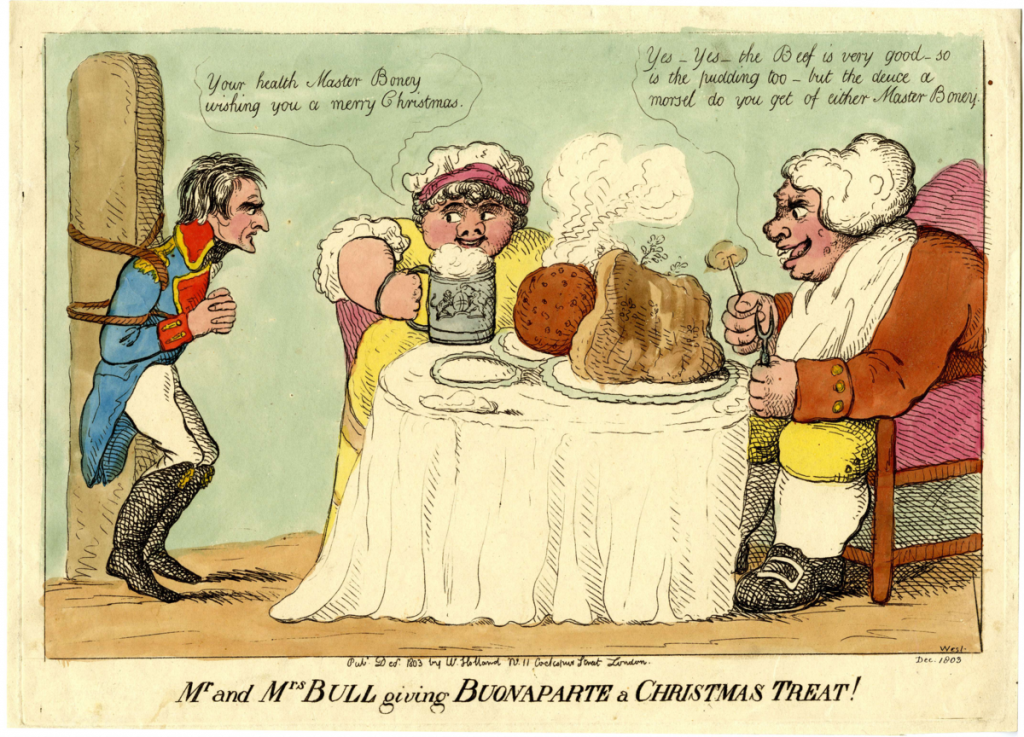
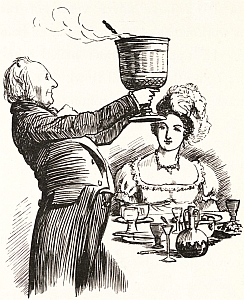
By William Holland 1803From ‘Old Christmas’ by Washington Irvingby Tjana Drndarski-via unsplash
Friday 23 December 2022 7.30pm
We look at how Jane Austen spent Christmas and at Georgian Christmas traditions and amusements.
“It is a truth universally acknowledged, that a Jane Austen devotee in possession of the good fortune of a couple of free hours must be in want of this virtual walk.”
This is a special walk, which looks at the traditions of Christmas during the Regency period and how Jane Austen might have celebrated it. It will give some background to Jane Austen’s life and her knowledge of London. We used her novels and her letters to find out what she might have done at Christmas, but also at how Christmas was kept in this period, and the range of ‘Curiosities, Amusements, Exhibitions, Public Establishments, and Remarkable Objects in and near London available to enjoy.
This is a London Walks Guided Walk by Kevin Flude, Museum Curator and Lecturer.
Review: ‘Thanks, again, Kevin. These talks are magnificent!’
So, my Halloween walks depend heavily on almanacs for at least some of their content. I explain almanacs on another page, but they were a way of helping people keep track of the year, both reviewing past events, and looking forward to future ones.
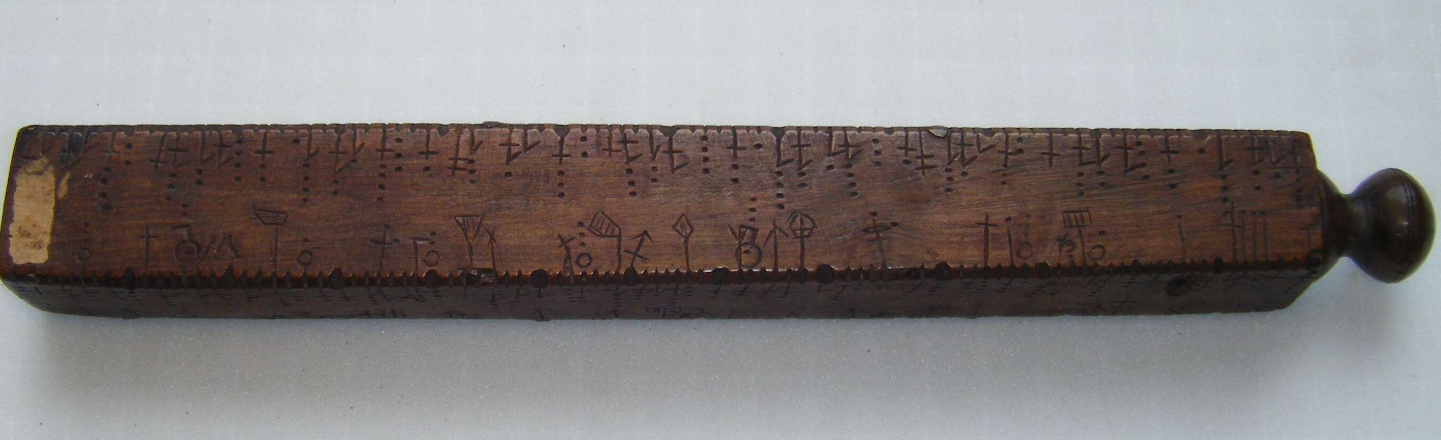
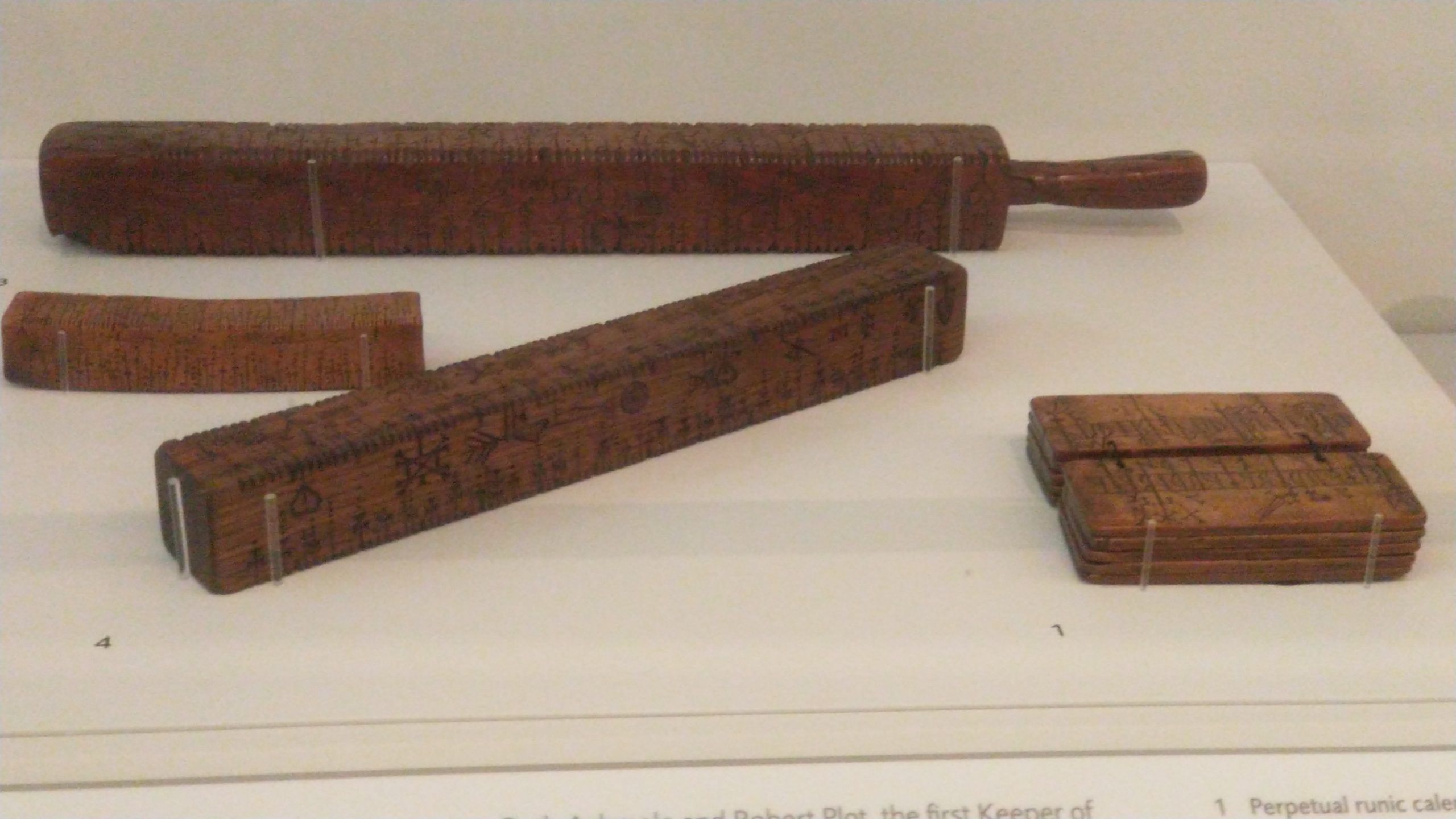
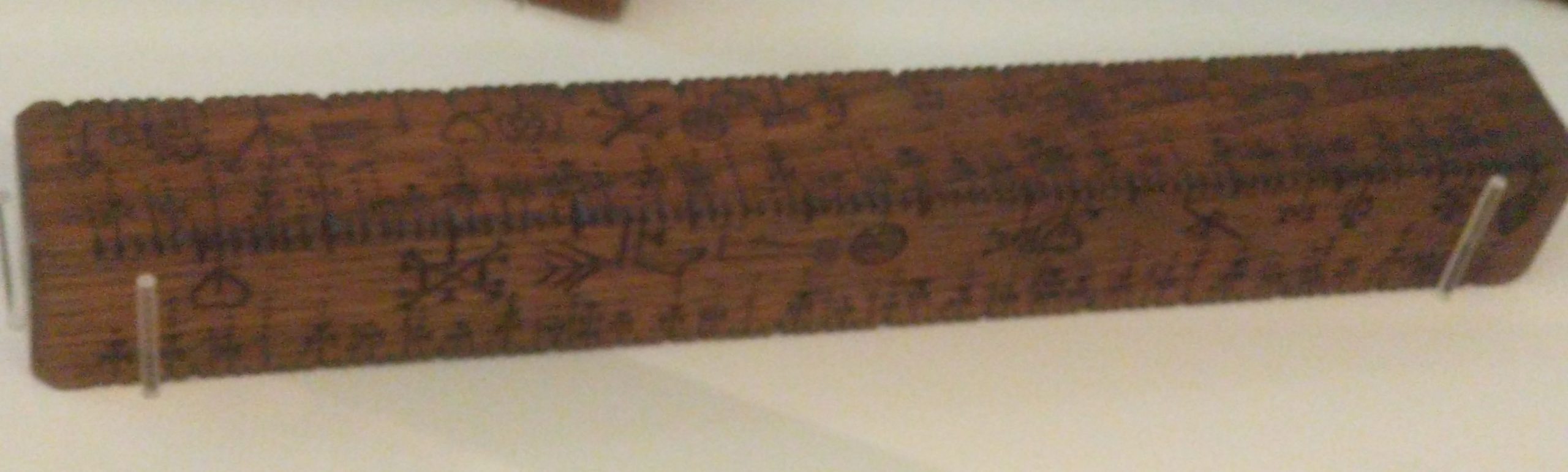
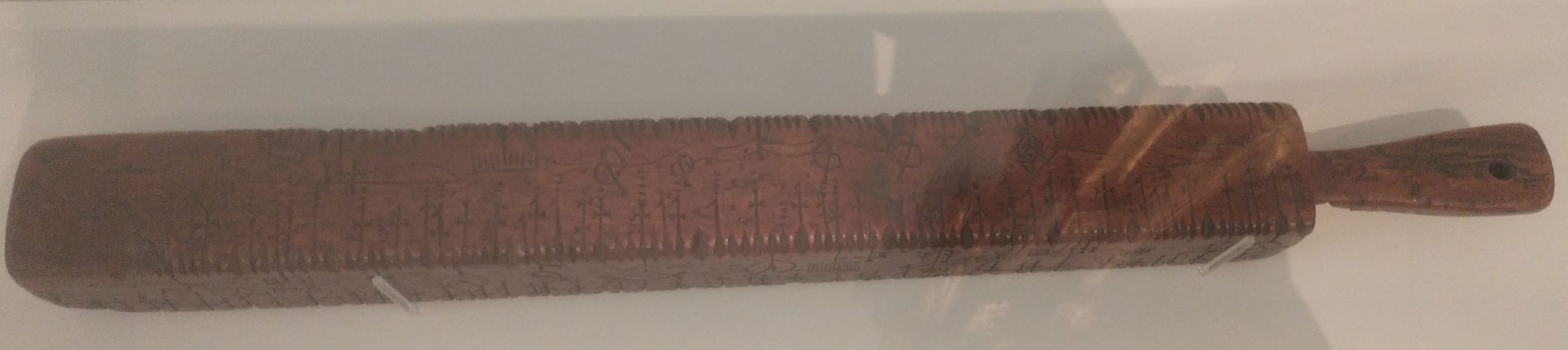
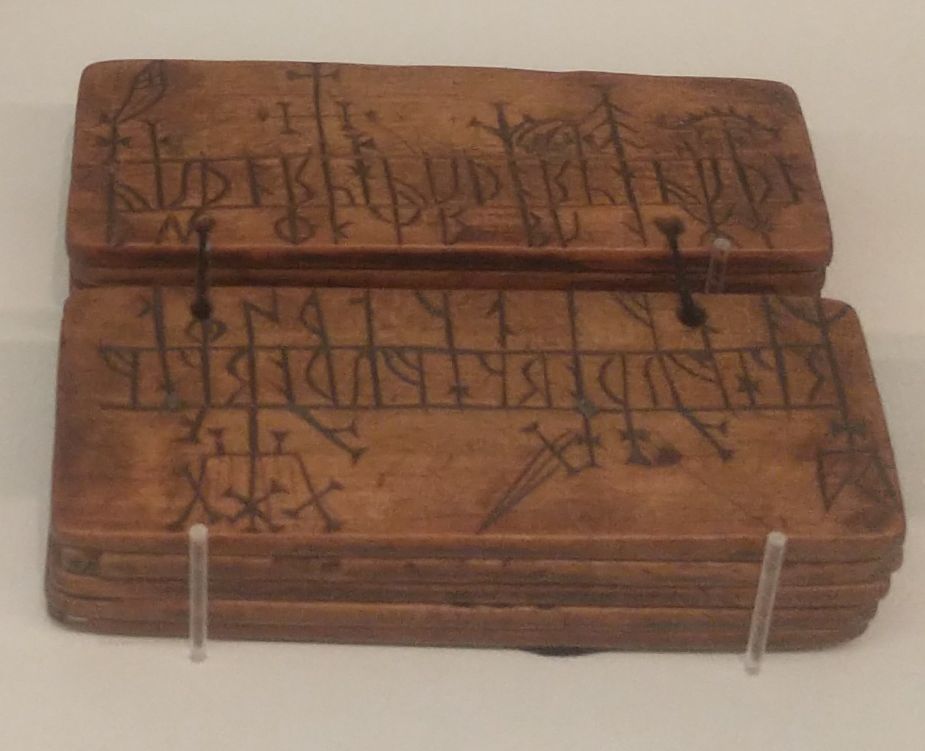
One third of books published in London in the Stuart period were almanacs, but if you could not read or did not have the money you could buy or make a cog almanac.
British Museum, 17th CenturyAshmolean MuseumAshmolean MuseumAshmolean MuseumAshmolean MuseumClog Almanacs
So, I was printing out some images to show my walkers and thought why not make one? So I did.
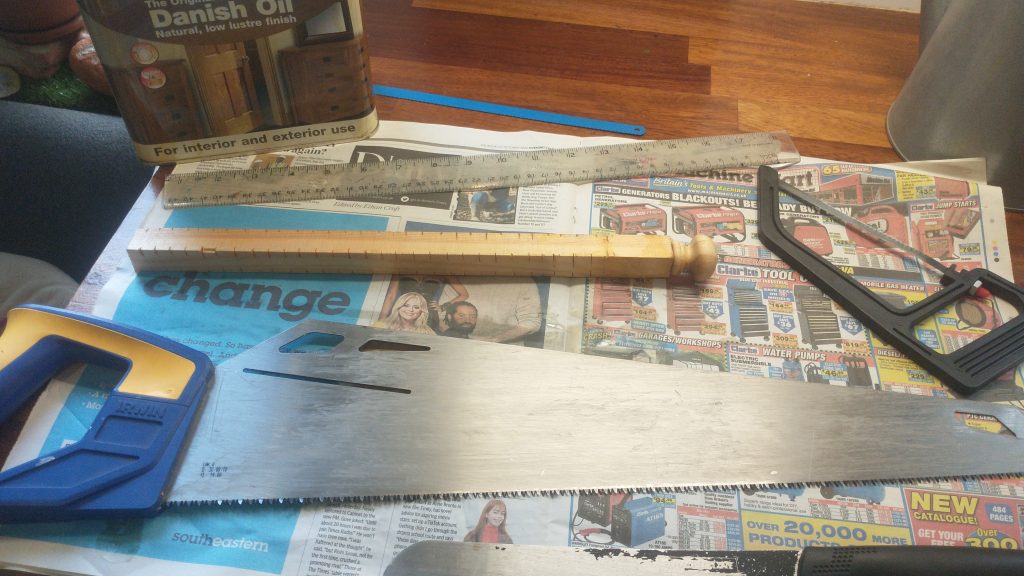
Home made Clog Almanac (not yet finished!)
Bit of wood, saw off 35cms. Each edge needs to represent a quarter of the year, so each centimetre mark represents 3 days, and one day extra 30 * 3 +! = 91 days per quarter. Use bread knife or hacksaw to mark the days off. Buy wooden drawer knob and double ended screw, fit to end of the piece of wood, stain or vanish the wood.
Then I need to find out what all the symbols mean, but they represent notable days like Saint’s Days (Michaelmas, Martinmas, Candlemas etc. , equinoxes, solstices, Christmas, Easter etc. etc..
Reconstruction View of Roman Riverside Wall being built
Saturday 30 October 20/22 11.30 am Monument Underground Station
This is a walking tour features the amazing archaeological discoveries of Roman London, and looks at life in the provincial Roman capital of Londinium.
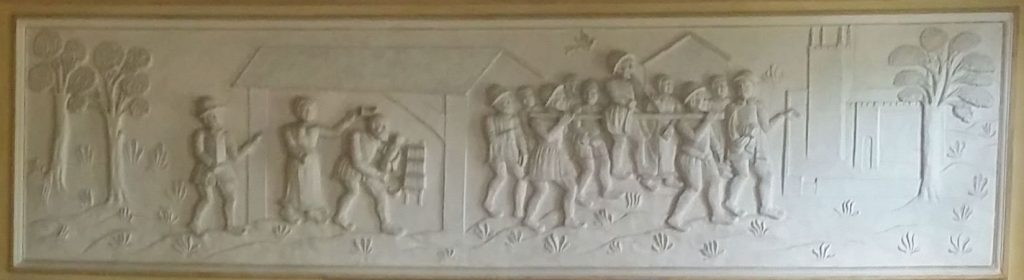
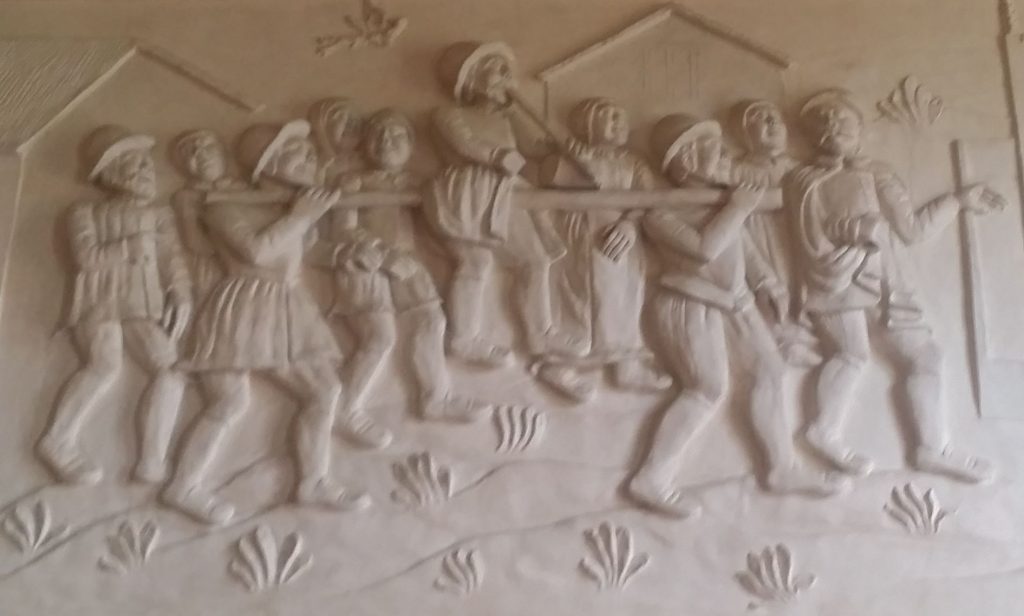
Skimmity Ride. Montecute House . Early 17th Century Plaster decoration
I wrote about the custom of Wife-Selling which appears as the main plot driver in Thomas Hardy’s 1886 masterpiece ‘the Mayor of Casterbridge’. Later in the book another folk custom brings the erstwhile Mayor to the brink of suicide. This was the Skimmity Ride, or Skimmington Ride.
The ride, which has deep roots in history, was designed to humiliate a member of the community and it consisted of a procession through the streets of the community with music or at least percussion instruments. Those being mocked, or an effigy of them or a local dressed up to look like them rode a horse or donkey or sat on a pole.
The illustration above is from the early 17th Century. It is in Montecute House, in Somerset above one end of the Great Hall of Sir Edward Phelips, who rose to the top of the legal profession becoming Master of the Rolls. And yet he choose to have a representation of popular justice in this prestigious part of his house. ( more information here)
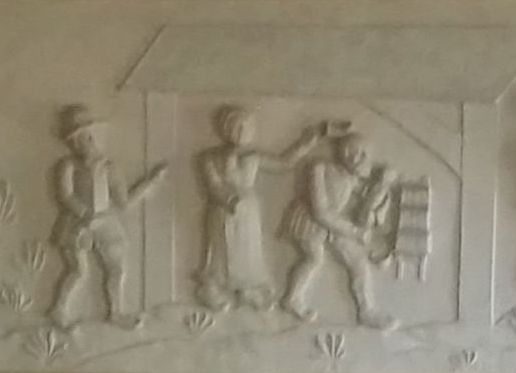
The ‘offence’ is seen on the left – a neighbour sees the wife hit her husband over his head with a clog while he is trying to get a drink of beer at the same time as holding the swaddled baby. They live in a simple thatched cottage.
The normal interpretation is that she is ruling the roost and taking over the man’s role. It is he who is being punished for losing control to his wife and he is seen ‘riding the stang’, or pole either in person, or in effigy, or played by a stand-in. It would be nicer to think he is being punished for being drunk in charge of a child. The Skimmity Ride is heading from the couple’s home to the Church, and thus shown as involving the entire community.
Detail of the Skimmity Ride
In the fictional ‘Mayor of Casterbridge’ skimmity ride effigies of the ex-Mayor and his lover, Lucetta Le Sueur, are tied back to back on a donkey and paraded through Casterbridge. She has just married the Mayor’s rival and on seeing the skimmity ride has a seizure which kills her. Henchard, full of remorse, decides to kill himself in the local river, but as he looks down into Ten Hatches Hole he sees an image of himself which stops him jumping in. It turns out to be his Skimmity effigy but he, none-the-less, sees it as divine intervention.
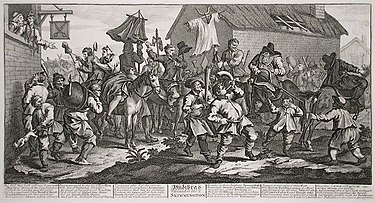
William Hogarth also portrays a Skimmington Ride in his illustration for Samuel Butler’s ‘Hudibras’. It illustrates the cacophonous nature of the Skimmington with horns and percussion the main forms of ‘music’.
William Hogarth. ‘Hudibras_Encounters the Skimmington’
You might also like Cunning Men in Thomas Hardy’s fiction.