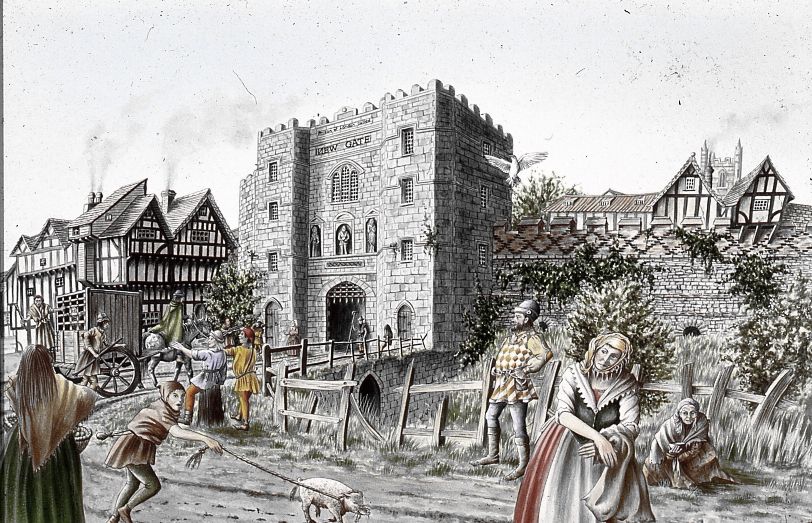
Thomas More & Thomas Cromwell’s London – The City of Wolf Hall
14:30 Sat 25th Jan 2020 Liverpool Street Station
The Walk creates a portrait of London in the early 16th Century, with particular emphasis on the life and times of Thomas Cromwell and Thomas More.
More and Cromwell had much in common, despite being on opposite sides of the religious devide, both lawyers, commoners, important figures in the City of London. They both rose to be Lord Chancellor to Henry VIII, and ended their career on the block at Tower Hill.
The walk visits the sites of Thomas More’s birthplace, and the Town houses of More and Cromwell before exploring the Tudor City of London, including the Guildhall and St. Pauls where Martin Luther’s books where burnt.
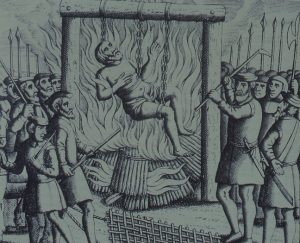
We end with an exploration of the Reformation at its London epicentre in Smithfield – site of the stake where Heretics were burnt alive, surrounded by Catholic Monasteries and playing a significant part in the life and downhall of Thomas More.
This is a London Walks guided walk given by Kevin Flude
 17th century it welcomed Jewish refugees particularly from Russian, and in the 19th Irish, and exiles joined in.
 itch High Street Overground Station
 on Saturday, November 30.
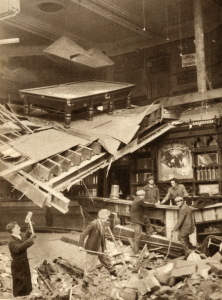 with the predicted catastrophe of Nazi terror bombing? Could London develop plans that reduced the predicted millions of casualties and thousands of people driven mad? On this walk, we look at London before the war and the measures taken to protect the City and its Citizens. We find out what it was like to come to work after a night in the shelters to find your work place in ruins. We visit the site of the earliest bomb raids on London, and explore the sequence of continuous bombing that followed the Battle of Britain, and on to the great City raid of 29th December 1940 which was centred on St Pauls. By May, 1941 the Luftwaffe had transferred to the Eastern Front, but the fear returned with the V1 and V2 secret weapons. Before the war was over London developed the Abercrombie Plan to direct the rebuilding of London after the war. We have a look at what happened to the plans for an optimistic modernist dream of a Corbusian City in the Sky.