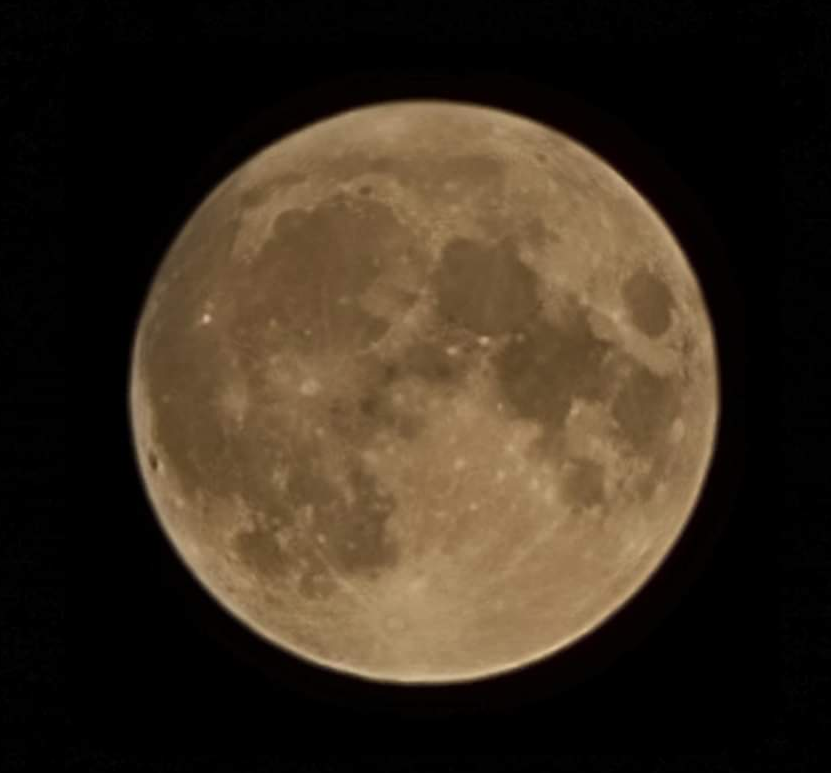
The 27th December is the full moon and has various names including Moon after Yule, Oak Moon, Full Cold Moon.
The Greco/Roman goddess of the Moon is Selena/Luna. She is the Goddess who carries the moon across the Sky most nights. Sometimes conflated with Artemis, Selena is the equivalent of Helios, the personification of the Sun who is her brother. They are, along with the dawn goddess Eos, the offspring of the Titans Hyperion and Theia. (Wikipedia).
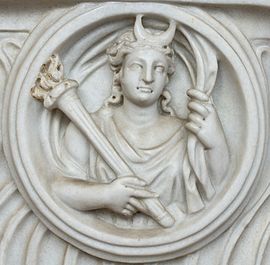
Selena is the Goddess of beauty, of monthly cycles, of tides, menstruation, of intuition. She was the lover of Zeus, Pan and the mortal Endymion who inspired Keats to write his poem of the same name.
Here is a small piece of ‘Endymion‘ (Cynthia is another name for Selene, from her place of birth, Mount Cynthus.) Endymion deserts Cynthia for another lover, but ultimately, it turns out that the lover is Cynthia in disguise.
O Moon! The oldest shades ‘mong oldest trees
Feel palpitations when thou lookest in:
O Moon! old boughs lisp forth a holier din
The while they feel thine airy fellowship.
Thou dost bless every where, with silver lip
Kissing dead things to life. The sleeping kine,
Couched in thy brightness, dream of fields divine:
Innumerable mountains rise, and rise,
Ambitious for the hallowing of thine eyes;
And yet thy benediction passeth not
One obscure hiding-place, one little spot
Where pleasure may be sent: the nested wren
Has thy fair face within its tranquil ken,
And from beneath a sheltering ivy leaf
Takes glimpses of thee; thou art a relief
To the poor patient oyster, where it sleeps
Within its pearly house.–The mighty deeps,
The monstrous sea is thine–the myriad sea!
O Moon! far-spooming Ocean bows to thee,
And Tellus feels his forehead’s cumbrous load.
Cynthia! where art thou now? What far abode
Of green or silvery bower doth enshrine
Such utmost beauty? Alas, thou dost pine
For one as sorrowful: thy cheek is pale
For one whose cheek is pale: thou dost bewail
His tears, who weeps for thee. Where dost thou sigh?
Ah! surely that light peeps from Vesper’s eye,
Or what a thing is love! ‘Tis She, but lo!
How chang’d, how full of ache, how gone in woe!
She dies at the thinnest cloud; her loveliness
Is wan on Neptune’s blue: yet there’s a stress
Of love-spangles, just off yon cape of trees,
Dancing upon the waves, as if to please
The curly foam with amorous influence.
O, not so idle: for down-glancing thence
She fathoms eddies, and runs wild about
O’erwhelming water-courses; scaring out
The thorny sharks from hiding-holes, and fright’ning
Their savage eyes with unaccustomed lightning.
Where will the splendor be content to reach?
O love! how potent hast thou been to teach
Strange journeyings! Wherever beauty dwells,
In gulf or aerie, mountains or deep dells,
In light, in gloom, in star or blazing sun,
Thou pointest out the way, and straight ’tis won.
Amid his toil thou gav’st Leander breath;
Thou leddest Orpheus through the gleams of death;
Thou madest Pluto bear thin element;
And now, O winged Chieftain! them hast sent
A moon-beam to the deep, deep water-world,
To fin Endymon.
On gold sand impearl’d With lily shells, and pebbles milky white,
Poor Cynthia greeted him, and sooth’d her light
Against his pallid face: he felt the charm
To breathlessness, and suddenly a warm
Of his heart’s blood: ’twas very sweet; he stay’d
His wandering steps, and half-entranced laid
His head upon a tuft of straggling weeds,
To taste the gentle moon, and freshening beads,
Lashed from the crystal roof by fishes’ tails.
And so he kept, until the rosy veils
Mantling the east, by Aurora’s peering hand
Were lifted from the water’s breast, and faun’d
Into sweet air; and sober’d morning came
Meekly through billows:–when like taper-flame
Left sudden by a dallying breath of air,
He rose in silence, and once more ‘gan fare
Along his fated way.
First Published December 8th 2022, Republished on December 27th 2023