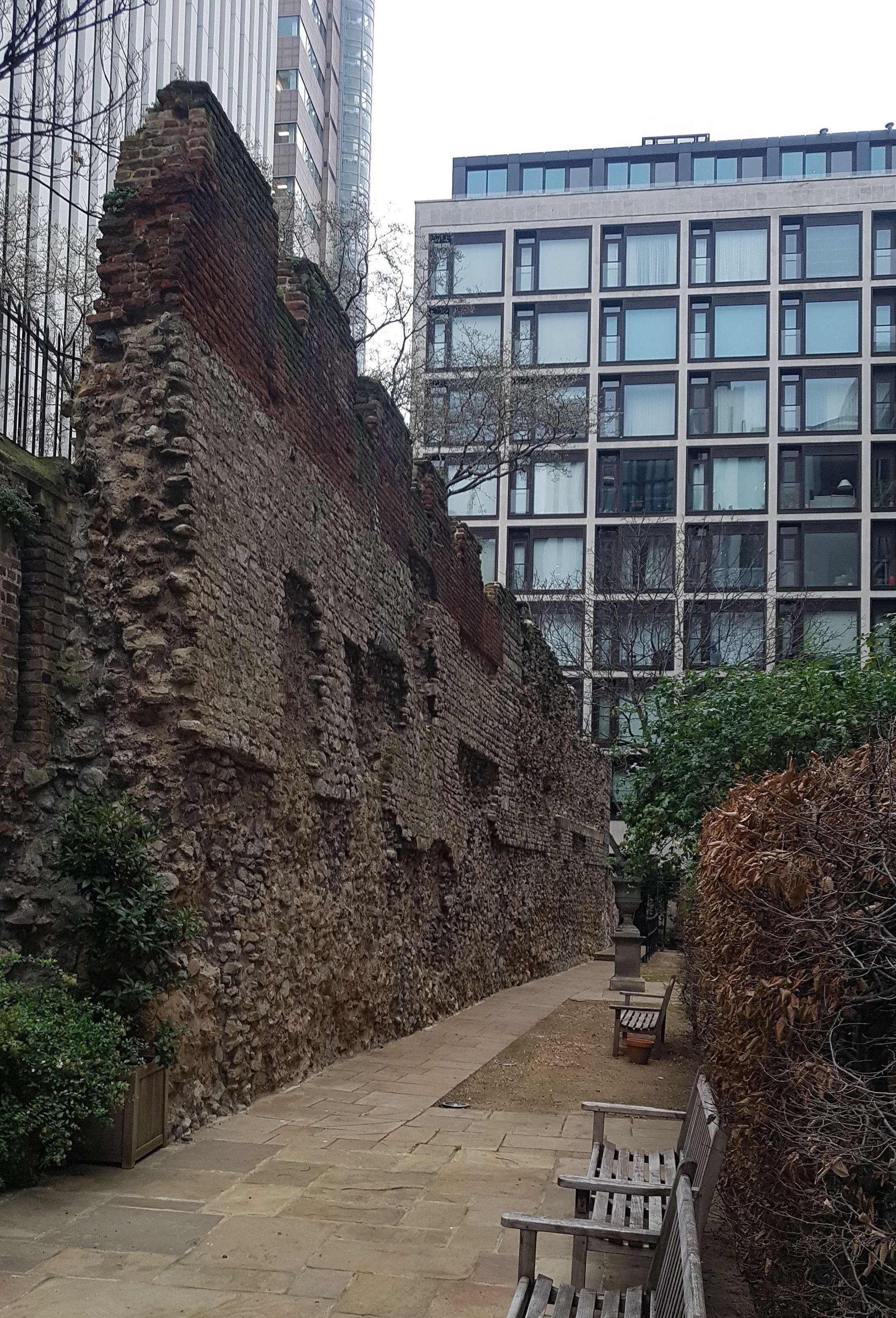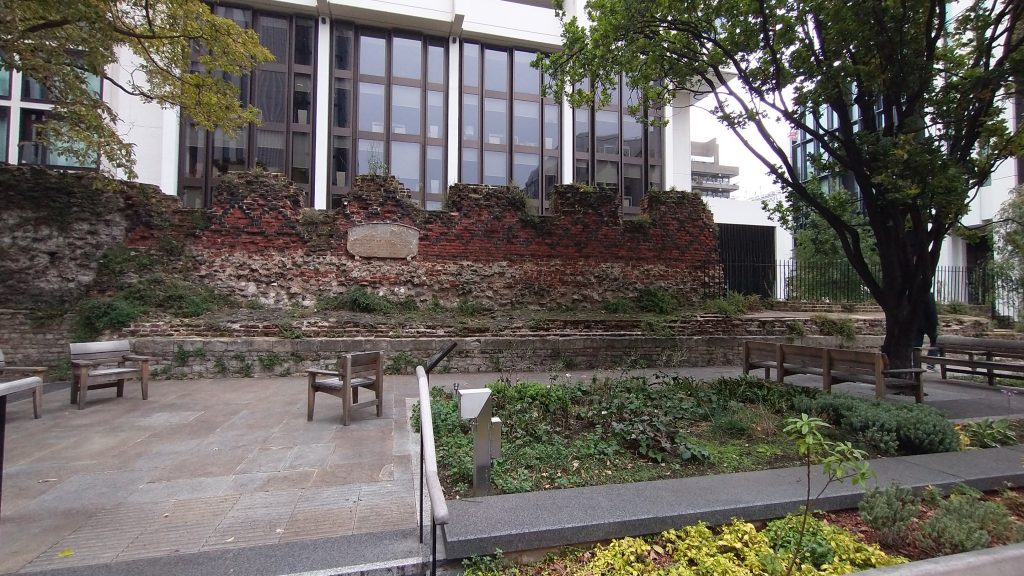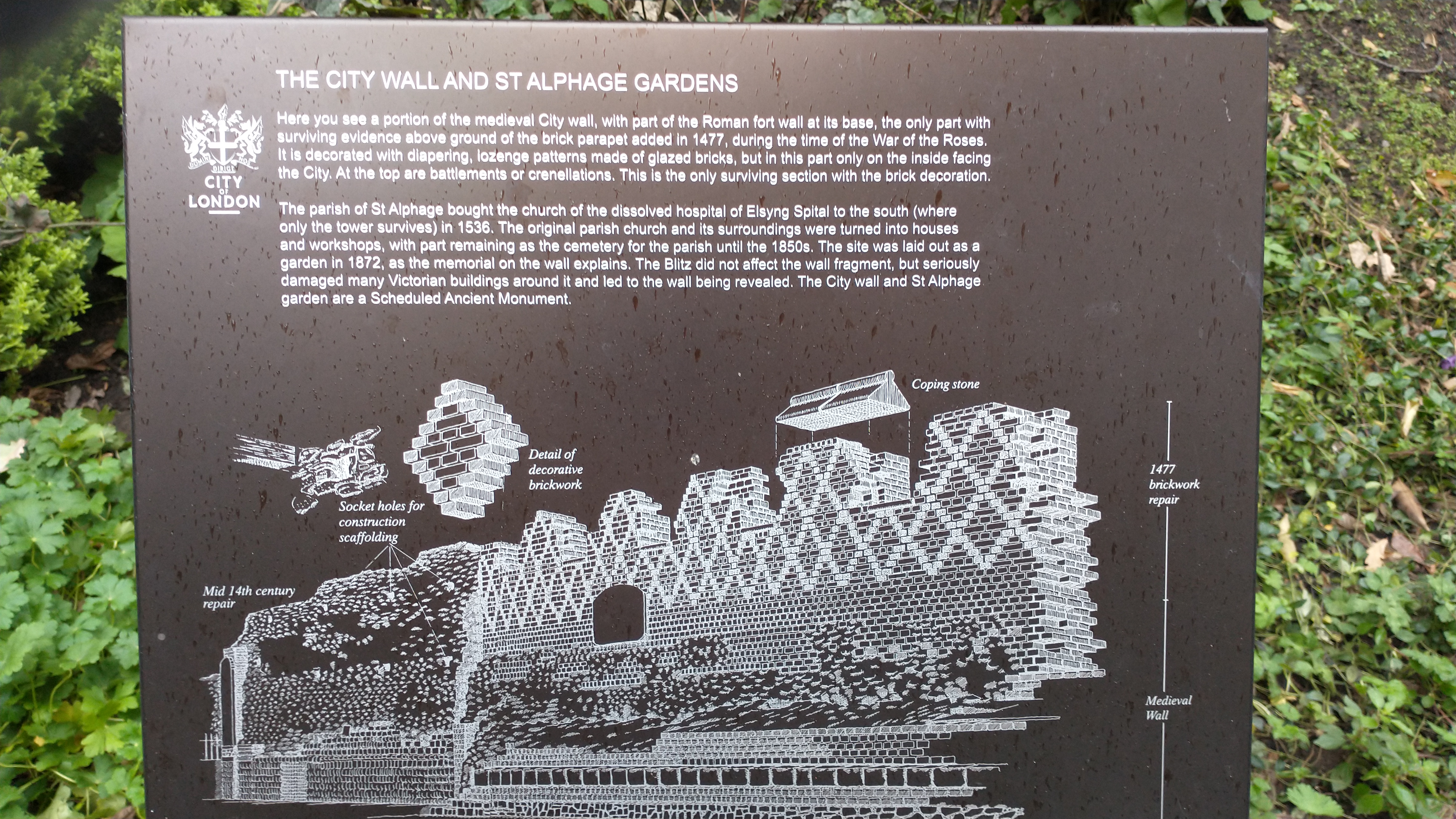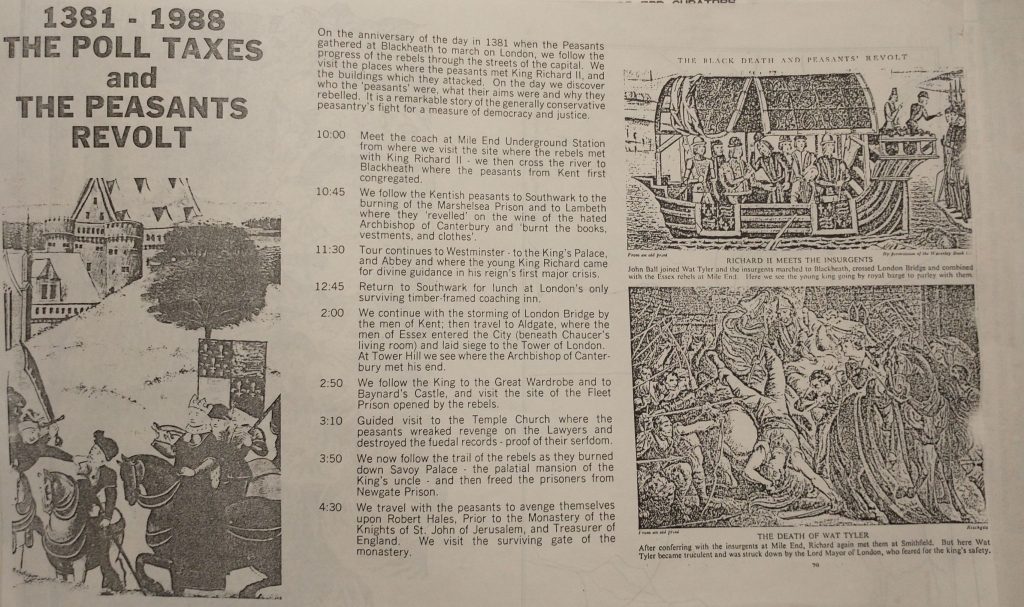
Sandals at the Last Supper and Vortigern April 2nd

Copy of the Last Supper by Leonardo da Vinca at the Collection Gallery, Royal Academy, UK
(Copy made 1515-1520, and was in the Carthusian Monsatery at Pavia in the 17th Century before being brought to the RA in the 19th Century) Photo K flude

April 2nd, 2026 is the day before Good Friday. It was on the Wednesday or the Thursday that the Last Supper took place. So I have relocated my ‘Sandals of the Saints’ post to here.

Whilst visiting Flaming June at the Royal Academy, it was nice to have another look at the RA’s copy of the Last Supper. What strikes me most is their sandals (and the beautifully pressed table cloth).

Detail of the RA Sandals in the copy of the Last Supper Photo Kflude

Details that bring the past to life. The shoes would surely sell today, while the table cloth really destroys the common idea that the past was dirty and smelly. It wasn’t. People took pride in their appearance and surroundings. Just look at the ironing!

Here, by way of contrast, is a medieval shoe from the 14th Century from the Museum of London. And this is a link to the Museum of London’s collections of medieval shoes, most have been collected from excavations, and it is one of the best collections.

On This Day

Today is St. Urban of Langres Day.

He is the patron of Langres; Dijon; vine-growers, vine-dressers, gardeners, vintners, and coopers. And invoked against blight, frost, storms, alcoholism, and faintness. (www.catholic.org/saints/) But is also called upon to make maid’s hair long and golden.

On the feast of St Urban, (forsooth) maids hang up some of their hair before the image of St Urban, because they would have the rest of their hair grow long and golden.

Reginald Scott, the Discovery of Witchcraft, 1584. (Thanks to the Perpetual Almanac by Charles Kightly.) For more on Reginald Scott and Witches see my post.

1744 – First Golf Tournament. No, not at St Andrews but at Leith Links, Edinburgh.

Bill for the 1796 play Vortigern and Rowena Public Domain Wikipedia

1796 – A great cast at the Drury Lane Theatre, owned and managed by Sheridan, put on a newly discovered play by William Shakespeare. The cast included Kemble, Barrymore, and Mrs Jordan, who was the mistress of Prince William (aka William III). Rumours swirled around about the authenticity of the play. Shakespeare was interested in Britain’s legendary history, having written Cymberline and King Lear. But critics thought it was too simple to be genuine. Eventually, William Henry Ireland admitted he was the author.

‘A London Year’ by Travis Elborough and Nick Rennison has a great quote from a visit to the play. It took place on April 2nd 1796 and is recorded in Joseph Farington’s diary. Compare this description to your last polite experience at the Theatre.

Shakespeare’s forgery staged

‘Island’s play of Vortigern, I went to. Prologue, spoken in 35 minutes past six, play over at 10. A strong party was evidently made to support it, which clapped without opposition frequently through near three acts. When some ridiculous passages caused a laugh, which infected the house during the remainder of the performance, mixed with groans. Kemble requested the audience to hear the play out about the end of the fourth act, and prevailed. The epilogue was spoken by Mrs. Jordan, who skipped over some lines which claimed the play as Shakespeare’s

Barrymore attempted to give the play out for Monday next, but was hooted off the stage. Kemble then came on. And after some time, was permitted to say that ‘School for Scandal’ would be given, which the house approved by clapping.

Sturt of Dorsetshire was a Stage Box drunk and exposed himself indecently to support the play. And when one of the stage attendants attempted to take up the green cloth, Sturt seized him roughly by the head. He was slightly pelted with oranges. Ireland, his wife, a son and a daughter and two others were in the centre box at the head of the Pitt. Ireland occasionally clapped. But towards the end of the fourth act, he came into the front row and for a little time, leaned his head on his arm. And then went out of the box and behind the scenes. The Playhouse contained an audience that amounted to £800 pounds.’

April 2nd 1796 from Joseph Farington’s Diary, (I have changed some of the punctuation.)

Who Was Vortigern?

Vortigern’s history is shrouded in Myth. But he was chosen as leader of Britannia after the Romans withdrew in the early 5th Century AD. His name means Great Leader in Brittonic. He is one of the few leaders we know to be a real person in what used to be called the Dark Ages. We accept him as real, as he appears in the near contemporary source by the Monk Gildas.

However, very little is known of him except legends. He was associated with Merlin. Legend accuses him of betraying the British for the lust for Rowena. She was the daughter of the Saxon Leader Hengist. Whatever the truth of this, Vortigern continued the late Roman policy of hiring Germanic mercenaries. They defend Britannia against Picts, Irish, Scotti,and, of course the Saxons. The legends say that Hengist and Horsa were hired with their three ‘keels’ of Saxon mercenaries. In payment for services rendered, or for lust, Vortigern surrendered the sovereignty of Kent to the Saxons. Thus began the so-called ‘Adventus Saxonum’, and the destruction of the power of the Britons.

Kent and the Survival of pre-Saxon names

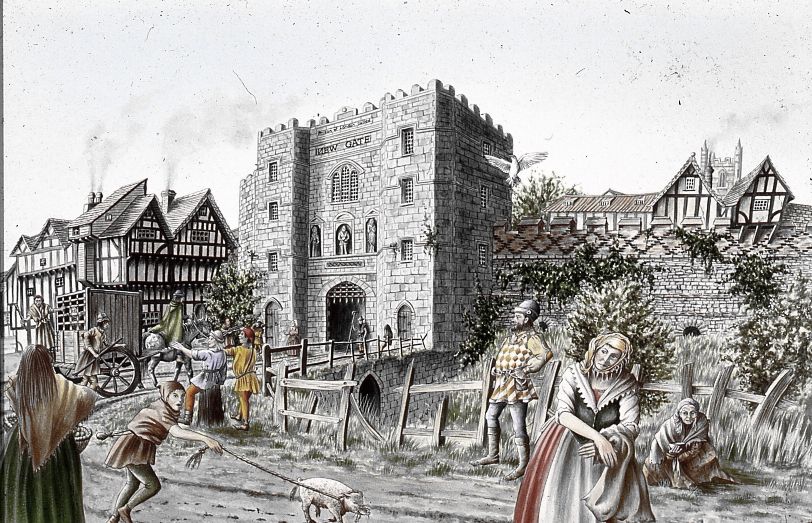
Medieval portrait of Vortigern

How much of this is ‘true’ we have no idea. But the name of Kent survives from the prehistoric, into the Roman, unlike most tribal names. And unlike most tribal names survives to the modern day. Who now has heard of the Trinovantes, the Catuvellauni, Regneses or the Atrebates. The pre-Roman tribe were called the Cantii, or the Cantiaci. Caesar says they had 4 Kings, and the Cante part of Canterbury comes from their name. Why did the name survive? Probably because it was the first Roman Civitas to be taken over by the Saxons. Most likely still largely a working political unit. So it kept its name. The other Roman political units mostly lost their names in the anarchy of this period. The political boundaries from the Prehistoric period survived through the Roman period. But the names at least do not survive the fall of Rome.

For more legends of this period look at my post

First Published, 2nd April 2025, Last Supper and Vortigern brought together and titled renamed 2nd April 2026

Maundy Thursday

Maundy Money Pouches. and cover of the Order of Service for Royal Maundy service 1974 Photo Wehwalt
Maundy Thursday Money Pouches. and cover of the Order of Service for Royal Maundy service 1974 Photo Wehwalt

Maundy Thursday Meaning

Maundy Thursday is on April 2nd in 2026. This is the last day of Lent, and the day before the Passion. It’s also called Holy Thursday when Christians remember the Washing of the Feet, and the Last Supper. . Maundy is thought to be from the:

‘Latin word mandatum, or commandment, reflecting Jesus’ words “I give you a new commandment.’ (Wikipedia).

I much prefer the derivation of Maundy Thursday from the English Kings giving alms to poor people.

English name “Maundy Thursday” arose from “maundsor baskets” or “maundy purses” of alms which the king of England distributed to certain poor at Whitehall before attending Mass on that day. Thus, “maund” is connected to the Latin mendicare, and French mendier, to beg.

Royal Maundy Thursday Wikipedia

The monarch gives out money in special red and white pouches to old people. In modern times, the money is specially minted for the occasion. It is now more symbolic than a practical gesture. But It dates back to the 13th Century, when the money was a vital lifeline for its recipients.

Queen Elizabeth II and Prince Philip Wakefield Cathedral after the 2005 Royal Maundy Ceremony.  Photo Runner1928
Queen Elizabeth II and Prince Philip after the 2005 Royal Maundy Ceremony at Wakefield Cathedral. Photo Runner1928

In 1572 Queen Elizabeth 1 washed one foot of a group of poor women, then wiped, crossed and kissed them. In fact, the Queen was ‘protected ‘ as the women first had their feet washed by the laundress, then the sub-almoner, then the almoner. Only finally by the Queen. (The Perpetual Almanac of Folklore by Charles Kightley’)

When was The Last Supper?

One scholar, Prof Humphreys author of ‘The Mystery Of The Last Supper’, (2011) has reconciled differences between John and the other evangelists. He believes two calendars were in use, one from before the exile and the other using a Babylonian Calendar. This confusion means that there is too much going on between the Last Supper and the Crucifixion. He suggests that the solution is that Last Supper was on the Wednesday not the Thursday. He also calculates a date for the Last Supper as:

Wednesday, 1 April AD33.

Maundy Thursday at Chester Cathedral

Last year, I was in Chester Cathedral on Maundy Thursday where the Diocesan Eucharist was held. The Cathedral was awash with Clergy, (I counted at least 4 Bishops) and most of the priests in the area.

First published 2023, republished 2025. 2026

April Fools Day April 1st

The Famous Spaghetti Tree April Fool’s Joke (from facebook)

First Reference to April Fools Day

The first unambiguous British reference to April Fools Day is by diarist John Aubrey’s “Fooles holy day” in 1686 – although he might have been referring to Germany.

We observe it on ye first of April… And so it is kept in Germany everywhere.’ For more details read hoaxes.org.

Chaucer and April Fools Day

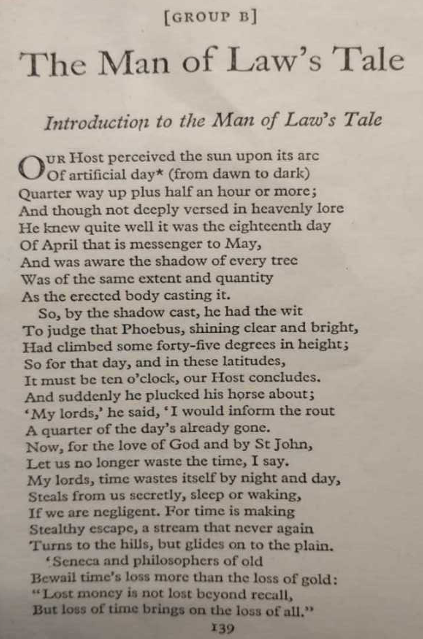
But there is a possible earlier reference in Chaucer in the Nun’s Priest’s Tale.   This I find quite compelling but most Chaucer scholars don’t. This is the text:

When that the monthe in which the world bigan
That highte March, whan God first maked man,
Was complet, and passed were also
Syn March bigan thritty dayes and two

So, if you have been keeping up with me, you will know that the first lines are referring to March 25th. This was the day Adam and Eve were created. The day when the Church started the New Year and the year number moved one on. This was a major Church festival, usually followed by a week of holiness. The Roman New Year, January 1st, ended with a light-hearted festival called Saturnalia, and it is suggested that April 1st was, similarly, a day of release after the festival of the official Church ceremony of the New Year.

Chaucer’s last line says ‘Since March began thirty-two days have passed.’ A foolish person would not realise this is a reference to April 1st. Hence, this suggests a Fool’s Day already existed. Some scholars think that Chaucer was referring to May 2nd, counting the 32 days not from the beginning of March but from the end of March. I think they look at the second and third lines which read ‘That high March…. was complete’ and so add the 32 days to the end of March. Foolish in my opinion and not reading what actually Chaucer wrote which is ‘Since March began….’

Hunting the Gowk

Generally, in Britain, we play a prank and say ‘April Fool’ with great delight. But we are not allowed to continue beyond midday. The Scots used to call it ‘Hunting the Gowk’ and the main prank was to give someone a letter to deliver, and the person who opened the letter would read:

Dinna laugh, dinna smile. Hunt the gowk another mile” and send the fool onto another leg of his or her’s fool’s errand. In Ireland the letter would read ‘send the fool further’.

April Fools Day and Spaghetti Growing on Trees

I nearly always forget to honour April Fool’s Day (or April Fish Day as the French call it). But in Britain, somewhere in our newspaper or TV station there is an April Fools Joke slipped in. The most remembered is the BBC piece showing film of Italian Farmers picking spaghetti from trees.

2026 – Introduction of Coffee to England 200 years earlier than previously thought!

I have had a quick look at the Guardian for their 2026 April Fools Day Story and I think it is this one:

Guardian April Fools Joke for 2026

The clues are the expert is called Macky Arto. The find was in Ness, allowing them to say ‘Ness Cafe’, and ‘Ness-presso’, and the use of a pun ‘It would have costa for a coffee.’ The final confirmation is this sentence: ‘Back in the reigns of Henry V and VI, these were flat white fields …. and a village called Brew.’ Allowing the journalist to make up an origin for the expression ‘Fancy a Brew?’ it goes on to say.

2025 – Coffee Cups as Haut Courture?

Guardian April Fools Day Joke article or the world gone mad?

£4,440 for a Coffee cup shaped handbag?

2024 Meghan Markle

In 2024, Meghan Markle was the butt for the second year running. (from the Guardian’s quiz on April Fool’s jokes):

Meghan Markle was criticised after it was revealed that when you put her lifestyle brand name – American Riviera Orchard – into the What3words location service, it points to a statue of Oliver Cromwell, who famously had a King Charles executed

2023 – “Megxit: Call of Duke-y”

In 2023, Harry and Megan proved irresistible and the Guardian reported that:

The Sun published a piece announcing the launch of Prince Harry and Meghan’s new video game “Megxit: Call of Duke-y” in which the royal couple try to reach California while dodging obstacles, including rival royals and the media, along the way.

This post is about April Fools Day. But it is also the anniversary of the formation of the RAF.

On This Day

1854 – Hard Times by Charles Dickens Serialised in Household Words. A recent study of Victorian Grave yards in Yorkshire highlights the grim reality for young children. For the article see: https://core.ac.uk/reader/220156990

1918 – Near the end of World War 1 the Royal Flying Corps (RFC) and the Royal Naval Air Service were merged to create the Royal Air Force (RAF). It was the world’s biggest air force, and went on to secure Britain from invasion by Hitler.

Croydon RFC/RAF base for anti-Zeppelin Raids in WW1 and one of the world’s first international airports.

RAF Rigger, Benjamin Flude

My Grandfather was in the RAF as a fitter. My father tells some of his story in his autobiography ‘A Boy from Haggerston’:

Benjamin Flude in RFC Uniform. My father, Ben Flude remembers a small model biplane hanging from the portrait.

‘I was 9 months old when he died, and he was just 28 years old. Everyone seemed to like him, and as a child, he was always my hero. In my imagination, I promoted him to being a brilliant and brave Ace RAF Pilot. But he was, in fact, a mechanic rather than a pilot in World War I. Following the war, he worked with Imperial Airways in Purley, Croydon. I don’t know the exact details and so have to piece the story together from the little information I have at my disposal.

My friend, Roy, tells me that the badge on his uniform in the oval picture is of the Royal Flying Corp. (RFC). But they were disbanded in 1916/17, and replaced by the RAF thereafter. As my dad was born in 1900, he must have joined up to fight in the war while underage at 16 or 17 as a volunteer. ‘

How a London lad became a Rigger for the RFC we don’t know, but the Fludes at that time were all employed as umbrella or walking stick makers in the East End of London. I think it is a case of transferable skills. WWI aeroplanes were made of wood, metal wire and fabric, which is precisely what an umbrella is made of.

RAF/RFC mecanics c 1917 . My grandfather is the handsome man standing tall in the back row extreme right

RAF Mechanic Ben Flude

My father went on to serve in the RAF during his national service: He writes:

Ben Flude RAF Metfield. (dad is lying down at the bottom right. he is now 98)

Early in 1946 I received my call-up papers for the RAF. I was to report to the Recruitment Centre at Padgate in Lancashire. This is where I received my uniform after a medical examination, and then there were a number of intelligence/aptitude tests when they decided what trade I would join. I tried to get Air Crew and while there were no vacancies, I did have a wide group of trade offers open to me. The group that I was interested in was aircraft maintenance and repair, following in my Dad’s footsteps.’

However, before I could start, I had to do my basic training. This was designed to get you fit, and we did plenty of square-bashing or parade drills. For this, they sent me to Metfield in Suffolk, which had only very recently been made available to the RAF by the American Army Air Force. In fact, it was so recent a hand-over that whilst on picket duty, a coach rolled up packed with girls who were so disappointed by the lack of Americans that they got straight back on and returned to Ipswich! The motto of ‘overpaid, oversexed, over here’ certainly applied to these Americans in Suffolk.’

We found out that Metfield had been a US Army Air Force Base, where two squadrons of Flying Fortresses operated from. In all the Nissen Huts, those with the semicircular roofs, the ceilings were completely covered with pin-up pictures. My bed was just feet away from the huge Crocodile Stove, round which every evening we all clustered – as it was warm.

Interior of Nissan Hut 1944, Lasham

Dad specialised in the recovery of instruments from crashed planes, and was complimented by Air Chief Marshal Hugh Caswall Tremenheere Dowding, 1st Baron Dowding, GCB, GCVO, CMG on his ability to fix an instrument he had never seen before.

My father’s autobiography, which I edited, is available on Feedaread. https://www.feedaread.com/books/A-Boy-from-Haggerston-9781835970515.aspx at £4.18. Also, available on other online book retailers. (ask me and I will send you a signatured bookplate!)

First published March 25th 4004 BC and republished yearly on every April Fool’s Day. The section on the meaning of April moved to my post on April 2025. On This Day added in 2026